nandi's blog

Jurassic World: Camp Cretaceous Season 3 Teaser Hints At Newest Threat

Friday, March 12, 2021

Jurassic World: Camp Cretaceous will return for season 3 in May, and the first trailer teases the arrival of a new threat on Isla Nublar.

The first trailer and poster for Jurassic World: Camp Cretaceous season 3 teases a new threat on Isla Nublar. As the world waits for Jurassic World: Dominion to debut in theaters, the beloved dinosaur franchise continues to flourish in animated form on Netflix. Camp Cretaceous first premiered last September, with season 2 arriving with impressive speed in January of this year. Up until now, a season 3 hadn't been confirmed. However, as Camp Cretaceous ended with many dangling plot threads, it seemed likely that the story would continue on somehow.

Jurassic World: Camp Cretaceous revolves around a group of teens who score the once-in-a-lifetime opportunity to attend an adventure camp on Isla Nublar, not far from the titular theme park. The events of Camp Cretaceous intersect with those of the 2015 film Jurassic World, and the characters are soon left to fend for themselves as the dinosaurs break out of containment and run amuck. Camp Cretaceous season 2 ended with the teens successfully protecting the dinos from big game hunters Mitch (Bradley Whitford) and Tiff (Stephanie Beatriz), yet losing their one hope of leaving the island.

Their story will continue with Camp Cretaceous season 3, which will officially arrive on Netflix on May 21. The first trailer and poster for the 10 new episodes have been revealed, and they tease the emergence of a terrifying new threat. Additionally, it's been confirmed the entire main cast - Paul-Mikél Williams, Jenna Ortega, Ryan Potter, Raini Rodriguez, Sean Giambrone, and Kausar Mohammend  - will return. Check out the teaser and poster below.

The trailer doesn't reveal much, but it does confirm the kids will be facing a new, dangerous dinosaur. Camp Cretaceous season 2 saw the island's electricity get knocked out, and an unseen dinosaur was let out of cryo-freeze. Based on the prominence of the broken chamber in both the poster and the teaser trailer, it's clear whatever was in there (perhaps a predecessor to Jurassic World: Fallen Kingdom's Indoraptor?) will be hunting the main cast of Camp Cretaceous. This mystery dinosaur has the potential to further tie the series to the main Jurassic World films, so fans might have to pay close attention to it whenever it makes its first appearance. The trailer provided a quick hint of what's in store by showing the dino's eye.

Other lingering plot threads Camp Cretaceous season 3 has to deal with include the emergency beacon they sent out and the general issue of the teens being stranded on the island. The events of season 3 just might lead into Fallen Kingdom, or could at least set up the action to come. Either way, it sounds like this next chapter of Jurassic World: Camp Cretaceous is going to be just as eventful as what came before.

Jurassic World: Camp Cretaceous premieres on May 21 on Netflix.

Source: DreamWorks / https://screenrant.com/

Paleontology: Microscope Helps With Dinosaur Puzzle

Friday, March 12, 2021

(here a team from the Aathal dinosaur museum in Wyoming, co-author Hans-Jakob Siber front center) often belong to different animals.  CREDIT (c) Sauriermuseum Aathal

Comparison of fossil bone tissue allows more reliable assignment to individuals.

Fossil sites sometimes resemble a living room table on which half a dozen different jigsaw puzzles have been dumped: It is often difficult to say which bone belongs to which animal. Together with colleagues from Switzerland, researchers from the University of Bonn have now presented a method that allows a more certain answer to this question. Their results are published in the journal Palaeontologia Electronica.

Fossilized dinosaur bones are relatively rare. But if any are found, it is often in large quantities. "Many sites contain the remains of dozens of animals," explains Prof. Dr. Martin Sander from the Institute of Geosciences at the University of Bonn.

If the finder is lucky, the bones are still arranged exactly as in the living dinosaur. Some are even still connected to each other at their joints. All too often, however, they were pulled apart and dispersed by scavengers and flowing water before being embedded in the soil. "Assigning this pile of hundreds of fossilized bones to the respective individuals from which they originally came is then usually very difficult," stresses Sander, who is also a member of the transdisciplinary research area "Building Blocks of Matter and Fundamental Interactions".

This is because, for one thing, "long bones" from the arms and legs, like the thigh bone, look remarkably similar even in different species. This means that even experts are often unable to say whether a fossil thigh bone is from Diplodocus or Brachiosaurus. And even if this could be ascertained, perhaps the excavation produced several Diplodocus specimens to which it could belong.

Sander and his doctoral student Kayleigh Wiersma-Weyand have now been able to demonstrate how this can be achieved. They used dinosaur bones from the U.S. state of Wyoming as a test object. These had been excavated and partially combined into skeletons by a team from the Aathal dinosaur museum in Switzerland shortly before the turn of the millennium.

Drilling into 150 million year old bones

The Swiss researchers made their finds available to the paleontologists in Bonn for the study. Wiersma-Weyand and Sander drilled into the 150-million-year-old bones and examined the extracted core under the microscope. "This allows us to find out how old the animal in question was when it died," Wiersma-Weyand explains. For one thing, young bones are better vascularized than old ones; this means that after fossilization they have more cavities in which the blood vessels used to be. Second, bone growth proceeds in spurts. "We therefore often see characteristic annual rings, similar to what we see in trees," the researcher says.

Estimating the age often makes it possible to rule out that a bone belongs to a particular skeleton. "If the left thigh bone is ten years older than the right one, we have a problem," Sander says laconically. There were no such discrepancies in the finds examined for the study. "However, we came across bones that had previously been attributed to two different animals, but probably belong to one and the same skeleton."

The study addresses a problem that has begun to come into scientific focus in recent years: With many mounted dinosaur skeletons located in museums and collections around the world, it is still not clear whether their bones come from one or more individuals. This combination is often done deliberately during mounting, since dinosaur skeletons are rarely preserved in their entirety. Supplementing missing bones with finds from other specimens is therefore common practice and, in principle, not a big deal as long as it is recorded. More critical, however, is when researchers combine finds unknowingly and these then come from different species or animals of different ages.

When the original Diplodocus has legs that are too short

This becomes particularly relevant when the skeletons are so-called type specimens. This is because these are considered the "standard" for the corresponding species, similar to the prototype meter. But what if, for example, the original Diplodocus contains the lower legs of a younger (and thus smaller) Diplodocus specimen? "Then some of the conclusions we draw about its locomotion and lifestyle may be wrong," Sander points out. "Our research therefore also helps combat the much-cited replication crisis in science."

Together with Kayleigh Wiersma-Weyand and Master student Nico Roccazzella, he will soon be using this method to take a closer look at a famous exhibit: the "Arapahoe" skeleton, the longest skeleton of a dinosaur in Europe, which is currently on display at the Museum Koenig in Bonn.

###

Publication: Kayleigh Wiersma-Weyand, Aurore Canoville, Hans-Jakob Siber and Martin P. Sander: Testing hypothesis of skeletal unity using bone histology: The case of the sauropod remains from the Howe-Stephens and Howe Scott quarries (Morrison Formation, Wyoming, USA); Palaeontologia Electronica; DOI: https://doi.org/10.26879/766

Source: www.eurekalert.org/

Jurassic Park Chess Set

Thursday, April 1, 2021

CLICK THE IMAGE!

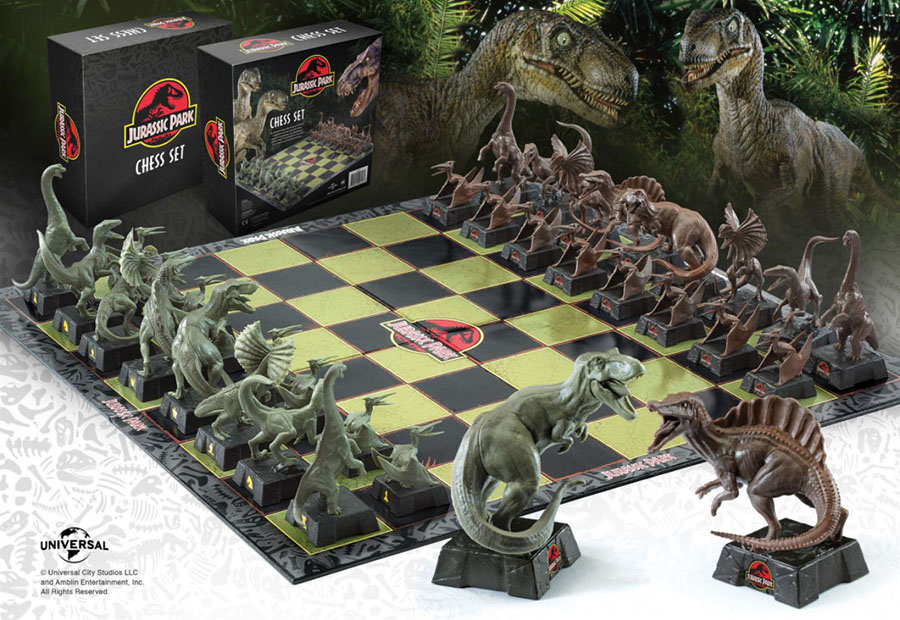
This Jurassic Park chess set includes 32 finely sculpted dinosaur pieces on a branded board.

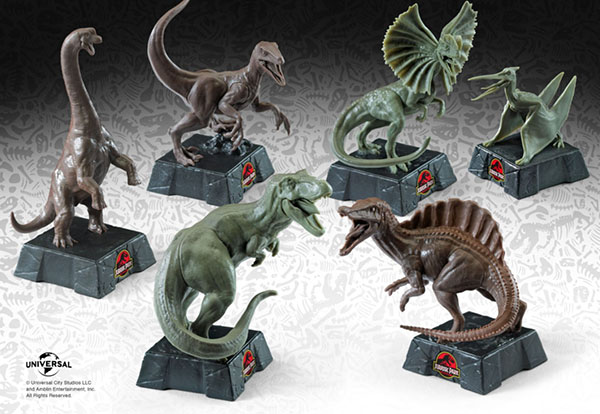
The King is of course a Tyrannosaurus Rex, the Queen a Spinosaurus, Bishops are Dilophosaurs, Knights are Velociraptors, Rooks are Brachiosaurs and the pawns represented by Pteranodons. Lots of Jurassic reptilian fun for dinosaur lovers of all ages.

SPECIFICATIONS:

  • Complete with 32 finely sculpted game pieces and full graphic chess board, this chess set will transport you right into the island where dinosaurs roam the earth!
  • Ages 7+
  • Features Tyrannosaurus rex, Spinosaurus, Dilophosaurus, Velociraptor, Brachiosaurus, and Pteranodon as the chess pieces
  • Chess board measures 18.5 x 18.5 inches
  • Figural chess pieces vary from 2 to 4 inches in height.

CLICK THE IMAGE!                   CLICK THE IMAGE! 

Permian Tree Fossil Sheds Light on Ancient Evolutionary Race

Thursday, March 11, 2021

Reconstruction of the aerial parts of Paratingia wuhaia from the early Permian of China. Image credit: Yugao Ren / Sijia Tang.

Noeggerathiales are enigmatic plants that existed during Carboniferous and Permian times, 323 to 252 million years ago. Although their diversity and distribution are well known, their place on the plant family tree remained enigmatic because their anatomy was unknown. In new research, paleobiologists in China discovered and reconstructed a new species of noeggerathialean tree that existed 298 million years ago during the Permian period; their analysis shows that Noeggerathiales are more closely related to seed plants than to other fern groups.

“Noeggerathiales were recognized as early as the 1930s, but scientists have treated them as a ‘taxonomic football,’ endlessly kicked around without anyone identifying their place in the Story of Life,” said Dr. Jason Hilton, a paleobiologist at the Institute of Forest Research at the University of Birmingham.

“The spectacular fossil plants found in China are becoming renowned as the plant equivalent of Pompeii.”

“Thanks to this slice of life preserved in volcanic ash, we were able to reconstruct a new species of Noeggerathiales that finally settles the group’s affinity and evolutionary importance.”

“The fate of the Noeggerathiales is a stark reminder of what can happen when even very advanced life forms are faced with rapid environmental change.”

Dr. Hilton and colleagues uncovered the fossilized remains of a new noeggerathialean species — named Paratingia wuhaia — within a 66-cm-thick volcanic ash-fall horizon previously termed the ‘Chinese vegetational Pompeii’ at Wuda open coalmine, Inner Mongolia, China.

They found that Noeggerathiales are in fact advanced tree-ferns that evolved complex cone-like structures from modified leaves.

Despite their sophistication, they fell victim to the profound environmental and climate changes of 251 million years ago that destroyed swamp ecosystems globally.

Paratingia wuhaia: (A) holotype with an entire crown consisting of pseudostrobili and leaves; (B) once-pinnate compound leaf with both large and small pinnules visible; (C) cross-section of a crown illustrating pseudostrobili around the stem; (D) cross-section of pseudostrobilus with microsporangia around the axis with bilateral, inversed Ω-shaped vascular bundle; (E) cross-section of a leaf rachis showing the same form of vascular bundle as that of pseudostrobili axes; (F-H) partial cross, radial, and tangential sections of the stem showing the secondary xylem (wood); (I) tangential section of pseudostrobilus showing sporangial arrangement with single line of megasporangia along with the axis; (J) radial section of pseudostrobilus showing adaxial sporangia and axis lacking nodes; (K) tangential section showing adaxial sporangia and a single line of megasporangia along with the axis; (L) tangential section through same specimen as K showing megasporangial arrangement; (M) detail of the middle part of L showing the megasporangia and microsporangia; (N) single spore macerated from the holotype. Scale bars – 10 cm (A), 3 cm (B), 1 cm (C-E), 100 μm (F), 200 μm (G and H), 5 mm (I-L), 2 mm (M), 10 μm (N). Image credit: Wang et al., doi: 10.1073/pnas.2013442118.

“Many specimens were identified in excavations in 2006-2007 when a few leaves were visible on the surface of the ash,” said Professor Jun Wang, a paleobiologist at the Nanjing Institute of Geology and Palaeontology.

“It looked they might be connected to each other and a stem below — we revealed the crown on site, but then extracted the specimens complete to take them back to the lab.”

“It has taken many years to study these fully and the additional specimens we have found more recently.”

“The complete trees are the most impressive fossil plants I have seen and because of our careful work they are also some of the most important to science.”

The results were published in the Proceedings of the National Academy of Sciences.

_____

Jun Wang et al. 2021. Ancient noeggerathialean reveals the seed plant sister group diversified alongside the primary seed plant radiation. PNAS 118 (11): e2013442118; doi: 10.1073/pnas.2013442118

Source: www.sci-news.com/

Fossilized Dinosaur Found Sitting on Eggs – With Embryos Inside

Thursday, March 11, 2021

Paleontologists in China have discovered what they say is the first non-avialan dinosaur fossil known to preserve an adult skeleton atop an egg clutch that contains embryonic remains.

“Dinosaurs preserved on their nests are rare, and so are fossil embryos,” said Dr. Shundong Bi, a paleontologist in the Centre for Vertebrate Evolutionary Biology at the Yunnan University’s Institute of Palaeontology and the Department of Biology at the Indiana University of Pennsylvania.

“This is the first time a non-avian dinosaur has been found, sitting on a nest of eggs that preserve embryos, in a single spectacular specimen.”

The 70-million-year-old fossil was recovered from the Upper Cretaceous Nanxiong Formation near the Ganzhou railway station of Ganzhou city, Jiangxi Province, China.

The specimen is a partial skeleton of a medium-sized oviraptorid theropod preserved atop an undisturbed clutch of at least 24 eggs, some of which are broken, exposing embryonic bones.

The eggs are 21.5 cm in length and 8.5 cm in width across their equatorial regions. The outer surface of all eggs exhibits ornamentation made up of fine, densely packed ridges approximately 2-3 mm in width.

Embryonic material is exposed in seven eggs, but ossified bones with identifiable morphologies are observed only in four eggs.

The late stage of development of the embryos and the close proximity of the adult to the eggs strongly suggests that the latter died in the act of incubating its nest, like its modern bird cousins, rather than laying its eggs or simply guarding its nest crocodile-style.

An oviraptorid specimen consisting of an adult skeleton preserved atop an embryo-bearing egg clutch: (a) photograph of the specimen; (b) interpretive drawing with bones and gastroliths in white and eggs color-coded by ring (A, red; B, green; C, blue); (c) restoration (white indicates bones preserved in the adult skeleton). Abbreviations: I – digit I; II – digit II; III – digit III; A# – egg in lowermost ring (A); as – astragalus; B# – egg in middle ring (B); C# – egg in uppermost ring (C); cav – caudal vertebra; ch – chevron; cv – cervical vertebra; di – manual digit; dr – dorsal ribs; dv – dorsal vertebra; em – egg known to preserve embryo; fe – femur; fi – fibula; ga – gastralium; gl – gastroliths; h – humerus; il – ilium; is – ischium; mt – metatarsal; O2 – egg sampled for oxygen isotope analysis; pb – pubis; pp – pedal phalanges; ra – radius; sl – semilunate carpal; ti – tibia; ul – ulna. Note that C11 and C12 are not paired eggs; the eggs that would have been paired with C11 and C12 are probably not preserved, as is the case for some other eggs and skeletal elements. Image credit: Bi et al., doi: 10.1016/j.scib.2020.12.018.

“This kind of discovery, in essence fossilized behavior, is the rarest of the rare in dinosaurs,” said Dr. Matthew Lamanna, a researcher in the Section of Vertebrate Paleontology at the Carnegie Museum of Natural History.

“Though a few adult oviraptorids have been found on nests of their eggs before, no embryos have ever been found inside those eggs.”

“In the new specimen, the babies were almost ready to hatch, which tells us beyond a doubt that this oviraptorid had tended its nest for quite a long time.”

“This dinosaur was a caring parent that ultimately gave its life while nurturing its young.”

The researchers also conducted oxygen isotope analyses that indicate that the eggs were incubated at high, bird-like temperatures, adding further support to the hypothesis that the adult perished in the act of brooding its nest.

Moreover, although all embryos were well-developed, some appear to have been more mature than others. This suggests that oviraptorid eggs in the same clutch might have hatched at slightly different times.

Known as asynchronous hatching, this characteristic appears to have evolved independently in oviraptorids and some modern birds.

Another interesting aspect of the specimen is that the adult preserves a cluster of gastroliths (stomach stones) in its abdominal region.

This is the first time that undoubted gastroliths have been found in an oviraptorid, and as such, these stones may provide new insights into the diets of these animals.

“It’s extraordinary to think how much biological information is captured in just this single fossil,” said Dr. Xing Xu, a researcher at the Institute of Vertebrate Paleontology and Paleoanthropology and the Center for Excellence in Life and Paleoenvironment at the Chinese Academy of Sciences.

“We’re going to be learning from this specimen for many years to come.”

The findings appear in the journal Science Bulletin.

_____

Shundong Bi et al. An oviraptorid preserved atop an embryo-bearing egg clutch sheds light on the reproductive biology of non-avialan theropod dinosaurs. Science Bulletin, published online December 16, 2020; doi: 10.1016/j.scib.2020.12.018

Source: www.sci-news.com/

Rise of Marine Predators Reshaped Ocean Life as Dramatically as Sudden Mass Extinctions

Tuesday, March 9, 2021

A seminal 1981 study organized the a history of ocean life into three hierarchies, with certain animals reigning the seas during each time periods. Two mass extinctions cleared the way for new groups to flourish and dominate. But a new study provides evidence that the rise of marine predators was an equally powerful transition, resulting in a fourth hierarchy of marine life. Credit: Jeff Gage/Florida Museum of Natural History

Evolutionary arms races between marine animals overhauled ocean ecosystems on scales similar to the mass extinctions triggered by global disasters, a new study shows.

Scientists at Umeå University in Sweden and the Florida Museum of Natural History used paleontological databases to build a multilayered computer model of the history of marine life over the last 500 million years. Their analysis of the fossil record closely echoed a seminal 1981 study by paleontologist J. John Sepkoski—with one key difference.

Sepkoski's ground-breaking statistical work showed abrupt ocean-wide changes in biodiversity about 490 and 250 million years ago, corresponding to two mass extinction events. These events divided marine life into what he called "three great evolutionary faunas," each dominated by a unique set of animals.

But the new model reveals a fourth.

The fierce fight for survival that played out between predatory marine animals and their prey about 250 to 66 million years ago may have been an equally powerful force, reshaping ocean diversity into what we see today. This third grand transition was much more gradual than its predecessors and driven by organisms, rather than external processes.

"What we learned is that not all major shifts in animal life have been related to mass extinction events," said study lead author Alexis Rojas, who earned his Ph.D. at the University of Florida. Rojas is now a postdoctoral researcher at the Integrated Science Lab, a hub dedicated to interdisciplinary research at Umeå University.

Many scientists have long held the view that external factors such as volcanic activity, asteroid impacts or changes in climate are the primary drivers of major shifts in the Earth's biosphere, said study co-author Michal Kowalewski, Rojas' doctoral adviser and the Florida Museum Thompson Chair of Invertebrate Paleontology.

"The fossil record tells us that some of the key transitions in the history of life were rapid changes triggered by abrupt external factors. But this study shows that some of those major transitions were more gradual and may have been driven by biological interactions between organisms," he said.
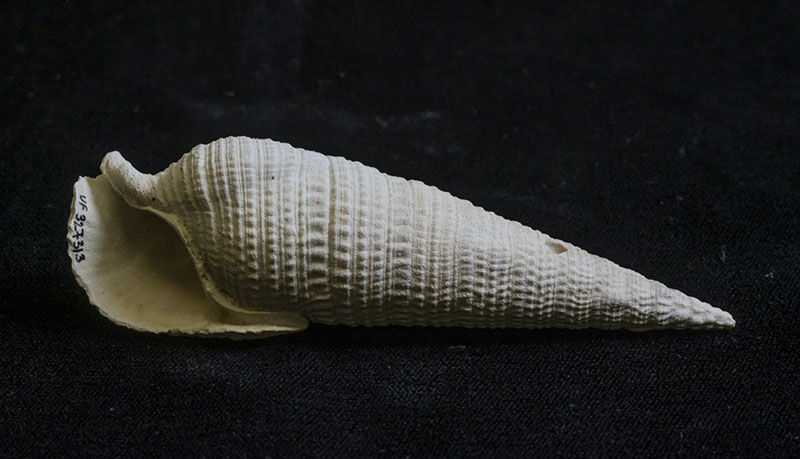
Beginning about 150 million years ago, marine predators such as fish, snails and crustaceans quickly diversified, dominating the sea. Their prey adapted by hiding, becoming more mobile or amping up their external defenses. This phenomenon, known as the Mesozoic Marine Revolution, produced the ocean life we see today and was likely as powerful as sudden mass extinctions in redefining what lived where. Credit: Jeff Gage/Florida Museum of Natural History

One reason Sepkoski's work was so revolutionary was that he took a mathematical approach to a practical problem: The fossil record is too big and complex for one person to be able to discern life's underlying patterns by looking at specimens alone.

"When its components are examined individually or in small groups, the complexity of their form, function, interaction, and history often seems overwhelming, and almost infinite," he wrote in the introduction to his 1981 study.

Organizing these components into a hierarchy of systems, he argued, presented a more complete view. Sepkoski's modelling divided 500 million years of ocean life into three great dynasties, each separated by a mass extinction that cleared the way for new groups to flourish and dominate. After the reign of trilobites, clamlike animals known as brachiopods and certain ancient corals and ammonites rose to prominence. After the cataclysmic end-Permian extinction, sometimes known as the "Great Dying," they were in turn replaced by snails, clams, crustaceans, modern corals and various kinds of bony fishes.

Sepkoski's hypothesis fundamentally changed how scientists thought about the history of life, Kowalewski said. It offered an organized way of understanding the history of marine ecosystems—the overarching storyline and plot twists.

But as our knowledge of the fossil record grows, so does Sepkoski's dilemma of how to analyze such vast and complex information, said Kowalewski.

"With millions of fossil specimens now documented, there is simply no feasible way for our brains to process such massive archives of paleontological data," he said. "Fortunately, analytical methods continue to improve, giving us better ways to extract and examine information hidden inside these immensely complex data."

Rojas took on this challenge by using the latest advancements in data modelling. Specifically, he was interested in using complex network tools to create a better representation of the fossil record. Unlike other approaches in paleobiology, complex networks use a linked structure of nodes representing physical and abstract variables to uncover underlying patterns in a given system. Network approaches can be applied to social phenomena—for example, showing a Facebook user's patterns of interactions with friends on the platform—but they can also be applied to complex natural systems. Like Sepkoski, Rojas is a classically trained paleontologist looking for a fresh perspective on the fossil record.

"There are many processes happening at the same time at multiple scales: in your neighborhood, your country and across the entire planet. Now imagine the processes that occur in one day, one year or 500 years. What we are doing is trying to understand all these things across time," he said.
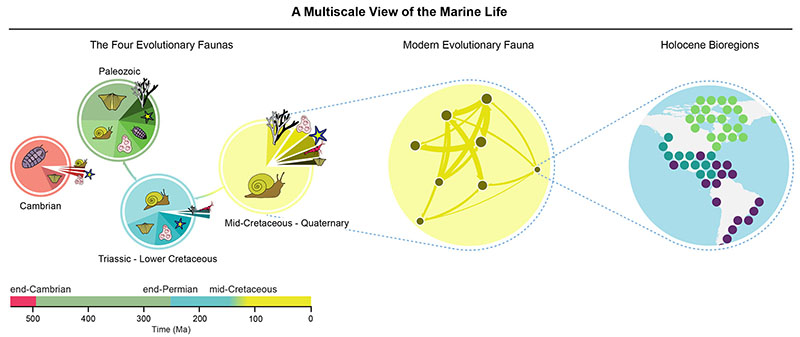
Where Sepkoski's model showed three major groups of marine life, or evolutionary faunas, this study shows four, splitting the third and most recent group into two. This last transition was likely driven by organisms themselves, rather than external processes. Credit: Alexis Rojas

A simple network might consist of a single layer—all records of animal life and where they lived. But Rojas and his colleagues' network incorporates different intervals of time as individual layers, a feature lacking in previous research on macroevolution. The result is what Rojas described as a new, abstracted fossil record, a complement to the physical fossil record represented by the specimens in museum collections.

"It's important because the questions we are asking, the processes we are studying, occur at different scales in time and space," Rojas said. "We've taken some steps back so we can look at the entire fossil record. By doing that, we can explore all sorts of questions."

Think of it like navigating a Google Earth that represents the oceans over the last 500 million years. When and where would you go?

"Our interactive map of marine life shows smaller groups of animals and their interactions within each evolutionary fauna," Rojas said. "At the most basic levels, this map shows ocean regions with particular animals. The building blocks of our study are the individual animals themselves."

This complex network shows what Sepkoski's model could not capture: a gradual transition in ocean life coincident with the Mesozoic Marine Revolution, which started about 150 million years ago during the Mesozoic Era. First hypothesized in the 1970s, this revolution was caused by the rapid increase of marine predators such as bony fish, crustaceans and snails, which have dominated oceans ever since. Their proliferation drove prey to become more mobile, hide beneath the ocean floor or enhance their defenses by thickening their armor, developing spines or improving their ability to regenerate body parts.

Sepkoski knew about the Mesozoic Marine Revolution, but his model, limited by the methods and data available at the time, was unable to delineate the ocean ecosystems preceding and following this gradual transition. The study by Rojas and his colleagues demonstrates that both physical and biological processes play key roles in shaping ocean life at the highest levels.

"We are integrating the two hypotheses—the Mesozoic Marine Revolution and the three great evolutionary faunas into a single story," Rojas said. "Instead of three phases of life, the model shows four."


Explore further

Evidence of predation by octopuses pushed back by 25 million years


More information: Alexis Rojas et al, A multiscale view of the Phanerozoic fossil record reveals the three major biotic transitions, Communications Biology (2021). DOI: 10.1038/s42003-021-01805-y

Journal information: Communications Biology

Provided by Florida Museum of Natural History

Source: https://phys.org/

What Jurassic World Evolution Does Better Than Other Park Builders

Tuesday, March 9, 2021

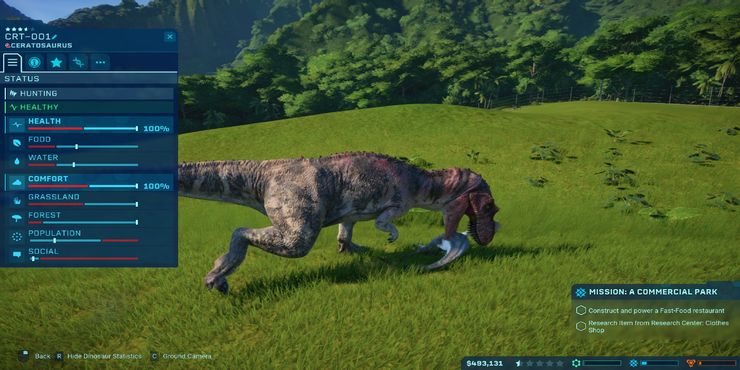
How is Jurassic World Evolution better than other park builders? There are a few things the game does differently and a few trends it builds off of.

Frontier Developments' Jurassic World Evolution stomped onto the scene with a triumphant roar, much to the delight of both fans of the franchise and enthusiasts of park-building simulators. Jurassic World Evolution brings players into a simulated world of nostalgic and child-like wonder while also remaining complex in nature, and that perfect blend allows for a nuanced experience that's never the same on different playthroughs.

It's always been a fantasy of many Jurassic Park fans to experience and even oversee their own parks. Managing dinosaurs, entertainment, and digging up fossils is all but a dream come true. Similar park builders gave gamers the ability to manage a theme park, like Roller Coaster Tycoon, and even a zoo in Planet Zoo, but bringing dinosaurs to life was an experience missing from the archive of simulators.

Despite Jurassic World Evolution building off of previous simulators, it does some of the typical park-building tropes much better and even adds its own new experiences. With that said, here are a few things Jurassic World Evolution does better than other park builders.

Jurassic World Evolution Banks On Nostalgia

Familiar music, sounds, and voices of familiar actors playing fan-favorite characters (Jeff Goldblum returns as Ian Malcolm) helps to build up the atmosphere of Jurassic World Evolution. The islands players create their parks in are also from the films, including Isla Nublar (the first movie) and Isla Sorna (The Lost World: Jurassic Park).

Not only does this setting and atmosphere do a lot to remind fans of the movies, but it is also reminiscent of an older park builder called Jurassic Park: Operation Genesis, which released for the first Xbox and PlayStation 2. Anyone who played that game can see the similarities with Jurassic World Evolution's mechanics, but the latter matured with its audience.

Jurassic World Evolution Is Complex, Yet Accessible

From the start, it's apparent Jurassic World Evolution is more complex than other simulators. Although most park builders require a balance of budget, entertainment, and marketability, this game takes it to a whole new level. During gameplay, players must balance the budget, security, entertainment, and resources all at the same time. Need to build a hatchery for your dinosaurs? That'll cost money and power, which if not closely monitored, can put players into debt very quickly.

Another element that adds complexity to Jurassic World Evolution is a store or restaurant's profitability. Is this added piece to the park bringing in enough revenue to make it worthwhile, or is it costing the park too much money?

Jurassic World Evolution Teaches Life Lessons

Like all park builders, budgeting is a huge part of Jurassic World Evolution's mechanics, but being frugal with other resources is just as important. Power is a limited resource, yet needed for every building and structure in the park, including power buildings themselves. Budgeting and resource management comes in handy, and if a player doesn't have those skills, they'll learn them the hard way.

Jurassic World Evolution also teaches multi-tasking, stress management, and problem-solving. Many islands come with their own natural disasters. For example, on one island, it's common for tornadoes to ravage the park, destroying buildings and fences while also agitating the dinosaurs. Imagine having to fix fences, gates, buildings, while also having to keep the raptors at bay. Then, at the worst time, a dinosaur comes down with a disease, which shouldn't be taken lightly.

Jurassic World Evolution Pays Attention To Detail

Some of the details in Jurassic World Evolution are so specific and nuanced that players must pay attention at all times otherwise there will be a crisis. For example, dinosaurs have specific needs and desires, including what kind of vegetation is within the enclosure. Pick the wrong type or the wrong amount and they'll get frustrated, leading to disaster. Other dinosaurs prefer a mate, while others enjoy isolation. These details force players to create enclosures that match those dinosaurs' needs. If they need a certain amount of water or grass, but the enclosure is too small to fit more, it's time to rethink the size of the entire attraction.

Source: https://screenrant.com/

260-Million-Year-Old Killing Machine Exposed

Wednesday, March 24, 2021

A live reconstruction of Anteosaurus attacking a herbivorous Moschognathus. Credit: Alex Bernardini (@SimplexPaleo)

Previously thought of as heavy, slow and sluggish, the 260-million-year-old predator, Anteosaurus, was a ferocious hunter-killer.

Judging by its massive, bone-crushing teeth, gigantic skull, and powerful jaw, there is no doubt that the Anteosaurus, a premammalian reptile that roamed the African continent 265 to 260 million years ago – during a period known as the middle Permian – was a ferocious carnivore.

However, while it was previously thought that this beast of a creature – that grew to about the size of an adult hippo or rhino, and featuring a thick crocodilian tail – was too heavy and sluggish to be an effective hunter, a new study has shown that the Anteosaurus would have been able to outrun, track down and kill its prey effectively.

Despite its name and fierce appearance, Anteosaurus is not a dinosaur but rather belongs to the dinocephalians—mammal-like reptiles predating the dinosaurs. Much like the dinosaurs, dinocephalians roamed and ruled the Earth in the past, but they originated, thrived, and died about 30 million years before the first dinosaur even existed.

The skull of Anteosaurus compared to a modern human. Credit: Wits University

The fossilized bones of Dinocephalians are found in many places in the world. They stand out by their large size and heavy weight. Dinocephalian bones are thick and dense, and Anteosaurus is no exception. The Anteosaurus’ skull was ornamented with large bosses (bumps and lumps) above the eyes and a long crest on top of the snout which, in addition to its enlarged canines, made its skull look like that of a ferocious creature. However, because of the heavy architecture of its skeleton, it was previously assumed that it was a rather sluggish, slow-moving animal, only capable of scavenging or ambushing its prey, at best.

“Some scientists even suggested that Anteosaurus was so heavy that it could only have lived in water,” says Dr. Julien Benoit of the Evolutionary Studies Institute at the University of the Witwatersrand (Wits University).

The transparent skull of Anteosaurus (left) and Moschognathus (right) showing the differences in their brain cavities (green) and inner ear (purple). Credit: Wits University

By carefully reconstructing the skull of the Anteosaurus digitally using X-ray imaging and 3D reconstructions, a team of researchers investigated the internal structures of the skull and found that the specific characteristics of its brain and balance organs were developed in such a way that it was everything but slow-moving.

“Agile predators such as cheetahs or the infamous Velociraptor have always had a very specialized nervous systems and fine-tuned sensory organs that enable them to track and hunt down prey effectively,” says Benoit. “We wanted to find out whether the Anteosaurus possessed similar adaptations.”

The team found that the organ of balance in Anteosaurus (its inner ear) was relatively larger than that of its closest relatives and other contemporaneous predators. This indicates that Anteosaurus was capable of moving much faster than its prey and competitors. They also found that the part of the brain responsible for coordinating the movements of the eyes with the head was exceptionally large, which would have been a crucial trait to ensure the animal’s tracking abilities.

“In creating the most complete reconstruction of an Anteosaurus skull to date, we found that overall, the nervous system of Anteosaurus was optimized and specialized for hunting swiftly and striking fast, unlike what was previously believed,” says Dr. Ashley Kruger from the Natural History Museum in Stockholm, Sweden and previously from Wits University. 

“Even though Anteosaurus lived 200-million years before the famous dinosaur Tyrannosaurus rexAnteosaurus was definitely not a ‘primitive’ creature, and was nothing short of a mighty prehistoric killing machine,” says Benoit.

Reference: “Palaeoneurology and palaeobiology of the dinocephalian therapsid Anteosaurus magnificus” by Julien Benoit, Ashley Kruger, Sifelani Jirah, Vincent Fernandez and Bruce S. Rubidge, 18 February 2021, Acta Palaeontologica Polonica.
DOI: 10.4202/app.00800.2020

Source: https://scitechdaily.com/

JURASSIC WORLD: FALLEN KINGDOM Blows Up Your Childhood

Saturday, March 6, 2021

Jurassic Park is an almost hallowed property, revered equally among both cinephiles and genre lovers alike. For the casual moviegoer, Jurassic Park is a premier blockbuster, a mélange of terror, stellar visuals, mainstream sensibilities, and– frankly– still unmatched awe. In the twenty-eight years since release, there’s still been nothing else quite like it (which, perhaps, accounts for its recurrent re-release every couple of years).

Genre fans, especially those who were either born or came of age in the nineties, contextualize Jurassic Park differently. Its legacy as a gateway property is undeniable. How many young people, both entranced and terrified by the serpentine raptors and screeching Dilophosaurus, later sought out adjacent horror properties? Giant monsters are an elemental horror presence, hulking behemoths that both invite and intimidate, and Jurassic Park welcomed not only a new generation of moviegoers to the wonders and possibilities of the big screen, but a new generation of horror fans as well. A generation that loved monsters.

Juan Antonio Bayona had the unenviable task of following up 2015’s Jurassic World, the long-gestating fourth sequel in the Jurassic Park franchise, and the first in a new planned trilogy. Jurassic World was (at the time) an unprecedented box office success, a return to sacred ground that, while not perfect, engendered reasonably good faith in the future. World, though, was propped up on nostalgia, a rose-colored tapestry of dino mayhem whose success was as singular as its central menace, the hybrid Indominus RexJurassic World: Fallen Kingdom, Bayona’s sequel, couldn’t trade in the same evocation of a venerated past. Like the park itself, you can only return to the same well once. Any more than that risks disastrous consequences.

Bayona’s response– one that resultantly led to lukewarm reviews and a tepid box office reception– was to blow it all up. Jurassic Park or World, whatever the park was and had been, would be no more. With a non-canon active volcano, Bayona burned it all to the ground. In its place, he imbued the franchise with his signature gothic sensibility and Flanagan-esque pathos, a kind of heavy-handed sentimentalism, replete with stirring orchestral soundtracks and elegiac plotting. Krakatoa is invoked as Isla Nublar is engulfed in ash and flame. The dinosaurs of the past, including Spielberg’s own introductory brachiosaurus, are killed, silhouetted in a plume while new trilogy composer Michael Giacchino’s Pixar-lite score creeps in from the filmic edge.

It was a bold choice, one that effectively cleaves Jurassic World: Fallen Kingdom into two distinct movies. The first, largely set on Isla Nublar and concerned with wrapping up the events of the first, is almost mandated. It’s filmmaking as contract. Reintroduce the characters, sprinkle in a smattering of safe, tragicomic jokes, and conclude dangling threads. The second and arguably more controversial choice is considerably more intimate. Where Jurassic World ended with a dino fight for the ages, Bayona instead takes us to the Lockwood Estate, a microcosm of his own gothic empathy, for tales of cloning, neo-capitalist greed, and haunted house horror.

The new baddie is another hybrid, this time known as the Indoraptor (though it’s unclear why this particular genetic modification renders it all that different from the first movie’s IndominusRex). The Indoraptor, as expected, escapes, and the dénouement is the first movie’s refracted through a twenty-first century lens. The monster is bigger, the setting is darker, and the scares are more calculated, though Bayona does pull off one stellar stalk-and-kill sequence involving a power outage and museum displays. Fallen Kingdom is then hurriedly concluded, a hodgepodge of inconsistent behavior, almost as if the characters are acting pursuant to the demands of a franchise, not their own internal lives.

Collectively, then, Fallen Kingdom is thus regarded as the black sheep (tyrannosaurus) of the Jurassic Park family. It’s too serious to be as fun as Jurassic Park III, and The Lost World, for all its faults, looks considerably better in retrospect– nobody does Spielberg better than Spielberg himself. I’d argue, though, that the audience and fan indignation is preponderantly undeserved. Next to the first, Fallen Kingdom is the best looking in the entire franchise. With frequent collaborator Óscar Faura, Bayona plays with light and shadow similarly to how he did with his acclaimed debut The OrphanageJurassic World: Fallen Kingdom looks and acts like a horror movie. Its big, bleeding heart is one of terror and portentous, Dark Age flair. Nothing in 2018 looked quite as good as the Mosasaurus silently gliding over a mercenary sub, illuminated only by rogue flashes of lightning on the surface above.

Bayona blows up our childhoods to replace it with something new. That something new isn’t always better, but it’s different. Jurassic World was never going to happen again– that was a singular, unprecedented filmic event, one not unlike the first. The success in such a truncated timeline– just three years between releases– was out of reach. Bayona, then, chose instead to trade in our childhood fears. The fear of losing what we love most. The liminal terror of returning to a place, once familiar, that now feels foreign, a space that looks and acts as we expect it to but is still uncannily off. These threads are familiar to fans of Bayona’s past work, but Fallen Kingdom was his largest canvas yet. For large swaths of the theatrical audience, Bayona was an unknown. His directorial and narrative temperament was an unknown. Audiences, not unlike Bryce Dallas Howard looking on toward the death of the brachiosaurus on the dock, were likely overwhelmed with crestfallen feelings of uncertainty and fear. Fallen Kingdom was different. Fallen Kingdom existed in a brave new world.

In the pantheon of giant monster movies and– hell– within the pantheon of the Jurassic Park franchise itself, Fallen Kingdom deserves reconsideration. The movie is far from perfect, and by most critical accounts, it fails. The storytelling is jumbled, it suffers from middle-entry syndrome, and the number of new thematic threads introduced– while brazen– are nonetheless disorienting. It is, however, a hulking, unconventional, and certifiably gothic Jurassic Park movie, and that alone is worth celebrating. Intimate in scale and worthwhile in scope, Jurassic World: Fallen Kingdom rises from the ashes of its forebears and blazes a path of its own. With Jurassic World: Dominion slated for release next summer, it remains to be seen whether Bayona’s apocalyptic landscape destroyed everything for something or, like the team at Ingen, played God just to watch the world burn. I, however, have hope that his sentimental tapestry of weirdness means something more. I don’t think his kingdom has fallen. Rather, I think he’s poised to build one of his own.

Source: www.dreadcentral.com/

Largest Dinosaur Tracksite in China Discovered

Sunday, March 7, 2021

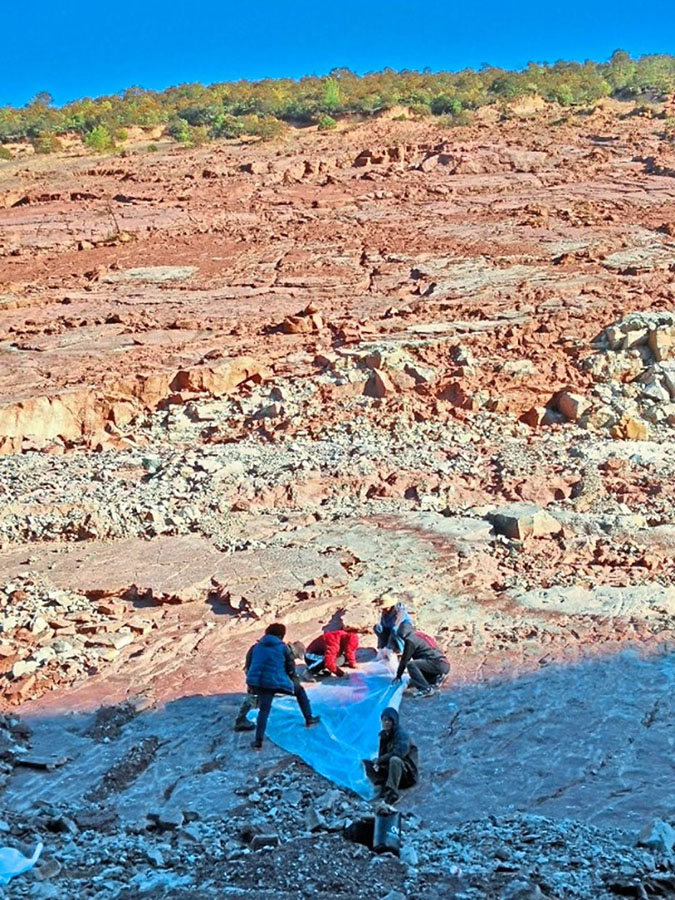
Footprints in time: Scientists using a plastic sheet to outline the dinosaur tracksite in Zhaojue, Sichuan province. — China Daily/ANN

Paleontologists from home and abroad confirmed in a recently published essay that they have found the largest dinosaur tracksite ever discovered in China in Zhaojue, Sichuan province.

The site covers an area of over 9,000sq m, including at least 933 tracks.

The essay, co-written by Xing Lida, associate professor of China University of Geosciences (CUG), doctoral candidate Wang Miaoyan from CUG, Peng Guangzhao and Ye Yong, researchers from the Zigong Dinosaur Museum, Martin G. Lockley, professor at the University of Colorado Denver, and Hendrik Klein, dinosaur scholar from Germany, has been published in the international geological periodical Geoscience Frontiers.

Located in the middle of a copper mine in Zhaojue, these were arguably the most important tracksites in southwestern China, containing diverse sauropod, theropod, ornithopod and pterosaur track assemblages, the essay said.

The Zhaojue tracksites extend 1km from north to south and span 0.5km from east to west, consisting of four important track-bearing surfaces, numbered as I, II, IIN (north) and III, of which Zhaojue-I was first reported in 1994 and the others were sequentially discovered from 2012 to 2019.

The four tracksites contain a total of 1,928 tracks, covering an area of over 10,000sq m, including the previously reported pterosaurs and theropod swim tracks.

Zhaojue-II experienced two exposures. In 2013, paleontologists found the first dinosaur’s swimming track there in China. The copper mining later increased the exposure of the tracksite so that it has been recognised as the largest dinosaur track site so far discovered in China.

From 2017 to 2019, paleontologists mapped the tracksite using drone technology, finding at least 933 recognisable dinosaur tracks, and the longest sauropod and ornithopoda tracks ever recorded in China, which measure 80m and 52m respectively.

The Zhaojue-II tracksite contains 61 trackways and seven isolated tracks, representing 68 track makers, of which 54% were ornithopoda.

“Because the tracksites contain tracks of many different kinds of dinosaurs, it is important to the study of the living environment of dinosaurs in the Cretaceous Period, ” Peng said. — China Daily/ANN

Source: www.thestar.com.my/

Pages