nandi's blog

Paleontologists Uncover Remains of Extinct Tree-Climbing Kangaroo

Friday, March 26, 2021

Congruus kitcheneri was adapted to climb through powerful forelimbs and hindlimbs, grasping hands and strongly curved claws. This image shows the living swamp wallaby (Wallabia bicolor). Image credit: John O’Neill / CC BY-SA 3.0.

Congruus kitcheneri, an extinct species of kangaroo that lived in Australia between 2.6 million and 12,000 years ago, was adapted for climbing trees, although it was larger and not as specialized for arboreal living as the tree-kangaroos.

“Kangaroos and their relatives (family Macropodidae) descended from arboreal possum-like ancestors during the Paleogene period before becoming the main ground-dwelling mammalian herbivores of the Australian continent over the past 20 million years,” said Flinders University’s Professor Gavin Prideaux and Dr. Natalie Warburton of Murdoch University.

“There are more than 60 living species, including bettongs, wallabies and kangaroos, and many more extinct species, including giant short-faced kangaroos.”

“Smaller extant macropodids are mainly solitary fungivores or browsers, while larger species tend to be grass consumers.”

“Eleven of the 12 living macropodine genera are characterized by species that are principally ground dwelling.”

“They employ a bipedal hopping when moving at speed, and a pentapedal mode, involving the use of the tail as a ‘fifth limb’ when moving slowly. These locomotory styles are facilitated by striking adaptations in physiology and skeletal anatomy, including elongation of the hindlimbs and feet, and reconfiguration of the ankle joint to minimize lateral and rotational movement during hopping.”

“The one living genus that deviates from this pattern is Dendrolagus, which contains the tree-kangaroos of New Guinea and extreme northeastern Australia.”

“They descended from ground-dwelling ancestors by ascending into the trees. Tree-kangaroos can hop bipedally as well as move their hindlimbs alternately.”

Exquisite preservation of hands and feet of Congruus kitcheneri from the Nullarbor Plain of Western Australia. Image credit: Natalie Warburton, Murdoch University.

In a paper published in the journal Royal Society Open Science, the researchers presented the first published skeletal description of an extinct Australian macropodine that is not a tree-kangaroo.

“The specimens we analyzed suggest this species would climb and ‘move slowly’ through trees,” Dr. Warburton said.

The team examined several cranial specimens and two near-complete kangaroo skeletons, a male and a female, from the Thylacoleo Caves of the Nullarbor Plain in south-central Australia.

“The Thylacoleo Caves are famous for both the remarkably complete preservation of the fossil remains and the insights they provide into the unexpectedly high level of diversity of large marsupial species that inhabited what is now an arid treeless plain,” Professor Prideaux said.

“Despite purportedly being an expert in fossil kangaroos, it took me most of that time to work out that these two skeletons belonged to a species first described decades earlier from jaw fragments from a cave in southwestern Australia.”

“By undertaking a painstaking process of identifying and describing the anatomical details of every single bone that was recovered from the skeletons, we have been able to reveal that this species of extinct kangaroo was adapted for climbing trees in order to browse on plant material not available to animals that are stuck on the ground,” Dr. Warburton said.

This extinct species was first described as Wallabia kitcheneri in 1989 from Pleistocene deposits of Mammoth Cave in southwestern Australia.

Professor Prideaux and Dr. Warburton reallocated it to the previously monotypic genus Congruus.

“These fossils have unusually long fingers and toes with long, curved-claws, in comparison to other kangaroos and wallabies, for gripping; powerful arm muscles to raise and hold themselves up in trees, and a longer, more mobile neck than other kangaroos that would be useful for reaching out the head in different directions for browsing on leaves,” Dr. Warburton said.

“This is really interesting, not just from the point of view of unexpected tree-climbing behavior in a large kangaroo, but also as these specimens come from an area that is now bare of trees, and so tells us that the habitat and environment in the area were really different to what they are now, and perhaps different to what we might have previously interpreted for that time.”

“This is unexpected and exciting and it provides us with new information as we try to understand the changing environments of Australia through time.”

_____

Natalie M. Warburton & Gavin J. Prideaux. 2021. The skeleton of Congruus kitcheneri, a semiarboreal kangaroo from the Pleistocene of southern Australia. R. Soc. open sci 8 (3): 202216; doi: 10.1098/rsos.202216

Source: www.sci-news.com/
Cephalopods: Older Than Was Thought?

Wednesday, March 24, 2021

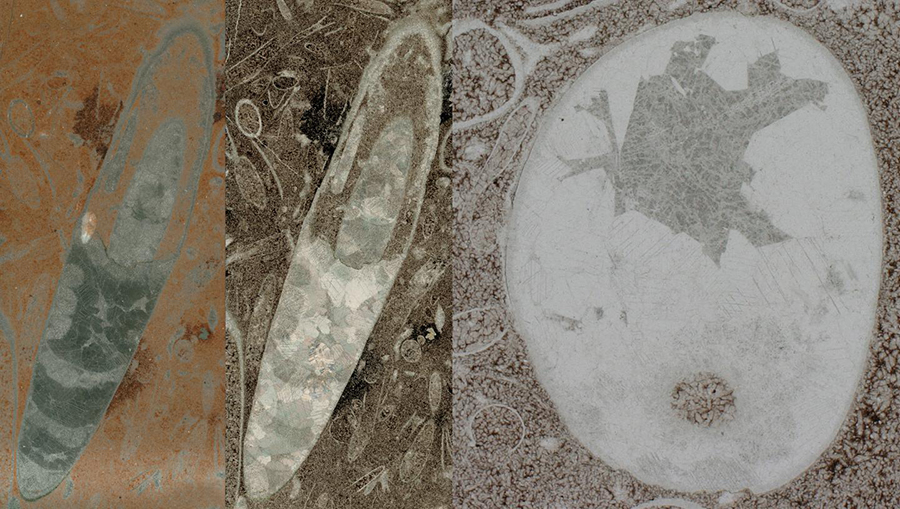
Longitudinal and cross section of fossils that could turn out to be the first known form of a cephalopod.  CREDIT Gregor Austermann / Communications Biology

Fossil find from Canada could rewrite the evolutionary history of invertebrate organisms.

The possibly oldest cephalopods in the earth's history stem from the Avalon Peninsula in Newfoundland (Canada). They were discovered by earth scientists from Heidelberg University. The 522 million-year-old fossils could turn out to be the first known form of these highly evolved invertebrate organisms, whose living descendants today include species such as the cuttlefish, octopus and nautilus. In that case, the find would indicate that the cephalopods evolved about 30 million years earlier than has been assumed.

"If they should actually be cephalopods, we would have to backdate the origin of cephalopods into the early Cambrian period," says Dr Anne Hildenbrand from the Institute of Earth Sciences. Together with Dr Gregor Austermann, she headed the research projects carried out in cooperation with the Bavarian Natural History Collections. "That would mean that cephalopods emerged at the very beginning of the evolution of multicellular organisms during the Cambrian explosion."

The chalky shells of the fossils found on the eastern Avalon Peninsula are shaped like a longish cone and subdivided into individual chambers. These are connected by a tube called the siphuncle. The cephalopods were thus the first organisms able to move actively up and down in the water and thus settle in the open ocean as their habitat. The fossils are distant relatives of the spiral-shaped nautilus, but clearly differ in shape from early finds and the still existing representatives of that class.

"This find is extraordinary," says Dr Austermann. "In scientific circles it was long suspected that the evolution of these highly developed organisms had begun much earlier than hitherto assumed. But there was a lack of fossil evidence to back up this theory." According to the Heidelberg scientists, the fossils from the Avalon Peninsula might supply this evidence, as on the one hand, they resemble other known early cephalopods but, on the other, differ so much from them that they might conceivably form a link leading to the early Cambrian.

The former and little explored micro-continent of Avalonia, which - besides the east coast of Newfoundland - comprises parts of Europe, is particularly suited to paleontological research, since many different creatures from the Cambrian period are still preserved in its rocks. The researchers hope that other, better preserved finds will confirm the classification of their discoveries as early cephalopods.

The research results about the 522 million-year-old fossils were published in the Nature-journal "Communications Biology". Logistic support was given by the province of Newfoundland and the Manuels River Natural Heritage Society located there. The publication in open-access format was enabled in the context of Project DEAL.

Source: www.eurekalert.org/

10 of the Coolest Dinosaur Findings

Saturday, April 10, 2021

The right side of the nodosaur's head still bears distinctive tile-like plates and a gray patina of fossilized skin. PHOTOGRAPH BY ROBERT CLARK, NATIONAL GEOGRAPHIC

Dinosaurs went extinct 66 million years ago, but we're still learning their secrets. Here are 10 mind-blowing dino discoveries, including newly described species, an analysis of soft-shelled dinosaur eggs and takedowns of speculative species.

1. Spinosaurus could swim

Spinosaurus used its tail to swim (Gustavo Monroy-Becerril CC BY-SA 4.0 )

Scientists thought for years that Spinosaurus could swim, but had precious few fossils to prove it. The most complete specimen had been destroyed in an Allied bombing raid against Germany during World War II. But now, the analysis of a Spinosaurus tail reveals that the tail was broad and paddle-like, perfect for a swimmer, according to an April 2020 study in the journal Nature.

"This discovery is the nail in the coffin for the idea that non-avian dinosaurs never invaded the aquatic realm," study lead author Nizar Ibrahim, a paleontologist at the University of Detroit Mercy, said in a statement. "This dinosaur was actively pursuing prey in the water column, not just standing in shallow waters waiting for fish to swim by."

2. Best-preserved dino stomach

Life reconstruction of the armored dinosaur Borealopelta markmitchelli, which lived in what is now Alberta, Canada, some 110 million years ago, eating ferns. Image credit: Julius Csotonyi / Royal Tyrrell Museum.

It's challenging to know exactly what herbivorous dinosaurs ate — leaves and other plant materials don't fossilize well, and even if ancient organic matter is preserved, it's hard to know whether the dinosaur ate it, or if the two fossilized side-by-side by chance. 

The discovery of a nodosaur fossil with a well-preserved digestive tract has helped shed light on this mystery. Researchers analyzed the 112 million-year-old beast's fossilized stomach contents, and learned that the nodosaur, named Borealopelta markmitchelli, was a picky eater, according to the June 2020 study in the journal Royal Society Open Science. 

The 18-foot-long (5.5 meters) B. markmitchelli ate only certain types of ferns, and apparently it preferred leaves to stems and twigs. The dinosaur also had pea- to grape-size stones, known as gastroliths, in its gut that likely helped it break down food. 

Bon appetit! 

3. Horned titanosaur embryo

A titanosaur embryo was discovered perfectly preserved inside its egg. (University of Manchester)

Before the long-necked titanosaur dinosaurs got huge, they were wee babes with … a horn? 

The discovery of a rare titanosaur embryo in Argentina revealed that this little tyke had a rhino-like horn on its snout, which it lost by adulthood, an August 2020 study in the journal Current Biology found. 

No word yet on whether its enormous parents thought this little babe's horn looked cute 80 million years ago, but at least the horn was handy — it's possible the baby used it to peck out of its shell.

4. Soft-shelled eggs

The exceptionally preserved Protoceratops specimen includes six embryos that preserve nearly complete skeletons. Image credit: M. Ellison / American Museum of Natural History.

Speaking of eggs, the first dinosaur eggs may have had soft shells, a June 2020 study in the journal Nature found. Researchers found ancient eggs from two dinosaur species — the horned dinosaur Protoceratops, which lived during the Cretaceous period, and the long-necked sauropodomorph Mussaurus that lived during the Triassic period.

In a separate Nature study, another group of scientists in Antarctica found the 68 million-year-old soft-shell egg of a mosasaur, which is not a dinosaur but a reptilian sea monster that lived during the dinosaur age. 

It's still a mystery whether this football-size mosasaur egg was laid and hatched in the water, or on dry land like a turtle.

5. Meet T. rex's cousin: 'Reaper of death'

Thanatotheristes degrootorum. Image credit: Julius Scotonyi, Royal Tyrrell Museum.

Tyrannosaurus rex has a newfound cousin with a fearsome name — the "reaper of death," which hails from what is now Alberta, Canada. This 79.5 million-year-old beast (Thanatotheristes degrootorum) is the oldest named tyrannosaur on record from North America. It's also the first newly named tyrannosaur from Canada in 50 years. (Congrats, Canada!)

"It definitely would have been quite an imposing animal, roughly 8 feet (2.4 meters) [tall] at the hips," Jared Voris, a doctoral student of paleontology at the University of Calgary in Alberta and lead researcher of the study, told Live Science in February 2020.

The "reaper of death" had unique vertical ridges that ran from its eyes along its upper snout. Scientists aren't sure why the carnivore had these ridges, but if you were its prey, they were possibly one of the last things you saw before the reaper finished you off.

6. The dinosaur that wasn't

Researchers initially thought this skull belonged to a bird-like dinosaur. Now, evidence suggests that it's the head of a lizard. (Image: © Lida Xing)

A 99 million-year-old piece of amber from Myanmar (formerly Burma) with a mystery creature's skull preserved inside made headlines when researchers said it might be the smallest dinosaur on record. This bird-like dinosaur was said to have about 100 sharp and tiny teeth and weigh just 0.07 ounces (2 grams), the weight of two dollars bills. 

However, other specimens of this animal have now been analyzed further, and it appears that it's not a dinosaur, but a lizard. As a result, the original study was retracted.

Even so, the researchers of the retracted study are still excited to celebrate this weird beastie. "It's just a really weird animal and an important discovery regardless of whether it's a weird bird or a weird lizard with a bird head," study co-lead researcher Jingmai O'Connor, formerly a senior professor of vertebrate paleontology at the Chinese Academy of Sciences, who is now at the Field Museum of Natural History in Chicago, told Live Science in July 2020. 

7. Tyrannosaur embryos

An artist’s impression of a juvenile tyrannosaur. Image credit: Julius Csotonyi.

The only two tyrannosaur embryos on record are now being studied, and gosh are they small. This apex predator started out with a skull the size of a mouse. 

The fossils of these wee babes include a toe claw found in Alberta, Canada and a jawbone unearthed in Montana.

"These are incredibly rare finds — the first of their kind in the world," lead researcher Gregory Funston, a paleontologist at the University of Edinburgh in Scotland, told Live Science in October 2020. "Juvenile tyrannosaurs of any kind are exceedingly rare, and we've never found any bones that we suspected might be embryos, until now." 

8. Two knocks against Nanotyrannus

A dinosaur called Nanotyrannus (left in this illustration), once thought to be a smaller cousin of Tyrannosaurus rex (right), was probably a juvenile T. rex, a new study suggests. JULIUS T. CSOTONYI

Does the species Nanotyrannus exist? Some researchers say certain tyrannosaur remains belong to a pygmy tyrannosaurus called Nanotyrannus, while others maintain the remains are teenage Tyrannosaurus rexes. The majority of researchers often say Nanotyrannus hasn't been completely ruled out, so until more evidence piles up, it's possible the beast was real. 

Unfortunately for Nanotyrannus, 2020 brought two studies saying it was a teenage rex. In a January study in the journal Science Advances, researchers studied two well-known tyrannosaurus specimens, nicknamed Jane and Petey. A bone analysis found that Jane and Petey were just 13 and 15 years old, and that their bones were growing quickly, just like a teenager's would.  

The second study, published in June in the journal PeerJ, took an intense look at 44 different T. rex individuals and analyzed the species' growth stages. The teenage T. rexes fit perfectly into the growth curves, indicating that Nanotyrannus is a T. rex, not a separate species.

9. Dueling Dinosaurs sold to museum

An illustration of the position of the two "Dueling Dinosaurs." Image source: North Carolina Museum of Natural History

Two famous dinosaur fossils are finally being studied by scientists. The so-called "Dueling Dinosaurs," the fossils of the most complete Tyrannosaurus rex and Triceratops on record, which may (or may not) have been dueling at the time of their deaths, are going to the North Carolina Museum of Natural Sciences (NCMNS) following a $6 million deal in November 2020.

Amateaur fossil hunters in Montana discovered the "Dueling Dinosaurs" in 2006, but couldn't find a buyer. The fossils also failed to sell at a 2013 auction. And then, a lawsuit dogged the discovery, with the land's previous owners claiming the fossils were theirs. 

But now, the 67 million-year-old Dueling Dinosaurs are getting an extraordinary exhibit that will invite the public and students to get involved as scientists slowly learn about the dinosaurs encased in stone.

10. Could duck-billed dinosaurs swim?

An artist’s impression of a group of hadrosaurs. Image credit: Raul Martin.

A newly discovered duck-billed dinosaur named Ajnabia odysseus was found where it shouldn't have been. Its fossils were unearthed in Morocco, a November 2020 study found. "It was completely out of place, like finding a kangaroo in Scotland," study lead researcher Nicholas Longrich, a paleontologist at the University of Bath, said in a statement.

Duck bills evolved in North America and later made their way to South America, Asia and Europe. But Africa was an island continent 66 million years ago during the late Cretaceous, when A. odysseus was alive. So, how did it get there?

Did the pony-size A. odysseus raft to Africa on debris? Did it float or possibly swim there? Your guess is as good as ours!

Source: www.msn.com/

Ark Survival Evolved: Everything You Need To Know About The Pteranodon

Monday, March 22, 2021

Ark: Survival Evolved beginners will definitely want to find and befriend a Pteranodon as soon as possible. Here's all you need to know about them.

The Pteranodon is the first of many dinosaurs players will see when they begin playing Ark: Survival Evolved. The creature is almost always going to be the first flier that gamers attempt to tame as well. Beginners and players on a new server should craft the necessary items to tame the small flying dinos.

The docile Pteranodon will not attack players unless they are provoked. As a result, it is one of the easiest animals to tame in Ark. Gamers can walk right up to a Pteranodon without consequence, unlike most dinosaurs players try to tame.

Downing A Pteranodon

Because Pteranodon are low-level creatures, gamers will not need upgraded weapons and gear to tame the creature. Instead, players can use the primitive crossbow and bola to down the dinosaur. Using the crossbow alone will not be sufficient, as Pteranodon over level 20 will usually fly away after being hit. However, if gamers use bola to trap the creature, they can fire an extra tranquilizer arrow or two to down the dino. After two shots, the Pteranodon will be downed and players can begin the taming process. Any Pteranodon above level 100 can break free from bola and fly away, however, so players will need stronger weapons for those creatures. Survivors should always have at least ten tranquilizer darts in their inventory before setting out to tame a dino. It is also a good idea to have at least a couple of bola, as accidents do happen. A spyglass is not necessary, but it will make identifying the right Ptera more straightforward.

Food And Taming

Players can use raw meat to revive and tame the Pteranodon. Raw meat can be harvested from essentially every dinosaur roaming the map. Prime meat is not necessary, but it will have a quicker effect. Giving the creature food alone will revive it, but it will take ages. Instead, Gamers will need to have some narcotics on hand to accelerate the process. As a general rule, 20 narcotics are usually enough to subdue any Ptera. If fed prime meat, the creature will need less narcotics to be tamed.

Taming an Ichthyornis can streamline the process of collecting raw meat and raw prime meat. The small scavenger bird will kill and retrieve meat from diminutive creatures. Players can kill dinosaurs while the Ichthyornis is roaming to kill two birds with one stone. Ark gamers should have the Ichthyornis set to hunt and retrieve to make sure that it brings back the carcass. With prime meat and some narcotics, the Pteranodon can be tamed in just a few minutes. Kibble and mutton are the best taming foods, but at lower levels, the materials will not be readily available. Players that can get their hand on shocking tranquilizer darts can take down higher-level Pteranodon. While the Ptera is being tamed, players should monitor the raw meat in its inventory. If the stock is running low, players can give the Ptera a few narcotics and harvest more meat.

Crafting A Saddle

Once Players have tamed the Pteranodon, they need to craft a saddle to use the dino as a mount. Gamers will need the following items to craft the saddle:

  • 75 Chitlin/Keratin
  • 125 Fiber
  • 230 Hide
  • 15 engram points

At lower levels, getting the materials can seem daunting. However, even with primitive weapons, players can get all the materials they need from taking out Carbonemys. Triceratops will drop the necessary materials as well, but their attacks pack a punch.

Leveling And Attacks

The main focus for players with a tamed Pteranodon should be increasing the creature's stamina. Increasing stamina will improve flying speed and flying distance. Leveling up the weight of a Ptera is also important, but not necessary early in the game. The Pteranodon has several attacks that can be used while mounted. The first is a bite attack, which will do a moderate amount of damage to lower-level enemies. The creature can also grab items and dinos while mounted. However, the Pteranodon can only pick up Dilophosaurs and smaller dinosaurs. The Pteranodon's best attack is a spinning dive. Gamers that want to deal the most damage using the dino should be using the attack, which does more than two times the damage of the bite attack. The dinosaur can even take down a low-level Rex. Players need to pay attention to the stamina bar, however, as the spin attack will use large portions of the Ptera's available stamina.

Pteranodons are some of the fastest fliers in the game, and the mount will help gamers locate and tame larger dinosaurs as they progress in the game. By taming and mounting the small flier early, gamers will be able to traverse the landscape better and progress faster. Beginners need to tame a Pretanodon, as they are the best low-level dinos in the game.

Source: https://gamerant.com/

Aquilolamna milarcae: Cretaceous Plankton-Eating Shark Had Long, Wing-Like Fins

Saturday, March 20, 2021

Life reconstruction of Aquilolamna milarcae. Image credit: Oscar Sanisidro.

A new species of shark with hypertrophied, slender pectoral fins has been identified from the fossilized remains discovered in northern Mexico.

The newly-identified shark species, named Aquilolamna milarcae, swam in the Late Cretaceous oceans, approximately 93 million years ago.

“The complete specimen was found in 2012 in Vallecillo, Mexico, a locality yielding remarkably preserved fossils,” said lead author Dr. Romain Vullo from the University of Rennes and the CNRS and colleagues.

“This site, already famous for its many fossils of ammonites, bony fish and other marine reptiles, is most useful for documenting the evolution of oceanic animals.”

Aquilolamna milarcae belongs to Lamniformes, an order of sharks in the subclass Elasmobranchii.

“Elasmobranchs are the highly successful group of cartilaginous fishes, including sharks, skates and rays,” the paleontologists said.

“They first appeared in Earth’s oceans roughly 380 million years ago and have since evolved to fill a diverse array of ecological roles.”

“Modern plankton-feeding elasmobranchs are characterized by two distantly related clades — those with a more ‘traditional’ shark-like body shape, such as whale and basking sharks, and those with the sleek, flattened bodies and winglike fins of Mobulidae rays.”

“Standing out among both living and fossil planktivorous (plankton-eating) sharks and rays, Aquilolamna milarcae resides somewhere in-between.”

Fossil of Aquilolamna milarcae found in the limestone of Vallecillo, Mexico. Image credit: Wolfgang Stinnesbeck.

Aquilolamna milarcae had many features similar to modern manta rays, notably long, slender fins and a mouth adapted to filter feeding, suggesting that it was planktivorous.

“It had a caudal fin with a well-developed superior lobe, typical of most pelagic sharks, such as whale sharks and tiger sharks,” Dr. Vullo said.

“Thus, its anatomical features thus give it a chimeric appearance that combines both sharks and rays.”

“With its large mouth and supposed very small teeth, it must have fed on plankton.”

Aquilolamna milarcae was a relatively slow swimmer, using both its long pectoral fins and tail to glide through the water while scooping up suspended plankton using its large, gaping mouth.

“Its body plan represents an unexpected evolutionary experimentation with underwater flight among sharks, more than 30 million years before the rise of Mobulidae rays, and shows that winglike pectoral fins have evolved independently in two distantly related clades of filter-feeding elasmobranches,” the researchers said.

The discovery of Aquilolamna milarcae is reported in a paper in the journal Science.

_____

Romain Vullo et al. 2021. Manta-like planktivorous sharks in Late Cretaceous oceans. Science 371 (6535): 1253-1256; doi: 10.1126/science.abc1490

Source: www.sci-news.com/

Giant Armoured Dinosaur May Have Dug in the Ground for Food and Water

Friday, March 19, 2021

Reconstruction of an ankylosaurid dinosaur digging with its forelimbs  Yusik Choi

New skeletal remains excavated in Mongolia of an ankylosaurid, an armoured herbivore that lived sometime between 84 and 72 million years ago during the Cretaceous Period, suggests that the dinosaur was adapted to digging.

Yuong-Nam Lee at Seoul National University in South Korea and his colleagues collected the ankylosaurid remains – belonging to an individual that was more than 6 metres long – from the Gobi desert in Mongolia.

Ankylosaurids were bulky quadrupeds with short and powerful limbs. They had an armoured body with wedge-shaped bony protrusions in their skin known as osteoderms, as well as a tail club.

“Articulated body skeletons of armoured dinosaurs are quite rare,” says Lee. To date, only four individuals with fairly complete body skeletons have been discovered. “For this reason, little is known about these magnificent animals,” says Lee. “The nearly complete skeleton that we have studied provides valuable information about their evolution and behaviour.”

The articulated ankylosaur remains. Image: Yuong-Nam Lee

The bones of the ankylosaurid show that it had heavily built forelimbs and forefeet suited for digging.

The fusion of several vertebrae and ribs may have helped keep the dinosaur’s trunk rigid, stabilising the body while it dug using its forelimbs.

“These armoured dinosaurs, especially the Asian species, lived in arid to semiarid environments. They may have been able to dig out roots for food, and dig wells to reach subsurface water as modern African elephants do today,” says Lee.

Digging dinosaurs are relatively rare, although some small dinosaurs are known to have dug burrows.

The ankylosaurid specimen was excavated in 2008, as part of 700 vertebrate fossils the team collected over a five-year field trip.

“Because of limited human resources, it takes a lot of time and effort to identify, classify and study these specimens,” says Lee.

Journal reference: Scientific ReportsDOI: 10.1038/s41598-021-83568-4

Source: www.newscientist.com/

Scientists Examine More Than 60 Teeth Of Stegosaurs From Yakutia

Friday, March 19, 2021

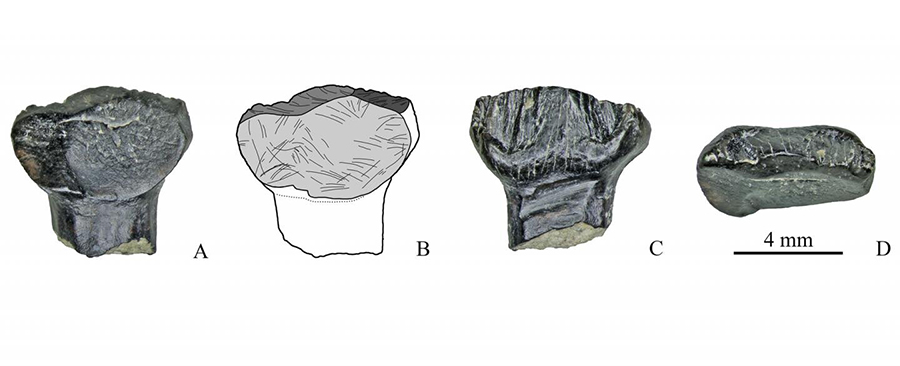
Stegosaurian teeth found at the Teete stream (the Republic of Sakha), in different planes Credit: SPbU

Powerful and squat Stegosaurs are now one of the most recognizable dinosaurs: they are easily identified by the spines on the tail and the bony plates on the back—osteoderms. The representatives of this group lived about 165-125 million years ago, during the Jurassic and early Cretaceous periods. They were five to seven meters long and had a disproportionately small head. Their teeth were therefore quite small—about a centimeter in height and about the same in width.

Paleontologists from St Petersburg University worked together with colleagues from: the Zoological Institute of the Russian Academy of Sciences; the Borissiak Paleontological Institute of the Russian Academy of Sciences; the University of Bonn; and the Diamond and Precious Metal Geology Institute of the Siberian Branch of the Russian Academy of Sciences. The research materials were collected during a series of expeditions to the Republic of Sakha in 2012 and 2017-2019. On the banks of the Teete stream, not far from the small Yakut town of Suntar, there is a large, but not yet fully examined locality of dinosaurs. In the Cretaceous, these territories were located close to the North Pole, which means that they can shed light on the life of polar dinosaurs. Was the local fauna different from that of the southern regions? What was the climate here? How were animals affected by the polar day and polar night? The scientists are trying to find answers to these questions, including by studying the teeth of ancient creatures.

"We have found teeth of animals of different ages—both adults and cubs," said Pavel Skutschas. "This suggests that the polar stegosaurs are most likely to have been sedentary: they multiplied and raised offspring on the same territory all year round. Additionally, almost all of the finds are extremely eaten away: many of them have two or three facets—worn edges from contact with adjacent teeth."

This feature prompted the researchers to believe that second dentition in polar stegosaurs could occur sufficiently quickly. The scientists therefore investigated 'temporary rings' - the so-called von Ebner lines, which can be used to calculate the number of days required for odontogenesis. It took Yakut stegosaurs only about 95 days to complete this task, although in other dinosaur species the process usually lasted 200 days or longer. These Yakut inhabitants are most likely not to have suffered from caries since it takes much more time for it to appear.

"The fact that teeth formed quickly, grinded quickly and changed quickly is highly likely to indicate that the stegosaurs from Yakutia ate some kind of tough food. We cannot yet say with 100% certainty that we have found polar adaptation, since there is, in principle, very little information about the teeth of stegosaurs. However, their teeth, found in more southern areas, usually have only one wear surface. In a word, this is a new question for palaeobotanists—what was the hard plant growing in the polar regions that the Yakut stegosaurs ate?" noted Pavel Skutschas.

Another remarkable thing made it possible to take a different view on the structure of the jaws of these animals: on the surface of the teeth abrasion, the scientists were able to spot curved micro gouges. Paleontologists used to assume that very simple jaw movements were characteristic of stegosaurs—up and down, like scissors. However, now, thanks to the patterns of gouges on the facets, it became clear that jaw movements were more complex and included a longitudinal phase.

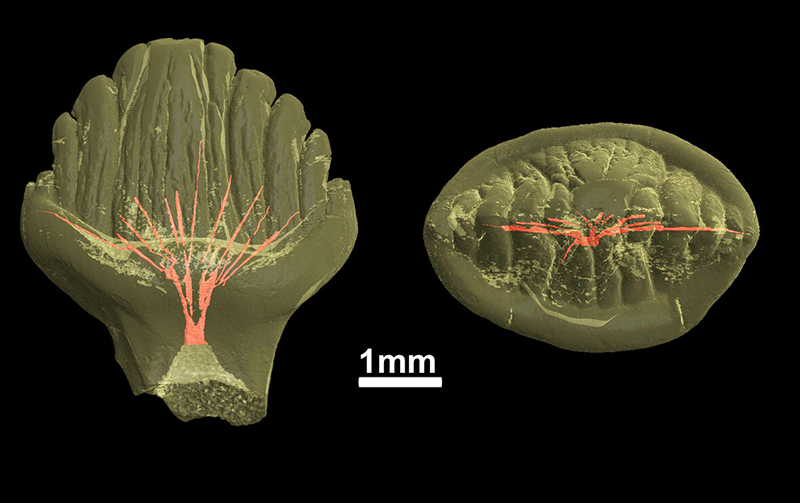
Reconstruction of the pulp cavity inside the stegosaurian tooth. Credit: SPBU

Another conclusion turned out to be associated with the wavy structure of the enamel. It used to be thought that it was unique to the younger Late Cretaceous dinosaurs, which had a complex dentition, such as the hadrosaurids. However, the paleontologists saw this feature in stegosaurs from Yakutia and decided to examine the teeth of another Early Cretaceous dinosaur, a primitive relative of Triceratops—Psittacosaurus. This unique feature turned out to have been prevalent among dinosaurs in general.

"Stegosaurs are one of the most recognizable and popular dinosaurs that are often seen on T-shirts and various pictures. However, we still know little about them. This research has raised many new questions that can be solved without setting out on an expedition, but by studying materials that have been stored in museums for hundreds of years. We have managed to show what features the polar stegosaurs had. But what is an "ordinary," "benchmark" stegosaurus? This has yet to be investigated," stressed Pavel Skutschas.


More information: Pavel P. Skutschas et al, Wear patterns and dental functioning in an Early Cretaceous stegosaur from Yakutia, Eastern Russia, PLOS ONE (2021). DOI: 10.1371/journal.pone.0248163

Journal information: PLoS ONE 

Provided by St. Petersburg State University

Source: https://phys.org/

Pollen-Feeding Flies Pollinated Flowers 47 Million Years Ago

Thursday, March 18, 2021

Hirmoneura messelense preserves pollen from at least four plant families in its crop. Image credit: Wedmann et al., doi: 10.1016/j.cub.2021.02.025.

Hirmoneura messelense, a newly described species of nemestrinid fly that lived approximately 47.5 million years ago (Eocene Epoch), pollinated flowers of at least two plant genera.

“Bees, bumblebees, and butterflies are widely known pollinators of flowering plants who, to some degree, also feed on pollen,” said Dr. Sonja Wedmann, a researcher at the Senckenberg Research Institute and the Natural History Museum in Frankfurt.

“Yet, it is often ignored that flies also play an important role in this regard. Our latest research results show that dipterans fed on pollen as long as approximately 50 million years ago!”

Dr. Wedmann and her colleagues analyzed the contents of the conspicuously swollen abdomen of Hirmoneura messelense, which was discovered at the famous Messel Pit paleontological site near Darmstadt in Germany.

They found pollen grains from at least four plant families: LythraceaeVitaceaeSapotaceae, and Oleaceae; mainly from two extant plant genera: Decodon (water willows) and Parthenocissus (Virginia creepers).

“This is the first indication that flies from the family Nemestrinidae fed on pollen in the past — and possibly continue to do so until today,” Dr. Wedmann said.

“Such fossil food remnants are extremely rare on a global scale,” she added.

“They allow inferences as to the animals’ lifestyle and feeding behavior as well as the environmental conditions under which the animals lived at the time.”

The large volume of Parthenocissus pollen supports the hypothesis that Hirmoneura messelense fed on plants that grew along the edge of an ancient forest and the Messel lake.

“The flies undoubtedly avoided long-distance flights between their food plants to save energy,” Dr. Wedmann said.

“We therefore assume that the plants associated with the pollen could be found within a relatively small area.”

“We assume that the flies played an important role in transporting the pollen, and thus in the propagation of several plant families,” she concluded.

“It is possible that flies were — and still are — more important than bees for the pollination of tropical plants.”

The findings were published in the journal Current Biology.

_____

Sonja Wedmann et al. The last meal of an Eocene pollen-feeding fly. Current Biology, published online March 10, 2021; doi: 10.1016/j.cub.2021.02.025

Source: www.sci-news.com/

Jurassic Gliding Mammal Relative Sheds New Light on Evolution of Mammalian Middle Ear

Wednesday, March 17, 2021

Life reconstruction of Vilevolodon diplomylos showing a parent and offspring. Image credit: Sarah Shelley.

Paleontologists from the United States and China have examined the middle ear bones (ossicles) of Vilevolodon diplomylos, a gliding haramiyidan that lived during the Middle Jurassic period, some 160 million years ago, and found them remarkably similar to those of modern monotremes (egg-laying mammals).

Paleontologists know that the three ossicles — the malleus, incus and stapes — in extant mammals’ close non-mammal relatives were attached to the lower jaw and functioned with it, serving in both chewing and hearing.

In many mammal lineages, these bones eventually detached from the lower jaw and came to serve only auditory functions. The details of this transition have been mysterious.

In the new research, Professor Shundong Bi from Yunnan University and the Indiana University of Pennsylvania and colleagues analyzed computed tomographic (CT) images of the well-preserved malleus and incus of Vilevolodon diplomylos.

They found the ancient animal’s malleus and incus remarkably similar to those of modern monotremes.

Since haramiyidans and monotremes are not thought to be closely related, this resemblance demonstrates a surprising instance of convergent evolution.

Vilevolodon diplomylos: (a) main slab; dark patches outside the skeleton between the skull, forelimbs and hind limbs indicate the patagium (gliding membrane). Scale bar – 20 mm. (b) Cranium in right oblique dorsal view, right mandible in lateral view and left mandible in medial view. Scale bars – 1 mm in (d, e), 2 mm in (c), 5 mm in (b). (c) Left mandible in medial view, showing the disposition of the auditory elements and the absence of postdentary trough and Meckelian sulcus. (d) Left incus (blue) in ventral view, left malleus (green) in dorsal view and left ectotympanic (red) in ventral view. (e) Left incus, malleus and ectotympanic restored to life position in oblique dorsal and ventral views (right and left, respectively). Abbreviations: an – angular process; api – anterior prominence of incus; apm – anterior process of malleus; cb – crus breve; co – mandibular condyle; cp – coronoid process; e – ectotympanic; fapm – facet for anterior process of malleus; fe – facet for ectotympanic; fi – facet for incus; fma – facet for malleus; fr – frontal; ju – jugal; lac – lacrimal; li – left incus; lm – left mandible; lma – left malleus; mab – mallear body; mas – mandibular symphysis; mf – mandibular foramen; mm – manubrium of malleus; mx – maxilla; na – nasal; pa – parietal; pal – palatine; pl – posterior limb of ectotympanic; pmx – premaxilla; ptf – pterygoid fossa; ri – right incus; rl – reflected lamina of ectotympanic; rm – right mandible; rma – right malleus; smx – septomaxilla; sp – stapedial process; sq – squamosal, ts – tympanic sulcus. Image credit: Wang et al., doi: 10.1038/s41586-020-03137-z.

“Although separated by 160 million years of geologic time, it is remarkable how similar these bones are in Vilevolodon diplomylos and the living monotremes, the platypus and echidna,” said Dr. John Wible, a researcher at Yunnan University and the Carnegie Museum of Natural History.

“The preservation of these ossicles in the fossil is amazing; the incus is just a little over a millimeter across!”

The malleus and incus of monotremes have long been considered to be unique adaptations as they are wholly unlike these bones in the remaining living mammals, marsupials and placentals.

Three types of middle ear in mammaliaforms: (a) in the postdentary-attached middle ear, the postdentary bones and Meckel’s cartilage are attached to the mandible via the postdentary trough and Meckelian sulcus (Late Triassic-Early Jurassic mammaliaform Morganucodon); (b) in the Meckelian-attached middle ear, the postdentary trough is absent and the postdentary bones are attached to the mandible via Meckel’s cartilage (ossified in this example) in the Meckelian sulcus; Meckel’s element is bent medially (arrow), moving the postdentary bones away from the temporomandibular joint (Early Cretaceous eutriconodontan Liaoconodon); (c) in the detached middle ear, the postdentary trough and Meckelian sulcus are absent and the auditory elements are detached from the mandible (Middle Jurassic haramiyidan Vilevolodon). Image credit: Wang et al., doi: 10.1038/s41586-020-03137-z.

“This type of malleus and incus represent an evolutionary stage between fossils with ossicles attached to and functioning with the lower jaw and those where the ossicles are detached from the lower jaw and exclusively function for hearing,” the researchers said.

“We hope the discovery advances the understanding of how mammals, including humans, developed their unique sense of hearing.”

The results were published in the journal Nature.

_____

J. Wang et al. 2021. A monotreme-like auditory apparatus in a Middle Jurassic haramiyidan. Nature 590, 279-283; doi: 10.1038/s41586-020-03137-z

Source: www.sci-news.com/

Geologists Find Million-Year-Old Plant Fossils Deep Beneath Greenland Ice Sheet

Wednesday, March 17, 2021

Understanding the history of the Greenland Ice Sheet is critical for predicting its response to future climate warming and contribution to sea-level rise. Image credit: Rolf Johansson.

The deep ice at Camp Century in northwestern Greenland entirely melted at least once within the last million years and was covered with vegetation, including moss and perhaps trees, according to a paper published in the Proceedings of the National Academy of Sciences.

“Ice sheets typically pulverize and destroy everything in their path, but what we discovered was delicate plant structures — perfectly preserved,” said Dr. Andrew Christ, a researcher in the Department of Geology and the Gund Institute for Environment at the University of Vermont.

“They’re fossils, but they look like they died yesterday. It’s a time capsule of what used to live on Greenland that we wouldn’t be able to find anywhere else.”

Dr. Christ and colleagues analyzed sediment at the bottom of the Camp Century ice core, collected 120 km (75 miles) from the coast in northwestern Greenland.

“The subglacial sediment from the Camp Century ice core was collected in 1966,” they explained.

“The sediment was stored frozen, initially at University at Buffalo from 1966, until it was transferred to Niels Bohr Institute in 1994 and 1996.”

The sediment, frozen under nearly 1.4 km (0.9. miles) of ice, contained well-preserved fossil plants and biomolecules sourced from at least two ice-free warm periods in the past few million years.

Micrographs of fossils (A-J); leaf wax concentrations of n-alkanoic acids and alkanes (K), multiple columns correspond to replicate analyses. Image credit: Christ et al., doi: 10.1073/pnas.2021442118.

“We used a series of advanced analytical techniques — none of which were available to researchers fifty years ago — to probe the sediment, fossils, and the waxy coating of leaves found at the bottom of the Camp Century ice core,” the scientists said.

“For example, we measured ratios of rare isotopes of both aluminum and the element beryllium that form in quartz only when the ground is exposed to the sky and can be hit by cosmic rays.”

“Another test used rare forms of oxygen, found in the ice within the sediment, to reveal that precipitation must have fallen at much lower elevations than the height of the current ice sheet, demonstrating ice sheet absence.”

The authors concluded that the Greenland Ice Sheet persisted through much of the Pleistocene but melted and reformed at least once since 1.1 million years ago.

“Our study shows that Greenland is much more sensitive to natural climate warming than we used to think — and we already know that humanity’s out-of-control warming of the planet hugely exceeds the natural rate,” Dr. Christ said.

“Greenland may seem far away, but it can quickly melt, pouring enough into the oceans that New York, Miami, Dhaka — pick your city — will go underwater,” added Dr. Paul Bierman, a researcher in the Department of Geology, the Gund Institute for Environment, and the Rubenstein School of the Environment and Natural Resources at the University of Vermont.

_____

Andrew J. Christ et al. 2021. A multimillion-year-old record of Greenland vegetation and glacial history preserved in sediment beneath 1.4 km of ice at Camp Century. PNAS 118 (13): e2021442118; doi: 10.1073/pnas.2021442118

Source: www.sci-news.com/

Pages