nandi's blog

Llukalkan aliocranianus: New Species of Carnivorous Dinosaur Unearthed in Argentina

Thursday, April 1, 2021

Life reconstruction of Llukalkan aliocranianus. Image credit: Jorge Blanco.

A new genus and species of furileusaurian (stiff-backed lizard) abelisaurid dinosaur being named Llukalkan aliocranianus has been discovered by a team of paleontologists from Argentina.

Llukalkan aliocranianus roamed our planet during the Late Cretaceous period, about 80 million years ago.

The dinosaur was a member of Abelisauridae, a family of big predators known from the ancient supercontinent Gondwana.

It grew to about 5 m (16.4 feet) in length, and had extremely powerful bite, very sharp teeth, huge claws, and keen sense of smell.

It also had a strange short skull with rough bones, so in life its head had bulges and prominences like some living reptiles.

“But the most distinctive feature of Llukalkan aliocranianus is a small posterior air-filled sinus in the middle ear zone that has not been seen in any other abelisaurid found so far,” said Dr. Ariel Mendez, a paleontologist at the Patagonian Institute of Geology and Palaeontology.

“It means that this dinosaur likely heard differently to other abelisaurids — most probably better and similar to that of a modern day crocodile.”

“This finding implies a different hearing adaptation from other abelisaurids, and likely a keener sense of hearing.”

Reconstruction of the complete skull and mandible of Llukalkan aliocranianus, from the Late Cretaceous of Neuquén Province, Argentina, in left lateral view. The preserved bones are located in their supposed natural positions, whereas non-preserved parts and bones are in gray. The prearticular bone has a medial location, laterally covered by the angular and surangular. The maxilla, jugal and quadrate correspond to the right side, although they were mirrored to accommodate with the image. Scale bar – 5 cm. Image credit: Gianechini et al., doi: 10.1080/02724634.2020.1877151.

The fossilized cranial remains of Llukalkan aliocranianus were recovered from the Bajo de la Carpa Formation at La Invernada fossil area in northwestern Patagonia, Argentina.

According to the team, the ancient predator lived in the same small area and period of time as Viavenator exxoni, another species of furileusaurian abelisaurid from the Bajo de la Carpa Formation.

“This is a particularly important discovery because it suggests that the diversity and abundance of abelisaurids were remarkable, not only across Patagonia, but also in more local areas during the dinosaurs’ twilight period,” said Dr. Federico Gianechini, a paleontologist at the National University of San Luis.

Llukalkan aliocranianus was similar in many respects to Viavenator exxoni, except that it was smaller, the holes in the skull through which the veins pass were larger and more widely separated from the supraoccipital crest, among other differences.

“This discovery also suggests that there are likely more abelisaurid out there that we just haven’t found yet, so we will be looking for other new species and a better understanding of the relationship among furilesaurs,” Dr. Gianechini said.

The discovery of Llukalkan aliocranianus is reported in a paper published in the Journal of Vertebrate Paleontology.

_____

Federico A. Gianechini et al. A New Furileusaurian Abelisaurid from La Invernada (Upper Cretaceous, Santonian, Bajo De La Carpa Formation), Northern Patagonia, Argentina. Journal of Vertebrate Paleontology, published online March 30, 2021; doi: 10.1080/02724634.2020.1877151

Source: www.sci-news.com/

The Best Dinosaur Video Games Of All Time, Ranked

Wednesday, March 31, 2021

If you are someone who loves the Jurassic Park franchise and video games, you may find some of these games appealing.

Everyone loves dinosaurs. They are captivating, exciting, and fascinating. It's no wonder why movies that involve dinosaurs go on to gross hundreds of millions of dollars at the box office. People are perpetually drawn to them, and knowing that these massive and powerful creatures actually lived on this planet adds a layer of terror and intrigue.

It is also this combination of fear and fascination that keeps dinosaurs at the forefront of our imaginations. So, what could be better than a dinosaur video game? How else can people interact with creatures from 65 million years ago? Here are 10 dinosaur video games that are exciting, scary, and filled with adventure.

10 - Cadillacs & Dinosaurs (Arcade, Mobile)

In 1993, Capcom released another arcade fighter. However, this time, it had dinosaurs. Set in the future, Cadillacs & Dinosaurs follows four protagonists, who must fight their way to stop an illegal dinosaur poaching gang.

However, due to years of being hunted, the world's dinosaurs have become extremely aggressive. Because of this, the dinosaurs can also join in on the fights and wreak absolute havoc. It may seem a little eccentric but it is 100% fun. Best of all, it's been re-released for mobile devices.

9 - Nanosaur (PC)

Over a decade before Jurassic World decided to genetically modify dinosaurs, the PC game Nanosaur decided to try it out. However, whereas Jurassic World used genetic splicing, Nanosaur grafted machinery onto dinosaurs, creating some powerful killing machines.

From raptors with machine guns to pterodactyls with lasers, what more could a gamer ask for? While the graphics weren't phenomenal, the gun-wielding dinosaurs still compelled players to carry on playing the game.

8 - Primal Rage (Various 4th & 5th Gen Consoles)
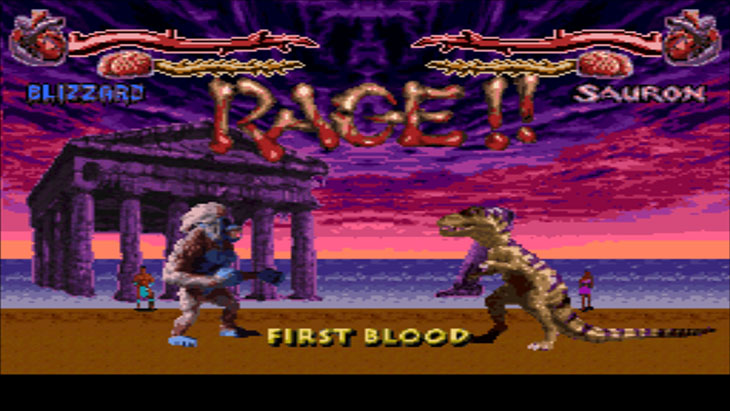
After a giant meteor strikes Earth and most of humanity is killed off, four massive deities are awakened from their slumber beneath Earth's crust. Now, four godlike creatures - the yeti, raptor, T-rex, and triceratops - must battle the evil occult monsters who want to plunge the planet into chaos.

The game was a huge hit on 4th-gen consoles like Genesis and SNES, as well as 5th-gen consoles like Sega Saturn. These offered graphical improvements as well as more interactive settings.

7 - ARK: Survival Evolved (PS, PC, Xbox One, Switch)

In ARK: Survival Evolved, gamers get washed up on a mysterious island filled with roaming dinosaurs and warring humans. The game is part Minecraft, as it requires you to build shelters and harvest food. It is also part Skyrim, as the player enters into a giant, mythical, open-world environment.

While the game was praised for its massive, dinosaur-filled gameplay, it was also criticized for its difficulty and how much time gamers have to waste performing menial tasks.

6 - Star Fox Adventures (GameCube)

Star Fox Adventures was an extremely cool and extremely weird game. For the first time ever, Fox McCloud had been removed from his spaceship and was let loose in a Zelda-style adventure. He was also surrounded by dinosaurs.

It was later revealed that Star Fox Adventures was born out of an N64 game that Rare was creating, called Dinosaur Planet. Nintendo and Rare had a secret meeting, where they agreed to merge Dinosaur Planet and the Star Fox franchise together, thus creating Star Fox Adventures.

5 - Jurassic Park (Genesis)

When Jurassic Park was released in 1993, two competing video game versions were soon released - one for Genesis and one for SNES. The two games were completely different, with SNES having a top-down view, and the Genesis game being a sidescrolling platformer.

Players and critics agreed that the Genesis version was far superior. It was the first video game ever to pit players against larger-than-life dinosaurs, and there was even a mode where gamers could play as a velociraptor.

4 - Jurassic World Evolution (PC, PS4, Xbox One, Switch)

There are some video game trends that come and go, but tycoon games have been popular since the inception of gaming itself. In Jurassic World Evolution, players are tasked with creating their very own dinosaur theme park, with the hopes of making it profitable.

This involves breeding and incubating dinosaurs, building enclosures, and keeping the dinosaurs fed and healthy. However, looming disasters, such as power failures, weather events, and dinosaur breakouts keep gamers on their toes in what is considered one of the most exciting tycoon games to come along in years.

3 - Horizon Zero Dawn (PS4, PC)

For fans of action RPGs, Horizon Zero Dawn is a must-play. The game puts players in a giant world filled with mechanical animals and dinosaurs. In the game, the robots were originally created as militarized weapons but soon took over the entire planet.

Horizon Zero Dawn isn't just an exciting game, but it's also incredibly beautiful. Aside from the intricate designs of the mechanical monsters, every single aspect of the world was built with incredible detail. Fans of the game can expect its sequel, Horizon: Forbidden West, to release later this year.

2 - Turok & Turok 2 (N64, Switch, PC, Xbox One, PS4)

Turok, officially titled Turok: Dinosaur Hunter was a first-person-shooter for the N64. Gamers play as Tal'Set, the chosen Turok warrior, who must protect the world from the Lost Land (which is a mystical realm filled with vicious dinosaurs, monsters, and aliens).

Both the original and its sequel (which was also released on the N64) were met with rave reviews and are still seen as two of the best games on the console. The games have remained so popular that remastered versions have even been released on PS4, Switch, and Xbox One.

1 - Dino Crisis & Dino Crisis 2 (PlayStation, Dreamcast, PC)

When the original Dino Crisis was released for PlayStation in 1999, it was deemed "Resident Evil with dinosaurs" by many critics. Naturally, the survival horror gameplay of Resident Evil, combined with the dinosaurs, was a winning formula. The game went on to be one of the bestselling PS1 titles ever.

Its sequel was also hailed by critics and audiences. It took a turn towards adventure over horror and created tons of new, intricate settings. Dino Crisis 2 is still remembered as one of PS1's best games, that, unfortunately, has never been remastered or rereleased.

Source: https://screenrant.com/

Did Volcanoes Make the Dinosaur Extinction Even Worse?

Wednesday, March 31, 2021

A rendering of a dinosaur in prehistoric times. Image source: Kovalenko I/Adobe

It’s widely accepted that the primary reason dinosaurs were wiped off the face of the planet was a devastating impact from an asteroid. The Chicxulub crater is our best evidence that this theory holds water, and it’s supported by the findings of scientists who study rock and sediment layers deep beneath our feet. But it’s possible, or perhaps even likely, that the asteroid impact wasn’t the only factor in the demise of the dinos, and researchers have long suspected that volcanic activity played a part.

Now, the research team behind a new paper published in Proceedings of the National Academy of Sciences reveals that samples taken from a site called the Deccan Traps in India may finally provide some answers. The Deccan Traps are a huge region of India that was once a massive lava field. The intense volcanic activity that occurred tens of millions of years ago in this location was thought to be a plausible cause of the dinosaur extinction event. This latest batch of data suggests that’s not the case.

What the researchers found was that the levels of CO2 released by the Deccan Traps — a process called outgassing — during the centuries leading up to the extinction simply weren’t high enough to have affected global temperatures on such a dramatic level. Put simply, if the ground beneath the volcanism theory was already shaky, it just became even more unsteady.

The team analyzed “frozen” magma samples trapped in crystals that offer an accurate estimate of the amount of CO2 that had the potential to be released during the eruptions in the Deccan Traps. They found that while the Deccan Traps did eventually release enough CO2 to warm the planet by a significant amount, the extinction was already well underway by the time that level of outgassing occurred. This suggests that volcanism wasn’t what triggered the extinction and supports the theory that the asteroid impact was a more likely cause.

“Our lack of insight into the carbon released by magmas during some of Earth’s largest volcanic eruptions has been a critical gap for pinning down the role of volcanic activity in shaping Earth’s past climate and extinction events,” Professor Benjamin Black, principal investigator of the study, said in a statement. “This work brings us closer to understanding the role of magmas in fundamentally shaping our planet’s climate, and specifically helps us test the contributions of volcanism and the asteroid impact in the end-Cretaceous mass extinction.”

Source: https://bgr.com/

Fortnite’s Dinosaur Eggs Have Hatched, And Now Raptors Roam The Island

Wednesday, March 31, 2021

The newest season of Fortnite, dubbed “Primal,” did two main things: it introduced animals to the island and added a prehistoric theme. So it’s only fitting that the latest update includes a dinosaur.

Thanks to a recent patch, raptors now roam the battle royale game, joining other predators like wolves and sharks. They appear to spawn at random, however, so there’s no guarantee you’ll encounter one in a match; I played for more than an hour this morning before I spotted one in the wild.

In traditional Fortnite fashion, the news had been teased over the last few days; giant eggs scattered across the island began to crack, hinting that something was in the works. It was reminiscent of previous events like the volcano eruption, Kevin the rolling cube, or the time a massive robot was slowly constructed. It’s all part of the game’s unique approach to storytelling.

This is the first major update for season 6, so there could be other creatures on the way as well.

Source: www.theverge.com/

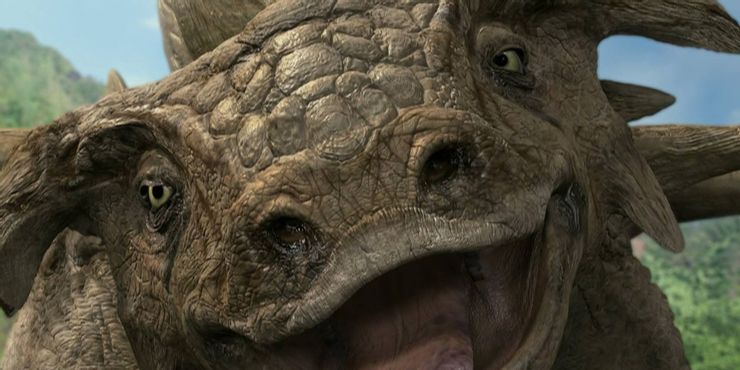
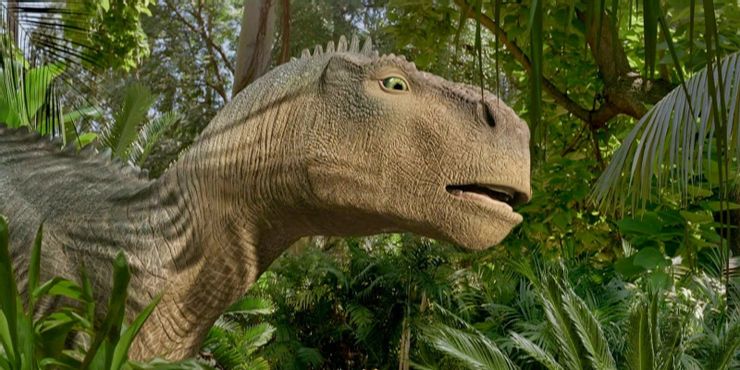
10 Things You Didn't Know About Disney's Dinosaur

Wednesday, March 31, 2021

An unusual experiment for the company, the live-action/CGI hybrid film Dinosaur was a financial success for Disney, though making it wasn't easy.

Disney's Dinosaur is a movie that borrows elements from films like The Land Before Time and Jurassic Park as well as other entries in the dinosaur movie genre. Its unique look was what drew audiences to it at the time of its release, but being almost entirely computer-generated is what makes it look so outdated nowadays (and even painful to watch at times).

That being said, the story behind the creation of Dinosaur is arguably as interesting as the plot within the movie (if not more so). With development and production which lasted more than a decade, the movie had to go through many trials and tribulations before it was finally completed.

10 - The Co-Director Previously Worked On Two Other Dinosaur Movies

Co-director Ralph Zondag had previously worked on a different dinosaur-themed movie— The Land Before Time— where he was the animation director. Even Zondag's directorial debut (We're Back! A Dinosaur's Story) was an animated dinosaur movie.

Co-screenwriters John Harrison and Robert Nelson Jacobs wrote and directed the 2000 miniseries Frank Herbert's Dune (and is the executive producer for Denis Villeneuve's Dune) and wrote the Academy Award-nominated screenplay for Chocolat, respectively.

9 - Its Cast Features Actors From The Little Mermaid & Brother Bear

Actor D.B. Sweeney also voiced a character on Brother Bear while actress Alfre Woodard starred in Primal Fear and 12 Years a Slave. Actor Ossie Davis starred in such movies as Do the Right ThingMalcolm X, and Dr. Dolittle.

Other actors who worked on the movie include Max Casella (The Sopranos), Samuel E. Wright (Sebastian in The Little Mermaid), Hayden Panettiere, Julianna Margulies, and others.

8 - It Was The Most Expensive Computer-Animated Movie At The Time

Dinosaur is unique in the way it uses CGI. Though nowadays its computer-generated elements look somewhat outdated, not everyone will notice that the backgrounds in the movie are actually real and were filmed on different locations in Asia and the Americas.

While the backgrounds were live action, the characters were computer generated. This, of course, made the movie cost quite a lot. According to various reports, Dinosaur's budget was $127.5 million which would make it the most expensive computer animated movie ever made up to that point.

7 - It Went Through Development Hell

The idea for Dinosaur first appeared in 1986 when Paul Verhoeven was directing Robocop and Phil Tippett proposed that they collaborate on a movie about dinosaurs.

The idea would be developed in different ways for many years, and various filmmakers were attached to the project at the time. In 1994, the movie finally entered the development stage at Disney, but it still took the studio several years to actually begin production.

6 - It Was Originally Going To Be Stop-Motion Animated

Speaking of the development stage at Disney, the project actually went through multiple such stages within different departments of Disney. Originally, it was intended to be stop-motion animated, way back in 1988 when Verhoeven and Tippett were developing it.

But because Jurassic Park was being created digitally, the studio decided to wait until they could make Dinosaur digitally as well. In 1994, the project was being developed by the animation department rather than the live action one and that's when the first tests for computer generated characters started.

5 - It Was Originally Meant To Be A Dark & Violent Movie

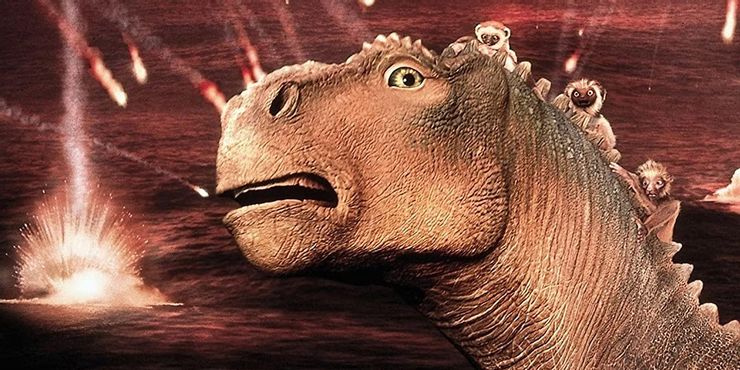
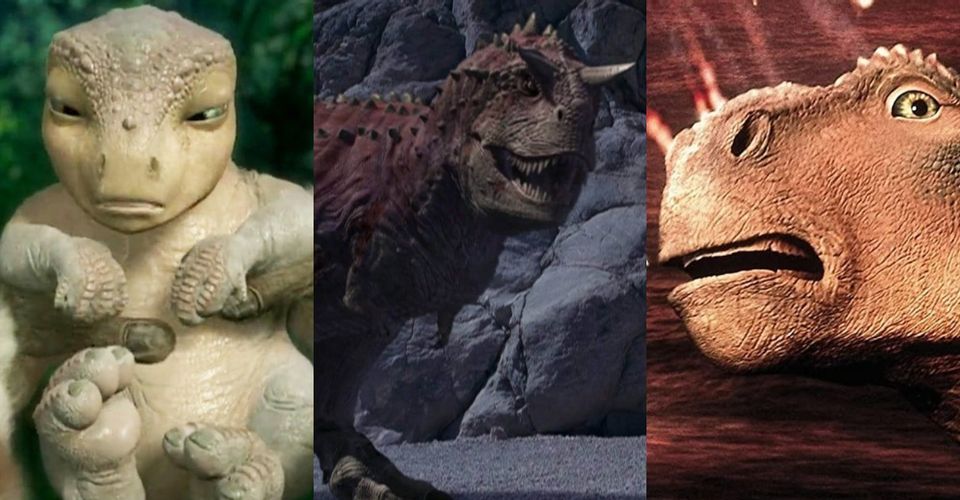
Dinosaur already has quite a few terrifying scenes: The meteor destroying the island where Aladar and the lemurs lived, the attack of the Velociraptors, and pretty much all of the encounters with the two Carnotaurus.

However, the movie was supposed to be even darker than it ended up being. Allegedly, Verhoeven and Tippett wanted to make the movie similar in style and tone to a nature documentary and add violent elements to it. The main dinosaur characters were even meant to die at the end as a part of the extinction event that killed all dinosaurs on Earth.

4 - It Was Going To Have A Much More Cutesy Tone At One Point

By reading about all the things the movie was meant to be, it is easy to understand just how troubled its development was and how many versions it went through.

At the beginning of the 1990s, Verhoeven and Tippett left the project and Thomas G. Smith was attached as director. Smith would go on to say that the script the studio had at the moment depicted dinosaurs in a cute way rather than a violent one. Smith didn't want to do that, but even he was replaced later on.

3 - Real Lemurs Were Going To Be Used At First

When Smith was attached as director, he decided to go his own way and make the movie grittier than the current script made it out to be. One of the things Smith was particularly interested in was using real lemurs for the movie.

The filmmakers found a person training lemurs, but Smith left the project. David W. Allen, who became the new director, would spend months "auditioning" lemurs to play the role of Suri, but he too soon left the project. The final directors were George Scribner and Ralph Zondag, and their version features lemurs that are CGI just like the dinosaurs.

2 - Its Soundtrack Has An Unusual Story Behind It

Dinosaur's score was composed by James Newton Howard for whom this was his first project with Disney and who would go on to write scores for such Disney movies as Atlantis: The Lost EmpireTreasure Planet, and most recently, Raya and the Last Dragon.

Vocals for the soundtrack were provided by Lebo M who had previously done vocals for The Lion King. A particular track from the score ("The Egg Travels") was later used in trailers for other movies, including Lilo and Stitch and The Wild Thornberrys Movie.

1 - The Movie Was Actually A Financial Success

Despite being quite an expensive movie, Dinosaur was a commercial success grossing a total of $349.8 million. It was even among the top five best-selling home video releases of 2001, selling over 10 million copies.

Critics weren't particularly fond of the movie, however, criticizing the story which wasn't very original according to them. Yet, the realism of animation was praised which was at the time considered to be quite high-quality. The movie's opening sequence was also considered notable.

Source: www.cbr.com/

What Tim Has Been Doing Since Jurassic Park

Tuesday, March 30, 2021

Believe it or not, it's been almost 30 years since Steven Spielberg's Jurassic Park came to theaters and wowed moviegoers of all ages. When the film initially came out, it was a blockbuster hit, grossing a little over $1 billion worldwide. Since then, it's become a beloved classic and a movie that everyone in the family can enjoy. Sequels and reboots dominated the box office as well, but in those, not all of the cast members from the original got to return.

Since it has been so long since the original Jurassic Park was released, fans are probably wondering what the cast has been up to — specifically Mr. Hammond's (Richard Attenborough) grandchildren. Child actors can change so much over the years, after all. When it comes to Joseph Mazzello, who plays Tim in the original movie, he's experienced quite the transformation. Let's find out what Mazzello did post-Jurassic Park, and what other roles he's taken since then.

He reprised his role in the sequel to Jurassic Park

Even though Tim and Lex (Ariana Richards) might've been the supporting cast in Jurassic Park, they still made a huge impact on the story overall. From the gut-wrenching scream from Lex that was probably heard a mile away to Tim's unfortunate event with the electric fence, the journey the kids took with Grant (Sam Neill), Ellie (Laura Dern), and Malcolm (Jeff Goldblum) is still a memorable adventure. So much so, that Mazzello was given the opportunity to reprise his role in the sequel, The Lost World: Jurassic Park in 1997. Although it was a brief appearance, it was good to see him again, along with Lex, since there was a four-year gap in between the movies.

During this time, Mazzello starred in Star Kid, playing the lead as Spencer Griffin. The movie is about Griffin's life, and how it changes after he finds a Cyber suit from an AI's exoskeleton in a junkyard. He also starred alongside the late Patrick Swayze in Three Wishes, a story about an injured stranger and his dog coming into a family's life, giving them a little magic to believe in.

Mazzello took on more roles throughout his childhood

After his roles in Jurassic Park, Mazzello continued to get roles as a child in Hollywood, and successful ones too. A year after Lost World, he starred in Simon Birch as a young Joe Wenteworth, who would be played later in the film by Jim Carrey. Joe is the best friend of Simon (Ian Michael Smith), who is the smallest newborn in his town's history, which results in stunted growth.

Other notable roles for Mazzello include Charles in Wooley Boys, which is about a computer whiz who goes to the big city with his grandpa; and Tripp in The Sensation of Sight, a movie about a man's search for identity amidst a midlife crisis. He also would go on play in several TV movies such as The Hollow and Georgetown. It's safe to say Mazzello had a busy childhood when it came to acting.

Mazzello made his way into the television show industry

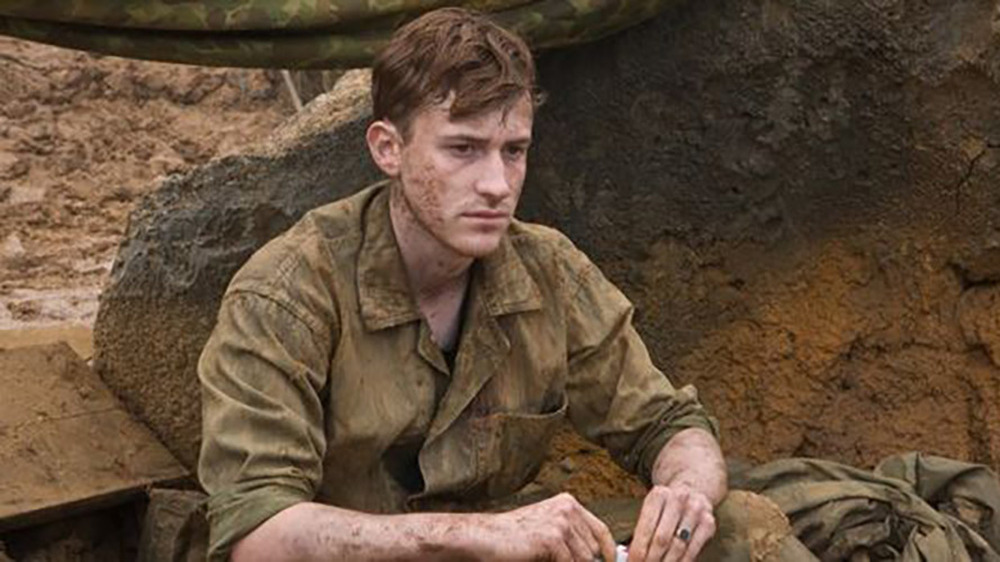
A year later, after his role in Wooley Boys, Mazzello delved into the TV industry as well, with small roles in Providence in 2002, CSI: Crime Scene Investigation in 2003, and Without A Trace in 2004. It wasn't until 2010 that he received bigger roles such as PFC Eugene Sledge in The Pacific, a mini-series set in World War II centered around a Marine who was at the front lines of many battles. The show received critical acclaim with several positive reviews.

He also landed roles as Geoffrey Fairweather in the TV mini-series Coma, and as Billy St. Cyr in the popular show Justified, starring Timothy Olyphant, Nick Searcy, and Joelle Carter. In 2014, he played Daniel Casey in Person of Interest, and had a very small role in Elementary as a character named Griffin. Even though these roles might not have been huge, they allowed Mazzello to continue adding to his resume.

He continues to find work today

Mazzello snagged a rather visible role in 2010's The Social Network, in which he plays Dustin Moskovitz, the actual co-founder of Facebook. That film also features Jesse Eisenberg as Mark Zuckerberg, Andrew Garfield as Eduardo Saverin, Justin Timberlake as Sean Parker, Armie Hammer as The Winklevoss twins, and Rooney Mara as Erica Albright. Fast forward to 2018, and he scored a role in the much-anticipated movie, Bohemian Rhapsody, a biographical-drama about the British rock band Queen, leading to the group's last performance in 1985. Mazzello plays the role of John Deacon, Queen's bass guitarist.

Currently, Mazzello is filming a movie called Enslaved by Ducks. In that, he plays a guy named Bob who is addicted to painkillers and is trying to figure out the next steps in adult life with his wife. In his personal life, Mazzello regularly updates his Instagram page with images from his time on set and his family life.

Source: www.looper.com/

How To Throw The Perfect Dinosaur-Themed Birthday Party

Tuesday, March 30, 2021

Who hasn’t gone through the phase of being obsessed with dinosaurs? (I know I have no shame). Make your kid’s dream come through with an ideal dinosaur-themed birthday party, where you have it all from treats that look like real-life dinosaurs to balloons shaped like any type of dinosaur you can imagine all around the venue. Gather around all the little buddies and, of course, the birthday boy or girl and have a fantastic dinosaur-themed birthday party with these tips. We’ve got you all covered, from what food you’ll need at the party to all the fun activities you can do at the birthday party while keeping it all dinosaur-themed.

Dinosaur party caps

Make cute little dinosaur-inspired caps, all the hats could be one color, and the birthday boy or girl could choose the color and dinosaur for their own cap to stand out on their big day. You can make this into activity by setting up a workstation with googly eyes and spikes for dinosaurs for kids to decorate their own caps on. You could just take some green chart paper and cut it into a shape of a circle, then roll the corners to form the shape of a cone to make plain birthday hats for the children to decorate. Every child could have their own unique cap inspired by their favorite dinosaur.

Dinosaur themed games

If you can’t think of any dinosaur-themed games off the bat and are short on time, pick any game and switch out some rules to give it a dinosaur twist. You can change up the classic game, pin the tail on the donkey and recreate it into pin the dinosaur’s spikes. Simply replace the donkey with a dinosaur and the tail with the dinosaur’s spikes and play the game as you usually would. If you’ve planned the birthday party outdoor, hide dinosaur eggs with tiny surprises inside around your backyards and let the kids run around collecting them.

Dino-mite menu (make sure the kids don’t play with their food)

The food is the highlight of every party. Every kid you know is a massive fan of dinosaur nuggets. I think that’s where most of our obsession with dinosaurs began. You can never go wrong with a great chip and dip at a party. Imagine how excited your kid will be to see dinosaur shared chips. Grab some tortillas and using dinosaur cookie cutters, cut out the dinosaurs and fry them until crispy, and there you have it, dinosaur-themed chip and dip. Using the same dinosaur shaped cookie cutters, you can cut out fresh fruits and throw together a fruit salad. For dessert, you can bake cupcakes or brownies in dinosaur shaped baking molds. To ice these brownies or cupcakes, you could dye some icing sugar and use the icing to make them look more fun. If you want to be extra, you can also freeze the ice that you will use during the event in dinosaur shaped ice trays.

Dinosaur decorations

What’s a birthday party with balloons and streamers? Go to your nearest party decoration store and buy anything related to dinosaurs you lay your eyes upon. You want to turn the entire venue into a jungle or the set of Jurassic Park. You also want to get dinosaur shaped piñata and fill it up with goodies for the kids to eat once it is broken. This will add a fun little activity for the children, and who doesn’t like candy? Buy some inflatable dinosaurs and place them all around the birthday party, so the birthday girl or boy could think they are celebrating their birthday with not only their friends and family but with dinosaurs as well. Make sure to buy dinosaur-themed cutlery as well. This will not only be a brilliant touch to the birthday party, but it will make the kids want to finish the food off their plates quickly to see the dinosaurs under it.

Don’t forget about the goody bags.

Skip the candy when it comes to goody bags or party favors. When there’s already cake at every birthday party, why aggravate the sugar rush by adding sweets in the goody bags. You can include things the kids might actually enjoy, such as a dinosaur mask, different dinosaur-shaped toys, dinosaur stickers, and so on. You can also add in some savory snacks for the kids, such as pretzels, nuts (check beforehand if any of the kids have a nut allergy), or some potato chips. The kids will be so excited to see their goody bags come straight from the Jurassic world into their hands.

Photo booth with picture props is always a good idea

Go to the store and buy green streamers to make the background of your photo booth. Take some tape and stick the streamers to the wall of the area you’ve selected to be the photo booth. To hide the tape at the top of the streamers, attach green colored balloons there. On the green streamers, you can put up a happy birthday banner or blow up some foil balloons saying happy birthday. To decorate the area around the photo booth, you can buy some inflatable dinosaurs so the guests can take pictures with them. You can also make some cute little photo props for everyone to use while taking pictures.

Birthday cake

No birthday party is complete without a birthday cake. You can ask the birthday girl or boy beforehand about their favorite dinosaurs and have the cake customized accordingly. You can choose the size of your cake according to the guests you’ve invited to the birthday party. You will also need to decide the place the birthday kid would cut the cake. You could place a small table in front of the photo booth with the happy birthday banner or balloons and cut the cake there. You can find candles in the shape of dinosaurs as well. If you don simply just put in the same amount of candles as the age of birthday kid.

Source: https://ventsmagazine.com/

Jurassic Park Was Right To Cut The Book's Controversial Ending

Monday, March 29, 2021

Steven Spielberg's 1993 adaptation Jurassic Park changes the ending of Michael Crichton's novel, which greatly improves the overall story.

Steven Spielberg's adaptation of Jurassic Park features a different ending than the Michael Crichton novel — which fixes one of the biggest problems in the source material. Michael Crichton is an iconic sci-fi writer (both as a novelist and as a screenwriter) and is responsible for two major franchises: Jurassic Park and Westworld. Despite the strength of his stories, however, some of the changes made by adaptations actually improve the overall narrative — like cutting a controversial ending scene in Jurassic Park.

The 1993 film changed the book in various ways, altering the sequence of events and the personality of its characters.  For example, the "everyman" hero of Crichton's novel is actually the lawyer Donald Gennaro — the villain in Spielberg's Jurassic Park adaptation — while the novel's villain John Hammond takes on much more affable traits in the movie. Because their roles are reversed, the characters have different fates in the two versions: the lawyer helps everyone escape Isla Nublar at the end of the novel, whereas his film counterpart suffers a humiliating death early in the movie (expertly played for laughs). Similarly, Hammond helps everyone escape at the end of the movie, but the book version of the character is eaten by his own dinosaur creations.

Spielberg's take on Jurassic Park is thematically distinct from Crichton's novel, which is best exemplified by the vastly different endings. In the movie, Grant, Tim, and Lex are saved — mainly through luck — when a T-rex attacks (and distracts) the velociraptors, allowing the group to escape the visitor center and rendezvous with Hammond and Malcolm. The ending in Spielberg's Jurassic Park is bittersweet since the final shots remind viewers both of the power of nature and the tragedy of these majestic creatures being brought into a world where they don't belong. The book, however, ends much more violently — with the entire island being razed by napalm.

The original ending in Crichton's Jurassic Park is in stark contrast to the tranquil tone of the Spielberg adaptation, and its violent resolution undermines any sort of environmentalist reading. While practical effects and CGI brought Spielberg's dinosaurs to life, his approach to characterizing the prehistoric creatures as tragic is a key element of the movie's overall message. Hammond should never have tampered with the forces of nature, and by the movie's end, he shows remorse for his actions. The ending sees Hammond sorrowfully looking out on his failed endeavor before the humans abandon the island, followed by a sequence of the survivors on the helicopter, scored by the film's iconic, majestic theme. The final shot of birds flying over the water hints that the dinosaurs may return — but for now, they exist isolated on Isla Nublar.

Conversely, Hammond dies in the book version of Jurassic Park, and the survivors watch from the sky as the island is engulfed by flame. The final scene in the novel hints that some dinosaurs managed to migrate, but the general tone of the ending is almost triumphant, as the helicopters fly away in a blaze of glory. In fact, the narrator presents an almost callous indifference to a population of animals being lost to a series of explosions — particularly the velociraptors, which had just been established as a particularly intelligent and family-oriented species mere moments before. No doubt the entire ecosystem of the island would be devastated by the fires, yet the paleontologist Allan Grant doesn't seem to care.

There are other elements of Crichton's Jurassic Park that the movie changes, which helps foster a more sympathetic attitude toward the dinosaurs as well as a more eco-conscious tone. As a result, the 1993 movie ages better than 1990 novel. Crichton actually co-wrote the screenplay for Jurassic Park with David Coepp, under the supervision of Spielberg, which makes it difficult to say with certainty how Crichton's original vision may have differed from Spielberg; regardless, the two versions of the story end on vastly different notes.

Source: https://screenrant.com/
How To Hunt Fossils Responsibly: 5 Tips From A Professional Paleontologist

Saturday, March 27, 2021

Credit: Amy Tschirn, Author provided

Many of us, at some point or another, dreamed of hunting for dinosaur fossils when we grew up. Paleontology—the study of natural history through fossils—is the scientific reality of this. It encompasses all ancient lifeforms that left their trace in the earth, from stromatolites (microbial reefs up to 3.5 billion years old) to megafauna.

Australia has great fossil diversity and a lot of ground to cover, so it's no surprise we have numerous active field naturalistsuniversity clubs and Facebook groups out there fossicking for local treasures.

But amateur fossil collectors often aren't provided with basic instructions from museums or government departments, to responsibly collect fossils. This means paleontologists generally don't encourage amateur collecting without supervision because of the environmental, cultural and scientific sensitivity of some sites, and rarity of some fossils.

But if you're that kid, their parent or an amateur enthusiast still keen to get out there, I've put together a few pointers for collecting responsibly.

Why do we need to be responsible?

From the viewpoint of career paleontologists, amateur fossil collecting has its pros and cons.

On the one hand, Australia has a great band of citizen scientists keen to help us cover more ground, particularly as funding and field work resources are becoming more scarce.

One of the most famous amateur collectors is Mary Anning from the UK. She was the first person to bring plesiosaurs and ichthyosaurs—marine reptiles from the time of the dinosaurs—to science without formal training or recognition when she was active in the early 19th century.

More recently, Museums Victoria has had successes with help from the public, such as the discovery of Miocene shark teeth (from around 25 million of years ago) in coastal limestone.

On the other hand, there are two possible negative outcomes from amateur fossil hunting.

The first is misidentification, which can lead to important specimens left collecting dust on bookshelves, placed in garden beds or broken in two during excavation.

But the situation we fear most is the commercialisation of paleontology: putting a dollar value on scientifically irreplaceable specimens, placing them beyond the realm of museum or university acquisition budgets. For example, last year in the US, STAN the T. rex sold for US$31.8 million.

This doesn't just hinder science, but also restricts access of really neat fossils to a handful of wealthy people, rather than a public audience.

Both of these outcomes are entirely avoidable with good science communication, and museum information officers.

So how can you become a responsible citizen paleontologist?

Here are five things to know before you go:

1. Get permission

Make sure you have permission to be somewhere (on private or public land), and to collect. This extends to permissions from Traditional Owners on native title, pasturalists and local councils. This, however, rules out any national parks. And depending on your state, you may need a permit to collect from crown land (set aside for government or public purposes) or council land.

It's always a good idea to check with your state museum or interest group which sites are OK for fossicking—some may be culturally, historically or scientifically sensitive.

2. Stay safe

Never attempt any field work on your own, always bring a friend. Make sure you both know basic first aid and can contact emergency services in a pinch. Anything from a rolled ankle to a snake bite needs to be planned for.

You can avoid or manage risks for most hazards by wearing suitable clothing: long pants, enclosed shoes and sunglasses to shield your eyes from rock chips. Always slip-slop-slap to prevent sunburn.

3. Equipment

The equipment you need will depend on the fossils you're looking for and the ground they're in. Beginners should aim for fossils in sand dunes or crumbly rock. You can use paint brushes, dustpans, and kitchen sieves to unearth all kinds of marine fossils from ancient dunes or coral reefs.

Once you get the hang of it, you can try coastal limestones and hard clays with picks and trowels. Most importantly, bring a label kit and a field notebook.

4. Leave some for the rest of us

If you hit the motherlode of Permian brachiopods and feel you don't already have enough on your mantle, stop and think about the next generation of collectors.

Even the biggest museums show restraint in their collecting. Eventually you'll run out of shelf space and the Permian geological record will run out of brachiopods (unlikely, but the point remains).

5. Be a citizen scientist

Identify what you've found, label it and do some research into it's significance.

Keep a detailed notebook containing a record of where you found each specimen, when and who found it, and details about the rock or dirt it came from. Take plenty of photos before and after you pry it out of the earth.

Identifying your fossil

There are a number of online resources for identifying Australian fossils. A good place to start is Paleobiology Database where you can explore a map of fossil sites across Australia, from Gingin in Western Australia to Bayside, Victoria (and the rest of the world).

Get in touch with your state museum if you think you've found something special, or can't quite figure out what you have once your Google search comes to a dead end. Anything that hasn't been recorded from that location or is remarkably well preserved is worth looking into further.

Plan for demise (of you or your hobby, whichever comes first). The reason we have museums—and why they're entrusted to look after Australia's fossil heritage in perpetuity—is their ability to plan ahead of our lifetime.

What happens to your collection when you can no longer store it? Do you want to pass it on to a friend or family member? Will you donate it to a school, university or museum?

Write down a plan for your collection and make sure it's always stored with adequate labels, somewhere it won't be destroyed by time as it's exposed to temperature, humidity, pests and minimalist family members.

Once you're equipped with the knowledge and resources, get out there and contribute to the field and help conserve Australia's rich palaeontological heritage.


T. Rex fossil sells for record-breaking $31.8 mn


Provided by The Conversation

Source: https://phys.org/

Giant Extinct Australian Birds Had Well-Developed Stereoscopic Vision and Small Brain

Friday, March 26, 2021

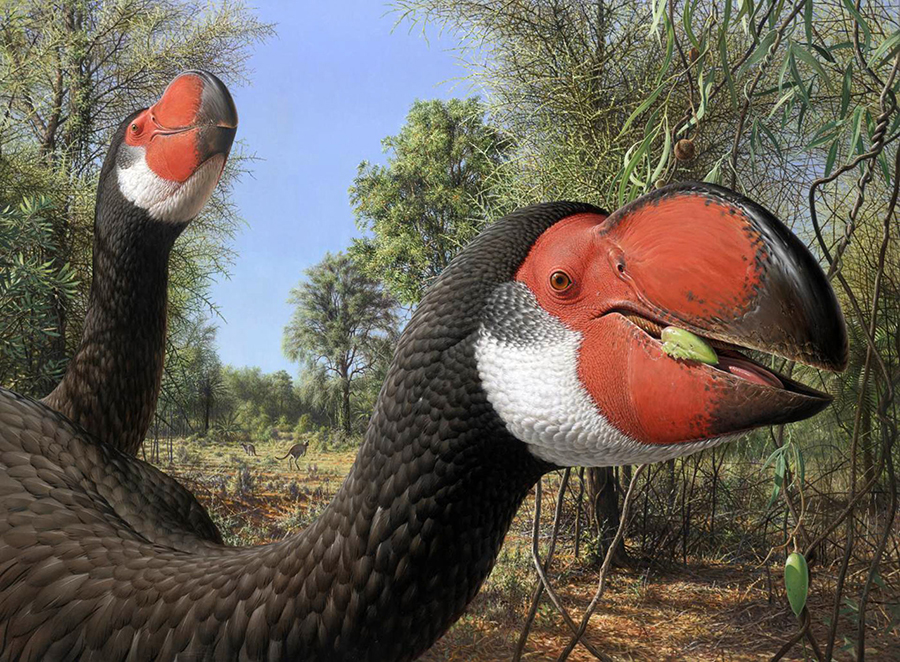
Life reconstruction of Dromornis stirtoni. Image credit: Peter Trusler.

Paleontologists from Flinders University have examined the brains of four species of extinct giant mihirungs (dromornithid birds): Ilbandornis woodburnei and three species of the genus Dromornis.

Dromornithids are an extinct group of large flightless birds that lived in Australia from the Eocene to the Late Pleistocene epoch.

Four genera and eight species are currently recognized, with diversity highest in the Miocene epoch.

Collectively known as ‘mihirungs’ (an Aboriginal word for a giant bird), these birds not only reached much larger sizes than ratites (emus, cassowaries, ostriches, kiwis and kin), but were much more intimidating in appearance.

Unlike the small-headed ratites, they had massive skulls, with sail-like bills.

Even the smallest of these birds was as large as an emu, while others grew to the size of a horse, with males weighing up to 650 kg.

Despite their size, all were gentle giants, browsing on fruit and leaves of shrubs.

“Together with their large, forward-facing eyes and very large bills, the shape of their brains and nerves suggested these birds likely had well-developed stereoscopic vision, or depth perception, and fed on a diet of soft leaves and fruit,” said Dr. Warren Handley, a vertebrate paleontologist in the Palaeontology Group at Flinders University.

“The shape of their brains and nerves has told us a lot about their sensory capabilities, and something about their possible lifestyle which enabled these remarkable birds to live in the forests around river channels and lakes across Australia for an extremely long time.”

“It’s exciting when we can apply modern imaging methods to reveal features of dromornithid morphology that were previously completely unknown.”

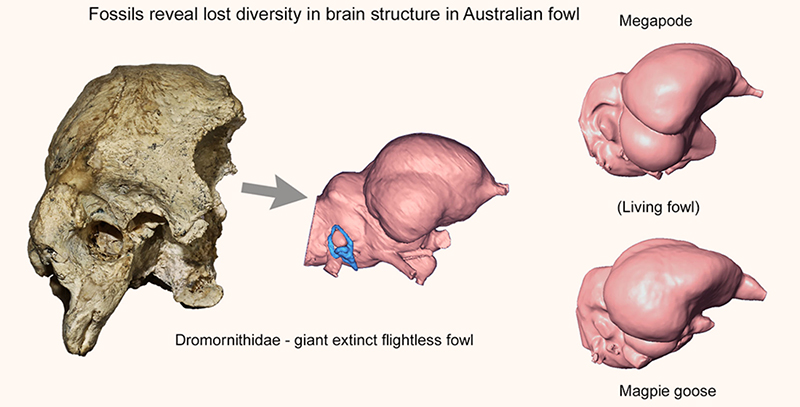
Lost diversity in brain structures of Australian landfowl. Image credit: W. Handley, Flinders University.

In the study, Dr. Handley and his colleagues, Dr. Trevor Worthy from the Palaeontology Group at Flinders University, compared the brain structures of four mihirung species: from the earliest Dromornis murrayi that lived 24 million years ago to Dromornis planei and Ilbandornis woodburnei from 12 million years ago and Dromornis stirtoni from 7 million years ago.

“Ranging from cassowary in size to what’s known as the world’s largest bird, the largest and last species Dromornis stirtoni was an extreme evolutionary experiment,” Dr. Worthy said.

The researchers found that mihirung brains and nerves were most like those of modern day chickens and Australian mallee fowl.

“The unlikely truth is these birds were related to fowl — chickens and ducks — but their closest cousin and much of their biology still remains a mystery,” Dr. Worthy said.

“While the brains of dromornithids were very different to any bird living today, it also appears they shared a similar reliance on good vision for survival with living ratities such as ostrich and emu.”

Dromornis stirtoni had the largest skull but behind the massive bill was a weird cranium,” he added.

“To accommodate the muscles to wield this massive bill, the cranium had become taller and wider than it was long, and so the brain within was squeezed and flattened to fit.”

“It would appear these giant birds were probably what evolution produced when it gave chickens free reign in Australian environmental conditions and so they became very different to their relatives the megapodes — or chicken-like landfowls which still exist in the Australasian region.”

The results were published in the March 2021 issue of the journal Diversity.

_____

Warren D. Handley & Trevor H. Worthy. 2021. Endocranial Anatomy of the Giant Extinct Australian Mihirung Birds (Aves, Dromornithidae). Diversity 13 (3): 124; doi: 10.3390/d13030124

Source: www.sci-news.com/

Pages