nandi's blog

Calvert Paleontologist’s Study Estimates Megalodon Size at 65 Feet

Wednesday, March 17, 2021

Otodus megalodon's maximum length, based on its largest known tooth. Artwork by Tim Scheirer, with permission for use by the Calvert Marine Museum.

Just how big was the prehistoric super-sized shark Megalodon? Scientists have been debating the point for more than 100 years.

While the extinct Otodus megalodon is often regarded as the largest shark to ever live, no paleontologist had ever been able to give a good estimate of its size—until now. A paper by a paleontology curator at Calvert Marine Museum (CMM) estimates the megatooth shark at 65 feet long, using a novel new estimation method.

CMM Assistant Curator of Paleontology, Dr. Victor Perez and two other paleontologist/scholars conducted a study using an ultrarare set of teeth from one individual shark to map its overall body length.

Full sets of teeth, known as associated fossil dentitions, allowed the study’s authors to measure the width of the megalodon’s jaw. In many living sharks, there is a precise relationship between the width of the jaws and the length of the shark. So Dr. Perez and his team measured the associated fossil dentitions of 11 individual sharks from five species. Four were extinct apex predators, and one was the modern-day great white shark, Carcharodon carcharias. Based on careful tests and measurements of the largest set of teeth from Otodus megalodon, the authors estimated a maximum body length of 65 feet for the prehistoric shark.

Megalodon teeth have frequently been found near Calvert Cliffs on the Chesapeake Bay, and as Bay Bulletin reported as recently as 2018, paleontologists found fossilized dolphin tail bones that featured bite marks from a megalodon.

You can learn more about the prehistoric megalodon at Calvert Marine Museum, and have a chance to get up close with a life-sized model of the Carcharocles megalodon‘s giant, gaping jaws. To plan a visit, go to calvertmarinemuseum.com.

Source: https://chesapeakebaymagazine.com/

Fortnite Leaks Indicate Dinosaurs Coming Soon

Wednesday, March 17, 2021

A data leak has confirmed that Fortnite Season 6 will be adding dinosaurs to the game, alongside tameable wolves, chickens and wild boars.

The latest season 6 map update in Fornite appears to have featured a number of dinosaur bones and eggs, leading fans to believe that Dinosaurs may be coming to the Battle Royale pretty soon. A leak uncovered by data miners has backed up this theory, with a string in the game’s code referring to a “wild raptor” being found. 

Fortnite is one of the world’s biggest games right now, having taken the world by storm back in 2017. Over 100 players drop down onto the map, with only one left standing by the end. The game’s first year drew in more than 125 million players, earning Epic Games millions of dollars in cosmetic sales and becoming a hit sensation. The game has hosted a number of world firsts, with virtual concerts and movie screenings being held in the game over the past few years.

According to some users on Twitter, the code in the latest update has some lines referencing wild raptors, wolves and boars. There are also references to the word “dino” in the game’s files. The recent update added wolves and boars to the game already, both of which can be killed by players and eliminate players as well. The wolves added today can be tamed, with some players wondering if raptors can be tamed as well. 

The season 6 official text has a blurb that reads, “Wildlife abounds on the island, ranging from prey like chickens to vicious predatory wolves. Hunt or tame wildlife to not only live off the land but to gather materials for crafting. And though wolves may roam, the most fearsome predators have yet to hatch.” This text seems to confirm that dinosaurs will be making an appearance in the game, most likely from the eggs already on the map. 

It’s not known for sure as to when or if dinosaurs will be added to the game, but if this data is to be believed, the prehistoric creatures should be added during the current season of Fortnite. Season 6 only started on Thursday, so there is plenty of time for the developers to unveil that they are adding dinosaurs to the game. Fans will just have to wait and see.

Fortnite is available on PC, PS4, PS5, Xbox One, Xbox Series X/S, Nintendo Switch, iOS, macOS, and Android. 

Source: Fortnite News / https://screenrant.com/

Wunyelfia maulensis: New Elasmosaurid Plesiosaur Unearthed in Chile

Tuesday, March 16, 2021

Life reconstruction of an aristonectine plesiosaur. Image credit: Nobu Tamura, http://spinops.blogspot.com / CC BY-SA 4.0.

A new genus and species of aristonectine elasmosaurid plesiosaur has been described from a partial skeleton found in central Chile.

The newly-discovered plesiosaur lived approximately 67 million years ago during the Maastrichtian stage of the Cretaceous period.

Dubbed Wunyelfia maulensis, the animal belongs to Aristonectinae, a group of plesiosaurs in the family Elasmosauridae.

It is only the second representative of this group known to date in the southeastern Pacific during the late Maastrichtian stage.

“The Aristonectinae was a monophyletic lineage of elasmosaurid plesiosaurs morphologically and ecologically distinct from other typically long-necked elasmosaurids,” said University of Chile paleontologists Dr. Rodrigo Otero and Dr. Sergio Soto-Acuña.

“The first were characterized by the acquisition of enlarged skulls, an increased tooth number, as well as shortened and thickened necks, which spanned mostly along the Weddellian Province during the Late Cretaceous.”

“They are frequent in the Maastrichtian of the southern hemisphere, with occurrences in Argentinean Patagonia, central and southern Chile, New Zealand and Antarctica.”

“The growing body of evidence currently shows that among austral elasmosaurid plesiosaurs, at least one monophyletic lineage (Aristonectinae) reached a provincial diversity with endemic forms in Antarctica, New Zealand and southern South America during the Late Cretaceous.”

The near adult, partial postcranial skeleton of Wunyelfia maulensis was recovered from the upper Maastrichtian levels of the Quiriquina Formation in central Chile.

“The studied skeleton was recovered from strata exposed in the locality of Mariscadero, south of Pelluhue, 320 km (199 miles) southwest from Santiago,” the researchers explained.

“The specimen was found 20 cm (7.9 inches) above a second partial postcranial skeleton of an indeterminate elasmosaurid.”

“Its small almost adult size differs from coeval larger forms previously described in South America, particularly Aristonectes parvidens and Aristonectes quiriquinensis, with estimated lengths over 10 m (33 feet),” they noted.

Aristonectines seem to have exploited a unique trophic niche unrecorded among other plesiosaurs.

“The presence of Aristonectes and Wunyelfia during the late Maastrichtian of central Chile may correlate with a highly productive ecosystem able to support a taxonomic diversity within this distinctive ecomorphotype,” the scientists said.

“Further studies on this new taxon and other early aristonectines will be key to understanding the origin and evolution of this singular clade of elasmosaurids.”

The discovery is reported in a paper in the February 2021 issue of the journal Cretaceous Research.

_____

R.A. Otero & S. Soto-Acuña. Wunyelfia maulensis gen. et sp. nov., a new basal aristonectine (Plesiosauria, Elasmosauridae) from the Upper Cretaceous of central Chile. Cretaceous Research 118: 104651; doi: 10.1016/j.cretres.2020.104651

Source: www.sci-news.com/

Gordo the Barosaurus

Tuesday, March 16, 2021

https://www.atlasobscura.com/users/zain-ahmed

AT THE ROYAL ONTARIO MUSEUM in Toronto, one specimen dwarfs everything else in it: a 27-and-half-meter long dinosaur skeleton. His name is officially ROM 3670, but he’s more commonly known as Gordo, and he’s the largest mounted dinosaur skeleton in Canada, rivaled only by a Futalognkosaurus installed in the lobby. However, Gordo stands out because he’s got real bones in him.

Gordo is specifically a Barosaurus, one of the larger of the sauropod dinosaurs. At 66 tons, it indeed lived up to its name, which comes from barys, the Greek word for heavy. It lived among its closest relatives Diplodocus and Apatosaurus 150 million years ago in western North America in what would become the Morrison Formation. However, by simple bad luck, not many fossils have been found of these ancient lizards.

Gordo’s story picked up in 1912, when some lucky fossils were found in Utah by paleontologist Earl Douglass under the employment of the Carnegie Museum of Natural History. At the time they were believed to come from Diplodocus. They were found in a quarry in what would one day become Dinosaur National Monument. For the longest time, they’d stay there, but in 1962, they were sent across the border to Canada and the ROM in a trade deal. The museum’s curator Gordon Edmund, planned to have them installed in an upcoming renovation planned for 1970. However, space was limited, and they disappeared separately into the museum’s vast collections. Twenty years later in 1990, Gordon died.

It wasn’t until 2007 the seeds were truly planted. The ROM’s curator, David C. Evans, had been put in charge of creating a new dinosaur gallery for it, and among the dinosaurs selected was a sauropod. Problem? As far as it knew, it had no sauropod in the collection. They looked for solutions, such as a new expedition to find one or mount a cast of actual fossil specimens. But lo and behold, Evans finally managed to learn about them when on a plane trip to Wyoming. 

Evans was reading up on an article penned by Carnegie’s longtime sauropod expert Jack McIntosh. He had discovered they were from Barosaurus and not Diplodocus as was long thought.

A visitor is dwarfed by Gordo

“It was an exciting day,” Evans said in a 2007 press release. “We were searching for an iconic sauropod skeleton, and we had one under our noses the whole time. When all the parts were pulled together, we realized just how much of the animal the ROM actually had – the better part of a skeleton of a rare, giant, dinosaur.”

Of course, finding Gordo was one thing. Building him was another. To do this monstrous task was fellow Ontarian institution Research Casting International, which specializes in mounting fossils for museums.

Gordo made his debut that year along with the rest of the dinosaurs of the Temerty Galleries of the Age of Dinosaurs. He is joined by other dinosaurs of Jurassic North America, specifically Allosaurus and Stegosaurus, and the smaller herbivores Camptosaurus and an armored nodosaur.

Today, Gordo remains a fascinating, iconic exhibit, literally: he is labeled as one of the museum’s iconic specimens, along with the mural The Paradise of Mateiya, a pair of totem poles from British Columbia, a 900-carat gem from Namibia known as the Light of the Desert, and a statue of the Egyptian war-god Sekhmet.

Source: www.atlasobscura.com/

Fallen Kingdom Corrected An Original Jurassic Park Oversight

Monday, March 15, 2021

Decades later, 2018's Jurassic World: Fallen Kingdom corrected an oversight the first Jurassic Park movie made in relation to the book.

Decades later, 2018's Jurassic World: Fallen Kingdom corrected an oversight the first Jurassic Park movie made in relation to the book. While Michael Crichton's namesake novel was a popular one, it's fair to say that without legendary director Steven Spielberg adapting it into a movie in 1993, the Jurassic Park brand wouldn't be nearly as iconic as it is today. A telling sign of that is Crichton's decision to resurrect Ian Malcolm in his sequel book, despite seemingly killing Malcolm off in print, due to the popularity of Jeff Goldblum's version.

The movie sequels and/or reboots to Jurassic Park have certainly been a mixed bag though, even the one Spielberg returned to direct. While The Lost World: Jurassic ParkJurassic Park 3Jurassic World, and Jurassic World: Fallen Kingdom all certainly have their share of fans, and were financially successful, their overall reputations aren't exactly sparkling. Still, the audience for the Jurassic Park/World franchise doesn't look to be disappearing anytime soon, whether or not Jurassic World: Dominion really does end the saga in 2022.

The current Jurassic World movies don't bear much resemblance to Crichton's books, and that's fine, as the movies aren't directly based on them. The books haven't been entirely forgotten about though, as evidenced by Jurassic World: Fallen Kingdom finally taking the opportunity to make a big event from the original Jurassic Park novel happen onscreen.

Fallen Kingdom Corrected An Original Jurassic Park Oversight

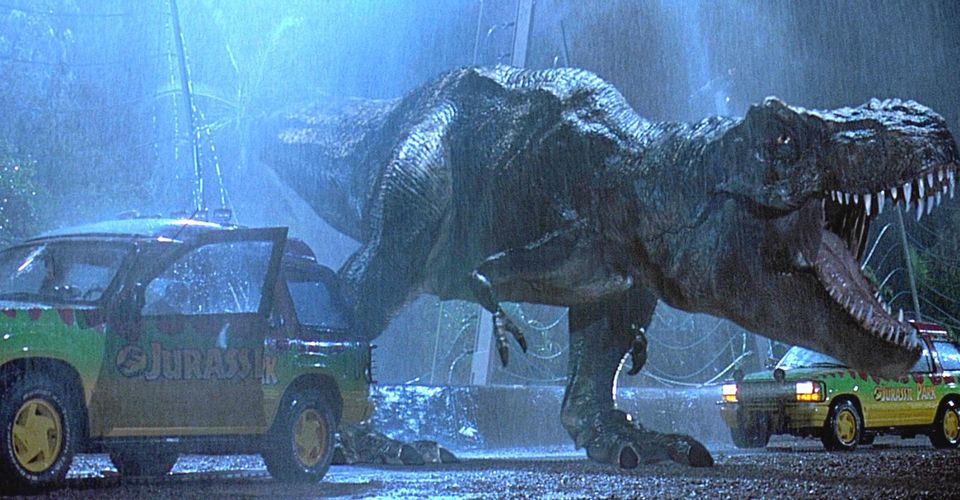
At the end of Jurassic Park (the movie), survivors Alan Grant, Ian Malcolm, Ellie Satler, John Hammond, and his grandchildren, flew away in a helicopter from the monumental disaster the potential theme park had become. Isla Nublar, a Costa Rican island that Hammond had purchased to be the home for the park, was left standing though. The next film, The Lost World, would instead use an additional InGen site, Isla Sorna (aka Site B), for its primary location. Jurassic Park 3 did as well. It wouldn't be until Jurassic World that Isla Nublar became a focus again.

However, in the Jurassic Park book, Isla Nublar is destroyed via a massive military assault by the Costa Rican air force, who after learning of what happened, attempt to use any means necessary to neutralize the dinosaur threat. This comes after the surviving characters escape at least, and of course dinosaurs are revealed to have somehow made it off the island before its destruction. It's unclear exactly why Isla Nublar was left intact in the film adaptation, but removing its destruction robbed the film of a defining climactic moment from the book.

While having destroyed Isla Nublar in 1993 would've meant Jurassic World had to be set somewhere else, that's certainly something that would've been doable, albeit without the opportunities for fan service when revisiting the locations from the first film. Still, by destroying Isla Nublar via a massive volcanic eruption, Jurassic World: Fallen Kingdom finally realized a plot point that should've happened 25 years prior - even if a poor Brachiosaurus had to serve as the franchise's saddest dinosaur casualty along the way.

Source: https://screenrant.com/

Jurassic Park: Why The Lawyer Doesn't Make Sense (But Does In The Book)

Monday, March 15, 2021

Jurassic Park changes the lawyer, Donald Gennaro, from the book; here's why director Steven Spielberg's characterization doesn't make sense.

When Steven Spielberg adapted Michael Crichton's novel Jurassic Park, he fundamentally changed the lawyer character, Donald Gennaro — but the new characterization doesn't make sense. Both versions of the story center on an ill-fated theme park based around living dinosaurs that were brought to life via advanced cloning technology. Although Jurassic Park changes several aspects of the book, both versions share the same basic characters and plot points.

In Crichton's novel and the feature film, the characters are brought together on Isla Nublar to assess the amusement park's safety. The top-secret "biological reserve" is home to various dinosaurs, who were created by combining recovered (damaged) DNA from fossils and supplementing it with compatible DNA from living amphibious, reptilian, and avian creatures (the biological descendants of dinosaurs). The entrepreneur and visionary John Hammond in Jurassic Park "spared no expense" in creating his park — which, coupled with the mysterious "animal attacks" on construction workers, has investors worried.

Donald Gennaro is the lawyer acting on behalf of investors in both versions of Jurassic Park. He visits Isla Nublar with chaos theorist Ian Malcolm to determine if the venture is safe. Apart from the background, however, the two versions of the character are starkly different: not only is his personality and motivation changed in the movie adaptation, but his role in the overall story is significantly minimized. As a result of these changes, Donald's character in Spielberg's Jurassic Park is undermined — to the point of verging on being a plot hole.

How Jurassic Park Changes The Lawyer, Donald Gennaro

In Jurassic Park, Gennaro is a lawyer working on behalf of a client who has invested in John Hammond's venture. An important point of distinction is that Genarro himself is not an investor. Donald Gennaro is changed to a villain in Jurassic Park the movie, rather than one of the heroes — but the motivation makes no sense. In the Crichton novel, Gennaro is an "everyman" character through which the reader can experience the action. Once he recognizes the danger the park poses, he quickly abandons his concerns about his job and instead takes an active role in trying to stop the disaster from unfurling. He fights off Velociraptors and is one of the survivors who escape at the end of the book.

In Spielberg's movie, however, Gennaro is a two-dimensional, unsympathetic creep who is consumed by greed. He is blinded by the financial potential of Jurassic Park, excitedly speculating about the fortune that could be made, and showing no concern for the ethics of the park or the potential danger. Gennaro is also a coward: he abandons the two kids, Lex and Tim Murphy, at the first sign of danger — and as a result, gets arguably the franchise's most humiliating death when a Tyrannosaurus rex eats him off of a toilet. The moment is frightening and builds suspense, but is also framed as comedic, which drives home just how unlikable this version of the character is intended to be.

Since Gennaro is not actually an investor, however, his brief arc in Jurassic Park is a bit of a plot hole. The movie never explains how he stands to gain from the park's profits. Sure, he may have some sort of stock option from InGen as a part of his employment (he's the general counsel), but that doesn't explain why he went from threatening to shut the park down to excitedly raving about how much money could be made. Most likely, Gennaro took on these characteristics to balance out the fact that Jurassic Park changes John Hammond to be much more likable  — or perhaps Steven Spielberg just really dislikes lawyers.

Source: https://screenrant.com/

Giant Dinosaur Tracks Found in a Cave in France

Tuesday, March 16, 2021

Here’s an artist’s rendition of what a sauropod dinosaur probably looked like, roughly speaking.

Sauropods were previously thought to have had their heyday in the Late Jurassic period. Recent fossil evidence says it was probably much earlier than that.

Sauropods, a group of dinosaurs, are of interest to scientists because they were among the most successful dinosaurs that ever lived. They have long necks, long tails, small heads, and four thick pillar-like legs. They are the type of dinosaur you imagine in your head when someone says the word, “dinosaur.” Evidence indicates that they may have been primarily vegetarian. They lived during the Middle Jurassic period, which lasted from about 174 to 163 million years ago. It was an important period in sauropod evolution.

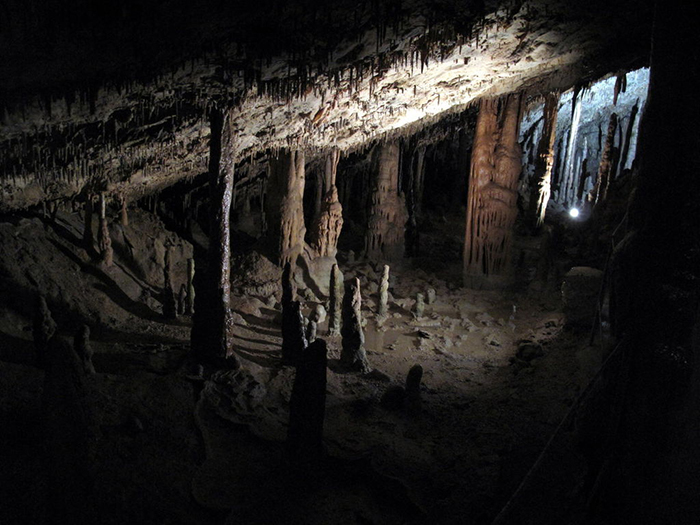
Evidence of Middle Jurassic sauropods are not easy to find around the world. Fossilized dinosaur tracks, located in areas called “trackways,” provide some evidence of their history. French scientists recently found the first sauropod dinosaur trackway in a karstic cave in Southern France. A karstic cave is among one of the most common types of caves, formed from limestone.

There were many studies during the last decade to learn about track sites in Europe. Some of the trackways were found by other scientists in France for another group of dinosaurs, the theropods. However, until this study, there weren’t any tracks for Middle Jurassic sauropods in France. Even though it is typical to find track sites in caves, mines or railway tunnels, it’s rare to find them in natural karstic caves.

The Castelbouc karstic network is located in the northern part of the Causses Basin. The first dinosaur tracks were found by one of the research team members while doing a caving trip in 2015. After this discovery, they returned to the cave network three additional times between 2016 and 2018 to continue collecting data. The dinosaur tracks were located on the roof of an underground passage near the entrance area of The Castelbouc caves.

Example of a karst cave.

Using a technique called X-ray diffraction, they analyzed samples of the environment of this underground passage, referred to as “the Tunnel gallery,” to understand more about it – such as the types of sediment and minerals it was made of. They also analyzed the amount of carbonate minerals in the rocks using a technique called thermogravimetry. Scientists analyzed these rock characteristics to understand more about the timeline of when these fossils deposited, which can reveal greater detail about the evolutionary relationships of animals that formed the fossils.

This turned out to be useful. They found that the tunnel gallery is made of thin layers of many different types of limestone rock, each with different geochemistry. Also, each layer contained a unique set of “bioclasts,” which are skeletal fossil remains of once living animals typically found in limestone rock. Among the once living animals found here are bivalves (such as clams and mussels) gastropods (like snails and slugs), fish scales, and even fossilized wood.

The types of rocks found in this area are formed mostly by marl, limestone, marly limestone and oolithic limestone. The fact that this region contained so many different types of rock was hypothesized to be part of the reason why so many different animals once lived here – unique environmental conditions of the time allowed for unique rock to form later. The roof of the Tunnel Gallery consists of oolithic limestone with abundant marine bioclasts as well as rare microscopic wood remains.

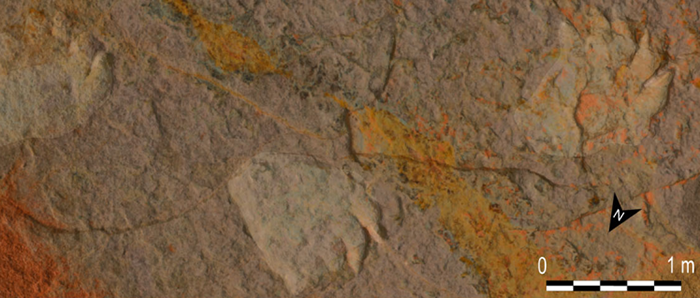
As for the sauropods, the researchers were able to better connect their lineage to other events of the time. They distinguished that these pedal trackways can be classified as large sauropod trackways, approximately 75 centimeters long! Most of the trackways are found on the roof of Tunnel gallery at the interface of marly limestone bed. Due to erosion of the marly limestone, some of the pedal trackways were not well-preserved.

Example of fossilized dinosaur tracks. They’re about a meter long! Source: Paper

However, some of the pedal trackways show delicate details of claws, digits, and paw pads. Researchers used a meticulous technique called “systematic paleoichnology” to identify the tracks, which involves comparing physical traits of the tracks with other known samples. After these comparisons, they concluded that the tracks were made by a dinosaur from the Middle Jurassic period. This dinosaur was likely to be a member of a group of large sauropods called Titanosauriformes. The authors of this study claim that the Titanosauriformes were an earlier form of sauropods that existed thousands of years before a major expansion in species diversity of the Late Jurassic period.

Source: https://sciworthy.com/

“Pompeii of Prehistoric Plants” Unlocks Evolutionary Secret – Spectacular Fossil Plants Preserved Within a Volcanic Ash Fall

Monday, March 15, 2021

Ash from a volcanic eruption 300 million years ago helped preserve an ancient forest, including foliage of newly characterized noeggerathialean plants. Credit: Hermann Pfefferkorn

Spectacular fossil plants preserved within a volcanic ash fall in China have shed light on an evolutionary race 300 million years ago, which was eventually won by the seed-bearing plants that dominate so much of the Earth today.

New research into fossils found at the ‘Pompeii of prehistoric plants,’ in Wuda, Inner Mongolia, reveals that the plants, called Noeggerathiales, were highly-evolved members of the lineage from which came seed plants.

Noeggerathiales were important peat-forming plants that lived around 325 to 251 million years ago. Understanding their relationships to other plant groups has been limited by poorly preserved examples until now.

The fossils found in China have allowed experts to work out that Noeggerathiales are more closely related to seed plants than to other fern groups.

No longer considered an evolutionary dead-end, they are now recognized as advanced tree-ferns that evolved complex cone-like structures from modified leaves. Despite their sophistication, Noeggerathiales fell victim to the profound environmental and climate changes of 251 million years ago that destroyed swamp ecosystems globally.

The international research team, led by paleontologists at Nanjing Institute of Geology and Palaeontology and the University of Birmingham, today published its findings in the Proceedings of the National Academy of Sciences (PNAS).

Co-author Dr. Jason Hilton, Reader in Palaeobiology at the University of Birmingham’s Institute of Forest Research, commented: “Noeggerathiales were recognized as early as the 1930s, but scientists have treated them as a ‘taxonomic football’, endlessly kicked around without anyone identifying their place in the Story of Life.

“The spectacular fossil plants found in China are becoming renowned as the plant equivalent of Pompeii. Thanks to this slice of life preserved in volcanic ash, we were able to reconstruct a new species of Noeggerathiales that finally settles the group’s affinity and evolutionary importance.

Reconstruction of the crown of Paratingia wuhaia sp. nov. Credit:

“The fate of the Noeggerathiales is a stark reminder of what can happen when even very advanced life forms are faced with rapid environmental change.”

The researchers studied complete Noeggerathiales preserved in a bed of volcanic ash 66 cm thick formed 298 million years ago, smothering all the plants growing in a nearby swamp.

The ash stopped the fossils from rotting or being consumed, and preserved many complete individuals in microscopic detail.

Lead-Author Jun Wang, Professor of Palaeobotany at Nanjing Institute of Geology and Palaeontology, commented: “Many specimens were identified in excavations in 2006-2007 when a few leaves were visible on the surface of the ash. It looked they might be connected to each other and a stem below — we revealed the crown on site, but then extracted the specimens complete to take them back to the lab.

“It has taken many years to study these fully and the additional specimens we have found more recently. The complete trees are the most impressive fossil plants I have seen and because of our careful work they are also some of the most important to science.”

The researchers also deduced that the ancestral lineage from which seed plants evolved diversified alongside the earliest seed plant radiation during the Devonian, Carboniferous and Permian periods, and did not rapidly die out as previously thought.

Reference: “Ancient noeggerathialean reveals the seed plant sister group diversified alongside the primary seed plant radiation” by Jun Wang, Jason Hilton, Hermann W. Pfefferkorn, Shijun Wang, Yi Zhang, Jiri Bek, Josef Pšenicka, Leyla J. Seyfullah and David Dilcher, 8 March 2021, Proceedings of the National Academy of Sciences
DOI: 10.1073/pnas.2013442118

The research team was made up of experts from: Nanjing Institute of Geology and Palaeontology; University of Birmingham; Chinese Academy of Sciences; Shenyang Normal University; Academy of Sciences of the Czech Republic, Prague; Centre of Palaeobiodiversity, Plzeň, Czech Republic; University of Vienna; Indiana Geological and Water Survey, US; and Indiana University, US.

Source: https://scitechdaily.com/

Should Jurassic Park Be Considered A Horror Movie?

Saturday, March 13, 2021

Jurassic Park fits all of the on paper definitions of a horror movie, but it's not generally thought of as one because of its tone and target audience.

Most film fans are probably familiar with Steven Spielberg's 1993 classic Jurassic Park. The film, based on Michael Crichton's 1990 novel of the same name, follows a group of scientists who are invited to explore a not yet opened wildlife park created by an elderly rich man where dinosaurs are no longer extinct and are available to view and study. Unfortunately, things don't go according to plan and the dinosaurs are sete loose, putting everyone in danger. The film has been officially classified on IMDb as action, adventure, and science-fiction, but discussions in the horror and film communities have fans debating, "is Jurassic Park a horror movie?" Turns out, there are some pretty compelling arguments for both sides.

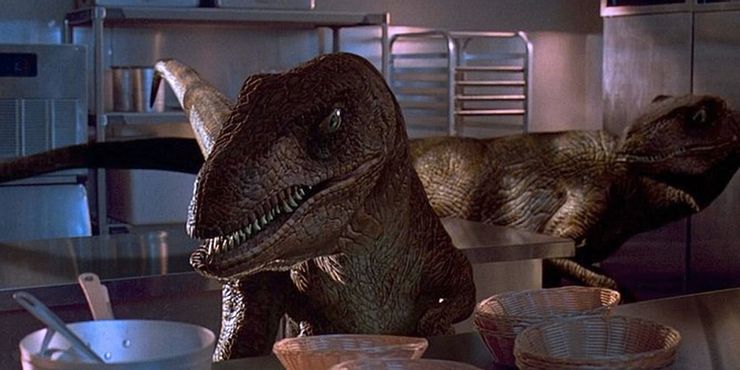
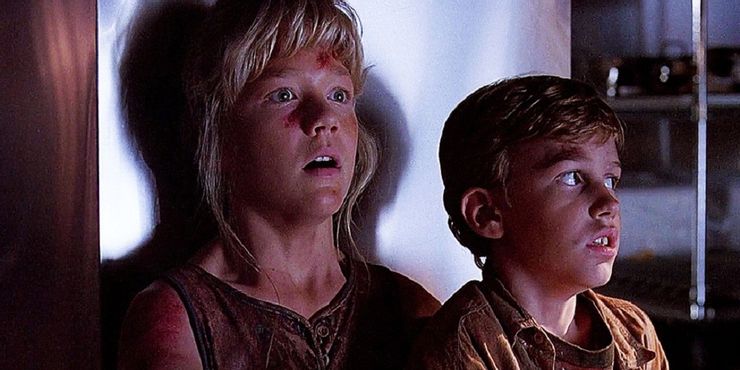
Most film fans know what to expect from a horror film: a macabre story designed to elicit a sense of fear or dread in the audience. This leads into the most used argument for classifying Jurassic Park as a horror movie, in that both its concept and plot are very scary. This is of course, true. One can't really argue that the concept of first, scientists bringing dinosaurs to life again and second, it going horribly wrong and the dinosaurs running wild and killing people, is very scary. Not for everyone, but for many, all it takes to make a horror film is for it to be scary. The scene where the kids are hiding in the kitchen and the dinosaurs seem to be hunting them? Absolutely terrifying. Spielberg himself wouldn't let his children watch it, saying it was too intense.

Another case for classifying Jurassic Park as horror involves comparing it to other films of similar plot or genre, that are solidly thought of as horror films. The most obvious one would probably be another Spielberg classic: Jaws. 1975's Jaws is another film that the majority of cinephiles will know very well, as a staple in the horror genre. It's about a great white shark that begins attacking vacationers at a popular beach town. The plot obviously differs slightly to Jurassic Park, notably lacking the science fiction elements, but they are both creature features and similarly shot and directed. The creature feature genre as a whole, which Jurassic Park should fall under, is most commonly thought of as a subgenre of horror.

On paper, it seems like Jurassic Park should be thought of as a horror movie. So why is it not listed as a main genre of the film? And, more importantly, why doesn't the public generally count it as one? As much as viewers can look at definitions and logistics to make these decisions, so often it comes down to tone. Does it feel like a horror movie? The short answer is, not really.

In terms of tone and vibe, Jurassic Park leans far more into its action and adventure qualities than it does fear. So many moments of the film evoke a sense of wonder, a quality that isn't generally seen in horror. This is likely most evident in a scene very early on in the film, when the group of scientists first reach the park and see the dinosaurs. It's deeply emotional, and features some breathtaking shots as well as John Williams's infamous whimsical score. Juxtaposing a scene like that with many of the scenes in Jaws, also featuring an infamous John Williams score, viewers can see where the comparison becomes kind of irrelevant. Jaws is shot and put together in a way that very clearly tries to evoke fear. Jurassic Park is not.

It's also important to keep the target audience in mind. Though Spielberg might have thought the film too intense for his own children, Jurassic Park is generally thought of as family-friendly at the very least and in some people's opinions, a movie made for children. The sequels and the Jurassic World reboot lean even more into that, and there have also been multiple LEGO iterations as well as an animated Netflix series. Children's horror does exist in features like Coraline, but it's probably safe to say that Jurassic Park doesn't quite fit that genre, and the way it's marketed now definitely labels it as more of a children's franchise.

Horror is one of the hardest genres to define and classify because it plays so much into fears and anxieties which are deeply subjective from person to person. For some people, horror isn't horror if it isn't scary. For some, that's secondary to the film meeting the qualifications outlined in definition. So often it comes down to the earlier raised question, "Does it feel like a horror movie?" and that's how it's decided. The conversations and debates on social media can get incredibly colorful, but it also raises the question of whether classifying films into these genres is helping or hurting. While it does give an indication of what to expect for a viewer, it can also put films and filmmakers in a box. As the nature of film changes through generations and becomes more fluid, the relevance of genre is an interesting thing to consider.

Source: https://gamerant.com/

Priscomyzon riniensis: Devonian Lamprey Hatchling-to-Adult Growth Series Sheds New Light on Vertebrate Origins

Saturday, March 13, 2021

This reconstruction of the Late Devonian estuarine lake at Waterloo Farm in South Africa captures the life history of an ancient lamprey species called Priscomyzon riniensis. Three individuals representing different ontogenetic stages take a shelter in the meadow of charophyte algae Octochara crassa. Clockwise from right: a yolk-sac-carrying hatchling tucked in the charophyte; a juvenile attached to the substrate in the foreground, and an adult looming over the other individuals and showing its feeding apparatus. In the background, a school of the coelacanth Serenichthys kowiensis swims by. Image credit: Kristen Tietjen.

Paleontologists from Canada, the United States and South Africa have unearthed the fossilized remains of larval and juvenile forms of four lamprey species that lived during the Paleozoic Era, including a hatchling-to-adult growth series of the lamprey genus Priscomyzon from the Late Devonian of Gondwana. The discovery is overturning long-held ideas as to what modern lampreys may tell us about the origin of vertebrates.

Lampreys are an extremely primitive lineage of jawless fish. They are found in temperate regions around the world, except Africa, and live mostly in coastal and fresh waters, although some species travel significant distances in the open ocean.

They feed by latching onto other fish with a sucker around their mouth, securing their grip with circles of teeth and then drinking their victim’s blood after rasping a hole with special teeth on their tongue.

Until now, it was commonly believed that modern lampreys were swimming time capsules that could give unique insights into the biology and genome of a truly ancient lineage.

This belief was supported by the discovery of Priscomyzon riniensis, a lamprey species that lived 360 million years ago in what is now South Africa.

The discovery was met with excitement worldwide as it was the oldest lamprey ever found, yet it appeared to have been essentially almost identical to modern adult lampreys.

In many ways, modern lampreys indeed provide unique insights into their ancient ancestry. But new evidence shows that this is not the case when it comes to the juvenile larval stage.

“Lampreys and modern hagfish are the only jawless fish alive that branched off from the family tree of vertebrates before they got jaws,” said Dr. Rob Gess, a paleontologist at the Albany Museum and the Department of Geology at Rhodes University.

“This makes them very interesting for researchers attempting to understand the earliest stages of vertebrate history.”

Called ammocoetes, the blind, filter-feeding, worm-like larvae of modern lampreys burrow in stream beds and filter water for minute food particles before slowly transforming into free-swimming, eyed, actively feeding adults.

Crucially, this strange life history was thought to echo transformations some 500 million years ago, which gave rise to all fish lineages, including the one that ultimately led to humans.

Hence, the last invertebrate ancestor of vertebrates is often portrayed as ammocoete-like, and the earliest vertebrate as being lamprey-like.

But for this to be a reasonable model, both ammocoetes and lampreys would need to hark back to the dawn of vertebrate history.

A growth series of Priscomyzon riniensis; it has no ammocoete phase, and is shown in reverse ontogenetic order: (a, b) adult stage; (c) schematic reconstruction of a part of the circumoral feeding apparatus of Priscomyzon, showing two petaliform plates and cusps from oblique ventral view from a center of the oral funnel; (d, e) juvenile stage; this stage is characterized by a well-developed oral funnel and branchial region; (f-k) late larval stage; this stage is intermediate in snout length and branchial expansion; (l-o) early larval stage; the larvae are slender and elongate, and the branchial region is small compared to the rest of the body; (p, q) hatchling stage; this 14-mm-long specimen is characterized by an abdominal bulge and has an elongate snout and small branchial region; prominent eyes and a circumoral feeding apparatus are already present in this individual as in later ontogenetic stages; (r, s) early ontogenetic phases of the modern lamprey Petromyzon marinus; unlike in the stem lamprey, larvae of modern lampreys have an oral hood, primordial eye spots, and elongate branchial baskets. Scale bars – 2 mm. Image credit: Miyashita et al., doi: 10.1038/s41586-021-03305-9.

“Now, for the first time, the conventional wisdom that our long chain of ancestors included an ammocoete-like form can be directly tested, and the evidence strongly contradicts such an assumption,” Dr. Gess said.

“Lampreys are virtually never fossilized as they had no bones or spines and just minute teeth, but in the 360 million old Waterloo Farm black shales near Makhanda (Grahamstown) in South Africa’s Eastern Cape province, impressions of their soft bodies are preserved as silvery white films in the black shale.”

“Details of their cartilaginous skeletons show through like X-rays. This is incredibly special. Nowhere else in the world are such ancient lamprey remains found.”

“Painstaking excavation of these shale samples has revealed the growth series of Priscomyzon illustrating its development from hatchling to adult,” he said.

“Remarkably, the smallest preserved individual, barely 15 mm in length, still carried a yolk sac. This signals that they had only just hatched before entering the fossil record.”

“Of crucial importance: even the hatchlings were already sighted with large eyes and armed with a toothed sucker, much like the blood-sucking adult phase of modern lampreys and completely unlike their modern ammocoete counterparts.”

“This drastically different structure of ancient lamprey infants provides evidence that modern lamprey larvae are not evolutionary relics. Rather, the modern filter-feeding phase is a more recent innovation that allowed lampreys to populate and thrive in rivers and lakes.”

“Less complete and previously unpublished partial growth series of three types of slightly younger lampreys from North America support the finding.”

“Distant human ancestry seemingly did not include a lamprey-larva-like stage,” he concluded.

“Lampreys now appear to be a highly evolved side branch which shared a common ancestor with us: probably a jawless fish enclosed in bony armor.”

The findings are published in the journal Nature.

_____

T. Miyashita et al. Non-ammocoete larvae of Palaeozoic stem lampreys. Nature, published online March 10, 2021; doi: 10.1038/s41586-021-03305-9

Source: http://www.sci-news.com/

Pages