nandi's blog

Jurassic Park: 10 Most Heartbreaking Moments

Friday, April 9, 2021

Audiences may flock to Jurassic Park movies to see blockbuster dinosaur action, but these Steven Spielberg movies are packed with emotion, too.

The Jurassic Park series is best known for the theatrical quality it brings with the big-budget effects and larger-than-life scenarios. However, Steven Spielberg also injected this series with an emotional punch that has gone severely underrated, of which there have been plenty of moments that deserve to be pointed out.

These are the scenes that combined the action with poignant sentiment or carried a tragic tone overall. Meanwhile, series mainstays like Alan Grant and other supporting characters may be known for their role as part of the action or simply to be killed off, but they've actually been part of moments that should make viewers feel genuine sympathy for them. Even certain dinosaurs have had moments where viewers feel for them.

10 - Tim's Near-Fatal Electrocution (Jurassic Park)

Things took a very real turn when Tim’s attempt to scale the fence didn’t work out as planned. Having panicked when he was told to jump before the fence was turned on, Tim was a second too late and got the blast of it.

For several seconds, it seemed as if Tim may have lost his life as Alan desperately attempted to resuscitate him while Tim’s sister Lex wept helplessly. Despite the children being in lethal scenarios earlier, this was a realistic way of portraying how an innocent life could have been lost.

9 - Eddie's Demise After Heroically Saving His Friends (The Lost World: Jurassic Park)

Eddie knew he was walking into danger at the hands of the pair of T-rex, but he put on a heroic front by saving the lives of his friends. However, there’s no denying that the poor guy had to pay for it with a brutal death.

Eddie was ripped apart by the dinosaurs for his efforts, and his death was made all the sadder when only Ian Malcolm mourned his fate while others simply brushed it off. For someone so loyal and brave, watching Eddie's demise was hard to stomach.

8 - The Kirbys Thinking Paul Sacrificed Himself (Jurassic Park III)

The Spinosaurus was established as the most dangerous dinosaur after its defeat of the T-rex, making Paul Kirby’s stand against it a truly brave move. After he was able to distract the Spinosaurus, while Alan Grant’s flare gun worked in making the dinosaur retreat. Paul fell into the river and it appeared as if he had perished.

Amanda and Eric's reactions were gutwrenching, as Eric was heartbroken at having potentially lost his father while Amanda rued over the fact that she had only just regained her love for him and didn’t get to tell him. While it turned out he was alive, the Kirbys’ momentary sorrow was heartbreaking.

7 - Billy's Reaction To Alan's Rebuking (Jurassic Park III)

Billy saw Alan as his idol and wanted to impress him by saving their research. He figured he could steal raptor eggs to take on the mainland and use the goodwill to fund the research that was about to be closed down.

Unfortunately for Billy, Alan was beside himself in anger when he found out and claimed that Billy was no better than the men who played God by building Jurassic Park. Billy had no response and was left feeling ashamed as his hoero left him with these upsetting words.

6 - The Agonizing Death Of The Velociraptor Knocked Down By Kelly (The Lost World: Jurassic Park)

At the end of the day, the dinosaurs are just following their natural instincts when they attempt to eat the humans. They can’t really be considered malicious or villainous.

Ian’s daughter Kelly dispatched a predator — in what is far from the best scene featuring a velociraptor — by using her gymnastic skills to launch it out the barn. The creature fell on a spike and writhed in pain as it slowly died. While it was trying to kill Ian, it’s still sad to see an animal that was only following its instinct meet such a painful end.

5 - Cooper's Begging To Get Rescued (Jurassic Park)

While the Jurassic Park sequels are criticized for not living up to the original, they did get some things right as far as emotional reactions are concerned. Cooper was left to fend for himself against the Spinosaurus and swung his arms wildly for the departing plane to stop for him.

Despite it being clear that it wouldn’t, Cooper openly begged and wept for his friends to rescue him. Sadly, the Spinosaurus arrived the next moment to devour him but not before audiences saw Cooper's look of sheer petrification.

4 - Lex & Tim's Trauma After Facing The T-Rex (Jurassic Park)

Not for nothing was Jurassic Park such a huge hit back in the day as the movie portrayed thrills in both children and adults. Lex and Tim, being the kids in the cast, displayed their trauma in two different but equally heartbreaking ways.

Lex was shown wide-eyed and screaming when she saw the T-rex up close, while Tim went completely mute as his trauma caused him to freeze. The children arrived only wanting to enjoy the park with their grandfather but left with memories of the T-rex’s monstrous attempts to kill them.

3 - Roland's Realization That Nothing Was Worth Dying For (The Lost World: Jurassic Park)

Roland remained an absolute badass throughout the second movie and accomplished his task of catching a T-rex. However, he was left with feelings of regret after he found out his friend Ajay had died at the hands of the dinosaurs.

At this moment, the big hunter realized nothing had been worth it and he was now left friendless with the realization that his mission had been for naught. His parting words of not wanting to spend time “in the company of death” were enough to confirm that Roland was now in the midst of an identity crisis.

2 - Alan's Desperate Plea To Ellie To Send Help (Jurassic Park III)

Alan and Ellie had been a romantic pair in the first movie but the latter had married someone else by Jurassic Park III. Still, she had Alan’s back when she alerted the navy and the marines to save him and his group.

Before that, the group was about to drown as the Spinosaurus caused their boat to capsize. Here, Alan desperately called Ellie and could only yell “The River! Site B!” before being overwhelmed by the water. At that moment, it appeared as if the protagonist may have tragically uttered his final words in vain.

1 - John Hammond's Realization That His Vision Has Failed (Jurassic Park)

For all his talk of “sparing no expense” for Jurassic Park, John Hammond ultimately failed to make his vision come alive. In the final scene of the first movie, he was shown sadly contemplating what could have been while in the escape helicopter. 

He looked forlornly at the amber cane containing the mosquito with the dinosaur DNA and remembered how his dream had started and how he was forced to flee. Despite Hammond clearly having lived in self-delusion, it was still a shame how his good intentions to create a spectacle for people to enjoy ended in such disaster.

Source: https://screenrant.com/

Beast of Five Teeth: Chilean Scientists Unearth Skunk That Walked Among Dinosaurs

Friday, April 9, 2021

A fossil of a skunk-like mammal that lived during the age of dinosaurs has been discovered in Chilean Patagonia, adding further proof to recent evidence that mammals roamed that part of South America a lot earlier than previously thought.

A part of the creature's fossilized jawbone with five teeth attached were discovered close to the famous Torres del Paine national park.

Christened Orretherium tzen, meaning 'Beast of Five Teeth' in an amalgam of Greek and a local indigenous language, the animal is thought to have lived between 72 and 74 million years ago during the Upper Cretaceous period, at the end of the Mesozoic era, and been a herbivore.

Prior to its discovery, and the teeth of the Magallanodon baikashkenke, a rodent-like creature, in the same area last year, only mammals living between 38 and 46 million years ago had been found in the southernmost tip of the Americas, the team that discovered it said.

The finds are critical to completing the evolutionary puzzle of the Gondwanatheria, a group of long-extinct early mammals that co-existed with dinosaurs, said Sergio Soto, a University of Chile paleontologist.

"This and other discoveries that we are going to make known in the future are revealing that there is enormous potential in terms of paleontology in the southern tip of Chile," said Soto.

"We are finding things that we did not expect to find and that are going to help us answer a lot of questions that we had for a long time about dinosaurs, mammals and other groups."

Orretherium tzen gen. et sp. nov. (CPAP-5007, holotype). (a–c) Partial left dentary with p2-p3 and m1-m3 in occlusal (a), labial (b) and medial (c) views. Drawings made by A.G.M. ac accessory cusp, coc coronoid crest, dc distal cingulum, de dentine, en enamel, maf masseteric fossa, mc mesial cingulum, mf mental foramen, med metaconid, pad paraconid, prd protoconid, rm retromolar space. Scale bar: 5 mm.

The discovery was published in the journal Scientific Reports by experts from the University of Chile working with researchers from Argentina's Natural History and La Plata museums and the Chilean Antarctic Institute.

The scientists think Orretherium tzen cohabited with Magallanodon baikashkenke, which was thought to have been an evolutionary step between a platypus or marsupial, and dinosaurs such as the long-necked titanosaur.

Source: www.ctvnews.ca/

Two New Species of Cretaceous Mammal Relatives Unearthed in China

Friday, April 9, 2021

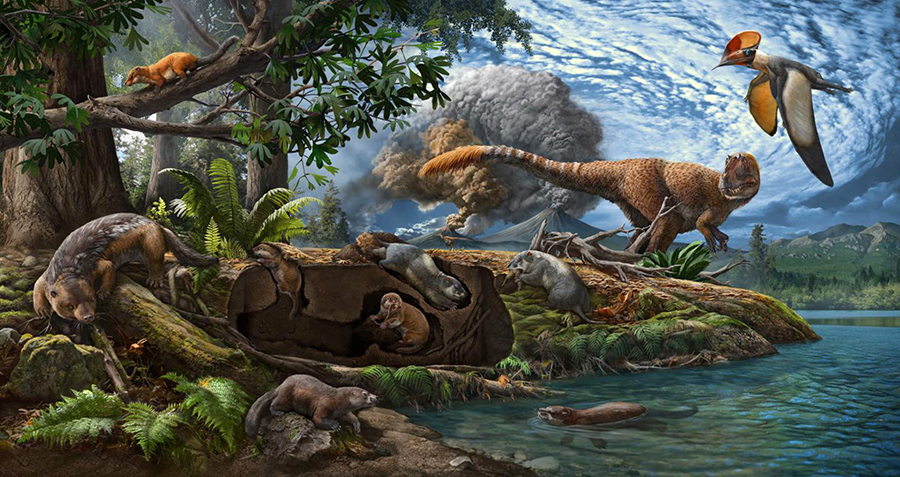
The dioramic landscape illustrates the Early Cretaceous Jehol Biota with emphasis on mammaliamorphs. Image credit: Chuang Zhao.

Fossiomanus sinensis and Jueconodon cheni, two distantly related species of mammaliamorphs that lived some 120 million years ago (Early Cretaceous period), were well adapted for fossorial (burrowing) life, and are the first ‘scratch-diggers’ known from the Jehol Biota, which is distributed mainly in western Liaoning Province and neighboring areas in northeastern China.

Jueconodon cheni is a eutriconodontan, a distant cousin of modern placental mammals and marsupials, and was 17.8 cm (7 inches) long.

Fossiomanus sinensis is an herbivorous mammal-like animal called a tritylodontid, and was 31.6 cm (12.2 inches) in length. It is the first of its kind to be identified in the Jehol Biota.

“The Early Cretaceous Jehol Biota has generated many well-preserved fossils that have furnished a great deal of information on the morphology and evolution of early mammals,” said Dr. Jin Meng from the American Museum of Natural History and colleagues.

“The two new species expand the diversity of the mammaliamorph assemblage and increase its morphological disparity, as they show unequivocal evidence of convergent adaptation for a fossorial lifestyle.”

“The two specimens also provide an opportunity to learn more about the biology (such as axial skeletal development) of these extinct forms.”

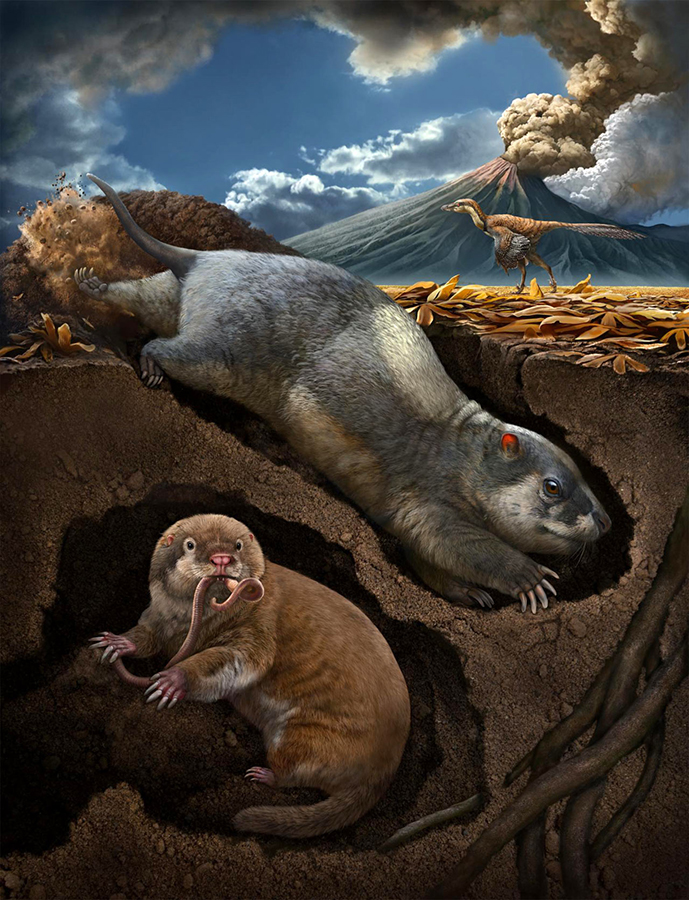
Fossiomanus sinensis (upper right) and Jueconodon cheni in their burrows. Image credit: Chuang Zhao.

Mammals that are adapted to burrowing have specialized traits for digging. Dr. Meng and co-authors found some of these hallmark features — such as shorter limbs, strong forelimbs with robust hands, and a short tail — in both Fossiomanus sinensis and Jueconodon cheni.

In particular, these characteristics point to a type of digging behavior known as ‘scratch digging,’ accomplished mainly by the claws of the forelimbs.

“There are many hypotheses about why animals dig into the soil and live underground,” Dr. Meng said.

“For protection against predators, to maintain a temperature that’s relatively constant or to find food sources like insects and plant roots.”

“These two fossils are a very unusual, deep-time example of animals that are not closely related and yet both evolved the highly specialized characteristics of a digger.”

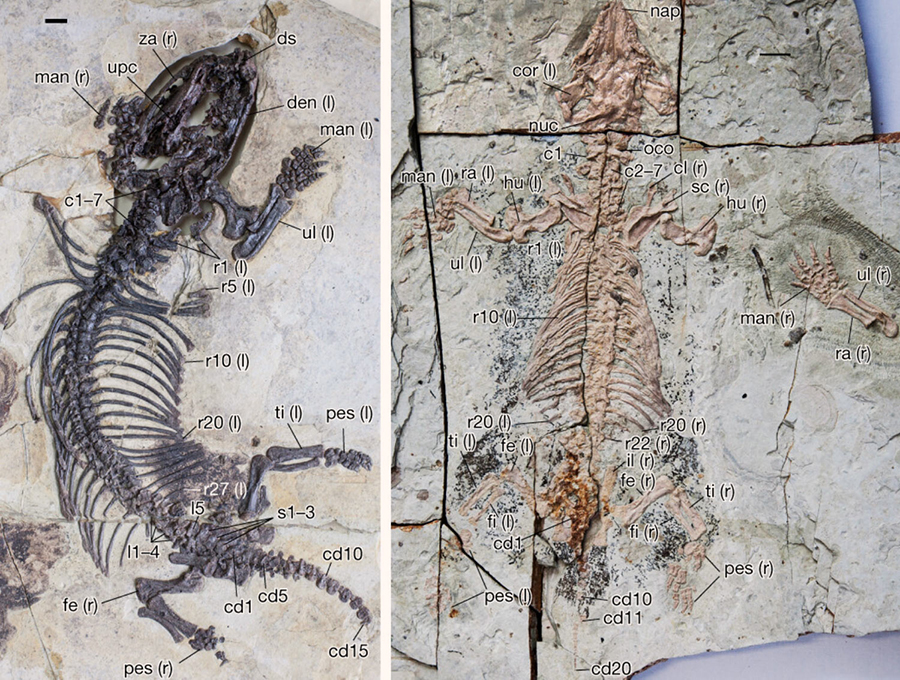
Holotypes of Fossiomanus sinensis (left) and Jueconodon cheni (right). Abbreviations: cl – clavicle, cor – coronoid process of the dentary, den – dentary, ds – dentary symphysis, fe – femur, fi – fibula, hu – humerus, il – ilium, man – manus, nap – nasal anterior process, nuc – nuchal crest, oco – occipital condyle, r – rib (with number), ra – radius, sc – scapula, ti – tibia, ul – ulna, upc – upper postcanines, za – zygomatic arch; the (r) and (l) in parentheses denote right and left, respectively. Scale bars – 10 mm. Image credit: Mao et al., doi: 10.1038/s41586-021-03433-2.

Fossiomanus sinensis and Jueconodon cheni also share another unusual feature: an elongated vertebral column.

Typically, mammals have 26 vertebrae from the neck to the hip. However, Fossiomanus sinensis had 38 vertebrae, while Jueconodon cheni had 28.

To try to determine how these animals got their elongated trunks, the paleontologists turned to recent studies in developmental biology.

They found that the variation could be attributed to gene mutations that determine the number and shape of the vertebrae in the beginning of the animals’ embryotic development.

“These fossils shed light on the evolutionary development of the axial skeleton in mammaliamorphs, which has been the focus of numerous studies in vertebrate evolution and developmental biology,” they said.

The discovery of Fossiomanus sinensis and Jueconodon cheni is reported in the journal Nature.

_____

F. Mao et al. Fossoriality and evolutionary development in two Cretaceous mammaliamorphs. Nature, published online April 7, 2021; doi: 10.1038/s41586-021-03433-2

Source: www.sci-news.com/

Scientists Discover Two New Species of Ancient, Burrowing Mammal Ancestors

Thursday, April 8, 2021

This portrait shows the tritylodontid Fossiomanus sinensis (upper right) and the eutriconodontan Jueconodon cheni in burrows; both lived the Early Cretaceous Jehol Biota (about 120 million years ago), northeastern China, and showed convergent skeletal features adapted to fossorial lifestyle.  CREDIT © Chuang Zhao

120-million-year-old animals evolved "scratch-digging" traits independently.

Paleontologists have discovered two new species of mammal-like, burrowing animals that lived about 120 million years ago in what is now northeastern China. The new species, described today in the journal Nature, are distantly related but independently evolved traits to support their digging lifestyle. They represent the first "scratch-diggers" discovered in this ecosystem.

"There are many hypotheses about why animals dig into the soil and live underground," said lead author Jin Meng, a curator in the American Museum of Natural History's Division of Paleontology. "For protection against predators, to maintain a temperature that's relatively constant--not too hot in the summer and not too cold in the winter--or to find food sources like insects and plant roots. These two fossils are a very unusual, deep-time example of animals that are not closely related and yet both evolved the highly specialized characteristics of a digger."

The fossil mammaliamorph species--predecessors to mammals--were discovered in the Jehol Biota, which represents the Early Cretaceous epoch, about 145 to 100 million years ago. One is a mammal-like reptile called a tritylodontid and is the first of its kind to be identified in this biota. About a foot in length, it was given the name Fossiomanus sinensis (Fossio, "digging" and manus "hand;" sinensis, "from China"). The other is named Jueconodon cheni (Jue, "digging"--Chinese pinyin--and conodon "cuspate tooth"; cheni for Y. Chen, who collected the fossil). It is a eutriconodontan, a distant cousin of modern placental mammals and marsupials, which were common in the habitat. It is about 7 inches long.

Mammals that are adapted to burrowing have specialized traits for digging. The researchers found some of these hallmark features--including shorter limbs, strong forelimbs with robust hands, and a short tail--in both Fossiomanus and Jueconodon. In particular, these characteristics point to a type of digging behavior known as "scratch digging," accomplished mainly by the claws of the forelimbs.

"This is the first convincing evidence for fossorial life in those two groups," Meng said. "It also is the first case of scratch diggers we know about in the Jehol Biota, which was home to a great diversity of life, from dinosaurs to insects to plants."

The animals also share another unusual feature: an elongated vertebral column. Typically, mammals have 26 vertebrae from the neck to the hip. However, Fossiomanus had 38 vertebrae--a staggering 12 more than the common state--while Jueconodon had 28. To try to determine how these animals got their elongated trunks, the paleontologists turned to recent studies in developmental biology, finding that the variation could be attributed to gene mutations that determine the number and shape of the vertebrae in the beginning of the animals' embryotic development. Variation in vertebrae number can be found in modern mammals as well, including in elephants, manatees, and hyraxes.

###

Other authors on the study include Fangyuan Mao from the Chinese Academy of Sciences and the American Museum of Natural History, Chi Zhang from the Chinese Academy of Sceinces, and Cunyu Liu from the Beipiao Pterosaur Museum of China.

This study was supported in part by the National Natural Science Foundation of China, grant no.s 41688103 and 42072002; the Chinese Academy of Sciences Strategic Priority Research Program, Youth Innovation Promotion Association, and 100 Young Talents Program; and the Kalbfleisch Fellowship of the American Museum of Natural History's Richard Gilder Graduate School.

Study DOI: 10.1038/s41586-021-03433-2

ABOUT THE AMERICAN MUSEUM OF NATURAL HISTORY (AMNH)

The American Museum of Natural History, founded in 1869 and currently celebrating its 150th anniversary, is one of the world's preeminent scientific, educational, and cultural institutions. The Museum encompasses more than 40 permanent exhibition halls, including those in the Rose Center for Earth and Space, as well as galleries for temporary exhibitions. The Museum's approximately 200 scientists draw on a world-class research collection of more than 34 million artifacts and specimens, some of which are billions of years old, and on one of the largest natural history libraries in the world. Through its Richard Gilder Graduate School, the Museum grants the Ph.D. degree in Comparative Biology and the Master of Arts in Teaching (MAT) degree, the only such free-standing, degree-granting programs at any museum in the United States. The Museum's website, digital videos, and apps for mobile devices bring its collections, exhibitions, and educational programs to millions around the world. Visit amnh.org for more information.

Source: www.eurekalert.org/

Welcome... to 'Jurassic Park' Reebok Sneakers

Thursday, April 8, 2021

With Jurassic World: Dominion not due in theaters until June 2022, fans of the franchise may have to turn to an unexpected place to get their Jurassic Park fix: the shoe store. Reebok has just announced their Jurassic Park x Reebok Instapump Fury, set to release this summer. Retailing at $180, these shoes come complete with all the movie-inspired details a fan could ask for.

Evoking the iconic self-driving Ford Explorers from the original Jurassic Park, these shoes pop with high-tech prehistoric theme park energy. While the Instapump technology probably won’t be of much use in outrunning a pack of Velociraptors, the leather liner and special co-branded graphic insole set might just prevent you from stomping around like a T-Rex. Most importantly, these shoes broadcast Jurassic Park fandom loud and clear. If the embossed rubber lettering on the front and rear pulls reads “Reebok Classic” and “Jurassic Park” in that signature Jurassic Park font don’t make that clear, the pump button with the distinctive T-Rex silhouette logo certainly will. Heck, even the tear details on the undercarriage recalls the “Dino-Damage” of Jurassic Park’s classic toys.

All of that throwback energy certainly seems in keeping with Jurassic World: Dominion. Speaking with Entertainment Weekly in January, director Colin Trevorrow teased how the movie connects back to the original Jurassic Park trilogy. “It’s very much a serialized story,” said Trevorrow, “what was important for me was, when you watch Dominion, you really feel like you are learning how much of a story that first set of movies was and how everything that happened in those movies actually informs what ultimately is able to happen in this.”

This won’t be the first branded collaboration for the Reebok Instapump Fury, which previously worked with Pharrell Williams and NIGO’s Billionaire Boys Club for a release in March. Reebok also released a “Women’s Day” collection to coincide with International Women’s Day. The upcoming release of the Jurassic Park designs was likely timed to coincide with the original mid-2021 release date for Jurassic World: Dominion. While COVID concerns delayed the film, Reebok seems committed to the idea that there’s never a bad time to have Jurassic Park in your heart — or on your feet.

The good news is, Dominion seems on track to hit its revised release date of June 10, 2022. Shooting wrapped back in November of 2020, after the production made headlines for its efforts on COVID prevention. And with DreamWorks Animation’s Camp Cretaceous Season 3 set to release on Netflix on May 21, there’s a lot of Jurassic Park to look forward to.

Jurassic World: Dominion will premiere June 10, 2022. The Jurassic Park x Reebok Instapump Fury is expected to drop this summer — stay tuned for further details. Take a closer look at their designs below.

Source: https://collider.com/

Fossil Discovery Deepens Snakefly Mystery

Wednesday, April 7, 2021

Modern snakefly pictured above Fifty-two-million-year-old fossil snakefly from Driftwood Canyon in British Columbia.  CREDIT: Fossil image copyright Zootaxa.

Fossil discoveries often help answer long-standing questions about how our modern world came to be. However, sometimes they only deepen the mystery -- as a recent discovery of four new species of ancient insects in British Columbia and Washington state is proving.

The fossil species, recently discovered by paleontologists Bruce Archibald of Simon Fraser University and Vladimir Makarkin of the Russian Academy of Sciences, are from a group of insects known as snakeflies, now shown to have lived in the region some 50 million years ago. The findings, published in Zootaxa, raise more questions about the evolutionary history of the distinctly elongated insects and why they live where they do today.

Snakeflies are slender, predatory insects that are native to the Northern Hemisphere and noticeably absent from tropical regions. Scientists have traditionally believed that they require cold winters to trigger development into adults, restricting them almost exclusively to regions that experience winter frost days or colder. However, the fossil sites where the ancient species were found experienced a climate that doesn't fit with this explanation.

"The average yearly climate was moderate like Vancouver or Seattle today, but importantly, with very mild winters of few or no frost days," says Archibald. "We can see this by the presence of frost intolerant plants like palms living in these forests along with more northerly plants like spruce."

The fossil sites where the ancient species were discovered span 1,000 kilometers of an ancient upland from Driftwood Canyon in northwest B.C. to the McAbee fossil site in southern B.C., and all the way to the city of Republic in northern Washington.

According to Archibald, the paleontologists found species of two families of snakeflies in these fossil sites, both of which had previously been thought to require cold winters to survive. Each family appears to have independently adapted to cold winters after these fossil species lived.

"Now we know that earlier in their evolutionary history, snakeflies were living in climates with very mild winters and so the question becomes why didn't they keep their ability to live in such regions? Why aren't snakeflies found in the tropics today?"

Pervious fossil insect discoveries in these sites have shown connections with Europe, Pacific coastal Russia, and even Australia.

Archibald emphasizes that understanding how life adapts to climate by looking deep into the past helps explain why species are distributed across the globe today, and can perhaps help foresee how further change in climate may affect that pattern.

"Such discoveries are coming out of these fossil sites all the time," says Archibald. "They're an important part of our heritage."

make a difference: sponsored opportunity


Story Source:

Materials provided by Simon Fraser UniversityNote: Content may be edited for style and length.


Journal Reference:

  1. S. Bruce Archibald, Vladimir N. Makarkin. Early Eocene snakeflies (Raphidioptera) of western North America from the Okanagan Highlands and Green River FormationZootaxa, 2021; 4951 (1): 41 DOI: 10.11646/zootaxa.4951.1.2

Source: www.sciencedaily.com/

Jurassic World: Why Dr. Wu Was The Only Jurassic Park Character To Return

Sunday, April 4, 2021

Dr. Henry Wu was the only character from Jurassic Park to return in Jurassic World, and his role is more significant and much darker than before.

Dr. Henry Wu appeared for just one scene in Jurassic Park but was the only character to return in Jurassic World more than twenty years later. Wu is portrayed by actor BD Wong, who has had roles as doctors in TV shows like Awake and Law & Order: Special Victims Unit. Not only is Wong's return to the franchise a welcome addition of a talented character actor, but is also an interesting twist on the familiar character: Dr. Wu's return in Jurassic World reveals that he has become a very different kind of doctor since Jurassic Park.

As the fourth installment in the Jurassic Park franchise and the first one of its own trilogy, Jurassic World is set more than two decades after the events of Steven Spielberg's iconic movie. A new theme park, Jurassic World, opens at the site of the original park, Isla Nublar, and chaos ensues when a genetically modified hybrid dinosaur, the Indominus Rex, escapes and goes on a rampage. The movie stars Chris Pratt, Bryce Dallas Howard, Irrfan Khan, Vincent D'Onofrio, Ty Simpkins, and Nick Robinson alongside Wong.

Wu's role in Jurassic World can explain why he was the one to return. In the original, Wu is the chief genetic engineer at InGen, the company responsible for Jurassic World's dinosaurs. Wu's main scene in the movie features him in the laboratory with a pencil and clipboard, examining the newly-cloned dinosaur eggs. As the main characters spend time at the laboratory, they learn more about how the dinosaurs were recreated, as well as some of the movie's key plot information like the cloning of the velociraptors. Wu does not appear for the rest of the film, leaving the audience to wonder if he made it off the island.

Wu does survive, and his role in Jurassic World is more significant than before. He is now the head of the InGen division responsible for cloning the dinosaurs, and the person behind the creation of the Indominus Rex. When Masrani (Khan) confronts Wu after the Indominus escapes, Wu points out that Masrani was the one who wanted a larger and scarier dinosaur attraction. Wu goes on to say that the term "monster" is a relative one, and the deaths caused by the Indominus are an "unfortunate" part of furthering the science of genetic engineering. Wong reprises the role for the sequel, Jurassic World: Fallen Kingdom, and it is confirmed that he will return for Jurassic World: Dominion, which is in post-production and is expected to release in 2022.

This darker side of Wu makes him the secondary antagonist behind the Indominus Rex in Jurassic World and helps explain why the character returned. If Wu's scene in Jurassic Park served as an opportunity for the audience to learn about how the dinosaurs were recreated, his role in Jurassic World reveals the ugly side of why the InGen team keeps pushing the limits. The pressure to keep creating bigger and better spectacles for visitors, while blatantly dangerous, could lead to glory for Wu. John Hammond once described Wu as a prodigy, and it appears that he will do what it takes to live up to that. He saw the potential of what the science could become, and perhaps the other characters from the first film saw it too — but wisely didn't want to be a part of it.

Source: https://screenrant.com/
Dinosaur-Killing Chicxulub Asteroid Gave Rise to Modern Neotropical Rainforests, Study Shows

Saturday, April 3, 2021

Reconstruction of Late Maastrichtian (66 million years ago) paleoenvironment in North America, where a floodplain is roamed by dinosaurs like Tyrannosaurus rex, Edmontosaurus and Triceratops. Image credit: Davide Bonadonna.

About 66 million years ago (the end of the Cretaceous period), a 10-km-wide asteroid crashed into Earth near the site of the small town of Chicxulub in what is now Mexico. The impact unleashed an incredible amount of climate-changing gases into the atmosphere, triggering a chain of events that led to the extinction of non-avian dinosaurs and 75% of life on the planet. In an analysis of thousands of fossil pollen and leaves from before and after the Chicxulub impact, scientists from the Smithsonian Tropical Research Institute and elsewhere found that the cataclysmic impact also caused 45% of plants in what is now Colombia to go extinct, setting the stage for the evolution of the Neotropical rainforests.

In the study, Smithsonian Tropical Research Institute paleontologist Dr. Carlos Jaramillo and colleagues examined fossil pollen (over 50,000 occurrences) and leaves (over 6,000 specimens) from before and after the Chicxulub impact from 39 localities in Colombia.

“We wondered how tropical rainforests changed after a drastic ecological perturbation such as the Chicxulub impact, so we looked for tropical plant fossils,” explained first author Dr. Mónica Carvalho, a postdoctoral researcher at Smithsonian Tropical Research Institute and the Universidad del Rosario.

Pollen and spores obtained from rocks older than the impact show that rainforests were equally dominated by ferns and flowering plants. Conifers were common and cast their shadows over dinosaur trails.

After the impact, conifers disappeared almost completely from the New World tropics, and flowering plants took over. Plant diversity did not recover for over 6 million years after the impact.

The researchers found evidence that pre-impact tropical forest trees were spaced far apart, allowing light to reach the forest floor.

Within 6 million years post-impact, some tropical forests were dense, like those of today, where leaves of trees and vines cast deep shade on the smaller trees, bushes and herbaceous plants below.

The sparser canopies of the pre-impact forests, with fewer flowering plants, would have moved less soil water into the atmosphere than did those that grew up in the millions of years afterward.

“It was just as rainy back in the Cretaceous, but the forests worked differently,” Dr. Carvalho said.

The team found no evidence of legume trees before the extinction event, but afterward there was a great diversity and abundance of legume leaves and pods.

Today, legumes are a dominant family in tropical rainforests, and through associations with bacteria, take nitrogen from the air and turn it into fertilizer for the soil. The rise of legumes would have dramatically affected the nitrogen cycle.

How did the after effects of the impact transform sparse, conifer-rich tropical forests of the dinosaur age into the rainforests of today — towering trees dotted with yellow, purple and pink blossoms, dripping with orchids? Based on evidence from both pollen and leaves, Dr. Jaramillo, Dr. Carvalho and their colleagues propose three explanations for the change, all of which may be correct.

One idea is that dinosaurs kept pre-impact forests open by feeding and moving through the landscape.

A second explanation is that falling ash from the impact enriched soils throughout the tropics, giving an advantage to the faster-growing flowering plants.

The third explanation is that preferential extinction of conifer species created an opportunity for flowering plants to take over the tropics.

“Our study follows a simple question: How do tropical rainforests evolve?,” Dr. Carvalho said.

“The lesson learned here is that under rapid disturbances — geologically speaking — tropical ecosystems do not just bounce back; they are replaced, and the process takes a really long time.”

paper on the findings was published in the journal Science.

_____

Mónica R. Carvalho et al. 2021. Extinction at the end-Cretaceous and the origin of modern Neotropical rainforests. Science 372 (6537): 63-68; doi: 10.1126/science.abf1969

Source: www.sci-news.com/

Trilobites Were Leg Breathers, New Research Shows

Saturday, April 3, 2021

Trilobite fossil preserved in pyrite. Image credit: Jin-Bo Hou / University of California, Riverside.

Trilobites had well-developed gill-like structures in their upper leg branches, according to a new imaging study led by the University of California, Riverside.

Trilobites are extinct marine arthropods that dominated the ecosystems of the Paleozoic Era.

They appeared in ancient oceans in the Early Cambrian period, about 540 million years ago, well before life emerged on land, and disappeared in the mass extinction at the end of the Permian period, about 252 million years ago.

They were extremely diverse, with about 20,000 species, and their fossil exoskeletons can be found all around the world.

“Up until now, scientists have compared the upper branch of the trilobite leg to the non-respiratory upper branch in crustaceans, but our paper shows, for the first time, that the upper branch functioned as a gill,” said lead author Dr. Jin-Bo Hou, a doctoral student in the Department of Earth and Planetary Sciences at the University of California, Riverside.

Dr. Hou and colleagues examined the pyritized remains of two trilobite species: Olenoides serratus from the Burgess Shale and Triarthrus eatoni from the Beecher’s Beds.

Triarthrus eatoni lived approximately 450 million years ago (Ordovician period); Olenoides serratus lived during the Cambrian period, about 500 million years ago.

“These were preserved in pyrite — fool’s gold — but it’s more important than gold to us, because it’s key to understanding these ancient structures,” said co-author Professor Nigel Hughes, a paleontologist in the Department of Earth and Planetary Sciences at the University of California, Riverside, and the Geological Studies Unit at the Indian Statistical Institute.

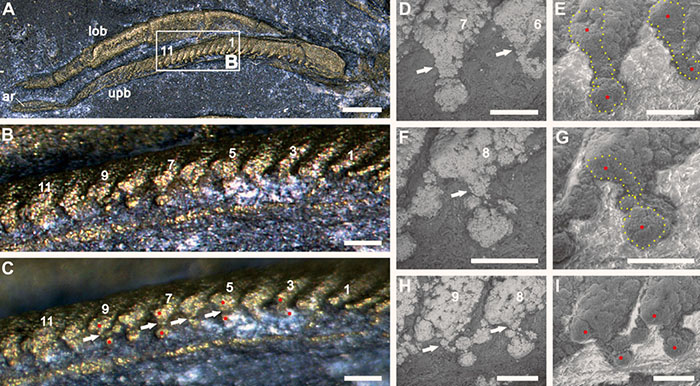
Dumbbell-shaped filaments of Triarthrus eatoni: (A) dorsal view; (B) posterior view of the truncated filaments in stacked (A); (C) same area of (B) with nonstack function; (D and E) the sixth and seventh filaments showing dumbbell-shaped outline, tilted about 40° to the dorsal view; (D) high-contrast backscattered electron (BSE) image; (E) high-contrast, gaseous secondary electron (GSE) image; (F and G) the eighth filament showing dumbbell-shaped outline, tilted about 40° to the dorsal view; (H and I) top view of the eighth and ninth filaments showing dumbbell-shaped outlines; yellow dotted lines mark the cross section of the filaments (E and G); arabic numbers are references for locating the cross section of filaments in (A); asterisks locate the top and bottom inflated marginal bulbs of dumbbell-shaped filaments; small white arrows indicate the narrow central region of dumbbell-shaped filament. Abbreviations: ar – article of shaft, lob – lower branch of the limb, upb – upper branch of the limb. Scale bars – 500 μm in (A), 100 μm in (B and C), and 50 μm in (D to I). Image credit: Hou et al., doi: 10.1126/sciadv.abe7377.

Using a CT scanner, the researchers created 3D models of dumbbell-shaped filaments in the upper limb branches of both Olenoides serratus and Triarthrus eatoni.

“It allowed us to see the fossil without having to do a lot of drilling and grinding away at the rock covering the specimen,” said Dr. Melanie Hopkins, a paleontologist in the Division of Paleontology at the American Museum of Natural History.

“This way we could get a view that would even be hard to see under a microscope — really small trilobite anatomical structures on the order of 10 to 30 microns wide.”

The researchers could see how blood would have filtered through chambers in these delicate structures, picking up oxygen along its way as it moved.

They appear much the same as gills in modern marine arthropods like crabs and lobsters.

“In the past, there was some debate about the purpose of these structures because the upper leg isn’t a great location for breathing apparatus,” Dr. Hopkins said.

“You’d think it would be easy for those filaments to get clogged with sediment where they are. It’s an open question why they evolved the structure in that place on their bodies.”

The findings appear in the journal Science Advances.

_____

Jin-bo Hou et al. 2021. The trilobite upper limb branch is a well-developed gill. Science Advances 7 (14): eabe7377; doi: 10.1126/sciadv.abe7377

Source: www.sci-news.com/

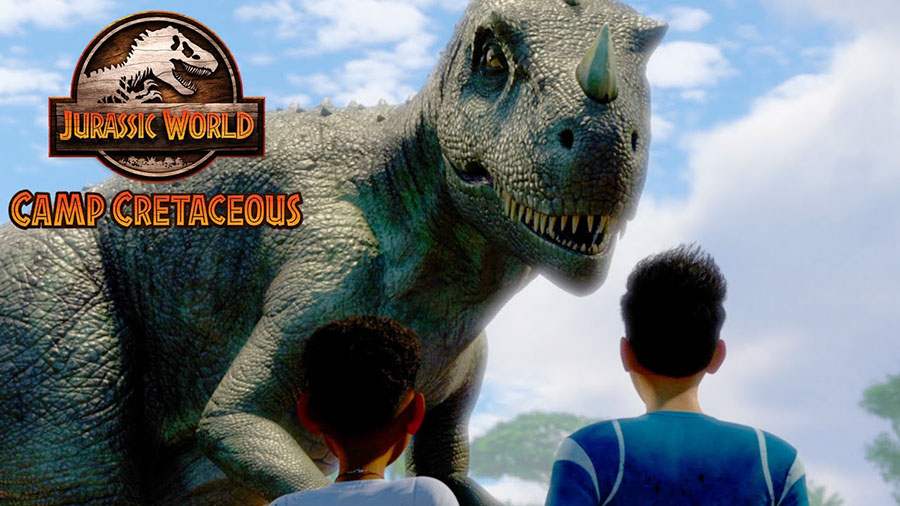
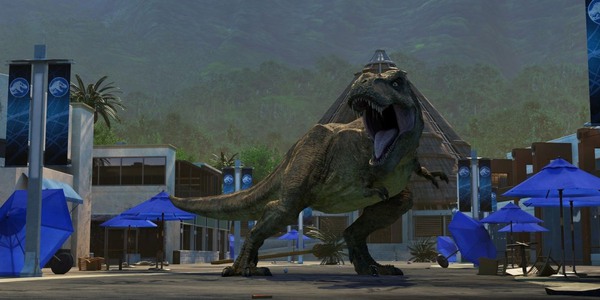
5 Reasons Why All Jurassic Park Fans Should Watch The Animated Jurassic World: Camp Cretaceous

Thursday, April 1, 2021

So, you grew up watching the Jurassic Park movies, did you? You’ve seen all three JP films and both Jurassic World movies, and you’re eagerly anticipating Jurassic World: Dominion. You are, like, a MEGA FAN, aren’t you? So, if that’s the case, then how come you’re not also watching Jurassic World: Camp Cretaceous streaming on Netflix?

I know, I know. It’s a kid’s show, right? Well, yeah, but it’s also an extremely good kid’s show and maybe even a better sequel to the Jurassic Park series than even Jurassic World. Yes, you heard me right. Honestly, I’m pretty surprised myself. My kids love Jurassic World: Camp Cretaceous, and it looked harmless enough when I’d occasionally pass the screen while they were watching it. But then, one day, I stopped when I saw how scary it was and then reevaluated whether my kids should even be watching it. Turns out it’s okay to watch, but only with me present. That’s fine, too, because I love it, and I have five reasons why every Jurassic Park fan should be checking out this fantastic cartoon.

It Expands The Lore

If you’ve ever read the Michael Crichton books, you’ll know that there are a few differences from the Jurassic Park novels and the films. I don’t want to spoil anything here just in case you do want to read the two novels, but some characters die, an island gets destroyed, and some events happen that are entirely separate from the movies. So, reading the books isn’t always the best picture if you want to get the complete lore of the films.

But, Jurassic World: Camp Cretaceous definitely expands upon the world of JP/JW and even hints at events that might happen in future films. For example, throughout the show, there are breadcrumbs dropped about another company besides Ingen that might be trying to clone dinosaurs. This is something that we haven’t seen in the movies yet, and who knows? It might play a part in Jurassic World: Dominion. Only time will tell.

It Has A Great Cast Of Characters

The Jurassic Park series has always featured kids. From the first Jurassic Park with Tim and Lex Murphy (Played by Joseph Mazzello and Ariana Richards, respectively), to the first Jurassic World with Gary and Zack Mitchell (Played by Ty Simpkins and Nick Robinson, respectively), kids have always had a place on Isla Nublar, mostly to be chased by dinosaurs. Let’s be frank, though, it’s the adult characters that we all came to see. Dr. Grant, played by Sam Neill, Dr. Sattler, played by Laura Dern, Owen Grady, played by Chris Pratt, and of course, Dr. Ian Malcolm, played by Jeff Goldblum, are the real stars of the films.

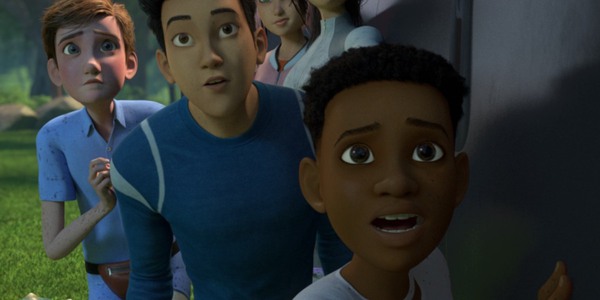
Not so in Jurassic World: Camp Cretaceous, as we get six teenagers in Darius, Ben, Yasmina, Brooklynn, Kenji, and Sammy, instead. You might be thinking that you’d rather not spend all that much time with teenagers, but believe me when I say this—the teens on this show might be my favorite characters in the entire Jurassic Park franchise, second only to Dr. Ian Malcolm. They just have so much personality, and there’s that wonder but also that mixed sense of responsibility since they can’t rely on any of the adults. In fact, many of the adults on the show try to deceive them.

My two favorite characters are Darius, who’s obsessed with dinosaurs, and Sammy, whose spunkiness might get annoying if she weren't so earnest about it. All the characters are great, though, and you’re doing yourself a great disservice if you’re a JP/JW fan who hasn’t checked out this show yet.

Each Episode Is Like A Mini Movie

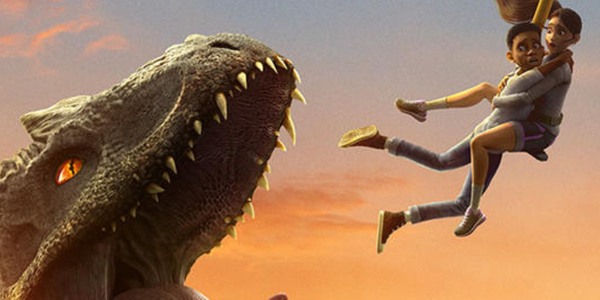
Here’s another big one. The movies often take a lot of time getting the viewer into the science of cloning. However, this is not so with Camp Cretaceous. Being a show for kids, the stories stay much closer to the characters, so the events that follow them are often super action-packed, with dinosaurs chasing them and everything.

And, the animation is top notch to boot. There are explosions, dinosaurs in every episode, stunts, car chases, you name it. Every story beat is meant to keep you engaged and just waiting for the next event to come on so you can hear that thunderous roar that precedes every episode.

It's Canon

Starting off just days before the events of the first Jurassic World, and then eventually merging with that story, the events in Camp Cretaceous are most definitely canon and essential viewing if you want the full Jurassic World experience. Dr. Grant and Dr. Sattler are mentioned on the show, the Indominus Rex in the movie makes an appearance in the series, and it just all feels super necessary now.

Think of it like this. You know how we didn’t think we needed Better Call Saul when it came to Breaking Bad, until we actually got it? Well, that’s what Jurassic Park: Camp Cretaceous feels like. Now that we have it, we need it. Especially since it’s considered canon and an essential part in the Jurassic Park/World franchise.

It's Additional Jurassic World. What More Could You Possibly Want As a Fan?

Most importantly, it’s just more Jurassic Park/World. I’m the kind of fan who debates whether The Lost World or Jurassic Park III is better, and it’s mostly because I love Jurassic Park and have a hard time waiting for each new movie to come out. Well, Jurassic World: Fallen Kingdom came out all the way back in 2018, and Jurassic World: Dominion isn’t scheduled to come out until 2022. So, what the hell am I supposed to do in between that time as a huge JP/JW fan?

Thankfully, I can just watch Jurassic World: Camp Cretaceous. The first two seasons are available to stream right now on Netflix and Season 3 is supposed to be out on May 21st, so it’s not that far away! So, if there’s any reason to watch the cartoon, it’s that you can get more JP/JW right this instant! If that’s not reason enough to watch the show, then I don’t know what is.

Jurassic Park: Camp Cretaceous is just flat out amazing and you need to watch it if you love Jurassic Park. But, once you breeze through both seasons, check out what other 2021 Netflix TV series are available to watch.

Source: www.cinemablend.com/

Pages