nandi's blog

Arackar licanantay: New Titanosaur Species Unearthed in Chile

Tuesday, April 27, 2021

Life reconstruction of Arackar licanantay. Image credit: Mauricio Álvarez.

A new genus and species of lithostrotian titanosaur has been identified from a partial skeleton found in northern Chile.

Arackar licanantay lived in what is now the Atacama region of Chile during the Late Cretaceous epoch, between 84 and 66 million years ago.

The species belongs to Lithostrotia, a large group of derived sauropod dinosaurs in the clade Titanosauria.

“The Titanosauria is very broad and diverse, with repeated finds in what is now Argentina and Brazil,” said Dr. David Rubilar-Rogers, a paleontologist at the Museo Nacional de Historia Natural in Chile.

“However, it is much less frequent to find them on this side of the mountain range.”

“There are very few records of titanosaurs in this territory, which makes Arackar licanantay a very valuable find.”

The partial skeleton of Arackar licanantay, including cervical and dorsal vertebrae, humerus, femur and ischium, was recovered from the Hornitos Formation in northern Chile.

It is the most complete sauropod dinosaur recorded in Chile and the south Pacific margin of South America.

It is also the third dinosaur named from Chile, after Atacamatitan chilensis and Chilesaurus diegosuarezi.

Arackar licanantay is a new lithostrotian titanosaur represented by associated and disarticulated bones that belong to a single sub-adult specimen of around 6.3 m (20.7 feet) long,” the paleontologists said.

“This sauropod is diagnosed by a unique association of features of dorsal vertebrae and appendicular bones.”

“It shares some characters with Rapetosaurus and Bravasaurus, and do not belong to the derived clade Saltasaurinae from Patagonia.”

“Another peculiarity of Arackar licanantay is related to the disposition of its limbs,” said Dr. Alexander Vargas, a paleontologist at the Universidad de Chile.

“A characteristic of many titanosaurs is that their legs were at an open angle. The new dinosaur does not have that angle, it is quite straight compared to the femur of other titanosaurs.”

The team’s paper was published in the journal Cretaceous Research.

_____

David Rubilar-Rogers et al. 2021. Arackar licanantay gen. et sp. nov. a new lithostrotian (Dinosauria, Sauropoda) from the Upper Cretaceous of the Atacama Region, northern Chile. Cretaceous Research 124: 104802; doi: 10.1016/j.cretres.2021.104802

Source: www.sci-news.com/

Researcher Questions Whether Powered Flight Appeared On Non-Avialan Dinosaurs

Tuesday, April 27, 2021

Credit: F.J. Serrano. University of Malaga

Powered flight in animals—that uses flapping wings to generate thrus—is a very energetically demanding mode of locomotion that requires many anatomical and physiological adaptations. In fact, the capability to develop it has only appeared four times in the evolutionary history of animals: On insects, pterosaurs, birds and bats.

A research paper published in 2020 in the scientific journal Current Biology concluded that, apart from birds, the only living descendants of dinosaurs, powered flight would have originated independently in other three groups of dinosaurs. This is a conclusion that makes a great impact, as it increases the number of vertebrates that would have developed this costly mode of locomotion, which, among dinosaurs, would no longer be an exclusive capability of birds.

The scientist of the Department of Ecology and Geology of the University of Malaga Francisco Serrano Alarcón has recently published an article in the same journal, questioning the idea that powered flight appeared multiple times among dinosaurs.

The researcher of the UMA, member of the Dinosaur Institute (NHMLAC) of Los Angeles, refutes such conclusion in the absence of scientific evidence. As he remarks, the parameters used by the authors to determine flight capability do not allow differentiation between powered flight and passive flight, the latter being frequent in many more animal groups.

Credit: Stephanie Abramowicz (Natural History Museum of Los Angeles County).

This new study, which he conducted along with the paleontologist Luis M. Chiappe, Vice-President for Research and Collections of the NHMLAC, compares the parameters measured on present animals with powered flight capability, such as birds and bats, and gliding animals, for example, flying squirrels or flying reptiles, among others. Moreover, they added new data on the capability to generate energy from muscles in addition to the data considered in the original study.

"Birds are a group of dinosaurs of which we have discovered 150-million-year-old fossils with fully developed wings. Among their closest non-avialan relatives, we have also found fossils with sufficiently developed wings that could provide them with some aerodynamic benefit, whether to glide between trees or get thrust to climb and jump over obstacles. But this does not mean that they could take off by flapping their wings or maintain a powered flight," explains Francisco Serrano.

In short, both authors conclude that although they cannot discount the possibility that powered flight appeared in other non-avialan dinosaurs, current evidence does not support the hypothesis suggested in the original paper by Pei et al (2020).

More information: Francisco J. Serrano et al, Independent origins of powered flight in paravian dinosaurs?, Current Biology (2021). DOI: 10.1016/j.cub.2021.03.058

Journal information: Current Biology

Provided by: University of Malaga

Source: https://phys.org/

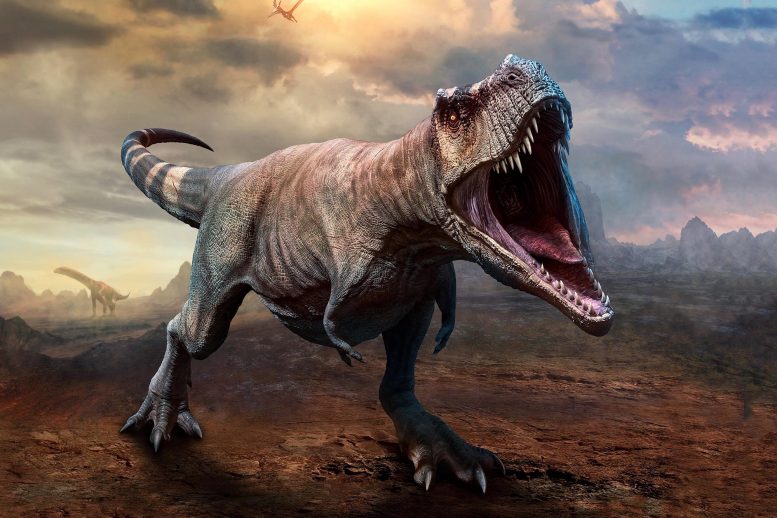
Tyrannosaurus rex Mystery Solved: How Dinosaurs Delivered Bone-Crushing Bites

Tuesday, April 27, 2021

New research addresses longstanding mystery on the anatomy of the Tyrannosaurus rex jaw.

Tyrannosaurus rex dinosaurs chomped through bone by keeping a joint in their lower jaw steady like an alligator, rather than flexible like a snake, according to a study being presented at the American Association for Anatomy annual meeting during the Experimental Biology (EB) 2021 meeting, held virtually April 27-30.

The research sheds new light on a conundrum that has perplexed paleontologists. Dinosaurs had a joint in the middle of their lower jaws, called the intramandibular joint, which is also present in modern-day reptiles. Previous research has suggested this joint was flexible, like it is in snakes and monitor lizards, helping carnivorous dinosaurs to keep struggling prey in their jaws. However, it has been unclear whether the jaws were flexible at all, or how they could be strong enough to bite through and ingest bone, which Tyrannosaurus did regularly, according to fossil evidence.

“We discovered that these joints likely were not flexible at all, as dinosaurs like T. rex possess specialized bones that cross the joint to stiffen the lower jaw,” said John Fortner, a doctoral student in anatomy at the University of Missouri, first author of the study.

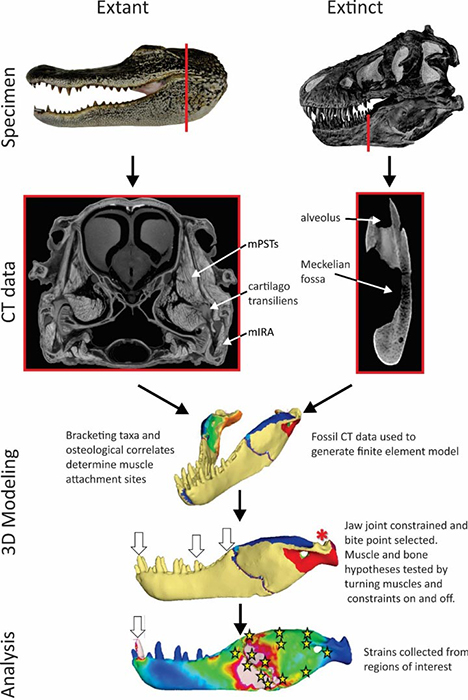
The researchers used CT scans of dinosaur fossils and modern-day specimens to create a 3D computer model of a dinosaur jaw and identify where muscles attach to bone. They then used the model to simulate muscle forces under different biting scenarios. Stars indicate areas where strain was assessed. Credit: Image courtesy of John Fortner, University of Missouri

Fortner and colleagues used CT scans of dinosaur fossils and modern reptiles to build a detailed 3D model of the T. rex jaw. Unlike previous models, their simulations include bone, tendons and specialized muscles that wrap around the back of the jaw, or mandible.

“We are modeling dinosaur jaws in a way that simply has not been done before,” said Fortner. “We are the first to generate a 3D model of a dinosaur mandible which incorporates not only an intramandibular joint, but also simulates the soft tissues within and around the jaw.”

To determine whether the intramandibular joint could maintain flexibility under the forces required to crunch through bone, the team ran a series of simulations to calculate the strains that would occur at various points depending on where the jaw hinged. The results suggest bone running along the inside of the jaw, called the prearticular, acted as a strain sink to counteract bending at the intramandibular joint, keeping the lower jaw stiff.

The team plans to apply their modeling approach to other dinosaur species in order to further elucidate biting mechanics among dinosaurs — and perhaps, help researchers better understand today’s creatures, as well.

“Because dinosaur mandibles are actually built so much like living reptiles, we can use the anatomy of living reptiles to inform how we construct our mandible models,” said Fortner. “In turn, the discoveries we make about T. rex’s mandible can provide more clarity on the diversity of feeding function in today’s reptiles like crocodilians and birds.”

Reference: “(R3068) The Role of the Intramandibular Joint, Symphyseal Tissues, and Wrapping Muscles on Theropod Dinosaur Mandibular Function” by John Fortner, 26 April 2021, Experimental Biology 2021.

Source: https://scitechdaily.com/

Dinosaur-Killing Asteroid Radically Changed Earth’s Tropical Forests

Tuesday, April 27, 2021

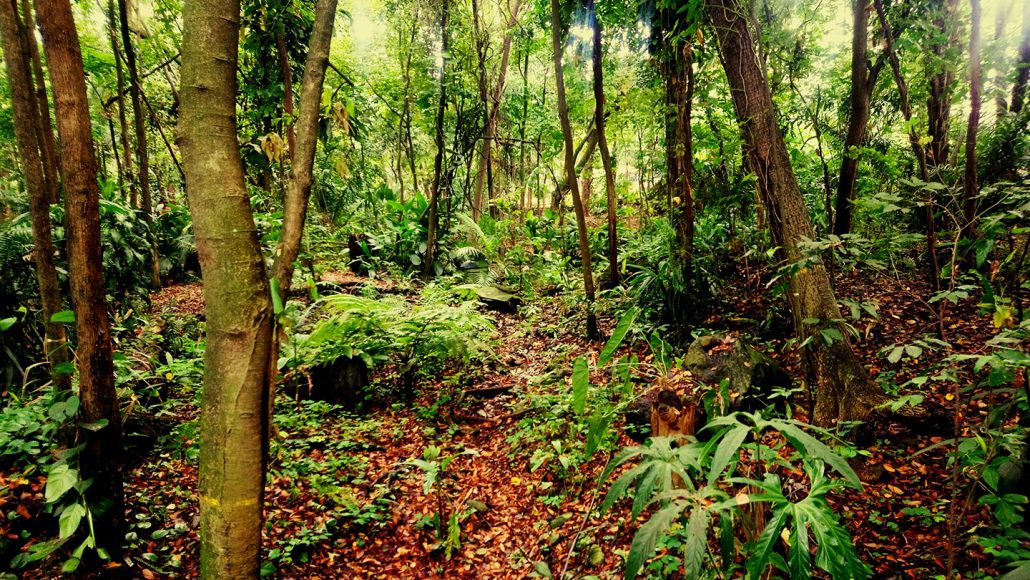
The look of this forest near Medellín, Colombia, traces back to a mass-extinction event some 66 million years ago.  CHRISTIAN DAVID GARCIA/EYEEM/GETTY IMAGES

Sunny forests morphed into the dark, dense ones that are typical today.

Some 66 million years ago, a very different type of rainforest thrived in what is now Colombia. Ferns unfurled. Towering conifers reached for the skies. Flowering shrubs bathed in the sunlight that streamed down to them through large gaps in the canopy between those trees. Then an asteroid crashed into Earth. Overnight, everything changed.

The fireball’s impact set off a massive extinction event. It wiped out more than 75 percent of all life on Earth. It also kicked off a massive transformation of the planet’s tropical rainforests. Gone were the sun-dappled, semi-open woodlands. In their place came forests where large swaths of the ground now were covered by dark, dense, lush and moist trees — ones typical of today’s Amazon. Researchers described their new evidence for this forest-morphing April 2 in Science.

They had analyzed tens of thousands of fossils of pollen, spores and leaves. These came from 39 sites across what is now the South American nation of Colombia. All fossils dated from between 70 million and 56 million years ago. 

The team then assessed what plants had left these remains. They gave clues to which had been dominant. They also pointed to what insects had been interacting with them. And the evidence was startling. It showed that once the Earth-shaking space rock struck, forest ecosystems abruptly changed.

Right away, plant diversity declined by 45 percent, the researchers now report. It would take 6 million years before the rich diversity of the old forest returned. Yet even then, these rainforests would never be the same.

“A single historical accident changed the ecological and evolutionary trajectory of tropical rainforests,” says Carlos Jaramillo. He’s a scientist at the Smithsonian Tropical Research Institute. It’s in Panama City, Panama. There, he specializes in the study of ancient pollen. What his team’s new data show is “the forests that we have today are really the by-product of what happened 66 million years ago.”

That fireball triggered a cascade of changes

Right before the extinction event, tropical forests hosted a very different mix of species. Roughly half the greenery had been flowering trees and shrubs. The other half were species such as conifers and ferns. After the fireball, the ferns and conifers largely vanished. The flowering trees and shrubs took over. Eventually they would become some 90 percent of the forest’s plant species.

Why is not totally clear.

At the end of the Cretaceous Period, 66 million years ago, that region was hot and humid — similar to what it is today. But that climate alone is not likely what led to the forest’s structure. Huge long-necked, plant-eating dinosaurs had lived there. These sauropods, the largest animals ever to walk the Earth, would have helped maintain open gaps in the forest canopy, Jaramillo explains. This would have let light reach the ground. But when the asteroid hit, these and most other dinosaurs disappeared. Certain plant families did, too.

Then there were changes to the soil. Frequent rains during the warm, wet Cretaceous would have leached nutrients from the soil, washing them away. The poor soils they left behind would have favored trees such as conifers, Jaramillo explains: These trees had “this amazing ability to grow with very little food.” It allowed them to win out over flowering trees and shrubs.

But in the wake of the asteroid impact, ash from widespread fires would have fluttered to the ground. This likely would have seeded the soils with phosphorus, a fertilizer. With more nutrients available, flowering trees and shrubs could rise to dominance, the researchers say. In time, these species evolved to grow skyward in dense communities that now blocked the sun from the forest floor. This thick, closed canopy appeared soon after the impact.

The forest’s overall diversity took much longer to recover. In time, new species emerged to occupy different parts of this changing ecosystem. Insect communities also changed. The researchers found leaf fossils with traces of different interactions between plant-eating insects and plants. Before the asteroid hit, these included specialist creatures. Some drilled careful holes through leaves. Others could strip leaves down to their skeletons.

Fossils of leaves (shown) and pollen from across Colombia reveal how the tropical rainforests shifted due to the extinction event at the end of the Cretaceous. Before the event, the forests were a sunny, open-canopied mix of conifers, ferns and flowering trees (examples in the bottom half of this image). After the event, the forests were dominated by flowering trees, and developed a thick, heavy, light-blocking canopy (examples in the top half of this image). CARVALHO ET AL/SCIENCE 2021

Other insects and plant-munching groups had been more “generalists.” They could dine on a wide variety of plants. These animals “seemed to squeak through [the extinction event] largely unaffected,” says coauthor Conrad Labandeira. He’s an ecologist who specializes in ancient life. He works at the Smithsonian National Museum of Natural History in Washington, D.C. Some of the old specialists that were more dependent on particular plant types now “got really creamed,” Labandeira says. These included leaf miners, leaf-piercers and leaf-suckers.

A lesson on the length of impacts

The forest transformation described here offers a valuable lesson that could apply to the long-lasting impacts of human activities today, such as deforestation. “Generating new diversity takes geological time,” Jaramillo says. By geological, he means timescales that could last millions of years. The data indicate, he says, that bringing back forests can take far more than just replanting trees.

This is the first comprehensive picture of what happened to tropical forests right after the extinction event, says Elena Stiles. She’s a paleoecologist who works at the University of Washington, in Seattle. She did not take part in the new study. In the past, most analyses of the time right before and after the extinction event come either from North America, or from much farther south, she notes. The tropics were largely overlooked. And there’s a reason. “In the tropics, there is no place where we have the boundary [from before and after the asteroid impact] preserved,” she says. There also are few fossils from this region.

In fact, she says, the new data may help answer a longstanding question about South America’s species richness. “For a long time, people have wondered where all of this diversity comes from,” Stiles notes. Some researchers speculated it was due to the continent’s climate. Or maybe its long isolation from other continents was responsible. “So it’s really interesting,” she says, to now learn that “this mass-extinction event could have been one of the mechanisms that shaped it to [today] be this unique.”

Source: www.sciencenewsforstudents.org/

Jurassic World: Dominion Composer Teases Alan Grant’s New Theme

Monday, April 26, 2021

Jurassic World: Dominion composer, Michael Giacchino, teases new musical theme for iconic character Alan Grant, portrayed by Sam Neill.

Everyone's favorite paleontologist, Alan Grant, will be given a brand new musical theme in the Jurassic World: Dominion. Set to premiere in 2022, Dominion will be the third installment of the Jurassic World series and the sixth film within the Jurassic universe.

Alan Grant, portrayed by Sam Neill, featured as the protagonist in the first Jurassic Park and has gone on to serve as one of the main characters in the franchise. Despite Grant's significance to the story, John Williams (who scored the original Jurassic Park films) never "granted" him with his own musical theme or leitmotif. Michael Giacchino has since taken the reigns as the franchise's composer and has scored both Jurassic World and Jurassic World: Fallen Kingdom. With Neill making his grand return to the character for the upcoming film, it seems only fitting that Giacchino finally allocates him his own piece of music.

On Instagram, Giacchino shared a picture of a seemingly empty score with the title "2m19a: Alan For Granted". The former half of the title simply states when in the film the music will appear, in this case (depending on Giacchino's reel division) it looks like the theme will feature relatively early on. But it's the latter half of the title that fans are getting excited about as it reinforces Neill's revival his iconic Alan Grant and hints at the paleontologist finally receiving his own musical theme. The caption of the post states "Happening Now...". Check out the post below:

Giacchino is certainly known for his ability to create a beautiful musical theme that becomes attached to a character like its shadow; it's impossible to see/hear one without thinking of the other. His unique talent has won him Academy Awards for films such as Up, which features the devastatingly heartbreaking theme for Carl and Ellie, and Ratatouille. In the Jurassic franchise, there have been multiple themes created for the dinosaurs, the first being Williams' "Raptor Theme", which provided a warning call for the terrifying beasts. Giacchino followed in Williams' footsteps with a theme for the Indominus Rex, first featured in a piece called "Bury the Hatchling" in Jurassic World.

While these themes serve to create a sense of tension and fear, Giacchino could be returning to his roots of bittersweet nostalgia with a new theme for Grant. It's worth mentioning that there's no guarantee this piece of music, seemingly for Grant, will reappear throughout the duration of the film, but until Jurassic World: Dominion hits theaters in 2022, the prospect is definitely something to look forward to.

Source: Michael Giacchino / https://screenrant.com

This Is Where Jurassic Park Was Filmed

Monday, April 26, 2021

Let's be honest. When "Jurassic Park" came out in 1993, many of us would have happily gotten on the next plane to Isla Nublar. Sure, the park's escaped dinosaurs went on a deadly rampage, but what vacation isn't without its hiccups? The fictional island looked like paradise: lush green forests, beautiful waterfalls, and welcoming lagoons. Even during a torrential downpour, the Isla Nublar depicted on the screen showed a perfect tropical getaway. What many don't realize, however, is that we can reach "Isla Nublar" without a passport ... at least for those living in the States.

In the "Jurassic" universe, Isla Nublar is situated some 120 miles west of Costa Rica. Initially, Steven Spielberg and his team considered filming the movie's exterior shots in Costa Rica; they also considered the Dominican Republic. Both locations, however, were nixed due to logistical concerns. Instead, Spielberg opted for the smallest and oldest of Hawaii's four main islands.

Home to one of the wettest spots on Earth, per Britannica.com, Kauai offered Spielberg the lush greens and geography he needed to realize Isla Nublar. The director was already familiar with the location as he used it in the opening sequence of "Raiders of the Lost Ark," via movie-locations.com. Several different areas of Kauai appear in the movie, including Hanapepe Valley (featured in the helicopter scenes), Puu Ka Ele Reservoir (used when the visitors meet a Brachiosaurus), and Olokele Valley (site of the electric fence that shocks Tim), also per movie-locations.com. While Kauai offered Spielberg the ideal location to film "Jurassic Park," the island also brought some unexpected twists.

As "Jurassic Park" was filming in 1992, Hurricane Iniki was forming in the Pacific ... and heading toward Kauai. Iniki, a Category 4 storm and the most powerful to ever hit Hawaii, struck Kauai on September 11. The storm forced the cast and crew into shelters as it raged outside. By the time it passed, Iniki had exacted over $3 billion in damage, leaving much of the island without power, according to CNN. Spielberg, ever the filmmaker, tasked a crew to capture a video of the storm. That footage of an unexpected storm wreaking chaos on a tropical island was used in the final cut of "Jurassic Park" to depict the storm that hit Isla Nublar, per NBC, turning the park into a nightmare.

Source: www.looper.com/

Exactly How Did Dinosaurs Mate, Anyway?

Sunday, April 25, 2021

The silhouetted forms of a pair of courting sauropod dinosaurs (Getty Images)

Birds do it, bees do it — even extinct Diplodocus do it!

Here's an adorable, if wholly hypothetical, thought: two dinosaurs in love. Jim Henson's anthropomorphic sitcom "Dinosaurs" comes to mind. But what exactly would dinosaur mating look like — in the real world, not on TV? 

Obviously we will never know for sure what they did to woo each other, but science buffs did receive a clue about dinosaur mating mechanics earlier this year. In January scientists from the University of Bristol and the University of Massachusetts Amherst revealed in the journal Current Biology that they had found a dinosaur cloaca. Cloacas, for the uninitiated, are the equivalent of an anus, urethra and genitalia, found in animals like amphibians, birds and reptiles. This particular cloaca was discovered in a fossil that had preserved the skin patterns of a Psittacosaurus, a dinosaur related to the Triceratops that was roughly the size of a dog. 

Salon reached out to two of the scientists behind that study to find out what we now know, more broadly, about dinosaur reproduction.

"In terms of dinosaurs we know that they had sex as all animals have unless they are hermaphrodites, which is not the norm amongst animal with a spine," Dr. Jakob Vinther, a paleontologist at the University of Bristol, told Salon by email. "A bigger question is how!!" He noted that birds, which are descended from dinosaurs, often lack reproductive organs like a penis and "instead have cloacas that are virtually indistinguishable between the sexes and then rub them against each other while vibrating vigorously and thereby sperm is transferred. This is so elegantly called cloacal kissing." This is in contrast to copulatory sex, in which a male introduces sperm directly into the female's body.

"We could tell that the cloaca had an anatomy that is suited for copulatory sex rather than cloacal kissing," Vinther told Salon regarding the fossilized cloaca. "So far so good, but we can't tell its sex based on the external anatomy. The penis is elegantly tucked away inside the cloaca."

Dr. Diane Kelly, a professor of psychological and brain sciences at the University of Massachusetts Amherst who helped co-author the dinosaur cloaca paper, elaborated on what we do know for sure about dinosaur sex — and what we don't.

"Our study of the fossilized cloaca let us make some inferences about possible Psittacoasaur social signals, which may or may not have been sexual," said Kelly. "We just don't know!"

What Kelly can say for sure is that dinosaurs used internal fertilization. 

"We have widespread examples of dinosaur species that laid shelled eggs — the shell is laid down inside the female reproductive tract, so fertilization also had to happen there," Kelly explained. "There are no examples of fossilized dinosaur genitalia, but we can make some guesses about how those bits would have worked by looking at the anatomy of dinosaurs' closest living relatives."

Kelly said that because crocodilians and birds like ostriches and emus have sex in which males can insert their penises and turn them inside out (meaning they are eversible), "It's a reasonable guess that dinosaurs did that as well."

And some answers only lead to more questions. 

"Sure, they had copulatory sex, but how did a diplodocus mount another?" Vinther asked. "Could they do that at all and did they instead stand side by side and then the male had a very long and dextrous penis that could find its way? Barnacles are crustaceans, which are attached and still have copulatory sex. How do you find the most optimal mate then? Well, you have a penis that is 10-15 times longer than yourself and then you grope around until another barnacle lets you in."

He expressed doubt as to whether dinosaurs did that, noting that "apart from in dolphins and whales, the penis in animals with a spine is typically a turgid organ or it has erectile tissues that make an organ with limited ability to feel its way without some assistance."

Alas, according to Kelly, everything else about the mating process — including any speculative dinosaur romance — remains pretty much a mystery. 

"Mating behaviors don't fossilize," said Kelly. "So we don't know anything at all about dinosaur courtship."

Source: www.salon.com/

Four Familiar Ddinos Rumoured For LEGO Jurassic World 2021 Sets

Sunday, April 25, 2021

The first rumours of this summer’s LEGO Jurassic World sets have arrived, but it doesn’t sound like there are any new dinos in the mix.

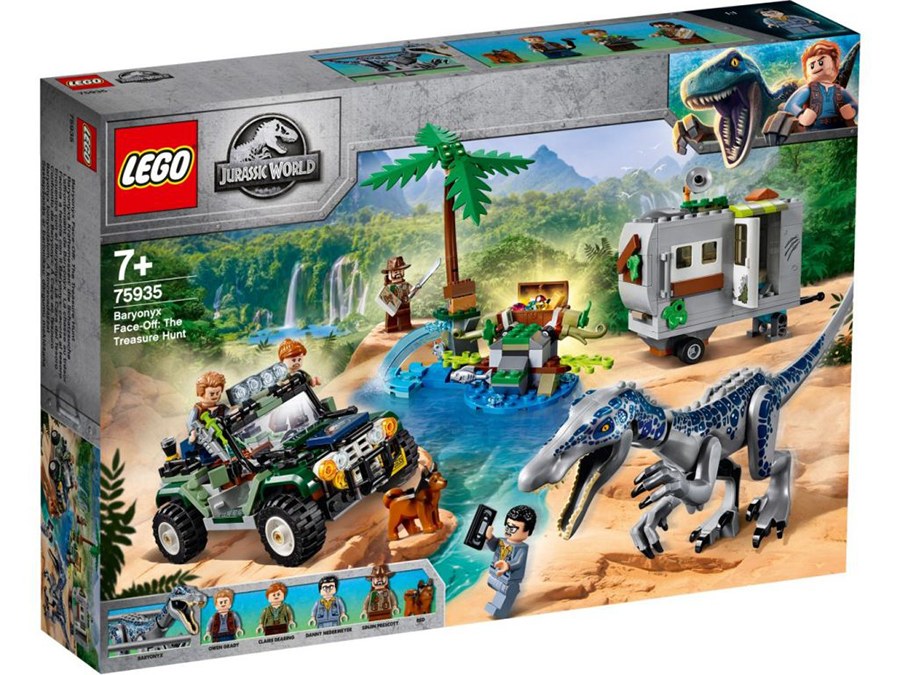
Instagram user exabrickslegogo_ reports (via lego_guyon02) that four new LEGO Jurassic World sets will launch later this year, bringing us a quartet of dinosaurs we’ve already seen in ABS: a Carnotaurus, a Stygimoloch, a Baryonyx and – of course – a T. rex.

The source material for each of these sets is a little up in the air at the mo, with lego_guyon02 speculating a potential mix of Jurassic Park, Jurassic World: Fallen Kingdom, Jurassic World: Dominion, Netflix’s animated Jurassic World Camp Cretaceous, and completely original designs by the LEGO Group.

Just one of those stands out as fairly unlikely in Jurassic World: Dominion, which was originally scheduled to premiere in June 2021, but has now been pushed back an entire year by the pandemic. Any planned tie-in LEGO sets would likely also have been delayed in turn (just as the LEGO Group has seemingly done with Marvel’s Eternals).

The rumoured sets run the gamut from $29.99 through to $79.99, with the latter set – 76942 Baryonyx Dinosaur Boat Escape – reportedly coming in at just 308 pieces. That gulf between part count and price may indicate multiple dinos in the box, so while the set names don’t suggest any new species, the LEGO Group could still surprise us.

Here’s the full list of rumoured LEGO Jurassic World sets for 2021, along with their piece counts and prices:

76939 Stygimoloch Dinosaur Escape – 129 pieces – $39.99
76940 T. rex Dinosaur Fossil Escape – 198 pieces – $29.99
76941 Carnotaurus Dinosaur Chase – 240 pieces – $49.99
76942 Baryonyx Dinosaur Boat Escape – 308 pieces – $79.99

The first of those four sets is rumoured to be marked 4+, perhaps explaining its high price-per-piece ratio. We’ll find out for sure if and when the LEGO Group confirms these sets, which – given the theme’s usual release schedule – will likely arrive in June.

For now, treat this list just like all rumours, which is to say very lightly until confirmed otherwise. We’ll bring you more as we get it.

Source: www.brickfanatics.com/

Would Jurassic Park Ever Make A Good Theme Park?

Saturday, April 24, 2021

Would a park full of dinosaurs ever be a good idea? What would stop it from being successful, and how would the world react to it?

Jurassic Park the book released in November of 1990 and got a movie not three years later in June of 1993. It's now one of the biggest franchises in the world. Although some of the science in the story is not exactly possible, if for some reason there was a way for dinosaurs to actually exist, would it make a good theme park? If it didn't, what would stop it from being so? And how would the world react to it happening?

In the first Jurassic Park film, paleontologists dig up mosquitoes that have fed on the blood of dinosaurs and been fossilized in amber. They extract the blood from the mosquito and fill in any DNA gaps with amphibian DNA. This becomes a blueprint to make another dinosaur from. The park has dangerous carnivores and giant herbivores. After an incident with a raptor leaves an employee dead, the park now faces being shut down. That is unless they can get approval from lawyers, scientists, and paleontologists to go ahead and open. And of course, everything goes wrong. The dinosaurs get out and people die. Dinosaurs once again taking over the land.

So now that people know what not to do, would it ever be a good idea to make this a park? Do these animals, who haven't existed in millions of years, have a right to live if it's possible? If the answer is yes, then that is one of the only reasons to ever create a theme park of dinosaurs. If dinosaurs deserve to be alive, then a theme park where they could be observed and contained wouldn't be the worst idea ever. Regardless of someone's view on zoos and aquariums, the animals being viewed there are just as dangerous. A dinosaur might be larger and stronger than the average zoo animal, but they are just as unpredictable and vicious as lions, tigers, and bears. Even hippos are quite dangerous. Because of that, it is possible a dinosaur theme park could work.

For obvious reasons, something that would keep a Jurassic World theme park from being a good idea is if there was no proper fencing or containments for the animals. If there was even a chance of a dinosaur getting free, it would be a bad idea. Even if the animals deserve to live, it would be in the world's best interest to not create some of the larger or more dangerous ones. Especially if scientists and engineers weren't even sure how things would go first yet.

There's also the effect this would have on the ecosystem to consider. This would undoubtedly have an effect on climate change and therefore the ecosystem. These animals would need a large area to roam around. They would need lots of vegetation or meat to stay fed. And they would need tons of water daily. The amount of energy and resources needed to keep the dinosaurs alive and well while not allowing open range for them to hunt each other would devastate the world.

If dinosaurs were allowed to be recreated into existence, then their environment would have to be brought back to life. It would need to be hot and forested. And some of the plants they are used to that are also extinct would need to be recreated to keep things from becoming too chaotic. It wouldn't be fair to the animals to expect them to have to adapt so much all at once, and it could cause something bad to happen to the animals if they are not cared for properly.

One of the only other positive things that could come out of making a dinosaur theme park would be to observe and record the animals for scientific purposes. It could tell the world more about its past and therefore help it to determine its future. This would create more jobs, and help to raise money for worthy causes or to stimulate the economy. But the negative effects it would have on the world would be far too severe for it to be worth it.

The world would also have to consider if it would even be morally right to throw people and dinosaurs together. Because if it wasn't right for both people and the animals, then it would be a morally wrong decision. These animals have been dead and extinct for millions of years, and to bring them back into existence would not benefit the animals in any way. If this somehow was ever a good idea that wouldn't hurt the ecosystem, then it would be very cool to see. Paired with the fame of dinosaurs thanks to the Jurassic Park franchise, a theme park with the animals would be successful in terms of profit. But like Ian Malcolm says, just because something can be done doesn't mean it should be.

Source: https://gamerant.com/

Young Tyrannosaurs Had More Slender Feet than Adults, Study Finds

Saturday, April 24, 2021

Artistic reconstruction of a tyrannosaur creating footprints. Image credit: José Vitor Silva.

An international team of paleontologists has examined a collection of 72.5-million-year-old tyrannosaur — probably Albertosaurus — footprints from the Wapiti Formation of Alberta, Canada, to learn more about the way these predatory dinosaurs aged and how they moved.

Fossil footprints have long been used to infer aspects of the biology of non-avian dinosaurs that are not readily apparent from skeletal remains, including estimated speeds and inferred social behaviors.

The footprints can be ambiguous and hard to interpret correctly — the shape of a footprint may be influenced by the type of ground surface that is stepped on and the motions of the animal making the footprints. In addition, the exact identity of the animal may not always be clear.

These challenges have previously limited the use of fossil footprints in understanding dinosaur growth.

The answer lay in the Grande Prairie region of Alberta in Canada, where University of New England Ph.D. student Nathan Enriquez and his colleagues worked with well-preserved samples of footprints of different sizes that are suggested to belong to the same type of animal.

“We explored a remote dinosaur footprint site where we discovered a new set of large carnivorous dinosaur footprints within very similar rocks to those which have produced tyrannosaur tracks in the past,” Enriquez said.

“Based on the relatively close proximity between these discoveries and their nearly equivalent ages — about 72.5 million years old — we suggest they may indeed belong to the same species.”

“We were also careful to assess the quality of preservation in each footprint, and only considered specimens which were likely to reflect the shape of the actual feet that produced them.”

Once the paleontologists had a suitable sample, they analyzed the outlines of each specimen using a method called geometric morphometrics.

This process removes the effect of overall size differences between each footprint and shows what the most important differences in track shape are.

Portion of the tracksite at the Tyrants Aisle locality in north-west Alberta, Canada. Abbreviations: H – hadrosaurid, Ty – tyrannosaurid, Th – indeterminate theropod, Tri – indeterminate tridactyl dinosaur. Image credit: Enriquez et al., doi: 10.1080/02724634.2021.1878201.

“The greatest difference in shape was found to be the relative width and surface area of the heel impression, which significantly increased in size between smaller and larger footprints,” Enriquez said.

“The smaller tracks are comparably slender, while the biggest tyrannosaur tracks are relatively broader and had much larger heel areas.”

“This makes sense for an animal that is becoming larger and needs to support its rapidly increasing body weight. It also suggests the relative speed of these animals decreased with age.”

“Increasingly bulky feet in the adults align with previous suggestions that juvenile tyrannosaurs would have been faster and more agile for their body size in comparison to their parents, and means that we can add footprints as another line of evidence in the debate over tyrannosaur growth.”

“Lastly, it demonstrates the usefulness of footprints for investigating a potentially wider range of ideas about the lives of extinct species than has been considered previously.”

The findings were published in the Journal of Vertebrate Paleontology.

_____

Nathan J. Enriquez et al. Exploring possible ontogenetic trajectories in tyrannosaurids using tracks from the Wapiti Formation (upper Campanian) of Alberta, Canada. Journal of Vertebrate Paleontology, published online April 21, 2021; doi: 10.1080/02724634.2021.1878201

Source: www.sci-news.com/

Pages