nandi's blog

Medium-Size Dinos Are Missing From The Fossil Record. Here's Why.

Saturday, February 27, 2021

The missing medium-size dinosaur gap from Dinosaur Park Formation in Alberta, Canada (bottom), versus sizes of modern carnivorous mammals from Kruger National Park in South Africa (top). Notice the gray infants by the largest animals, to show how much they needed to grow before reaching adulthood. (Image credit: Schroeder et al., Science (2021))

It's hard to compete against teenage tyrannosaurs.

Medium-size meat-eating dinosaurs are missing from the fossil record, and paleontologists think they've figured out why. 

Paleontologists have discovered gargantuan dinosaurs and wee dinosaurs, but a new study finds that there's a conspicuous lack of medium-size carnivorous dinosaur species, especially from the Cretaceous period (145.5 million to 65.5 million years ago). 

Donning their detective hats, the researchers soon found a suspect; megatheropods — the largest of the meat-eating dinosaurs, like Tyrannosaurus rex and Gorgosaurus, which weighed over 2,200 pounds (1,000 kilograms) as adults. It's possible that juvenile megatheropods edged out the middlings, the researchers said. 

"Juvenile megatheropods may have outcompeted other medium-sized dinosaurs, resulting in deflated global dinosaur diversity," study lead researcher Katlin Schroeder, a doctoral student in the Department of Biology at the University of New Mexico, told Live Science in an email.

However, not everyone is convinced that there is a case of missing medium-size dinosaurs; it's possible, for instance, that there are fossils of medium-size beasts that have yet to be found, said Michael D'Emic, an associate professor in the Department of Biology at Adelphi University in New York, who wasn't involved in the study.

Small, medium, large

As egg-laying animals, all dinosaurs started out small, weighing no more than 33 pounds (15 kg) as hatchlings. As dinosaurs grew, some likely occupied different niches and ate different foods than adults of the same species did — for instance, a young T. rex likely couldn't take on a Triceratops, and probably went after smaller prey.

To investigate the medium-size mystery, Schroeder and her colleagues logged onto the Paleobiology Database, a nonprofit resource for paleontological data, and they categorized more than 550 dinosaur species as small (22 to 220 pounds, or 10 to 100 kg), medium (220 to 2,200 pounds, or 100 to 1,000 kg) or large (over 2,200 pounds, or 1,000 kg). These dinosaurs lived within 43 communities (groups that lived in the same time and place) across seven continents during the Jurassic period (201 million to 145.5 million years ago) and the Cretaceous period.

The researchers found that while communities often had herbivorous dinosaurs in each size category, it was rare to spot a medium-size carnivorous dinosaur in communities with megatheropods.

"It's possible that the 'gap' was being caused by juveniles of those large megatheropods, which may have been eating different things than their parents, and therefore competing with medium-sized carnivores," Schroeder said. 

The team found the medium-size dinosaur gap was more pronounced in the Cretaceous than in the Jurassic period. During the Cretaceous period, the tyrannosaurs and the abelisaurs were king, and they also looked "very different as juveniles than they do as adults," unlike the megatheropods of the Jurassic, she said.

In other words, during the Jurassic period, the megatheropods, such as Allosaurus, didn't change much as they grew, "and may have actually been sharing food resources, such as giant sauropods [long-neck herbivorous dinosaurs] with their parents," Schroeder said. "This may have allowed more carnivores to coexist in the same communities, resulting in a smaller [medium-size] gap in carnivores."

But at the end of the Jurassic, a lot of the sauropods went extinct, and so did dinosaurs like Allosaurus. "They may have been replaced by dinosaurs like Tyrannosaurus that used a wider variety of different resources as they grew," Schroeder said.

Next, Schroeder's team wondered whether the juvenile megatheropods had a bigger effect on the composition of their communities than the adults did. To find out, the researchers calculated how many juveniles and adults each species had in a community. Then, the team figured out the biomass — the number of individuals in a species multiplied by their mass at a certain age.

The researchers found that in some megatheropod species, such as Allosaurus and Tyrannosaurus, the juveniles represented a larger portion of mass than the adults, likely because it was a dinosaur-eat-dinosaur world back then, and megatheropods didn't always make it to adulthood. This indicates "that the juveniles had just as much (if not more) effect on their community than the adults did," Schroeder said in the email. In fact, there were so many medium-size megatheropod juveniles, they could even be viewed as their own species, in a manner of speaking.

"When we added the juveniles to the communities as their own [species], the gap largely disappeared," Schroeder said.

However, it's possible that something else could explain this medium-size mystery, D'Emic said. Twelve out of 43 of the paleo-communities examined in the study don't seem to follow the pattern inferred in the study — that medium-size carnivorous dinosaurs were rare in communities with megatheropods. In these 12 communities, "they have both large and medium-sized theropods," D'Emic said. The study explains these exceptions in various ways, but maybe medium-size carnivorous dinosaurs were out there, it's just that paleontologists haven't found their fossils in every community yet, D'Emic said. "Even in relatively well-explored places around the globe, new dinosaur species are discovered each year, so this is not implausible," D'Emic told Live Science in an email.

I's also possible that some dinosaur species in the study were misidentified. Only recently have paleontologists begun to assess bone microstructure, which can reveal a dinosaur's age at death. "This can show that some small dinosaur individuals belonging to one species were simply juveniles of other species, or conversely, that some small dinosaur individuals thought to be juveniles of one species are instead adults of new dwarf species," D'Emic said.

The study was published online Feb. 25 in the journal Science

Originally published on Live Science.

Fossil Contents of Utahraptor 'Megablock' Double Amount Originally Found

Friday, March 26, 2021

Photo by: Jim Kirkland / Utah Geological Survey

Fossils will eventually form an exhibit featuring a pack of Utahraptors

An 18,000-pound "megablock" unearthed in Grand County contains twice as many Utahraptor fossils as originally observed, the Utah Department of Natural Resources reports.

The massive block of sandstone, mudstone and fossils is 136,000,000-years old and was originally believed to contain the remains of at least one adult Utahraptor, ten juveniles and three babies.

Last year, the block was moved from the Museum of Ancient Life at Thanksgiving Point to a Utah Geological Survey facility.

Adult and juvenile Utahraptor dinosaurs attack an iguanodont dinosaur trapped in quicksand. By Julius Costonyi.

“The timing was very fortuitous because just a few weeks later, the Museum of Ancient Life at Thanksgiving Point had to shut down due to the COVID-19 pandemic. Having the megablock in its own space allowed work to continue throughout 2020,” said State Paleontologist Dr. James Kirkland in a DNR news release. “The work is tedious. Separating the bones from the block has been like a 9-ton game of pick-up sticks.”

Since the move, researchers have discovered more baby and juvenile Utahraptor partial skulls and skeletons, and the first complete shoulder of an adult ever observed.

"Paleontologists have completed over 3,500 hours on fossil preparation, but have really only scratched the surface. Ninety percent of the work lies ahead and the preparation effort is being funded primarily with donations," the news release says.

Paleontologist Scott Madsen working at the Utah Geological Survey on the Utahraptor megablock in February 2021. Most of the work is done with the aid of small pneumatic air tools (think tiny jack hammer) while looking through a microscope.

The bones of at least two iguanodont dinosaurs have also been found in the block, leading scientists to believe the Utahraptors may have been hunting in a pack when they became trapped in quicksand.

The block's preservation of the remains has been described as "exceptional," giving scientists hope to find feather impressions and other fine details.

The Utahraptor is Utah's official state dinosaur and the real-life version of the "velociraptor" specimens in "Jurassic Park." The Utah Legislature is considering State Bill 57, which would create a Utahraptor State Park about 15 miles northwest of Moab.

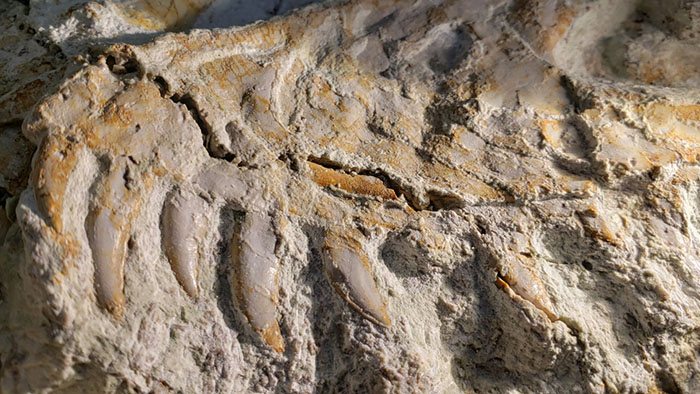
Juvenile Utahraptor upper jawbone uncovered in 2020. The longest tooth is approximately ½ inch long.

The fossils recovered from the megablock will eventually form an exhibit featuring a pack of Utahraptors at the Natural History Museum of Utah. Click here for further details.

UGS is asking for donations to reach a $50,000 goal, which will be matched by a private donor, to advance the research on the megablock. Click here for details.

Source: www.fox13now.com/

Dorset Fossil Hunter Mary Anning Honoured on New 50p Coins

Friday, February 26, 2021

Renowned fossil hunter Mary Anning is being celebrated in a new collection of coins Picture: Royal Mint

THE life of 19th Century Dorset fossil hunter Mary Anning is being celebrated with a new commemorative 50p coin collection.

Anning became world famous after discovering Jurassic skeletons in her hometown of Lyme Regis, which helped change long-held thinking about prehistoric life.

The collection, made possible thanks to a collaboration between the National History Museum and Royal Mint, shines a light on the achievements of the famed paleontologist who made a series of discoveries which forever changed what we know about prehistoric life.

It is the second in The Royal Mint’s ‘Tales of the Earth’ series. It aims to bring Anning's discoveries back to life, with each design - created by British paleo-artist Robert Nicholls - creating an accurate reconstruction of the creatures and the environment they existed in.

The cost of the collection of coins will range from £30 to £1,100 for a gold version.

The first coin to be released features the Temnodontosaurus, one of the largest types of ichthyosaur - a large-jawed marine reptile.

The Temnodontosaurus coin. Picture: Royal Mint

Anning, around the age of 12-years-old, made the first discovery of a Temnodontosaurus in 1810.

Up to 10 metres long, the Temnodontosaurus had the largest eye of any animal, the size of a football, and would hunt in the ocean that covered much of southern Britain.

The other two coins in the collection are due to be launched later in the year.

The coins will depict images of Anning's other most famous discoveries, the Plesiosaurus - a large marine sauropterygian reptile - and the Dimorphodon, a small flying reptile.

The plesiosaurus coin. Picture: Royal Mint

Clare Matterson, Executive Director of Engagement at the Natural History Museum said: “We are thrilled to continue working with The Royal Mint on the Tales of the Earth series. The Mary Anning Collection celebrates a pivotal figure in the understanding of palaeontology, important contributions to science that were rarely acknowledged in Mary’s lifetime. It is fantastic to see Mary celebrated in such a special way in 2021.”

The dimorphodon coin. Picture: Royal Mint

With her achievements being overlooked for many years, Anning is beginning to receive some well-earned recognition, being honoured by the museum and even being the subject of Ammonite, a feature film starring Kate Winslet as Anning.

She is set to be further immortalised in her hometown, with a campaign to raise enough funds to erect a statue of Anning recently reaching its funding goal.

'Mary Anning Rocks', the campaign group behind the statue, hopes that the statue will be unveiled in spring 2022.

To purchase the collection of coins, visit www.royalmint.com/MaryAnning

Source: www.dorsetecho.co.uk/

10 Best Jurassic Park Logo Merchandise

Friday, February 26, 2021

Spielberg’s 1993 blockbuster is one of the most iconic and most loved films of all time. It feels like the stars aligned – Jeff Goldblum is peak Goldblum, John Williams is peak Williams and the practical effects still blow a lot of modern CG out of the water. It’s a timeless fantastical romp and it’s worth talking about and representing every chance possible.

Here’s a list of some superior merchandise that’ll help you show props to the original park.

NO. 1

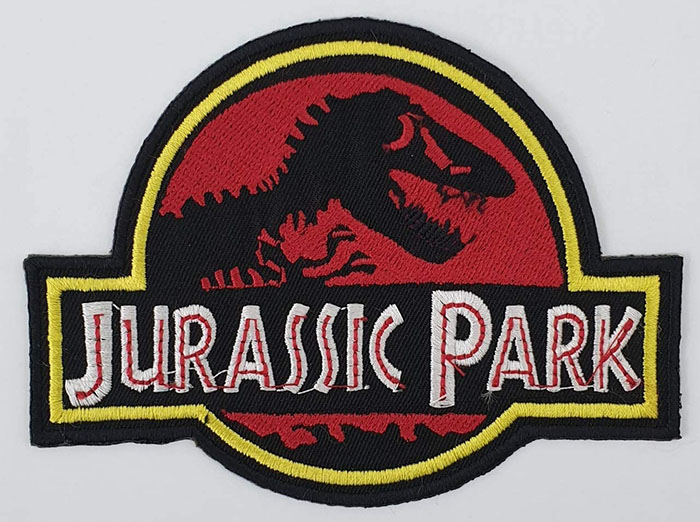
Jurassic Park LOGO OFFICER Sew Ironed Patch Badge Embroidery J-01

  • SIZE: 8.6cm x 11.6 cm or 3.5"x4.5". High Quality Embroidery Cloth/Fully 3D embroidery/ Comfortable/ Durable/ 100% Satisfication Guaranteed. Perfect for Hat, Cap, Bag, Jacket, Backpack,Military and other outdoor activities ,or just for your collect hobbies.
  • Celebrate the film that introduced dinosaurs to the silver screen with this Jurassic Park patch. If you thinking about venturing into the wilderness for a hike then this Jurassic Park embroidered patch is perfect for the occasion. Just watch out for the dinosaurs that escaped from the last film. They might make a meal out of you. This Patch can be ironed or sewn on your jeans, bags, jackets, hats, caps, backpacks, vests, and shirts etc.
  • Great accessory for every day adventure and stylish look - Wear this every day or for special occasions for example: movie date night, work, vacation, family gatherings, theatre. This works perfect with every occasion. If you are a huge Jurassic Park fan than this iron on jurassic park costume patch is perfect for you. This patch can work pefectly with your halloween costume or any cosplay.
  • This is the perfect collectible for fans in search of unique and distinctive accessories. By wearing this classic jewelry you will receive compliments from family, friends and coworkers. It is a perfect gift for these holidays: Christmas, Valentines, Halloween, Birthday, Mother's Day, Father's Day. (Mother, Daughter, Sister, Friend, Grandma, Son, Dad and BFF)
  • This unique costume patch is made up os top quality material. Lightweight & Unique/ Perfect for your loved ones/ Created with special care / Long lasting/ Perfect Match/ Tough. Also Buy 5 get 1 Free!!

Check on Amazon

NO. 2

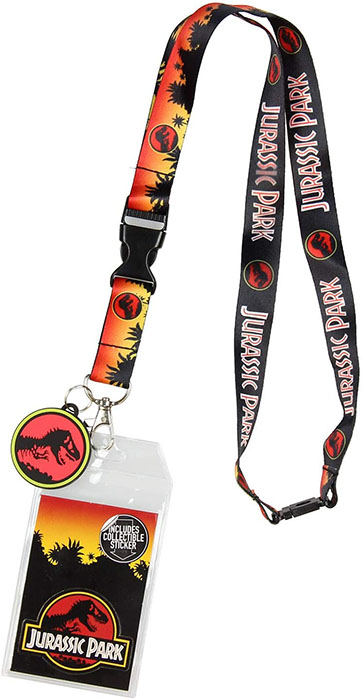
Jurassic Park Logo Lanyard Keychain ID Holder Logo Rubber Charm and Sticker

  • Officially Licensed Jurassic Park Lanyard
  • Lanyard Is 3/4" Wide And 15" Long (Not Including ID Holder) And Comes With Collectible Jurassic Park Sticker
  • New Click Opening Design At Top Of Neck For Easy Removal / Classic Plastic Click Release And Closure Ot Bottom
  • 1 1/2" Rubber Logo Charm / Metal Lobster Clasp To Hold Plastic Badge / ID Holder Securely On Lanyard
  • Great Looking Allover Jurassic Park Tittle and Logo

Check on Amazon

NO. 3

Jurassic park vinyl sticker decal 15"

  • 15" Peel and stick decal with application tape. Waterproof.

Check on Amazon

NO. 4

POSTER STOP ONLINE Jurassic Park - Movie Poster/Print (Classic Logo) (Size 36" x 24")

  • Movie Poster
  • Classic Jurassic Park Logo
  • Size: 36" x 24"

Check on Amazon

NO. 5

Jurassic Park Logo Tie Dye Gloss Graphic T-Shirt

  • Officially Licensed Jurassic Park Tee Shirt
  • 18JPRK00105A
  • Lightweight, Classic fit, Double-needle sleeve and bottom hem

Check on Amazon

NO. 6

Jurassic Park Japanese Logo Ceramic Mini Mug - White 3.5-Inch x 3.3-Inch Miniature Cup With Handle - Features Black & White Dinosaur Graphic & Japanese Letters - Perfect For Display Or Tiny Tea Party!

  • DINO-MITE! Sip your favorite beverage in Jurassic Park style! Purchase this adorable mini mug for yourself or to the Jurassic Park fan in your life!
  • FUN DESIGN FOR DISPLAY OR PLAY: This collectible white mini mug with black and white graphic features the iconic Jurassic Park logo with the text written in Japanese!
  • COLLECTIBLE SIZE: Ceramic mini mug measures 3.3-inches long by 3.5-inches tall; a unique size to collect and display!
  • PREMIUM CONSTRUCTION: This is durable ceramic mug and should be hand washed.
  • NOT QUITE THE RIGHT SIZE? No problem! Returns accepted!

Check on Amazon

NO. 7

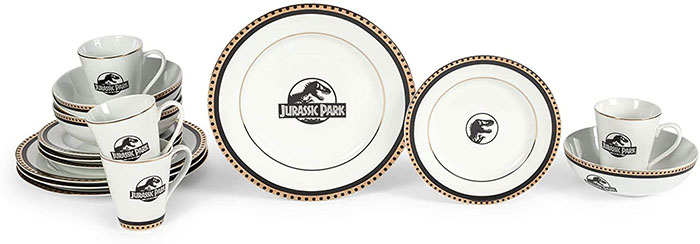
Ukonic Jurassic Park Logo 16-Piece Ceramic Dinnerware Set Replica | Movie-Authentic Dinosaur Dish Set | Includes Dinner Plates, Salad Plates, Soup Bowls, Mugs | Place Setting for 4

  • Welcome To Jurassic Park: Sink your teeth into your next meal with this 16-piece Jurassic Park Dinnerware Set. The themed dish set is inspired by the plates used in the original movie, where the park's first visitors have lunch with Dr. John Hammond.
  • Authentic Movie Design: Each white dish set piece comes emblazoned with the iconic Jurassic Park logo, along with elegant black and gold accent trimming. The inside of each soup bowl also features a little T-Rex dinosaur track in matching gold.
  • Quality Construction: Made of a premium-quality ceramic material, this Jurassic Park Dinnerware Set is durable and perfect for everyday use. For best care, hand-wash only. Not suitable for microwave or dishwasher.
  • What's Included: This 16-piece Jurassic Park Dinnerware Set contains 4 complete place settings. The entire dish set includes 4 dinner plates (11 inches), 4 salad plates (8 inches), 4 decorated bowls (7 inches), and 4 mugs (11 ounces).
  • Fun Gift Set: Enjoy a dinner for four with this 16-piece Jurassic Park Logo Dinnerware Set, featuring intricate detailing based on the dinosaur theme park. Specially designed for fans, this dish set ensures every meal has a touch of movie magic.

Check on Amazon

NO. 8

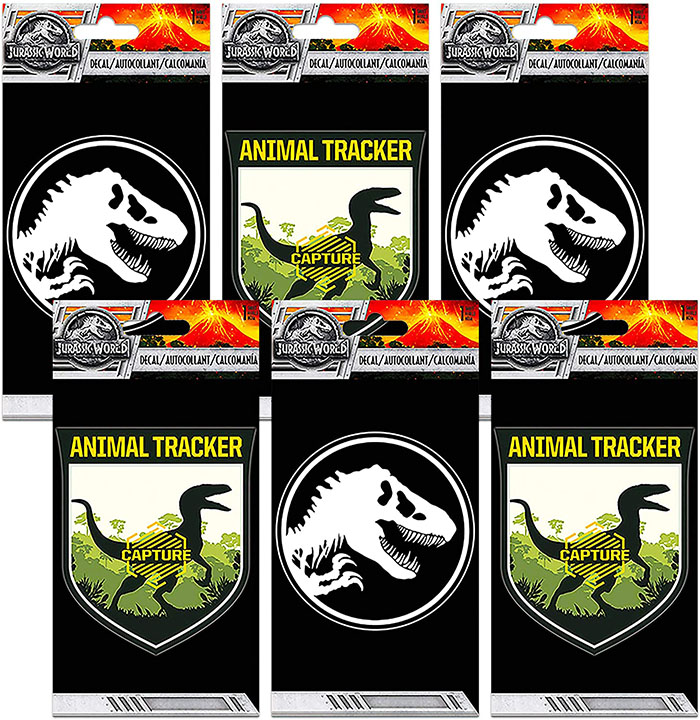
Jurassic World Party Favors Decals Bundle Set ~ 6 Large Dinosaur Decals (Jurassic Park Party Supplies, Room Decor)

  • Jurassic World Party Favors Decals Bundle Set ~ 6 Large Dinosaur Decals (Jurassic Park Party Supplies, Room Decor)
  • Each large Jurassic World decal measures approximately 4x8 inches -- the perfect size to add to Dinosaur party favor bags at birthday parties. These Jurassic World decals feature the Jurassic Park logo and Dinosaur Tracker badges.
  • Perfect to stick on walls, cars, laptops, lockers and more.
  • This party favors set is the perfect addition to any Jurassic World birthday party. Also ideal for Jurassic World room decorations.
  • Officially licensed Jurassic World toys and games products for kids -- boys and girls alike.

Check on Amazon

NO. 9

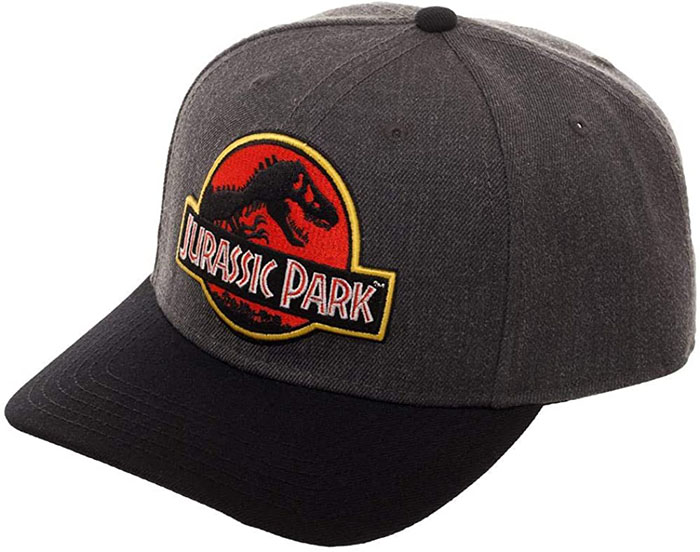
Jurassic Park Hat Classic Logo Curved Snapback Cap Grey

  • OFFICIALLY LICENSED JURASSIC PARK PRODUCT: Bioworld specializes in high-quality, officially licensed pop culture apparel and accessories. Featuring everything from classic cartoon characters to video games, to superheroes, and all the newest, most popular movie, toy, and television characters in between.
  • ADJUSTABLE SNAPBACK SIZING: This hat features a classic snapback closure with a 7 snap flap. OSFM. Precurve bill design. Can be worn by either men or women, and most teens. Made for ages 14 and up.
  • DETAILED, HIGH QUALITY EMBROIDERY: This grey cap features a classic Jurassic Park logo embroidery on front of crown
  • PERFECT GIFT IDEA: This hat will make a great gift for Birthdays, Halloween, Christmas, or any other occasion. Treat yourself or a friend to this super Jurassic Park Snapback.

Check on Amazon

NO. 10

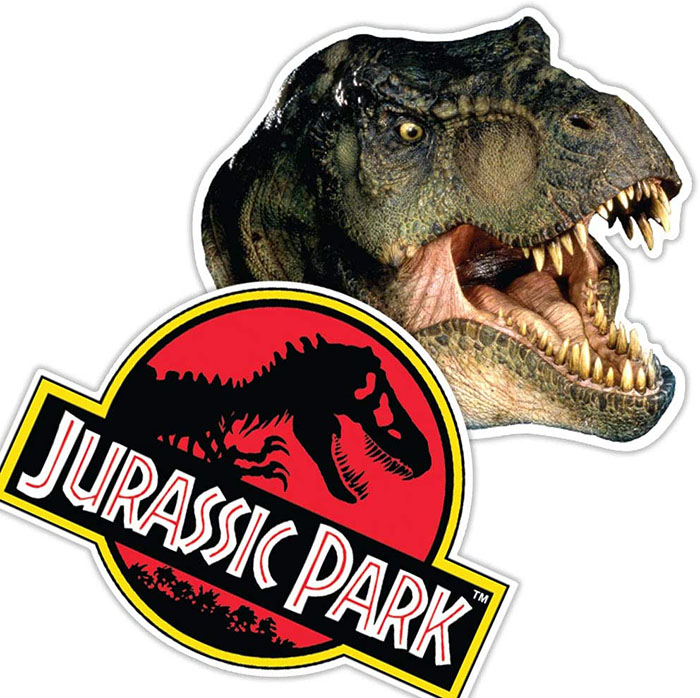
Popfunk Jurassic Park Logo and Tyrannosaurus Rex Collectible Stickers

  • Exclusive custom, collectible, and 100% official vinyl die-cut stickers
  • Each one of our designs are officially licensed and 100% authentic
  • Perfect to personalize Laptops, MacBooks, Surfaces, iPads, Lockers, Bedroom, and much more! Great for DIY decoration, a gift for your kids, and friends
  • Simply get the stickers, clean the surface, sticker on, and enjoy! 30 Day 100% Satisfaction is guarantee!
  • Sticker Sheet Size: 4" x 7"

Check on Amazon

Spielberg’s Original Jurassic Park 2 Story Plans (& Why They Changed)

Thursday, February 25, 2021

Steven Spielberg had even bigger plans for The Lost World: Jurassic Park, many of which were abandoned. Here are some that were cut from the film.

As the follow-up to the critically and commercially successful Jurassic Park, Steven Spielberg had big plans for the original story for The Lost World: Jurassic Park (essentially, Jurassic Park 2). But the sequel wasn't without its own development challenges. Many of Spielberg's plans for the story were put aside or abandoned, meaning ideas that would be stunning onscreen never made it to the movie.

The first Jurassic Park movie is based upon the novel of the same name by author Michael Crichton. Despite Crichton having a writing credit for the script, the film changed much of the original content. The novel is a scientific thriller and horror, with less of the movie's adventurous, wondrous feel and uplifting ending. After the success of the first movie, there was a lot of pressure from fans and the industry for a sequel, but there was not (yet) a second book to base a script upon. Spielberg began making his own plans for what would be depicted in The Lost World: Jurassic Park, working with the screenplay's co-writer David Koepp. Crichton simultaneously worked on The Lost World book, the sequel to the first novel which he then intended to adapt into a screenplay for the second movie.

The end product includes details from both Crichton's novel and Spielberg's brainstorming with Koepp. The testy relationship is well documented, with Kathleen Kennedy, executive producer on the film, quoted in TIME as saying, "In the same way Michael doesn't see writing as a collaboration, Steven went off and did his own movie." Both writer and director respected the other's role in The Lost World: Jurassic Park, however, saying each was responsible for only their own art form. In the compromise, Spielberg and Koepp dropped most of Crichton's drama in favor of their own ideas, keeping the premise and setup but generating much of the rest independently from Crichton's work.

One such idea saw the retrieval of the canister of dinosaur DNA stolen by Dennis Nedry (Wayne Knight) as key to the plot. Another had characters on motorcycles attempting to outrun a group of velociraptors. If that sounds familiar, this idea eventually made its way into the sequel Jurassic World in a slightly adjusted form. In early scripts, the flying Pteranodon dinosaurs also featured much more prominently in two scenes: one where Jeff Goldblum's Ian Malcom and other characters would escape them by flying hang-gliders off a cliff and another where the flying monsters attacked the helicopter which was attempting to escape their island home. These ideas were the basis for similar scenes in the sequel Jurassic Park III which featured the Pteranodon much more heavily. Finally, it took some time for Spielberg and Koepp to agree on the now-famous ending where the Tyrannosaurus rex rampages through San Diego. It was added to the script only weeks before filming began.

The Lost World: Jurassic Park could have looked very different to the movie that hit theaters. At least fans of the franchise ended up being able to see these incredible scenes in later instalments. And with the franchise-closing Jurassic World: Dominion, one can only wonder what other rejected scenes from earlier installments might make their way into the movie.

Source: https://screenrant.com/

New Species of ‘Dinosaur’ Found on the Moon?

Thursday, February 25, 2021

 Paleontologist Scott Richards and Angie Tilker shows some people the vertebral column he meticulously worked on.

Angie Tilker, a Page local wilderness guide, made a huge discovery two years ago this month while on the “Moon.”

The Moon is an area located on SITLA land (School and Institutional Trust Lands Administration) just east of Big Water, Utah, off of NP 230. It gets its name for the 93-million-year-old sediment (Tropic Shale) that resembles the gray, lunar landscape of the moon.

Tropic Shale is the bottom of the last ocean that covered the area and is rich in marine fossils. SITLA is one of the few government entities that allows the hunting of invertebrate fossils such as baculites, shells, ammonites, which the moon has many, as well as shark teeth.

Tilker took a couple from New York to the moon on a paleontology tour hoping to find one or maybe two quality fossils. What she found was unheard of.

“It just looked rich. It was darker than everything else,” Tilker said about a mound of Tropic Shale she had eye on for quite some time. “I was looking for limestone to break open and find marine fossils. My first scoop with the shovel and out popped three vertebrae. I immediately knew they were vertebrae. I was speechless and couldn’t catch my breath … almost hyperventilating. I dropped to my knees and started sifting through the Tropic Shale.”

Tilker unearthed a total of 15 fossilized vertebrae, each the size of a lemon, and part of a limb. Her guests thought the vertebrae were planted at first, but soon realized Tilker’s excitement was visceral.

“Once I found 15 vertebrae, I knew I should have stopped at the first three,” she said.

Tilker took photos of the fossils to send to Scott Richardson, who is a paleontologist from Flagstaff.

“Richardson immediately called me and told me to bury everything and mark it with my GPS,” she added. He drove up from Flagstaff the next day to survey the sight.

Tilker took Richardson to the sight and uncovered the 15 loose vertebrae. He dropped to his knees and started brushing away the shale with brushes and dental-like tools.

“Oh, this is cool,” he said as he found eight more vertebrae that were still articulated, which is a good sign that the fossil might be intact. Once he found what he thought was a femur or a humerus, Richardson was at the paleontology crossroad of knowing when to stop in an attempt to not disturb the fragile integrity of the bone.

Angie Tilker the day she found what very well might be a new species of plesiosaur behind Big Water, Utah.

Richardson buried everything back up and made the decision to return with the equipment and permits necessary to preserve the find.

However, there were a few weeks directly following Richardson’s initial visit of rain and snow that turned the shale to thick mud. The excavation was put on hold.

Word started to spread around Big Water and Page that a local had found what might be a dinosaur at the Moon.

Tilker knew it would take weeks for the Tropic Shale to dry out and for the excavation to begin.

“Because it was so close to the road, I would take my dogs out there and babysit the fossil. I referred to it as, ‘my baby,’” she said. “One day I got a call from a coworker in Big Water who noticed a vehicle parked by my baby. I rushed out there and parked further up the hill, so it didn’t look like I was creeping up on them. It was a family looking for fossils. I guess they thought that spot was rich, too. They didn’t have shovels. They were just scanning the ground, so I wasn’t too worried about them stumbling on it. They were tourists and not having much luck. I gave their kids some oyster shells and baculites I had in my Jeep, so they knew what to look for.”

The Tropic Shale eventually dried out and Richardson was able to return to the site with a team of paleontologists and the proper equipment to figure out just what Tilker had found.

Every day the group of paleontologists found more and more of the fossil. Once a piece of the jaw was found with teeth, it soon became clear that what Tilker found was an evolution of Plesiosauria.

Not exactly a dinosaur. Imagine the Loch Ness Monster: A 40-foot reptile that returned to the sea with limbs that evolved into flippers to navigate and hunt throughout the seas as an apex predator.

According to Richardson, the fossil was a juvenile, which might make the identification of a new species more difficult.

“Angie’s find was rare. Teams of paleontologists have spent entire summers finding nothing. I don’t know if it’s a new species. It is the oldest plesiosaur found in this part of Utah,” said Richardson.

World-famous artist Ulrike Arnold was in the area during the excavation of the plesiosaur and caught wind of the discovery. Arnold, who is from Dusseldorf, Germany, collects rocks from a region and pulverizes the stone into a powder she can then mix with a binding agent and paint abstract works of art.

Tilker and Arnold have been friends for years.

“Ulrike uses the earth to create her palette. She told me, ‘This is so inspiring, and I would love to have the opportunity to gather the earth from the dinosaur for my art,’” Tilker said.

Arnold was given permission from the paleontologists to collect the shale brushed away from the plesiosaur. She created several pieces from what she calls her “Dino Dirt.”

The plesiosaur was wrapped in burlap and casted in plaster. Arnold asked Tilker to take her out to the site one more time before it was loaded on a truck and shipped to the lab in Kanab, Utah. Arnold then presented Tilker with a piece of her work from the “Dino Dirt.”

“I shed tears at the moment. Everything has been such a secret. This is the only thing I have from the discovery. I can’t wait to hear from the lab what my baby dino proves to be and offers to history,” Tilker said.

When wrapping up the dig, Richardson said, “I bet there are a thousand of these things underneath here just laughing at us.”

Source: https://lakepowellchronicle.com/

Paleontologists Discover New Insect Group After Solving 150-Year-Old Mystery

Thursday, February 25, 2021

Wing of the new species Okanagrion hobani, from the McAbee fossil site in British Columbia, a damselfly-like insect of the new suborder Cephalozygoptera.  CREDIT: Copyright Zootaxa, used by permission.

SFU-led research team uncovers how fossil dragonfly relatives have been misclassified due to their striking similarity.

For more than 150 years, scientists have been incorrectly classifying a group of fossil insects as damselflies, the familiar cousins of dragonflies that flit around wetlands eating mosquitoes. While they are strikingly similar, these fossils have oddly shaped heads, which researchers have always attributed to distortion resulting from the fossilization process.

Now, however, a team of researchers led by Simon Fraser University (SFU) paleontologist Bruce Archibald has discovered they aren't damselflies at all, but represent a major new insect group closely related to them.

The findings, published in Zootaxa, show that the distinctive shape of the insect's non-protruding, rounded eyes, set close to the head, are the defining features of a suborder related to damselflies and dragonflies that the researchers have named Cephalozygoptera.

"When we began finding these fossils in British Columbia and Washington State, we also thought at first they must be damselflies," says Archibald.

But on closer inspection, the team noticed they resembled a fossil that German paleontologist Hermann Hagen wrote about in 1858. Hagen set the precedent of linking the fossil to the damselfly suborder despite its different head shape, which didn't fit with damselflies at all.

Damselflies have short and wide heads with eyes distinctively protruding far to each side. Hagen's fossil, however, had an oddly rounded head and eyes. But he assumed this difference was false, caused by distortion during fossilization.

"Paleontologists since Hagen had written that these were damselflies with distorted heads," Archibald says. "A few hesitated, but still assigned them to the damselfly suborder."

The SFU-led team, including Robert Cannings of the Royal British Columbia Museum, Robert Erickson and Seth Bybee of Brigham Young University and SFU's Rolf Mathewes, sifted through 162 years of scientific papers and discovered that many similar specimens have been found since Hagen's time.

They experienced a eureka moment when they realized the odd heads of their new fossils were, in fact, their true shape.

The researchers used the fossil's defining head shape to name the new suborder Cephalozygoptera, meaning "head damselfly".

The oldest known species of Cephalozygoptera lived among dinosaurs in the Cretaceous age in China, and were last known to exist about 10 million years ago in France and Spain.

"They were important elements in food webs of wetlands in ancient British Columbia and Washington about 50 million years ago, after the extinction of the dinosaurs," says Archibald. "Why they declined and went extinct remains a mystery."

The team named 16 new species of Cephalozygoptera. Some of the fossils were found on the traditional land of the Colville Indian tribe of northern Washington, and so Archibald and his coauthors collaborated with tribal elders to name a new family of them. They called the family "Whetwhetaksidae", from the word "whetwhetaks", meaning dragonfly-like insects in the Colville people's language.

Archibald has spent 30 years combing the fossil-rich deposits of southern British Columbia and northern interior Washington. To date, in collaboration with others, he has discovered and named more than 80 new species from the area.

Source: www.eurekalert.org/

Tamarro insperatus: New Bird-Like Dinosaur Identified in Spain

Tuesday, March 9, 2021

Life reconstruction of Tamarro insperatus (adults were 1.5-2 m in length and had a mass of 20 kg). Image credit: Oscar Sanisidro / Institut Català de Paleontologia Miquel Crusafont / Museu de la Conca Dellà.

A new genus and species of troodontid dinosaur that lived 66 million years ago at the very end of the Cretaceous period has been identified from an isolated bone found in Catalonia, Spain.

Tamarro insperatus lived in what is known as the Ibero-Armorican island during the latest Maastrichtian age of the Cretaceous period, about 200,000 years before the end-Cretaceous mass extinction.

“During the latest Cretaceous (77-66 million years ago) in the run-up to the end-Cretaceous mass extinction, Europe was a series of islands populated by diverse and distinctive communities of dinosaurs and other vertebrates,” said Dr. Albert Sellés, a paleontologist in the Institut Català de Paleontologia Miquel Crusafon at the Universitat Autònoma de Barcelona and the Museu de la Conca Dellà, and his colleagues.

“Many of these animals exhibited peculiar features that may have been generated by lack of space and resources in their insular habitats.”

Tamarro insperatus was a type of troodontid (Troodontidae), a group of bird-like theropod dinosaurs that includes kiwi-size (i.e. 0.8 kg for Mei long) to rhea-size species (i.e. 47 kg for Troodon formosus).

“The presence of troodontids in Europe has been debated for a long time, mainly because its record was entirely based on isolated teeth, until now,” the paleontologists said.

“The oldest troodontid evidence in Europe dates back to the Early Cenomanian age (100-94 million years ago) and is based on the discovery of one isolated tooth in western France.”

“The discovery of Tamarro insperatus in the latest Maastrichtian deposits from southern Pyrenees represents the first unequivocal bone evidence of this group of small-sized non-avian theropods in Europe, and confirms the occurrence of troodontids in the theropod faunal assemblage of that continent.”

The bone of Tamarro insperatus and its anatomical position. Image credit: Albert G. Sellés / Institut Català de Paleontologia Miquel Crusafont / Museu Conca Dellà.

The 66-million-year-old isolated bone of Tamarro insperatus was discovered in September 2003 by a team of paleontologists from the Museu de la Conca Dellà at the site of Sant Romà d’Abella in Catalonia, Spain.

“Its unique combination of anatomical characters allows its identification as a new species,” the researchers said.

“Furthermore, its histology shows a growth pattern in which it grew fast in early ontogeny but reached subadult size quickly.”

According to the authors, Tamarro insperatus appeared within the faunal turnover on the Ibero-Armorican island in the early Maastrichtian age, which helps define the origins and timings of the migratory waves that brought the newcomers to the European archipelago.

“We hypothesize that it could have migrated from Asia to reach the Ibero-Armorican island no later than Cenomanian or during the Maastrichtian dispersal events,” they said.

The team’s paper was published in the journal Scientific Reports.

_____

A.G. Sellés et al. 2021. A fast-growing basal troodontid (Dinosauria: Theropoda) from the latest Cretaceous of Europe. Sci Rep 11, 4855; doi: 10.1038/s41598-021-83745-5

Source: www.sci-news.com/

Jurassic Park: Trespasser VR Fan Remake in Half-Life: Alyx Under Development

Wednesday, February 24, 2021

Modder ‘Stevokenevo’ is currently working on a VR remake of Jurassic Park: Trespasser in Half-Life: Alyx. Jurassic Park: Trespasser featured great physics for its time, and most gamers refer to it as the “arm simulator”. And, as a fan of Jurassic Park, I’m really looking forward to it.

Jurassic Park: Trespasser – VR is in a really early stage. As the modder stated:

“This mod is not aiming to entirely recreate Trespasser. It will be more of a re-imagining. A lot of the level geometry, models and textures are taken from the original game thanks to the work of the fans creating some pretty epic tools that allow exporting. A lot of the other models and textures will be from HL:A. I also plan to create and add new models, animations and textures from scratch.”

The modder plans to complete this VR remake by the 23rd anniversary of Trespasser’s release (October 28th 2021).

Speaking of Trespasser, its CRYENGINE fan remake is no longer under development.

Lastly, you can find below the first early WIP screenshots.

Stay tuned for more!

Source: www.dsogaming.com/

Could Jurassic Park Actually Happen?

Tuesday, February 23, 2021

Clone rangers ... Laura Dern and Sam Neill in Jurassic Park. Photograph: Allstar/Universal

Spielberg might have claimed the 90s classic ‘depends on credibility’ – but with no dinosaur DNA, get set for fewer ferocious beasts and more … chickens.

In the Guide’s weekly Solved! column, we look into a crucial pop-culture question you’ve been burning to know the answer to – and settle it, once and for all.

Don’t pretend you’ve never thought about it. Yes, yes – there’s the odd teensy downside to populating an island with once-extinct reptiles. Sure, the T rex turns out to show a disregard for road safety. And velociraptors’ approach to hide and seek is frankly unsportsmanlike. But the majestic song of the brachiosaurus! The incredible dino-flocks! The glistening magnificence of Jeff Goldblum’s chest rug! Could Jurassic Park happen in real life?

Back in 1993, it seemed like it. Newsweek ran an article attesting to the scientific plausibility of Jurassic Park, pointing to the fact that – during filming – two Berkeley scientists announced that they had cloned 40m-year-old bee DNA after finding the insect preserved in amber. “This movie depends on credibility,” Spielberg told Newsweek. “The credibility of the premise – that dinosaurs could come back to life through cloning – is what allowed the movie to be made.”

But there were problems even then. To replicate a dinosaur genome, you would need billions of DNA’s building blocks, base pairs. But none of the ancient DNA they harvested had more than 250. Which is like unboxing a 10,000-piece T rex jigsaw to find two corner pieces and a bit of tooth. And, in the last few years, the University of Manchester’s amber-based experiments have shown that the bee DNA findings were likely to be based on false results, anyway. Plus, there’s one other teeny obstacle to setting up Jurassic Park: no one has actually ever found any dinosaur DNA. Scientists know that DNA degrades over time, and the oldest DNA ever found is about a million years old. The dinosaur DNA you need would have had to survive around 65m years.

Perhaps life can find a way, though. A controversial palaeontologist – who also just happens to be a scientific consultant to the Jurassic Park franchise – thinks that we might have all the DNA we need: in chickens. Scientists have managed to tweak poultry DNA to grow alligator-like teeth and a dinosaur-like snout instead of a beak. Still, given that the project is often referred to as “chickenosaurus”, it might not be quite the awe-inspiring spectacle Spielberg had in mind.

On top of that, you can also consider the cretaceous plant species that give Jurassic Park its lush, verdant quality to be a write-off (how were they even meant to have got the plant DNA out of a mosquito? Catch it during Veganuary?). And, obviously, the creatures would not be recreations of once-dead species such as T rex, but a human-engineered version of how we believe dinosaurs to have been. They might lack the same majesty as in the film, especially given that – knowing the link between dinosaurs and birds – things might also be a tad downier than on-screen.

So, Jurassic Park’s vision of scientists genetically engineering dinosaur-like creatures could happen. Will they be installed inside an awe-inspiring theme park featuring Jeep-based tours? Less likely, but who knows? You’d hope not, given that we’re now five films deep into seeing how they end up turning humanity into a mid-morning snack. In the words of Jeff Goldblum: sometimes we get so preoccupied with whether we could, we don’t stop to think if we should.

Source: www.theguardian.com/

Pages