nandi's blog

Jurassic World: Every Big Game Hunter In Every Park

Sunday, February 7, 2021

The Jurassic franchise is known for scientists and kids facing dinosaurs, but each chapter of the saga also has a memorable big game hunter character.

The Jurassic Park franchise has had a big game hunter in every movie as well as Netflix's animated spinoff; here's every such character who failed to keep the dinosaurs in line. The Jurassic film franchise spans the original Jurassic Park trilogy directed by Steven Spielberg and Joe Johnston as well as the Jurassic World trilogy directed by Colin Trevorrow and J.A. Bayona. Trevorrow's Jurassic World: Dominion is scheduled to premiere in June 2022 while Jurassic World: Camp Cretaceous is keeping the franchise strong on Netflix in the meantime.

Michael Crichton's Jurassic Park novel ignited the franchise, and it was the author who recognized that John Hammond's dinosaur theme park would need a game warden to oversee the prehistoric cloned animals. Crichton created Robert Muldoon, the original Jurassic Park's game warden, who survived the dinosaur outbreak in the novel. Muldoon became the prototype for similar characters who appeared throughout all of the Jurassic movies and the TV series; in fact, like the dinosaurs themselves, every similar big game hunter who followed is essentially a clone of Muldoon. Most of the Jurassic franchise's big game hunter characters spoke with European accents like Muldoon and they more-or-less physically resemble him, including emulating his fashion sense of beige khakis, safari hats, sunglasses, and the latest in jungle gear.

Another distinguishing feature of Jurassic Park/World's succession of big game hunter characters is how tremendously bad they all turn out to be at herding and combating the dinosaurs. Indeed, scientists like Dr. Alan Grant (Sam Neill), administrators like Claire Dearing (Bryce Dallas Howard), and even kids like Eric Kirby (Trevor Morgan) and the six teens of Camp Cretaceous have fared far better at surviving dinosaur rampages than the highly paid, swaggering professional hunters who come equipped with weapons and tactical jungle experience.

Ultimately, Jurassic Park's big game hunters fall into the same mold and most of them end up as a meal for prehistoric predators. Yet, the Jurassic franchise's big game hunters are essential and memorable parts of the saga - especially how they end up being eaten - and the Jurassic movies and TV series wouldn't be the same without them.

Robert Muldoon - Jurassic Park (1993)

Robert Muldoon (Bob Peck) was the first and, arguably, the best Jurassic big game hunter. Muldoon was formerly the game warden of John Hammond's (Richard Attenborough) Kenya park before he transferred to Isla Nublar to oversee Jurassic Park's dinosaurs. Muldoon was also one of the first characters seen in Jurassic Park and he was clear-eyed about the serious threat the Velociraptors posed, although his warnings went unheeded by his eccentric billionaire employer.

Muldoon survived the Jurassic Park novel but he memorably died in Spielberg's film when he accompanied Dr. Ellie Sattler (Laura Dern) into the jungle as they searched for Ray Arnold (Samuel L. Jackson). Muldoon instantly understood that they were being hunted by the Velociraptors and he stayed behind to draw them out as Dr. Sattler made it to safety. Muldoon also had one of the most memorable lines of dialogue in Jurassic Park when he said "Clever girl!" right before the raptors made a meal out of him.

Roland Tembo - The Lost World: Jurassic Park (1997)

The Lost World: Jurassic Park's big game hunter was Roland Tembo (Pete Postlethwaite), who made his reputation in Mombasa, Kenya. Regarded as the best of the best in his field, Tembo was hired by InGen CEO (and John Hammond's nephew) Peter Ludlow (Arliss Howard) to lead the expedition into Isla Sorna AKA Site B, which was overrun by dinosaurs.

Tembo's primary interest in Jurassic Park 2 was hunting a T-Rex, but he had a change of heart after all of the carnage that occurred in The Lost World and the death of his friend, Ajay Sidhu (Harvey Jason). Disheartened, Tembo turned down Ludlow's offer to oversee Jurassic Park San Diego and he left; Tembo surviving The Lost World was a reversal of Muldoon dying in Jurassic Park, and the big game hunter turned out to be more complex and moral than he initially appeared to be.

Udesky, Cooper, And Nash - Jurassic Park III (2001)

Jurassic Park III introduced a trio of big game hunter-types, none of whom were worth the fees Amanda (Tea Leoni) and Paul Kirby (William H. Macy) paid them to lead an expedition into Isla Sorna to rescue their lost teenage son, Eric. Udesky (Michael Jeter) was the mercenary "booking agent" who brought along Cooper (John Diehl) and M.B. Nash (Bruce A. Young).

Despite the weapons and gear they brought along, Nash and Cooper were eaten by the Jurassic Park 3 dino, the Spinosaurus, soon after they landed their plane in Isla Sorna. Udesky lasted a little longer, but he was surrounded and killed by a pack of Velociraptors. Later, the survivors led by Dr. Alan Grant ran across a mound of Spinosaurus dung that contained the remains of Nash and Cooper, a sly wink at what value their high-priced "expertise" turned out to be against the dinosaurs.

Vic Hoskins - Jurassic World (2015)

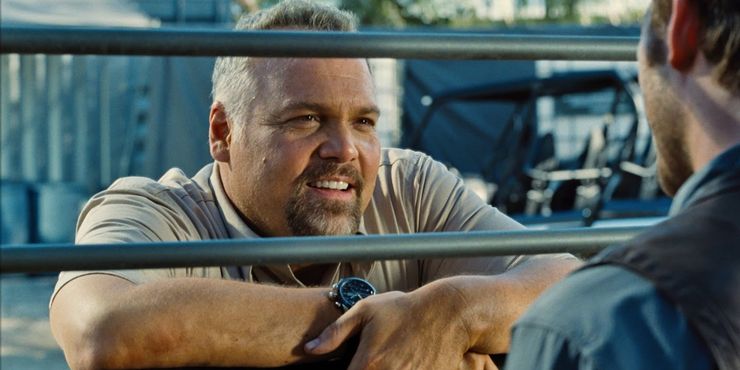
Portrayed by Vincent D'Onofrio, Vic Hoskins was a memorable villain in Jurassic World and he was a foil for the film's hero, Owen Grady (Chris Pratt). Hoskins headed up InGen's Security Division and he initiated advanced security measures in the interest of weaponizing super predators like the Velociraptors and the hybrid dinosaur the Indominus Rex, beyond being the stars of a dinosaur zoo.

When the Jurassic World dinosaur outbreak occurred, Hoskins and his men went to Hammond's Creation Lab and began gathering up DNA samples. Hoskins was then killed by Delta, one of the Velociraptors Grady worked with, who mauled him to death. However, Hoskins embodied the idea of the dinosaurs being weaponized and before died, Hoskins even mused his mistaken belief that the Indoraptor would be great for military applications.

Ken Wheatley - Jurassic World: Fallen Kingdom (2018)

Jurassic World: Fallen Kingdom's Ken Wheatley (Ted Levine) was perhaps the most outright villainous of the Jurassic big game hunters, and he also met the most comical death. Another high-priced mercenary, Wheatley led the rescue operation of the dinosaurs ahead of the volcanic eruption of Mt. Sibo, but he was under orders to gather the dinos up and bring them back to Lockwood Manor for a black market dinosaur auction.

Wheatley had a sadistic hobby of plucking a tooth from every dinosaur he killed for his personal collection, but this ended up leading to his gory demise against the Indoraptor after the auction. Wheatley's attempt to get an Indoraptor tooth hilariously backfired when the hybrid beast tricked Wheatley by playing dead and then mauled the helpless big game hunter.

Hap - Jurassic World: Camp Cretaceous (2021)

Hap (Angus Sampson) appeared in Jurassic World: Camp Cretaceous season 2, and he was the guide Mitch (Bradley Whitford) and Tiff (Stephanie Beatriz) hired to lead them into Isla Nublar after the dinosaurs overran Jurassic World. In a clever twist, the outwardly intimidating Hap was actually a good guy and he was trying to protect the teenage Campers from Mitch and Tiff, who posed as eco-tourists but were actually big game hunters looking to make trophies of the dinosaurs.

Hap turned on his married employers and helped the kids, and he sacrificed his life to distract a pack of Baryonyx so the teens could escape. Mitch and Tiff also met horrible ends in Camp Cretaceous: he was eaten by the T-Rex and the Baryonyx made a meal out of Tiff aboard her boat as she tried to escape Jurassic World.

Source: https://screenrant.com/

Sam Neill Defends 'Jurassic Park III' and Notorious Talking Raptor Scene

Friday, February 5, 2021

Sam Neill has spoken in defence of the maligned sequel Jurassic Park III, including the scene in which a raptor talks to his character in a dream.

The 2001 adventure — in which Neill’s palaeontologist Dr Alan Grant is duped into travelling to another island of cloned dinosaurs — was far from beloved by film critics, with its approval score on Rotten Tomatoes currently set at just 49%.

Particularly, the scene in which a sleeping Dr Grant is addressed as “Alan” by a talking velociraptor has become notorious as an example of the movie’s failings.

Neill, though, has told Collider he thought that sequence was “pretty cool” when he first read the script for Joe Johnston’s movie.

The 73-year-old star said: “I was just talking to someone earlier in the day who said: ‘I really like Jurassic Park III and it gets an unfair [treatment].’

“He was from Rotten Tomatoes, I think it was him. And I said: ‘Thank you very much!’

“I agree that the last 10 minutes are way too easy and way too hurried, but I think up to that point, it’s pretty damn good.”

Despite the negative reaction to the movie, Neill said he had only truly figured out the role of Dr Grant by the time he appeared in the third film.

“You’re not just playing a character. You need a whole skillset,” he said.

“You need a whole armoury to play an action hero and I wish I had known what those skills were when we did the first one, but there we are.”

Neill is due to reprise his role as Dr Grant, alongside fellow original movie stars Laura Dern and Jeff Goldblum, in the upcoming Jurassic World: Dominion.

Director Colin Trevorrow has suggested that fans are underestimating the size of the trio’s roles, saying they will be part of an “ensemble” rather than simply making cameo appearances.

Source: https://uk.movies.yahoo.com/

Rare 50 Million-Year-Old Fossilized Bug Flashes its Penis for Posterity

Friday, February 5, 2021

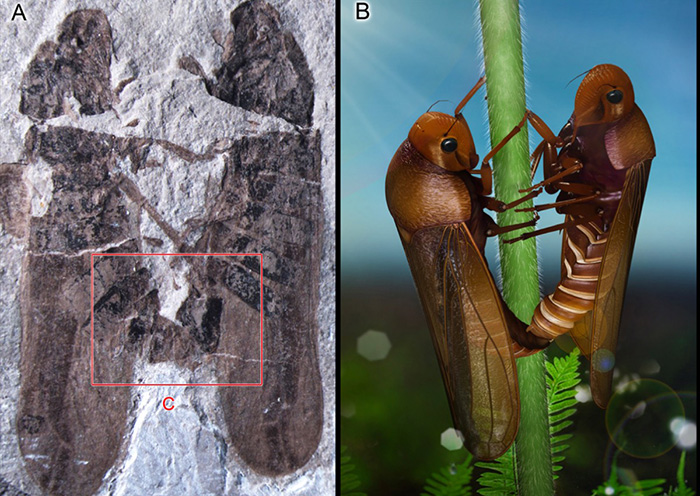
This poor fossilized assassin bug's tiny penis is being closely scrutinized by paleontologists who consider the find "a rare treat"—because it has been so extraordinarily preserved.

It dates back 50 million years, so this group may be twice as old as previously assumed.

A rare fossilized assassin bug is causing a bit of a stir in entomology circles because it is so remarkably well-preserved that one can distinctly pick out its penis. The specimen dates back 50 million years to the Eocene epoch, meaning this particular taxonomic group may be twice as old as scientists previously assumed. The University of Illinois, Urbana-Champaign (UIUC) researchers who conducted the analysis described their unusual find in a new paper published in the journal Papers in Palaeontology.

"Getting a complete fossilized insect is really rare, but getting a fossil of an insect from this long ago, that has this much detail, is pretty amazing and exciting," Gwen Pearson of Purdue University's Department of Entomology, who is not a co-author on the paper, told Ars. Assassin bugs (part of the Reduviidae family, of the order Hemiptera) are predators favored by gardeners because they eat pests. The mouth is distinctly shaped like a straw, the better to poke into the body of its prey, like a juice box, and slurp out the guts.

But of course, it's the preserved genitalia that make this fossilized specimen so exciting. The genitalia are contained within a shell—Ruth Schuster, writing at Haaretz, described the penis (technically its "pygophore") of the assassin bug as a "chitinous codpiece"—which is why it's difficult to tell whether a given insect specimen is male or female. In addition to the pygophore and the telltale stripes on the legs, the new fossil also distinctly shows the "basal plate," a structure shaped like a stirrup that supports the penis.

"The thing that makes bug penises so interesting is that in many cases they are part of the exoskeleton," said Pearson. "It's not because entomologists are pervy, it's because genitals are the place where we can see evolution happening. That's where the sexual selection is strongest. And the more we know about how insects lived and diversified in the past, that helps us understand how they're living and diversifying now."

Among other rare ancient insect finds is the 2013 discovery of a fossilized pair of insects in a related taxonomic group known as froghoppers (Anthoscytina perpetua), caught in flagrante delicto, their copulation preserved in great detail for over 165 million years. The froghoppers were so well-preserved in a belly-to-belly mating position that one can see the male inserting its "aedeagus" (analogous to the penis) into the female's "bursa copulatrix."

Most insect fossils are found in a few dozen "jackpot" deposits known as konzentrat Lagerstätten, loosely translated as “a deposit where a whole bunch of fossils were preserved,” according to a new article in Entomology Today. Those fossil-rich regions include the Green River Formation, a series of sedimentary deposits located in what is now Colorado, Utah, and Wyoming. That's where this new fossil was found in 2006, near Meeker in Rio Blanco County in Colorado, by a fossil collector named Dan Judd. The ancient bug has been dubbed Aphelicophontes danjuddi in his honor.

Another unusual feature is that the specimen split neatly in half in the field when Judd found it, instead of one half encasing the actual fossil and the other recording its impression, which is what usually happens. "The Green River shales are very well-laminated and split nicely like the pages of a book," co-author Sam W. Heads, a paleontologist at UIUC, told Ars. "I expect Mr. Judd will have given the stone a tap or two with a hammer and popped it open, revealing the specimen inside. It was pure luck that it split the way it did right through the coronal plane. I did do a little minor preparation in the lab with a very fine pin mounted in a pin vice, just to remove some matrix that was covering certain parts of the body. Other than that, the specimen was perfect."

Enlarge / Forever love: These two froghoppers, discovered in 2013, were caught in the act of copulating and preserved for more than 165 million years.

When Heads first received one half of the specimen, he "was awed by the wonderful preservation including the beautifully preserved color pattern," he said. "I immediately recognized it as an assassin bug and was simply ecstatic about it since they are not common in the fossil record. I ran straight into my colleague's office next door to mine to show him the specimen."

Upon closer examination under the microscope, he realized that the internal genitalia were also very well preserved—cause for even more excitement. "I didn't sleep much that night," Heads admitted. Within a week, he learned that Judd was willing to donate his half of the specimen, thereby enabling Heads and lead author Daniel Swanson, Heads' graduate student, to learn even more about the bug's morphology. "I had another jump-for-joy moment as I examined it and found that the genitalia were visible on that half also, and not only that, but it preserved slightly different parts of the phallic complex," he said. "I realized we might be able to reconstruct the morphology of the phallus of this insect."

Much of the paper focuses on tracing out, in precise detail, the various tiny details of this particular specimen to make the case for the final species assignation. Heads and Swanson also soaked the butts—excuse me, "caudal ends"—of a representative sample of modern assassin bugs in water, so they could easily remove the genitals with forceps. When they compared those genitals to the fossilized sample, they were a match. This provides "strong evidence that the genitalia were similar in the group, and were probably under similar selective pressures for the past 50 million years," the authors concluded.

According to Pearson, despite being around for so long, fossilized insects from millions of years ago have the same basic body plan as their modern counterparts. "The pieces that change [over the course of evolution] are the tiny squidgy bits," she said. "So much of what we know about insects and how we classify them is about their genitals, because each species will very often have distinct bits that only fit in their species."

Heads said that this new fossil belongs to a branch of a family tree typically dated back 25 million years. Since this fossil dates back 50 million years, it's possible that one branch of assassin bugs diversified earlier than previously believed.

Swanson is now completing work for his PhD, which includes compiling a detailed review and catalog of all known fossil assassin bugs, fixing a few taxonomic errors made by other scientists in the past for good measure. According to Heads, among the most important potential implications of Aphelicophontes will be its use in calibrating molecular phylogenetic analyses of the entire Reduviidae.

"This is like reconstructing the family history or genealogy of the group, determining how the various genera and species are related to one another," he said. "Fossils like Aphelicophontes are extremely valuable in this kind of work because they provide us with a minimum age for a particular lineage, which informs estimates of divergence times and can provide important data about the acquisition of different morphological characters through time."

In addition, "Aphelicophontes tells us something about the paleoecology of the ancient Green River Formation paleobiota," Heads said. "Assassin bugs are important predators in terrestrial ecosystems, so it's useful to know that they were there as part of the ancient insect fauna."

DOI: Papers in Palaeontology, 2021. 10.1002/spp2.1349

Source: https://arstechnica.com/

Jurassic Park: 10 Things You Didn't Know About Velociraptor Behavior On Site B

Friday, February 5, 2021

The behavior of the Velociraptors of Jurassic Park varies significantly on the infamous Site B. What exactly makes these other raptors so unique?

When Jurassic Park came on the scene in 1993, audiences were in awe of what they saw in this tropical island theme park. Much like how John Hammond forged new paths for genetic engineering, Michael Crichton and Steven Spielberg had pushed the boundaries of special effects to bring living, breathing dinosaurs to the big screen. Viewers never thought they would experience anything like it again.

Little did they know that, on top of Isla Nublar, Hammond had a second installation on Isla Sorna. Unfortunately (or fortunately), a hurricane wiped out the enclosures here, allowing the animals to run free. This inevitably leads some to exhibit different behavior than their enclosed counterparts. Among the most noticeable examples is the Velociraptor, the swift and sharp predator hailed as one of the smartest dinosaurs out there. These pack hunters already terrified viewers in the first film, but those on Site B come with several key differences that make them even more efficient as killers, even among the Spielberg pantheon.

10 - They Don't Kill Each Other... Or Do They?

In the first film, game warden Muldoon explains that they originally bred eight raptors. By the time that movie's events unfold, they only have three left. The large female killed the rest. In addition, these supposedly intelligent dinosaurs routinely snap at each other without provocation. By contrast, the raptors on Isla Sorna operate in large packs. The Lost World and Jurassic Park III show groups of six to eight members. The infighting of their predecessors is virtually nonexistent. Maybe it's true what they say: one bad apple can ruin the whole bunch.

The Lost World novel by Michael Crichton paints a different picture, however. Velociraptors on Site B killed for the pleasure of killing. Their murderous streak wasn't reserved only for enemies but also for unruly pack members. The book presented the idea of a "psychosis" of sorts, which Dr. Ian Malcolm elaborated on. He explains that, since the animals weren't raised by caring parents, and instead within a lab, they don't display structured pack behavior, nor understand the importance of its preservation.

In fact, Dr. Sarah Harding witnessed a brutal example up close. She spotted a pack violently tearing apart a carcass and a small juvenile barely able to share in the meal. When the youngling finally managed to push its way through and snag a bite, one of the adults quickly put it down, making it a side dish.

9 - They Lay Eggs

Despite the fact that all the dinosaurs were bred as females, Alan Grant discovers a clutch of eggs as he wanders Isla Nublar, deducing that their frog DNA allowed them to change sexes to adapt. However, the raptors in the first film don't get out of their cage until the third act, and they can barely get along, let alone breed.

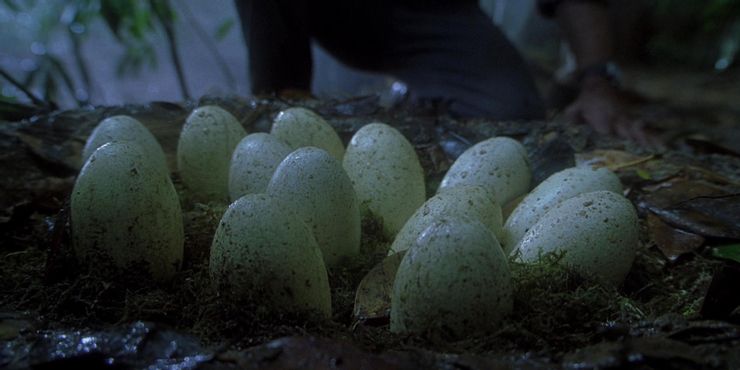
Luckily, the dinosaurs on Isla Sorna had plenty of time to procreate. In Jurassic Park III, the characters stumble on several groups of raptor eggs in a nesting area. The animals have clearly followed their instinct to reproduce, which ensures their species endures.

8 - They Run Away From A Tough Fight

When confronted by something dangerous or unfamiliar, animals have a flight-or-flight response. Flight is usually the safer option, especially for those that aren't at the top of the food chain. The captive raptors in Jurassic Park presumably never learned this, with one of them even challenging a T-rex toward the end.

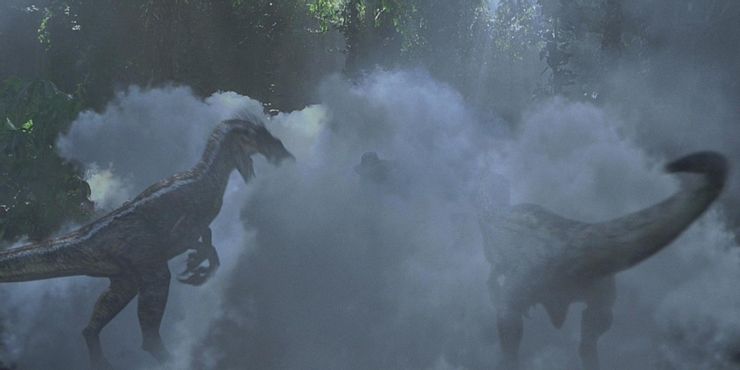
On the other hand, Site B's raptors have lived in the wild for a while. They've had time to cultivate their survival instincts within the ecosystem. They know they're not the big boys in town. So, when they sense potential threats, such as a gas bomb or the sound of a helicopter, they'd rather retreat to preserve their numbers. Call them chickens if you want. At least they live to hunt another day.

Alternatively, leaked concept art for The Lost World showed a scene in which raptors chase down an individual on a motorcycle. It proved that, even faced with something unfamiliar, they would still engage in a fight until it proved to be too much.

7 - They Probably Don't Use Their Feathers For Anything

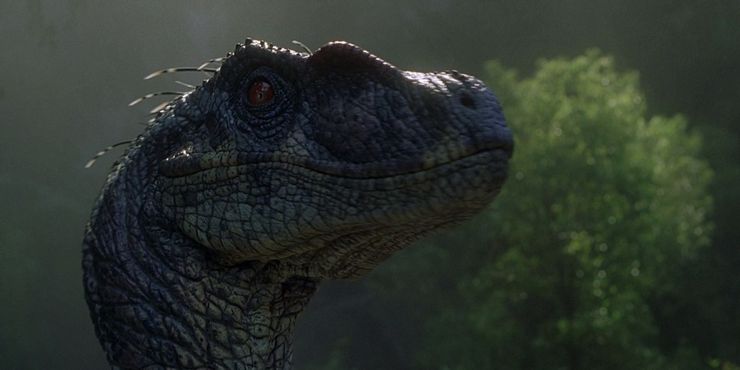
Even during the original Jurassic Park trilogy, the idea of dinosaurs as feathered animals was already coming into fashion. It was a focal point of the first film. As such, Jurassic Park III pays homage to these discoveries by giving some raptors a batch of quills on their heads. They're not as prominent as in ARK, but they're still visible.

However, a visual nod is all these quills are good for. The raptors obviously can't use them to fly or glide; they can't make the raptors look bigger to intimidate other animals; and they're not prominent enough to be a tool for mating. Unless they emit some pheromone viewers don't know about, these things are just here to please any paleontologists in the audience.

6 - They Attack From An Elevated Position

The raptors on Site B seem to have a penchant for pouncing. This is possibly due to the fact that they're not enclosed in a cramped cage like their Site A peers, but it may also be another callback to their flying relatives.

Modern birds of prey, such as hawks and eagles, naturally attack their targets from above. They'll dive bomb onto the animal and grab it with their talons, sometimes killing their quarry with the force. The raptors might prefer striking from a higher angle because of their evolutionary connection to these airborne predators. They may not be able to fly, but they sure can jump pretty high.

5 - They're More Organized

Alan Grant asserts that raptors were among the smartest dinosaurs to ever walk the Earth. However, the ones in the first film tend to barrel toward their targets without much thought for each other. They occasionally display their sharpness when they open doors and misdirect Muldoon, but their attacks mostly have the subtlety of a freight train and don't have much pack cooperation.

Those on Isla Sorna seem much more adept at hunting. They come up with complex maneuvers and use their environment to their advantage, such as when they covertly surround the humans in the tall grass. This shows a level of team coordination more in line with their reputation as pack hunters, unfortunately, for the herbivores. They've also given Turok fans many a headache for years.

4 - They Go Further Than Most Animals For Their Eggs

The animal kingdom is a cruel place. Not every creature has the same nurturing instincts, and many predators and scavengers get an easy snack by raiding nests or killing infants. When this happens, the parents generally abandon the lost offspring to focus on the remaining ones.

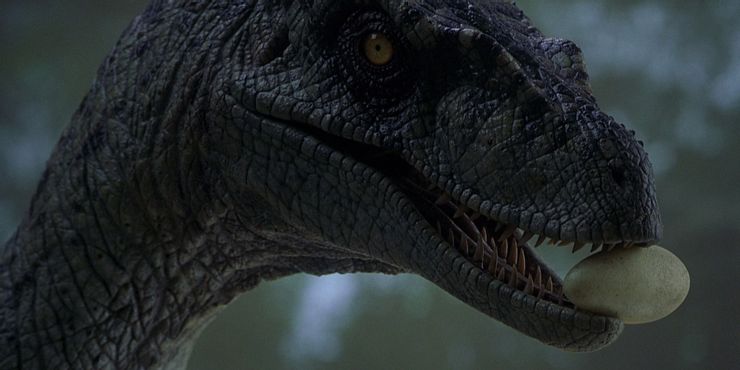
The raptors on Isla Sorna, however, don't take this sitting down. When Billy steals a couple of eggs in Jurassic Park III, the predators pursue the protagonists across the whole island. They even ignore other prey on offer, focused squarely on their rescue mission. Never say that they don't do anything for their kids. Too bad they never fought the Spinosaurus.

3 - They're Led By A Female

In some species, the female is naturally the dominant sex; they're more formidable and typically lead any groups that emerge. This trend pops up today in elephants, spiders, and several other animals.

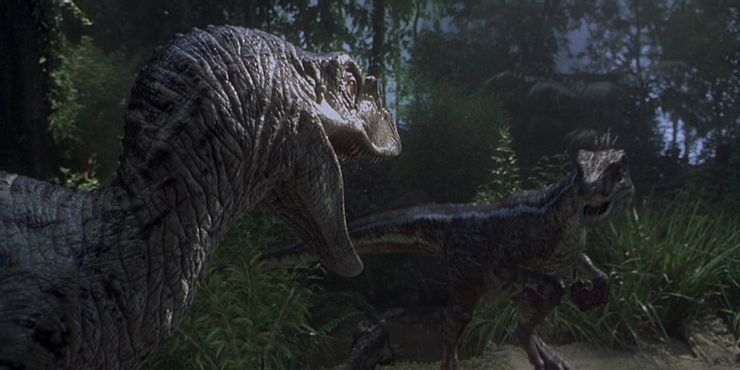
It also appears to be the case with the raptors. In Jurassic Park III, the main female of the pack takes point when surrounding the characters. She's also seen barking orders to the rest of the group, telling them when to hold position or retreat. Viewers never have any illusions as to who's in charge.

2 - They're Sectioned Into Different Tribes

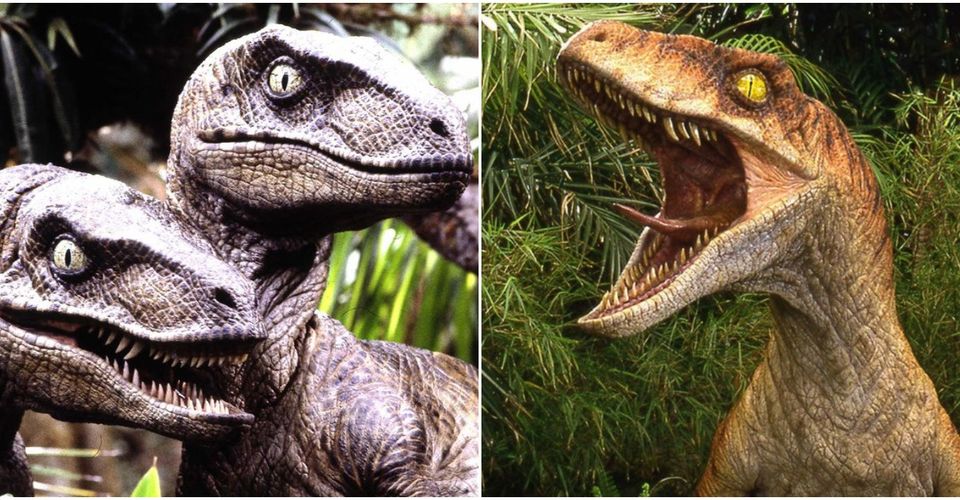
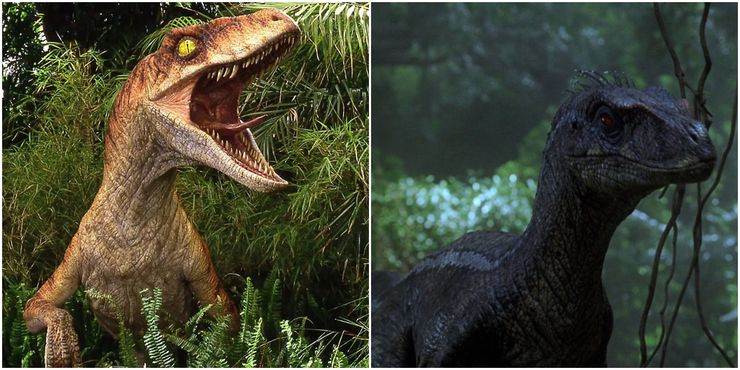
If viewers look past the running and screaming, they'll notice that the raptors in The Lost World and Jurassic Park III are slightly different. Their coloration is more orange in the former and darker in the latter. Plus, the third film gives them the aforementioned quills.

Isla Sorna is a big island, and viewers already know that InGen modified these animals' DNA. Jurassic World Evolution even lets players do this. The raptors probably sectioned themselves into different groups like lion prides or wolf packs, each with their own territory. The video game, Trespasser, may have been the first to establish Velociraptor tribes in canon. The known tribes include Tribe A (comprising of the "tiger stripe" raptors of the second film), along with Tribes B, C, and C Alpha (which have only appeared in the game). The quilled raptors from the third film could be a potential Tribe D. Why InGen was stupid enough to make this many raptors is anyone's guess.

1 - They Love Pranks

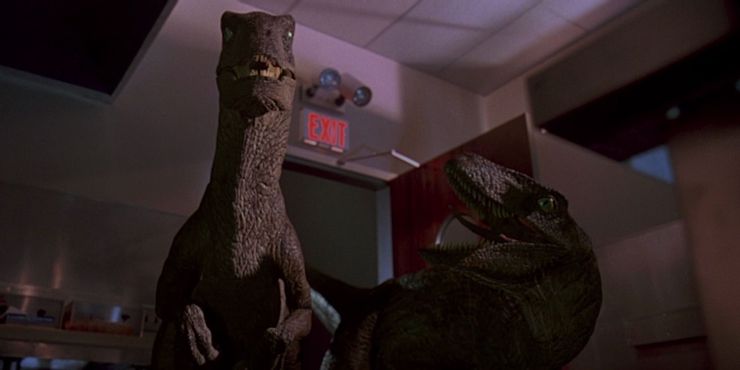
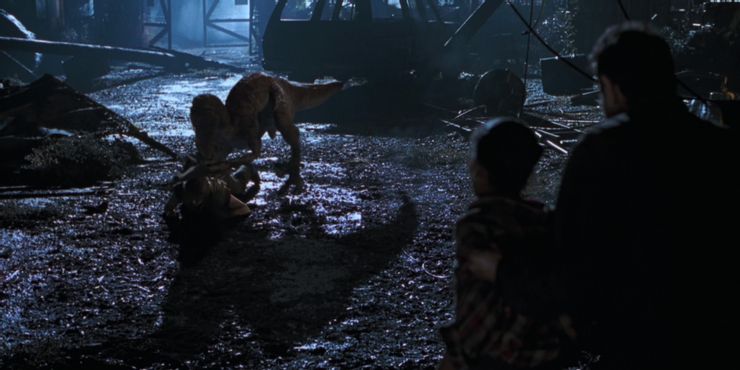
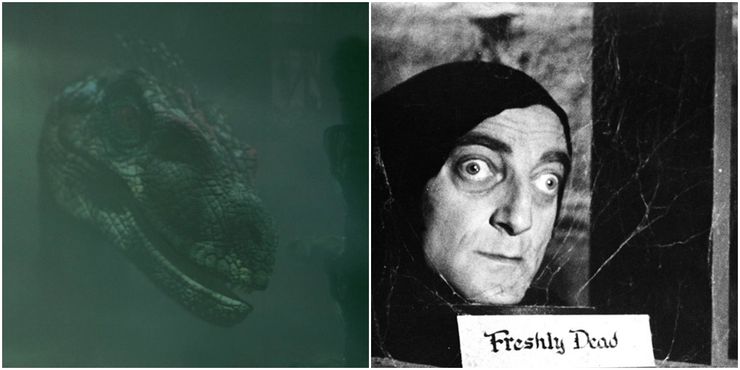
In Jurassic Park III, the characters explore the ruins of an InGen lab. It's here that viewers see several rundown containers, broken eggs, and corpses of animals that never made it to maturity. They encounter one fully-grown raptor specimen that's seemingly dead due to experimentation. Then, in a move straight out of Young Frankenstein, the predator springs to life and starts chasing the humans.

The raptors have never done this fake-out before or since. Considering how well-rehearsed it is, though, one has to assume that it's a regular tactic. The filmmakers probably only intended it as a cheap jump-scare, but it inadvertently paints these animals in a whole new light. If this is how they behave, viewers can never look at the raptors on either island the same way again. At least they're still more dignified than the Velocipastor.

Source: https://gamerant.com/

Paleontologists Find 3.58-Million-Year-Old Ground Sloth Fossil

Thursday, February 4, 2021

Life reconstruction of Megatherium. Image credit: Sebastián Rozadilla.

Paleontologists in Argentina have discovered what they say is one of the oldest-known fossils of the ground sloth Megatherium.

Megatherium is an extinct genus of ground sloths that lived in South America from the Early Pliocene epoch (5 million years ago) through the end of the Pleistocene epoch (11,700 years ago).

The earliest and smallest known species of the genus is Megatherium altiplanicum from Pliocene of Bolivia.

But it is best known for the elephant-sized Megatherium americanum, sometimes called the giant ground sloth, native to Argentina, Uruguay and Bolivia during the Pleistocene.

It was up to 10 times the size of living sloths reaching weights of up to 4 tons.

It was able to stand and walk on its hind legs, making it the largest bipedal mammal of all time.

Megatherium overlapped with humans in time as their fossils have been found with cut marks on them, suggesting that these creatures were on the menu thousands of years ago.

Footprints attributed to Megatherium americanum dating to around 14,000 years old have been found in Argentina.

These animals lived mostly in groups, but they may have lived singly in caves.

They probably had mainly a browsing diet in open habitats, but also they probably fed on other moderate to soft tough food.

There even have been suggestions that their long claws and strong forelimbs may have allowed them to hunt other animals.

The 3.58-million-year-old skull of Megatherium from the San Eduardo del Mar locality, Argentina. Image credit: Museo Municipal Punta Hermengo, Miramar.

Megatherium remains are very common in almost the entire Argentine territory, however, it is the first time that the remains of such high antiquity have been found, which is only comparable to a find made a few years ago in Bolivia,” said Dr. Nicolás Chimento from the Museo Argentino de Ciencias Naturales ‘Bernardino Rivadavia’-CONICET and his colleagues from the Museo Municipal Punta Hermengo, Miramar, the Universidad MaimónidesCICYTTP-CONICET, and CIC PBA-UNMDP.

The new, partial skull of a Megatherium was discovered at the locality of San Eduardo del Mar in Argentina’s Buenos Aires province.

The paleontologists found that the fossil belonged to a juvenile and is at least 3.58 million years old.

The 3.58-million-year-old skull of Megatherium. Image credit: Museo Municipal Punta Hermengo, Miramar.

“This constitutes the first undoubted record of Megatherium from the Pliocene of Argentina, and one of the oldest records for the genus,” they said.

“This finding blurs previous biogeographical proposals sustaining that the genus originated in the High Andes and later dispersed to the lowlands.”

“On the contrary, present finding, together with the record of coeval Megatherium species in the Pleistocene of the Argentine Pampas, suggests a more complex paleobiogeographical scenario and indicates that the diversity of lowland Pliocene megatheriines is still underrepresented.”

The findings were published in the Journal of South American Earth Sciences.

_____

Nicolás R. Chimento et al. A new record of Megatherium (Folivora, Megatheriidae) in the late Pliocene of the Pampean region (Argentina). Journal of South American Earth Sciences, published online October 10, 2020; doi: 10.1016/j.jsames.2020.102950

Source: www.sci-news.com/

Dinosaur Frills Were For Attracting Mates, Not Protection

Thursday, February 4, 2021

These frills are made for flirting, and that's just what they'll do...

A small sheep-sized dinosaur that lived more than 70 million years ago evolved to have a “huge” neck frill as a result of sexual selection, according to scientists.

The Protoceratops, a 1.8m-long plant-eating dinosaur that roamed what is now Mongolia’s Gobi Desert, had elaborate bony frills that extended over the neck.

It is thought that the frills may have served to protect the vulnerable neck from predators and helped regulate body temperature, but experts now believe it may have had another function: attracting mates.

Sexual selection is the idea that certain traits in animals are favoured by members of the opposite sex, so in time, these characteristics become more dominant in the creatures. For example, the elaborate feathered display of peacocks are thought to be a result of sexual selection.

© The Trustees of the Natural History Museum

“In many fossil animals we have unusual structures and traits which aren’t really seen in living animals today,” said Dr Andrew Knapp, a postdoctoral researcher at the Natural History Museum. “Protoceratops didn’t have any horns but they still had a huge frill.

“Several theories have previously been suggested for the emergence of these neck frills. Some have suggested that they were used for protection, others that they played a role in cooling the large herbivores down, or that they allowed individuals to recognise different members of their own species.”

Dr Knapp and his team analysed 3D scans of 30 complete skulls of Protoceratops, which belong to a group of beaked, herbivorous dinosaurs known as ceratopsian. These skulls ranged in size from “tiny day-old hatchlings to fully grown adults”.

The researchers found that the Protoceratops skulls showed a distinct pattern of growth, suggesting the neck frills were a sexually selected feature, much like the antlers of a deer.

Any feature that grows much more quickly than the rest of the body, such as a deer’s antlers, is very likely to be the result of sexual selection. By comparing the skulls of Protoceratops of different ages, the researchers found that this was true of their neck frills.

Protoceratops skull © Andrew Knapp/Natural History Museum

Whilst sexual selection appears to be in action in the Protoceratops fossils, the experts said there is no obvious evidence of sexual dimorphism – where the two sexes of the same species exhibit different characteristics beyond the differences in their sexual organs – although this characteristic may have been present in the creatures.

“There almost certainly were differences between males and females but quite often differences are in body size, so males will be bigger than females or vice versa,” said Dr Knapp.

“It could also have been through something else like colouration [that showed sexual dimorphism], which doesn’t preserve in fossils.”

Source: www.sciencefocus.com/

Jurassic World Camp Cretaceous: 10 Things Only Fans Of The Movies Notice

Wednesday, February 3, 2021

Season 2 of Jurassic World: Camp Cretaceous is out on Netflix, and the show makes many references to the movies that only diehard fans will notice.

Jurassic World: Camp Cretaceous, which started 2021 by releasing its second season on Netflix, isn't just a show for kids. It's got some seriously tense moments and terrifying rampaging dinosaurs that would make even most adults wet their pants if they met them in real life. Still, these capable kids manage to make their way through the park and survive many perils.

The show has a lot to offer fans of the films with plenty of nods towards the past of the series. There are lots of these to spot, but only those who religiously watch the movies will be able to catch them all.

10 - Blue's Multiple Cameos

Always a helpful velociraptor, Blue is the oldest member of her pack which includes Delta, Echo, and Charlie. She is likely Owen Grady's favorite raptor as she imprinted on him at birth.

Blue can be spotted several times making cameos in the animated show. It's a shame she doesn't interact with the campers more as she's known to rather like humans, but perhaps Blue will have a larger showing in season 3.

9 - Return Of The Ceratosaurus

A specific dinosaur made its way back to the series for the first time since it had a minor showing in Jurassic Park 3. Fans might have spotted the Ceratosaurus making small appearances in a variety of episodes.

The fact that this particularly popular dino always only seems to barely be seen in the series is something only the truest fans will recognize.

8 - Zach And Grey's Gyrosphere

In Jurassic World, Zack and Grey take a tour to see some of the amazing dinosaurs on the island using a gyrosphere. They eventually encounter the Indominus Rex and crash, being forced to abandon the vehicle to try and escape unscathed.

In the show, the kids also get to take out gyrospheres but end up separated from the group. They eventually encounter the same crashed gyrosphere that Zack and Grey had been using. It's a cool nod to the film and how the events of the animated series coincide with the live-action movies.

7 - The Quaking Footprint

Every single episode of Camp Cretaceous shows a dinosaur footprint in the mud that starts to ripple from heavy dinosaur footsteps. This is an iconic callback to the very first movie in the Jurassic Park series. It's a wonderful reference that will leave fans of the films smiling from nostalgia.

6 - The Return Of Mr. DNA

Mr. DNA was a creation of InGen to help explain the process of how dinosaurs were brought back to life in the park. Seeing this animated friend explain that process has been a part of the series since the first film so fans would be excited to see him return in the animated series.

Mr. DNA is the mascot of the game Darius won to be invited to the camp, and he even has a poster with Mr. DNA on his wall. The idea that Mr. DNA has become a full-on mascot with merchandise is beyond fun and it's cool to see him making a return to the franchise.

5 - The Jurassic Lagoon

Whale shows might be entertaining but seeing a massive dinosaur eat children alive might be a bit too much. Darius and the gang end up in the Jurassic Lagoon after the Jurassic Park River Adventure.

The Mosasaurus that is seen in Jurassic World still lurks beneath the surface and shoots up to try and devour the kids. It is not clear how it kept getting food all this time, but it's certainly a cool callback to the movies.

4 - The Raptor Resonating Chamber

In Jurassic Park 3, Dr. Alan Grant uses the resonator of a dead raptor to save himself when he is surrounded by a group of genetically altered raptors. The idea was to show the raptors that he wasn't prey, and while that is a scientifically dubious idea, it certainly worked in the film.

In the game, Darius uses a resonator to a similar effect. Taking down a T-Rex is no easy task, but calling for raptor reinforcements certainly makes that easier. Good job Darius for having the ingenuity of an adult with a doctorate.

3 - Sammy's Hawaiian Shirt

When Sammy Gutierrez was revealed to be a spy out to steal InGen's research for a rival company named Manta Corp, a ton of puzzle pieces fell into place.

Sammy not only acts just like Denis Nedry from the original film but she even sports a similar Hawaiian shirt he's seen wearing in the movie. This tiny easter egg is hard to spot but amazing when it's finally noticed.

2 - Why No One Can Get A Hold Of Claire Dearing

At one point during the show, Roxie and Dave head towards the south side of the island to talk to Claire Dearing, head of park operations. They want to talk to her about the issues happening at Camp Cretaceous but are unable to reach her.

This is because, at that point in time during the Jurassic World movies, Claire is lost on the south side of the island with Owen. It's impressive that the animated series was able to so perfectly work the events of the movies into the show without major continuity errors.

1 - Dr. Alan Grant's "Cameos"

Before Darius even gets to the island, the series is already referencing one of the most famous characters in the entire franchise. He shows his dad Dr. Alan Grant's blog and discusses how it's constantly getting updates about dinosaur behavior.

Darius even namedrops the doctor a second time in the show, showing that the young boy really looks up to Dr. Grant as a role model for his love of dinosaurs.

Source: https://gamerant.com/

Devonian Fish’s Inner Ear Sheds Light on Earliest Evolution of Jawed Vertebrates

Tuesday, February 2, 2021

Artistic rendering of Brindabellaspis stensioi (foreground) with a range of other Devonian fossil fishes; the white shark and human diver in the upper right corner represent modern jawed vertebrates. Image credit: Hongyu Yang / Qiuyang Zheng.

Paleontologists have found that Brindabellaspis stensioi, a species of long-beaked placoderm fish that lived 400 million years ago (Early Devonian period), had a surprisingly compact inner ear and that its closely connected components resembled those of modern jawed vertebrates such as sharks and bony fishes. Most placoderms had less complex inner ear structures, with a large sac, called a vestibule, placed in the center and separating all the other components.

Brindabellaspis stensioi was first found in 1980 in limestone around Lake Burrinjuck in New South Wales, Australia, an area containing some of the world’s earliest known reef fish fauna.

Nicknamed ‘platypus fish,’ it had a long snout, reminiscent of a platypus bill.

It belongs to Placodermi (placoderms), a class of armored fish which thrived for 60 million years of the early Paleozoic era, between 420 and 360 million years ago.

“The inner ear structure of Brindabellaspis stensioi is so delicate and fragile that it is rarely preserved in fossils, so being able to use these new techniques to re-examine specimens and discover this wealth of new information is very exciting,” said Dr. Sam Giles, a researcher in the School of Geography, Earth and Environmental Sciences at the University of Birmingham and the Department of Earth Sciences at the Natural History Museum, London.

Using cutting-edge microCT scanning, Dr. Giles and colleagues examined several specimens of Brindabellaspis stensioi recovered from an ancient reef near the Brindabella Moutains on the border of New South Wales.

The fossils were unusually well preserved, giving the paleontologists a rare opportunity to examine inside the brain cavity.

Their early analysis led them to conclude these fish were closely related to primitive, jawless fishes that first appeared some 500 million years ago.

The more recent analysis, however, challenges assumptions that placoderms were a distinct group and supports the possibility that they, in fact, contained the origins of modern jawed vertebrates.

The fossil of Brindabellaspis stensioi. Image credit: Institute of Vertebrate Paleontology and Paleoanthropology, Chinese Academy of Sciences.

“This fossil has revealed a really intriguing mosaic of primitive features and a surprisingly modern inner ear,” Dr. Giles said.

“We don’t yet know for certain what this means in terms of our understanding of how modern jawed vertebrates evolved, but it’s likely that virtual anatomy techniques are going to be a critical tool for piecing together this fascinating jigsaw puzzle.”

“Which hypothesis is closer to the truth? The simple answer is we don’t know yet,” said Dr. Youan Zhu, a researcher at the Institute of Vertebrate Paleontology and Paleoanthropology of the Chinese Academy of Sciences and the Department of Organismal Biology at Uppsala University.

“Molecular data suggest that jawed vertebrates arose in the Middle Ordovician, some 60 million years before Brindabellaspis stensioi was cruising the ancient reefs.”

“The answer may be in that missing 60-million-year period, in which fossils are very rare.”

The findings were published in the journal Current Biology.

_____

You-an Zhu et al. Endocast and Bony Labyrinth of a Devonian “Placoderm” Challenges Stem Gnathostome Phylogeny. Current Biology, published online January 25, 2021; doi: 10.1016/j.cub.2020.12.046

Source: www.sci-news.com/

Jurassic World 3’s Jeff Goldblum Gave Dozens of Suggestions on the Sequel

Monday, February 1, 2021

Jurassic World: Dominion star Sam Neill says Jeff Goldblum drove director Colin Trevorrow and everyone else crazy with his constant suggestions.

Jurassic World: Dominion star Jeff Goldblum drove everyone crazy with his constant suggestions, says his co-star Sam Neill. Following upon the massive success of Jurassic World and Jurassic World: Fallen Kingdom, the upcoming third movie in the blockbuster dinosaur trilogy looks to be the biggest of a three, with a story that takes the dino-action all over the globe.

Indeed Jurassic World: Dominion is not only set to escalate the action of the trilogy, it will also wrap up the entire Jurassic Park franchise according to writer-director Colin Trevorrow. That wrap-up naturally will include a lot of looking back as the movie brings in the original Jurassic Park trio of Neill, Goldblum and Laura Dern for one last go-around alongside new trilogy stars Chris Pratt and Bryce Dallas Howard. Of course the larger realities of the pandemic world also played a part in the shaping of Jurassic World: Dominion, as it was faced with big delays before finally being finished under tight COVID-related restrictions.

Indeed the making of Jurassic World: Dominion turned out to be a much more difficult undertaking than anyone could’ve imagined. In addition to dealing with COVID delays and restrictions, director Trevorrow also faced another challenge: unrelenting input from star Goldblum. As Neill outlined in an interview with ET to promote his new movie Rams:

Colin Trevorrow, who's a lovely guy and a really good director, he was very open to suggestions. Jeff would come to work with about 50 suggestions that drive us crazy every day, god bless him. I love Jeff, but boy, does he have a lot of ideas! Laura and I would come up with things, as well, and Colin was very open to that. We'll see how many of those things make it to the cut!

Neill of course is joking around when it comes to Goldblum driving everyone crazy with suggestions, as the two are known to be good friends. Indeed, Neill has such affection for his Jurassic Park universe co-star that he even named a sheep after him (Neill’s farm also features a bird named after Kate Winslet, a pig named after Taika Waititi and a red chicken named after his other Jurassic World co-star Howard). According to Neill, Goldblum the sheep has “passed his youthful days,” adding “He no longer amuses the girls, he's just grazing and enjoying himself."

The on-going friendship between Neill and Goldblum is indeed one of the more lovely and wholesome stories behind the Jurassic World franchise, and fans are understandably thrilled to see the pair hit the screen together again one more time in Jurassic World: Dominion, with Dern completing the trio. It will be fascinating to see how Trevorrow and his cast put a cap on the long-running Jurassic Park franchise as the action moves far beyond the tropical confines familiar from previous films to encompass the whole globe, in a story that promises to top everything the series has done before.

Source: ET Online / https://screenrant.com/

'Jurassic Park' Timeline Explained, from Isla Nublar to 'Camp Cretaceous'

Monday, February 1, 2021

From frozen mosquitoes and greedy scientists, to hybrid dinosaurs and human clones, here's everything that's happened in the 'Jurassic' universe.

The Jurassic Park franchise follows a relatively simple format: humans try to play god, then things go wrong and they get eaten by dinosaurs. But underneath the formula lies an expansive lore involving corporate espionage, scientists pushing the limits of science, and tons of running away from dinosaurs.

With the second season of Jurassic World: Camp Cretaceous out on Netflix, to the upcoming Jurassic World: Dominionit's time we take a trip down memory lane to refresh our memories and clarify some confusing plot points, as drawn from every filmed entry in this dino-filled universe. So hold on to your butts, because we're going back to Jurassic Park.

Before the Movies

1525 - Isla Nublar is discovered by Spanish navigator Diego Fernandez. Cartographer Nicolás de Huelva names the island Isla Nublar, or "Cloud Island" due to the clouds of black smoke emanating from the just-erupted Mount Sibo.

1913 - March 14: John Hammond is born in Edinburgh, Scotland.

1930 - Sanjay Masrani is born in Bombay, British India.

1945 - Benjamin Lockwood is born.

1967 - Sanjay's son, Simon Masrani is born in Bombay.

1969 - John Hammon opens his first animal park, "Animal Kingdom" in Nairobi, Kenya. He hires Robert Muldoon as warden.

1973 - February 16: Sanjay Masrani establishes Masrani Corporation to be an ambitious telecommunications company.

1975 - John Hammond and Benjamin Lockwood found International Genetic Technologies, or InGen, in San Diego, California.

1980 - John Hammond's granddaughter, Alexis Murphy, is born.

1981 - Owen Grady is born

1982 - InGen leases Isla Sorna and neighboring islands from the Costa Rican government for 99 years. Work begins on extracting DNA from mosquitoes trapped in amber.

1983 - Tim Murphy is born.

- Construction begins on Jurassic Park: San Diego, which is like SeaWorld, but without the poor treatment of animals, and with cooler animals too.

- Benjamin Lockwood's daughter, Maisie, is born.

1984 - The first animal is brought back to life at the Lockwood estate, using an artificial ovum.

1985 - InGen moves to Palo Alto. At this time, Hammond hired Dr. Laura Sorkin, who helps prove that DNA can be retrieved from amber.

- Jurassic Park: San Diego is suspended indefinitely as Hammond decides to relocate the park to Isla Nublar, which he leases from the Costa Rican government. In return for leasing the park, InGen promises to relocate the people native to the island, and provide education and medical assistance. Surprising no one, InGen fails to meet either promise.

- Claire Dearing is born.

1986 - InGen clones their first actual dinosaur, a Triceratops, on Isla Sorna.

- Dr. Henry Wu is hired by InGen. He eventually suggests splicing the DNA of dinosaurs with that of modern animals. He also comes up with the idea for a contingency plan in case the dinosaurs escape - the lysine contingency. By inserting a faulty gene in the dinosaur genome, they'd become dependent on supplemental lysine that InGen could remove in case of emergency, causing dinosaurs to enter a coma and eventually die.

1988 - A cute little Tyrannosaurus rex baby is born in Isla Sorna. She'll be known as "Rexy."

- Construction of Jurassic Park begins on Isla Nublar, including the inexplicable huge cliff in the T-rex paddle.

1989 - A year-year-old Rexy is moved to Isla Nublar, along with the first mature animals.

- Eric Kirby is born to Paul and Amanda Kirby in Oklahoma.

1991 - Dr. Wu realizes yellow-branded poison dart frog DNA is incompatible with some dinosaur genomes, including Velociraptors, so he starts using common reed frogs instead. Unbeknownst to him and all other InGen scientists without an encyclopedia on hand, the reed frog is capable of changing sex, an ability passed down to the dinosaurs — allowing them to reproduce.

1992 - Dr. Wu and Robert Muldoon observe absurdly high levels of intelligence in the Velociraptor.

- Sanjay Masrani dies, and Simon succeeds him as head of the Masrani Corporation.

1993 - Dr. Wu starts researching making hybrids of different species.

- Maisie Lockwood visits Jurassic Park. John Hammond and Benjamin Lockwood later part ways due to Lockwood's interest in using InGen's technology for human cloning.

- A Velociraptor attacks and kills most animals in the Velociraptor paddock in the park, becomes the new alpha and starts sending her subordinates to attack the electric fences to test their weaknesses. This leads to the decision of moving the Velociraptors to a holding pen.

The Events of Jurassic Park Take Place

- Early June: Gatekeeper Jophery is mauled and killed by a Velociraptor during a transfer to the holding pen. The attack causes all construction on Isla Nublar to come to a halt, as the Board of Directors demands an inquiry into the stability and safety of the park. Jophery's family sues InGen.

- Donald Gennaro arrives at the Mano de Dios amber mine to meet with Juanito Rostagno to discuss the upcoming tour of the park. Hammond doesn't show up at the meeting as he's busy with his daughter's divorce proceedings. Gennaro invites Dr. Ian Malcolm to visit Isla Nublar, while Hammond plans to take his grandchildren to keep them distracted from the divorce.

- June 7: Hammond arrives in Montana to meet with Dr. Ellie Sattler and Dr. Alan Grant, who just finished traumatizing a child for life. The two agree to visit the island in exchange for Hammond funding their research for three more years.

- June 10: InGen programmer Dennis Nedry utters the immortal words "Dodgson, we've got Dodgson here!" during a meeting with Lewis Dodgson in San José, Costa Rica. Disgruntled with Hammond, Nedry agrees to steal dinosaur embryos from the park inside a can of shaving cream for $1.5 million. Dodgson also pays for Nedry's meal at the restaurant.

- June 11: Alan, Ellia and Ian arrive at the park and are astonished by the actual dinosaurs in the park. Later that day, Tim and Lex Murphy arrive at the park and they join on what should be a fun, guided tour. Unsurprisingly for anyone who has ever visited a zoo, the dinosaurs along the tour path are nowhere to be seen. The only dinosaur the visitors see is a sick Triceratops off the tour path.

- A surprise tropical storm appears! All non-essential staff evacuates the island, leaving only chief engineer Ray Arnold, Nedry, and park warden Robert Muldoon to take care of the entire park. At this point, Nedry sneaks into the embryo chamber and steals a vial of each dinosaur specimen found on the island, then he shuts off all security systems in the park (other than the raptor holding pen).

- Nedry's program causes the tour vehicles to stop right in front of Rexy's paddock just as the electrified fencing shuts down. Rexy somehow climbs the huge cliff surrounding the paddock and attacks the tour vehicles. Malcolm distracts her but is injured by Rexy before she eats Gennaro whole.

- The visitors are separated. Alan saves Tim and Lex from Rexy, but they fall down the huge cliff and down to her paddock. Malcolm is found by Ellie and Muldoon and they return to the Visitor Center.

- With the dinosaur embryos safely secured in the Barbasol can, Nedry hurries to the boat off the island, but gets lost in the storm, crashed his car, and ends up brutally murdered by a Dilophosaurus. In an attempt to undo Nedry's damage to the security systems in the park, Ray Arnold reboots the entire park system and goes to a maintenance shed to restore power, but gets killed by raptors, leaving only his arm behind.

- June 12: Grant and the kids make their way across the park and encounter Rexy again. Meanwhile, Ellie and Muldoon head to the maintenance shed to find Arnold, but get ambushed by the raptors along the way. Muldoon sacrifices himself to give Ellie a headstart and gets killed by his "clever girl." Ellie restores power to the park and finds Arnold's chewed off arm, but manages to escape. At the same time, Alan and the kids climb a security fence, but Tim gets electrocuted the moment power comes back.

- Alan leaves the kids at the Visitor Center and gets reunited with Ellie while looking for help, and they regroup with Ian and John Hammond. Lex and Tim encounter two Velociraptors, and manage to lock one in a freezer while outrunning the other one. The kids meet with Alan and Ellie and make it to the control room and Lex hacks her way into the park's system and reboots it, restoring communications, security locks and everything. Alan calls Hammond and tells him to call in the helicopters, but they are ambushed by the raptors one last time. Thankfully, Rexy swoops in and saves the day, attacking the raptors while the humans escape, though they never thank her.

- After the park incident, InGen starts evacuating and closing down Site B due to Hurricane Clarissa. The dinosaurs are released to the wild, shortly before the hurricane wipes out the facilities.

- Despite covering up the deaths of Gennaro, Muldoon and Arnold, InGen faces lawsuits from the victims' families, pushing the company towards bankruptcy.

1994 - Dr. Wu sees evidence that the Lysine contingency failed as dinosaurs have been breeding, and blames the reed frog DNA used to splice the dinosaur DNA.

October 5: InGen publishes a report on the remaining dinosaur populations on Isla Nublar, and document the growing Velociraptor population on the island. Shortly after, Dr. Wu returns to the island to assist in the clean-up process and to determine how the dinosaurs were breeding. All the DNA samples on the island are lost at this time.

1995 - Wu writes "The Next Step: An Evolution of God's Concepts" detailing his ambition for creating new species.

- Ian Malcolm publicly breaks his NDA during an interview where he reveals everything that went down on Jurassic Park two years prior. InGen and Hammond's nephew, Peter Ludlow, retaliate with a smear campaign against his claims, resulting in Malcolm losing his tenure at the university he works at for allegedly receiving money to spout wild conspiracy theories about the park. In an attempt to preserve their reputation as a tourism paradise, the Costa Rican government sides with InGen and denies everything to do with the dinosaurs, to the point where Jurassic Park is dismissed as a hoax.

The Events of Jurassic Park: The Lost World

1996 - December: A British family on a yacht cruise stumble upon InGen's Site B, and their young daughter, Cathay, is severely injured by a flock of Compy (Compsognathus). Her family sues InGen.

1997 - May 21: Dr. Wu creates a hybrid plant, earning him international media attention and speaking the interest of Masrani in acquiring InGen.

- Due to the ever-growing number of lawsuits, the Board of Directors at InGen unanimously fire John Hammond as CEO and President. His successor, Peter Ludlow, begins making plans to save the company by finally opening Jurassic Park: San Diego with assets obtained from Site B.

- Paleontologist Dr. Sarah Harding meets with John Hammond, who plans to send his own team to Isla Sorna to document the dinosaurs in the wild in order to gather public support in favor of protecting the dinosaurs. Harding agrees and heads to the island by herself.

- November 1: Hammond calls Dr. Malcolm to ask him to join the expedition team. After learning that his girlfriend, Sarah Harding is already on the island, he reluctantly agrees to join in order to rescue her. Malcolm joins documentarian Nick Van Owen and field equipment specialist Eddie Carr on the expedition. Unbeknownst to Ian, his daughter, Kelly, stowed away on one of the trailers.

November 2-3: Shortly after arriving on the island, Ian gets word that the InGen team has already arrived, which includes paleontologist Dr. Robert Burke, big game hunter Roland Tempo and his partner Ajay Sidhu, as well as his associate Dieter Stark.

- By nightfall, the InGen team has already captured several dinosaurs, and Roland and Ajay even capture an infant T-Rex to use as bait for the adults. Nick Van Owen is revealed to be a member of a radical environmental advocacy group called Earth First! and says his mission is to sabotage the InGen team's work and free the captured dinosaurs. He and Sarah sneak into the camp and free the dinosaurs, wreaking havoc on camp and injuring several people as the dinosaurs escape. In a lapse of judgment, Sarah and Nick take the baby T-Rex and bring it back to their camp to fix its injured leg, but it ends up attracting the baby's parents, who push their trailer over a cliff and devour Eddie. Thankfully, Ian, Sarah and Nick manage to hold a rope Eddie had tied from a trie to the trailer, and survive as the trailer plummets. Then the InGen hunter team helps them back up.

- Forced to collaborate with the hunters in order to survive, both teams head to the abandoned Site B facilities to radio for help. Peter Ludlow warns that they have to walk dangerously close to a raptor nesting site. Later that night, the T-Rex duo finds their camp, causing panic and the death of Burke and Dieter. To try and escape the T-Rex, the surviving members of the hunting team run through an open field of tall grass, despite Ajay's warnings, and are all killed by the Velociraptors.

- While the raptors are busy killing the hunters, Ian and his team make it to the operations building and Nick radios for help as Ian's daughter, Kelly, uses her gymnast powers to fight a raptor. As the helicopters arrive, the group escapes the island, but see that Rolan managed to capture a male T-Rex and is taking it back to San Diego, while Ludlow orders his men to find the infant and take it too.

- Ludlow invited investors and reporters to go to the docs and witness the arrival of the T-Rex, but the ship crashes into the docks because the crew is dead. Shocking no one familiar with chaos theory, the T-Rex storms out of the ship and heads into the city, stopping for a quick break at a suburban home where the dinosaur drinks water out of a pool and traumatizes a kid for the rest of his life by eating the family dog. Ian and Sarah find the baby dinosaur and use it to lure the T-Rex back to the cargo hold of the ship, where the baby also takes the chance to eat Peter Ludlow as the ship sails back to Isla Sorna.

The US House Committee of Science passes the Gene Guard Act as a reaction to the San Diego Incident, giving resurrected dinosaurs the same rights as other endangered species, restricting access to the islands, and forbidding InGen from cloning any other prehistoric flora or fauna.

- John Hammon dies.

1998 - Simon Masrani buys InGen, and less than 100 days later, secret experiments begin on Isla Sorna with the goal of breading new species, including the Spinosaurus. The same year, conceptual planning for a new dinosaur park begins.

1999 - InGen wraps up its illegal research and abandons the dinosaurs on Isla Sorna to fend for themselves. Shortly after, the UN grants Masrani Global limited access to Isla Sorna.

October 23: Simon Masrani decides to call his new park "Jurassic World."

- The first Spinosaurus is bred on Isla Sorna.

2000 - August 25: InGen's prototype iron analyzer discovers fragments of DNA in the recently discovered skeleton of a Mosasaurus.

December: Henry Wu becomes lead genetic biologist at InGen and joins the Jurassic World project.

The Events of Jurassic Park III Take Place

2001 - May 23: Ben Hildebrand and Eric Kirby travel to Isla Sorna with the illegal parasailing tour company Dino-Soar. The crew is killed and Ben and Eric crash land on the island, where Ben dies due to internal injuries on landing.

July 18: By this point, Ellie Sattler has married a man named Mark Degler and they have two children together. Meanwhile, Alan Grant is still working as a paleontologist, now with a protégé named Billy Brennan. After reproducing a replica of the raptor's voice box, Alan is approached by Paul and Amanda Kirby, claiming to be wealthy thrill-seekers willing to fund Alan's research if he gives them a quick and safe aerial tour of Isla Nublar. In truth, they're going to Isla Sorna to look for their son, Eric.

- Alan, Billy and the Kirbys fly to the island with three mercenaries: Cooper, Nash and Udesky. On their way, Alan dreams of a talking Velociraptor who speaks "Alan!" After they land, Amanda Kirby starts shouting for her son's name, which attracts the attention of a Spinosaurus, who eats Cooper as the rest of the group tries to take-off on the plane. Before they properly take off, the Spinosaurus's sail cuts off the plane's fuel tank, causing it to crash land, killing Nash in the process. Once on the ground, the group accidentally lures a T-Rex towards them, but it gets distracted by fighting the Spinosaurus, which kills the T-Rex.

- The Kirbys find a camcorder with the dead body of Ben Hildebrand, which causes Amanda to run away horrified and Paul runs after her. Billy takes the parasail with him as the group discovers a nest full of raptor eggs by a river.

- After they reach an abandoned InGen compound, the group is attacked by a Velociraptor and then a dino-stampede, forcing them to run back into the jungle. As Billy drops his satchel, Alan picks it up but becomes separated from the group. The raptors find Udesky lost in the jungle and attack him, using his crippled body as a trap to make Billy and the Kirbys climb down from the tree they're using as protection, almost catching them. Failing in luring them, the raptors snap Udesky's neck and leave to answer the call of one of their breed.

- Separately, Grant is attacked by raptors, and suspects that they are searching for something after seeing them communicate in even more advanced ways than we'd seen them do before now. Right before he gets killed, Alan is saved by Eric, who throws tear gas to fend off the raptors. The two take shelter in a supply truck where Eric reveals he's been able to stay alive by salvaging food and supplies from the nearby InGen compound, and by using tear gas and T-Rex urine to keep dinosaurs away.

- The next day, the entire group is reunited after following the sound of Paul's satellite phone ringing, but Paul explains that he gave the phone to Nash before he was killed. Then they turn around and realize that a massive, thousands-of-pounds-heavy Spinosaurus can quietly sneak up behind you without making a peep, and hear the sound of the satellite phone ringing from inside the Spinosaurus. After running away to an abandoned observatory, Alan discovers that Billy stole some raptor eggs, explaining why the raptors are chasing after them. Though Billy tries to use science as an excuse, Alan tells Billy he's "no better than the people who built this place."

- Alan and the team accidentally enter a massive aviary, not realizing where they were going due to fog engulfing the way. As they enter, Pteranodons start attacking them, grabbing Eric and taking him to their young to feed on. Billy uses the paraglider he took before and rescues Eric from the dinosaurs, before pungling into the river below with dozens of Pteranodons seemingly attacking him to death.

- The group boards a boat on the river, but leave the aviary doors unlocked. By nightfall, they once again hear the phone's ringtone coming from inside mounds of Spinosaurus droppings. As they find the phone, and continue down the river, Eric notices all the fishes in the river seemed spooked, just as the Spinosaurus emerges from the water and capsizes the boat. Grant manages to contact Ellie but only manages to say "Shire. Baggins"The River. Site B" before the boat is submerged. He then manages to scare the Spinosaurus away by firing a flare gun which ignites the spilled gas from the boat.

- After finally making it to the shore, the team is ambushed by the raptors who want their eggs back, but Amanda gives them back while Alan fakes a distress signal with the raptor voice box replica. As the raptors leave, the group finds a very much overreacted battalion arriving on the island, including two aircraft carriers. Once onboard the rescue helicopter, Alan finds Billy still alive. As they head into the sunset, they see Pteranodons fly past, looking for new nesting grounds.

- The escaped Pteranodons are sighted over British Columbia, where security contractor Vic Hoskins is hired to "clean-up" the mess. Once successful, Hoskins is hired as the head of InGen Security by Simon Masrani.

2002 - April: The InGen security team arrives on Isla Nublar and begins rounding up dinosaurs to ship them to Isla Sorna while their new enclosures are finished.

- After a viral marketing campaign teases something dinosaur-related coming in 2005, Simon Masrani abruptly announces plans for Jurassic World during a press conference. Construction shortly begins on Isla Nublar.

2003 - February: Dr. Wu and his team discover that by manipulating dinosaur DNA long-term, and adding DNA from non-pre-historic species, their dinosaurs became unable to grow feathers.

March: InGen bribes members of the UHCS into rolling back on restrictions from the Gene Guard Act, allowing them to clone and genetically engineer new species, claiming that the research would benefit humans and other animals. Following the revision, Masrani Global and InGen begin working on creating new dinosaurs for the park.

2004 - Claire Dearing begins working at Jurassic World as an intern, just as construction is completed.

- Scientists report an alarming drop in dinosaur populations on Isla Sorna, blaming territorial disputes and disease. The truth, which wouldn't be revealed until 2015, is that the influx of new animals cloned by InGen a few years earlier, had strained their ecosystem. After the Masrani Corporation begins moving the surviving dinosaurs from Isla Sorna to Isla Nublar, they are credited with saving the dinosaurs from an ecological disaster, despite them being responsible for causing it.

2005 - May 30: Jurassic World officially opens to 98,120 visitors in its first month.

- Claire Dearing is promoted to senior assets manager for the park.

2008 - April 4: The Masrani Corporation Board unanimously decides to make a new attraction to impress Jurassic World investors, despite the fact that the park just opened less than three years ago. Simon Masrani and Claire Dearing authorize Henry Wu to create whatever it takes.

- The InGen genetics division begins working on the Indominus Rex.

June: Maisie Lockwood dies in a car accident.

- Benjamin Lockwood becomes distraught at the death of his only child, and becomes obsessed with human cloning.

2009 - A Carnotaurus hatches on Isla Nublar, stirring up controversy on genetic engineering once again.

- A clone of Maisie Lockwood is born at the Lockwood state, to be raised as Benjamin's granddaughter.

2012 - An InGen facility comes under construction in Siberia. Its goal is to extract DNA from animals in the permafrost from the Ice Age.

- The I.B.R.I.S. (Integrated Behavioral Raptor Intelligence Study) project begins with Owen Grady heading the study, all under Hoskins' guidance. The existing raptors are found to be too aggressive and unpredictable, so new specimens are engineered for the program. Soon after, Blue hatches, followed by Delta, Echo, and then Charlie.

- Two Indominus Rex hatch at a lab on the island.

2013 - May: Owen Grady suggests to Vic Hoskins to hire his friend Barry Sembène to help with the raptor project. He soon arrives from France.

2015 - January: Simon Masrani announcing a huge boost to InGen founding, much of it going to security. He also publicly announces the upcoming Indominus Rex, causing ticket sales to skyrocket despite nothing but the name being announced.

- Darius Bowman's father, Frederick, passes away before fulfill their dream of going to Jurassic World.

- The older Indominus Rex cannibalizes its twin. Due to the dinosaur growing far larger than expected, her exhibition is delayed from July until January in order to expand the paddock. The creature also begins to anticipate where food would be delivered, and attacks her handlers.

- The Gutierrez Cattle Ranch, which supplies the beef used to feed dinosaurs on the island, falls on economic difficulties. They seek out a loan, which is given to them by InGen competitor Mantah Corp. in exchange for their daughter Sammy to act as a corporate spy. Though her parents refuse, Sammy accepts to attend Camp Cretaceous and steal information to save her family from debt.

The Events of Jurassic World and Jurassic World: Camp Cretaceous Season 1 Take Place

December 19: The inaugural Camp Cretaceous begins, with six teenage attendees arriving on the island, Kenji Kon, Sammy Guitierrez, Brooklynn, Yasmina Fadoula, Ben Pincus, and Darius Bowman. Out of the six, five are well-connected or influential kids, except for Darius, who wins a competition after beating a Jurassic World video game. The kids soon discover that things in the park don't work as intended, contrary to Hammond's favorite saying "spared no expense."

- The first night of camp, Darius, Kenji and Brooklynn sneak into the raptor training yard and are barely rescued by their counselor, Dave. They are grounded the next day and left alone while the rest of the kids visit the genetics laboratory. Inside, they witness the birth of a female Ankylosaurus named Bumpy, and both Brooklynn and Sammy separately snoop around the lap and see classified documents labeled Indominus Rex. At the same time, Kenji and Darius sneak into a classified Carnotaurus paddock, and are almost killed by a Carnotaurus they name Toro. That night, Sammy delivers some stolen files to a drone that flies off the island.

- The next day, the campers go on a tour using the gyrospheres, and see a heard of Sinoceratops. Sammy takes a skin sample, but is discovered by Brooklynn.

December 22: Claire Dearing's nephews, Zach and Gray, arrive at Jurassic World to spend time with their aunt and to distract themselves from their parents' divorce. Though Claire hopes to have the boys join Camp Cretaceous, counselor Roxie decided against it due to safety concerns (by this point, the kids had almost been killed at least three times). Roxie is unable to reach Claire by phone, so she and Dave drive to the park to inform her of the recent events in person, leaving the kids alone in a park full of dinosaurs.

- By midday, the Mitchell kids are greeted by Claire's assistant Zara Young who is instructed to show them around the park. Simon Masrani arrives to finally check the Indominus Rex, after being unable to all year, and is concerned when he finds out about the creature's aggressive behavior. Masrani asks Claire to find Owen Grady and check the Indominus paddock, which he does, right as the dinosaur camouflages itself to trick caretakers, and it inevitably breaks free. Claire sends the Asset Containment Unit to take down the hybrid, and closes the attractions north of the resort rather than listening to Owen and evacuating the island immediately.

- Alone and unsupervised, the Camp Cretaceous kids hear a radio call about an asset escaping containment. At that moment, the Indominus Rex devours two staff members that ran towards the camp, and starts making its way towards the kids, but they manage to outrun it by using the zip lines to get across the jungle quickly.

- At the same time, Zach and Gray arrive at the gyrosphere ride, and they go off the enclosed tour area after noticing a broken fence (caused by the Indominus). Then they are attacked by the Indominus Rex, which is just killing dinosaurs for fun like a lunatic. The boys barely escape by jumping over a waterfall.

- Owen and Claire reach the gyrosphere attraction, looking for the Mitchell kids, but they're nowhere to be seen. After stumbling upon the old Jurassic Park Visitor Center, they repair an old jeep that somehow still has fuel, and drive it back towards the park.

- The campers are chased by the Indominus Rex, and hop in an abandoned van, reaching the now-abandoned genetics lab. Inside they meet a man named Eddie who tells them that Dr. Wu got greedy and started making monsters. He abandons the kids and takes the van, but is smashed and then killed by the Indominus. At the same time, Roxie hears radio chatter where a guard screams "the order is to save Wu" as velociraptors approach and silence the guards.

- Simon Masrani takes his helicopter, armed with two officers with miniguns, and chases after the Indominus Rex, which runs towards the aviary and breaks the wall, letting the Pterosaurs escape. Both Owen and Claire, as well as the campers, watch in horror as the Pterosaurs attack Masrani's helicopter and cause it to crash, killing everyone onboard. The campers start slowly making their way towards the resort on the River Adventure ride.

- Meanwhile, the Mitchell kids reach the resort just as a swarm of Pterosaurs is chasing them, before attacking and massacring the entire resort, except for Jimmy Buffet, who outruns the dinosaurs without spilling one drop of his margarita. The kids find Zara, but she gets snatched up by a dinosaur, before being dropped into the lagoon where the Mosasaurus brutally eats her and the Pteranodon carrying her. Claire and Owen finally find the kids.

- Later that evening, the campers reach the end of an underground tunnel and are sucked by a current that leads them to the lagoon, where the Mosasaurus chases after them. They barely make it to shore, but Yasmina breaks her ankle and drops a datapad they used to communicate with Roxie and Dave into the water, making the counselors believe they died.

- Vic Hoskins and the InGen Security Division take control of the park and decide to use the raptors to hunt down the Indominus Rex as a way to demonstrate the potential of I.B.R.I.S. for making weapons of war. At this time, an evacuation alarm starts going off in the park, signaling everyone to evacuate. The campers evade Toro and make it to the park's monorail, but Pteranodons suddenly start attacking the monorail because they are attracted to the lights. As they are under attack, the campers also realize the monorail is going the wrong way, so Ben gets on the rook to reach the control car and change the course of the monorail, but on his way back, Ben is grabbed by a Pteranodon and seemingly dropped to his death.

- The raptors are released and they find the Indominus, but instead of killing it, they start working together as the Indominus was made with Velociraptor DNA. The raptors turn on the soldiers and kill them all while the Indominus escapes. Blue nearly kills Owen, but seemingly recognizes him and lets him go. Owen and the others escape back towards the resort, but not before finding Hoskins in the genetics lab trying to evacuate himself, where he reveals he manipulated the Masrani Corporation into creating the Indominus so he could sell clones as military weapons, but one of the raptors arrives and kills him. The four humans reach the Innovation Center plaza where Owen manages to convince the raptors to fight for him, but they're quickly defeated by the Indominus.

- Claire gets one last idea, and she lures good, old Rexy into a fight with the Indominus. Though Rexy seems to be losing, Blue jumps in, and together they corner the Indominus in front of the lagoon, where the Mosasaurus bursts out of the water and drags the hybrid down, killing it. Owen, Claire, and the kids make it to the ferry where the visitors are being evacuated.

- The campers go down the maintenance tunnels to try and make it faster to the ferry, but they encounter Toro once again and run towards a sealed shipping dock. After fighting the Carnotaurus, they cause an explosion in the dock's wall and make it to the evacuation spot, where they realize that the ferry has already left and they're alone on the island.

The Events of Jurassic World: Camp Cretaceous Season 2 Take Place

Bumpy finds the injured Ben, who survived his fall from the monorail. The two start living together, avoiding predators and living off fruit.

- The following morning, the other campers make it to the Innovation Center, where they face the T-Rex. Inside Rexy's nest, the campers find an emergency distress beacon, which they activate to call for help. After, the campers head back to the ruins of Camp Cretaceous, where they start building a treehouse while waiting for rescue.

- Darius, Brooklynn and Sammy find an abandoned veterinary station with dinosaurs left behind in cages. They release both the herbivores and the carnivores after Sammy convinces the others that it'd be cruel to leave them caged.

2016

- January: Ben grows frustrated with Bumpy, having eaten nothing but fruit for the previous 10 days, and having had no luck in finding the distress beacon. He yells at Bumpy and drives her away. After she leaves, he starts to do his daily routine alone, becoming a better survivor and a scrawny, teenage mini-Rambo. Ben even faces off against Toro on his own, before a now-fully-grown Bumpy returns, and together they drive the Carnotaurus off.

- Darius and Kenji discover a watering hole where many dinosaurs, both predators and prey, are at peace. At the same time, Yaz, Sammy, and Brooklynn track down a strange sound in the jungle, leading to the park tunnels' ventilation system. Inside, they follow the working ventilation shafts (by this point, all other electricity on the island is off) into the genetics lab, where they discover a classified envelope marked E750.

- The five campers meet three adults in the jungle, who they believe to be ecotourists who came to the island to see the dinosaurs for themselves. But just like the last time two "ecotourists" came to one of the islands, they were lying. Turns out, they are big-game hunters here to kill as many dinosaurs as they can. But with the help of Bumpy and Ben, who are reunited with the others, the campers manage to fight the hunters by luring them into a trap with the T-Rex, who devours Mitch, while his wife Tiff abandons him. Unfortunately, Tiff manages to make it back to her boat, which the campers were hoping to use to escape the island, and starts heading off into the ocean, but not before two Baryonyx board the yacht and kill her. The campers reunite at the dock and vow to find another way to escape the island. Meanwhile, a containment failure in the E750 cryogenic chamber lets a mysterious dinosaur escape.

March: Congress opens an official inquiry into bioethical misconduct by InGen and Dr. Wu, who is nowhere to be found. His lab is raided and all assets seized.

June: A team of mercenaries sent by Benjamin Lockwood's financial manager, Eli Mills, is sent into Isla Nublar to retrieve a sample of Indominus Rex DNA for Dr. Wu. Though the mission is a success, they suffer inevitable heavy casualties, and they also allow the Mosasaurus to escape into the ocean. Wu uses the DNA sample to create a new, miniaturized version of the Indominus which he and Hoskins were planning all along. By combining the sample DNA with Velociraptor DNA, and other animals, they create the Indoraptor.

2017 - A fissure underneath Isla Nublar causes Mount Sibo to become active for the first time since 1525. The Costa Rican Institute for Volcanology (CRIV) reports no threats to the island.

March: Claire Dearing founds the Dinosaur Protection Group in San Francisco to support dinosaur rights.

- September: A helicopter illegally flies over Isla Nublar and approaches Mount Sibo. Passengers describe lava actively rolling within the crater, and the CRIV determines there are previously unknown magma chambers under the island which could burn the entire island if breached. The Dinosaur Protection Group asks for the safe evacuation of all dinosaurs on the island.

The Events of Jurassic World: Fallen Kingdom Take Place

2018 - June: Claire is summoned by the Lockwood estate into meeting with Sir Benjamin Lockwood, who introduces himself as an old associate of John Hammond, and agrees to fund the rescue mission and bring the dinosaurs to a sanctuary free of human interference. Eli Mills asks Claire to recruit Owen Grady to find and capture Blue, the very last raptor.

June 23: Claire and Owen arrive at Isla Nublar where they realize that Lockwood has been transporting dinosaurs off the island for a while already, with trophy hunter Ken Wheatley in charge of the operation. Owen finds Blue and bonds with her, but when Wheatley's men shoot Blue with a tranquilizer, the raptor attacks and kills some of the mercenaries before being brought down by multiple actual gunshots. Owen realizes Wheatley is (surprise!) not a good guy after all, but is shot with a tranquilizer dart before being able to do anything.

- Mount Sibo's magma chamber is breached, and a chain eruption causes rivers of lava to sprout across the entire northern part of the island. Owen wakes up and barely escapes from the lava as he runs into Claire. As the lava starts covering the island, Owen and Claire outrun Carnoraurus, T-Rex and other dinosaurs, and manage to sneak aboard the mercenary ship, while a Brachiosaurus breaks everyone's heart by crying out as it's engulfed by the ash and dies. While on the ship, Claire and paleo-veterinarian Zia Rodriguez operate on Blue and infuse her with T-Rex blood to save her life.

- Owen and Claire follow the dinosaurs to the Lockwood estate, where Maisie finds out about the caged Indoraptor and Dr. Wu's presence. Later that night, Mills smothers Lockwood and takes over the entire operation. While Owen and Claire make it to the manor, they are recognized by Wheatley, who imprisons them in the subbasement with all the dinosaurs. Owen tricks a young dinosaur into breaking down the concrete wall imprisoning him, and he and Claire meet with Maisie, who recognizes Owen from videos of him training Blue that she found on Wu's computer.

- Upstairs, evil billionaires from all over the world arrive for an exclusive auction with a unique opportunity to buy the surviving dinosaurs from the island. The last of the dinosaurs to be auctioned is the Indoraptor, a fully weaponized creature which obeys commands, much to Wu's dismay. Owen disrupts the action by letting a dinosaur loose, wreaking havoc on the manor. Wheatley tried to do the Jurassic Park thing where the bad guy thinks they can control the dinosaur, and gets killed by the Indoraptor, which proceeds to kill all the executives.

- After confronting Mills, he reveals to Owen, Claire and Maisie that she's actually a clone of Lockwood's daughter, made with the same technology used to make dinosaurs. Owen, Claire and Maisie are chased by the Indoraptor around the manor, but are saved by Blue who starts fighting the Indoraptor, who falls down the ceiling and onto the horns of a dinosaur skull which impales the Indoraptor.

- Claire discovers that the dinosaurs are trapped in a room that is being flooded with cyanide, but before she sets them all free, Owen tries to convince her to let them all die rather than letting the dinosaurs free to roam the Earth. At the last second, Maisie comes out of nowhere and sets the dinosaurs free, saying they're like her. As the dinosaurs escape the manor, the stampede kills Mills, who was trying to sneak a piece of the Indominus Rex out. The now-free dinosaurs start killing all the guards, and heading out into the wild.

- At some point later, Dr. Ian Malcolm is called before Congress to testify regarding the Lockwood estate incident.

- Russian mercenaries travel on a cargo plane with dinosaur embryos along with a Baryonyx.

- The Mosasaurus reaches Hawaii. Rexy breaks into a Californian zoo. Pteranodons are sighted at the Vegas Strip.

The Events of Battle at Big Rock Take Place

2019 - April: A family of campers at Big Rock National Park sees a mother and a baby Nasutoceratops wandering around their campfire. This is the first-known case of a dinosaur hatched on US soil. An Allosaurus appears and attacks the baby, but its mother and her mate come in and fight the Allosaurus. The family helps fight the Allosaurus, and drive it off when the family's eight-year-old daughter shoots the dinosaur with a crossbow.

Source: https://collider.com/

Pages