nandi's blog

Jurassic Park/World: The 10 Most Deadly Dinosaurs In The Franchise, Ranked

Monday, February 1, 2021

The dangerous dinosaurs are a draw when it comes to Jurassic Park and World. Here are ten of the absolute deadliest that have ever shown up on screen.

The Jurassic Park franchise started out with Steven Spielberg's desire to bring the popular Michael Crichton novel to the big screen. What followed was nothing short of a blockbuster phenomenon that swept the world, and turned fantasy/sci-fi films on their heads. It was also a springboard for advanced CGI techniques that changed the way movies were made.

With a sixth film in the franchise ready to drop, it's time to look back on the installments that came before. Each film introduced moviegoers to a series of new and awe-inspiring dinosaurs. However, let's not kid around. It's the dangerous dinosaurs that everyone loves to watch, and here are ten of the absolute deadliest that have ever shown up on screen.

10 - Compsognathus

At first glance, Compys don't look very threatening. In fact, they're slightly adorable in many ways, mostly due to their diminutive size and overall chipper demeanor. Unfortunately, it's a smokescreen for their true intentions. Compys hunt in packs, and although one isn't much of a threat, a horde is capable of taking down very large prey.

This was demonstrated with horrific effect in The Lost World when a full-grown man is easily overwhelmed by a pack of relentless Compys who tear him apart off camera. It's a startling example of why one should never underestimate any creature from the Jurassic period.

9 - Dilophosaurus

Large lizards with sharp teeth should be an immediate red flag to stay away. This includes the Dilophosaurus, a dinosaur slightly larger than a big dog that possesses a few terrifying evolutionary hunting abilities. The full horror of this creature was unleashed in the first Jurassic Park film when one crossed paths with Dennis Nedry.

At first, the creature seemed curious, but when it identified Nedry as prey, it flared its hood with aggression and spit venom at his eyes to blind him. Left to its own devices, this poison was also capable of paralyzing prey, allowing the Dilophosaur to devour a warm meal.

8 - Pteranodon

Jurassic Park III first introduced terror from above when it debuted the Pteranodon, a fearsome winged predator of immense size that was capable of grabbing humans like featherweights and carrying them off to be devoured. The survivors of Isla Sorna barely made it out alive after entering their pen.

This creature is a flying terror straight out of a child's worst nightmares, and not something one would want to cross paths with. It would make a comeback (sort of) in Jurassic World in the form of the smaller, but no less terrifying Pterosaurs who descend on the park's unfortunate tourists.

7 - Carnotaurus

The Carnotaurus resembles a distant cousin of the T-Rex with two horns on its head, and even smaller arms. Though it didn't get much screen time, it did show up in Jurassic World: Fallen Kingdom during a key scene where it attacks Owen, Claire, and Franklin in the middle of the volcanic eruption.

The film version is much larger than the real dinosaur was, but fairly on par with theories regarding its appearance. Though widely regarded as an opportunistic predator, the Carnotaurus may have evolved extremely poor hearing, which would have been a downside in nature.

6 - Velociraptors

Velociraptors are terror incarnate for so many reasons, including one of the most bone-chilling scenes of the entire franchise. They're large, nimble, and highly intelligent. The cherry on top is a pair of razor-sharp toe claws that can shred prey to ribbons. Raptors usually hunt in packs and are clever enough to use flanking techniques to take down prey.

They continue to remain one of the most iconic dinosaurs in the franchise, even if they aren't technically Velociraptors. In fact, the creature shown in the films is actually a Deinonychus, but Jurassic Park author Michael Crichton changed its name to sound more threatening and dramatic, much to the chagrin of dino experts.

5 - Indoraptor

Like the Indominus Rex that preceded it, the Indoraptor was a byproduct of Jurassic World's geneticists farting around with things better left untouched. The result was a hybridized killing machine bred specifically for use as a biological weapon. Its DNA is comprised of the aforementioned Indominus, and a Velociraptor, creating one very deadly mutt.

The Indoraptor was developed to hone in on specific targeting technologies and go for the kill. Outside of its parameters, however, it was no less lethal all on its own. It took the most terrifying hunter aspects of the Indominus Rex, and blended it with the Raptor's penchant for stealth and problem-solving. It definitely wasn't going to win awards for cinematic scientific accuracy, but it did make for one terrifying baddie.

4 - Tyrannosaurus Rex

No matter how fearsome the dinosaurs in Jurassic Park/World get, there's still no topping the classic T-Rex. This iconic dinosaur is the stuff that inspired generations of kids to get into paleontology, and it's hard to argue its cool factor, even among bigger and sleeker peers on the food chain.

The T-Rex is terrifying in every way. It's a mechanical killing machine that hunts with specific criteria, making it seem more like a robot than a life form. Its destructive power and voracious appetite are matched only by its intimidation factor. Try as they might, filmmakers won't be able to top it.

3 - Spinosaurus

The Spinosaurus was introduced in Jurassic Park III in an attempt to shake up the established formula while giving audiences something else to scream at besides the aforementioned T-Rex. It's a fearsome dinosaur that looks leaner and meaner than its competitor, and it's even more deadly.

The T-Rex might still rule the cool crowd, but the Spinosaurus is a heavyweight all its own. While a T-Rex is capable of killing a Spinosaurus, that's usually not the case. Jurassic Park III showed the original Spino snapping the neck of a T-Rex like a twig, which was a shock to audiences who thought the latter was the big kid on the block.

2 - Mosasaurus

The only reason the Mosasaurus isn't number one on our list is due to the fact that it spends all its time in the water. If this were a land-based creature, it wouldn't be a contest. This is, without a doubt, one of the most fearsome and dangerous dinosaurs the franchise has ever showcased, rivaling even the iconic Jaws for the deep sea killer crown.

The sheer size of the Mosasaurus is incredible, and its killer jaws can make mincemeat out of even larger prey. What's truly frightening is the realization that it doesn't actually need to chew, but simply swallow its prey whole. If one of these evolved limbs and made it onto land, it's doubtful humans would be around to tell the tale.

1 - Indominus Rex

The most dangerous dinosaur on this list is undoubtedly the Indominus Rex. It's an unholy bastardization of genetic manipulation, solely for the purpose of thrilling new patrons and earning their cash. This not only makes it immoral from a natural standpoint, but it's grossly irresponsible at the same time.

The Indominus blends DNA from multiple dinosaurs to create what is almost the perfect killing machine. It's large, fast, and extremely strong. It's also borderline-insane, with an aggression threshold unseen in other species. It kills on sight for no rhyme or reason and takes great delight in the hunt. It can even camouflage itself within its surroundings to fool not just the eye, but advanced technologies like thermal sensors. Something this destructive would never occur in nature, all on its own.

Source: https://screenrant.com/
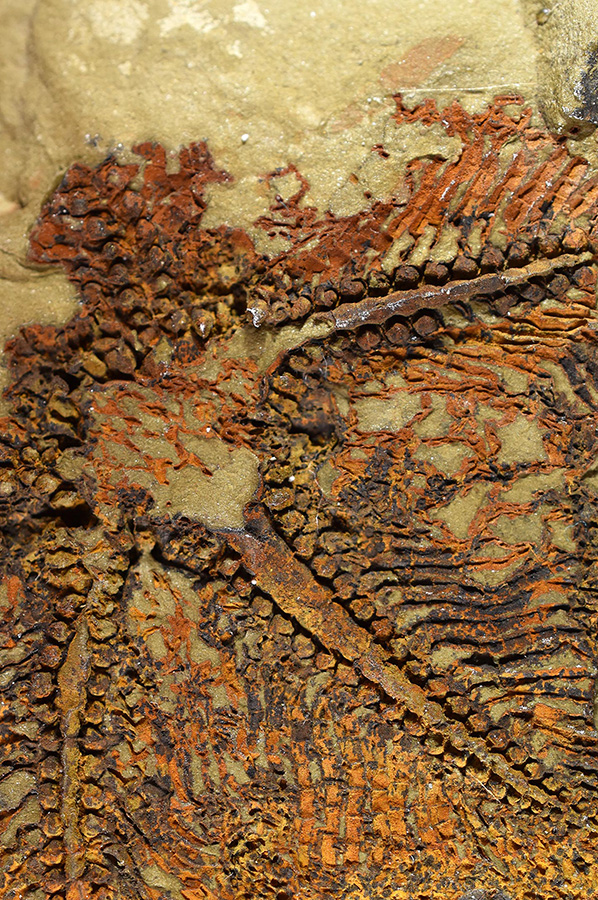
Cantabrigiaster fezouataensis: Evolution in Action Revealed by Stunning New Starfish-Like Fossil

Sunday, January 31, 2021

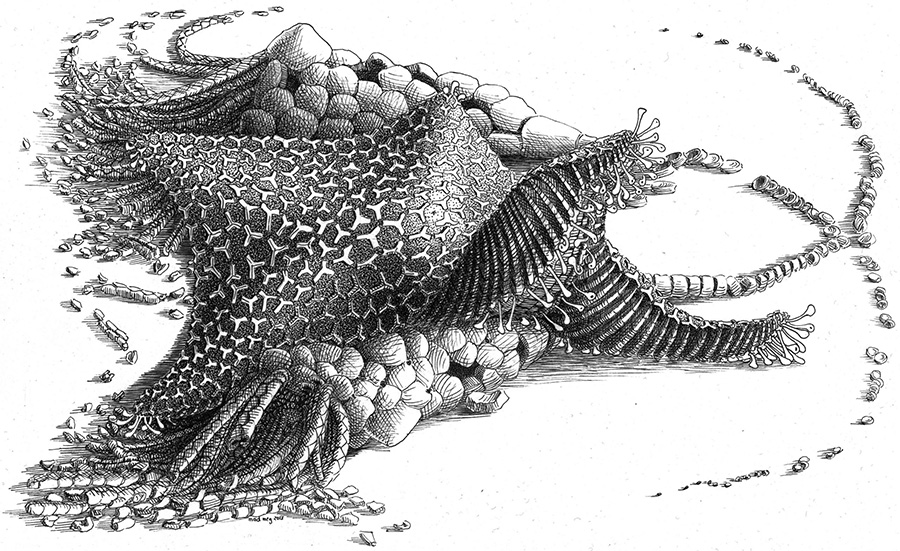
Cantabrigiaster fezouataensis from the Lower Ordovician (Tremadocian) Fezouata Shale, Zagora Morocco. Credit: Collections of the Claude Bernard University Lyon 1

Researchers from the University of Cambridge have discovered a fossil of the earliest starfish-like animal, which helps us understand the origins of the nimble-armed creature.

The prototype starfish, which has features in common with both sea lilies and modern-day starfish, is a missing link for scientists trying to piece together its early evolutionary history.

The exceptionally preserved fossil, named Cantabrigiaster fezouataensis, was discovered in Morocco’s Anti-Atlas mountain range. Its intricate design – with feathery arms akin to a lacework – has been frozen in time for roughly 480 million years.

The new species is unusual because it doesn’t have many of the key features of its contemporary relatives, lacking roughly 60% of a modern starfish’s body plan.

The fossil’s features are instead a hybrid between those of a starfish and a sea lily or crinoid — not a plant but a wavy-armed filter feeder which fixes itself to the seabed via a cylindrical ‘stem’.

The discovery, reported in Biology Letters, captures the early evolutionary steps of the animal at a time in Earth’s history when life suddenly expanded, a period known as the Ordovician Biodiversification Event.

Reconstruction of Cantabrigiaster fezouataensis by Madmeg. Credit: Madmeg

The find also means scientists can now use the new find as a template to work out how it evolved from this more basic form to the complexity of their contemporaries.

“Finding this missing link to their ancestors is incredibly exciting. If you went back in time and put your head under the sea in the Ordovician then you wouldn’t recognize any of the marine organisms — except the starfish, they are one of the first modern animals,” said lead author Dr Aaron Hunter, a visiting postdoctoral researcher in the Department of Earth Sciences.

Modern starfish and brittle stars are part of a family of spiny-skinned animals called the echinoderms which, although they don’t have a backbone, are one of the closest group of animals to vertebrates. Crinoids, and otherworldly creatures like the sea urchins and sea cucumbers are all echinoderms.

The origin of starfish has eluded scientists for decades. But the new species is so well preserved that its body can finally be mapped in detail and its evolution understood. “The level of detail in the fossil is amazing – its structure is so complex that it took us a while to unravel its significance,” said Hunter.

It was Hunter’s work on both living and fossil echinoderms that helped him spot its hybrid features. “I was looking at a modern crinoid in one of the collections at the Western Australian Museum and I realized the arms looked really familiar, they reminded me of this unusual fossil that I had found years earlier in Morocco but had found difficult to work with,” he said.

Fezouata in Morocco is something of a holy grail for paleontologists — the new fossil is just one of the many remarkably well preserved soft-bodied animals uncovered from the site.

Hunter and co-author Dr. Javier Ortega-Hernández, who was previously based at Cambridge’s Department of Zoology and is now based at Harvard University, named the species Cantabrigiaster in honor of the long history of echinoderm research at their respective institutions.

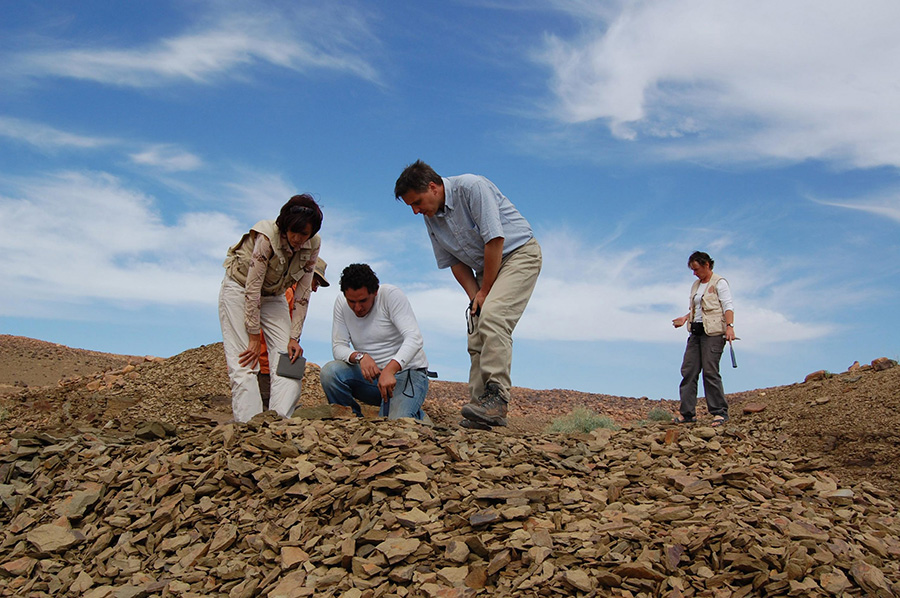
The Fezouata fossil site in Morocco, where Cantabrigiaster fezouataensis was uncovered. Credit: University of Cambridge

Hunter and Ortega-Hernández examined their new species alongside a catalog of hundreds of starfish-like animals. They indexed all of their body structures and features, building a road map of the echinoderm skeleton which they could use to assess how Cantabrigiaster was related to other family members.

Modern echinoderms come in many shapes and sizes, so it can be difficult to work out how they are related to one another. The new analysis, which uses extra-axial theory – a biology model usually only applied to living species – meant that Hunter and Ortega-Hernández could identify similarities and differences between the body plan of modern echinoderms and then figure out how each family member was linked to their Cambrian ancestors.

They found that only the key or axial part of the body, the food groove – which funnels food along each of the starfish’s arms – was present in Cantabrigiaster. Everything outside this, the extra-axial body parts, were added later.

The authors plan to expand their work in search of early echinoderms. “One thing we hope to answer in the future is why starfish developed their five arms,” said Hunter. “It seems to be a stable shape for them to adopt – but we don’t yet know why. We still need to keep searching for the fossil that gives us that particular connection, but by going right back to the early ancestors like Cantabrigiaster we are getting closer to that answer.”

Reference: “A new somasteroid from the Fezouata Lagerstätte in Morocco and the Early Ordovician origin of Asterozoa” by Aaron W. Hunter and Javier Ortega-Hernández, 20 January 2021, Biology Letters.
DOI: 10.1098/rsbl.2020.0809

Source: https://scitechdaily.com/

Why the Legacy of ‘Jurassic Park’ Roars to Life in ‘Camp Cretaceous’

Sunday, January 31, 2021

For five films across almost three decades, the Jurassic Park franchise has told stories of greedy men attempting to play god, messing with beings they can’t control, and getting shredded to pieces because of it. With the animated series Jurassic World Camp Cretaceous, Netflix and Dreamworks Animation try to shake things up by making the dinosaurs the stars of the show.

Where the movies primarily focus on giving the human actors (and their A-list actors) character arcs that involve them getting way over their heads and fighting against rich capitalists, Season 2 of Camp Cretaceous has made its character arcs all about their relationships with the dinosaurs. The new season picks up right after the events of Jurassic World, with the park abandoned and the dinosaurs running wild. Free from the captivity of live-action, the animated show is placing a much bigger focus than the films do on how the dinosaurs behave now that they’re in the wild, as the first season already did. Sure, there is still a lot of running away, which is inevitable when dealing with hungry, prehistoric beasts, but the show spends a lot more time pointing out just how big of a scientific breakthrough it is for these kids to see the animals without any interference, culminating in the introduction of the watering hole.

In episode three, titled “The Watering Hole,” as the kids find supplies for their new camp, they come across a watering hole full of dinosaurs of all shapes and sizes. Like the 2016 Jungle Book remake, the show seems to introduce the idea of a “water truce” — that both carnivores and herbivores would make a truce in order to drink water in peace (or at least go in large enough groups that the carnivores wouldn’t try to feed). It’s a beautiful scene and the closest the show — or any of the new movies — gets to replicating the sense of awe and wonder from the first time we see a dinosaur in the original film.

Since 1997, this franchise has tried to replicate the blockbuster success of the original by giving us thrilling chase scenes and bigger and scarier dinosaurs, but what they all forget, or seem unable to replicate, is that initial Spielberg Face moment of absolute astonishment at seeing prehistoric animals brought to life — arguably because audiences themselves can no longer be surprised in the same way by the same thing twice. But Camp Cretaceous gets pretty darn close by making the audience realize they have never seen the dinosaurs as wildlife before, but as theme park rides, and then sets out to make the audience see the dinosaurs as actual animals.

While the scene of the watering hole is full of wonder and admiration for the natural beauty of seeing fauna in the wild, the scene quickly brings it down to Earth when one of the kids, Darius (Paul-Mikél Williams), shares that Dr. Alan Grant (from the first and third films) already had theorized that predators and prey could have been able to coexist if the right conditions were met. With that comment, the show brings back the science-first approach to the dinosaurs from the very first film. Later in the episode, another character notes that a stegosaurus is shedding its plate as if it were deer.

Camp Cretaceous also takes the opportunity to show previously unseen areas of the park. In the second episode, the kids come across a veterinary area with dinosaurs still in cages. The kids immediately think of releasing them, until they see a pair of predators and start having second thoughts. Do they release all of the dinosaurs and get forced to run away and risk their lives again? Do they leave the predators to die only to save the herbivores? If the previous five movies made one thing clear, it’s that the carnivore dinosaurs will not hesitate in killing you, no matter how big or small they are. But now that the dinosaurs are the ones in danger, how would you react? The Lost World and Fallen Kingdom dabble in messages of preservation as their villains clearly want to exploit the animals beyond simply seeing them in a huge park, but once again the focus was more on the “you shouldn’t keep these dangerous animals in closed spaces where they can get free and eat people” rather than “these are animals, period, and they should not be left to die alone.” That distinction is Camp Cretaceous’ bread and butter.

Even when the real villains of the season show themselves, they present a direct threat to the dinosaurs themselves, rather than the humans; they’re a pair of big game hunters hoping to make away with as many exotic dinosaurs as they can. Though this is a show for kids, Camp Cretaceous doesn’t shy away from portraying the deaths of dinosaurs, and it’s made to be even more emotionally devastating and shocking than any character death in the franchise. It helps that animation is a medium in which both humans and dinosaurs look like they’re made the same way. There’s no CGI barrier or even an animatronic barrier that takes away from an emotional connection with the dinosaurs, because they look as real or fake as the humans do. This also allows the show to give a lot more screen time to the dinosaurs than the movies do, where the cost of animating and designing the dinosaur is a lot more expensive.

The result is a show that actually manages to capture the feeling of the original Jurassic Park, while bringing the dinosaurs to the forefront of the story. Now that the franchise is preparing for Season 3, its final installment, we’ll have to see whether Camp Cretaceous finds a way to make a meaningful impact on the franchise at large, or if it will wind up looking more like a mosquito trapped in amber.

Source: https://observer.com/

4-Year-Old Discovers Impressive Dinosaur Footprint on Wales Beach

Saturday, January 30, 2021

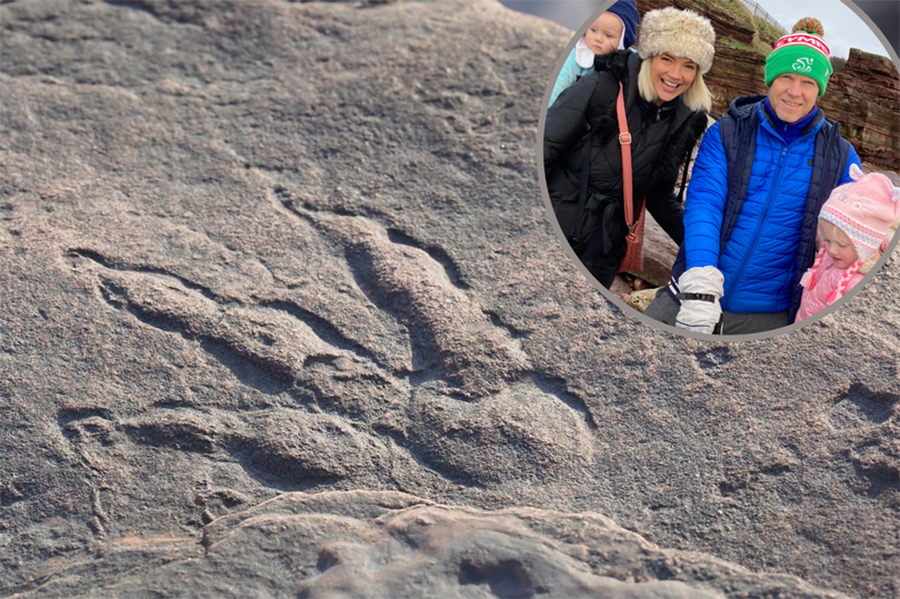
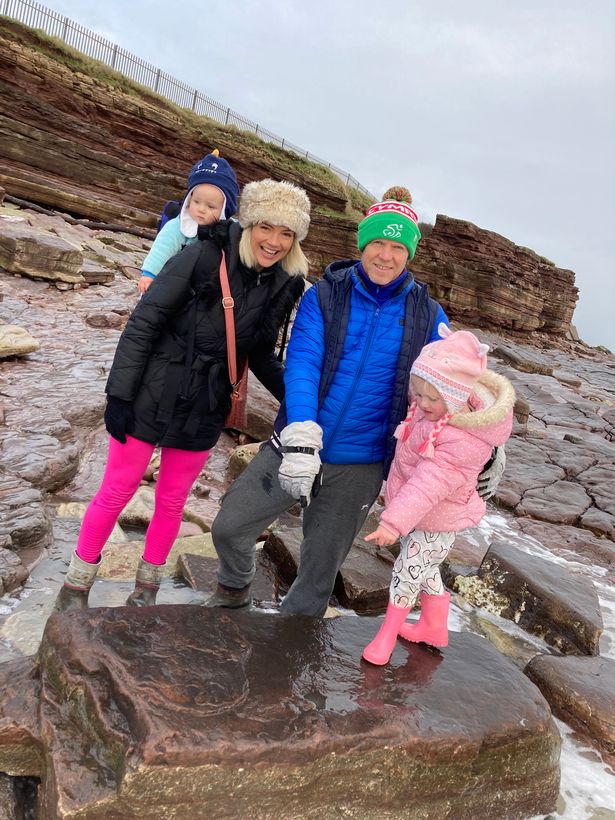
Lilly Wilder, 4, found this perfect 215-million-year-old dinosaur footprint in Barry. She's pictured with her father Richard and mum Sally

“The finest impression of a 215-million-year-old dinosaur print found in Britain in a decade”

A four-year-old girl has stunned paleontologists after finding an “internationally important” dinosaur footprint on a trip to the supermarket.

Lily Wilder was walking along the coast between Barry and Sully with her father Richard when she spotted what experts from Archaeology Cymru are calling “the finest impression of a 215 million-year-old dinosaur print found in Britain in a decade”.

The perfect print, which her family initially thought may have been created by an artist, was left by a small bipedal dinosaur. Experts call this type of print a Grallator, although it is impossible to identify the type of dinosaur that left it.

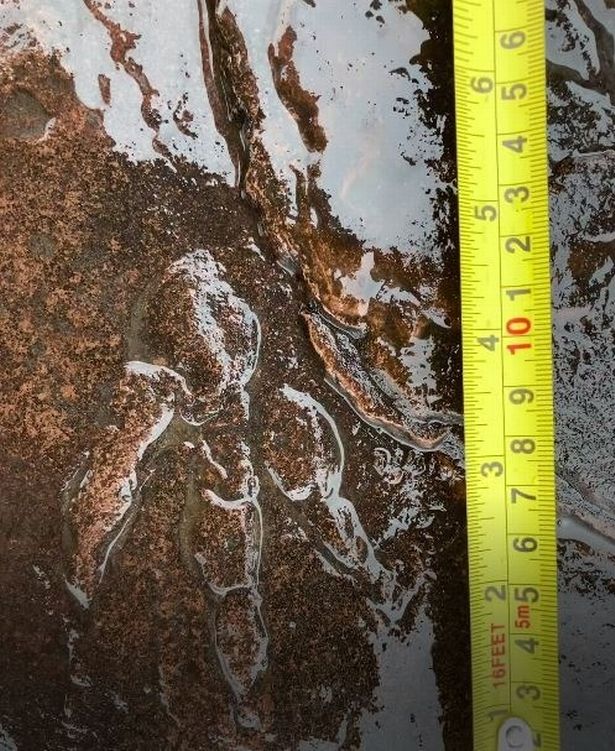
The print itself is just over 10cm long and is likely to have been made by a dinosaur that stood about 75cm tall and 2.5m long. It would have been a slender animal which walked on its two hind feet and actively hunted other small animals and insects.

Lily Wilder with her mum Sally and dad Richard and the dinosaur footprint she found on Bendricks Bay Barry

“We weren’t even sure it was real. I was imagining an artist had gone down and scratched it out, but I knew dinosaur footprints had been found along that piece of coast before so I just thought I’d ask some people,” said Lily’s mother, Sally Wilder.

“I found this fossil identification page on Facebook and I posted it on there and people went a bit crazy.

“It’s all been so exciting, discovering that it’s actually what they thought it was.”

The print was found on Saturday in The Bendricks, a stretch of coastline between Barry and Sully which has been known to be of paleontological importance.

The National Museum, Cardiff, and Karl-James Langford from Archeology Cymru were put in touch with the Wilder family. On Wednesday the museum retrieved the print from the large rock it was found in and the piece is now at the museum.

“It’s so perfect and absolutely pristine, it’s a wonderful piece.” said Karl-James Langford from Archeology Cyrmu.

“I would say it’s internationally important and that is why the museum took it straight away. This is how important it is. I would say it’s the best dinosaur footprint found in the UK in the past 10 years.”

The footprint as it was found by Lilly Wilder, 4

Lily’s interest in dinosaurs has been ignited after finding the footprint and her family are helping her make the most of it.

“Recently we bought her some dinosaur toys so she’s been playing obsessively with dinosaurs all week,” said mum Sally.

What’s amazing is, if her name goes down as the finder in the museum, it could be her grandchildren going to visit that in the museum one day, and for years and years and generations to come, which is quite amazing.”

National Museum of Wales Palaeontology curator Cindy Howells was notified of the find and has described it as the best specimen ever found on this beach.

The museum said special permission had to be sought from Natural Resources Wales (NRW) to legally remove it.

Ms Howells said: “This fossilised dinosaur footprint from 220 million years ago is one of the best-preserved examples from anywhere in the UK and will really aid palaeontologists to get a better idea about how these early dinosaurs walked. Its acquisition by the museum is mainly thanks to Lily and her family who first spotted it."

Ben Evans from British Institute for Geological Conservation called it an "amazing specimen".

He said: This beach is a site of special scientific interest and while we encourage people to visit and use it responsibly, collection of rocks, minerals and fossils from this site is not permitted."

A spokesman from the National Museum in Cardiff said similar footprints in the USA are known to have been made by the dinosaur Coelophysis which does not occur in the UK.

Source: www.walesonline.co.uk/

Camp Cretaceous Finally Makes The T-Rex The Villain Again

Saturday, January 30, 2021

Jurassic World spin-off Camp Cretaceous was met with mixed reviews, but the show managed to make the T-Rex into the star of the series once again.

Netflix’s Jurassic World spinoff Camp Cretaceous has been met with mixed reviews, but the show has managed to make Jurassic Park’s original main attraction, the T-Rex, the star of the series once again. Released in September 2020, the first season of Jurassic World: Camp Cretaceous saw a set of mismatched teens stranded in the titular doomed theme park and scrambling to survive as they faced down attacks from countless prehistoric threats.

Despite its much-criticized character design, Jurassic World: Camp Cretaceous won over many of its initially harsh critics with its quick-paced action, likable characters, and a solid voice cast including The Goldbergs star Sean Giambrone and Babysitter 2: Killer Queen standout Jenny Ortega. And one element fans and reviewers both agreed on was the downbeat but exciting ending that saw the young survivors stranded in Jurassic World, despite their attempts to escape.

Jurassic World: Camp Cretaceous season 2 just arrived and the animated series can be commended for bringing one beloved aspect of the original Jurassic Park movie series back into focus. The Jurassic World films have recently opted to sideline the legendary original Jurassic Park monster, the T-Rex, in favor of new, genetically engineered monsters like the Indominus Rex and Indoraptor. In contrast, Camp Cretaceous season 2 brings the formidable monster back, returning to the atmosphere of the original films by making the T-Rex more of a star and reminding viewers that the franchise doesn’t need a new villain to conjure up scares and thrills.

Ironically, the first Jurassic World movie made a point of criticizing its human characters for attempting to replace the T-Rex, with Bryce Dallas Howard’s initially cold, profit-driven Claire paying a high price for failing to question the creation of the Indominus Rex. Chris Pratt’s heroic Owen may note in-movie that the T-Rex was more than scary enough for a new generation of kids without requiring genetic experimentation, but Jurassic World itself nonetheless centered the Indominus Rex as its primary villain, and the sequel upped the ante considerably by bringing in the Indoraptor, another fictional genetic experiment that was stronger, smarter, and more lethal than the T-Rex.

Camp Cretaceous, in comparison, has wisely used its second season in service of reinstating the T-Rex as the most ferocious force in the Jurassic Park universe. It’s a canny decision by the small screen adaptation of the Jurassic World series, whose limited budget and quicker turnaround time make it hard to beat the Jurassic World movies in terms of viewer immersion. While the lower-budget, more self-contained action of Camp Cretaceous may not be able to pull off ambitious set-pieces like Jurassic World: Fallen Kingdom’s sequel-hook ending, the Netflix show can remind viewers of the more modest (and still plenty scary) appeal of the original Jurassic Park trilogy as embodied by its beloved villain, the still-terrifying T-Rex.

Source: https://screenrant.com/
Jurassic World Camp Cretaceous Season 3: What to Expect

Friday, January 29, 2021

The lore of Jurassic World Camp Cretaceous shows no signs of slowing down. Here is what we hope to see from season 3, including whatever E750 is.

The second season of the animated series Jurassic World Camp Cretaceous, released on Netflix on Jan. 22, answered a lot of lingering questions from season one. But another cliffhanger ending has left fans roaring for more.

With a whole island to explore and a few years of blank timeline between Jurassic World and Fallen Kingdom, the creative team has a lot of elements to play around with. What do we think we’ll see if Netflix spares no expense and gives us a third season?

Escape

As de facto team leader Darius declares this season, they aren’t waiting for rescue any more; the campers are going to find a way off the island by themselves. And they have proven they have what it takes, having constructed every kid‘s dream treehouse in the rubble of Camp Cretaceous. They built every kid’s dream treehouse, a multi-level affair with a shower and slides; surely they can build a raft to get them out to the boat big game hunter Tiff was escaping on when she was killed by a pair of Baryonyx.

And a rescue still may be coming. In the beginning of the season, the kids activated an emergency beacon, and somebody received it. Combined with the resources and influential friends Kenji’s dad likely has access to, it would be hard to believe there isn’t somebody out there trying to reach these kids. Maybe camp counselors Dave and Roxy, whom we haven’t seen since the end of season one?

Will Hap Return?

Hap, the gruff and scarred guide hired by big game hunters Mitch and Tiff, sacrificed himself to save the kids from a trio of pursuing dinosaurs in episode six. But neither of us nor the kids actually saw him die. I’m not saying it’s likely he’s alive, but I wouldn’t say it’s impossible. The show has already brought back Ben, a character the others assumed was dead. And Hap did seem awfully suspicious about the innocuous looking master keycard Brooklynn had, despite it being very unlikely he had ever seen one before.

Unless he had been to the island before, or knew someone who had. Hap is probably gone, but the number one fictional character survival tip is often “have an overabundance of unexplained backstory,” and season two definitely hints at him having that.

What Will Happen to Bumpy?

It’s time to talk about the asymmetrical Ankylosaurus in the room. Bumpy, a hatchling from season one who has grown into a beautiful armored tank and Ben’s constant companion, has a very distinctive appearance. One would think it would be easy to recognize her if she was in Fallen Kingdom, but none of the ankylosaurs in the movie seem to be her.

Assuming the kids escape the island, it’s not likely they would take her with them. As much as Bumpy is part of the family, she is a dinosaur and she belongs in the wild, which will probably lead to a tearful goodbye from everyone involved, Ben in particular. After that, her absence from Fallen Kingdom doesn’t seem to bode well for her fate. But this is still a children’s show, and some characters are just too cute to go extinct. I’m not sure how, I’m not sure where, but Bumpy will survive.

What is E750?

E750 is the designation given to a mysterious experiment housed in a cryogenics facility deep within the tunnels under the park. Brooklynn spends much of season two investigating the code name, first seen in Dr. Henry Wu’s laboratory in season one, where it was labeled “Clinical trials.” At the very end of the second season finale, thanks to electrical malfunctions, E750, whatever it is, wakes up.

While Jurassic World: Dominion director Colin Trevorow has stated that the third movie in the trilogy will not feature any hybrids, there are at least two years between season two of Camp Cretaceous and Fallen Kingdom, which is the next time we see anyone visit Isla Nublar. Plenty of time for an as of yet unseen hybrid to terrorize the campers before meeting its fate at the jaws of the mosasaur or the bottom of a cliff.

It could also be another Indominus rex. After all, the one that kickstarted the Jurassic World incident had a sibling. She killed and ate the other one soon after hatching, but the phrase “Clinical trials” implies something medical. Maybe trying to regrow an entire dinosaur from the parts left over after Indy’s dinner? It’s not that far fetched. Whatever E750 is and whatever DNA was used to fill in the gaps, it helped her survive being frozen. Why not a little regeneration?

The Camp Fam

At its heart, Camp Cretaceous isn’t about dinosaurs trying to eat people. It’s about family. Dinosaur families trying to eat people, sure, but mostly the found family Sammy has dubbed the “camp fam.” Comprised of six teenagers and one dinosaur who likely never would have been friends if not for the Jurassic World incident thrusting them together, the camp fam has already grown and changed because of the friendships developed on the island. Kenji learning the value of work ethic, Yaz learning to take it easy, Ben learning that you can still love hand sanitizer while being a badass.

As they continue trying to survive and escape, each teenager will have to discover who they truly are and want to be. Some fans are hoping this will include romance, especially noting Yaz’s apparent crush on Sammy, but whether it’s romantic or platonic, the love is strong in this camp fam. Whatever future seasons have in store, one thing is easy to predict: as long as they have each other, the kids will be alright.

Source: www.denofgeek.com/

Paleontologists Find 635-Million-Year-Old Land Fungus-Like Fossils

Friday, January 29, 2021

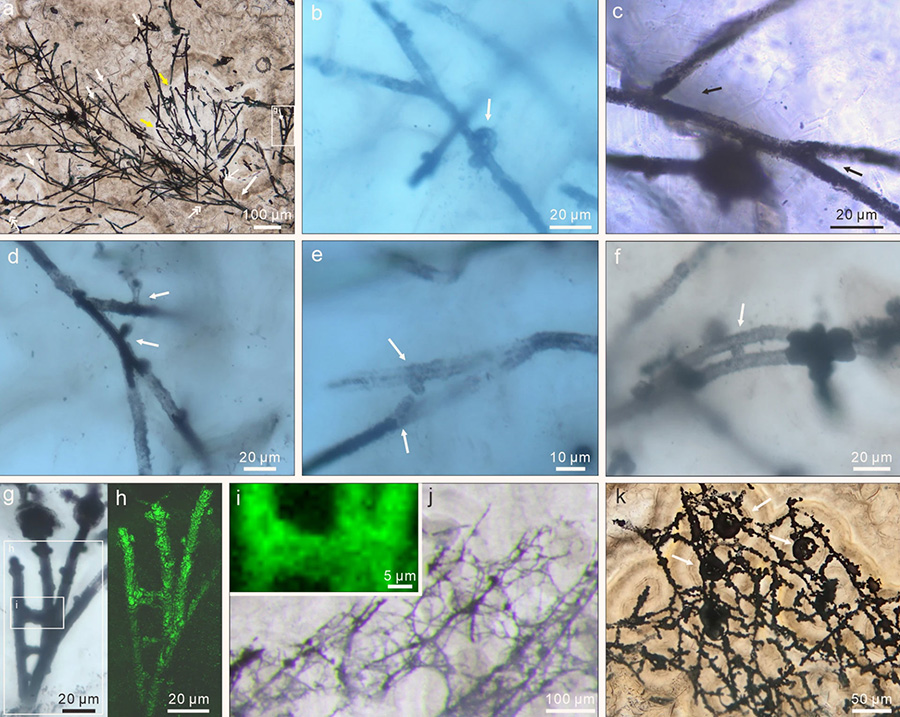
The 635-million-year-old fungus-like filamentous microfossils from the Doushantuo Formation in China. Image credit: Andrew Czaja, University of Cincinnati.

The 635-million-year-old pyritized fungus-like microfossils found in the Ediacaran-period Doushantuo Formation in China provide direct fossil evidence for the colonization of land by fungi.

The Ediacaran-period fungus-like fossils were found in small cavities within well-studied sedimentary dolostone rocks of the Doushantuo Formation at Weng’an, South China.

“It was an accidental discovery. At that moment, we realized that this could be the fossil that scientists have been looking for a long time,” said Tian Gan, a Ph.D. student at the Virginia Tech.

“If our interpretation is correct, it will be helpful for understanding the paleoclimate change and early life evolution.”

The Doushantuo microfossils are pyritized but contain trace amount of organic matter.

They include branching filaments of two morphological types and associated hollow spheres.

The filaments are hundreds of microns in length at the minimum, and can be straight, curved, or bent.

The team’s analysis indicates that they likely represent fungal microorganisms that colonized karstic environments sometime between 635 and 632 million years ago.

They may have played a role in catalyzing atmospheric oxygenation and biospheric evolution in the aftermath of the catastrophic ‘snowball Earth’ event.

Micrographs of the 635-million-year-old fungus filaments and associated spheres: (a) aggregate of filaments associated with small spheres; filaments are embedded in and sometimes cut by chalcedony botryoids (yellow arrows); note branching filaments (white arrows), ladder-like branching systems (uppermost and rightmost white arrows), and small spheres (double-headed white arrows); (b-d) filaments with multiple orders of branching (e.g., arrows in c); note short lateral branches (arrows in b and d) and small sphere (lower central in c); (e) branching filaments with two short, secondary lateral branches (arrows) approaching toward each other; (f) branching system (arrow); (g) magnification of central right in (a), showing ladder-like branching system and two small spheres coaxially aligned with filaments; (h) micrograph corresponding to larger box in (g); (i) Raman map of pyrite, corresponding to smaller box in (g); (j, k) anastomosed networks of filaments; arrows in (k) denote associated larger spheres. Image credit: Gan et al., doi: 10.1038/s41467-021-20975-1.

“About 635 million years ago, when the Ediacaran period began, our planet was recovering from the Cryogenian global glaciation,” the researchers said.

“At that time, ocean surfaces were frozen to a depth of more than a kilometer and it was an incredibly harsh environment for virtually any living organism, except for some microscopic life that managed to thrive.”

“Scientists have long wondered how life ever returned to normalcy and how the biosphere was able to grow larger and more complex than ever before.”

“With this new fossil in hand, we are certain that these microscopic, low profile cave dwellers played numerous roles in the reconditioning of the terrestrial environment in the Ediacaran time.”

Although previous evidence stated that terrestrial plants and fungi formed a symbiotic relationship around 400 million years ago, the team’s discovery recalibrates the timeline of when these two kingdoms colonized the land.

“The question used to be: ‘Were there fungi in the terrestrial realm before the rise of terrestrial plants?’,” said Professor Shuhai Xiao, also from the Virginia Tech.

“And I think our study suggests yes. Our fungus-like fossil is 240 million years older than the previous record. This is, thus far, the oldest record of terrestrial fungi.”

The discovery is reported in a paper in the journal Nature Communications.

_____

T. Gan et al. 2021. Cryptic terrestrial fungus-like fossils of the early Ediacaran Period. Nat Commun 12, 641; doi: 10.1038/s41467-021-20975-1

Source: www.sci-news.com/

Jurassic World Camp Cretaceous Fan Makes a Hyper-Realistic T-Rex Cake

Thursday, January 28, 2021

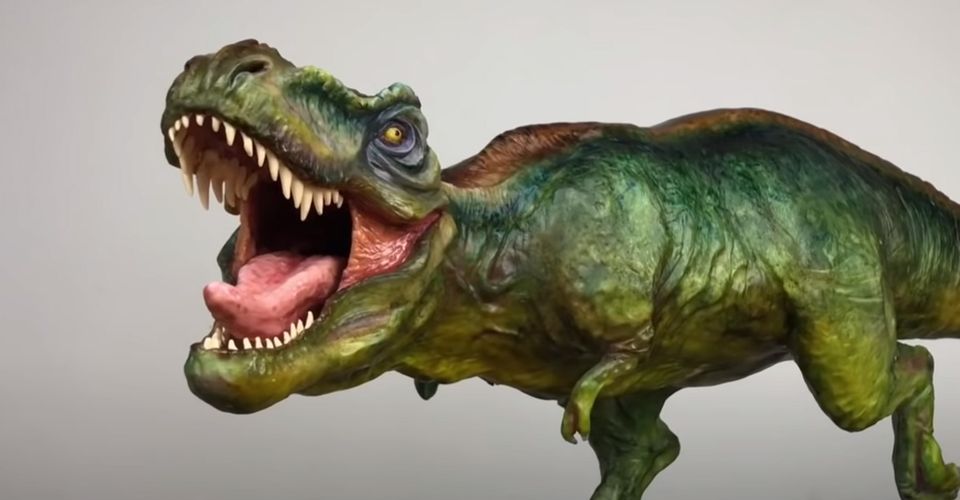
A Jurassic World: Camp Cretaceous fan has created a hyper realistic cake rendition of one Jurassic Park's most iconic characters, the T-Rex.

An enterprising Jurassic World: Camp Cretaceous fan has made a hyper-realistic looking T-Rex cake. As the most recent spin-off from the famed Jurassic Park franchise, Netflix’s Camp Cretaceous takes an animated look at Isla Nublar and the six teens who find themselves trapped there with a substantial cast of dinosaurs.

Because it’s an animated series, Camp Cretaceous doesn’t offer quite the same degree of intensity as the films do, but fans have generally taken to it regardless. However, it could definitely be argued that because it’s animated, Camp Cretaceous can actually do more with its characters and raise the stakes higher than a live-action film could. One example of this is the T-Rex, a creature that has long since come to symbolize everything that Jurassic Park is. Camp Cretaceous has kept the threat of the T-Rex high, and the famed dinosaur’s involvement in the series has been significant so far. For fans, Camp Cretaceous offers one of the best methods for seeing and learning about Isla Nublar’s diverse dinosaur inhabitants.

Yet no matter how many different varieties of dinosaurs that the franchise introduces, it seems that many fans will always prefer the classic T-Rex. Aside from being something of a franchise staple, the T-Rex has also been a part of Jurassic Park merchandise since the beginning. The internet is just one place where an abundance of fan art and homages to the prehistoric monster are prevalent. The latest nod to the T-Rex comes from YouTube channel Sideserf Cake Studio. The T-Rex cake was inspired by Camp Cretaceous and the process of creating something tasty looking from such a fearsome creature can be seen below:

The inside of the T-Rex is made up of confetti cake, something that doesn’t exactly scream “lethal dinosaur” but was chosen for its contrast, or “dino on the outside, party on the inside” as Sideserf states. While working with white modeling chocolate and green buttercream icing, Sideserf reveals that she used Camp Cretaceous as a reference for the T-Rex, thanks to the program’s realistic usage of animation on its dinosaurs. As any fan of the series will likely agree, the animation is indeed one of Camp Cretaceous’ strongest points. There’s a huge amount of detail in Sideserf’s cake, and while the video itself comes in under ten minutes in length, the entire process of building the edible T-Rex certainly didn’t.

At present, fans of Jurassic World: Camp Cretaceous are eagerly awaiting the third season of the series, which isn’t set to arrive until June 2022. Unfortunately, not everyone has the opportunity to chow down on a T-Rex cake between now and then, but that doesn’t stop Sideserf’s creation from being a perfect representation of one of Jurassic Park’s most frightening and beloved characters.

Source: https://screenrant.com/
Jurassic World: Camp Cretaceous Wastes Its Biggest Cameo

Thursday, January 28, 2021

Season 2 of Jurassic World: Camp Cretaceous wastes its biggest cameo by not having a key dinosaur interact with the kids.

In Season 1 of Jurassic World: Camp Cretaceous, many wondered if they would see Owen's favorite velociraptor, Blue, make an appearance as the park went haywire. Unfortunately, she only appeared in minor cameos, ones that didn't add much to her character.

And for those that hoped Blue would play a bigger role in the second season, well, there's even more disappointing news because she's wasted once again.

Obviously, Blue is used as an Easter egg that is meant to service fans who love seeing her in the films. However, given that she is in her natural environment and has shown a knack for helping humans, it would have felt organic to see her interacting with the kids, even if it was just in one episode. Instead, Blue's nothing more than furniture, leaving her appearance feeling cheap and gratuitous.

Blue is first seen roaming in the underground circuit that Dr. Wu was using for experiments and illegal transportation. The second shot of her comes when she's wandering innocently around the abandoned park, surely wondering why Owen and Claire abandoned her. The final one has Blue at the watering hole where all the dinosaurs drink and coexist, sipping water from the pond.

The kids never get a chance to interact with Blue, which is unfortunate because Darius, a dino expert, keeps taking notes for when he meets Dr. Alan Grant (Sam Neill) someday. It would have been great to have him interact with Blue and see just how intelligent and willing some dinos can be. On top of that, given that there are creatures there posing a threat, Blue could have saved them from the likes of the T-Rex or the Carnotaurus, Toro, at some point. After all, in the films, a lot of focus is on Owen and less so on the raptor.

Blue also has a similar kindred spirit to Darius and would fit right in, especially since they went around freeing dinosaurs from their pens during Season 2. This created a nice opportunity for them to have Blue defend other innocent dinosaurs from predators, which would have proven once again that raptors have more to them than just being wild hunters. Sadly, fans will just have to wait until Jurassic World: Dominion for more of Blue.

Jurassic World: Camp Cretaceous is executive produced by Steven Spielberg, Frank Marshall, Colin Trevorrow, Scott Kreamer and Lane Lueras, with Zack Stentz serving as a consulting producer. Seasons 1 and 2 are currently available to stream on Netflix.

Source: www.cbr.com/

Jurassic Park: John Hammond's 10 Most Memorable Quotes From The Movies

Thursday, January 28, 2021

John Hammond was an eccentric character in the Jurassic Park movies who always had a memorable quote locked and loaded.

John Hammond is one of the most underrated characters in the beloved Jurassic Park franchise, but in reality, he's the linchpin of the entire series. It was his over-the-top ambition and vision that inspired him to create the world's most spectacular theme park, even if it fell apart before day one. To Hammond, Jurassic Park wasn't just a spectacle he could share with the world - it was his ticket to self-fulfillment.

Hammond's vision was matched only by his delusions, a fact that became clear when his project spun out of control and caused numerous deaths. Yet, for all his arrogance and bluster, he was a central figure in the Jurassic Park story. The following is a list of his most iconic and memorable quotes from the films; each one a window into the mind of a mad scientist with the best of intentions, and the worst foresight imaginable.

10 - "I Bring Scientists, YOU Bring A Rock Star!"

Hammond's intention was to soothe investor fears about a theme park involving real-life dinosaurs by inviting a group of distinguished experts to give it a green-light before it opened. That meant dealing with people who would inevitably question the wisdom and ethics of creating such a place.

One of these individuals was, of course, the eccentric Ian Malcolm. A self-described "chaotician," Malcolm believed that the spontaneity of life meant it could never be fully controlled through any means known to man. This went double for his personality when he started flirting openly with Ellie Sattler, prompting Hammond to sum Malcolm up with this quote.

9 - "In Forty-Eight Hours, I'LL Be Accepting YOUR Apologies."

Donald Gennaro joined the tour at Jurassic Park as the eyes and ears of Hammond's investors, none of whom were particularly pleased with an accident that led to the grisly death of a worker. Jurassic Park had potential, but it was still a hot potato.

When Gennaro told Hammond that he had 48 hours to settle their fears or else the park would be shut down, Hammond responded with amusement. He fired back with this quip which demonstrated the level of arrogance and overconfidence that would lead to its eventual downfall.

8 - "Welcome...To Jurassic Park!"

Few of Hammond's quotes are as iconic and memorable as this one. In 1993, audiences were unprepared for Steven Spielberg's wondrous spectacle of realistic dinosaurs in a sci-fi film, and he wanted to milk the moment for everything it was worth. It all led up to that memorable and emotional scene where Hammond brings his guests out into a field and puts them face-to-face with a real-life Brachiosaur.

What follows is a scene that made moviegoers choke up as the camera swept along the countryside to reveal a diverse dinosaur ecosystem right before their very eyes. Combined with John Williams' gorgeous orchestral theme, Hammond let loose with this quote that set the tone for the adventure that was to come.

7 - "Spared No Expense!"

Throughout the film, John Hammond uses this habitual term several times as a means to openly brag about the quality of the park. After all, he had plunked plenty of investor money down, not to mention his own in an attempt to make Jurassic Park the single-greatest wonder the world had ever seen.

This phrase encompassed everything from transport and technologies, to the ice cream served in the local restaurant. It would also come back to haunt him near the end when he realized that all the money in the world was incapable of holding back the awesome force he had unleashed.

6 - "I Don't Believe It! I Don't Believe It. You're Meant To Come Down Here And Defend Me Against These Characters, And The Only One I've Got On MY Side Is The Blood-Sucking Lawyer!"

After their minds were blown with the impossible reality that dinosaurs lived once more, Hammond's guests began voicing their concerns. The sheer audacity and gall of genetically engineering multiple extinct species of primeval animals and caging them within the confines of a 20th century theme park was overwhelming.

While some like Ian Malcolm outwardly chastised Hammond for his lack of humility, others like Ellie Sattler and Alan Grant expressed uncertainty and doubt regarding what to expect from this new creation. Hammond was beside himself with shock, uttering this quote to Genarro, who saw nothing but dollar signs in his eyes.

5 - "Dennis! Our Lives Are In Your Hands, And You Have Butterfingers?"

Dennis Nedry would prove to be the instrument of Jurassic Park's downfall. Hammond saw fit to go against his better judgment by keeping him employed, despite his poor attitude and untrustworthy nature. As a coder, Nedry had few peers, which is probably why Hammond believed he was necessary to ensure the park's operation.

When several security-related glitches began popping up on the day of the tour, Hammond chastised Nedry with this quote which acted as foreshadowing for the catastrophe that was to come. Nedry would betray Hammond and attempt to cash in on his work, only to die horrifically in the jaws of a Dilophosaurus in one of the most iconic moments of the film.

4 - "I Really Hate That Man."

The initial guest tour of Jurassic Park's famous creatures didn't go so well. Several creatures refused to show themselves, which was a major let-down for almost everyone on the tour. Ian Malcolm wasted no opportunity to bring this to Hammond's attention by speaking into the camera inside his SUV.

A frustrated and disappointed Hammond sat in the main control room, trying his best to ignore Malcolm's infuriating attitude. When Malcolm began shouting "Hello," and breathing on the lens in comedic fashion, Hammond mewled this defeated line.

3 - "Creation Is An Act Of Sheer Will! Next Time It'll Be Flawless!"

Hammond was a man blinded by ambition and personal arrogance. He had the best of intentions, but his desire to give something amazing to the world had turned him into a borderline megalomaniac. When Jurassic Park fell and the dinosaurs began terrorizing the island, Hammond remained in the clutches of denial.

Eventually, his arrogance sparked Ellie Sattler's anger when he uttered this quote to her. Shocked at his level of denial, she tore into him by reminding him that people were dying at the same time as he was planning the next retrofit. Hammond was forced to come to grips with the notion that his idea of control was not only delusional, but dangerous.

2 - "You Were Right And I Was Wrong. There! Did You Ever Expect To Hear Me Say Such A Thing?"

The events of the first Jurassic Park instilled some much-needed humility in John Hammond by the time the iconic second chapter was released. When his health began to decay, Hammond realized that he was in danger of being remembered as a man who played God, and lost. As such, he was forced to wake up and change his tune regarding his own creation.

The first step in this journey was to admit he was wrong to none other than Ian Malcolm. It's safe to say the two did not share a friendly relationship on the best of days, which must have made this absolutely excruciating for Hammond.

1 - "These Creatures Require Our Absence To Survive, Not Our Help. And If We Could Only Step Aside And Trust In Nature, Life Will Find A Way."

One of John Hammond's final acts in his life was to work hard to protect the vulnerable ecosystem that had developed on Isla Sorna, the so-called "Site B" where much of Jurassic Park's genetic work took place. Without human intervention, the dinosaurs were flourishing on their own, and they needed no outside help to continue.

This inspirational quote not only pertains to the fictional dinosaurs of Jurassic Park, but to all species of life on our planet. Human intervention is inevitable, but by limiting it, while simultaneously learning new ways to co-exist, life will always find a way to survive, and thrive.

Source: https://screenrant.com/
Pages