nandi's blog

Sam Neill Compares Jurassic World: Dominion To 'Summer Camp'

Wednesday, February 10, 2021

Jurassic World: Dominion is a significant entry in the fan-favorite film series for a few reasons. It’ll bring the Jurassic Park franchise to an even six films, and it’ll bring the Jurassic World trilogy to an explosive end. The film will also mark the returns of franchise veterans Sam Neill, Laura Dern and Jeff Goldblum, who are all reprising their famous roles. The trio probably expected things to be different when they returned after so many years but probably didn’t predict that production would be affected by a pandemic. Despite the changes brought on about by it, Neill still compares the experience to “summer camp” and considers doing the project a privilege.

Jurassic World: Dominion was the first major film to return to production in the midst of the COVID-19 pandemic, and the set had to be tailored to suit the circumstances. Despite the alterations, Sam Neill humorously refers to it as a mix of “rehab,” “summer camp” and “Easter break,” and he actually believes he and his colleagues benefited from the experience:

It was somewhere between rehab, summer camp and Easter break. We were compulsorily in each other’s company and much richer for it. If we were shooting in L.A., we’d go off to our different caves every night, but we got to know each other so much better… Hopefully, there’ll be thousands of massive cinemas ready for it because it’s a big film for big audiences.

Sam Neill has certainly found the bright spot in the unusual situation he and his collaborators were faced with. And based on social media posts from the actor, he and his castmates did spend plenty of time together. There are actually a number of posts that feature Neill and co-star Jeff Goldblum singing together. So it’s pretty clear the cast was close while working on Jurassic World: Dominion.

One of the unfortunate side effects of the ongoing COVID-19 pandemic is that a lot of people have been without jobs as a result. With this, Sam Neill further told Variety that he feels fortunate that he was still able to work last year:

I never felt less than privileged to be in work last year. So many people haven’t had a sniff of a job for over a year and I can imagine how frightfully depressing that is and how much anxiety it must induce.

When faced with circumstances that aren’t exactly ideal, it’s sometimes easy to forget that there are others who are experiencing greater hardship than you. But this definitely doesn’t appear to be the case for Sam Neill. Based on his comments, it sounds like his Jurassic World: Dominion experience is one he’ll treasure for years to come. And I, for one, am looking forward to seeing results of his work on the big screen.

Jurassic World: Dominion is scheduled to open in theaters on June 10, 2022.

Source: www.cinemablend.com/

Prehistoric Pigments: How Melanin Shaped Avian and Mammalian Evolution

Wednesday, February 10, 2021

(Photo : Photo by Marcio Nascimento from Pexels)

Paleontology has helped unearth some of the mysteries of the past. We know now how species sounded eons ago, how dinosaurs cared for their young, and many more. But one question that remains unsolved is, what color ancients beasts were? For years paleontologists were unable to provide a definitive answer mostly because fossils rarely preserve pigments or color patterns.

In recent years, however, breakthroughs have helped dig up clues on pigments found in animals' feathers, hair, and skin. On the other hand, melanin has been found inside some animals prompting the question, what is their function inside the body?

In a new study, scientists discover the changes in melanin function over the course of millions of years, including why melanin made its way into mammal hairs and bird feathers.

Fossilized Melanin

In the 1980s, paleontologists studied a 47-million-year-old fossil and identified a microscopic sausage structure that resembles bacteria on today's decaying animal carcasses. For decades, similar structures found in vertebrate fossils were interpreted as fossilized remains of decaying bacteria. However, that wasn't the case.

In 2008, researcher Jakob Vinther recognized that the bacteria-like structures were in fact similar to melanosomes--pigments of melanin produced in cells that impart color tissues like hair, skin, and feathers.

The findings published in the Royal Society Publishing paved the way for studies of fossilized melanin that yielded dramatic reconstructions of colors of ancient birds, early fishlike vertebrates, fossilized mice, and even feathered dinosaurs.

Over the past decade, studies of coloration gave a glimpse into ancient animal behavior and feather evolution. Together with research on the chemistry and structure of fossilized melanosomes, experiments with simulations of fossil formation, scientists now have a better understanding of fossil records of melanin and melanosomes.

Underneath the Skin

Most studies assume that fossil melanosomes came from outside tissues such as hair, feathers, or skin. However, a study in 2018 on modern frogs showed that melanin could be found inside the body, in their spleen, lungs, and liver.

One study showed that some animals had more internal melanin than in their skin, which was found to occur in some mammals, birds, and reptiles.

There is however, a difference between melanosomes from the skin and those found inside the body.

In a new study published in the journal Cell, researchers analyzed modern animals and fossils to model the evolution of melanin and its underlying function. The study reveals that a major transition in melanin evolution coincided with the evolution of warm-blooded lifestyles.

In warm-blooded vertebrates, most melanin occurs in feathers and hair, unlike their cold-blooded counterparts that mostly occur internally. 

Melanin provides key advantages such as color production, antioxidant function, metal regulation, tissue strengthening, and protection from sunlight. However, producing and storing melanin in the body generates toxins that can damage both tissue and DNA.

When mammals and birds evolved hair and feathers, melanin was relocated to these dead tissues. This allowed them to protect their bodies from damage while still allowing melanin to fulfill its key roles. Avian and mammalian species evolved more sophisticated immune systems that simply didn't have a place for melanin inside the body.

Source: www.sciencetimes.com/

Study: First Flowering Plants Appeared in Jurassic Period or Even Earlier

Wednesday, February 10, 2021

Valviloculus pleristaminis, a species of fossil angiosperm found in 99-million-year-old amber from Myanmar. Image credit: Poinar, Jr. et al., doi: 10.17348/jbrit.v14.i2.1014.

Flowering plants (angiosperms) are the most diverse of all land plants, becoming abundant in the Cretaceous period (145 to 66 million years ago) and achieving dominance in the Cenozoic (66 million years ago-present). However, the exact timing of their origin remains a controversial topic. To resolve this discrepancy, a team of paleontologists from Europe and China estimated the ages of angiosperm families on the basis of the fossil record and their living diversity. Their results, published in the journal Nature Ecology & Evolution, support Charles Darwin’s hypothesis of a rapid Cretaceous diversification of angiosperms and indicate that several families originated in the Jurassic, strongly rejecting a Cretaceous origin for the group.

Ubiquitous across terrestrial and aquatic systems, angiosperms are the most diverse group of land plants on Earth today.

Fossil evidence indicates that angiosperms and their system group, gymnosperms, had already diverged by the Late Carboniferous epoch (306.2 million years ago).

The earliest-known fossil evidence of crown angiosperms dates to the Early Cretaceous epoch (135 million years ago), but the true time of their origin remains debated.

The sudden appearance of crown angiosperm fossils, apparently without forebears displaying evidence of the gradual assembly of the angiosperm body plan, was considered ‘an abominable mystery’ by Charles Darwin and his contemporaries.

“A diverse group of flowering plants had been living for a very long time shadowed by ferns and gymnosperms, which were dominating ancient ecosystems,” said Dr. Daniele Silvestro, a researcher at the University of Fribourg, the Swiss Institute of Bioinformatics, the University of Gothenburg, and the Gothenburg Global Biodiversity Centre.

“This reminds me of how modern mammals lived for a long time laying low in the age of dinosaurs, before becoming a dominant component of modern faunas.”

“While we do not expect our study to put an end to the debate about angiosperm origin, it does provide a strong motivation for what some consider a hunt for the snark — a Jurassic flowering plant,” added Professor Philip Donoghue, a researcher at the University of Bristol.

“Rather than a mythical artifact of genome-based analyses, Jurassic angiosperms are an expectation of our interpretation of the fossil record.”

The team’s conclusions are based on complex modeling using a large global database of fossil occurrences, which the team compiled from more than 700 publications.

These records, amounting to more than 15,000, included members of many groups of plants including representatives of palms, orchids, sunflowers, and peas.

“Scientific debate has long been polarized between paleontologists who estimate the antiquity of angiosperms based on the age of the oldest fossils, versus molecular biologists who use this information to calibrate molecular evolution to geologic time,” said Dr. Christine Bacon, a researcher at the University of Gothenburg and the Gothenburg Global Biodiversity Centre.

“Our study shows that these views are too simplistic; the fossil record has to be interpreted.”

“A literal reading of the fossil record cannot be used to estimate realistically the time of origin of a group. Instead, we had to develop new mathematical models and use computer simulations to solve this problem in a robust way.”

“Understanding when flowering plants went from being an insignificant group into becoming the cornerstone of most terrestrial ecosystems shows us that nature is dynamic,” said Professor Alexandre Antonelli, a researcher at the University of Gothenburg, the Gothenburg Global Biodiversity Centre, the Royal Botanic Gardens, Kew, and the University of Oxford.

“The devastating human impact on climate and biodiversity could mean that the successful species in the future will be very different to the ones we are accustomed to now.”

_____

D. Silvestro et al. Fossil data support a pre-Cretaceous origin of flowering plants. Nat Ecol Evol, published online January 28, 2021; doi: 10.1038/s41559-020-01387-8

Source: www.sci-news.com/

Dinosaur Relatives Reveal Clues About Early Animal Locomotion

Tuesday, February 9, 2021

In a new study led by Brown University, researchers have taken a new approach to reconstruct the movement of dinosaurs and other extinct animals. The experts developed a 3D imaging technique to investigate the mechanics of early animal locomotion. 

“By combining the latest technology for studying joint motion with unprecedented amounts of joint pose data, we’ve uncovered surprising new information that will improve reconstructions of locomotion in extinct animals,” said study lead author Armita Manafzadeh.

According to Manafzadeh, improving the ability for scientists to study animal biomechanics is important because knowledge of how individual species moved can advance our understanding of major evolutionary transformations. 

For example, advanced knowledge of early animal movement could help us understand how vertebrates came out of the water and started walking on land, how they went from walking on four legs to two, and how flight evolved, explained Manafzadeh.

Current research on early animal locomotion relies on the process of elimination. The fossilized bones are assembled together and manipulated to determine a joint’s mobility, which includes all of the poses that could have been executed without the bones bumping into each other. 

However, this traditional approach only identifies the way in which animals did not move, and requires additional resources to investigate how they actually did move. 

For the current investigation, Manafzadeh teamed up with Professor Stephen M. Gatesy and Dr. Robert Kambic to determine whether joint mobility data may be more informative than what has been assumed.

Using XROMM 3D imaging technology, the researchers analyzed the locomotion of two living animals that are closely related to extinct dinosaurs –  the helmeted guineafowl and the American alligator.

The team captured X-ray videos of the animals walking and having their limbs manipulated, conducted CT scans of the skeletons, and measured nearly 600,000 joint poses. 

The researchers found consistent patterns that linked joint mobility to specific poses used by the dinosaur relatives during locomotion. The experts explained that these patterns can now be applied to reconstruct the movements of extinct animals with more accuracy.

“Thanks to these pose usage patterns, it turns out that what dinosaurs couldn’t do with their joints will give us some big clues about how they walked,” said Manafzadeh. “What’s more, this information has been right in front of us, hidden within the data that paleontologists are already collecting. We just didn’t know how to appreciate it yet.”

According to the researchers, their confidence in the patterns is supported by the hundreds of thousands of joint poses they have been able to measure and analyze. “We can now pursue future research to ask how broad those patterns are, how they evolved and why,” said Professor Gatesy.

The study is published in the Proceedings of the National Academy of Sciences

Source: www.earth.com/

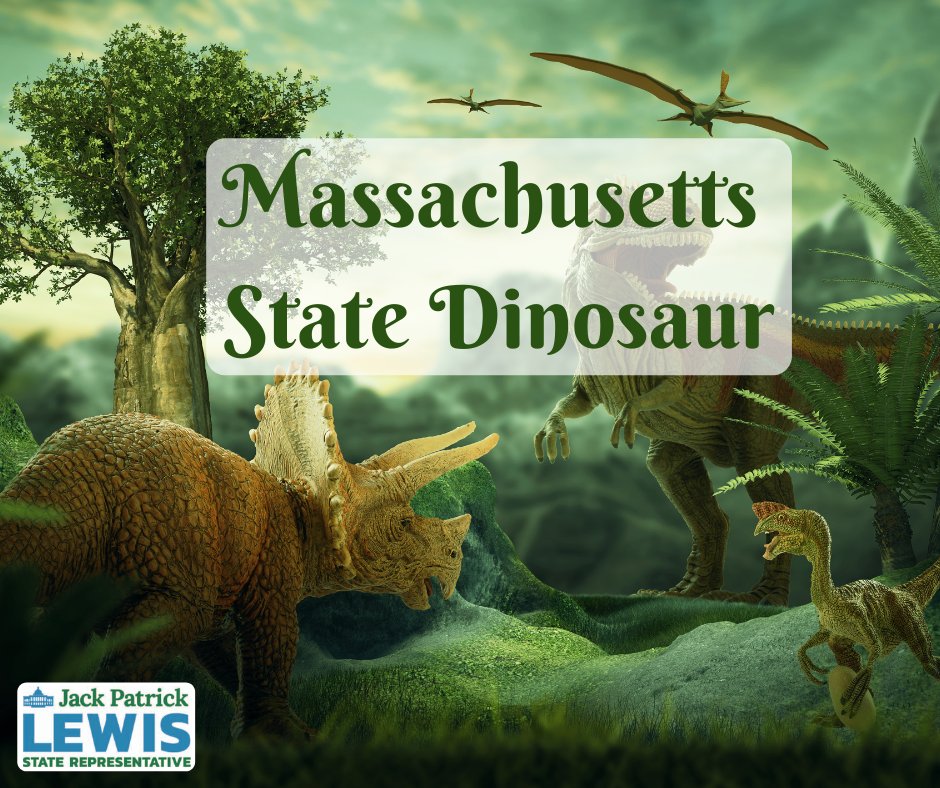
Massachusetts Chooses an Official State Dinosaur

Wednesday, February 10, 2021

Representative Jack P. Lewis' campaign for the Massachusetts state dinosaur

State Representative Jack P. Lewis, in partnership with the Boston Museum of Science and other members of the scientific community, announced at a virtual press conference on Feb. 4 that the dinosaur Podokesaurus holyokensis — also known as the swift-footed lizard of Holyoke — will be proposed to lawmakers as the official Massachusetts state dinosaur. Representative Lewis’s drive to establish a state dinosaur had gained massive support from educators, scientists, and citizens alike after Lewis announced the idea over Twitter.

For Representative Lewis, a primary goal of the state dinosaur project was to improve civic engagement and STEM education for Massachusetts citizens of all ages. Lewis said, “I was looking for an in, a bill that would allow me to have accessible conversations about the legislative process with both four-year-olds and 14-year-olds, in addition to 40-year-olds.” Lewis said that he hopes to educate citizens on the legislative process through this light-hearted bill. “Voting for which dinosaur you like is sort of like voting for which of the candidates on the ballot you want.”

Lewis spoke of his surprise and excitement over the widespread support for the project. “Paleontologists and people who worked in natural history museums, scientists, were all eager to explore what this project could mean for their own field of study,” Lewis said, “including everything from women in science and women in STEM, to better investments and support for STEM fields, to better understanding, prehistoric Massachusetts and the change of culture over time.”

Massachusetts citizens voted on two dinosaurs: Podokesaurus holyokensis and Anchisaurus polyzelus, which were described by Professor of Geology at Mount Holyoke College Mark McMenamin and Amherst College's Alfred Venne who works at the Beneski Museum. The two dinosaurs were the top — and only — picks for state dinosaur because, as Professor McMenamin said, “[they’re] the only game in town! There’s only two dinosaur skeletons that are known from the Hartford basin.” The winning dinosaur, Podokesaurus holyokensis, was around 3-6 ft long and 90 lbs, and could run roughly 9-12 mph.

Professor McMenamin went on to describe the winning dinosaur’s history, explaining that Podokesaurus holyokensis was discovered near Mount Holyoke, MA, and was significant as the first non-bird dinosaur to be named and described by a woman: Mignon Talbot. Talbot was a paleontologist and professor of geology from Holyoke College. Talbot’s discovery “was an incredible coup,” McMenamin said, “For a woman geoscientist to be publishing, in the American Journal of Science, a Yale University periodical in 1911—that was unheard of… It sort of shattered the glass ceiling for dinosaur science.”

Professor McMenamin is also looking forward to educating others on paleontology in Massachusetts, saying that having a state dinosaur is “exciting for science education, because it emphasizes that the remains of these creatures are right below our feet.” McMenamin hopes that this renewed excitement about paleontology will prompt the discovery of more dinosaur fossils in Massachusetts, saying, “I'm certain that there are many more dinosaurs to be discovered here in Massachusetts, particularly the Hartford basin… So I want people to have their eyes open. There's much more to be found and described here.”

Professor McMenamin isn’t the only person excited about the prospect of a state dinosaur with such a rich and inspiring history. The educator Nancy Stenberg showed the event to her students via virtual classroom and encouraged her students to vote on the state dinosaur. Stenberg used the dinosaur poll as a way to educate her students about science and the history of Massachusetts: “dinosaurs are something that the kids study in elementary school, and they also study the state… It fits in in so many different ways.” Stenberg also can’t wait to teach her students about Mignon Talbot, saying, “it's going to make a great follow-up lesson in March, for Women's History Month, because she's quite something!”

The MA state dinosaur facebook page and Museum of Science will continue posting updates about the progression of the state dinosaur bills (numbered HD 1392 and SD 698).

Source: www.thecrimson.com/

Jurassic World: 10 Worst Decisions Made By The Movie's Main Characters

Monday, February 8, 2021

Jurassic World was an exciting film but a lot of what happened boiled down to some truly awful decisions made by the main characters in the story.

After the Jurassic Park franchise had fizzled out following the third movie, it was brought back from extinction thanks to the massively successful Jurassic World. The movie took place years after the events of the first movie and fulfilled the promise of opening the theme park filled with dinosaurs which inevitably goes terribly wrong.

The movie was hugely successful financially, but many fans felt it fell far short of the original. The most common complaint was in regards to the characters who were not only uninteresting but also made many some really poor decisions throughout the movie, making it hard to fully root for them.

10 - Building A Theme Park Near An Active Volcano

The best aspect of Jurassic World is seeing the park open in all of its glory with various attractions and rides to entertain the guests. But there is a fatal flaw about the park that is not introduced until the next movie but was certainly still an issue in this movie.

In Jurassic World: Fallen Kingdom, it is revealed that the remaining dinosaurs are at risk because a volcano on the island is about to blow and kill everything. The thing is, volcanos do not spring up overnight which means they must have known about it when making the park and didn't think that far ahead.

9 - Wearing High Heels

One of the main characters in the movie is Claire Dearing who is the work-obsessed manager of the park who must become the hero to save the lives of the visitors and her nephews. However, the thing most people remember about the character is her terrible choice of footwear.

Being the workaholic corporate person that she is, Claire spends the entire movie running about the jungle from dangerous dinosaurs while wearing high heels. Not since John McClane in Die Hard has a hero been so careless with their selection of footwear.

8 - Going Off The Trail

It would not be a Jurassic Park movie unless there were some innocent kids in danger. But it was a lot harder to be scared for two boys in this movie, Gray and Zach, because they put themselves in danger with an obviously terrible decision.

While exploring the park inside one of the futuristic Gyrospheres, they find an open gate the warns guests not to go past. But being the adventurous young lads that they are, they ignore the signs and venture on. Never once did they think if that gate might have been for their own protection against the man-eating dinos.

7 - Flying A Helicopter

With John Hammond dead long before the movie begins, the new man in charge is Simon Masrani. He has a mix of the corporate greed that has always been the villain of this franchise but also shares the wonder and excitement of the park that Hammond had.

When the deadly Indominus Rex escapes and begins wreaking havoc, Masrani decides to take matters into his own hands, piloting a helicopter to chase down the rampaging beast. However, since Masrani is still learning to fly, he ends up crashing, freeing more dinosaurs, and dying in the process.

6 - Weaponizing Raptors

One of the most controversial aspects of Jurassic World was the use of the raptors. While these killer dinos were the terrifying villains of the first movie, this new version has the badass hero Owen Grady training and befriending them.

For some reason, the military seems to think that trained raptors would be the ultimate weapon and enlists them to take on the Indominus Rex. Predictably, the raptors turn on the army guys and attack them.

5 - Letting The T-Rex Out

At the end of the movie, most of the island has been evacuated except for the heroes who find themselves trapped by the Indominus Rex. Knowing that they cannot defeat the monster on their own, they decide to release the original T-Rex so it can battle the Indominus Rex.

While this works out as they planned, the success of the plan was purely coincidental. There was no guarantee that the T-Rex would be interested in fighting the Indominus Rex and nothing to stop it from trying to eat the humans as well.

4 - Going Inside The Paddock

Since the Indominus Rex is the newest attraction and not yet ready for the public, it is kept inside its own special paddock. However, there is considerable alarm when a scan of the paddock shows no heat signature from the dinosaur.

Thinking it had escaped, Owen and several other workers go inside the paddock to investigate when they are quickly attacked by the Indominus Rex who was hiding. Since it is a massive dinosaur, there were probably better ways to search for it besides going inside.

3 - Not Evacuating The Park Earlier

After killing most of the workers inside the paddock, the Indominus Rex flees into the jungle meaning the most powerful and dangerous dinosaur in the park is out in the open. Instead of evacuating the island, they send in a team to capture the beast.

After the dinosaur kills the team, they still decide the financial impact of closing the island would be too devastating so they remain open until the visitors begin getting attacked, leading to a lot more casualties.

2 - Making The Indominus Rex

As this list makes very clear, a lot of trouble would have been avoided if the park owners had simply not decided to create their own super dinosaur. The idea that the world would get sick of seeing regular old dinosaurs after a few decades is ridiculous and a special dinosaur is totally unnecessary.

Not only did they not need to cook up a dinosaur in a lab, but they really shouldn't have given it the ability to camouflage and communicate with raptors.

1 - Opening The Park

As fun as it is to see the park up and running in this movie, the whole concept of Jurassic World is hard to take. The idea of filling a park with dinosaurs and then having people come to visit that park seems like a bad idea to begin with but that point was confirmed with the events of the first movie.

After the park falls apart and several people are eaten, it's hard to believe anyone would get behind the idea of giving it another shot.

Source: https://screenrant.com/

Ancient Crocodiles’ Shadowy Family Tree Reveals Unexpected Twists and Turns

Sunday, February 7, 2021

Artist’s impression of Macrospondylus- an extinct fossil group of teleosauriods. Credit: Nikolay Zverkov

Scientists probing a prehistoric crocodile group’s shadowy past have discovered a timeless truth – pore over anyone’s family tree long enough, and something surprising will emerge.

Despite 300 years of research, and a recent renaissance in the study of their biological make-up, the mysterious, marauding teleosauroids have remained enduringly elusive.

Scientific understanding of this distant cousin of present-day long-snouted gharials has been hampered by a poor grasp of their evolutionary journey – until now.

Unknown species

Researchers from the University of Edinburgh have identified one previously unknown species of teleosauroid and seven of its close relatives – part of a group that dominated Jurassic coastlines 190 to 120 million years ago.

Their analysis offers tantalizing glimpses of how teleosauroids adapted to the momentous changes that occurred during the Jurassic period, as the earth’s seas experienced many changes in temperature.

“Our study just scratches the surface of teleosauroid evolution but the findings are remarkable, raising interesting questions about their behaviour and adaptability. These creatures represented some of the most successful prehistoric crocodylomorphs during the Jurassic period and there is so much more to learn about them.”

— Dr. Michela M. JohnsonStudy lead, School of GeoSciences, University of Edinburgh

The study reveals that not all teleosauroids were engaged in cut and thrust lifestyles, snapping at other reptiles and fish from the seas and swamps near the coast.

Instead, they were a complex, diverse group that were able to exploit different habitats and seek out a variety of food sources. Their physical make-up is also more diverse than was previously understood, the scientists say.

Previous research had provided insights into the origins and evolution of this fossilized croc’s whale-like relatives metriorhynchids, but less was known about teleosauroids.

500 fossils

To address this, the expert team of paleontologists examined more than 500 fossils from more than 25 institutions around the world.

Cutting edge computer software enabled the team to glean swathes of revealing data regarding their anatomical similarities and differences, by examining the entire skeleton, teeth, and bony armor, which indicated whether species were closely related or not.

This information enabled the team to create an up-to-date family tree of the teleosauroids group from which emerged two new large groups, whose anatomy, abundance, habitat, geography, and feeding styles differ from one another significantly.

The first group, teleosaurids, were more flexible in terms of their habitat and feeding. The second group known as machimosaurids – which included the fearsome turtle crushers, Lemmysuchus and Machimosaurus – were more abundant and widespread.

Curious features

Names given by the team to seven newly described fossils, found in both teleosaurids and machimosaurids, reflect a curious range of anatomical features – among them Proexochokefalos, meaning ‘large head with big tuberosities’ and Plagiophthalmosuchus, the ‘side-eyed crocodile’.

There are even hints of their diverse behavioral characteristics and unique locations – Charitomenosuchus, meaning ‘graceful crocodile’ and Andrianavoay, the ‘noble crocodile’ from Madagascar.

Researchers have named the newly discovered species, Indosinosuchus kalasinensis, after the Kalasin Province in Thailand, where the fossil – now housed in Maha Sarakham University – was found.

The recognition of I. kalasinensis shows that at least two species were living in similar freshwater habitats during the Late Jurassic – an impressive feat as teleosauroids, with the exception of Machimosaurus, were becoming rare during this time.

“The same way family trees of our own ancestors and cousins tell us about our history, this huge new family tree of teleosauroids clarifies their evolution. They were some of the most diverse and important animals in the Jurassic oceans, and would have been familiar sights along the coastlines for tens of millions of years.”
— Professor Steve Brusatte, School of GeoSciences, University of EdinburghSchool of GeoSciences, University of Edinburgh

Reference: “The phylogenetics of Teleosauroidea (Crocodylomorpha, Thalattosuchia) and implications for their ecology and evolution” by Michela M. Johnson​, Mark T. Young and Stephen L. Brusatte, 8 October 2020, PeerJ.
DOI: 10.7717/peerj.9808

The study, published in the scientific journal PeerJ, was funded by the Natural Sciences and Engineering Council of Canada, SYNTHESYS Project and Leverhulme Trust Research. The Palaeontological Association and Paleontological Society provided travel grants.

Source: https://scitechdaily.com/

Jurassic Park & World: Every Dinosaur Fight In The Franchise, Ranked

Sunday, February 7, 2021

Throughout both Jurassic Park and Jurassic World, fans experience a multitude of violent and fun dinosaur fights. Here are some of the best.

The excitement of watching powerful dinosaurs create havoc in the Jurassic Park films is an experience that moviegoers have loved for decades. The thrill of watching people flee in terror from a charging T-Rex or a lunging Velociraptor is hard to match, let alone beat. This is why the films' creators have regularly decided to up the ante by having the powerful beasts take on each other in ferocious battles.

In every Jurassic Park film, there has been at least one fight between two or more dinosaurs. These sequences are often the high points of the action in the films, and they also display the special effects teams' ability to offer audiences an incomparable experience.

7 - Velociraptor Vs. Velociraptor

Though it was brief, the in-fighting between two raptors in The Lost World added additional tension to an already gripping escape scene. At one point during the human's attempt to evade the pursuing raptors, one human character and one raptor fell off of the roof of a building, resulting in the raptor landing on top of a member of its pack. It was an accident, but that did not stop the raptor who was hit from being annoyed at the other raptor. The anger led to both raptors having it out as the human took their chance to escape.

A fight between two raptors is exciting in concept, but in execution, it was ultimately a letdown. Most of the fight was not shown. Its real purpose was to create a convenient way for the main characters to escape the situation, which would have otherwise resulted in them being killed by the raptors.

6 - Indominus Rex Vs. Ankylosaurus

The Indominus Rex's attack on the herd of Ankylosauruses in 2015's Jurassic World was the first on-screen instance of the superpredator recklessly attacking the other dinosaurs. Using its ability to camouflage itself, the Indominus Rex was able to stealthfully approach the herbivores without them noticing. Seizing the opportunity, the Indominus charged at the Ankylosauruses in an attempt to kill whatever it could sink its teeth into.

This battle, while exciting, primarily served as a quick example of the Idominus Rex's ferocity. Ankylosauruses are powerful creatures, and their backs are lined with boney armor plating. They also have club-like tails that they can use to defend themselves. But despite these protections, the Indominus was able to assert its dominance by using its strength and intelligence to flip its quarry onto its back, giving the carnivore the chance to bite down on and crush its prey's head.

5 - Carnotaurus Vs. Sinoceratops

During the portion of Jurassic World: Fallen Kingdom when both the humans and the dinosaurs fled from the volcanic eruption, Owen Grady and some other characters are cornered by an opportunistic Carnotaurus. The beast begins to slowly approach Owen, but it is distracted by a nearby Sinoceratops. Seeing the larger potential meal as a greater priority, the Carnotaurus leaves the human alone and charges the relative of the Triceratops.

The fight was reminiscent of the one between the Indominus Rex and the Ankylosaurus from the first Jurassic World, with an armored plant-eater protecting itself from the aggressive, bipedal predator. The main difference is that Carnotaurus lacked the power and intelligence that the Indominus had, so the Sinoceratops was able to successfully fend off its attacker and then flee.

4 - T-Rex Vs. Spinosaurus

When the promotional material for Jurassic Park III first revealed that a new, larger superpredator, the Spinosaurus, would be the main threat in the movie, many fans were wondering if the beast would fight a T-Rex. This question was answered before the film's midway point when the Spinosaurus, on the trail of fleeing humans, stumbles upon the feeding grounds of the rival predator.

The fight began as anyone would expect. Both titans charged at each other at full force in an attempt to take an early lead in the battle. The fight went back and forth for a moment, but the Spinosaurus was able to claim a quick and decisive victory when it managed to grab hold of the T-Rex's neck. The T-Rex was unable to resist as the Spinosaurus used its grip and weight to twist and snap the T-Rex's neck, killing it instantly.

3 - T-Rex Vs. Velociraptors

Both the T-Rex and the Velociraptors spread a lot of terror throughout the original Jurassic Park film. Each predator took multiple chances to make meals of the humans on the island while chasing them across the park. It was only a matter of time until both dinosaurs came into contact with each other.

This fight came as an absolute shock during the movie's finale. The raptors had the surviving humans cornered in the park's visitor center. But as the raptors prepared to attack, the T-Rex appeared almost out of nowhere and killed one of them. The remaining raptor attempted to fight the T-Rex, but it was no match for the much more massive beast and was soon killed.

2 - Blue Vs. Indoraptor

The battle between Blue and the genetically modified Indoraptor in Jurassic Park: Fallen Kingdom was unique among the battles in the franchise. This fight took place in a mansion located on the mainland, rather than on one of InGen's islands. These beasts were also searching for a way to escape the mansion. The only difference was that the Indoraptor was also looking for as many people as possible to kill along the way, and Blue was trying to protect the human, Owen Grady, she had imprinted on as a hatchling.

The fight between Blue and the Indoraptor took a few turns. It began in one of the mansion's bedrooms, where Owen was attempting to protect the young girl Maisie from the Indoraptor. The humans were able to escape to the roof of the mansion in the confusion, but the Indoraptor was able to fend Blue off long enough to pursue them. The fight ended when Blue took the Indoraptor by surprise by jumping on its back while it was standing on the glass dome ceiling. Both dinosaurs fell through the glass, and the Indoraptor was impaled on the fossilized skull of a Triceratops that stood beneath them.

1 - T-Rex And Blue Vs. Indominus Rex

The two-on-one fight between the T-Rex, Blue, and the vicious Indominus Rex in Jurassic World was the type of clash that fans had been dreaming of for years. The last true dinosaur battle seen in the films was the one between a T-Rex and the Spinosaurus, and it had left many fans unsatisfied. They wanted to watch their long-time favorite dinosaur win. This fight, however, more than made up for the letdown seen in the previous film.

The battle between the T-Rex and the Indominus Rex quickly proved to be a greater fight than the one from Jurassic Park III, and it was made greater still once the Velociraptor Blue joined in to help the T-Rex. The two dinosaurs were eventually able to overwhelm the Indominus, pushing to the edge of the park's massive water enclosure. From there, the massive aquatic Mosasaur made a surprise appearance when it lunged from the water to grab hold of the Indominus. With little effort, the Mosasaur dragged the Indominus back into the depths, drowning it and bringing an end to the fight.

Source: https://gamerant.com/

Jurassic World: What Dinosaur Are You Based On Your Zodiac?

Monday, February 8, 2021

The Jurassic Park/World franchise introduced viewers to many different dinosaurs along the way. But how exactly do they align with the zodiac?

It is easy to tell that many animals have their own distinct personalities. People can see how an animal's behavior differs from one species to the next and how that affects attitudes. This, in turn, makes it easy for people to regularly see themselves in their furry, feathered, or scaly friends.

But what is interesting about this is that, since they are based on real-life animals, the dinosaurs from the Jurassic Park films can be viewed in much the same way. Thanks to this comparison, people can easily match these different species of reptiles to certain zodiac signs. With some clever observation, those same people can then find the dinosaur that perfectly matches their own personalities.

12 - Virgo: Tyrannosaurus

Virgos are incredibly analytical and continually observe their surroundings and current situations. This hyper-awareness can do enough to make them tense or even agitated regularly. It can also make it hard for others to understand them.

The T-Rex matches Virgos in many ways. Due to its nature as an apex predator, T-Rex needs to be constantly and carefully searching for its next meal. And thanks to its peculiar eyesight, which can only track prey if it is moving, its undivided attention needs to be even greater than most other carnivores.

11 - Aries: Velociraptor

People with the Aries sign will always seek to be at the heart of some form of action. They have a lot of energy and a need to go at things with full force and at top speeds. They try to avoid inactivity whenever possible, which can sometimes lead to them acting aggressively.

The Velociraptor can understand the desire to keep moving. These ferocious pack hunters are fleet-footed and are always eagerly searching for the next hunt. They are one of the few dinosaurs that will hunt for sport, so their aggression is not always tied to a need to eat. Sometimes, it's just about their desire to do what they do best and to do it as often as possible.

10 - Scorpio: Triceratops

Scorpios are bold and determined, and they do not shy away from most situations. They also tend to take the lead when the opportunity arises. They can be a bit skeptical at times, but they are generally good at dealing with others.

Much like a Scorpio, a Triceratops is a steadfast creature that doesn't back down. It has the strength and will to find a way to best whatever it is facing, especially potential predators. If threatened, it will take the initiative in a fight to defend itself. Outside of the occasional upset stomach, there isn't much that can make the Triceratops surrender.

9 - Pisces: Brachiosaurus

Pisces is among the friendliest of the personalities. People with this sign are compassionate and easy-going, and they have no issues with spending time with others and offering their help in any way. They find an unmatched level of comfort with social interaction.

Despite being so massive, the endearing Brachiosaurus is one of the most docile and pleasant dinosaurs. It can be seen grazing with any number of other species, and it isn't particularly fearful of humans, who have been able to interact with them on occasion. They are the quintessential gentle giants.

8 - Gemini: Dilophosaursus

Geminis love to let their curious minds take over so they can learn new things. They are also often of two minds about things, switching their viewpoints at times that seem almost random to other people.

No dinosaur matches them better than the Dilophosaurus. This dinosaur displays an almost d0g-like level of curiosity and playfulness when it wants to. But its mood can shift instantly if it finds something it wants to make a meal of. When this happens, the innocent attitude is quickly replaced with that of a hungry predator.

7 - Libra: Gallimimus

It's not often that anyone will encounter a Libra who is on their own. Libras love to socialize and be part of larger groups. They also try to remain as peaceful as possible and seek to avoid conflict at all costs.

To that end, a Libra could easily identify with and appreciate the Gallimimus. This bird-like creature is a herd animal that always operates in groups and hates being separated from the rest of its kind. It also prefers to run from danger, an easy objective thanks to its powerful legs and bodies built for sprinting.

6 - Cancer: Stegosaurus

People with the Cancer sign tend to operate in a state of high emotion. They are sympathetic, cautious, and above all, loyal. They don't open up easily to new people, but they show a strong amount of devotion to the people they care about.

These same traits are seen in the Stegosaurus. It is a docile and shy creature, but it has a close-knit social structure and is protective of its herd. Its attachment to the herd is even stronger when it feels the need to protect its young, as fans saw in The Lost World. When this happens, its anger flares up and creates trouble for anyone or anything that is seen as a threat.

5 - Sagittarius: Pteranodon

The best word to describe a Sagittarius is "extrovert." These people love to experience new things, love to travel, and are not hesitant about doing either. Once they decide that there is something they want to, they rarely let anything get in the way of doing it.

Curiosity, willfulness, and desire to be free are easy ways to describe a Pteranadon. This flying reptile goes about its business, does what it wishes, and travels to wherever it wants. And when it finds something it wants to investigate, such as a potential meal, it can be stubborn and won't let anything or anyone stop it from doing so.

4 - Leo: Spinosaurus

A Leo is someone who has the will to lead and do whatever they can to be at the top. They can be stubborn and arrogant at times, but their dedication allows them to dominate most aspects of their lives. These are the people who can see the mountaintop and want to be the ones standing on it.

That is how the Spinosaurus feels. The Spinosaurus is the largest and most powerful dinosaur seen in Jurassic Park III, and it is obsessed with asserting its dominance and expanding its territory. This beast sees almost every encounter with another creature as a challenge to its authority. It feels threatened by nothing though, so it enjoys every challenge that comes its way.

3 - Taurus: Ankylosaurus

Those who fall into the Taurus category are often some of the most stable and practical people around. They have a lot of common sense and stay grounded at all times. Other people can often rely on them when they need advice from someone with a good head on their shoulders.

The Ankylosaurus is almost the embodiment of the Taurus attitude. It is a dinosaur that keeps a low profile, in both the metaphorical and literal sense. It is not aggressive and keeps to itself, and it doesn't seek to stir up any needless excitement. When excitement does come its way, it relies on its instincts and defense-based abilities to endure almost anything.

2 - Capricorn: Indoraptor

Capricorns are independent thinkers that know how to take their time. They are expert planners who exercise self-control to achieve whatever it is they set their minds to. And they are highly intelligent, learning from their past experiences so they can improve in the future.

These same traits are what the Indoraptor displays for any prey that fails to understand the danger it poses. The Indoraptor knows how to watch and wait for the best time to strike. It is also able to manipulate its quarry and can lead them to make life-ending mistakes.

1 - Aquarius: Mosasaurus

An Aquarius tends to be an independent and sometimes shy individual. They take everything in and make the decisions that are best for them, regardless of any preconceived notions or prejudices. This type of person can also easily adapt to multiple situations.

This is why any Aquarius can relate well to the Mosasaurus. This aquatic reptile is a solitary predator and a careful observer. It is an impartial eater, feasting on any creature that foolishly comes in or near its territory. And once it has secured its meal, it returns to the depths to return to its much-desired seclusion.

Source: https://gamerant.com/

Jurassic Park/World: The 10 Best Scenes Featuring Velociraptors, Ranked

Saturday, February 6, 2021

The Velociraptors are one of the most iconic elements of the Jurassic Park/World franchise - and these are their best moments.

Few cinematic dinosaurs are as iconic or frightening as the dreaded Velociraptor from the Jurassic Park/World films. Although not technically Velociraptors (original author Michael Crichton lifted the name from a different dinosaur in order to sound more threatening), that didn't matter much to audiences who were thrilled to have their hearts leap out of their chests, scene after scene.

The Velociraptors have evolved as characters unto themselves since Jurassic World was released, which is why it's good to track them back from their beginnings as terrifying movie monsters in Jurassic Park. Here are their best appearances in the franchise films, ranked.

10 - Blue & The T-Rex

Blue was an attempt by the Jurassic World writers to make a hero out of a very frightening villain, and it was a good decision. This lovable hero Velociraptor proved she had the smarts and the skills necessary to make her a standout character. Though she stumbled along the way when the Indominus Rex was able to turn her pack against the humans, she made up for it by the end.

When Claire let the O.G. T-Rex out of its paddock in an attempt to pit it against the dangerous Indominus Rex, it seemed as if things were going well. However, the T-Rex was quickly outmatched by the Indominus. Before it was killed, Blue showed up on the scene to lend the T-Rex a hand, creating a tag-team that was strong enough to take the Indominus Rex down for good.

9 - The Lab Attack

Jurassic Park III put a lot of emphasis on the principal big baddie of the film - the Spinosaurus. When the action pivoted away, the writers needed a smaller-scale, yet no less terrifying foe to fill the gap. Enter the ever-reliable Velociraptors who had since fallen into their respective niche on Isla Sorna's ecosystem.

These Raptors were coordinated, territorial, and very strong. The presence of humans on the island was an excuse to kickstart the hunt all over again, and it was performed to beautiful effect when Grant and company stumble upon InGen's abandoned genetic research facility. The Velociraptor reveal is heart-pounding, as is the chase that ensues.

8 - The Table-Turning

Jurassic World introduced genetic cloning and manipulation into the story in a way that wasn't quite the same as in previous installments. In this film, the park was open, and booming with success. To maintain the enthusiasm, investors wanted new attractions to draw visitors to the park and build new business.

Enter the Indominus Rex, a hybrid of multiple dinosaur DNA pools, including Velociraptor. When the Rex broke free and rained down carnage on the park, personnel were authorized to slay it by whatever means possible. Owen Grady used his Raptor pack to track the Rex, but he didn't realize the Rex had Raptor DNA in its blood. When Blue and her Raptors recognized the Rex as the new alpha, they turned on their human counterparts in a terrifying scene of mass carnage.

7 - The Hatching

First-time Jurassic Park audiences were astonished to see what Steven Spielberg came up with on screen. The film was a riveting masterpiece that completely drowned out real life, and drew the audience in for an adventure that seemed to go on forever. One of the most magical moments of the film occurs when the overreaching and ambitious John Hammond gives his visitors a tour of the park.

He brings them behind the scenes to witness the birth of a dinosaur from an egg, which is both enchanting and emotional. As the little one breaks free from its egg, Dr. Grant asks what species it is. When he learns that he's holding a newborn Velociraptor, the entire mood of the scene shifts. It's the first full on-screen reveal of a Raptor in the franchise, and it would prove to be one of the most iconic.

6 - Baby Blue

Jurassic Park established that Velociraptors were highly intelligent and cunning pack hunters that would coordinate strategies to take down prey. While this is still a working theory, there is evidence to support it based on research done on the original Deinonychus fossils the creature is based on (Velociraptor is a different dinosaur altogether).

This intelligence is examined in Jurassic World when Owen Grady manages to forge a relationship with a Velociraptor pack led by the matriarch, Blue. Fallen Kingdom showed archival footage of Grady forming a bond with a baby Blue, with whom he develops a deep emotional bond. It's the first time Raptors are shown not just as vicious killers, but something more.

5 - Owen's Training

Jurassic World introduced new characters like Owen Grady, a handler who works primarily with Velociraptors. His training allowed him to raise a pack of Raptors from birth, and form a bond based on routines, and stimuli that kept him from being their next meal.  However, Owen was still fighting a never-ending battle against pure instinct.

The first reveal of Blue and her pack was shown in Jurassic World when a staffer accidentally falls into their paddock. As the Raptors close in to kill this unfamiliar human, Owen puts his life on the line by rushing in to stop them. He barely manages to get them to back down, proving just how dangerous his job really is.

4 - The Tall Grass

Raptors took a bit of a backseat in The Lost World in order to put twin T-Rexes at the forefront of the story, and it worked. However, the latter act needed to spice things up a bit, which is why these frightening predators were brought back. Spielberg sought to build on the terror of the Raptors from the first film by using primordial fear against the audience.

He kicked things off with a scene showing humans running through a field of tall grass which was stuffed with Velociraptors. As the predators moved in, the audience watched from a pull-back shot in sheer horror as they stayed low, and ran through the grass to snatch humans one by one.

3 - The Feeding

Sometimes, the best monster scenes are the ones where the creature isn't seen, and Spielberg recognized the value of holding back in order to build tension. In the first half of Jurassic Park, Hammond takes his guests to watch a live cow being lowered into the Raptor paddock in order to feed.

What follows is a cacophony of awful sounds and violent rustling while the unseen Raptors tear their meal to pieces. As the characters look on in terror, so too does the audience realize that soon these predators will be running around free, looking for a meal.

2 - The Clever Girl

John Hammond's game warden Robert Muldoon knew the dangers of Jurassic Park better than anyone. He wasn't particularly pleased with Hammond breeding Raptors, especially given how intelligent they were. Audiences were given an indirect crash course in Raptors when Muldoon revealed how they would test the park's security defenses for weaknesses.

If that weren't chilling in and of itself, Muldoon met his end in the jaws of the very creatures he was such an expert on. While tracking one in the brush, Hammond prepared to fire, only to forget that Raptors hunt in packs. While training his sights on his target, another emerged from the bushes beside him, and went straight for the kill.

1 - The Kitchen Scene

Jurassic Park's kitchen scene deserves top honors for being possibly the scariest, most nail-biting moment in all of cinema. The tension is almost unbearable as Lex and Tim try to shake off pursuing Velociraptors who are on the hunt. The two kids use their small size to stay out of sight, but it doesn't go according to plan.

Before they can make it out of the kitchen, they inadvertently attract the attention of the Raptors several times. Those who were old enough to remember seeing Jurassic Park in theaters during its initial release also remember the audience screaming along with the terrified children, which was an experience to say the least.

Source: https://screenrant.com/

Pages