nandi's blog

Evidence of Predation by Octopuses Pushed Back by 25 Million Years

Tuesday, February 23, 2021

Two drilled specimens of the bivalve Nymphalucina occidentalis and close-ups of drill holes. Credit: Drs. Adiel Klompmaker and Neil Landman.

New research unveiled the earliest evidence of octopus predation in the fossil record. The evidence consists of tiny holes drilled in the clams they preyed upon during the Cretaceous period about 75 million years ago.

Dr. Adiel Klompmaker, curator of Paleontology at the Alabama Museum of Natural History, and Dr. Neil Landman, curator emeritus of Fossil Invertebrates at the American Museum of Natural History, detailed their findings in a recently published paper in Biological Journal of the Linnean Society.

Octopuses from the Octopodoidea superfamily are a versatile group of marine predators comprising more than 200 species today. As these soft-bodied cephalopods do not fossilize easily because they decay rapidly, only a single body fossil species from 95 million-year-old Cretaceous rocks in Lebanon is known.

Unlike other modern cephalopods, octopodoids leave behind tiny oval-shaped drill holes in many shells of their molluscan and crustacean prey. These octopuses then inject a venom through the hole that paralyzes and relaxes the prey's muscles to facilitate consumption.

"These holes provide a great opportunity to track their presence and behavior in deep time, even though their body fossils are absent," Klompmaker said.

Such holes have been documented from the fossil record up to 50 million years ago until now.

The team's findings document the oldest recognized drill holes made by octopodoids, found in nearly 75 million-year-old bivalve shells from the Cretaceous period in South Dakota. This shows the ability of these animals to drill their prey evolved early in the evolutionary history of Octopodoidea, a remarkable 25 million years earlier than was previously known.

Klompmaker discovered the drilled shells in the collection of the American Museum of Natural History in New York in October 2018.

The octopus Muusoctopus johnsonianus at a modern cold seep off Grenada. Credit: Courtesy of Drs. Adiel Klompmaker and Neil Landman with permission of the Ocean Exploration Trust Inc.

"I could not believe what I saw initially, but after cleaning and studying the specimens carefully, later on, we became convinced that these holes are the oldest evidence of predation by octopuses," Klompmaker said. "I was not specifically searching for holes made by octopuses, so it was a great surprise. This goes to show the importance of maintaining and exploring museum collections."

The fossil bivalve specimens now stored in a museum were once living in a shallow ocean. Nearly 75 million years ago, a broad seaway covered much of North America, called the Western Interior Seaway. Most of the ocean bottom was featureless with occasional signs of life such as fish swimming by and occasional gigantic clams on the seafloor.

"However, methane bubbled up from the bottom in spots, forming rich diverse communities called methane cold seeps, with ammonites, sponges, starfish, crabs, snails, sea urchins, crinoids, clams, fish, and, as it turns out, octopus," Landman said.

Even though octopuses are commonly seen in today's cold seeps, evidence of the presence of Octopodoidea had never been found in fossil seeps. Klompmaker and Landman's research thus adds a new predator to the ecosystem of ancient cold seeps.

The team's findings also mean Octopodoidea contributed to the rise of shell-destroying predators during a revolution of predators and their prey in the Mesozoic era, 252 to 66 million years ago, called the Mesozoic Marine Revolution. During this time, predators such as marine reptiles, teleost fish, some sharks, and decapod crustaceans became more abundant and diverse, putting extra pressure on their prey. In response, prey such as gastropods and brachiopodsand ammonites fortified their shell.

Klompmaker and Landman argue more research can be done on drill holes made by Octopodoidea. Little is known about how common this type of predation was, where these octopuses lived through time, and how they behaved toward their prey.

To continue this line of research, Klompmaker worked with Alex Kittle, mollusks collection manager at the Delaware Museum of Natural History, on predation by octopuses on cowries living in Florida 2 to 3 million years ago. In another recently published paper in Palaeogeography, Palaeoclimatology, Palaeoecology, they found cowries are commonly drilled by octopuses and these predators aimed for the muscle.

"It is very possible that new evidence of predation by octopods can also be discovered in fossil shells from Alabama and other places in the world," Klompmaker said.

More information: Adiël A. Klompmaker et al. Inferring octopodoid and gastropod behavior from their Plio-Pleistocene cowrie prey (Gastropoda: Cypraeidae), Palaeogeography, Palaeoclimatology, Palaeoecology (2021). DOI: 10.1016/j.palaeo.2021.110251

Provided by University of Alabama in Tuscaloosa

Source: https://phys.org/

Cretaceous-Era Coelacanths Grew As Big As Great White Sharks

Tuesday, February 23, 2021

The ossified coelacanth lung from Morocco and its likely position as the anterior chamber in a mawsoniid coelacanth. Image credit: University of Portsmouth.

Paleontologists in Morocco have unearthed a crushed ossified lung of an enormous marine coelacanth that lived during the Late Cretaceous period, about 66 million years ago.

Coelacanths are a group of primitive deep-dwelling fish closely related to tetrapods, four-limbed vertebrates including amphibians, mammals and reptiles.

They were thought to have been extinct for 66 million years, until the accidental capture of a living specimen by a South African fisherman in 1938.

Coelacanths first appeared in the Early Devonian epoch, diversified a little in the Devonian and Carboniferous period, and attained a maximum of diversity in the Early Triassic period.

During the Cretaceous period, they are known by two families only, the Latimeriidae, which survived to the present with the genus Latimeria, and the Mawsoniidae, which went extinct at the end of the Cretaceous.

The newly-discovered specimen belongs to the latter family, and is the last record of coelacanths before their pseudo-extinction 66 million years ago.

“The thin bony plates were arranged like a barrel, but with the staves going round instead of from top to bottom,” said Professor David Martill, a paleontologist in the School of the Environment, Geography and Geosciences at the University of Portsmouth.

“Only one animal has such a structure and that is the coelacanth — we’d found a lung of this remarkable and bizarre looking fish.”

The original slab with the ossified coelacanth lung in close proximity to a series of associated, but disarticulated wing elements of a large, but indeterminate pterosaur. Image credit: University of Portsmouth.

The fossil was recovered from the uppermost Cretaceous deposits of Oued Zem in Morocco.

It had been embedded in a block of phosphate, backed with plaster and covered in a coating of lacquer, which had caused the bones to turn brown.

It was found next to a pterodactyl which proves the giant coelacanth lived in the Cretaceous period.

“The specimen is also the first record of a marine coelacanth in the Mesozoic of Morocco and the first occurrence of coelacanths in the phospahte deposits of North Africa,” the researchers said.

The large size of the lung suggests the ancient fish estimated at between 3.65 m and 5.52 m (12-18 feet) total body length — substantially larger than modern-day coelacanths, which only grow to a maximum length of 2 m (6.6 feet).

“We only had a single, albeit massive lung so our conclusions required some quite complex calculations,” Professor Martill said.

“It was astonishing to deduce that this particular fish was enormous — quite a bit longer than the length of a stand-up paddleboard and likely the largest coelacanth ever discovered.”

The study was published in the journal Cretaceous Research.

_____

Paulo M. Brito et al. 2021. A marine Late Cretaceous (Maastrichtian) coelacanth from North Africa. Cretaceous Research 122: 104768; doi: 10.1016/j.cretres.2021.104768

Source: www.sci-news.com/

Go Prehistoric With Your Kids: Watch These TV Shows About Dinosaurs

Monday, February 22, 2021

Who doesn’t love dinosaurs? These prehistoric creatures have captured the hearts of kids & adults alike since the first fossils were discovered nearly two centuries ago. Admit it, you still crave the latest dinosaur news. If you haven’t already shared these prehistoric creatures with your kids, what are you waiting for?! 

If you’re bored out of your gourd in quarantine, ran out of homeschool ideas, or just want to visit some old dino-themed favorites, we got you covered with some great dinosaur selections you can show to your kids.

Dinosaur Train

If you have small children who love dinosaurs, this PBS show is perfect to show them. This dinosaur TV show is made for the preschool set and teaches kids about natural science & paleontology. So if you’re teaching littles at home and looking for some shows to get them hooked on science, look no further! 

This show also teaches kids positive lessons. Common Sense Media told parents “the show also celebrates differences and encourages respect for others, as Buddy’s travels lead him to make many new friends whose lifestyles and appearances are very different from his”. 

Dinosaur Train even has a section on PBS Kids’ website where your little ones can play games and learn interactively about dinosaurs.

Dino Dan

Another great, educational dinosaur TV show is Dino Dan. Premiering on Canada’s TVOKids, your child can follow along with young, budding paleontologist Dan Handerson as he learns about dinosaurs and how to discover cool facts about these prehistoric creatures. One of the highest-rated episodes of this dinosaur TV show is where Dan shows viewers how scientists know if dinosaurs were warm-blooded!

Walking With Dinosaurs

If you’re in the mood for a documentary the whole family can enjoy, the BBC’s Walking With Dinosaurs is available to stream on Netflix. This dinosaur TV show uses state-of-the-art technology to bring dinos to life, bringing viewers from the Triassic to the Cretaceous period to explore the life, evolution, and extinction of these magnificent creatures. 

Jurassic World: Camp Cretaceous

In this dinosaur TV show on Netflix, several young campers become the first people to experience Jurassic Park’s latest project: a kids’ campsite on Isla Nublar. It seems like a dream come true for the new arrivals – after all, who doesn’t want to camp with dinosaurs? Also, since it’s a Jurassic Park show, what could possibly go wrong

As expected, the carnivorous dinos break out of their enclosures and chaos ensues. The campers find themselves on their own, having to use their wits & know-how to fend off the dinosaurs roaming free on Isla Nublar. 

Since it’s a kids’ show, it’s not as scary as the movies in the Jurassic Park franchise, but it’s probably best for kids seven & older.

Dinosaurs

If you’re feeling nostalgic, fire up the TV and introduce your kids to Dinosaurs, the 90s sitcom that aired on ABC from 1991 to 1994. Following a family of interspecies dinosaurs, the series tackles normal sitcom issues with a prehistoric twist. The show alludes to topical issues of the day, including environmentalism, prejudice, and saying no to drugs. 

Dinosaurs won an Emmy for outstanding art direction and has an average 97% rating on Rotten Tomatoes. “Dinosaurs, marries astonishingly expressive puppetry with genuinely funny satire of social norms, making for a forward-thinking prehistoric sitcom”, one review said. 

While it’s fun for the family, like with most primetime sitcoms, some thematic elements might be more suitable for older children. This beloved dinosaur TV show is available to screen on Disney +. 

Source: https://filmdaily.co/

Jurassic World Evolution Developer Confirms More Content in Development

Monday, February 22, 2021

Jurassic World Evolution and Zoo Tycoon developer Frontier Developments confirms that more content is coming for the dinosaur park building sim.

Despite its last piece of DLC releasing in December 2019, Jurassic World Evolution developer and Zoo Tycoon creator Frontier has confirmed that more content is coming to the dinosaur park building simulator.

Jurassic World Evolution was one of the Epic Game Store’s free December games, and it came to the Nintendo Switch for the first time as a Complete Edition before that. This fresh influx of players has renewed interest in the game and led to fans asking if there will be more content on social media.

In a surprise to many, the official social media accounts for Jurassic World Evolution responded, saying “the Jurassic World Evolution team is still hard at work,” and that a reveal of what Frontier has been working on will come “later this year.”

Whether that means more DLC or a full sequel remains to be seen. The first game released in June 2018 alongside Jurassic World: Fallen Kingdom, the second entry in the Chris Pratt and Bryce Dallas Howard-led sequel trilogy. It could be that there is a sequel coming alongside Jurassic World: Dominion, intended to be the series' sixth and final movie. Dominion was originally supposed to release this summer but was delayed to June 10, 2022 due to production issues related to COVID-19.

There is also the Jurassic World: Camp Cretaceous animated series on Netflix, which is likely to receive a third season later this year. It is possible that the Jurassic World Evolution Twitter account is teasing a DLC based on the series, which has proven to be popular among hardcore Jurassic fans. The second season of the show teases a new genetic hybrid dinosaur, which would be a perfect fit for another DLC. Though a near two-year gap between the last DLC and when this hypothetical new DLC could be announced makes a sequel sound far more likely.

As for when Frontier will reveal what it has been working on, the original Jurassic World Evolution was announced at Gamescom 2017. Since Frontier is a British studio, Gamescom 2021 could make the most sense for this reveal, and it is currently scheduled to take place from August 25 to August 29.

Jurassic World Evolution is available now for PC, PS4, Switch, and Xbox One.

Source: https://gamerant.com/

The Pandemic Has Left a Huge Cache of Dinosaur Bones Stuck in the Sahara

Tuesday, February 23, 2021

Sereno’s team collects the surface fragments of a dinosaur

In secret patches of the south-central Sahara, blankets of sand hide 20 tonnes of dinosaur bones.

There are flying reptiles. A creature that resembles an armoured dog. Eleven species yet to be identified – all with long necks. They roamed the desert when it was still green, scientists concluded, as far back as 200 million years ago.

This is one of Africa’s biggest fossil caches, a prehistoric graveyard that sparked dreams of a world-class exhibition in Niger. The rare discovery is vulnerable to looters and collapsing dunes. But excavation must wait as the nation confronts a second wave of the coronavirus on top of escalating Islamist insurgencies.

“This is our cultural identity,” said Boubé Adamou, an archaeologist at the Institute for Research in Human Sciences in the capital, Niamey, who helped uncover the haul. “But saving the living comes first.”

Niger, about twice the size of France and two-thirds desert, has long boasted dinosaur riches. Countless bones poke through the sand. Paleontologists face a sweltering trek through bandit territory to reach what researchers call the continent’s most diverse mix of extinct giants.

Throughout history, foreign explorers have garnered most of the glory for these skeletons. Even today, the nation’s dinosaurs tend to go to Europe or North America – for reasons practical and frustrating. Wealthier countries offer temperature-controlled rooms that prevent bones from crumbling. Niger’s top museum is infested with termites.

Leaders were striving to revive that cultural infrastructure before the pandemic struck. They wanted a lasting home for finds that have scattered elsewhere.

“We need to make it so that everything that has been taken from us can be returned,” said Mahamadou Ouhoumoudou, chief of staff to the president of Niger.

Local scientists teamed up with prominent University of Chicago paleontologist Paul Sereno, whose decades of expeditions in Niger have added nine species to the world’s dinosaur record.

A joint venture was born: two new museums – one in the capital, one in the desert region of Agadez. They would house Sereno’s discoveries, which are now kept at his laboratory in Chicago, as well as what the next generation of adventurers uncovers in Niger’s soil.

“The best place for priceless specimens in any country is on display,” Sereno said, speaking generally. “Everyone knows where they are. They are famous. They become treasures.”

Niger has already earmarked the land. The project – to be called NigerHeritage – is estimated to cost tens of millions of dollars. Global donors such as the World Bank expressed interest, officials said.

But plans froze when the pandemic erupted, and now 20 tonnes of bone sit in the middle of the Sahara.

Niger’s dinosaur story began with another hidden graveyard.

Sereno’s team found 20 tonnes of dinosaur bones in Niger’s Agadez region over a series of trips in 2018 and 2019. PHOTOS: THE WASHINGTON POST

In the early 1960s, prospectors from France’s atomic energy agency were digging for uranium in the Ténéré wilds when they stumbled upon something huge, bluish and stony.

The vertebral columns of a dinosaur, French paleontologist Philippe Taquet soon confirmed.

Fresh out of school at age 24, he had never embarked on a fossil expedition. Within days of joining the prospectors, though, he was dusting off a new species.

“There is a place on this Earth where, simply by hopping out of your car, you risk suddenly finding yourself nose to nose with a dinosaur,” Taquet wrote of the experience in his 1994 memoir.

The French team received government permission to dig, but no laws stopped outsiders from taking Niger’s dinosaurs until the late 1980s. Some bones landed with private collectors in the United States (US), France and Italy. Others ended up in the British Museum in London.

After he studied them in France, Taquet returned the Ténéré fossils to Niamey, where they remain in wooden crates at the National Museum.

The Frenchman’s work provided a road map for Sereno’s crew. The scientists and armed bodyguards in Land Rovers follow tips from locals to break new ground: This way for big teeth.

The scientists catalogued hundreds of bones in Agadez during a series of trips in 2018 and 2019, sweeping over roughly 1,000 miles. A man on a moped led them to a hulking spinosaurus, or “spine lizard”.

“It’s everything, everywhere in Niger,” Sereno said. “In fact, it’s too much.”

Excavating the specimens took months. They cut across geological periods: dinosaurs, mammals, even humans. One Neolithic woman still wore an ivory bangle. (The 11 new dinosaur species must be peer-reviewed before receiving names.)

Sereno’s team crafted temporary coverings for each skeleton out of plaster. They brushed sand over the top to hide them. Passersby, they hoped, would mistake anything jutting up for rocks.

It’s not unusual for paleontologists to rebury dig sites before returning with movers. The pandemic, however, has stalled that process for at least a year.

Niger has sent soldiers to guard the expanse from looters. Bandits are known to roam those parts, while extremist groups typically operate hundreds of miles south. Nomads are also keeping an eye on the dinosaurs, periodically texting Sereno with updates.

So far, no one has reported a theft or sand avalanche.

“I have my fingers crossed that the wind is on my side,” Sereno said, “and things will look the same in a year”.

Preserving dinosaurs is a hefty burden for one of the poorest countries on Earth. The pandemic makes it harder. Leaders are grappling with more-urgent matters.

Niger hit its record highs of coronavirus cases and deaths over the past two months. (The nation has recorded more than 4,656 infections and 167 fatalities since the pandemic began.)

During the same period, attacks by extremist groups surged. Islamic State fighters staged the bloodiest ambush in years on January 2, killing at least 100 people in two southwestern villages.

The number of Nigeriens who died in such violence more than doubled from 2019 to 2020, according to the Armed Conflict Location & Event Data Project. Since extremists invaded neighbouring Mali nearly a decade ago, groups loyal to al-Qaeda and the Islamic State have exploited a sense of hopelessness to grow their ranks across West Africa.

“We need education and services and jobs that support young people,” said Moulaye Hassane, who leads the violent-extremism programme at the National Center for Strategic and Security Studies in Niamey. “In that sense, tourism and dinosaurs could be great for Niger.”

Resolve for that vision is alive, if shaken, at the National Museum in Niamey.

Parts of Taquet’s early finds rest on the tile floor in crates marked “FRAGILE”. Next to them sit brooms, some rope and a toilet brush. The walls are etched with termite cracks.

“We can’t keep them like this,” said Haladou Mamane, the museum’s director.

Visitor traffic once brought in an average of USD370 a day. People posed with concrete models of dinosaurs that Sereno discovered in the 1990s: the long-necked jobaria and sail-backed suchomimus.

Now the museum is lucky to make USD20 on a Saturday.

“The coronavirus hurt us badly,” Mamane said.

On a recent afternoon, the director spoke of his concerns to Adamou, the archaeologist, whose office shares the grounds.

They spoke of Taquet’s celebrated quests and how they lured a wave of explorers from overseas. A faded map of Niger draped down the wall. Outsiders had enjoyed much acclaim after parachuting in.

“Thieves,” the director said, only half-joking.

Adamou grinned, biting his tongue. The veteran Sahara rover knows what’s still out there. On a trip with Sereno, he walked off to take a bathroom break and spotted a 10,000-year-old human skull.

Mamane and Amadou, old friends, spoke of reclaiming their national inheritance. Vaccines would come. Travel restrictions would ease. The coronavirus would wane, they hoped.

“Dinosaurs are more valuable than uranium or anything like that,” Adamou said. “They belong here.”

He could deal with the usual threats. Since bandits ambushed his caravan in 2008, the researcher hasn’t hunted for fossils without a gun.

Manageable risk. Invaluable reward. He grins at the possibility: Niger’s dinosaurs – finally
at home.

Source: https://borneobulletin.com.bn/

Here's Why People Are Saying You Shouldn't Google "What Dinosaur Has 500 Teeth?"

Monday, February 22, 2021

Practical jokes/gags have varying levels of humor, but some people mistake "hate" for "edge." There's a big difference between saying something because you're struggling with a personal topic or issue and are trying to make a great point/punchline out of that struggle, and just attempting to say something that's mean because you want to try and justify having an awful personality.

This trending internet gag — which asks folks "what dinosaur has 500 teeth?" — falls into the latter category.

The answer to "what dinosaur has 500 teeth" is a plot to try and get people to saying the N-word.

The 110 million-year-old dinosaur, Nigersaurus Faqueti, is an herbivorous sauropod that lived during the middle cretaceous period alongside the suchomimus, "supercroc", and other herbivores like the ouranosaurus and lurdusaurus.

The Nigersaurus had a really long neck and a whopping 500 "slender" teeth — which were all replaceable — according to paleontologist Paul Sereno

People are seemingly obsessed with this 30-foot long prehistoric creature because they're hoping that those who look up the dino will mispronounce its name and accidentally say the N-word. You know, because apparently there are tons of folks on the internet who have the same sense of humor as a bunch of racist seventh-graders who scream into their Xbox Live headsets after getting no-scope headshotted in Halo.

The "what dinosaur has 509 teeth" question first gained popularity in a 2019 Reddit thread.

Several other threads have turned the very act of searching the dinosaur online into a meme. People have called it "the most politically incorrect dinosaur ever" while others stated that "Africanamericanasaurus is a mouthful."

In one of the threads, several people tried to correct peoples' pronunciations of the dinosaur — that it's "nye-juhr" — but that didn't stop commenters from making racist remarks.

The meme has become so widespread that when you enter "what dinosaur ..." into a Google search, the top suggested results all have to do with "most teeth" or the "500 teeth" meme. This fact was even pointed out in the comments section of another Nigersaurus post: "This is literally the highest suggested auto completion for “what dinosaur”. Congratulations reddit, we did it," user meanie_linguine wrote.

This is reminiscent of another "racist search" gag people have: Asking people to look up the name of H.P. Lovecraft's cat.

The famed horror writer's cat's name is literally "n*****man," and there are throngs of memes on the internet that highlight how twisted and shocking of a discovery it is to learn that Lovecraft actually gave that name to one of his pets.

There are tons of Twitter posts where people are encouraging others to look up the name of the dinosaur, or just tweeting the question themselves in the hopes of catching others off-guard with the query.

Have you been accosted with similar "gags" of this nature that get you to accidentally look up a joke that many consider to be offensive and/or racist? What's so funny about simply saying a word that's designed to degrade and humiliate someone?

Source: www.distractify.com/

Rare’s Unreleased N64 Game Dinosaur Planet Has Leaked

Sunday, February 21, 2021

You can already see the Star Fox influence in this late build of the Nintendo 64 title.

Dinosaur Planet is an unreleased Nintendo 64 game by Rare that ultimately evolved into Star Fox Adventures for GameCube. But thanks to the preservationists at Forest of Illusion, it’s now possible to play that unfinished, original title. A build of the game from December 1st, 2000 — well into its development cycle — was retrieved from a disc purchased from a private collector.

Screenshots of the game feature Fox McCloud; as noted by Eurogamer, Nintendo’s Shigeru Miyamoto was reportedly influential in pushing the developers to shift the game into a Star Fox title. Digital Foundry’s John Linneman uploaded 20 minutes of gameplay, and here you can also see Fox replacing one of the original game’s intended protagonists, Sabre.

Forest of Illusion notes that “the game will currently not run 100 percent perfectly on any emulator. Expect many graphical issues with shadows and lighting, and some slowdown. It should however, work perfectly fine with flashcarts.” Flashcarts allow for games to run on original N64 console hardware

The influence of The Legend of Zelda: Ocarina of Time is evident, but it’s very interesting to get a look at the moody atmosphere that Rare was working on before Dinosaur Planet became Star Fox Adventures on the GameCube. Forest of Illusion also uploaded the game to the Internet Archive.

Source: www.theverge.com/

Researchers Find Ingredients for Microbial Life in 3.5-Billion-Year-Old Rocks

Saturday, February 20, 2021

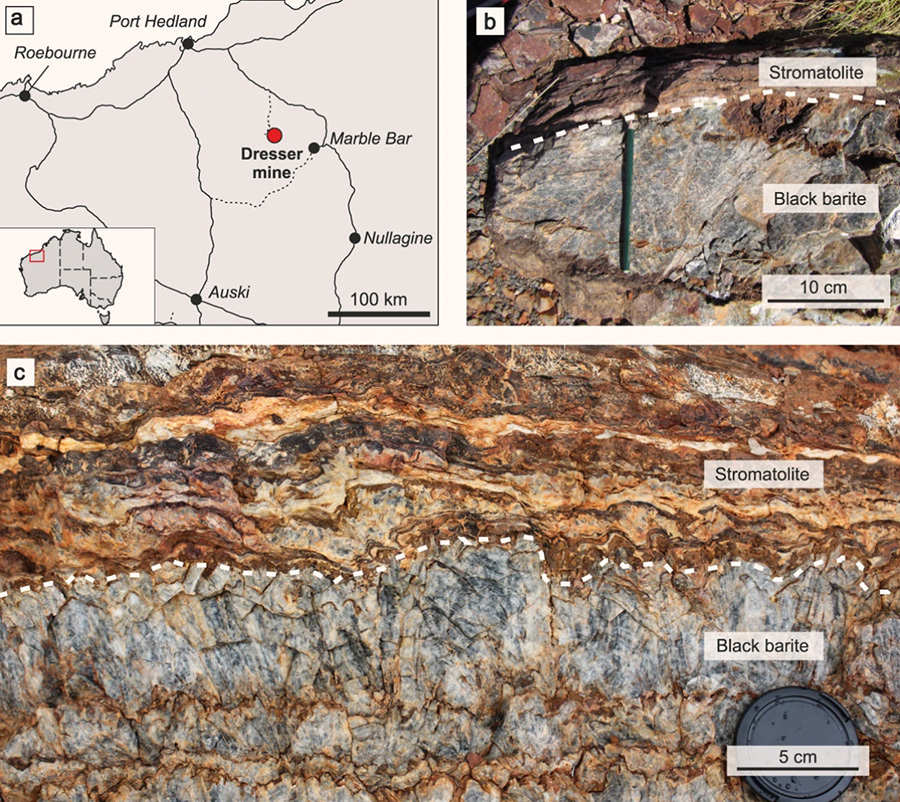
Location of the Dresser mine in Western Australia (a) and black barite associated with originally sulfidic stromatolites at the sampling site (b) and in the working area (c). The close association between the inclusion-bearing black barites and stromatolites suggests that hydrothermal fluids might have influenced ancient microbial communities. Image credit: Mißbach et al., doi: 10.1038/s41467-021-21323-z.

A team of geobiologists from Germany has found biologically-relevant primordial organic molecules and gases in fluid inclusions trapped in 3.5-billion-year-old barites from the Dresser mine, Marble Bar, Australia.

“It is widely hypothesized that primeval life utilized small organic molecules as sources of carbon and energy,” said lead author Dr. Helge Mißbach from the University of Cologne and his colleagues.

“A potential source of these compounds includes recycled and redistributed organic matter from pre-existing biomass.”

“As yet, however, such primordial ingredients have not been found in rocks that directly testify to the emergence of life on our planet.”

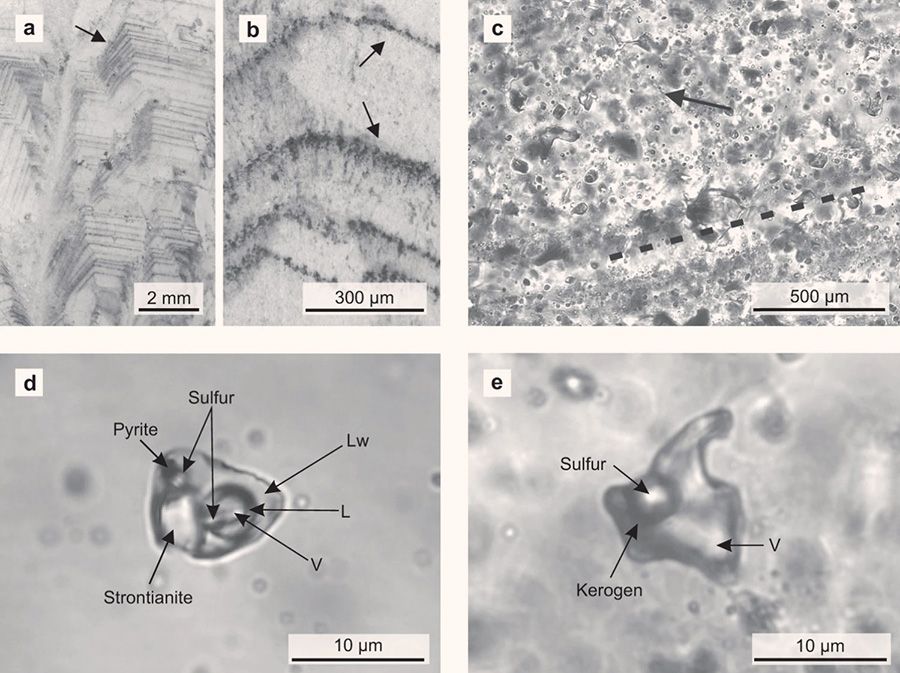
In new research, Dr. Mißbach and co-authors examined primary fluid inclusions in 3.5-billion-year-old barites from the Dresser Formation in Western Australia.

“In the field, the barites are directly associated with fossilized microbial mats, and they smell like rotten eggs when freshly scratched,” they explained.

Fluid inclusions in representative black barites from the Dresser mine: (a, b) thin section images (reflected light) showing primary fluid inclusion trails parallel to barite crystal growth bands (marked by black arrows); (c) thin section image (transmitted light) showing primary fluid inclusions which are dispersed or oriented parallel to barite crystal growth bands (exemplified by dashed line); the image also shows a minor secondary inclusion trail (marked by black arrow); (d) thick section image (transmitted light) of an aqueous carbonic-sulfuric fluid inclusion containing three volatile phases (including H2S), plus pyrite, native sulfur, and strontianite as solid phases; (e) thick section image (transmitted light) of a non-aqueous fluid inclusion bearing a vapor phase, native sulfur, and kerogen; these fluid inclusions are usually rich in H2S. Abbreviations: V – vapor/gas, Lw – liquid H2O, L – other liquid (e.g. CO2). Image credit: Mißbach et al., doi: 10.1038/s41467-021-21323-z.

To explore the full range of volatiles in the barite-hosted fluid inclusions, the researchers combined gas chromatography-mass spectrometry, microthermometry, fluid inclusion petrography, and stable isotope analysis.

They detected various compounds such as hydrogen sulfide (H2S), carbonyl sulfide (COS), carbon disulfide (CS2), methane (CH4), acetic acid, organic (poly-)sulfanes, and thiols.

“While many compounds observed are consistent with an abiotic origin, the Dresser Formation also contains a variety of evidence for life. Thus, biology is another potential source for the observed compounds,” they said.

“In fact, organisms synthesize most lipids on modern Earth, and carbon-13 signatures of kerogen in the black barite are in good accordance with biological carbon fixation.”

“Furthermore, compounds such as H2S, COS, CS2, (methylsulfanyl)methane, (methyldisulfanyl)methane, and thiols are typically formed during microbial sulfur cycling in modern environments, and there is isotopic evidence for the presence of sulfur-processing metabolisms during Dresser times.”

“Taken together, it is likely that the barite-hosted fluid inclusions contain mixtures of various abiotic and biotic compounds.”

The scientists also detected stable building blocks of methyl thioacetate (methanethiol, acetic acid), a putative key agent in primordial energy metabolism and thus the emergence of life.

“In addition to potential nutrients and/or substrates, hydrothermal fluids captured in the Dresser fluid inclusions contain molecules closely related to putative key agents in the emergence of life,” they said.

“It has been proposed that carbon monoxide (CO) and methanethiol can react in the presence of catalytic metallic sulfides to methyl thioacetate.”

“This compound, also known as activated acetic acid, was proposed as being important for the formation of lipids under primordial conditions and as an energy source for early microbial metabolisms.”

The results reveal an intriguing diversity of organic molecules with known or inferred metabolic relevance and provide a strong clue as to how hydrothermal fluids sustained microbial life 3.5 billion years ago.

“The immediate connection between primordial molecules emerging from the subsurface and microbial organisms — 3.5 billion years ago — somehow surprised us,” Dr. Mißbach said.

“This finding contributes decisively to our understanding of the still unclear earliest evolutionary history of life on Earth.”

The study was published in the journal Nature Communications.

_____

H. Mißbach et al. 2021. Ingredients for microbial life preserved in 3.5 billion-year-old fluid inclusions. Nat Commun 12, 1101; doi: 10.1038/s41467-021-21323-z

Source: www.sci-news.com/

Fossils of New Skink Species Unearthed in Australia

Friday, February 19, 2021

The swamp skink (Lissolepis coventryi), which is probably the living lizard most similar to Proegernia mikebulli. Image credit: Mark Hutchinson, South Australian Museum & Flinders University.

A new species of extinct skink that lived during the Oligocene Epoch has been identified from the fossilized remains found in South Australia.

The newly-identified species lived approximately 25 million years ago, making it Australia’s known skink.

Named Proegernia mikebulli, it belongs to Egerniinae, a large subfamily of social skinks — including living bluetongues, sleepy lizards (shinglebacks), land mullets and spiny-tailed skinks — within the family Scincidae.

“The species is named after Professor Michael Bull of Flinders University, South Australia, who devoted decades to documenting the ecology of Australia’s egerniine skinks,” said lead author Dr. Kailah Thorn, a paleoherpetologist at the South Australian Museum and Flinders University, and colleagues.

Several incomplete jaws of the ancient lizard were recovered from the Namba Formation outcropping at Lake Pinpa and Billeroo Creek, seven hours drive north of capital city Adelaide.

The fossiliferous deposits of this formation also bear abundant aquatic (such as fish, the giant platypus Obdurodon and waterfowl) and land-dwelling (such as possums, dasyuromorphs and skinks) vertebrates.

The fossilized remains of Proegernia mikebulli. Abbreviations: adf – adductor fossa; anf – angular facet; art. – articular; d. – dentary; gl – glenoid fossa; iaf – inferior alveolar foramen; mg – Meckel’s groove; psf – posterior surangular foramen; rap – retroarticular process; san. – surangular; and sy – symphysis. Image credit: Thorn et al., doi: 10.1098/rsos.201686.

“Some of Australia’s most famous animals, including koalas and kangaroos, had been traced back to their fossil ancestors in remarkable finds in central South Australia,” Dr. Thorn said.

“The significance of this site containing the ancestors of Australia’s early marsupials was already well established, but no fossil lizards had ever been found in the Namba Formation.”

“It was 45 degrees Celsius in the shade that day and hard work digging through the clay, but it was definitely worth it once the tiniest of bone fragments turned out to be those of the oldest Australian skink.”

“Fossil lizards are often too small to be identified when you’re in the field and lizard skulls are made of more than 20 individual bones that all disarticulate when they fossilize,” Dr. Thorn added.

“The discovery of the tiny fossil lizards in an area the size of one million soccer fields was enabled by building an understanding of the geology of the region, and targeting bands of silt to sieve and sort back at the lab.”

The team’s paper was published in the journal Royal Society’s Open Science.

_____

K.M. Thorn et al. 2021. A new species of Proegernia from the Namba Formation in South Australia and the early evolution and environment of Australian egerniine skinks. R. Soc. open sci 8 (2): 201686; doi: 10.1098/rsos.201686

Source: www.sci-news.com/

Cretaceous Amber Fossil Sheds Light on Evolution of Bioluminescence in Beetles

Thursday, February 18, 2021

Ecological reconstruction of Cretophengodes azari. Credit: Dinghua Yang

Bioluminescence has fascinated people since time immemorial. The majority of organisms able to produce their own light are beetles, specifically fireflies, glow-worm beetles, and their relatives.

While the chemistry that gives some insects the almost magical ability to glow is now reasonably well-appreciated, much less is known about how these signals evolved.

New research by a team of scientists led by the Nanjing Institute of Geology and Palaeontology of the Chinese Academy of Sciences (NIGPAS) has provided new insight on the evolution of this capacity. Their research focuses on the newly discovered family of Cretophengodidae, found in a Cretaceous amber fossil, which sheds light on bioluminescence in beetles. Their study was published in Proceedings of the Royal Society B on January 20, 2021.

“The newly discovered fossil, preserved with lifelike fidelity in amber, represents an extinct relative of the fireflies and the smaller families Rhagophthalmidae and Phengodidae,” said paleontologist and lead author LI Yanda, a scientist at NIGPAS and Peking University.

Cretophengodes azari from mid-Cretaceous Burmese amber and its extant relatives. Credit: NIGPAS

The amber from northern Myanmar is approximately 99 million years old, thus dating back to the golden age of the dinosaurs. “The new fossil is exceptionally well-preserved; even the light organ on its abdomen is intact,” said Dr. CAI Chenyang, associate professor at NIGPAS and research fellow at the University of Bristol.

“The fossil shows that some beetles were already producing light 99 million years ago, in the Cretaceous. We think that light production initially evolved in the beetle’s soft and vulnerable larvae as a defensive mechanism to ward off predators. It was later taken up by the adults as well and co-opted to serve other functions such as locating mates,” said Robin Kundrata, an expert on elateroid beetles from Palacký University in the Czech Republic.

Systematic position of Cretophengodes azari. Credit: NIGPAS

With some 386,000 described species and maybe over a million more still waiting to be discovered, beetles are the most diverse group of animals. The majority of light-producing beetles fall into the giant superfamily Elateroidea, with some 24,000 species. It is one of the most heterogeneous groups of beetles and has always posed difficulties for entomologists, particularly because important anatomical innovations were independently acquired many times in unrelated families.

“The discovery of a new extinct elateroid beetle family is significant because it helps shed light on the evolution of this puzzling but fascinating group,” said Erik Tihelka from the School of Earth Sciences and a participant in this research.

Reference: “Cretophengodidae, a new Cretaceous beetle family, sheds light on the evolution of bioluminescence” by Yan-Da Li, Robin Kundrata, Erik Tihelka, Zhenhua Liu, Diying Huang and Chenyang Cai, 20 January 2021, Proceedings of the Royal Society B.
DOI: 10.1098/rspb.2020.2730

Source: https://scitechdaily.com/

Pages