nandi's blog

Jurassic World 3 Image Shows New Baby Dinosaur

Friday, October 9, 2020

To soften the blow of Jurassic World: Dominion's latest production delay, director Colin Trevorrow shares a sweet picture of a new baby dinosaur.

A new Jurassic World: Dominion set photo shows an adorable new baby dinosaur. The final installment in the Jurassic World trilogy is already highly-anticipated among audiences, largely because it will bring back the original Jurassic Park trio of Sam Neill, Jeff Goldblum, and Laura Dern. Beyond that, Dominion will see the returns of several Jurassic World players, including leads Chris Pratt and Bryce Dallas Howard. Plot details are still being kept under wraps, but based on the way the previous film, Jurassic World: Fallen Kingdom, ended, it looks like dinosaurs will be running free in the outside world this time around.

Unfortunately, Dominion has been struck with its fair share of obstacles. Production was first suspended back in March because of the coronavirus pandemic, though director Colin Trevorrow was able to continue editing from home. Dominion was one of the first movies to resume filming amid the pandemic in July, and despite rumors that it shut back down immediately after, has remained underway up until this point. Today, Trevorrow announced Dominion's production is shutting down once again for two weeks as a precautionary measure.

To soften the blow about Dominion's latest delay, Trevorrow shared a picture of a new dinosaur. This baby lystrosaurus is a herbivore and has yet to be seen within the Jurassic World franchise. Making the image even more adorable is the little mask he has on. You can see the image down below.

Throughout the course of Dominion's production, fans have been treated to several set photos of various dinosaurs, including the terrifying new pyroraptor. More than anything, audiences tune into the Jurassic World films because they want to see dinosaurs come to life, and it certainly feels like Dominion has plenty of new ones for everyone to enjoy. Of course, not all of them will be friendly, and it's surely going to take a lot of manpower to wrangle them back into their holdings.

Because of the many setbacks production has undergone, Dominion was recently delayed from June 2021 to June 2022. It's disappointing that audiences will have to wait an extra year to see how the Jurassic World franchise comes to an end, but this will ensure Trevorrow and his team have enough time to make it the best conclusion possible. Perhaps while this delay continues, Trevorrow will share more pictures of the dinosaurs found within Dominion. After all, it would definitely help tide fans over until 2022. Who doesn't love a good dino picture?

Source: Colin Trevorrow/Twitter - https://screenrant.com/

Oksoko avarsan: New Bird-Like Dinosaur Unearthed in Mongolia

Thursday, October 8, 2020

Three individuals of Oksoko avarsan. Image credit: Michael W. Skrepnick.

Paleontologists in Mongolia have found the fossilized skeletal remains from a new genus and species of two-fingered oviraptorosaur that walked the Earth during the Cretaceous period.

The newly-discovered dinosaur lived approximately 68 million years ago (Maastrichtian stage of the Late Cretaceous period).

The feathered, omnivorous creature was a type of oviraptorosaur, a diverse group of theropod dinosaurs known from an excellent fossil record spanning much of the Cretaceous of Asia and North America.

Dubbed Oksoko avarsan, the ancient animal was about 2 m (6.6 feet) long and had a large, toothless beak.

It had one less finger on each forearm than its close relatives, suggesting an adaptability which enabled the animals to spread during the Late Cretaceous.

Holotype block with skeletons of Oksoko avarsan in ventral view; colors distinguish different individuals; the holotype individual is in blue. Image credit: Funston et al, doi: 10.1098/rsos.201184.

Multiple associated skeletons of Oksoko avarsan were collected from the Nemegt Formation in the Gobi Desert.

Oksoko avarsan represents the sixth genus of oviraptorid and ninth genus of oviraptorosaur from the Nemegt Formation, adding to previous evidence for a remarkable diversity of oviraptorosaurs in the Maastrichtian of Asia,” said University of Edinburgh paleontologist Gregory Funston and colleagues.

“The remarkably well-preserved fossils provided the first evidence of digit loss in the three-fingered family of dinosaurs known as oviraptors.”

“The discovery that oviraptorosaurs could evolve forelimb adaptations suggests the group could alter their diets and lifestyles, and enabled them to diversify and multiply.”

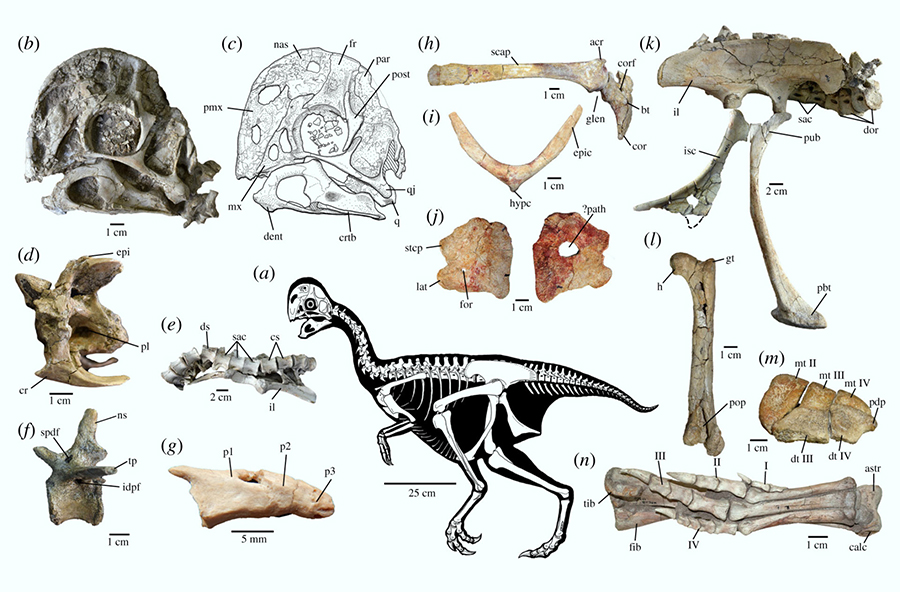
Skeletal anatomy of Oksoko avarsan: (a) skeletal reconstruction; (b, c) skull in left lateral view; (d) anterior cervical vertebra in left lateral view; (e) articulated sacrum and ilium in ventral view, anterior is to the left; (f) mid-caudal vertebra in left lateral view; (g) pygostyle vertebrae in left lateral view; (h) right scapulocoracoid in lateral view; (i) furcula in anterior view; (j) right and left sternal plates in anterior view; (k) articulated pelvis in right lateral view; (l) right femur in posterior view; (m) proximal metatarsus and distal tarsals in proximal view; (n) tibia, fibula and pes in ventral view. Image credit: Funston et al, doi: 10.1098/rsos.201184.

The researchers also discovered that Oksoko avarsan — like many other dinosaur species — were social as juveniles. The fossillized remains of four young dinosaurs were preserved resting together.

Oksoko avarsan is interesting because the skeletons are very complete and the way they were preserved resting together shows that juveniles roamed together in groups,” Dr. Funston said.

“But more importantly, its two-fingered hand prompted us to look at the way the hand and forelimb changed throughout the evolution of oviraptors — which hadn’t been studied before.”

“This revealed some unexpected trends that are a key piece in the puzzle of why oviraptors were so diverse before the extinction that killed the dinosaurs.”

The discovery is reported in a paper in the journal Royal Society Open Science.

_____

Gregory F. Funston et al. 2020. A new two-fingered dinosaur sheds light on the radiation of Oviraptorosauria. Royal Society Open Science 7 (10); doi: 10.1098/rsos.201184

Source: www.sci-news.com/

Juravenator: Carnivorous Dinosaur Had Crocodile-Like Senses

Thursday, October 8, 2020

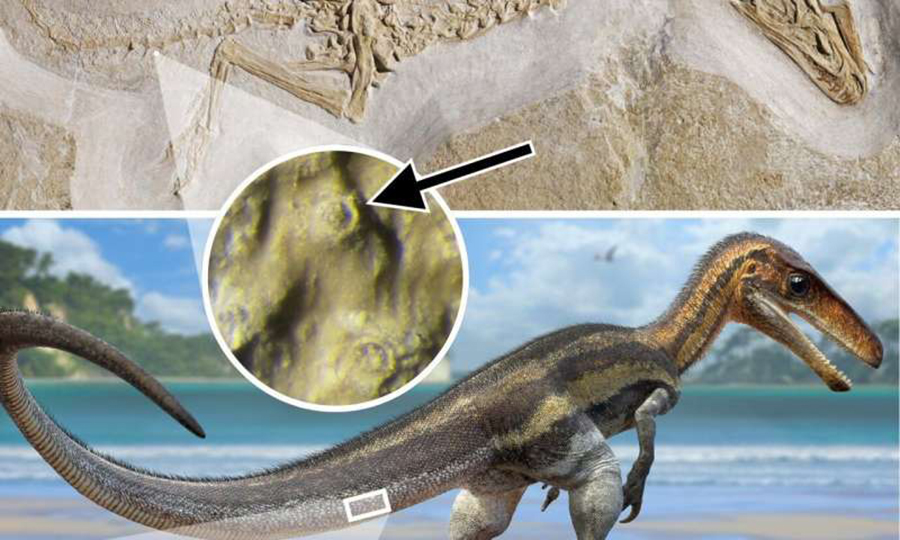
Fossil and life reconstruction of Juravenator, a small carnivorous dinosaur from the Jurassic of Germany. The arrow points to the sensory organ, which are found on polygonal scales covering the lower part of the tail. Credit: Jake Baardse.

Paleontologists have discovered remarkable evidence of the sensory capabilities in the fossilized skin of a 155-million-year-old carnivorous dinosaur.

The juvenile dinosaur, named Juravenator, comes from the Jurassic of Germany and is perfectly preserved from nose to tail, including remains of its scaly skin and other soft tissues.

Dr. Phil Bell, from the Palaeoscience Research Center at the University of New England in Armidale, Australia, is a leading researcher in the study of dinosaur skin. "Few people pay much attention to dinosaur skin, because it is assumed that they are just big, scaly reptiles," he said. "But when I looked closely at the scales on the side of the tail, I kept finding these little ring-like features that didn't make sense; they were certainly unlike other dinosaur scales."

The researchers found that the ring-like features were very similar to special sensory nodes found on the scales of modern crocodiles. These nodes, called integumentary sense organs (ISOs), are responsive to touch, chemistry, and temperature information, providing crocodiles with important sensory from their surroundings.

Dinosaur specialist Dr. Christophe Hendrickx, from the Unidad Ejecutora Lillo in San Miguel de Tucumán, Argentina, who co-authored the study points out, "very little in known about dinosaur sensory organs. Sensory scales were recently assumed to be present on the snout of tyrannosaurs like T. rex based on the texture of their facial bones, but this is the first direct evidence of their presence in a dinosaur."

Because crocodiles are aquatic predators, the researchers also speculated that Juravenator too might have hunted fish and other aquatic animals. Whereas alligators only have ISOs on the face, crocodiles have ISOs all over the body, including the tail. Although the skin on other parts of the body of Juravenator is unknown, it may have submerged its tail to detect the movement of prey underwater.

The study was published in the journal Current Biology.


More information: Bell, P.R. and Hendrickx, C. 2020. Crocodile-like sensory scales in a Late Jurassic theropod dinosaur. Current Biology 30: doi.org/10.1016/j.cub.2020.08.066

Journal information: Current Biology 

Provided by University of New England

Source: https://phys.org/

'Stan' The T. Rex, Sold For World Record Price

Thursday, October 8, 2020

CHRISTIE'S

A near-complete specimen of Tyrannosaurus rex, nicknamed "Stan", has been sold for a world record price of $31.8m (£24.6m).

The 67-million-year-old fossil went to an anonymous bidder in the sale organised by Christie's in New York.

The guide price had been $6-8m, but this was rapidly surpassed as the online auction progressed.

Stan's hammer price smashes the $8.4m record paid for the T. rex known as "Sue" in 1997.

That particular specimen went on display at the Field Museum in Chicago. Where Stan is headed is uncertain, however. The fear, as always, is that it could disappear into a private collection never to be seen again.

While Christie's declined to divulge the name of the new owner, the company's James Hyslop said some further details about the dino's future could emerge in the next few days.

The actual winning bid was $27.5m, but commission and other additional costs took the final price to $31.8m.

Casts of Stan's bones have been sent all around the world

Stan carries the name of its discoverer, the amateur palaeontologist Stan Sacrison.

He first saw the dinosaur's remains in 1987, weathering out of sediments in the famous fossil-yielding Hell Creek Formation in South Dakota.

The bones were positioned about 16m below the Cretaceous-Paleogene (K-Pg) boundary - the geological horizon that records the impact of an asteroid on Earth, and the demise of three-quarters of all animal and plant species, some 66 million years ago.

Stan is regarded as one of the finest T. rex specimens in existence.

It comprises 199 bones - about 70% of a complete skeleton - which have been subjected to a battery of tests and investigations. Damage to the skeleton suggests the dinosaur was involved in a number of battles during its life.

"Stan rapidly became the 'Stan-dard' for T. rex, given there are so many casts of this extraordinary fossil that have been sold all over the world," commented British dinosaur expert Prof Phil Manning who has worked on the specimen.

"If you have looked at a T. rex in a museum, the chances are it was a cast of Stan. The skull is possibly the best preserved, given it was found as isolated elements, carefully prepped and beautifully reconstructed.

"I am keeping my fingers and toes crossed that this remarkable fossil stays in the public domain for all to enjoy," the University of Manchester scientist told BBC News.

Stan had been on display at South Dakota's Black Hills Institute of Geological Research since the late 1990s, but the Hill City company was ordered in 2018 by a court to release the specimen for auction.

With the sale comes certain intellectual property rights, but the new owner has been denied permission to make future casts or 3D prints, or to sell related merchandise online.

Source: www.bbc.com/

Netflix: 10 Coolest Dinosaurs In Camp Cretaceous, Ranked

Thursday, October 8, 2020

Netflix's Jurassic World: Camp Cretaceous has some truly awesome dinosaurs, but these are the coolest of them.

Netflix's Jurassic World: Camp Cretaceous is an eight episode animated series set during the events of Jurassic World. It follows the adventures of Darius Bowman, a young teen who wins a video game contest and gets the prize of a life time – an invitation to attend Jurassic World’s Camp Cretaceous.

A new Jurassic Park story means more chances to explore the island and all of the unique dinosaurs on it. Camp Cretaceous brings back plenty of fan favorite dinos, but it also introduces a few new ones that have never been the focus of the series. Which one is the coolest?

10 - Compsognathus

The Compognathus (AKA the "Compy") is a tiny predator featured throughout the Jurassic Park franchise. The small pack hunters may not be particularly dangerous on their own, but they tend to live in large numbers and will attack when threatened. Dieter Stark learned this the hard way in The Lost World, after taunting and electrocuting one for fun. Camp Cretaceous references this moment when Kenji considers tasing a compy at the park.

9 - Brachiosaurus

These gentle giants have always been a steady and instrumental piece of the Jurassic Park films. These long-necked sauropods could grow to be over 40 feet tall, and they were the very first dinosaurs that Dr. Grant, Dr. Sattler, and Ian Malcolm came in contact with in the original film. These beautiful herbivores were also some of the first dinosaurs that the kids were introduced to in Camp Cretaceous, when they zip-lined over a quiet herd of them.

8 - Velociraptor

Raptors are shown as able to problem solve, coordinate hunts, and even open doors. Quick, agile, and highly intelligent, these deadly pack hunters are some of the most popular dinosaurs in the franchise.

Though Velociraptors are not a heavy focus in Camp Cretaceous, they make a terrifying impression on Darius and Kenji, when the two get trapped in their enclosure. Jurassic's version of the Velociraptor is no doubt one of the most fascinating dinosaurs, but since raptors are only seen briefly in Camp Cretaceous, they can't quite make it to the number one spot.

7 - Sinoceratops

Standing at about ten feet tall and twenty feet long, the Sinoceratops may not be meat-eaters, but they are a force to be reckoned with when it comes to herbivores. Like the well-known Triceratops, Sinos have a similar look with one large nasal horn and a tall frilled horn coming up from the back of its skull. The kids meet a group of the creatures grazing in a field, and Sammy later befriends one and uses it's strength to help save Darius and Brooklynn.

6 - Parasaurolophus (Bioluminescent)

In the action-packed season finale of Camp Cretaceous, the kids are chased into Jurassic World's River Adventure where they paddle down a river and through a group of bioengineered bioluminescent Parasaurolophus. These herd animals are hadrosaurs (or duck-billed dinosaurs) that stand about thirteen feet tall. Though these dinosaurs are amazing on their own, their bioluminescence definitely makes them significantly cooler.

5 - Pteranadon

A bird-like flying reptile, the mighty Pteronadan is a predator whose name means "toothless wing", but despite the gentle sounding name, these large, winged creatures are still extremely dangerous.

Often scavengers, Pteranadons can have a wingspan of 26 to 33 feet, which allows them to easily swoop down on fish or other prey when they hunt. These giant birds can be seen terrorizing humans in Jurassic Park IIIJurassic World, and Camp Cretaceous. 

4 - Ankylosaurus

Easily one of the coolest herbivores in the series is the armor-plated Ankylosaurus. Covered in bony plates and long, thick spikes, the Anky used its clubbed tail as a weapon against attacking predators. Only an occasional glimpse of this awesome dino was caught previously in the Jurassic films, but the Ankylosaurs plays a significant role in Camp Cretaceous when Ben grows attached to a newly hatched baby that he names "Bumpy".

3 - Mosasaurus

The massive Mosasaurus is one of the only sea-dwelling predators featured in the franchise. A key attraction at Jurassic World, the Mosasaurus averaged over 50 feet long and is thought to have fed on large fish, sharks, and even other mosasaurs.

The Mosasaurus found at Jurassic World lived in an enormous tank at the Jurassic Lagoon. The tank was surrounded by a stadium that was used for a Mosasaurus feeding show.

2 - Indominus Rex

A hybrid created by Dr. Henry Wu and the other InGen geneticists, the Indominus Rex is a mix of many species, including both Tyrannosaurus Rex and Velociraptor DNA. Desperate to boost ticket sales and interest in the park, the Indominus was created as a new attraction, but the scientists and the Jurassic World investors underestimated how intelligent and aggressive she would be.

1 - Carnotaurus

There used to be a time when the T-Rex was the scariest thing in Jurassic Park, but even at only 12 feet tall, the Carnotaurus can give Rexy and the Indominus a run for their money for "Scary Dino Of The Week". Being smaller and lower to the ground, the Carnotaurus is fast and slightly more agile than other larger carnivores. Highly aggressive and territorial, the Carnotaurus (meaning "meat-eating bull) seemingly tirelessly hunts down the kids throughout the show as they struggle to find a way out of the park.

Source: https://screenrant.com/

Jurassic World: Dominion (2022) Set Photos Leaked Revealing [SPOILER]!

Friday, October 9, 2020

Life and... Love... always finds a way!

A number of Jurassic World Dominion set photos have been snapped and leaked online revealing a spoiler many Jurassic Park fans will appreciate. If you wish to avoid spoilers, exit reading this article and scrolling down any further! Otherwise, enjoy...

The following contains movie spoilers from Jurassic World Dominion (aka Jurassic World 3)

The following photographs capture a number of cast and crew on set, with Sam Neill, Jeff Goldblum, Laura Dern, Chris Pratt and Bryce Dallas Howard all in-character on what appears to be an airport runway! But that isn't the spoiler we're after...

The following images show Sam Neill (Alan Grant) and Laura Dern (Ellie Sattler) embracing one another before being seen sharing a passionate kiss! Since the first Jurassic Park film we knew Grant and Sattler had chemistry, but their romantic relationship never evolved. Instead, Ellie Sattler settled down and had a child with someone else, as we discovered in Jurassic Park 3. Now, it would appear Sattler's previous marriage has fallen through and the romance between Grant and Sattler has been rekindled for Jurassic World Dominion! Check it out:

Big thanks to Jurassic Vault for the photos!

Source: https://jurassicworld3.net/

'Jurassic World: Dominion' Delayed By A Whole Year To 2022

Thursday, October 8, 2020

Jurassic World: Dominion has become the latest blockbuster to have its release significantly delayed, with news that it will now debut in 2022.

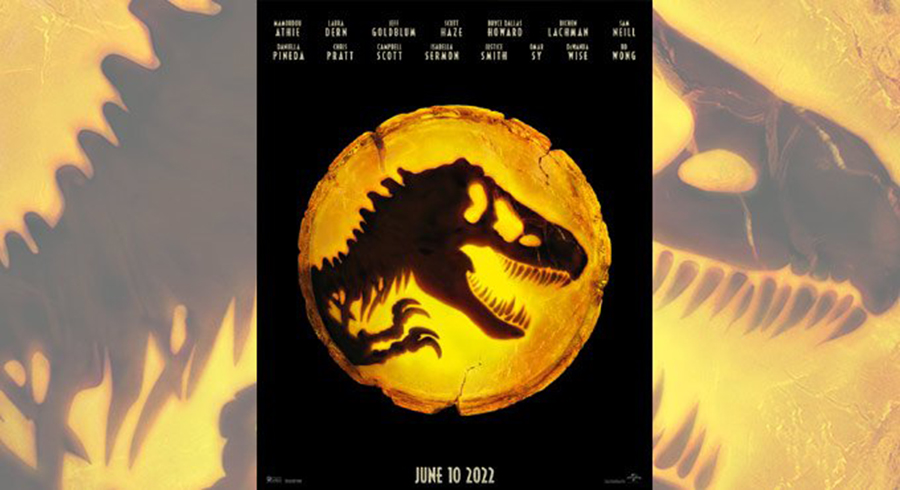
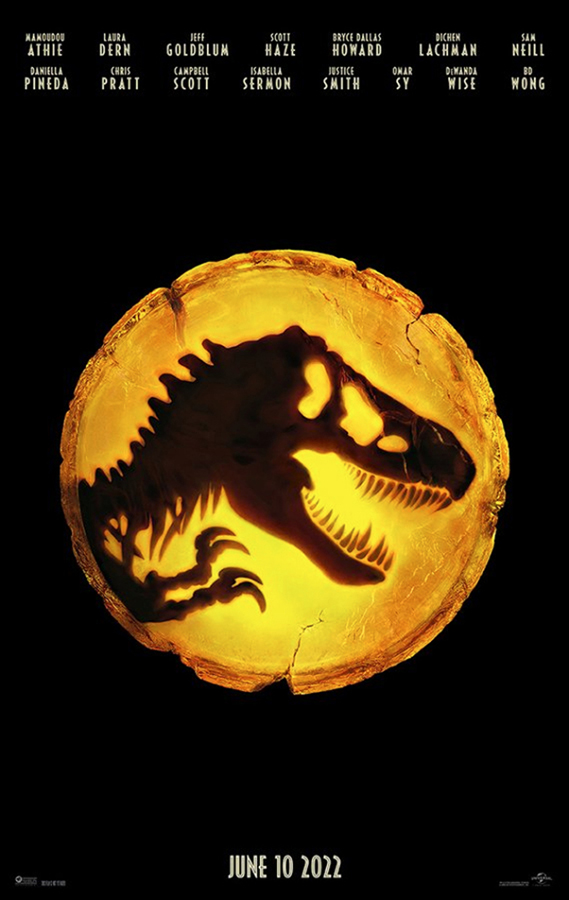
The movie was originally slated for release on 11 June, 2021, and though the Universal studio has not addressed the delay directly, new marketing material released on Twitter has set a new date of 10 June, 2022.

Like so many other movies shooting earlier this year, its production was halted in the wake of the coronavirus lockdown back in early March, with filming resuming in July.

However, with the movement of a swathe of other big budget tentpole movies shifting into 2021, Dominion, the third in the rebooted Jurassic series, will be given more breathing space in 2022.

The resumed shoot, with director Colin Trevorrow back at the helm, has not been plain sailing.

UK crew-members have tested positive for COVID-19, and a shoot planned to take place in Malta had to be significantly scaled back after the country was placed on the UK quarantine list and four further crew tested positive.

The delay follows news of an increasing number of movies shifting release dates, as the worldwide cinema business faces an uncertain future.

Jurassic World: Dominion official poster. June 10, 2022.

Denis Villeneuve's Dune, the new Bond movie No Time To Die and The Batman are just the latest titles to be shoved back as cinemas remain shuttered around the world.

The performance of Christopher Nolan's Tenet, which was hoped would revive the ailing industry, has failed to encourage other studios to follow suit and release their major titles in the current climate.

So far, it's made just $300 million worldwide, likely a fraction of what it would have done under normal circumstances, and still way short of its break even figure.

At a cost of $200 million, it was Nolan's most expensive movie.

Dominion, meanwhile, continues its shoot in the UK, with original Jurassic Park stars Sam Neill, Laura Dern and Jeff Goldblum back on board.

Source: https://sports.yahoo.com/

Cephalaspis: Silurian-Devonian Jawless Fish were Ecologically Diversified

Tuesday, October 6, 2020

Life restoration of Cephalaspis, a typical osteostracan, swimming over the substrate. Image credit: Hugo Salais, Metazoa Studio.

Osteostraci, the jawless sister group to all jawed vertebrates, had adaptations for passive control of water flow around the body, according to new research led by the University of Bristol.

Osteostraci (osteostracans) is a group of extinct bony-armored jawless fish that lived in what are now North America, Europe and Asia from the Middle Silurian to Late Devonian period.

These bottom-dwelling creatures were probably relatively good swimmers, possessing dorsal fins, paired pectoral fins, and a strong tail.

The shield of bone covering their head formed a single piece, and so presumably did not grow during adult life. Many possessed bizarre horn-like extensions from the front of their heads.

“The evolution of jaws and fins has classically been seen as the key evolutionary inventions that allowed vertebrates to diversify their lifestyles,” said co-lead author Dr. Humberto Ferron, a postdoctoral researcher at the University of Bristol.

“In this context, jawless ancestors, characterized by the presence of heavy rigid headshields, were assumed to be cumbersome fish-like creatures, living on the bottom of rivers and seas, with poor maneuverability.”

Using computational fluid dynamics, Dr. Ferron, University of Bristol’s Professor Phil Donoghue and their colleagues explored how osteostracans interacted with water currents.

The experiments revealed the bizarre spikes and spines that ornamented the heads of these creatures were actually hydrodynamic adaptations, passively generating lift from water currents flowing over the body.

The varying head shapes of different species allowed them to adapt to different positions, some high, others low, within the water.

They were already ecologically diverse, long before the evolution of their jawed vertebrate relatives.

“The application of computational fluid dynamics, has allowed us to study the swimming performance of ancient vertebrates and learn more about their position in evolutionary history,” said co-author Dr. Imran Rahman, a researcher at the Oxford University Museum of Natural History.

“Our simulations reveal that the different species of osteostracans show equally different hydrodynamic efficiencies,” said co-author Dr. Carlos Martinez Perez, a scientist at the University of Valencia.

“Some of them performed better when moving close to the sea floor or riverbed while others performed better when swimming freely in the water.”

“The different species’ body shapes are adapted to different environments, revealing distinct lifestyles among these groups of jawless early vertebrates,” Professor Donoghue said.

“Our results call into question the prevailing view that these extinct groups of jawless vertebrates were ecologically constrained, and reveal the main evolutionary hypothesis for the origin of jawed vertebrates is more complex than previously thought.”

The study was published in the journal Current Biology.

_____

Humberto G. Ferrón et al. Computational Fluid Dynamics Suggests Ecological Diversification among Stem-Gnathostomes. Current Biology, published online October 1, 2020; doi: 10.1016/j.cub.2020.09.031

Source: www.sci-news.com/

Small Ogresuchus furatus: Cretaceous Crocodile May Have Preyed on Baby Titanosaurs

Tuesday, October 6, 2020

Life restoration of Ogresuchus furatus. Image credit: Aina and Agnès Amblás / Institut Català de Paleontologia Miquel Crusafont.

A new genus and species of sebecosuchian crocodyliform that roamed Earth during the Cretaceous period has been identified from a partial skeleton found in a titanosaur nesting area in Catalonia, Spain.

Named Ogresuchus furatus, the ancient crocodile lived approximately 71.5 million years ago (Late Cretaceous epoch).

It belongs to the family Sebecidae in the clade Sebecosuchia, a group of highly specialized crocodyliforms that diversified during the Cretaceous and persisted until the end of the Miocene.

These creatures were active terrestrial predators that could even compete with medium-size carnivorous dinosaurs.

Ogresuchus furatus was about 1.1 m (3.6 feet) long and had a body mass of 9 kg, making it one of the smallest and lightest sebecosuchids ever discovered.

“The main feature of sebecids is that, unlike extant crocodiles, they had their limbs under their body,” said lead author Dr. Albert Selles, a paleontologist at the Institut Català de Paleontologia Miquel Crusafont, the Universitat Autònoma de Barcelona and the Museu de La Conca Dellà.

“This anatomical trait would have allowed the animal to move in a similar way to extant mammals and become efficient predators.”

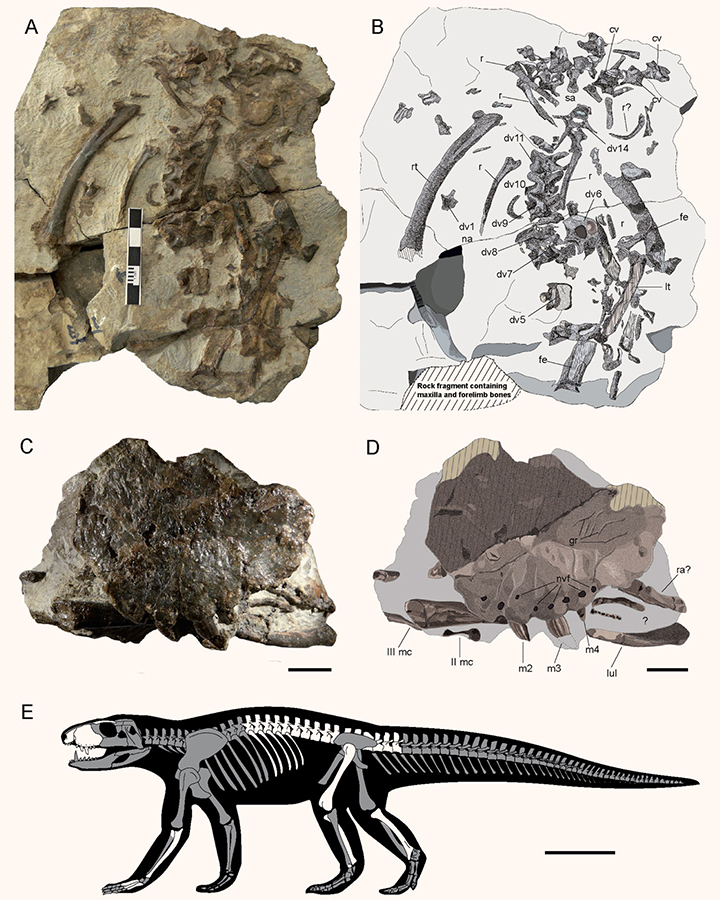
Skeletal remains of Ogresuchus furatus: (A, C) photographic and (B, D) interpretative draws of the postcranial (A, B) and cranial (C, D) elements, and (E) silhouette showing preserved elements of Ogresuchus furatus. Abbreviations: cv – caudal vertebra, dv – dorsal vertebra, fe – femur, gr – groves, lul – left ulna, lt – left tibia, m1-4 – maxillary tooth, mc – metacarpal, nvf – neuro-vascular foramens, r – rib, rt – right tibia, sa – sacral. Scale bars – 1 cm for (C, D) and 10 cm for (E). Image credit: Sellés et al., doi: 10.1038/s41598-020-71975-y.

The skeletal remains of Ogresuchus furatus and numerous eggshell fragments were found in a nesting ground of titanosaurian dinosaurs at the paleontological site of El Mirador in Coll de Nargó area, Lleida Province, Catalonia.

“Probably the young dinosaurs were not its main source of food, but they would have been an easy prey, according to the anatomical features of this crocodile,” Dr. Sellés said.

Ogresuchus furatus also represents the earliest record of Sebecidae worldwide and the first known from Eurasia.

Ogresuchus furatus is 10 million years older than any other sebecid known to date, so this finding drives us to redefine the evolutionary history of the whole family,” Dr. Selles and colleagues said.

“According to our interpretations, sebecids may have originated prior to the full break of Gondwana.”

The team’s paper was published online in the September 17, 2020 edition of the journal Scientific Reports.

_____

A.G. Sellés et al. 2020. A small Cretaceous crocodyliform in a dinosaur nesting ground and the origin of sebecids. Sci Rep 10, 15293; doi: 10.1038/s41598-020-71975-y

Source: www.sci-news.com/

Arsenal’s Beloved Dinosaur Gunnersaurus SACKED Due To Cost-Cutting Measures After 27 Years As Mascot

Tuesday, October 6, 2020

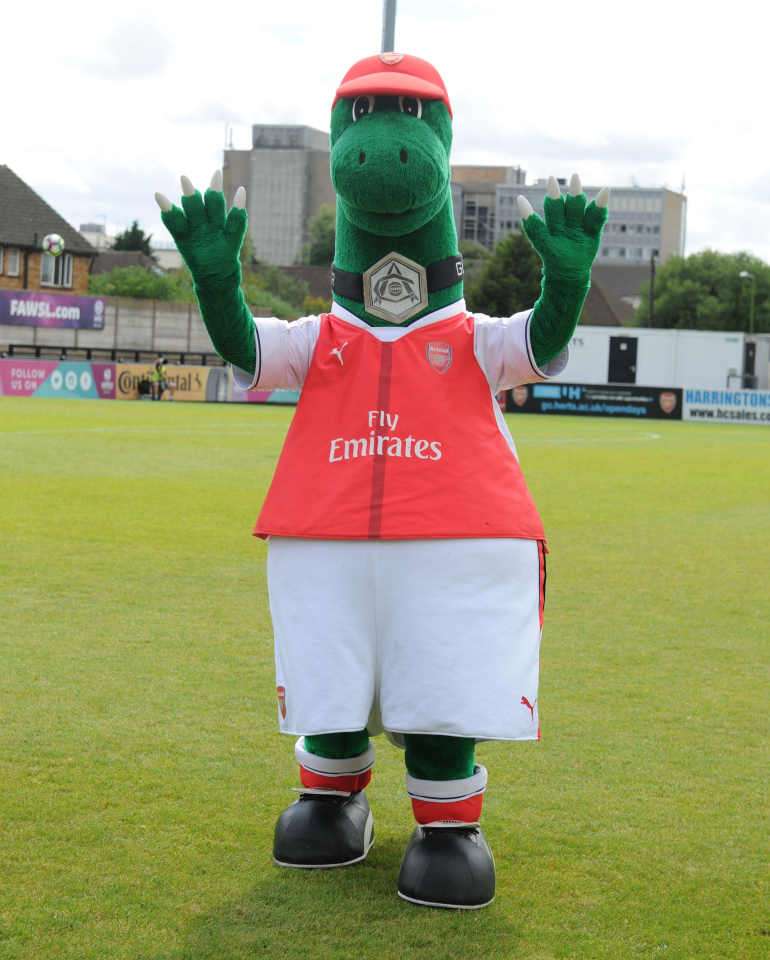
The dinosaur is a huge part of Arsenal culture. IMAGE: GETTY IMAGES

Arsenal fans might’ve expected to see Sead Kolasinac, Lucas Torreira, and Matteo Guendouzi leave on deadline day – but not this man.

But beloved mascot Gunnersaurus has fallen victim to Arsenal’s cost-cutting.

The dinosaur has been a permanent fixture at home games since 1993, but has been let go as the role is deemed no longer necessary.

An absence of fans at games has impacted revenue on matchdays and Gunnersaurus joins 55 other redundancies in north London.

In August, Arsenal announced the decision to make job cuts as they looked to streamline due to the coronavirus pandemic, but the club insist the mascot will return, according to The Athletic.

Jerry Quy, who played the role of Gunnersauraus, is hugely popular at Arsenal having also been involved in the Junior Gunners and Travel Club.

He has been inside the costume since it was created in 1993 when he made his debut at Highbury in a league game against Manchester City, which the home side won 3-0.

Arsenal fans will be devastated. IMAGE: GETTY - CONTRIBUTOR

He has stayed true to his role during lockdown, posting a series of ‘Gunnersaurus at home’ posts on social media.

In an update shared with his Twitter followers, Gunnersaurus revealed he had been ironing, gardening, and watching Bargain Hunt after being forced into self-isolation due to Mikel Arteta’s positive COVID test in March.

He wrote: “Hope everyone is well. I’ve been keeping busy. Just enjoyed a spot of gardening this morning.

“I’ll get a few shirts done before Bargain Hunt later.”

Source: https://talksport.com/

Pages