nandi's blog

Family Care? Healed Injuries Suggest Social Behavior in Ancestral Wolves

Friday, September 25, 2020

Canis dirus by Sergiodlarosa

New specimens from Ice Age of China provide clues to origin of pack-hunting in modern wolves.

Wolves today live and hunt in packs, which helps them take down large prey. But when did this group behavior evolve? An international research team has reported specimens of an ancestral wolf, Canis chihliensis, from the Ice Age of north China (~1.3 million years ago), with debilitating injuries to the jaws and leg. The wolf survived these injuries long enough to heal, supporting the likelihood of food-sharing and family care in this early canine.

"Top predators are rare in the fossil record because of their position in the food pyramid. Devastating injuries that are healed are even rarer. Fossils preserving grotesque injuries from the distant past have long fascinated paleontologists, and they tell stories rarely told," noted Dr. Xiaoming Wang, curator of vertebrate paleontology at the Natural History Museum of Los Angeles County, who co-led the study.

Examples of dentaries of Canis dirus from the late Pleistocene Rancho La Brea asphalt seeps bearing abscesses, alveolar resorption, and tooth fracture in the p4-m1 region similar to those in the pathological C. chihliensis dentaries. CREDIT: Mairin Balisi

Dr. Haowen Tong, professor at the Institute of Vertebrate Paleontology and Paleoanthropology of the Chinese Academy of Sciences in Beijing, led the excavations that discovered the fossils in the Nihewan Basin, a well-known Ice Age site in northern China.

Based on its skeleton, C. chihliensis was a large canine with strongly built jaws and teeth specialized for eating meat and cracking bone. Injuries in the skeleton provide additional evidence for how the animal used to move and behave. The study represents the first known record of dental infection in C. chihliensis, likely incurred while crushing bone to reach the marrow inside, which modern wolves do when hunting prey larger than themselves.

One C. chihliensis also badly fractured its shin (tibia), splintering it into three parts. The injury must have incapacitated the wolf, an active predator that hunted by chasing prey--yet it survived, as evidenced by healing of the bone. Survival suggests that, while recovering, it procured food in some way other than by hunting--likely with the support of a pack.

Dire wolf (Canis dirus Leidy, 1858)

To help interpret the injuries, the study also examined specimens of another extinct large canine: the dire wolf, Canis dirus, which has abundant fossils at the world-famous Rancho La Brea asphalt seeps in Los Angeles, California. The dire wolf was geologically younger than C. chihliensis, having lived at Rancho La Brea approximately 55,000 to 11,000 years ago. Despite the age difference, the dire wolf--which previous studies had established to have been a pursuit predator of large prey, with a social structure likely similar to grey wolves today--sustained injuries to the teeth, jaws, and legs similar to C. chihliensis.

"It is incredible to see these dental infections and fractured tibia from this early Chinese wolf--and find similar injuries in our dire wolves at Rancho La Brea," said Dr. Mairin Balisi, National Science Foundation postdoctoral research fellow at the La Brea Tar Pits and Museum, and co-author of the study. "Museum collections are valuable for many reasons. In this case, they've enabled us to observe shared behavior across species, across continents, across time."

Source: www.eurekalert.org/

What Happened To Camp Cretaceous' Kids After Jurassic World? Every Theory

Thursday, September 24, 2020

Jurassic World: Camp Cretaceous' cliffhanger leaves fans wondering what happens to the kids on Isla Nublar? Here's every theory as to their fate.

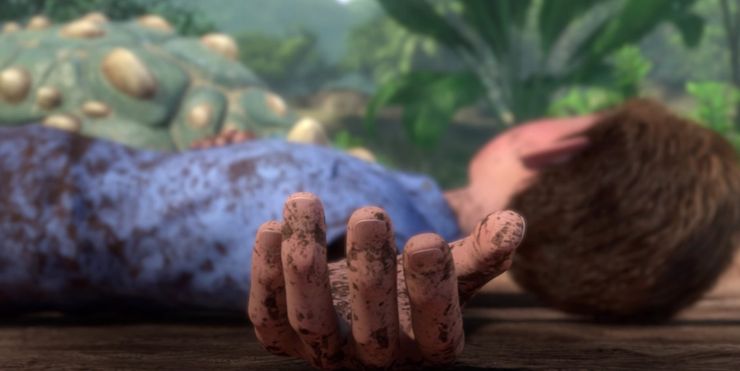
Jurassic World: Camp Cretaceous introduced new characters into the Jurassic universe, but by the end of season 1, they're all missing on Isla Nublar, leaving fans wondering what will happen to them. Executive produced by Steven Spielberg, Colin Trevorrow, and Frank Marshall, Jurassic World: Camp Cretaceous is an animated series aimed at younger viewers but it doesn't flinch in showing dinosaur attacks and placing the six teenage heroes in harrowing, life-or-death situations - and one of the kids, Ben (Sean Giambrone), could be dead after falling off of the monorail.

Set during the events of 2015's Jurassic World, Camp Cretaceous tells the heretofore unknown story of Darius (Paul-Mikel Williams), Brooklynn (Jenna Ortega), Kenji (Ryan Potter), Yasmina (Kausar Mohammad), Sammy (Raini Rodriguez), and Ben, the inaugural group of campers who got to have a behind-the-scenes Jurassic World experience. Unfortunately, their dream vacation turned into a nightmare when the Indominus Rex got loose and led to the evacuation and destruction of the theme park resort, as seen in the film. The campers tried to make it to the southern docks of the island to join the evacuation but they were ultimately too late and were left behind - trapped all alone on an island of killer dinosaurs.

The kids' predicament is known to at least two adults, their camp counselors Roxie (Jameela Jamil) and Dave (Glen Powell), but until a rescue mission can be mounted, the campers have to rely on each other to survive on Isla Nublar. This isn't a new scenario for the Jurassic films, however; Jurassic Park III showed that one teenager, Eric Kirby (Trevor Morgan), was able to survive alone on Isla Sorna AKA Site B for eight weeks. Not only are the campers in a group, and they have Darius, who is a dinosaur expert, and Kenji, who knows the VIP access points of Jurassic World, but the island resort has a lot of resources, food, and shelter, to help them survive - if the campers can make it to the main park without being eaten.

Jurassic World: Camp Cretaceous season 2 will pick up the story of the missing campers and whether or not they can be rescued, but until then, fans can only speculate what will happen to them. Here are the scenarios the Camp Cretaceous teens face, which grow increasingly grim the longer they are lost on Jurassic World.

The Kids Are Rescued In Jurassic World: Camp Cretaceous Season 2

The most likely possibility is that Jurassic World: Camp Cretaceous season 2 depicts a rescue mission to save the kids while they attempt to survive on the island. Camp Counselors Roxie and Dave argued for the last ferry to stay until the kids could board and after it departed, they continued to demand that the boat turn around. Once word gets out that the six members of Camp Cretaceous are still on Isla Nublar, there will very likely be an attempt to rescue them and Roxie and Dave may lead it (so that they can also appear in season 2).

Further, the campers aren't exactly nobodies. Kenji continually bragged that his wealthy father is one of Jurassic World's main investors, so his family would have the resources and the clout to demand a rescue mission. Brooklynn is a famous social influencer so her being trapped in the ruins of Jurassic World would be big news. Yasmina is a well-known teen athlete and Sammy's family supplies all of the beef sent to Isla Nublar, plus she was a spy sent by the rival bioengineering company called Mantah Corp, so they would also like to acquire whatever details she got from InGen and Dr. Henry Wu's (B.D. Wong) laboratory. There are plenty of people with the means to rescue the kids and the campers may not have to be trapped on Isla Nublar for very long.

The Kids Are Rescued When Mercenaries Come To Isla Nublar

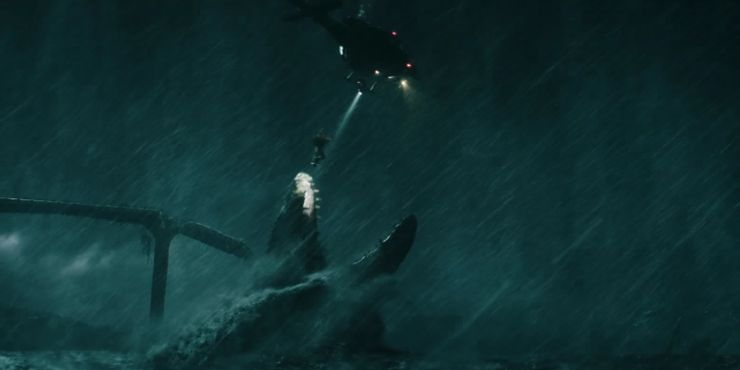
In the unlikely event that the kids aren't rescued in Jurassic World: Camp Cretaceous season 2, the next window for them to escape Isla Nublar is in the opening scene of Jurassic World: Fallen Kingdom. Six months after the events of Jurassic World (and Camp Cretaceous), a group of mercenaries arrived at Isla Nublar to extract the DNA of the Indominus Rex from the Mosasaurus' lagoon. Of course, this mission didn't go off without a hitch; one of the mercs is eaten by the Mosasaurus, which then swims out into the open ocean.

If the kids from Camp Cretaceous are still on the island at this point, then boarding the helicopter would be their best means of escape. Just as Camp Cretaceous season 1 retcons Jurassic World, a similar retcon could have the kids be saved by the mercenaries before they escape Isla Nublar.

The Kids Escape During Jurassic World: Fallen Kingdom

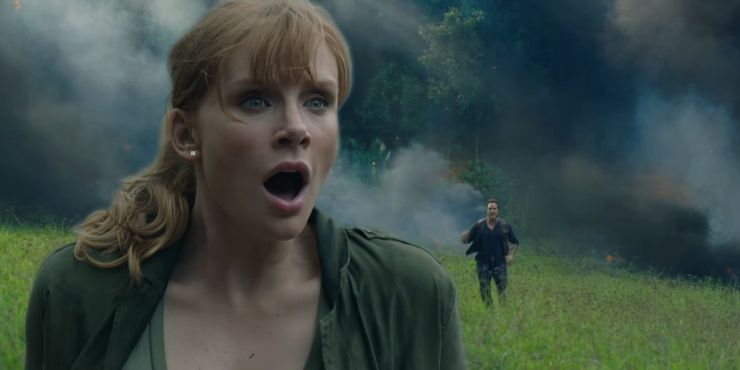
The main story of Jurassic World: Fallen Kingdom takes place on 2018, which means the campers will have been on the island for three years by the time Claire Dearing (Bryce Dallas), Owen Grady (Chris Pratt), and the Dinosaur Protection Group arrive with another team of mercenaries to rescue the dinosaurs. Escape from Isla Nublar is paramount for the campers at this point because Mt. Sibo's eruption is imminent and volcanic lava will destroy the island and kill everything left on it.

The kids escaping the island during the events of Jurassic World: Fallen Kingdom would be a huge retcon: The mercenaries led by Ken Wheatley (Ted Levine) betrayed Grady once they acquired Blue the Velociraptor and the other dinos they needed for Eli Mills' (Rafe Spall) illegal dinosaur auction at Lockwood Manor. Wheatley left Owen, Claire, and the others on Isla Nublar to die but they managed to sneak aboard the mercs' boat and sail back to California undetected. While it's a further stretch if logic, the kids from Camp Cretaceous could also stow away on the boat and get back to America without the mercenaries knowing. In any case, this would be their last opportunity to escape Isla Nublar before the volcano completely destroys it.

The Kids Die On The Island

This would be the worst-case scenario and, frankly, it's far-fetched that a Jurassic World animated series aimed at the young demographic would depict six teenagers dying on Isla Nublar. However, death is a grim possibility the campers themselves have to face until they're rescued. Darius, Brooklynn, Kenji, Yaz, Sammy, and Ben (if he is still alive) are alone on an island filled with man-eating dinosaurs, after all. They were extremely fortunate to survive just long enough to get to the south ferry docks but episodes 4-8 of Jurassic World: Camp Cretaceous only spanned one day of life-threatening scenarios. Surviving long-term on Isla Nublar is a different story entirely.

The harsh reality of staying alive for an indeterminate amount of time on Isla Nublar is daunting, especially for a group of teenagers, one of whom (Yaz) already has an injured leg. Even though they're fortunate that the Indominus Rex is dead (a fact the campers aren't aware of yet at the end of Camp Cretaceous season 1), there are still the T-Rex, the Carnotaurs, Velociraptors, Pteranaodons, and a slew of other man-eating prehistoric animals to deal with. They also have the ticking clock of Mt. Sibo, which will erupt in three years. While it's most likely that the kids of Jurassic World: Camp Cretaceous will be rescued in season 2, which should be well before Isla Nublar's volcanic Armageddon, their chances of surviving in one piece continue to drop the longer they're trapped on Jurassic World.

Source: https://screenrant.com/

Remains of Jurassic Sea Predator Found in Chile's Atacama Desert

Friday, September 25, 2020

A view of fossil remains of one of the largest and most fearsome marine predators of the Jurassic period found by scientists in the middle of the Atacama desert, Calama, Chile December 16, 2018. Picture taken December 16, 2018. Mauricio Castro/Handout via REUTERS

Scientists have unearthed the remains of Jurassic sea predators resembling killer whales in the world's driest desert in Chile.

Pliosaurs were reptiles from about 160 million years ago with a more powerful bite than Tyrannosaurus rex, according to University of Chile researchers. The fossils are the second oldest record of this species in the Southern Hemisphere.

Chile's vast Atacama desert, once largely submerged beneath the Pacific Ocean, is now a moonscape of sand and stone with parts untouched by rain for years. Pliosaurs reined the region, with their large skull, elongated face, short neck, menacing teeth on a hydrodynamic body and fin-like limbs.

Scientists found jaw, tooth and limb fragments of the creatures "ecologically similar" to killer whales at two sites in the Loa river basin near the mining city of Calama.

The find helps scientists fill gaps in evolution, said Rodrigo Otero, a University of Chile paleontologist who led the research.

The complete fossil, under excavation since 2017, is likely to measure six to seven meters (19.7 to 23 feet). The skull is around a meter (3.3 feet) long, with teeth each around eight to 10 centimeters (3.1 to 3.9 inches) long, Otero said.

The study was published in the Journal of South American Earth Sciences in early September.

Source: www.usnews.com/

Jurassic World: Camp Cretaceous Season 2 and Crossover Teased by Producers

Friday, September 25, 2020

Photo: Netflix

Jurassic World: Camp Cretaceous has yet to be officially renewed for a second season. Yet if you’ve finished all eight episodes of the new animated series on Netflix, you know that the series practically demands one: While counselors Roxie and Dave (Jameela Jamil and Glen Powell) managed to get off the island during the evacuation that followed in the wake of the Indominus Rex’s rampage—much to their reluctance—all six of their young campers got left behind. Abandoned on the island. Worse still, they’re separated, with most believing Ben Pincus (Sean Giambrone) is dead and that their cute baby Anklyosaurus pet, Bumpy, is also lost.

So the park might be closed, but Camp Cretaceous definitely remains open, potentially forever. Or at least until a volcanic explosion destroys Isla Nublar (watch Jurassic World: Fallen Kingdom for more). So with the prospect of the kids being lost on the island for months or years going into a second season, we had to ask executive producers Colin Trevorrow and Scott Kreamer during an interview roundtable this week if they already were breaking down the concept for season 2. Could it be Lord of the Flies but with a T. Rex?

“Where we leave the kids at the end of the season is they’re alone on this island and they only have each other,” Kreamer said. “So I would imagine if we were to do more, it would definitely be set in a survival story or a ‘get off the island’ story, or I guess, ‘I got to make it’ story.”

Trevorrow elaborated by noting how they wanted to flip a familiar narrative trope on its head in a potential Jurassic World: Camp Cretaceous Season 2.

“There’s often a suggestion, when we talk about survival after a disaster in these movies, that a bunch of mercenaries might be left behind on the island,” Trevorrow said with a small laugh. “And it felt like those mercenaries would be fine; it needs to be a bunch of pre-teens!”

Humor aside, however, Trevorrow is taking very seriously the prospect of more Camp Cretaceous. So much so he later hinted that if the new series continues to be well-received by fans that there is the possibility the characters on the series may affect or influence future movies.

“I think what we did is we were able to learn our world so much better simultaneously, because all of these writers were intimately familiar with everything we were doing in [the movies],” Trevorrow said. “I didn’t keep any secrets at all, that’s just not how I am. I certainly tell our actors what we’re doing, because I think if they had been in a vacuum like that, it would’ve been impossible to build something that felt like it was part of the same story.”

So on the prospect of a Camp Cretaceous influencing or crossing over with future movies, the Jurassic World: Dominion director teased, “We have built a real foundation here [with the animated series] that if the audience chooses to let us go forward, we really can weave this this quilt together in a way that is really new and really exciting, and pretty unexpected. All we need is permission from the audience to do so.”

While that is not a firm confirmation on Jurassic World: Camp Cretaceous “weaving” with future movies, particularly Dominion, which is currently filming, it certainly leaves the door open for the animated series to influence future movies. Keep in mind that Dominion is being presented as the end of the Jurassic World trilogy. But as Jeff Goldblum’s Dr. Ian Malcolm says during the Fallen Kingdom finale, this is only the beginning. “Humans and dinosaurs are now going to be forced to co-exist… we’ve entered a new era.”

So even as one trilogy ends, Earth becoming a Jurassic World is only starting, and these kids—assuming some of them get off the island—could find themselves the stars of a live-action movie where our world is going to become a lot more like their camp…

Source: www.denofgeek.com/

First Hungarian Dinosaur Egg Displayed in Hungarian Museum of Natural History

Saturday, September 26, 2020

The finding of the first Hungarian dinosaur egg (Pseudogeckoolithus) was presented yesterday in the Semsey Andor Lecture Hall of the Hungarian Museum of Natural History, organized by the museum, Eötvös Loránd University, and the Hungarian Academy of Sciences. The remains of a few centimeters of an oval-shaped egg with a peculiar surface were unearthed during the excavations at Iharkút and are thought to be from a small predatory dinosaur.

The first Hungarian dinosaur egg was identified by the versatile examination of a few millimeters of 85 million-year-old eggshell fragments, explained biologist Edina Prondvai, a member of the Paleontological Research Group of MTA-MTM-ELTE. The biologist added that the finding had been known for a couple of years now, but only this year was it possible to definitively prove the origin of the Maniraptora dinosaur through crystal structure examinations that the Hungarian research group performed on the eggshell fragments in collaboration with a South Korean research team.

photo: Attila Kovács/MTI

Attila Ősi, a paleontologist at the Department of Paleontology at Eötvös Loránd University, said that excavations have been carried out at the Iharkút vertebrate site for 20 years, during which more than 100,000 finds were discovered. The many thousands of tiny, few millimeters of eggshell shards were found as a result of siltation work. Examining these, they were later able to identify the petrified egg residue of nearly three centimeters.

The morphological, microstructural, and elemental composition study of the Late Cretaceous fossil eggshell fragments was started in 2015 by a group of mainly Hungarian researchers, and the results of their work were published in 2017. In a study led by biologist Edina Prondvai, the researchers suggested that the shell type that makes up the vast majority of these eggshells came from small predatory dinosaurs called Maniraptors. Already the first results confirmed the suggestion of Hungarian researchers that eggshells from Iharkút are the remains of raptor eggs.

photo: Attila Kovács/MTI

During the excavations in Iharkút, a few centimeters long, extremely fragmentary, oval-shaped find with a strange surface was discovered, which revealed that “the seemingly insignificant find is actually the first fossil dinosaur egg found in Hungary.” Later, microCT images revealed that the egg unfortunately has no embryonic bone remains and it mainly consists of sedimentary rock which fills the inside, so only cracked shell residues adhering to its surface prove its origin.

However, according to Prondvai, the identified egg residue is not only the first Hungarian fossil dinosaur egg, but also the first egg representing this type of eggshell in the whole of Europe, and even – to the best of their knowledge – in the world. The first Hungarian dinosaur egg will be on display as part of the permanent exhibition of the Hungarian Museum of Natural History.

featured photo: Attila Kovács/MTI

Source: https://hungarytoday.hu/

New Study to Uncover How Climate Change and Tectonics Drove Evolution in East Africa

Saturday, September 26, 2020

Kenyan field technicians at work in the Buluk bonebed excavation area in the Turkana Basin.  CREDIT: Isaiah Nengo

First-of-its-kind international study is rooted in 17 million year-old whale fossil.

A 17 million-year-old whale fossil discovered in the 1970s is the impetus for new research by an international team led by Stony Brook University that takes a unique approach to uncovering the course of mammalian evolution in East Africa.

The whale fossil represents a massive change from the Miocene to today in Kenya's Turkana Basin, as the fossil of this sea animal was originally found 740 miles inland and 620 meters in elevation - an indication perhaps of a transformed geological and ecological landscape with the open-ended question: Why was the whale there?

That is one of the questions the Stony Brook University-led international team will seek to answer when it launches the new, first-of-its-kind project in January 2021. The aim is to understand how climate change and tectonics on Miocene ecosystems in this region influenced life and evolution, from the whale to now.

The work is supported by a four-year $2.7 million grant from the National Science Foundation's (NSF) Frontier Research in Earth Sciences (FRES) Program. Named the Turkana Miocene Project, the research is multinational, interdisciplinary and involves five core U.S. universities. The goal is to better define through fieldwork, laboratory analysis and climate modeling how tectonics and climate interacted to shape the environment that gave rise to the ancestors of humans and our closest living relatives, the chimpanzees, gorillas, and orangs that emerged in Africa.

"A longstanding question at the intersection of Earth and Life Sciences is: What roles, if any, do climate and tectonics play in the evolution of life? The East African Rift is among the best places to study the influences of Earth processes on the evolution of mammals," explains Isaiah Nengo, PhD, Principal Investigator, Professor of Anthropology and Associate Director of Stony Brook University's Turkana Basin Institute (TBI). "Here, uniquely, the region's geologic and climate histories, including the formation of the rift system that is the cradle of humankind, are preserved in sedimentary rocks. Our collaborative work will tease out how tectonics and climate come together to drive evolution."

The research team will tackle a task not done before by investigating the basin's sediments, and the fossils they contain, to gain insight into ancient climate and habitats that record the emergence of humans, their primate ancestors, and African mammals over the last 25 million years.

It is estimated that the human-chimpanzee common ancestor evolved approximately 7.5 million years ago (mya) and diverged from the common ancestor with the gorilla ancestor about 9.3 mya. Meanwhile, the common ancestor of the great apes and humans is estimated to have diverged from the ancestor of the gibbons and siamangs approximately 19.1 mya. All these key divergence events would have occurred in the time period known as the Miocene (from about 23 mya to 5 mya).

Map of the Turkana Basin Oligocene and Miocene sites.  CREDIT: Turkana Basin Institute

Professor Nengo will collaborate with Stony Brook Geosciences Professors and co-investigators Gregory Henkes and William Holt, along with the international team. They will explore relationships between tectonics, climate, and mammal evolution in the Turkana Basin using integrated field, laboratory, and modeling studies.

New and existing data will be combined to study the links between rift development, climate change, and their respective roles in vegetation and mammal evolution.

Years one and two will consist of data collection from the field. The third year will involve laboratory analyses. In the fourth year, the team will conduct the analysis and be on site at TBI to produce a tectonic model that reconstructs rift evolution in this region of East Africa over the past 25 million years or Miocene period.

That tectonic model will be integrated with climate-vegetation models of equal or better resolution. Independent geological, geochemical, paleoecological, and paleontological data will be used to validate these model outputs to distinguish the influences of tectonics and climate on the evolution of Turkana ecosystems and mammals.

"This integrated approach across geoscience subdisciplines is really the future of paleoenvironmental reconstruction," adds Gregory Henkes, PhD, Assistant Professor in the Department of Geosciences at Stony Brook University. "The challenge of separating commingled effects of climate, tectonics, and evolution is incredibly complex. We hope to leverage the best of these different approaches to demonstrate that its possible, at least at the scale of a single, very important basin."

###

About the FRES-Supported International Research Team

The international team members include experts in tectonics, sedimentology, geochronology, isotope geochemistry, paleoecology, climate modeling, and paleontology.

The Turkana Miocene Project includes five core institutions: Stony Brook University, Rutgers University, Hamilton College, the University of Michigan, and the Lamont-Doherty Earth Observatory of Columbia University (Lamont).

International collaborators include team members based at the National Museums of Kenya and University of Helsinki, Finland.

NSF's FRES also provides funding to complete extensive fieldwork that will provide training for a cohort of students and postdocs at Stony Brook University, Lamont, Rutgers, Michigan, Hamilton College, and Turkana University College.

The project involves four existing members of Interdepartmental Doctoral in Anthropological Sciences (IDPAS) at Stony Brook and the incoming Presidential TBI hire in E&E, Tara Smiley.

Other co-investigators include: Kevin Uno at Columbia; Craig Feibel at Rutgers; Catherine Beck at Hamilton College; Chris Poulsen at Michigan; and IDPAS faculty members Troy Rasbury (Geosciences)and Gabrielle Russo (Anthropology); Sidney Hemming (Lamont), Stephen Cox (Lamont), Ali Bahadori (Stony Brook University), Mae Saslaw (Stony Brook University), Sara Mana (Salem State University), Mikael Fortelius (University of Helsinki, Finland), Indr? ?liobait? (University of Helsinki, Finland), Guilluame Dupont Nivet (Rutgers University), Rahab Kinyanjui (National Museums of Kenya, Kenya), Patricia Princehouse (Institute for the Science of Origins, Case Western Reserve University), Ellen Miller (Wake Forest University), Francis Kirera (Mercer University), Nasser Malit (SUNY Potsdam), Peter Ungar (University of Arkansas), and Liam Zachary (University of Arkansas).

Permission for field and laboratory research in Kenya is provided by the Kenya Government with the support of the National Museums of Kenya.

Source: www.eurekalert.org/

Jurassic World: Dominion Has Spent Nearly $3 Million On COVID-19 Tests

Thursday, September 24, 2020

Large price range blockbusters definitely don’t come low-cost, particularly if the primary promoting level entails dinosaurs wreaking havoc and inflicting chaos for the human members of the forged. Steven Spielberg’s Jurassic Park was made for a comparatively thrifty $63 million again in 1993, however as visible results expertise advances and audiences continuously demand extra when it comes to scope and scale, prices have risen exponentially.

Jurassic World got here armed with a price range of $150 million, whereas sequel Fallen Kingdom was much more costly at $170 million. The third entry within the new trilogy upped the ante greater nonetheless with the manufacturing given the inexperienced gentle at a price ticket $200 million, however Jurassic World: Dominion is now set to price a complete lot extra because it’s implementing rigorous well being and security protocols after changing into one of many first main Hollywood initiatives to renew taking pictures after being shut down as a result of Coronavirus pandemic.

Everybody within the business wants to stick to the strict guidelines in the event that they need to get again to work, and Dominion is pulling out all of the stops with regards to guaranteeing the security of the forged and crew. The truth is, a brand new report signifies that just about $Three million has been spent on the testing course of thus far, and producer Patrick Crowley admitted that whereas it poses some new challenges, guaranteeing a protected setting stays the studio’s high precedence.

“Common by no means blinked. They stated, ‘You’ve obtained to do what you’ve obtained to do’. While you stand up and working, you notice that you want to go over and speak to that crew individual and say, ‘Buddy, put the masks up over your nostril’. Otherwise you discover the three guys who’re simply 18 inches away from one another speaking about what a good time that they had final weekend, and it’s important to break it up. We’ve people who find themselves employed to do nothing however go, ‘It is advisable to get 2 meters away from him’, as a result of you already know that the success of the present and the chance of them persevering with to have jobs within the business depends on that. It may be a nightmare. Abruptly you could have 4 individuals who aren’t in a position to go to work and it’s important to work out a workaround but when we don’t stick by the rule, we don’t have any uniform manner of assuring accountability.”

Dwayne Johnson could have claimed his Netflix actioner Purple Discover has essentially the most aggressive testing in Hollywood, however Jurassic World: Dominion doesn’t appear to be too far behind having employed out a whole lodge in order that the crew are all in the identical place, in addition to processing over 27,000 exams. It may need put the price range up, however the final two films each earned no less than $1.Three billion on the field workplace, so it isn’t like studio are dropping any sleep over their revenue margins.

Source: https://gruntstuff.com/

Here's What Made Ankylosaurus the Armored Tank of Dinosaurs

Friday, September 25, 2020

Famous for its clubbed tail, Ankylosaurus roamed North America some 70 million to 66 million years ago in the late Cretaceous period.  PHOTOGRAPH BY STOCKTREK IMAGES/NAT GEO IMAGE COLLECTION

From its clubbed tail to spike-studded body, find out how this impressive herbivore defended itself against the predators of the late Cretaceous period.

Ankylosaurus magniventris was the prehistoric tank of the late Cretaceous period, some 70 million to 66 million years ago. This enormous four-legged dinosaur had a squat body covered with bony plates that were studded with spikes. At its tail, the plates fused together to form a thick club that the dinosaur could swing to fend off threats.

This impressive defence offered Ankylosaurus protection from large land predators such as Tyrannosaurus rex, which also roamed North America around this time. Would-be predators would have had to flip this armoured dinosaur over to reach its broad underbelly—its only weak spot.

Relatives

Ankylosaurus magniventris is an ankylosaur—a suborder of four-legged, armored, and mostly herbivorous dinosaurs—but not all ankylosaurs were Ankylosaurus. This dinosaur is the namesake of its suborder, which included both ankylosaurids and the more primitive nodosaurids. Ankylosaurus magniventris was the last and largest species of ankylosaurid. The dinosaur grew up to 33 feet long and probably weighed about four tons. Its size—combined with its small teeth and oddly placed nostrils—make this species one of the more unusual ankylosaurs.

While nodosaurs share the armour and tank-like build of Ankylosaurus, they did not have the dinosaur’s clubbed tail. In 2011, the unearthing of a remarkably well-preserved nodosaur fossil—one of the best ever found—offered new insight into the nodosaur’s pigmentation, which may have served as camouflage, as well as the size and shape of its armour. The discovery of a fossilised ball of digested plant matter in this animal’s stomach also confirmed what researchers had suspected about armoured dinosaurs: They preferred to graze on ferns and other low-growing plants.

Ankylosaurus had a narrow beak at the end of its skull to help it strip leaves from plants. It also had small, leaf-shaped teeth, which may have been useful for gnashing small fruits or invertebrates, and a large gut for digesting the large quantities of plant matter necessary to sustain its formidable body.

Evolving fossil knowledge

Though Ankylosaurus is among the most famous dinosaurs, it is also one of the most puzzling. Unlike its nodosaur relatives, scientists have only unearthed a handful of Ankylosaurus fossil fragments, and with each new discovery, our understanding of the species grows. Palaeontologists have rearranged the available fossils time and again, with the most recent proposed body shape suggesting it may have been longer and thinner than previously thought, and equipped with a denser coat of spikes.

In 2017, a team of palaeontologists redefined Ankylosaurus once again, revealing its large body size, small teeth, and nostrils that were placed to the side of its head rather than in the front of its snout. Its displaced nostrils might signal an evolutionary change in its diet or sense of smell. But it will take more research—and the discovery of more specimens—to better understand this iconic dinosaur.

Source: www.nationalgeographic.co.uk/

Spinosaurus aegyptiacus Had Aquatic Lifestyle, Fossil Discovery Confirms

Wednesday, September 23, 2020

The remarkably high abundance of the teeth of the giant dinosaur Spinosaurus aegyptiacus, compared to the dental remains of terrestrial dinosaurs and some aquatic animals, in the Cretaceous-period Kem Kem river system in Morocco strongly supports this 15-m-long predator being a largely aquatic animal spending much of its life in water where its teeth were shed and preserved.

Spinosaurus aegyptiacus is a giant theropod dinosaur that lived about 95 million years ago (Cretaceous period) in what is now North Africa.

This spectacular dinosaur has been interpreted as a fish-eating and semi-aquatic animal, and more recently shown to have possessed a highly modified tail suited for propelling the animal through water.

However, the hypothesis that this dinosaur was semi-aquatic — or even perhaps fully aquatic — has met with some opposition, not least because it challenges decade-old ideas on dinosaur ecology and evolution.

The discovery of hundreds of Spinosaurus aegyptiacus teeth at a new locality near Tarda on the northern margin of the Tafilalt in south-eastern Morocco further supports this hypothesis.

“The huge number of teeth we collected in the prehistoric river bed reveals that Spinosaurus aegyptiacus was there in huge numbers, accounting for 45% of the total dental remains,” said University of Portsmouth’s Professor David Martill, corresponding author of the study.

“We know of no other location where such a mass of dinosaur teeth have been found in bone-bearing rock.”

“The enhanced abundance of Spinosaurus aegyptiacus teeth, relative to other dinosaurs, is a reflection of their aquatic lifestyle.”

“An animal living much of its life in water is much more likely to contribute teeth to the river deposit than those dinosaurs that perhaps only visited the river for drinking and feeding along its banks.”

“From this research, we are able to confirm this location as the place where this gigantic dinosaur not only lived but also died. The results are fully consistent with the idea of a truly water-dwelling, ‘river monster’.”

Isolated vertebrate remains from two localities at Tarda, Morocco: (A) rostral denticle of Onchoprisits cf. numidus; (B) lamnid shark; (C) fragment of vomerine dentition from pycnodont; (D) unidentified large fish tooth; (E) lungfish dental plate; (F) tooth of abelisaurid; (G) tooth of indeterminate theropod; (H) tooth of Spinosaurus sp.; (I) tooth of Carcharodotosaurus sp.; (J) tooth of titanosauroid sauropod; (K) tooth of indeterminate ornithocheirid pterosaur; (L) tooth of pholidosaurid crocodile; (M) tooth of Elosuchus sp.; (N) fragment of dorsal fin spine of hybodont shark; (O) vertebra likely attributable to Onchopristis numidus; (P) fragment of indeterminate turtle carapace; (Q) teleost vertebra; (R) holostean scale; (S) indeterminate bone fragment. Scale bars – 10 mm. Image credit: Beevor et al, doi: 10.1016/j.cretres.2020.104627.

“After preparing all the fossils, we then assessed each one in turn,” added study co-author Aaron Quigley, a Masters student at the University of Portsmouth.

“The teeth of Spinosaurus aegyptiacus have a distinct surface. They have a smooth round cross section which glints when held up to the light.”

“We sorted all 1,200 teeth into species and then literally counted them all up. 45% of our total find were Spinosaurus aegyptiacus teeth.”

“The Kem Kem river beds are an amazing source of Spinosaurus aegyptiacus remains,” added study first author Thomas Beevor, a Masters student at the University of Portsmouth.

“They also preserve the remains of many other Cretaceous creatures including sawfish, coelacanths, crocodiles, flying reptiles and other land-living dinosaurs.”

“With such an abundance of Spinosaurus aegyptiacus teeth, it is highly likely that this animal was living mostly within the river rather than along its banks.”

The study was published in the journal Cretaceous Research.

_____

Thomas Beevor et al. 2021. Taphonomic evidence supports an aquatic lifestyle for SpinosaurusCretaceous Research 117: 104627; doi: 10.1016/j.cretres.2020.104627

Source: www.sci-news.com/

Paleontologist Describes New Genus of Mosasaurs: Gnathomortis stadtmani

Thursday, September 24, 2020

A skeletal mount of the mosasaur Gnathomortis stadtmani at BYU’s Eyring Science Center. Image credit: BYU.

Gnathomortis stadtmani, the only species of the newly-described mosasaur genus, swam in the seas of North America between 79 and 81 million years ago (Cretaceous period).

The partial skull and skeleton of Gnathomortis stadtmani was discovered in the Mancos Shale of Delta County in western Colorado in 1975.

In 1999, the specimen was assigned to the genus Prognathodon and named Prognathodon stadtmani.

In a new study, Dr. Joshua Lively from the Jackson School of Geosciences at the University of Texas at Austin examined the original specimen and the recently-uncovered portions of the mosasaur’s skull roof, jaw, and braincase.

He determined the fossils are not closely related to other species of the genus Prognathodon and needed to be renamed.

“The new name, Gnathomortis, is derived from Greek and Latin words for ‘jaws of death’,” Dr. Lively said.

A cast of the mosasaur Gnathomortis stadtmani’s bones mounted at Brigham Young University’s Eyring Science Center in Provo, Utah. Using phylogenetics and other analysis, Utah State University Eastern paleontologist Joshua Lively described and renamed the new genus, which roamed the oceans of North America toward the end of the Age of Dinosaurs. Credit: BYU

“It was inspired by the incredibly large jaws of this species, which measure 1.2 m (4 feet) in length.”

An interesting feature of the mosasaur’s jaws is a large depression on their outer surface, similar to that seen in modern lizards, such as the collared lizard (Crotaphytus collaris).

The feature is indicative of large jaw muscles that equipped the marine reptile with a formidable biteforce.

“What sets this animal apart from other mosasaurs are features of the quadrate — a bone in the jaw joint that also forms a portion of the ear canal,” Dr. Lively said.

“In Gnathomortis, this bone exhibits a suite of characteristics that are transitional from earlier mosasaurs, like Clidastes, and later mosasaurs, like Prognathodon.”

“We now know Gnathomortis swam in the seas of Colorado between 79 and 81 million years ago, or at least 3.5 million years before any species of Prognathodon.”

The study was published in the Journal of Vertebrate Paleontology.

_____

Joshua R. Lively. Redescription and phylogenetic assessment of ‘Prognathodon’ stadtmani: implications for Globidensini monophyly and character homology in Mosasaurinae. Journal of Vertebrate Paleontology, published online September 23, 2020; doi: 10.1080/02724634.2020.1784183

Source: www.sci-news.com/

Pages