nandi's blog

Jurassic World: 10 Hidden Details In Camp Cretaceous Everyone Completely Missed

Wednesday, September 23, 2020

Jurassic World: Camp Cretaceous has launched and it's a fun look into the entire franchise. That includes easter eggs and nods you may have missed.

The Jurassic World franchise lives on in animated form with Jurassic World: Camp Cretaceous, the Netflix series that follows dino-obsessed Darius and other lucky kids as they explore the north side of the Jurassic World theme park in a summer camp. Fans will delight in all the references to the popular film series, as well as its progenitor the original Jurassic Park series, as they follow the spunky kids in their fun -and harrowing- interactions with the park's prehistoric inhabitants.

Eagle-eyed fans have been like raptors on the hunt to find clues throughout the series that offer insight into the greater world-building of the franchise. From references to characters from the Jurassic Park films to surprising cameos and even subtle narrative hints that broaden the scope of the Jurassic World trilogy, there are hidden details everywhere just waiting to be uncovered.

10 - Quaking Footprint

The beginning of every episode of Camp Cretaceous starts with the camera focusing on a large footprint in the mud, filled with water. It quakes, causing the water to ripple in an identical manner to whenever the T-Rex was near in Jurassic Park.

Later, when the Indominus Rex appears, it steps into frame in almost the exact way as the T-Rex did when it broke containment in Jurassic Park. There is even a harrowing car chase featuring the Indominus Rex that is very similar to the one involving the T-Rex.

9 - Blue Cameo

After Kenji and Darius mistake a velociraptor paddock for the compile pen, they encounter several raptors ready to make them a midnight snack. They end up escaping thanks to the quick-thinking of the staff and spotlights, part of an elite group of individuals who have faced raptors and lived to tell the tale.

As they're being pulled from the gates, a familiar raptor makes a quick appearance. Eagle-eyed fans will immediately recognize Blue, Owen Grady's favorite raptor companion and hero in Jurassic World. She also makes an appearance at the end of the series before the credits roll.

8 - References To Prominent Characters In The Franchise

Though there aren't any cameos from the major leads of the film franchise outside of Dr. Wu, the fanatical geneticist behind the Indominus Rex, they're mentioned several times throughout the series.

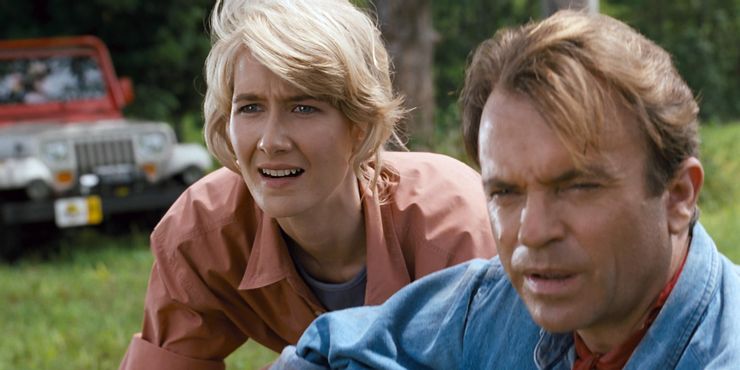
Claire Dearing  (played by Bryce Dallas Howard) from Jurassic World is mentioned by camp staffers Alex and Dave, as well as Dr. Grant's (Sam Neill in Jurassic Park and Jurassic Park 3) blog about dinosaur bones, and Dr. Sattler's (Laura Dern from Jurassic Park and Jurassic Park 3) Facebook page about paleobotanytying them into the events of Camp Cretaceous.

7 - Zach And Gray Were Supposed To Go To Camp Cretaceous

When staff campers Alex and Dave can't get Claire Dearing on the walkie-talkie, they decide to take a trip to the south side of the park and tell her in person that they don't think her nephews Zach and Gray should join the others at Camp Cretaceous.

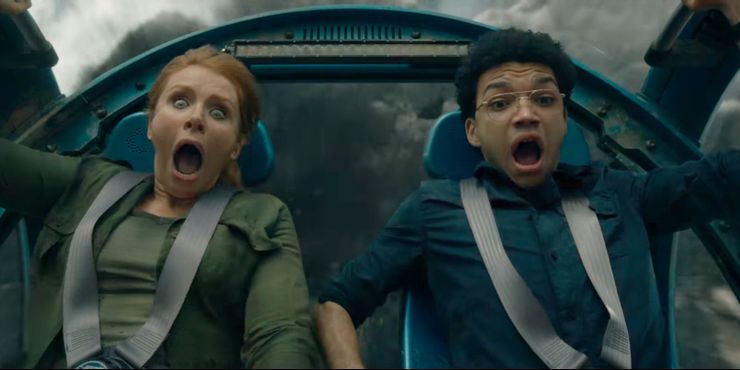
In Jurassic World, Zach and Gray end up getting separated from their tour on a gyrosphere excursion, only to encounter the Indominus Rex. They have to leave their smashed gyrosphere behind and end up lost in the park, just like Darius and his friends (except they have Owen Grady to find them).

6 - Familiar Locations Around Isla Nublar

Fans of the Jurassic Park films will recognize when Darius and other the characters witness the destruction of the pteranodon aviary when Mr. Masrani's helicopter crashes into it, releasing the park's dreaded winged dinosaurs.

They also ride the monorail from Jurassic World that loops around the theme park, encounter Owen Grady's raptor paddock several times, spend some time at Jurassic Lagoon with the mosasaurus, and explore the underground maintenance tunnels seen briefly in Jurassic World: Fallen Kingdom.

5 - Walkie-Talkie Chatter

Viewers that turn on their closed-captioning while watching the series might have a better chance of catching the walkie-talkie chatter heard by Darius and other characters in the second half of the series. There are reports of an "asset out of containment," which indicates the Indominus Rex from Jurassic World has breached the confines of its paddock.

Members of the Asset Containment Unit are heard being eaten by the Indominus Rex as well as battling velociraptors ("velociraptor screeching") during the climactic end of Jurassic World.

4 - The Gyrosphere

The highlight of the campers' trip is when they get to ride the same gyrospheres featured in Jurassic World to help herds of dinosaurs migrate from one side of the park to the other. As in the film, their activity doesn't go as planned and they get separated from the camp staff.

Later, the kids run into the crashed gyrosphere of Zach and Gray from Jurassic World, who were forced to abandon it after their first perilous meeting with the Indominus Rex. They also see the corpse of the ankylosaurus that the Indo killed.

3 - Dr. Wu's Fate

The chatter over the walkie-talkies reveals something specific about the fate of Dr. Wu in Jurassic World, who was implied to have survived the Indominus Rex attack and escaped offscreen. Guards are heard crying, "Shoot her!" while the sounds of velociraptor noises are heard.

One guard shouts, "The order is to save Wu," further indicating that making sure Dr. Wu got off the island was of paramount importance, no matter how many raptors (or other "assets") were harmed. The chatter indicates the brutal circumstances surrounding Wu's perilous escape.

2 - Nothing In The Park Works

When Darius and the other campers arrive at Camp Cretaceous, they quickly realize that for all the "expense" John Hammond didn't spare in creating his dinosaur theme park, he certainly cut corners when it came to the technology.

The walkie talkies are glitchy, the wifi is dodgy, and the emergency brakes on the monorail are out. This is a reference to the Jurassic Park novel by Michael Crichton, in which John Hammond was a greedy capitalist.

1 - Sammy The Spy

When Sammy Gutierrez turns out to be an operative for a mysterious company looking to pilfer Dr. Wu's research from Jurassic World, she mirrors the arc of Denis Nedry's character in Jurassic Park, who was intent on smuggling dinosaur samples out of the park for a rival company. Sammy even sports a very similar shirt with the same pink flower and leaf pattern as Nedry.

Sammy mentions she's working for "Manta Corp," a rival to InGen's corporation. Manta Corp wants to also use genetic modification to splice dino DNA and create strange new creatures, just like Dr. Wu's Indominus Rex. The name is appropriately similar to "Manticore," a deadly Greek beast that has the body of a lion, the head of a man, and the tail of a scorpion.

Source: https://screenrant.com/

Jurassic World Tried To Bring Back The Spinosaurus

Tuesday, September 22, 2020

Jurassic World: Camp Cretaceous reveals Dr. Wu was trying to bring back the Spinosaurus from Jurassic Park 3 before the park was destroyed.

Jurassic World was trying to bring back the Spinosaurus from Jurassic Park 3 shortly before the park was destroyed. Reviving and rebranding the Jurassic Park franchise with Jurassic World was a smart decision by Universal Pictures and it's led to a resurgence in interest in Michael Crichton's world. Part of that meant de-canonizing The Lost World: Jurassic Park and Jurassic Park 3; however, events from both films have slowly started to trickle back into continuity through supplemental material.

One of the things that seems to have been made canon again is the existence of the Spinosaurus. In Jurassic Park 3, Dr. Grant is deceived into landing on Isla Sorna - InGen's Site B, a second island that was used to breed dinosaurs before transferring them to the main island, Isla Nublar - where he and others came into contact with the Spinosaurus. According to Jurassic World: Fallen Kingdom's viral website, Dinosaur Protection Group, InGen illegally cloned dinosaurs - presumably including the Spinosaurus - and released them on Isla Sorna in 1999, which noticeably disrupted the ecosystem.

The Spinosaurus, though a real dinosaur, was the franchise's attempt at creating a theme-park monster, just like Dr. Grant had accused John Hammond of doing with Jurassic Park. It's unclear what happened to the Spinosaurus from Jurassic Park 3, but a skeleton of the dinosaur was on display in the movie Jurassic World. And while it was unknown if Jurassic World recreated the Spinosaurus, the animated series Camp Cretaceous confirms that Dr. Wu was trying to revive it before the park was destroyed. He might've been successful and viewers just don't know yet.

In Jurassic World: Camp Cretaceous season 1, episode 2, "Secrets", some of the group members visit one of Jurassic World's satellite genetics labs. While there, Brooklynn takes the opportunity to sneak into Dr. Wu's private office, where she discovers his file on the Indominus rex. However, before she tries to break into Dr. Wu's confidential folder, she sees information about the Spinosaurus on his screen, thus implying that Dr. Wu and Jurassic World were looking into bringing back the dinosaur.

Given that the Spinosaurus information was found alongside Dr. Wu's files on the Indominus rex, perhaps the park considered the Jurassic Park 3 dinosaur to be a monster-like animal too. It certainly had that quality in the 2001 movie, defeating the Tyrannosaurus rex and killing several other dinosaurs along the way. Perhaps its brief tease in Camp Cretaceous is setting up its return in Jurassic World: Dominion in 2021. If the Spinosaurus on Isla Sorna survived and was eventually transported back to the United States along with the rest of the dinosaurs, there's a chance it could reappear at some point in the third and final film in the trilogy.

Source: https://screenrant.com/

Jurassic World: Camp Cretaceous' Dark Ending & Movie Connections Explained

Monday, September 21, 2020

Jurassic World: Camp Cretaceous season 1 ties into the 2015 movie and ends with a shockingly bleak cliffhanger that sets up season 2 on Netflix.

Warning: SPOILERS for Jurassic World: Camp Cretaceous Season 1.

Here's what the surprisingly dark ending of Jurassic World: Camp Cretaceous season 1 means for the Netflix-exclusive animated series. Set during the events of Colin Trevorrow's Jurassic WorldCamp Cretaceous tells the story of six teenage campers whose once-in-a-lifetime opportunity to experience the dinosaur park from behind the scenes turns into a nightmare when the Indominus Rex breaks loose, leading to the evacuation and destruction of the theme park resort.

The six campers - Darius (Paul-Mikel Williams), Brooklynn (Jenna Ortega), Kenji (Ryan Potter), Sammy (Raini Rodriguez), Yasmina (Kausar Mohammad), and Ben (Sean Giambrone) - were left to their own devices by their counselors, Roxie (Jameela Jamil) and Dave (Glen Powell) and forced to try to make it to the docks on their own. They survived a handful of encounters with the Indominus Rex as well as facing Velociraptors, the Mosasaurus, the Pteranodons, and a Carnotaurus. Not only is Ben seemingly killed but after everything they endured, the campers finally arrived at the docks the next morning to find that the last ferries were gone and they were left behind on Isla Nublar.

While Jurassic World: Camp Cretaceous targets a young audience and doesn't outright show the gore of dinosaurs eating people, the series is violent, scary, definitely takes chances, and follows executive producer Steven Spielberg's advice not to make "the kiddie version" of Jurassic World. Camp Cretaceous gets incredibly dark as it continues, with the teenagers repeatedly placed in harrowing life-or-death scenarios. The fact that Jurassic World: Camp Cretaceous also ends with a jaw-dropping cliffhanger is also a bold move that begs for the kids' story to continue. Here's how Camp Cretaceous connects to Jurassic World and how the finale sets up season 2.

Camp Cretaceous' Ending Is Dark: The Kids Are Left Behind In Jurassic World

After every life-threatening ordeal the six teenage campers survived against the dinosaurs in Jurassic World, Camp Cretaceous' ending was shockingly bleak: the kids were abandoned when the island was evacuated. After surviving the Mosasaurus in the Lagoon, the attack by the Pteranodons on the monorail, and two deadly encounters with the Carnotaurus, the kids were too late when they reached the docks on the southern tip of Isla Nublar early the next morning. The last ferry departed, despite Roxie and Dave pleading for the boat to turn around and rescue the teens, who were left behind.

This means the campers are trapped in Jurassic World with the dinosaurs running loose all over the island. The one positive in this scenario is that the Indominus Rex is dead; as fans saw in Jurassic World, it was eaten by the Mosasaurus. If the kids can reach the main park, they also have a chance to survive since the evacuation was so sudden, it left behind the resources of the resort and the various facilities of the main park. The campers' immediate survival prospects are not completely dire if they can indeed make it to the resort, but there is half of Isla Nublar and its dinosaurs in between the kids and relative safety.

When they were on the monorail, the campers faced the fact that even though they relied on each other to stay alive against the dinosaurs, they didn't consider each other friends since they were thrown together at random. But now that they literally only have each other until they can be rescued, the kids will have to continue to work together - and some of them need to grow up fast - to stay alive in Jurassic World.

How Camp Cretaceous Connects To Jurassic World

Camp Cretaceous was cleverly structured to take place before, during, and immediately after the events of Jurassic World. The campers arrived about three days before the events of the movie began, and the kids met Dr. Henry Wu (B.D. Wong) in the Genetics Lab about two days before the Indominus Rex's outbreak. In fact, Brooklynn discovered Wu's plans for the Indominus Rex while she was snooping in Wu's private office. The campers also saw Simon Masrani (Irrfan Khan) arrive on the island via helicopter as he did in the movie.

The first three episodes of Camp Cretaceous took place before the movie, and Darius, Kenji, and Brooklynn's encounter with Blue and the Velociraptors happened two days before the scene with Owen Grady (Chris Pratt) and Vic Hoskins (Vincent D'Onofrio) that introduced them all in Jurassic World. Episode four of Camp Cretaceous happened after the Indominus Rex broke out of its paddock, as one of its first rampages was destroying the Camp Cretaceous treehouse. The kids trying to reach the docks and surviving multiple encounters with the Indominus Rex happened concurrently with the events of the film. In Camp Cretaceous episode 6, they even witnessed the Pteranodons break out of the Aviary and attack Masrani's helicopter, killing the billionaire owner of Jurassic World.

By the time the campers made it to the Cretaceous Cruise kayak ride, the conclusion of Jurassic World was happening: the Pteranodons attacked the resort, Claire Dearing (Bryce Dallas Howard) released the T-Rex to fight the Indominus Rex, and the villainous hybrid carnivore was eaten by the Mosasaurus. The campers arrived at the Mosasaurus Lagoon as the island was evacuating and the events of the movie were over by the time they reached the docks the next morning when all the ferries were gone.

Did Ben Survive His Fall From The Monorail?

One of the most shocking moments in Jurassic World: Camp Cretaceous was the apparent death of Ben when he fell from the monorail. He was the nerdiest of the campers and the one least suited to survival on the island, but Ben proved his mettle when he faced the Pteranodons and saved the monorail from a collision. However, the Camp Cretaceous season 1 finale ended with Bumpy, Ben's baby Ankylosaurus, discovering Ben's unconscious body, and his hand twitched, indicating that Ben is probably still alive.

Still, the fact that Jurassic World: Camp Cretaceous is an animated series aimed at kids created an assumption that it wouldn't depict the young campers themselves dying (or even seemingly dying). So "killing" Ben was a bold, risky move by Camp Cretaceous that upped the ante for how far the series is willing to go and that the campers are not "safe" just because they're kids. It's a fine line Camp Cretaceous walked but it did create genuine stakes and jeopardy that maintains the level of realism in the Jurassic Park/Jurassic World films.

But even if Ben is alive from the fall, how hurt is he and can he survive long enough for his friends to find him and get him somewhere to receive medical attention? No matter what, Ben remains in critical danger in Jurassic World: Camp Cretaceous season 2.

What Will Happen In Jurassic World: Camp Cretaceous Season 2?

One of the big questions left behind by Jurassic World: Camp Cretaceous season 1's cliffhanger is when the events of season 2 will happen and whether there will be a time jump of any sort. This is crucial because there is a ticking clock on Isla Nublar since we know that in 2018, Mount Sibo will erupt and the volcanic explosion will destroy the island. Thanks to Jurassic World: Fallen Kingdom, we also know that mercenaries arrive on Isla Nublar six months after Jurassic World fell in order to extract the remains of the Indominus Rex from the Lagoon so that Dr. Wu and breed the Indoraptor, and the mercenaries' blunders set the Mosasaurus loose into the ocean. But the mercenaries never encounter the kids from Camp Cretaceous during their fateful expedition.

If Jurassic World: Camp Cretaceous season 2 happens soon after season 1 and within the 6 months before the mercenaries arrive on Isla Nublar, then there's a chance the kids survive long enough to be rescued. They have a few things going their way: Kenji's father is incredibly rich, Brooklynn is a famous social media influencer, and Ben, Yaz, and Sammy have parents as well who could mount rescue missions. Roxie and Dave also know the campers were left behind and a ferry could be sent to find them. It's possible Jurassic World: Camp Cretaceous season 2 happens well before the events seen in Jurassic World: Fallen Kingdom because the alternative is that the teenage campers are still on the island and not rescued when the volcano explodes in 2018 - which would be an inconceivably dark ending for the animated series.

Jurassic World: Camp Cretaceous is available to stream on Netflix.

Source: https://screenrant.com/

Is Jurassic World: Camp Cretaceous Suitable For Kids?

Saturday, September 19, 2020

The Netflix animated series isn’t the “kiddie” version of Jurassic World, and earns the PG rating. So is it suitable for younger audiences?

Netflix's new animated series Jurassic World: Camp Cretaceous might be aimed at younger audiences, but executive-producer Steven Spielberg stressed that the show is still violent and deals with adult themes. Taking place during the events of the 2015 film Jurassic WorldJurassic World: Camp Cretaceous follows six teenagers who win a contest to be the first campers in Camp Cretaceous. Suddenly, when the Indominus Rex breaks loose and the campers are stranded in the park after crashing  Jurassic World's Gyrospheres, the kids must band together to survive.

Although Jurassic World: Camp Cretaceous intersects with the events of Jurassic World, the series tells an entirely new story - and Jurassic Work: Camp Cretaceous could be a better addition to the Jurassic Park series than Jurassic World. The Netflix show might be animated, but it still has just as many scary dinosaur encounters as Jurassic World and is designed to look as unnerving as the movie. Although Jurassic Park: Camp Cretaceous never shows any blood or gore onscreen, the show is still pretty intense for an animated series. So, is it really suitable for kids?

While Jurassic World was given a PG-13 rating for intense sequences of science-fiction violence and peril, Jurassic World: Camp Cretaceous is only rated TV-PG. Showrunner Scott Kreamer said in an interview that Steven Spielberg didn't want Jurassic Park: Camp Cretaceous to be the "kiddie version" of Jurassic World, and that "it needs to feel like it's Jurassic Park." Jurassic Park: Camp Cretaceous certainly earns a PG rating, letting the young characters be in frequent danger instead of feeling safe, and trusting the young audience to handle the intense subject material. Again, there aren't any bloody scenes, but the situations the teenagers find themselves in can be considered frightening to the youngest viewers. The series is suitable for kids, but with caution.

Unlike previous Spielberg projects, which often depict children facing danger but shows them as secondary characters rescued by adults, Jurassic World: Camp Cretaceous focuses only on the six teenage protagonists. The series separates the teenagers from their adult supervisors so that they can only depend on each other to survive. Jurassic World: Camp Cretaceous frequently puts the teenage protagonists in legitimately scary and dangerous situations where they have to fend for themselves. Although the series never actually depicts blood or gore onscreen, things still get intense. Several times, the teenagers watch someone get eaten by dinosaurs and it can be a lot to handle.

Jurassic Park: Camp Cretaceous trusts that the younger audience can handle the intense material, and the series is still suitable for kids. The intensity of the series can be a lot for younger kids who haven't previously watched Jurassic Park, although the show is still targeted at a younger audience than the movies. If parents are concerned that Jurassic Park: Camp Cretaceous is not appropriate, they should rest assured that the series is no scarier than Jurassic Park or Jurassic World.  For kids who are prepared to handle animated violence and tense situations, Jurassic Park: Camp Cretaceous is a great, age-appropriate choice.

Source: https://screenrant.com/

Where Jurassic World's Characters Are During Camp Cretaceous

Sunday, September 20, 2020

Jurassic World: Camp Cretaceous takes place during the events of Jurassic World, but the characters don’t cross paths. Where on Isla Nublar are they?

Netflix's new animated series Jurassic World: Camp Cretaceous tells a new story on the other side of Isla Nublar happening during the events of Jurassic World, and frequently references characters from the 2015 film. The series follows six teenagers who win a spot in the first ever Camp Cretaceous, where they get to have exclusive access to the park under the supervision of camp counselors Dave and Roxie. After the Indominus Rex escapes the enclosure, both the characters from Jurassic World and Jurassic World: Camp Cretaceous have to get creative to escape the park alive.

Jurassic Park: Camp Cretaceous might be set during the events of Jurassic World, but it has an entirely new cast of characters and tells a completely different story from the film. The six teenagers in Jurassic Park: Camp Cretaceous are located on the opposite side of Isla Nublar from Owen Grady and Claire Dearing's adventures in Jurassic World. Although the campers venture into many of the same parts of the park, such as the underground maintenance tunnels and the raptor paddock, their paths never cross. So where exactly are Jurassic World's characters during Jurassic World: Camp Cretaceous?

The only Jurassic World character that appears in Jurassic World: Camp Cretaceous is Dr. Henry Wu, the geneticist who created all the dinosaurs in the Jurassic Park movies. In both Jurassic World and Jurassic World: Camp Cretaceous, Dr. Wu creates the Indominus Rex, the vicious dinosaur who escapes the enclosure and wreaks havoc on Isla Nublar. Dr. Wu appears briefly in Jurassic World: Camp Cretaceous in season 1, episode 2 "Secrets" when the campers are touring the top-secret genetics lab. He is mentioned by name later in the series during season 1, episode 5 "Happy Birthday, Eddie!" when the kids overhear guards shout to each other, "the order is to save Dr. Wu!" while being attacked by an unknown dinosaur.

Although the campers in Jurassic World: Camp Cretaceous never run into the main characters from Jurassic World because they are on the opposite side of the island, the operations manager of Jurassic World, Claire Dearing, is mentioned several times by name over the course of the show. Claire never physically appears in Jurassic World: Camp Cretaceous, but mentioning the character by name helps tie the animated series into the broader world of the Jurassic Park movies.

Jurassic World: Camp Cretaceous takes place during the events of Jurassic World, but the camp's location on the other end of the park from the Indominus Rex enclosure and the main resort means that the characters never interact. Despite that, the campers in Jurassic World: Camp Cretaceous frequently run across evidence that the Jurassic World characters were there, such as finding the remains of the crashed Gyrosphere in the restricted section of the park. Although their paths never do cross, the characters in Jurassic World still come perilously close to finding the campers in Jurassic Park: Camp Cretaceous.

Source: https://screenrant.com/

Changmiania liaoningensis: Paleontologists Discover New Species of Ornithopod Dinosaur

Friday, September 18, 2020

Changmiania liaoningensis, an anterior part of the holotype in caudolateral view; red arrow indicates the emplacement of the gastrolith clusters. Image credit: Yang et al, doi: 10.7717/peerj.9832.

A new genus and species of an early ornithopod dinosaur has been identified from two nearly complete skeletons found in China’s Liaoning Province.

The newly-discovered dinosaur roamed Earth approximately 123 million years ago during the Early Cretaceous period.

The ancient creature belongs to Ornithopoda, a large group of mainly herbivorous bird-hipped dinosaurs.

Scientifically named Changmiania liaoningensis, the new species is the earliest member of the group described so far.

“Although it superficially resembles Jeholosaurus, represented by numerous specimens in the same deposits, the observed differences suggest that Changmiania liaoningensis occupies a more basal phylogenetic position at the base of the clade Ornithopoda,” said Dr. Pascal Godefroit from the Royal Belgian Institute of Natural Sciences and his colleagues from Argentina and China.

The two nearly complete and articulated skeletons of Changmiania liaoningensis were found by local farmers in the Lujiatun Beds of the Yixian Formation close to Lujiatun Village in western Liaoning Province.

Both individuals were likely entrapped in a collapsed underground burrow while they were resting, which would explain their perfect lifelike postures and the complete absence of weathering and scavenging traces.

The paleontologists hypothesize that the dinosaurs were killed catastrophically by lahar (volcanic mudflow) from a nearby shield volcano.

“Such a perfect preservation of the skeleton in a lifelike posture, as observed in both the holotype and referred specimen of Changmiania liaoningensis and also in countless fossils from the Lujiatun Beds, implies that the animals were rapidly entombed while they were still alive,” they said.

The holotype (top) and the referred specimen (bottom) of Changmiania liaoningensis in dorsal view; red arrows indicate the emplacement of the gastrolith clusters. Image credit: Yang et al, doi: 10.7717/peerj.9832.

The analysis of the specimens shows that Changmiania liaoningensis was an efficient cursorial (adapted to running) dinosaur and had adaptations to a fossorial (burrowing) behavior.

“Some extant fossorial vertebrates dig with their head to some degree, using the top of their broad, firm heads to move, loosen, or compact soil,” the researchers said.

“The fused premaxillae and the spatulate shape of the dorsal surface of the snout in Changmiania liaoningensis could represent such an implement.”

“Its postcranial skeleton shares a series of morphological characteristics with actual scratch-digging mammals, including a shortened neck (six cervical vertebrae), a radius that is significantly shorter (70%) than the humerus (upper arm bone), and short hands,” they added.

“The hip of Changmiania liaoningensis exhibits some features that might also tentatively be related to a digging behavior.”

“Actual mammals that dig with the forefeet usually brace with their hindfeet, often supplemented by the tail serving as a prop.”

“The leg of Changmiania liaoningensis is about twice as long as its hand and its tibia (calf bone) is significantly longer than its femur (thigh bone), as in most other small basal ornithopods except Koreanosaurus,” the authors said.

“Those leg proportions suggest that Changmiania liaoningensis basically remained an efficient cursorial dinosaur.”

“Moreover, the hand and skull modifications remain rather modest, so that Changmiania liaoningensis was obviously not a true subterranean animal, but more likely a facultative digger.”

The discovery of Changmiania liaoningensis is described in a paper in the journal PeerJ.

_____

Y. Yang et al. 2020. A new basal ornithopod dinosaur from the Lower Cretaceous of China. PeerJ 8: e9832; doi: 10.7717/peerj.9832

Source: www.sci-news.com/

Jurassic World Aftermath Announced, First Trailer Released

Thursday, September 17, 2020

As part of today's Facebook Connect, a whole bevy of different Oculus announcements were made, including the official reveal of the Oculus Quest 2. But it wouldn't have been much of an event if all the company did was announce the new hardware. Alongside the Oculus Quest 2, several VR games and experiences were announced, including Jurassic World Aftermath, a new adventure that tasks players with navigating and escaping the franchise's notoriously deadly Isla Nublar.

If the name "Jurassic World Aftermath" sounds familiar to you, it should. The trademark made the rounds earlier this year, though it wasn't definitively attached to anything but a video game at the time. The previous Jurassic World video game, Jurassic World Evolution, was fairly well-received, so folks were tentatively excited for more. It's hard to say whether Jurassic World Aftermath being a VR experience is going to help or hinder that at this point.

You just crash landed onto Isla Nublar and Velociraptors are stalking your every move. Think quick and solve your way to safety in this thrilling new adventure. Coming soon to the @Oculus Quest Platform: https://t.co/nUF8ed6Dwp pic.twitter.com/ULho1Fxhu3

— Jurassic World (@JurassicWorld) September 16, 2020

Here's how Oculus' post about the new games coming to the Oculus Quest describes Jurassic World Aftermath:

"Set two years after the fall of Jurassic World, the suspenseful Jurassic World Aftermath sends you back to Isla Nublar in search of confidential research materials lost in the evacuation. The problem? A crash landing has left you stranded in the rundown ruins of a now-abandoned research facility—and deadly Velociraptors stalk your every move. You’ll have to rely on your wits (and a bit of luck) to escape the island alive in this tense and thrilling adventure from Universal Games and Digital Platforms and Coatsink Games."

Jurassic World Aftermath does not currently have a specific release date and is instead noted as "coming soon" to the Oculus Quest. You can check out all of our previous coverage of Oculus right here.

What do you think of what we have seen of Jurassic World Aftermath so far? Are you interested in playing it when it releases? Let us know in the comments!

Source: https://comicbook.com/

Jurassic World 3: What Dominion Needs To Do To End The Trilogy

Thursday, September 17, 2020

What Jurassic World: Dominion has to do right to give the rebooted Jurassic Park series the perfect ending that this new trilogy deserves.

How can Jurassic World: Dominion give the rebooted Jurassic Park trilogy the perfect ending it deserves? Released in 2015, Safety Not Guaranteed director Colin Trevorrow's Jurassic World was a stellar, if flawed, reboot for the Jurassic Park series. Then along came 2018's Fallen Kingdom, and with it came many Jurassic World plot holes that the series now needs to clear up in its forthcoming final installment.

2015's Jurassic World maintained the humor, tension, heart, and adventure of 1993's Jurassic Park while also expanding the scope and scale of the action to previously unseen size. 2018's Fallen Kingdom, meanwhile, was a bizarre film from A Monster Calls director JA Bayona which offered viewers everything from arms dealers buying dinosaurs in underground auctions, to child clones, to a volcanic eruption on Jurassic Park's original island setting, to a hybrid super-raptor stalking our heroes through a gothic mansion in a thunderstorm. It's a wild ride and one that ended with the sight of dinosaurs freed into the world and roaming among humans.

The major question right now is how Jurassic World: Dominion will end the franchise, but for now, very few details of the film's story are known for certain. But what does the film need to do to provide a satisfying end for the trilogy? Well, the third installment needs to explain what happened with the freed dinosaurs, give Owen and Clare's indecisive relationship a happy (or at least conclusive) ending, and do justice to the returning legacy cast by wrapping up the long-running InGen/BioSyn rivalry neatly. See? It's easy.

Remove Owen And Clare's Romantic Tension

First things first, the Jurassic World series needs to give a clear and conclusive ending to its original characters Owen and Clare. Fortunately, the pair's potentially human-dino-hybrid surrogate kid Maisie should hopefully have been enough of a tether to keep the two together between films this time around. If Owen and Clare's partnership has survived the time between sequels, viewers might be spared a third "they can't stand each other, but boy do sparks fly when they have to work together" scene in as many installments. Chris Pratt and Bryce Dallas Howard don't need conflict to have a fun, easy chemistry together and Jurassic World: Dominion has too much plot to get through to focus on their on-again-off-again romance. Just keep them together and let them tackle this one as a unit.

Do The Jurassic Park Legacy Characters Justice

Enough about the young cast, what about the veterans? Jurassic World: Dominion has a lot of legacy characters with the list of returning cast members including Jeff Goldblum, Sam Neill, and Laura Dern. Even more so than Owen and Clare, the series needs to do these original Jurassic Park characters justice, particularly after Goldblum's contribution to Fallen Kingdom ended up being little more than a glorified cameo. While the trio was central to the story of the original park, Goldblum's involvement in The Lost World and Neill's return in Jurassic Park III was more shoehorned in, with neither character being the focus of either sequel. By returning to the original Jurassic Park's focus on InGen and BioSyn's long-running rivalry, this installment could do right by them by bringing the characters back to where they began, at the center of a conflict they couldn't control and could only hope to survive. By making InGen and BioSyn the villains of Jurassic World: Dominion, the filmmakers can deliver on The Lost World's original plot and provide Neill, Dern, and Goldblum the sequel they always deserved in the process.

Don't Overlook The Dinosaurs

As great as the stars of The FlyBlue Velvet, and Event Horizon are, no one will be rushing to the multiplex to see a trio of aging actors put in reliably solid turns in Jurassic World: Dominion. The clue's in the title here, and the primary appeal of this franchise of monster movies is the same as the main attraction of their fictitious titular theme park. Viewers want to come to Jurassic Park and Jurassic World movies hoping to see some dinosaurs... But not too many of them, either. This balance could prove difficult to pull off, as the ending of Fallen Kingdom featured a montage of dinosaurs roaming throughout human-inhabited earth that may be hard to retcon. After the messy ending of Fallen Kingdom set lots of dinosaurs free, this installment needs to explain how these dinosaurs are surviving in human civilization.

But the third film in the franchise could use the returning villainous corporation BioSyn to fill in this plot hole. InGen is likely to be pretty unpopular worldwide due to unleashing dinosaurs into human civilization and this could allow their competitor BioSyn to take advantage of their newfound comparative popularity by creating new, more dangerous dinosaurs under the guise of keeping people safe from the now-freed denizens of the abandoned theme park. The film could see BioSyn hide its attempts to gain access to dinosaur DNA via returning to Isla Sorna by having the nefarious company claim they're attempting to assist with efforts to neutralize the world's newfound dinosaur infestation. And speaking of BioSyn...

BioSyn, InGen, And Their Shared DNA

The most exciting news to come out of Jurassic World's third installment is the return of Dodgson, the beleaguered co-conspirator of Dennis Nedry. Not just because it means that the overworked Nedry's legacy can live on, but also because Dodgson's presence means that BioSyn is still toiling away in the lab attempting to cook up some dino DNA that will match the miraculous genetic inventions of the late Hammond and co. With BD Wong set to return to his role as the villainous genome tinkering scientist Henry Wu, it's looking more and more likely that BioSyn will be behind new dinosaurs seen in Jurassic World: Dominion's onset photos. So not only are viewers are guaranteed the spectacle of dinosaurs roaming free in public and new dinosaur threats to contend with, BioSyn's presence will likely mean plenty of villainous henchmen for these dinos to chew through.

But even more promising is the thematic clarity of BioSyn's return. The rivalry between the two corporate giants has been in the background of both franchises since their inception, and their amoral Frankenstein-ian experimentation has led humanity to the mess they're in by the time Jurassic World: Dominion begins. As such, the movie could make up for the franchise's failure to show the consequences of Hammond's actions by portraying BioSyn, InGen, and their shareholders as the real monsters of this beloved creature feature series.

Source: https://screenrant.com/

Jurassic World: 5 Ways Fallen Kingdom Was A Huge Disappointment (& 5 Dominion Can Improve On It)

Thursday, September 17, 2020

Fans of the Jurassic Park/World franchise hated Fallen Kingdom, and for good reason. But Dominion might give moviegoers a few reasons to be hopeful.

The hiring of The Orphanage’s J.A. Bayona and the promise of expanding on the franchise’s universe made Jurassic World: Fallen Kingdom one of the most anticipated movies of 2018. Unfortunately, when it hit theaters, excited moviegoers were dismayed when it failed to live up to the franchise's movie magic.

It wasn’t a mixed bag like its predecessor, which had its shortcomings but still delivered the goods as an action-packed dino-infested blockbuster; it was an abject failure. It just might be the worst movie in the Jurassic Park franchise, which is saying a lot. But that doesn’t mean the next movie, Jurassic World: Dominion, can’t redeem it.

10 - Fallen Kingdom Was A Huge Disappointment: The Nonsense Was Distracting

Since the cloning of dinosaurs was made up for Michael Crichton’s original Jurassic Park novel, there’s not a lot of science to support these movies and the audience is required to suspend their disbelief to a certain extent. But Jurassic World: Fallen Kingdom took that extent and went way too far with it.

The audience is expected to believe that the island the park was built on has been an active volcano waiting to erupt this entire time, and that live dinosaurs would go for $4 million per species on the black market. This nonsense becomes distracting.

9 - Dominion Can Improve On It: Make Sure The Script Makes Sense

When a movie like Jurassic World: Dominion is getting made and $200 million is at stake, the script is heavily scrutinized by studio executives. They missed all the plot holes and ridiculous leaps in logic in Fallen Kingdom, but they need to spot them in Dominion.

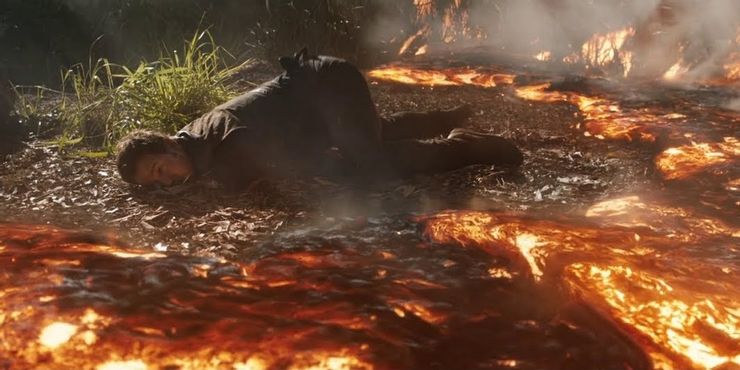
If there are scenes in Dominion like the one in Fallen Kingdom in which Chris Pratt avoids molten lava following the-floor-is-made-of-lava rules instead of actual science, audiences won’t let it fly a second time.

8 - Fallen Kingdom Was A Huge Disappointment: The Characters Remained One-Note

The first Jurassic World movie didn’t bother to round out Chris Pratt and Bryce Dallas Howard’s respective characters, Owen Grady and Claire Dearing, beyond identifying their job titles and giving them one-note personalities to suit their actors.

The sequel did nothing to build on that. Owen is still a wisecracking smart-aleck, but now, he’s building a cabin. Claire is still high-maintenance, but now, she’s working with a charity instead of creating bloodthirsty predators.

7 - Dominion Can Improve On It: Build On The Characters

Owen and Claire’s adoption of Maisie at the end of Fallen Kingdom is a good jumping-off point to finally turn them into characters worth caring about, as they move beyond themselves and try to become parents.

If Dominion takes a little time to develop them in between set pieces, then it could redeem their one-note characterization in the previous movies.

6 - Fallen Kingdom Was A Huge Disappointment: Disjointed Story Structure

The first half of Fallen Kingdom is a carbon copy of The Lost World, as mercenaries are sent to the island with a secret malicious mission, while in the second half, it becomes a haunted house movie.

The structure of the plot is completely disjointed, like the producers had two ideas and neither of them were quite there, so they decided to just use both undercooked concepts to pad it out.

5 - Dominion Can Improve On It: Focused Narrative

Rather than taking two lukewarm story ideas and saying, “Let’s just do the first idea in the first half and the second idea in the second half,” the writers of Jurassic World: Dominion need to come up with a more focused narrative.

Organic progression from scene to scene with increasingly raised stakes and earnest character development worked like a charm in the first Jurassic Park movie.

4 - Fallen Kingdom Was A Huge Disappointment: Jeff Goldblum’s Role Was A Glorified Cameo

One of the most exciting things about Jurassic World: Fallen Kingdom was Jeff Goldblum’s much-hyped return to the role of Ian Malcolm. However, in the movie, his role was that of a glorified cameo.

He bookends the movie with the same rhetoric we’ve heard over and over again throughout the franchise, all shot in the same room and wardrobe, suggesting Goldblum got it out of the way in one day.

3 - Dominion Can Improve On It: Give Substantial Roles To Legacy Characters

It’s already been confirmed that Sam Neill and Laura Dern will be joining Jeff Goldblum in Jurassic World: Dominion and they’ll all have substantial roles, so that had better not be exaggerated.

The last thing fans need is to get all excited to see the original trio back together again, only for them each to appear in one scene and never share the screen.

2 - Fallen Kingdom Was A Huge Disappointment: The Best Clips From The Trailers Were Just In The Epilogue

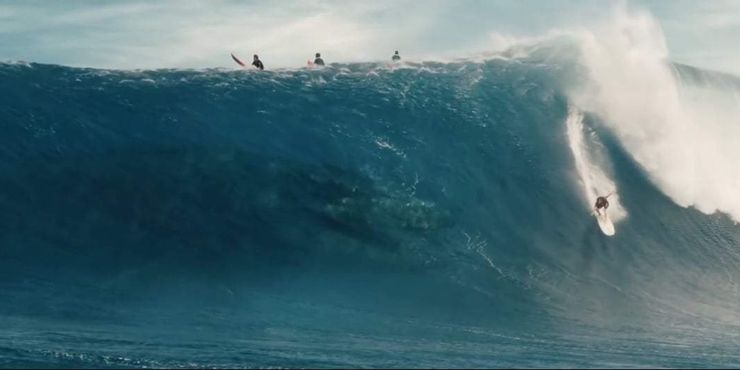
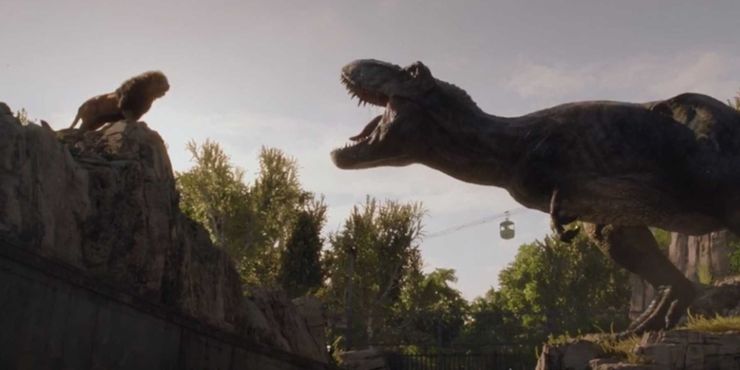
The most exciting clips from the trailers for Fallen Kingdom saw dinosaurs roaming around North America, like a T. rex roaring at a lion in a zoo and a Mosasaurus lurking beneath some surfers on a wave, but they weren’t really in the movie.

These clips only appeared in montage form in a brief epilogue set after Maisie lets the dinosaurs out into civilized society. Fallen Kingdom only served to set up the most exciting clips for the next movie.

1 - Dominion Can Improve On It: Deliver On The Epilogue’s Promise

If one of the most disappointing things about Fallen Kingdom is that it saved all the most exciting stuff for the next movie, then all the next movie has to do is deliver on that promise.

The recently released short film Battle at Big Rock gave fans a lot of hope for a feature-length movie set in an America populated with dinosaurs, so there’s still hope.

Source: https://screenrant.com/

Carnian Pluvial Episode: Paleontologists Identify New Mass Extinction Event

Thursday, September 17, 2020

Summary of major extinction events through time, highlighting the Carnian Pluvial Episode at 233 million years ago. Image credit: D. Bonadonna / MUSE, Trento.

The Carnian Pluvial Episode, a major climate change event that occurred around 234 to 232 million years ago (Late Triassic period), was a time of global environmental changes and possibly substantial volcanism. A new analysis of paleontological data suggests that this event was a major — but previously neglected — time of extinction and may be linked to the disappearance of up to 33% of all marine genera (invertebrates, vertebrates, and protists) as well as many tetrapod clades and to the explosive diversification of many key modern groups of plants and animals (conifers, insects, dinosaurs, crocodiles, lizards, turtles, and mammals).

In the research, University of Bristol’s Dr. Mike Benton, Dr. Jacopo Dal Corso from the China University of Geosciences at Wuhan and their colleagues reviewed all the geological and paleontological evidence and determined what had happened.

The cause was most likely massive volcanic eruptions in the Wrangellia Province of western Canada, where huge volumes of volcanic basalt was poured out and forms much of the western coast of North America.

“The eruptions peaked in the Carnian,” Dr. Dal Corso said.

“I was studying the geochemical signature of the eruptions a few years ago and identified some massive effects on the atmosphere worldwide.”

“The eruptions were so huge, they pumped vast amounts of greenhouse gases like carbon dioxide, and there were spikes of global warming.”

The warming was associated with increased rainfall, and this had been detected back in the 1980s by geologists Mike Simms and Alastair Ruffell as a humid episode lasting about one million years in all.

The climate change caused major biodiversity loss in the ocean and on land, but just after the extinction event new groups took over, forming more modern-like ecosystems.

The shifts in climate encouraged growth of plant life, and the expansion of modern conifer forests.

“The new floras probably provided slim pickings for the surviving herbivorous reptiles,” Professor Benton said.

“We now know that dinosaurs originated some 20 million years before this event, but they remained quite rare and unimportant until the Carnian Pluvial Episode hit.”

“It was the sudden arid conditions after the humid episode that gave dinosaurs their chance.”

It wasn’t just dinosaurs, but also many modern groups of plants and animals also appeared at this time, including some of the first turtles, crocodiles, lizards, and the first mammals.

The Carnian Pluvial Episode also had an impact on ocean life. It marks the start of modern-style coral reefs, as well as many of the modern groups of plankton, suggesting profound changes in the ocean chemistry and carbonate cycle.

“So far, paleontologists had identified five big mass extinctions in the past 500 million yeas of the history of life,” Dr. Dal Corso said.

“Each of these had a profound effect on the evolution of the Earth and of life.”

“We have identified another great extinction event, and it evidently had a major role in helping to reset life on land and in the oceans, marking the origins of modern ecosystems.”

The team’s paper was published in the journal Science Advances.

_____

Jacopo Dal Corso et al. 2020. Extinction and dawn of the modern world in the Carnian (Late Triassic). Science Advances 6 (38): eaba0099; doi: 10.1126/sciadv.aba0099

Source: www.sci-news.com/

Pages