nandi's blog

3D Dinosaurs From Google: So You Can Have a Jurassic Park in Your Living Room With Augmented Reality

Wednesday, September 30, 2020

Google's augmented reality animals are back in their most prehistoric version. We tell you how to see 3D dinosaurs on your mobile.

After the success of its animals in augmented reality, Google has updated its application so that dinosaurs can be seen in 3D . Thus, from the app it is possible to see dinosaurs in augmented reality on the mobile.

Specifically, it is possible to see 10 of these prehistoric animals, all of them belonging to the Jurassic Park saga: Tyrannosaurus Rex, Velociraptor, Triceratops, Spinosaurus, Stegosaurus, Brachiosaurus, Ankylosaurus, Dilophosaurus, Pteranodon and Parasaurolophus.

To see the dinosaurs in 3D on your mobile, you just have to type the word “dinosaur” in the mobile search (in Android versions 7 or higher) and select 'View in 3D' to rotate it or zoom in to see it closely. In addition, it is possible to place it in any space using augmented reality and adjust its size to see how large it would be in relation to the environment.

As the company explains on its blog, “Android's new autoscale feature can automatically calculate the distance between your phone and a surface in your space and change the size of the dinosaur to fit the screen of your phone.” Thus, by selecting 'See actual size', the augmented reality detection technology “automatically repositiones the dinosaur in your space to fit in the room.”

In addition, if the volume of Android devices is raised, the sound of their steps or their roar can be heard. The models of all of them have been extracted from the game Jurassic World Alive.

In iOS the procedure is similar, although you have to look for one of the 10 dinosaurs in the Google application or after entering the search engine from the browser (it is only compatible with Chrome and Safari). Dinosaurs in 3D are available in iOS 11 onwards.

Source: https://thetimeshub.in/

Jurassic World's First Clue To Dr. Grant's Story After Jurassic Park 3

Tuesday, September 29, 2020

For the first time in 20 years, Dr. Alan Grant will return in Jurassic World: Dominion. Netflix's Camp Cretaceous dropped a clue to his activities.

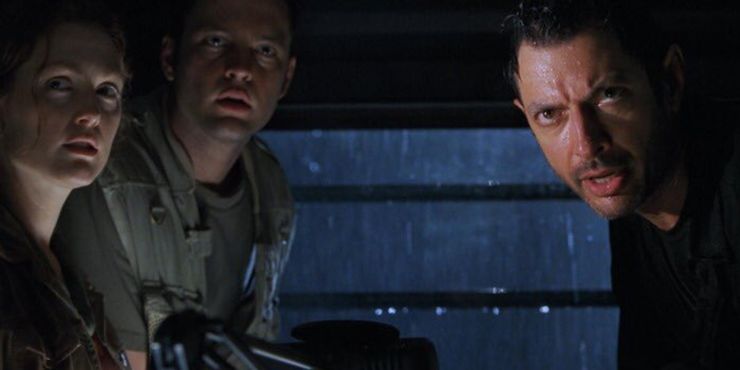
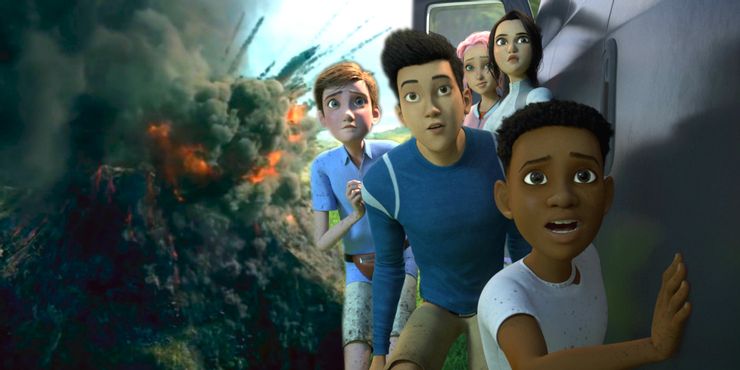
Dr. Alan Grant (Sam Neill) will return in Jurassic World: Dominion, but Netflix's Jurassic World: Camp Cretaceous offers the first clue as to what the world-famous paleontologist has been up to since he survived a visit to Isla Sorna in Jurassic Park III. Camp Cretaceous is the first animated series set in the Jurassic universe and it canonically takes place during the events of Colin Trevorrow's Jurassic World in 2015.

One of the main heroes of Steven Spielberg's Jurassic Park, Dr. Grant is one of the franchise's most beloved legacy characters. Along with his colleague (and then-love interest) Dr. Ellie Sattler (Laura Dern), Alan was brought to Jurassic Park on the Costa Rican island of Isla Nublar in 1993 by its creator, John Hammond (Richard Attenborough), ostensibly to sign off on the dinosaur theme park as a safe tourist destination. Alan was trapped in the park when the dinosaurs got loose but he guided Hammond's grandchildren, Lex (Ariana Richards) and Tim (Joseph Mazzello), to safety before they all escaped Isla Nublar. In 2001, however, Grant was tricked to travel to Isla Sorna AKA Site B in order to lead a mission to rescue Eric Kirby (Trevor Morgan), a teenager who was trapped on InGen's second island of dinosaurs. Alan and the Kirby family survived Isla Sorna and multiple attacks by the Spinosaurus and they were rescued by the U.S. Marines and Navy.

However, in the years after Jurassic Park III, Masrani Global Corporation bought InGen and opened the dinosaur theme park, rebranding it Jurassic World. From 2005-2015, John Hammond's dream of a successful vacation destination where thousands of tourists flocked to experience InGen's cloned dinosaurs became a reality. The reality of Jurassic World also inspired many children's fascination with dinosaurs, including young Darius Bowman (Paul-Mikel Williams), one of the main characters of Jurassic World: Camp Cretaceous. Darius is a dinosaur fanatic, which, in the Jurassic universe, also makes him a huge fan of Dr. Alan Grant, who is still highly regarded as a paleontologist famous for surviving two excursions on both of InGen's dinosaur-filled islands. A flashback in Jurassic World: Camp Cretaceous episode 4, "Things Fall Apart", reveals the first big hint of what Alan Grant has been doing since the end of Jurassic Park III.

In that episode, Darius excitedly shows his late father, Fredrick (Keston John), Dr. Grant's latest article, which was shared on the Jurassic World forums. Darius explains that Alan's newest study is about the new evidence the paleontologist uncovered about "cranial facial biting in theropods". Fredrick caught on right away that this means "theropods didn't just fight to kill, they fought for dominance, for power... And even for fun!"

What we can take away from this is that Dr. Grant is still studying the behavior of predators like the Velociraptor and the Tyrannosaurus Rex, and Alan has deduced that beyond his own experience with carnivores killing to eat, they also exhibited greater social behaviors than previously understood, and that includes the dinosaurs outright playing together. What's fascinating about Grant's research is that his deductions are likely still based upon his own studies from fossils. After all, in Jurassic Park III, Alan publicly decried John Hammond's cloned dinosaurs as "theme park monsters, nothing more" and he insisted that his own work is based upon studying the fossils of real dinosaurs that have been extinct for millions of years.

Colin Trevorrow's Jurassic World films have leaned hard into the dinosaurs as "theme park monsters", which is an apt way to describe hybrid beasts like the Indominus Rex and the Indoraptor. Trevorrow's Jurassic movies also purport that dinosaurs can be weaponized for military applications. However, the hint Camp Cretaceous dropped about Dr. Grant's studies could mean that fans will see Jurassic World: Dominion's dinosaurs, which are loose upon the world, behaving more like 'real' dinosaurs. But then again, all of the dinosaurs in Jurassic World: Dominion, including any new creatures cloned from InGen's codes that are now in the open, will be the opposite of the dinosaurs Alan Grant has been studying, and this may highlight the massive differences between the dinosaurs that once lived and the cloned hybrids of Jurassic World.

Source: https://screenrant.com/

Every Jurassic Park Universe Film And Television Show Ranked By IMDb

Wednesday, September 30, 2020

The Jurassic Park universe contains movies and one TV show, so far. How do these properties rank according to IMDb?

Based on a best-selling novel by Michael Crichton, Jurassic Park was first brought to life on the big screen by Steven Spielberg in 1993. The cutting-edge special effects and the life-like animatronics of the dinosaurs set it far apart from other films of its kind. Since then, Jurassic has grown into a billion-dollar franchise.

It presently consists of five feature length films and an animated children’s series, Netflix's Camp Cretaceous. The sixth film, Jurassic World: Dominion, is currently in production, and will include the return of fan favorites – Sam Neill, Laura Dern, and Jeff Goldblum. Though the franchise as a whole has seen immense success, some of its installments have done better than others with both critics and the general audiences.

6 - Jurassic Park III (2001) - 5.9

In the third chapter of the Jurassic Park franchise, Dr. Alan Grant (Sam Neill) makes his reluctant return. When a wealthy couple offers to fund a dig in return for a lavish tour of Isla Sorna - InGen's second island - Dr. Grant gives in to the temptation against his better judgment, but soon finds that he has been tricked into a rescue mission.

Jurassic Park III is chock full of action and references to the original film, including brief appearances by Dr. Ellie Satler. It even introduces a new and terrifying dinosaur that thrives in both land and water - the Spinosaurus. Unfortunately, it simply lacks the heart of the first film.

5 - Jurassic World: Fallen Kingdom (2018) - 6.2

Set three years after the fall of the Jurassic World theme park, Owen Grady and Claire Dearing find themselves forced to return to the island to assist in evacuations when a volcano threatens the island and the dinosaurs on it.

The sequel to Jurassic World failed to impress critics and only received mediocre reviews from fans. The major problem with Fallen Kingdom is that it is nearly a mirror to the plot, antagonists, and format of The Lost World. Very few scenes evoke real emotion and awe in the audience, and the convoluted plot leaves fans concerned about what comes next, only not in a good way.

4 - The Lost World (1997) - 6.6

Four years after his near-death experience at Jurassic Park, Ian Malcolm has no intention of ever going on an island filled with dinosaurs again. When John Hammond tells him that the research team on Site B includes his girlfriend - respected animal behaviorist, Sarah Harding - Ian rushes to her rescue.

Starring Jeff Goldblum, Vince Vaughn, and Julianne Moore, The Lost World follows the original Jurassic Park story and is loosely based on Michael Crichton's sequel novel. Though the sequel starred fan-favorite Jeff Goldblum as leather-clad rockstar mathematician, Ian Malcolm, many fans considered it a disappointment in comparison to the first. The plot was weak with too many moving parts, and while it was as visually exciting as ever, it just didn't compare to the original.

3 - Jurassic World (2015) - 7.0

Fourteen years after Jurassic Park III made its debutthe franchise took another shot with the series with Jurassic World. Set 10 years after the fateful accident at the original park, John Hammond's dream is finally realized. Jurassic World is a fully functioning luxury resort located off the coast of Costa Rica, and crowds flock to the island full of genetically engineered dinosaurs. But is it doomed to repeat the past?

Starring Chris Pratt and Bryce Dallas Howard, Jurassic World was a huge success and breathed new life into the action-adventure franchise. The upgraded visual effects, quality casting, and dino action gave a much needed boost to the Jurassic movies.

2 - Jurassic World: Camp Cretaceous (2020) - 7.5

A group of six teenagers are chosen for a once in a lifetime chance to attend a summer camp on none other than Jurassic World. When their camp and the park itself begins falling all around them, they are forced to survive on their own while searching for an escape from the treacherous jungles of Isla Nublar.

The first animated series of the franchise, the show lines up with Jurassic World canon. This mean that whatever happens in the animated series can potentially be referenced in Jurassic World: Dominion as well. A dark but kid-friendly look at the dangers and adventures of Jurassic World, the eight episode premiere season is nonstop excitement that is entertaining for both children and adult fans.

1 - Jurassic Park (1993) - 8.1

When an eccentric billionaire funds an amusement park full of genetically engineered dinosaurs kept on an island off the coast of Costa Rica, he enlists a team of a lawyer, a mathematician, and two paleontologists to visit the island to ensure that it is ready for guests.

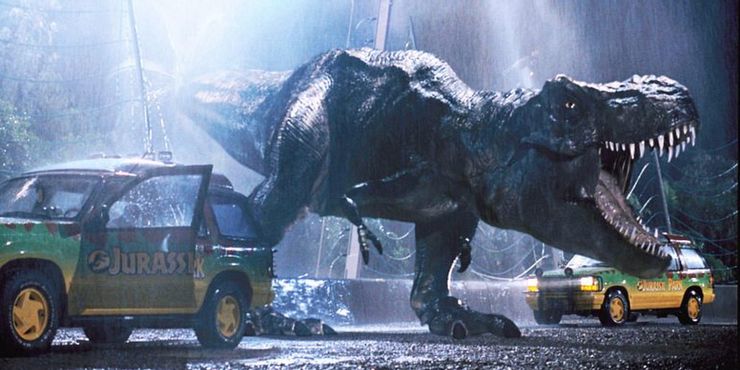
The massive blockbuster that started it all, Jurassic Park broke box office records worldwide the year of its release. Achieving far more than just for the film world, it sparked so much interest in dinosaurs that the field saw a significant jump in people joining and led to breakthroughs in paleontology and science. Currently boasting 27 years of franchise success, there is no telling if it will finally come to an end with Jurassic World: Dominion, but its many fans are eager for whatever comes next.

Source: https://screenrant.com/

Jurassic Park & World: 10 Questions A Prequel Series Could Finally Answer

Tuesday, September 29, 2020

The Jurrasic Park novels and film sequels hint at potentially major events occurring much earlier. A prequel series could tackle some big questions.

The Jurassic Park franchise extends its mythos across video games, movies, toys, and most recently, a Netflix series. As the series grows, audiences learn more and more about the evolving world presented within. However, the novels and film sequels hint at potentially major events occurring much earlier.

In fact, some of these events might have a lasting impact on the story. Fans have several theories about what exactly happened on Isla Sorna, also known as Site B. It seems to be where the bulk of InGen's work occurred. Even still, the new canon leaves audiences with more questions than answers. Perhaps a prequel series is just what the franchise needs.

10 - How Did Biosyn Find Out About The Park?

One of the most intriguing aspects of the book series by Michael Crichton was the ongoing corporate war involving InGen and Biosyn. Steven Speilberg showed audiences a taste of this war in his adaptation of the first book, when Dennis Nedry meets with Lewis Dodgson. Other than Nedry failing to achieve his objective, audiences never really see much else from Biosyn.

A prequel series has the potential to set up a storyline in which Biosyn meddled with the park prior to the events of the first film. This gives writers a chance to flesh out the on-screen version of the rival company and further explain their interest in dinosaur DNA.

9 - What Else Was InGen Up To On Sorna?

In The Lost World: Jurassic Park, audiences learn of a mysterious secondary island that InGen refers to as Site B. John Hammond explains to Dr. Ian Malcolm that Isla Sorna is where InGen's true focus lies. This island is where the company fine-tuned its genetic techniques and grew dinosaurs before transporting them to the park. After the storm from the first movie, Site B shut down, but the animals remained, creating a sort of biological preserve.

Later on, in Jurassic Park 3, Dr. Grant and the Kirbys stumble upon an embryonic lab during their nightmarish stay on Site B. Inside the lab, they see stasis chambers with seemingly failed spinosaurus specimens. Does this mean InGen's spinosaurus was actually their first hybrid? A prequel series could drop kernels of information on a secret project led by Dr. Henry Wu to further elaborate.

8 - Was Ian Malcolm Involved With InGen Prior To The First Film?

In the original Jurassic Park novel, Dr. Ian Malcolm was actually a consultant for the park, prior to the events of the first story. InGen designed state of the art servers that only one of the world's greatest mathematicians could help bring to life. Unfortunately, the first film fails to confirm this as movie canon.

Dr. Malcolm could appear in a prequel series. He may be involved with designing some of the computer systems for Site B, as well as the main park. This would better tie the film to its book counterpart and explain his "chaotician" outlook on the park later on. To further cement this, he could witness a fatal accident during his supposed first stay on the island.

7 - Just How Close Were John Hammond And Benjamin Lockwood?

The character of Benjamin Lockwood was created solely for Jurassic World. He was neither in the original trilogy nor the books, but he is loosely based on a book character known as Norman Atherton. Lockwood's account of his friendship and partnership with Hammond suggests the two were great friends at some point, before falling out. In the film's canon, it's difficult to take this as anything more than forced retcon.

A prequel series can better tie the characters together, making for a more fluid film canon. Lockwood claims that his daughter visited the park prior to the events of the first film. This is the perfect setup to show Lockwood on-site along with an adult Maisie.

6 - How Did Site B Function Before The Storm?

The second film introduced the mysterious Site B. It expanded on what audiences knew about InGen and laid the foundation for the possibility of more sinister projects. While the third film saw a return to Site B, the only new information it added was the possibility of spinosaurus experiments and the pteranodon facility. How many more facilities existed on the island and what did Site B really look like before the storm?

A series set on Sorna has the grand opportunity to not only give background to how dinosaurs are created and raised, but also plant seeds for secret experiments conducted by Dr. Henry Wu.

5 - Did Any Dinosaurs Get Off The Island Before The Lost World?

While it's not mentioned in the film, the first novel begins the story with sightings of a strange new reptile in Costa Rica. This climaxes with a truly disturbing scene and promotes the idea that the park is not secure. There was no adaptation of this scene in the film, suggesting the animals were well-contained.

A series set before the events of the first film has the opportunity to adapt a similar scene. Supply ships traveling two and from the islands are the most likely route a dinosaur might take to leave the island. This presents an interesting problem that characters could face in the series.

4 - Were Other Paleontologists Involved With InGen?

Neither the films nor the books suggest InGen had any sort of business relationship with outside scientists. It poses long unanswered questions to fans of how a team of scientists would be able to create and manage dinosaurs without a dinosaur expert. As seen in the first film, InGen is outsourced to miners to, at least, secure amber, but the owner of the mine isn't suggested to be a dinosaur expert.

A paleontologist either visiting or living on Site B can offer assistance to caring for the animals and preparing for diverse behaviors. They might better understand what to feed the dinosaurs and how often to feed them. It also offers a chance to see a conflict between a paleontologist and InGen (or more specifically, Dr. Wu) on how to handle certain issues.

3 - Did InGen Have Other Projects Like The San Diego Park?

Audiences received a fascinating look at a secondary park in the second film. Hammond wanted to give the world a more accessible version of Jurassic Park because the film version of the character believed everyone deserved to see dinosaurs. According to concept art shown in the film, it was meant to be a small zoo with an amphitheater at its center to showcase larger animals.

The first novel mentions additional parks in both Europe and Japan that would open soon after Nublar. These mentions offer no further details, but a prequel series could. At the very least, it's the chance to hint at planned dinosaurs at these parks, along with showing concept art similar to that of Jurassic Park San Diego.

2 - Did Anyone Attempt To Train Dinosaurs Before Jurassic World?

In Jurassic World, audiences see Owen Grady leading a project involving the taming of a pack of velociraptors. It was a concept unseen before in the franchise, leaving some fans feeling jaded. The film explains the end goal of this project was to use the pack as military weapons, to Grady's chagrin.

The third film hints at experimentation on spinosaurus. Considering the animal seen in the film was a massive apex predator capable of killing a tyrannosaur, could it be for a military project? Why else would they create a super predator at that time without InGen's oversight? A prequel series would occur around the time of these events and further explain attempts at dinosaur training and modification.

1 - Were There Failed Experiments On Site B That Never Made It To The Park?

The embryonic lab featured in Jurassic Park 3 shows audiences that geneticists were experimenting with spinosaurus for some greater plan. Within large stasis chambers are bodies of fetal spinosaurs, some of which appear to have deformities.

A prequel series set on Sorna would explain if there were other secret experiments occurring on the island. The Kenner toy line Jurassic Park Chaos Effect showed a series of hybrid animals, such as the Ultimasaurus, long before Jurassic World. This might suggest that there were plans by Universal to feature hybrids in the Jurassic Universe as early as the second installment in the franchise.

Source: https://screenrant.com/

Gravicalymene bakeri: Fossils of New Trilobite Species Found in Tasmania

Tuesday, September 29, 2020

Gravicalymene bakeri. Scale bar – 1 cm. Image credit: Smith & Ebach.

Paleontologists in Tasmania have unearthed the fossilized remains of a previously unknown species of the trilobite genus Gravicalymene and named it after Thomas Stewart Baker, the fourth actor to play the title character in the television series ‘Doctor Who.’

Gravicalymene is a small genus of calymenid trilobites that flourished from the Ordovician to the Devonian period.

It includes at least seven species and is relatively well-known from the ancient continents of Avalonia, Baltica and Laurentia (i.e., Europe and North America).

The newly-discovered species, named Gravicalymene bakeri, lived during the Late Ordovician epoch, approximately 450 million years ago.

“During this time, Australia was part of the great landmass Gondwana, when complex marine ecosystems were starting to develop,” said Dr. Patrick Smith from the Australian Museum Research Institute and Macquarie University and Dr. Malte Ebach from the University of New South Wales.

“It was also a time when the first primitive plants were appearing on land.”

Several specimens of Gravicalymene bakeri were collected from the Late Ordovician shales of the Gordon Group in northern Tasmania.

“This is the first record of the genus Gravicalymene from the Ordovician of East Gondwana (Australasia),” the paleontologists said.

Gravicalymene bakeri was named after the actor Tom Baker for inspiring the study authors to develop careers in science.

“I’m not old enough to remember Tom Baker’s episodes which were originally aired in 1974-81,” Dr. Smith said.

“However, growing up as a teenager when the series re-aired in the early 2000s, I followed the show religiously and became convinced that a career in science was guaranteed to improve the world.”

“It was the character of Doctor Who, and especially the actor Tom Baker, that inspired me to explore the natural world,” Dr. Ebach added.

“So, it is a joy to name a trilobite in his honor. My sister-in-law has even knitted a replica Doctor Who scarf for the occasion.”

“I am delighted to be entitled at last,” said Baker, who is based in the UK.

“I hope the Who World will share my joy. Will I be allowed to tack ‘Fossil’ on official correspondence?”

“I hope the Who World will celebrate this fresh honor and will spread the news to those who live in remote places. Happy days to all the Who fans everywhere.”

The discovery is reported in the journal Alcheringa: An Australasian Journal of Palaeontology.

_____

Patrick M. Smith & Malte C. Ebach. A new Ordovician (Katian) calymenid, Gravicalymene bakeri sp. nov., from the Gordon Group, Tasmania, Australia. Alcheringa: An Australasian Journal of Palaeontology, published online September 16, 2020; doi: 10.1080/03115518.2020.1797874

Source: www.sci-news.com/

New Research Refutes Claims that Pterosaurs Had Protofeathers

Wednesday, September 30, 2020

An artist’s impression of a bald pterosaur and a feathered pterosaur. Image credit: Megan Jacobs, University of Portsmouth.

Dr. David Unwin from the University of Leicester and University of Portsmouth’s Professor Dave Martill believe Mesozoic flying reptiles called pterosaurs had a relatively smooth skin without any covering.

Pterosaurs were Earth’s first winged vertebrates, with birds and bats making their appearances much later.

They thrived from about 210 to 65 million years ago, when they were wiped out by the asteroid that also doomed the non-avian dinosaurs.

It is widely held that pterosaurs were covered with hair-like structures called pycnofibers.

In 2018, Nanjing University paleontologist Zixiao Yang and colleagues proposed that some pterosaur pycnofibers were branched, exhibiting ‘brush-like’ and ‘tuft-like’ morphologies.

Going further, the team compared the branched pycnofibers to protofeathers, previously reported for several dinosaurs, and argued that they share a common origin.

“Feathered pterosaurs would mean that the very earliest feathers first appeared on an ancestor shared by both pterosaurs and dinosaurs, since it is unlikely that something so complex developed separately in two different groups of animals,” Dr. Unwin and Professor Martill said.

“This would mean that the very first feather-like elements evolved at least 80 million years earlier than currently thought.”

“It would also suggest that all dinosaurs started out with feathers, or protofeathers but some groups, such as sauropods, subsequently lost them again — the complete opposite of currently accepted theory.”

Dr. Unwin and Professor Martill propose that the branched pycnofibers in pterosaurs are not protofeathers at all, but tough fibers which form part of the internal structure of the pterosaur’s wing membrane, and that the ‘branching’ effect may simply be the result of these fibers decaying and unraveling.

“The idea of feathered pterosaurs goes back to the 19th century but the fossil evidence was then, and still is, very weak,” Dr. Unwin said.

“Exceptional claims require exceptional evidence — we have the former, but not the latter.”

“Either way, paleontologists will have to carefully reappraise ideas about the ecology of these ancient flying reptiles,” Professor Martill added.

“If they really did have feathers, how did that make them look, and did they exhibit the same fantastic variety of colors exhibited by birds.”

“And if they didn’t have feathers, then how did they keep warm at night, what limits did this have on their geographic range, did they stay away from colder northern climes as most reptiles do today.”

“And how did they thermoregulate? The clues are so cryptic, that we are still a long way from working out just how these amazing animals worked.”

The team’s paper was published in the journal Nature Ecology & Evolution.

_____

D.M. Unwin & D.M. Martill. No protofeathers on pterosaurs. Nat Ecol Evol, published online September 28, 2020; doi: 10.1038/s41559-020-01308-9

Source: www.sci-news.com/

Jurassic World Corrects One Of The Original Movie's Dinosaur Mistakes

Monday, September 28, 2020

Jurassic World: Camp Cretaceous corrects Timothy Murphy’s mistake in Jurassic Park, when he incorrectly identifies a Brachiosaurus as a Brontosaurus.

The Netflix animated series Jurassic World: Camp Cretaceous corrects a dinosaur mistake originally made in Jurassic ParkJurassic World: Camp Cretaceous is set during the events of the 2015 film Jurassic World, but follows six teenagers on the other side of Isla Nublar as they try to escape the island alive. Although Jurassic World: Camp Cretaceous tells a brand new story, the series frequently makes tongue-in-cheek references to the rest of the Jurassic Park universe.

One of the main characters in Jurassic World: Camp Cretaceous is a dinosaur-obsessed teenager named Darius. Darius earns his spot in the camp by beating the previously unbeatable Jurassic World video game, which he does with a reference to the velociraptor resonating chamber from Jurassic Park 3Jurassic World: Camp Cretaceous is full of similar references to the Jurassic Park series, such as confirming the existence of the Spinosaurus from Jurassic Park 3 and Darius correcting a famous dinosaur misidentification from the original Jurassic Park.

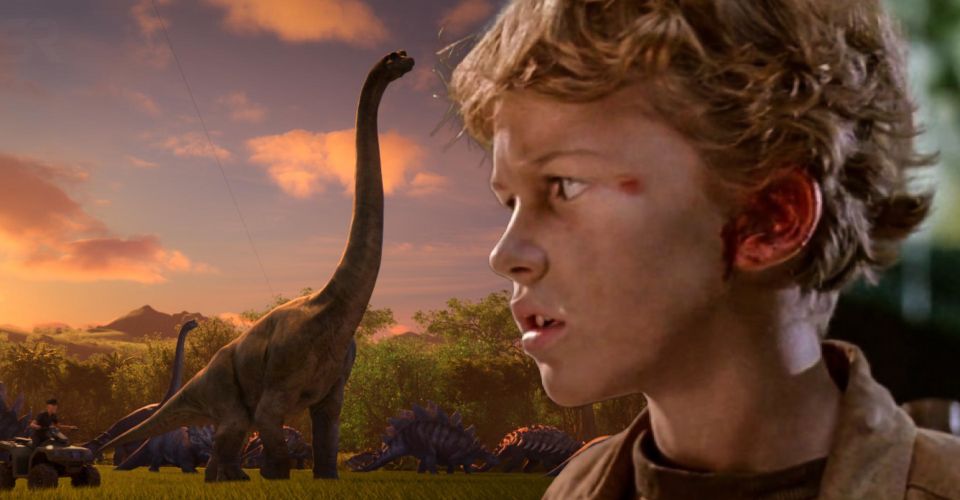
While writing the original Jurassic Park script, screenwriter David Koepp accidentally mistook a Brachiosaurus for a Brontosaurus. Although his error was corrected, Jurassic Park alludes to the mistake when Timothy Murphy misidentifies a Brachiosaur herd as "brontosauruses." The Brachiosaurus appears frequently in the Jurassic Park movies as one of the original dinosaurs, so it's no surprise that Jurassic World: Camp Cretaceous once again references the mistake when Kenji says that he sees a Brontosaurus in a dinosaur herd. Darius quickly corrects him, and explains that mistaking a Brachiosaurus for a Brontosaurus is a very common mistake.

Darius is the most knowledgable Jurassic World: Camp Cretaceous camper, and often explains or clarifies facts about the park's dinosaurs to the other campers, and by extension the audience. Darius begins the series with a reference to one of the dumber moments from Jurassic Park 3, when he beats the the Jurassic World game using a velociraptor resonating chamber in episode 1. Using Darius to correct Kenji's identification of the Brachiosaurus is both in line with his character and simultaneously corrects the famous Jurassic Park mistake for the audience.

Jurassic World: Camp Cretaceous references many famous moments in the Jurassic Park series, which help tie the show into the greater Jurassic Park universe. Jurassic Park references the original mistake in the script, and Jurassic World: Camp Cretaceous not only alludes to the mistake, but also corrects it. The Netflix animated series might end on a major cliffhanger, but it continuously proves that it's committed to being faithful to the original movies, warts - or Brontosaurus - and all. Winking at the audience by correcting the famous Jurassic Park dinosaur mistake is a sign that the Jurassic Park franchise is moving in the right direction with Jurassic World: Camp Cretaceous.

Source: https://screenrant.com/
Sebecus icaeorhinus: Stolen Fossil in Spain Sheds Light on Crocodile’s Evolution

Sunday, September 27, 2020

Sebecus_icaeorhinus

In June 2013, a group of researchers from the Catalan Paleontology Institute received a call from a group of people in the Coll de Nargó region of Spain, a tiny town in the Pyrenees of Lleida, notorious for the number of fossil remains of dinosaurs. The scientists went to the location and found a never-seen-before fossil remains—a full skeleton with well-preserved bones. The subsequent excavation of the precious fossil ensued, and because of weather conditions, the project was briefly paused, covered with unique water-resistant material.

The next day, when the paleontologists went back to the digging site, they were amazed to see that the fossil was gone, the protective material had been removed, and the precious fossil wasn’t there. The researchers called the police, an investigation began, and they concluded that the object had been stolen.

Nearly a month later, police investigations landed with the thief, a sixty-year-old man who took the precious fossil. Once recovered, the priceless piece has significantly deteriorated. What was once a whole skeleton in rock was now fragments. Spanish law forbids the sale of fossils, so it makes no sense that the thief would take the crocodile’s ancestor’s remains.

The fossil was in a government warehouse under embargo for two years as the trial went. Once the judicial process concluded, the fragmented skeleton made its way back to the Catalan Institute of Paleontology. After nearly two years of putting the fossil back together, in 2017, they began to study the nitty-gritty details of how that ancient animal would have looked in its days of thunder.

What they found was a small land crocodile never-seen-before; they named it Ogresuchus furatus  —Latin for “Stolen Ogre Crocodile.” This animal roamed the earth about sixty-six million years ago. Further analysis of the specimen indicates that this is the eldest specimen ever found of the sebecidae family. A finding that challenges evolutionary paleontologists on theorizing the origins of the crocodile family.

Unlike modern crocodiles, sebecidae —, their ancient cousins— had their legs under their bodies, an anatomic peculiarity that allowed them to move in ways similar to modern mammals and made them also very active predators. Measuring nearly 80 centimeters, that animal wasn’t big in comparison to other species of its genre. Crocodiles and gators are enormous: The Orinoco Crocodile measures almost 6.8 meters and is autochthonous in the American continent, —more specifically, the Orinoco river basin between Venezuela and Colombia,— not Europe.

This fossil finds also sheds light on how the Iberian peninsula acted during the formation of the earth as a bridge between northern and southern continents. This new crocodile reveals a connection made millions of years ago, way before scientists expected.
The reptile fossil found in Spain had sharp teeth —a carnivore predator— that could feed itself from youngling dinosaurs, so while not able to hunt down more extensive, more adult animals, it ate other species’ younglings.

The Coll de Nargó locality in Catalonia, Spain, is one of the country’s most rich fossil deposits in the Iberian peninsula and it is probable that after these findings, we’ll likely discover more of these fascinating specimens as scientists study the origins of life on the planet Earth.

Source: https://weirdnewsledger.com/

Jurassic World: Dominion Director Confirms The Importance Of The Original Trio Of Stars

Saturday, September 26, 2020

Steven Spielberg is a prolific filmmaker that introduced countless iconic properties to theaters. Chief among them is Jurassic Park, which pushed the boundaries of visual and practical effects. The dino-centric property returned to theaters with the Jurassic World franchise, and Colin Trevorrow's Dominion will bring back the trio of original Jurassic stars: Jeff Goldblum, Laura Dern, and Sam Neill. And now Trevorrow has confirmed how integral to plot those beloved characters are in the upcoming threequel.

The Jurassic World franchise brought in a pair of new protagonists, but had also featured some returning faces. 2018's Fallen Kingdom brought back Jeff Goldblum's Dr. Ian Malcolm for a brief cameo, leading fans to wonder how meaty of a role the trio of Jurassic Park heroes will have in Dominion. While the actors have promised to be majorly involved in the blockbuster, Colin Trevorrow made things clear at a recent round table interview attended by CinemaBlend's Mike Reyes. As Trevorrow put it,

This is the movie that I’ve been waiting to make from the beginning. It’s the one that we have spent the past two movies building to. It really was part of a larger story and part of the design. And I think people may be underestimating the size and importance of Laura Dern and Sam Neill and Jeff Goldblum’s characters in this movie. It is very much an ensemble, and that [includes] the ability to take these beloved characters from almost 30 years now, and understand how they interact with each other in the context of a world that we’ve really never seen before, and have not been able to witness until now. It’s very exciting for me. I’m having the time of my life.

Mr. Hammond, I think we're back in business. Because not only will Jurassic World: Dominion wrap up the current trilogy and focus on Owen and Claire's ongoing adventures, it's not abundantly clear that the OG stars will have substantial roles in the movie as well. So gear up for plenty of Ian Malcolm, Ellie Sattler, and Alan Grant in the highly anticipated blockbuster.

Colin Trevorrow shared the above quote while in a round table for Netflix's animated series Jurassic World: Camp Cretaceous. Eventually the conversation turned to Fallen Kingdom, where CineamBlend's Mike Reyes was able to witness the director confirming the roles of the original heroes. This is news that should make the generations of Jurassic fans very happy, as it marks the first time Laura Dern, Sam Neill, and Jeff Goldblum have collaborated since the 1993 movie hit theaters.

Given the ending of Jurassic World: Fallen Kingdom, it makes a great deal of sense that the Jurassic Park trio would factor into the upcoming threequel's story. Maisie Lockwood freed the dinosaurs that were rescued form Isla Nublar, with the extinct creatures now living freely among humans on the mainland. The result is sure to be chaos, and Ellie, Ian, and Alan are some of the few people prepared for such an event.

It should be interesting to see if the original trio ends up crossing paths with B.D. Wong's Dr. Henry Wu throughout the course of Jurassic World: Dominion's runtime. He's another actor that originated in Steven Spielberg's original movie, and has been an overarching villain through the Jurassic World movies. He's probably got more dangerous plans in store, and Jurassic Park fans would love to see that type of a reunion happen between the character that have entertained for so long.

Jurassic World: Dominion is currently set to arrive in theaters on June 11th, 2021. In the meantime, check out our 2021 release list to plan your trips to the movies next year.

Source: https://www.cinemablend.com/

150 Year-Old Mystery Solved: Bizarre Giraffe-Necked Reptile Was a Surprisingly Adaptable Hunter

Saturday, September 26, 2020

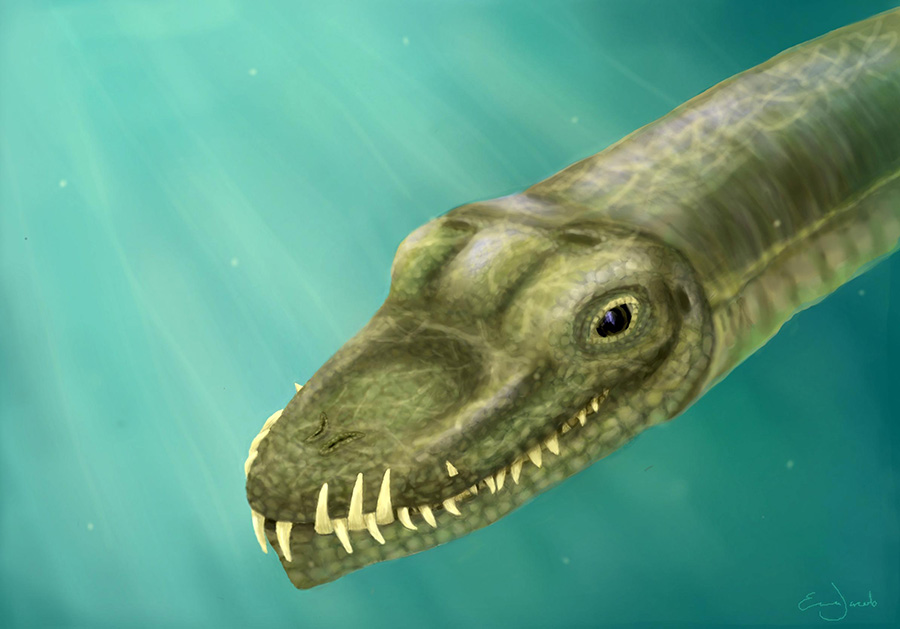
Nostrils located on the top of the snout and curved teeth, perfectly adapted for catching slippery prey: The skull of Tanystropheus has several clear adaptations for life in water. Credit: Emma Finley-Jacob

Its neck was three times as long as its torso, but had only 13 extremely elongated vertebrae: Tanystropheus, a bizarre giraffe-necked reptile which lived 242 million years ago, is a paleontological absurdity. A new study led by the University of Zurich has now shown that the creature lived in water and was surprisingly adaptable.

For over 150 years, paleontologists have puzzled over Tanystropheus, its strangely long neck and whether it lived mostly underwater or on land. An international team led by the University of Zurich has now reconstructed its skull in unprecedented detail using synchrotron radiation micro-computed tomography (SRμCT), an extremely powerful form of CT scanning. In addition to revealing crucial aspects of its lifestyle, this also shows that Tanystropheus had evolved into two different species.

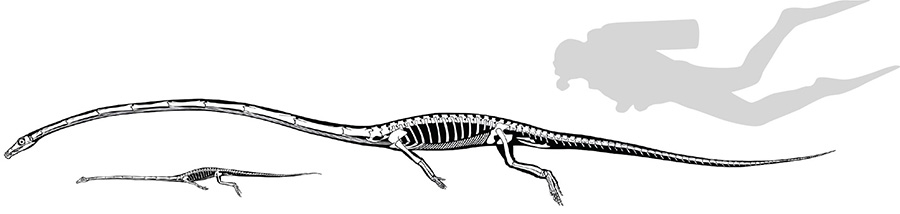
The neck of Tanystropheus was three times as long as its torso, but had only thirteen extremely elongated vertebrae. Credit: Emma Finley-Jacob

Underwater ambush predator

The researchers were able to reconstruct an almost complete 3D skull from a severely crushed fossil. The reconstruction reveals that the skull of Tanystropheus has several very clear adaptations for life in water. The nostrils are located on the top of the snout, much like in modern crocodilians, and the teeth are long and curved, perfectly adapted for catching slippery prey like fish and squid. However, the lack of visible adaptations for swimming in the limbs and tail also means that Tanystropheus was not a particularly efficient swimmer. “It likely hunted by stealthily approaching its prey in murky water using its small head and very long neck to remain hidden,” says lead author and UZH paleontologist Stephan Spiekman.

Two species living together

Tanystropheus remains have mainly been found at Monte San Giorgio on the border between Switzerland and Italy, a place so unique for its Triassic fossils that it has been declared a UNESCO World Heritage Site. Two types of Tanystropheus fossils are known from this location, one small and one large. Until now, these were believed to be the juveniles and adults of the same species.

Reconstructions of the skeletons of Tanystropheus hydroides (large species, newly named) and Tanystropheus longobardicus (small species). The outline of a 170 cm tall diver serves as the scale. Credit: Beat Scheffold, PIMUZ, UZH

However, the current study disproves this assumption. The reconstructed skull, belonging to a large specimen, is very different from the already known smaller skulls, particularly when it comes to its dentition. In order to see whether the small fossils actually belonged to young animals, the researchers looked at cross sections of limb bones from the smaller type of Tanystropheus. They found many growth rings which form when bone growth is drastically slowed down. “The number and distribution of the growth rings tells us that these smaller types were not young animals, as previously considered, but mature ones,” says last author Torsten Scheyer. “This means that the small fossils belonged to a separate, smaller species of Tanystropheus.”

Specialists in different food sources

According to Spiekman, these two closely related species had evolved to use different food sources in the same environment: “The small species likely fed on small shelled animals, like shrimp, in contrast to the large species which ate fish and squid.” For the researchers, this is a really remarkable finding: “We expected the bizarre neck of Tanystropheus to be specialized for a single task, like the neck of a giraffe. But actually, it allowed for several lifestyles.”

Reference: “Aquatic Habits and Niche Partitioning in the Extraordinarily Long-Necked Triassic Reptile Tanystropheus” by Stephan N.F. Spiekman, James M. Neenan, Nicholas C. Fraser, Vincent Fernandez, Olivier Rieppel, Stefania Nosotti and Torsten M. Scheyer, 6 August 2020, Current Biology. DOI: 10.1016/j.cub.2020.07.025

Source: https://scitechdaily.com/

Pages