nandi's blog

Recasting The Characters Of Jurassic Park (If It Was Made Today)

Friday, November 6, 2020

Jurassic Park is all about the dinosaurs, but Spielberg's film is a classic thanks to its characters. Who should play them if it got remade today?

Steven Spielberg's Jurassic Park remains one of the most beloved films of all time decades after its release. The movie made audiences believe dinosaurs once again walked the earth and launched a wildly successful franchise. But while the new films bring lots of dino action, it's clear that one of the things that made the original so good were its characters.

The human characters of Jurassic Park helped to make it a more entertaining adventure beyond all the cool dinosaur stuff. While some key members will be returning for Jurassic World: Dominion, the cast could have looked quite different if the original film had been made today.

10 - Brian Cox - John Hammond

Perhaps the most fascinating character in the original film is John Hammond, the man who created this park and helped bring dinosaurs back to life. He is a man who wants to bring joy to the world but seems blind to the dangers of what he is attempting to accomplish.

Richard Attenborough brought a lovable charm to the role and his fellow Scottish actor Brian Cox seems like an ideal modern choice. Cox is more known for playing harsher characters, like in HBO's Succession, but it's easy to picture him pulling off this idealistic character quite well.

9 - Mr. Arnold - Bokine Woodbine

Just before he became a big star with his role in Pulp Fiction, Samuel L. Jackson had a supporting role in Jurassic Park as Mr. Arnold, the chief engineer of the park. With a cigarette hanging from his mouth and his memorable catchphrase, "Hold on to your butts," Jackson made the most of a limited role.

Another fine actor who is known for standing out in smaller parts is Bokine Woodbine. He has been in the business for many years, most recently appearing in supporting roles in Spider-Man: Homecoming and Queen and Slim. He also stole the show in Season 2 of Fargo.

8 - Lex - Mckenna Grace

As with most Steven Spielberg adventures, Jurassic Park includes some adorable children who are caught up in the dino mayhem. Ariana Richards played Lex, the older of the two kids who reveals herself to be an expert hacker at a pivotal time.

Mckenna Grace is currently one of the most promising young actors in Hollywood. She has already impressed many with notable roles in Gifted and Captain Marvel, and she will later be seen in the highly anticipated Ghostbusters: Afterlife.

7 - Timmy - Jacob Tremblay

The second of the child roles in Jurassic Park is Timmy, played by a young Joseph Mazzello. Timmy is a dinosaur expert who finds himself in all kinds of trouble throughout the film, like being trapped inside a car that's in a tree and getting electrocuted.

If looking for a modern youngster to play a precocious boy like Timmy, Jacob Tremblay would be the obvious choice. Following his breakout role in Room, Tremblay has continued to show his versatility in films like Doctor Sleep and Good Boys.

6 - Nedry - Paul Walter Hauser

Though the dinosaurs are the main threat, the villain of the original film is Dennis Nedry, played by Seinfeld star Wayne Knight. Nedry is hoping to get rich selling dinosaur DNA to corporate rivals and initiates the system shutdown that allows the dinosaurs to run amok.

Paul Walter Hauser has performed the role of the slightly incompetent and slob-like bad guys in films like BlackKklansman and I, Tonya. These skills would serve him well for the selfish and ultimately doomed Nedry.

5 - Gennaro - Brett Gelman

Though not a huge character in the film, Gennaro will forever be remembered for having one of the most memorable deaths in the Jurassic Park series. Gennaro is a lawyer who only sees the park as a profit source and proves himself to be a coward.

Brett Gelman seems to excel at playing these kinds of sleazy and selfish characters who are so much fun to hate. He would fit quite naturally into the role of Gennaro and his iconic death scene.

4 - Muldoon - Iain Glen

With all the deadly dinosaurs creeping around, Muldoon is the badass game warden kept on hand in case anything goes wrong. He is a stoic guy who takes the dangers of the park seriously yet maintains a cool head in all situations.

Iain Glen became famous for his role in Game of Thrones as Jorah Mormont, another level-headed badass. His suave and rugged persona would be ideal for Muldoon.

3 - Kumail Nanjiani - Ian Malcolm

Dr. Ian Malcolm has probably become the most popular character in the Jurassic Park series. He is a chaotician brought to the island to offer his opinion and doesn't mince words about how much he thinks this whole operation is a bad idea.

While it would be hard to compete with Jeff Goldblum's iconic performance, Kumail Nanjiani would be a fun choice. He balances the comedic and sincere nature of Malcolm very effectively and it's easy to imagine him delivering some of his famous lines.

2 - Ellie Sattler - Gillian Jacobs

Laura Dern stepped away from the world of independent films to deliver a great performance as Ellie Sattler in Jurassic Park. The partner of Alan Grant, Sattler is a brilliant paleontologist who also proves to be incredibly caring as well as a true survivor.

Gillian Jacobs, like Dern at the time, is a very underrated actor. She is best known for her role in Community but has since turned in many great performances in smaller films. She feels like she would bring the same positive attributes to life as Ellie Sattler.

1 - Alan Grant - David Harbour

The main protagonist of Jurassic Park is the heroic Alan Grant. He is a famed paleontologist who finds himself the protector of Lex and Timmy while trying to survive all of the dangers of the park. He was played with rugged charm by the great Sam Neill.

David Harbour feels like the same type of everyman hero that Neill played so well in the original. Just looking at Harbour's role as Jim Hopper in Stranger Things shows he can play that gruff protector role perfectly.

Source: https://screenrant.com/
Why Jurassic World: Fallen Kingdom's Indoraptor Makes no Sense

Friday, November 6, 2020

The Jurassic Park franchise has always been stuck between two worlds, trying to find a workable middle ground. On the one hand, it's based around a classic, self-contained morality story that people have been repackaging for eons: Humanity toys with powers above their pay grade, gets smacked around by hubris, and is either rewarded for having learned not to play tiddlywinks with the rules of man and nature, or is eaten by monsters. It's simple. It's iconic. It's an Aesop's fable with Velociraptors.

On the other hand, 1993's Jurassic Park was also a blockbuster event, and therefore could never be allowed to end. Even when the film's lessons were fully played out and the heroes were staring wistfully at some pelicans, the audience was going to demand more. And so the franchise followed the path laid out by 1986's Aliens, and used as a template for every action-thriller sequel ever since: "The same monsters from the first movie, but even worse!" And thus, The Lost World: Jurassic Park expanded on the first film's lesson of "you shouldn't make dinosaurs" and added the caveat "also, you shouldn't take them to California." Jurassic Park III, meanwhile, said "You still shouldn't have made dinosaurs, especially not really mean ones."

And then there was Jurassic World, Colin Trevorrow's downy-soft reboot. With hearty helpings of nostalgia and updated special effects, the big budget follow up breathed new life into the franchise. Fans basked in the glow of the series' potential, wondering what new lessons and stories and visual spectacles might materialize in the years to come. It was a fresh start for a stale but beloved universe — one largely blown when Jurassic World: Fallen Kingdom reached theaters in 2018, boldly shouting "you still still shouldn't make dinosaurs, especially not really mean ones, and you still shouldn't take them to California."

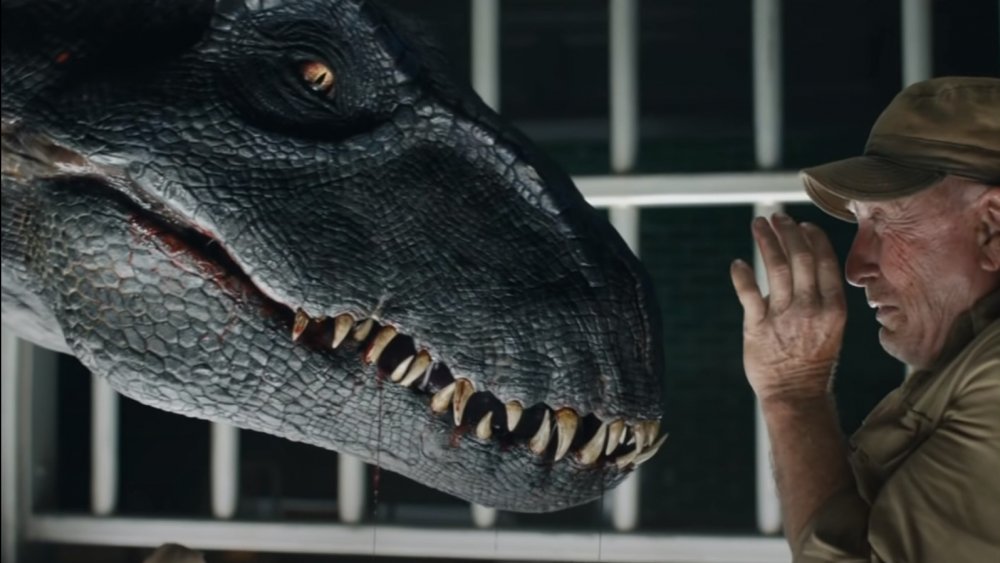
And no dinosaur was meaner or more ill-suited for West Coast living than the Indoraptor, a man-made monstrosity that had the logical parts of its genetic structure replaced with frog DNA.

The Indoraptor: A weapon that you need a gun to use

The Indoraptor is a proprietary cranky dinosaur monster mash, designed to graveyard smash any target designated by its owner. It had all the classics wrapped up inside its slinky frame: Velociraptor claws, a T-rex mouth, the echolocation of Flipper. It was terrifying. It also didn't make a lick of sense, as a number of Redditors, and other fans across the internet, have pointed out.

Henry Wu's Indoraptor was designed and marketed as the last word in home defense. See if you can spot where the plan falls apart: Through behavioral conditioning, the Indoraptor was taught to use its considerable strength, speed, and endurance to slaughter a marked target on its owner's command. In order to signal the monster's "sic 'em" response, its prey would have to be painted with a laser marker. The Indoraptor would then be given an audio signal to attack. Both the laser marker and the audio transmitter were attached to the body of a rifle.

Put another way, you had to point a gun directly at a target in order to ... make the Indoraptor attack it.

For the unfamiliar, guns are weapons that have gained a certain level of notoriety over the years thanks to their astonishing ability to kill the things they're pointed at, regardless of whether or not there's a dinosaur hybrid in the mix. Essentially, what the Machiavellian minds behind Jurassic World have created here is a slower, less reliable bullet that needs to be fed a whole cow once a day and will, if history has taught us anything, eventually break out of its cage and eat its owner's colleagues.

But hey, at least it nearly sold at auction for $28 million, or less than half of what Kentucky Derby winning thoroughbred horse Fusaichi Pegasus sold for in 2000, according to The New York Times. Man, sometimes it feels like these movies about dinosaur theme parks aren't logical at all.

Source: www.looper.com

The First Duckbill Dinosaur Fossil from Africa Hints at How Dinosaurs Once Crossed Oceans

Friday, November 6, 2020

Silhouette of Ajnabia odysseus showing its size relative to a human being. Digital artwork by Nicholas R. Longrich.

The first fossils of a duckbilled dinosaur have been discovered in Africa, suggesting dinosaurs crossed hundreds of kilometres of open water to get there.

The study, published in Cretaceous Research, reports the new dinosaur, Ajnabia odysseus, from rocks in Morocco dating to the end of the Cretaceous, 66 million years ago. Ajnabia was a member of the duckbill dinosaurs, diverse plant-eating dinosaurs that grew up to 15 meters long. But the new dinosaur was tiny compared to its kin -- at just 3 meters long, it was as big as a pony.

Duckbills evolved in North America and eventually spread to South America, Asia, and Europe. Because Africa was an island continent in the Late Cretaceous, isolated by deep seaways, it seemed impossible for duckbills to get there.

The discovery of the new fossil in a mine a few hours from Casablanca was "about the last thing in the world you would expect," said Dr Nicholas Longrich, of the Milner Centre for Evolution at the University of Bath, who led the study. Dr Longrich said: "It was completely out of place, like finding a kangaroo in Scotland. Africa was completely isolated by water -- so how did they get there?"

Study of Ajnabia's distinctive teeth and jawbones show it belonged to Lambeosaurinae, a subfamily of duckbills with elaborate bony head crests. Lambeosaurs evolved in North America before spreading to Asia and Europe, but have never been found in Africa before.

Reconstructing duckbill evolution, they found the lambeosaurs evolved in North America, then spread over a land bridge to Asia. From there, they colonised Europe, and finally Africa.

Ajnabia jaw and teeth fossil. (Longrich et al., Cretaceous Research, 2020)

Because Africa was isolated by deep oceans at the time, duckbills must have crossed hundreds of kilometres of open water- rafting on debris, floating, or swimming -- to colonise the continent. Duckbills were probably powerful swimmers -- they had large tails and powerful legs, and are often found in river deposits and marine rocks, so they may have simply swum the distance.

"Sherlock Holmes said, once you eliminate the impossible, whatever remains, no matter how improbable, must be the truth," said Longrich. "It was impossible to walk to Africa. These dinosaurs evolved long after continental drift split the continents, and we have no evidence of land bridges. The geology tells us Africa was isolated by oceans. If so, the only way to get there is by water."

In reference to this feat, the dinosaur is named "Ajnabia odysseus." Ajnabi being Arabic for "foreigner," and Odysseus referring to the Greek seafarer.

Ocean crossings are rare, improbable events, but have been observed in historic times. In one case, green iguanas travelled between Caribbean islands during a hurricane borne on debris. In another, a tortoise from the Seychelles floated hundreds of kilometres across the Indian Ocean to wash up in Africa.

"Over millions of years," said Longrich, "Once-in-a-century events are likely to happen many times. Ocean crossings are needed to explain how lemurs and hippos got to Madagascar, or how monkeys and rodents crossed from Africa to South America."

Late Cretaceous hadrosaur discoveries in Europe and Africa, with Ajnabia at number 6. (Longrich, et al., Cretaceous Research, 2020)

But the fact that duckbills and other dinosaur groups spread between continents, even with high sea levels, suggests dinosaurs travelled across oceans as well. "As far as I know, we're the first to suggest ocean crossings for dinosaurs," said Longrich.

The international team of scientists was led by the University of Bath with researchers from the University of the Basque Country UVP/EHU (Spain), George Washington University (USA) and the Natural History Museum of Sorbonne University (France) / Universite Cadi Ayyad (Morocco).

Dr Nour-Eddine Jalil, from the Natural History Museum of Sorbonne University (France) said: "The succession of improbable events (crossing an ocean by a dinosaur, fossilization of a terrestrial animal in a marine environment) highlights the rarity of our find and therefore its importance.

"Ajnabia shows us that hadrosaurs have set foot on African land, telling us that ocean barriers are not always an insurmountable obstacle."


Story Source:

Materials provided by University of BathNote: Content may be edited for style and length.


Journal Reference:

  1. Nicholas R. Longrich, Xabier Pereda Suberbiola, R. Alexander Pyron, Nour-Eddine Jalil. The first duckbill dinosaur (Hadrosauridae: Lambeosaurinae) from Africa and the role of oceanic dispersal in dinosaur biogeographyCretaceous Research, 2020; 104678 DOI: 10.1016/j.cretres.2020.104678

Source: www.sciencedaily.com

Core Value of the Chengjian Fauna: Evolution of Animals and Birth of Basic Human Organs

Friday, November 6, 2020

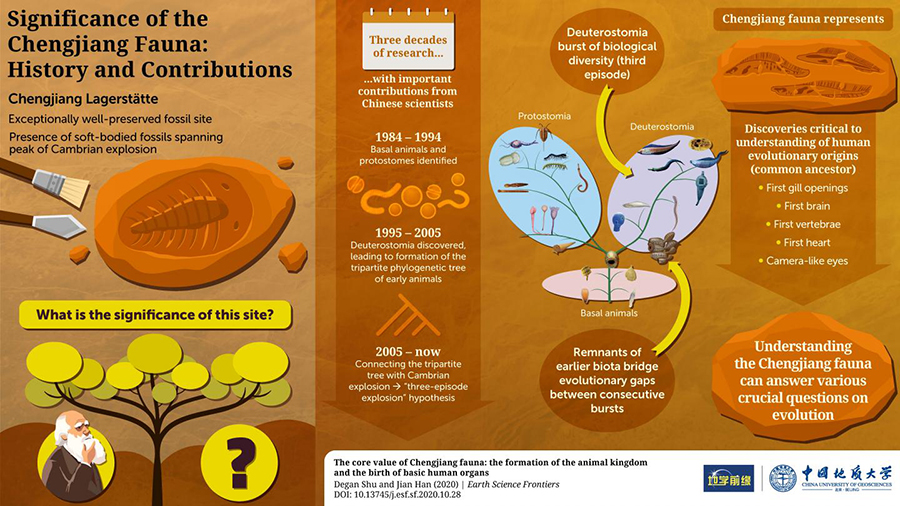
Dr Degan Shu from Northwest University and his team discuss their findings and highlight the scientific and philosophical significance of the diverse fossil site Chengjiang lagerstatte in Yunnan Province, China. CREDIT: Earth Science Frontiers

Scientists explain the significance of Chengjiang fauna, exceptionally preserved fossils found in China

Much of what we know regarding how life--as we know it--came into existence is through the recovery of fossils from various sites in the word. The Chengjiang lagerstatte in Yunnan Province, China, is one such unique site containing very well-preserved fossils (also called the "Chengjiang fauna"), which include soft-bodied animals that normally do not get fossilized. Most of these fossils are 520 to 518 million years old, spanning a part of the Cambrian period when life on earth exploded in diversity, leading to a huge increase in number of species--a phenomenon called the "Cambrian explosion." In a new study, two scientists who spent many years digging deeper into this field, including Dr Degan Shu from Northwest University in Xi'an and Dr Jian Han from Northwest University in Shaanxi Xi'an, present an overview of their research on the Chengjiang fauna and emphasize its significance. These findings, which are published in Earth Science Frontiers, include significant contributions from Chinese paleontologists, including Prof Shu's group, in collaboration with other international scientists.

The research spanned three decades, each decade bringing important developments. The first decade (1984-1994) led to important findings on basal animals (e.g., sponges and jellyfish) and the subkingdom Protostomia (e.g., molluscs). In the second decade (1995-2005), scientists including Shu's team continued to discover newer animal groups, the most significant being deuterostomes (a large group of animals, which includes humans). In the third stage (2005-now), the Chinese teams continued to add new groups to the animal tree and dug deeper into the relationships between the formation of the tree and the multi-episodic Cambrian explosion. This paved the way for not only the formulation of a three-part phylogenetic tree of early animals but also the hypothesis that the Cambrian explosion occurred in three episodes--the evolution and diversification of basal animals, followed by protostomes, and finally deuterostomes--forming the basis of all forms of animal life today.

On the importance of the Chengjiang fauna, Dr Shu comments, "Today, many people still believe in creationism, and a common argument that they use is an incomplete fossil record. We feel that filling the gaps in the evolutionary tree with transitional forms, such as those found at Chengjiang and other sites, will help us to gradually dispel misinformation about the theory of evolution, especially when we consider the question of how humans came to be. In essence, we can trace the origins of all extant animals, including us, to ancestors in the Cambrian."

In particular, Dr Shu points to the discovery of seminal fossils that demonstrate the early forms of our basic organs evolved during the Cambrian explosion. These include the mouth, brain, heart, and vertebrae. It is through comparisons of Chengjiang fossils from the Cambrian period with those from the Precambrian (before Cambrian) period that researchers realized that Precambrian life did not have these basic organs. This reveals the importance of Chengjiang as a reservoir of fossilized soft body parts, such as the nervous system. In fact, some specimens have such well-preserved nervous systems that scientists could use them to infer how certain species behaved, working from the idea that a complex nervous system implies complex behaviors. This incredible insight offered to us by the Chengjiang lagerstatte provides direct evidence explaining the gradual evolution in the animal kingdom. Dr Shu concludes, "As a compelling testimony of Darwinian theory, the Chengjiang fossils have profound scientific and humanistic significance. Our hope is that the fascinating discoveries at this site will help improve scientific literacy in the public, while also providing new generations of scientists with a framework that they can use to flesh out the animal tree of life."

The Chengjiang fauna, indeed, holds immense significance--both scientific and philosophical. And the extensive efforts by scientists like Dr Shu bring us closer to understanding the most fundamental question today: where lies the origin of life?

###

Reference

Authors: Degan Shu and Jian Han

Title of original paper: The core value of Chengjiang fauna: the formation of the animal kingdom and the birth of basic human organs

Journal: Earth Science Frontiers

DOI: 10.13745/j.esf.sf.2020.10.28

Affiliations: Shaanxi Key Laboratory of Early Life and Environments (SKLELE), State Key Laboratory of Continental Dynamics, Department of Geology, Northwest University, Xi'an 710069, China Northwest University Museum, Shaanxi Xi'an 710069, China

About Earth Science Frontiers

Earth Science Frontiers is a bimonthly peer reviewed scholarly journal co-sponsored by the China University of Geosciences (Beijing) and Peking University. It was first published in 1994, and academician Wang Chengshan is the current Editor-in-Chief. Each issue of the journal is centered on a specific geoscience topic and managed by experts in that field as Guest Editors. Each issue also contains a number of articles on self-select subjects. Articles published in Earth Science Frontiers cover all disciplines of earth sciences with emphasis on frontier and innovative basic research. At the same time, the journal also publishes research findings that may be considered contentious. Over the years, Earth Science Frontiers has won several publisher awards, including "The Internationally Most Influential Journal in Chinese Language" and "The Top 100 Outstanding Chinese Scholarly Journals." In 2019, Earth Science Frontiers was selected among top-tier journals to join a national action plan for achieving excellence in science and technology research publishing in China.

E-mail: [email protected]
Website: http://www.earthsciencefrontiers.net.cn

About Dr Degan Shu

Dr Degan Shu is an eminent paleontologist and academician currently working at Northwest University in Xi'an, China, as part of the Shaanxi Key Laboratory of Early Life and Environments. He received his undergraduate training in Paleontology at Peking (Beijing) University from 1964 to 1969, obtaining his master's degree at Northwest University (Xi'an) and PhD in China University of Geosciences (Beijing). He was a Visiting Scholar at the Smithsonian Institution, Washington, D.C., in 1988, a Humboldt Research Fellow at both University of Bonn in 1988-1989 and University of Wuerzburg, Germany, in 1994-1995, as well as a visiting scholar at Cambridge University, UK, in 1998. Dr Shu has authored over 100 papers on the Cambrian Explosion in his long career of over 25 years. Dr Shu has also translated Darwin's Origins of Species into Chinese.

Source: www.eurekalert.org

How Much Did Chris Pratt Make For 'Jurassic World: Fallen Kingdom'?

Friday, November 6, 2020

With Jurassic World going down as a huge hit at the box office, it was time for Pratt to raise the amount of money that he was making.

Making the transition from film to television is pretty difficult for most performers, but there have been some who have done this well and have thrived. Of course, having a golden opportunity for a big role makes things easier. As we have seen since his Parks and Rec days, Chris Pratt has become a force on the big screen by playing Star-Lord in the MCU and by playing Owen in the Jurassic World series.

The Jurassic World films have been gigantic hits at the box office so far, and they have completely resurrected a film franchise that many people thought was all but done. The success of these films has gotten people wondering about how much money Chris Pratt is making from them.

Let’s look and see how much Chris Pratt made for Jurassic World: Fallen Kingdom!

He Made 7 Figures For Jurassic World

In order to see how Pratt’s pay changed over time, we need to take things back to the first installment in the modern franchise. This will help paint a clearer picture of how things have shifted for the star.

Back in 2015, Jurassic World was set for release, and there was a lot of hype around the movie. Even though the Jurassic Park franchise had tapered off, this film was ushering in a new era with fresh characters and incredible CGI, leading many to believe that it could be just what the doctor ordered for fans. Turns out, the hype was for real, and soon, the world was hooked on dinosaurs once again.

According to Box Office MojoJurassic World would pull down $1.67 billion at the box office, making it a colossal success that sparked a new set of films. The casting was great, the film was entertaining, and it sparked even more optimism for future installments.

For his performance in the film, it has been reported that Chris Pratt was given a seven-figure check, though no specific amount is known. This was a nice chunk of change for Pratt, who was coming into his own as a leading man. Sure, television work is great and all, but many people eventually want to be the face of the franchise. For Pratt, this marked the second franchise he was fronting, along with Guardians of the Galaxy.

With Jurassic World going down as a huge hit at the box office, it was time for Pratt to raise the amount of money that he was making.

He Made $10 Million For Fallen Kingdom

Making seven figures to appear in a film is nothing to scoff at, and it was certainly a great starting point for Chris Pratt. However, when it was time for Jurassic World: Fallen Kingdom to hit theaters, Pratt would make sure to strike while the iron was hot and get himself a pay increase.

It has been reported that Pratt was able to get his pay up to $10 million for the sequel project, which was all but guaranteed to make a mint at the box office. Pratt had earned every single cent that he was getting paid, and clearly, the studio knew that they were going to continue getting the most from the performer.

Eventually, Jurassic World: Fallen Kingdom was released into theaters, officially setting up a trilogy film in the process. During this time, the project was able to net itself $1.3 billion at the box office, according to Box Office Mojo, making it two consecutive smash hits for the franchise.

Things had come a long way from where they were before, and it seemed like there was no stopping Jurassic World now. This meant that Pratt was basically everywhere thanks to the combined success of this franchise and the Guardians franchise.

With the trilogy film coming down the pipe, people are starting to get curious about the salary that Pratt will take home for the project.

His Pay For Jurassic World: Dominion Is Unknown

Jurassic World: Dominion is all set to be the third installment in the modern franchise, and there is optimism that it can put a nice bow on things or potentially leave the door open for more. Because he is the star, people are starting to get curious about how much Chris Pratt will be taking home.

At this time, there is no known salary for Chris Pratt for the trilogy flick, but if history tells us anything, we cannot imagine him making less than $10 million. We could see a scenario where he gets a smaller upfront pay in favor of profits, but those details might emerge later on down the line.

Nevertheless, the first two films in this franchise set up Dominion to be a massive hit, so hopefully the film’s biggest star can cash in while he can.

A $10 million check for one movie is quite the compensation, and it’s amazing that Pratt can still take this to another level.

Source: www.thethings.com

Jurassic World Evolution: Complete Edition

Wednesday, November 4, 2020

Build the park of your dreams, although this time you will have to take into account the dinosaurs that will live on the islands.

If you don’t want to have a bad experience, it is best if the park has the necessary security measures. Or we already know what to expect, the disaster that occurred in the movies and in the novels of the saga. Jurassic World Evolution: Complete Edition will allow us precisely that, manage a park in which the protagonists will be the dinosaurs. This adaptation to Nintendo Switch, which can now be purchased and enjoyed on the Nintendo eShop (54.99 euros), has been developed by Frontier Developments in collaboration with Universal Games.

This production, a new edition of the original version from 2018, allows players to build dinosaur parks in Las Cinco Muertes, a series of five islands that offer the optimal climatic conditions for raising these types of specimens. The first step will be to send archaeologists to unearth fossils and extract the DNA necessary to revive these mythical creatures.

How could it be otherwise, Jurassic World Evolution: Complete Edition includes all the DLC that have been released to date, so players can enjoy great narrative expansions. The Secrets of Dr. Wu will take us to investigate various species of dinosaurs just after the events that occurred in the movie Jurassic World: The Fallen Kingdom. These are all the contents:

  • Jurassic World Evolution: Complete Edition (base game)
  • Return to Jurassic Park (Expansion)
  • Claire’s Shrine (Expansion)
  • The Secrets of Dr. Wu (Expansion)
  • 4 Dinosaur Packs: Carnivores, Herbivores, Cretaceous and “Raptor Squad Skin Collection” (DLC)

Source: www.somagnews.com

Jurassic World: Dominion Required 40,000 COVID Tests During Filming

Tuesday, November 10, 2020

Colin Trevorrow and crew officially wrapped principal photography on Jurassic World: Dominion over the weekend.

Jurassic World 3 required 40,000 COVID tests during the course of filming. Safety was of utmost importance while making the long-awaited sequel. The public health crisis is still happening all over the world, with cases spiking every day. The fact that Colin Trevorrow and crew were able to complete the movie with only a few setbacks is a pretty amazing feat. Millions of dollars were spent on unprecedented safety protocols, which included keeping the entire cast and crew inside an isolated bubble.

Colin Trevorrow looked back at the production over the weekend and noted, "I'm not sure I can put it into words. It has been remarkable. Our crew and our cast has been so resilient. All producers have worked around the clock to make it the best it can be. It has been inspiring." Within the 40,000 COVID-19 tests, only .25% came back positive, which is 100. Some of which were false positives and the others that were actual positive results were sent back to quarantine.

Jurassic World: Dominion took 18 months to complete and it was the first major movie to get back to work after the pandemic took hold in March of this year. Universal commissioned the private medical facility called Your Doctor in order to manage the entire production's safety requirements. The studio believes that the COVID testing was the "backbone" of their safety protocols, which more than likely made the cast and crew feel safe while getting back to work with each other during such an uncertain time. Professional sports like basketball, football, and baseball have all figured out way to get back to work in a pretty safe bubble environment.

In addition to the 40,000 COVID tests, Universal set up a policed "Greenzone" for the shooting as all cast and crew were temperature-tested every day. "Two walk-through temperature testing stations were built at each end of Pinewood Studios with capacity of 1,000 crew over two hours, and each test station had a compliment of doctors, nurses and isolation booths." It seems that the studio did not cut any corners when preparing to get Jurassic World: Dominion back on track. With that being said, it will be interesting to see what the movie theater landscape looks like when it's time to release the movie.

It is believed Universal spent nearly $8 million on all of the safety protocols for Jurassic World: Dominion. Colin Trevorrow makes it sound like they were all able to have a pretty good time while being stuck together for so long. "We lived together, ate together, told stories, shared our fears and hopes, played Frisbee on the lawn... there was a lot of laughter at a time when it has been hard to find things to laugh about," explains Trevorrow. The director will reconnect with his family next, before diving into the post-production process, which will likely take up a lot of time. Deadline was the first to reveal the intense safety measures that went into making Jurassic World: Dominion during a pandemic.

Source: https://movieweb.com/

Jurassic World 3 Delays Made for a Better Sequel Insists Director Colin Trevorrow

Tuesday, November 10, 2020

Director Colin Trevorrow believes that the ongoing delays and troubled production have made Jurassic World: Dominion a richer experience.

Despite a difficult shoot that would rival even the most destructive of dino attacks, filming on Jurassic World 3 has now wrapped. Director Colin Trevorrow has been discussing the difficult process backstage, as well as stating that the ongoing delays and endless health and safety protocols will result in an even better movie than he had planned.

"I'm not sure I can put it into words. It has been remarkable. Our crew and our cast have been so resilient. All producers have worked around the clock to make it the best it can be. It has been inspiring."

The safe return to filming on Jurassic World: Dominion following a forced hiatus reportedly cost the production somewhere in the region of $5 million, with testing equipment alone costing as much as $3 million. The studio set up set up temperature test zones and a private medical facility where it conducted more than 40,000 COVID-19 tests, as well as 2,000 signs, 150 hand sanitizer stations, and dozens of additional sinks.

Due to the regulations, the cast and crew were required to live within a "bubble" during filming, spending four months at a hotel in the United Kingdom. Thankfully, according to Colin Trevorrow, this has all helped to enhance the final movie.

"I think that close proximity to each other has made the movie better. Everything we were going through emotionally we would share. We would rehearse on Sundays, we crafted the characters, which made the emotion of the film richer. I think the movie will be stronger for it."

Jurassic World 3 is bringing back franchise heroes Dr. Ian Malcolm, Dr. Alan Grant, and Dr. Ellie Sattler into the prehistoric fray. While plot details are currently under lock and key, with the last movie in the ongoing franchise, Jurassic World: Fallen Kingdom, ending with several different species of dinosaur now let loose upon the world, it's likely that Jurassic World: Dominion will find Jeff Goldblum's Dr. Ian Malcolm, Sam Neill's Dr. Alan Grant and Laura Dern's Dr. Ellie Sattler brought in to help stop the prehistoric beasts alongside Jurassic World's Chris Pratt and Bryce Dallas Howard.

The sixth movie in the Jurassic Park franchise will be "about the need to co-exist and survive together," Trevorrow previously explained. "If this [situation] has taught us anything, it's that we need the different generations to protect each other. It was the right movie to be making at this moment."

Specific details of how the three legacy characters will feature in the movie are being kept largely under wraps, but Jeff Goldblum has previously teased a life and death scenario for the trio. "The three of us were in a tiny little space and we were being menaced by - I can't even tell you - a surprising faction of prehistoric creatures that you've never seen before. We saw some amazing things. We were acting in a life and death situation. We think it might be the last moments of our lives and we're all bonding with each other in an emotional and somewhat hilarious way," Goldblum said.

Source: https://movieweb.com/

Sam Neill Celebrates End Of Nigh-Impossible Jurassic World 3 Shoot

Wednesday, November 11, 2020

Jurassic World: Dominion star Sam Neill celebrates the end of what he calls a "nigh-impossible" production after months of obstacles and delays.

Jurassic World: Dominion star Sam Neill celebrates the end of what he calls a "nigh-impossible" production. The third and final Jurassic World film will see the returns of several major players, even stretching beyond franchise leads Chris Pratt and Bryce Dallas Howard. Original Jurassic Park stars Neill, Laura Dern, and Jeff Goldblum will be back to help shepherd the story to a close. Plot details are still being kept under wraps, but it's certain Jurassic World 3 will pick up in the aftermath of dinosaurs escaping into the real world.

2020 has been a difficult year for numerous film and television productions, but Jurassic World 3 has suffered more setbacks than normal. Production was first shut down in mid-March when the coronavirus pandemic proved to be a major concern. Jurassic World 3 was then among the first major films to pick back up again in July, and for some time, it looked like it was smooth sailing. Then, Jurassic World 3 was halted one more time when there were only three weeks left due to some positive COVID tests. Finally, production wrapped this past weekend, even despite all the obstacles along the way.

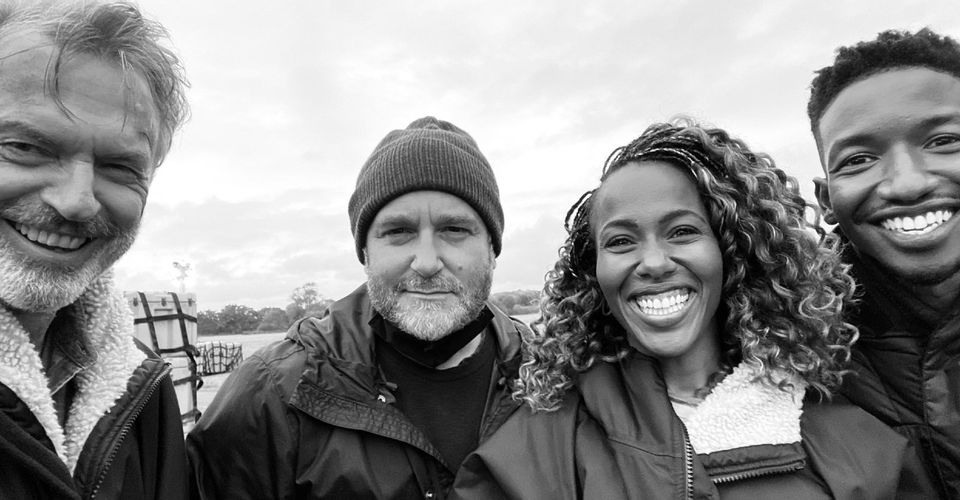
Director Colin Trevorrow commemorated the event on social media, and Neill joined in with a sweet message of his own. Accompanied with Trevorrow's photo of him and fellow cast members DeWanda Wise and Mamoudou Athie, Neill wrote, "There were days we thought we might not make it. But we have...we pulled off what seemed well nigh impossible . Great crew. Lovely cast . Top director. Phew- and CELEBRATIONS." Considering all the setbacks they faced along the way, it's no surprise that Neill and the rest are eager to celebrate their accomplishment.

The many delays caused Jurassic World 3's release to be pushed back from June 2021 to June 2022. That's a much longer wait than fans were anticipating, though it's certain they'll receive more first-look images and teases in the coming months. Anticipation is quite high for Jurassic World 3, and while it's a shame it's still well over a year and a half away, it's nice to know that filming has finally reached its end. The hardest part is over now, and hopefully it won't suffer any further setbacks.

Fans are especially excited to see Neill and the rest of the original Jurassic Park trio return for another adventure. Goldblum previously appeared in 2018's Jurassic World: Fallen Kingdom, but his role amounted to little more than a quick cameo. However, it's certain Neill, Dern, and Goldblum will have larger roles this time around, which makes this final Jurassic World film all the more thrilling. After months of difficulties, the cast and crew of Jurassic World: Dominion can take a surely much-needed break as they wait for the film's release.

Source: https://screenrant.com/  - Sam Neill/Twitter

WATCH: Gigantic Alligator Spotted Roaming Florida Golf Course

Saturday, November 14, 2020

  A gigantic alligator was spotted roaming Valencia Golf & Country Club in Naples, Florida on Wednesday. Courtesy by Tyler Stolting

You thought Jurassic Park was just a movie?

Well, you might be forgiven for thinking dinosaurs still walk the earth after seeing footage of a ginormous alligator roaming on a Florida golf course.

Spotted at Valencia Golf & Country Club in Naples, Florida during tropical storm Eta, the gator was seen prowling a tee box by Tyler Stolting, a professional at the club, on Wednesday.

The sheer size of the animal had many on social media questioning whether it was actually real.

However, according to David Sheen, the reptile and amphibian research leader of the Fish and Wildlife Research Institute for the Florida Fish and Wildlife Conservation Commission, there was "nothing unusual" about the size of the alligator.

"It's an iconic species and conservation success story. But in short, there's nothing unusual about this alligator or the video," he said on Twitter.

It's not the first time an alligator has been spotted on the golf course.

In 2017, American golfer Cody Gribble nudged a slumbering gator off of the fairway and into the water during the opening day of the Arnold Palmer Invitational in Orlando, Florida.

Source: https://edition.cnn.com/

Pages