nandi's blog

Lego Jurassic World: 5 Things It Got Right About The Movies (& 5 Things It Got Wrong)
Monday, December 7, 2020

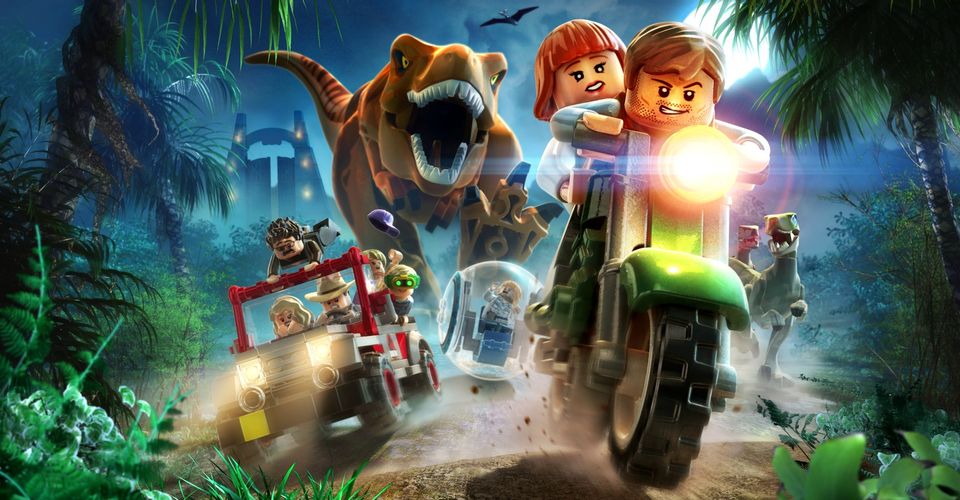
Taking inspiration from the films, Lego Jurassic World tries to recreate the magic of the dinosaur theme park, getting a few things right and wrong.

After bringing the big-screen adventures of Star WarsIndiana Jones, and Harry Potter into playable Lego form, TT cooked up Lego Jurassic World to coincide with the release of the 2015 reboot of the Jurassic Park franchise starring Chris Pratt and Bryce Dallas Howard. In addition to adapting the 2015 reboot, the game depicts the original three movies, with five levels being dedicated to each installment.

It’s not a perfect game, but re-enacting all the dino-infested set pieces from the movies is plenty of fun for Jurassic Park fans. Ultimately, Lego Jurassic World is a mixed bag, with both flaws and redeeming qualities.

10 - Right: The Open World

The hub in Lego Jurassic World is an open world in which players can get a helicopter onto Isla Nublar or Isla Sorna, or even take a boat to San Diego (because The Lost World’s third act takes a weird detour into Godzilla homage).

Rather than being confined to a single location like Dex’s Diner or Mos Eisley Cantina from the original Lego Star Wars games, players are free to roam around and explore the titular theme park.

9 - Wrong: Finding Levels
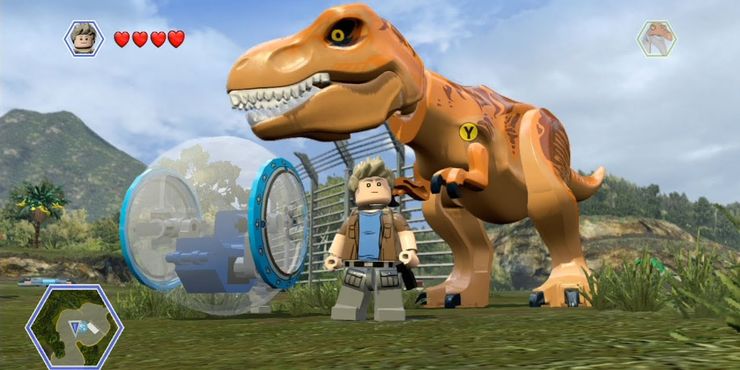
Long gone are the days of simple Lego games like Lego Star Wars and Lego Indiana Jones, which had a door for each movie and easy access to every level. Now, Lego games like the hide their levels, so that finding the level becomes a level in itself. There’s a trail of translucent studs to follow, but there are always a bunch of annoying obstacles along the way.

Trying to find the next level in an open world based on a movie with vaguely defined geography like Jurassic Park III can quickly become an endless existential nightmare.

8 - Right: Playable Dinosaurs

Ultimately, the main draw of the Jurassic Park franchise is the dinosaurs. Well-developed human characters like Ellie Sattler and Ian Malcolm and philosophical musings on the dangers of playing God are the icing on the cake. What moviegoers really come for is the dinosaurs.

In Lego Jurassic World, players don’t just get to fend off dinosaur attacks; they get to actually play as dinosaurs. Having Sattler and Malcolm and Alan Grant and John Hammond and Robert Muldoon as playable characters was cool enough, but the playable dinosaurs were a nice touch.

7 - Wrong: Repetitive Gameplay

The gameplay in Lego Jurassic World starts to get repetitive after a while as players are required to do the same things over and over again. Approximately once a level, players are asked to collect three items to heal a sick dinosaur, because Ellie Sattler healed one sick dinosaur in one movie.

The game is filled with these kinds of tedious activities being repeated over and over again. It would be nice to mix it up every once in a while.

6 - Right: John Williams’ Sweeping Score
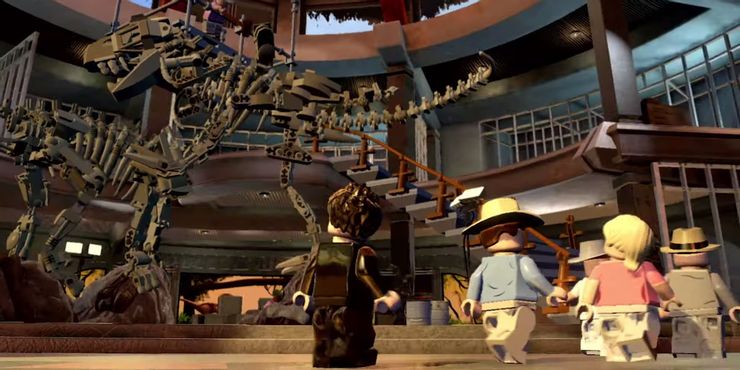
After filling the Lego Star Wars and Lego Indiana Jones games with John Williams’ iconic music, TT did the same with Lego Jurassic World. All throughout the game, players are treated to Williams’ sweeping Jurassic Park theme (and will spend the next few days humming it uncontrollably).

There’s not as much of Williams’ music in this game as those previous ones, as he only scored the first two Jurassic Park movies, but there’s still plenty to enjoy.

5 - Wrong: Dodgy Dialogue Clips

Unlike the early Lego games whose characters spoke in indiscriminate grumbles, the characters of Lego Jurassic World have spoken dialogue taken from the actors in the movies themselves.

Some actors from Jurassic World, including Chris Pratt and Bryce Dallas Howard, recorded new lines for the game, but all the dialogue for the legacy characters was ripped straight out of the films and some of the audio quality is dodgy, which stands out when it’s played opposite newly recorded material.

4 - Right: Vibrant Graphics

The graphics in Lego Jurassic World are vibrant. Every level is bursting with color. Taking cues from the breathtaking production design of the movies themselves, Lego Jurassic World recaptures the sense of wonder and adventure from the original movies.

The jungle environments and hordes of dinosaurs are really brought to life by the bright palette. Even when Lego Jurassic World becomes frustrating, it’s beautiful to look at.

3 - Wrong: Lack Of Tension
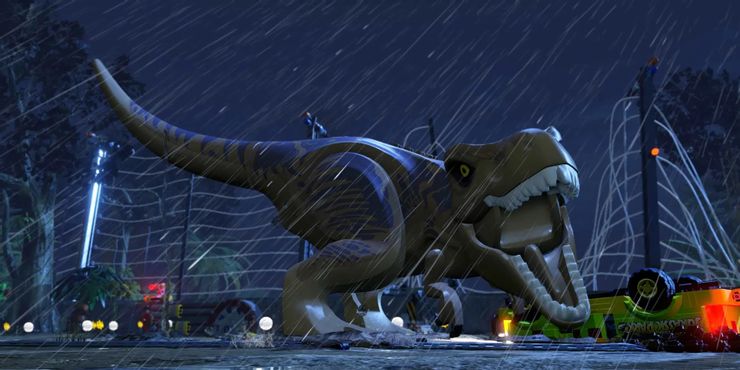
What made the original Jurassic Park movie such a timeless masterpiece that has sustained a franchise for five movies is its palpable tension. Much like he’d done two decades earlier with Jaws, Spielberg used Hitchcockian suspense-building techniques to elevate Jurassic Park above its monster movie premise.

But all the most suspenseful sequences, like the T. Rex’s escape, lost the tension they had in the movie when they were translated to the game, because there’s no sense of danger. The players have as long as they want to defeat the T. Rex, because it poses no real threat.

2 - Right: Raptors In The Kitchen

While a lot of the Jurassic franchise’s tensest set pieces lost that tension in their Lego game adaptation, the scene with the velociraptors in the kitchen makes for one of the game’s best levels.

Keeping out of the raptors’ way is a real challenge, unlike a lot of Lego Jurassic World’s gameplay, and when they attack, it’s a genuine fright.

1 - Wrong: Glitches
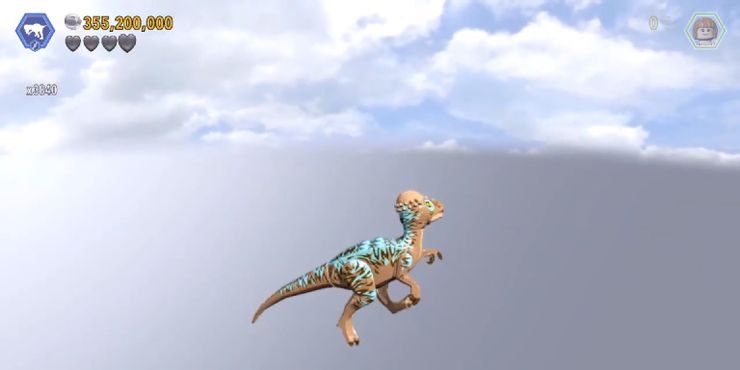
Like most Lego games that appear to have been rushed to market to coincide with the release of a popular movie, like Lego Marvel’s Avengers and Lego Star Wars: The Force AwakensLego Jurassic World is riddled with glitches.

At any point in a level, the game could get stuck in an irreversible glitch, forcing the player to manually shut down the console, turn it back on, and restart the level. And to add insult to injury, the so-called “checkpoints” are meaningless, so the player is sent back to the very beginning. They’re not difficult levels to overcome, but it is frustrating.

Source: https://gamerant.com/

Was a Living Triceratops Found in Indonesia?

Wednesday, December 16, 2020

A video shows a Triceratops being unloaded from a truck in Indonesia. Welcome to Mojosemi Forest Park.

In December 2020, a video supposedly showing a living Triceratops in Indonesia being taken down from a truck a bed was widely circulated online.

This video, which has racked up hundreds of thousands of views, garnered a mixture of comments. Some joked about this being a real video of a living Triceratops, some pondered if it was possible, while others simply wondered what the heck was going on. 

For starters, this is not a living and breathing Triceratops. The rhinoceros-looking dinosaur lived during the Cretaceous period — about 68 million years ago — but went extinct along with all other non-avian dinosaurs during the Cretaceous–Paleogene (K–Pg) extinction event about 66 million years ago. In other words, it would be unusual to see a living, breathing Triceratops in the wild today. 

This video actually features a Triceratops puppet at a dinosaur theme park in Indonesia called Mojosemi Forest Park. While we’re not exactly certain how this puppet was created, a longer video from this dino-themed amusement park appears to show that this Triceratops is operated possibly by two people inside of an elaborate costume:

While some may have taken pause when they first saw the Triceratops video, other videos from Mojosemi Forest Park clearly show that dinosaurs have not actually been brought back from extinction.
Surprisingly, this is not the most unbelievable dinosaur topic that we’ve covered. A viral photograph of director Steven Spielberg with one of the animatronic Triceratops used in the movie “Jurassic Park” is often circulated on social media along with the claim that it shows a big game hunter with his trophy at the end of an exotic safari. 

Source: www.snopes.com/

Jurassic Park: 10 Hidden Details About The Visitor Center Fans Never Noticed

Monday, December 7, 2020

Every aspect of Jurassic Park is packed full of details and the visitor's center is no different. Here are 10 hidden things you may have missed.

The Jurassic Park franchise seems to have some Tyrannosaurus-sized legs under it because decades after Steven Spielberg released the mega-blockbuster that started it all it's still going strong. No matter how many times fans watch Jurassic Park, the timeless classic provides something new like a freshly mined piece of amber.

More than just a location in the film, the Visitor Center is one of the most iconic set pieces in the entire franchise, and even appears in Jurassic World decades later. It's easy for fans to miss details about it amidst the running and the screaming of the main characters, but there are elements about it that deserve to be appreciated.

10 - The Front Door Had Special Designs On It

Besides sparing no expense, Jurassic Park creator John Hammond wanted every care to be taken with the Visitor Center to make it beautiful as well as functional. As the first thing people saw when beginning their park experience, he wanted it to imbue them with wonder and excitement.

The front door to the building was very specifically constructed. The tinted door had a golden egg on the front with rays of light emanating from its center, representing the new life being given to the dinosaurs on Isla Nublar. All around it were engravings of dinosaur fossils, with the Tyrannosaurus Rex's skeleton spawning the top of it.

9 - It Was Going To Be Replicated All Over The Globe

When Jurassic Park visionary John Hammond broke down the park to Dr. Grant and the other visitors over some sumptuous Chilean sea bass in the VIP lounge, corporate slides could be seen over their shoulders indicating Hammond's grand plans for its future.

Hammond postulated that the park would become more popular than sporting events or zoos, as seen by his graph slides, and be replicated all over the world (his first stop seemed to be Europe).

8 - The Control Room Spared No Expense

Not only did John Hammond spare no expense with the creation of the Visitor's Center, but Steven Spielberg and his crew also spared nothing when it came to the props utilized in the Control Room, which was responsible for maintaining all the security programs in the park.

Tech-savvy viewers will note the vast array of computing equipment visible on the set, loaned out from companies such as Silicon Graphics, Apple, SuperMac (UMAX), and Thinking Machines. Production notes for the film, which reveal compelling facts about the franchise, state that in total, there was almost 1 million dollars in equipment just in props.

7 - The Vehicle Garage Was In Its Basement

Visitors to the park had no choice but to go through the Visitor Center, and not just to watch Mr. DNA explain to them about dinosaur reproduction on Isla Nublar. The main vehicle garage could be found in its basement, where visitors had to pile into all-terrain vehicles and exit on the left side of the alcove to head towards the park entrance.

The Jeeps from the first, off-track excursion that Dr. Sattler, Dr. Malcolm, and Dr. Grant took were the same Jeeps encountered by Zach and Gray in Jurassic World. They find Jeep18, and Hammond's Jeep29 could be seen inoperable behind it.

6 - The Merchandise Was Real

In the memorable scene where Dr. Sattler and John Hammond sat eating ice cream and debating the future of the park, the camera panned over the park merchandise on the shelves of the gift shop. In a stroke of marketing genius, all of the props found in the Visitor Center Gift Shop were real and could be purchased alongside the movie's release.

From the stuffed animals and the lunchboxes to the backpacks and the books, everything was for sale. Eagle-eyed fans will be able to spot "The Making of Jurassic Park" book, which was a real book about the making of the movie Jurassic Park, written by Don Shay and Jody Duncan.

5 - The Paintings Were Works Of Art

Behind the rampaging skeletons of the T Rex and Alamosaurus in the middle of the Visitor Center, there was a large mural that was blown up and placed on transparent windows. In the DVD extras for the film, fans learn that each 81/2 by 11-foot painting was created by lauded naturalist painter Doug Henderson, who was commissioned to depict life in the Jurassic period.

On either side of the doors, a Gallimimus could be seen, as well as several Brachiosaurs. The monochromatic mural in the restaurant/dining area was based on "Guernica", though instead of humans in the famous painting by Picasso, there are dinosaurs.

4 - There Was A Hotel Connected To It

Fans of the novel by Michael Crichton will remember that after Ian Malcolm was seriously injured, he was treated by Dr. Harding in his suite at the Safari Lodge, the spacious resort hotel that's connected to the Visitor Center. The Safari Lodge never appeared in the film except with one small reference.

When Lex was accessing the UNIX system for the park, she passed briefly over a file marked "Hotel". This was a reference to the Safari Lodge and indicated that Lex could have manipulated its security if she wanted to. A tiny picture of one of its rooms could be found in the film brochure for the park.

3 - The Tour Guides Were Famous Voice Artists

In the Showcase Theater, where Dr. Grant and the other visitors watched Mr. DNA explain dinosaur genetics, the animated character was voiced by none other than Greg Burson, responsible for several famous Looney Tunes characters like Bugs Bunny, Daffy Duck, Pork Pig, and Elmer Fudd.

As the vehicles pulled away from the Visitor Center, the dulcet tones of Richard Kiley could be heard wafting from the onboard stereo system. As Hammond so memorably stated, "The voice you’re now hearing is Richard Kiley. We spared no expense", referencing the two-time Tony Award winner for Best Actor in a Musical for Redhead (1959) and Man of La Mancha (1966), as well as numerous Emmys for his work in television.

2 - It Was Bigger Than It Seemed

The action and suspense of Jurassic Park often made it difficult to keep track of where characters were, but they were all under traveling between the four different buildings that made up the Visitor Center. With its cylindrical shape, the center had several areas protruding from its main hall, each with a specific function.

Available to the public was the Showcase Theater, which put on the Mr. DNA tour, and the Cretaceous Cafe, which housed the restaurant. Just beside the dining area was the Visitor Center Kitchen and the Gallimimus Gift Shop. InGen personnel only were allowed into the Control Room for security, the Genetics Lab for dinosaur creation, the Cold Storage Room for embryos, and the Emergency Bunker underground.

1 - Hammond Left The Freezer Open

During the exciting kitchen scene where velociraptors terrorized Lex and Tim, Tim made a daring maneuver by running to the walk-in freezer, where he quickly feinted entering in order to get a raptor to follow him. When it slipped on the ice, he made a break for it, successfully locking the raptor inside.

Why did the walk-in freezer door happen to be open at the exact moment that Tim was frantically hobbling towards it? Because John Hammond had gotten all of the ice cream out of it that was melting when the power was shut off and forgot to close the door behind him.

Source: https://screenrant.com/

Scientists Search For The Truth Behind The 'Duelling Dinosaurs'

Sunday, December 6, 2020

Scientists are racing to find the truth behind the fossils of the famous 'duelling dinosaurs'.

The first ever complete skeleton of a T. rex was uncovered in a creek in Montana, US, back in 2006, entwined with that of a Triceratops.

It has long been thought the pair were fighting when they died and, subsequently, buried together, with a large amount of evidence pointing to that conclusion.

However, despite having been found 14 years ago, experts are still not certain whether they were doing battle or were, in fact, pushed together due to geological movement over millions of years.

A crack team of scientists at James Cook University are now working hard to uncover the truth.

JCU's Associate Professor Eric Roberts, who is leading the geological aspect of the study, said that due to the fact they were removed by private fossil hunters, who didn't do a proper geological survey beforehand, it's a very difficult task.

He told the Brisbane Times: "I've been going out to the site with a group of students from the university and we've been trying to get our heads around all of the other context that typically goes with a fossil like this.

"So my role is to put that context back in so we can evaluate some of the very exciting hypotheses around this specimen.

"They call it the Duelling Dinosaurs, but we don't know whether they were duelling or not, however, there are some pretty exceptional evidence to suggest that is a possibility."

For example, researchers found teeth embedded into the spine of the Triceratops, while the T-Rex appears to have broken a number of its teeth, which points towards the two grappling with one another.

The remains were recently donated to North Carolina Museum of Natural Sciences and are set to go on display at some point in 2022.

Prof Roberts added: "Despite their fame, there's only been a handful of T-rex specimens ever recovered and this will be the most complete T-rex skeleton ever found, it's at least 99 percent complete and articulated.

"And it looks like this might be almost a complete Triceratops skeleton as well, and to find both of these in the same deposit, that's exciting."

It's taken years to extract the 14-ton skeletons and arrange their purchase and sale, which has meant relatively little research has been carried out.

Dr Lindsay Zanno, head of palaeontology at North Carolina Museum of Natural Sciences, said it was a monumental moment for the scientific world.

She said: "We have not yet studied this specimen; it is a scientific frontier.

"The preservation is phenomenal, and we plan to use every technological innovation available to reveal new information on the biology of the T. rex and Triceratops.

"This fossil will forever change our view of the world's two favourite dinosaurs."

Source: www.ladbible.com/

Absolutely Everything You Want to Know About Dinosaurs

Monday, December 7, 2020

But seriously, what actually killed the dinosaurs? When did they exist in the first place? And how do scientists really know what they look like?

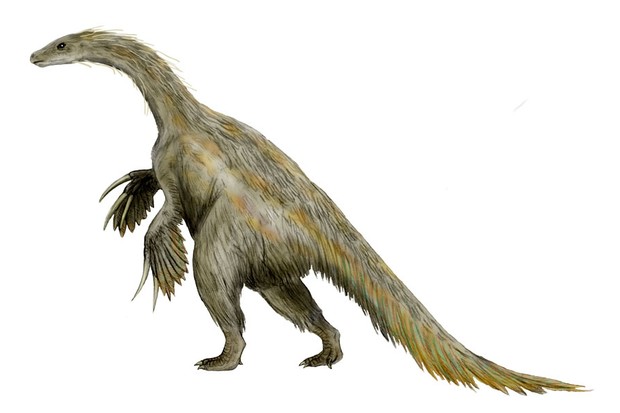
Dinosaurs: be it the fearsome Tyrannosaurus rex, gigantic Brachiosaurus or the curiously pot-bellied Nothronychus, you definitely have a favourite.

However, while everyone can point to their number one dino, most non-palaeontologists probably have several reasonable questions about these prehistoric animals. From when dinosaurs actually existed in the first place, to what made them extinct and how we know what they look like, here’s everything worth knowing.

What killed the dinosaurs?

It’s believed dinosaurs were killed off by an asteroid. Although some scientists theorised a flurry of volcanic activity wiped out the reptiles, research now points to a major impact off the coast of modern-day Mexico about 66 million years ago.

After blasting into the Earth, scientists say the asteroid would have released particles and gases, which blocked out the Sun and caused a lengthy winter. While this caused the extinction of many dinosaurs, many species that later evolved into birds survived.

When did dinosaurs live?

Most dinosaurs lived in what’s called the Mesozoic Era, a time roughly 245 to 66 million years ago. Scientists generally divide this period into three separate ages:

  • Triassic Period (252 to 201 million years ago) The era when reptiles first evolved into creatures we know as dinosaurs. However, the Earth they lived on was different from today’s. Almost all animals lived on Earth’s one extremely hot and dry landmass, Pangaea.
  • Jurassic Period (201 to 145 million years ago) In this period, temperatures on Earth fell, leading to more water, plants and dinosaurs. It’s in time period species such as the Brachiosaurus first emerged.
  • Cretaceous Period (145 to 66 million years ago) With more continents forming around the globe, more dinosaurs started evolving independently, which led to more dino diversity. Despite what a certain Jeff Goldblum movie might suggest, the Tyrannosaurus rex and Velociraptor first actually appeared in this Cretaceous Period, not the Jurassic.

Why were dinosaurs so big?

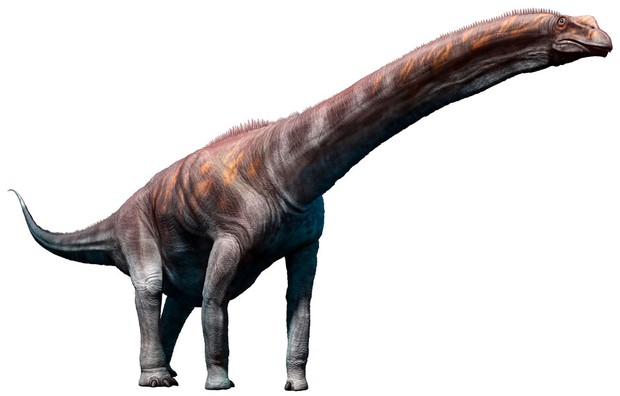
With a length between 30 to 40 metres, the Argentinosaurus was the world’s largest dinosaur. A modern blue whale measures an average of 25m

With a length between 30 to 40 metres, the Argentinosaurus was the world’s largest dinosaur. A modern blue whale measures an average of 25m

It’s all about climate. Dinosaurs were so big due to the sheer amounts of food available to eat at the time.

With Earth holding up to four times more CO₂ than today, the planet was packed with plant life, which could fuel the biggest herbivores (such as the Diplodocus).

This growth also encouraged bigger carnivores, with only the largest predators – like the T. rex and Spinosaurus – able to catch their prey.

What came before dinosaurs?

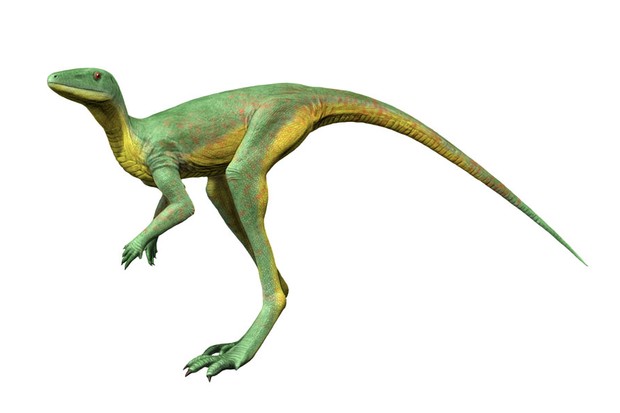
No, not aliens. The answer to what dinosaurs evolved from is simple: more reptiles – just ones a lot smaller than a T. rex. Known as dinosauromorphs, they were the size of house cats and flourished around 242 to 244 million years ago.

They were animals by no means at the top of the food chain, but they were speedy enough to outpace most attackers.

When were dinosaurs discovered?

The short answer: in 1842, when British scientist Richard Owen coined the term Dinosauria, literally meaning “terrible lizard” in Greek. Owen is often credited as the first person to place dinosaur in their own category of creature after examining a particularly large dino bone.

However, Owen is by no means the first to find dinosaur remains. For instance, many were unearthed in ancient China, but were treated as dragon bones.

Many historians have also noted how many dinosaur bones in Europe were believed to be the remains of biblical creatures. Even as late as 1763, British physician Richard Brookes believed a broken dinosaur femur was actually a fossilised giant’s testicle.

How do we know what dinosaurs looked like?

Scientists can estimate the appearance of dinosaurs with some very clever detective work. Not only can experts piece together the size of these creatures from their remains, but tiny details on each bone can offer big clues.

For instance, many fossilised bones have tiny scars that indicate how dinosaur muscles connected to their bones, also illuminating how they moved. In recent years, palaeontologists have also used 3D computer modelling to test exactly how dinosaurs could have moved, and thus looked.

Source: www.sciencefocus.com/

Jurassic Park: Biggest Differences Between The Book & Spielberg’s Movie

Sunday, December 6, 2020

Jurassic Park differs significantly from Michael Crichton's novel, including which characters live and die, and some major parts of the story.

Jurassic Park is one of the most iconic and beloved films of all time, but it made some serious changes from the original Michael Crichton novel. From the landmark special effects to John Williams’s booming score, Jurassic Park stands both as one of the highest marks in Steven Spielberg’s prolific career, and as one of the most influential monster/adventure movies ever made. But how does it stack up next to the source material, and where do the two differ?

By the time Michael Crichton published Jurassic Park in 1990, he was already a huge name in the realm of contemporary science fiction. Crichton’s background as a doctor and someone with extensive knowledge of biological science helped him write hit novels like The Andromeda Strain (1969) and The Terminal Man, as well as more horror-styled books like Eaters of the Dead (1976). His fiction frequently grew from the scientific developments of the time, taking what had recently become reality and stretching a bit further back into a realm of fiction. Jurassic Park sprang from that same tried-and-true formula.

While the book was a big success and remains one of Crichton’s most popular, Spielberg’s film adaptation released in theaters three years later is arguably even more culturally impactful. While reading about dinosaurs is all well and good, seeing them on screen is still something to behold. Still, Crichton’s original version of the story is a masterwork of sci-fi, and it has some major differences from the film version. Obviously, there are numerous changes in the exact chain of events, the way the characters behave (and whether they survive), and notably which dinosaurs appear in Jurrasic Park - all of which create a different experience and story to the film.

The Jurassic Park Novel Has More Characters

In the book, Crichton adopts a similar narrative structure to some of his other novels, starting out by showing different people in different places reacting to different parts of some mysterious scientific anomaly. The book opens with a little girl in Costa Rica being attacked by an escaped Procompsognathus. The scene does not appear in the first film, though The Lost World: Jurassic Park opens with a very similar scene. The girl describes the creature as a strange lizard, prompting locally based biologist Dr. Marty Guitierrez to do some research. Guitierrez is a significant -  if briefly seen - character in the book, appearing in the opening and closing sections, but not showing up in the movie at all.

Another prominent book character absent from the film is Ed Regis, Jurassic Park’s head of public relations. Regis serves mostly as a yes-man to John Hammond in the story, pitching an overly optimistic view of the park and immediately panicking once things start to go wrong. Scared by the escaped denizens of the T-Rex pen, Regis leaves the tour cars and attempts to flee, dying in a similar place and manner to the film’s version of lawyer Donald Gennaro.

Many Of The Characters Are Majorly Changed In Jurassic Park

While Crichton’s other primary characters all transfer over to the movie version, many of them a vastly different. Ellie Sattler for instance is much younger in the novel than she is in Spielberg’s film. In the book, she’s a graduate student of paleobotany, rather than a doctor in her own right, and her relationship with Dr. Alan Grant is more directly that of a mentor and mentee. Grant is similar in many ways, but his book-self is less curmudgeonly and doesn't dislike children. Lex and Tim are effectively swapped between the two versions, with Tim being the older, computer-savvy sibling in the book, and Lex being the younger child obsessed with dinosaurs. Dr. Henry Wu has a much larger role in the book.

The biggest changes lie in John Hammond, the billionaire founder of the whole Jurassic Park enterprise. In the movie, Hammond is portrayed as a charming, loveable, well-intentioned old man whose desire to create bold new things exceeds his ability to do so. He is largely to blame for the deaths that transpire in the story, but he also repents for his arrogance and finds a kind of redemption in acknowledging his failure. His last shot, looking out over his fallen kingdom before boarding the helicopter to escape, is a powerful and defining moment.

In the book, Hammond gets no such redemption. From beginning to end, he remains a self-interested capitalist who attributes all the park’s failings to other people and random chance. Crichton’s Hammond is despicable, especially in his plans to open the park even after all the crises have taken place. For his lack of recompense, he meets a less desirable fate than his film counterpart, but more on that later. Many of Hammond’s less likable traits were channeled into Gennaro for the movie – in the book, the lawyer is much more likable and capable.

The Characters Who Live And Die Are Almost Totally Different

In Spielberg’s film, only four main characters die – Gennaro, who gets eaten on the toilet, Muldoon, who’s killed by the velociraptors, Mr. Arnold, also killed by raptors, and Dennis Nedry, who’s killed by a Dilophosaurus. That body count changes significantly in the book, however, both in how many people die, and which characters.

For starters, Ian Malcolm dies from his injuries in the novel, before being effectively resurrected in The Lost World. Whether or not Crichton planned for Malcolm to stay dead is unclear, but when the first book ends, he seems very clearly expired. Two of the book’s deaths stay the same – Nedry and Arnold, who died in largely the same way in both versions. In the novel, Muldoon and Gennaro actually both survive the island, though Dr. Wu (who survives into Jurassic World in the films) is killed by a raptor attack. Ed Regis, the aforementioned PR chief, dies similarly to how Gennaro does in the film.

Perhaps the most notable difference is that John Hammond dies in the novel. After the power has been restored and the dinos mostly contained, Hammond declares his intentions to move forward with opening the park, and goes for a walk. While out, he’s startled by a recording of a T-Rex roar that he mistakes for being real, falls down a huge hill, and is devoured by Procompsognathus. His death makes the book’s closing message quite different from the film – a story of selfish ambition being an inescapable doom, rather than one about the alluring but impossible nature of control.

The Dinosaurs Attempt To Escape In The Jurassic Park Novel

In Spielberg’s film, the core danger is singular – our heroes must survive the park and find a way to get the power back on. In the novel, there’s a second level of time pressure. The supply ship that leaves Isla Nublar during the storm is never mentioned again in the movie, but in the book, it holds stowaways – several young raptors hiding aboard. A big part of the rush to get the power back on in Crichton’s version is so that the survivors can radio the ship and get it to turn around, before unintentionally letting the dinosaurs escape to the mainland.

Jurassic Park Is Destroyed In The Novel

Jurassic Park the movie ends with the band of survivors escaping in a helicopter, presumably leaving the island to tear itself apart or create whatever strange natural order is seen in the later films. The book ends more dramatically, with the Costa Rican Air Force sending a bombing run to essentially destroy Isla Nublar. It’s a powerful moment and a nice effort to stop the spread of dangerous dinos, but it ultimately falls short as Jurassic Park’s last pages reveal some of the creatures managed to escape.

Source: https://screenrant.com/

Where to find Jurassic World easter eggs in Fortnite Season 5

Saturday, December 5, 2020

Fortnite Chapter 2, Season 5 has plenty of secrets and some are hidden in plain sight, and that includes a few potential nods to Jurassic World at Stealthy Stronghold. 

As the Fortnite seasons have unfolded over the last three years, crossover events have become commonplace. Typically, these crossovers can be something as small as a skin, while others are bigger, bringing a raft of skins, new locations, and even taking up the whole theme of the season. 

In Chapter 2, Season 5, we’ve already got two crossovers in the form of The Mandalorian and Kratos from God of War – with new skins for both, as well as Mando being part of the season’s boss fights. 

Though, when it comes to Jurassic Park – well, Jurassic World – that crossover seems to be a little more subtle and if you’re not searching it out, you might just miss a small few nods.

Stealthy Stronghold looks like a Jurassic World enclosure from the outside, but secrets hide inside.

It’s not exactly an official crossover, yet, but the Stealthy Stronghold location very much resembles the enclosure in which the vicious Indominus Rex is created and held.

But, if you go inside and have a look around, you might see more subtle nods. These include small cages dotted around the POI – again, resembling parts of Jurassic Park where dinosaurs are released into a certain area. 

The cages in Fortnite are open, and don’t have any claw marks or anything like that, but any Jurassic World fan will immediately recognize them. It’s hard not to, given there are two or three dotted around the POI.

The small cages resemble some of the shots from Jurassic World.

Additionally, there is also another nod to Jurassic Park in this season. If you get a kill in Stealthy Stronghold while wearing one of the Dino Guard skins, you’ll get a legacy achievement titled Clever Girl – a tip of the hat to one of the iconic lines from the 1993 movie.

These small nods could, simply, be Epic Games paying tribute to the franchise, as nothing has yet been leaked to suggest a bigger crossover. Though, we’ll be sure to keep a close eye on things moving forward.

Source: /www.dexerto.com/

Cambrian Deep-Sea Arthropods Had Complex Compound Eyes

Saturday, December 5, 2020

An artist’s reconstruction of ‘Anomalocaris’ briggsi. Image credit: Katrina Kenny.

A team of paleontologists from Australia and the United Kingdom has found that ancient deep-sea creatures called radiodonts developed sophisticated eyes over 500 million years ago (Cambrian period), with some specially adapted to the dim light of deep water.

Radiodonts (meaning ‘radiating teeth’) are a group of arthropods that dominated the oceans around 500 million years ago.

The many radiodont species share a similar body layout comprising of a head with a pair of large, segmented appendages for capturing prey, a circular mouth with serrated teeth, and a squid-like body.

It now seems likely that some lived at depths down to 1,000 m (3,281 feet) and had developed large, complex eyes to compensate for the lack of light in this extreme environment.

“When complex visual systems arose, animals could better sense their surroundings, that may have fuelled an evolutionary arms race between predators and prey,” said lead author Professor John Paterson, a researcher in the Palaeoscience Research Centre at the University of New England.

“Once established, vision became a driving force in evolution and helped shape the biodiversity and ecological interactions we see today.”

In 2011, Professor Paterson and colleagues documented isolated eye specimens of up to 1 cm (0.4 inches) in diameter from the 515-million-year-old Emu Bay Shale on Kangaroo Island, but they were unable to assign them to a known arthropod species.

They also described the stalked eyes of Anomalocaris, a top predator up to 1 m (3.3 feet) in length, in great detail.

“The Emu Bay Shale is the only place in the world that preserves eyes with lenses of Cambrian radiodonts,” said Dr. Diego García-Bellido, a researcher in the School of Biological Sciences at the University of Adelaide and South Australian Museum.

“The more than thirty specimens of eyes we now have, has shed new light on the ecology, behavior and evolution of these, the largest animals alive 500 million years ago.”

Acute zone-type eyes of ‘Anomalocaris’ briggsi. Image credit: John Paterson, University of New England.

In the new study, the researchers identified the owner of 515-million-year-old eye specimens: ‘Anomalocaris’ briggsi, representing a new genus that is yet to be formally named.

“We discovered much larger specimens of these eyes of up to 4 cm (1.6 inches) in diameter that possess a distinctive ‘acute zone,’ which is a region of enlarged lenses in the center of the eye’s surface that enhances light capture and resolution,” Professor Paterson said.

The large lenses of ‘Anomalocaris’ briggsi suggest that it could see in very dim light at depth, similar to amphipod crustaceans, a type of prawn-like creature that exists today.

The frilly spines on its appendages filtered plankton that it detected by looking upwards.

“These specimens have shown us that the animals’ feeding strategies previously indicated by the appendages — either for capturing or filtering prey — are paralleled by differences in the eyes,” said Dr. Greg Edgecombe, a paleontologist in the Department of Earth Sciences at the Natural History Museum, London.

“The predatory radiodont in our samples has the eyes attached to the head on stalks but one that filter feeds has them at the surface of the head.”

“The more we learn about these animals the more diverse their body plan and ecology is turning out to be.”

“The new samples also show how the eyes changed as the animal grew. The lenses formed at the margin of the eyes, growing bigger and increasing in numbers in large specimens — just as in many living arthropods. The way compound eyes grow has been consistent for more than 500 million years.”

The scientists also found that the Anomalocaris eyes described in 2011 are likely from a species called Anomalocaris aff. canadensis.

“The Australian material is unique among the dozens of occurrences of radiodonts around the world in the Cambrian period, because it’s the only place where the visual surface of the eye is preserved,” Dr. Edgecombe said.

“In other sites in China, Canada, the United States and elsewhere, only the outline of the eyes is known but there’s no information on their lenses.”

The study was published in the journal Sciences Advances.

_____

John R. Paterson et al. 2020. Disparate compound eyes of Cambrian radiodonts reveal their developmental growth mode and diverse visual ecology. Science Advances 6 (49): eabc6721; doi: 10.1126/sciadv.abc6721

Source:

Dino News and Views: The Great Parasaurolophus Pathology

Friday, December 4, 2020

The skeleton of Parasaurolophus on display at the Royal Ontario Museum. Look closely for the signs of injury in its bones. Photo by missbossy, CC BY 2.0

Despite its status as a fairly popular and famous dinosaur, the tube-crested duckbill Parasaurolophus walkeri is actually quite rare. The first specimen known to science, collected from Alberta’s Dinosaur Provincial Park and housed at the Royal Ontario Museum in Toronto, is still the most complete example of this species.

While the iconic backwards-sweeping, tube-shaped crest of this dinosaur is one of its most famous features, the Toronto Parasaurolophus specimen has a variety of other weird features that stand out to the discerning eyes of palaeontologists. Several bones on the left side of the dinosaur, including some vertebrae, ribs, and hip bones, all show some strange growths deformities. These are most obvious in the backbones just over the shoulders where, instead of sticking straight upwards like normal, two of the vertebral spines have grown bizarrely away from each other, forming a strange v-shaped notch in the animal’s back. The foreword-facing spine in this notch had also fused with the vertebral spine in front of it, which itself had a weird disc-shaped growth of bone at its tip.

The presence of this odd dorsal notch in Parasaurolophus had early Canadian palaeontologists scratching their heads, unable to convincingly explain why these features existed. No other hadrosaur, including other specimens of Parasaurolophus, show such conditions. We now know that strange growths and deformities seen in dinosaur bones often arise from injuries and infections acquired by the animals while they were still alive. The study of dinosaur bone injuries and diseases is an ever-growing field these days, and brand new research from Filippo Bertozzo and colleagues has used this approach to study the weird anomalies of the Toronto Parasaurolophus.

The authors of this new paper argue that many of the bone deformities in this dinosaur, given that they’re confined to just the animal’s left side, can be explained by it having suffered a nasty injury while it was alive. The left ribs near the shoulder show healed fractures, meaning something big hit the side of animal at one point. The object had also slammed down hard on the dinosaur’s back, deforming its vertebral spines and producing the strange back notch.

What could have struck such a nasty blow to this dinosaur? It’s hard to say for sure, since we can’t go back in time and witness the event for ourselves. There’s certainly some likely possibilities we can consider, though. Perhaps it was attacked by another dinosaur, maybe a member of its own kind during courtship battles. Perhaps it was hit by a big falling rock. Or perhaps (and I think this might be the most likely scenario) it was hit by a falling tree trunk, as illustrated in some striking palaeoart in the paper itself.

The authors reason that the unusual bone growth in the dinosaur’s hip may have resulted from it essentially figuring out how to balance and walk again after suffering such an injury.  The weird disc-shaped bone growth in front of the backbone notch might indicate that this is where a ligament that ran along the top of the dinosaur’s neck to the back of its skull connected. Knowing how this ligament spanned the neck of Parasaurolophusfurther allowed Bertozzo and colleagues to determine what other palaeontologists have been suspecting for a while now- that Parasaurolophus, and probably most other duckbills, had really thick, well-muscled necks.

Learning all this brings us some fascinating new insights into a popular yet enigmatic dinosaur. Seeing the trials of its life written into its very bones makes us realize that Parasaurolophus, and all other dinosaurs, were once living animals, just trying to get by in a tough world.

Source: www.mayerthorpefreelancer.com/

Jurassic Park: Why Frog DNA Was Used To Create The Dinosaurs

Saturday, December 5, 2020

Jurassic Park's science uses frog DNA is a notable addition to the incomplete genome of a dinosaur, and it also gives them very special abilities.

The original Jurassic Park film reveals that frog DNA was used to help create the dinosaurs, causing a problem with InGen's plan to limit breeding. Released in 1993, Steven Spielberg's classic not only boasted ground-breaking advancements in CGI technology, but it also explored the scientific phenomena of cloning. While the logistics are not fully explained in the movie, they still provide a compelling look into the reemergence of dinosaurs.

When paleontologist Dr. Alan Grant and the team first arrive at the Jurassic Park Visitor Center, they are treated to a tour by John Hammond, founder of the park and of InGen, the company which makes dinosaur cloning possible. Their first stop includes a film narrated by Mr. DNA, the animated helix, who explains how the dinosaurs came to be. In simplified terms, scientists were able to extract dinosaur blood from prehistoric mosquitos preserved in amber. Because most of the samples' genomes were incomplete, geneticists needed something to, as Mr. DNA says, "fill in the holes and complete the code." This is where frog DNA came in.

Frog DNA serves as both an easy, uncomplicated solution to the dinosaurs' genetic sequence and a plot device for later on in the film. It's that DNA solution that is responsible for every dinosaur in the Jurassic Park series, like the T-Rex and Velociraptor before the later movies move into more overt genetic splicing. It's combined with the dinosaurs' DNA sequence to make a finalized version for fertilization, filling in the gaps from degradation over the thousands of years since their extinction. In the film, it's only frog DNA that was used to serve the plot and explain how some dinosaurs have been able to change sex, while the original book uses a number of additional options. Fundamentally, it serves two other purposes too. Not only does it foreshadow the franchise's genetic tinkering and establishes that Dr Henry Wu's morals come second to his scientific drive, while adding an accessible means to explain how the amber extraction method can possibly lead to full sequence DNA cloning.

Michael Crichton's novel, on which the movie is based, provides a complex analysis of the different chicken and amphibian genomes used in creating and boosting the growth of dinosaurs. Jurassic Park's filmmakers likely wanted to make the process as simple as possible for audiences to understand, so frog DNA became the sole additional insertion into the dinosaurs' biological makeup. Frog DNA is mentioned again in a later scene, when Dr. Grant, Lex, and Tim, discover freshly-hatched eggs outside of the lab. According to Dr. Wu, the head geneticist of the park's lab, all dinosaurs are programmed to be female, so breeding should be impossible. Upon finding the eggs, Dr. Grant remarks that some West African frogs can alter their sex in a single-sex space. By marrying a frog’s genetic code with the dinosaurs', scientists gave dinosaurs the frog’s ability to change sex and, therefore, mate. However, what type of frog DNA was actually used and whether the scientists knew about this trait from their research remains unclear.

Though frog DNA is touched upon only twice in Jurassic Park, it is an essential part of the film's plot and the science behind making dinosaurs. The stakes are even higher knowing that dinosaurs and their natural-born children are running rampant around the island. Frog DNA is also a stepping stone for completely man-made dinosaur hybrids like the Indominus Rex to wreak havoc in Jurassic World and its sequels.

Source: https://screenrant.com/

Pages