nandi's blog

Jurassic World 3's Story Was Changed To Fit Pandemic

Friday, December 4, 2020

Jurassic World: Dominion has undergone "tweaks" in order to reflect the reality of the COVID pandemic, says Ian Malcolm actor Jeff Goldblum.

Jurassic World: Dominion saw its story tweaked to fit with the COVID pandemic. Released in 1993, Steven Spielberg’s Jurassic Park brought state-of-the art CGI dinosaurs to movie screens, thrilling audiences to the tune of $1.033 billion at the worldwide box office. At the same time, the film delivered a classic monster movie message about the danger of tampering in God’s domain.

Given its huge box office numbers it was no surprise to see Jurassic Park spawn a pair of sequels, 1997’s The Lost World: Jurassic Park and 2001’s Jurassic Park III. The franchise would then go on hiatus for nearly 15 years before roaring back to theaters with 2015’s reboot Jurassic World. Proving audiences still had a huge appetite for dinosaur action, the reboot grossed a massive $1.67 billion. Like previous movies in the series, Jurassic World touched on themes related to the delicate balance of Earth’s ecology and humanity’s huge responsibility for maintaining this balance (while also delivering outrageous dinosaur carnage). After a successful sequel in 2018’s Jurassic World: Fallen Kingdom, a third dino-movie is now on the way with Jurassic World: Dominion.

Of course like all the other Jurassic Park and World films, the new movie will explore the issue of humanity’s place in the natural scheme of things. Such themes are obviously much more on people’s minds these days with the COVID pandemic still on-going, and indeed in its own way, the new Jurassic World movie will address this reality. According to star Jeff Goldblum (speaking to EW), some changes were made to the film to reflect the current state of things (via CinemaBlend):

There are things that my character talks about, has always talked a little bit about, the fragility of our species and the global cooperation that’s needed and the foundation and science that is needed. Oh, and the ethical use of science that’s needed to unite us in trust and connectedness as a family. To reach our potential and do right by ourselves and this glorious planet -- all of that. So all of those things are now as you can imagine more relevant than ever. In many aspects of this [Dominion] plot, there are other things we’re kind of finding that are kind of apropos, but there are some sensitive things they are tweaking and adjusting to make it right for now, and contributive and nourishing for right now.

Goldblum’s character Ian Malcolm, the occasionally shirtless scientist first introduced in the original Jurassic Park, would of course be the natural one to help deliver the new movie’s message of balance and connectedness and the ethical use of science, as that’s been his role since the very beginning. Indeed, the movies have occasionally slowed down to have Goldblum literally deliver speeches, as in the first film when he uttered his now famous line “Life finds a way.”

Goldblum is naturally very vague when it comes to discussing what “tweaks” are being made to Jurassic World: Dominion in order to be more “contributive” to what’s going on at the current time, but his remarks certainly imply that the COVID pandemic will find its way into the movie in some capacity. It's interesting too to wonder what parts of the movie were considered "sensitive" and in need of adjusting given the new reality, as it's presumably about dinosaurs and not a pandemic. COVID has of course already played a very real part in production of Jurassic World: Dominion as the film saw its shoot extended to 18 months as a result of delays, and has seen its release date pushed back a year. But despite all this the movie will eventually arrive, as Hollywood finds a way.

Source: EW (via CinemaBlend)

What Was Life for Dinosaurs Like in Europe?

Thursday, December 3, 2020

Book cover of the new Europasaurus graphic novel.  CREDIT: Joschua Knüppe

Graphic novel explains new scientific findings.

The small dinosaur Europasaurus lived 154 million years ago in Central Europe alongside other dinosaurs, prehistoric crocodiles and mammals. Its world comes alive again in the graphic novel "Europasaurus - Life on Jurassic Islands". The book contains 275 original illustrations and several stories based on the scientific work of palaeontologists like Dr Oliver Wings from Martin Luther University Halle-Wittenberg (MLU). Working together with the paleo-artist Joschua Knüppe and with financial support from the Volkswagen Foundation, the researcher has created a gateway into this primeval world. The graphic novel targets young people and adults alike and will be released today.

Present-day Europe looks completely different to how it did in the Mesozoic era. Instead of large land masses, it consisted of many islands on which dinosaurs, crocodiles and ancient mammals lived. One of these was Europasaurus holgeri, a scientific curiosity. It was a member of the long-necked sauropods, the largest land animals ever to live. The largest of these sauropods had a body that towered 13 metres and weighed up to 70 tonnes. In contrast, Europasaurus was a real lightweight. Fossils reveal that it was no more than three metres tall and one tonne in weight. "Europasaurus was the first dinosaur discovered to exhibit dwarfism. It probably adapted to the limited supply of food on the islands by halting growth early on," says Dr Oliver Wings from the Natural Sciences Collections (ZNS) at MLU. The bone fossils of Europasaurus were found in a quarry near Goslar in 1998. In 2006, Europasaurus was introduced as a new dinosaur genus when the findings were published in Nature.

The new graphic novel "Europasaurus - Life on Jurassic Islands" contains 184 pages and provides a comprehensive and realistic look at the life of this dwarfed giant dinosaur and other prehistoric creatures. "We wanted our book to provide readers with easy access to scientifically accurate information about the Mesozoic era," says Wings. In addition to the comic section of the book, which contains a total of 275 illustrations, the book also contains a 38-page section that describes the scientific work with the fossils in an accessible way. The accuracy of all of the drawings and information has been verified by international experts.

The book is primarily based on research work that Wings and his colleagues began in 2011 as part of several projects funded by the Volkswagen Foundation. They carried out further excavations and systematically processed and described the finds. The team was able to identify the first mammalian fossils from the Jurassic period in Germany and described several new species. "During my work I realised I wanted to present our findings to the general public, in an informing, accessible and also entertaining way," says Wings. Augmented by findings from other excavations in Central Europe, the idea for the graphic novel was born. Its production has received additional funding for science communication from the Volkswagen Foundation.

All of the illustrations were created by paleo-artist Joschua Knüppe, who specialises in accurately depicting dinosaurs in a popular scientific way. "What fascinated me most about the project was the fact that these fossils are still completely unknown to most people and are also rarely depicted in the paleo art scene. The book also gave me the opportunity to present complex ideas and content that are usually only found in films," says Knüppe. Wings and Knüppe were supported in their endeavour by art director Henning Ahlers, who helped take the facts and turn them into a coherent and exciting story.

The book is written in both German and English and is suitable for anyone aged ten years and up.

###

About the book: Oliver Wings & Joschua Knüppe. Europasaurus - Urzeitinseln voller Leben. Pfeil-Verlag. 19,80 Euro, 184 S., ISBN: 978-3-89937-264-9 https://pfeil-verlag.de/publikationen/europasaurus/

Source: www.eurekalert.org/

Melbourne Museum Acquires World’s Most Complete Triceratops Skeleton in ‘Immense’ Dinosaur Deal

Thursday, December 3, 2020

Dr Erich Fitzgerald, senior curator of palaeontology at Melbourne Museum, examines the lower jaw of the triceratops dinosaur. The skeleton is at least 87% complete and literally weighs a tonne. Photograph: John Broomfield/Museums Victoria

Unlike the ‘dime a dozen’ T. Rex, there are only a handful of near-complete Triceratops skeletons in the world – and one is coming to Australia

Melbourne Museum will become permanent home to the world’s most complete triceratops skeleton, with the “immense and unprecedented” $3m acquisition of a 67m-year-old dinosaur fossil.

After two years of negotiation and due diligence, the Victorian government and Museums Victoria have brokered a deal to bring the triceratops horridus – which was discovered on private land in the United States in 2014 – to Melbourne next year where it will go on display for the first time.

“It’s immense, and frankly, unprecedented in terms of this sort of item of such global iconic stature and quality being in an Australian museum. There’s no precedent really,” Dr Erich Fitzgerald, senior curator of palaeontology at Melbourne Museum, told Guardian Australia on Wednesday.

The skeleton is at least 87% complete, measures up to seven metres long from tip to tail, stands at more than 2m tall, and literally weighs a tonne. Its 261kg skull is also 99% intact. It’s so finely preserved that even skin impressions and tendons are visible.

“Triceratops skeletons that are almost completely intact are rarely found – in fact, are vanishingly rare for triceratops, despite its popularity, and iconic status,” Fitzgerald said. “T-rex now is almost a dime a dozen – a garden-variety dinosaur. It’s basic, a vanilla dinosaur … But there’s really just a handful, maybe four or five substantially complete triceratops skeletons on the entire planet.”

The fossil was discovered on private property in eastern Montana by independent commercial fossil prospector Craig Pfister. Museums Victoria became aware of the fossil in 2018 and began investigations into its provenance and authenticity. A spokesperson from the organisation said they could not share details about the landowner in order to preserve the integrity of the excavation site.

Dr Erich Fitzgerald counts the pieces of the frill of the triceratops. Photograph: John Broomfield/Museums Victoria

Fossil ownership and trade laws are complicated and vary between countries, but in the US, fossils found on private property belong to the landowner and can be sold commercially. Independent prospectors need permission from landowners to dig on private land, but will often negotiate deals with landowners that allow them to share in the profits of sale for any significant find.

Trade in fossils can also be extremely lucrative: a near-complete Tyrannosaurus rex skeleton sold for US$31.8m in October.

Museums Victoria is a member of the International Council of Museums that requires the organisation to adhere to a code of ethics around the purchase of fossils.

“Acquisitions by Museums Victoria have to go through an extremely rigorous due process, due diligence around provenance, and that includes a fully detailed investigation of the origins of any item that is under consideration,” said Fitzgerald. “That was quite an involved process, which is why it actually took some time just to get this point of announcing that we have acquired this fossil.”

This particular fossil was discovered in an area known as Hell Creek, a place Fitzgerald said “for a long time has been known as one of the globally richest sources of dinosaur fossils, and indeed, fossils of plants and other animals that lived in the environment with dinosaurs”.

The field site in the Montana badlands. Photograph: Heinrich Mallison/Museums Victoria

Hell Creek was also where the famous “Dueling Dinosaurs” – a Tyrannosaurus rex and Triceratops locked in permanent battle – were discovered in 2006.

Museums Victoria’s triceratops dates from the end of the cretaceous period, “almost a blink of an eye before the cataclysmic events 66 million years ago that followed the asteroid striking the Earth and leading to a global mass extinction,” said Fitzgerald. “The final moments before we transitioned into the era of life that we live in, the Cenozoic era.”

Fitzgerald, whose own research in palaeontology focuses on the fossils of ancient marine animals, said a fascination with dinosaurs is universal in his field. “Anyone who is fortunate enough to become a palaeontologist is amazed and in awe of dinosaurs,” he said.

The triceratops is at the final stage of preparation – the process of cleaning the bones out of the rock in a laboratory in Canada – before its move to Australia. Fitzgerald said he hoped it would bring visitors to the museum for “the thrill and wonder of seeing something like this, for the first time”.

“It’s the right fossil for a public museum that has a palaeontology program to acquire,” he said. “It’s fantastic for public display as an attraction, fantastic for public education, and a scientifically priceless fossil that will inspire and be used in research for generations.”

The museum expects the skeleton will allow the scientific community to properly map, for the first time, the full “atlas of anatomy for triceratops” and allow them to definitively answer basic “vital stats” about the dinosaur, such as how big and heavy they really got.

“Triceratops is almost like the last of the big guns – the really big name, household name dinosaurs – for which we don’t have answers to those questions yet,” said Fitzgerald.

Despite being about to welcome such a scientifically significant specimen to his home city, Fitzgerald said that the triceratops wasn’t his favourite dinosaur.

“Dinosaurs are still alive. Dinosaurs are all around us. We call them birds,” he said. “My favourite dinosaurs are penguins, because they are the best examples of dinosaurs that went to sea … Penguins evolved, we think from a flying ancestor. And that flying ancestor was a bird.”

Source: www.theguardian.com/

Cretaceous Titanosaur Suffered from Blood Parasites and Severe Bone Inflammation

Wednesday, December 2, 2020

Life reconstruction of the titanosaur from the Upper Cretaceous Adamantina Formation in São Paulo backcountry, southeastern Brazil. The animal was reconstructed based on associated saltasaurid specimens in the area. Image credit: Hugo Cafasso.

A giant sauropod dinosaur that lived 85.2 million years ago (Cretaceous period) in what is now Brazil had an aggressive case of osteomyelitis in its leg and soft-bodied parasitical microorganisms in its vascular canals.

“The occurrence of osteomyelitis in dinosaurs is rare, but recent studies have corroborated the occurrence of this form of bone inflammation in Sauropodomorpha,” said lead author Dr. Tito Aureliano and his colleagues from the University of Campinas, the Federal University of Rio Grande do Norte, and the Federal University of Sao Carlos.

“Evidence of fossil endoparasites of vertebrates has already been found in coprolites and invertebrate vectors preserved in amber.”

“However, fossil parasites preserved directly in vertebrate tissues were unknown until the present date.”

In the study, the researchers looked at the 85.2-million-year-old fragmentary fibula of a titanosaur from Brazil’s Adamantina Formation.

You wouldn't be too happy either if you were being eaten alive by parasites. Credit: Hugo Cafasso

They used CT scanning to create a 3D model of the full fossil.

They also examined the specimen with petrographic and non-filtered optical

They identified tens of fossil parasites preserved inside the specimen’s vascular canals — the first clear example of a parasite preserved inside fossilized bone tissue.

The dinosaur fibula also showed acute osteomyelitis with elliptical ulcerations, present throughout all the bone.

Bone inflammation was either caused by the referred parasites or facilitated its infestation.

Life reconstruction of the titanosaur from the Upper Cretaceous Adamantina Formation in São Paulo backcountry, southeastern Brazil. The animal was reconstructed based on associated saltasaurid specimens in the area. Image credit: Hugo Cafasso.

“Our research documents for the first time the detailed histological description of severe bone inflammation and the exceptional preservation of soft-bodied parasitical microorganisms inside the vascular canals of a non-avian dinosaur,” the scientists said.

“The results bring new insights into the fields of parasitology, pathology, and histology in the fossil record.”

The team’s paper was published in the journal Cretaceous Research.

_____

Tito Aureliano et al. 2021. Blood parasites and acute osteomyelitis in a non-avian dinosaur (Sauropoda, Titanosauria) from the Upper Cretaceous Adamantina Formation, Bauru Basin, Southeast Brazil. Cretaceous Research 118: 104672; doi: 10.1016/j.cretres.2020.104672

Source: www.sci-news.com/

How Dinosaur Hunter Mary Anning Went To Mars

Tuesday, December 1, 2020

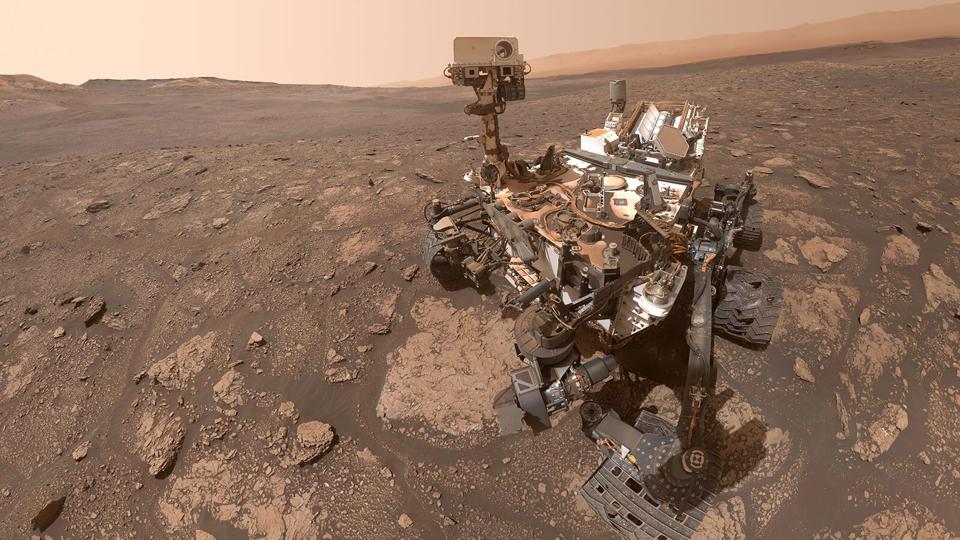
Curiosity poses for the ultimate tourist selfie. NASA/JPL

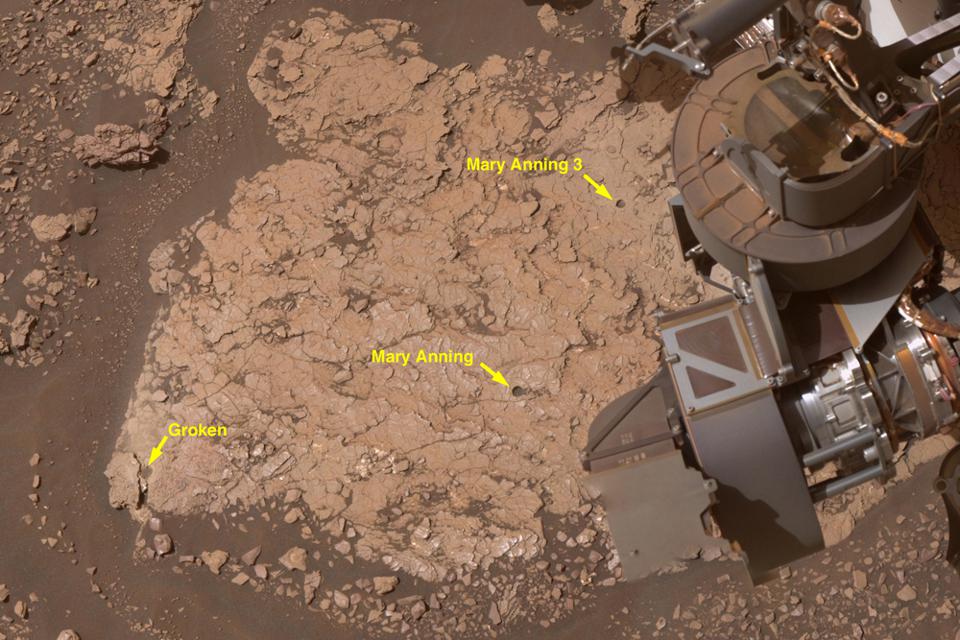
When Victorian paleontologist Mary Anning walked along the limestone cliffs of southwest England 200 years ago, she probably never dreamed that future scientists would name a piece of Mars in her honor. It’s quite a small piece of Mars: a patch of clay-bearing rock where the Curiosity rover drilled three holes in search of organic molecules. Two of those holes, dubbed Mary Anning and Mary Anning 3, were named in honor of the groundbreaking paleontologist who discovered the first fossil ichthyosaur. 

Anning’s hunting ground was the coast of the English Channel, where the landscape of southern England meets the sea in steep walls of limestone. The rocks of those cliffs were laid down during the Jurassic period, between 200 million and 145 million years ago, when southwest England lay at the bottom of the sea instead of overlooking it. From the crumbling layers of ancient seabed, Anning unearthed the fossilized bones of the long-extinct reptiles that once prowled the Jurassic seas.

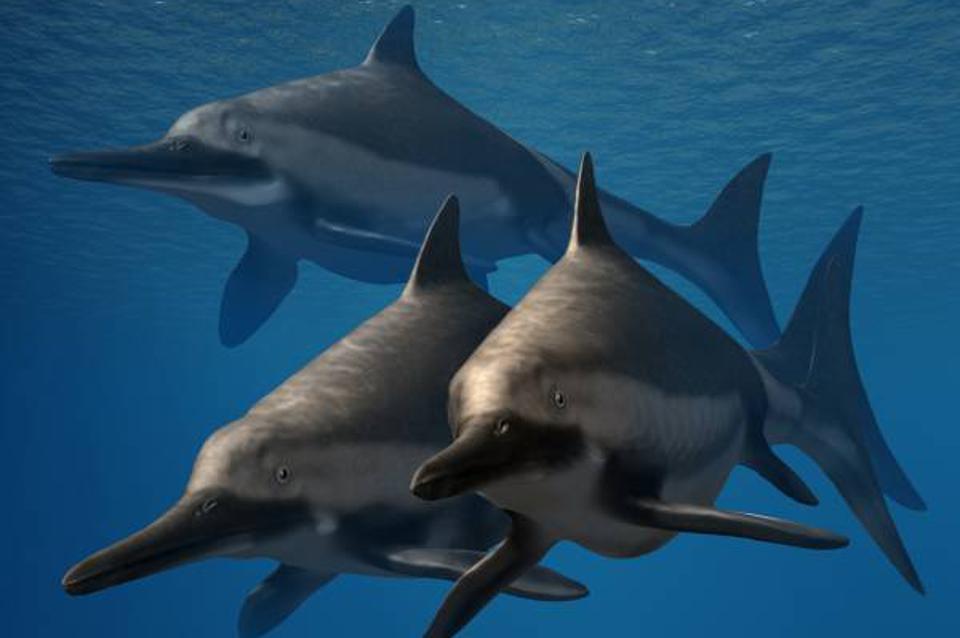
This species of ichthyosaur , Ichthyosaurus Anningae is named in honor of Mary Anning. BY NOBU TAMURA

In 1810, she found and excavated the nearly complete skeleton of a 5.2 meter-long ichthyosaur, a marine reptile which bears an uncanny resemblance – but only a distant relation – to modern swordfish. It’s a perfect example of convergent evolution; ichthyosaurs and swordfish aren’t closely related, but they live similar lives in similar environments, so they eventually evolved similar shapes. Over the years, Anning found several other nearly complete ichthyosaur skeletons, along with loose fossils, in the cliffs of Dorset County.

She also discovered the nearly complete remains of two plesiosaurs in 1820 and 1830, and in 1828 she unearthed the first pterosaur ever found outside Germany. During the winter, landslides would send parts of the cliffs tumbling to the beach below, revealing new fossils. Anning had to work quickly to retrieve the fossils, because rising tides would wash the finds away almost as quickly as they’d been revealed. It was dangerous work; in 1833, Anning was on the beach with her dog Tray when rocks crashed down from the cliff above. Anning narrowly escaped; Tray didn’t make it.

Today, Anning is best known as the discoverer of the ichthyosaur, but she also identified several new species of fossil fish and invertebrates. She was also one of the scientists who helped prove that coprolites were actually fossilized poop.

Sexism held Anning back from publishing descriptions or analysis of the fossils she discovered, but many of the same paleontologists who would have balked at seeing her name in print had no scuples about publishing their own studies of her fossil finds. Several male geologists and paleontologists made names and careers on Anning’s work, but only one ever gave her even partial credit.

During her lifetime, two species of fossil fish were named in Anning’s honor, but most of the recognition she has received has been more recent. Now she can claim a species of ichthyosaur, an entire genus of plesiosaurs, and a genus of therapsids (extinct reptiles which were the distant ancestors of today’s mammals), along with a species of tiny shrimp called ostracods and a genus of bivalve molluscs. And, of course, there are those two drill holes in a slab of bedrock on Mars.

The third hole, Grokken, is named for a fossil-bearing region in Scotland. NASA/JPL

The site looks like the sort of place Anning might have hunted for fossils. It’s part of a region NASA calls Glen Torridon, and billions of years ago it was filled with lakes and streams, which left behind clay and organic molecules. Those molecules aren’t evidence of life, but they definitely suggest that the building blocks of life were available. That’s why Curiosity stopped and took three samples of the clay-rich bedrock in July 2020. Instruments aboard the rover and back on Earth are still analyzing the chemistry of those samples, hoping to learn more about the early Martian environment.

Meanwhile, Curiosity paused in late October to take a selfie with the scenic spot (planetary geologist Michelle Minitti described it in July as “a large, lovely, layered block”) before continuing its long climb up the slope of Mount Sharp. Selfies with the rover’s Mars Hand Lens Imager, or MAHLI, are much more complicated than the selfies Earthbound tourists take with their smartphones. MAHLI is mounted on the end of Curiosity’s robotic arm, and it took weeks of work to stitch 59 separate images together into the version NASA published earlier in November 2020.

Curiosity is now well on its way to its next stop, a layer of sulfate-rich rock further up the mountain, which it should reach in early 2021.

Meanwhile, in a mission update earlier this year, Minitti wrote, “Let Mary Anning’s name on Mars remind us to include everyone in the endeavor of exploration.”

Source: www.forbes.com/

Bagualia alba: Newly-Discovered Long-Necked Dinosaur Survived Early Jurassic Global Warming

Tuesday, December 1, 2020

Life reconstruction of Bagualia alba. Image credit: Jorge González.

Paleontologists in Argentina have identified a new species of eusauropod (true sauropod) dinosaur that lived 179 million years ago, just after the mysterious disappearance of non-eusauropod sauropodomorphs.

The newly-identified dinosaur lived in what is now Patagonia, Argentina during the Early Jurassic period.

The ancient creature was a type of eusauropod, a group of long-necked, strictly herbivorous, quadrupedal dinosaurs that thrived from the Early Jurassic through the Late Cretaceous.

Named Bagualia alba, the animal is in fact the oldest eusauropod dinosaur known to date.

Sauropodomorpha is the first major dinosaurian group that diversified into multiple herbivorous lineages recorded throughout the world,” said Dr. Diego Pol from the Museo Paleontológico Egidio Feruglio and CONICET and his colleagues from Argentina, the United States and Germany.

“The first 40 million years of sauropodomorph evolution are characterized by the coexistence of diverse lineages with great disparity in body size, feeding biomechanics and locomotion types, ranging from small (less than 10 kg) bipedal species to the large (greater than 5 tons) quadrupedal early sauropods.”

“By the Middle Jurassic, eusauropod dinosaurs were the only surviving sauropodomorph lineage.”

The remains of at least three individuals of Bagualia alba — including a partial skull and cervical vertebrae — were found at the same site in Bagual Canyon in the Cañadón Asfalto Basin, central Patagonia.

“Sauropods became the dominant group of large herbivores in terrestrial ecosystems after multiple related lineages became extinct towards the end of the Early Jurassic,” the paleontologists explained.

“The causes and precise timing of this key faunal change, as well as the origin of eusauropods, have remained ambiguous mainly due to the scarce dinosaurian fossil record of this time.”

“The terrestrial sedimentary successions of the Cañadón Asfalto Basin document this critical interval of dinosaur evolution.”

To shed light on the extinction of sauropodomorphs, Dr. Pol and co-authors examined fossil flora and fauna of the Cañadón Asfalto Basin.

They found evidence for severe perturbations to the ancient climate and a drastic decrease in the floral diversity, characterized by the rise of conifers with small scaly leaves, after a massive magmatic event that impacted southern Gondwana between 180 and 184 million years ago.

They believe that the non-eusauropod sauropodomorphs went extinct after soft vegetation was replaced by much tougher greenhouse vegetation.

Bagualia alba and other eusauropods recorded after the event invariably display characters that may have been critical for their success after this environmental change,” the researchers said.

“Their elongated neck provided maximal feeding envelopes and browsing heights and their large body size has been related to an expansion of gut capacity and fiber digestibility.”

“Their deep and robust skulls and mandibles indicate high bite force and their long jaw gape and large and broad teeth with thick enamel (greater than 700 µm) and extensive shearing wear facets have been interpreted as adaptations to obligate high-fiber herbivory and bulk feeding on tough, fibrous plant material.”

The team’s paper was published in the Proceedings of the Royal Society B: Biological Sciences.

_____

D. Pol et al. 2020. Extinction of herbivorous dinosaurs linked to Early Jurassic global warming event. Proc. R. Soc. B 287 (1939): 20202310; doi: 10.1098/rspb.2020.2310

Source: www.sci-news.com/

Erythrovenator jacuiensis: 230 Million-Year-Old Dinosaur Dubbed ‘Godfather of T. Rex’ Unearthed in Brazil

Tuesday, December 1, 2020

Erythrovenator jacuiensis preying on a mammalian forerunner in a Triassic landscape from Brazil. (Credits: Márcio L. Castro / SWNS.COM)

The ‘Godfather of T. Rex’ who lived 230 million years ago and is the oldest relative of meat eating dinosaurs has been unearthed in Brazil. Named Erythrovenator, it was about six and a half feet long with razor sharp teeth and claws. The bizarre looking beast was also covered in bristles. It is the most primitive of its kind ever discovered.

Palaeontologist Dr Rodrigo Muller, of the Federal University of Santa Maria, Brazil, said: ‘It is one of the first theropods. This is the lineage of scary and carnivorous dinosaurs, like Tyrannosaurus and Velociraptor of Jurassic Park fame.’ He added: ‘But Erythrovenator was around almost 150 million years before them. It comes from the dawn of the dinosaur age.’ The discovery sheds fresh light on the evolution of the most frightening land predators that ever lived. Theropod fossils from the late Triassic are extremely rare.

Erythrovenator was about six and a half feet long with razor sharp teeth and claws. (Credits: Márcio L. Castro / SWNS.COM)

Dr Muller said: ‘Despite the small size, the animal was an apex predator. It was a fast and vicious hunter – with strong leg muscles. ‘The animal had sharp and blade-like teeth, like other early theropods. We believe its skin had feather-like structures.’ An analysis of the bones showed Erythrovenator was a miniature T-Rex. It also shared traits with Velociraptor and Spinosaurus – the main monster in Jurassic Park III. Dr Muller quipped: ‘You could say it is ‘The Godfather of T-Rex.” T-Rex weighed up to eight tonnes and reached 40 feet long – about the size of a school bus – from its snout to the tip of its powerful tail. Erythovenator is believed to ripped lizards and primitive mammals to shreds. It would also have eaten insects. The fragmented remains, including a thigh bone which is the longest and strongest in the body, were dug up at a farm in Brazil’s southernmost state, Rio Grande do Sul.

The fragmented remains were dug up at a farm in Brazil’s southernmost state, Rio Grande do Sul. (Credits: Janaina Brand Dillmann /SWNS.CO)

Its full name Erythrovenator jacuiensis means ‘red hunter from the Jacui’ – after the colour of the fossil and a nearby river. Dr Muller said: ‘We discovered this site through satellite images in 2014. The rock strata is exposed in the surroundings of a lake. ‘I have since led several expeditions there. The access is not so hard, we can reach the outcrop with our 4×4 pickup truck on dry days.’ The layer of sediment contains a treasure trove of unique fossils. It is a graveyard of animals from the distant past that were previously all unknown. Dr Muller said: ‘Therefore, Erythrovenator probably comes from a poorly explored horizon, which yields some of the oldest dinosaurs. In addition to this dinosaur, the ‘Niemeyer Site’ yielded several mammalian related animals. Erythrovenator would have preyed on these forerunners.’ Known as cynodonts, they included a wolf-like fanged plant eater called Siriusgnathus, and the smaller, possum sized insectivore Agudotherium. Earth’s land mass was one supercontinent scientists call Pangaea. Dinosaurs were rare components of the land ecosystems. They went on to rule the Earth during the Jurassic and Cretaceous – 201 to 66 million years ago. Explained Dr Muller: ‘But during their origin and early radiation, dinosaurs were ‘humble’ animals in a world dominated by other ancient reptiles that became extinct at the end of the Triassic. ‘A ‘genealogical’ investigation suggests Erythrovenator is one of the most primitive theropods. Early members are carnivorous animals. Hence, the new dinosaur is a meat eater. It helps us understand how the group evolved.’

The discovery of Erythrovenator jacuien helped experts understand how theropods evolved (Credits: Márcio L. Castro / SWNS.COM)

Erythrovenator, described in the Journal of South American Earth Sciences, may not have had any predators itself. Dr Muller said: ‘So far, the only evidence from the site of an animal that may have eaten Erythrovenator is an isolated large tooth. It probably belongs to a big, primitive crocodile.’ He added: ‘This layer provides a window into how dinosaurs got started age. We will continue to explore it to understand the faunal composition.’

Source: https://metro.co.uk/

Jurassic World 3 Theory: Biosyn Returns Because of InGen's Failure

Sunday, November 29, 2020

The stakes in Jurassic World: Dominion will be higher than ever before. Here's why BioSyn will return in the final film due to InGen's failures.

Will the notorious BioSyn return due to InGen’s long series of failures, in Jurassic World: Dominion? Set to release in 2022, Jurassic World 3 has been reported to focus on the dinosaurs that were set loose in civilization, and the possible repercussions it might have on the genetic engineering industry and the human race as a whole.

BioSyn and InGen harbor a long history of conflict and fraught relations, which culminated in a major 1993 incident on Isla Nublar, John Hammond’s chosen site for the first Jurassic Park, as it had to be shut down due to interference from BioSyn. As a result, the dinosaurs ran free, and the park could not be reopened until it was rebuilt by Simon Masrani in 2005, as chronicled in the events of Jurassic World.

2015 heralded another disaster on Isla Nublar, with the creation of the Indominus Rex, a hybrid of unmatched lethality and cunning, which triggers a massacre of both dinosaurs and humans alike. Due to these recurring blunders committed by InGen over the years, it is likely that their competitor, BioSyn, will return in Jurassic World 3. Here’s a deep dive into the theory.

Jurassic World 3 Is Bringing Back BioSyn

It has been confirmed that the final film in the Jurassic World trilogy will be featuring the return of Jurassic Park’s long-forgotten villain, Lewis Dodgson, with Campbell Scott taking on the mantle for the role. Both in the original films and the Jurassic Park novel, Dodgson carries out controversial decisions while being a part of BioSyn, most of which are serious and criminal in nature, such as when he introduced a rabies virus to unwitting farmers in Chile for research purposes. As it has been confirmed that Dodgson will be turning to Jurassic World 3 as the head of BioSyn, the company’s machinations to further thwart InGen’s attempts to rectify their blunders is inevitable. Moreover, Dodgson’s presence is bound to raise the stakes for both Claire (Bryce Dallas Howard) and Owen (Chris Pratt), especially now that Isla Nublar has been destroyed and the dinosaurs run loose in the world, yet again.

InGen Has Failed In The Jurassic World Franchise

As exemplified in the events of the Jurassic World franchise, InGen’s long string of catastrophic failures when it came to protecting rare dinosaur species and ensuring the safety of park workers, go way back to John Hammond’s time. After the first Isla Nublar incident in 1993, InGen struggled financially, as they were unable to retain investors for ongoing and upcoming projects. In order to survive through the crisis, InGen’s research team created a new plant, which managed to garner worldwide media attention. However, catastrophe hit again, this time in the form of a natural disaster, when Hurricane Clarissa destroyed InGen’s facilities in Isla Sorna, forcing Hammond to re-evaluate his capitalist approach and adopt a more environmentally-aware stance.

When Peter Ludlow became InGen’s new CEO, he attempted to churn out profits by creating an amphitheater in San Diego, but the project was ultimately sabotaged. 1997 heralded the disastrous San Diego incident, triggered by Ludlow’s capture of an adult male Tyrannosaurus rex, which escaped containment and rampaged through the streets of San Diego in search of its infant, who was also captured. This led to many human deaths, including that of Ludlow, along with severe damage to property. This, combined with the events of Jurassic World and Jurassic World: Fallen Kingdom, culminated in the park closing for good and the destruction of Isla Nublar, along with its natural flora and fauna, due to an eruption of the active Mount Sibo. Jurassic World 3 will pick up after the release of dinosaurs into the world, which serves to highlight the abject failure of InGen throughout the film’s franchise.

Jurassic World Theory: BioSyn Will Return Because Of InGen's Failure

At this point, it makes sense for BioSyn and Dodgson to return, from both a narratorial and circumstantial point of view. InGen has repeatedly proven themselves unreliable, especially in the public consciousness, as the masses are not aware of the nuanced nature of incidents, both human and natural, that played a role in the disasters that occurred over the years. As BioSyn has always been a major rival to InGen, and are known for their unsavory ways when it comes to earning profits and procuring embryos, it will be a natural Machiavellian move for Dodgson to capitalize on InGen’s failures, and position themselves as the only solution to the dire situation at hand.

Moreover, BioSyn has had a long history of employing saboteurs skilled in corporate espionage, rather than real scientists like Claire and Owen who harbor a genuine zest for genetic advancement and dinosaur welfare. Although it has not been officially revealed so far, it is possible that Eli Mills (Fallen Kingdom), Vic Hoskins (Jurassic World), and Eddie (Camp Cretaceous) may have been surreptitiously working for BioSyn, which is in sync with their actions in the respective narratives. This is also supported by the franchise video games Jurassic Park: Trespasser and Jurassic World Evolution, wherein hints of BioSyn spying on InGen’s activities have been made clear, adding further fuel to the theory that BioSyn has been waiting for the right time to declare their masterplan. Jurassic World 3 seems to be the right setting for the unfolding of BioSyn’s covert machinations, and it will be interesting to watch how InGen responds to the same.

Why BioSyn Can't Win In Jurassic World: Dominion

While BioSyn might have a massive sabotage plan up their sleeve, replete with a well-planned rescue mission for humans and the escaped dinosaurs in Jurassic World: Dominion, the endeavor is doomed to fail due to various reasons. First and foremost, BioSyn is an overwhelmingly capitalist corporation, prioritizing profits over the wellbeing of the creatures they engineer. As BioSyn is headed by Dodgson now, it is likely that their plans of rehabilitation are deeply rooted in unethical practices which will most likely worsen the situation further. Secondly, although InGen is to blame for a series of blunders, they are also aligned with passionate scientists who are genuinely invested in the well-being of dinosaurs as a whole, which might make all the difference in the end. On the other hand, BioSyn is crooked through and through, positing them as antagonists in the franchise, making their efforts destined for failure.

Source: https://screenrant.com/

Wow, Jurassic World: Dominion Has Already Scored An Award Ahead Of Its Release

Sunday, November 29, 2020

The end of the Jurassic World era is upon us once Dominion hits theaters. It doesn’t feel like it was too long ago since audiences first stepped out of the theater during the 2015 film's opening weekend, but here we are. The trilogy closer recently wrapped production after an onslaught of COVID-19 related hurdles throughout the year, but we’ll have to wait one year and half before seeing it on the big screen. Even with that wait in mind, the production has already been recognized for an exciting award.

Over in the U.K. this week, the 2020 Production Guild of Great Britain (PGGB) Innovation Awards were held to offer praise for those working behind the scenes in movies and television. Jurassic World: Dominion was the first major studio movie to get back to work this year following shutdowns brought on by the pandemic. Therefore, the production won the PGGB Innovation Award for its leading contributions to creating safety protocols and for working with a huge team of workers in the British country with its set of unfortunate circumstances. Samantha Perahia, the Head of Production for the U.K. at the British Film Commission, said this:

The Jurassic World: Dominion team were genuine trailblazers. The worldwide production community was watching as theoretical COVID-19 protocols were put into action. Their real-time experiences were invaluable in helping inform and refine industry COVID-safety guidance. Their work paved the way for other major features and the team fully deserves this special recognition.

As Variety reports, the award went to Jurassic World: Dominion because the production (headed by Universal Pictures) apparently went to work to research the best practices for restarting production during an unprecedented time and gave about 1,000 productions workers jobs. The cast and crew were placed in a bubble together for four months and even traveled to Malta in the middle of production to get all the coverage they needed.

The shoot took 40,000 COVID-19 tests and was able to wrap with more than enough time for post-production to begin, though following that release date delay. But given everything the production went through, this is all still very impressive.

Dominion picked back up in the summer of 2020 after packing up in March but did face another short stall in production due to a few positive COVID-19 cases within the bubble. Writer/director Colin Trevorrow said that the initial shutdown did end up benefiting the movie, though, and he believes having everyone together in the circumstances will make the movie “stronger."

The latest Jurassic installment will notably feature the returns of Sam Neill, Jeff Goldblum and Laura Dern, the original Jurassic Park trio in important roles, along with Chris Pratt, Bryce Dallas Howard, Jake Johnson, Justice Smith, BD Wong and Omar Sy. Jurassic World: Dominion is set for theatrical release on June 10, 2022.

Source: www.cinemablend.com/

Seemingly Ordinary Fossils May Be Hiding Some Major Clues to the Past

Monday, November 30, 2020

Detail of a partially decalcified Allosaurus bone fossil at Yale Peabody Museum. (Photo: Jasmina Wiemann)

Paleontologists are lucky to find complete sets of fossilised bones. Sometimes, they get even luckier, finding preserved impressions of delicate features like feathers. Beyond those clues, though, most of the biology of extinct species — their DNA, internal organs, and unique chemistry — has been totally destroyed by the many millions of years that separate us. Except, what if it hasn’t? Some scientists now claim they can tease much more complex biological information out of apparently mundane fossils, including things that most paleontologists don’t expect to survive over millions of years, such as skin and eggshell.

Molecular paleobiologist Jasmina Wiemann has been on the forefront of this exciting research since 2018, co-authoring papers that reveal elements of fossils that cannot be immediately seen with our eyes but can be detected through a series of complex chemical and statistical analyses. Her recent paper, published this summer with Jason Crawford and Derek Briggs, builds upon other, similar research from the past two years. She and her co-authors claim they can determine the chemical signatures of skin, bone, teeth, and eggshell. Even better, they can train anyone else in the field within approximately 20 minutes to find these ancient traces using their techniques. It’s an opportunity they hope will be widely used within museum collections the world over.

Consider that most museums only display a small percentage of the fossils they have in their collection. Those fossils chosen for display are either partially complete skeletons or fossils that are readily recognisable to the general public. What remains in many collections’ storage rooms are shelves upon shelves of the rest: the less-flashy fossils that nonetheless offer insight into ancient life. What if they all could be tested for hidden biomarkers?

Fossilised dinosaur cells, blood vessel, and bone matrix. (Image: Jasmina Wiemann)

It takes a specific set of circumstances for something to survive thousands of years, much less millions. And if it does become fossilised, think about the incredible pressure and heat it undergoes over eons. While it’s remarkable that bones and other hard tissues survive, it is currently assumed that less hardy structures, such as cells, blood vessels, skin, and their molecular building blocks, will not, especially after hundreds of millions of years.

Biomolecules — the chemical building blocks for which these scientists search — are the molecules that make up all animal tissues: proteins, lipids, and sugars. The specific fossilisation products of biomolecules indicate to which kind of animal a fossil tissue once belonged, if it was biomineralised, and exactly what type of tissue it represents.

“Until now, it was assumed that biological signals preserved in modern biomolecules were lost during fossilisation,” explained Wiemann in a phone interview. “Our study represents the very first exploration of original biosignatures in complex, fossil organic matter. Contrary to previous targeted analyses, we wanted to objectively explore if there are any signals preserved and what they can actually tell us about a fossil organism.”

In other words, rather than search for a specific molecule on one particular fossil, they wanted to determine what molecules — if any — were on the sample set of fossils they explored. What they consistently discovered was that traces of certain ancient molecules survived, chemically altered but still distinct. The team could identify different types of molecular fossils, and they could interpret their biological meaning.

“When we published our first paper on molecular preservation in 2018, we found evidence not only of the fossilised products of lipids, as previously reported, but also of the fossilisation products of proteins and sugars,” Wiemann said. “This was a surprise to the field, and a very bold claim back then, especially because many previous case studies on fossil organic matter were affected by sample contamination. Now, two years later, our results have been reproduced multiple times by different laboratories, adding independent support to the fossilisation potential of biomolecules through chemical transformation.”

Wiemann brings a different perspective to paleontology. At the age of 15, she won a scholarship in Germany to study chemistry, which enabled her to complete degrees in geosciences and evolutionary biology before attending Yale University, where she is currently a PhD candidate. In the past two years, she has discovered egg colour in dinosaurs, contributed to research offering further evidence that the Tully Monster (Tullimonstrum) is a vertebrate, and helped reveal evidence that soft-shelled eggs evolved in dinosaurs before calcified eggshells. Translating the ancient chemical properties associated with those fossils was her role. As she explained, “I develop molecular proxies for all kinds of evolutionary topics to unlock information otherwise inaccessible to paleontologists.”

Wiemann was one of 16 students chosen to present research for the Romer Prize at this year’s annual meeting of the Society of Vertebrate Paleontologists. Her presentation, titled “Fossil Biomolecules Reveal the Physiology and Paleobiology of Extinct Amniotes,” described the method she has developed using Raman spectroscopy to ascertain fossil biomolecules and how this can be applied to greater understanding of extinct animals in deep time. While her talk didn’t win, “the committee was definitely impressed by the quality of her work,” wrote Kenneth Angielczyk, chair of the Romer Prize Committee, in an email to Gizmodo.

“A background in chemistry provides you with a different approach to complex problems: Molecules are invisible to the naked eye, so it often takes a certain degree of creativity and transfer of knowledge from related sciences to fully understand how reactions operate,” Wiemann said.

The field of paleontology has been around for over 200 years, and, in that time, we’ve grown from simply finding bones and determining what they are to learning how those animals died, what they ate, what diseases they had, studying tissues within the bone, tracing genetics, and learning more about the subtle aspects of evolution. Each generation has built upon the work of those that came before it. And every now and then, there are substantial leaps in our understanding — technology and insights that take our breath away.

Magnified image of the extracellular matrix from an Allosaurus fragilis vertebra. The originally collagenous matrix fibres are preserved, and osteocytes (bone cells) with filipodia are dark and infilled. (Image: Wiemann et al/Nature Communications 2018)

The assertion that proteins, lipids, and sugars may indeed survive beyond the estimated 3.8 million years currently accepted by science — and that this research can be applied to any fossil in any collection — is astounding. The implications of what we might learn could change the face of paleontology. This is particularly the case for fossils that are incomplete or that don’t preserve the telltale forms that tell us about the kind of species it might have been.

Consider the controversial, 300-million-year-old Tully Monster fossil: a unique-looking organism that has prompted debate since it was formally described in 1966. Traces of soft tissues discovered through the chemical analysis of Victoria McCoy, Wiemann, and their co-authors match those of vertebrate tissues, adding further proof to the indication it was a jawless, soft-bodied vertebrate rather than an invertebrate. And while the collection of Protoceratops fossil embryos discovered in Mongolia contain no visible eggshells, the work of Mark Norell, Wiemann, and colleagues provides evidence that they were once encased in soft-shelled eggs. These structures, reduced now to microscopic traces, wouldn’t be known without such scientific and technological progress.

Paleontologist Jingmai O’Connor is delighted by the research that illuminated the soft-shelled fossil eggs. She refers to the most recent paper by Wiemann and colleagues as a “methods paper” — a description of how this research was accomplished and how others might be able to replicate it.

“This is an example of the kind of exciting information that can be extracted with these methods,” O’Connor wrote in an email to Gizmodo, referencing the soft-shelled eggs unseen to our eyes. “This discovery is huge and makes so many oddities suddenly make sense (why eggshells are so different between different dinosaur lineages and why certain lineages have no known eggs in the fossil record). Here she [and her team are] expanding it to a great range of fossil tissues and showing that there is a detectable phylogenetic signal in the biomolecular residues.”

“There are many things in their papers that I find quite intriguing and that I think are really worth wrestling with,” Evan Saitta, research associate at the Field Museum in Chicago, said by phone. “I think it brings the debate up to a much higher level.”

With bold new claims, however, comes scepticism.

The biggest controversies surrounding this work are that it challenges three long-standing scientific premises: one, that ancient tissues are largely not expected to survive fossilisation; two, that the oxidative environments from which the fossils studied by Wiemann originated are not necessarily conducive to preservation; and three, that the chances of microbial contamination (or “biofilm”) on any fossil is high, therefore making contamination unavoidable.

“What’s radical about this model is that they’re suggesting organic preservation in highly oxidised environments, because those are the environments that promote this sort of chemistry,” Saitta said. “This is quite a departure, not only from what we understand in geology, where we tend to associate high organic content with low oxygen, but also in terms of bioarchaeology and the chemistry of much more recent bones. What we know from that work is that there is a breakdown and depletion of the original organic material in the bone, and, simultaneously, an increase in contamination from the surrounding environment over time.”

In other words, we often look to environments with low oxygen content as ideal locations for fossil preservation. Oxygen-rich environments are generally associated with decay. But that is not what Wiemann and colleagues are suggesting in this paper, offering a window into new possible worlds of geological preservation.

For other paleontologists, there are concerns that only one technology — Raman microspectroscopy — was used to determine the biomolecules. To be clear, Raman spectroscopy is incredibly complex on its own. The method was developed by physicist Chandrasekhara Venkata Raman in 1928, for which he won the Nobel Prize in 1930. In the most basic terms, a laser excites the molecules on the surface of any type of sample such that they vibrate and produce scattered light. Chemical bonds alter that light in ways that enable scientists to interpret what they are.

Paleontologist and professor at North Carolina State University Mary Schweitzer has recently started using Raman technology in her studies. She, too, has made bold claims in paleontology, including being the first to discover evidence of blood vessels and soft tissues in dinosaur fossils.

“Raman is a good method to detect functional groups or the presence of amide bonds, which are indeed consistent with proteins,” she wrote in an email. “But amide bonds may also be found in glues, consolidants (commonly applied in the field during recovery), biofilm, embedding medium if the fossil has been sectioned, and many other compounds, or as the result of normal lab contamination.”

Using Raman spectroscopy alone, she said, is not enough to determine whether complex organic chemical compounds from an extinct creature — original biomolecules including proteins — are indeed present.

Professor of physics Hans Hallen, also at NC State University and Schweitzer’s collaborator, has been working with Raman spectroscopy since the 1990s. He said his biggest concern is that “it looks like they’re subtracting out some of the real Raman signal with their adaptive baseline technique,” he said in a phone interview. Put another way, “they’re going to be underestimating the Raman signal because they subtracted part of it as baseline.”

“If I was to summarise, I’d say that this is a new approach to doing very hard science,” Hallen said. “But no matter what technique you use, it’s going to be hard. Raman is a good technique, but it’s not without its issues.”

One common concern was that other techniques, such as chromatography, mass spectrometry, and resonance Raman, were not also employed to confirm biosignals of ancient molecules. Chromatography and mass spectrometry, however, both require the destruction of the fossil to obtain information. And “there are only a few setups in the world that can use tunable deep-UV excitation for resonance Raman,” said Hallen, who added, “I happen to have one of them.”

Most universities, by contrast, do have access to standard Raman spectroscopy, and it is a non-destructive method. That accessibility and the preservation of the fossils themselves were important to Wiemann and her co-authors.

Moreover, Wiemann countered, concern with relying solely on Raman spectroscopy had already been addressed in a paper she and her colleagues published a year ago. Were this technology a new process, questions about its efficacy might be warranted. But it’s a method that has been used extensively in multiple fields since the 1970s.

Other labs, she explained in an email, have successfully used Raman spectroscopy to find biomolecules and have confirmed them using other methods. She cites recent papers offering evidence of possible blood vessels found in a T. rex fossil, evidence of tail feathers in a theropod fossil discovered in China, and one that suggests these chemical traces may indeed survive the intense pressures fossils undergo over millions of years.

Regarding concerns of contamination, Wiemann and her team specifically tested for the similarity of molecular signatures in fossil soft tissues and polyacrylamide glues in their most recent studies, demonstrating that fossil organic matter — at least in the analysed specimens — is not the result of contamination.

“The problem is, very few people can truly understand her work,” O’Connor wrote. “I know from Jasmina’s perspective, this is simple chemistry, and us paleo people just don’t have a good enough understanding of chemistry to comment or to criticise (and it must be frustrating for her to deal with us!).”

Paleontologists who would be more apt to understand this level of science are organic geochemists. One such organic geochemist, Gordon Love, a professor of Earth sciences at UC Riverside, has been studying ancient lipids that make up part of the structures in living cells. The study of these lipids, he explained, is not new. The search for ancient lipid biomarkers has been employed by the oil and gas industry for at least four decades — a way to find the rocks that produce the natural gas and oil used for fuel.

One aspect of this research that surprised Love was the preservation differences between the fossils examined and the rock in which they were found, specifically in the over 500-million-year-old examples from the Burgess Shale. He wonders how much phylogenetic information — clues that point to the evolutionary history of a species — can be determined by ancient molecules derived from proteins in fossils of that age but said he is eager to see what further research will bring.

“I do not think the support for a phylogenetic signature in the data is particularly strong relative to the biomineral signature,” Saitta said, referring to the ability to use Wiemann’s technique to determine what species belong where on the family tree. “But if the phylogenetic signature is genuine, that would actually be, in my opinion, really, really strong evidence that a lot of these organics are from the original fossil.”

“I like their approach and think it has merits, because precious samples are not destroyed by the analyses undertaken,” wrote organic geochemist of paleontology Professor Kliti Grice of Curtin University. “However, this is only one approach — I think their data could be complimented and by using molecular geochemistry on some samples carried out in parallel, as there is an untapped archive of molecular information, especially in fossils that are exceptionally well preserved in concretions.”

That Wiemann and her collaborators might be able to unlock secrets within fossils and be able to train others to do so offers incredible potential for our understanding of life on this planet.

“I hope that in the future,” Wiemann said, “scientists interested in animal relationships, the evolution of physiological innovations, and animal tissue types will explore molecular biosignatures to complement anatomical insights from fossils. Molecular data have the potential to provide completely new perspectives on the history of life, and might be the key to go beyond the current limitations of the fossil record.”

An easily taught, cost-effective, non-destructive technique that could potentially offer new insight into species millions of years old? It’s like getting a key to the biggest library: a wealth of untapped information. It could, both literally and figuratively, flesh out ancient beings, and it has the potential to breathe fresh energy into museum collections the world over.

Source: www.gizmodo.com.au/

Pages