nandi's blog

These Are the Seven Places in Kent Where Dinosaurs Have Been Found

Tuesday, April 24, 2018

Dinosaur fossils have been found all across the globe (Image: AIZAR RALDES NUNEZ/AFP/Getty Images)

Esri UK have published a UK wide map detailing the locations.

The last dinosaurs died out approximately 65 million years ago but their fossilised remains have been found all over the world.

Analytics company Esri UK have mapped out all the locations in the UK where dinosaur fossils have been discovered.

Several of these fossils have been unearthed in Kent.

Chiddingstone Hoath

Saurischia

Estimated to have lived between 145 and 132.9 million years ago, birds are descended from this group of dinosaurs.

Cranbrook

Iguanodon

Children sketching a skeleton of the Iguanodon dinosaur at the Natural History Museum in 1970 (Image: Harry Todd/Fox Photos/Getty Images)

Found between Cranbrook and Hawkhurst, this dinosaur is estimated to have lived between 145 and 132.9 million years ago. The Iguanodon was a large herbivore which could shift between using two and four legs.

Egerton

Mantellisaurus atherfieldensis

Estimated to have lived between 125.45 and 122.46 million years ago, this herbivore's front legs were thought to be half as long as its back legs.

Folkestone

Ankylosauria

A mechanical Ankylosaurus display in Leiden, The Netherlands

Ankylosaurs were heavily armoured with a large club at the end of their tails. This dinosaur was estimated to have lived between 99.6 and 93.5 million years ago.

Horsmonden

Baryonyx walkeri

A model Baryonyx at Palais de la découverte, Paris (Image: PIERRE VERDY/AFP/Getty Images))

Estimated to have lived between 130 and 122.46 million years ago, the name Baryonyx refers to the dinosaur's large, heavy claws.

Hythe

Macronaria

Estimated to have lived between 125.45 and 122.46 million years ago, Macronaria had long, strong necks, useful for eating taller plants and trees.

Langton Green

Megalosaurus

A model Megalosaurus at the Dinosaur and Fossil Park in Gandhinagar, India (Image: SAM PANTHAKY/AFP/Getty Images)

This Megalosaurus is estimated to have lived between 145 and 122.46 million years ago and spanned roughly the length of a London bus.

Source: www.kentlive.news


Inside Thailand's Real Life Jurassic Park Complete With Animatronic Dinosaur

Tuesday, April 24, 2018

Phu Wiang national park celebrates all things dinosaur / Liz Dodd

Phu Wiang national park is home to some of the world's oldest and most impressive dinosaur fossils.

A geologist looking for uranium discovered a giant patella bone here in 1976, and the palaeontologists who were called to investigate then unearthed a fossilised 15m-long herbivore. It was later named Phuwiangosaurus sirindhornae, after Princess Sirindhorn. Dinosaur fever followed (explaining the myriad model dinosaurs in Khon Kaen city), more remains were uncovered and Phu Wiang National Park (อุทยานแห่งชาติภูเวียง) was born.

The park covers a strange horseshoe-shaped mountain that has just a single pass to its interior. Wiang Kao, the district inside the mountain, is a fruit-growing area and is a good place to explore by car if you want to look at traditional village life.

PHOTO: TOURISM AUTHORITY OF THAILAND

Phu Wiang National Park (PWNP) is located in Phu Wiang District, Khon Kaen Province, northeastern Thailand. It is best known for its numerous dinosaur bone paleontological sites. The park is one of the world's largest dinosaur graveyards.[2] In 1996, the remains of Siamotyrannus isanensis, a new family of carnivorous thunder lizards, were unearthed in the park.

The Phu Wiang Dinosaur Museum is situated within the park and displays many of the park's finds. The park, measuring 325 square kilometres (125 sq mi) in size, is located approximately 85 kilometres (53 mi) northwest of Khon Kaen. The area is characterized by a central plain and the low hills of the western Phu Phan Mountains.

Paleontologists: Giant Prehistoric Animals Were Wiped Out By People

Tuesday, April 24, 2018

Pleistocene megafauna

Representatives of the Pleistocene megafauna, the Mammoths, started to die out faster than other animals and scientists may have found the answer to why.

One of the main causes of death of these large mammals could be the systematic destruction of their habitat by prehistoric humans.

The extinction of Mammoths (that lived between 2.6 million to 12 thousand years ago) was faster than the extinction of Saber-Toothed Cats and Giant Sloths. Large animals died out simultaneously on several parts of the planet. All their population started to decline firstly in Africa, 125 thousand years ago. On this part of the world, they were about 50% less than on other continents. However, the most detrimental factor to the Mammoth habitat decline was the migration from Africa.

Prehistoric humans preferred to hunt large animals because large amount of flesh can provide longer periods of food to ensure the sustenance of a large family, moreover, most large animals are herbivores, not predators and that's why they were the most vournerable to be the main course. Due to the fact that it was impossible for one person to kill a mammoth, people from time to time, have started to join large groups of hunters. Paleontologists have determined that these prehistoric hunters were the main cause and are accused for the accelerated extinction of large animal species. According to these researchers, humans continue to destroy large animal's habitats even today and very soon might not be a single animal larger than a cow.

Runner in Inflatable Dinosaur Costume Proposes at London Marathon

Tuesday, April 24, 2018

Bristol man dressed in T-Rex costume proposes to girlfriend during London Marathon

A man in an inflatable Tyrannosaurus rex costume took a break from the London Marathon to propose to his human girlfriend.

"Roary" the dinosaur, aka Bristol resident Chris Jones, 26, ran the London Marathon in a T. rex costume to raise money for the Evelina London Children's Hospital.

Chris Jones used the opportunity to propose to his girlfriend, Katie, and the big moment was captured on camera.

Jones was running alongside his future father-in-law, who was dressed as a Jurassic Park ranger and handed the dinosaur the ring for the moment of the proposal.

"She's just the best, she has supported me for so long, she has been so great with this as well and everything that I have done, I love her so much," Jones told a BBC reporter after Katie accepted his proposal.

Source: www.upi.com

Are Dinosaur Fossils The Hot New Collectors' Item?

Tuesday, April 24, 2018

Photo: Courtesy of Binoche et Giquello

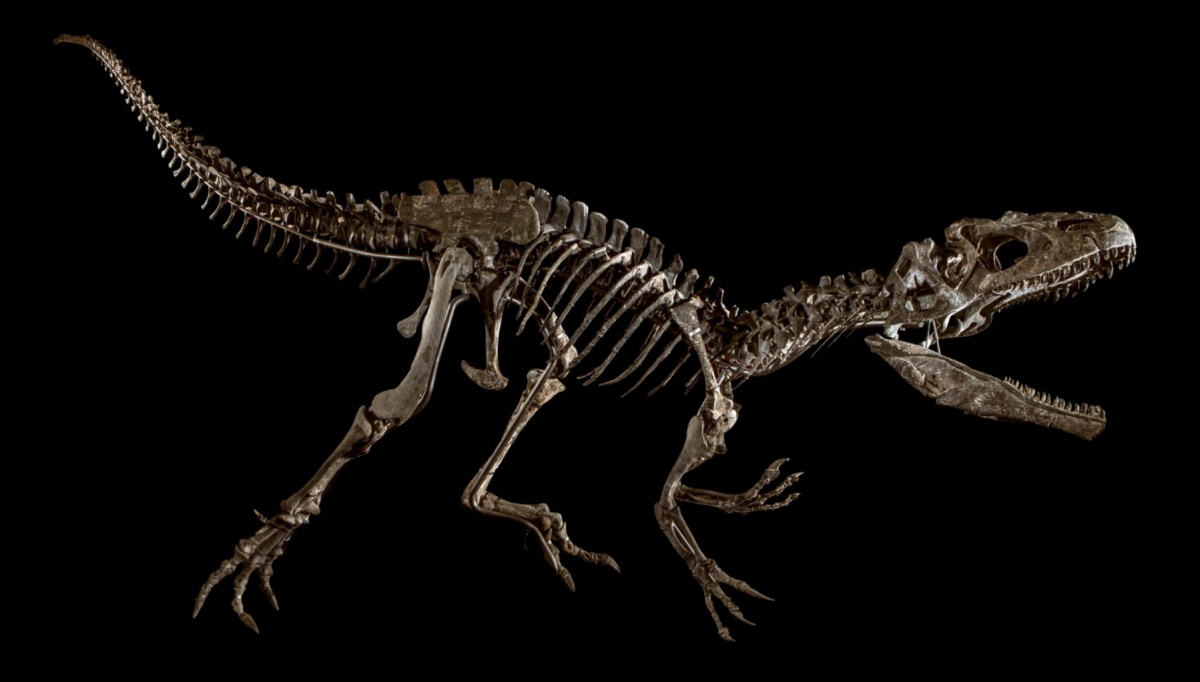
French auction house Binoche et Giquello has sold two dinosaur skeletons at top dollar.

If you’re searching for that perfect new statement piece for your living room or foyer, you might find your answer not in the flagship boutiques of luxury design brands, but in the halls of natural history museums.

Big spenders
Auction houses have found that dinosaur fossils are swiftly becoming increasingly popular objects of desire among collectors—particularly French auction house Binoche et Giquello, who put two dinosaur skeletons on the block as part of their Natural History auction in early April.

The skeletons of an Allosaurus and Diplodocus sold for €1,150,000 and €1,180,000 respectively, massively overshooting their estimated prices of €650,000 and €450,000 to €500,000.


Cult favourites
While the majority of dinosaur enthusiasts have usually been Europeans and Americans, including Hollywood actors Nicholas Cage and Leonardo DiCaprio, interest has picked up among Chinese buyers over the last few years. Large specimens are often on show in key spots in the owners’ homes, while smaller ones can more easily be whisked away into storage.

Sharon Kwok-Pong, conservationist and wife of Tatler 500 lister Stanley Pong, is an avid fossil collector in Hong Kong. She started collecting amber at the age of 14 and now has a Pterodactyl, Triceratops and T-Rex claws in her personal collection. Certain buyers have also been known to purchase fossils with the purpose of donating them to science museums.

Still, the dinosaur market remains comparatively small compared to other treasures more typically found under the hammer—possibly due to their unwieldy sizes. (The skeletons that Binoche et Giquello sold measured 3.8m and 12m long.) Only around five dinosaurs are sold globally every year.


Source: https://hk.asiatatler.com

Mystery Death Of Oxford Dodo Revealed: How Scientists Use The Specimen To Rewrite Extinct Bird’s History

Sunday, April 22, 2018

Paleontologists have finally known that the last of the dodos, which has been kept in an Oxford museum, did not die of natural causes but by a gunshot.

Researchers at Oxford University Museum of Natural History and WGM at the University of Warwick used a CT scanning technology to analyze the bird’s head and foot, the only remaining dodo soft tissue in the world.

Results of the 3D software analysis showed that the bird’s skull had particles of t’1 shot pellets that were used to hunt wildfowls in the 1700s. Scientists reported that the shot affected both the head and neck. However, the bullet did not penetrate the skull, which was later found to be very thick.

“The shot is consistent with it being very fine caliber fowling shot – the sort of shot that was used to down birds,” Prof. Paul Smith, director of Oxford University Museum of Natural History told The Guardian.

This new finding refutes the popular theory that the Oxford Dodo was kept alive in London as a “money-spinning curiosity.”

“Although the results were initially shocking, it was exciting to be able to reveal such an important part of the story in the life of the world’s most famous extinct bird. It just goes to show that when you are carrying out investigative research, you never quite know what you are going to find,” said Prof. Mark Williams, head of the Product Evaluation Technologies and Metrology Research Group at WMG, University of Warwick.

Many would know the dodo as an iconic character in Lewis Carroll’s classic novel Alice in Wonderland. Yet, the history of the dodo goes all the way back to the early 1600s when Dutch explorers discovered the bird in Mauritius Island in the Indian Ocean.

Experts said that the extinction of dodos is most likely due to the proliferation of rats and other animals brought by ships, which theoretically ate dodo eggs and competed for food.

Another theory suggested that the bird was hunted by Dutch explorers. However, no bones were found when scientists excavated the remains of an early Mauritian settlement.

It was only in 1796 that the extinction of dodo was known to the public through the French paleontologist Georges Cuvier. In 1848, Victorian researchers Hugh Edwin Strickland and Alexander Gordon Melville published the book The Dodo and Its Kindred.

“It’s based mostly on what they could discover from the Oxford and British Museum specimens, and it helped make dodos rather hot in the Victorian period,” said Leon Claessens, an associate professor of vertebrate paleontology and anatomy at the College of the Holy Cross in Worcester, Massachusetts.

The Oxford Dodo has been housed at Oxford University since the original Ashmolean Museum was established in the 17th century. In 1828, the British Museum received one of the earliest casts commissioned by the Ashmolean Museum keeper John Duncan.

Currently, models of the Oxford Dodo are kept in the various museums including the American Museum of Natural History, Bradford Museums and Galleries, Bristol Museum and Art Gallery, Canterbury Museum in New Zealand, Great North Museum Hancock, and the National Geological Repository British Geological Survey, among others.

Source: http://en.brinkwire.com

New Study Traces Evolution of Ankylosaur’s Distinctive Tail

Friday, May 1, 2015

Gobisaurus, an ankylosaur with a stiff tail but no knob of bone at the end, compared with Ziapelta, an ankylosaur with a fully developed tail club. Image credit: Sydney Mohr.

Ankylosaurs are a large group of herbivorous armored dinosaurs that lived during the Jurassic and Cretaceous periods. The typical ankylosaur had a wide armored body and a flexible tail. But one group – ankylosaurids – also had a distinctive tail club composed of stiff, interlocking vertebrae (the handle) and large, bulbous osteoderms (the knob) – a special kind of bone formed in the skin that’s unique to armored dinosaurs. According to a new study published in the Journal of Anatomy, the handle arrived first on the scene, and the knob followed.

In this study, Prof Philip Currie from the University of Alberta, Canada, and Dr Victoria Arbour of North Carolina State University and the North Carolina Museum of Natural Sciences compared Jurassic ankylosaurs to those from the early and late Cretaceous, tracing the tail’s evolution from flexible to fearsome.

The paleontologists looked at a number of early ankylosaurids including: Liaoningosaurus which lived 122 million years ago; Gobisaurus, which lived 90 million years ago; and Pinacosaurus, which lived 75 million years ago and is the earliest specimen with a complete tail club, to determine which of three possible evolutionary paths was most likely.

“There are three ways the tail could have evolved,” said Dr Arbour, who is the lead author on the study.

“The knob could have evolved first, in which case you’d see ankylosaurids with osteoderms enveloping the end of the tail, but with the tail remaining flexible,” she added.

“The handle could have evolved first, meaning you would see early ankylosaurids with overlapping or fused tail vertebrae.”

“Or the knob and handle could have evolved in tandem, in which case you’d see ankylosaurids with both structures, but there could have been other differences like shorter handles or smaller knobs.”

Timeline of ankylosaur tail evolution. Image credit: Victoria Arbour.

By comparing the tails of the specimens, the scientists saw that by the early Cretaceousankylosaurs had begun to develop stiff tails with fused vertebrae. The knob appeared in the late Cretaceous.

“While it’s possible that some of the species could still have developed the handle and knob in tandem, it seems most likely that the tail stiffened prior to the growth of the osteoderm knob, in order to maximize the tail’s effectiveness as a weapon,” Dr Arbour said.

_____

Victoria Arbour & Philip Currie. Ankylosaurid dinosaur tail clubs evolved through stepwise acquisition of key features. Journal of Anatomy, published online August 21, 2015; doi: 10.1111/joa.12363

Source: www.sci-news.com

New Species Among Rare Treasure Trove of Fossils Found in California

Saturday, April 21, 2018

This portion of a whale skull was found at the Calaveras Dam construction site in California

Shell fossils were the first evidence that the construction workers needed to call in a paleontologist.

Finding fossils can be a fact of life for construction crews excavating in California. That's what happened when crews broke ground to begin the new Bay Area Calaveras Dam in 2013. They just didn't expect to find so many.

The existing 93-year-old Calaveras Dam stands only about a thousand feet from the Calaveras Fault, a proximity that prompted earthquake safety concerns.

The dam impounds the Calaveras Reservoir, which holds 40% of the area's water supply capacity. It's the largest Bay Area reservoir, said Betsy Lauppe Rhodes, regional communications manager for the Hetch Hetchy Regional Water System.

With 2.7 million Bay Area customers relying on its water, the stability of the dam is critical. After careful study, a decision was made to rebuild the dam completely next to its existing location, Rhodes said in an email.

The dam's excavation required moving 10 million cubic yards of rock and soil. During initial project planning, shell fossils were noticed at the site, she said.

"Because of this, the project team included a paleontologist who would monitor excavations and document and preserve anything we found," Rhodes said.

"What we were not expecting was this many fossils, of this variety. That was a complete surprise."

The construction workers were trained about what to look out for and instructed to cease work and alert the site paleontologist if they saw anything out of the ordinary. The paleontologist would then mark the fossil's location using GPS and remove it in a block of rock and dirt, sometimes with a plaster jacket around it to protect it during transportation.

The paleontologist for this site was probably busier than expected: It proved to be home to a treasure trove of fossils revealing what life was like in the area 15 million to 20 million years ago, and the most complete collection of fossils found in the Bay Area for more than 50 years. A combination of plant and animal fossils gives scientists a very clear picture of what conditions in an area were once like.

To ensure that the collection remained as intact as possible, the team reached out to regional institutions to see who could take on such a vast collection. Rhodes said that fossils found during construction on public or government land must by law be preserved and cared for by an official repository.

The University of California Museum of Paleontology, at the University of California, Berkeley campus, stepped up to the challenge. The school spent $500,000 to reopen a fossil prep lab. "UCMP has been a great partner in that endeavor," Rhodes said.

"They have assembled a tremendous team and lab to prepare and categorize the fossils and make them available for future generations."

Among the finds were numerous fossilized palm trees and pine cones, hundreds of invertebrates including snails and crabs, shark teeth and whale skulls. There was also evidence of a previously unknown species of fossilized baleen whale. As the researchers continue their work, they expect to find more new species.

They have upwards of 20 whale skulls, each about 3 feet long. This is highly unusual for a "salvage" project, in which scientists try to excavate fossils from an active construction site that may be damaged.

"Thus far we have made significant progress on five complete skulls, and quite a few individual bones," Cristina Robins, senior museum scientist at the museum and head of the the project, wrote in an email.

"There are individual teeth from Desmostylus [a hippo-like creature] and seal. We have evidence for 4 different baleen whale species, and at least 2 toothed whale [dolphin or orca-like] species. Our largest whale is actually the most complete -- we have a 5-foot skull and 17 vertebra, plus some ribs," she wrote.

Robins said she was surprised by the quality, as well as the quantity, of the fossils.

Although the small invertebrates may seem less exciting, they help complete a time capsule of what life was like millions of years ago in what is now the Bay Area, especially the paleo-environment and climate, according to Robins.

"These are the first fossils ever collected from this particular part of the East Bay, and it has turned out to be one of the richest sites for marine mammals in northern California," she said.

"It is the first time that we have so many individuals of the same species of fossil whales from the same site. It is rare to find vertebrate, invertebrate and plant fossils that have been scientifically collected from the same rock units, so it will allow us to reconstruct the past environments with a level of detail that is very unusual for any site, and especially for ones on a construction site. Additionally, the plant fossils are terrestrial -- palm trees and pine trees -- preserved with the marine fossils. This shows us that the coastline was not far away."

Water covered much of the area millions of years ago. Where people live and work now, whales roamed over modern Berkeley and Oakland, and giant megalodon sharks were chasing prey in San Jose.

Desmostylus would have waded along a coastline that was decorated with palm and pine trees, while giant seals were splashing in the water.

Cleaning, preparing and studying this number of fossils takes time. The project will end in July 2019, so the researchers are documenting what they can find. They will do all they can until then, and that's when whatever is left will be open and available for others to study.

"We are really just beginning to understand the scientific significance of the finds," Robins said.

"This collection adds significantly to our knowledge of the paleontology of California from the Miocene -- about 15-20 million years ago. The quantity and quality of the fossils is extremely impressive, and that comes down to both luck and the skill and care of the mitigation paleontologists and the construction workers who often found the fossils."

Source: www.erienewsnow.com

Mandasuchus tanyauchen: Ancient Reptile Who Lived Around 245 Million Years Ago And Grew Up to 3m In Length

Saturday, April 21, 2018

Mandasuchus by Maurice Wilson, Nov. 2010

An international team of paleontologists from the Natural History Museum, London, the University of Birmingham and Virginia Tech has formally given an ancient carnivorous reptile a name, over several decades since its fossils were found in Tanzania. The formal species description of Mandasuchus tanyauchen is published in a special memoir of the Journal of Vertebrate Paleontology.


A cousin of modern-day crocodiles, Mandasuchus tanyauchen was an archosaur — the lineage of reptiles that include dinosaurs, crocodiles and birds.

The ancient reptile lived around 245 million years ago (Triassic period) and grew up to 10 feet (3 m) in length.

The fossilized remains of Mandasuchus tanyauchen were first discovered in the 1930s as part of a major paleontological expedition to East Africa, which included work on a geological formation in Tanzania called the Manda Beds.

The fossils in these beds date from the Middle Triassic epoch. This was a time when the archosaurs began their rise to dominance.

English paleontologist Alan Charig proposed the name Mandasuchus for this species in the 1950s, when he studied the Tanzanian fossils as part of his PhD thesis. Charig continued his career in paleontology, but never completed his work on this reptile.

In recent years, new expeditions to Tanzania have found additional fossils, which have remained in Tanzania.

Combined with the older discoveries, these are shedding light on exciting topics such as early dinosaur evolution.

“Studies like these highlight the important role that museums play as storehouses of information of the natural world,” said senior author Professor Paul Barrett, a paleontologist in the Department of Earth Sciences at the Natural History Museum, London.

“Although it took decades to complete this work, the specimens remained safe and accessible in our collections and now form the basis of this amazing new species.”

_____

Richard J. Butler et al. 2018. Mandasuchus tanyauchen, gen. et sp. nov., a pseudosuchian archosaur from the Manda Beds (Middle Triassic) of Tanzania; pp. 96–121 in C. A. Sidor and S. J. Nesbitt (eds.), Vertebrate and Climatic Evolution in the Triassic Rift Basins of Tanzania and Zambia. Society of Vertebrate Paleontology Memoir 17. Journal of Vertebrate Paleontology 37 (6); doi: 10.1080/02724634.2017.1343728

Source: http://www.sci-news.com

Welcome to Pleistocene Park: The Mammoth Plan to Recreate an Ice Age Ecosystem in Siberia

Saturday, April 21, 2018

An artist's impression of an Ice Age ecosystem – similar to the one that Pleistocene Park is trying to recreate(Credit: Mauricio Antón/CC BY 2.5)

A real-world Jurassic Park is never going to happen, but shooting for a more recent prehistoric era might be more achievable. The Pleistocene Park project is aiming to rebuild a lost Ice Age ecosystem in Siberia, and its directors, the father-and-son team of Sergey and Nikita Zimov, say it could help slow the effects of climate change. Now, the initiative is running a crowdfunding campaign to help transport a new herd of animals to the park.


The project's roots can be traced back to 1988, when Sergey Zimov first began grazing Yakutian horses – a large, stout breed that's particularly well adapted to the bitter cold. In 1996, Pleistocene Park kicked off in earnest, with the long-term goal of increasing the density of animals living in Siberia to return the land to a state it hasn't seen in 10,000 years.

"The park was unavoidable for me really," Nikita Zimov, director of Pleistocene Park, tells New Atlas. "My dad started the first rewilding experiments when I was five, and Pleistocene Park officially started when I was 13. I lived here by the park for most of my life, except for high school and university from 14 to 20. My dad proposed for me to come back to the Station after university. I agreed. First years I was mostly doing what my dad told me, but I slowly took over most work on the Research Station and the Pleistocene Park. In the last few years I am fully in charge of those both."

The mammoth steppe

Today, Siberia has relatively low biodiversity, but that wasn't always the case. During the last Ice Age, the region was covered with a biome known as the "mammoth steppe," a grassy landscape densely populated by – as the name suggests – woolly mammoths, as well as species of bison, horse, reindeer, and musk ox. These creatures lived in symbiosis with the fast-growing grasses, and the ecosystem was so successful that it managed to spread over much of Europe, Russia, northern Asia and Canada.

"Before that most plants on the planet preferred to protect themselves from eating," Zimov explains. "Most resources they spent on poisons, spikes, height etc. Grasses took a different strategy – they put all efforts into fast growth, without spending anything on protection from eating or fighting the enemy. They went to symbiosis with animals. They feed animals, and those animals destroyed the enemies of grass – mosses, shrubs, trees. Those ecosystems appeared to be so successful that 15 to 20 thousand years ago, most of the planet was occupied by those ecosystems."

But around 12,000 years ago, the mammoth steppe all but vanished from the planet, and two familiar culprits have been blamed for that – climate change and human activity. The hypothesis goes that as the planet grew warmer in a natural event, humans ventured farther north. On finding such a bounty of animals, our ancestors did what they did best and hunted them. The reduced animal populations could no longer maintain the ecosystem, and the mammoth steppe quickly unraveled.

Northern Serengeti

The central goal of Pleistocene Park is to bring that ancient ecosystem back to Siberia, creating what the Zimovs call a "Northern Serengeti." That means restoring the populations of those animals. Some, like reindeer, moose and Yakutian horses, still live in the region and can be easily rehomed in the park. Other species, like bison and muskoxen, have gone extinct locally and would need to be reintroduced from other parts of the world.

Currently, the park is home to over 90 animals, including Yakutian horses, reindeer, muskoxen, yaks, sheep, moose, bears and one lonely wisent. This may not be the exact collection of critters from the Ice Age, but it should fill most of the same ecological niches – yaks and sheep, for instance, were never native to the area but have similar grazing behaviors.

"For our arctic mammoth steppe, we know that on each square kilometer was one mammoth, five bison, eight horses and 15 reindeer," says Zimov. "In other steppe ecosystems animals were slightly different, but 'professions' stayed the same – there must have been elephant, cow, horse, goat/sheep/deer, wolf, big cat."

Back from the dead

But there's a huge, mammoth-shaped hole in this resettlement plan. Woolly mammoths have been extinct for thousands of years, and modern elephants are far from equipped to handle the intense Siberian winters. But with a little genetic help, their ecological role may one day be filled again.

As part of the Revive & Restore initiative, geneticist George Church is leading the Harvard Woolly Mammoth Revival project. This would be done by comparing the genomes of the mammoth and its closest living cousin, the Asian elephant, and editing the genes of the latter to be more like the former. The end result wouldn't be a true woolly mammoth, but if done right the new elephant hybrid could tolerate the cold and help plug up the mammoth's ecological vacuum.

Of course, that's the most ambitious piece of the puzzle, so don't expect to be able to see a real-life mammoth any time soon. Although Zimov has agreed to house any eventual revived mammoths at Pleistocene Park, for now they're focusing on the more achievable goals of rehoming animals that haven't been extinct for 4,000 years.

Defrosting permafrost

Pleistocene Park isn't just collecting these animals for fun – the team says that restoring the mammoth steppe ecosystem in Siberia can help slow the effects of climate change. Hundreds of gigatons of carbon is currently locked away in the Siberian permafrost, but with the planet steadily warming it's beginning to thaw out, releasing increasing amounts of carbon dioxide and methane to the atmosphere.

According to the Pleistocene Park team, herds of animals can offset the problem in a number of ways. For one, their hard hooves will trample the snow, compacting it down and keeping the permafrost colder than loose snow would. The animals would also remove vegetation like shrubs, trees and moss, and with a little help from some natural fertilizer the fast-growing grasses would once again take over, which can sequester carbon in their roots.

Another benefit to more snow cover and less vegetation is what's known as the albedo effect – essentially, snowy steppes are brighter than forests so they reflect more sunlight, rather than absorb its heat. Admittedly, the modest size of Pleistocene Park – about 20 sq km (7.7 sq mi) – won't be enough to counter the entire Earth's emissions, but it should serve as a good proof of concept. To that end, the park has equipment in place to monitor the energy balance of the land, determining the ratio of energy emission to absorption.

Good bison

To achieve all of this, the team is currently seeking funding through Indiegogo to import a herd of bison, one of the key players in Zimov's vision for the park, from North America.

"Bison was the long-time dream of my dad, and for good reason," says Zimov. "Even though the ecosystem was called the mammoth steppe, bison was the dominant species there and it played the main role in the promotion of steppes. So we need this animal."

"Originally our plan was to find bison within Russia, but we quickly learned that there are no good options," he continues. "So we moved our focus on getting bison from abroad. After a few months of searching we found a herd owned by a Native American tribe near Fairbanks, Alaska."

The team has already purchased 12 one year-old animals from the tribe, had their health tested and had them cleared by the Russian government for entry. Now, the last remaining hurdle is actually getting them to the park.

"Originally I was even thinking about buying an old, very old ship and just navigate it to Cherskiy through the Bering Strait," says Zimov. "But we quickly understood that this idea is too crazy even for us. So we focused on the sane idea of chartering an airplane."

This idea turned out to be quite costly too, apparently bumping up against the US$130,000 mark. Some of that will come out of the team's pocket, as many of the expenses have over the years, but Zimov estimates that they'll need at least an extra $50,000.

To raise those funds, a campaign is currently in progress on Indiegogo. Pledging to Pleistocene Park will net backers the usual array of goodies, like notebooks, mugs and t-shirts, while those who throw higher donations to the project can be rewarded with animal figures carved from mammoth tusks found in the permafrost.

In future, Zimov plans to continue expanding the size of the park as well as the number and types of animals it houses. And who knows – maybe one day a modern mammoth will step back onto a modern mammoth steppe.

Source: https://newatlas.com

Pages