nandi's blog

Paraceratherium: Reconstructing the Largest Ever Land Mammal

Tuesday, May 1, 2018

Paraceratherium is often described as the largest land mammal ever to have lived. ABELOV2014/CC BY-SA 4.0

Piecing together a giant prehistoric rhinoceros is as hard as it looks.

Paraceratherium is a genus of hornless rhinoceros, and one of the largest terrestrial mammals that has ever existed. It lived from the early to late Oligocene epoch (34–23 million years ago); its remains have been found across Eurasia between China and the Balkans. It is classified as a member of the hyracodont subfamily Indricotheriinae. Paraceratherium means "near the hornless beast", in reference to Aceratherium, the genus in which the type species P. bugtiense was originally placed in.

The exact size of Paraceratherium is unknown because of the incompleteness of the fossils. Its weight is estimated to have been 15 to 20 tonnes (33,000 to 44,000 lb) at most; the shoulder height was about 4.8 metres (15.7 feet), and the length about 7.4 metres (24.3 feet). The legs were long and pillar-like. The long neck supported a skull that was about 1.3 metres (4.3 ft) long. It had large, tusk-like incisors and a nasal incision that suggests it had a prehensile upper lip or proboscis. The lifestyle of Paraceratherium may have been similar to that of modern large mammals such as the elephants and extant rhinoceroses. Because of its size, it would have had few predators and a slow rate of reproduction. It was a browser, eating mainly leaves, soft plants, and shrubs. It lived in habitats ranging from arid deserts with a few scattered trees to subtropical forests. The reasons for the animal's extinction are unknown, but various factors have been proposed.
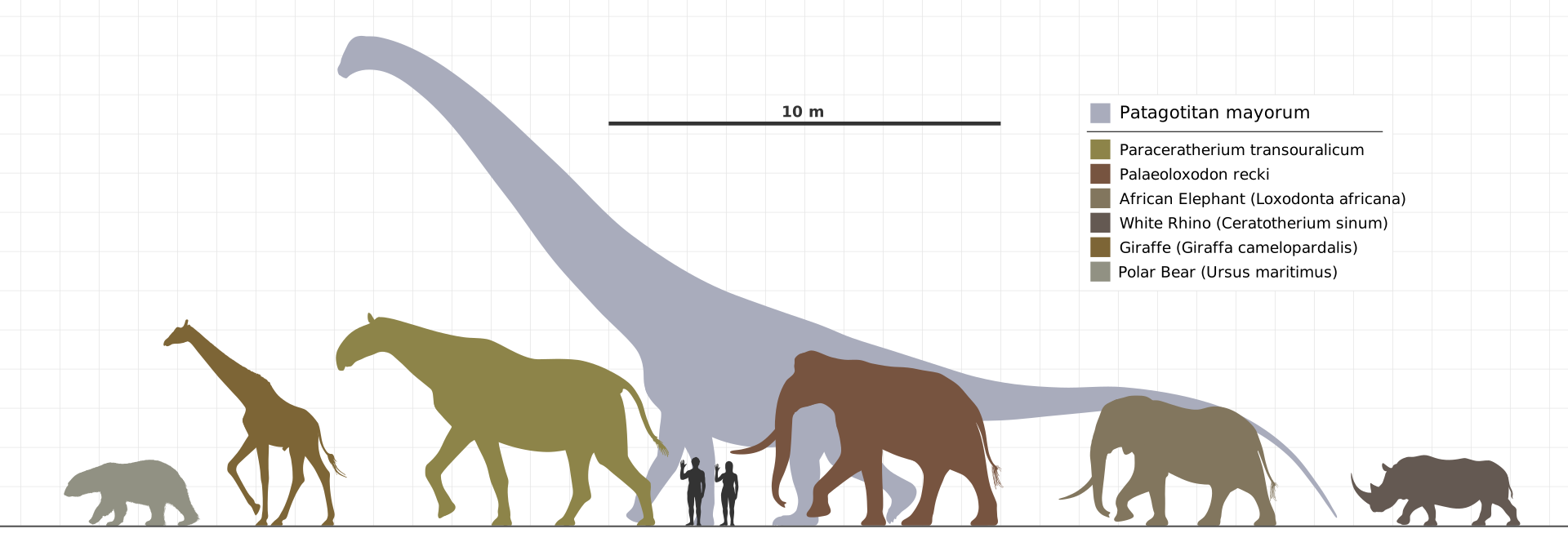
Estimated size of P. transouralicum (olive green) compared with that of humans, other large mammals, and the dinosaur Patagotitan

Paraceratherium is one of the largest known land mammals that have ever existed, but its exact size is unclear because of the lack of complete specimens. Early estimates of 30 tonnes (66,000 lb) are now considered exaggerated; it may have been in the range of 15 to 20 tonnes (33,000 to 44,000 lb) at maximum, and as low as 11 tonnes (24,000 lb) on average. Calculations have mainly been based on fossils of P. transouralicumbecause this species is known from the most complete remains. Estimates have been based on skull, teeth, and limb bone measurements, but the known bone elements are represented by individuals of different sizes, so all skeletal reconstructions are composite extrapolations, resulting in several weight ranges. Its total body length was estimated as 8.7 m (28.5 ft) from front to back by Granger and Gregory in 1936, and 7.4 m (24.3 ft) by Vera Gromova in 1959, but the former estimate is now considered exaggerated. The weight of Paraceratherium was similar to that of some extinct proboscideans, with the largest complete skeleton known belonging to the steppe mammoth (Mammuthus trogontherii). In spite of the roughly equivalent mass, Paraceratherium may have been taller than any proboscidean. Its shoulder height was estimated as 5.25 m (17.2 ft) at the shoulders by Granger and Gregory, but 4.8 m (15.7 ft) by Gregory S. Paul in 1997. The neck was estimated at 2 to 2.5 m (6.6 to 8.2 ft) long by Michael P. Taylor and Mathew J. Wedel in 2013. P. huangheense differs from P. bugtiense only in the anatomy of the rear portion of the jaw, as well as its larger size.

The taxonomy of the genus and the species within has a long and complicated history. Other genera of Oligocene indricotheres, such as Baluchitherium and Indricotherium, have been named, but no complete specimens exist, making comparison and classification difficult. Most modern scientists consider these genera to be junior synonyms of Paraceratherium, and it is thought to contain at least four discernible species; P. bugtienseP. transouralicumP. lepidum, and P. huangheense. The most completely-known species is P. transouralicum, so most reconstructions of the genus are based on it. Differences between P. bugtiense and P. transouralicum may be due to sexual dimorphism, which would make them the same species.
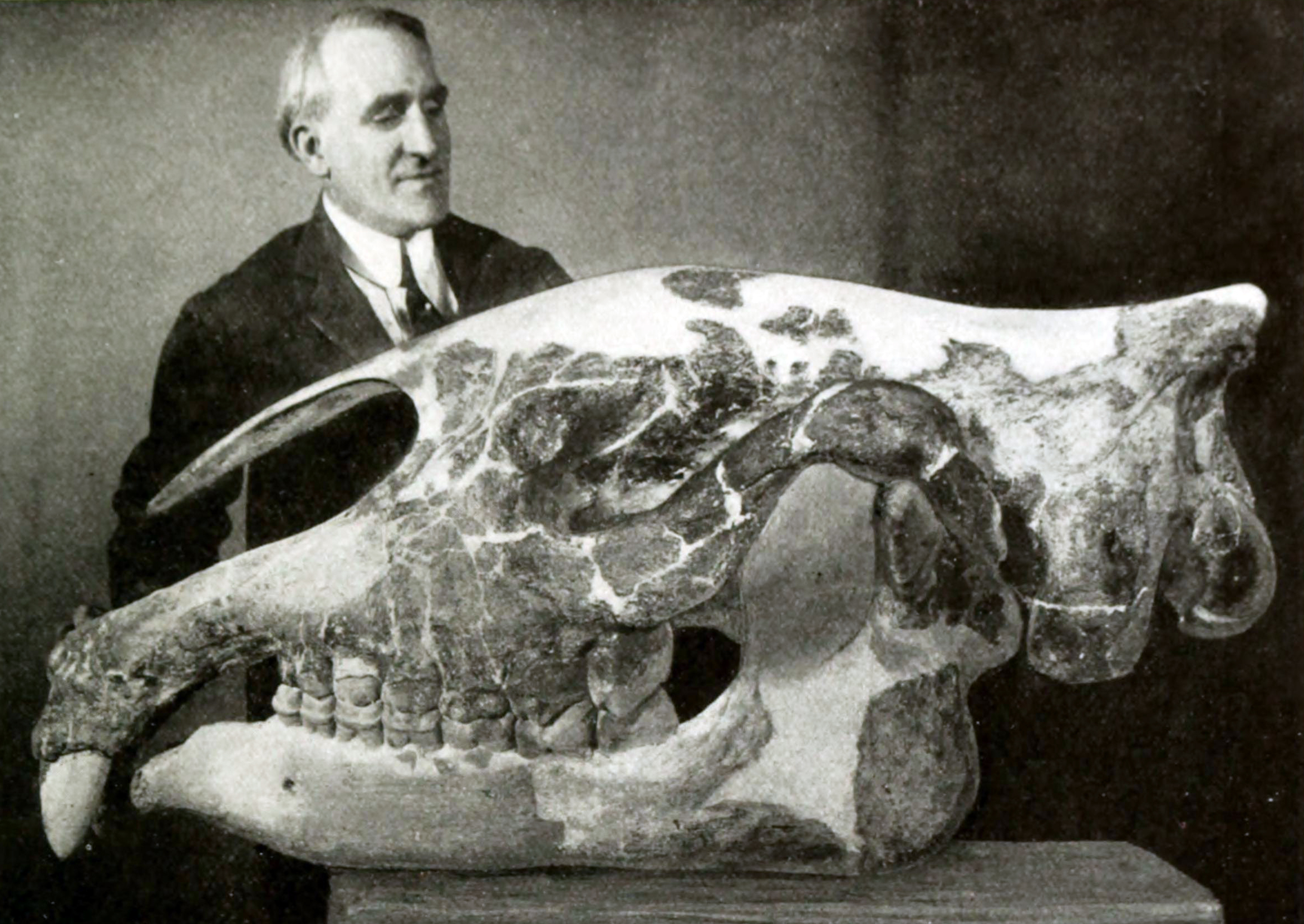
Preparator Otto Falkenbach with P. transouralicum skull (specimen AMNH 18650), formerly assigned to Baluchitherium grangeri, American Museum of Natural History

Early discoveries of indricotheres were made through various colonial links to Asia. The first known indricothere fossils were collected from Balochistan (in modern-day Pakistan) in 1846 by a soldier named Vickary, but these fragments were unidentifiable at the time. The first fossils now recognised as Paraceratherium were discovered by the British geologist Guy Ellcock Pilgrim in Balochistan in 1907–1908. His material consisted of an upper jaw, lower teeth, and the back of a jaw. The fossils were collected in the Chitarwata Formation of Dera Bugti, where Pilgrim had previously been exploring. In 1908, he used the fossils as basis for a new species of the extinct rhinoceros genus AceratheriumA. bugtienseAceratherium was by then a wastebasket taxon; it included several unrelated species of hornless rhinoceros, many of which have since been moved to other genera. Fossil incisors that Pilgrim had previously assigned to the unrelated genus Bugtitherium were later shown to belong to the new species.

The subfamily Indricotheriinae, to which Paraceratherium belongs, was first classified as part of the family Hyracodontidae by Leonard B. Radinsky in 1966. Previously, they had been regarded as a subfamily within Rhinocerotidea, or even a full family, Indricotheriidae. In a 1999 cladistic study of tapiromorphs, Luke Holbrook found indricotheres to be outside the hyracodontid clade, and wrote that they may not be a monophyletic(natural) grouping. Radinsky's scheme is the prevalent hypothesis today. The hyracodont family contains long-legged members adapted to running, such as Hyracodon, and were distinguished by incisor characteristics. Indricotheres are distinguished from other hyracodonts by their larger size and the derived structure of their snouts, incisors and canines. The earliest known indricothere is the dog-sized Forstercooperia from the middle and late Eocene of western North America and Asia. The cow-sized Juxia is known from the middle Eocene; by the late Eocene the genus Urtinotherium of Asia had almost reached the size of Paraceratherium. Paraceratherium itself lived in Eurasia during the Oligocene, 23 to 34 million years ago. The genus is distinguished from other indricotheres by its large size, nasal incision that would have supported a muscular snout, and its down-turned premaxillae. It had also lost the second and third lower incisors, lower canines, and lower first premolars.

Locations of fossil finds

The reasons Paraceratherium became extinct after surviving for about 11 million years are unknown, but it is unlikely that there was a single cause. Theorised reasons include climate change, low reproduction rate, and invasion by gomphothere proboscideans from Africa in the late Oligocene (between 28 and 23 million years ago). Gomphotheres may have been able to considerably change the habitats they entered, in the same way that African elephants do today, by destroying trees and turning woodland into grassland. Once their food source became scarce and their numbers dwindled, Paraceratherium populations would have become more vulnerable to other threats. Large predators like Hyaenaelurus and Amphicyon also entered Asia from Africa during the early Miocene (between 23 and 16 million years ago ); these may have predated Paraceratherium calves. Other herbivores also invaded Asia during this time.

Source: www.wikipedia.org / www.natgeo.com

In Near-Complete Fossil Form, Only Known Kansas Dinosaur Reappears After 100 Million Years

Friday, April 27, 2018

Silvisaurus is the only know dinosaur to inhabit Kansas. Credit: Oscar Sanisidro, University of Kansas

In May of 1955, a Kansas rancher on horseback was checking on cows and calves near a dry “pasture ditch” that ran through his land in Ottawa County. In a gully, he spotted something strange — fragments of unusual bone embedded in a rock. The rancher, named Warren Condray, recognized this could be important.

Years later, Condray’s son Jettie recalled the discovery: “There was an oval-shaped chalky structure on the surface of the rock. As I remember, the oval-shaped bone was about four or five inches long and perhaps one and one-half inches wide. After dad’s discovery, I, as a 10-year-old, went to the site about a quarter mile from our house in a pasture. I carefully looked over the creek’s edge and saw it.”

After showing his son the find, the rancher Condray called his state senator to report it.

“Next, the senator contacted our museum — and somebody from the University of Kansas went out and collected it,” said David Burnham, preparator with KU’s Biodiversity Institute and Natural History Museum. “It was published in 1960 as a new species. It’s fairly complete for a dinosaur.”

To date, Silvisaurus condrayi (named for the rancher) is the only known dinosaur that inhabited what today is the state of Kansas. 

Scientists from KU had collected the skull, a lower jaw, teeth, neck bones, ribs, shoulder spikes, backbones, a tailbone, a leg, part of the pelvis and other bits of the creature from the Condray ranch. But only part of the dinosaur ever was placed on exhibit at the museum, and that display was removed several years ago. 

But this spring, Silvisaurus made a triumphant return to the museum in a new, more complete form, accompanied by an interactive display that includes stunning depictions of the dinosaur and its environs from KU scientific illustrator Oscar Sanisidro.

“The display has been refurbished,” Burnham said. “When we were approached about redoing the exhibit I said we have most of the skeleton and it could be mounted. We have very talented exhibitors, and they were able to produce an armature to put the bones on. Oscar came up with the illustration of the dinosaur and the environment it lived in, with the leaves and the trees and interior seaway not too far off in the distance.”

The display also features a section of the Silvisaurus’ armor — a key feature of the dinosaur’s morphology — allowing museum visitors to feel the texture of the plating.

“Silvisaurus was like a tank covered with bony plates,” Burnham said. “These bony plates are armor, but they may have other functions. They have horns and spikes all over their bodies and a huge shoulder spike. We don’t have the full body or the tail — but it would have had some armor along its tail.”

The fierce appearance of 3-foot tall, 10-foot long Silvisaurus belied its gentle herbivory lifestyle. According to Burnham, Silvisaurus was an “armadillo on steroids.”

Burnham said the dinosaur’s armor would have been needed to fend off potential aggressors. 

“There probably were predators that lived back then,” Burnham said. “They didn’t have T. rex, but they had other large meat-eating dinosaurs that could have preyed on Silvisaurus if they could have flipped it over and gotten to its belly. Silvisaurus would have squatted down and wouldn’t have had to worry about it.”

Condray’s ranch, where the dinosaur was unearthed, included sections of Dakota Formation, sedimentary rock left behind on the east coast of the Late Cretaceous Western Interior Seaway.

“Picture Kansas, and if you draw a line right down the middle of the state from north to south, everything on the east would have been land and everything west would have been water — from the Gulf of Mexico to the Arctic,” Burnham said. “Silvisaurus condrayi means 'lizard of the forest.' It got that name because it lived on wooded beachfront property in Kansas 100 million years ago.”

Kansas at that time would have been warmer, wetter and lusher, Burnham said.

“The forests were pretty dense,” he said. “The climate was warmer. There was so much water, and the storm events were probably worse than they are today. It was totally forested, and the whole eastern part of the state would have had some deltas.”

While the Silvisaurus condrayi fossil is the only one of its kind ever discovered, there is another possible trace of the species, also in the collection of the KU museum.

“They found a track site nearby that could have been made from this dinosaur’s footprints,” Burnham said. “We have the footprints here — it’s a slab of rocks that fit together. We assembled it and put in on exhibit in Chicago’s Navy Pier for Dinofest.”

In addition to delighting museumgoers, the sole-known Kansas dinosaur has aided scientists trying to deduce relationships between Silvisaurus and its cousins.

“If you look at the family tree of this group of dinosaurs, this is probably one of the more primitive ones — somewhere near the base of that tree,” said Burnham. “But it provides a key point in the evolutionary history when these things were starting to evolve 100 million years ago. It allows us to better understand dinosaurs that came later and how they fit into the tree of life.”

The Kansas dinosaur also has served the subject of academic work by scholars and KU graduate students, helping to train generations of paleontologists at KU. Some even have made new discoveries about Silvisaurus condrayi.

“One former student from KU named Larry Whitmer did his master’s here — now he’s at Ohio University,” Burnham said. “He had been CT scanning dinosaur skulls and found there are internal chambers and air passages in relatives of Silvisaurus skull. Some people think it may have been for communication. They could have made an air call, like a hoot or a holler — or maybe a warning. Really, who knows what dinosaurs talk about?”

The public can visit Silvisaurus condrayi during museum hours.  

Source: www.newswise.com

Scratches on Dinosaur Teeth Reveal Their Fierce, Efficient Eating Habits

Friday, April 27, 2018

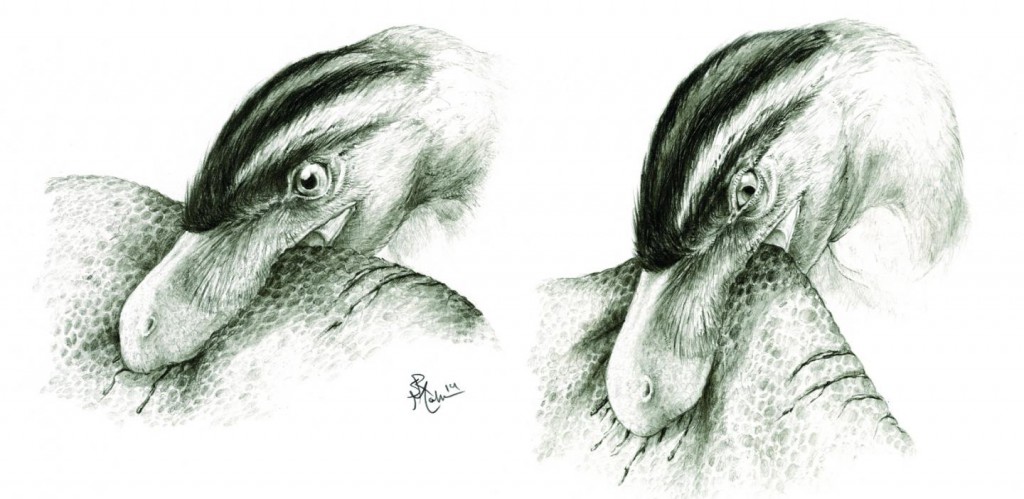
Microwear patterns and other details on a number of dinosaur teeth suggest differences in prey despite a shared noshing technique, the puncture-and-pull method shown here. (Credit Sydney Mohr/Current Biology)

What did dinos munch for lunch? A new two-pronged approach to analyzing dinosaur teeth reveals that, while all of the dinosaurs in the study were meat-eaters, when sidling up to The Old Cretaceous Country Buffet some went for the soft-serve prey and others gravitated toward the hard stuff.

Eyes may be the window to the soul, but teeth are the record-keepers of an individual. Earlier this month, a team of researchers determined whether meat or fish was on the menu for assorted apex predators 100 million years ago in the massive river delta systems of what’s now North Africa. That study looked at calcium isotopes preserved within the teeth, but the exterior of a tooth can be just as informative.

A separate team announced today that, by analyzing serrations and microwear patterns on the teeth of several Late Cretaceous theropods — bipedal, carnivorous dinosaurs — differences between species suggested they went for different prey, even though their method of killing the animal was the same.

Sink Your Teeth Into This

Let’s start by taking a gander at the slightly ducky-looking fella at the top of this post (technically, it’s Saurornitholestes, one of the species included in the study). What you’ve got here is an illustration of the “puncture-and-pull” method of grabbing prey. The animal bites down and pulls back with its jaw still closed, all the while creating little scratches on its own teeth.

Those little scratches — the microwear pattern — record the direction of the action, first down and then back. Similarities in the microwear pattern suggested to the researchers that the three different kinds of dinosaurs in their study were all using the puncture-and-pull method.

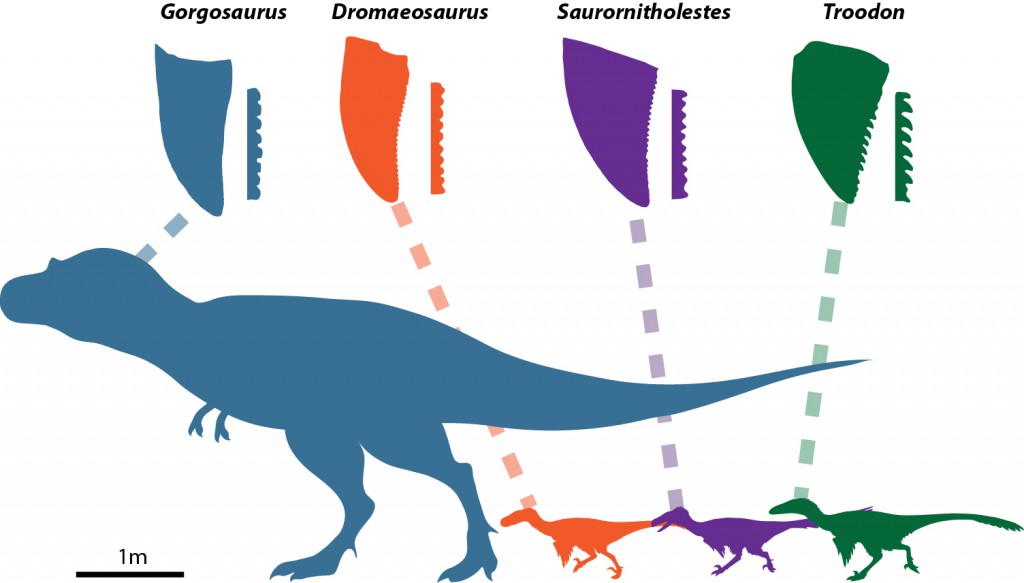
Dinosaur teeth from the three species studied have been scaled to same crown height for comparison of general shape and denticle details…with T. rex relative Gorgosaurus, not part of the study, joining the mix just for fun. (Credit Victoria Arbour/Current Biology)

There was something missing from the teeth, by the way: pitting. Pitting in carnivore teeth can be caused by gnawing or crunching into bone. The absence of it suggests that the dinosaurs, like Komodo dragons (which have similarly shaped teeth that also are not typically pitted), avoided bone by either swallowing prey whole or selectively defleshing carcasses.

Now let’s take a look at the dinosaurs themselves.

The team chose teeth from different coelurosaurians, a branch of the theropod squad that encompasses a huge range of diversity, from the pint-sized ancestors of birds (and birds themselves) to giants such as T. rex. The researchers focused on Dromaeosaurus, Saurornitholestes and Troodon, all somewhat closely related and all from the back half of the Cretaceous, roughly 66-100 million years ago.

Theropod teeth generally follow the same basic plan, curved and pointy, with some variation. And the devil, or at least the denticles, is in the details.

Denticles are the serrations running down the back of the tooth, and they can vary between species and even within species, as teeth are worn down over time.

In the comparison below, included in the study, dinosaur teeth from the three species studied are scaled to be the same size, at crown height, with each other and the tooth of a less closely related coelurosaur, Gorgosaurus, included for illustrative purposes.

The relative width and curviness varies between the species, but the key thing here’s the denticles: Dromaeosaurus, like Gorgosaurus, has squarish-denticles, while those of Saurornitholestes are more pointy. Troodon, meanwhile, has hooked denticles distinctly different than all the others.

Stress Eating: We’ve All Done It.

Which brings us to the second prong of the study. After analyzing microwear patterns, the researchers performed finite element analysis on models of the dinosaur teeth. It’s a number-crunching method most commonly used by engineers to assess things such as structural integrity, aerodynamics and energy transfer.

In this instance, however, researchers applied the finite element method to determine how and where the teeth were stressed when biting prey from different angles.

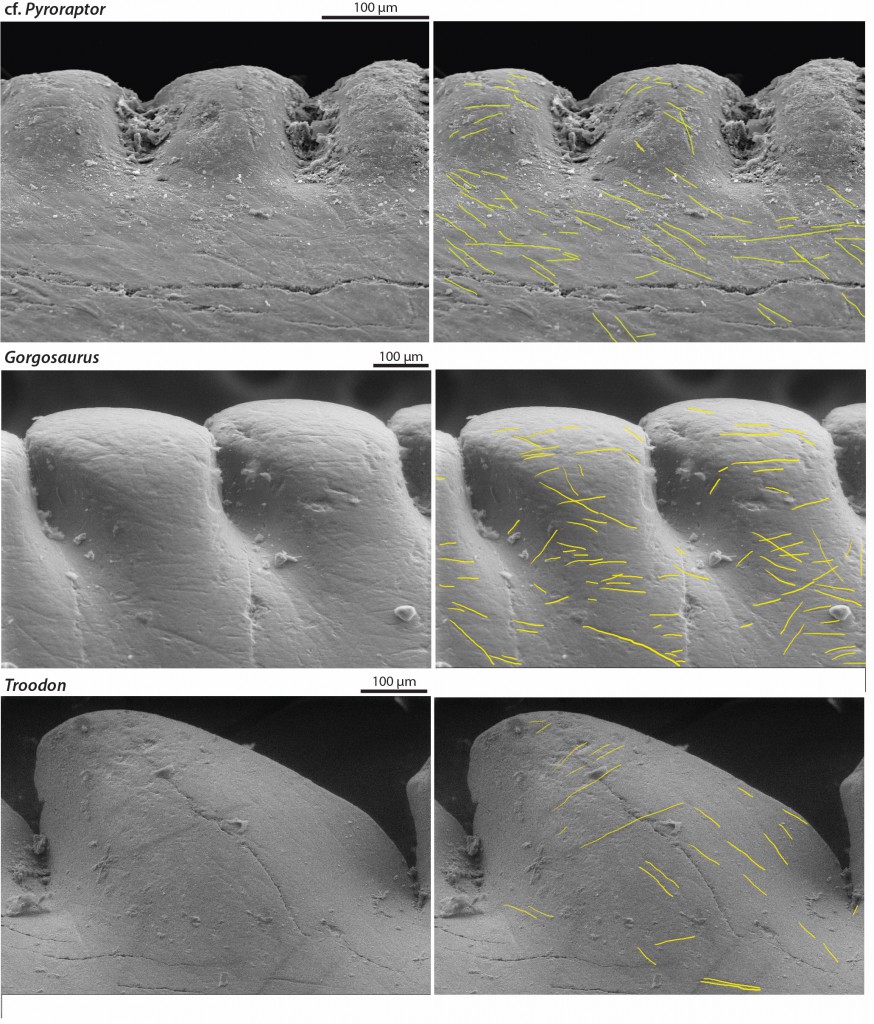
Microwear patterns on the serrated edges of teeth from different dino-predators reveal distinct differences, suggesting different prey. (Credit Angelica Torices and Victoria Arbour/Current Biology)

The results are intriguing: For all of the dinosaur teeth analyzed, the denticles bore the brunt of the greatest stress. The teeth of the dromaeosaurids, including the species Pyroraptor featured in the image below (and also an excellent band name), and Saurornitholestes appeared to be well-adapted to biting prey at a wider range of angles without risking tooth breakage.

Troodon’s teeth, however, didn’t handle stress that well. The troodontid teeth, with their fancy hooked denticles, needed to contact prey at or near the optimal bite angle to avoid failing (also known as breakage — ouch).

What’s interesting about that finding is that Troodon’s diet has been the subject of much debate in paleontology due to its unique denticle pattern. Previous studies, not involving finite element analysis, concluded the animal ate differently than closely related dinosaurs.

Paleontologists believe most theropods were hypercarnivorous, eating meat almost exclusively (though at least one was apparently herbivorous). Various researchers had previously proposed that the troodontids, however, were insectivores, omnivorous scavengers or yes, even plant-eaters. Herbivory is the least likely of those options, due to a suite of other anatomical traits that point to at least some degree of carnivory.

But the authors of today’s study conclude that, while the other dinosaurs studied appeared well-adapted to biting and holding on to struggling prey, including large animals, Troodon was not. Instead, it’s more likely that troodontids went after small animals, possibly invertebrates and other squishier fare.

I’m sure they would have found humans palatable.

The study appears today in Current Biology.

Source: http://blogs.discovermagazine.com

Ancient Fossil Footprints Show Humans May Have Hunted Giant Sloths in New Mexico

Friday, April 27, 2018

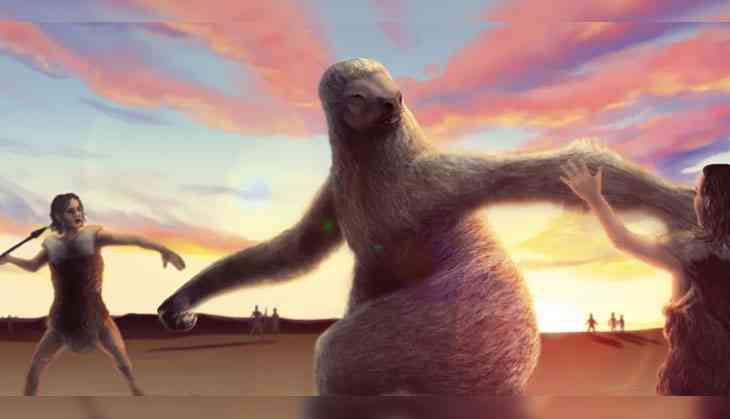
A dramatic rendering of a giant sloth being confronted by human hunters  Alex McClelland, Bournemouth University

The White Sands National Monument in New Mexico is a vast, barren landscape of sparklingly bright sand twisted by the wind into slowly morphing dunes. Between about 10,000 and 15,000 thousand years ago, it was a very different place, with large animals like mammoths, giant ground sloths and humans leaving ghostly footprints etched in the crusty ground.

If scientists can catch sight of the delicate tracks, they can make incredible discoveries about the past. Scientists now believe humans stalked and then confronted a giant ground sloth—with that story repeating itself several times over with different sloths—thanks to a striking set of prints at White Sands. That finding was reported in a paper published Wednesday in the journal Science Advances.

It took some time for the team to recognize what they had found—at first it seemed like just one species had been present. “It was when we suddenly realized that the two things were interacting that the story got really exciting,” co-author Matthew Bennett, a scientist at Bournemouth University, in the U.K., who focuses on fossilized human footprints, told Newsweek. He was called in to analyze the traces after the discoverers of the new prints realized that humans had also been wandering across the site.

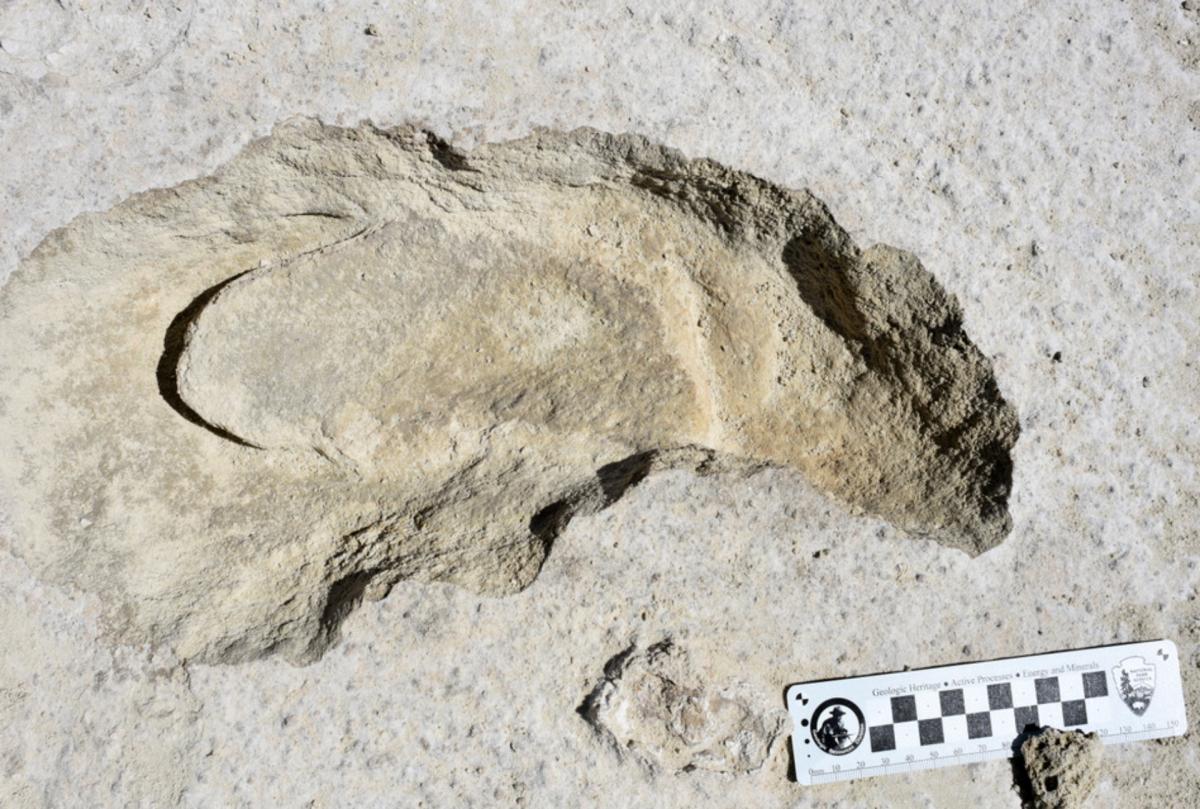
Human footprint inside giant sloth track at White Sands National Monument. Image credit: National Park Service.

“We did have some really nice sloth prints,” co-author David Bustos, chief of resources at the White Sands National Monument and the person who first discovered the tracks, told Newsweek. “You could see the claws and all the different features.”

These prints weren’t left by anything like the chill tree hangers alive today: Extinct giant ground sloths could reach 10 feet tall and weigh more than a ton. Scientists found the traces of bare human feet nestled inside some of those giant sloth paw prints. The scientists didn't see any evidence that the larger prints had been filled with water or dirt before the humans came through. That made them think the humans were purposely following in the footsteps of the sloth, perhaps stalking it as prey or even playing with it, although other experts say it's impossible to assign motives.

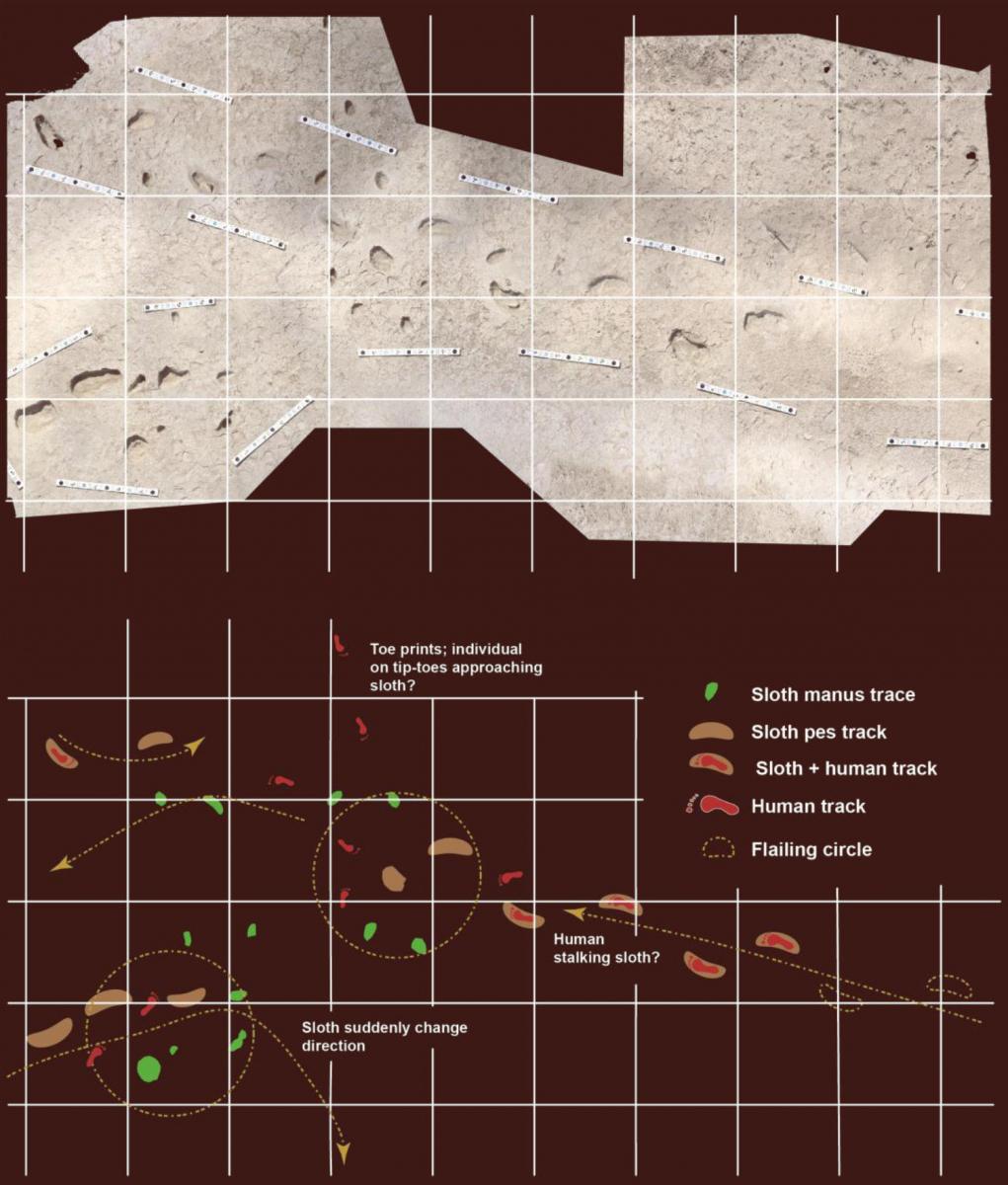
As the scientists followed the paths of the tracks across the landscape, they saw that the sloths usually ambled along in more-or-less straight lines. But where human tracks lined up with the sloths, the animals started moving differently, stopping and veering abruptly, as if turning to face a threat.

“The sloth appears to have reared up on its hind legs and swung its arms behind it at whatever was following it in some sort of defensive gesture,” Bennett said.

How closely that story matches what really happened is difficult to know all these years later. “It’s impossible to say with any absolute certainty what’s going on,” said ReBecca Hunt-Foster, a paleontologist with the Bureau of Land Management who wasn’t involved with the new research, adding that she thinks the authors’ interpretation overall makes sense. “Sometimes we see animals making sharp turns that aren’t associated with any type of prey.”

The difference in behavior between sloth tracks on their own and sloth tracks near humans suggests the animals were there at the same time, at least, said Spencer Lucas, a paleontologist at the New Mexico Museum of Natural History and Science who wasn’t involved in the new research. He said he’s hesitant, however, to agree with all of the details of the interpretation of the prints. The two species could have been responding to each other without explicit hunting having been involved, he said.

“These sloths were wild animals, so they’re probably not exactly excited to see people,” Lucas said.

And vice versa, he notes, given the huge size and dangerous claws of the sloths. “The sloths were not the only animals that were concerned about the situation,” he said. “Those people would have been vigilant at the very least.”

Top: mosaic of part of the study site showing two ‘flailing circles’ as well as sloth and human composite tracks. Bottom: interpretation of trackway trajectories. Image credit: Bustos et al, doi: 10.1126/sciadv.aar7621.

Lucas adds that even though footprints are often overlooked, they can reveal the sort of action-packed scenario that scientists typically can’t glean from skeletons. Barring rare exceptions like a fossilized bison with a spearpoint still sticking out from its ribs, typically remains just show that certain species lived in the same general region during a certain period—they can't speak to actual interactions like hunting. 

“The footprint is fossilized behavior,” Lucas said. “Footprints are going to give you a lot more than the bones usually do.”

Although fossilized interactions are rare, this isn’t the only example of its type—Hunt-Foster notes that there are dinosaur tracks near Moab, Utah, that show first a large meat-eating dinosaur passing through, then a large vegetarian dinosaur following precisely in its footsteps, suggesting some connection between the animals.

If the scientists are right about their interpretation of the sloth and human prints, they reveal an incredibly vivid scene of these prehistoric interactions. “It’s close-quarter combat,” Bennett said. “There’s a dance, and it’s probably done to life and death, and it’s written in the mud—so it’s a lovely story.”

Source: www.newsweek.com

Chongqing's First Paleontological Fossil Park to Open

Friday, April 27, 2018

A national geopark featuring paleontological fossils in southwest China's Chongqing Municipality will open to the public on Saturday.

A national geopark featuring paleontological fossils in southwest China's Chongqing Municipality will open to the public Saturday.

The park covering nearly 100 square km of land will showcase wood fossils, dinosaur footprints and the Danxia landform, a landscape consisting of red sandstone characterized by steep cliffs.

It will serve as a geological park including the functions of scientific research, tourism and leisure, according to Xie Xianming, a park administrator.

Chongqing has 10 geoparks, which received a total of over 2 million visitors in three years, generating a revenue of 2.6 billion yuan (about 412 million U.S. dollars).

Source: www.xinhuanet.com

'Jurassic World 2' Creature Designer Neal Scanlan Takes Us On A Dinosaur Tour

Friday, April 27, 2018

Creature designer Neal Scanlan with the Indoraptor from "Jurassic World: Fallen Kingdom." (Giles Keyte / Universal Studios / Amblin Entertainment)

"I seem to be living lots of dreams recently," says Neal Scanlan, sitting in his office at London's Pinewood Studios. The special effects artist, who won an Oscar in 1995 for his work on "Babe," recently completed work on "Jurassic World: Fallen Kingdom" while simultaneously creating creatures for the new Star Wars film "Solo." He's very aware of how special that opportunity is.

"I started my career when animatronics were at the very, very beginning, so we were — dare I say — pioneers of animatronics," he says. "We were paid to make mistakes. Over the years it became much more professional and we became much more of a go-to effects medium. And then to see the advent of CG and the decline of practical — to come out the other side I feel like it's a duty, almost, to do it."

Scanlan retired several years ago, moved to the countryside and was "quite happy" to do something else. It didn't feel like there was space for practical effects and animatronic creatures in the world of CGI, so he simply moved on.

"I wasn't a natural person to transition into the digital medium," he says with a shrug.

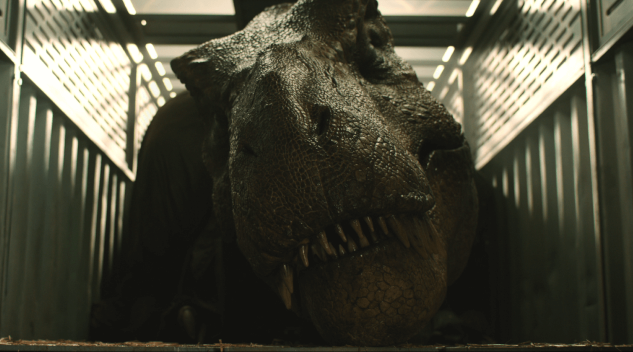
Rexy in the film "Jurassic World: Fallen Kingdom." (Universal Pictures / Amblin Ente / Legendary Pictures)

But Ridley Scott's "Prometheus" brought him back into the game in 2012 and a few months later a call arrived requesting his help with "Star Wars: The Force Awakens." It became clear that filmmakers were looking for practical effects again. Scanlan happened into "Jurassic World: Fallen Kingdom" after finishing "Star Wars: The Last Jedi."

"It's incredibly satisfying to know that my career and that the viewing audience that has traveled from the first ['Jurassic Park'] to this one now have taken a love of some of things we do," he notes.

As creature effects creative supervisor on the film, Scanlan worked closely with director J.A. Bayona and Industrial Light & Magic's David Vickery on carefully crafting the dinosaurs. Screenwriter Colin Trevorrow purposefully wrote in scenes that would be ideal for animatronic puppets, so there was an emphasis on integrating more practical effects than in "Jurassic World," which used very few.

Bayona wanted to introduce some previously unseen dinosaurs, as well as one totally original creation, the Indoraptor. For the director, it was essential to amp up the tangible and visual aspects of the animals.

"I was reading a lot about what the fans thought about the dinosaurs and I was talking to kids also," Bayona says from an editing studio in London where he's making the final cuts to the film. "I realized that when they talk about dinosaurs they talk about the textures and colors. They talk about, of course, how big is the T. rex, but in general I saw a pattern, which was the textures and the colors. I thought that was the area where I could play with. They feel somehow a little bit more exotic and richer in this movie."

"We tried to take onboard, to some extent, the ever-moving understandings of what dinosaurs may or may not have really looked like," Scanlan adds. "One has probably assumed in the past that they were rather muted, but when you look in nature color is an important attractant. And would that have not been the case with these animals?"

Scanlan and his team built an actual T. rex, as well as working animatronic models of the Indoraptor and Blue, a raptor who first appeared in "Jurassic World." They also created puppeteering aids, rod puppets and several prop dinosaurs, all of which were imagined in tandem with Vickery so the CGI and practical effects would be seamless.

The animatronic model of Blue required 15 puppeteers hidden below to move the cable levers and use the radio control mechanism that brought her to life. They rehearsed the movements for each particular scene in advance so that the dinosaur could react to Bayona's direction on set.

"Like a dance team we're not thinking about the individual steps," Scanlan says. "We're just doing it. You're thinking about it in a much more consuming way, like 'Can you make her more aggressive? Can you make her more agitated? Can she breathe more heavily?' It's like music in an orchestra – everyone knows how to bring up the crescendo.

"Merging [visual effects] techniques is what makes a scene successful," Bayona adds. "Animatronics are very helpful on set, especially for the actors so they have something to perform against. There's an extra excitement if they can act in front of something real."

Source: www.latimes.com

Why Jurassic Park Isn’t Really About Dinosaurs

Thursday, April 26, 2018

Luke Littleboy on Jurassic Park…

I remember summer ‘93. I remember begging my parents to take to me to see a new dinosaur movie. I was already obsessed with them anyway – with more toy models than you could shake a fossil at. Finding out there was going to be a whole movie about dinosaurs blew my 5-year-old mind. And what a movie it was, winning three Academy Awards and since appearing on numerous ‘top films of all time’ lists.

But along with inexplicable weight gain, age brings with it an ability to look back on what has gone before with fresh clarity. There has to be something beyond the technical achievements and classic Michael Crichton theme of science vs. nature that makes the movie connect to audiences on a primordial level. And as I’ve gotten older, I’ve mused to myself (and people in the pub) that Jurassic Park isn’t really about dinosaurs at all. It’s about life succeeding through love, family and the evolutionary instinct to further the species. Romantic stuff.

Park has what World doesn’t

Looking at the soft-reboot from 2015, Jurassic World’s themes are more cynical, perhaps reflecting the era in which it was made. Director Colin Trevorrow confirmed as much in an interview on the JurassicCast fan podcast: “Jurassic World is all based on Ian Malcolm’s quote, ‘You stood on the shoulders of geniuses to accomplish something as fast as you could, and before you even knew what you had, you patented it, and packaged it, and slapped it on a plastic lunchbox, and now you wanna sell it.’ That to me is Jurassic World, that’s why I had all the product placement.”

Jurassic Park, however, is bright and optimistic. Which is perhaps why it still packs more emotional weight than the reboot, despite the two films having a similar basic premise. Somehow, the original Jurassic ends on a more poignant note – with the feeling that both the humans and the dinosaurs are in a better place at the end. Jurassic World’s final scene arguably feels more like everyone has just woken up from a drunken stupor.

Characters that care

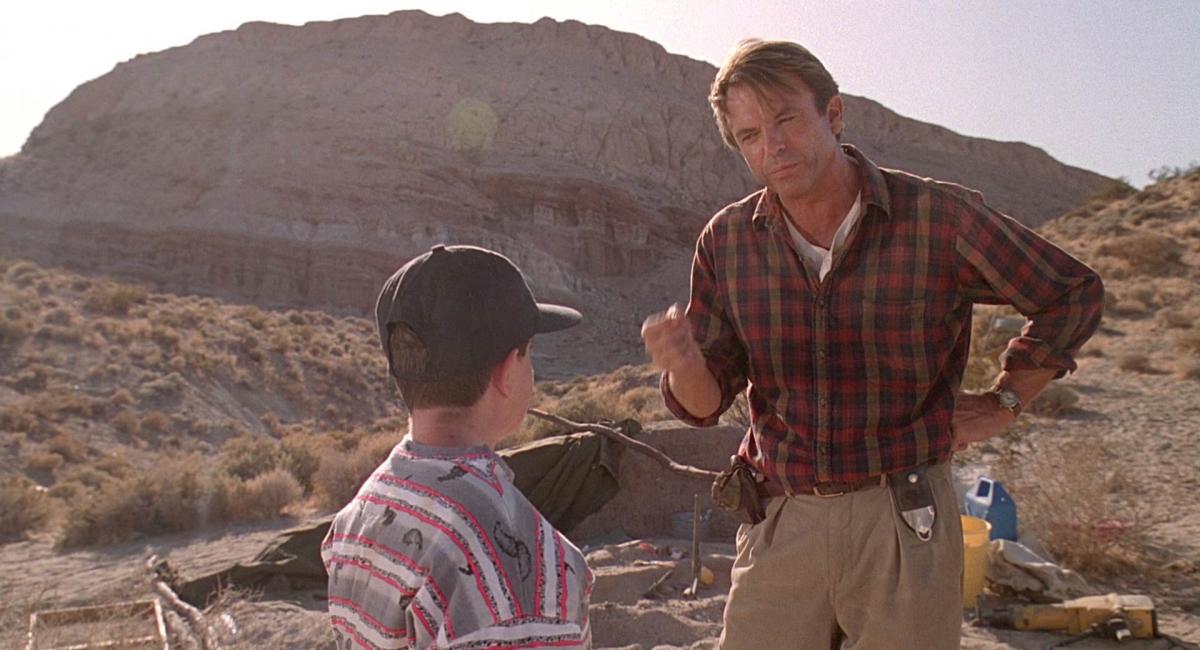
The original Jurassic is one of the only films in the franchise with characters you’d really root for. We’re introduced to Sam Neill’s Dr Alan Grant as a paleontologist examining the scan of a dinosaur fossil with a team of wonderfully 90s extras – collectively sporting more double denim than a vintage Levi’s ad.

But this segues into a protracted scene with Grant berating a child for not respecting him enough. This is clearly a man who is not a ‘kid person’. That’s a thing many of us can relate to. I love my niece and nephew, but I still feel that I’m a bit of a leap away from fatherhood.

In contrast, we know Laura Dern’s Ellie Sattler loves kids. She outright tells Grant that she wants them in the following scene, and so we’re aware of a rift between the couple. But it could be that trying to deny himself his natural evolutionary instinct to make little Alans and Ellies could be bad for nature. Life needs to find a way.

The events on the island are just as much about Alan growing towards this epiphany than it is about dinosaurs killing people. And that’s why Jurassic Park really works.

Life breaks free

As the helicopter makes its descent towards Jurassic Park, hilarity ensues as it turns out Dr Grant doesn’t have a working seatbelt. Indeed, he has two female plugs – and this happens just prior to the audience learning that all the dinosaurs on the island are female, to prevent unauthorised breeding. Yet even in this case life finds a way, as Alan improvises by simply tying the two ends together.

And we’re reminded that ‘life finds a way’ throughout the movie. Jeff ‘Ripped like a Raptor’ Goldblum’s Ian Malcolm first utters the phrase on the tour of the lab, commenting that “…life will not be contained. Life breaks free, it expands to new territories and crashes through barriers, painfully, maybe even dangerously…”.

Grant later echoes Malcolm when he sees a clutch of dinosaur eggs in the wild which have hatched. We can see nature beginning to take its course on the island, with dinosaurs breeding like rabbits, and Grant beginning to grow some paternal instinct.

After being duped by Ellie to share a tour car with John Hammond’s grandchildren, Lex and Tim (“She said I should ride with you, because it would be good for you!”), Grant opts to do the adult thing when the T-Rex escapes by saving them from certain death rather than diving for cover in the nearest public toilet.

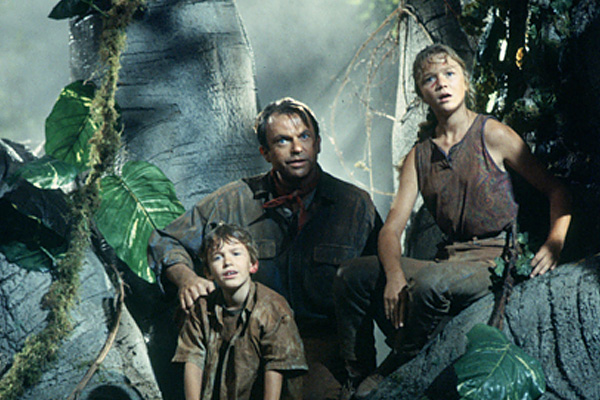
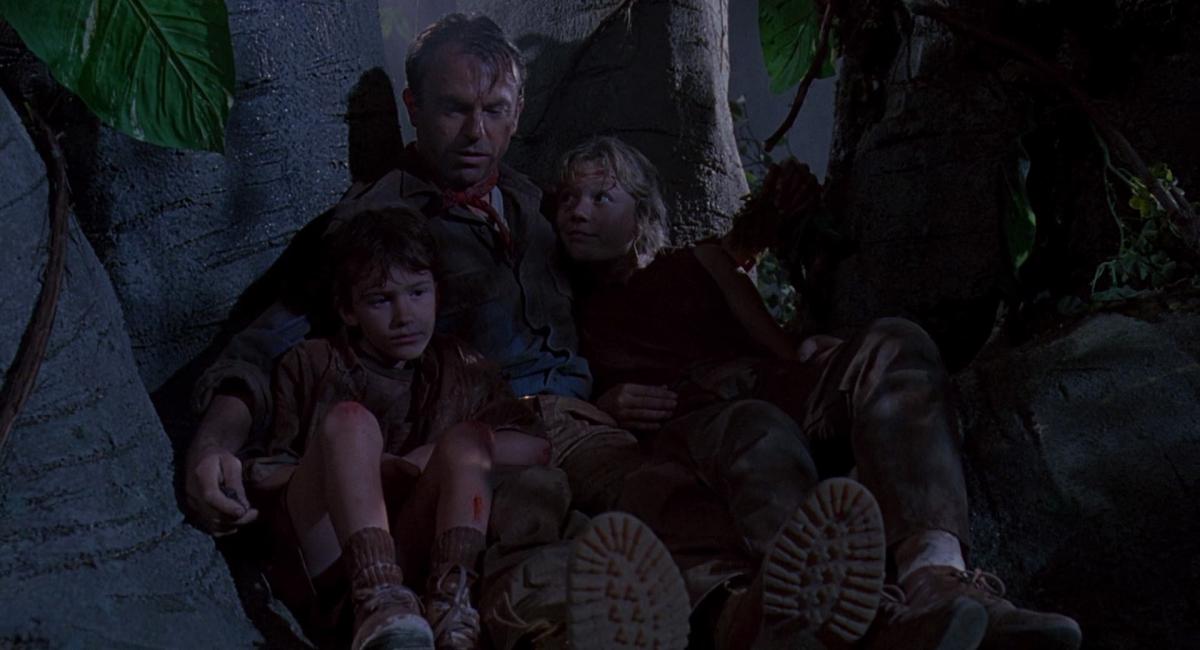
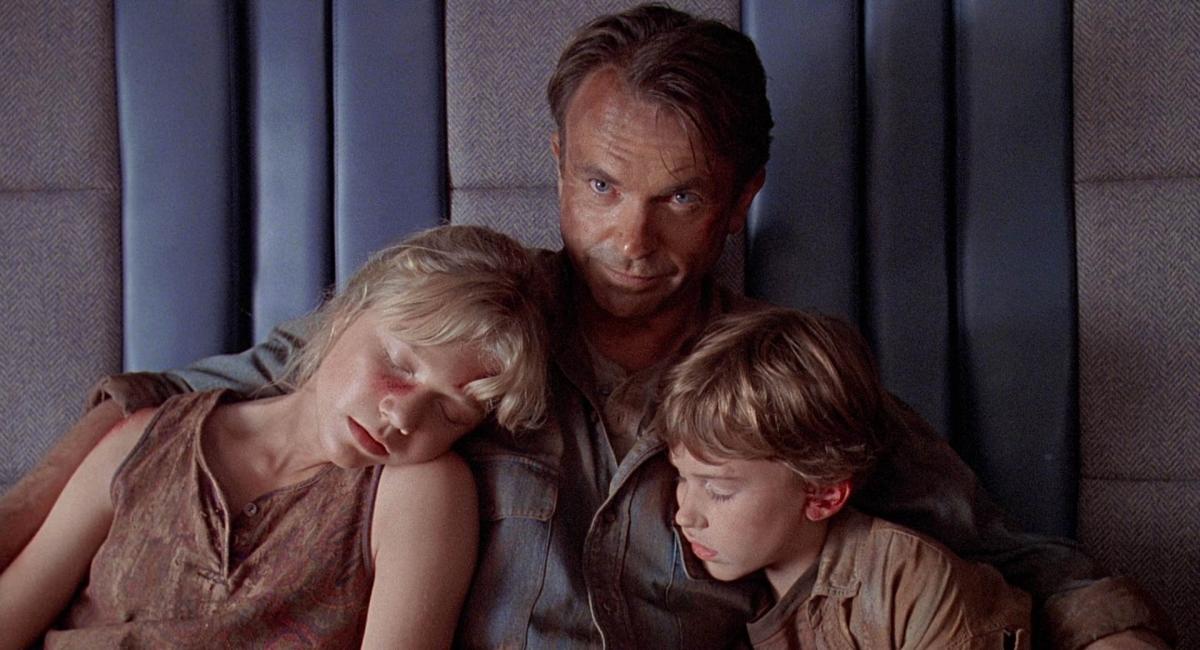
It’s a touching moment to see Grant let the kids tuck themselves in under his arms for the night in the jungle after we’ve seen him pull Lex from an upside-down car, abseil with her down a sheer concrete drop, and rescue Tim from the same car after the Rex flung it into a tree.

Grant becomes a dad

We’re there for every step of their trek across the island, and this journey is as important to the kids as it is for Grant, as Lex and Tim’s real parental figures are absent for the time being. Even before we’ve met any of the main cast, the second scene of the movie reveals that Hammond has been absent from the park because his daughter is getting a divorce. Hammond himself reiterates this during the kids’ introduction later, at the Visitors Centre.

Grant will go on to play father figure throughout the film, evading a stampeding herd of Gallimimus and rescuing Tim from an electrified fence as the power comes back on. He begins to genuinely connect with them as a father figure, sharing touching moments usually associated with a parent and child – such as petting the brachiosaurus (“Just think of him as, kind of a big cow”) and gently scolding them when their sibling rivalry gets too much (“Come on guys, it’s not a race”).

As Grant grows into his new role as a father, he begins to realise it’s time to move on. As they drift off to sleep together, the kids ask him what he and Ellie will do now they don’t have to dig up dinosaur bones. He replies, “I guess we’ll have to evolve, too.” Of course, they can no longer be old-fashioned paleontologists – but they’re also going to have to change if they’re going to survive as a couple.

The family unit

Grant’s fatherly instincts are essential to his arc through the film and, in case we were in any doubt, Spielberg sends us clear visual signals that this the new family unit of the movie.

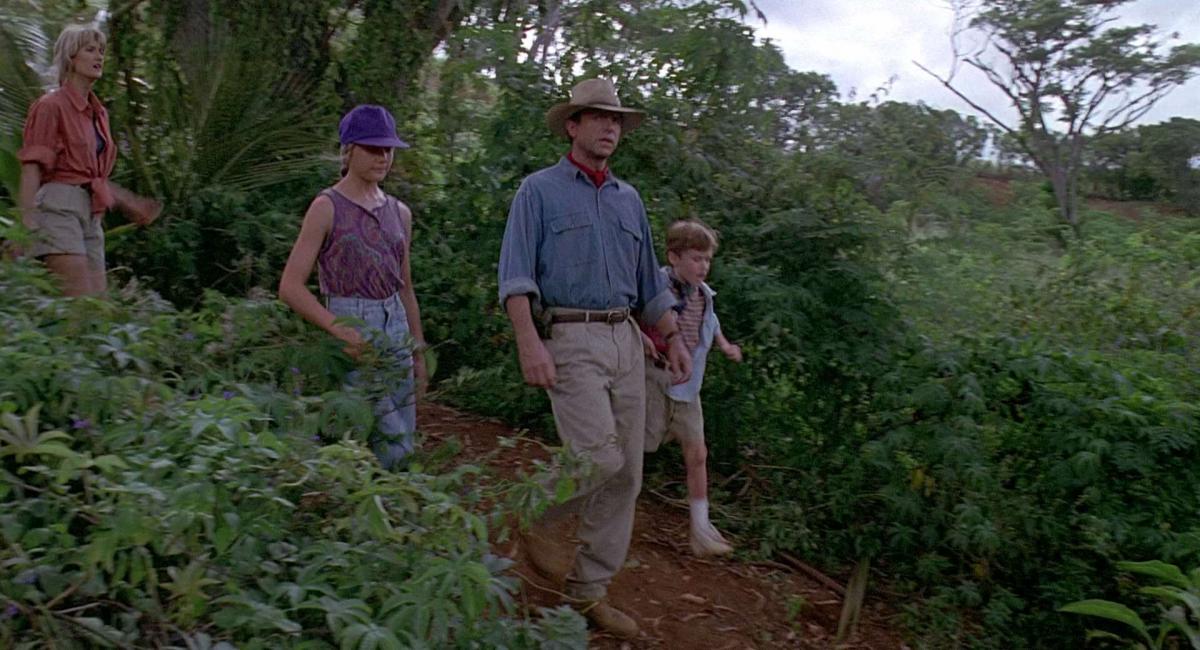
He hints at this relatively early on, framing Alan, Ellie and the children in the same shot before they see the sick triceratops, for example. And then later in the movie, as the kids literally run into the arms of the pair, fleeing the raptors from the kitchen and retreating to the control room. By the time the raptors have chased them back into the Visitors Centre lobby, almost every shot of the human cast members features the family unit.

In the control room itself, the ‘family’ has to work together as a team, with Alan and Ellie holding the door shut as Lex uses her computer smarts to finally turn the power back on and get the door locks to kick in. Okay, there’s definitely an argument that Tim could have grabbed the discarded shotgun for Ellie, but perhaps having a minor handle a firearm is simply too much for this PG-13 movie.

The birth of a family is how life truly finds a way in the film. Alan gets over his distain for kids, so he and Ellie can now move forward as a couple – and the kids get to have loving parental figures who will help them make it through the island alive, even as their own real-life parents are in the middle of a divorce.

Life finds a way

This emotional climax builds to its crescendo when the survivors make it onto the helicopter. To a soundtrack of John Williams’ gentle piano lullaby rendition of the Jurassic Park theme, Ellie smiles lovingly as she gazes at Alan and the kids. He looks back at her and seems to know precisely what she’s thinking. He’s finally grown. They both glance out of the window at a flock of pelicans flying over the ocean – the lives of the cloned dinosaurs may have been doomed, but life found a way to beat extinction 65 million years ago. The dinosaurs evolved. And now, Alan and Ellie have, too.

You don’t stand the test of time with groundbreaking CGI and thrilling set pieces alone. You do it with a movie that speaks to us as people, and maybe even as a species. A film about innate, unconditional love and the evolutionary impulse to survive. Jurassic Park isn’t about dinosaurs. But then again, they are fantastic fun.

Luke Littleboy – Luke records a film podcast and writes a few words at One Sensational Shot. He has been a film fan since first seeing Jurassic Park at the Odeon in Ipswich, UK back in ’93. The Odeon is gone but the doughy-eyed sense of idealism remains.

Source: www.flickeringmyth.com

Paleontologists Discover 8-Mln-Year-Old Remains of Elephant in Macedonia

Wednesday, April 25, 2018

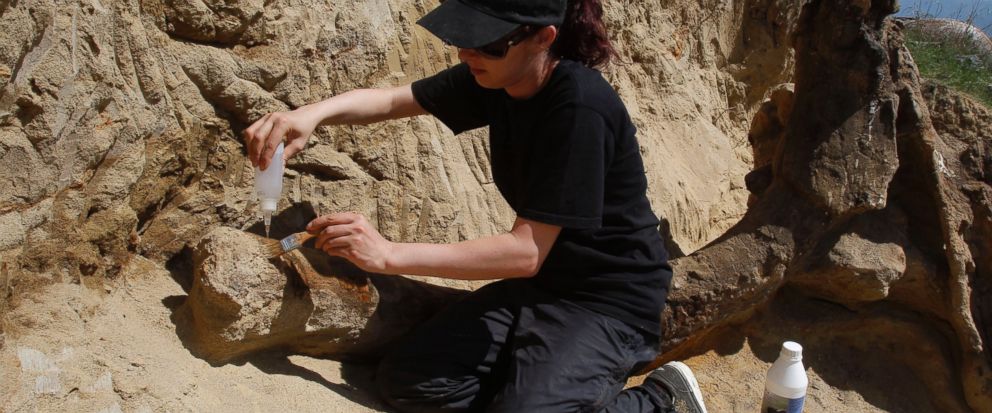
A member of a paleontologist team applies a liquid to protect a fossilized skeleton of extinct species of elephant, excavated at Dolni Disan, near Negotino, in central Macedonia, Tuesday, April 24, 2018. Paleontologists from Bulgaria and Macedonia are excavating the fossilized remains of a prehistoric elephant believed to pre-date the mammoth, after its bones were found accidentally by a man working in a field. (AP Photo/Boris Grdanoski)

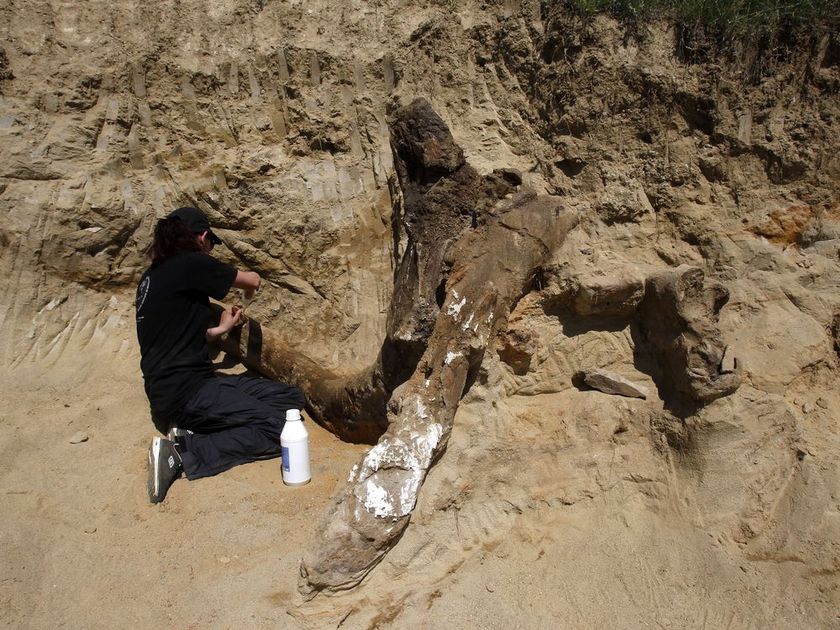
Paleontologists from Bulgaria and Macedonia are excavating the fossilized remains of a prehistoric elephant believed to pre-date the mammoth, after its bones were discovered accidentally by a man working in a field.

Scientists at the Natural Science Museum of Macedonia and the Natural History Museum of Sofia said Tuesday they began excavating the skeleton in Dolni Disan in central Macedonia last Friday. They estimated the animal would have weighed about 10 tons and have been about 50 years old at the time of its death, roughly 8 million years ago during the Miocene epoch.

Biljana Garevska of the Natural Science Museum in Skopje said the fossil was of one of the elephant's ancestors which roamed the region at a time when it was covered by African-like savannah.

Children look at a fossilized skeleton of extinct species of elephant, excavated at Dolni Disan, near Negotino, in central Macedonia, Tuesday, April 24, 2018. Paleontologists from Bulgaria and Macedonia are excavating the fossilized remains of a prehistoric elephant believed to pre-date the mammoth, after its bones were found accidentally by a man working in a field. (AP Photo/Boris Grdanoski)


A member of a paleontologist team works on a fossilized skeleton of an extinct species of elephant, excavated at Dolni Disan, near Negotino, in central Macedonia, Tuesday, April 24, 2018. Paleontologists from Bulgaria and Macedonia are excavating the fossilized remains of a prehistoric elephant believed to pre-date the mammoth, after its bones were found accidentally by a man working in a field. (AP Photo/Boris Grdanoski)

Source: https://phys.org

8 Reasons You Should Be Concerned About Jurassic World: Fallen Kingdom

Tuesday, April 24, 2018

Indoraptor in Jurassic World: Fallen Kingdom

Why returning to the island has never been a worse idea...

In the summer of 2015, the immense success of Jurassic World seemingly shocked everyone. The reboot-quel took audiences on a nostalgia-driven joyride and that formula reaped the benefits.

At the time of its opening, it was the biggest opening weekend in film history, both domestically and internationally. And while the film certainly has its detractors, it was overall welcomed as an improvement over the previous entry in the series and a welcome return-to-form for the franchise as a whole.

So why is the buzz surrounding the upcoming follow-up so overwhelmingly negative?

With each passing reveal about the film, the entire affair grows more worrisome. From lackluster marketing and advertising to plots that feel like copy-and-paste retreads, Fallen Kingdom has given long-time fans of the series plenty to fret about.

Off the back of the successful recontextualizing of the franchise pulled off in Jurassic World, it looks as though Fallen Kingdom may send the franchise right back down to the depths of mediocrity.

8. There's Minimal Goldblum

A big selling point of this film before even any of the marketing was released was the reveal that Mr. Jeff Goldblum would be returning to the series.

This seemed like a natural progression for the franchise, as if they were taking a note from Star Wars: The Force Awakens, which showed just how much audiences love seeing their old favorite return alongside the new cast. Goldblum was a scene-stealer in the first film, who was promoted to primary protagonist for the sequel. He (wisely) sat the third film out and made a cameo in appearance only (on the back of a book) in the first Jurassic World.

So viewers were understandably excited about seeing Goldblum return to the fray. But as more and more advertising has been revealed, it has become increasingly clear that Goldblum's role will be minuscule at best. Out of all three trailers, he has only appeared in the courthouse scene and is nowhere to be found in any of the action sequences.

Director J.A. Bayona has even revealed this to be true, saying;

"He's more like a cameo, he doesn't have a major role in the action ..."

7. It's A Disaster Movie?

When speaking with EW recently, writer/producer Colin Trevorrow revealed that the upcoming sequel will be half disaster movie and half horror film, saying;

"You have this extinction-level event on that island, and the world is looking at these creatures that we created and asking, ‘Well, what is our right? Do we let them die because we created them and they shouldn’t be here in the first place, or do we have a responsibility to save them?"

The extinction-level event Trevorrow is referencing here is clearly the erupting volcano which has been such a point of emphasis in the marketing. But a Jurassic-themed disaster film isn't why people come to these films and it isn't a particularly new or fresh idea, either. Recent blockbuster failures such as Unviersal's The Mummy or Fox's X-Men: Apocalypse spoke about similar intentions, wishing to channel the disaster epics of old.

But in both cases, the disaster-influences essentially amounted to lots of disaster porn and Fallen Kingdom looks to be guilty of the same sin. The trailers spotlight lots of desaturated, grey destruction without much motivation behind it. It's the exact kind of CGI-excess the original Jurassic Park steered away from for the sake of suspense and believability. Fallen Kingdom seems to be steering right into it.

6. The Indoraptors

The two most recent trailers for the film have been less focused on the whole 'exploding volcano' storyline since it wasn't well-received in the first trailer and have instead been focusing on the 'half horror'-section of the film.

The primary cause of this horror aspect looks to be creatures that have long been rumored for the production, the Indoraptors. They are engineered, smaller versions of the Indominus Rex from the previous film and look to be the primary dino antagonists of this film.

While it is nice to see something about the film not simply go with the 'bigger. more teeth' mantra, recycling the same villain from the previous film (only smaller) is a strange creative decision. The Indominus was an interesting antagonist because it was as violent and unstoppable as a T. rex but as smart as a Raptor, which was something audiences had never seen before. But these Indoraptors are as small as a raptor and... as smart as a raptor?

If anything, this just feels like a desperate attempt to provide payoff to D'onofrio's line from Jurassic World, where he mentions the possibility of an Indominus the size of a T. rex in strategic warfare.

5. The Director Trevorrow

Colin Trevorrow seems like a nice-enough guy and he did a solid-enough job directing the first Jurassic World. Having said that, Trevorrow has remained incredibly involved in the production of this second film and that's not exactly a good thing.

When it was announced that J.A. Bayona was coming onboard to direct Fallen Kingdom, there was reason to be excited. Bayona is a visionary horror director with several great films under his belt, including The Orphanage and A Monster Calls. But it's getting a bit hard to tell who is really the driving creative force behind Fallen Kingdom.

Trevorrow is who is giving the vast majority of interviews and is also the one who has already been announced as the director of the next sequel. Trevorrow has spoken at length about how he loved being an on-set writer for the film, actively rewriting his script based on the needs of the day.

And while there's nothing inherently wrong with that, the timetable of it all is cause for concern. Trevorrow gushed all over how great his little indie film, Book of Henry, was, only for pretty much everyone else to absolutely hate it. Henry didn't hit theaters until last summer, so most of Trevorrow's writing for Fallen Kingdom would have taken place before he knew just how bad Book of Henry was.

Which is to say, Trevorrow was not in the most sound of mindsets at this time and who knows what he put into this thing, thinking it was equally great.

4. The Desperate Marketing

The marketing thus far has been lackluster, to say the least.

The first trailer was boring and completely uninteresting but it at least seemed confident in itself. It focused on the volcano aspect and as Trevorrow later pointed out on Twitter;

"Everything in the trailer is from the first 57 minutes."

READ MORE: 25th Anniversary! ‘Jurassic Park’ 4-film Collection Getting 4K Release

READ MORE: 25th Anniversary: Official ‘Jurassic Park’ LEGO Set

But following the negative reaction to the trailer, which prompted Trevorrow to say this in the first place, the marketing has done a complete turn-around.

The latest trailer essentially runs through the core plot elements of the entire film, telling us whose bad, whose good, and exactly what's going to happen. It summarizes the entire film into a two-and-a-half-minute video, all in one last attempt to build positive buzz around the film.

The result is a confusing marketing plan that feels completely at odds with itself, starting off as guarded, secretive, and confident in the final product and ending up willing to reveal everything about the film just to get butts in the seats.

3. There's Some Heavy Lost World Inspiration

As mentioned, the first Jurassic World film benefitted heavily from entrenching itself in nostalgia for Spielberg's original Jurassic Park. The plot frequently followed it's narrative beat-for-beat and paid service to it at every possible juncture, going so far as to having an entire meta subplot about modern kids rediscovering the original Park.

Maybe due to the success of this approach the first time around, or maybe just out of blind faith, Bayona and Trevorrow look to be heavily basing Fallen Kingdom in nostalgia for the second Jurassic Park film, The Lost World.

Plot-wise, Fallen Kingdom features a rescue mission to save the dinosaurs, which is being nefariously funded by an evil businessman who is instead looking to bring the dinos back to the mainland to profit off of them. Our heroes are fooled, attempting to do the right thing, but ultimately playing directly into the hands of said nefarious businessman. If that all sounds familiar, it is because that is also the synopsis of The Lost World's plot.

But here's the thing: The Lost World is not a film that incites nostalgia.

The Lost World was successful upon release, but completely off-the-back of the first film's successes. It certainly has its fans but is overall viewed as a vastly disappointing sequel that doesn't hold a candle to that first film. The film looks to be attempting to mine the same nostalgia goldmine they did previously but there is no nostalgia to capitalize on.

2. There's Just No Stakes

The only reason the original Jurassic Park film mattered at all was because audiences cared about the characters. Alan Grant, Ellie Sattler, Ian Malcolm, these are characters that live on in pop culture to this day. All because Spielberg took the time to let audiences fall in love with them and then put them in highly dangerous, but believable, situations from which they had to escape.

This resulted in the stakes being consistently high throughout the film, it felt as if anyone could die or be horribly injured at any moment. It gave the effects weight and the whole film an emotional pathos to ground itself in.

This film looks to have thrown the baby out with the bath water. In the trailers alone, our protagonists survive being on an exploding island, several dinosaur attacks, a fall off of a cliffside, and Chris Pratt literally jumps through the jaws of a T. rex. And yet they remain unscathed and alive.

Suspension of disbelief can only be pushed so far until it breaks and the audience is left with characters they know are only alive because the script says so.

1. Doubling Down

The worst thing about Fallen Kingdom thus far it that it is doubling down on what was by far the stupidest part of Jurassic World.

Vincent D'onofrio's entire character in Jurassic World was unbearably stupid. He droned on for the entire film about weaponizing the dinosaurs and how much money there was to make from it. Of all the things that generated backlash in Jurassic World (the heels, the raptor-bros, etc.), D'onofrio's character was by far the most egregious.

And yet, Fallen Kingdom builds upon this plot thread and makes it the crux of its second half. After the island explodes, the plot moves to a mansion where representatives from governments around the world bid on dinosaurs like a black market.

Where the film should have moved away from this trainwreck of an idea, Trevorrow has instead opted to commit even more hardily to the concept, as if to prove it wasn't a stupid idea, to begin with. Which is a strategy of screenwriting that almost never ends well.

Source: http://whatculture.com

Jurassic World: Fallen Kingdom Will Feature More Dino Animatronics Than Any Other Jurassic Park Sequel

Tuesday, April 24, 2018

Rexy in cage.

There are few films in history that represented more of a quantum leap in special effects technology and presentation than Steven Spielberg’s original Jurassic Park in 1993, but all too often, sole attention is placed on the role the film played in the transition to modern CGI. It’s sometimes easy to forget that Jurassic Park’s other mammoth contribution to the FX game was a series of incredibly sophisticated animatronic creations, most of which still look amazing when you rewatch the film to this day, 25 years later. I mean really—these guys basically built a fully functional, life-sized T. rex. In 1993. And it still looks amazing. That, in itself, is incredible.

Over the years, the Jurassic Park sequels have become associated more with CGI dinosaurs, which is to be expected in a Hollywood system that has become increasingly dependent, even in its big budget blockbusters, on computer-generated imagery. That is, apparently until the upcoming Jurassic World: Fallen Kingdom, which will apparently feature more animatronic work than any of the other Jurassic Park sequels to date. Color us intrigued. According to Fallen Kingdom producers Frank Marshall and Pat Crowley in an interview with Slashfilm, audiences will get a chance to see just how much animatronic technology has advanced in the last 25 years.

“I think since Jurassic Park we’ve got more animatronics than any of the other movies. Except for Jurassic Park,” said Marshall. “The process of the animatronics is so advanced now from what it used to be. What they’re able to do now is fantastic. And it’s so much faster to see what you’re gonna have. So that made it really cool. [In the original Jurassic Park,] they were working with hydraulics. Everything now is it’s mostly servos and stuff like that. There [are] guys at joysticks, but there are still puppeteers making it breathe and making that head turn and doing all the rest of that stuff. They’re all dressed in black and they spend a lot of time in yoga studios, [because they work] like that for years. It’s amazing. They’re really talented.”

The advancement of this technology isn’t only novel; it’s entirely necessary for this kind of tech to be used on screen in a meaningful way. As screen resolution has gotten crisper and we’ve all become accustomed to watching images projected in extreme HD, animatronics must become that more detailed and lifelike just to keep up. Given the story of Fallen Kingdom, it makes sense that they would come back into the franchise in a greater role at this point, because this film apparently represents a striking departure from the outdoor, “lost on an island” ethos of previous films in the franchise. Rather, more scenes of Fallen Kingdom will take place indoors, in close proximity to dinosaurs. One can assume that this will be where we’ll see the majority of the animatronic work, but it will be fascinating either way to see if they’re noticeably different in appearance from the CGI dinos.

Regardless, the mere fact that we’ll be seeing a new life-size T. rex animatronic is an exciting one. It begs the question: Once production is complete, who gets to hang on to that robotic Tyrannosaurus? And can we rent it for a child’s birthday party?

Source: www.pastemagazine.com

Pages