nandi's blog

China Unearths Fossils Showing Brooding Behavior of Oviraptorid From 70 MLN Years Ago

Friday, January 8, 2021

Image shows the brooding behavior of adult oviraptorids. Photo: Courtesy for Bi Shundong

A group of dinosaur fossils recently discovered in Ganzhou, East China's Jiangxi Province, have revealed an unprecedented paleontological finding to the world as they preserve a rare scene of an adult oviraptorid skeleton atop an egg clutch that contains embryonic remains.

The oviraptorid fossils were identified in stratum dating back to 70 million years ago. The discovery shows that the oviraptorid who lived in the Late Cretaceous was around two meters long. There are at least 24 eggs that have been found in one egg nest and the dinosaur was in a typical hatching posture (of modern birds) with its forelegs spread backward and covering the egg nest, while the hind legs were folded under the body. 

In addition to the rare discovery of the hatching posture, a more significant finding was that the egg clutch contains the remains of embryos that were undergoing brooding. 

Although researchers have found fossils in Mongolia and China’s Inner Mongolia Autonomous Region of individual oviraptorids lying on egg nests, the brooding behavior of this creature has remained a mystery for paleontologists worldwide since no fossilized embryos had been found to validate whether oviraptorids brooded or not. 

“This discovery provides the latest evidence for us to study the hatching behavior and methods of this type of dinosaur,” said Bi Shundong, the first author of a published academic report related to this study, told the Global Times on Tuesday. Bi is also a professor at the Paleontology Department of Yunnan University and is a head researcher of this oviraptorid project. 

“It is the first case discovered in the world, I mean the three things altogether in one fossil – the adult skeleton of an oviraptorid, the embryonic remains and the egg nest,” Bi emphasized. 

With the title “An Oviraptorid Preserved Atop an Embryo-bearing Egg Clutch Sheds Light on the Reproductive Biology of Non-avialan Theropod Dinosaurs,” the project’s findings were published in the academic journal Science Bulletin in December 2020.   
 
Oviraptorids are a type of bird-like dinosaur that were small – often about the size of an adult human – and possessed parrot-like beaks as well as toothless jaws. They were also notorious for stealing eggs from other dinosaurs thus earning them their name, which translates to “Egg Snatchers.” 

The city of Ganzhou has been honored as the “hometown of dinosaurs” in China since 2017 because of its prolific dinosaur and dinosaur egg fossils. 

“It is not surprising to find dinosaur fossils, but the discovery of fossils that show a creature’s particular behavior is rare and valuable,” said Bi, explaining the value of the discovery. 

“China has many amateur paleontologists and dinosaur lovers, we want such findings to not only be published as an academic paper, but also be interesting to scientific-minded readers,” Bi added.  

Source: www.globaltimes.cn/

Whatever Happened To Jurassic Park’s Ariana Richards?

Thursday, January 7, 2021

Even though Richards had found success in acting, there were some other things that the performer was interested in doing later on in life.

Making it in the movie business is one of the hardest things that a person can do, and usually, it takes an unbelievable amount of work, talent, and luck for everything to fall into place. Sure, some stars like Miley Cyrus and Selena Gomez make big things happen as kids, but they are the exception and not the rule. Most stars landing roles in huge flicks have put in tons of work.

Jurassic Park remains one of the greatest films of all time, and it was successful enough to spawn a franchise of films. Sure, it hasn’t had as many flicks as the MCU, but there is no denying what this franchise has been able to achieve. Ariana Richards was just a kid when she got her big break, and through the years, she has remained quite busy.

Let’s see what Ariana Richards has been up to since Jurassic Park!

She Hit It Big With Jurassic Park

Ariana Richards might not be a household name in the same way that other child stars are, but just about every person out there has seen Jurassic Park at least once. What this means that is most people are familiar with her face thanks to the monumental success of that first film.

While the children were not the main characters, per se, they still had a huge role to play in the movie. Richards was exceptional in the role, and there are a number of moments that she took part in that have since become iconic. This is all thanks to the talent that she possessed from a young age. The first Jurassic Park was a huge hit, and eventually, Richards would return for the second installment.

Four years after the release of Jurassic Park, Ariana Richards would return for the film’s sequel, The Lost World. The size of her role in the sequel would come nowhere close to matching what it was in the first film, but it was still refreshing to see her character return. Much like its predecessor, The Lost World turned into a huge hit, though Richards would not be around for part 3 in the franchise.

After that second Jurassic Park film, Richards would only appear in one more movie before taking an extended break from acting, according to IMDb. That film, Tremors 3, was nowhere near as successful as the Jurassic Park films.

Even though Richards had found success in acting, there were some other things that the performer was interested in doing later on in life.

RELATED: 15 Things You Never Knew About The Jurassic Park Films

She Focused On Art And Music

The same year that Jurassic Park conquered the box office, Ariana Richards had actually released her first record. Not many people know this, as it was not a hit by any means, but it did show that there was another side to the performer and that she was capable of doing more than just acting.

Interestingly, the performer would dip her toes back into music years later, but again, nothing on a global scale. Being artistic means being willing to take a chance at what you love, and clearly, Richards has never shied away from expressing herself through her music during her life.

Outside of music, Richards has also been involved in the art world since her time in the Jurassic Park franchise. Richards has her own website for her art, and she has received some acclaim for what she has produced over the years. She has a distinct style to her works that help them stand out in any gallery.

Not only does Richards show off her art on her site, but she also has links to interviews and other publications that have featured her through the years, which will be fun for any fan to look through.

She Returned To Acting In 2013

As we mentioned earlier, Richards was content with walking away from appearing in films when she was younger, but the acting bug can only be kept at bay for so long. Eventually, the former star would hop back into the saddle.

According to IMDb, Richards appeared in the 2013 film Battledogs alongside Ernie Hudson and a few other notable actors. This may not have been a huge project like she had appeared in back in the day, but it was a chance for the performer to step back in front of the camera once again.

At this point, the Jurassic Park franchise has blossomed into the Jurassic World franchise, and it may be wise to being back Richards’ character. Fans would love to check in and see what became of her and her brother, and this seems like an opportunity that the studio shouldn’t pass up.

RELATED: How The Cast Of ‘Jurassic Park’ Were Actually Trapped On The Island

Ariana Richards may not be in loads of movies, but she has remained quite busy since Jurassic Park.

Source: www.thethings.com/

The Lost World: Jurassic Park Vs Jurassic Park 3: Which Is The Better Movie

Wednesday, January 6, 2021

I really do love these grudge matches. I’ve pitted bad video game movies and rap biopics, and now I’m going to pit Jurassic Park sequels. In one corner, you have 1997’s The Lost World: Jurassic Park, and in the other corner, you have 2001’s Jurassic Park III. I don’t think anybody will argue that either movie is better than the 1993 original. But when it comes to which sequel is better, then I think we can get a good grudge match going.

Now, like my Notorious Vs. All Eyez On Me and Daredevil’s Kingpin articles, this grudge match will be broken down into categories. I’m going to cover things like the story, the characters, their connections to the first movie, and of course, the dinosaurs. So, why keep arguing which movie is better? Let’s settle this with a grudge match!

The Story

Both movie’s stories pale in comparison to the original. But out of the 2 sequels, which story is superior?

The Lost World: Jurassic Park’s Story

The first JP sequel is loosely based off of the Michael Crichton novel of the same name. In this movie, Dr. Ian Malcolm, played by Jeff Goldblum returns after John Hammond summons him to lead a team to a second island called Isla Sorna. It’s here that Malcolm and his team confront another InGen group that wants to bring the dinosaurs to the U.S. Chaos ensues.

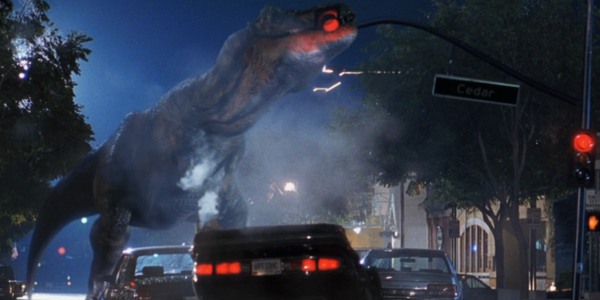
Truth be told, some of the movie seems like a bit of a retread of the first movie. But having a T-Rex attack San Diego kind of fills my love for giant monsters attacking cities.

Jurassic Park 3’s Story

Jurassic Park 3 again takes place on Isla Sorna, but it stays put there and never ventures off into a city like its predecessor. This movie’s about a fractured couple, played by William H. Macy and Tea Leoni whose son gets lost on the island, and they hoodwink Dr. Alan Grant to help them get him.

The story this time around feels even more hackneyed and unnecessary than The Lost World. It’s not a bad story. It’s just rather silly. Let me just put it this way. It definitely feels like the third movie in a series. Make of that comment what you will.

The Story Victor: The Lost World

I kind of like the cheesiness of Jurassic Park 3 (especially since it features a talking dinosaur). But JP3 feels unnecessary, whereas The Lost World… also feels unnecessary, but at least a bit more necessary than JP3.

The Characters

Both movies have a rather large cast of characters, but out of the 2 sequels, which movie has the best group?

The Lost World’s Characters

I’m going to be honest with you. Besides Dr. Ian Malcolm, I actually had to reread a quick summary to remember that Julianne Moore is even in this movie. I do remember that Vince Vaughn is in it as a photojournalist, but not in a good way since I didn’t enjoy his performance.

In fact, the only character I genuinely remember besides Ian Malcolm was his daughter in the film, played by Venessa Lee Chester. She kicks some raptor butt with gymnastics. Otherwise, the other characters are rather bland.

Jurassic Park 3’s Characters

I always preferred Dr. Ian Malcolm to Dr. Alan Grant in the first movie, but I really like Dr. Grant in Jurassic Park 3. He has a lot more personality and he works well with William H. Macy’s and Tea Leoni’s bickering couple.

In fact, the characters in JP3 actually feel as interesting as the dinosaurs in this one, and I genuinely feel more fear and terror in this story because I like the characters a great deal. JP3 has a lot of problems, but I honestly don’t think characters is one of them.

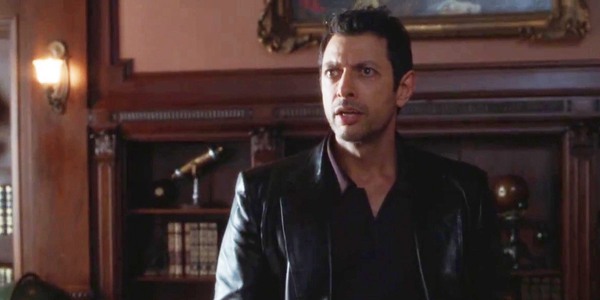
The Character Victor: Jurassic Park 3

Sorry, Jeff Goldblum. You’re great and all, but you’re not enough to carry an entire movie. Thankfully, Sam Neill doesn’t have to since the rest of the cast is enjoyable enough.

The Dinosaurs

What is a Jurassic Park movie without dinosaurs? Which sequel has the superior dinos?

The Lost World’s Dinosaurs

Like the first movie, the velociraptor plays a big part in this one. You also have a stegosaurus, as well as some lesser known dinos like the Compsognathus, the Gallimimus, and the Parasauolophus.

Oh, and of course you have the T-Rex in the end destroying San Diego. But we had the T-Rex in the first movie, so it’s a lot less impressive here. Meh.

Jurassic Park 3's Dinosaurs

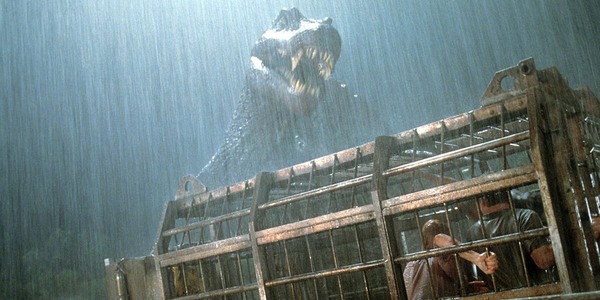
Jurassic Park 3 has a buttload of dinos, like the Ankylosaurus, the Brachiosaurus, the Triceratops, and also a wicked battle between a T-Rex and a Spinosaurus.

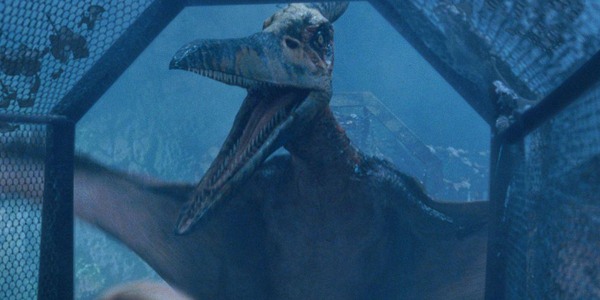
And while they’re not technically dinosaurs, the scene with the “walking” Pteranodon is nightmare fuel. No question, if you love dinos, then you can’t help but love JP3. It’s the best!

The Dinosaur Victor: Jurassic Park 3

The dinosaurs in JP3 are amazing. In fact, in my mind, it has the best dinos in the entire series!

Connection To The First Movie

Neither film is as good as the original, but which film is the closest to the superb first flick?

The Lost World’s Connection To The Original

The whole set-up for The Lost World is that John Hammond from the first film has summoned Dr. Malcolm, which gets everything rolling. So, the first movie is super connected to this film.

The novel was even written as a direct response to the popularity of the first movie. And Michael Crichton even brought Dr. Malcolm back from the dead (He died in the first book) so he could continue the adventures in this movie. So, is The Lost World connected to the first movie? You bet your sweet bippy it is!

Jurassic Park 3’s Connection To The Original

The connection to the original for JP3 is a little slippery. Dr. Alan Grant is interested in a raptor’s larynx and wants to do more research, and only goes along for the ride because he’s been tricked.

Dr. Grant even says himself that he knows nothing about this island since the first island he was on was Isla Nublar, not Isla Sorna, so he doesn’t even know where he is.

The Connection To The First Movie’s Victor: The Lost World

As I mentioned earlier, both films feel unnecessary, but at least The Lost World feels like it is a natural progression to the story, while JP3 almost feels like fanfiction. It’s the best sort of fanfiction, sure, but fan fic nonetheless.

Special Effects

The first movie still looks good today since it used a combination of animatronics and CG, but mostly animatronics. So, which sequel still looks good?

The Lost World’s Special Effects

The Lost World is actually a really dark movie, which I think hides some of the special effects. Unlike the first movie, there’s a lot more CG in this one. The dinosaurs end up looking fine, but they still look much better in the original.

And this is kind of a problem, since as mentioned earlier, I think the characters are pretty bland so the special effects need to pick up the slack, which unfortunately, they don’t.

Jurassic Park 3’s Special Effects

Jurassic Park 3 actually has more animatronics than The Lost World, and they’re pretty good in this one. Plus, since most of the movie takes place in day time, we get to see the monsters in their full glory, and they still look good today.

In fact, out of the 3 JP movies, and the two Jurassic World movies, I actually think JP3 looks the best out of all of them.

The Special Effects Victor: Jurassic Park 3

No contest, Jurassic Park 3 looks awesome, even today.

The Lost World: Jurassic Park Vs. Jurassic Park 3: Which Movie Wins?

It was a tough battle, but I think that Jurassic Park III is the superior sequel. What do you think? Is there anything that you would contest in my argument? Sound off in the comments section down below!

Source: www.cinemablend.com/

How Jurassic Park Fixed A Problematic Character In The Original Novel

Tuesday, January 5, 2021

The Jurassic Park movie changed a lot about many of the book's original characters, and one character in particular was made a lot better on screen.

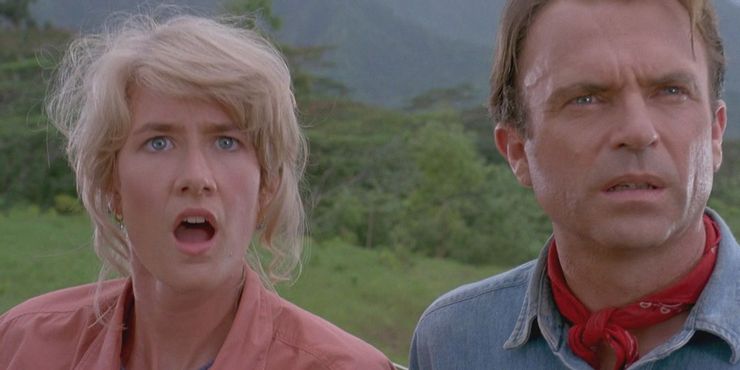
The first Jurassic Park film made some significant changes to a number of the characters from Michael Crichton, and some needed improvements to one character in particular – Ellie Sattler. While the book and the movie are both classics, each succeeds in ways the other falls short, yielding two classic and distinct versions of the story. A few characters suffer from the changes in Spielberg’s film, but Ellie only gets better on screen.

While the core story stays the same across both versions – a remote island turned dinosaur theme park going haywire and showing the folly of man – many of Jurassic Park's details and characters change in major ways. The characters who live and die in each version, for instance, are very different. John Hammond, a sympathetic and pitiable figure in the movie, is an unfettered megalomaniac and generally detestably capitalist in Crichton’s book – even dying for his arrogance at the end. Other characters shifted personas, ages and roles, all in the interest of turning the book into the best movie it could be.

When it comes to Ellie Sattler, the changes made in Spielberg’s film are all positive. Ellie is only a graduate student in the book, notably younger than Alan Grant and Ian Malcom. She plays a significantly smaller role in the story’s events, and while there’s no suggested romantic relationship between her and Grant, Ellie is questionably sexualized for much of her on-page time. The movie fixes many of these problems, giving Ellie a doctorate just like Grant and Malcom and aging her up to truly be a peer. Some of the film’s best moments come from the three of them interacting as a unit, largely due to Ellie being made a more fully-formed, equally-stationed character.

Ellie isn’t the only instance of female characters being given better material in Jurassic Park. In the book, Tim and Lex’s ages are swapped, and Tim is the elder computer prodigy. As a result, Lex doesn’t get to make her iconic hacking spree to save the day, and she certainly isn’t any kind of icon for women in STEM as she became after the movie was released. Like Ellie, Lex is given a more equal and significant role in the movie, and it serves the story well while also providing stronger role models for audiences everywhere.

Though she briefly cameos in Jurassic Park 3, Ellie is little more than a background figure after the first film. Hopefully, with Laura Dern returning to play Dr. Sattler alongside Sam Neill’s Grant and Jeff Goldblum’s Malcom in Jurassic World: Dominion, she’ll finally get some significant screen time once again. Either way, Ellie Sattler remains a central part of the Jurassic Park franchise.

Source: https://screenrant.com/

Every Spielberg Movie, Ranked By Rotten Tomatoes

Monday, January 4, 2021

Steven Speilberg is one of the greatest filmmakers of all time, but not all of his films were perfect. Here is every Spielberg movie, ranked.

There are only a couple of filmmakers who are so iconic and widely known that even people with no interest in how movies are made have heard of them. Steven Spielberg is one of those directors and has been since his breakout movie Jaws defied all expectations to become the highest grossing movie ever made – and the first of many high-concept summer blockbusters.

From Schindler’s List to the Indiana Jones series, Spielberg has helmed all kinds of movies. While Spielberg’s movies are generally well-received by critics, there are some blind spots on his filmography that the reviews weren’t too kind to.

33 - Hook (29%)

The idea of casting Robin Williams as an adult Peter Pan was a doozy – and he does give a terrific performance, as does Dustin Hoffman as Captain Hook – but Hook is let down by a weak script and inconsistent tone.

32 - 1941 (42%)

Spielberg has rarely attempted comedy, and the reason for this is the failure of his first foray into the genre, 1941, which falls flat despite featuring such greats as John Belushi, John Candy, and Dan Aykroyd.

31 - The Lost World: Jurassic Park (53%)

After breaking all kinds of new ground with Jurassic Park, Spielberg helmed a sequel that set the precedent for the franchise going forward: interminable follow-ups that can’t justify their own existence or come close to matching the greatness of the original.

30 - Twilight Zone: The Movie (58%)

John Landis, Joe Dante, George Miller, and Steven Spielberg all directed segments of Twilight Zone: The Movie, but Spielberg’s segment can be seen coming from a mile away, because it’s treacly and sentimental and doesn’t even try to be scary.

29 - The Terminal (61%)

Due to political tensions in his fictional Eastern European native land, Tom Hanks is stuck living in John F. Kennedy International Airport indefinitely in The Terminal. The premise is a juicy one, but the movie devolves into a corny love story as he falls for a flight attendant.

28 - Always (67%)

A forgettable WWII-era romance, Always is a prime example of Spielberg’s incessant sentimentality ruining a movie. Still, the cast includes such greats as Richard Dreyfuss, Holly Hunter, John Goodman, and Audrey Hepburn.

27 - Ready Player One (72%)

Adapted from Ernest Cline’s novel of the same name, Ready Player One is a CGI-laden spectacle about a kid traversing a virtual reality, featuring Easter eggs referencing as much of popular culture as possible.

It’s just as thematically empty and driven by nostalgia as its source material, but the trip into The Shining is a delight for Kubrick fans and horror fans alike.

26 - A.I.: Artificial Intelligence (74%)

Stanley Kubrick was working on a version of the Pinocchio story about a cyborg boy before he died, at which point Spielberg snapped up the project and finished it for him. A.I. is certainly a Spielberg movie, not a Kubrick movie directed by Spielberg, but it’s one of his best sci-fi works.

25 - The Adventures Of Tintin (74%)

With cutting-edge motion-capture technology, Spielberg brought Hergé’s iconic Tintin comics to life with gusto in The Adventures of Tintin, a vibrant, colorful big-screen adventure whose sequel is stuck in development hell.

24 - The BFG (74%)

Adapted from the Roald Dahl book of the same name, The BFG stars a CGI’d-up Mark Rylance as the titular big friendly giant who protects a young girl named Sophie from the other giants who have decided to hunt her down.

23 - War Horse (74%)

Much more lighthearted than Spielberg’s other war movies, War Horse follows a horse through the horrors of World War I as his former owner frantically tries to track him down.

22 - Empire Of The Sun (75%)

A young Christian Bale stars in Empire of the Sun as a wealthy British kid circa World War II who becomes a prisoner of war locked in a Japanese internment camp. It’s a unique take on a coming-of-age story – most kids don’t come of age as a P.O.W.

21 - War Of The Worlds (75%)

Spielberg drew on 9/11 imagery in constructing his modern-day adaptation of H.G. Wells’ The War of the Worlds. It’s far from a perfect movie, but it is interesting to view it through that lens.

20 - Amistad (77%)

After depicting the Holocaust, Spielberg took on one of history’s other harrowing chapters: American slavery. Amistad tells the story of a slave ship that was commandeered by the slaves aboard, and the Supreme Court case that followed.

19 - Indiana Jones And The Kingdom Of The Crystal Skull (78%)

The belated fourth Indiana Jones movie has a much higher Rotten Tomatoes score than might be expected by Indy fans who felt betrayed by its use of aliens, computer-generated monkeys, and nuked fridges as plot devices.

18 - Munich (78%)

One of Spielberg’s darkest and most underrated movies, Munich dramatizes Operation Wrath of God, the Israeli government’s covert retaliation for the Black September massacre at the 1972 Summer Olympics.

17 - The Color Purple (81%)

Anchored by phenomenal performances by Whoopi Goldberg and Danny Glover, The Color Purple explores much more serious themes than the average Spielberg movie, including racism, incest, and domestic violence.

16 - Indiana Jones And The Temple Of Doom (84%)

Technically a prequel to Raiders of the Lost ArkIndiana Jones and the Temple of Doom is a lot darker than its predecessor and its racist overtones are pretty uncomfortable, but it’s still much better than Kingdom of the Crystal Skull.

15 - The Sugarland Express (85%)

Spielberg’s first feature film to debut in theaters, The Sugarland Express is a crime thriller about a married couple going on the run from the law. It marked Spielberg’s first of many collaborations with composer John Williams.

14 - Duel (88%)

Before Spielberg landed the gig directing Jaws, he helmed Duel, a made-for-TV movie about a man being terrorized by an old tanker truck whose driver wants to kill him for overtaking him.

13 - Indiana Jones And The Last Crusade (88%)

Although he ended up reopening the series with a fourth installment (and a fifth one on the way), Spielberg gave the Indiana Jones trilogy a perfect conclusion with Indiana Jones and the Last Crusade, which sees Indy reconnecting with his father on the way to the Holy Grail.

12 - The Post (88%)

Much like he shot Schindler’s List during the long post-production process of Jurassic Park, Spielberg shot The Post while he was waiting for the VFX to be created for Ready Player One. Despite having a timely message about the importance of the free press, The Post is a decidedly by-the-numbers effort.

11 - Lincoln (89%)

Daniel Day-Lewis earned one of his many Oscars for playing Honest Abe in Steven Spielberg’s Lincoln, a biopic that focuses specifically on his efforts to abolish slavery. Lincoln isn’t perfect, but it’s a beautifully shot, brilliantly acted historical drama.

10 - Bridge Of Spies (90%)

Tom Hanks and Mark Rylance give powerhouse performances in Bridge of Spies, which tells the Cold War-era true story of an American lawyer who becomes a pariah when he’s hired to represent a Soviet spy as a formality and actually tries to give him a fair trial.

9 - Minority Report (90%)

Philip K. Dick’s story of cops who can predict future crimes before they take place formed the basis for Spielberg’s sci-fi thriller Minority Report, which stars Tom Cruise as a PreCrime officer who’s accused of murdering a man he’s never met in a couple of days’ time.

8 - Jurassic Park (91%)

Steven Spielberg’s adaptation of Michael Crichton’s Jurassic Park was his third movie after Jaws and E.T. to become the highest grossing film ever made during its box office run. It’s also one of the most technically innovative movies ever made, owing to its groundbreaking CGI effects.

With thought-provoking themes buried in thrilling action sequences and well-developed characters being thrust into high-stakes situations, Jurassic Park is a perfect blockbuster.

7 - Saving Private Ryan (93%)

Opening with a recreation of the D-Day landings so visceral that it triggered PTSD attacks in veterans and closing with a WWII-era riff on the Seven Samurai formula, Saving Private Ryan is one of the greatest war movies ever made.

6 - Close Encounters Of The Third Kind (94%)

Almost every filmmaker hailing from the New Hollywood movement offered their cinematic take on the Watergate scandal. Francis Ford Coppola made The Conversation, John Carpenter made Escape from New York, and Steven Spielberg made Close Encounters of the Third Kind, about alien contact being covered up by the government.

5 - Raiders Of The Lost Ark (96%)

Indiana Jones was introduced in Raiders of the Lost Ark and became one of cinema’s most recognizable icons right out of the gate. With breathtaking sequences like the boulder roll and the truck chase, Raiders is one of the greatest action movies ever made.

4 - Catch Me If You Can (96%)

Leonardo DiCaprio stars as conman Frank Abagnale, Jr. and Tom Hanks plays the FBI agent on his tail in Catch Me If You Can, possibly Spielberg’s funniest movie. Unlike another conman DiCaprio would go on to play, Jordan Belfort, who scammed regular working people, Abagnale took money from banks and airlines, so he’s easier to root for.

3 - Schindler’s List (97%)

Arguably the definitive on-screen portrait of the horrors of the Holocaust (although Son of Saul’s intimate storytelling and documentary-like approach make it a strong competitor), Schindler’s List tells the story of an industrialist who used his business connections to save 1,200 Jews from the Nazis’ concentration camps.

2 - E.T. The Extra-Terrestrial (98%)

In most movies about alien visitors, the visitors want to invade our planet or kill as many people as possible. In E.T., an adorable little alien wants to get home after he’s left behind when the cops scare off peaceful otherworldly visitors.

One of the most heartwarming movies ever made, E.T. is really a story about a boy coping with being an outsider by befriending the extra-terrestrial he finds in his backyard.

1 - Jaws (98%)

Spielberg’s breakout movie is still his most popular, according to Rotten Tomatoes. Following a nightmarish production that went overbudget and broke the mechanical shark, Jaws emerged as a masterpiece of Hitchcockian suspense. Its high-concept premise and summer release made it a game-changer – studios have been trying to emulate Jaws’ success every summer since 1975.

Source: https://gamerant.com/

Jurassic World Camp Cretaceous Season 2 Clip Establishes T-Rex Threat

Thursday, January 14, 2021

Jurassic World's T-Rex is still a threat in a new clip for Jurassic World: Camp Cretaceous season 2, giving a glimpse of the danger to come.

Dreamworks has released a sneak peek at Jurassic World: Camp Cretaceous season 2, which shows the park’s T-Rex is still a threat. The show’s first season released last year to a generally positive response, receiving particular praise for its beautiful animation. Season 2 looks to deliver even more excitement as the campers scramble to find a means of escape from Jurassic World after the island falls to the dinos.

No matter how many niche species and genetically-engineered monstrosities the Jurassic Park franchise tosses out, the T-Rex remains the unquestionable queen of all the dinosaurs. Brief pretenders like Jurassic Park 3’s spinosaurus and Jurassic World’s Indominus Rex have attempted to scale the throne, but the spotlight inevitably falls back on the rightful series icon. The T-Rex has been both foe and unexpected friend at different points, and it’s promising to see her playing a prominent role in Camp Cretaceous season 2.

The new clip, officially released by Dreamworks, shows Jurassic World’s T-Rex in all her threatening grandeur as the campers attempt to sneak into her lair. It looks like the crew is attempting to tap into some of the park’s systems to send a distress call to the mainland, a plotline that was alluded to in the season 2 trailer. Hacking and dodging dinosaurs at the same time is tricky business though, leading to a cliffhanger ending with Brooklynn stuck right in the T-Rex’s path. Check out the clip below:

Most of season 1’s story dealt with the buildup to the dino’s escape. Now that the island has been evacuated and the creatures are roaming free, season 2 could be a bit tenser and a lot more dangerous for its core cast. The Jurassic World: Camp Cretaceous season 2 trailer alluded to other humans still being on the island, though whether they turn out to be friendly or not remains to be seen. Season 2 will also likely detail the fate of Benny, who seemingly died at the end of season 1 but was revealed to be alive in a teasing final shot.

With Jurassic World: Dominion reuniting the stars of the very first Jurassic Park and Camp Cretaceous promising more excitement in season 2, it’s a great time to be a fan of any age. Camp Cretaceous’s initial success and the popularity of the recent films could be just the start for the series’ modern era, as branded transmedia content is only becoming more popular in the age of streaming. Jurassic World: Camp Cretaceous season 2 premieres on Netflix on January 22nd.

Source: Dreamworks / https://screenrant.com/

Jurassic Park 3's Most Hated Scene Wasn't Even Possible

Tuesday, January 5, 2021

Jurassic Park 3’s Spinosaurus vs. T-Rex fight is one of the most hated scenes of the franchise, and the action wasn’t even biologically possible.

Jurassic Park 3’s fight between the new Spinosaurus and the T-Rex is one of the most hated scenes in the franchise, and the action in the fight is not even biologically possible for the dinosaurs involved. Jurassic Park has often taken creative liberties to fill in gaps or deviate from paleontological evidence to bring the dinosaurs to life. However, the Spinosaurus’ unrealistic capabilities caused a lot of story issues and created Jurassic Park’s worst problem, undermining the crux of the story in a way from which the franchise is yet to recover. In a revolutionary series that draws upon real science, the biological errors in this scene stand out as a drop from the movies’ usual high quality, and more recent discoveries have only made those errors worse.

Dr. Alan Grant and the others who crashed on Isla Sorna encountered this nearly disastrous fight early on in the movie. They came upon a T-Rex devouring prey and accidentally attracted its attention, but before the T-Rex could catch up with them, the Spinosaurus arrived to start a brawl. The T-Rex got the upper hand at first with a bite to its opponent’s neck, but the Spinosaurus quickly recovered and grabbed the T-Rex with both its teeth and arms, twisting and snapping its neck to win the fight. This scene has been hotly debated among fans for years, questioning whether a Spinosaurus could beat a T-Rex. While that question may remain unsolved, the logistics the Spinosaurus used to win in this fight would not have been possible.

The biggest issue with the Spinosaurus’ actions is the way the dinosaur moved. Recent discoveries indicate the Spinosaurus was an aquatic animal, built to maneuver and hunt in the water. It was too front-heavy to walk on two legs on land, so it’s highly unlikely it would have been able to outmaneuver a T-Rex in a land fight. Additionally, the movie’s Spinosaurus was able to grab and twist with its arms at the level of its mouth, but a real Spinosaurus’ arms hung lower to hunt fish. It would not have been capable of rotating its arms that way to grab the neck of a T-Rex. Jurassic Park’s scientists did alter the dinosaurs’ genomes with frog DNA and may have made more drastic genetic changes, but it’s doubtful they would have completely altered the Spinosaurus’ biology in order to make its movements in the movie feasible.

The fight itself is also a point of contention. Two major predators like the Spinosaurus and the T-Rex would probably have tried to avoid each other rather than fight, and if the fight did occur, the victor would likely be the one to score the first bite. In this case, the Spinosaurus would have succumbed to the bite of the T-Rex at the beginning of the action. While the intention behind this scene - showing that the T-Rex was not the largest carnivorous dinosaur - was accurate, the Spinosaurus’ portrayal otherwise strayed from established science. The T-Rex got its symbolic revenge in Jurassic World, but the Spinosaurus still incorrectly stands as the apex predator in the world of Jurassic Park.

The Spinosaurus vs. T-Rex scene is one of the low points of the original trilogy, defying science to create a more deadly predator for the protagonists to face. This killer version of the Spinosaurus also kicked off Jurassic World’s cliche of a single dinosaur supervillain, whereas the previous two movies had featured humans merely getting in the way of dinosaurs living how they always did. Jurassic Park 3’s theme is markedly different from the first two films, and that theme has persisted through the new trilogy. The upcoming Jurassic World 3 has a chance to return to the heart of the original movie, finally bringing the franchise back from Jurassic Park 3’s scientific and narrative mistakes.

Source: https://screenrant.com/

Explained: Why do People Want to Pay Millions of Dollars for Dinosaur Bones?

Wednesday, January 6, 2021

The picture released on Thursday July 16, 2015 is of the fossil of a new species of dinosaur named Zhenyuanlong suni. (AP file photo)

In India, palaeontologists fear that the country’s rich fossil heritage is under threat in the absence of stringent laws and preservation efforts.

In 2020, the year in which auction houses were forced to innovate and replace physical sales with virtual ones, an unusual new record was made. An exhibit at a Christie’s auction fetched $31.8 million — and it wasn’t a piece of high-value artwork; rather, the well-preserved skeleton of a dinosaur.

The proceeds from the sale of Stan, a nearly 40-foot Tyrannosaurus rex that lived in the late cretaceous period, between 100 million and 66 million years ago, far exceeded the high estimate of $8 million, and smashed the previous record for a dinosaur fossil at a Sotheby’s auction — $8.4 million in 1997 — several times over.

Who wants to buy dinosaur fossils and why, and why are many experts deeply concerned about this trend?

Do dinosaur fossils frequently go under the hammer?

In 2020, a week after the record-breaking auction of Stan the T. rex at Christie’s 20th Century Evening Sale in New York on October 6, the Parisian auction house Binoche et Giquello sold a rare skeleton of a 10-metre-long Allosaurus — a large carnivorous dinosaur that lived in the late Jurassic period, 155 million to 145 million years ago — for €3 million (about $3.7 million).

Earlier in June, a 70 per cent intact 150 million-year-old fossil of a yet unnamed dinosaur, dug up in Wyoming, United States, between 2013 and 2015, was sold to a private collector for $2.36 million.

How did Stan the T. rex come into the auction circuit?

Discovered in 1987 by an amateur palaeontologist named Stan Sacrison, the fossil, which stands 13 feet high and is 40 feet long, had been at the private Black Hills Institute of Geological Research in Hill City, South Dakota. The skeleton of the dinosaur, which would perhaps have weighed nearly 8 tonnes when it was alive, is considered to be one of the finest specimens of the T. rex, and several of its high-quality casts are in museums the world over.

It has been reported that the fossil came into the market as a result of a dispute. In 2015, Neal Larson, a shareholder in the Black Hills Institute, a family-owned business, sued the company after being dismissed, following which a court ruled that Stan had to be sold to pay Larson for his stake in the institute.

Why are palaeontologists concerned about the sale?

Palaeontologists have raised concerns that the commercial sale of dinosaur fossils and escalating prices would encourage people to sell well-preserved fossils in the open market rather than leaving them for palaeontologists to study. They also fear that most of the good fossils will probably enter private collections, as universities and museums may not be able to match the high prices they offer.

Earlier this year, the US-based Society of Vertebrate Palaeontology, a body of palaeontologists, students, artists and advocates committed to the preservation of vertebrate remains, wrote to Christie’s, asking them to limit bidders for Stan to public research institutions.

By what laws are fossil sales governed?

In the US, fossil bones found on federal land are public property, and can be collected only by researchers with permits. These go to public trust and repositories, including accredited museums. Fossils discovered on private land, however, can be bought and sold. In Canada, Mongolia, China, and Argentina, fossils can’t be exported, even though cases of black marketing have come to light.

In India, too, palaeontologists fear that the country’s rich fossil heritage is under threat in the absence of stringent laws and preservation efforts.

How popular are dinosaur fossils?

The fact that Christie’s auctioned Stan in a sale of contemporary art rather than a natural history auction is being seen as an indicator of the collector base of the fossils. While Hollywood actors, including Nicolas Cage, Russell Crowe and Leonardo DiCaprio, are known to buy dinosaur fossils, there is also a broad collector base in countries such as China, Hong Kong, Taiwan, Thailand, Singapore, Indonesia and the Philippines.

Source: https://indianexpress.com/

‘Best-Preserved’ Ice Age Woolly Rhino Found in Siberia

Saturday, January 2, 2021

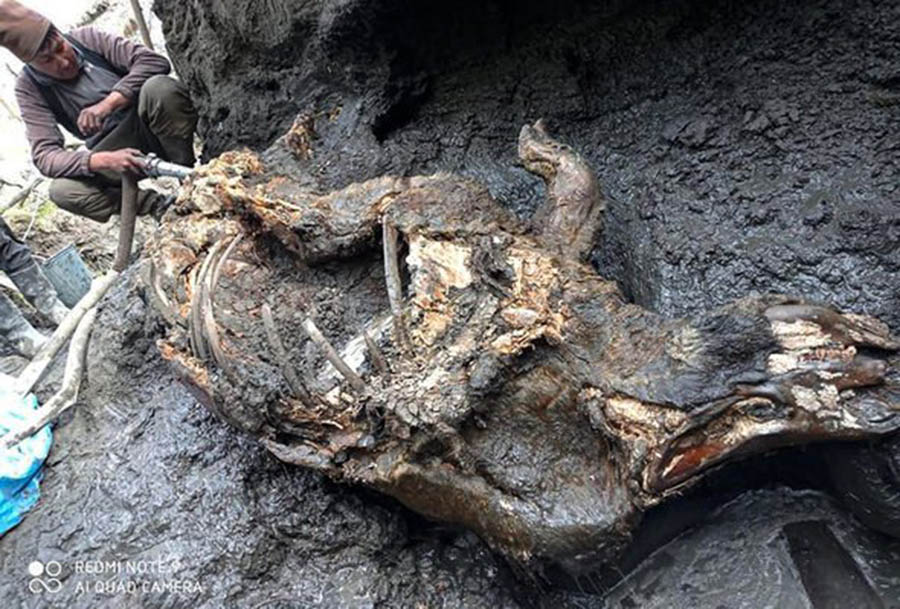
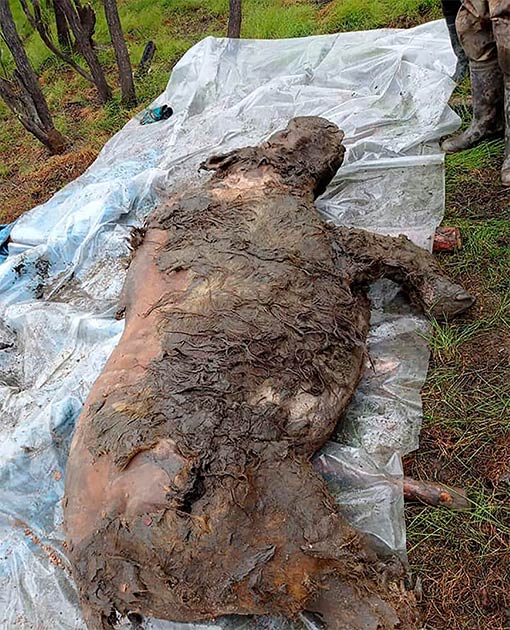
Scientists hope to transport the woolly rhino to the lab for studies next month (Image: Valery Plotnikov/Mammoth Fauna Study Department at the Academy of Sciences of Yakutia)

Experts have unearthed a remarkable addition to Ice Age artefacts - an ancient ancestor to the modern-day rhino.

Russian state media reported how the holly rhino was revealed by melting permafrost in Siberia’s Yakutia province in August last year.

Dinosaur researchers are now waiting for ice roads in the Arctic region to become passable so it can be delivered to a laboratory for more extensive studies.

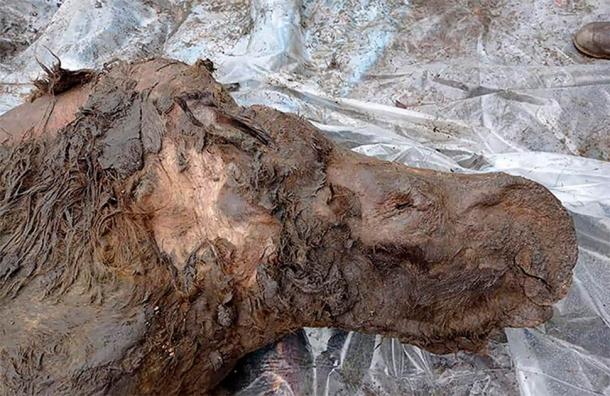
The find is thought to be among the best-preserved specimens of the Ice Age animal ever discovered.

The carcass has most of its soft tissues still intact, including part of the intestines, thick hair and fatty lumps, while the animal’s horn was found close nearby.

Discovered in August 2020 in Siberia, researchers explained that the woolly rhino’s soft tissues were still intact. ( The Siberian Times )

Major discoveries of mammoths, woolly rhinos, Ice Age foal, and even cave lion cubs have been made in recent years.

This is because the permafrost is vanishing at accelerating rates across vast areas of Siberia due to man-made climate change.

Yakutia 24 TV quoted Valery Plotnikov, a paleontologist with the regional branch of the Russian Academy of Sciences, as suggesting the woolly rhino was probably three or four years-old when it died.

Dr Plotnikov added the young rhino very possibly died after drowning.

As the ice inside the permafrost increasingly melts across Siberia we will probably continue to see a spike in discoveries such as this woolly rhino. ( The Siberian Times )

She said in a statement: ”A small nasal horn has also been preserved - this is a rarity, since it decomposes rather quickly.

The marks of wearing on the horns indicates the wooly rhino was actively using it to find food.

The animal likely lived during the late Pleistocene era, which ended 11,700 years ago, dinosaur experts at the Russian Academy of Sciences added.

The extinct species roamed the diamond-producing region of Yakutia between 20,000 to 50,000 years ago.

Source: www.express.co.uk/

SECRET BASE REVIEWS: ALLOSAURUS

Friday, January 1, 2021

Getty Images/Stocktrek Images

Allosaurus was one of the top predators of the Jurassic, which makes it one of the scariest animals of all time. Anything that could plausibly eat a full-grown Stegosaurus is the stuff of actual, primal nightmares. But unfortunately for Allosaurus, it’s overshadowed by its later brethren. The oversized therapods of the Cretaceous — T. rex, Giganotosaurus, Carcharodontosaurus, etc. — rather put it to shame in both mass and raw power, relegating their elder to something like little-brother status.

There’s a tendency to look at Allosaurus as akin to a slightly-miniaturized and therefore less-interesting tyrannosaur. This is not fair to Allosaurus, but it’s also unfair to the dinosaur-interested public. Because when modern paleontologists looked at Allosaurus in detail, they start noticing strange things. Wonderful things. They noticed, for instance, that the damn thing might have killed its prey by using its head as a huge spiky axe.

If the head-axe theory sounds vanishingly implausible to you, fair enough. But this is a legitimate, if disputed, line of scientific inquiry, supported by some eminent paleontologists, and there are a number of good reasons to think that it is not as absurd as it might sound. With that caveat in mind — we’ll come back to the evidence in a little bit — let’s go back to the intense horrocomedy of ALLOSAURUS: AXE DINO.

Allosaurus was something like 10′ tall at the shoulder and 30′ long. (For context, that’s about the height of an African elephant and more than twice as long.) Its skull was about four feet long, and, as you can see in the photograph above, was occupied in large part by a row of fiendishly serrated teeth. It could, apparently, open its jaws to ridiculous angles, perhaps as much as 90 degrees. To accommodate this gape, its jaws were relatively weak, able to apply far less force than comparable top predators. Its neck, on the other hand, was fantastically strong.

So let’s envision this thing using the hunting technique outlined earlier. Perhaps it’s hunting a sauropod — let’s say a juvenile Diplodocus, which would have been about half the length of a basketball court, mostly in neck and tail. The Allosaurus would have approached from the side, avoiding the tail. It wasn’t a particularly fast predator, but it didn’t need to be. Apart from that tail, which it used as a whip in order to defend itself (it had spikes on it, because, duh), Diplodocus was basically the dictionary definition of ‘lumbering’.

Once within striking distance, Allosaurus would have opened its horrible jaws, exposing rows of glistening teeth. Presumably there’d have been some slavering involved, and perhaps a bit of tongue-lolling. It’d have been gross, and about to get way more gross. Allosaurus would have lifted its head way back, and then, using its oversized neck muscles, slammed its upper jaw down onto its prey. Its saw-like teeth would have ripped through the Diplodocus’s skin, tearing open a huge wound and weakening the big sauropod. Then Axe-Dino would have reared back and struck again.

An Allosaurus skullTHOMAS COEX/AFP via Getty Images

This would be an absolutely horrific way to die, especially if Allosaurus hunted in packs, as is sometimes suspected. Imagine getting sent into the next life by something that doesn’t even have the wherewithal to eat you normally. Being headbutted to death sounds bad enough, but being toothbutted into oblivion? That’d be embarrassing. The other dinosaurs would probably snicker, and you’d have to haunt them from beyond your Allosaurus-poop grave.

So far we’ve been imagining an axe-style attack from Allosaurus. What makes paleontologists think such a thing would be plausible, or even possible? How can we work this stuff out when all we have to go off is bones and teeth?

Turns out you can do a lot with those things. Comparative anatomy between reptiles and birds gives us a solid idea as to the musculature which must have been present in dinosaurs, and skeletons also have to accommodate that musculature, which gives us even more clues. In Allosaurus, Stephan Lautenschlager notes that:

[T]he comparably weak muscle-driven bite in Allo. fragilis was used in combination with the neck musculature in a strike-and-tear mode to attack prey. In order to be able to hunt prey in such a manner, Allo. fragilis possessed a jaw joint configuration which allowed wide gapes without the risk of dislocation, but would also require a muscle arrangement to permit large gape angles

We’re also able to do some heavy biomechanics work with the skeleton. Finite-element modeling of Allosaurus skulls show that they could withstand a baffling amount of vertical force, which is even more surprising since those same studies also show a low bite force. Later therapods don’t possess these adaptations: the likes of Tyrannosaurus were hard-chomping biters, who could much more straightforwardly take chunks out of their prey.

With these pieces (plus a few more), the likes of Robert Bakker and Emily Rayfield came up with the axe-style attack. It explains Allosaurus’s low bite force, the absurd neck strength, the reinforced jaw, and the hyper-articulated mouth. It’s also incredibly fun. Bakker envisions “a long, jagged wound with concomitant trauma and blood loss, especially if the mega-serrated blade is pulled backward as it strikes its target”. This is not to say that the Dino Axe idea is true. Truth in paleontology, especially when we’re speculating about hunting behavior or other aspects of paleoecology, is difficult to come by. What matters is coming up with parsimonious explanations of the evidence to hand, which is what’s been done here.

Do I believe it? To be clear, I’m in no way qualified to seriously comment on anything but the purely biomechanical aspects of the studies, and since it’s been more than a decade since I was even adjacent to academia, I’m probably not even qualified to comment on those either.

That said, there are a couple of issues with the Axe-Dino hypothesis, fascinating though it is. First of all — and this probably says more about me than it does anything else — I have a very hard time squaring this potential hunting method with the fact it’s not used by any modern animal*. Perhaps, at a push, you could claim, like Bakker does, that the recently-extinct saber-toothed cats deployed a similar style, but I think that comparison is a little superficial.

*A fair rebuttal to this point would be that no modern animal hunts things as large as Stegosaurus or Diplodocus.

I also have a really hard time seeing Allosaurus’s teeth surviving this sort of assault for long. They’d be shedding them left and right if their dentistry was being deployed as a saw. Lone Allosaurus teeth are common fossils, but they’re not that common, and, as Antón, Sanchéz et al. point out, replacing lost teeth would have been very, very difficult at the rates required. I’m also deeply concerned about the role of the lower jaw here, which seems just ... implausible. Does it hang out by itself while the upper jaw is being used as a weapon? The risk of injury seems high enough with the current configuration that one would expect an Axe-Dino to have some more specific anatomical modifications to accommodate it.

But these quibbles are part of the joy of paleontology. It’s a domain of science where imagination is given room to play within the constraints of the evidence. The Allosaurus hypothesis is interesting and worth considering (and also extremely funny), and if there are issues with it, hey, that’s all right. We just need to keep pushing ahead on the science and work it out.

And besides, it’s never a good idea to underestimate the sort of things evolution can throw at you. Why not an Axe-Dino?

Source: www.sbnation.com/

Pages