nandi's blog

China's Dinosaur Replica Makers Worry About Trade War With US

Saturday, September 29, 2018

China's dinosaur replica makers worry about trade war with US | China News | Al Jazeera

The dinosaur replica business in Zigong is worried by the tariffs imposed by the US.

A town with prehistoric fossils should be able to capitalise on the world's fascination with dinosaurs.

And Zigong in China - the world’s dinosaur replica capital - has for many years.

But a very modern-day trade war now has some manufacturers concerned.

Al Jazeera's Scott Heidler reports.

Source: www.aljazeera.com

Vorombe titan: Researchers Name World’s Largest Ever Bird

Saturday, September 29, 2018

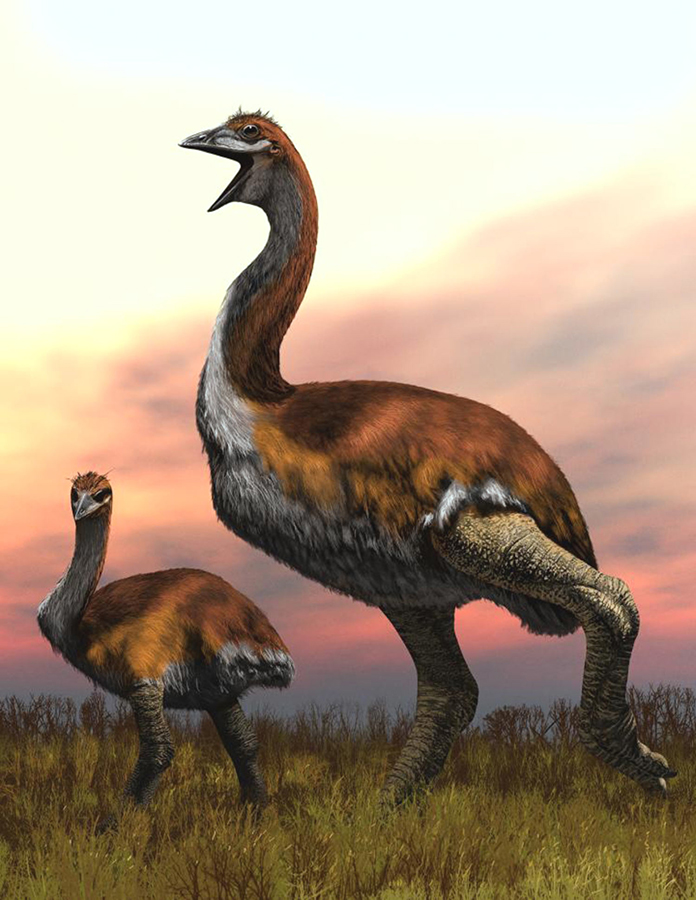
An artist’s illustration of a giant elephant bird. Image credit: Jaime Chirinos.

After decades of conflicting evidence and numerous publications, a team of researchers at the Zoological Society of London’s Institute of Zoology has finally put the ‘world’s largest bird’ debate to rest.

Elephant birds are members of the extinct family Aepyornithidae, with two genera — Aepyornis and Mullerornis — previously recognized by scientists.

These enormous, flightless birds were rarities, like the ostrich, rhea, emu, cassowary and kiwi.

They lived on the island of Madagascar during the Late Quaternary and went extinct somewhere around the 13th to 17th centuries.

The first species of elephant bird to be describedAepyornis maximus, has often been considered to be the world’s largest bird.

In 1894, British scientist C.W. Andrews described an even larger species, Aepyornis titan, which has usually been dismissed as an unusually large specimen of Aepyornis maximus.

However, the new study, led by James Hansford, reveals Aepyornis titan was indeed a distinct species.

Now named Vorombe titan (meaning ‘big bird’ in Malagasy and Greek), the species had a body mass of 800 kg and grew up to 10 feet (3 m) tall.

“Elephant birds were the biggest of Madagascar’s megafauna and arguably one of the most important in the islands evolutionary history — even more so than lemurs,” Hansford said.

“This is because large-bodied animals have an enormous impact on the wider ecosystem they live in via controlling vegetation through eating plants, spreading biomass and dispersing seeds through defecation.”

“Madagascar is still suffering the effects of the extinction of these birds today.”

In the study, Hansford and his colleague, Professor Samuel Turvey, analyzed hundreds of elephant bird bones from museums across the globe to uncover the world’s largest bird, while also revealing their taxonomy is in fact spread across three genera and at least four distinct species; thus, constituting the first taxonomic reassessment of the family in over 80 years.

“Without an accurate understanding of past species diversity, we can’t properly understand evolution or ecology in unique island systems such as Madagascar or reconstruct exactly what’s been lost since human arrival on these islands,” Professor Turvey said.

“Knowing the history of biodiversity loss is essential to determine how to conserve today’s threatened species.”

The study is published in the journal Royal Society Open Science.

_____

James P. Hansford & Samuel T. Turvey. 2018. Unexpected diversity within the extinct elephant birds (Aves: Aepyornithidae) and a new identity for the world’s largest bird. R. Soc. open sci 5: 81295; doi: 10.1098/rsos.181295

Source: www.sci-news.com

Giant Yutyrannus huali Had 56 Teeth, Feathers

Friday, September 28, 2018

A restoration of Yutyrannus huali

At Wauconda Library's summer STEAM camp, a young patron wanted to know, "How many teeth do Yutyrannus have?"

It's hard to imagine what a 30-foot-long, 1½-ton dinosaur would do with feathers. Take flight? Impossible. Discovered six years ago in northeastern China, the Yutyrannus huali, an early T. rex cousin, is the largest dinosaur discovered so far that features plumage.

This feather-accessorized dino came along about 125 million years ago, 60 million years before T. rex. Yutyrannus stood upright on two legs. Its arms were longish, each with three fingers, topped by a yardstick-long head. The Yutyrannus had an oversized mouth full of teeth.

Corwin Sullivan, associate professor, and Philip J. Currie, professor of Vertebrate Paleontology at Canada's University of Alberta, studied the Yutyrannus huali fossils.

When asked how many teeth were in Yutyrannus' gigantic mouth, Sullivan said, "My guess would be about 56 in total." By comparison, its five-times larger, featherless T. rex cousin crushed prey using about 60 choppers.

The fossilized remains of three Yutyrannus -- one adult and two youth -- were found in slate slabs. It takes the trained eye of a paleontologist to decode the markings that indicate the presence of feathers.

"The feathers are preserved as dark linear streaks on the slabs containing the fossils," Corwin said. "In life, the feathers would have resembled bristles or hairs, rather than the blade-like feathers of modern birds. Their function was almost certainly insulation and/or visual display, rather than anything to do with flight."

A simplified cladogram showing the systematic position of Y. huali among the Tyrannosauroidea.  Xu, X., Wang, K., Zhang, K., Ma, Q., Xing, L., Sullivan, C., Hu, D., Cheng, S., and Wang, S. 2012. A gigantic feathered dinosaur from the Lower Cretaceous of China.

The area in China where Yutyrannus was uncovered is rich in fossilized dinosaur remains, including the very first discovery of a feathery dino, a much smaller dinosaur species called Sinosauropteryx.

The quarry and surrounding area has yielded a bumper crop of animal and plant fossils representing both the Jurassic and Cretaceous periods, which ranges from amphibians, plants, fish, mammals and winged pterosaurs to ancient birds. Ten dinosaur museums near the quarry feature the many incredible dinosaur fossils.

Corwin said dinosaurs like Yutyrannus were globally widespread, though not necessarily present on every continent.

Speculating as to why the giant might have needed feathers, Corwin said, "Although most of the Cretaceous was characterized by a warm climate, northeast China seems to have been relatively cool during the specific time when Yutyrannus existed, approaching modern conditions. The cooler temperatures may at least partly explain the occurrence of feathers, which could have had an insulating function."

Another feathered dinosaur, Caudipteryx, a peacock-sized creature, emerged about 5 million years before Yutyrannus and has captured Corwin's attention.

"Caudipteryx represents an early and preliminary step down an intriguing evolutionary pathway, and is also among the most primitive dinosaurs to possess feathers of the pennaceous (blade-like) type seen in modern birds."

Source: www.dailyherald.com

Ledumahadi mafube: New 26,000-Pound Dinosaur Discovery Was Earth's Largest Land Animal

Tuesday, October 2, 2018

An artist’s reconstruction of Ledumahadi mafube foraging in the Early Jurassic of South Africa; in the foreground, Heterodontosaurus. Image credit: Viktor Radermacher, University of the Witwatersrand.

Paleontologists have discovered what they say is a completely unexpected new sauropodomorph dinosaur that lived 200 million years ago (Jurassic period) in South Africa.

Named Ledumahadi mafube, the new dinosaur species weighed 12 tons, stood about 13 feet (4 m) high at the hips, and is one of the closest relatives of sauropod dinosaurs.

Sauropods, weighing up to 60 tons, include well-known species like Brontosaurus. They ate plants and stood on four legs, with a posture like modern elephants.

Ledumahadi mafube evolved its giant size independently from sauropods.

“It shows us that even as far back as 200 million years ago, these animals had already become the largest vertebrates to ever walk the Earth,” said Professor Jonah Choiniere, a researcher in the Evolutionary Studies Institute at the University of the Witwatersrand.

“Many giant dinosaurs walked on four legs but had ancestors that walked on two legs,” said Professor Roger Benson, a scientist in the Department of Earth Sciences at the University of Oxford and the Evolutionary Studies Institute at the University of the Witwatersrand.

“Paleontologists want to know about this evolutionary change, but amazingly, no-one came up with a simple method to tell how each dinosaur walked, until now.”

Selected preserved elements of Ledumahadi mafube and geography and stratigraphy of type locality: (A) middle/posterior cervical vertebra in left lateral view; (B) anterior dorsal vertebra in anterior and right lateral views; (C) middle dorsal vertebra in posterior and right lateral views; (D) first and second ‘primordial’ sacral vertebrae in left lateral view; (E) anterior caudal vertebra in left lateral view; (F) right ulna in proximal and medial views; (G) first metacarpal in proximal and dorsal/ventral views; (H) left third metacarpal in proximal and ventral views; (I) pedal ungual in lateral and proximal views; (J) anterior chevron in posterior view; and (K) distal right femur in distal, lateral, and anterior views; (L) simplified geological map of the Elliot Formation in the Republic of South Africa and Lesotho indicating the location of farm Beginsel and aerial extent of the Elliot Formation outcrop area; (M) landscape view of the local geology at the Ledumahadi site; note that the contact of the lower and upper Elliot Formations (LEF and UEF, respectively) has been identified at 5,530 feet (1,685 m) above sea level; thus the UEF is 197 feet (60 m) thick; the poorly exposed LEF, which is 33 feet (10 m) thick here, only contains massive mudstones with very weakly developed pedogenic alteration features, green-gray mottles, and very rare desiccation cracks. Abbreviations: ap – anterior process; ns – neural spine; op – olecranon process; poz – postzygapophysis; rf – radial fossa; sr – sacral rib; tfc – tibiofibular crest; vt – ventral tubercle. Scale bars – 5 cm. Image credit: McPhee et al, doi: 10.1016/j.cub.2018.07.063.

To determine whether Ledumahadi mafube walked on two legs, like its ancestors, or on four, the researchers developed a method using measurements of today’s animals.

The method involved taking measurements of the thickness of dinosaur’s limbs to infer their weight and how many limbs that weight must have been carried on.

The team’s findings suggest not only that this dinosaur was a quadruped, but also that many other early sauropodomorph dinosaurs (often called ‘prosauropods’) were experimenting with walking on all fours.

“The discovery shows that gigantic body sizes were possible in early four-legged prosauropods, which arose from earlier two-legged species,” the paleontologists said.

“However, the early quadrupeds lacked the columnar, elephant-like limb postures of later sauropod species such as Brontosaurus.”

“The evolution of sauropods isn’t quite as straightforward as we once thought,” Professor Choiniere said.

“In fact, it appears that sauropodomorphs evolved four-legged postures at least twice before they gained the ability to walk with upright limbs, which undoubtedly helped make them so successful in an evolutionary sense.”

“More broadly, the findings show that millions of years before Tyrannosaurus or Velociraptor came on the scene in the northern hemisphere, there was a thriving dinosaur ecosystem here in South Africa, at the bottom of the world, featuring 12 ton giants like Ledumahadi mafube, tiny carnivores like Megapnosaurus, the earliest mammals, some of the earliest turtles, and many, many others,” he said.

“Africa, and particularly South Africa, is known for its big game. I think we should be just as famous for our big game of the early Mesozoic, 200 million years ago.”

The findings appear in the journal Current Biology.

_____

Blair W. McPhee et al. A Giant Dinosaur from the Earliest Jurassic of South Africa and the Transition to Quadrupedality in Early Sauropodomorphs. Current Biology, published online September 27, 2018; doi: 10.1016/j.cub.2018.07.063

Source: www.sci-news.com

Utah Tree Fossil Sets Paleontology Record Back 15 Million Years

Friday, September 28, 2018

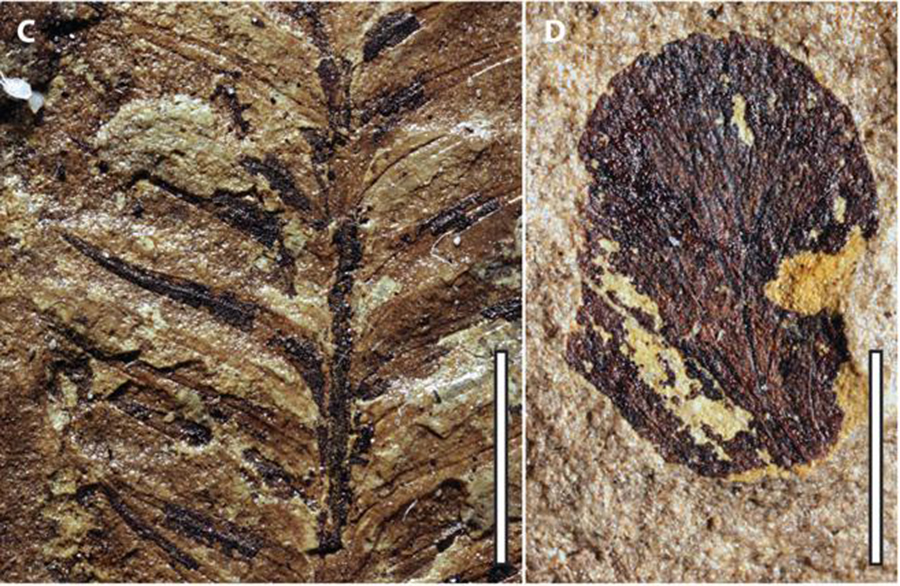
Paleontologists found these plant compression fossils in the Ferron Sandstone formation in Central Utah. N.A. JUD, UNIVERSITY OF FLORIDA

A paper published on Spetember 2018, reports that a recent fossil discovery in Central Utah is changing what researchers know about the emergence of large flowering trees both here in the Mountain West, and around the world.

In 2014, a group of researchers found a large petrified log in an area of Central Utah called the Ferron Sandstone.  It wasn't just any petrified log — it was a fossilized tree that in life would have stood over 150 feet tall.

Scott Williams is a paleontologist who helped make the discovery. He co-authored the paper in the journal Science Advances. Williams said the tree was unexpected for its size and what it was: a flowering tree, known as an angiosperm.

“This pushes the date of when we first start seeing these really big trees — angiosperm trees — back by about 15 million years,” Williams said.

It’s also significant because flowering plants had a big impact on their ecosystem, according to Randy Irmis, the curator of paleontology for the Natural History Museum of Utah.

“All of a sudden you have all of these social insects like bees and wasps and ants and things. And there’s even been suggestions that they affected dinosaurs,” Irmis said.

The paper’s author Scott Williams said the discovery helps create a window into plant species 92 million years ago.

This story was produced by the Mountain West News Bureau, a collaboration between Wyoming Public Media, Boise State Public Radio in Idaho, Yellowstone Public Radio in Montana, KUER in Salt Lake City and KRCC and KUNC in Colorado.

Source: www.wyomingpublicmedia.org

9 Extinct Animals That Could Be Resurrected One Day

Friday, September 28, 2018

Science is getting closer to bringing back species we thought were gone forever.

How can an extinct species come back?

Vlad G/Shutterstock

Jurassic Park doesn’t seem so far-fetched anymore. Scientists can extract DNA fragments from fossils and preserved body parts from extinct species, then use those to help figure out the rest of the gene sequence (its genome), or at least most of it. Eventually, they might be able to clone long-dead animals, but for now they’re working on hybrids. By combining the DNA of an extinct species with a close living relative, they can create a new animal that looks like the ones we thought we’d never see again. De-extinction started showing promise as early as 2003, when a mountain goat that had gone extinct three years before was reborn in a lab, though it died minutes later. There are ethical questions about whether humans should bring extinct animals back to life. How will they respond to and change their new environment? Should humans take such an active role in the course of nature? Like it or not, these extinct species could be coming soon to a lab near you.

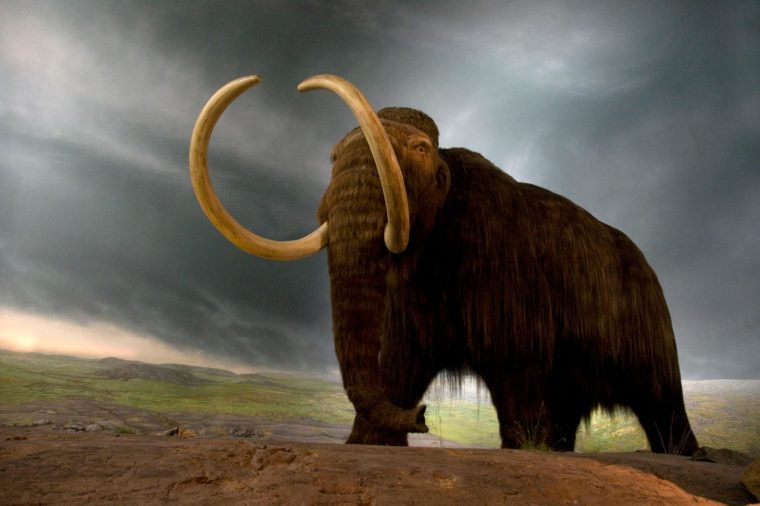
Woolly mammoth

FLPA/Shutterstock

Scientists are already well on their way to making a mammoth-elephant hybrid. They’re combining Asian-elephant DNA with mammoth DNA, in hopes of growing a hybrid baby in an artificial elephant womb. Although it wouldn’t be a true mammoth per se, it would have the fat levels, shaggy fur, and small ears to help it act like its extinct cousin. Check out these 12 prehistoric animals you’ll be glad are extinct.


Tasmanian tiger

Historia/Shutterstock

The Tasmanian tiger (or thylacine) was largely wiped out after farmers blamed it for killing sheep, and the last known one died in captivity in 1936. Some Australians still believe there are a few alive in the wild, and they might not need to keep the faith much longer: Scientists are actively working on resurrecting the marsupial. They hope to combine DNA from a preserved thylacine “joey,” or pup, with a numbat, although the experiment will be difficult because they aren’t as closely related as, say, an elephant and a mammoth.


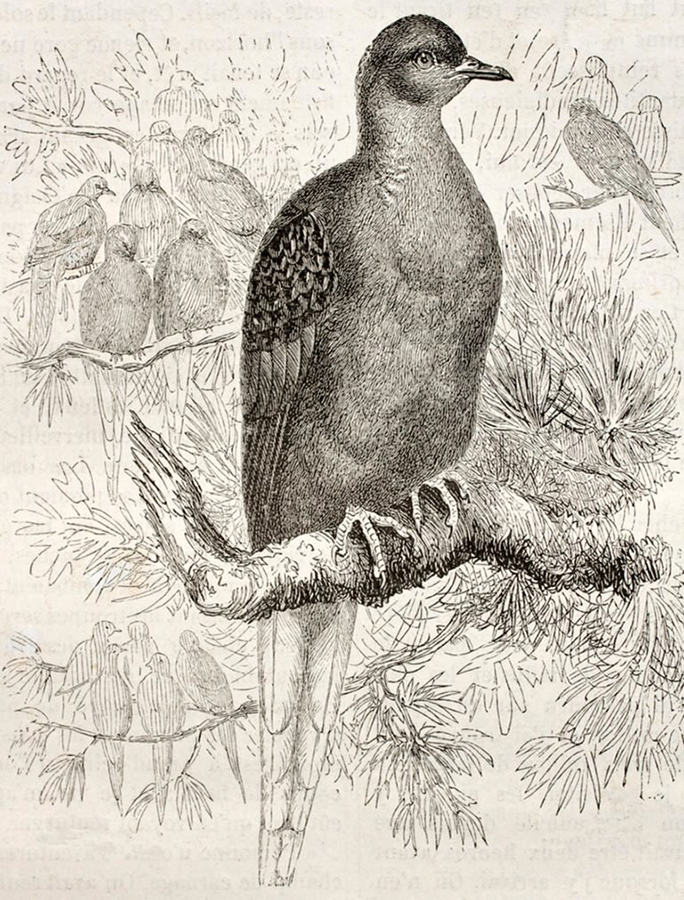
Passenger pigeons

Marzolino/Shutterstock

In the 1830s, the passenger pigeon was the most flourishing bird in North America. But over the next several decades, their forests were cut down and they were hunted as an easy source of protein. The last one died in 1914—less than 100 years after its population was estimated at three billion. The extinction taught humanity a lesson and launched the movement to protect endangered species. Scientists are now hoping to revive the population, partially as a symbol of conservation. 

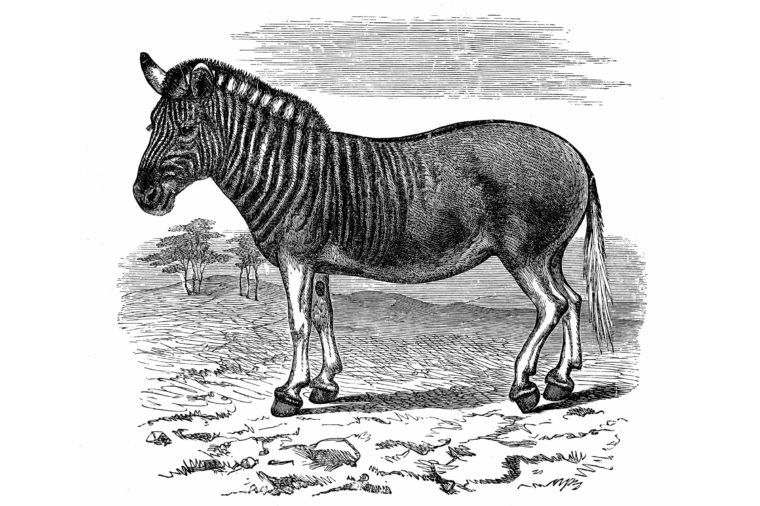
Quagga

Universal History Archive / Universal Images Group/Shutterstock

This little-known zebra relative was extinct by the 1880s, but scientists in South Africa are on their way to bringing it back. Some researchers argue that the quagga isn’t its own species but a subspecies of the plains zebra, so they can use selective breeding to essentially speed up evolution and re-create the quagga—or at least a zebra that looks remarkably similar to one. Critics argue that appearance isn’t everything, and that the “Rau quaggas” (named after a project leader) being bred aren’t true quaggas.


Carolina parakeet

Mint Images/Shutterstock

One hundred years ago, the only parrot native to the United States went extinct fairly suddenly. Researchers haven’t pinpointed the cause—it might have been deforestation, farmers shooting them, or disease—but because Carolina parakeets are so similar to other parrot species in the Americas, they’re considered a good candidate for a de-extinction project. 


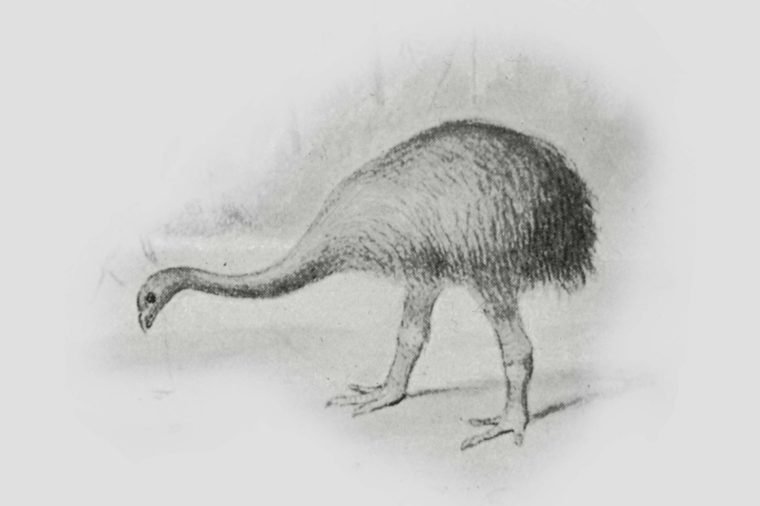
Little bush moa

Historia/Shutterstock

This flightless New Zealand bird has been gone for more than 700 years, but scientists have almost figured out its entire gene sequence, using DNA from a toe bone. If they can successfully get a bird with that DNA to hatch from an emu egg, they might be able to bring the little bush moa back to life.

Dodo

Kevin Foy/Shutterstock

Scientists already have a good start in figuring out the dodo’s gene sequence, which is the first step in de-extinction. The challenge is that dodos don’t have any close living relatives, so scientists might need to wait until cloning an extinct animal is possible before they’re able to bring the bird back. 

Heath hen

Elise Amendola/AP/Shutterstock

Heath hens used to live on Martha’s Vineyard island in Cape Cod, Massachusetts, but the last one died in 1932. Because the number of heath hens used to be a good indicator of how healthy their sandplain-grassland ecosystem was, and because the birds could likely still thrive, scientists are looking to revive them. Either domestic chickens or prairie chickens could be surrogates for the extinct species.

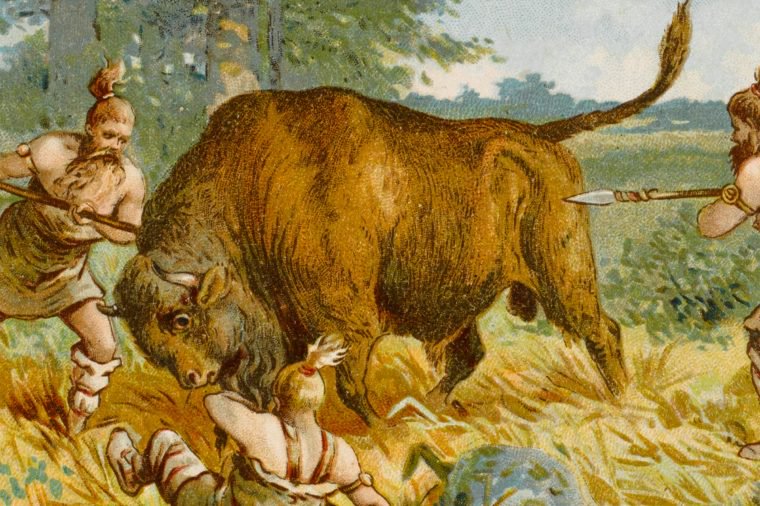
Aurochs

Historia/Shutterstock

Before there were cattle as we know them today, there were aurochs, which were cowlike creatures bigger than elephants. When the last one died in Poland in 1627, it was one of the first examples of an animal’s extinction being recorded. But now they could be one of the first species to go through de-extinction. Scientists have found auroch genes in modern cattle breeds, and they’re breeding those cattle in hopes of creating a new species, called a Tauros, that would be similar to their extinct relatives. 

Source: www.rd.com

10 of the World’s Best Dinosaur Museums

Friday, September 28, 2018

Museum of the Rockies, Bozeman, MT - Siebel Dinosaur Complex

These dinosaur museums will take you back to a time when fantastic creatures ruled the planet. Plus, you’ll get up-to-date information on our evolving knowledge of these incredible beasts.

1 - The Paleo Lab at the Perot Museum of Nature and Science, Dallas, Texas

LARRY W SMITH/EPA-EFE/Shutterstock

Here’s an opportunity to be the first of your friends to meet Nanuqsaurus, a newly assembled relative of Tyrannosaurus rex featured at the brand new Paleo Lab at the Perot Museum of Nature and Science. The Lab opened with a ribbon-cutting ceremony held August 28, 2018, and features an augmented reality experience that puts you up close with dinosaurs such as DiplodocusVelociraptor, and T. rex, as well as hands-on fossil digs and opportunities to watch real paleontologists at work.

2 - Smithsonian Museum of Natural History, Washington, D.C.

J. Scott Applewhite/AP/Shutterstock

When it first opened in 1910, the Dinosaur Hall at the Smithsonian National Museum of Natural History was called “The Museum of Extinct Monsters.” But it’s a forgivable designation considering the Triceratops and T. rex who reign over the 5,200 square foot spaceThrough June of 2019, you can experience The Last American Dinosaurs: Discovering a Lost World, featuring fossils obtained at the Hell Creek Formation in the American West.

3 - The Field Museum, Chicago, Illinois

Courtesy Lucy Hewitt

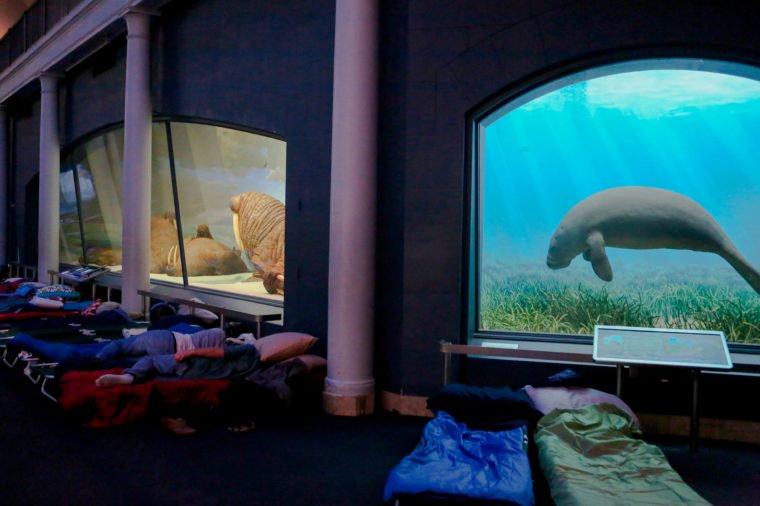
If you want to get to know a titanosaur on a first-name basis, the Field Museum is the right place. The Field Museum is pleased to introduce you to Maximo, a 122-foot-long titanosaur—the largest dinosaur discovered to date. And he’s literally available for sleepovers: Several times a year, Dozin With Dinos invites kids ages six through 12 to take a nighttime tour of the dinos and then sleep over amid Maximo and all his fossil friends.

4 - American Museum of Natural History, New York, New York

Emiliano Rodriguez Mega/AP/Shutterstock

More up-to-the-minute discoveries await at the American Museum of Natural History in New York City, where a 122-foot-long dinosaur—discovered in 2014—is on display. It’s one of the largest dinosaurs ever to have been discovered (so far). It’s called, appropriately, the Titanosaur. The AMNH also features sleepovers and, on certain designated nights, grownups are invited to partake in a mature sleepover (drinks are served).

5 - Natural History Museum, London

Tim Ireland/AP/Shutterstock

The Natural History Museum of London’s collection of world-famous dinosaur includes an Iguanodon (one of the first species ever described as a dinosaur), a Baryonyx (one of the largest meat-eating dinos to roam Europe), the most complete Stegosaurus fossil ever discovered, as well as an enormous T. rex. Here, you can explore all the different time periods during which dinosaurs lived and sort through facts (versus myths) about what really killed off these enormous creatures. Here are all the dinosaur myths scientists wish you’d stop believing.

6 - Natural History Museum, Paris

CHRISTOPHE PETIT TESSON/EPA-EFE/Shutterstock

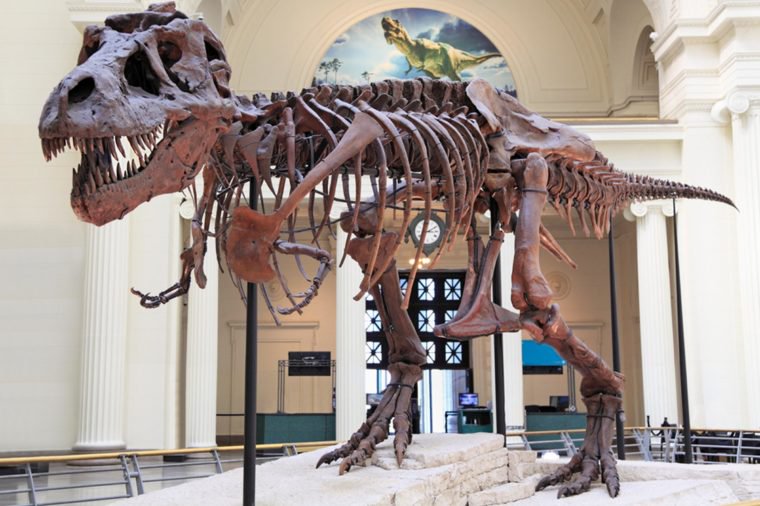
This is more than a single museum: It’s a complex of museums with an entire building devoted to its dinosaur collection. You’ll find an Allosaurus fragilisDiplodocus, a mammoth, the three-horned TriceratopsBasilosaurus, and the biggest crocodile species that ever lived on the planet—Sarcosuchus imperator. A recent special exhibit included the second most complete T. rex skeleton ever found, which was found in Montana in 2013.

7 - Badlands Dinosaur Museum, Dickenson, North Dakota

WILL KINCAID/AP/Shutterstock

Speaking of Montana, this 1,500 pound Triceratops was excavated by a couple in Montana in 1992, who then gifted it to the Dickenson Museum Center, which then made it the star exhibit of what would become the Badlands Dinosaur Museum. The center now has an impressive number of dinosaurs on display, including full skeletons of:

Much of the collection comes from the four-state region—Montana, Wyoming, and both Dakotas—which is so rich in paleontology discoveries, the area might as well be known as “Dinosaur Land.”

8 - The North Dakota Dinosaur Tour

FLPA/Shutterstock

If you’re heading to the Badlands, consider taking the whole North Dakota Dinosaur Tour of eight total museums (including the Badlands Dinosaur Museum) that display some of North America’s most fascinating discoveries. For example:

While you’re in the area, don’t miss an opportunity to go on an actual fossil dig. The fossil above is a finding from Theodore Roosevelt National Park in North Dakota.

9 - Wyoming Dinosaur Tour

Courtesy Laura Vietti

Wyoming is rich in dinosaur exhibits, as well as fascinating non-animal fossils (pictured is petrified wood at Yellowstone National Forest). Among Wyoming’s top dinosaur destinations:

10 - The Denver Museum of Nature & Science, Colorado

Brennan Linsley/AP/Shutterstock

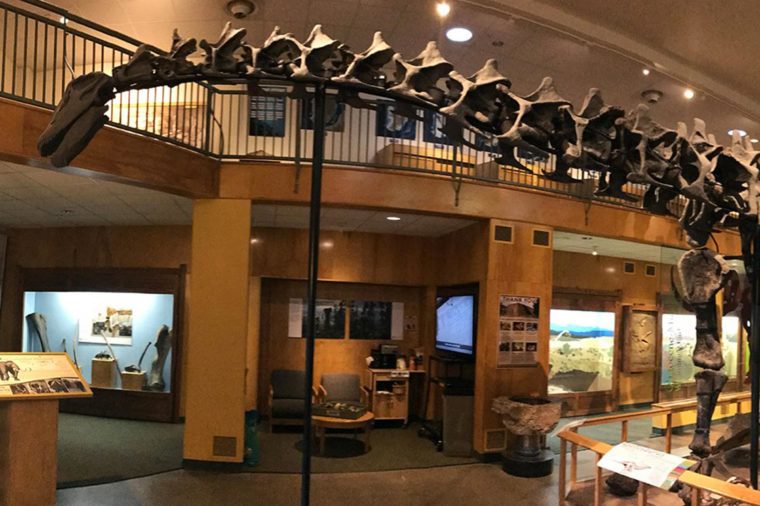
The Denver Museum of Nature & Science with its Prehistoric Journey exhibit features an interactive battle between a gargantuan Stegosaurus and an 80-foot-long Diplodocus. (Pictured is a Diplodocus in a 1940 photo taken at the museum, when it used to be called the Colorado Museum of Natural History.) Don’t miss the nearby Royal Gorge Dinosaur Experience, with dinosaur fossils and animatronic displays, interactive displays, and hands-on exhibits.

Source: www.rd.com

What Did You Do This Summer? Toyota Helped Paleontologists Discover a Treasure Trove Of Dinosaur Bones In Wyoming

Thursday, September 27, 2018

Two of the biggest blockbusters of the summer movie season revolved around prehistoric creatures making a comeback in the modern age.

Two of the biggest blockbusters of the summer movie season revolved around prehistoric creatures making a comeback in the modern age.  In the wilds of the American West, Toyota supported a paleontology team from the Children’s Museum of Indianapolis, as they embarked on an exciting journey through a long-lost world of dinosaurs.

Led by the museum’s Scientists-in-Residence, world-renowned paleontologists Dr. Phil Manning and Dr. Victoria Egerton, a team from the museum surveyed an undisclosed site in northern Wyoming. The expedition was supported by Toyota, through usage of a pair of Tundra pickups and a Land Cruiser. The trio of vehicles was pivotal in hauling scientific gear, camp equipment and fossilized/fragile dinosaur bones – all while navigating several miles of the most rugged, craggy, unforgiving terrain in the western United States.

“It’s an off-road adventure through a rough and tumble world that existed millions of years ago, at a time when there was a salt water sea covering the area we’re presently exploring,” Manning said. “What the sea left behind was rugged terrain and steep slopes that are extremely hard and sometimes dangerous to traverse. Some of the bones we are discovering weigh hundreds of pounds and are brittle and very fragile. So, it’s imperative we excavate and transport them safely in vehicles that can smoothly handle the rough landscape. We are very grateful Toyota is helping us preserve a very important slice of history.”

Pre-launch Children's Museum of Indianapolis

The venerable Land Cruiser has the distinction of being the primary vehicle in Michael Crichton’s best-selling 1990 novel “Jurassic Park.”

“That fact wasn’t lost on our team,” Manning said. “We experienced firsthand why Crichton selected the Land Cruiser for his book.”

The expedition has proven fruitful so far. The museum team has uncovered several ancient animals, some dating back several millions of years. The paleontologists are hot on the trail of multiple dinosaurs, and they aim to tell a tale of exploration when the full story of the site’s discovery is ultimately revealed to the world.

The dinosaur bones will make their 2,500-mile journey back to the Children’s Museum of Indianapolis, after they are extracted from the ground and prepped for travel.  The 500,000-square-foot museum, which attracts around 1.2 million visitors annually, is home to Dinosphere, one of the finest immersive dinosaur exhibits in the U.S.

In appreciation of Toyota’s involvement in the dinosaur dig, the museum purchased a 2018 Highlander Hybrid for personnel usage.  The Highlander is manufactured in the Hoosier state at Toyota Motor Manufacturing Indiana, in nearby Princeton.

About Children’s Museum of Indianapolis
The Children’s Museum of Indianapolis is a nonprofit institution committed to creating extraordinary learning experiences across the arts, sciences, and humanities that have the power to transform the lives of children and families. 

Source: www.automotiveworld.com

Parkasaurus is a More Charming, Accessible Alternative to Jurassic World Evolution… With Hats

Friday, September 28, 2018

Save dinosaurs from extinction, one chicken egg at a time, as Parkasaurus brings puns and playfulness to the management sim.

The sign of a good management sim game is one where, after what feels like a few mere minutes of playtime, you glance back at the clock and, oh, would you look at that, it’s already 2:00 AM. These experiences are deceptively laid back, nourishing the brain with gentle hits of dopamine through a carefully constructed conveyer belt of in-game micro-successes.

You can see why we fickle humans are susceptible to their algorithms, too, indulging our petty power fantasies of creating order from chaos, pursuing clearly defined goals, and generally succeeding in adulting better than most of us ever could in the real world. Whether it’s building megacities from scratch in Cities: Skylines, running a medieval cemetery in Graveyard Keeper, or living the pastoral dream in Stardew Valley, management sims can hold our attention in ways few other genres are capable of.

And Parkasaurus, out now through Early Access on Steam for PC players, is up there with the very best of them. Offering the opportunity to create your own dinosaur resort, Parkasaurus may lack the brand recognition of Jurassic World Evolution, which presented a similar conceit earlier this year, but does enough differently to escape the footprint left by Frontier Development’s AAA boot.

While that latter title was focused mostly on the hypothetical science and logistics of dinosaur zoology, Parkasaurus takes more cues from the Theme Park games of old to emulate the commercial tourism that would naturally boon if anyone managed to bring prehistoric creatures back from extinction.

Sure, taking care of raptors, ‘rexes, and the odd Rebbachisaurus is one thing, but what about the insatiable hunger of your average homo sapiens? Every single visitor who enters your resort in Parkasaurus will have their own opinions on the admission fees, entertainment, cleanliness, food options, and more, with many happy to post about it on the in-game social media feed which pops up at the end of each working day. Pleasing your guests may even come at the expense of your dinosaurs’ own well being, such as when you ignore the latter’s need for privacy for the sake of public visibility, forcing you to juggle with the same ethical questions that Jeff Goldblum first posited in Jurassic Park 25 years ago.

For an indie game made by just two people, the amount of content already included in Parkasaurus is staggering. The game’s two skill trees, each promising new dinosaurs, buildings, and items to play with, will take some real time to fill out completely, and are  refreshingly generous in their drop rates. It feeds into that ‘just five more minutes’ mentality which the game exploits as effectively as any other management sim, and Parkasaurus’ more relaxed sentiments against Jurassic World Evolution means you’re less likely to be discouraged or angered by any major setbacks to your resort’s growth.

That said, it wouldn’t be a dinosaur park sim without the possibility for a bloody breakout, and when that happens, Parkasaurus becomes a different game entirely. It turns into a first person shooter, in fact, where you’re suddenly placed into the boots of one of the security guards responsible for taking out the rampaging beasts. It’s a wild, hilarious change up from the relative relaxation of micro-managing from above, and again harks back to the original Theme Park games, when you could explore your own creations from a first person perspective and delight in the delirious, otherworldly look of the place when viewed from up close.

Indeed, Parkasaurus has a real affable charm in its total lack of gravitas. The story set up, and there is one, makes no apologies for its total barminess. After dinosaurs crash land their spaceship on earth, scientists are able to go back in time through a portal to uncover ancient fossils, which can then be used to create even more dinos by hatching them from a local chicken downtown. I wasn’t kidding when I said it was barmy.

These dinosaurs are way cuter than Jurassic World Evolution’s more realistic take on the creatures, too, but also quite a bit goofier, with big googly eyes that look like they’ve been pinned on by a giant toddler. You can even deck them out with hats unlocked through Parkasaurus’ progression system, with anything from winter beanies to sunglasses available for pimping out your reptilian residents with added style and swagger.

Meanwhile, the game’s lo-poly visual palette effectively draws the eye, and compliments the grid-based creation system just as its catchy soundtrack perfectly matches the leisurely rhythms of the gameplay. In fact, Parkasaurus is almost too charming, hiding its chewy layer of strategy and statistics beneath a mound of silly hats and googly eyes. Because make no mistake, this is a tightly wound sim easily on par with its contemporaries, where creating the perfectly designed attraction is so satisfying, it’ll gobble up your free time like T-Rex with the munchies.

Source: www.gamesradar.com

‘Jurassic World: Fallen Kingdom’ in Numbers: the Film’s Most Staggering Stats

Wednesday, September 26, 2018

Jurassic World: Fallen Kingdom is the fifth film in the Jurassic franchise and in many ways is bigger and more impressive than anything that’s gone before it. You might be surprised to learn that Fallen Kingdom contains more dinosaurs than all of the previous movies put together – but that statistic isn’t necessarily the film’s most staggering. FANDOM visited Pinewood Studios to meet the practical and visual effects geniuses behind the dinosaur phenomenon – including Visual Effects Supervisors David Vickery and Alex Wuttke, and Creature Designer Neal Scanlan, who shared the fascinating figures behind the screen spectacle.

THE FILM IS TWO-THIRDS VISUAL EFFECTS

Vickery: “In the whole film there were a little over 1,200 visual effects shots. Doesn’t sound like a lot when you consider that modern big budget movies might have up to 2000 shots. But there are only 1800 shots in the entire film so two-thirds of the film was visual effects.”

ALMOST 40% OF ALL SHOTS ARE DINOSAUR SHOTS

Vickery: “There were 700 dinosaur shots in the film and I think probably 250 of those featured an animatronic, or some sort of a performer.”

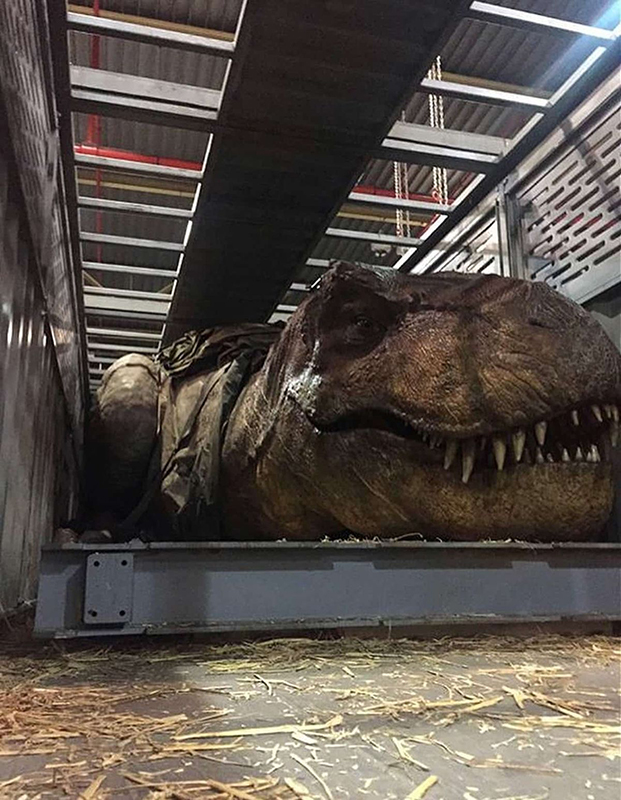
The animatronic Tyrannosaurus Rex is one of Jurassic World: Fallen Kingdom's most impressive practical effects.


21 DIFFERENT SPECIES OF DINOSAUR POPULATE THE MOVIE

Vickery: “And there were many different versions of each of those dinosaurs, so different textures and sizes and scales, because we had stampedes of dinosaurs. There were seven brand new dinosaurs which we’d never seen.”

MORE THAN 10 PRACTICAL DINO MODELS WERE USED

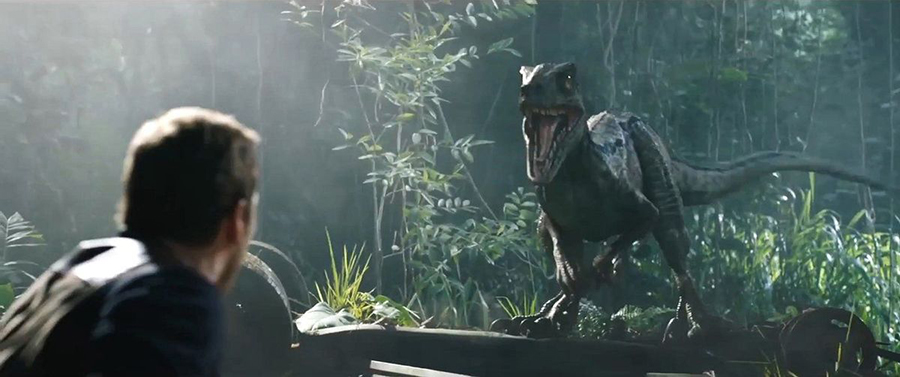
Vickery: “We had 10 or 12 animatronic or performance pieces. So there was Blue, there was a T. rex, there was a Stegosaurus head, there was an Indoraptor. These were all completely camera-finished pieces that could be shot and kept in the final film. We also had baby raptors and three different puppets for that. There was a separate arm for Blue, and a separate foot for Blue. A full T-Rex, [and] from nose to shoulders; Indoraptor head, foot and claw.

The moment Chris Pratt's Owen is reunited with velociraptor Blue.

We had an inflatable dinosaur which sounds a little bit insane even now when I say it, but it was an amazing performance tool that we brought to set that shows how big that dinosaur could be, how fast it could move. And it was really trying to use every trick in the book and it wasn’t always about trying to get something as beautifully detailed as Blue that could stay as a finished camera ready piece, but it was about: ‘How can we again engage the actors in that process?’ with any trick we could bring to the table.”

AN INDORAPTOR ARM USED IN A DELETED SCENE WEIGHED A TON (NOT LITERALLY)

Vickery: “We never got it in the movie but there was a scripted bit where an Indoraptor idly toys with this human skull. Which is a little bit dark. And I remember distinctly the second unit working here, and the Indoraptor arm weighed 25 kilos maybe, 7ft long. So you can imagine how hard that is. It straps on. Somebody actually wears it coming out of their chest to counterbalance … imagine how hard it is to puppeteer that so that the claw – the middle finger – neatly lands in the eye socket of a skull. And they did 20, 30, 40 takes. Couldn’t get it.

Scanlan: “It took 20 takes to bowl the skull in. We had to roll the skull in. It had to stop exactly with the eye [in the right place].”

Vickery: “At that point, people were looking at me going: ‘Hey, shouldn’t we be doing this digitally?'”

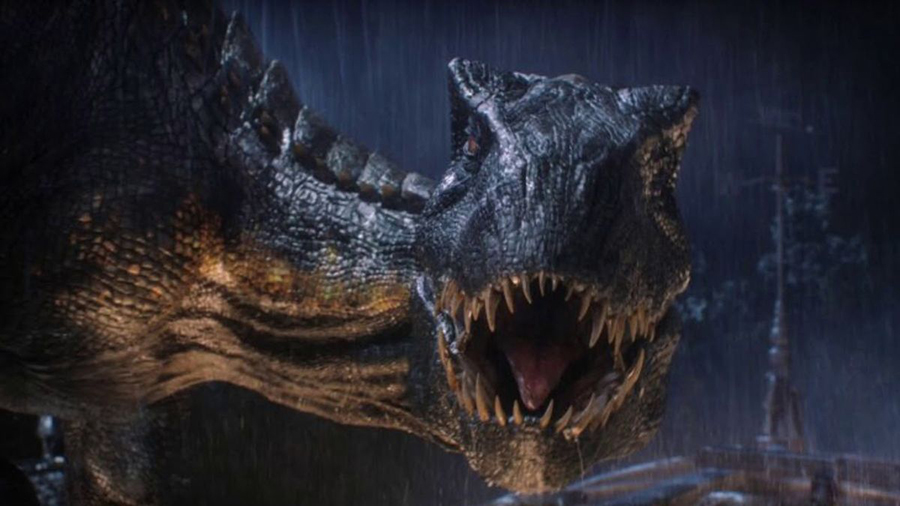
THE INDORAPTOR IS MADE UP OF “DOZENS” OF DIFFERENT ANIMALS

Scanlan: “From [the] teeth, to the eyes, to the…”

The Indoraptor is made up of dozens of different creatures.

Vickery: “The crazy thing about the Indoraptor is it’s not a dinosaur, it’s a genetic hybrid. So we’re towing a very careful line between it becoming a monster … and it’s definitely not a monster, it’s supposed to be a dinosaur. And so the trick we used there in post-production is referencing real animals, something that as an audience you can relate to. So if the scales of the dinosaur look a little bit like a snake’s scales then you start to believe it a little bit more. But we referenced all sorts of crazy animals, like cassowaries and ostriches for the anatomy of their feet, sea urchins, even, we looked at for the spikes on his back.”

It also takes inspiration from the blue tongue lizard, red-bellied black snake, black tree monitor and cordylus niger among other real-life creatures.

600+ VFX PROS WERE INVOLVED IN THE MAKING OF THE FILM

Wuttke: “There’s so many people involved in this process and everyone has their own idea of what they want this film to look like. I think one of the biggest challenges, knowing how incredibly talented all these people are, is giving everyone an equal voice in the process. I think, globally, across all the various VFX facilities that worked on this movie, there’s probably over 600 people and just trying to make sure that everyone gets their input is a huge challenge.”

Jurassic World: Fallen Kingdom is available on Blu-ray in the US now.

Source: http://fandom.wikia.com
Pages