nandi's blog

Siberian Unicorn DNA Studied For The First Time
Wednesday, November 28, 2018

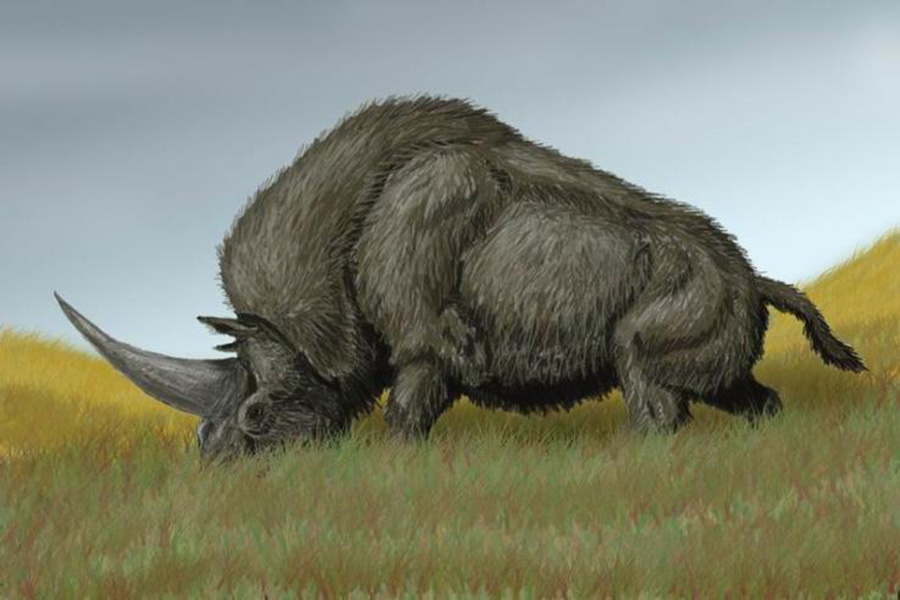
An artist's interpretation of a Siberian unicorn, which is believed to have lived on the Plains of Eurasia at least 39,000 years ago. WIKIMEDIA COMMONS/DMITRY BOGDANOV

The first DNA tests on Siberian unicorns have shown that the 4-ton animal lived at the same time as modern humans, according to scientists. 

By studying fossilized bones, an international team of paleontologists concluded the Elasmotherium sibiricum rhinoceros—widely referred to as the Siberian unicorn—lived much later than previously expected and could have met our ancestors.

The authors of the study published in the journal Nature Ecology and Evolution believe the Siberian unicorn lived in Eastern Europe and Central Asia until at least 39,000 years ago. Previous estimates dated its extinction at around 200,000 years ago, long before the megafaunal extinction around 40,000 years ago. Scientists regard this event as pivotal in natural history, wiping out a range of beasts from the woolly mammoth to the sabre-toothed cat. This was around the time that Neanderthals died away, too.

The enormous beast likely weighed up to 3.5 tons—more than double the modern rhino—and had a large hump on its shoulder. It inhabited the open, grassy plains of Eurasia stretching from southwestern Russian and Ukraine to Kazakhstan and Siberia, living on grass.  And despite its weight, it is believed to have been able to run at speed, according to the Natural History Museum, where study co-author Professor Adrian Lister is a researcher.

Lister explained: “This megafaunal extinction event didn't really get going until about 40,000 years ago. So Elasmotherium with its apparent extinction date of 100,000 years ago has not been considered as part of that same event.

“We dated a few specimens - such as the beautiful complete skull we have at the Museum - and to our surprise they came in at less than 40,000 years old.”

Thanks to leaps forward in technology, the researchers were able to date fossils more accurately and took DNA from an Elasmotherium sibiricum fossil for the first time ever. In total, 23 specimens were assessed by teams in the U.K., the Netherlands and Russia.

“They [the individual experiments] very strongly all confirmed that this species survived until at least 39,000 years ago, and maybe as late as 35,000 years ago,” said Lister.

As for the rhino’s personality, researchers are still unsure.

Lister explained: “Modern rhinos tend to be rather solitary and spread out in their habitat. Combined with Elasmotherium's restricted geographical range, it might have been quite a rare animal.”

So why aren’t Siberian unicorns still roaming the Eurasian plains? Scientists believe massive changes in the climate at the time likely killed off the animal. This wasn’t helped by its scarcity and grazing lifestyle.

The Siberian unicorn would have been one of 250 species of rhino alive at the time. Today, there are just five.

The research follows a study suggesting male mammoths were more prone to wandering off on their own and dying than the females of the species. 

The article published in the journal Current Biology last year came about after scientists noticed there were more male remains than females among those they were studying. 

Study author and paleontologist Professor Love Dalen of the Swedish Museum of Natural History told Newsweek at the time: "Fairly early, when we started looking at this and doing the samples we had, we realized it was way more males that were killed then we were expecting." 

"It seemed very odd that there were so many males. But then we started thinking about it a bit more carefully I guess and it started to make more sense."

Source: www.newsweek.com
What the Cambrian Fossils in the Rocky Mountains of Canada Reveal

Wednesday, November 28, 2018

Cambrian Fossils

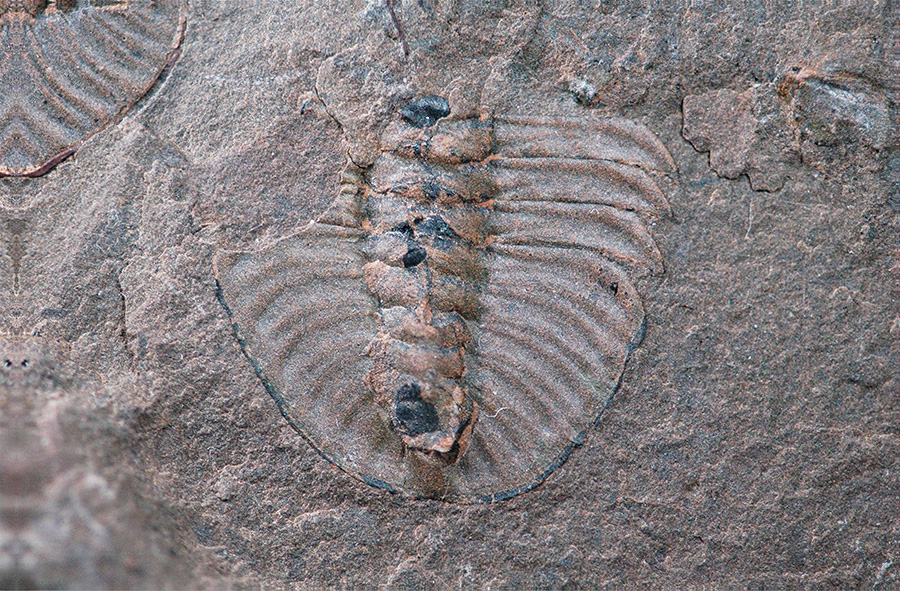
Recent excavations have found fossils of new species of butterflies and fish etc of the Cambrian Period, the first geological period of the Paleozoic Era that lasted for some 55.6 million years.

The Burgess Shale, part of the Rocky Mountains in Canada, is one of the largest homes to fossils as old as 540 million years—the Cambrian period. Ever since its discovery by Charles Walcott in 1909, Burgess Shale has been a mesmerising spot for archaeologists, palaeontologists and research enthusiasts. Since 1909, with every excavation, Burgess Shale has been continuing with giving out information about unfamiliar species of the Cambrian period.

In their recent excavation this year, a team led by Paleontologist Cedric Aria of the Nanjing Institute of Geology and Paleontology, China and Jean Bernard Caron, curator of invertebrate paleontology, Royal Ontario Museum, Canada has also reported to have found fossils of archaic period. They have found the fossils of new species of butterflies, fish hyoliths (the ice cream cone shaped fossil) etc.

Why Fossils of the Cambrian Period are Important

The Cambrian period marked the most profound change in life on earth. Almost all the metazoan species made the first appearance on this earth during the Cambrian period only. Metazoans are the species that undergo development starting from an embryo having three layers of tissue, namely ectoderm, mesoderm and endoderm. Before this period of time, the majority of all living organisms, in whole, were simple, unicellular, and smaller. Actually, it is the Cambrian period when complex multicellular organisms started becoming common.

The Cambrian period, the first geological period of the Paleozoic era, lasted for some 55.6 million years. It started 541 million years ago at the end of the preceding Edicaran period and flourished the life forms till its end towards the beginning of the Ordovician period about 485 million years ago.

How Cambrian species are related to the members of the today’s animal kingdom is an important aspect of how animals have evolved in time. Scientists and researchers are engaged for many decades in deciphering the factors that triggered the Cambrian evolutionary explosion. There have been reports that many species of that period were advanced in terms of anatomy and physiology, nevertheless many of them seem to be unrelated to the advanced animals of later period. Conversely, there had also been species in the Cambrian period that are found to be related to the animals of later times.

The Burgess Shale

The Burgess Shale is referred to the rocky part found in the Canadian rocky mountain the Burgess Pass. Shale is the sedimentary rock consisting of silt and mud. Located in the Yoho National Park in British Columbia, Canada, the Burgess Shale is home to an enormous variety of metazoan fossils existing in the Cambrian Period. First discovered by Walcott in 1909, the creepy crawlies of Cambrian time buried in the Burgess Shale have stunned people with unearthing of ever new archaic species with each excavation done here.

But in recent years, many excavations have shown that the Rocky Mountains range of fossil extends much beyond what Walcott found. Among the excavators, Caron’s team is one of the leading one. Caron has shown that the area in the Burgess Shale extends many kilometres beyond Walcott’s site. His latest visit to the Cambrian tapestry was the one made this summer. Each new step had to reveal the secret of striking views of unfamiliar animals—all archaic. The little fish relative Metaspriggina, the Tokummia etc. are the few to name.

How Cambrian Species are Related to Modern Animals

Since the time of Walcott, it has been a much-debated issue how to establish the link between the Cambrians and today’s animals. Walcott classified his unknown fossils within known groups taking into account the fact that some of the Burgess Shale fossils, for example brachiopods, persisted to live after the Cambrian with some making their presence even today.  This led him to conclude that almost all creatures that resembled today’s arthropods were crustaceans.

Later on, paleontologists developed other ways of classifying and establishing the link between the ancient animals with that of the modern ones. For example, Stephen Jay Gould of Harvard University in his book “Wonderful Life: The Burgess Shale and the Nature of History” found many Cambrian animals, such as the aptly named Hallucigenia which was a worm with legs and hard spines, seemed unrelated to later animals. Gould says that species of these kinds are the forgotten experiments of evolution.

Contemporary paleontologists found another way to settle the issue. For example, consider the arthropods. In a family tree, the recent branches that signify the living arthropods like that of spiders, insects, crustaceans etc. constitute the “crown” group. But some of the fossils in the Burgess Shale probably appeared much before the crown group animals and they belong to “stem” which branched off from the family tree before the crown arthropods appeared. The stems don’t have any more descendants. Newer fossils found in the recent excavations of Caron also help support this way of classifying. Caron, in 2015, argued that his specimens of Hallucigenia have the features suggestive of the fact that the animal belongs to one such stem group of the velvet worms. The velvet worms still crawl around the tropical forests.

With the finding of ever new species with new excavations in the Cambrian tapestry, finding the link with modern animals and also finding the way the animal kingdom bloomed and finding the evolutionary aspects involved, are key challenges for archaeologists and paleontologists.

Source: www.newsclick.in

Elephant-Sized Dicynodont from Triassic Period Discovered: Lisowicia bojani

Wednesday, November 28, 2018

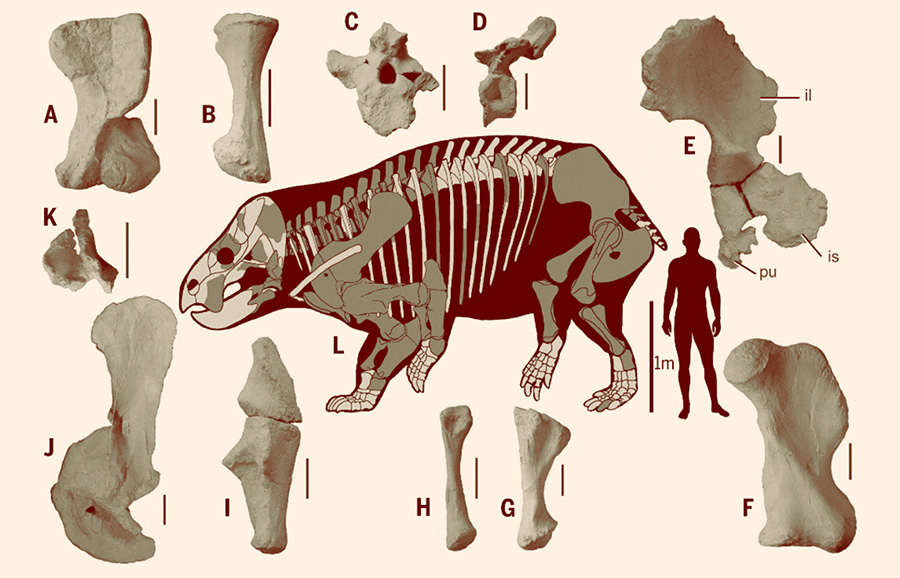
Lisowicia bojani. Image credit: Dmitry Bogdanov / CC BY 3.0.

Paleontologists in Poland have found fossil fragments from a giant new species of mammal-like reptile that walked the Earth approximately 237 million years ago (Late Triassic period).

Named Lisowicia bojani, the ancient creature belongs to Dicynodontia (dicynodonts), a group of plant-eating, mammal-like reptiles.

“Dicynodonts were among the most abundant and diverse synapsids — early four-legged land vertebrates that gave rise to modern-day mammals — from the middle Permian (around 299 to 251 million years ago) to the early Late Triassic (around 237 million years ago),” said Dr. Tomasz Sulej from Poland’s Institute of Paleobiology and Dr. Grzegorz Niedzwiedzki of Uppsala University.

“Fossils of Triassic dicynodonts are extremely abundant in African, Asian, and North and South Americans deposits but are comparatively poorly known from the other regions like Europe.”

Lisowicia bojani fossils are the first substantial dicynodont finds from European deposits.”

The skeleton restoration of Lisowicia bojani: (A) left humerus in ventral view; (B) left radius in lateral view; (C) cervical vertebrae in posterior view; (D) dorsal vertebrae in lateral view; (E) left pelvis in lateral view; (F) left femur in anterior view; (G) left tibia in lateral view; (H) left fibula in medial view; (I) left ulna in lateral view; (J) left scapulocoracoid in lateral view; (K) fused quadrate and quadratojugal in posterior view. Scale bars – 10 cm (A) to (K), 1 m for the skeleton. Light gray bones represent missing elements. Abbreviations: il – ilium, pu – pubis, is – ischium. Image credit: Tomasz Sulej & Grzegorz Niedźwiedzki, doi: 10.1126/science.aal4853.

Lisowicia bojani reached an estimated length of more than 14.7 feet (4.5 m), height of 8.5 feet (2.6 m), and body mass of 9 tons.

It had erect-gait forelimbs, suggesting upright limb posture, like that of modern large mammals such as rhinoceroses and hippopotami. Previously, Triassic dicynodonts were characterized only with sprawling forelimbs (the gait of reptiles).

“The find of Lisowicia bojani shows that at least one dicynodont lineage also participated in the ‘push for gigantism’ at the same time as the sauropodomorphs, but also suggests that their evolutionary history in the Late Triassic is poorly documented,” the paleontologists said.

“This discovery changes our ideas about the latest history of dicynodonts, mammal Triassic relatives,” Dr. Sulej said.

“It also raises far more questions about what really make them and dinosaurs so large.”

“Dicynodonts were amazingly successful animals in the Middle and Late Triassic. Lisowicia bojani is the youngest dicynodont and the largest non-dinosaurian terrestrial tetrapod from the Triassic,” Dr. Niedzwiedzki added.

“It’s natural to want to know how dicynodonts became so large. Lisowicia bojaniis hugely exciting because it blows holes in many of our classic ideas of Triassic ‘mammal-like reptiles’.”

The research was published in the journal Science.

_____

Tomasz Sulej & Grzegorz Niedźwiedzki. An elephant-sized Late Triassic synapsid with erect limbs. Science, published online November 22, 2018; doi: 10.1126/science.aal4853

Source: www.sci-news.com

Birds Are the Modern Dinosaur, Study Confirms

Wednesday, November 28, 2018

Evolution in birds of the olfactory bulb, the part of the brain where smell information is processed, passing from a dinosaur (Bambiraptor) through early birds (Lithornis, Presbyornis) to a modern-day bird (pigeon).

Though the theory that modern-day birds evolved from dinosaurs is widely accepted by scientists today, historically, this theory has lacked evidence. But researchers at Yale and the University of Chile have begun to use embryological data to as evidence of a bird-dinosaur relation.

In a study published this month in the Nature Ecology and Evolution journal, the researchers discovered evidence that two bones found in the skulls of dinosaurs — the postorbital and prefrontal bones — can also be seen in the embryos of birds.

“Nothing like [the postorbital bone in bird embryos] had ever been mentioned,” said Alexander Vargas, a professor at the University of Chile and lead author of the study. “It was really exciting to find it in an embryo — in exactly the same position where the bone would be in ancient dinosaurs.”

According to previous evidence, in mammals, bones that were supposedly lost were actually present in the embryo but fused to other bones early on, said Daniel Smith Paredes GRD ’22, a graduate student in Yale’s geology and geophysics department and first author of the study. The researchers, however, wanted to explore if this development is also seen in birds.

To support their hypothesis, the team looked at both fossils and embryos — a unique integration of the two data sources. The postorbital and prefrontal bones are not commonly seen in modern-day birds. Yet they are prevalent in the fossils of many species of dinosaurs, such as those of the Tyrannosaurus rex. Based on this fossil data, the researchers looked toward embryonic data to explain why modern birds, which evolved from dinosaurs, do not display this skull structure.

Using special staining technologies, the researchers found that both of these bones could be seen in the early development of bird embryos. These bones had gone undetected for decades because they fused to other bones in the skull very quickly after formation — in similar fashion to mammals.

But the fusion of these bones did not occur in a vacuum. This type of development most likely occurred for an evolutionary reason.

“This fossil record shows that the postorbital [bone] was lost about the time when an important expansion of brain size occurred in the evolution of birds,” explained Vargas, suggesting that this development was instrumental in allowing the skulls of birds to accommodate a larger brain.

The development of larger brains is especially interesting to Smith Paredes, as he sees the parallelisms between mammals and birds as indicative of a larger evolutionary trend. He explained that although mammals and birds are not closely related, they both have huge brains compared to other lineages and both demonstrate the fusion of bones in embryos.

A better understanding of the evolution of birds can help illuminate why these two groups appear to have evolved along similar patterns and why those specific patterns are important, Smith Paredes added.

Vargas has dedicated his research to determining exactly how this transition from dinosaurs to birds happened, as well as the evolutionary and genetic mechanisms used along the way. Although the dinosaur-bird hypothesis is widely accepted in the scientific community, some have been distrustful of the embryological data — which has often relied on old studies and outdated techniques. By providing stronger explanations for the evolution of birds, Vargas’ overall work has been able to fill in some of the last holes in this theory.

Looking toward future research, Vargas said he hopes to be able to visualize the formation of these bones even earlier using new labeling technologies. Additionally, he wants to expand his research to the development of other structures, such as the sternum and wishbone, which are “key to discussing the evolution of flight,” Vargas added.

The hypothesis that birds evolved as a modern dinosaur was first proposed in the mid-to-late 1800s following the discovery of fossils that displayed features common to both groups.

Source: https://yaledailynews.com

Thanos simonattoi: A Newly Discovered Theropod in Brazil Was Named After Marvel's SuperVillain

Wednesday, November 28, 2018

Reconstruction of Thanos simonattoi based on PaleoJoe abelisaur skeletal drawings (https://www.deviantart.com/paleojoe).

A newly discovered dinosaur in Brazil has been named after the Marvel supervillain Thanos, thus securing another jewel in the Mad Titan's gauntlet.

In an article published in Historical Biology earlier in November 2018, paleontologists Rafael Delcourt and Fabiano Vidoi Iori outline their discovery of a new abelisaurid theropod in the Sao Jose do Rio Preto formation in Brazil. The dinosaur has been dubbed Thanos simonattoi, and while that could certainly be a coincidence, Iori confirmed to SYFY WIRE that it's not. Thanos does indeed have a dinosaur named after him now.

In the Historial Biology article, Delcourt and Iori explain the etymology as being derived both from the Greek word thanato, for death, and from the Jim Starlin character made famous worldwide in Avengers: Infinity War earlier in 2018. The dinosaur was also named for Sergio Simonatto, who discovered this particular specimen.

Thanos is a genus of carnivorous brachyrostran abelisaurid dinosaur that lived in Brazil during the Santonian stage of the late Cretaceous Period. It contains a single species, Thanos simonattoi.

The holotype specimen, MPMA 08–0016/95, was found in the São José do Rio Preto Formation, part of the Bauru Group and dating from the Santonian; in 2014 it had been dated to the Maastrichtian. It consists of an almost complete axis fused with an axial intercentrum. It is missing several processes at the front, rear and sides. The specimen is currently housed at the Museu de Paleontologia de Monte Alto, Brazil.

The length of Thanos has been estimated at 5.5–6.5 metres (18–21 ft).

Thanos simonattoi by bricksmashtv

Despite the incompleteness of the material, a number of diagnostic features are present; a well-developed keel becoming wider and deeper posteriorly on the ventral surface; two lateral small foramina separated by a relatively wide wall on each lateral surface of the centrum; and well-developed and deep prezygapophyseal spinodiapophyseal fossae. In view of these features, Thanos may have been more derived than other abelisaurids at the time.

In their phylogenetic analysis, Delcourt and Iori (2018) recovered Thanos in a large polytomy with other brachyrostrans within the Abelisauridae

Thanos shared only two synapomorphies with the Brachyrostra. The front articular facet of the axis is more than twice as high as the rear articular facet. The rear facet is inclined to the front under an angle of less than 75°.

Thanos shared its environment with an undescribed larger theropod believed to be a megaraptoran of which a vertebra, specimen MPMA 08–0003/94, has been found at Ibirá. This would imply that Thanos was not the apex predator of its habitat.

So, now Thanos joins the ranks of great men throughout history who've had legendary prehistoric creatures named after them. What more could a made space god ask for?

Source: www.syfy.com / https://en.wikipedia.org

North Dakota to Expand Popular Fossil Dig Program Next Year

Saturday, December 1, 2018

High school students help at a fossil dig site overseen by the North Dakota Geological Survey near Medora, N.D. The North Dakota Geological Survey is expanding its well-received fossil dig program in 2019.  MIKE MCCLEARY, The Bismarck Tribune via AP

The North Dakota Geological Survey is expanding its well-received fossil dig program.

After attracting people from 31 states last year, the program doubled in size this year. North Dakota fossil scientists now plan to spend 46 days in the field next year to help people find prehistoric fossils, the Bismarck Tribune reported.

North Dakota now has one of the top public fossil dig programs in the country, according to senior state paleontologist Clint Boyd. This year, the program attracted 326 people who spent approximately two days in the field.

"What's happening on these digs is not just a tourism opportunity for people, but these people are helping us make real significant discoveries about the history of North Dakota at the same time," Boyd said.

The expansion of public fossil digs has also become a chief source for providing new fossils to the state fossil collection. Participants at a public dig south of Bismarck set Geological Survey records after discovering outsized Tyrannosaurus rex teeth.

"They've really done a fantastic job," said Ed Murphy, a state geologist. "What started off as a very sleepy program, now we've got interest from throughout the nation for people to attend this."

A new Geological Survey donor program called NDGS Paleo Pals has been launched to help fund program expansions.

Source: https://rapidcityjournal.com

Jurassic World Evolution Troodon – How to Get the Troodon

Tuesday, November 27, 2018

The first expansion for Jurassic Park management sim JURASSIC WORLD EVOLUTIONSecrets of Dr Wu, is now here. As the biggest piece of Jurassic World Evolution DLC to date, the expansion adds new missions, new island locations, and especially new dinosaurs. The most significant of these is perhaps the JURASSIC WORLD EVOLUTION TROODON, a venomous carnivore. But how do you get the Troodon, and has it been in the Jurassic Park franchise before now? We’ve got the answers.

How to Get the Jurassic World Evolution Troodon

After buying Secrets of Dr. Wu, to get the Troodon you’ll first need to travel to the new island location, Muerta East. You’ll need to get four stars on Isla Muerta, the game’s second island, to unlock it. After that’s done, you’ll get a call from Dr. Wu inviting you to the new location.

Once on Muerta East, start building your park and completing Contract missions. To get the Troodon, you’ll especially need to concentrate on Security Contracts. Complete these and get your Security reputation score to around 40%, at which point you’ll receive the special Security mission, which begins with incubating and releasing a Troodon. You’ll now have access to the Troodon, but you’ll have to get its genome to 50% by sending teams to gather fossils first. You’ll find Troodon fossils at three digsites in the US, including one in Alaska.

Has the Troodon Been in the Jurassic Park Movies or Games Before?

Jurassic Park Troodon

The Troodon is mentioned briefly in Michael Crichton’s Jurassic Park sequel novel The Lost World, but they have not appeared in the movies as of yet (and probably never will after the apocalyptic events of Jurassic World Fallen Kingdom). They have had sporadic appearances in games such as LEGO Jurassic World, but they did play a starring role in Telltale’s Jurassic Park: The Game for PC, Xbox 360 and PS3, where they were introduced as the big new threat hunting down the characters.

Source: www.gamerevolution.com

Great White Sharks Were Eaten by Megalodon: ‘EVERYTHING Was Prey’ for the 18m Monster

Tuesday, November 27, 2018

APEX PREDATOR: Nothing was off-limits for the 18m megalodon (Pic: DS)

GREAT White Sharks were probably eaten by the monstrously-sized Megalodon which hunted “just about everything”, a shark expert has exclusively told Daily Star Online.

Richard Peirce, a conservationist who has written five books about sharks, said the extinct 18m Megalodon was unrivalled as a killing-machine — as shown in this year's blockbuster movie The Meg.

Megadalons shared Earth’s oceans with Great Whites more than three million years ago.

But Great Whites were pipsqueaks in relation to their terrifying cousins, at just 6m in length.

In fact, in terms of size The Meg knocks poor Jaws out of the water.

Great Whites could even have been on the menu, with fossil records showing megalodon bite marks on much bigger 9m whales.

Mr Peirce added: “Given megalodon's sheer size and power about everything would have been prey for it.

”He added: “All sharks are prehistoric - they go back 400 million years. Humans have only been around 200,000 years.

“That's one of the amazing things about sharks. We're wiping out one of the oldest creatures in the oceans.”

COLOSSAL: Humans are tiny in comparison, as shown in The Meg (Pic: THE MEG)

The researcher, who has been giving educational talks in schools, added: “Someone asked me in a school in Surrey if the megalodon still exists.

“So I asked 'Who has seen The Meg?' and almost all of them — there must have been about 200 of them — put their hands up.

“They all thought it was great fun and none of them really took it seriously,” he said.

“I think of The Meg in the same way as Jurassic Park - great fun and tongue-in-cheek.”

He said: “I think the basis of the reason is they hit three basic human fear buttons: the fear of being eaten alive, the fear of being out of your element — you're in the water not on land — and the fear of the unknown.

“If you think about swimming on the surface of the water with 50ft or something of water below you… the idea there might be some hidden dangerous monster down there that you can't see, that's absolutely terrifying.

“The other thing is history has always painted sharks as monsters,” he added.

“Sharks get a worse reputation and a worse judgement than lions, tigers… any other predator.”

And, in good news for shark fans, it turns out British waters are swimming with sharks, including the odd report of Great Whites. 

Mr Peirce said: “I’ve talked to over a thousand children over the last few days, most of then don't know we've got sharks in our waters.

“They're a bit surprised we've got 35 species of sharks in our waters — including some of the really exciting guys — and maybe that's part of the obsession, they seem so far away.”

The Meg is available to own on digital download from December 3 and available on DVD and blu-ray from December 10, available to pre-order now.

Source: www.dailystar.co.uk

Dinosaur Teeth Uncover Evolutionary Secrets

Monday, November 26, 2018

Teeth from Changchunsaurus parvus hint at the evolution of dinosaur dentition. PHOTO COURTESY OF ROBERT REISZ

UTM paleontologists search the past to learn how mammalian teeth evolved.

UTM paleontologists, professor Robert Reisz and former PhD student Aaron LeBlanc, published studies in PLOS One and the Proceedings of the Royal Society B that shed light on the complex evolution of teeth.

In PLOS One, Reisz and co-authors published an article that discusses Changchunsaurus parvus from the ornithopod family of dinosaurs. Ornithopods are herbivorous dinosaurs. Based on fossil records, ornithopods used their beaks to rip plants from the ground and had muscles to chew through coarse vegetation.

Reisz and LeBlanc explored the importance of this species in understanding the evolution of dentition in dinosaurs and a newfound form of teeth replacement.

LeBlanc’s study in the Proceedings of the Royal Society B located points of evolutionary change in mammalian dentition and delved into how mammalian dentition has evolved over the last 300 million years.

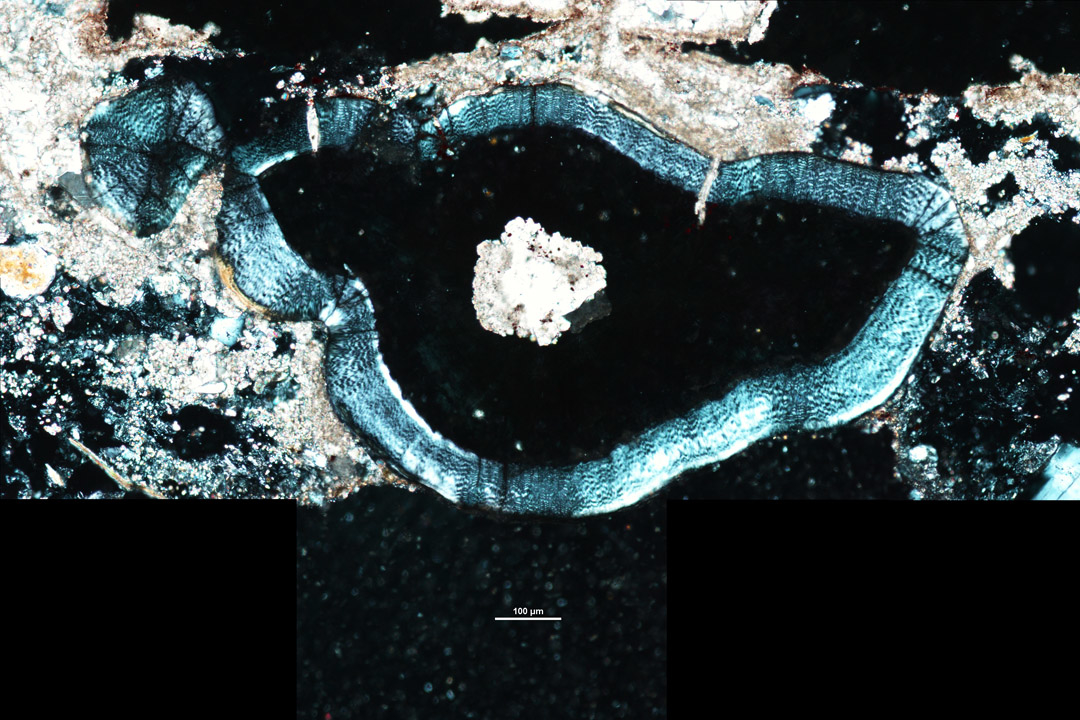
Both studies examined the fossil record by sawing off thin slices of tissue from the desired region. These slices were then polished to create transparent samples. The resulting slice was then subjected to three-dimensional analysis and subsequent computer configuration.

Herbivorous ornithopods are often studied due to the myriad of dental innovations they developed to cope with their diet. C. parvus was specifically studied, as it precedes major innovations in dinosaur dentistry and was thought to possess an ancestral version of previously investigated structures.

The thin sections examined confirmed the function of some components of the dental network. However, they also exhibited a novel form of tooth replacement, which was essential in herbivores due to the extensive pressures of a plant-based diet.

Reisz’s study also solidified that C. parvus had the earliest known occurrence of wavy enamel. This type of enamel was previously disassociated with the ornithopod family and its discovery in C. parvus opens their phylogenetic relationships for discussion.

The results are significant. C. parvus appears at a pivotal point in the evolutionary history of the tooth and understanding its dentition better will lead to a more complete understanding of teeth in general.

LeBlanc’s study examined tooth complexity.

Researchers previously believed that mammals had the most complex form of teeth, while reptiles possessed a simpler version. This was a result of mammals having a ligamentous attachment mechanism for teeth compared to the reptilian teeth being fused directly to the jaw.

But through observing thin sections of therapsid — early reptiles — teeth, Reisz and LeBlanc observed ligamentous structures similar to mammals.

Further study of thin sections from a variety of organisms implied that teeth ligaments developed before the divergence of mammals from reptiles, and that the reptilian fused teeth arrangement is in fact due to calcification — the accumulation of solid calcium deposits — of teeth over time.

Insight into dental history allows for a more comprehensive understanding of our teeth, and the resulting development of new theories, techniques, and explanations in dentition.

Source: https://thevarsity.ca

Gordodon kraineri: Fossil of Reptile -Dating Back 300 Million Years- Rewrites 'Known Evolutionary Timeline'

Sunday, November 25, 2018

The Gordodon had a large sail on its back. (Supplied: New Mexico Museum of Natural History, Matt Celeskey)

The "exquisitely preserved" remains of a 300-million-year-old reptile have been found in the United States, rewriting "the known evolutionary timeline", the New Mexico Museum of Natural history says.

The museum made the announcement this week, saying the unique structure of the skull, jaws and teeth of the reptile indicate it was an herbivore, and such specialised plant-eating was not previously known in reptiles older than about 200 million years.

The bones were part of an "exquisitely preserved but incomplete skeleton", the museum said in a statement.

"The skeleton is that of a sail-backed eupelycosaur, a group of animals that were very successful during the Permian Period," the museum said.

The new dinosaur's name honours an Austrian geologist. (Supplied: New Mexico Museum of Natural History and Science)

Paleontology curator Spencer Lucas and his team from the museum determined the bones were about 300 million years old, meaning the reptile lived during the early part of the Permian Period, or more than 50 million years before the origin of dinosaurs.

Dr Lucas and research associate Matt Celeskey identified the skeleton as belonging to a new genus and species that they named Gordodon kraineri.

Gordodon is derived from the Spanish word gordo, (fat), and the Greek word odon (tooth), as the species had large pointed teeth at the tips of its jaws.

The species name kraineri honors Karl Krainer, an Austrian geologist who contributed to knowledge about the Permian Period in New Mexico.

Gordodon was about 1.5 metres long and weighed an estimated 34 kilograms.

The Gordodon shares some traits with modern goats and deer. (Supplied: New Mexico Museum of Natural history and Science)

It was believed to have been a selective feeder on high-nutrient plants due to the advanced structure of its skull, jaws and teeth.

Experts at the museum said other early herbivorous reptiles were not selective, chomping on any plants they came across.

They said Gordodon had some of the same specialisations found in modern animals like goats and deer.

The fossil bones were discovered near Alamogordo in southern New Mexico, by Ethan Schuth while on a University of Oklahoma geology class field trip in 2013.

Field crews spent about a year collecting the bones from the site and more time was spent removing the hard sandstone surrounding the fossils so research could ensue.

Details of the find were published in the November edition of Palaeontologia Electronica.

Source: www.abc.net.au

Pages