nandi's blog

Researchers ‘Revive’ Woolly Mammoth Cell Nuclei

Friday, March 15, 2019

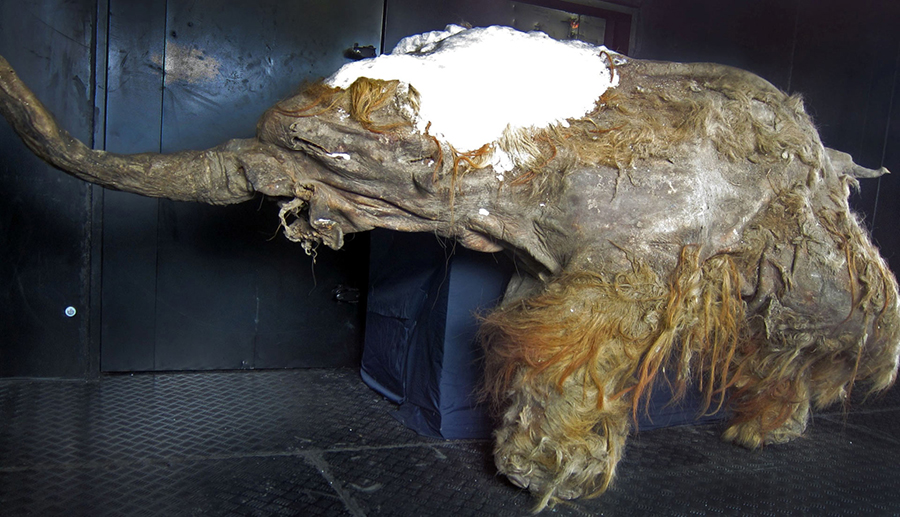
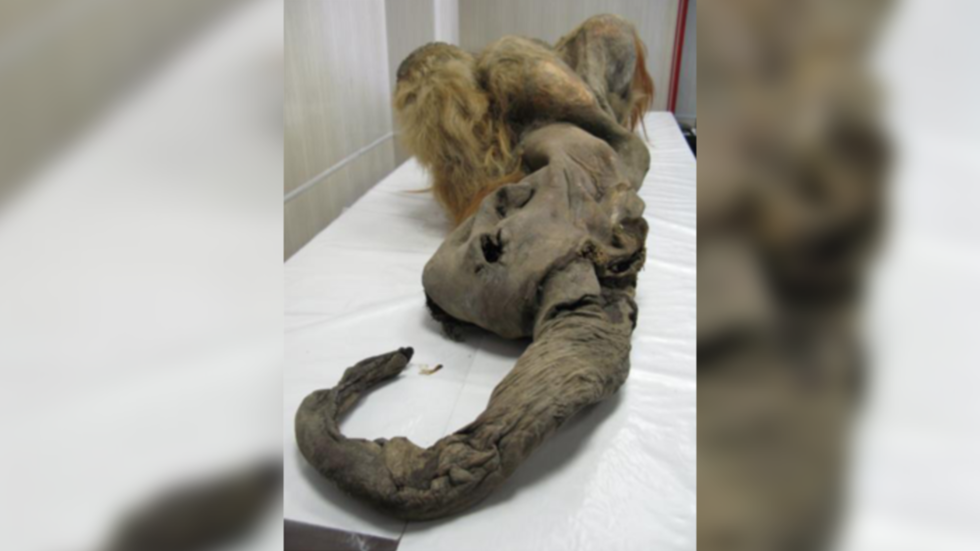
The 28,140-year-old mammoth calf Yuka. Image credit: Cyclonaut / CC BY-SA 4.0.

In 2010, the 28,140-year-old partial carcass of a woolly mammoth (Mammuthus primigenius), nicknamed ‘Yuka,’ was found in Siberian permafrost. Now a team of scientists in Japan has recovered the less-damaged nucleus-like structures from Yuka’s remains and visualized their dynamics in living mouse eggs (oocytes) after a procedure called nuclear transfer.

Yuka was discovered in the summer of 2010 in a cave near the village of Yukagir in the Republic of Sakha.

The young female specimen is the most intact and well-preserved woolly mammoth ever found.

“In the study, we obtained bone marrow and muscle tissue from Yuka and attempted to decipher various biological information and to restore cell nuclear function,” said team leader Dr. Akira Iritani of Kindai University and colleagues.

“First, we compared the genetic information of ‘Yuka’ with African elephants and confirmed the characteristic single base substitution and amino acid substitution possessed by mammoths.”

Yamagata et al succeeded in observing the signs of the biological activity of 28,140-year-old mammoth nuclei in mouse oocytes. In this image, proteins that form chromosomes (red) and proteins that form dividing spindles (green) gather around a mammoth cell nucleus (upper right) in the mouse oocyte. Image credit: Yamagata et al, doi: 10.1038/s41598-019-40546-1.

The researchers performed proteomic analysis of the mammoth remains and demonstrated the presence of nucleus-like structures in the samples.

They then extracted the cell nuclei from the remains and transplanted them into the mouse oocytes.

“The mass spectroscopy analysis of the protein preservation state showed that the muscle tissue of ‘Yuka’ was preserved in a relatively good state and the components of cell nuclei were present,” they explained.

“We then extracted the nuclei from the muscle tissue, injected them into the mouse oocytes using a micromanipulator, and observed the reaction after nuclear transfer using a disk-type confocal laser microscope.”

“This resulted in some mammoth cell nuclei beginning to take up mouse cell nuclear proteins in the mouse oocytes, and cells shaped as those do before division were observed.”

“Furthermore, a part of the mammoth nuclei started to form a partial nucleus-like structure, and this newly formed structure was eventually incorporated into the cell nucleus of the mouse oocyte.”

“This research is a pioneering achievement that demonstrates for the first time in the world that some well-preserved mammoth fossils retain cell nuclei that can be reconstituted in the currently living embryos,” the study authors said.

The results appear in the journal Scientific Reports.

_____

Kazuo Yamagata et al. 2019. Signs of biological activities of 28,000-year-old mammoth nuclei in mouse oocytes visualized by live-cell imaging. Scientific Reports 9, article number: 4050; doi: 10.1038/s41598-019-40546-1

Source: www.sci-news.com

What The World's Oldest Eggs Reveal About Dinosaur Evolution

Friday, March 15, 2019

Illustration of Massospondylus eggs and young dinosaurs. Credit: Julius Csotonyi

A study of the world's earliest known dinosaur eggs reveals new information about the evolution of dinosaur reproduction.

An international team of researchers led by Robert Reisz of the Department of Biology at the University of Toronto Mississauga studied the fossilized remains of eggs and eggshells discovered at sites in Argentina, China and South Africa—widely separated regions of the supercontinent Pangea. At 195 million years old, they are the earliest known eggs in the fossil record, and they were all laid by a group of stem sauropods—long-necked herbivores that ranged in size from four to eight metres in length and were the most common and widely spread dinosaurs of their time.

Reisz is puzzled by the fact that "reptile and mammal precursors appear as skeletons in the fossil record starting 316 million years ago, yet we know nothing of their eggs and eggshells until 120 million years later. It's a great mystery that eggs suddenly show up at this point, but not earlier."

According to Koen Stein, a post-doctoral researcher at Universiteit Gent and lead author of the project, the eggs represent a significant step in the evolution of dinosaur reproduction. Spherical, and about the size of a goose egg, these dinosaur eggshells were paper-thin and brittle, much thinner than similar-sized eggs of living birds."We know that these early eggs had hard shells because during fossilization they cracked and broke, but the shell pieces retained their original curvature."

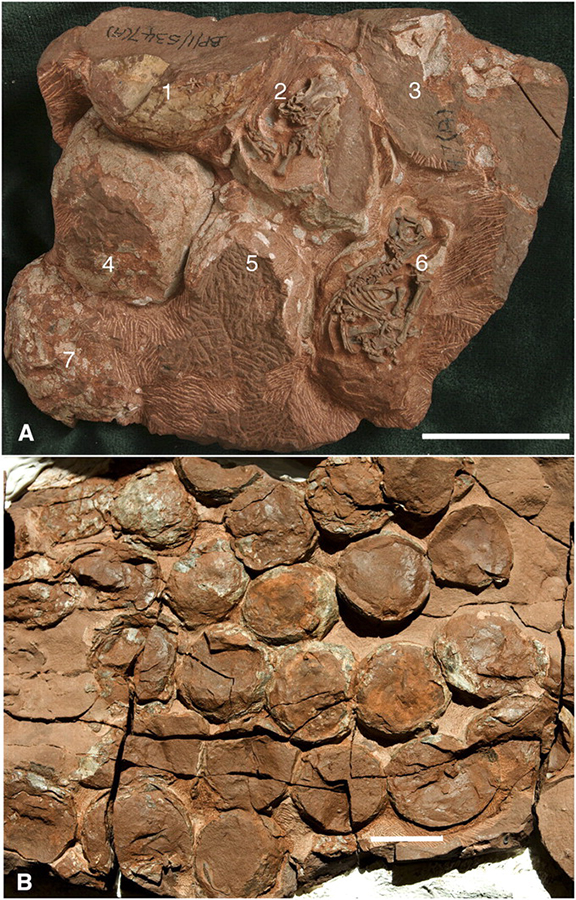
Egg clutches recovered from Rooidrai. (A) Massospondylus (BP/1/5347a) egg clutch, showing the presence of two exposed skeletons; parts of 7 eggs (numbered) are preserved in this block, and fragments of 4 additional eggs are preserved in the counterpart block (BP/1/5347b, not shown). However, only 6 eggs are sufficiently complete to contain embryos. This clutch was collected as an isolated block in talus in 1976. Of the preserved near complete eggs, 5 contain embryonic remains, but only the remains in 2 eggs (N2 and N6) have been exposed through preparation and removal of most of the eggshell. (B) Part of the most completely prepared egg clutch that contains a total of 34 eggs (BP/1/6229). This clutch was preserved in situ in the cliff face. The matrix in the immediate area around the nest showed extensive bioturbation and lacked the fine laminations that normally characterize much of the nesting site, but there is no definite evidence of a nest beyond the organized nature of the egg clutches. (Scale bar, 5 cm.)

Members of the team, including Edina Prondvai and Jean-Marc Baele, analyzed shell thickness, membrane, mineral content and distribution of pores, looking for clues about why these early eggs might have developed hard shells. The results of the study show that hard-shelled eggs evolved early in dinosaur evolution with thickening occurring independently in several groups, but a few million years later other reptiles also developed hard-shelled eggs. One possibility is that hard and eventually thicker shells may have evolved to shield fetal dinosaurs and other reptiles from predators. "The hard shells would protect the embryos from invertebrates that could burrow into the buried egg nests and destroy them," says Reisz.

Reisz adds that the study raises interesting questions for future investigation. "For example, we would like to understand why dinosaurs and their avian descendants never developed viviparity (live birth) and continued to rely on egg laying, while non dinosaurian reptiles and mammals, including ancient aquatic reptiles succeeded in evolving this more advanced reproductive strategy."

The study is co-authored by Koen Stein and Edina Prondvai (Universiteit Gent), Timothy Huang (Jilin University), Jean-Marc Baele (Université de Mons) and P. Martin Sander (Universität Bonn) and is published in the journal Scientific Reports. It follows up on earlier research by Reisz, published in 2012, that examined nests of Massospondylus embryos in eggs discovered at nesting sites in South Africa, and a 2013 publication on dinosaur embryology in Lufengosaurus from China.

More information: Koen Stein et al. Structure and evolutionary implications of the earliest (Sinemurian, Early Jurassic) dinosaur eggs and eggshells, Scientific Reports (2019). DOI: 10.1038/s41598-019-40604-8

Source: https://phys.org

Jurassic World 3: Release Date And Updates

Thursday, March 14, 2019


Jurassic World has had two outstanding movies so far, and after seeing the result of the second movie, it is pretty obvious that it would have received another part. It was just a matter of time before the film’s third part would have been greenlit. Steven Spielberg, who is the original Jurassic Park director confirmed that Colin Trevorrow would be coming back to work as the director of the third part.

The movie has no title as of now. The movie will be written by Emily Carmichael. The movie will be released worldwide on June 11, 2021. So, there is still a lot of time left for the movie to be released. Like every movie, there is a chance of delay but, so far the previous two movies have been released on schedule.

The cast of the movie has featured some popular names, and some of them will be coming back for the third season. Here is the possible cast for Jurassic World 3:
Chris Pratt as Owen Grady
Bryce Dallas Howard as Claire Dearing
Isabella Sermon as Maisie Lockwood
BD Wong as Dr. Henry Wu
Jake Johnson as Lowery.

There are still question marks over Jeff Goldblum’s involvement in the third series. Fans will definitely want Goldblum to return as Dr. Ian Malcolm. Jeff Goldblum had a small role in Jurassic World: Fallen Kingdom. But, it is unclear whether he will have some sort of role in the third part.

According to reports, the third part will be the final installment in the Jurassic World series. The movie will join the dots together, and we should be expecting a huge finale. Also, the movie won’t be anything like dinosaurs vs. humans movie, which is quite relieving.

Currently, we don’t have any news of a trailer but, it seems that we will have to wait until December 2020 to get a glimpse of the movie.

Source: https://news.otakukart.com

100-Million-Year-Old Dinosaur Eggs

Wednesday, March 13, 2019

THESE EGGS ONCE BELONGED TO A THERIZINOSAURUS—THE "SCYTHE LIZARD."

While evidence of dinosaurs is considered a generally rare discovery, paleontologists are constantly finding new caches of bones and footprints to dig out of the Earth. Dinosaur eggs, however, are much rarer finds.

Like modern day reptiles and birds, most dinosaurs are known to have laid eggs. These eggs were typically laid in a nest by a female and closely guarded until her young dinosaurs hatched. If a predator managed to find a clutch unguarded, they were likely to smash them to pieces as the ravenously consumed the baby dinos. These are the two fates most common for a clutch of dinosaur eggs and why finding wholly intact eggs is exceedingly rare.

In order to be preserved whole, the eggs would have to be covered in sediment rapidly and lost to the protection of their mother. Sudden sandstorms, mudslides, or floods are most commonly responsible for fossilized dinosaur eggs.

Therizinosaurus claw

The clutch of eggs shown here is from a 100-million-year-old nest belonging to a therizinosaurus. The Therizinosaurus is believed to have towered 25 feet tall, standing upright on two legs. Their arms alone are thought to have reached eight feet, and were tipped with huge three-pronged claws. The claws are actually where Therizinosaurus gets its name, as it is Greek for scythe—literally the “Scythe lizard.”

Though many clutches of eggs and many more claws have been found, scientists have never located skull material for the creature. Due to this, we are still unsure what Therizinosaurs ate. Despite their fearsome claws, they were most likely herbivores.

Evidence of the species was first discovered during a Soviet fossil expedition in Mongolia in 1948. Recovering a few of their trademark claws, the expedition first thought they belonged to a type of large diving turtle that used the claws to harvest seaweed. It wasn’t until 1970 that paleontologists understood they belonged to a theropod dinosaur.

Source: www.ripleys.com

Meet the Paleontologist Who Discovered 80 New Species of Dinosaur

Monday, March 11, 2019

Paleontologist Othniel Charles Marsh. (Photo by Library of Congress/Corbis/VCG via Getty Images)

Othniel Charles Marsh and his fossil hunters discovered about 500 new species of animals.

Long before digging around in the dirt for dinosaur bones was made popular by Jurassic Park, Othniel Charles Marsh, who died 120 years ago next week, was trekking around North America in the 1800s looking for animal fossils of all shapes in sizes.

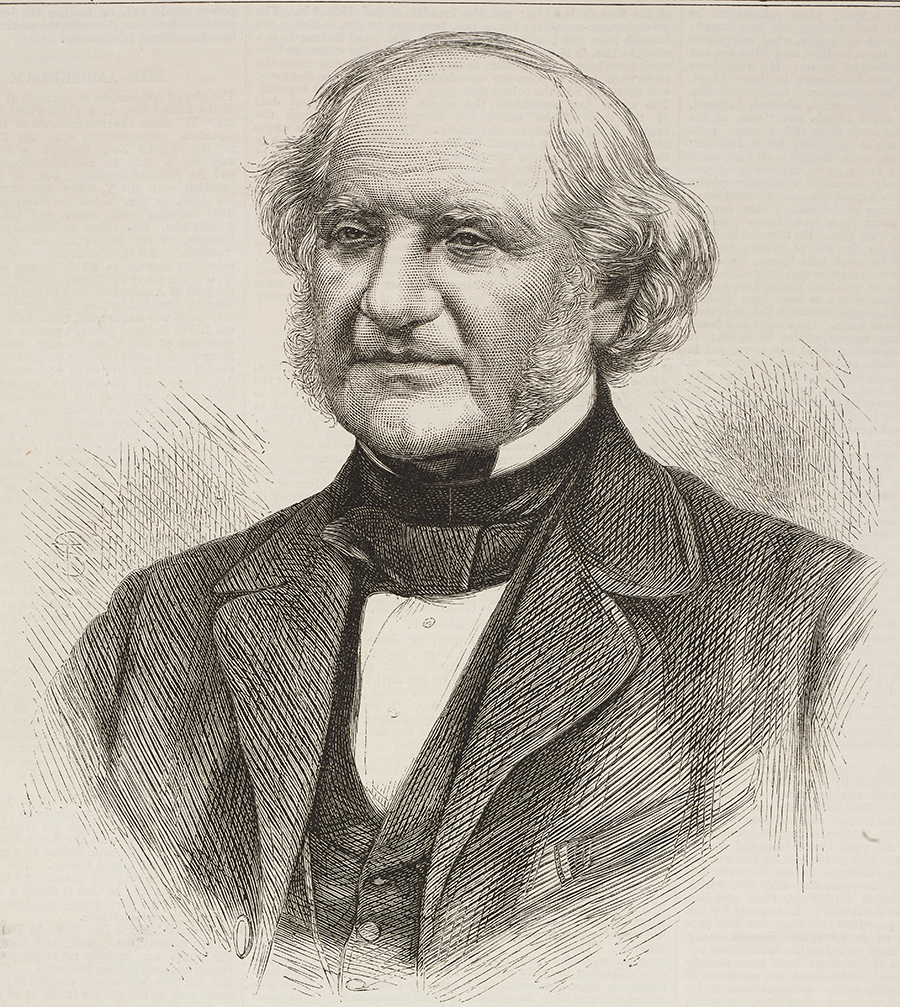
Marsh, whose mother died when he was just three years old, grew up on a farm in New York with his dad until his wealthy uncle, George Peabody, gifted the boy with enough money to start a formal education. (Later, in his will, Peabody left Marsh a large sum of money).

Portrait of George Peabody (1795-1869), American financier and philanthropist, illustration from the magazine The Illustrated London News, volume LV, November 20, 1869. (Getty)

Peabody would become known as the father of philanthropy,  with moguls like Bill Gates and John D. Rockefeller later adopting the same beneficent philosophies. He would go on to open The Peabody Institute, The Peabody Museum of Archaeology and Ethnology and The Peabody Academy of Science.

It was only natural for Marsh to follow along the scientific lines that his uncle had such an interest in. He received schooling from Phillips Academy and then later at Yale where he would receive his master’s in 1863 and would later returned to teach, making him the first professor of paleontology in the United States.

Ideal Jurassic landscape in America, 1884. From fossil evidence, Othniel Marsh imagined a scene during the late Jurassic epoch 163 to 161 million years ago, with Stegosaurus, Compsognathus (left) and Pterodactyls inhabiting it. From Scientific American. (New York, 29 November 1884). (Photo by Oxford Science Archive/Print Collector/Getty Images)

After he received a sizable inheritance from his uncle, Marsh set out with a group of fossil hunters to explore the United States on the hunt for animals that once roamed the same fields millions of years before man. The team completed four expeditions between 1870 and 1873.

Othniel Charles Marsh (top, center) and his team completed 4 expeditions across the American West on the hunt for animal fossils. (Wikicommons)

Marsh and his team found competition in another up-and-coming bone hunter- Edward Drinker Cope, who was said to have a fierce rivalry with the formally educated Marsh. Although Cope had no formal degrees, when the pair met, he had over 35 scientific papers published in comparison to Marsh’s two. However, the pair were said to have met and stayed together for several days on end and would continue to exchange writings, fossils and photographs of their adventures.

Edward Drinker Cope was a rival paleontologist who, with no formal education, published hundreds of scientific papers about paleontology. (Wikicommons)

Throughout his long, rich career Marsh discovered some 500 different new species of animals never known before. Among them were flying reptiles like the pterosaur, which Marsh was the first to find.

A cleaner dusts a cast of a Diplodocus skeleton at the Natural History Museum in London, 12th November 1936. The cast was made from the D. Carnegiei diplodocus at the Carnegie Museum of Natural History, Pittsburgh, and was presented to the London museum in 1905. (Photo by William Vanderson/Fox Photos/Hulton Archive/Getty Images)

The dinosaur bones that Marsh uncovered were what would make him famous – with positions as the President of the Nation Academy of Sciences and the head of the U.S. Geological Survey. Each new discovery solidified the paleontologist as the most famous in the world.

Gabriel Nicles 7, as seen thru the skull of the 68 million old Triceratop, found in Whyoming. The very first Triceratop was discovered by Marsh. Credit: The Denver Post (Denver Post via Getty Images)

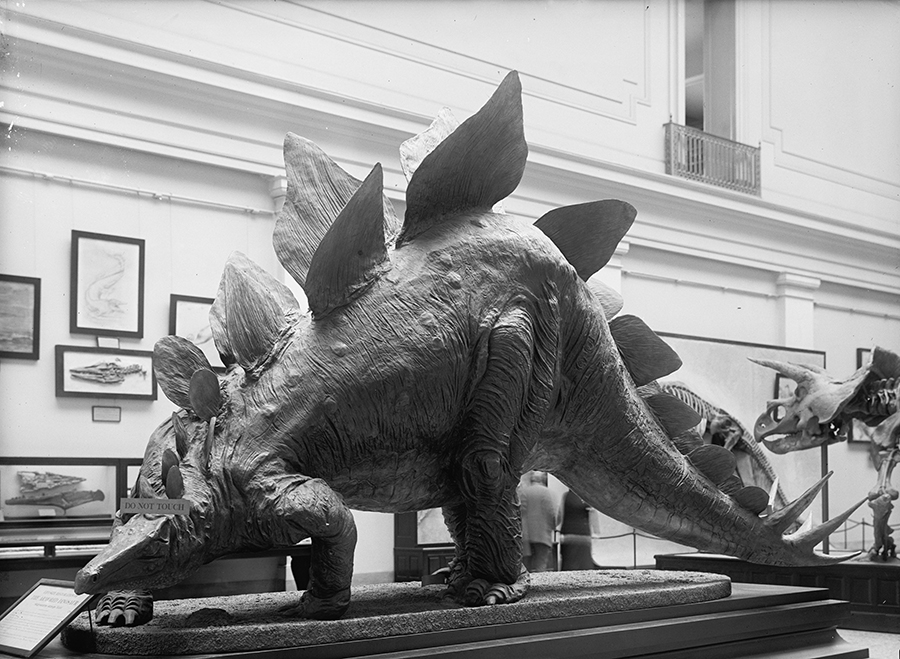
View of a model of a stegosaurus, labelled ‘the Armored Dinosaur,’ on display at the Smithsonian Institution, Washington DC, 1917. (Photo by Library of Congress/Interim Archives/Getty Images)

Marsh discovered so many fossils his finds made up the majority of the collection at Yale’s Peabody Museum of Natural History. The very first fossil skeleton of the Brontosaurus is the main attraction of the museum’s great hall.

The Peabody Museum of Yale University opened for exhibition brontosaurus, known as the “Thunder saurian,” a huge dinosaur nearly 70 feet long and 16 feet high, the skeleton of which weighs 6 1/2 tons. One of the largest reptiles the world has ever seen, its age is estimated by Yale scientists at 120,000,000 years. Its estimated weight when alive is between 37 and 40 tons. (Photo by George Rinhart/Corbis via Getty Images)

By the end of his life Marsh had discovered and named some of the most famous dinosaurs like the Triceratop, Diplodocus, Allosaurus, Stegosaurus and the Brontosaurus.

A year before his death, Marsh received the Cuvier Prize from the French Academy of Science. Marsh died of pneumonia on March 18, 1899. He donated his home to Yale University and it has been maintained as a National Historic Landmark.

Source: www.realclearlife.com

Step Towards Jurassic Park? Scientists ‘Wake Up’ Cells of Ancient Mammoth

Thursday, March 14, 2019

© Kindai University / Nature

A team of Japanese and Russian scientists has resurrected the cells of a female baby woolly mammoth named Yuka in a major step towards possibly one day bringing the animal back from extinction.

Yuka’s mummified remains were discovered in 2010 buried in the Siberian permafrost on the Laptev Sea where she died over 28,000 years ago. DNA was extracted from cells within the mammoth’s muscles and bone marrow, and several dozen of the least damaged nuclei were implanted into mice eggs, five of which showed “signs of biological activity.”

The cells were more damaged than initially hoped but the experiment showed significant promise.

Just don’t expect any Jurassic Parks anytime soon, as none of the implanted cells produced cell division, which would be a key process needed for any hope of cloning the giant creatures. Much like Yuka when she died, the efforts to resurrect an actual extinct animal are only in their infancy. 

“This suggests that, despite the years that have passed, cell activity can still happen and parts of it can be recreated,” said Kei Miyamoto, one of the study’s authors, as quoted by the New York Post“We need new technology, we want to try various approaches.”

“[It’s] a significant step towards bringing mammoths back from the dead,” Miyamoto concluded.

The research team at Kindai University in Japan published their findings in the Journal Nature. Thankfully, they are not the only ones attempting to bring these hairy giants back to life.

George Church, a Harvard and MIT geneticist and co-founder of CRISPR, is heading up the Harvard Woolly Mammoth Revival team whose stated aim is to bring the mammoth back to life to help humanity with conservation efforts across the globe.

Source: www.rt.com

Chrome's Offline Dinosaur is Now an Actual Toy You Can Buy, and it is Outstanding

Saturday, March 9, 2019

Chrome Dino

"There is no internet connection." Are there any more terrifying words in the English language? Okay, yes, lots of them. Still, losing internet access is no laughing matter in this hyper-connected age. What are you supposed to do without the internet? Read a book. Psh, not likely. Chrome's dinosaur error page has been with us for a long time, helping to calm nerves during those periods of disconnection. Starting next week, you can have the Chrome dino on your desk all the time with these Dead Zebra figurines.

The set includes the T-rex and four cacti—everything you need to recreate the ERR_INTERNET_DISCONNECTED screen on your desk. The dino is about three inches tall, and the cacti are between two and three inches. They're all ABS plastic and acrylic with permanently attached base plates for stability (unlike your internet connection, am I right?).

The box also has that familiar and ultimately useless checklist of things to try when the internet is down. On the opposite side, it has the game over screen from the dino endless runner you can play while waiting for the internet to come back. By the way, you can play that by going to chrome://dino. Dead Zebra will begin sales of the set March 11th at 11AM EDT. It'll retail for $24, and most of the AP team is planning to buy it.

Source: Dead Zebra

Why Do They Continue to Make Jurassic Park Movies?

Thursday, March 7, 2019

The Lost World - Jurassic Park (1997)

When it first came out, the original Jurassic Park movie was absolutely brilliant. It had it all. Action, adventure, not too much of the mushy stuff, and of course, dinosaurs aplenty!

Of course, we were going to get at least one sequel – after all, we never discovered what became of the island off the coast of Costa Rica once the team of scientists fled following the first disaster at Jurassic Park. However, as the franchise wore on through the 1990s, the quality waned.

Looks like we will get Jurassic Park – The Fast and the Furious

Jurassic-Park-3D

First, we headed to “site B” – a secret location that Dr. Hammond was using to keep other dinosaurs for the original park. Chaos theorist Ian Malcolm is summoned to document the ancient creatures living as close to a natural life as possible. However, a second team knows about the location and wants to start a new theme park, this time in the far more perilous location of San Francisco.

The next modern, prehistoric, not-quite-so-classic adventure – Jurassic Park III – sees the action return to the now sprawling dinosaur island from the second movie. Dr Grant is persuaded by a couple to give them a fly-over tour of Isla Sorna to find their son who is apparently lost in the sprawling forest below. The flight crash-lands on the island and the action that follows revolves around rescuing the boy from the million-year-old lizards.

Following the third movie, interest in dinosaurs was perceived to have waned sufficiently for there to be a much-needed break in the franchise. That said, the merchandising arm of Jurassic Park continued almost unabated. For the kids there would be lunch boxes, cuddly toys, action figures, and for adults, coffee mugs, t-shirts, and even video slots (play the free demo at NoDepositRewards) despite there being no new content from the series in years.

Almost a decade and a half later, however, the corpse of Jurassic Park would be wheeled out again. Jurassic World is actually a solid movie. It in no way captures the charm of the original title but it does get a lot right. The action takes place off the coast of Costa Rica once again. The plot is much more akin to the original movie, since it centres around a resort and what happens when the dinosaurs escape.

Finally, the newest movie in the franchise, for now at least, is Jurassic World: Fallen Kingdom. This one departs from the typical Jurassic Park narrative of “humans plus dinosaurs equals danger.” Instead, Owen Grady and Claire Dearing are forced to return to Isla Nublar since the dinosaurs that survived from the previous movie are in danger from a huge volcanic eruption that could cause them to go extinct – again.

What Made Jurassic Park So Good?

Jurassic-Park

The original Jurassic Park was such a success for a variety of reasons. Firstly, it had dinosaurs. Now, we all know that these ancient beasts have a powerful lure over both young and old – I for one had a bedroom adorned in dinosaur posters and pictures for much of my childhood.

However, we weren’t dealing with some low budget effort here. For Steven Spielberg’s now classic, only the most cutting edge in animatronics would suffice. This made Jurassic Park an absolute treat for the eyes and in all honesty, it still stands up well visually today.

This visual magnificence is built upon by the fact that the movie toes the line between pandering to the kids and their parents beautifully – a must for a family movie to be a success. If the adults roll their eyes at the mere mention of the title or the kids hide under their sheets in terror, it’s just not going to work. Fortunately, there is enough in the original Jurassic Park to keep all ages delighted – whether that’s the clowning around of young Timmy or the dry sarcastic wit of Ian Malcolm (masterfully played by Jeff Goldblum).

Throw into this winning mix a legendary theme tune, great performances from across the cast, an original plot and subtext that is believable yet unpredictable, and you have all the makings of a classic Hollywood blockbuster. Frankly, the original Jurassic Park is fantastic. So great in fact, that this entire article could easily be dedicated to the movie alone.

Why the Sequels Don’t Come Close

Jurassic-World

Jurassic Park set a high water mark that subsequent editions couldn’t come close to. None of the following plots manage to capture the drama of the original and no matter how many times our team of dino scientists visit one of the two damned islands, that much-needed freshness still hasn’t magically reappeared. In Jurassic Park III, the entire plot of movie two was dismissed as being largely trivial by the characters themselves. Even in the very latest movie out last year, the most interesting element of the whole plot was left undeveloped. However, there is hope that the human genetic experimentation angle will be developed in the forthcoming title – which is honestly not called Jurassic Park 15: Flogging a Dead T-Rex.

Along with plot issues, the sequels suffer from a variety of other downfalls that make them difficult to like, let alone love. Take the acting for example. It’s hard to think of a single character in the first movie that lets the side down. However, in the third instalment, we get to witness the truly cringe worthy relationship between Paul Kirby and wife Amanda. The lack of chemistry between the pair is really quite difficult to watch at times.

Then there are the characterizations themselves. Whereas Ellie Sattler was a straight up badass and the ultimate hero of the first movie, the female characters in later editions are frankly embarrassing. Both Amanda Kirby and Claire Dearing (of Jurassic World) are less characters and more caricatures. They play your typical “damsel in distress”, which in the second decade of the 21stcentury, feels dated at best and offensive at worst.

Ultimately, the movies following the original title try to get by on special effects and previous sentimental attachments to characters alone. This doesn’t really work when the writing and directing isn’t on par with the Jurassic Park.

A New Hope?

Jurassic-World-Super-Bowl

As mentioned, there is a new Jurassic Park movie on the way. It’s scheduled for release in 2021. Not a great deal is known about the latest in this now-oversized franchise. However, the writers and directors will clearly have their work cut out if they want to restore the magic of the first movie.

The entire series is really starting to feel tired by this point. The dinosaurs no longer have the visual impact they once did and the whole thing could probably use another, longer break. How the team behind Jurassic World III will overcome this is unclear – but please, no more tragically helpless female characters or derelict amusement parks!

Source: https://thatshelf.com

Scientists Put Ichthyosaurs in Virtual Water Tanks

Friday, March 8, 2019

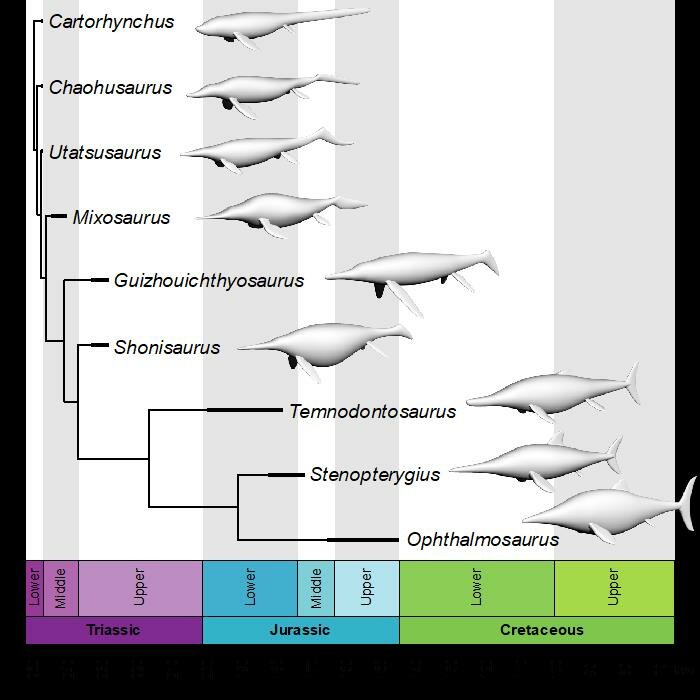
3D models of the nine ichthyosaurs analyzed by the researchers, shown in their evolutionary context. Credit: Gutarra et al., 2019)

Using computer simulations and 3-D models, palaeontologists from the University of Bristol have uncovered more detail on how Mesozoic sea dragons swam.

The research, published in the journal Proceedings of the Royal Society B, sheds new light on their energy demands while swimming, showing that even the first ichthyosaurs had  shapes well adapted to minimise resistance and maximise volume, in a similar way to modern dolphins.

Ichthyosaurs are an extinct group of sea-going reptiles that lived during the Mesozoic Era, around 248-93.9 million years ago.

During their evolution, they changed shape substantially, from having narrow, lizard-like bodies to more streamlined fish-shaped bodies.

It was assumed that the change in body shape made them more efficient swimmers, especially by reducing the drag of the body, in other words, the resistance to movement.

If they could produce less resistance for a given body mass, they would have more power for swimming, or swimming would take less effort. Then they could swim longer distances or reach faster speeds.

Susana Gutarra, a Ph.D. student in palaeobiology at the University of Bristol's School of Earth Sciences, said: "To test whether fish-shaped bodies helped ichthyosaurs reduce the energy demands of swimming, we made 3-D models of several different ichthyosaurs.

"We also created a model of a bottlenose dolphin, a living species which can be observed in the wild, so we could test if the method worked."

Dr. Colin Palmer, a hydrodynamics expert and a collaborator, added: "Susana used classic methods from ship design to test these ancient reptiles.

"The software builds a "virtual water tank" where we can control variables like the temperature, density and speed or water, and that allow us to measure all resulting forces.

Computational simulation of flow over the 3D models of two ichthyosaurs and a bottlenose dolphin. Velocity plot (left) and pressure coefficient (right) for a primitive ichthyosaur (Chaohusaurus), a derived fish-shaped ichthyosaur (Ophthalmosaurus) and a modern bottlenose dolphin (Tursiops). Credit: Susana Gutarra, University of Bristol

"The model ichthyosaurs were put into this "tank", and fluid flow conditions modelled, in the same way ship designers test different hull shapes to minimize drag and improve performance."

Professor Mike Benton, also from Bristol's School of Earth Sciences and a collaborator, said: "Much to our surprise, we found that the drastic changes to ichthyosaur body shape through millions of years did not really reduce drag very much.

"All of them had low-drag designs, and body shape must have changed from long and slender to dolphin-like for another reason. It seems that body size mattered as well."

Susana Gutarra added: "The first ichthyosaurs were quite small, about the size of an otter, and later ones reached sizes of 5-20 metres in length.

"When we measured flow over different body shapes at different sizes, we found that large bodies reduced the mass-specific energy demands of steady swimming."

Dr. Benjamin Moon, another collaborator from Bristol's School of Earth Sciences, said: "There was a shift in swimming style during ichthyosaur evolution. The most primitive ichthyosaurs swam by body undulations and later on they acquired broad tails for swimming by beating their tails (more efficient for fast and sustained swimming).

However, we found that some very early ichthyosaurs, like Utatsusaurus, might have been well suited for endurance swimming thanks to their large size, in spite of swimming by body undulations. Our results provide a very interesting insight into the ecology of ichthyosaurs."

Susana Gutarra concluded: "Swimming is a very complex phenomenon and there are some aspects of it that are particularly hard to test in fossil animals, like motion.

"In the future, we'll probably see simulations of ichthyosaurs moving through water.

"At the moment, simulating the ichthyosaurs in a static gliding position, enables us to focus our study on the morphology, minimizing our assumptions about their motion and also allow us to compare a relatively large sample of models."

More information: Effects of body plan evolution on the hydrodynamic drag and energy requirements of swimming in ichthyosaurs, Proceedings of the Royal Society Brspb.royalsocietypublishing.or … .1098/rspb.2018.2786

Source: https://phys.org

American Museum of National History Brings the T-Rex to Life in VR

Thursday, March 7, 2019

Visitors encounter a massive animated projection of a t. rex and its offspring in a late cretaceous setting. the huge dinosaur will react to visitors, leaving them to wonder, ‘did that t. rex see me?’ image © AMNH /r. mickens

VR Technology can unlock many different use cases in the coming years. For the American Museum of Natural History, bringing dinosaurs back to life is an option worth exploring. Through the “T. Rex: The Ultimate Predator” exhibition, the museum will give visitors a chance to get up close and personal with this majestic creature.

Meeting a T-Rex in Virtual Reality

Although most people would love to see a dinosaur in the real world, chances of that ever happening are slim to none. That is, assuming no one tries to recreate Jurassic Park or Jurassic World in real life over the coming decades. Thankfully, it seems the American Museum of Natural History is offering a viable alternative. Their new exhibition will focus on the Tyrannosaurus rex, which can be met in VR.

This new exhibition will serve as an educational tool in the future. Viewers can learn more about this creature, both as an adult version or when they grow up. There is a lot most people do not know about the T. rex, other than how frightening it looks. At the same time, this was an apex predator, thus it is only normal the adult-sized version isn’t too cuddly. Its hatchling version, however, is a different matter altogether.

This VR exhibition will also provide viewers with the most realistic and scientifically accurate representation of the T. rex to date. There will be an option to interact with fossils and casts. Additionally, the museum will offer a multiplayer VR experience, which is made possible thanks to the help of the HTC Vive team. Up to three individuals will team up to build a T. rex fossil bone by bone in virtual reality.

It is not the first time virtual reality will serve as an educational tool either. Numerous options are being explored in this regard. Giving museum visitors an option to engage with the subject matter at hand is a big step in the right direction. When bringing history and knowledge to life, virtual reality can offer many opportunities to look into. An at-home version of this T. rex exhibition will launch on Viveport during the Summer of 2019.

Source: https://thevrsoldier.com

Pages