Blogs

Brontosaurus

Saturday, March 11, 2017

Brontosaurus

Brontosaurus meaning “thunder lizard” is a genus of gigantic quadruped sauropod dinosaurs. Although the type species, B. excelsus, had long been considered a species of the closely related Apatosaurus, more recent research has proposed that Brontosaurus is a genus separate from Apatosaurus that contains three species: B. excelsusB. yahnahpin, and B. parvus.

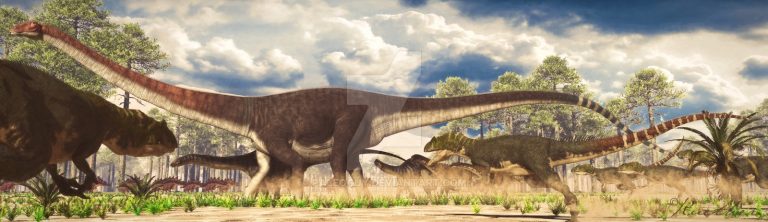
Brontosaurus by Prehistoric Wildlife

Brontosaurus had long, thin necks and small heads, adapted for a herbivorous lifestyle, as well as long, whip-like tails. They lived during the Late Jurassic epoch in the Morrison Formation of North America, going extinct by the end of the Jurassic. Adult individuals of Brontosaurus are estimated to weigh up to 15 tonnes (15 long tons; 17 short tons) and measure up to 22 metres (72 ft) long; this places Brontosaurus among the largest land animals along with other diplodocids.

As the archetypal sauropod, Brontosaurus is one of the best-known dinosaurs, and has been featured in film, advertising, and postal stamps, as well as many other types of media.

Cast of B. parvus specimen UWGM 15556 at Tellus Science Museum

Brontosaurus was a large, long-necked quadrupedal animal with a long, whip-like tail, and forelimbs that were slightly shorter than their hindlimbs. The largest species, B. excelsus, weighed up to 15 tonnes (15 long tons; 17 short tons) and measured up to 22 m (72 ft) long from head to tail.

The skull of Brontosaurus has not been found, but was probably similar to the skull of the closely related Apatosaurus. Like those of other sauropods, the vertebrae of the neck were deeply bifurcated; that is, they carried paired spines, resulting in a wide and deep neck. The vertebral formula was: 15 cervicals, 10 dorsals, five sacrals, and 82 caudals. The caudal vertebra number was noted to vary, even within a species. The cervical vertebrae were stouter than other diplodocids, though not as stout as in mature specimens of Apatosaurus. The dorsal ribs are not fused or tightly attached to their vertebrae, instead being loosely articulated. Ten dorsal ribs are on either side of the body. The large neck was filled with an extensive system of weight-saving air sacs. Brontosaurus, like its close relative Apatosaurus, had tall spines on its vertebrae, which make up more than half the height of the individual bones. The shape of the tail was unusual for diplodocids, being comparatively slender, due to the vertebral spines rapidly decreasing in height the farther they are from the hips. Brontosaurus also had very long ribs compared to most other diplodocids, giving them unusually deep chests. As in other diplodocids, the last portion of the tail of Brontosaurus possessed a whip-like structure.

Classification

Brontosaurus is a member of the family Diplodocidae, a clade of gigantic sauropod dinosaurs. The family includes some of the longest and largest creatures ever to walk the earth, including DiplodocusSupersaurus, and BarosaurusBrontosaurus is also classified in the subfamily Apatosaurinae, which also includes Apatosaurus and one or more possible unnamed genera. Othniel Charles Marsh described Brontosaurus as being allied to Atlantosaurus, within the now defunct group Atlantosauridae. In 1878, Marsh raised his family to the rank of suborder, including ApatosaurusBrontosaurusAtlantosaurusMorosaurus (=Camarasaurus), and Diplodocus. He classified this group within Sauropoda. In 1903, Elmer S. Riggs mentioned that the name Sauropoda would be a junior synonym of earlier names, and grouped Apatosaurus within Opisthocoelia. Most authors still use Sauropoda as the group name.

Infographic explaining the history of Brontosaurus and Apatosaurus according to Tschopp et al. 2015

Originally named by its discoverer Othniel Charles Marsh in 1879, Brontosaurus had long been considered a junior synonym of Apatosaurus; its type species, Brontosaurus excelsus, was reclassified as A. excelsus in 1903. However, an extensive study published in 2015 by a joint British-Portuguese research team concluded that Brontosaurus was a valid genus of sauropod distinct from Apatosaurus. Nevertheless, not all paleontologists agree with this division. The same study classified two additional species that had once been considered Apatosaurus and Eobrontosaurus as Brontosaurus parvus and Brontosaurus yahnahpin respectively.

Species

  • Brontosaurus excelsus, the type species of Brontosaurus, was first named by Marsh in 1879. Many specimens, including the holotype specimen YPM 1980, have been assigned to the species. They include FMNH P25112, the skeleton mounted at the Field Museum of Natural History, which has since been found to represent an unknown species of apatosaurine. Brontosaurus amplus, occasionally assigned to B. parvus, is a junior synonym of B. excelsusB. excelsus therefore only includes its type specimen and the type specimen of B. amplus. The largest of these specimens is estimated to have weighed up to 15 tonnes and measured up to 22 m (72 ft) long from head to tail. Both known definitive B. excelsus fossils have been reported from Reed’s Quarry 10 of the Morrison Formation Brushy Basin member in Albany County, Wyoming, dated to the late Kimmeridgian age, about 152 million years ago.
  • Brontosaurus parvus, first described as Elosaurus in 1902 by Peterson and Gilmore, was reassigned to Apatosaurus in 1994, and to Brontosaurus in 2015. Specimens assigned to this species include the holotype, CM 566 (a partial skeleton of a juvenile found in Sheep Creek Quarry 4 in Albany County, WY), BYU 1252-18531 (a nearly complete skeleton found in Utah and mounted at Brigham Young University), and the partial skeleton UW 15556 (which had once been accidentally mixed together with the holotype). It dates to the middle Kimmeridgian. Adult specimens are estimated to have weighed up to 14 tonnes and measured up to 22 m (72 ft) long from head to tail.
  • Brontosaurus yahnahpin is the oldest species, known from a single site from the lower Morrison Formation, Bertha Quarry, in Albany County, Wyoming, dating to about 155 million years ago. It grew up to 21 metres (69 ft) long. The type species, E. yahnahpin, was described by James Filla and Patrick Redman in 1994 as a species of Apatosaurus (A. yahnahpin). The specific name is derived from Lakota mah-koo yah-nah-pin, “breast necklace”, a reference to the pairs of sternal ribs that resemble the hair pipes traditionally worn by the tribe. The holotype specimen is TATE-001, a relatively complete postcranial skeleton found in Wyoming, in the lower Morrison Formation. More fragmentary remains have also been referred to the species. A re-evaluation by Robert T. Bakker in 1998 found it to be more primitive, so Bakker coined the new generic name Eobrontosaurus, derived from Greek eos, “dawn”, and Brontosaurus.

Source: www.Wikipedia.org, www.NatGeo.com

Amphicoelias

Saturday, March 11, 2017

Amphicoelias by paleoguy on DeviantArt

Amphicoelias is a genus of herbivorous sauropod dinosaur. It includes what has sometimes been estimated to be the largest dinosaur specimen ever discovered, originally named “A. fragillimus“. Based on surviving descriptions of a single fossil bone, scientists had over the years estimated A. fragillimus to have been the longest known animal at 58 metres (190 ft) in length, with potentially a mass of up to 122.4 tonnes (134.9 short tons). However, because the only fossil remains were lost at some point after being studied and described in the 1870s, evidence survived only in drawings and field notes. More recent analysis of the surviving evidence, and the biological plausibility of such a large land animal, has suggested that the enormous size of this animal were over-estimates due partly to typographical errors in the original 1878 description.

Restoration of Amphicoelias altus by ДиБгд

The type species of AmphicoeliasA. altus, was named by paleontologist Edward Drinker Cope in December 1877 (though not published until 1878) for an incomplete skeleton consisting of two vertebrae, a pubis (hip bone), and a femur (upper leg bone). Cope also named a second species, A. fragillimus, in the same paper. However, all subsequent researchers have considered A. fragillimus to be a synonym of A. altus. Even by 1881 however, it was recognized that A. altus could not be distinguished from other genera, as the features described by Cope were misinterpreted and are widespread. In 1921, Osborn and Mook assigned additional bones to A. altus—a scapula (shoulder blade), a coracoid (shoulder bone), an ulna (lower arm bone), and a tooth. Henry Fairfield Osborn and Charles Craig Mook noted the overall close similarity between Amphicoelias and Diplodocus, as well as a few key differences, such as proportionally longer forelimbs in Amphicoelias than in Diplodocus. The dentition of Amphicoelias is homodont. Its teeth are shaped like long slender cylindrical rods, are spaced apart and project forward towards the front of the mouth. The femur of Amphicoelias is unusually long, slender, and round in cross section; while this roundness was once thought to be another distinguishing characteristic of Amphicoelias, it has since been found in some specimens of Diplodocus as well. A. altus was also similar in size to Diplodocus, estimated to be about 25 m (82 ft) long. While most scientists have used these details to distinguish Amphicoelias and Diplodocus as separate genera, at least one has suggested that Amphicoelias is probably the senior synonym of Diplodocus.

Size

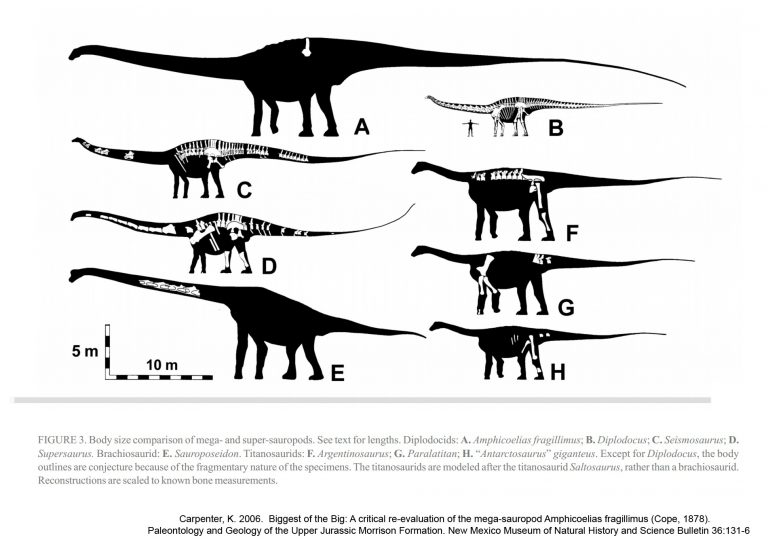
Producing an estimate of the complete size of A. fragillimus requires scaling the bones of better-known species of diplodocid (a family of extremely long and slender sauropods) in the assumption that their relative proportions were similar. In his original paper, Cope did this by speculating on the size of a hypothetical A. fragillimus femur (upper leg bone). Cope noticed that in other sauropod dinosaurs, specifically A. altus and Camarasaurus supremus, the femora were always twice as tall as the tallest dorsal vertebra, and estimated the size of an A. fragillimus femur to be 12 ft (3.6 m) tall.

The relative size of Amphicoelias fragillimus compared to other sauropods

Palaeocene

Saturday, March 11, 2017

The Paleocene or Palaeocene, the “old recent”, is a geologic epoch that lasted from about 66 to 56 million years ago. It is the first epoch of the Paleogene Period in the modern Cenozoic Era. As with many geologic periods, the strata that define the epoch’s beginning and end are well identified, but the exact ages remain uncertain.

Gastornis is an extinct genus of large flightless birds that lived during the late Paleocene and Eocene epochs of the Cenozoic era. Initially thought to be a predator, new theories suggest this large bird may have been a herbivore. Paleoart by Jacek Major

The Paleocene Epoch brackets two major events in Earth’s history. It started with the mass extinction event at the end of the Cretaceous, known as the Cretaceous–Paleogene (K–Pg) boundary. This was a time marked by the demise of non-avian dinosaurs, giant marine reptiles and much other fauna and flora. The die-off of the dinosaurs left unfilled ecological niches worldwide. The Paleocene ended with the Paleocene–Eocene Thermal Maximum, a geologically brief (~0.2 million year) interval characterized by extreme changes in climate and carbon cycling.

The name “Paleocene” comes from Ancient Greek and refers to the “old(er)” (παλαιός, palaios) “new” (καινός, kainos) fauna that arose during the epoch.

South American hoofed mammals, during the Miocene and Paleocene periods

Boundaries and subdivisions

The K–Pg boundary that marks the separation between Cretaceous and Paleocene is visible in the geological record of much of the Earth by a discontinuity in the fossil fauna, with high iridium levels. There is also fossil evidence of abrupt changes in flora and fauna. There is some evidence that a substantial but very short-lived climatic change may have happened in the very early decades of the Paleocene. There are several theories about the cause of the K–Pg extinction event, with most evidence supporting the impact of a 10 km diameter asteroid forming the buried Chicxulub crater on the coast of Yucatan, Mexico.

The end of the Paleocene (~55.8 Ma) was also marked by a time of major change, one of the most significant periods of global change during the Cenozoic. The Paleocene–Eocene Thermal Maximum upset oceanic and atmospheric circulation and led to the extinction of numerous deep-sea benthic foraminifera and a major turnover in mammals on land.

The Paleocene is divided into three stages, the Danian, the Selandian and the Thanetian, as shown in the table above. Additionally, the Paleocene is divided into six Mammal Paleogene zones.

Climate

The early Paleocene was cooler and dryer than the preceding Cretaceous, though temperatures rose sharply during the Paleocene–Eocene Thermal Maximum. The climate became warm and humid worldwide towards the Eocene boundary, with subtropical vegetation growing in Greenland and Patagonia, crocodilians swimming off the coast of Greenland, and early primates evolving in the tropical palm forests of northern Wyoming. The Earth’s poles were cool and temperate; North America, Europe, Australia and southern South America were warm and temperate; equatorial areas had tropical climates; and north and south of the equatorial areas, climates were hot and arid, not dissimilar to today’s global desert belts around 30 degrees northern and southern latitude.

Paleogeography

In many ways, the Paleocene continued processes that had begun during the late Cretaceous Period. During the Paleocene, the continents continued to drift toward their present positions. Supercontinent Laurasia had not yet separated into three continents – Europe and Greenland were still connected, North America and Asia were still intermittently joined by a land bridge, while Greenland and North America were beginning to separate. The Laramide orogeny of the late Cretaceous continued to uplift the Rocky Mountains in the American west, which ended in the succeeding epoch.

South and North America remained separated by equatorial seas (they joined during the Neogene); the components of the former southern supercontinent Gondwanaland continued to split apart, with Africa, South America, Antarctica and Australia pulling away from each other. Africa was heading north towards Europe, slowly closing the Tethys Ocean, and India began its migration to Asia that would lead to a tectonic collision and the formation of the Himalayas.

The inland seas in North America (Western Interior Seaway) and Europe had receded by the beginning of the Paleocene, making way for new land-based flora and fauna.

The Western Interior Seaway

Oceans

Warm seas circulated throughout the world, including the poles. The earliest Paleocene featured a low diversity and abundance of marine life, but this trend reversed later in the epoch. Tropical conditions gave rise to abundant marine life, including coral reefs. With the demise of marine reptiles at the end of the Cretaceous, sharks became the top predators. At the end of the Cretaceous, the ammonites and many species of foraminifera became extinct.

Marine fauna also came to resemble modern fauna, with only the marine mammals and the Carcharhinid sharks missing.

Flora

Terrestrial Paleocene strata immediately overlying the K–Pg boundary is in places marked by a “fern spike”: a bed especially rich in fern fossils. Ferns are often the first species to colonize areas damaged by forest fires; thus the fern spike may indicate post-Chicxulub crater devastation.

In general, the Paleocene is marked by the development of modern plant species. Cacti and palm trees appeared. Paleocene and later plant fossils are generally attributed to modern genera or to closely related taxa.

The warm temperatures worldwide gave rise to thick tropical, sub-tropical and deciduous forest cover around the globe (the first recognizably modern rain forests) with ice-free polar regions covered with coniferous and deciduous trees. With no large browsing dinosaurs to thin them, Paleocene forests were probably denser than those of the Cretaceous.

Flowering plants (angiosperms), first seen in the Cretaceous, continued to develop and proliferate, and along with them coevolved the insects that fed on these plants and pollinated them.

Fauna

Mammals

Mammals had first appeared in the Late Triassic, evolving from advanced cynodonts, and developed alongside the dinosaurs, exploiting ecological niches untouched by the larger and more famous Mesozoic animals: in the insect-rich forest underbrush and high up in the trees. These smaller mammals (as well as birds, reptiles, amphibians, and insects) survived the mass extinction at the end of the Cretaceous which wiped out the non-avian dinosaurs, and mammals diversified and spread throughout the world.

Pantodonts, uintatheres and xenungulates: The first large herbivorous mammals. By Kelly Taylor

While early mammals were small nocturnal animals that mostly ate soft plant material and small animals such as insects, the demise of the non-avian dinosaurs and the beginning of the Paleocene saw mammals growing bigger and occupying a wider variety of ecological niches. Ten million years after the death of the non-avian dinosaurs, the world was filled with rodent-like mammals, medium-sized mammals scavenging in forests, and large herbivorous and carnivorous mammals hunting other mammals, birds, and reptiles.

Fossil evidence from the Paleocene is scarce, and there is relatively little known about mammals of the time. Because of their small size (constant until late in the epoch) early mammal bones are not well preserved in the fossil record, and most of what we know comes from fossil teeth (a much tougher substance), and only a few skeletons.

The brain to body mass ratios of these archaic mammals were quite low.

Mammals of the Paleocene include:

  • Monotremes: The ornithorhynchid Obdurodon sudamericanum, in the family that includes the platypus, is the only monotreme known from the Paleocene.

  • Marsupials: modern kangaroos are marsupials, characterized by giving birth to embryonic young, who crawl into the mother’s pouch and suckle until they are developed. The Bolivian Pucadelphys andinus and the North American Peradectesare two Paleocene examples.

  • Multituberculates: the only major branch of mammals to become extinct since the K–Pg boundary, this rodent-like grouping includes the Paleocene Ptilodus.

  • Placentals: this grouping of mammals became the most diverse and the most successful. Members include primates, plesiadapids, proboscideans, and hoofed ungulates, including the condylarths and the carnivorous mesonychids.

Reptiles

Because of the climatic conditions of the Paleocene, reptiles were more widely distributed over the globe than at present. Among the sub-tropical reptiles found in North America during this epoch are champsosaurs (aquatic reptiles that resemble modern gharials), crocodilia, soft-shelled turtles, palaeophi snakes, varanid lizards, and Protochelydra zangerli (similar to modern snapping turtles).

Choristodera is an order of semi-aquatic diapsid reptiles that ranged from the Middle Jurassic, or possibly Late Triassic, to at least the early Miocene. It was named by Edward Drinker Cope in 1884.

Examples of champsosaurs of the Paleocene include Champsosaurus gigas, the largest champsosaur ever discovered. This creature was unusual among Paleocene reptiles in that C. gigas became larger than its known Mesozoic ancestors: C. gigas is more than twice the length of the largest Cretaceous specimens (3 meters versus 1.5 meters). Reptiles as a whole decreased in size after the K–Pg event. Champsosaurs declined towards the end of the Paleocene and became extinct during the Miocene.

Examples of Paleocene crocodylians are Borealosuchus (formerly Leidyosuchusformidabilis, the apex predator and the largest animal of the Wannagan Creek fauna, and the alligatorid Wannaganosuchus.

Non-avian dinosaurs may have survived to some extent into the early Danian stage of the Paleocene Epoch circa 64.5 Mya. The controversial evidence for such is a hadrosaur leg bone found from Paleocene strata in New Mexico; but such stray late forms may be derived fossils.

Birds

Birds began to re-diversify during the epoch, occupying new niches. Genetic studies suggest that nearly all modern bird clades can trace their origin to this epoch, with Neornithes having undergone an extremely fast, “star-like” radiation of species in the early Palaeocene in response to the vacancy of niches left by the KT event.

Modern Birds: The Neornithes

Large flightless birds have been found in late Paleocene deposits, including the omnivorous Gastornis in Europe and carnivorous terror birds in South America, the latter of which survived until the Pleistocene.

In the late Paleocene, early owl types appeared, such as Ogygoptynx in the United States and Berruornis in France.

____________________________________

Began: Cretaceous-Tertiary mass extinction, 65 million years ago

Ended: 54.8 million years ago

Cretaceous

Saturday, March 11, 2017

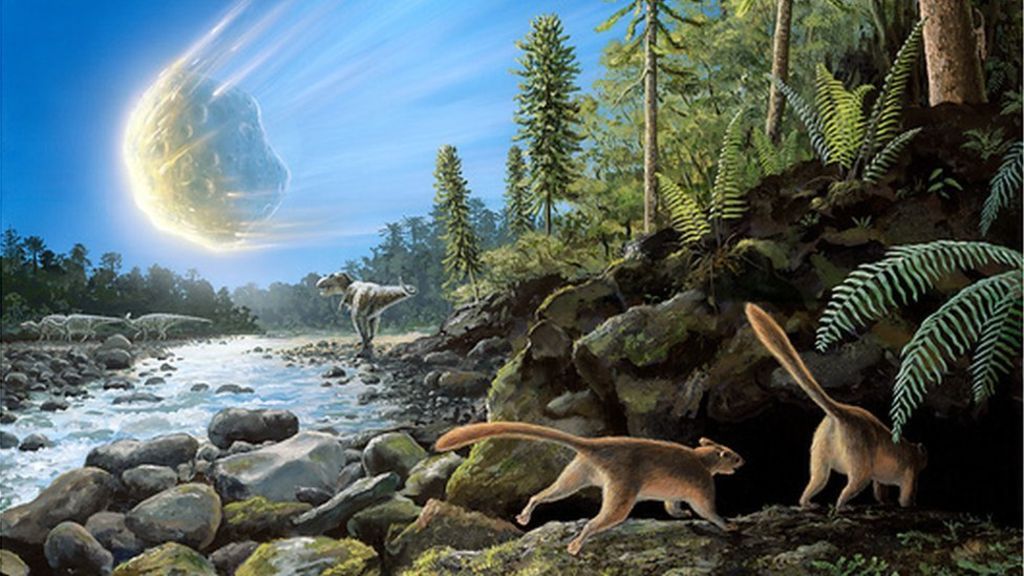
The early mammals of the late cretaceous were small burrowing creatures, not unlike today’s mice, others growing to a size comparable to modern domestic cats

The Cretaceous is a geologic period and system that spans 79 million years from the end of the Jurassic Period 145 million years ago (Mya) to the beginning of the Paleogene Period 66 Mya. It is the last period of the Mesozoic Era. The Cretaceous Period is usually abbreviated K, for its German translation Kreide (chalk).
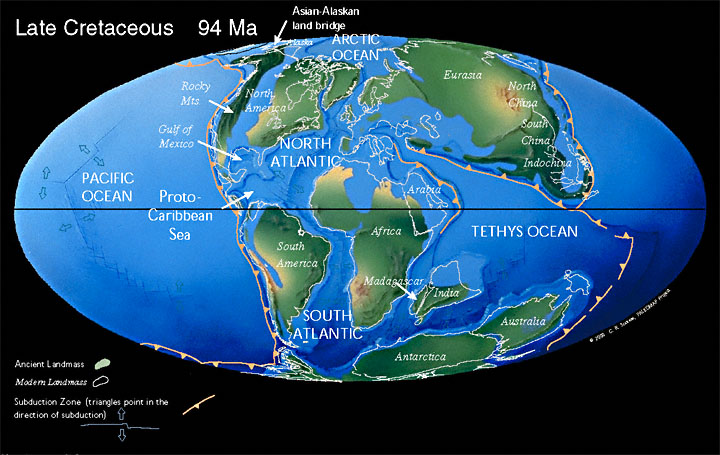
Cretaceous Earth

The Cretaceous was a period with a relatively warm climate, resulting in high eustatic sea levels that created numerous shallow inland seas. These oceans and seas were populated with now-extinct marine reptiles, ammonites and rudists, while dinosaurs continued to dominate on land. During this time, new groups of mammals and birds, as well as flowering plants, appeared. The Cretaceous ended with a large mass extinction, the Cretaceous–Paleogene extinction event, in which many groups, including non-avian dinosaurs, pterosaurs and large marine reptiles died out. The end of the Cretaceous is defined by the abrupt Cretaceous–Paleogene boundary (K–Pg boundary), a geologic signature associated with the mass extinction which lies between the Mesozoic and Cenozoic eras.

Research history

The Cretaceous as a separate period was first defined by Belgian geologist Jean d’Omalius d’Halloy in 1822, using strata in the Paris Basin and named for the extensive beds of chalk (calcium carbonate deposited by the shells of marine invertebrates, principally coccoliths), found in the upper Cretaceous of Western Europe. The name Cretaceous was derived from Latin creta, meaning chalk.
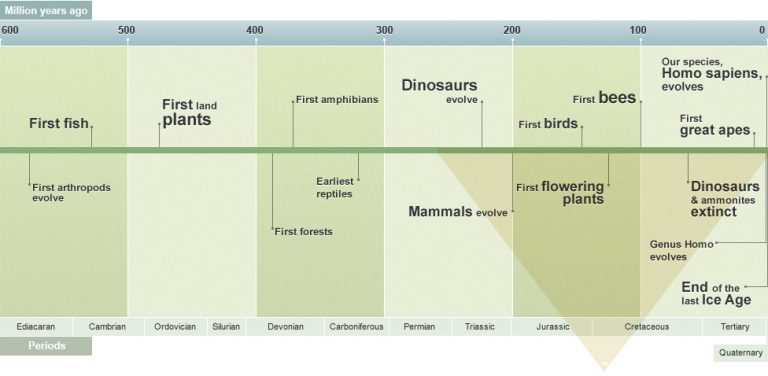
A timeline of the last 600 million years, showing major events in evolution.

Stratigraphic subdivisions

The Cretaceous is divided into Early and Late Cretaceous epochs, or Lower and Upper Cretaceous series. In older literature the Cretaceous is sometimes divided into three series: Neocomian (lower/early), Gallic (middle) and Senonian (upper/late). A subdivision in eleven stages, all originating from European stratigraphy, is now used worldwide. In many parts of the world, alternative local subdivisions are still in use.

As with other older geologic periods, the rock beds of the Cretaceous are well identified but the exact age of the system’s base is uncertain by a few million years. No great extinction or burst of diversity separates the Cretaceous from the Jurassic. However, the top of the system is sharply defined, being placed at an iridium-rich layer found worldwide that is believed to be associated with the Chicxulub impact crater, with its boundaries circumscribing parts of the Yucatán Peninsula and into the Gulf of Mexico. This layer has been dated at 66.043 Ma.

A 140 Ma age for the Jurassic-Cretaceous boundary instead of the usually accepted 145 Ma was proposed in 2014 based on a stratigraphic study of Vaca Muerta Formation in Neuquén Basin, Argentina. Víctor Ramos, one of the authors of the study proposing the 140 Ma boundary age sees the study as a “first step” toward formally changing the age in the International Union of Geological Sciences.

From youngest to oldest, the subdivisions of the Cretaceous period are:

Late Cretaceous

Maastrichtian – (66-72.1 MYA)

Campanian – (72.1-83.6 MYA)

Santonian – (83.6-86.3 MYA)

Coniacian – (86.3-89.8 MYA)

Turonian – (89.8-93.9 MYA)

Cenomanian – (93.9-100.5 MYA)

Early Cretaceous

Albian – (100.5-113.0 MYA)

Aptian – (113.0-125.0 MYA)

Barremian – (125.0-129.4 MYA)

Hauterivian – (129.4-132.9 MYA)

Valanginian – (132.9-139.8 MYA)

Berriasian – (139.8-145.0 MYA)

Rock formations

The high sea level and warm climate of the Cretaceous meant large areas of the continents were covered by warm, shallow seas, providing habitat for many marine organisms. The Cretaceous was named for the extensive chalk deposits of this age in Europe, but in many parts of the world, the deposits from the Cretaceous are of marine limestone, a rock type that is formed under warm, shallow marine circumstances. Due to the high sea level there was extensive space for such sedimentation. Because of the relatively young age and great thickness of the system, Cretaceous rocks are evident in many areas worldwide.

Chalk is a rock type characteristic for (but not restricted to) the Cretaceous. It consists of coccoliths, microscopically small calcite skeletons of coccolithophores, a type of algae that prospered in the Cretaceous seas.

In northwestern Europe, chalk deposits from the Upper Cretaceous are characteristic for the Chalk Group, which forms the white cliffs of Dover on the south coast of England and similar cliffs on the French Normandian coast. The group is found in England, northern France, the low countries, northern Germany, Denmark and in the subsurface of the southern part of the North Sea. Chalk is not easily consolidated and the Chalk Group still consists of loose sediments in many places. The group also has other limestones and arenites. Among the fossils it contains are sea urchins, belemnites, ammonites and sea reptiles such as Mosasaurus.

In southern Europe, the Cretaceous is usually a marine system consisting of competent limestone beds or incompetent marls. Because the Alpine mountain chains did not yet exist in the Cretaceous, these deposits formed on the southern edge of the European continental shelf, at the margin of the Tethys Ocean.

Stagnation of deep sea currents in middle Cretaceous times caused anoxic conditions in the sea water leaving the deposited organic matter undecomposed. Half the worlds petroleum reserves were laid down at this time in the anoxic conditions of what would become the Persian Gulf and Gulf of Mexico. In many places around the world, dark anoxic shales were formed during this interval. These shales are an important source rock for oil and gas, for example in the subsurface of the North Sea.

During the Cretaceous, the late-Paleozoic-to-early-Mesozoic supercontinent of Pangaea completed its tectonic breakup into the present-day continents, although their positions were substantially different at the time. As the Atlantic Ocean widened, the convergent-margin mountain building (orogenies) that had begun during the Jurassic continued in the North American Cordillera, as the Nevadan orogeny was followed by the Sevier and Laramide orogenies.

Though Gondwana was still intact in the beginning of the Cretaceous, it broke up as South America, Antarctica and Australia rifted away from Africa (though India and Madagascar remained attached to each other); thus, the South Atlantic and Indian Oceans were newly formed. Such active rifting lifted great undersea mountain chains along the welts, raising eustatic sea levels worldwide. To the north of Africa the Tethys Sea continued to narrow. Broad shallow seas advanced across central North America (the Western Interior Seaway) and Europe, then receded late in the period, leaving thick marine deposits sandwiched between coal beds. At the peak of the Cretaceous transgression, one-third of Earth’s present land area was submerged.

Climate

The cooling trend of last epoch of the Jurassic continued into the first age of the Cretaceous. There is evidence that snowfalls were common in the higher latitudes and the tropics became wetter than during the Triassic and Jurassic. Glaciation was however restricted to high-latitude mountains, though seasonal snow may have existed farther from the poles. Rafting by ice of stones into marine environments occurred during much of the Cretaceous but evidence of deposition directly from glaciers is limited to the Early Cretaceous of the Eromanga Basin in southern Australia.

A very gentle temperature gradient from the equator to the poles meant weaker global winds, which drive the ocean currents, resulted in less upwelling and more stagnant oceans than today. This is evidenced by widespread black shale deposition and frequent anoxic events. Sediment cores show that tropical sea surface temperatures may have briefly been as warm as 42 °C (108 °F), 17 °C (31 °F) warmer than at present, and that they averaged around 37 °C (99 °F). Meanwhile, deep ocean temperatures were as much as 15 to 20 °C (27 to 36 °F) warmer than today’s.

Flora

Flowering plants (angiosperms) spread during this period, although they did not become predominant until the Campanian Age near the end of the period. Their evolution was aided by the appearance of bees; in fact angiosperms and insects are a good example of coevolution. The first representatives of many leafy trees, including figs, planes and magnolias, appeared in the Cretaceous. At the same time, some earlier Mesozoic gymnosperms continued to thrive; pehuéns (monkey puzzle trees, Araucaria) and other conifers being notably plentiful and widespread. Some fern orders such as Gleicheniales appeared as early in the fossil record as the Cretaceous, and achieved an early broad distribution. Gymnosperm taxa like Bennettitales and hirmerellan conifers died out before the end of the period.

Terrestrial fauna

On land, mammals were generally small sized, but a very relevant component of the fauna, with cimolodont multituberculates outnumbering dinosaurs in some sites. Neither true marsupials nor placentals existed until the very end, but a variety of non-marsupial metatherians and non-placental eutherians had already began to diversify greatly, ranging as carnivores (Deltatheroida), aquatic foragers (Stagodontidae) and herbivores (Schowalteria, Zhelestidae). Various “archaic” groups like eutriconodonts were common in the Early Cretaceous, but by the Late Cretaceous northern mammalian faunas were dominated by multituberculates and therians, with dryolestoids dominating South America.

The apex predators were archosaurian reptiles, especially dinosaurs, which were at their most diverse stage. Pterosaurs were common in the early and middle Cretaceous, but as the Cretaceous proceeded they declined for poorly understood reasons (once thought to be due to competition with early birds, but now it is understood avian adaptive radiation is not consistent with pterosaur decline), and by the end of the period only two highly specialized families remained.

Insects diversified during the Cretaceous, and the oldest known ants, termites and some lepidopterans, akin to butterflies and moths, appeared. Aphids, grasshoppers and gall wasps appeared.

Marine fauna

In the seas, rays, modern sharks and teleosts became common. Marine reptiles included ichthyosaurs in the early and mid-Cretaceous (becoming extinct during the late Cretaceous Cenomanian-Turonian anoxic event), plesiosaurs throughout the entire period, and mosasaurs appearing in the Late Cretaceous.

Baculites, an ammonite genus with a straight shell, flourished in the seas along with reef-building rudist clams. The Hesperornithiformes were flightless, marine diving birds that swam like grebes. Globotruncanid Foraminifera and echinoderms such as sea urchins and starfish (sea stars) thrived. The first radiation of the diatoms (generally siliceous shelled, rather than calcareous) in the oceans occurred during the Cretaceous; freshwater diatoms did not appear until the Miocene. The Cretaceous was also an important interval in the evolution of bioerosion, the production of borings and scrapings in rocks, hardgrounds and shells.

End-Cretaceous extinction event

The impact of a large body with the Earth may have been the punctuation mark at the end of a progressive decline in biodiversity during the Maastrichtian Age of the Cretaceous Period. The result was the extinction of three-quarters of Earth’s plant and animal species. The impact created the sharp break known as K–Pg boundary (formerly known as the K–T boundary). Earth’s biodiversity required substantial time to recover from this event, despite the probable existence of an abundance of vacant ecological niches.

Despite the severity of K-Pg extinction event, there was significant variability in the rate of extinction between and within different clades. Species which depended on photosynthesis declined or became extinct as atmospheric particles blocked solar energy. As is the case today, photosynthesizing organisms, such as phytoplankton and land plants, formed the primary part of the food chain in the late Cretaceous, and all else that depended on them suffered as well. Herbivorous animals, which depended on plants and plankton as their food, died out as their food sources became scarce; consequently, the top predators such as Tyrannosaurus rex also perished. Yet only three major groups of tetrapods disappeared completely; the non-avian dinosaurs, the plesiosaurs and the pterosaurs. The other Cretaceous groups that did not survive into the Cenozoic era, the ichthyosaurs and last remaining temnospondyls and non-mammalian cynodonts were already extinct millions of years before the event occurred.

Coccolithophorids and molluscs, including ammonites, rudists, freshwater snails and mussels, as well as organisms whose food chain included these shell builders, became extinct or suffered heavy losses. For example, it is thought that ammonites were the principal food of mosasaurs, a group of giant marine reptiles that became extinct at the boundary.

Omnivores, insectivores and carrion-eaters survived the extinction event, perhaps because of the increased availability of their food sources. At the end of the Cretaceous there seem to have been no purely herbivorous or carnivorous mammals. Mammals and birds which survived the extinction fed on insects, larvae, worms and snails, which in turn fed on dead plant and animal matter. Scientists theorise that these organisms survived the collapse of plant-based food chains because they fed on detritus.

In stream communities, few groups of animals became extinct. Stream communities rely less on food from living plants and more on detritus that washes in from land. This particular ecological niche buffered them from extinction. Similar, but more complex patterns have been found in the oceans. Extinction was more severe among animals living in the water column, than among animals living on or in the sea floor. Animals in the water column are almost entirely dependent on primary production from living phytoplankton, while animals living on or in the ocean floor feed on detritus or can switch to detritus feeding.

The largest air-breathing survivors of the event, crocodilians and champsosaurs, were semi-aquatic and had access to detritus. Modern crocodilians can live as scavengers and can survive for months without food and go into hibernation when conditions are unfavourable, and their young are small, grow slowly, and feed largely on invertebrates and dead organisms or fragments of organisms for their first few years. These characteristics have been linked to crocodilian survival at the end of the Cretaceous.

Source: www.Wikipedia.org, www.NatGeo.com

_____________________________________

Began: 142 million years ago

Ended: Cretaceous-Tertiary mass extinction, 65 million years ago

Jurassic

Saturday, March 11, 2017

Some of the Jurassic period dinosaurs and plants by haghani

The Jurassic is a geologic period and system that spans 56.3 million years from the end of the Triassic Period 201.3 million years ago (Mya) to the beginning of the Cretaceous Period 145 Mya. The Jurassic constitutes the middle period of the Mesozoic Era, also known as the Age of Reptiles. The start of the period is marked by the major Triassic–Jurassic extinction event. Two other extinction events occurred during the period: the Pliensbachian/Toarcian event in the Early Jurassic, and the Tithonian event at the end; however, neither event ranks among the “Big Five” mass extinctions.

The Jurassic is named after the Jura Mountains within the European Alps, where limestone strata from the period were first identified. By the beginning of the Jurassic, the supercontinent Pangaea had begun rifting into two landmasses, Laurasia to the north and Gondwana to the south. This created more coastlines and shifted the continental climate from dry to humid, and many of the arid deserts of the Triassic were replaced by lush rainforests.

Jurassic landscape by Zdenek Burian, 1960

On land, the fauna transitioned from the Triassic fauna, dominated by both dinosauromorph and crocodylomorph archosaurs, to one dominated by dinosaurs alone. The first birds also appeared during the Jurassic, having evolved from a branch of theropod dinosaurs. Other major events include the appearance of the earliest lizards, and the evolution of therian mammals, including primitive placentals. Crocodilians made the transition from a terrestrial to an aquatic mode of life. The oceans were inhabited by marine reptiles such as ichthyosaurs and plesiosaurs, while pterosaurs were the dominant flying vertebrates.

The world, Late Jurassic, 150 Ma, Global Paleogeographic Views of Earth History, NAU

The Jurassic period is divided into the Early Jurassic, Middle, and Late Jurassic epochs. The Jurassic System, in stratigraphy, is divided into the Lower Jurassic, Middle, and Upper Jurassic series of rock formations, also known as LiasDogger and Malm in Europe. The separation of the term Jurassic into three sections goes back to Leopold von Buch. The faunal stages from youngest to oldest are:

Upper/Late Jurassic


Tithonian

(152.1 ± 4 – 145 ± 4 Mya)

Kimmeridgian

(157.3 ± 4 – 152.1 ± 4 Mya)

Oxfordian

(163.5 ± 4 – 157.3 ± 4 Mya)

Middle Jurassic


Callovian

(166.1 ± 4 – 163.5 ± 4 Mya)

Bathonian

(168.3 ± 3.5 – 166.1 ± 4 Mya)

Bajocian

(170.3 ± 3 – 168.3 ± 3.5 Mya)

Aalenian

(174.1 ± 2 – 170.3 ± 3 Mya)

Lower/Early Jurassic


Toarcian

(182.7 ± 1.5 – 174.1 ± 2 Mya)

Pliensbachian

(190.8 ± 1.5 – 182.7 ± 1.5 Mya)

Sinemurian

(199.3 ± 1 – 190.8 ± 1.5 Mya)

Hettangian

(201.3 ± 0.6 – 199.3 ± 1 Mya)

Triassic-Jurassic Mass Extinction

Saturday, March 11, 2017

The Triassic–Jurassic extinction event marks the boundary between the Triassic and Jurassic periods, 201.3 million years ago, and is one of the major extinction events of the Phanerozoic eon, profoundly affecting life on land and in the oceans. In the seas, a whole class (conodonts) and 34% of marine genera disappeared. On land, all archosaurs other than crocodylomorphs (Sphenosuchia and Crocodyliformes) and Avemetatarsalia (pterosaurs and dinosaurs), some remaining therapsids, and many of the large amphibians became extinct.

At least half of the species now known to have been living on Earth at that time became extinct. This event vacated terrestrial ecological niches, allowing the dinosaurs to assume the dominant roles in the Jurassic period. This event happened in less than 10,000 years and occurred just before Pangaea started to break apart. In the area of Tübingen (Germany), a Triassic-Jurassic bonebed can be found, which is characteristic for this boundary.

There are several different hypotheses on what caused this particular mass extinction at the end of the Triassic Period. Since the third major mass extinction actually is thought to have occurred in several small waves of extinctions, it is entirely possible that all of these hypotheses, along with others that may not be as popular or thought of as of yet, could have caused the overall mass extinction event.

There is evidence for all of the causes proposed.

One possible explanation for this catastrophic mass extinction event is unusually high levels of volcanic activity. It is known that large numbers of flood basalts around the Central America region occurred around the time of the Triasssic-Jurassic mass extinction event.

These enormous volcano eruptions are thought to have expelled huge amounts of greenhouse gases like sulfur dioxide or carbon dioxide that would quickly and devastatingly increase the global climate. Other scientists believe it would have aerosols expelled from these volcanic eruptions that would actually do the opposite of the greenhouse gases and end up cooling the climate significantly.

Other scientists believe it was more of a gradual climate change issue that spanned the majority of the 18 million year time span attributed to the end of the Triassic mass extinction. This would have led to changing sea levels and even possibly a change in the acidity within the oceans that would have affected species living there.

End of the Triassic period
Start of the Jurassic period

Triassic

Saturday, March 11, 2017

Triassic landscape

The Triassic is a geologic period and system which spans 50.9 million years from the end of the Permian Period 252.17 million years ago (Mya), to the beginning of the Jurassic Period 201.3 Mya. The Triassic is the first period of the Mesozoic Era. Both the start and end of the period are marked by major extinction events.

The Triassic began in the wake of the Permian–Triassic extinction event, which left the earth’s biosphere impoverished; it would take well into the middle of this period for life to recover its former diversity. Therapsids and archosaurs were the chief terrestrial vertebrates during this time. A specialized subgroup of archosaurs, called dinosaurs, first appeared in the Late Triassic but did not become dominant until the succeeding Jurassic Period.

Mystriosuchus, a phytosaur specialised to an primarily aquatic lifestyle. By Julio Lacerda

The first true mammals, themselves a specialized subgroup of Therapsids, also evolved during this period, as well as the first flying vertebrates, the pterosaurs, who like the dinosaurs were a specialized subgroup of archosaurs. The vast supercontinent of Pangaea existed until the mid-Triassic, after which it began to gradually rift into two separate landmasses, Laurasia to the north and Gondwana to the south.

The global climate during the Triassic was mostly hot and dry, with deserts spanning much of Pangaea’s interior. However, the climate shifted and became more humid as Pangaea began to drift apart. The end of the period was marked by yet another major mass extinction, the Triassic-Jurassic extinction event, that wiped out many groups and allowed dinosaurs to assume dominance in the Jurassic.

The Triassic was named in 1834 by Friedrich von Alberti, after the three distinct rock layers (tri meaning “three”) that are found throughout Germany and northwestern Europe—red beds, capped by marine limestone, followed by a series of terrestrial mud- and sandstones—called the “Trias”.

Began: Permian mass extinction, 248 million years ago

Ended: Triassic-Jurassic mass extinction, 205 million years ago

10 Special North American Dinosaurs

Friday, March 10, 2017

T. rex vs Triceratops

During the Early Cretaceous, new dinosaurs evolved to replace the old ones. Sauropods were still present, but they were not as diverse as they were in the Jurassic PeriodTheropods from the Early Cretaceous of North America include dromaeosaurids such as Deinonychus and UtahraptorAcrocanthosaurus, and Microvenator.

BRONTOSAURUS!

bron-toh-saw-rus (Thunder lizard) The big, bad, Brontosaurus has returned! After being deemed a synonym for Apatosaurus for so many years, Brontosaurus finally gets to be its own species! The fossil of “Apatosaurus exelsus” seemed way too different to be like other Apatosauruses so, scientists and paleontologists today want to reinstate the glorious name of “Brontosaurus”.

Brontosaurus by Prehistoric Wildlife

Utahraptor

YOO-tah-RAP-tohr (Utah thief) One of the largest dromaeosaurids (the family name for prehistoric murder turkeys like these), Utahraptor was a 7 meter long (22 ft) killing machine with a massive sickle like claw almost a foot long on each of its feet. These were the raptors we saw in Jurassic Park, not Velociraptor…

Artistic interpretation of the Utahraptor and iguanodont by Julius Csotonyi

Parasaurolophus

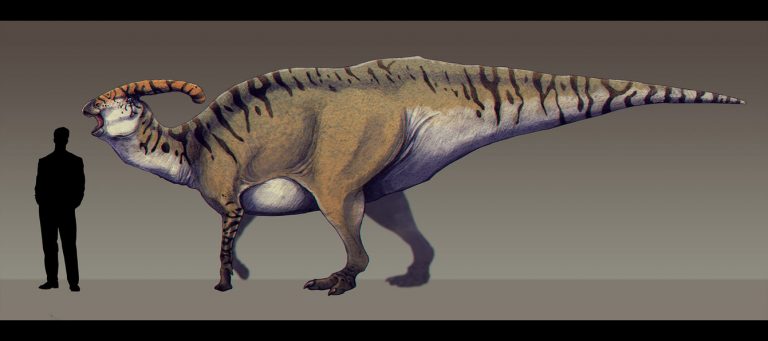
PAH-rah-saw-RAW-lo-phus (After lizard crest) Parasaurolophus can be considered one of the most famous of all the hadrosaurs (“duck billed dinosaurs”). Although it was not one of the largest, at 9.5 meters (31 ft), it is known for that unusual crest on top of its head. There are many theories as to how the crest was used: For sound production, thermal regulation, or mating displays… And as always, the male with the bigger crest always gets the girl.

Parasaurolophus walkeri by Paleocolour

Troodon

TROW-o-dawn (Wounding tooth) Discovered all the way back in 1855, when paleontology itself was still a relatively new science (only having been established like 50 years prior), Troodon was one of the first dinosaurs to have been discovered in North America. At 2.4 meters in length (8 ft), it was small, but had serrated teeth within its jaws, like a shark. Compared to its body, its brain was huge, making it one of the smartest dinosaurs ever.

Troodon formosus by CamusAltamirano on Deviantart

Triceratops

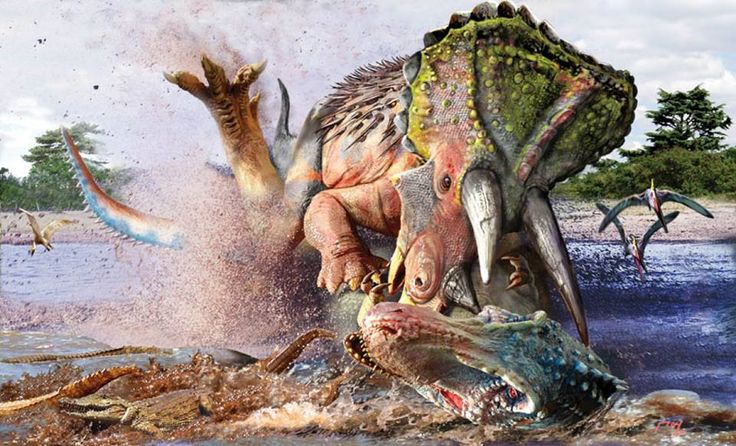
try-SE-rah-tops (Three horned face) If you say that you do not remember seeing this dinosaur as a child, you are a liar because everyone knows about Triceratops. See those horns over its eyes? EASILY 1 meter long (3 ft) in length. That frill? SOLID BONE. And at 9 meters in length (30 ft), it would have easily fought Tyrannosaurus rex to a standstill 66 million years ago.

Tyrannosaurus rex vs. Triceratops horridus Author: TehBamski

Edmontosaurus

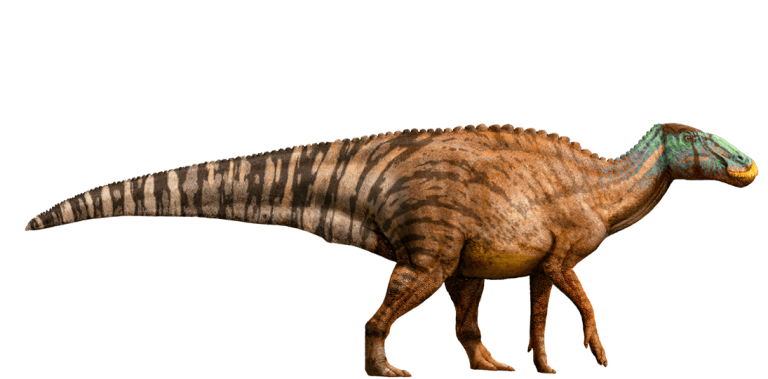
Edmontosaurus was a duck billed dinosaur which lived approximately 66 to 74 million years ago during the Cretaceous Period. It was first discovered in 1871 in Alberta, Canada—although that fossil was more than likely named Trachodon cavatus by Edward Cope. However, these bones have since been lost. Officially, the bones of this species were named Edmontosaurus in 1917 by Lawrence Lambe. Its name literally means “Edmonton Lizard.”

Edmontosaurus by William Sepulveda

Apatosaurus

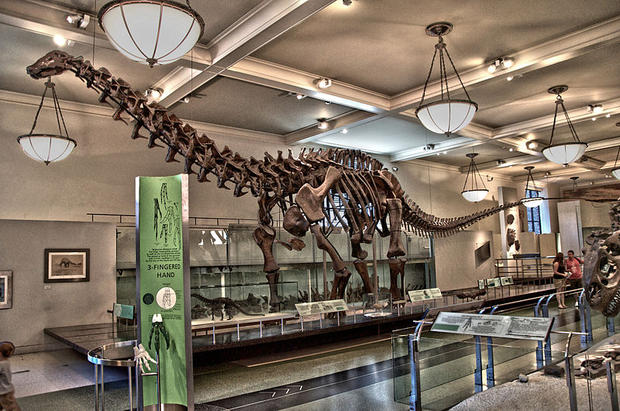
ah-pat-oh-saw-rus (Deceptive lizard) Ah, Apatosaurus… how much drama you’ve gone through. That entire Brontosaurus debacle seems to have passed by, though. Apatosaurus wasn’t the largest, or the heaviest sauropod in the world, either. It’s your run of the mill giant dinosaur, at 23 meters in length (75 ft), and 18 tons.

Apatosaurus was fairly heavyset – AMNH

Stegosaurus

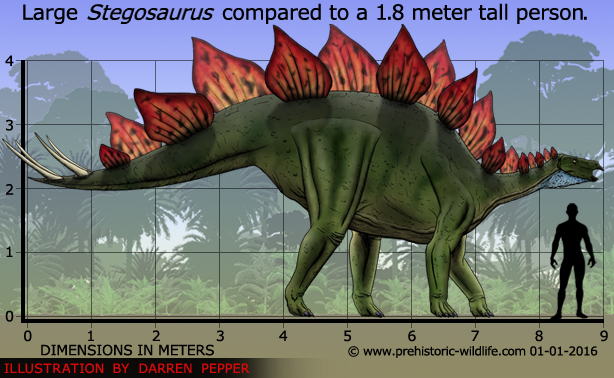
stay-GOH-saw-rus (Roofed lizard) Stegosaurus honestly was one of the dumbest of it’s kind in the long history of dinosaurs. Yes, its brain was the size of a walnut, but can you blame it? It’s 9 meters long (30 ft), and had 1 meter long spikes (3 ft) on its tail that paleontologists have AFFECTIONATELY called “Thagomizers”. You don’t need a brain when you’ve got THAGOMIZERS.

Stegosaurus by Prehistoric Wildlife

Allosaurus

AH-low-saw-rus (Different lizard) This is the kind of animal that dinosaurs like Apatosaurus, Stegosaurus, and BRONTOSAURUS had to put up with. Allosaurus was known as the “Lion of the Jurassic”, the T. rex before T. rex was even born! 8 meters long (26 ft), strong arms, and an agile body, Allosaurus did not kidding around. And did I mention that it might have hunted it packs?

Allosaurus by deskridge

Tyrannosaurus rex

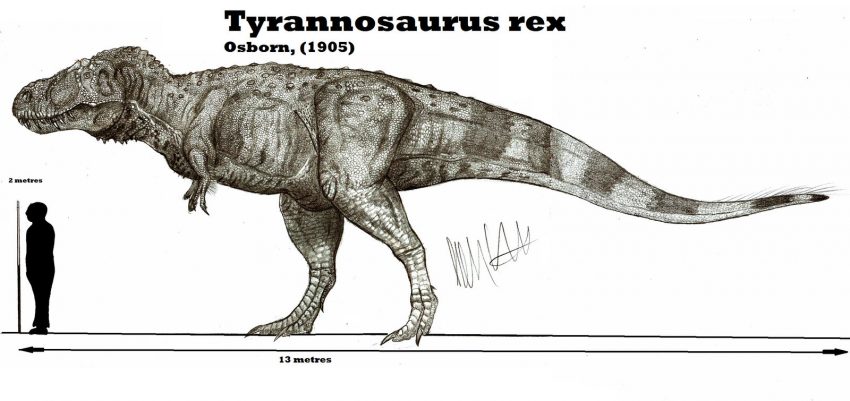
tie-RAHN-oh-saw-rus REKS (Tyrant Lizard King) T. rex. What else is there to be said about Tyrannosaurus rex. It’s the most famous dinosaur in the world. We know it’s full name. It’s not just Tyrannosaurus. It’s Tyrannosaurus rex. Actually, we can talk about its arms. They’re honestly just small because they’re basically attached to 12 meters (40 ft) of muscle. They were the length of your own arms right now. AND THEY CAN CURL 430 POUNDS. A HUMAN CAN ONLY CURL ABOUT 270.

Tyrannosaurus rex by Teratophoneus (Robinson Kunz)

Source: www.NatGeo.com

Whale Evolution

Sunday, March 5, 2017

An artist's impression of Professor Hans Thewissen's walking whale, Amulocetus natans.

The evolution of whales

The first thing to notice on this evogram is that hippos are the closest living relatives of whales, but they are not the ancestors of whales. In fact, none of the individual animals on the evogram is the direct ancestor of any other, as far as we know. That’s why each of them gets its own branch on the family tree.

Evogram of whale evolution

Hippos are large and aquatic, like whales, but the two groups evolved those features separately from each other. We know this because the ancient relatives of hippos called anthracotheres (not shown here) were not large or aquatic. Nor were the ancient relatives of whales that you see pictured on this tree — such as Pakicetus. Hippos likely evolved from a group of anthracotheres about 15 million years ago, the first whales evolved over 50 million years ago, and the ancestor of both these groups was terrestrial.

These first whales, such as Pakicetus, were typical land animals. They had long skulls and large carnivorous teeth. From the outside, they don’t look much like whales at all. However, their skulls — particularly in the ear region, which is surrounded by a bony wall — strongly resemble those of living whales and are unlike those of any other mammal. Often, seemingly minor features provide critical evidence to link animals that are highly specialized for their lifestyles (such as whales) with their less extreme-looking relatives.

Compared to other early whales, like Indohyus and PakicetusAmbulocetus looks like it lived a more aquatic lifestyle. Its legs are shorter, and its hands and feet are enlarged like paddles. Its tail is longer and more muscular, too. The hypothesis that Ambulocetus lived an aquatic life is also supported by evidence from stratigraphy — Ambulocetus‘s fossils were recovered from sediments that probably comprised an ancient estuary — and from the isotopes of oxygen in its bones. Animals are what they eat and drink, and saltwater and freshwater have different ratios of oxygen isotopes. This means that we can learn about what sort of water an animal drank by studying the isotopes that were incorporated into its bones and teeth as it grew. The isotopes show that Ambulocetus likely drank both saltwater and freshwater, which fits perfectly with the idea that these animals lived in estuaries or bays between freshwater and the open ocean.

Whales that evolved after Ambulocetus (Kutchicetus, etc.) show even higher levels of saltwater oxygen isotopes, indicating that they lived in nearshore marine habitats and were able to drink saltwater as today’s whales can. These animals evolved nostrils positioned further and further back along the snout. This trend has continued into living whales, which have a “blowhole” (nostrils) located on top of the head above the eyes.

These more aquatic whales showed other changes that also suggest they are closely related to today’s whales. For example, the pelvis had evolved to be much reduced in size and separate from the backbone. This may reflect the increased use of the whole vertebral column, including the back and tail, in locomotion. If you watch films of dolphins and other whales swimming, you’ll notice that their tailfins aren’t vertical like those of fishes, but horizontal. To swim, they move their tails up and down, rather than back and forth as fishes do. This is because whales evolved from walking land mammals whose backbones did not naturally bend side to side, but up and down. You can easily see this if you watch a dog running. Its vertebral column undulates up and down in waves as it moves forward. Whales do the same thing as they swim, showing their ancient terrestrial heritage.

As whales began to swim by undulating the whole body, other changes in the skeleton allowed their limbs to be used more for steering than for paddling. Because the sequence of these whales’ tail vertebrae matches those of living dolphins and whales, it suggests that early whales, like Dorudon and Basilosaurus, did have tailfins. Such skeletal changes that accommodate an aquatic lifestyle are especially pronounced in basilosaurids, such as Dorudon. These ancient whales evolved over 40 million years ago. Their elbow joints were able to lock, allowing the forelimb to serve as a better control surface and resist the oncoming flow of water as the animal propelled itself forward. The hindlimbs of these animals were almost nonexistent. They were so tiny that many scientists think they served no effective function and may have even been internal to the body wall. Occasionally, we discover a living whale with the vestiges of tiny hindlimbs inside its body wall.

This vestigial hindlimb is evidence of basilosaurids’ terrestrial heritage. The picture below on the left shows the central ankle bones (called astragali) of three artiodactyls, and you can see they have double pulley joints and hooked processes pointing up toward the leg-bones. Below on the right is a photo of the hind foot of a basilosaurid. You can see that it has a complete ankle and several toe bones, even though it can’t walk. The basilosaurid astragalus still has a pulley and a hooked knob pointing up towards the leg bones as in artiodactyls, while other bones in the ankle and foot are fused. From the ear bones to the ankle bones, whales belong with the hippos and other artiodactyls.

Original article appeared on www.evolution.berkeley.edu

T. Rex’s had the Strongest Bite of any Known Land Animal

Monday, February 27, 2017

The tyrant lizard, also known as Tyrannosaurus rex, had the strongest bite of any known land animal, new research suggests.

“Our results show that the T. rex had an extremely powerful bite, making it one of the most dangerous predators to have roamed our planet,” study researcher Karl Bates, of the University of Liverpool, said in a statement.

Younger T. rexes didn’t have such strong bites, the researchers found, which probably meant they had a different diet and relied less on the fearsome bite than their older counterparts. This differing diets likely led reduced competition between generations of T. rex, the researchers said.

T. rex may have behaved similarly, as an opportunist, which didn’t turn down a free meal but also wasn’t scared to hunt down its own.

Fearsome bite

The new estimate of bite force is higher than past estimates that relied on indent measures in which they pressed down the skull and teeth onto a bone until they got the imprints that matched those on fossils. In the new study, the researchers created a computer model of the dinosaur’s jaw by first digitally scanning skulls from an adult and juvenile T. rex, an allosaurus, an alligator and an adult human. They used these scans to model each animal’s bite.

“We took what we knew about T. rex from its skeleton and built a computer model,” Bates said. “We then asked the computer model to produce a bite so that we could measure the speed and force of it directly.”

The force exerted at one of T. rex‘s back teeth would have been between 7,868 and 12,814 pounds-force (35,000 and 57,000 newtons). This force would be akin to having a medium-size elephant sit on you.

T. rex had a huge jaw gape, study shows

Young vs. old

The shape of T. rex‘s skull allowed room for lots of muscles, creating what is “by far the highest bite forces estimated for any terrestrial animal,” the researchers write in the paper, to be published tomorrow (Feb. 29) in the journal Biology Letters, but it is possible the extinct gigantic shark Megalodon had a stronger bite.

“If you consider that the lion and alligator [bite strength] are so much lower (as reported in our paper), and think of what they can bite through, that can give you a sense of the power in a T. rex bite,” study researcher Peter Falkingham, of the University of Manchester in the United Kingdom, told LiveScience in an email. “Such a powerful bite may have enabled T.rex to crush large bones.”

(Past research has suggested T. rex‘s fused nasal bones boosted its bite force, while also keeping the predator’s skull from breaking from a serious chomp.)

Even when Falkingham and colleagues scaled the models for body size differences, this bite was relatively much stronger than the bite of a juvenile T. rex. In its early years of life, T. rex‘s bite was weaker, but the young dinosaurs might have also been more athletic and had longer arms in proportion to their body size, previous research has suggested.

These differences could mean that the dinosaur’s diet would have changed over time — starting on smaller prey, but growing into a ferocious predator to even the largest animals as it matured. These dietary differences would have reduced competition between older and younger T. rexes, Falkingham said.

Source: www.livescience.com

Pages