Blogs

Sauropods: Triumph of the Titans

Monday, May 22, 2017

Paleontologists traditionally viewed the long-necked, small-brained giant dinosaurs referred to as sauropods as doomed creatures unfit for life on land or in the water. Recent discoveries have upended that scenario, revealing that sauropods prospered for nearly 150 million years. The secrets of their success seem to have been their mix of mammal-like and reptile-like traits, combined with an ability to adapt to a changing world. (Illustrations by Raúl Martin, Graphics by Jen Christiansen)

Sauropoda or the sauropods (“lizard-footed”), are an infraorder of saurischian (“lizard-hipped”) dinosaurs. They had very long necks, long tails, small heads (relative to the rest of their body), and four thick, pillar-like legs. They are notable for the enormous sizes attained by some species, and the group includes the largest animals to have ever lived on land. Well-known genera include BrachiosaurusDiplodocusApatosaurus and Brontosaurus.

Sauropods first appeared in the late Triassic Period, where they somewhat resembled the closely related (and possibly ancestral) group “Prosauropoda”. By the Late Jurassic (150 million years ago), sauropods had become widespread (especially the diplodocids and brachiosaurids). By the Late Cretaceous, those groups had mainly been replaced by the titanosaurs, which had a near-global distribution. However, as with all other non-avian dinosaurs alive at the time, the titanosaurs died out in the Cretaceous–Paleogene extinction event. Fossilised remains of sauropods have been found on every continent, including Antarctica.

The name Sauropoda was coined by O.C. Marsh in 1878, and is derived from Greek, meaning “lizard foot”. Sauropods are one of the most recognizable groups of dinosaurs, and have become a fixture in popular culture due to their large sizes.

Scale chart comparing the sizes of several of the longest known dinosaurs. Author: Dinoguy2

Complete sauropod fossil finds are rare. Many species, especially the largest, are known only from isolated and disarticulated bones. Many near-complete specimens lack heads, tail tips and limbs.

As with any broad definition, though, there are some important “buts” and “howevers.” Not all sauropods had long necks (witness the oddly truncated Brachytrachelopan), and not all were the size of houses (one recently discovered genus, Europasaurus, seems to have only been about the size of a large ox). On the whole, though, most of the classical sauropods–familiar beasts like Diplodocus and Apatosaurus (the dinosaur previously known as Brontosaurus)–followed the sauropod body plan to the Mesozoic letter.

SAUROPOD EVOLUTION

Sauropods were herbivorous (plant-eating), usually quite long-necked quadrupeds (four-legged), often with spatulate (spatula-shaped: broad at the tip, narrow at the neck) teeth. They had tiny heads, massive bodies, and most had long tails. Their hind legs were thick, straight, and powerful, ending in club-like feet with five toes, though only the inner three (or in some cases four) bore claws. Their forelimbs were rather more slender and ended in pillar-like hands built for supporting weight; only the thumb bore a claw. Many illustrations of sauropods in the flesh miss these facts, inaccurately depicting sauropods with hooves capping the claw-less digits of the feet, or multiple claws or hooves on the hands. The proximal caudal vertebrae are extremely diagnostic for sauropods.

Necks

Sauropod necks have been found at over 50 feet in length, a full six times longer than the world record giraffe. Enabling this were a number of essential physiological features. The dinosaurs’ overall large body size and quadrupedal stance provided a stable base to support the neck, and the head was evolved to be very small and light, losing the ability to orally process food. By reducing their heads to simple harvesting tools that got the plants into the body, the sauropods needed less power to lift their heads, and thus were able to develop necks with less dense muscle and connective tissue. This drastically reduced the overall mass of the neck, enabling further elongation.

Sauropods also had a great number of adaptations in their skeletal structure. Some sauropods had as many as 19 cervical vertebrae, whereas almost all mammals are limited to only seven. Additionally, each vertebra was extremely long and had a number of empty spaces in them which would have been filled only with air. An air-sac system connected to the spaces not only lightened the long necks, but effectively increased the airflow through the trachea, helping the creatures to breathe in enough air. By evolving vertebrae consisting of 60% air, the sauropods were able to minimize the amount of dense, heavy bone without sacrificing the ability to take sufficiently large breaths to fuel the entire body with oxygen. According to Kent Stevens, computer-modeled reconstructions of the skeletons made from the vertebrae indicate that sauropod necks were capable of sweeping out large feeding areas without needing to move their bodies, but were unable to be retracted to a position much above the shoulders for exploring the area or reaching higher.

When sauropods were first discovered, their immense size led many scientists to compare them with modern-day whales. Most studies in the 19th and early 20th centuries concluded that sauropods were too large to have supported their weight on land, and therefore that they must have been mainly aquatic. Most life restorations of sauropods in art through the first three quarters of the 20th century depicted them fully or partially immersed in water. This early notion was cast in doubt beginning in the 1950s, when a study by Kermack (1951) demonstrated that, if the animal were submerged in several metres of water, the pressure would be enough to fatally collapse the lungs and airway. However, this and other early studies of sauropod ecology were flawed in that they ignored a substantial body of evidence that the bodies of sauropods were heavily permeated with air sacs. In 1878, paleontologist E.D. Cope had even referred to these structures as “floats”.

SAUROPOD PALEONTOLOGY

In a study published in Plos One on October 30, 2013, by Bill Sellers, Rodolfo Coria, Lee Margetts et al.Argentinosaurus was digitally reconstructed to test its locomotion for the first time. Before the study, the most common way of estimating speed was through studying bone histology and ichnology. Commonly, studies about sauropod bone histology and speed focus on the postcranial skeleton, which holds many unique features, such as an enlarged process on the ulna, a wide lobe on the ilia, an inward-slanting top third of the femur, and an extremely ovoid femur shaft. Those features are useful when attempting to explain trackway patterns of graviportal animals. When studying ichnology to calculate sauropod speed, there are a few problems, such as only providing estimates for certain gaits because of preservation bias, and being subject to many more accuracy problems.

To estimate the gait and speed of Argentinosaurus, the study performed a musculoskeletal analysis. The only previous musculoskeletal analysises were conducted on homonoids, terror birds, and other dinosaurs. Before they could conduct the analysis, the team had to create a digital skeleton of the animal in question, show where there would be muscle layering, locate the muscles and joints, and finally find the muscle properties before finding the gait and speed. The results of the biomechanics study revealed that Argentinosaurus was mechanically competent at a top speed of 2 m/s (5 mph) given the great weight of the animal and the strain that its joints were capable of bearing. The results further revealed that much larger terrestrial vertebrates might be possible, but would require significant body remodeling and possible sufficient behavioral change to prevent joint collapse.

Body size

Sauropods are gigantic, and descendants of surprisingly small ancestors. Basal dinosauriformes, such as Pseudolagosuchu sand Marasuchus from the Middle Triassic of Argentina, weighed approximately 1 kg (2.2 lb) or, in most cases, less. At the evolutionary point named Saurischia, a rapid increase of bauplan size appeared, although more primitive members like EoraptorPanphagiaPantydracoSaturnalia and Guaibasaurus still retain a moderate size, possibly even less than 10 kg (22 lb). Even with these small, primitive forms, there is a notable size growth in sauropodomorphs, although scanty remains of this period of sauropod evolution make assumptions necessary as the size is difficult to interpret. There is one definite example of a derived sauropodomorph being small however, and that is Anchisaurus, which reached under 50 kg (110 lb), even though it is closer to the sauropods than Plateosaurus and Riojasaurus, which were upwards of 1 t (0.98 long tons; 1.1 short tons) in weight.

Compared to even derived sauropodomorphs, sauropods were huge. Their even larger size probably resulted because of an increased growth rate, which appears to have been linked with tachymetabolic endothermy, a condition that evolved in sauropodomorphs. Once branched into sauropods, sauropodomorphs continued steadily to grow larger, with smaller sauropods, like the Early Jurassic Barapasaurus and Kotasaurus, evolving into even larger forms like the Middle Jurassic Mamenchisaurus and Patagosaurus. Following the size change of sauropods, theropods continued to grow even larger, shown by an Allosaurus-sized coelophysoid from Germany. As one possible explanation for the increased body size is less risk of predation, the size evolution of both sauropods and theropods are probably linked.

Source: www.Wikipedia.org, www.NatGeo.com

5 Facts About Pachycephalosaurus

Monday, May 22, 2017

Reconstruction of Pachycephalosaurus wyomingensis with cranial lesion.

Pachycephalosaurs (Greek for “thick-headed lizards”) were an unusually small family of dinosaurs with an unusually high entertainment value. As you can guess from their name, these two-legged herbivores were distinguished by their skulls, which ranged from the mildly thick (in early genera like Wannanosaurus) to the truly dense (in later genera like Stegoceras). Some later pachycephalosaurs sported almost a foot of solid, albeit slightly porous, bone on top of their heads!

Size comparison of an adult P. wyomingensis (green), potential growth stages, and a human by Matt Martyniuk

However, it’s important to understand that big heads, in this case, didn’t translate into equally big brains. Pachycephalosaurs were about as bright as the other plant-eating dinosaurs of the late Cretaceous period (which is a polite way of saying “not very”); their closest relatives, the ceratopsians, or horned, frilled dinosaurs, weren’t exactly nature’s A students, either. So of all the possible reasons pachycephalosaurs evolved such thick skulls, protecting their extra-big brains certainly wasn’t one of them.

Based on the available fossil evidence, paleontologists believe that the very first pachycephalosaurs–such as Wannanosaurus and Goyocephale–arose in Asia about 85 million years ago, only 20 million years before the dinosaurs went extinct. As is the case with most progenitor species, these early bone-headed dinosaurs were fairly small, with only slightly thickened skulls, and they may have roamed in herds as protection against hungry raptors and tyrannosaurs.

Pachycephalosaur evolution really seems to have taken off when these early genera crossed the land bridge that (back during the late Cretaceous period) connected Eurasia and North America. The largest boneheads with the thickest skulls–Stegoceras, Stygimoloch and Sphaerotholus–all roamed the woodlands of western North America, as did Dracorex hogwartsia, the only dinosaur ever to be named after the Harry Potter books.

The evolutionary relationships among different genera of pachycephalosaurs are still being sorted out, as are the growth stages of these strange dinosaurs. According to new research, it’s likely that two supposedly separate pachycephalosaur genera–Stygimoloch and Dracorex–in fact represent earlier growth stages of the much bigger Pachycephalosaurus. If the skulls of these dinosaurs changed shape as they aged, that may mean that additional genera have been classified improperly, and were in fact species (or individuals) of existing dinosaurs.

Source: www.thoughtco.com, www.wikipedia.org

Indominus Rex Returns in Jurassic World 2 Promo Art

Sunday, May 21, 2017

Indominus Rex Returns in Jurassic World 2 Promo Art

Is Indominus Rex ready to make her triumphant return in Jurassic World 2? That’s what a new piece of promo art hints, showing the hybrid dinosaur’s shimmering eye as it sizes up its prey. We can also see in the reflection that she’s still on the island. And if you look close, it almost looks like she’s about to shed a tear. Guess she didn’t get the memo that there is no crying at Jurassic World.

This image comes from the latest issue of License Global magazine, which Coming Soon got ahold of. The booklet is full of art from other Universal and Sony movies including The Grinch, Jumanji 2, Peter Rabbit and the horror movie Slenderman. But it’s this piece of Jurassic art that has really captured our imaginations.

This is the first real hint that Indominus Rex is coming back. Previously, producer and co-writer Colin Trevorrow confirmed that the original T. rex from Jurassic Park would be back to fight the human condition. Other than that, no official plot details about the sequel have been released to the public.

We do know that Jurassic World 2 is bringing back original stars Chris Pratt and Bryce Dallas Howard. They will be appearing alongside some new faces that include Toby Jones, Daniella Pineda, Justice Smith, Rafe Spall, and James Cromwell. In what is considered the most exciting bit of casting news, Jeff Goldblum, who appeared in the first two Jurassic Park movies, will be reprising his role as Dr. Ian Malcolm. He only recently began shooting his part in the movie, which is halfway through principle photography as of last week.

Original Jurassic Park producers Frank Marshall and Steven Spielberg are back, with JA Bayona, known for When a Monster Calls and The Impossible, in the director’s chair this time out. Colin Trevorrow and Derek Connolly collaborated on the screenplay. Apparently they have cooked up some exciting new adventures for ol’ Indominus to get into. About the genetically created monstrosity, Dr. Henry Wu revealed this in 2015’s Jurassic World.

“Oh, Indominus wasn’t bred. She was designed. She will be fifty feet long when fully grown. Bigger than the T. rex.”

Indominus rex was introduced as a new attraction in Jurassic World. The hybrid was created by combining the genetic traits of multiple species that included Tyrannosaurus rex, Velociraptor, Carnotaurus, Giganotosaurus, Majungasaurus, Rugops, and Therizinosaurus as well as modern animals like cuttlefish, tree frogs, and a pit viper snake. It is suspected that Indominus will be meeting her next generation cousin in Jurassic World 2 but as such, no new dinosaurs have been revealed from the movie just yet. We have it on good authority that Jurassic World 2 may introduce the world’s first non-binary dinosaur (we kid!).

It has been confirmed that a great number of the dinosaurs seen in Jurassic World 2 will be practical puppets used on set, as opposed to all the CG beasties that ran wild in the first reboot. Take a look at the all knowing eye of the mighty Indominus in the promo art below.

Jurassic World 2 Dropped A New Image And Ian Malcolm Is Back

Sunday, May 21, 2017

Colin Treworrow Twitter

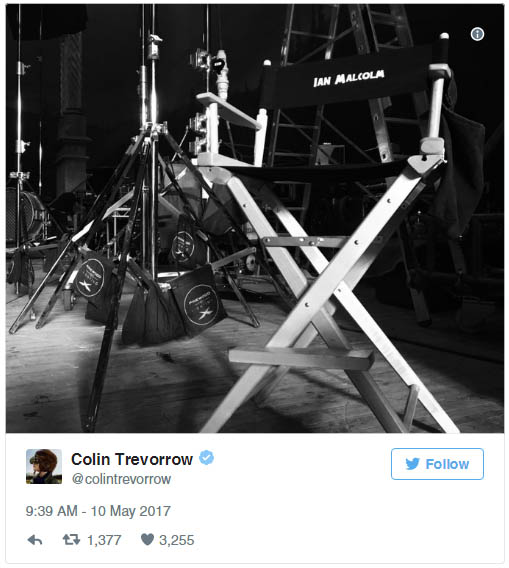
The next entry in the Jurassic Park reboot is currently filming but the best piece of recent news on the film is that Jeff Goldblum will be returning to his role from the original film. Jurassic World 2 producer Colin Trevorrow knows that fans are excited, so he’s decided to tease them with an image just to remind them that Ian Malcolm will return. Check it out.

It’s just a tease to be sure. Showing off the chairs that actors will be sitting in has become a popular way to give an audience a little hint of what’s to come, without actually showing them anything. Colin Trevorrow, who directed the first Jurassic World but is only acting as a producer of the sequel, sent out the image via Twitter. Still, I’d by lying if I said seeing this didn’t get me just that much more excited for Jurassic World 2. Jeff Goldblum’s off-kilter performance in the first Jurassic Park was one of the highlights of that film and so the idea of seeing him again is certainly an exciting one. Jurassic World was a rock solid reboot of the series and while that film made it clear that it was following the events of the original trilogy, having one of the major cast members returning will make the franchise as a whole that much more cohesive.

While we know few specifics about Jurassic World 2‘s story, we know that the focus of the film will surround the expansion of dinosaur cloning technology by other companies who all have different agendas. It’s just the sort of thing that Ian Malcolm would have been afraid was going to happen following his initial experiences with dinosaurs. Whether he comes out of the woodwork on his own, or one of these companies brings him in due to his experience is unknown.

Based on the fact that filming on Jurassic World 2 has already been underway, and it appears that Jeff Goldblum either just started filming, or is just about to start, it seems that perhaps his role might not be a major one. He likely doesn’t have as many scenes as current stars Chris Pratt and Bryce Dallas Howard. This is only a guess, anything is still possible, but based on the timing it would seem that Ian Malcolm may only pop up during a particular part of the film which is about to start shooting.

Jurassic World became one of the highest-grossing films ever made. With the added star power of Jeff Goldblum, the chances are becoming greater that the sequel might have the strength to overcome its predecessor. We’ll find out when Jurassic World 2 arrives during the summer of 2018.

Original article by www.cinemablend.com

Familiar Dinosaurs Photographed on the Set of Jurassic World 2!

Sunday, May 21, 2017

Familiar Dinosaurs Photographed on the Set of Jurassic World 2!

Jurassic World 2 is about halfway through filming and photos from the film’s set are beginning to leak online! The most recent batch of Jurassic World 2 photos has unveiled a number of familiar animatronic Dinosaurs in what seem to be cages.

The following images have a very The Lost World vibe to them, as they show what we assume to be a captive Stegosaurus in a cage very similar to the ones used by InGen in The Lost World: Jurassic Park. Other Dinosaur animatronics were also photographed under tarps:

From what we know about Jurassic World 2 already, we can speculate that at some point InGen, or another organization attempt to transport Dinosaurs off the island of Isla Nublar. It’s been theorized for months now that the action is an attempt to save the Dinosaurs inhabiting the island from an impending volcanic eruption. Although, the purpose for these cages and captive Dinosaurs may in fact have a different meaning and we might see a similar series of events which transpired in The Lost World – captive Dinosaurs getting loose and laying waste to Human settlements. As we learn more and as new photos surface, we’ll be sure to keep you updated!

Thanks to @tigsy74 and @GHarris088 for the images!

Never miss an update on Jurassic World 2 by liking us on Facebook and by following us on Instagram!

Why The Lost World: Jurassic Park Deserves More Credit

Sunday, May 21, 2017

Poor Eddie!

Jurassic Park 2 could never match the original. But The Lost World still has many worthwhile lessons for the Jurassic World team…

Why would anyone in their right mind go back to Jurassic Park? And if you’re looking for an explanation as to why you didn’t find Jeff Goldblum, Sam Neill or Laura Dern in Jurassic World, there’s your reason. There’s no logical justification for them facing dino death again.

It’s also the reason why – after a brief but effective attack on a small girl by some Compys – Jurassic Park 2 spends 20-odd minutes in full-on exposition mode. With Sam Neill and Laura Dern not returning (both would pop back up in Jurassic Park IIIin roles of differing sizes, Neill having being chopped out of The Lost World), the focus shifted to Jeff Goldblum’s Ian Malcolm. A man of incisive, foretelling words in the first film, he’s given a raft of them in the second.

Spielberg’s first shot of Goldblum, incidentally, is a cracker. Just look at it…

Well, unless a hastily created girlfriend and daughter could be introduced. That might change his mind. Job done.

It still takes some explaining though. Summoned to see a Dr Hammond no longer in charge of his company, and no longer attempting a ropey Scottish accent (rest in peace Lord Attenbrough), we learn about Site B.

This is one of the moments where the film goes closest to Michael Crichton’s not-very-good source novel (the only book he ever wrote, the late Crichton once recalled, knowing for certain a movie version would follow). And it makes sense: for the dinosaurs of Jurassic Park to exist in the first place, they’d need to be bred somewhere, aware from the glare of a theme park. Hence, neighbouring island Isla Sorna, where it turns out that Dr Malcolm’s key prediction from the first film, “life will find a way”, has come true.

Meet The Suit

Thus, following a brief reappearance (for the fans, natch) by Tim and Lex, we meet Hammond’s nephew, Peter Ludlow, played by Arliss Howard (looking alarmingly like Ben from Lost).

In a scene deleted from the movie, we see Ludlow kicking his uncle off the InGen board, listing some of the lawsuits against the company (including one from the family of Robert Muldoon). He is, to be clear, a corporate bastard.

But we cut to the chase here. Malcolm broke his non-disclosure agreement, Hammond wants to document Site B to give it a chance of surviving, the InGen board wants to make cash from it. It’s the same pieces, being moved in similar places, just not quite by the same people. When Hammond says that he’s not making the same mistakes again, Malcolm retorts “you’re making all new ones”.

Not quite, but you can see his point.

Bottom line: Hammond has sent three people to Isla Sorna so far. There’s Vince Vaughn’s eco-warrior Nick. Julianne Moore’s expert, Sarah. And The West Wing‘s Toby, Richard Schiff, as Eddie, who may as well pop a red shirt on, so obvious a bit of dinosaur food is he. Naturally enough, David Koepp’s script finds a way to get Malcolm’s daughter, Kelly, to the island as well. They need to bond, y’see.

With all this preamble, it takes 21 minutes and 44 seconds of screen time to set foot on the new not-Jurassic Park, and, even without the 45 minutes of education that set up the original film, Steven Spielberg and his team still have some setup work to do. The difference they face is that the audience know the rules this time, and the characters don’t.

Thus, the speeding through storytelling continues. Malcolm fails to convince Sarah to leave, they have a disagreement, we see dinosaurs, all seems well, yadda yadda. The concoction that mixes things up is the sudden arrival of a second team on Isla Sorna, and that’s one that’s been ordered by Ludlow The Corporate Bastard.

Two teams, differing objectives. Our ‘heroes’? They want to document things, or in the case of Malcolm, leave. The InGen team? They’re capturing animals, to take them off the island, and towards Jurassic Park San Diego. We’ll return to that place later in this article, and not with a smile on our faces.

In the bunch of archetypes that form the InGen team, at least there’s the brilliant, late Pete Postlethwaite as hunter Roland Tembo (for this is a film that arguably spends a bit more time characterizing its dinosaurs than it does its humans, making us feel more sorry for the creatures than the people). His character is another victim of a deleted, and very bloody scene, where he beats someone to a bloody pulp. But he’s also the man put there to start out wanting to hunt dinosaurs, who ultimately learns points out that killing is not the way forward.

Hammond – who Crichton originally designed as “the dark side of Walt Disney” (albeit one softened by Spielberg) – never quite gets there, at least if his closing words of the film are anything to go by. Hammond keeps learning lessons, but never the right ones.

When Dinosaurs Attack

As with the first film, the main dinosaurs action in The Lost World kicks off from just after the 45 minute mark, and doesn’t relent much from there. In this instance though, there’s a bit of a daft catalyst to the initial attack. It involves Sarah wanting to heal a suffering baby T. rex.

For the duration of the film to this point, she has shown non-stop intelligence in dealing with dinosaurs. Here, though, she brings the dying baby dino into the posh trailer where Ian and his daughter are. Her plan, seemingly to explain to mommy and daddy killer dinosaur that she’s just trying to help, seems a little nuts, but that notwithstanding, a bit of chewing gum surgery later, and the shit is ready to hit the fan.

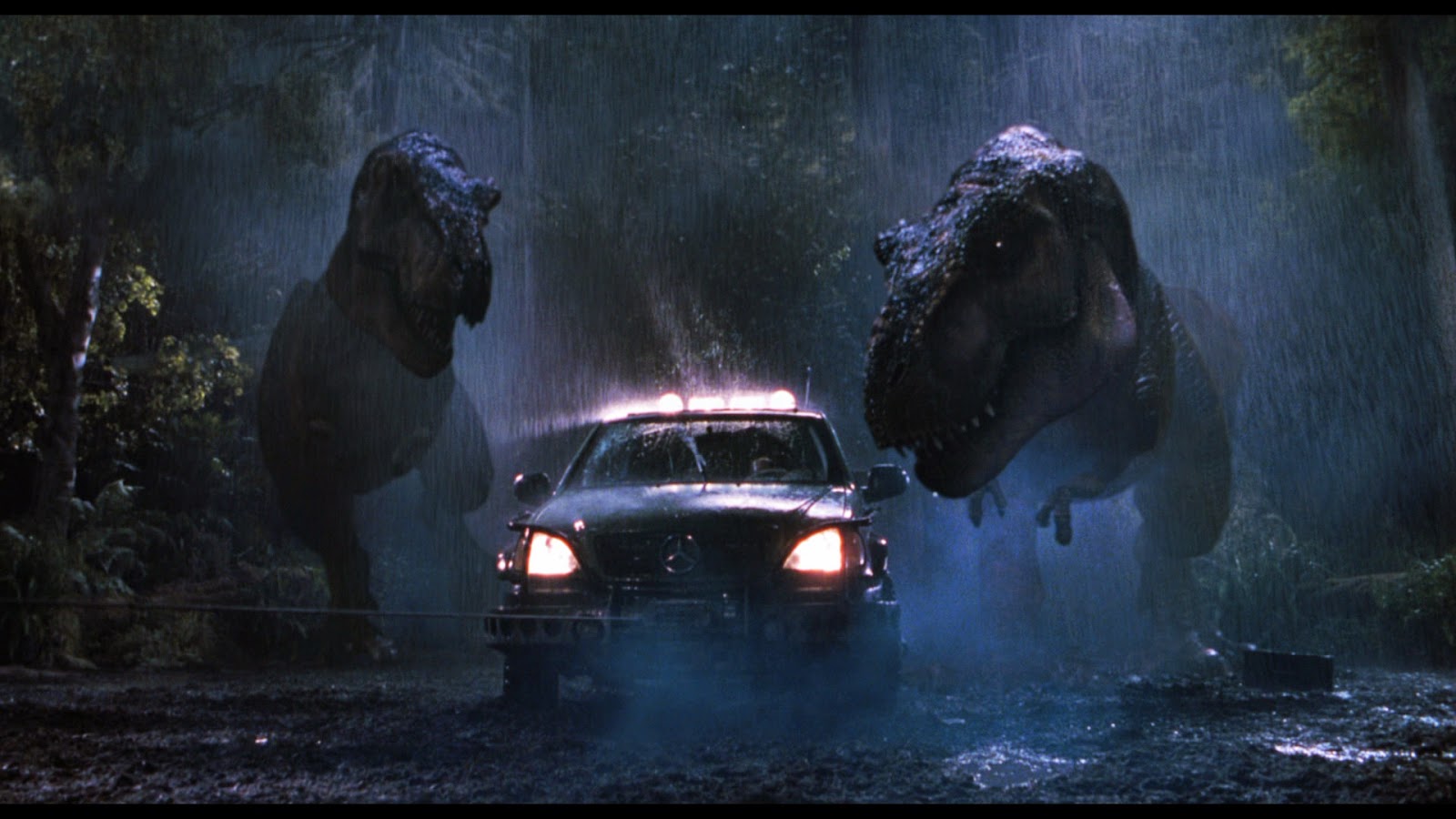
Two T. rexes attack, neither – it should be noted – with the impact of that initial single T-Rex rampage in the first Jurassic Park.

Still, this is where Spielberg particularly knows his onions. His best dino attack moments focus on humans, and details, as much as CG creatures. Later in the film, for instance, we get a brilliant overhead shot of humans running through long grass, with the velociraptors darting through. But even accepting that the first twin T-Rex attack doesn’t have the novelty value that Jurassic Park was afforded, Spielberg – by taking his time and not rushing the sequence – finds some brilliant moments.

One in particular, as Julianne Moore’s Sarah is left prone on a slowly cracking piece of glass, is exquisite. Never mind the fact that when the vehicle plummet happens a bit later on, it’s an unconvincing mix of real and CG. The slow cracking pane is top notch tension.

The film’s other big jump involves Moore again, and this time, the animatronic raptors that Stan Winston and his team built. It’s when Sarah is burrowing away under a door to escape, and suddenly, a raptor shoves its head there. It’s when The Lost World does things like this that you remember it’s a better sequel than it’s generally given credit for.

It also has a brilliant score. John Williams’ music to The Lost World: Jurassic Park takes the key themes of the first movie, keeps them there, but generally makes them more complicated. It’s a denser piece of work, and a hugely underrated piece of music in Williams’ near-peerless back catalogue.

A further observation of The Lost World: Spielberg opted to cut back on the blood for Jurassic Park, for a pair of reasons. Firstly it got him a PG rating. But secondly, he didn’t need it. It’s a real surprise then to see, just three years later, how bloody The Lost World: Jurassic Park is. It’s curious how he relaxed his choice. Mind you, he still got his family friendly rating, and the movie made its moolah.

Jurassic Park San Diego

What’s less curious is why Spielberg would go with the contentious ending to The Lost World that he did, though, even if many of us wished he hadn’t. Bluntly: he wanted to try a different movie for a bit.

Many people’s memories of Jurassic Park 2 centre on those last 20 minutes, which undermines the generally good to very good work that the rest of the movie has done. It wasn’t supposed to be like this either. In the original screenplay, as the survivors boarded the helicopters to escape the island, they were set to be attacked by pterodactyls (that were used in the first book, not in the first film, and would only appear – aside from the last shot of The Lost World – in Jurassic Park III).

But at Spielberg’s behest, late in the day, that ending was scrubbed. Instead, Spielberg wanted – by his own admission – the chance to make his very own Godzilla movie.

So we suddenly cut to San Diego, and to Ludlow The Corporate Bastard, the longest-surviving suit in the history of Jurassic Park movies. He’s welcoming investors, as a boat carrying, er, a T-Rex, is heading its way at speed to the harbour he’s stood in front of. The predictable happens, the boat crashes and then, well, it all goes a bit WTF.

There are a couple of problems with the dinosaur rampaging through San Diego ending that we get in The Lost World, and time has not improved it (even if it’s been perfectly kind to the rest of the film). Firstly, Spielberg is trying to squeeze a movie’s worth out of his Godzilla story in 20 minutes. So we get the comedy aside, as the kid goes in to tell his parents there’s a dinosaur in the yard. We get the initial breakout. We get it rampaging through suburbia. We get Japanese businessmen amongst the crowd. And then we get it packed away, beaten, off to recuperate before Jurassic Park III.

Secondly, on a practical note, the CG dinosaurs work excellently against a jungle background. Spielberg himself admits that The Lost World ramps up the computer work over the practical. And it’s when the T-Rex is shown against buildings and streets that it just starts to look fake.

Few moments in special effects cinema can ever equate to seeing that aforementioned T-Rex attack in the first film. It just looked, well, so real. Four years later, it looked less so on the streets of San Diego. There’s presumably a lesson about the progression of computers in there.

Pure Sequel

Spielberg describes The Lost World as his only pure sequel (the Indiana Jones films instead jumping to different chapters of Indy’s life, in different times and generally surrounded by different characters). As with the first film, he’d move straight on to more ‘serious’ fare after wrapping this one, culminating in a Best Director Oscar. With JP1, that was Schindler’s List. With JP2, that was Amistad, and then Saving Private Ryan.

The difference, though, is that Jurassic Park‘s edit, aided by George Lucas, felt right. The Lost World: Jurassic Park still feels like it could use a bit of trimming.

Not much: it’s still an exciting ride of a film, and on revisiting the film, a better one than it’s generally given credit for. But it is notably a little more bloated (there are an awful lot of digs against capitalism: the point has been well and truly made by the time the credits roll), and another month with Spielberg in the edit room might not have hurt. “It wasn’t as good as the first one. But it was very successful”, Spielberg would go on to say. It’s hard to disagree with that.

But it’s still a really good, really entertaining sequel, and one that perhaps deserves a bit more credit. Jurassic Park III was fun too, but you could feel Spielberg’s hand was missing from it. Here, he has a real skill at slowly building sequences, be it the deserted compound in the middle of the raptors, or the pair of really uncomfortable Compy attacks too.

And even when the film slows a little, there’s always Jeff Goldblum, who plays Jeff Goldblum better than any human being on the planet. He’s terrific value here, delivering cutting one liners with such measure that you almost wish that Colin Trevorrow would go back on his logical thoughts and find a way to weave him into Jurassic World 2. Certainly he comes out of the film well ahead of Vaughn (whose character feels a little too shallow) and Moore (whose character starts doing daft things).

Going back to Spielberg, though, he admitted that he felt unsatisfied making this one, saying “it made me wistful about doing a talking picture, because sometimes I got the feeling I was just making this big silent-roar movie…. I found myself saying ‘is that all there is? It’s not enough for me'”.

That’s a shame. Spielberg has made some of the most wonderfully entertaining family blockbusters of the past 20-30 years, and whilst The Lost World isn’t quite up there, it’s not short of merits. His more recent fare has veered serious, and it’s hard to see him back behind the camera on anything such as this again (the closest we’ll get is his adaptation of Roald Dahl’s The BFG). With The Lost World, he provides a timely reminder that big sequences needn’t be rushed, and small details needn’t be glossed over.

What’s more, we can’t help but wonder if, had he gone with the initial ending, whether The Lost World: Jurassic Park would be held in the slightly higher regard it arguably deserves.

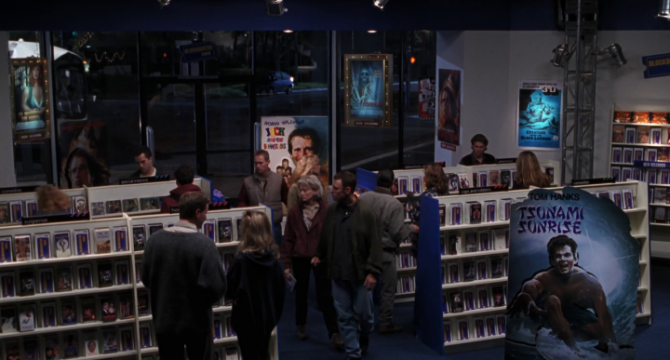
(And let’s end on a geeky spot: just check out the films that Arnold Schwarzenegger, Tom Hanks and the late, great Robin Williams had been making when the action switches to a San Diego video shop…)
 

Follow our Instagram and be part of the biggest paleo-fan page on Facebook

Source: www.imdb.com

10 Cool Facts About Therizinosaurus

Sunday, May 21, 2017

Therizinosaurus cheloniformis by unlobogris

If T. rex is the Citizen Kane of dinosaurs, Therizinosaurus and its kin are The Rocky Horror Picture Show: They’re strange-looking, slightly threatening, and command a dedicated fan base. Here’s some trivia guaranteed to impress your fossil-loving amigos.

1. Therizinosaurus Had the Longest Claws of Any Known Animal

The humongous claws on this dino’s hands were capable of reaching well over two feet in length. Appropriately, its name literally means “scythe lizard.”

2. Despite This, it Was (Probably) An Herbivore

Therizinosaurus cheloniformis claw. Author: Ghedoghedo

With fingers that seemingly belong in a slasher flick, you’d think these creatures were designed to slice and dice hapless victims. But most of its relatives had small, leaf-shaped teeth built to munch on foliage. (Scientists have yet to uncover a Therizinosaurus skull.) So what’s with those frightening digits? The theory is that, come mealtime, they might have helped the dinos pull down lush tree branches. For a cooler explanation, skip ahead to bullet point number nine.

3. Therizinosaurus Was Originally Mistaken for a Huge, Turtle-Like Reptile.

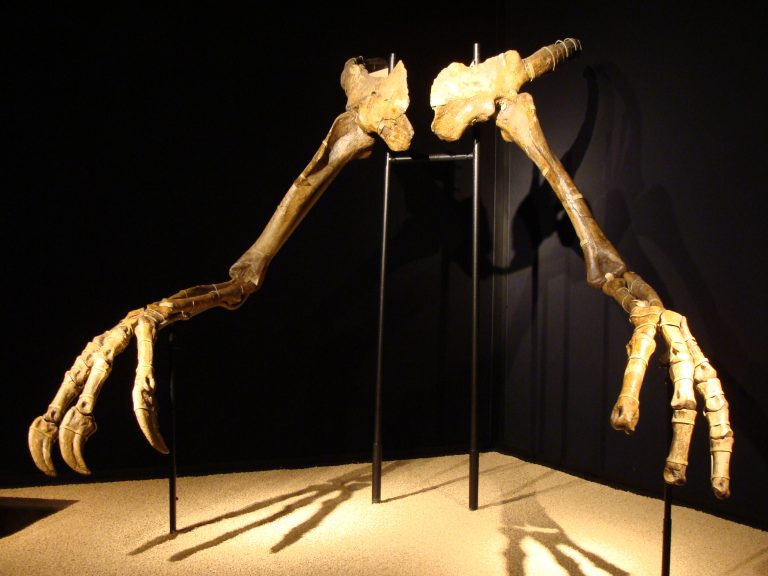
Fossil Therizinosaurus arms from Mongolia, exhibited in Experimentarium, Denmark. Author: FunkMonk

In 1954, Russian paleontologist Evgeny Aleksandrovich Malayev concluded that the beast basically resembled a modern sea turtle. He wrote that its distinctive forelimbs were in fact “powerful swimming organs” with claws designed for “cutting aquatic vegetation.”

4. It’s Part of a Formerly-Baffling Family.

Therizinosaurus model, Royal Ontario Museum. Author: Aaron Gustafson

When it became clear that these things were actually dinosaurs, scientists didn’t initially know how to classify the eccentric Therizinosaurids. Could they be related to the gigantic, long-necked sauropods like Jurassic Park’s Brachiosaurus? Or did they belong to the “bird-hipped” order of dinosaurs along with Stegosaurus and Triceratops?

Despite their plant-guzzling habits, closer examination revealed that therizinosaurs hailed from a group known as theropods, the vast majority of which (TyrannosaurusVelociraptor, etc.) were carnivores. Strange as this might sound, today’s pandas (which only occasionally eat meat) are similarly considered members of the mammalian “carnivora” order.

5. Some Therizinosaurs Were Covered in Feathers.

China’s Beipiaosaurus had multiple layers of primitive feathers, as seen in some beautifully-preserved fossils. Given its limb proportions, Beipiaosaurus definitely didn’t fly, so this plumage likely served to keep it warm and attract the opposite sex.

6. A Nest of Therizinosaur Eggs Was Found in 2013.

Therizinosaur egg. Author: Pavel Riha

After locating 17 clutches of dinosaur eggs in the Gobi Desert, Hokkaido University’s Yoshitsugu Kobayashi concluded that they’d been laid by indigenous therizinosaurs, a few bony remains of which had been unearthed nearby. If true, this would imply that the animals were somewhat social (at least, come nesting season).

7. Therizinosaurs Had Weird Feet.

Skeletal showing the known material of Therizinosaurus cheloniformes by Jaime A. Headden

Ever the nonconformists, therizinosaur feet rested on four toes while standing and walking. Most theropods, meanwhile, only used three.

8. Therizinosaurus Was One Hefty Dino.

Therizinosaurus cheloniformis by Scott Hartman

Let’s return to Therizinosaurus itself, shall we? The red areas in the above picture represent all of its presently-known skeletal material (the rest has yet to be found). Based on these partial remains, scientists have ascertained that the critter’s total length was somewhere in the ballpark of 10 meters (33 feet) while it could’ve weighed upwards of 5 tons. Not too shabby…

9. Therizinosaurus Had to Cope With a Huge T. rex Cousin.

Tarbosaurus bataar and Tyrannosaurus rex are so similar that they may have belonged to the same genus (though most experts disregard that idea). The former predator occupied Therizinosaurus’ Mongolian range roughly 70 million years ago, making this herbivore’s fearsome claws look all the more necessary. Here’s a cool (Greek language) clip from 2002’s Chased by Dinosaurs documentary in which these natural enemies spectacularly square off.

10. There’s a Life-Sized Therizinosaurus Statue in Poland.

JuraPark Bałtów – Park Dinozaurów – Terizinozaur (Therizinosaurus). Author: Alina Zienowicz

Jurapark, located in the village of Bałtów, contains dozens of full-scale dinosaur models, including AllosaurusDiplodocus, and the world-famous Iguanodon.

Source: www.mentalfloss.com

10 Facts About Deinocheirus

Sunday, May 21, 2017

Deinocheirus is a giant ornithomimosaurus

Five years ago, there wasn’t much one could say about Deinocheirusbut thanks to some amazing new discoveries, we can finally start connecting the dots and exposing the secrets of this enigmatic creature.

1. For Over Four Decades, It Was a Cryptic Mystery Dino.

Deinocheirus mirificus holotype in the exhibition “Dinosaures. Tresors del desert de Gobi” (“Dinosaurs. Treasures of Gobi Desert”) in CosmoCaixa, Barcelona. Author: Eduard Solà

Our story begins at the height of the Cold War. While exploring Mongolia in 1965, a Soviet team stumbled upon two massive and sinister-looking fossilized arms. At eight feet long each (!), these clearly came from an animal of frightening proportions—a beast which was promptly given the name Deinocheirus, or “terrible hand.”

But, in retrospect, perhaps it should’ve been called “terrible tease,” because the rest of Deinocheirus’ skeleton was missing! For years, those awesome appendages (and their shoulder girdles) were like the tantalizing trailer of a movie that was never released. With bated breath, dino enthusiasts hoped that Deinocheirus’ elusive body would eventually emerge. Finally, decent specimens started popping up in the late 2000s and early 2010s.

2. Deinocheirus is the Largest-Known “Ostrich Dino.”

Ornithomimids, or “ostrich dinosaurs” (as they’re sometimes colloquially called), were a group of bipedal omnivores which roamed North America and Asia during the Cretaceous period (145.5 to 65.5 million years ago). By default, the most famous species is Gallimimus, an animal that regularly zips into Universal Pictures’ Jurassic Park series.

3. It Would have Led a Relatively Slow-Moving Lifestyle.

Gallimimus and other ornithomimids are usually imagined as reptilian speed demons, but the 35-foot-long Deinocheirusutterly dwarfs its kin. To support its plus-sized physique, the dinosaur’s pelvis and hind legs are unusually thick by ornithomimid standards, indicating that Deinocheirus was more adept at lumbering than sprinting.

4. Deinocheirus Had a Fishy Diet.

Though its jaws and beak seem custom-made for handling veggies, plants weren’t Deinocheirus’ only option: some mashed-up fish remains (scales, bones, etc.) were found inside one specimen’s stomach.

5. It Had a Feathery Tuft at the Tip of its Tail.

Here’s a fun word: pygostyle, which, in Greek, means “rump pillar.” These are fused bony clumps on the ends of modern bird tails that are designed to support feathers. Interestingly, Deinocheirus had a small one, which was probably topped in a small, feathery fan.

6. Surprisingly, Deinocheirus Had a Sail on Its Back.

It’s an accessory nobody saw coming! Though sail-backed dinosaurs are nothing new, no other ornithomimid is known to have sported anything even remotely akin to the huge, hump-like ornament that gave Deinocheirus its distinctive profile.

7. Its Forelimbs Belonged to a Class of Their Own.

Deinocheirus and the equally-bizarre Therizinosaurus (which would have shared its habitat) are noteworthy for having the longest arms of any bipedal dinosaur we’ve yet discovered.

8. Perhaps Deinocheirus Waded for Food Like an Oversized Waterfowl.

Did this off-beat dino frequent waterways? It’s been hypothesized that Deinocheirus’ wide, blunt toe claws would have helped prevent its feet from sinking into muddy riverbanks and, accordingly, the animal might have collected aquatic weeds and unlucky fish from the water’s edge.

9. Apparently, a Few Specimens Became Tyrannosaur Chow.

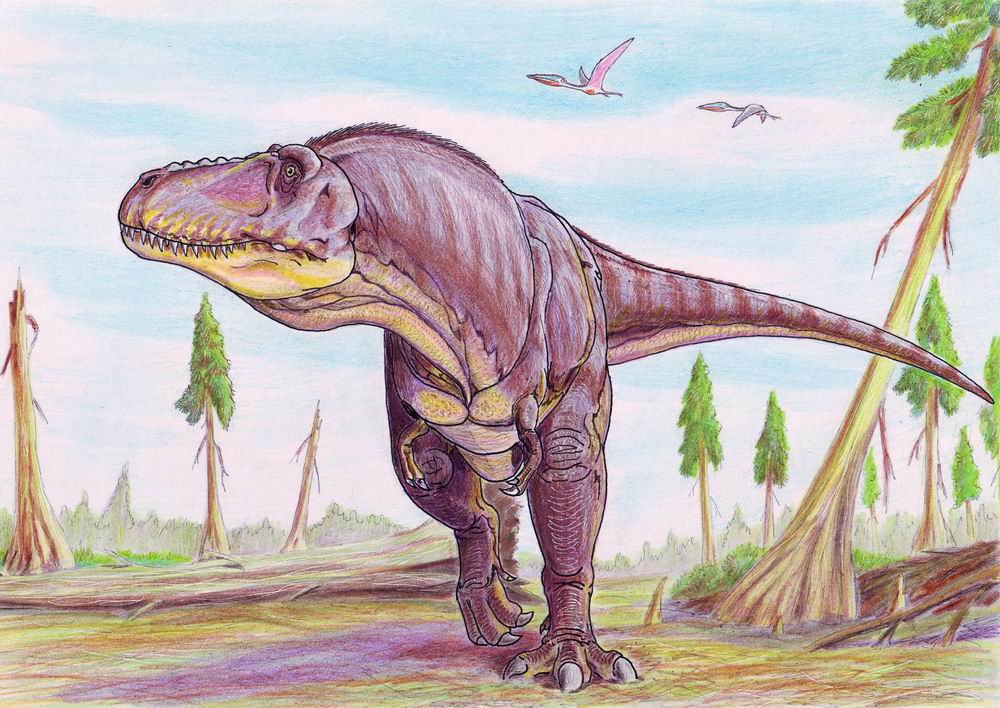
Tarbosaurus by Dmitry Bogdanov

Bite marks (presumably) belonging to Tarbosaurus bataar —a carnivore so similar to T. rex that some believe it should be reclassified as a species of Tyrannosaurus—are clearly visible on a few Deinocheirus bone fragments.

10. Some Priceless Deinocheirus Material Was Poached and Nearly Lost.

When Canadian paleontologist Phil Currie came upon an incredibly rare Deinocheirus specimen in 2009, he soon realized that somebody else had gotten to it first. The site was in shambles, with trampled fossils strewn about haphazardly and even a bit of money tucked away beneath a nearby stone. Sadly AWOL were—among other things—this Deinocheirus’ skull and feet. However, word of Currie’s find soon got out, and before long, the scientist was contacted by a European collector who’d acquired some very intriguing fossils that, lo and behold, turned out to be the missing pieces in question.

Source: www.mentalfloss.com

Jurassic Park: Who Was Nearly Cast in Steven Spielberg’s Dino Classic?

Sunday, May 21, 2017

Jurassic Park: Who Was Nearly Cast in Steven Spielberg’s Dino Classic?

Sean Connery? Jim Carrey! It could have been so very different.

Not even two dodgy sequels and 25 years passing can erase the magic of the very first time you watched Jurassic Park.

The Steven Spielberg dino adventure brought gasps from audiences – young and old – when it premiered around the world in 1993. Even today, a couple of seconds of that classic score can give you tingles and take you back to first time you saw The Park.

Like all great films, everything felt and looked like it slotted together perfectly. But that wasn’t necessarily the case, as there were plenty of other big-name stars who so very nearly got the lead roles.

1. Harrison Ford was nearly… Dr Alan Grant

© REX/MOVIESTORE COLLECTION/DANNY MARTINDALE/WIREIMAGE

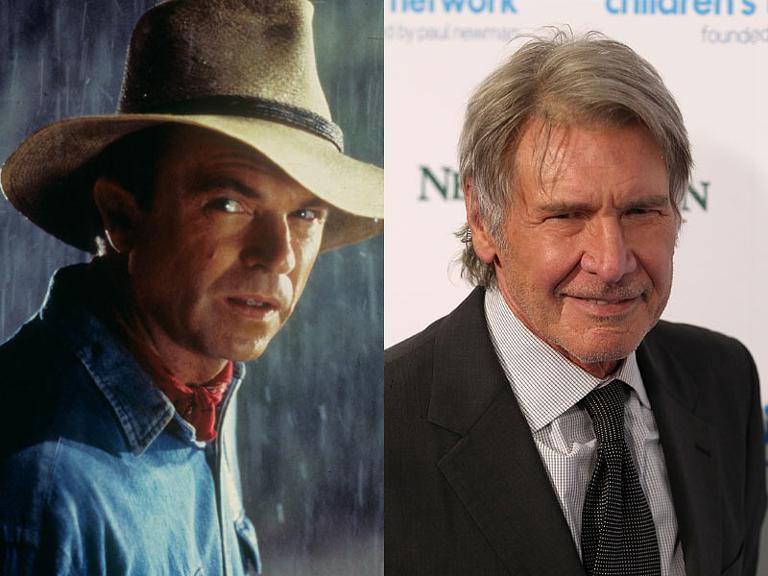
If it wasn’t already greedy enough that Harrison Ford had landed himself awesome cool roles in two of the biggest movie franchises of all time – Star Wars and Indiana Jones – he could have almost have added a third dino-sized film to his CV with the lead in Jurassic Park.

Spielberg made the revelation in a Q&A session, where Ford accused the director of only ever offering him the role of Indiana. Spielberg pointed out the to audience that he’d actually offered Ford the role of Dr Alan Grant before Sam Neill. Luckily for Sam Neill, Ford for some strange reason (perhaps as karma for getting Indiana Jones after Tom Selleck gave it a miss) said ‘no’.

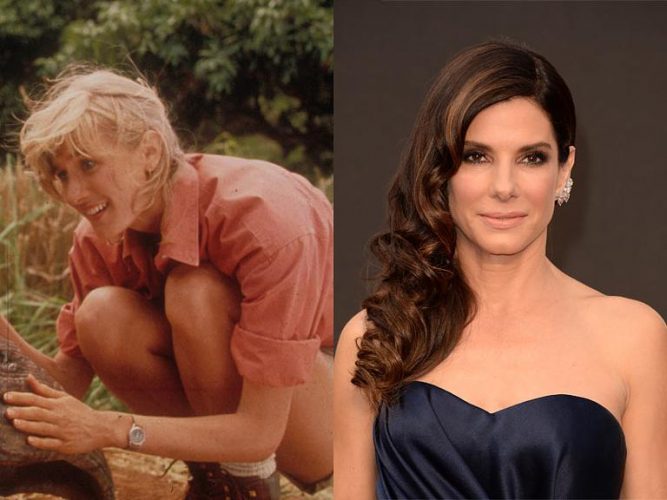
2. Sandra Bullock was nearly… Dr Ellie Sattler

The 12 Most Influential Paleontologists

Saturday, May 20, 2017

THESE PALEONTOLOGISTS AND FOSSIL HUNTERS CHANGED DINOSAUR HISTORY

If it weren't for the concerted efforts of literally thousands of paleontologists, evolutionary biologists and geologists, we wouldn't know nearly as much about dinosaurs as we do today. Below you'll find profiles of 12 dinosaur hunters, from all around the world, who have made outsized contributions to our knowledge about these ancient beasts.

Luis Alvarez (1911-1988)

Luis Alvarez (left) accepting an award from president Harry S Truman (Wikimedia Commons).

By training, Luis Alvarez was a physicist, not a paleontologist--but that didn't stop him from theorizing about a meteor impact that killed the dinosaurs 65 million years ago, and then (with his son, Walter) discovering actual evidence for the actual impact crater on Mexico's Yucatan peninsula, in the form of scattered remnants of the element iridium. For the first time, scientists possessed a cogent explanation for why the dinosaurs went extinct 65 million years ago--which, of course, hasn't prevented mavericks from proposing dubious alternative theories.

Mary Anning (1799-1847)

Mary Anning (Wikimedia Commons).

Mary Anning was an influential fossil hunter even before this phrase came into wide usage: in the early 19th century, scouring England's Dorset coast, she recovered the remains of two marine reptiles (an ichthyosaur and a plesiosaur), as well as the first pterosaur ever unearthed outside of Germany. Amazingly, by the time she died in 1847, Anning had received a lifetime annuity from the British Association for the Advancement of Science--at a time when women weren't expected to be literate, much less capable of practicing science! (Anning was also, by the way, the inspiration for the old children's rhyme "she sells sea shells by the sea shore.")

Robert H. Bakker (1945-)

Robert Bakker (Wikimedia Commons).

For almost three decades, Robert H. Bakker has been the leading proponent of the theory that dinosaurs were warm-blooded like mammals, rather than cold-blooded like modern lizards (how else, he argues, could the hearts of sauropods have pumped blood all the way up to their heads?) Not all scientists are convinced by Bakker's theory--which he inherited from his mentor, John H. Ostrom, the first scientist to propose an evolutionary link between dinosaurs and birds--but he has sparked a vigorous debate about dinosaur metabolism that will likely persist into the foreseeable future.

Barnum Brown (1873-1963)

Barnum Brown, on the right (Wikimedia Commons)

Barnum Brown (yes, he was named after P.T. Barnum of traveling circus fame) wasn't much of an egghead or innovator, and he wasn't even much of a scientist or paleontologist. Rather, Brown made his name early in the 20th century as the chief fossil hunter for New York's American Museum of Natural History, for which purposes he preferred (fast) dynamite to (slow) pickaxes. Brown's exploits whetted the American public's appetite for dinosaur skeletons, especially at his own institution, now the most famous depository of prehistoric fossils in the entire world. Brown's most famous discovery: the first documented fossils of none other than Tyrannosaurus rex.

Edwin H. Colbert (1905-2001)

Edwin H. Colbert on a dig in Antarctica (Wikimedia Commons).

Edwin H. Colbert had already made his mark as a working paleontologist (discovering the early dinosaurs Coelophysis and Staurikosaurus, among others) when he made his most influential discovery, in Antarctica: a skeleton of the mammal-like reptile Lystrosaurus, which proved that Africa and this giant southern continent used to be joined in one gigantic land mass. Since then, the theory of continental drift has done much to advance our understanding of dinosaur evolution; for example, we now know that the first dinosaurs evolved in the region of the supercontinent Pangea corresponding to modern-day South America, and then spread to the rest of the world's continents over the next few million years.

Edward Drinker Cope (1840-1897)

Edward Drinker Cope (Wikimedia Commons).

No one in history (with the possible exception of Adam) has named more prehistoric animals than the 19th-century American paleontologist Edward Drinker Cope, who wrote over 600 papers over his long career and bestowed names on nearly 1,000 fossil vertebrates (including Camarasaurus and Dimetrodon). Today, though, Cope is best known for his part in the Bone Wars, his ongoing feud with his archrival Othniel C. Marsh (see slide #10), who was no slouch himself when it came to hunting down fossils. How bitter was this clash of personalities? Well, later in his career, Marsh saw to it that Cope was denied positions at both the Smithsonian Institution and the American Museum of Natural History!

Dong Zhiming (1937-)

Dong Zhiming (China Scenic Magazine).

An inspiration to an entire generation of Chinese paleontologists, Dong Zhiming has spearheaded numerous expeditions to China's northwest Dashanpu Formation, where he has unearthed the remains of various hadrosaurs, pachycephalosaurs and sauropods (himself naming no fewer than 20 separate dinosaur genera, including Shunosaurus and Micropachycephalosaurus). In a way, Dong's impact has been most deeply felt in China's northeast, where paleontologists emulating his example have unearthed numerous specimens of dino-birds from the Liaoning fossil beds--many of which shed valuable light on the slow evolutionary transition of dinosaurs into birds.

Jack Horner (1946-)

Jack Horner (Wikimedia Commons).

To many people, Jack Horner will forever be famous as the inspiration for Sam Neill's character in the first Jurassic Park movie. However, Horner is best known among paleontologists for his game-changing discoveries, including the extensive nesting grounds of the duck-billed dinosaur Maiasaura and a chunk of Tyrannosaurus rex with intact soft tissues, analysis of which has lent support to the evolutionary descent of birds from dinosaurs. Lately, Horner has been in the news for his semi-serious scheme to clone a dinosaur from a live chicken, and, slightly less controversially, for his recent claim that the horned, frilled dinosaur Torosaurus was actually an unusually elderly Triceratops adult.

Othniel C. Marsh (1831-1899)

Othniel C. Marsh (Wikimedia Commons).

Working in the late 19th century, Othniel C. Marsh secured his place in history by naming more popular dinosaurs than any other paleontologist—including AllosaurusStegosaurus and Triceratops. Today, however, he's best remembered for his role in the Bone Wars, his enduring feud with Edward Drinker Cope (see slide #7). Thanks to this rivalry, Marsh and Cope discovered and named many, many more dinosaurs than would have been the case if they'd managed to coexist peacefully, greatly advancing our knowledge of this extinct breed. (Unfortunately, this feud also had a negative impact: so quickly and carelessly did Marsh and Cope erect various genera and species of dinosaurs that modern paleontologists are still cleaning up the mess.)

Richard Owen (1804-1892)

Richard Owen (Wikimedia Commons).

Far from the nicest person on this list, Richard Owen used his lofty position (as superintendent of the vertebrate fossil collection at the British Museum, in the mid-19th century) to bully and intimidate his colleagues, including the eminent paleontologist Gideon Mantell. Still, there's no denying the impact Owen has had on our understanding of prehistoric life; he was, after all, the man who coined the word "dinosaur," and he was also one of the first scholars to study Archaeopteryx and the newly discovered therapsids ("mammal-like reptiles") of South Africa. Oddly enough, Owen was extremely slow to accept Charles Darwin's theory of evolution, perhaps jealous that he hadn't come up with the idea himself!

Paul Sereno (1957-)

Paul Sereno (University of Chicago).

The early 21st-century version of Edward Drinker Cope and Othniel C. Marsh, but with a much nicer disposition, Paul Sereno has become the public face of fossil hunting for an entire generation of schoolchildren. Often sponsored by the National Geographic Society, Sereno has led well-funded expeditions to fossil sites all over the globe, including South America, China, Africa and India, and has named numerous genera of prehistoric animals, including one of the earliest true dinosaurs, the South American Eoraptor. Sereno has encountered particular success in northern Africa, where he led teams that discovered and named both the giant sauropod Jobaria and the vicious "great white shark lizard," Carcharodontosaurus.

Patricia Vickers-Rich (1944-)

Patricia and Paul Vickers-Rich (The Australian).

Patricia Vickers-Rich (along with her husband, Tim Rich) has done more to advance Australian paleontology than any other scientist. Her numerous discoveries at Dinosaur Cove—including the big-eyed ornithopod Leaellynasaura, named after her daughter, and the controversial "bird mimic" dinosaur Timimus, named after her son—have demonstrated that some dinosaurs thrived in the near-arctic conditions of Cretaceous Australia, lending weight to the theory that dinosaurs were warm-blooded (and more adaptable to extreme environmental conditions than had previously been thought). Vickers-Rich also has not been adverse to soliciting corporate sponsorship for her dinosaur expeditions; Qantassaurus and Atlascopcosaurus were both named in honor of Australian companies!

Source: www.thoughtco.com

Pages