Blogs

Jurassic World 2 set: More Dinosaur Images

Sunday, July 2, 2017

Jurassic World 2 set: More Dinosaur Images

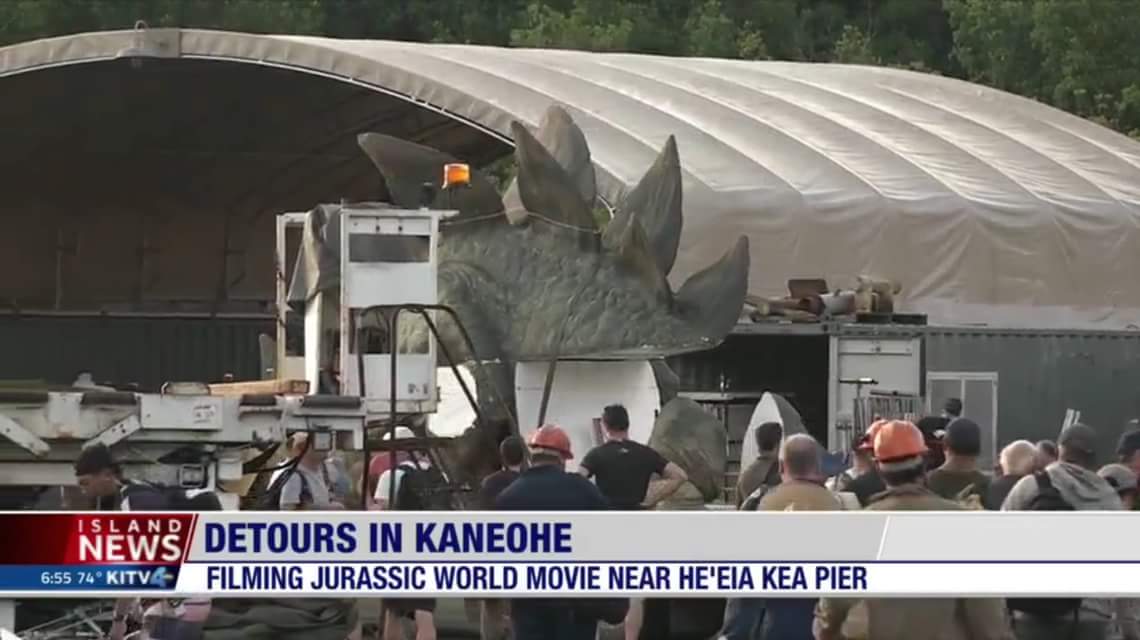
More photos of practical Dinosaur effects spotted on the Jurassic World sequel set in Hawaii today! Local news outlet KITV News shared some awesome footage of the sets this morning and thanks to Facebook page Hawaii Isla 808, we’ve got some screenshots of the coverage to share with you below!

Apparently, the Jurassic World: Fallen Kingdom scene being filmed this morning involved a storm scene:

Never miss an update on Jurassic World: Fallen Kingdom by liking Us on Facebook and by following us on Instagram!

JURASSIC WORLD 2: Official Title and Poster

Sunday, July 2, 2017

LIFE FINDS A WAY

Remember when movie sequels didn’t used to have complicated subtitles that didn’t really matter because everyone would just keep calling them Movie 2 anyway? Yeah, me neither. Now Jurassic World is following in the time-honored footsteps of movies like The Lost World: Jurassic Park (a.k.a. Jurassic Park 2), and has a new title to match.

That title? Jurassic World: Fallen Kingdom.

Based strictly on the phrase “Fallen Kingdom,” we expect that its sequel will probably deal with the fallout of the last movie, in which an entire successful theme park full of tourists got completely overrun by rampaging dinosaurs. It also happens to be the title of a popular Minecraft parody of Coldplay’s “Vida La Vida” that hit YouTube in 2012, but that’s neither here nor there.

In any case, will the movie achieve the same level of success as Jurassic World, which surprised everyone when it made $1.672 billion worldwide and became the third-highest grossing movie in history? Well, Jeff Goldblum is returning to reprise his role as Ian Malcolm from the first three movies, so… probably. Mark my words, every cynical nerd girl who came out of their theater disillusioned over Bryce Dallas Howard’s heels will march straight back for the sequel just to see Goldblum flirt with everybody left in the park.

Jurassic World: Fallen Kingdom is expected to hit theaters June 22, 2018. Let us know what you think of this title in the comments below!

Jurassic World: Fallen Kingdom Cast, Plot And Latest Spoilers

Sunday, July 2, 2017

Jurassic World: Fallen Kingdom Cast, Plot And Latest Spoilers

The raptors will return! All the details on 2018’s eagerly-awaited Jurassic sequel.

After $1.6 billion in box office takings, a sequel to 2015 summer’s mega-smash Jurassic World was always going to be a sure thing. Fans of Rexy, raptor Blue and her crew are in luck because the wheels are in motion for the follow-up – now officially titled Jurassic World: Lost Kingdom.

Details might be scant at the moment, but consider this article (which we’ll update as new info drops) your one-stop shop for cast, plot rumours and potential spoilers on Jurassic World 2

Jurassic World 2 first look: who’s that girl?

Our first official look at Jurassic World 2 appeared via the movie’s Instagram account, and revealed a new character and some old bones.

We spy a Triceratops and possibly a few raptors, but where are the bones of the Indominus Rex? The first genetically-engineered dinosaur species seems to be missing.

In terms of the young girl, leaked casting calls seemingly revealed that a 9-year-old girl named Lucy will be one of the central characters – no news yet on who the actress is.

Jurassic World 2 plot: Dinosaurs get weaponised

With Jurassic World seeing John Hammond’s dream of a dinosaur theme park in tatters (again), it’s difficult to figure out where things will head next. Our prediction: the sequel will be Jurassic War.

Vincent D’Onofrio’s character Vic Hoskins pushed hard to turn raptors into weapons of war, and going by what Colin Trevorrow has to say, it looks like this thread is something that’ll be explored in Jurassic World: Lost Kingdom.

“[It will not be] just a bunch of dinosaurs chasing people on an island. That’ll get old real fast,” he explained.

However, even if it does mean war, it’s definitely not going to be a game of Dinosaur Top Trumps. According to Trevorrow, new director JA Bayona will bring a different flavour.

“I don’t think that bigger, better dinosaurs or bigger, more epic-in-scope action sequences are what people are necessarily looking for from this franchise and what they love about it.” Trevorrow told Jurassic Outpost.

“It will be more suspenseful and scary. It’s just the way it’s designed; it’s the way the story plays out. I knew I wanted Bayona to direct it long before anyone ever heard that was a possibility, so the whole thing was just built around his skill set.”

It might be a parable about animal rights too.

Jurassic World 2 Actor James Cromwell Jailed

Sunday, July 2, 2017

Actor James Cromwell

Actor James Cromwell faces a week behind bars.

After refusing to pay a fine following his arrest at a protest in New York, actor James Cromwell has been sentenced to 7 days in Orange County Jail.

“James Cromwell has been sentenced to jail following his arrest during a power plant protest in New York back in 2015,” reports Variety. “The Emmy-winning actor will face seven days behind bars after refusing to pay fines levied against him after his initial arrest.”

And it sounds as though it’s all about his principles.

James Cromwell is perhaps best known as Farmer Hoggett in the hit kids film ‘Babe’ but has starred in over 200 film roles… including the upcoming ‘Jurassic World: Fallen Kingdom’.

Actor James Cromwell as Farmer Hoggett in Babe – Credit: Universal Pictures

So, what’s this all about?

A New York court decided on Thursday that James Cromwell, along with two other environmental activists, will spend 7 days in jail for their roles in a power plant protest.

James Cromwell, Pramilla Malick, Madeline Shaw, and three other protesters were arrested back in December 2015 after a sit-in at a Competitive Power Ventures natural gas site. All six were charged with obstruction of traffic.

“Wawayanda Town Justice Timothy McElduff Jr. fined each of them $250 plus a $125 surcharge, originally due to be paid by Thursday. However, only three of the six — Terri Klemm, Naomi Miller, and Maureen Murphy-Smolka — paid their fines on time.”

The actor originally had until 3:15PM on Friday 30 July to change his mind and pay up… but despite the sentencing of 7 days jail time, the deadline has been extended until 14 July to fork out the $375 fine.

But it sounds as though Cromwell won’t be changing his mind.

“If we don’t stay together, nothing will change,” he told the Times-Herald Record after refusing to pay his fine on Thursday. “Power to the people.”

Source: www.YahooMovies.com

Jurassic World 2: Blue Is Back!

Thursday, June 22, 2017

Jurassic World 2: Blue Is Back!

New details on the plot of Jurassic World 2 have leaked and visibly, Blue Owen Grady’s raptor, has a great role to play!

If we had been told that in Jurassic World, we would take affection for a Velociraptor, the worst carnivorous dinosaurs, we would have absolutely not believed! And yet the director Colin Trevorrow managed to make us love Blue, one of the raptors that Owen Grady, aka Chris Pratt, tried to tame. Yes, thanks to Jurassic World, it was discovered that raptors were not only terrible killers without any mercy, but that they could also love. The proof, in the final battle with the Indominus Rex, they did not hesitate to come to save Owen and Claire from certain death. We even ended up being afraid for them, surprising to pray that nothing happens to them. Fortunately, Blue, our favorite, managed to get out of it and we saw her then flee after a very touching moment with Owen. Good news, Blue will be back in Jurassic World 2 and the raptor will be even at the heart of the plot. This is in any case what stated an internal source to the production of the film, which also gave some details on this axis of the plot in particular.

Blue – The Raptor – Jurassic World.

“It’s centered on Blue, the raptor. So Isla Nubar appears in the film, briefly. They have to go back to get Blue back. They want to use it as a basis for creating dinosaurs that can be used for war. They also want to incorporate genes from the Indominus Rex. The characters of Chris Pratt and Bryce Dallas Howard find themselves involved because they want to prevent it. They were there in the previous film and they saw what had happened. In addition, the character of Chris Pratt is a raptor trainer and has a connection with Blue , “the source told The Daily Mail . If nothing has been confirmed at this time, these statements will in any case be in line with what has already been disclosed previously, on a plot revolving around the military use of dinosaurs. And it would not be surprising, knowing that the controversy has already been addressed in the first film with the character of Vincent d’Onofrio. There is only hope that Chris Pratt and Bryce Dallas Howard, who was surprised by the script of Jurassic World 2, can save Blue.

21 Fascinating Jurassic Park Movie Facts That You May Not Have Known About

Wednesday, June 21, 2017

We could have had a 'Goth-rassic' Park

It’s hard to believe it has been 24 years since the first Jurassic Park hit movie screens around the world, reigniting fear and wonder of the mammoth pre-historic reptiles who once ruled the planet. Now with Jurassic World having one of the biggest domestic opening weekend in box office history (2015), it’s time to take a look back at the film that started it all and 20 things you probably never knew about the groundbreaking film.

What are Therapsids?

Tuesday, June 20, 2017

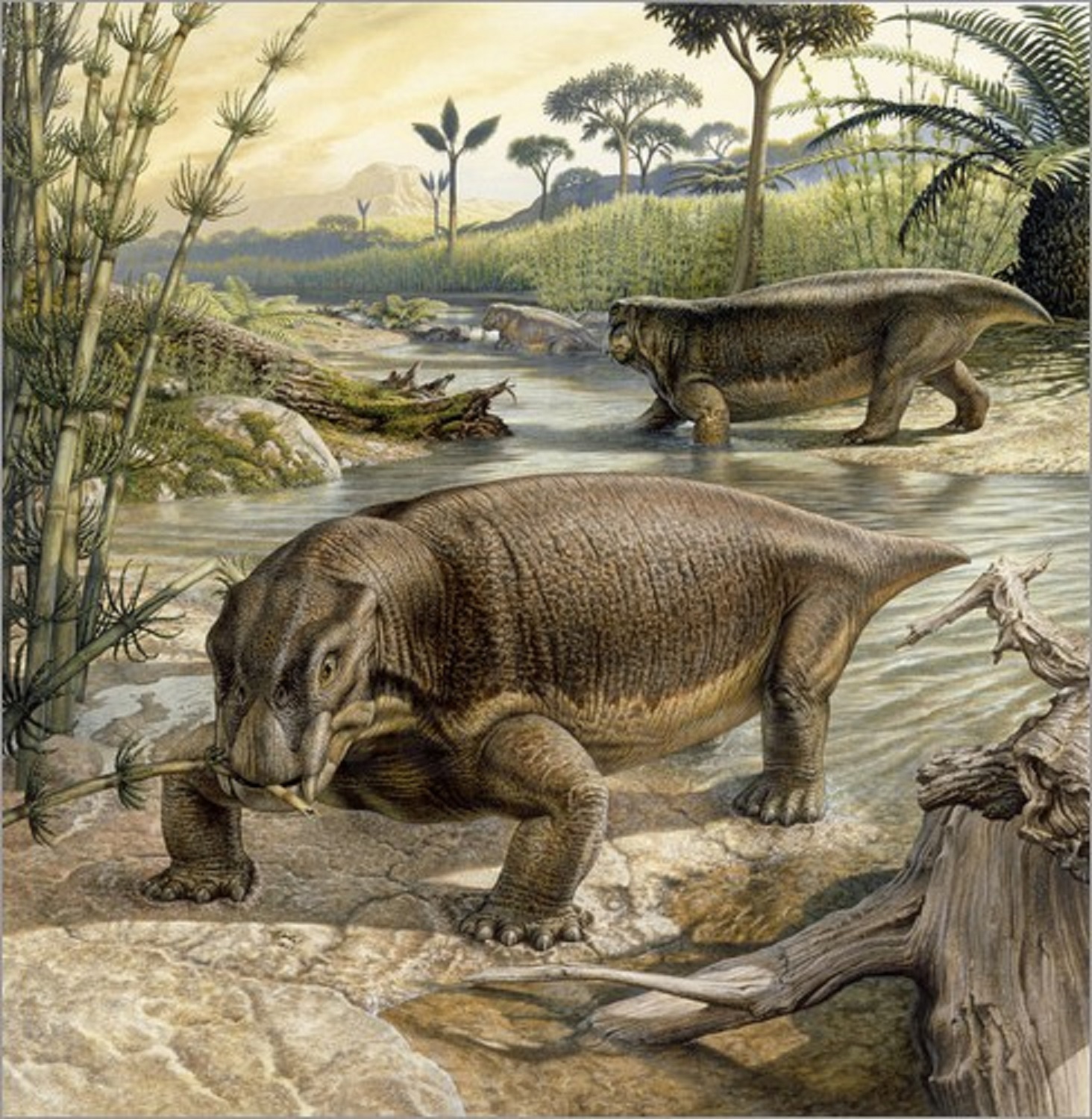
Lystrosaurus: is an extinct genus of dicinodontos therapsid Triassic period

Therapsida is a group of synapsids that includes mammals and their ancestors. Many of the traits today seen as unique to mammals had their origin within early therapsids, including having their four limbs extend vertically beneath the body, as opposed to the sprawling posture of other reptiles. The earliest fossil attributed to Therapsida is Tetraceratops insignis from the Lower Permian.

Therapsids evolved from pelycosaurs (specifically sphenacodonts) 275 million years ago. They replaced the pelycosaurs as the dominant large land animals in the Middle Permian and were replaced, in turn, by the archosauromorphs in the Triassic, although one group of therapsids, the kannemeyeriiforms, remained diverse in the Late Triassic.

The therapsids included the cynodonts, the group that gave rise to mammals in the Late Triassic around 225 million years ago. Of the non-mammalian therapsids, only cynodonts and dicynodonts survived the Triassic–Jurassic extinction event. The last of the non-mammalian therapsids, the tritylodontid cynodonts, became extinct in the Early Cretaceous, approximately 100 million years ago.

Mounted skeleton of Inostrancevia alexandri, a gorgonopsian therapsid

Legs and feet

Therapsid legs were positioned more vertically beneath their bodies than were the sprawling legs of reptiles and pelycosaurs. Also compared to these groups, the feet were more symmetrical, with the first and last toes short and the middle toes long, an indication that the foot’s axis was placed parallel to that of the animal, not sprawling out sideways. This orientation would have given a more mammal-like gait than the lizard-like gait of the pelycosaurs.

Jaw and teeth

Therapsids’ temporal fenestrae were larger than those of the pelycosaurs. The jaws of some therapsids were more complex and powerful, and the teeth were differentiated into frontal incisors for nipping, great lateral canines for puncturing and tearing, and molars for shearing and chopping food.

Fur and endothermy

Several characteristics in therapsids have been noted as being consistent with the development of endothermy: the presence of turbinates, erect limbs, highly vascularized bones, limb and tail proportions conducive to the preservation of body heat, and the absence of growth rings in bones. Therefore, like modern mammals, non-mammalian therapsids were most likely warm-blooded.

Recent studies on Permian coprolites showcase that hair was present in at least some therapsids. Hair is by any means present in the docodont Castorocauda and haramiyidan Megaconus, and whiskers are inferred from therocephalians and cynodonts.

Source: www.NatGeo.com, www.wikipedia.org

Top 5 Worst Mass Extinctions

Tuesday, June 20, 2017

Information and Facts About Mass Extinctions -  National Geographic

Ordovician-Silurian extinctionglobal extinction event occurring during the Hirnantian Age (445.2 million to 443.8 million years ago) of the Ordovician Period and the subsequent Rhuddanian Age (443.8 million to 440.8 million years ago) of the Silurian Period that eliminated an estimated 85 percent of all Ordovician species. This extinction interval ranks second in severity to the one that occurred at the boundary between the Permian and Triassic periods about 251 million years ago in terms of the percentage of marine families affected. The Ordovician-Silurian extinction was almost twice as severe as the K–T extinction event that occurred at the end of the Cretaceous Period, about 66 million years ago, which is famous for bringing an end to the dinosaurs.

via Futurism.com

The Late Devonian extinction was one of five major extinction events in the history of the Earth’s biota. A major extinction, the Kellwasser event, occurred at the boundary that marks the beginning of the last phase of the Devonian period, the Famennian faunal stage (the Frasnian–Famennian boundary), about 375–360 million years ago. Overall, 19% of all families and 50% of all genera became extinct. A second, distinct mass extinction, the Hangenberg event, closed the Devonian period.

via Futurism.com

The Permian–Triassic (P–Tr or P–Textinction event, colloquially known as the Great Dying, the End-Permian Extinction or the Great Permian Extinction, occurred about 252 Ma (million years) ago, forming the boundary between the Permian and Triassic geologic periods, as well as the Paleozoic and Mesozoic eras. It is the Earth’s most severe known extinction event, with up to 96% of all marine species and 70% of terrestrial vertebrate species becoming extinct. It is the only known mass extinction of insects. Some 57% of all families and 83% of all genera became extinct. Because so much biodiversity was lost, the recovery of life on Earth took significantly longer than after any other extinction event, possibly up to 10 million years. Studies in Bear Lake County near Paris, Idaho showed a quick and dynamic rebound in a marine ecosystem, illustrating the remarkable resiliency of life.

via Futurism.com

The Triassic–Jurassic extinction event marks the boundary between the Triassic and Jurassic periods, 201.3 million years ago, and is one of the major extinction events of the Phanerozoic eon, profoundly affecting life on land and in the oceans. In the seas, a whole class (conodonts) and 34% of marine genera disappeared. On land, all archosaurs other than crocodylomorphs (Sphenosuchia and Crocodyliformes) and Avemetatarsalia (pterosaurs and dinosaurs), some remaining therapsids, and many of the large amphibians became extinct.

via Futurism.com

The Cretaceous–Paleogene (K–Pgextinction event, also known as the Cretaceous–Tertiary (K–Textinction, was a mass extinction of some three-quarters of the plant and animal species on Earth that occurred over a geologically short period of time approximately 66 million years ago. With the exception of some ectothermic species like the leatherback sea turtle and crocodiles, no tetrapods weighing more than 25 kilograms (55 lb) survived. It marked the end of the Cretaceous period and with it, the entire Mesozoic Era, opening the Cenozoic Era that continues today.

via Futurism.com

 Sources: www.Futurism.com, www.Wikipedia.org, www.NatGeo.com, BBC.co.uk, www.Britannica.com

Machairoceratops

Monday, June 19, 2017

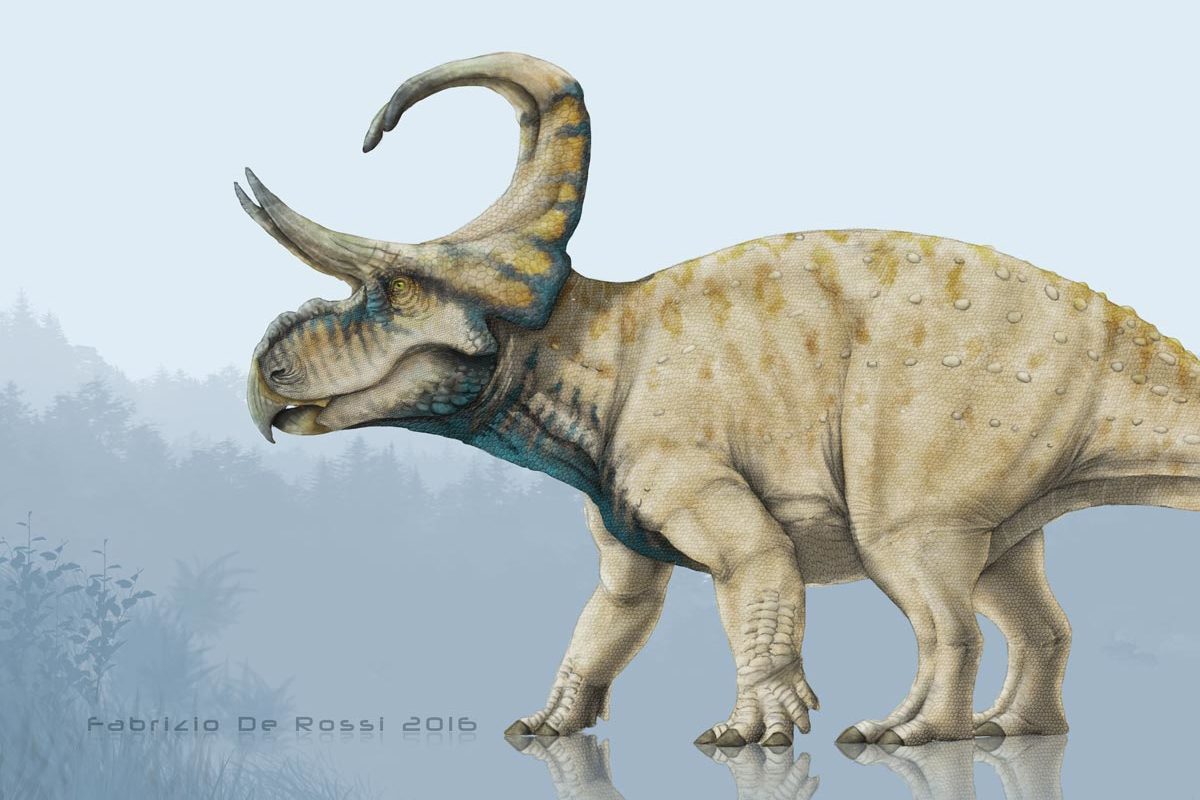
Machairoceratops cronusi by Fabrizio De Rossi, 2016

Machairoceratops is a genus of centrosaurine ceratopsian dinosaur known from the Late Cretaceous Wahweap Formation (late Campanian stage) of Grand Staircase-Escalante National Monument, southern Utah, United States.

It contains a single species, M. cronusi, first described and named in 2016 by Eric K. Lund, Patrick M. O’Connor, Mark A. Loewen and Zubair A. Jinnah. The generic name is derived from Greek machairis, meaning “bent sword”, in reference to its unique frill ornamentation showing two forward curving horns on the frill’s uppermost part, and Latinized Greek ceratops, meaning “horned-face”, which is a common suffix for ceratopsian genera names. The specific name cronusi refers to Cronus, a Greek god who deposed his father Uranus by castrating him with a sickle or scythe based on the mythology, and as such is shown carrying a curved bladed weapon. Machairoceratops is known solely from the holotype UMNH VP 20550, found in 2006, which is housed at the Natural History Museum of Utah. It is represented by a partial skull including two curved and elongate eyesocket horncores, the left jugal bone, a nearly complete but slightly deformed braincase, the left squamosal bone, and a parietal bone complex and its unique horn ornamentation, all collected in association.

Holotype cranial Material and Cranial Reconstruction of Machairoceratops cronusi (UMNH VP 20550) gen. et sp. nov. Recovered cranial elements of Machairoceratops in right-lateral view, shown overlain on a ghosted cranial reconstruction (A). The jugal, squamosal and braincase are all photo-reversed for reconstruction purposes. Machairoceratops cranial reconstruction in dorsal (B), and right-lateral (C) views. Green circle overlain on the ventral apex of the jugal highlights the size of the epijugal contact scar (ejcs). Abbreviations: BC, braincase; boc, basioccipital; bpt, basipterygoid process; ej, epijugal; ejcs, epijugal contact scar; j, jugal; lpr, lateral parietal ramus; lsb, laterosphenoid buttress; m, maxilla; n, nasal; o, orbit, oc, occipital condyle; oh, orbital horn; on, otic notch; p, parietal; pf, parietal fenestra; pm, premaxilla; po, postorbital; poc, paroccipital process; p1, epiparietal locus p1; sq, squamosal. Scale bars = 0.5 m. Eric K. Lund, Patrick M. O’Connor, Mark A. Loewen, Zubair A. Jinnah

Source: www.Wikipedia.org

Woolly Mammoth

Monday, June 19, 2017

Woolly Mammoth Model at the Royal BC Museum

The woolly mammoth (Mammuthus primigenius) is a species of mammoth that lived during the Pleistocene epoch, and was one of the last in a line of mammoth species, beginning with Mammuthus subplanifrons in the early Pliocene. The woolly mammoth diverged from the steppe mammoth about 400,000 years ago in East Asia. Its closest extant relative is the Asian elephant. The appearance and behaviour of this species are among the best studied of any prehistoric animal because of the discovery of frozen carcasses in Siberia and Alaska, as well as skeletons, teeth, stomach contents, dung, and depiction from life in prehistoric cave paintings. Mammoth remains had long been known in Asia before they became known to Europeans in the 17th century. The origin of these remains was long a matter of debate, and often explained as being remains of legendary creatures. The mammoth was identified as an extinct species of elephant by Georges Cuvier in 1796.

Size (red) compared to a human and other mammoths

The woolly mammoth was roughly the same size as modern African elephants. Males reached shoulder heights between 2.7 and 3.4 m (8.9 and 11.2 ft) and weighed up to 6 tonnes (6.6 short tons). Females reached 2.6–2.9 m (8.5–9.5 ft) in shoulder heights and weighed up to 4 tonnes (4.4 short tons). A newborn calf weighed about 90 kilograms (200 lb). The woolly mammoth was well adapted to the cold environment during the last ice age. It was covered in fur, with an outer covering of long guard hairs and a shorter undercoat. The colour of the coat varied from dark to light. The ears and tail were short to minimise frostbite and heat loss. It had long, curved tusks and four molars, which were replaced six times during the lifetime of an individual. Its behaviour was similar to that of modern elephants, and it used its tusks and trunk for manipulating objects, fighting, and foraging. The diet of the woolly mammoth was mainly grass and sedges. Individuals could probably reach the age of 60. Its habitat was the mammoth steppe, which stretched across northern Eurasia and North America.

The woolly mammoth coexisted with early humans, who used its bones and tusks for making art, tools, and dwellings, and the species was also hunted for food. It disappeared from its mainland range at the end of the Pleistocene 10,000 years ago, most likely through climate change and consequent shrinkage of its habitat, hunting by humans, or a combination of the two. Isolated populations survived on St. Paul Island until 5,600 years ago and Wrangel Island until 4,000 years ago. After its extinction, humans continued using its ivory as a raw material, a tradition that continues today. It has been proposed the species could be recreated through cloning, but this method is as yet infeasible because of the degraded state of the remaining genetic material.

Like modern elephants, woolly mammoths were likely very social and lived in matriarchal (female-led) family groups. This is supported by fossil assemblages and cave paintings showing groups. It is therefore probable that most of their other social behaviour was similar to that of modern elephants. It is unknown how many mammoths lived at one location at a time, as fossil deposits are often accumulations of individuals that died over long periods of time. It is likely that the amounts varied by season and life-cycle events. Modern elephants can form large herds, sometimes consisting of multiple family groups, and these herds can include thousands of animals migrating together. Mammoths may have formed large herds more often, since animals that live in open areas are more likely to do this than those in forested areas. Trackways made by a woolly mammoth herd 11,300–11,000 years ago have been found in the St. Mary Reservoir in Canada, showing that there were in this case almost equal numbers of adults, sub-adults and juveniles. The adults had a stride of 2 m (6.6 ft), and the juveniles ran to keep up.

Source: www.NatGeo.com, www.Wikipedia.com

Pages