Blogs

Dreadnoughtus

Thursday, August 3, 2017

Dreadnoughtus illustration by Jennifer Hall

Dreadnoughtus is a genus of giant titanosaurian sauropod dinosaur containing a single species, Dreadnoughtus schraniD. schrani is known from two partial skeletons discovered in Upper Cretaceous (Campanian-Maastrichtian; 84–66 Ma) rocks of the Cerro Fortaleza Formation in Santa Cruz Province, Argentina. It is one of the largest of all known terrestrial vertebrates, possessing the greatest mass of any land animal that can be calculated with reasonable certainty. D. schrani is known from a more complete skeleton than any other gigantic titanosaurian.

Dreadnoughtus means “fearing nothing.” It’s a fitting name for the largest dinosaur ever discovered. The beast measures 26 metres from nose to tail and weighs 59,300 kg (about the weight of 12 African elephants).

Based on a cladistic analysis, Dreadnoughtus schrani appears to be a “derived” basal titanosaur that is not quite a lithostrotian. Lacovara et al. (2014) note that because of the wide array of relatively “advanced” and “primitive” features in the skeleton of Dreadnoughtus schrani and the current instability of titanosaurian interrelationships, future analyses may find widely differing positions for it within Titanosauria.

The illustration below compares the size of Dreadnoughtus to a moose, an African elephant, other dinosaurs and a Boeing airplane.

Dreadnaughtus size comparison

Why name it “Dreadnoughtus”?

Dr. Kenneth Lacovara of Drexel University, the paleontologist who discovered the massive beast, decided to name the dinosaur after the early 20th century dreadnought battleships. Nothing stood in the way of those seafaring monsters. Look at the size of them:

Dreadnought Battleship

How was Dreadnoughtus discovered?

In 2005, Dr. Lacovara found a small collection of bones in South Patagonia, Argentina.

Patagonia, Argentina

Over the next four years, he and his team, plus Argentinian experts, excavated more than 100 bone fragments. (The bones were well-preserved as the dinosaur seemingly drowned in quicksand.) For the first time ever, paleontologists are able to examine an almost complete dinosaur skeleton.

Dr. Lacovara and his team scanned the bones to make a computerized reconstruction of how Dreadnoughtus looked and moved. They also are using 3D printers to print out models of the bones. One of the most amazing discoveries is that Dreadnoughtus hadn’t finished growing! Who knows how big it would have gotten?

Dr. Lacovara published his research on September 4, 2014, in the Scientific Reports journal, almost ten years after his first discovery.

Source www.Wikipedia.org, www.NatGeo.com

16 Fascinating Extinct Animals

Thursday, August 3, 2017

Frederick William Frohawk's restoration from Walter Rothschild's 1907 book Extinct Birds

Major extinction events are nothing new for the planet, but species are now dying out at an alarming rate thanks to humans.

We are presently losing dozens of species every day, according to the Center for Biological Diversity. Nearly 20,000 species of plants and animals are at a high risk of extinction and if trends continue, Earth could see another mass extinction event within a few centuries.

Tasmanian Tiger
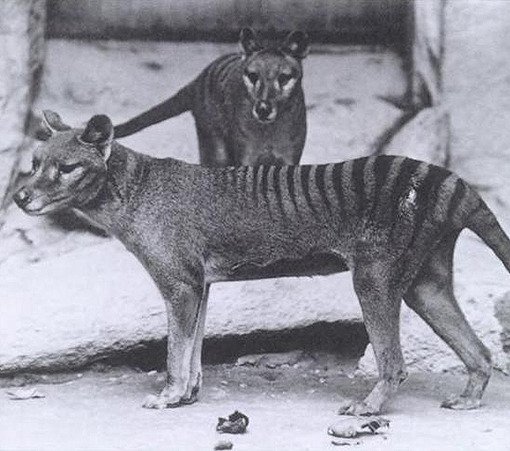
Tasmanian Tiger

The Tasmanian tiger was listed as extinct nearly 80 years ago, but now a team of British naturalists are on the prowl to prove that the species is still alive.

Properly named a thylacine, the “Tassie tiger” is the largest known carnivorous marsupial of modern times. The stripes on its back resemble those of the jungle cat after which it is named. Though the last known thylacine died at Hobart Zoo in Tasmania on Sept. 7, 1936, some believe the animal is alive and well in the island state’s remote northwestern region.

While the Tasmanian government has stated there is “no conclusive evidence” that the thylacine exists, a team from the U.K.’s Centre for Fortean Zoology is scouring the Tasmanian topography in hopes of gathering more evidence to prove the animal still roams.

We hope the team is successful in finding the long-lost Tasmanian tiger. Until then, they’ll remain on this list of fascinating extinct animals.

Dodo
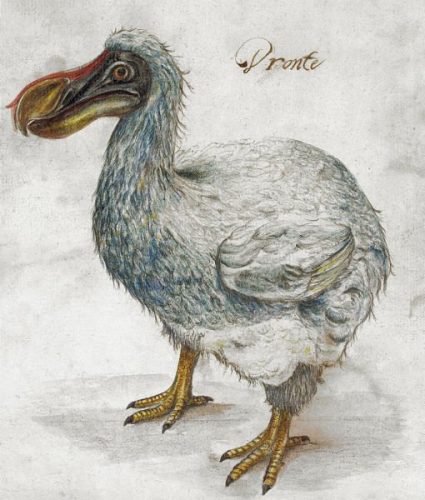
Dodo

For many of us, the dodo is the first creature that comes to mind when we think of extinct animals. In popular culture, it is the archetypal example of extinct species, to the point that “gone the way of the dodo” has become a common idiom referring to the extinction or obsolescence of almost anything.

First discovered by modern humans around 1600, these unique-looking birds existed in limited areas free from natural predators. That means that when humanity finally did come calling, dodos were unusually fearless (and therefore stupidly trusting) of us. This, combined with their flightlessness, made the birds easy pickings for hungry sailors.

And in our bullying human arrogance, we not only made dodos extinct, but also bestowed upon them a reputation for being dumb, simply because they thought we might actually be kind to them.

California Golden Bear
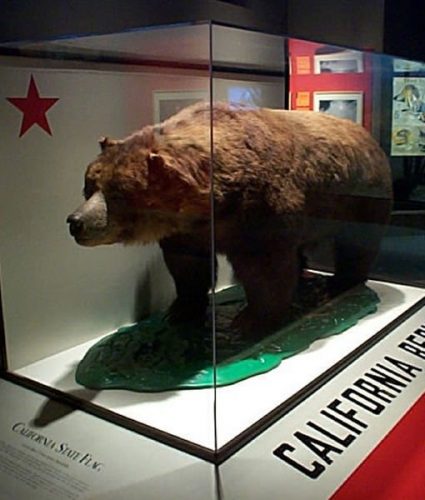
California Golden Bear

The noble California golden bear, like the Japanese river otter, is held in high esteem as a symbol of the place that gave it its name. This subspecies of brown bear is the one you’ll find on the official state flag of California. Specifically, the bear depicted on the flag is based on Monarch, the last California golden bear held in captivity, whose taxidermied body remains preserved today at the Academy of Sciences at Golden Gate Park. The California golden bear also serves as the mascot of the UC Berkeley California Golden Bears and the UCLA Bruins. Of course, all this veneration didn’t keep the last living California golden bear from being shot and killed in 1922.

Japanese River Otter
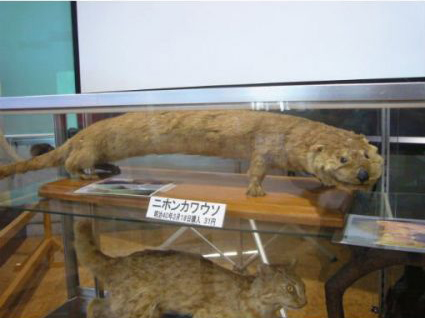
Japanese River Otter

In 2012, Japan’s Ministry of the Environment declared the Japanese river otter extinct. Once numbering in the millions, the population of river otters collapsed due to overhunting and habitat destruction by humans. The last time a Japanese river otter was seen was in 1979. Attempts to find more of the animals were conducted over the past few decades, but on Aug. 28, 2012, the Japanese government officially gave up hope.

Aurochs
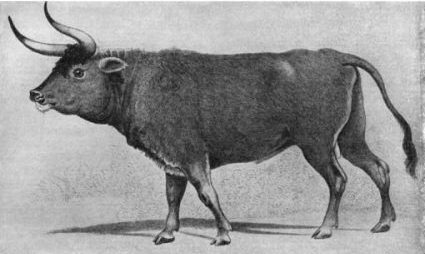
Aurochs

The aurochs was the original cow, literally. These beasts were the larger, wild progenitors of the modern, domestic cattle we know today. An ancient animal, the oldest evidence of aurochs known to man dates from about 2 million years ago during the Pleistocene, and they were first domesticated some 10,000 years ago. Once found all over the world, the aurochs’ range was limited to just a few countries in Central and Eastern Europe by the 1200s. Conservation efforts were made with the hunting of aurochs being outlawed, but the population dwindled to almost nothing by the 17th century. The last living aurochs died in a Polish nature preserve in 1627.

Golden Toad
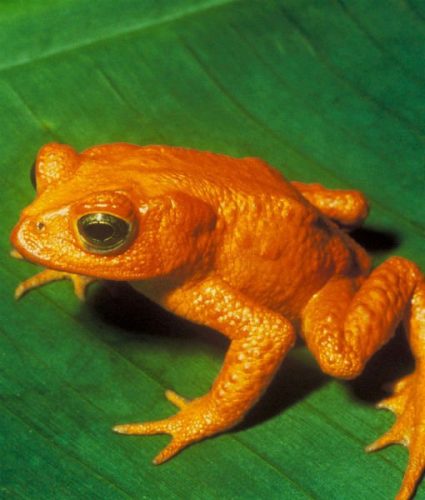
Golden Toad

These beautiful amphibians only very recently disappeared from Earth. In fact, golden toads were first discovered less than 50 years ago, when herpetologist Jay Savage found them in 1966. The toads’ yellow-orange glow was so striking that Savage at first did not believe it was natural, saying that he thought some jokester must have painted them that color. In the 20 years following their discovery, approximately 1,500 golden toads were observed. Then they seemed to disappear suddenly and completely. Zero of them have been seen since 1989. Climate change is considered the culprit.

Blue Buck
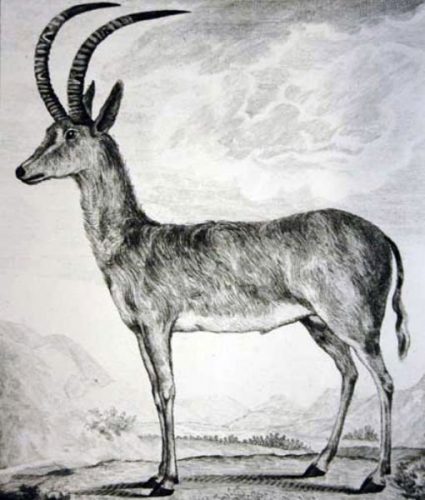
Blue Buck

Here’s an example of an animal whose extinction we can’t really blame on ourselves, because they were already quite rare by the time humankind found them. The bluebuck, a species of large antelope, was first discovered in the 1600s at the southern tip of Africa, to which its range already was limited. Evidence suggests their numbers first dropped dramatically some 2,000-3,000 years ago due to natural climate change affecting the landscape and the bluebucks’ food sources. Once modern humans discovered bluebucks, they already were on their way out, so don’t feel too guilty about it.

Great Auk
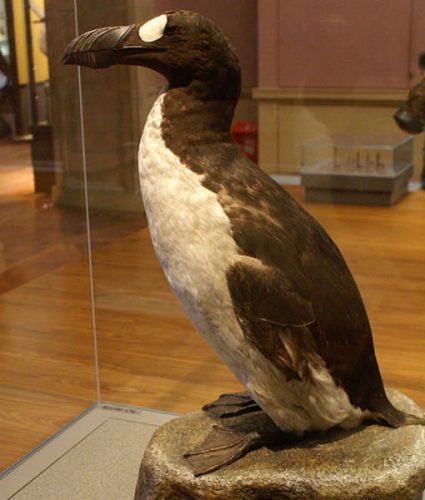
Great Auk

The great auk was a large, flightless, penguin-like bird with a unique-looking beak. Although great auks resemble penguins, the two species are not related. (The great auk’s closest relative is the still-existing, though threatened, razorbill.) What’s interesting, however, is that the great auk was known centuries before penguins were discovered, and originally, the word “penguin” was used as a nickname for great auks. When explorers later discovered penguins, they gave them their name due to their similar appearance to great auks. Sadly, hunting crippled the great-auk population, and despite a couple centuries of protection, the species died out. The last time any human saw a great auk was in the 1850s. Today, everyone’s favorite animal is the penguin, but few know of the now-extinct bird that gave penguins their name.

Baiji
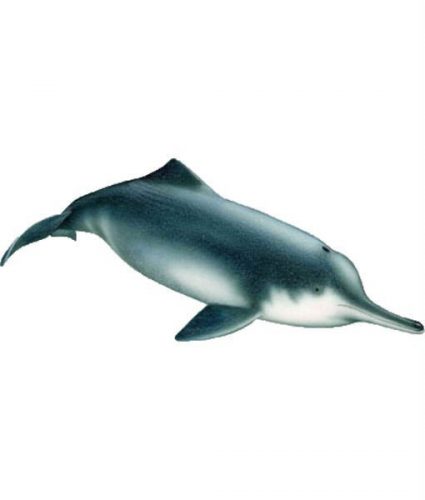
Baiji

Another very recently extinct species, the baiji (aka the Chinese river dolphin) was a victim of hunting and modern industrialization, i.e., it’s our fault they’re gone. At one time, these dolphins were an especially admired animal in Chinese culture, but this view was officially denounced by the Chinese government in the 1950s during a period of economic expansion, and the animals were then openly hunted. With their numbers already at only about 6,000 dolphins, the baiji population collapsed due to hunting, fishing, pollution and loss of habitat. Within decades, their numbers were reduced to only a few hundred. Despite conservation efforts that began in the ’70s, no baiji has been seen since 2004, and the species was declared “functionally extinct” in 2006.

Haast’s Eagle
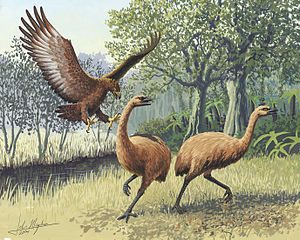
Haast’s Eagle

The great Haast’s eagle, named for the man who first classified the species in 1870, is the largest eagle known to have ever existed on Earth. The enormous raptors lived in New Zealand, where they happily hunted and ate the island’s large, flightless moa birds as their main food source. Unfortunately, moa also were happily hunted and eaten by the Maori, the indigenous humans of New Zealand. In fact, Haast’s eagles and the Maori people were the exclusive predators of moa. Yet all that happy hunting and eating was still enough to drive the moa to extinction by 1400. The ever-adaptable humans had other food sources, of course, but the Haast’s eagles weren’t so lucky. With no more food, they likewise became extinct almost immediately.

Huia
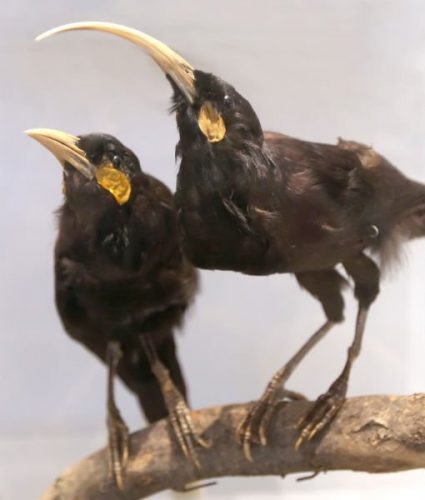
Huia

Like the Haast’s eagle and the moa, the huia was a species of bird that lived in New Zealand. While the Maori people hunted moa almost exclusively for food, they celebrated and venerated the huia birds for their beautiful plumage and cool beaks. But they still expressed their veneration the same way: hunting. After all, that sweet huia plumage made for some pretty awesome ornaments and hair decorations. Still, the Maori aren’t responsible for hunting the huia into extinction. That came later, when Europeans arrived, overhunting the unique birds and clearing the forests that served as huia habitats. The huia were further polished off by disease, parasites and animals like cats and rats, all of which also were brought along by those pesky Europeans.

Laughing Owl
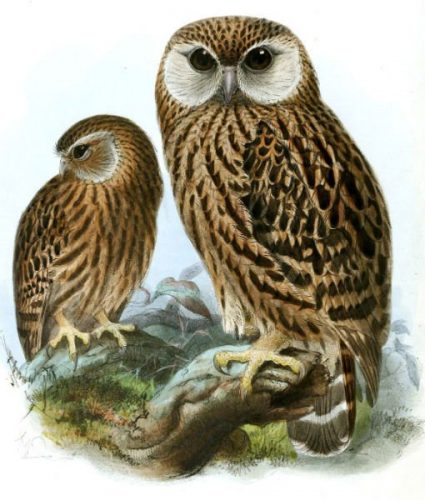
Laughing Owl

Here a sub-theme emerges as we look at yet another extinct bird native to New Zealand. Before it was overhunted to extinction by Europeans and the animals they introduced, the laughing owl was a cool-looking bird noted for its shrieking cry that was said to sound like barking or laughter. But we shall never hear that sound again. Or will we? The laughing owl’s story may not be over. A group of American tourists were visiting New Zealand in the 1980s when, far from civilization, they were frightened by the sound of cackling laughter. Years later, one of the tourists had occasion to relate the story to a New Zealand ornithologist who was excited to hear what he knew to be a description of a laughing owl. The story may be hard to prove, but we remain cautiously optimistic that humans will be terrified by the screech of laughing owls again someday.

Quagga
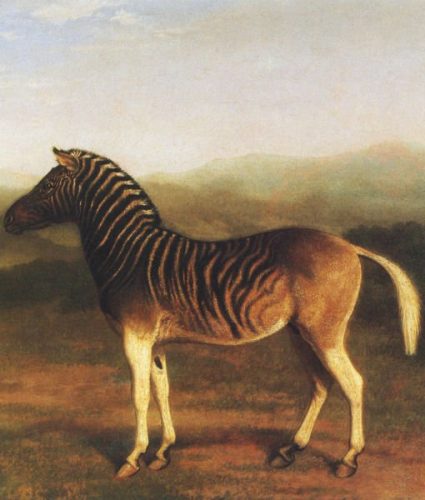
Quagga

Party in the front, all business in the back: that’s what the quagga — a type of zebra with stripes only on its front half — was all about. Zebras come in a variety of colors and patterns, and no two are alike, so years ago it wasn’t clear whether quaggas were differently patterned zebras or actually a species unto themselves. The animals were hunted to extinction by the late 19th century, before the mystery could be solved. Later, however, DNA samples revealed that quaggas were in fact not a separate species, but a subspecies of the plains zebra with which we’re familiar today. As a result, there is an ongoing effort to recreate the quagga through selective breeding. In recent years, this effort has met with some success.

Pyranean Ibex
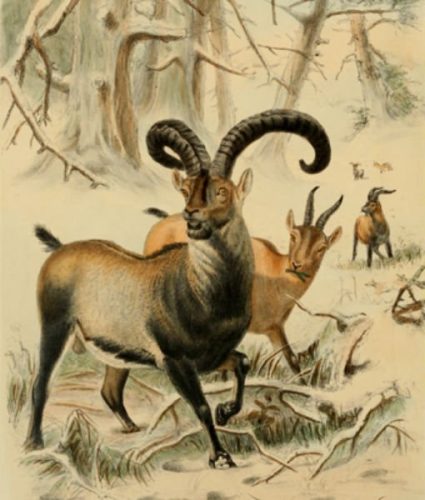
Pyranean Ibex

Here’s another extinct animal whose fate may not be sealed. Pyrenean ibexes were once numerous, but for reasons that aren’t currently understood by scientists, their numbers dwindled to fewer than 100 by the 20th century. The last Pyrenean ibex died in 2000, and then the animal was extinct. However, this species is the first in history to be made “unextinct” through the intervention of humankind and our wild technology. Nine months after the last Pyrenean ibex fell, a project was announced that would clone the species. After several years of failed attempts, a cloned Pyrenean ibex was born to a mountain-goat surrogate mother in 2009. Sadly, the animal died within minutes, but not before living its incredibly short life as an unprecedented scientific marvel.

Falkland Islands Wolf
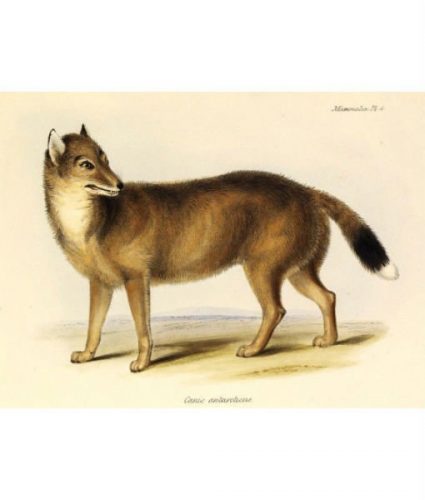
Falkland Islands Wolf

This extinct canid was kind of like a wolf, kind of like a dog, and kind of like a fox. (In fact, it is sometimes called the Falkland Islands dog or the Falkland Islands fox.) Like our friends the bluebucks, Falkland Islands wolves already existed in fairly limited quantities over a relatively tiny range by the time humanity found them. And like dodos, they didn’t do themselves any favors with a tame temperament that made them unusually trusting of humans. The species is notable for having been studied by Charles Darwin, who upon visiting the Falkland Islands in 1833, guessed that the species would become extinct very quickly. Sadly, he was proven correct within 40 years.

Rocky Mountain Locust
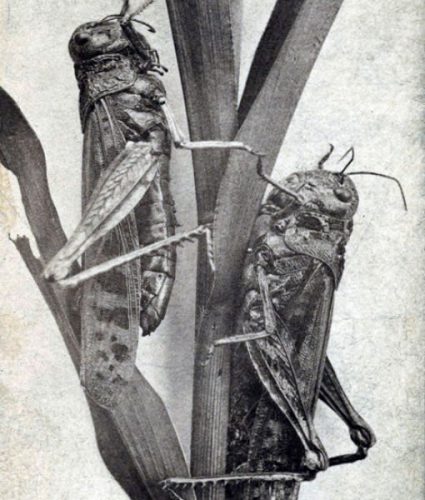
Rocky Mountain Locust

Many now-extinct species were once numerous, but Rocky Mountain locusts were the mostnumerous. Covering the western half of the United States at their apparent peak in the late 1800s, the largest swarm of Rocky Mountain locusts ever seen is estimated to have numbered more than 12 trillion of the insects, covering almost 200,000 square miles, an area twice the size of Colorado. This still holds the Guinness World Records distinction as the greatest concentration of any animal. Yet 30 years later, they were extinct. Our best guess at the reason is that, between the locusts’ swarming periods, American farmers dug and plowed the land that contained all their eggs. Oops. Considering that that huge swarm in the 1870s damaged farmland in the U.S. to the tune of $200 million, maybe this is one extinction we don’t have to regret too hard.

All images via Wikimedia. Source: www.NatGeo.com

Carnufex carolinensi: “Carolina Butcher” A Massive Croc That Hunted on its Hind Legs

Thursday, August 3, 2017

Carnufex carolinensi: “Carolina Butcher” A Massive Croc That Hunted on its Hind Legs. Photo: Jorge Gonzales

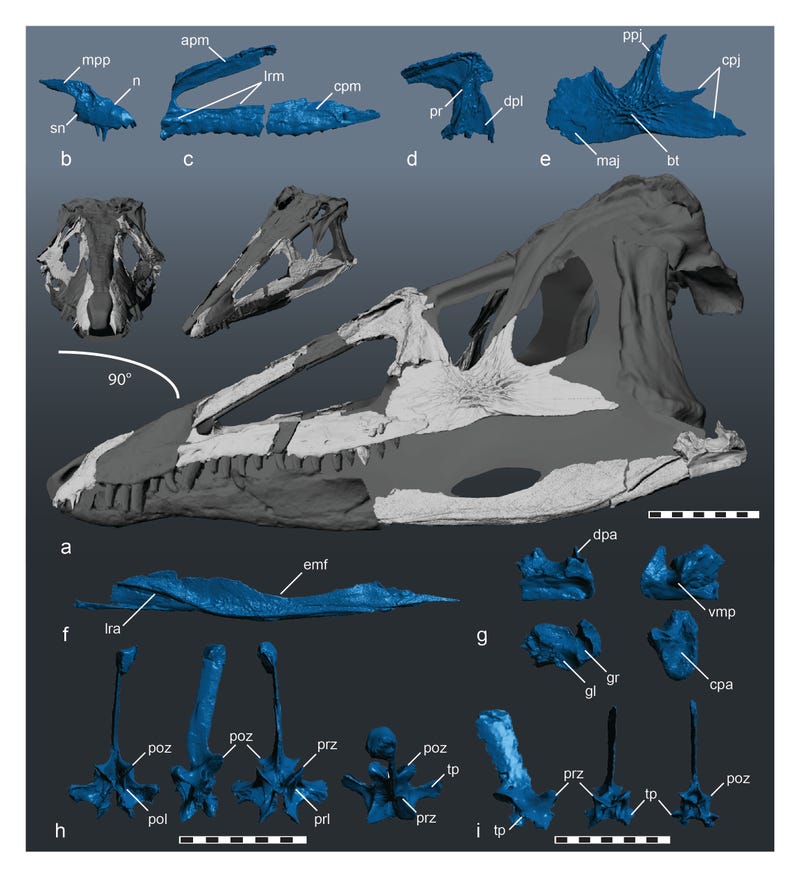
Paleontologists from North Carolina State University and the North Carolina Museum of Natural Sciences recovered parts of Carnufex’s skull, spine and upper forelimb from the Pekin Formation in Chatham County, North Carolina. Because the skull of Carnufex was preserved in pieces, it was difficult to visualize what the complete skull would have looked like in life. To get a fuller picture of Carnufex’s skull the researchers scanned the individual bones with the latest imaging technology – a high-resolution surface scanner. Then they created a three-dimensional model of the reconstructed skull, using the more complete skulls of close relatives to fill in the missing pieces.

Reconstructed skull of Carnufex carolinensis. 3D surface models of skull bones shown in white. Grey areas are missing elements reconstructed from close relatives of Carnufex.

The Pekin Formation contains sediments deposited 231 million years ago in the beginning of the Late Triassic (the Carnian), when what is now North Carolina was a wet, warm equatorial region beginning to break apart from the supercontinent Pangea. “Fossils from this time period are extremely important to scientists because they record the earliest appearance of crocodylomorphs and theropod dinosaurs, two groups that first evolved in the Triassic period, yet managed to survive to the present day in the form of crocodiles and birds,” says Lindsay Zanno, assistant research professor at NC State, director of the Paleontology and Geology lab at the museum, and lead author of a paper describing the find. “The discovery of Carnufex, one of the world’s earliest and largest crocodylomorphs, adds new information to the push and pull of top terrestrial predators across Pangea.”

Source: www.Gizmodo.com, 2015

Monolophosaurus

Thursday, August 3, 2017

©Michael Skrepnick dinosaursinart.com

Monolophosaurus (meaning “single-crested lizard”) is a genus of tetanuran theropod dinosaur from the Middle Jurassic Shishugou Formation in what is now Xinjiang, China. It was named for the single crest on top of its skull. Monolophosaurus was a mid sized carnosaurian carnivore at about 5 metres long.

Monolophosaurus mounted skeleton in Japan

A nearly complete skeleton of a theropod new to science was discovered by a Canadian-Chinese expedition in 1981. The fossil was unearthed until 1984. In 1987, before description in the scientific literature, it was referred to in the press as Jiangjunmiaosaurus, an invalid nomen nudum. In 1992 it was mentioned by Dong Zhiming as Monolophosaurus jiangjunmiaoi, and in 1993 by Wayne Grady as Monolophosaurus dongi. These latter names also lacked a description and therefore were nomina nuda as well.

In 2006, Thomas Carr suggested that Guanlong, another theropod with a large, thin, and fenestrated midline crest and from the same formation, was in fact a subadult individual of Monolophosaurus. Usually Guanlong had been considered a proceratosaurid tyrannosauroid, but Carr had performed an analysis in which both specimens clustered and were allosauroids. More conservatively, in 2010 Gregory S. Paul renamed Guanlong into a Monolophosaurus species, Monolophosaurus wucaii, presuming the taxa might be sister species. In 2010, Brusatte e.a. rejected the identity, pointing out that the Guanlong holotype was actually a fully adult individual.

The type and only known individual has been estimated at five metres (16.4 ft). In 2010, Paul estimated the length at 5.5 metres, the weight at 475 kilogrammes.

Profile view of skull cast of Monolophosaurus

Several distinguishing traits have been established. The snout on its midline bears a large crest, the front of which is formed by the praemaxillae. It continues to behind over the nasals and lacrimals; its rear touches the frontals. The top of the crest runs parallel to the upper jaw edge. The ascending branches of the praemaxillae each have a forked rear. The side of the praemaxilla features a deep groove running from an opening in the ascending branch towards an opening below the nostril. Within the depression around the upper rear side of the nostril two pneumatic openings are present, of unequal size. The rear branch of the lacrimal, above the eye socket, has a distinctive hatchet-shaped process pointing upwards. The combined frontals are rectangular and elongated with a length:width ratio of 1.67.

Monolophosaurus was originally termed a “megalosaur” and has often since been suggested to be an allosauroid. Smith et alii(2007) was the first publication to find Monolophosaurus to be a non-neotetanuran tetanuran, by noting many characters previously thought to be exclusive of Allosauroidea to have a more wider distribution. Also, Zhao et alii in 2010 noted various primitive features of the skeleton suggesting that Monolophosaurus could be one of the most basal tetanuran dinosaurs instead. Benson (2008, 2010) placed Monolophosaurus in a clade with Chuandongocoelurus that is more basal than Megalosauridae and Spinosauridae in the Megalosauroidea. Later, Benson et alii (2010) found the Chuandongocoelurus/Monolophosaurus clade to be outside of Megalosauroidea and Neotetanurae, near the base of Tetanurae. A 2012 phylogeny found Monolophosaurus and Chuandongocoelurus, while not sister taxa, to form a group outside more derived groups at the base of Tetanurae.

Source: www.Wikipedia.org, www.NatGeo.com

Aucasaurus

Monday, July 31, 2017

Aucasaurus garridoi by Paleocolour

Aucasaurus was a genus of medium sized theropod dinosaur from Argentina that lived during the Santonian – Campanian stage of the Anacleto Formation. It was smaller than the related Carnotaurus, although more derived in some ways, such as its extremely reduced arms and almost total lack of fingers. The type skeleton is complete to the thirteenth caudal vertebra, and so is relatively well understood, and is the most complete abelisaurid yet described. However, the skull is damaged, causing some paleontologists to speculate that it was involved in a fight prior to death.

Aucasaurus garridoi scale diagram

Aucasaurus short, deep-snouted skull was not as short or as deep-snouted as that of Carnotaurus. Also, instead of horns, it had a pair of low ridges above each eye.

In 2010, Gregory S. Paul estimated its body length at 5.5 metres, its weight at 700 kilograms. In 2016, its length was estimated to be 6.1 metres (20 ft) in a comprehensive analysis of abelisaur size.

Aucasaurus small arms were also alike that of its horned relative, but were proportionally longer due to its small size, and the bones lacked the bony processes and some unusual proportions present in Carnotaurus. The hand of Aucasaurus was unusual: four metacarpals were present, but the first and fourth lacked fingers. The second and third had fingers, but they were quite short and had no claws.

Aucasaurus is known from finds in the Rio Colorado Formation, a Late Cretaceous formation in Argentina that has yielded many dinosaur fossils. Numerous sauropod eggs are also known from this deposit.

3D scan of the braincase Aucasaurus was closely related to Carnotaurus and they are united in the Carnotaurini.
Aucasaurus skeleton
 

Crinoids

Sunday, July 30, 2017

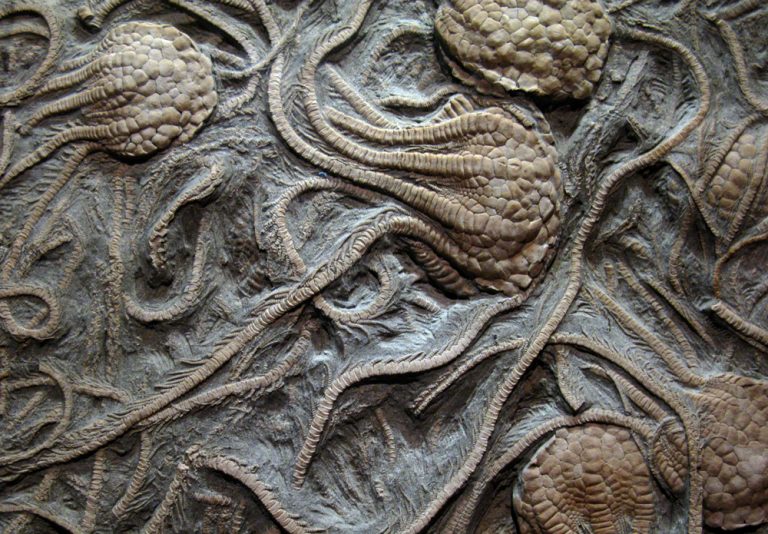
There are only about 600 extant crinoid species, but they were much more abundant and diverse in the past. Some thick limestone beds dating to the mid- to late-Paleozoic are almost entirely made up of disarticulated crinoid fragments.

The enigmatic Echmatocrinus of the Burgess Shale, is the earliest known unequivocal crinoid groups date back to the Ordovician. There are two competing hypotheses pertaining to the origin of the group: the traditional viewpoint holds that crinoids evolved from within the blastozoans (the eocrinoids and their derived descendants the cystoids), whereas the most popular alternative suggests that the crinoids split early from among the edrioasteroids. The debate is difficult to settle, in part because all three candidate ancestors share many characteristics, including radial symmetry, calcareous plates, and stalked or direct attachment to the substrate.

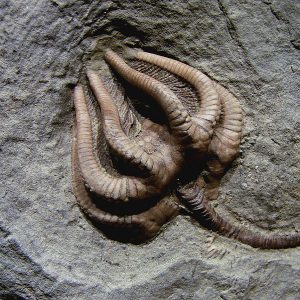
Agaricocrinus americanus, crinoïde, carbonifère, Provenance: Indiana. Source: Alias Collections.

The crinoids underwent two periods of abrupt adaptive radiation; the first during the Ordovician, the other was during the early Triassic after they underwent a selective mass extinction at the end of the Permian period This Triassic radiation resulted in forms possessing flexible arms becoming widespread; motility, predominantly a response to predation pressure, also became far more prevalent. This radiation occurred somewhat earlier than the Mesozoic marine revolution, possibly because it was mainly prompted by increases in benthic predation, specifically of echinoids. After the end-Permian extinction, crinoids never regained the morphological diversity they enjoyed in the Paleozoic; they employed a different suite of the ecological strategies open to them from those that had proven so successful in the Paleozoic.

The long and varied geological history of the crinoids demonstrates how well the echinoderms have adapted to filter-feeding. The fossils of other stalked filter-feeding echinoderms, such as blastoids, are also found in rocks of the Palaeozoicera. These extinct groups can exceed the crinoids in both numbers and variety in certain strata. However, none of these others survived the crisis at the end of the Permian period.

Some fossil crinoids, such as Pentacrinites, seem to have lived attached to floating driftwood and complete colonies are often found. Sometimes this driftwood would become waterlogged and sink to the bottom, taking the attached crinoids with it. The stem of Pentacrinites can be several metres long. Modern relatives of Pentacrinites live in gentle currents attached to rocks by the end of their stem. The largest fossil crinoid on record had a stem 40 m (130 ft) in length.

In 2012, three geologists reported they had isolated complex organic molecules from 340-million-year-old (Mississippian) fossils of multiple species of crinoids. Identified as “resembl[ing …] aromatic or polyaromatic quinones”, these are the oldest molecules to be definitively associated with particular individual fossils, as they are believed to have been sealed inside ossicle pores by precipitated calcite during the fossilization process.

Source: www.Wikipedia.org, www.NatGeo.com

100-Million-Year-Old Evidence of Insect Brood Care

Sunday, July 30, 2017

A team of scientists from China, Germany, Poland, and the United Kingdom, has described a new genus and species of an ensign scale insect from mid-Cretaceous Burmese amber, which preserves eggs within a wax ovisac, and several freshly hatched nymphs.

“Fossils of fragile female scale insects are extremely rare. What is unique here is the age of the discovery: 100-million-year-old evidence of brood care among insects has not been found until now,” said team leader Dr Bo Wang of the Chinese Academy of Sciences, who is also the lead author of a paper published in the journal eLife.

The fossil, named Wathondara kotejai, is from Kachin Province in northern Myanmar. It is the only Mesozoic (252 to 66 million years ago) record of an adult female scale insect.

“The generic name refers to Wathondara – goddess of earth in Buddhist mythology from Southeast Asia,” Dr Wang and co-authors wrote in the paper.

“The species is named after the late Polish entomologist Jan Koteja in recognition of his significant contribution to the study of both extant and fossil scale insects.”

The 100-million-year-old piece of amber preserves an adult female with eggs, six first-instar nymphs, and a weevil.

“It is polished in the form of a flattened ellipsoid cabochon, clear and transparent, with diameter about 11 mm, height about 5 mm, and weight about 0.8 g.”

Wathondara kotejai was trapped while carrying around 60 eggs and her first freshly hatched nymphs. The eggs and nymphs are encased in a wax-coated egg sac on the abdomen. This primitive form of brood care protects young nymphs from wet and dry conditions and from natural enemies until they have acquired their own thin covering of wax.

The behavior has been so successful for promoting the survival of offspring that it is still common in insects today. Young nymphs hatch inside the egg sac and remain there for a few days before emerging into the outside world.

The findings may even offer an explanation for the early diversification of scale insects.

“Brood care could have been an important driver for the early radiation of scale insects, which occurred during the end of the Jurassic or earliest Cretaceous period during the Mesozoic era,” Dr Wang said.

The only other direct evidence of brood care is from Cenozoic ambers, the era that extends to the present and began about 65 million years ago with the extinction of the dinosaurs.

_____

Bo Wang et al. 2015. Brood care in a 100-million-year-old scale insect. eLife 4: e05447; doi: 10.7554/eLife.05447

Source: www.sci-news.com

Cal Orcko is Covered in Thousands of Dinosaur Footprints

Sunday, July 30, 2017

Cal Orcko is Covered in Thousands of Dinosaur Footprints

Cal Orcko, located 3 miles south of downtown Sucre in Bolivia, is home to the world’s largest and most diverse collection of dinosaur footprints from the Cretaceous Period.

Flickr/Hanumann

The limestone cliff hosts about 5,000 dinosaur footprints, with many dating back 68 million years.

Discovered on the grounds of the local cement company Fancesa in 1985, the cliff was closed off to tourists after mining conditions and erosion began damaging the area.

After eight years of closures, tours started last year to allow visitors the opportunity to marvel at these footprints.

Flickr/Ryan Greenberg

From the Parque Cretacico, which hosts a museum and dinosaur models, fossils, and paleontological information, you can take a one-hour guided tour to select areas of the wondrous paleontological site.

Flickr/Médéric

The tour starts in the Parque Cretacico, where you’re given a helmet as a safety requirement from the cement factory before going to the south part of the cliff, which hosts footprints of Theropods (carnivorous dinosaurs).

Then you’re taken through the cliff with your guide, who explains the history behind the Sauropod (long-neck herbivores) footprints you’ll see. There are tracks from entire herds of Sauropods, ranging from 26 feet long to an impressive 65 feet.

Flickr/Médéric

You’ll also get to peak at “under footprints,” the oldest layer of prints, which date back 70 million years.

The site contains the footprints of at least eight different species and stands as an ever-changing record of history in the Cretaceous era.

Flickr/Jenny Mealing

As parts become eroded, new prints are continuously being found in the area, which is why the park has submitted Cal Orcko to the Unesco World Heritage list in an effort to continue preserving the footprints.

Guided tours are offered Monday through Saturday at noon and at 1 p.m. Tours cost $4.35.

Source: www.businessinsider.com

Zhenyuanlong suni: A Newly Identified Species of Feathered Dinosaur

Tuesday, July 25, 2017

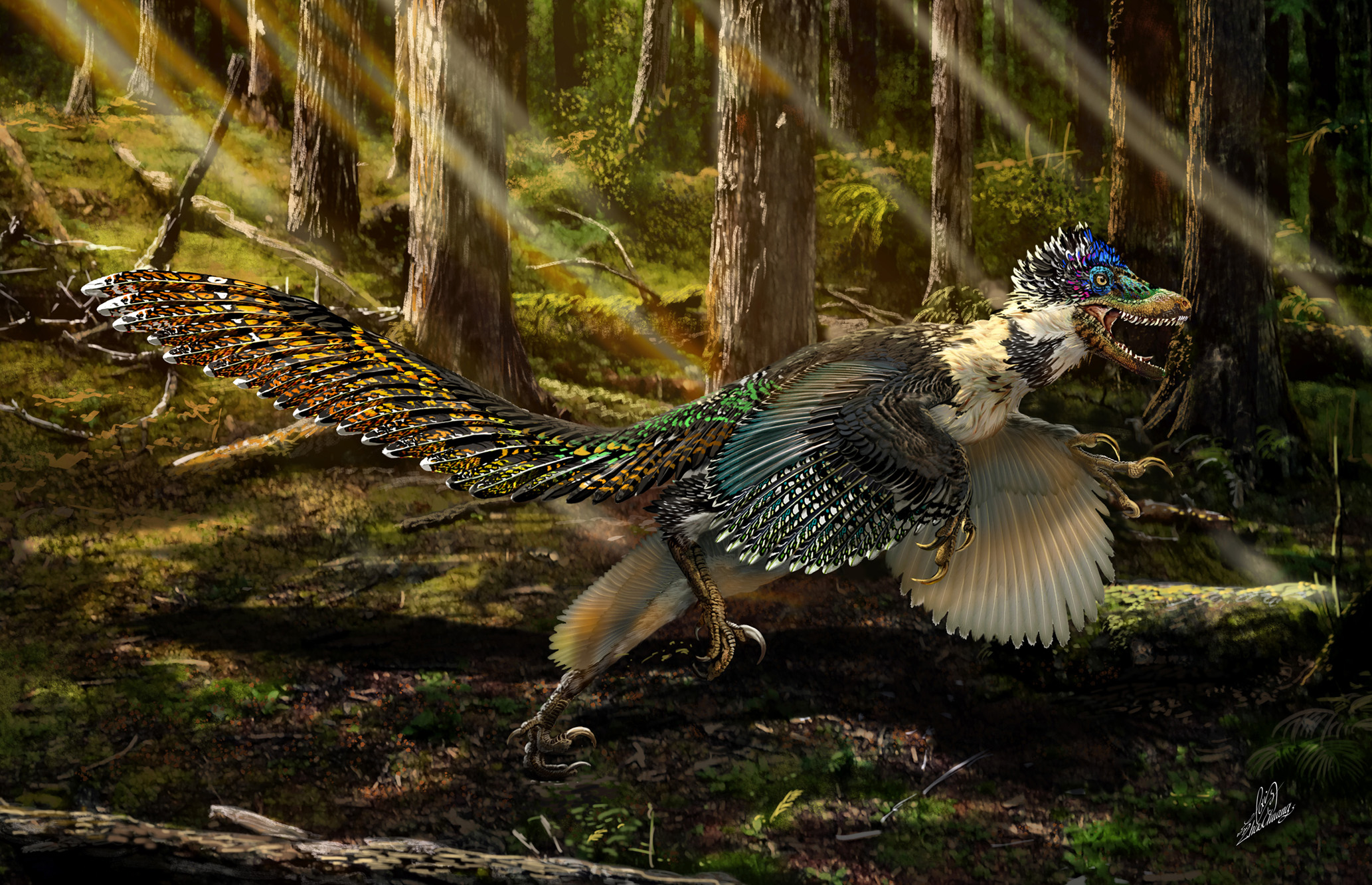
A RESTORATION OF ZHENYUANLONG IN A CRETACEOUS FOREST. Art: Zhao Chuang

A newly identified species of feathered dinosaur – who has been unearthed in 2015 in China – is a close cousin of the Velociraptor, made famous by the Jurassic Park films.

It is the largest dinosaur ever to have been unearthed with a well-preserved set of bird-like wings, researchers said.

The dinosaur – dubbed Zhenyuanlong suni by researchers – grew to more than five feet in length, and had very short wings compared with other dinosaurs in the same family, consisting of multiple layers of large feathers.

The holotype of the large-bodied, short-armed Liaoning dromaeosaurid Zhenyuanlong suni gen et. sp. nov. (JPM-0008).

‘The movies have it wrong – this is what Velociraptor would have looked like too,’ said Dr Steve Brusatte, of Edinburgh University’s School of GeoSciences, who co-authored the study.

This latest discovery suggests that winged dinosaurs with larger and more complex feathers were more diverse than previously thought.

Follow us: Paleontology on Instagram | Paleontology on Facebook

T. rex Had Unique Serrated Teeth

Tuesday, July 25, 2017

If you want to know the secret behind the success of Tyrannosaurus rex and its meat-eating dinosaur cousins, look no further than their teeth.

Scientists in 2015 unveiled a comprehensive analysis of the teeth of the group of carnivorous dinosaurs called theropods, detailing a unique serrated structure that let them chomp efficiently through the flesh and bones of large prey.

Theropods included the largest land predators in Earth’s history. They first appeared about 200 million years ago and were the dominant terrestrial meat-eaters until the age of dinosaurs ended about 65 million years ago.

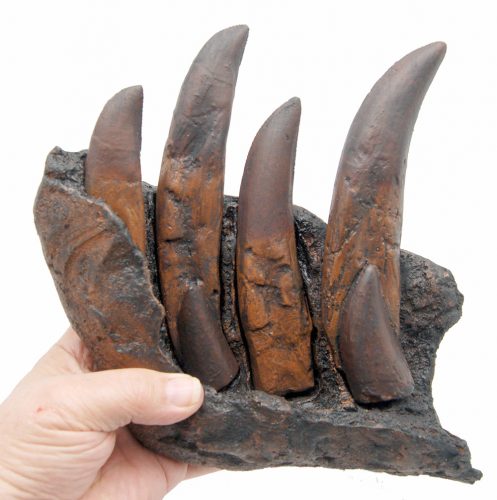
Tyrannosaurus rex tooth progression from the juvenile tinker

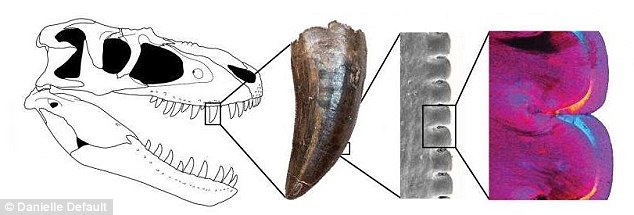
The study involving eight theropod species revealed their previously unknown tooth complexity. Internal dental tissues were arranged in a way that reinforced the strength and prolonged the life of teeth that were serrated like steak knives for easy dismembering of other dinosaurs.

University of Toronto Mississauga paleontologist Kirstin Brink said fossil evidence showed that T. rex’s teeth could crush bone. Its teeth have been found embedded in the bones of its prey and chunks of bone appear in its fossilized dung.

“But the serrations were most efficient for piercing flesh and gripping it while ripping off a chunk of meat, called the ‘puncture and pull’ feeding style,” Brink said.

The researchers analyzed slices from fossil teeth using a powerful microscope and a sophisticated device that revealed tooth chemical properties.

Bone crusher: The carnivorous group called theropods had serrated teeth like a steak knife that let them chomp efficiently through the flesh and bones of their prey. Pictured, a close-up of the structure of the teeth.

They studied teeth from: the early and relatively small Coelophysis; bird-like Troodon; large predators Allosaurus, Gorgosaurus, Daspletosaurus, Tyrannosaurus and Carcharodontosaurus; and big, semi-aquatic Spinosaurus.

The teeth of Tyrannosaurus and Carcharodontosaurus measured up to 9 inches (23 cm) long.

“In theropods, the serrations are larger and deeper than the superficial view suggests, making them stronger and longer lasting, less likely to get damaged or worn,” University of Toronto Mississauga paleontology professor Robert Reisz said.

Dinosaurs were able to continuously grow teeth throughout their lives. When a tooth was broken, another could replace it.

“It could take up to two years for a tooth to grow back in the big theropods like T. rex. Therefore, having specially reinforced teeth means less tooth breakage and less gaps in the jaw, leading to more efficient eating,” Brink said.

The Komodo dragon, a lizard up to 10 feet (3 meters) long from Indonesia, is the only living reptile with serrated teeth closely resembling those of theropods although these teeth evolved independently of those of the dinosaurs, Brink said.

The research appears in the journal Scientific Reports.

Source: www.SciFi.com

Pages