Blogs

Soriatitan golmayensis: New 14-Metre Long Dinosaur Species Discovered in Spain

Friday, September 22, 2017

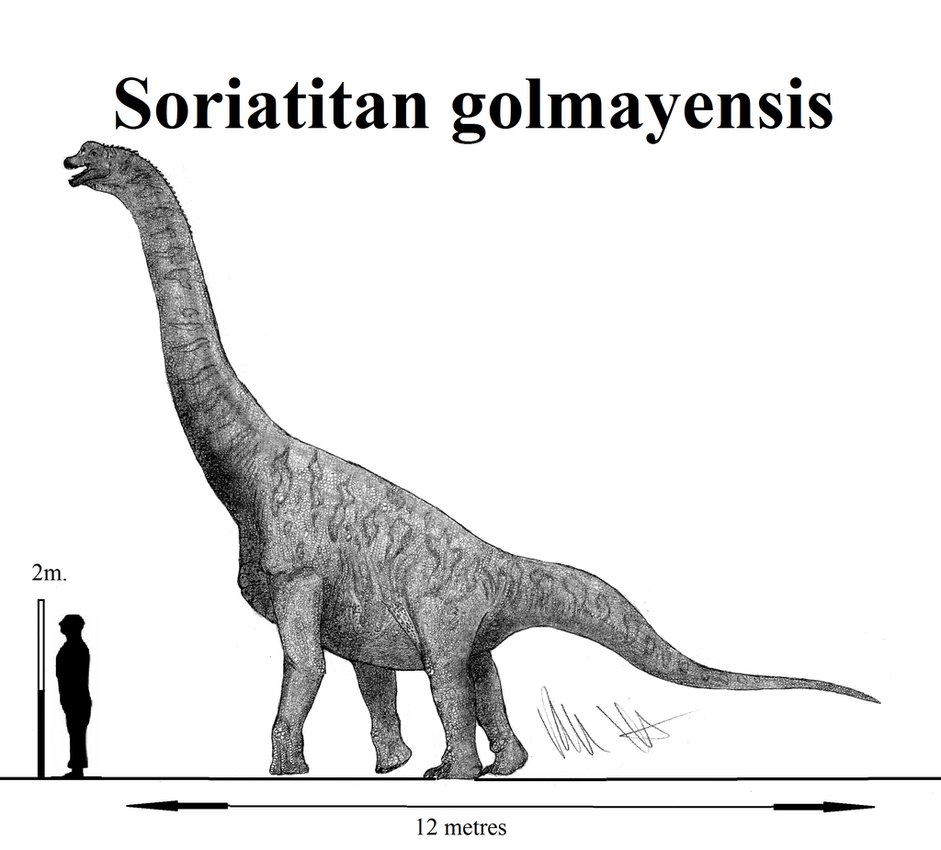
Soriatitan golmayensis by Teratophoneus on DeviantArt

A new species of dinosaur which lived between 130 to 138 million years ago has been identified by a team of palaeontologists in Spain.

Soriatitan golmayensis was a large, herbivorous animal estimated to be around 14 metres in length – larger than a double-decker bus. It belongs to a family of dinosaurs called brachiosauridae which were notable for their great size, elongated necks and tails, and relatively small heads.

The specimen was named after Soria, the region in north-central Spain where the bones were discovered.

It takes its place as the first species in an entirely new genus – a group of species within a taxonomic family – and is the first dinosaur from this family to be discovered in Europe.

“Until now it was believed that brachiosaurids had become extinct in Europe around 130 million years ago”, Rafael Royo, a palaeontologist at the Teruel-Dinopolis Joint Paleontological Foundation told Spanish newspaper El Pais.

Brachiosaurids lived around 150 million years ago in what is now Africa, the United States and Europe at a time when the continents were mostly joined together.

Then, in the early Cretaceous period – which began around 146 million-years-ago – they separated. Until the latest discovery, no confirmed brachiosaurid fossils had been found in Europe from after this time period, leading researchers to think that they had become extinct in the region.

When excavating the bones, the palaeontologists found teeth, spinal vertebrae, hip bones and leg bones, among other remains. Although some fossils which could possibly have belonged to brachiosaurids have been found in Europe before, researchers in those cases could not find enough of the skeleton to confirm the discovery.

“When you find a pair of bones it is difficult to know if it is a new species, but in this case, we have a general idea of ​​all the parts of the skeleton,” Royo told El Pais.

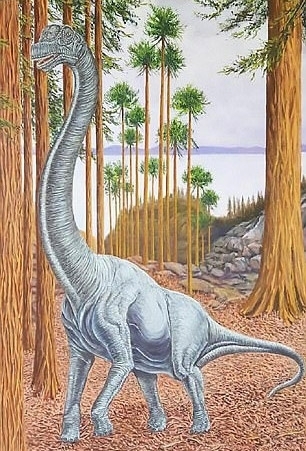
Soriatitan golmayensis.
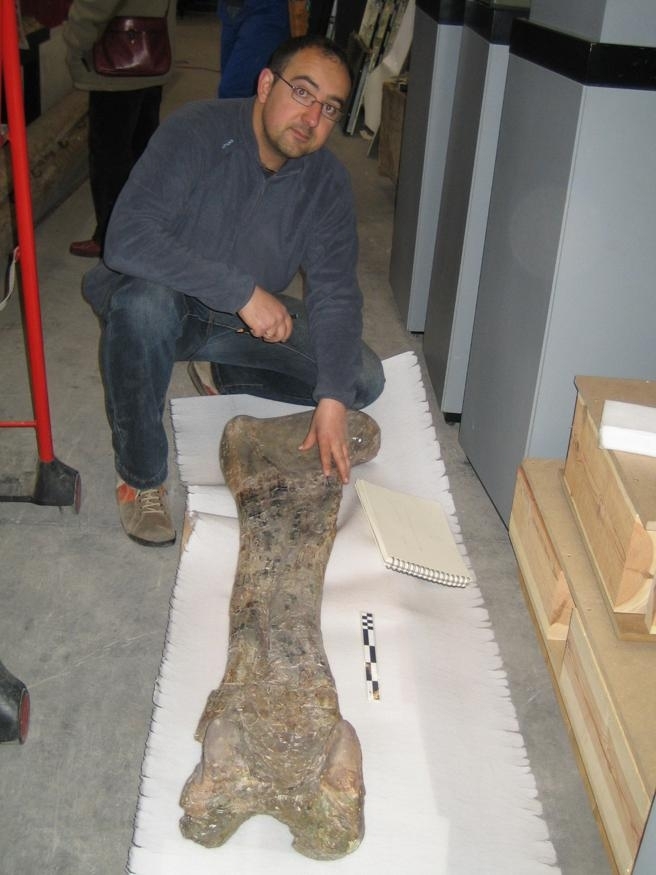
Palaeontologist Rafael Royo examines a Soriatitan golmayensis femur. (Photo: Rafael Royo/Dinopolis)

Despite its size, its teeth measure just 18mm which suggests it fed mostly on leaves and other plant materials like other brachiosauridae. During the period that Soriatitan lived, the Iberian Peninsula is thought to have had a subtropical climate, with flowing rivers and plentiful vegetation, allowing the species to flourish.

The fossils were found at a site near the municipality of Golmayo where bones from three other types of dinosaur had been found before. Spain is known for being one of the richest areas in the world for dinosaur fossil hunters.

Source: www.ibtimes.co.uk

Birds’ Unique Skulls Linked to Young Dinosaur Brains

Friday, September 22, 2017

Birds’ Unique Skulls Linked to Young Dinosaur Brains

Bird skulls and brains look like those of young dinosaurs, providing clues to their unique evolution and modern success.

A new study, published today in Nature Ecology and Evolution, reveals that bird’s skulls evolved differently to their relatives and ancestors, and develop more like those of young dinosaurs and crocodiles.

Birds are the only surviving members of a group of feathered dinosaurs, and are close cousins to modern crocodilians (alligators, crocodiles and gavials). However, birds have unique skeletons, particularly their beaked skulls, which have wider dome-shaped cranial bones to accommodate proportionally larger brains and eyes.

Previously, Dr Arkhat Abzhanov, from the Department of Life Sciences at Imperial, and colleagues determined that the shape of the birds’ skulls most resemble those of young non-avian (non-birdlike) dinosaurs.

This evolutionary phenomenon is known as ‘paedomorphism’ – where an adult retains features that are usually only seen at the young stages (embryo or baby) in its ancestors. Paedomorphism is caused by a change in timing of developmental events of an organism – for example growing certain body parts at later stages, slower, or not at all.

It is known to play an important role in the evolution of some new species, as the ‘young’ creatures can adopt a different lifestyle compared to their more ‘mature’-looking relatives, avoiding competition for the same resources.

Baby-face birds

To better understand the origins of birds’ unique skulls during their evolution from more primitive reptiles, Dr Abzhanov and colleagues from Yale University have now analysed the relationship between brain and skull.

They studied how the two structures change relative to each other during embryonic development, in both modern birds and their reptile relatives.

The skulls of vertebrate animals (those with backbones) are formed as a series of larger bones that correspond to particular regions of the brain. For example, the frontal bones cover the forebrain while parietal bones cover the midbrain.

The developing skulls of an alligator (top) and a chicken (bottom). Credit: Fabbri et al., 2017

As the brain grows in an early embryo, the skull closely matches the shape of the brain – the new study shows that the boundary between the frontals and parietals perfectly matches the boundary between the forebrain and midbrain across most vertebrate groups.

However, in the later stages of development in dinosaurs, crocodilians and other reptiles, the skull bones no longer mirror the brain growth as closely. Later in development cranial muscles and other tissues also begin to affect skull shape.

The team discovered that in birds, this change in the brain-skull relation never occurs, and the roof of the skull continues to match brain shape throughout development. In other words, birds retain their original embryonic brain and skull configuration into adulthood.

Dr Abzhanov said: “The skulls and brains of birds are dramatically different from those of adult non-avian dinosaurs and other reptiles, and we can show that these differences reflect how birds evolved to become species of forever-young dinosaurs.

“Our study adds further evidence that adult modern birds share much in common with juvenile (non-avian) dinosaurs, an observation which led to the revelation about a specific adjustment to the embryonic development in their ancestor.”

Developing and evolving

To conduct the study, the team used a 3D technique to analyse the skull shapes of a wide range of reptiles, including fossilised skulls of early reptilian ancestors and extinct crocodiles and dinosaurs, as well as skulls of embryos and juveniles of modern species, such as alligators and birds.

By comparing brains and skulls in both ancient fossils and throughout the early life of modern reptiles, the team were able to use the same analytical approach to look at both evolutionary and developmental aspects of brain-skull interactions.

How structures in bodies develop in the embryos have often been found to reflect how those structures changed during evolution. Embryonic humans at early stages, for example, look a lot like embryonic fish, and later in development as embryos of other mammals, betraying our origins on the evolutionary tree.

The development of the skull is a particularly complex process, where hard bony tissues have to interact with many other organs, such as the eyes and brain. Birds’ skulls appear to remain proportionally much larger and rounder than those of other reptiles through development, retaining their embryonic characteristics.

The skull bones and brain shape of achicken (top) and an Americanalligator (bottom). Credit: Fabbri et al., 2017

Evolutionary advantage

The eye sockets in birds are relatively bigger than in dinosaurs or crocodilians, allowing for larger eyes, and the midbrain is much bigger as well – an important centre for tracking movement during flight.

The larger eyes and brain, especially the midbrain portion, allowed birds to develop better visual senses and processing of visual information. These features are evident even in the earliest birds, such as the Archaeopteryx, evolving alongside the last dinosaurs – and might have helped them survive the extinction that wiped out their relatives.

The team now hope to be able to determine the exact genetic mechanisms controlling both cranial development and evolution – how does exactly the brain control skull size and shape?

Dr Abzhanov said: “Evolution is the accumulation of and selection on changes made to the developmental process. Studying birds is a fascinating subject because they retain features of ‘young’ dinosaur ancestors, while also clearly adding their own adaptations, such as toothless beaks and wings.

“Birds are incredibly successful organisms that have diversified into thousands of ecologically distinct species all over the world, across all continents and oceans. We think their paedomorphism contributed to this success, but only by knowing the underlying developmental processes can we determine how their unique adaptations actually evolved.”

Sorting by skulls

The main methodology was to generate 3D computer tomography scans of the skulls from both extinct and modern species and employ computer software to track any changes in their shapes.

The team’s 3D modelling of skulls represented some of the best (and in some cases first) characterisations for many of the species in the study. Skull bones are often used to identify animal species, to classify them into groups, and to determine courses of their evolution, by tracking the changes in certain bones across species.

Dr Abzhanov said: “One other useful outcome of this survey of skulls from across reptile evolution was a better ability to recognise the (often disputed) evolutionary fates of individual cranial bones, especially during the dramatic reptile to bird transition.”

More information: The skull roof tracks the brain during the evolution and development of reptiles including birds, Nature Ecology and Evolution (2017). DOI: 10.1038/s41559-017-0288-2

Provided by: Imperial College London

Source: www.phys.org

Dinosaur Poop Shows Presumed Vegetarians Also Ate Meat

Thursday, September 21, 2017

Dinosaur Poop Shows Presumed Vegetarians Also Ate Meat

Fossilized duck-billed dino droppings from Grand Staircase-Escalante National Monument are full of rotten wood and crustaceans.

To dinosaur researchers, flat, grinding teeth are like neon signs that spell “plant-eater.” But the other end of the dinosaur tells a more complex story, according to new research. Fossilized feces from Utah’s Grand Staircase-Escalante National Monument suggests that duck-billed dinosaurs got some extra nutrition from large crustaceans living in rotten wood.

The fossilized feces, known as coprolites, came from more than 15 separate sites, some of which were apparently “latrines” where dinosaurs pooped repeatedly. All were located in the Kaiparowitz formation, a thick swath of fossil-rich rock laid down around 75 million years ago in what is now southern Utah.

The area is currently protected as part of Grand Staircase-Escalante National Monument, although its future is uncertain due to an ongoing review of national monuments ordered by President Donald Trump. This past Sunday, the Washington Post reported that Interior Secretary Ryan Zinke has recommended reducing the size of Grand Staircase and several other monuments, as well as reopening them to uses such as grazing, logging and coal mining.

The specific recommendations are not yet public, so it’s still unclear what impact they would have on the regions that contain fossils. Nevertheless, several researchers interviewed for this article expressed concern over the potential loss of the land’s protection. Grand Staircase-Escalante is famous for its exceptionally diverse suite of dinosaur fossils.

In the current study, when the researchers cut thin slices from the coprolites and examined them using microscopes and other instruments, they saw the remains of wood from conifer trees. The wood had been partially broken down by fungus prior to being eaten, which would have made it easier for the dinosaurs to digest.

The researchers can’t know for sure what kind of dinosaurs made the coprolites. However, the fossils closely resemble another group of wood-filled coprolites from Montana, which are thought to be the leavings of elephant-sized, duck-billed dinosaurs known as hadrosaurs. Several kinds of hadrosaurs lived in Grand Staircase-Escalante, and the teeth of some species would have been well-suited to grinding up tough plant material like rotten wood, according to Karen Chin, a paleontologist at the University of Colorado Boulder and first author of the paper published today in Scientific Reports.

Greg Erickson, a paleobiologist at Florida State University in Tallahassee who has studied hadrosaur teeth, agrees that the coprolites most likely came from hadrosaurs — in particular, a genus called Gryposaurus. These dinosaurs had hundreds of teeth arranged in rows that were continually worn down and replaced, enabling them to pulverize almost any kind of plant matter, he said. Erickson has worked with Chin in the past, but was not involved in the new study.

The discovery of similar rotten-wood coprolites from multiple locations suggests that hadrosaurs ate rotten wood routinely, said Chin. This is surprising, since most of today’s large herbivores rarely eat wood. Cows in Chile have been seen eating rotten logs, but for the most part, today’s mega-herbivores rely on more tender plant material like grass and leaves, she said.

Even the hadrosaurs probably ate other types of plant matter most of the time, said Chin. It’s no surprise that researchers rarely find remains of more delicate meals, since wood is tougher than other plant tissues and more likely to fossilize, even after passing through an animal’s digestive tract, she added. The hadrosaurs might have turned to rotten wood at certain times of year, perhaps when other food became scarce, she said.

In addition to rotten wood, the Utah coprolites contained another surprise: pieces of crushed shell about a millimeter thick. The shells’ distinctive layered structures marked them as the exoskeletons of crustaceans, a group of invertebrates that includes crabs and lobsters.

Until now, paleontologists have generally assumed that hadrosaurs and other large herbivorous dinosaurs were strict plant-eaters, like modern-day elephants and rhinos, said Chin. But the crustaceans in their waste demonstrate that at least some of them were ingesting meat, and Chin doubts they were doing so completely by accident. The crustaceans in the coprolites would have been about 2 inches long, big enough for a 30-foot-long hadrosaur to spit out if it accidentally scooped one up with a mouthful of rotten wood.

“That animal would know it was eating something other than plant material. And it would have a choice to make,” she said.

Why did hadrosaurs supplement their diets with meat, while similar-sized herbivores today do not? Chin speculates that it might have something to do with their reproductive strategy, laying eggs instead of giving birth to live young. When a female hadrosaur produced a clutch of eggs, she might have benefited from the sudden boost of protein and minerals crustaceans could provide.

This sounds plausible to Eric Roberts, a sedimentologist at James Cook University in Townsville, Australia, who has also studied coprolites from southern Utah and was not involved in the study. And while the dinosaurs’ motivations remain a matter of speculation, their droppings clearly indicate that they did, in fact, eat meat — a behavior researchers could never have guessed from their bones and teeth alone.

“When you find evidence like this, it does require that you sort of expand your ideas about how things as large as ceratopsians and hadrosaurs may have obtained enough nutrition,” said Roberts. “It opens up the way that I think about dinosaur ecology.”

Lumbering Giants Had Agile Ancestors

Thursday, September 21, 2017

Lumbering Giants Had Agile Ancestors

The best known sauropod dinosaurs were huge herbivorous creatures, whose brain structures were markedly different from those of their evolutionary predecessors, for the earliest representatives of the group were small, lithe carnivores.

The sauropod group of dinosaurs included the largest animals that have ever walked the Earth – up to 40 meters long and weighing as much as 90 tons. Evolutionarily speaking, they were obviously very successful, giving rise to a diverse and widely distributed array of plant-eating species. These forms were characterized by a small head, a long and highly flexible neck that allowed them – like modern giraffes – to graze the tops of the tallest trees, and a massive body that made mature specimens invulnerable to predators. The sauropods survived for well over 100 million years before succumbing to the meteorite that snuffed out the dinosaurs at the end of the Cretaceous Era.

However, the early representatives of the lineage that led to these lumbering giants were strikingly different in form and habits. For a start, they were carnivores – like Saturnalia tupiniquim, an early sauropod dinosaur that was about the same size as a modern wolf. Recent work carried out by LMU researchers in collaboration with colleagues in Brazil now confirms this scenario and adds new details to the story. Most of the evidence for the early members of the Sauropodomorpha comes from their type of dentition. Now paleontologists Mario Bronzati and Oliver Rauhut, who are based at LMU and the Bavarian State Collection for Paleontology and Geology in Munich, have used computer tomography (CT) to analyze fossil skull bones assigned to S. tupiniquim. The high-resolution images of the cranial bones provided by this technique enabled them to deduce the overall surface morphology of the brain. The results suggest that despite being capable of consuming both meat and plants, S. tupiniquim could have followed a purely predatory lifestyle. The new findings appear in Scientific Reports.

The fossil material used in the study was discovered in Brazil over 20 years ago. It comes from a geological formation that dates back to the Triassic Era, and is about 230 million years old. According to the authors of the study, these are the oldest dinosaur bones that have been successfully reassembled with the aid of computer tomography at sufficiently high resolution to permit the reconstruction of the gross anatomy of the brain.

The evolution of the so-called Sauropodomorpha, of which Saturnalia tupiniquim is an early representative, and the Sauropoda sensu stricto, is marked by a clear tendency towards extension of the neck region, which is accompanied by reduction of the size of the skull – with a corresponding decrease in the volume of the brain – relative to the skeleton as a whole. Saturnalia tupiniquim stands at the beginning of this process. But the new study reveals that, unlike the case in the true sauropods, a specific area in the cerebellum, which encompasses the two lobes known as the flocculus and paraflocculus, is particularly prominent in the brain of S. tupiniquim. These structures are known to play an important role in controlling voluntary movements of the head and neck, and are involved in regulating the oculomotor system, which stabilizes the animal’s field of view.

Bronzati, Rauhut and their co-authors therefore argue that these features enabled S. tupiniquim to adopt a predatory lifestyle. Their findings strongly suggest that, in contrast to the true sauropods, it had a bipedal gait. Moreover, it was nimble enough to hunt, seize and kill its prey – thanks to its inferred ability to track moving objects with its eyes and to execute rapid movements of its head and neck in a coordinated and precise fashion. With the aid of CT-based reconstruction of the surface anatomy of the brain, the researchers now hope to retrace other stages in the evolution of the sauropodomorphs.

More information: Mario Bronzati et al. Endocast of the Late Triassic (Carnian) dinosaur Saturnalia tupiniquim: implications for the evolution of brain tissue in Sauropodomorpha, Scientific Reports (2017). DOI: 10.1038/s41598-017-11737-5

Source: www.phys.org


Jurassic World 2 Trailer Is Coming in Late November

Thursday, September 21, 2017

Jurassic World 2 Trailer Is Coming in Late November

Jurassic World 2 is already in the can and director J.A. Bayona is currently busy getting the movie edited together for release next year. The question on the minds of many fans at this point in time is when can we expect to see the first teaser trailer for the movie? Well, we may very well have our answer and it looks like the first Jurassic World: Fallen Kingdom trailer will arrive just in time for Thanksgiving this year.

We must warn right off the bat that this news isn’t coming directly from anyone at Universal or from the creative team working on Jurassic World: Fallen Kingdom, so it should be regarded as a rumor for the time being. That said, fan site Jurassic Outpost claims to have learned that retailers and licensing partners have been alerted to the first trailer’s release this November. It is expected to arrive around Thanksgiving time, but no specific date has been given at this time.

Thanksgiving is going to take place on Thursday, November 23 this year. For what it’s worth, the first trailer for Jurassic World arrived on November 25, 2014. That put it about seven months ahead of the movie’s release. Assuming that Universal wants to stick to a similar marketing strategy for the sequel, putting out the Jurassic World 2 teaser trailer on, or around, Thanksgiving this year would make perfect sense. The sequel will see the return of Jurassic World star Chris Pratt, Bryce Dallas Howard and B.D. Wong, with franchise favorite Jeff Goldblum set to return as Ian Malcolm. Rafe Spall, Toby Jones, Ted Levine and James Cromwell have also joined the cast.

At the present time, not much has officially been released in regards to Jurassic World: Fallen Kingdom. We know that the movie is going to have a volcanic eruption at its center, which means that the dinosaurs located on Isla Nublar are going to be in danger. There has also been evidence that suggests a rescue mission of some kind is going to be taking place. However, since it sounds like the dinosaurs are possibly going to be the ones in the way of this volcanic eruption, we may be seeing the humans stepping in to rescue the dinosaurs this time and not the other way around. That would certainly be something we haven’t really seen in the Jurassic park franchise before and heading into the fifth entry, we could use something fresh.

Jurassic World was a successful movie beyond anyone’s wildest predictions. The movie grossed $1.67 billion worldwide and remains one of the highest-grossing movies ever released. That being the case, Universal will very likely try to mirror that success with Jurassic World: Fallen Kingdom, which is set to hit theaters on June 22, 2018. So the trailer being released in November, though not confirmed officially, is something you should be able to look forward to.

Jurassic World Concept Art Reveals a Very Different Indominus Rex

Thursday, September 21, 2017

In 2015’s Jurassic Park sequel Jurassic World, the theme park was open to a new attraction, the Indominus Rex. The new hybrid creature escaped and was the most dangerous of all the escaped dinosaurs. Concept artist Ian Joyner has shared some early concept art for the Indominus Rex that never ended up being used in Jurassic World.

RELATED: Jurassic World 2 Trailer Is Coming in Late November

In Jurassic World, the Indominus Rex was a new dinosaur created by Ingen’s Dr. Henry Wu by combining different dinosaur DNA, most notably the T-Rex and the velociraptor. On his page, Joyner — a freelance concept artist who has worked on movies and video games — describes the artwork as “an early exploration for the Indominus Rex in Jurassic World. No one particular dinosaur was referenced, as it was a hybrid creation.”

ian-joyner-ij-malusaurus-close-as

ian-joyner-ij-malusaurus-001-as
 
Joyner’s Indominus Rex has the familiar outline of a Tyrannosaurus rex, but with some big differences. The Indominus Rex envisioned here has sort of a green and black striped look, which kind of resembles jungle camouflage instead of the white default color of the final design. The teeth are also completely black and a series of spikes run along the tail, spine, the back of the neck and the head. The hands are also larger than a T-Rex, with what looks like four fingers.

Ultimately, Jurassic World went with a different concept of Indominus Rex, but this is an amazing look at a dangerous new creature.


Surprise: Dinosaurs Laid Blue Eggs!

Thursday, September 21, 2017

Surprise: Dinosaurs Laid Blue Eggs!

In a twist for paleontologists, a fossil nest found in China shows that coloured eggshells were not just for the birds.

Robins may be famous for their beautiful blue eggs, but ancient feathered dinosaurs beat them to the punch.

Looking at fossil eggshells from China, researchers have found evidence that an omnivorous, ostrich-like dinosaur laid clutches of blue-green eggs, potentially helping to camouflage them in open nests dug into the ground.

The discovery overturns a common assumption: “Everyone thought dinosaur eggs were white,” says study co-author Jasmina Wiemann at Yale University.

Many birds lay white, unpigmented eggs—as do all lizards, turtles, crocodiles, and the only known egg-laying mammals, the platypus and the echidna. For this reason, ornithologists had long assumed that coloured eggshells evolved solely in some groups of birds after nonavian dinosaurs had died out.

“Once the idea that coloured eggs evolved in birds and were a trait of modern birds had been suggested, no one thought about it again or dared to ask if dinosaur eggs had been coloured,” Wiemann says.

Fossil research has shown that birds and dinosaurs shared behaviours such as brooding and nest building. According to paleontologist and National Geographic grantee Jack Horner, it also stands to reason that dinosaurs had similar courting behaviors as today’s birds.

Now, a study by Wiemann and her colleagues in Germany and California pushes back the origins of coloured eggs at least as far as the Late Cretaceous.

As they report in the journal PeerJ, a species of oviraptor called Heyuannia huangi had eggs that were coloured deep blue-green. Commonly found in the fossil beds of eastern China, Heyuannia was a parrot-beaked, feathered species that walked on its hind legs and would have been about five feet long.

While many fossil dinosaur eggs are black or brown due to the fossilisation process, the eggs of Heyuannia have an unusual blueish tint to them. This made the scientists wonder if the eggs could harbor any of their original colour.

Using chemical analyses, they were able to detect traces of two pigments, biliverdin and protoporphyrin, commonly found in modern bird eggs. Millions of years ago, the eggs would likely have been a greener colour, Wiemann says, perhaps similar to eggs laid by Australia’s ground-nesting emus and cassowaries today, which blend in well with the surrounding vegetation.

“I was originally taught that all the weird colours you can get in fossils, like the blueish-green hue, may be due to mineral precipitation,” Wiemann says.

“We screened through lots of eggshells, and one day had a positive result for these oviraptor eggs. It was a huge surprise. I couldn’t believe it.”

Chemical analyses of the fossil eggs detected traces of the pigments biliverdin and protoporphyrin, commonly found in modern bird eggs. PHOTOGRAPH BY TZU-RUEI YANG, THE PALEOWONDERS MUSEUM OF FOSSILS AND MINERALS, TAIWAN.
 

MOLECULAR REVOLUTION

The discovery highlights how much our thinking has changed about dinosaur preservation and how much more we can learn about the original animal, says David Varricchio, an expert on dinosaur reproduction at Montana State University who was not involved in the research.

The discovery of pigment traces “exemplifies the growing field and potential of molecular paleontology,” Varricchio says. “With new machines and new techniques, it’s very exciting what can potentially be found in fossils.”

Some paleontologists have argued that theropod dinosaurs, which included the ancestors of modern birds, had open nests with partially exposed clutches, Varricchio says. This new discovery helps confirm that idea, as pigmented shells today are only found in bird species that have exposed eggs.

Coloured eggs in birds is just one example in a whole series of traits formerly thought to be unique to birds—such as feathers and wishbones—that were in fact inherited from the dinosaurs, says Mark Norell, a palaeontologist at the American Museum of Natural History in New York City.

“Dinosaurs evolved coloured eggs before birds evolved—and the reason birds have coloured eggs is because they were present in their ancestors, the nonavian dinosaurs,” he says.

Wiemann is now looking for other examples of egg color among the carnivorous species closely related to birds that had open nests. She is also looking to see if any dinosaurs laid eggs with streaks or speckles on them.

“Lots of ground birds have patterned eggs with spots all over them,” says Norell. “It would be really neat if we could show that some of these dinosaur eggs were kind of camouflaged as well.”

Lead Image: A fossil nest found in China belonged to the oviraptor Heyuannia huangi, a parrot-beaked, feathered species that lived in the Late Cretaceous. PHOTOGRAPH BY TZU-RUEI YANG, THE PALEOWONDERS MUSEUM OF FOSSILS AND MINERALS, TAIWAN

Source: nationalgeographic.com.au

Ancient Primitive Amphibians Had Mouthful of Teeth

Thursday, September 21, 2017

Ancient Primitive Amphibians Had Mouthful of Teeth

Temnospondyls — a diverse group of extinct small-to-giant amphibians that flourished worldwide during the Carboniferous, Permian, and Triassic periods — had a full array of teeth, large fangs and thousands of tiny hook-like structures called denticles on the roofs of their mouths, according to new research published in the journal PeerJ.

“Denticles are significantly smaller than the teeth around the margin of the mouth — on the order of dozens to a couple hundred microns in length,” said University of Toronto Mississauga Professor Robert Reisz, senior author of the study.

“They have all of the features of the large teeth that are found on the margin of the mouth.”

In many vertebrates, ranging from fish to early synapsids (ancestors of mammals), denticles are commonly found in dense concentrations on the bones of the hard palate (roof of the mouth).

However, in temnospondyls — which are thought to be the ancestors of modern amphibians — these denticles were also found on small, bony plates that filled the large soft part of the palate. The entire roof of the mouth was covered with literally thousands of these tiny teeth that they used to grab prey.

“In examining temnospondyl specimens dating back approximately 289 million years (Permian period), we discovered that the denticles display essentially all of the main features that are considered to define teeth, including enamel and dentine, pulp cavity and peridontia,” Professor Reisz said.

He and his colleagues — Bryan Gee and Yara Haridy, graduate students at the University of Toronto Mississauga — analyzed specimens unearthed from the Dolese Brothers Limestone Quarry near Richards Spur, Oklahoma.

They extracted and isolated the denticle-bearing plates, created thin section slides and examined them under the microscope.

“The presence of such an extensive field of teeth provides clues to how the intriguing feeding mechanism seen in modern amphibians was also likely used by their ancient ancestors,” the paleontologists said.

“We believe that the tooth-bearing plates were ideally suited for holding on to prey, such as insects or smaller tetrapods, may have facilitated a method of swallowing prey items via retraction of the eyeballs into the mouth, as some amphibians do today.”

“The next big question relates to evolutionary changes to the overall abundance of teeth: if these ancient amphibians had an astonishing number of teeth, why have most modern amphibians reduced or entirely lost their teeth?”

_____

B.M. Gee et al. 2017. Histological characterization of denticulate palatal plates in an Early Permian dissorophoid. PeerJ 5: e3727; doi: 10.7717/peerj.3727

Source: www.sci-news.com

More Dinosaur Bones Discovered At Construction Site

Thursday, September 21, 2017

Even more dinosaur bones have surfaced at the dig for Triceratops in Thornton. This is the latest in a series of fossil discoveries at the site in the past month.

Just as crews were wrapping up their work at the construction site of the new public service facility located at 132nd Avenue and Quebec Street on Monday, more fossils were discovered.

dino bones more More Dinosaur Bones Discovered At Construction Site. (credit: CBS)

The team found what they believe is the sacrum, the lower back bones of the Triceratops. It adds to what has already been discovered and is being called the most complete find in Colorado’s history.

triceratops More Dinosaur Bones Discovered At Construction Site. (credit: CBS)

It also builds a picture of what Thornton looked like 66 million years ago.

thornton dig 12sot frame 369 More Dinosaur Bones Discovered At Construction Site. (credit: CBS)

“This dinosaur was out in a landscape that was complex and the skull was concentrated in what was probably a low spot and these other bones went up the sides of this low,” said Dr. Joe Sertich from the Denver Museum of Nature and Science

thornton triceratops

The bones will be taken back to the lab at the museum where they will be cleaned and reassembled. The bones will be added to the collection at the museum in Denver.

(credit: Denver Museum of Nature and Science)

Just days after the initial discovery of the fossil, crews also uncovered a Tyrannosaurus rex tooth.

3 More Dinosaur Bones Discovered At Construction Site. (credit: City of Thornton)

Source: THORNTON, Colo. (CBS4) 

What if Dinosaurs Hadn’t Died Out?

Tuesday, September 19, 2017

What if Dinosaurs Hadn’t Died Out?

Imagine a world where an asteroid hadn’t wiped out the dinosaurs. What would have happened afterwards – and how might their presence have affected mammals like us?

 It was the kind of cataclysm that we can scarcely imagine. When an asteroid 15km-wide (nine miles) slammed into planet Earth 66 million years ago, it struck with a force equivalent to about 10 billion Hiroshima bombs. A radioactive fireball seared everything for hundreds of miles in every direction and created tsunamis that sped halfway around the globe. Even the atmosphere may have started to burn, and no land animal more than 25kg (55lb) would survive; in fact, around 75% of all species became extinct. The so-called ‘non-avian’ dinosaurs didn’t have a hope, and only the small, feathered flying dinosaurs we know today as birds would make it through.

But what if history had taken a different course? What if the asteroid had missed or arrived a few minutes earlier? That is the scenario suggested by researchers featured in The Day the Dinosaurs Died, a recent BBC documentary. These scientists – including geologist Sean Gulick of the University of Texas – argue that if the asteroid had arrived mere moments earlier or later, rather than hitting the shallow waters of Mexico’s Yucatan Peninsula, it would have plunged into the deep sea of the Pacific or Atlantic oceans, absorbing some of the force and limiting the expulsion of sulphur-rich sediments that choked the atmosphere for the months or years ahead.

Had that been the case, there would still have been a catastrophe and extinctions, but some larger dinosaurs may have survived. Pondering the course of this alternative timeline is an intriguing thought experiment that dinosaur scientists are only too enthusiastic to speculate about. Would dinosaurs be here today? What new dinosaurs might have appeared? Would dinosaurs have developed human-like intelligence? Would mammals have remained in the shadows? Would humans have evolved and – as depicted in Disney’s 2015 film The Good Dinosaur – found a way to survive alongside them?
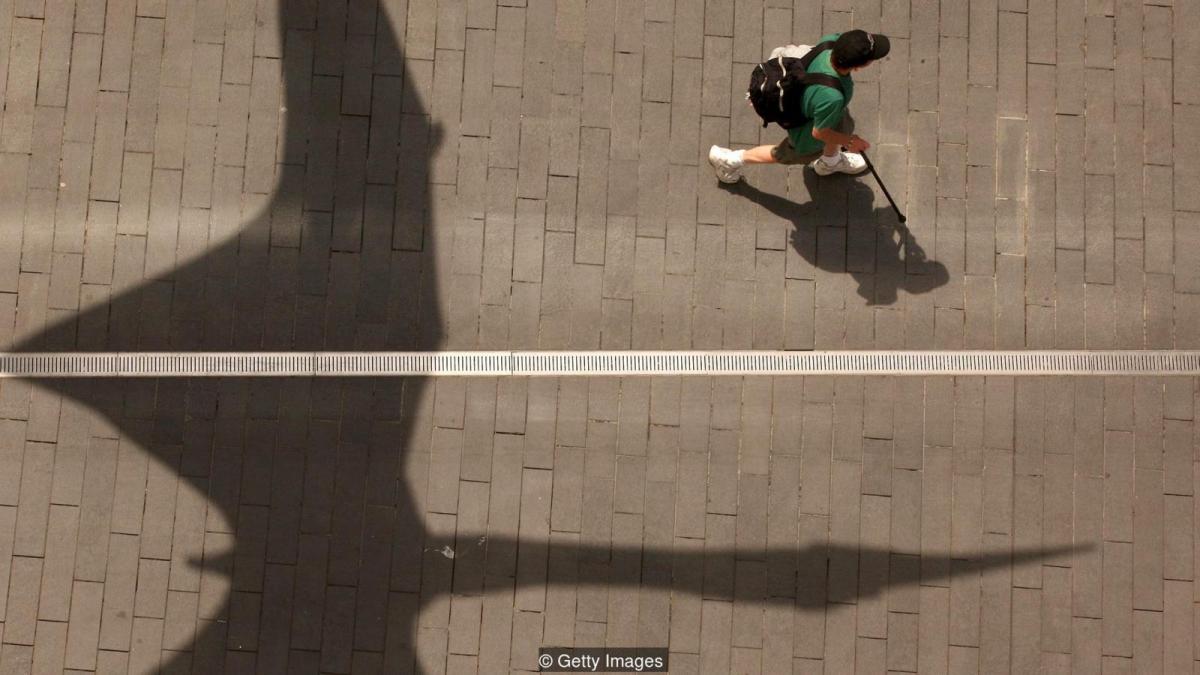
Giant pterosaurs with enormous wingspans could dominate the skies (Credit: Getty Images)

Some researchers argue that, even without the asteroid, the reign of the dinosaurs may already have been ending. “I take a slightly unorthodox view that dinosaurs were doomed anyway because of cooling climates,” says Mike Benton, a palaeontologist at the University of Bristol in the UK. “They had just about held their own to the end of the Cretaceous, but we know that mammals were diversifying… [and] dinosaurs had already been declining for 40 million years.” Benton believes mammals would still have replaced the dinosaurs. He is an author of a 2016 paper suggesting dinosaurs were slower than mammals at replacing extinct species.

Other experts take a very different view. Carnivorous dinosaur researcher Tom Holtz at the University of Maryland in College Park, US, agrees there would have been some extinctions 66 million years ago anyway, due to eruptions and massive lava flows at the Deccan Traps in India – but he says “there’s nothing otherwise, once you’re into the Palaeocene and Eocene, that would have affected general dinosaur biology. It would be a world that Cretaceous dinosaurs would still be comfortable in.”

Stephen Brusatte of the University of Edinburgh adds that dinosaurs had survived well, doing a great diversity of things, through changing climates, for 160 million years. “Dinosaurs were still very adaptable at the end of the Cretaceous, that’s not the sign of a group that’s wasting away to extinction, just waiting for some asteroid to knock them off. It’s the sign of a group that still has a lot of evolutionary potential.”

Assuming dinosaurs had survived, what factors might have shaped their evolution? Climate change might have perhaps been the first big hurdle. An event known as the Palaeocene-Eocene Thermal Maximum, 55 million years ago, saw average global temperatures reach 8C hotter than today, and rainforests spanning much of the planet.

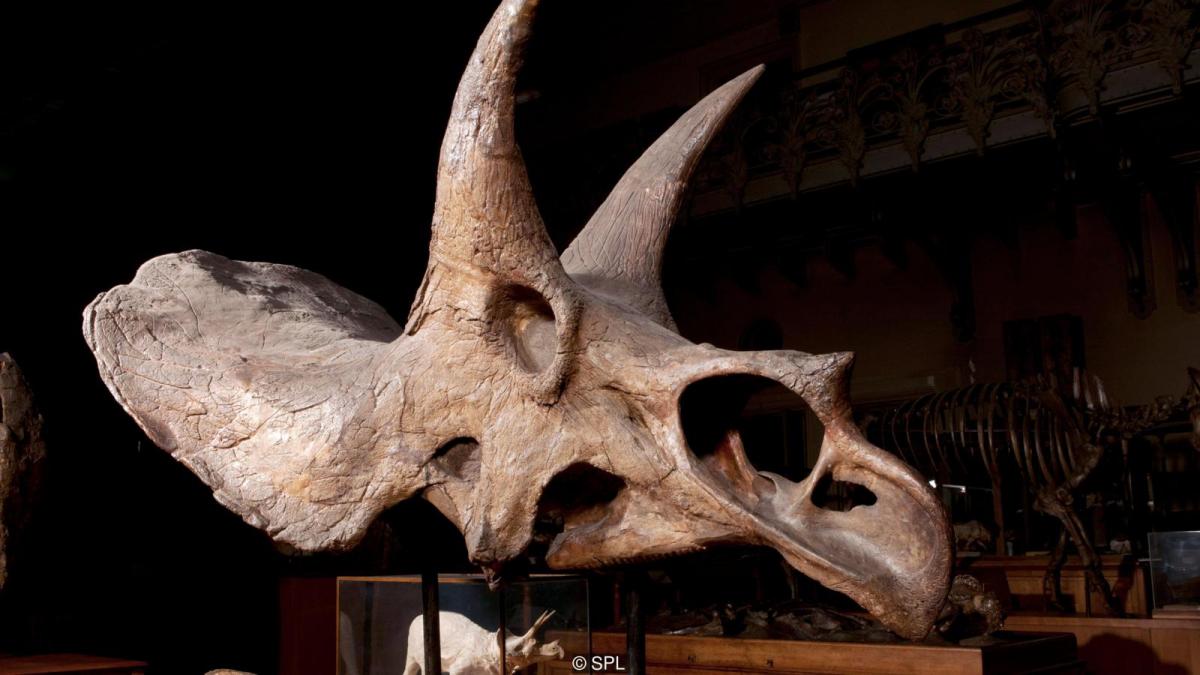
Triceratops (Credit: SPL)

In this hothouse world with abundant vegetation perhaps many long-necked sauropods might have grown more rapidly, breeding at a younger age and shrinking in size; several ‘dwarf’ sauropods (some little bigger than a cow) were already known from European islands in the late Cretaceous. The largest titanosaurs of mid-Cretaceous South America – 40m-long (131ft) creatures heavier than two jet aircraft – were already long gone.

Another trend in the later Cretaceous was the rise of flowering plants or angiosperms. During the Jurassic, most plants were ferns and gymnosperms (which include ginkgoes, cycads and conifers). These tend to be less nutritious than angiosperms, and the huge size of sauropods may have been driven by the processing time and gut size needed to digest them efficiently.

“If plant evolution continued as it has in our modern world, the herbivorous dinosaurs would almost certainly have had a diet primarily of flowering plants,” notes Matt Bonnan a palaeontologist at Stockton University in New Jersey. “Given that they are somewhat easier to digest, perhaps we would have seen an overall decrease in body size… the gigantic sizes of Mesozoic dinosaurs might have disappeared.”

Along with flowering plants came fruit, which co-evolved with mammals and birds to help plants disperse seeds. Might monkey-like dinosaurs have evolved to take advantage of this resource, just as primates did in our timeline? “Many birds eat fruit. So, there may also have been non-bird dinosaurs adapted to a frugivorous diet,” says Bonnan.

Brusatte agrees that some “small, feathered dinosaurs might have gone the route of primates,” as some were already scampering about in the branches. Others may have become nectar-drinkers, spreading pollen from flower to flower in the process.

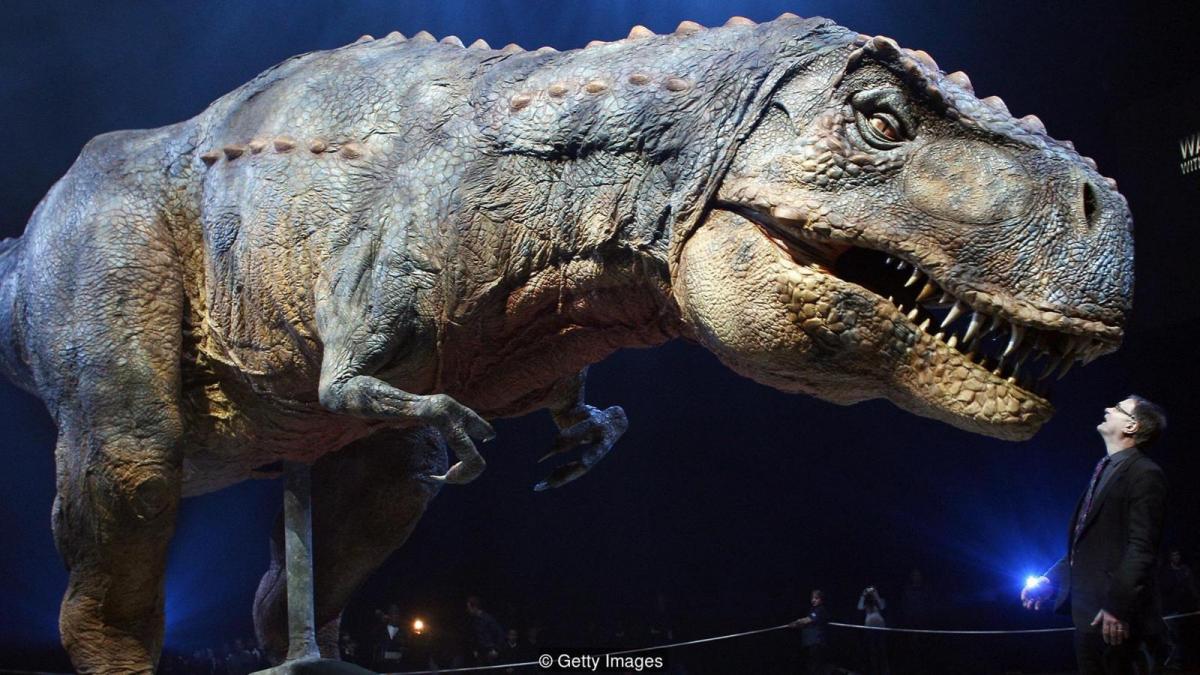
Tyrannosaurs might have hung on until the present day (Credit: Getty Images)

Another major event, about 34 million years ago at the Eocene-Oligocene boundary, was the separation of South America and Antarctica. This caused a circumpolar current to develop, leading to the formation of the Antarctic ice cap and cooling and drying the world. During the Oligocene, and later the Miocene, grasslands then spread across great swathes of the planet.

“Slender-legged, fast-running, herbivorous mammals became common – in the past you could amble or leap off and hide, but you can’t hide in the open grasslands,” Holtz says. This is when, in our history, we started to see a burst in the diversity of hoofed, grazing animals and the carnivores that preyed upon them.

Darren Naish, a vertebrate palaeontologist in Southampton, UK, says that perhaps in our alternative timeline the speedy, grass-mowing dinosaur equivalents would be descendants of horned relatives of Triceratops or bipedal, beaked herbivores akin to Hypsilophodon.

“Dinosaurs already come with a huge set of evolutionary advantages that it took mammals a long time to evolve,” he adds, and would have a head start at adapting to grasslands. Duck-billed hadrosaurs had ‘batteries’ of up to 1000 teeth in their jaws, as opposed to the 40-odd teeth a horse has, so could have made short work of grinding grasses.

Dinosaurs also had better eyesight than mammals, with increased colour vision, and may have been more adept at spotting danger. Horses and cows have flattened muzzles useful for cropping tough, low-lying vegetation, so duck-bills and sauropods might also have developed squared off snouts, and sauropod necks might have shortened to aid grazing at their feet.

Even closer to the present day, dinosaurs would have had to deal with the various ice ages of the past 2.6 million years. But we know that Cretaceous dinosaurs were living above the Arctic Circle. “Maybe in cooler places you would see things with thick and elaborate pelts, covered in fuzz and feathers all the way down to the tips of their toes and tails,” says Naish.

“It wouldn’t have been difficult for a ‘woolly’ tyrannosaurus or dromaeosaur relatives of Velociraptor to evolve,” adds armoured dinosaur expert Victoria Arbour of the Royal Ontario Museum in Canada. “Maybe we could have even had shaggy and woolly ceratopsians, ankylosaurs, or hadrosaurs.”

There are other adaptations common today but rare in dinosaurs. Burrowing for example, says Paul Barrett, a palaeontologist at the Natural History Museum in London. “It’s odd that dinosaurs didn’t really do it, as it’s a common way of life among lizards and snakes.” Given more time, some dinosaurs might have become subterranean specialists – the scaly or feathery equivalent of mammalian moles.

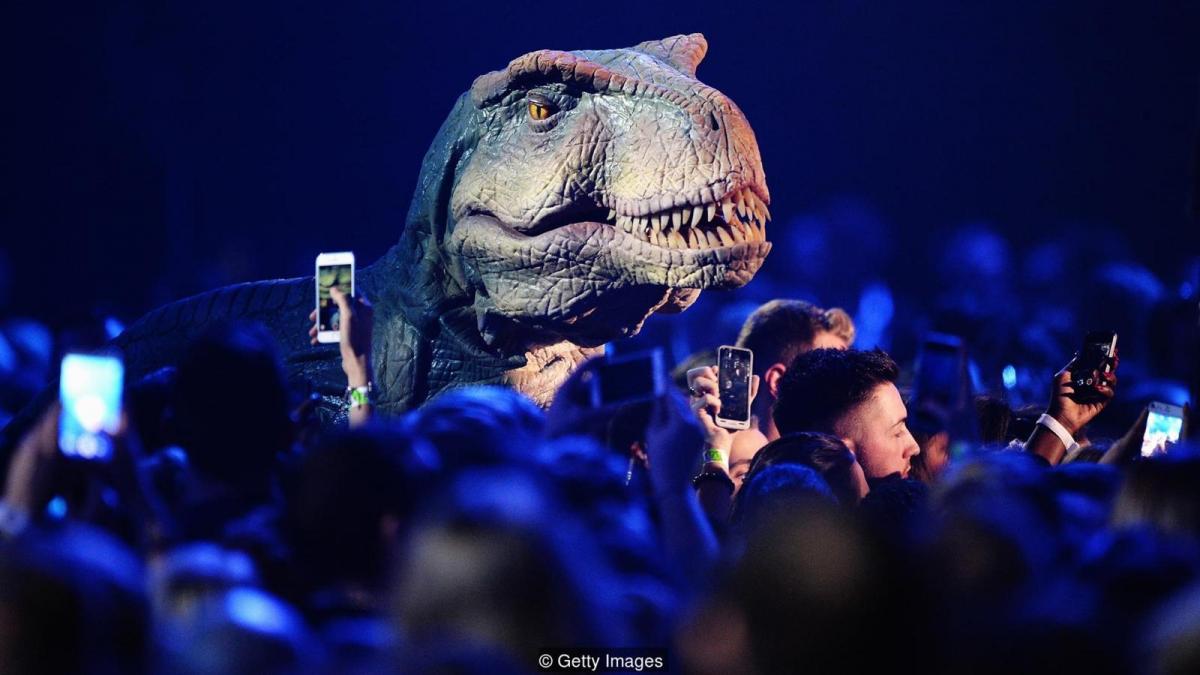
Model dinosaur surrounded by people (Credit: Getty Images)

The oceans are another realm little explored by dinosaurs. Species such as Spinosaurus were dabbling in estuarine and river environments, and armoured ankylosaurs are often found as fossils in marine sediments and were living along coastlines. Could spinosaurs or ankylosaurs have followed the path of mammalian whales and evolved to live entirely at sea? They might have returned to land to lay eggs or could have eventually given birth to live young at sea, as ichthyosaurs and plesiosaurs did.

In a world that never lost the dinosaurs on land, pterosaurs in the sky and ichthyosaurs and mosasaurs at sea, what would have been the fate of birds and mammals?

Birds were already diverse in the late Cretaceous. “Pterosaur diversity had been really knocked back,” says Holtz, perhaps because of this. Remaining pterosaurs included the massive, toothless azhdarchids, some of which were the size of biplanes with wingspans of 12m (40ft). There is already a debate about whether some azhdarchids were flightless, and you can imagine a world where islands, such as Madagascar, Mauritius and New Zealand, are dominated by strange terrestrial pterosaurs, much as in our timeline they were once the province of flightless elephant birds, dodos and giant moas.

Naish argues that a dinosaur world might still have much of the present diversity of modern birds. Mammals, however, are a different story. Though they had already been around for perhaps 160 million years when the asteroid struck, they were still “marginal, shadowy little creatures” says Brusatte, diverse but typically small and restricted to specific niches. “It was only the shock of the asteroid knocking off the incumbent dinosaurs that allowed them to break free,” he says.

Others disagree, accepting that large megafauna might not have had a chance, but bats, rodents, small carnivores and climbing primates and possums could all have been plentiful. If marmosets, langurs and gibbons had swung through the branches while dinosaurs browsed around them, might not something akin to hominids also have evolved?

“Some of the mammal lineages were already evolving before the extinction event,” says Naish. “In view of that, you’d probably still get primates and… [perhaps] a version of humanity. Given that we evolved in a world full of giant mammals, it’s plausible.”

Holtz agrees it’s a possibility: “You could have had some tree-dwelling primates that, as grasslands expand, they move into that habitat and become the pseudo-humans of this alternative universe. And just as our ancestors had to deal with sabretooth cats and big antelope, these guys would have to deal with the dromaeosaurs and abelisaurs.”

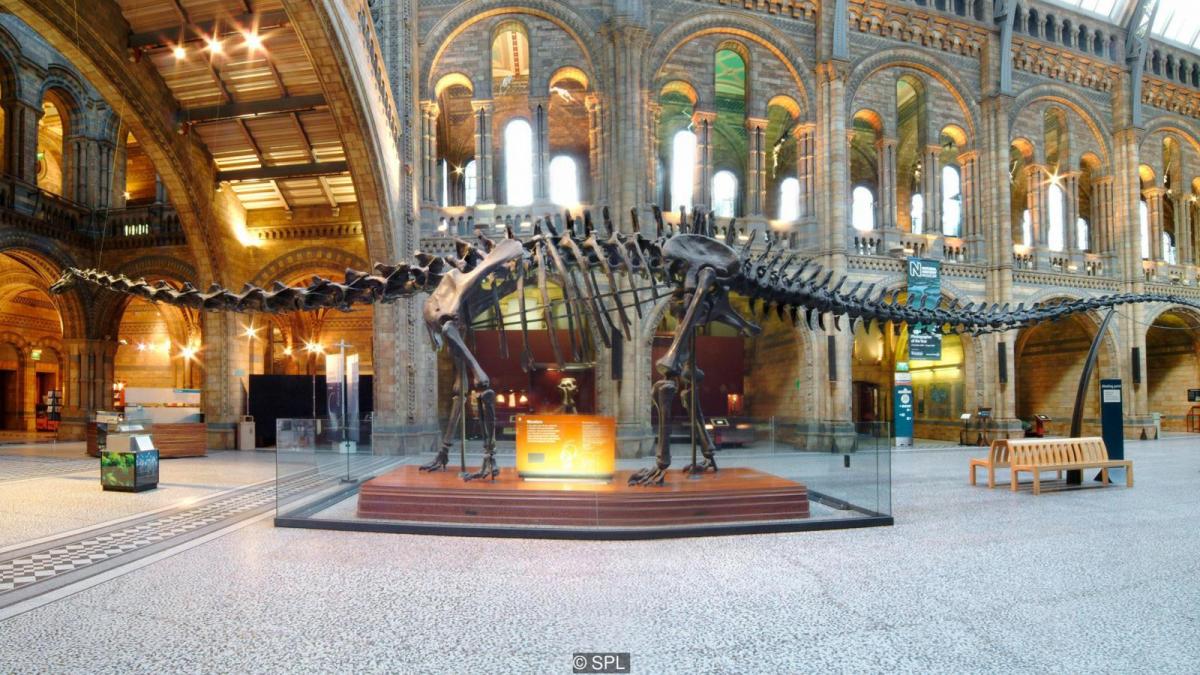
Natural History Museum dinosaur skeleton (Credit: SPL

People would have had to create protected places, which Naish admits has a One Million Years BC spin to it”, but he points to the fact that our own ancestors lived alongside large dangerous animals and had to come up with strategies to survive. “People think the Mesozoic world was a continual bloodbath, where you get ripped to shreds within seconds, but a lot of the time big predators are sparsely distributed and the world is relatively safe if you stay out of their way.”

Given that intelligent mammals are possible, could sentient dinosaurs also have evolved? In 1982, Dale Russell – then at the Canadian Museum of Nature in Ottawa – published a paper proposing that an intelligent ‘dinosauroid’ might one day have evolved. He commissioned a life-sized model, which today looks like an alien from a dated sci-fi show, with green skin and huge eyes. His theory was that the carnivorous dinosaur Troodon had an unusually large brain and might have been the lineage from which brainy dinosaurs evolved.

“Dinosaurs equivalent to crows, parrots or primates, with very complex brains and problem-solving abilities might have evolved,” agrees Holtz, but he doesn’t believe dinosaurs could ever have looked like humans. “The pathway to humans was really odd and involved hanging in trees and so forth… dinosaurs got to bipedality and manipulative hands in a much more reasonable approach.”

“I don’t think you would get anything approaching human-level intelligence,” says Naish. “You might get big-brained, intelligent dinosaurs, but they would still look like dinosaurs… It’s anthropomorphic to assume that other kinds of human-like intelligence would have evolved.”

Assuming dinosaurs did make it through to the last few hundred thousand years, and lived alongside humans, could they have survived to the present day? The answer seems to be yes. But just as humans hunted mammoths and other megafauna to extinction, our population growth and hunting technologies would inevitably have taken a toll on big dinosaurs as we spread across the globe. “There could have been a Pleistocene dinosaur megafaunal extinction event, as the humans migrate out of whatever corner of the world they came from,” Holtz says.

In the present day in this alternative timeline, perhaps a few species of large herbivorous sauropods, and even carnivores similar to T. rex, might hang on in protected wildernesses and national parks vast enough to fit their home ranges. They would have to be truly vast wildernesses though, with little human development, in places like outback Australia and Alaska. Maybe some of the smallest non-avian dinosaurs would have adapted to urban environments, thriving alongside people in the cities, as pigeons, rats and seagulls have in our world.

Though in our own past, large mammals were mostly wiped out, a few, such as elephants and rhinos hang on, so perhaps it’s not too much of stretch to imagine a parallel world where today you could hop on a dinosaur safari, Jurassic Park-style, and enjoy spotting some of them, cameras and binoculars at the ready.

John Pickrell is the author of Flying Dinosaurs and Weird Dinosaurs.

Source: www.bbc.com

Pages