Blogs

A First Look at the New Dinosaur Exhibit at the Denver Museum of Nature and Science

Friday, September 29, 2017

Denver Museum of Nature and Science

If the Triceratops discovered at a Thornton construction site officially has you super stoked about dinosaurs, then you can get more of a fix via a new exhibit at the Denver Museum of Nature and Science.

Ultimate Dinosaurs opens Oct. 6 and is free with admission to the museum. It features 17 skeletons and even more fossils and casts.

“It highlights dinosaurs a lot of people might not be familiar with,” Joe Sertich, curator of dinosaurs at the museum said.

You also get the chance to see life-size murals of dinosaurs, take part in augmented reality and checkout a 3D printer that’s creating replicas of real fossils.

draft

“They’re really bizarre, and I think that’s one of the cool things. They’re some of the largest dinosaurs ever found, but also some of the weirdest,” Sertich said. They have things like crocodile-like snouts. We have plant-eating crocodiles. And so it’s this weird mix of brand new discoveries that’s coming out of the Southern Hemisphere.”

The remains of the dinosaurs featured in the exhibit were all unearthed in just the last few years.

Source: www.9news.com

‘Jurassic Park’: The Perfect Hollywood Movie?

Friday, September 29, 2017

‘Jurassic Park’: The Perfect Hollywood Movie?

It isn’t a stretch to say that Steven Spielberg is the father of the franchise film — the Jaws, Indianna Jones, and Jurassic Park franchises are all some of the most successful of all time. Following its 1993 release, Jurassic Park has since spawned three (soon to be five) sequels, the most recent being Collin Trevorrow’s Jurassic World, which was notable only in its mediocrity.

To my mind, Jurassic Park is the perfect Hollywood movie and has never been topped before or since. There are multiple reasons for this: its swelling John Williams score and charming performances are timeless, the special effects — practical or CG — still hold up today and even surpass many modern efforts of big-budget movies. Phil Tippett, who was originally hired to produce stop-motion animatics for the dinosaurs, was replaced during the film’s production by digital artists from ILM. It was said that when Spielberg and Tippett saw a digital animatic of the T. rex chasing a herd of Gallimimus, Spielberg said, “you’re out of a job,” to which Tippett replied, “don’t you mean extinct?” This exchange was later worked into the script as a conversation between Alan Grant and Ian Malcolm.

Quite simply, it is a visual, narrative and principled masterpiece, the likes of which we will probably never experience again. Before the film was even released, it was billed as one of the biggest of all time. In a post-release report for Empire magazine in 1993, Rufus Sears described it as “already-legendary” after witnessing its production process and because it made more money on its opening weekend than any film in history at that point. There is, however, more to this picture than fiscal profit — below are three reasons why.

Moral Story And Characters

The moral elements of Jurassic Park — present in both book and film — are well documented at this point, as they all essentially boil down to 1) playing God with nature is a bad idea, and 2) corporate greed should not prevail at the expense of humanity (ironic given that the Jurassic Park franchise is now one of the biggest going, but more on that later).

What I want to touch on here, though, are the moral compasses within the movie’s characters. Of them all, Sam Neil’s performance as paleontologist Dr. Alan Grant and Laura Dern’s paleobotanist Dr. Ellie Sattler are both masterclasses in not only playing the moral epicenter of a story, but also in representing the audience.

From the minute John Hammond (Richard Attenborough’s industrialist-turned-Walt Disney showman) touches down his personal helicopter in the Badlands, they are skeptical, not only of the kind of person who would land a chopper in the middle of a paleontological dig site, but also of the contents of the park itself. Yes, Hammond all but bribes them into coming with him by offering to fund Grant and Sattler’s dig for a further three years, but it’s a small moral blemish that Hammond remains quiet about the true nature of the park. They are, naturally, bowled over by what they find — the scene where we first see the colossal Brachiosaurus, bathed in the golden light of a tropical sunset and set to John Williams’ delicate theme, at once captures the majesty of this piece of cinema. Welcome to Jurassic Park.

From there, however, the couple are the only ones of the group who truly question the morality of the park (Malcolm tries, but is too preoccupied with either hitting on Ellie or spouting some garbage about chaos theory). “How can we possibly have the slightest idea what to expect?” poses Grant while the group discuss the park’s commercial viability at a no-expense-spared dinner.

Then there’s Grant’s effective character arc, which sees him having to protect Hammond’s grandchildren despite coming to terms with the possibility of one day having children with Ellie. This thought in particular is apparently scarier than facing live dinosaurs if his near-allergic reaction to Tim and Lex at the beginning of the film is anything to go by (compared to his morbid fascination with being just yards away from a feeding Tyrannosaur). He fancies himself a stoic spectator of nature, not a custodian.

Feminism And Equality

While many argued that Jurassic World was a feminist movie because one of its protagonists, Claire (played by Bryce Dallas-Howard), was a woman in an executive position, she still spent the whole movie being told what to do by man after man. This wouldn’t be such a problem if she was given the chance to defend herself by the screenwriters, but she wasn’t. She was only permitted to tell a male employee to “be a man for once,” because apparently two wrongs do make a right according to Colin Trevorrow.

Jurassic Park, on the other hand, deals far more even-handedly. Laura Dern plays a woman who, although having to eye-roll her way through half of the movie, gives as good as she gets and beyond, swatting away Malcolm’s advances with ease. She also has time to restore power to the park’s failing electricity grid while outrunning Velociraptors and scolding Hammond on the topic of sexism in survival situations.

She is a driving force for the movie rather than a love interest, mother or archetypal female in a Hollywood blockbuster. Indeed, it is Grant who takes on the role of the mother, shepherding the young children through the park and keeping them from harm, all while Sattler takes point in getting off the island and back to the mainland. Even when the story is at its fervent conclusion, it is the young girl Lex, a veritable computer whizz and self-proclaimed “hacker,” who saves the adults from death-by-raptor after reactivating the compounds’ electronic door locks.

Human characters aside, there is also the fact that every dinosaur in the park is female, yet find a way to breed regardless — a true matriarchal society and a fine way of putting every man on Isla Nublar in his place. In summary, Jurassic Park shuns expectations both as a movie and as a metaphor for breaking past the shackles of patriarchy.

The Pinnacle And Parody Of Hollywood

Jurassic Park may be the pinnacle of modern Hollywood, but it could also be a parody of the business itself. Beloved as it is by a generation of directors and fans, today the franchise is seemingly flouting the principle lessons that both the book and original picture precisely extolled. The center of both was not only a stark warning about the morality of genetic experimentation, but also about greed, lazy money and exercising restraint.

Jeff Goldblum’s charismatic performance as Ian Malcolm serves not only as the film’s comic relief but also as a (perhaps on-the-nose) harbinger of ‘90s sensibility. During the board-room scene following the group’s first experience of the park, he makes a speech which dumps this moral quandary onto the viewers’ lap, and in so doing presciently highlights the very problem that the Jurassic Park franchise now faces. To quote Michael Crichton and David Koepp’s screenplay:

“I’ll tell you the problem with the power you’re using here, it didn’t take any discipline to obtain it.

“You read what others had done and you took the next step. You didn’t earn the knowledge for yourselves, so you don’t take any of the responsibility for it.”

Regardless of the successes Jurassic Park’s sequels, none of them required discipline to obtain. Of course, there is great discipline and dedication by those cast and crew involved in the production process, but to further paraphrase Crichton and Koepp: they stood on the shoulders of geniuses to accomplish something as fast as they could, and before they even knew what they had they “patented it, and packaged it, and slapped it on a plastic lunch box.” Now they’re selling it, quickly and voraciously, like the velociraptors which will now stalk every Jurassic Park movie until the human race gets incredibly bored.

To cite Sears’s set report once more, the journalist draws particular attention to the scene where the camera pans across a shelf filled with Jurassic Park lunch-boxes, t-shirts and fluffy toys, “trinkets that could literally be plucked from the set and sent to Hamley’s to sell on the back of Jurassic Park The Movie.” It’s all an illusion.

Now, this could all either be seen as serendipity, given Jurassic Park’s already legendary status, or something far more prescient on the part of Spielberg, Koepp and Crichton, considering that the Jurassic Park franchise has now sailed past $3.5 billion at the worldwide box office. Whether you think it’s poking fun at Hollywood or not, Spielberg not only expertly adapted a best-selling novel laced with humor, morality and humanity, but also brought into clear and uncomfortable focus the extraordinarily intertwined relationship between books, films, theme parks, merchandising and marketing.

Source: www.moviepilot.com

What do you think makes Jurassic Park such a classic?

This Boning Dinosaur Skeleton Exhibit Is Proof that American Museums Are Too Prudish

Thursday, September 28, 2017

Europeans have all the fun: lower drinking ages, funner beaches, easier lifestyles and… dinosaur skeletons having sex in their museums. This exhibit, which clearly shows two T. rexes “mating”, is located in the Jurassic Museum of Asturias in Spain.

A Reddit user recently found the exhibit, which, of course, has long been a conversation starter at MUJA, a museum that has over 8,000 fossils (200 of them being dinosaurs, crocs, fish and tortoises). The copulating dinosaurs are actually replicas and a pseudo-guess on how dinosaurs mated, as no one really knows how they did the deed. The position seems a bit awkward as the girl T. rex’s tail could smack dude T-Rex in the face. Ah, messy logistics.

Either way, with this hilarious dinosaur exhibit, I think the MUJA has sky rocketed to the top of my non-existant “museums I want to go to list”.

Read more: Dinosaur Sex

Dinosaurs Ranked by Their Theoretical Ability to Play Baseball

Thursday, September 28, 2017

For millions of years, dinosaurs ruled the earth, striding the planet like the colossi they were. But sadly for them, they were all wiped out 65 million years ago, or roughly 65 million years before baseball was invented. 

Well, that’s what I’m here for. Presented below is an extremely scientific and thorough ranking of dinosaurs based on their ability to play baseball. This list has been vetted and endorsed by an international coalition of paleontologists and biologists, all of whom agreed that it was very correct and that I am very smart. I had originally planned on presenting this as a speech at the American Museum of Natural History in New York, but I want to share it with you, the reader, so you may bask in my brilliance.

1. Ankylosaurus

No question as to who’s first for me. With its massive bone club tail, this 13,000-pound beast would have been the Aaron Judge or Giancarlo Stanton of its day.

2. Pterodactyl

I don’t know how useful the Pterodactyl would’ve been offensively, given the fact that it has wings and not arms, but its ability to fly would give it absurd, Kevin Kiermaier-esque range in centerfield.

3. Apatosaurus

Tipping the scales at as many as 33 tons, the Apatosaurus was one of the largest dinosaurs of all time and used its huge tail as a whip to deter predators, making it the rough equivalent of Prince Fielder but with better bat speed. Have to park it at first base, though.

4. Deinonychus

A wildly effective predator with giant claws on its feet and plenty of speed, this dinosaur would’ve been a monster on the base paths. (Sidenote to Billy Hamilton: If you strap knives to your feet, you will steal 200 bases in a season, guaranteed.)

5. Spinosaurus

Listed at a whopping 49 feet long and weighing 25 tons, Spinosaurus is bigger even than the mighty Tyrannosaurus Rex, and may be the largest predator the world has ever seen. I don’t know if that makes it any good at baseball, but I’m definitely not ranking a dinosaur that good/cool lower than fifth in any list.

6. Triceratops

With that giant bony frill on its head, the Triceratops would’ve made for a great catcher, and one practically immune to getting hurt on foul tips, too. Plus, those horns would deter both passed balls and the likes of Jacoby Ellsbury drawing catcher’s interferences.

7. Stegosaurus

Pros: Huge, has big bony plates on its back that would help it get on base via hit by pitch. Cons: Spiky tail would’ve made using it as a bat difficult, had a brain the size of a walnut. Could go either way on this one.

8. Tyrannosaurus rex

The so-called King of the Dinosaurs is at a serious disadvantage thanks to his puny little arms. Still, his reputation gets him on this list.

9. Velociraptor

A dinosaur whose reality (covered in feathers, about the size of a turkey) doesn’t match up to its media-created hype. That makes it the Jeff Francoeur of the late Cretaceous.

10. Pachycephalosaurus

I don’t know how advantageous a giant bony domed head would’ve been for baseball, but it does obviate the need for a helmet, which saves money.

Source: si.com

7 Insane Things That Were Cut From Jurassic Park Movies

Wednesday, September 27, 2017

7 Insane Things That Were Cut From Jurassic Park Movies

Ideas that became extinct.

Movies about resurrected dinosaurs and genetic engineering tend to have insane stuff in them, as the Jurassic Park series has proven over the years, but the parts you didn’t get to see are the most bonkers of them all.

When Steven Spielberg was adapting Michael Crichton’s novel for cinema in the early ’90s, there were scenes from the source material deemed too dark and expensive for the movie, so he backtracked on his initial plans to include them.

Although these scrapped ideas were condemned to extinction, fans got a hint at what might have been via storyboards and concept art that surfaced post-release.

Since Jurassic Park left a T-Rex-sized footprint in the box office in 1993, three successful sequels have stomped into cinemas, and the follow-ups also shed scenes that were dubbed too dark, outlandish or downright oddball during development.

As was the case with the original, life found a way to give the fans a good look at these aborted sequel ideas… and it’s called the Internet.

7. The T-Rex River Chase

One of the most intense scenes from Michael Crichton’s novel was cut from Jurassic Park because even Steven Spielberg movies have budgetary constraints.

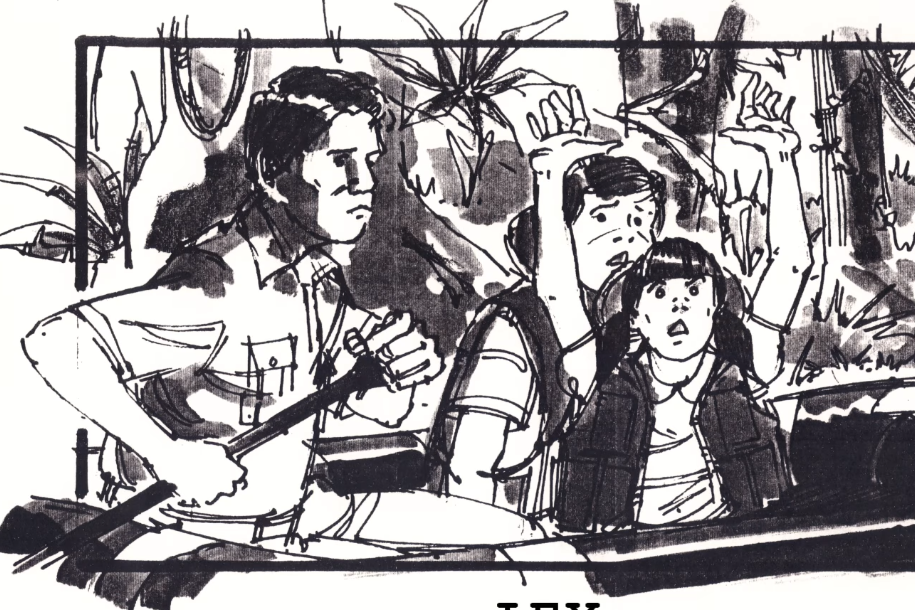
The sequence in question looks like it would have been a real adrenaline fest. Alan Grant, Tim and Lex are rafting their way down a river when the T-Rex shows up to give chase, wading into the water to pursue the gang.

Spielberg and his creative team originally planned to include this pulse-racing set piece, but it was dubbed too expensive to film. The combination of practical effects and CGI required to pull it off raised a few too many pulses at the studio, which had already invested heavily in the movie. Bringing dinosaurs back to life isn’t cheap, you know.

Storyboards which surfaced on the Jurassic Time YouTube channel have given fans a look at how this scene would have played out. From the look of things, it was all Lex’s fault. The T-Rex was sleeping soundly until she decided to heckle it.

Fortunately for the group, a falling tree stops the T-Rex in her tracks, giving Robert Muldoon the chance to tranquillise the creature.

In an attempt to appease the hardcore Jurassic Park fans who would be outraged at this sequence’s omission, Spielberg padded out the scene where Rexy chases after the jeep. The original plan was to have it drive away as soon as the beast’s footsteps were heard, which isn’t nearly as exciting.

6. The Dramatic Helicopter Rescue

Jurassic Park fans will be well aware that at least one alternative ending for the film was scripted and storyboarded, but another has surfaced in recent years, and it was even more dramatic than the conclusion that was actually filmed.

One idea Steven Spielberg and his team kicked about was to have Alan Grant and the gang dramatically airlifted from the stricken theme park by helicopter, avoiding the jaws of the T-Rex with mere second to spare.

While fleeing from Rexy on foot, the gang leap into the chopper as it’s taking off. Grant just makes it and is left clinging onto a runner for dear life as the T-Rex lunges, inflicting toothy damage on the vehicle but not enough to knock it out of the sky.

Although this narrow escape would have made for a more dramatic ending than the one Spielberg used, including it would have deprived the world of that iconic final shot where the T-Rex roars in triumph while a banner reading ‘When dinosaurs ruled the earth’ floats to the ground.

5. Pteranodons Versus Raptors

Pteranodons didn’t manage to wing their way to the Jurassic Park series until the third instalment, but there were plans to introduce them earlier.

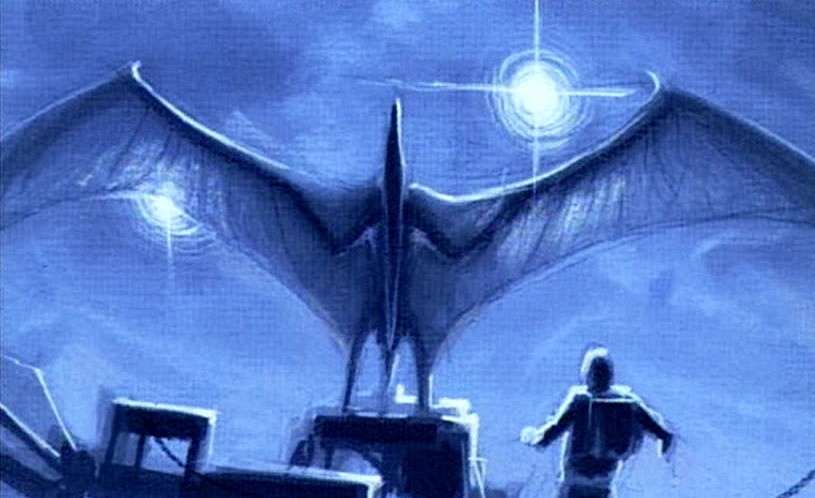
Scenes featuring the flying reptiles were written and drawn up for The Lost World: Jurassic Park, only to to end up going the way of the dinosaurs. One even involved them doing battle with a pack of Raptors.

During that sequence where Ludlow’s team are attacked by Velociraptors in the long grass, the script originally called for the survivors to hang-glide off a cliff to apparent safety, before a flock of Pteranodons set upon them.

One of The Lost World’s alternative endings also made use of the winged terrors, having them attack a helicopter while it airlifted survivors from Isla Sorna.

Dino fans finally got to see Pteranodons versus chopper in 2015’s Jurassic World. Spoiler alert! The helicopter didn’t win.

4. Mankind’s Potential Extinction

Jurassic Park III underwent sweeping changes during development, and it can only be assumed that some of the scrapped ideas would have been more interesting than the lukewarmly-received version that saw the light of day.

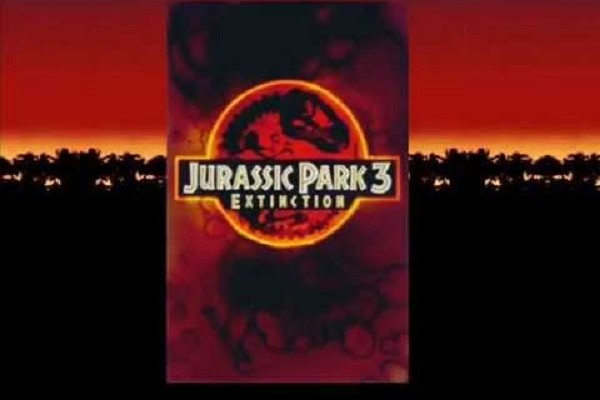
One of the early scripts bore the subtitle ‘Extinction’ and it was under serious consideration to go before the cameras, since the studio had official logos and posters drawn up, which were included on the DVD release.

This version of the screenplay is said to have depicted a scenario where man and dinosaur thrown into the mix together has caused a potentially cataclysmic disturbance in the planet’s ecosystem. Whether woman would have inherited the Earth in this scenario, like Ellie Sattler predicted, was never revealed.

They story picked up with Alan Grant and a small team heading up an investigation into Pteranodon attacks in Central America, and this idea was salvage for a subsequent draft of the script subtitled ‘Breakout’.

The final story selected by director Joe Johnstone included only a few cherrypicked elements from both drafts, but whether that’s a good thing the world will never know.

3. Dino-Human Hybrids

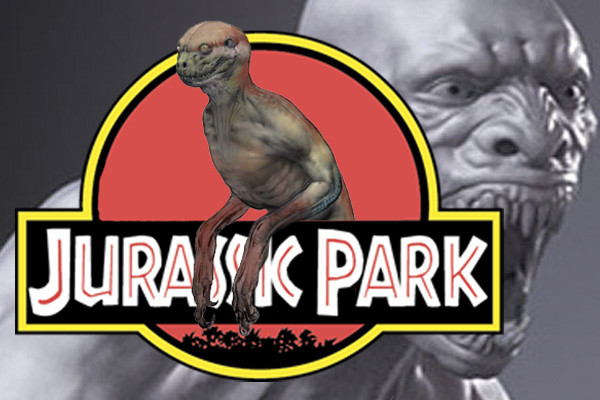
Fans who never warmed to the idea of Ingen creating an all-new breed of dinosaur in Jurassic World would have hatedWilliam Monahan’s Jurassic Park 4.

The Departed screenwriter tabled the idea of dino-human hybrids in his script for the fourth entry in the series, which he co-authored with John Sayles. The story was based around a secret genetic laboratory that has been mixing human and dinosaur DNA to create hideous reptilian supersoldiers.

The idea, which is surely better suited to bad Syfy TV movie, was eventually filed away under ‘too bats*** crazy for public consumption’ but it got further along than you might think, with official storyboards being drawn up.

A nugget of this concept survived when the project morphed into Jurassic World, which saw Ingen’s dino geneticists take their experiments to the next level.

Upcoming sequel Jurassic World: Fallen Kingdom could explore this question more deeply, but hopefully not to the extent where these monstrosities become a reality.

2. Indominus Rex Versus Mechanical T-Rex

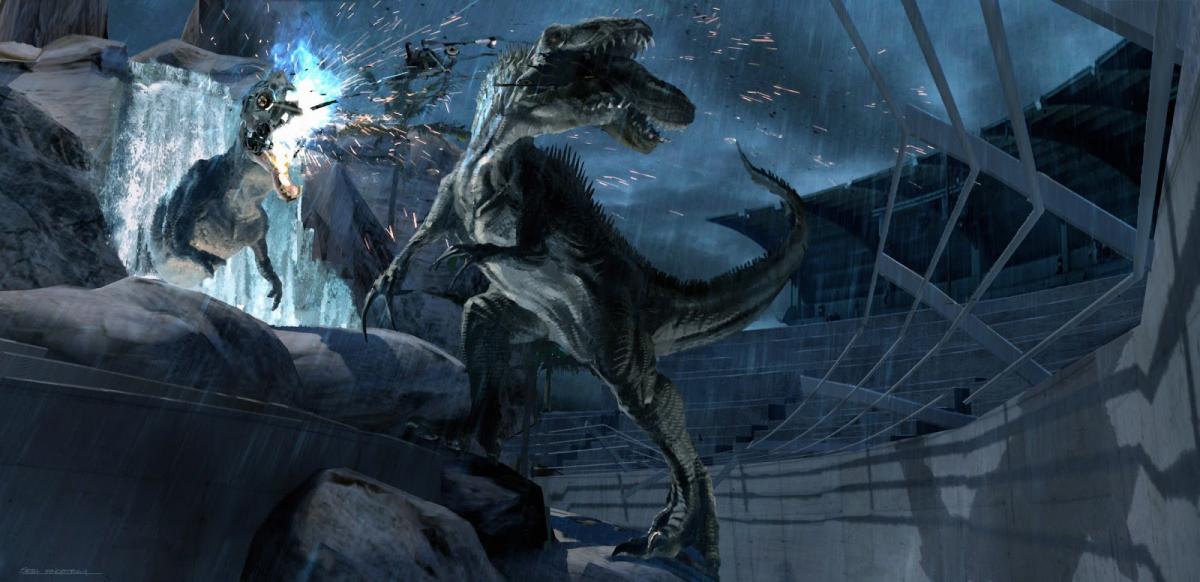
Leaked concept art from Jurassic World has given dino fans a peek at some of the scenes that were never filmed and one of them, in particular, looks all kinds of mental.

Concept artist Seth Engstrom shared the unused designs on his blog, and the one which stands out depicts th Indominus Rex tearing the head off a mechanical T. rex.

Presumably that’s merely a model the genetically modified dino is destroying, rather than some kind of robotic security guard build for the theme park, but either way, this looks like it would have been a memorable scene.

Another piece of shelved artwork shows the Indominus destroying a rope bridge while a volcano erupts in the background. It looks more like something from King Kong than Jurassic Park, but it’s cool artwork all the same.

Reports suggest Fallen Kingdom could involve a volcanic eruption on Isla Nublar, an idea that may have been carried over from its predecessor’s planning phase.

1. The Stegoceratops

Indominus Rex wasn’t the only hybrid dinosaur Ingen’s Frankenstein-esque lab tinkering cooked up – the others just didn’t make it into Jurassic World.

Stegoceratops, an amalgamation of of Stegosaurus, Triceratops, beetle and snake DNA, was supposed to appear in the film as the veggiesaurus equivalent of the I-Rex, but was nixed late into production.

Despite its failure to make the final cut, the hybrid dino did feature in the official Jurassic World toy line and Ludia’s mobile game based on the movie.

Director Colin Trevorrow removed Stegoceratops from the movie on the advice of his son, who felt its inclusion only made the I-Rex feel “less special”.

With the concept of hybrid dino now well established in the Jurassic Park universe, there’s always a chance this particular beast could make an appearance in Fallen Kingdom, along with Ingen’s other unnatural creations.

Source: www.whatculture.com

Dinosaur Bone From Unknown Species Found in Czech Republic

Wednesday, September 27, 2017

Burianosaurus augustai

The dinosaur’s femur, found in Central Bohemia 14 years ago, is from a so-far unknown species that was called Burianosaurus augustai, Martun Mazuch, from the Institute of Geology and Paleontology of Charles University, which has participated in the research, has told CTK.

The new dinosaur was named after Czech artist Zdenek Burian and palaeontologist Josef Augusta, according to whose instructions Burian was drawing pictures of the prehistoric world and the animals inhabiting it.

Burianosaurus augustai belonged to the group of ornithopods, that is herbivorous ornithischian dinosaurs.

The team of researchers headed by palaeontologist Daniel Madzia has published the results of their finding in the Journal of Systematic Palaeontology.

Left femur of cf. Iguanodontidae gen. et sp. indet. (Ornithischia, Ornithopoda), IGP MZHLZ/2003/1, in posterior (A), lateral (B), medial (C), ante− rior (D), and distal (F) views, with transverse cross−section through the femoral shaft (E).

Physician Michal Moucka found the bone near a quarry in the vicinity of Kutna Hora on November 18, 2003.

According to experts, this dinosaur lived 80 to 90 million years ago. It was an insular species living in isolation. Part of Bohemia and a part of Germany formed one island then, Mazuch said.

“This is the only specimen of Burianosaurus augustus. Nowhere else remains of the same dinosaur were found, only of a similar one,” Mazuch said.

Madzia was also examining a tooth from a Czech collection that was considered to come from a Jurassic crocodile. However, he found out that it was a tooth of a dinosaur from the theropods group, Mazuch said.

200-Million-Year-Old Sea Dragon Ichthyosaurs Was Pregnant

Tuesday, September 26, 2017

After its discovery in the mid-1990s, the Ichthyosaurus or “sea dragon” fossil is making headlines once more due to a surprising discovery: it was pregnant.

The sea dragon fossil was originally found on the Somerset coast, and hails from the Early Jurassic period. It remained unstudied for years, until it ended up in the collection of the Lower Saxony State Museum in Hannover, Germany, the New York Post reports. Scientists estimate that the dinosaur was 200 million years old.

In 2016, paleontologist Sven Sachs of the Bielefeld Natural History Museum noticed the fossil while on a visit, and got in touch with Dean Lomax of the University of Manchester, also a paleontologist and an expert on Ichthyosaurs.

The pair found that, aside from being the largest of its kind on record at 9 to 11.5 feet in length, the specimen was carrying an embryo. The embryo was still developing, according to the scientists, and had a part of its backbone, a forefin, ribs and a few more bones. The tiny dinosaur measures a mere seven centimeters.

Dean said, “It amazes me that specimens such as this [the biggest] can still be ‘rediscovered’ in museum collections. You don’t necessarily have to go out in the field to make a new discovery. This specimen provides new insights into the size range of the species, but also records only the third example of an Ichthyosaurus known with an embryo. That’s special.”

Sachs said, “It is often important to examine fossils with a very critical eye. Sometimes, as in this instance, specimens aren’t exactly what they appear to be. However, it was not ‘put together’ to represent a fake, but simply for a better display specimen. But, if ‘fake’ portions remain undetected then scientists can fall foul to this, which results in false information presented in the published record.”

The Ichthyosaurus is one of the most common fossil reptiles in the United Kingdom, with thousands of specimens ranging from single bones to complete skeletons unearthed in the past decades.

The study was published in Acta Palaeontologica Polonica.

Source: www.immortal.org

Weird fish fossil changes the story of how we moved onto land

Tuesday, September 26, 2017

Does it fit our evolutionary picture? Brian Choo

The evolutionary story we have written to explain our ancestors’ move from sea to land may need a rethink. A fossil fish from this era has been discovered with several of the features of land animals – yet it was only distantly related to them.

Roughly 360 million years ago, one group of lobe-finned fish began evolving into four-legged, land-living animals that resulted in reptiles, amphibians and mammals like us.

Fossils have revealed many of the stages in this iconic evolutionary event. The evolutionary tree of species involved in the switch from sea to land has remained stable since the late 20th century, even as new fossils have come to light.

However, a fossil discovered in a quarry in Ningxia, north China, now threatens that stability. It was discovered in 2002 by Min Zhu at the Institute of Vertebrate Paleontology and Paleoanthropology in Beijing and Per Ahlberg at Uppsala University in Sweden.

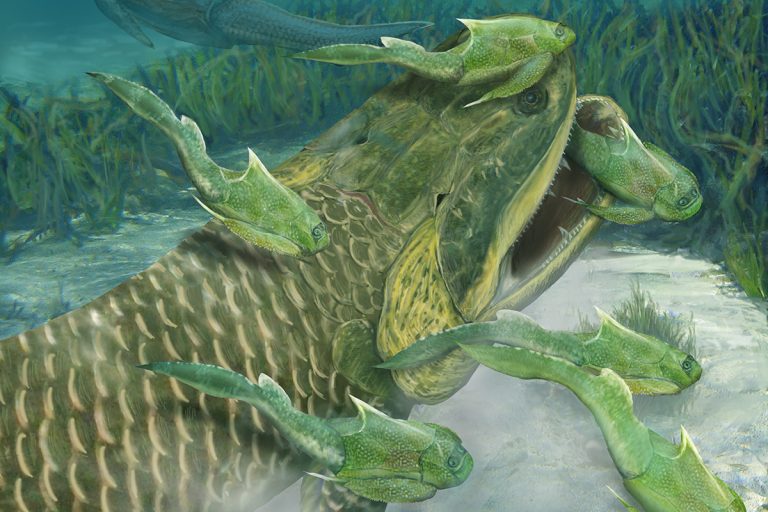
The fossil belongs to a new species of lobe-finned fish, named Hongyu chowi. It was about 1.5 metres long, and lived 370 to 360 million years ago.

This fish doesn’t fit

But when the researchers tried to fit H. chowi into the existing evolutionary tree, it didn’t fit easily.

That’s because in some respects, H. chowi looks like an ancient predatory fish called rhizodonts. These are thought to have branched off from lobe-finned fish long before the group gave rise to four-legged land animals.

But Ahlberg says H. chowi has aspects that look surprisingly like those seen in early four-legged animals and their nearest fishy relatives – an extinct group called the elpistostegids. These include the shoulder girdle and the support region for its gill covers.

This implies one of two things, the researchers say. The first possibility is that H. chowi is some sort of rhizodont that independently evolved the shoulders and gill cover supports of a four-legged animal.

Alternatively, the rhizodonts may be more closely related to the four-legged animals and the elpistostegids than we thought. But this would also imply a certain amount of independent evolution of similar features, because the rhizodonts would then sit between two groups that have many features in common – features the two groups would have had to evolve independently.

Ambush hunter

H. chowi does look a lot like an early four-legged animal or an elpistostegid, says Martin Brazeau at Imperial College London. That could imply that different groups of lobe-finned fish independently evolved similar features, he says.

The find confirms an earlier suspicion that there was independent or “parallel” evolution between the rhizodonts, the elpistostegids and the first four-legged animals, says Neil Shubin at the University of Chicago. “It has been a recurrent theme in the field.”

H. chowi is also interesting for its unusual lifestyle, says Ahlberg. Its anatomy suggests it was an ambush predator that lurked just above the bottom, snapping at any smaller fish that swam too close – like some anglerfish do today.

Hongyu is one of the earliest examples of this lifestyle,” he says.

Journal reference: Nature Ecology & EvolutionDOI: 10.1038/s41559-017-0293-5

Source: www.newscientist.com

Morturneria seymourensis: Antarctic Plesiosaur Filtered Food Like Modern Baleen Whales

Tuesday, September 26, 2017

Life restoration of the Upper Cretaceous plesiosaur Morturneria seymourensis. Image credit: Texas Tech University.

In 1984, Texas Tech University paleontologists Sankar Chatterjee and Bryan Small unearthed the fossilized skull of a previously unknown marine reptile on Seymour Island in Antarctica. While Morturneria seymourensis was obviously a plesiosaur, it was unlike any previously found. Now, three decades later, Professor Chatterjee and colleagues have made a new discovery about Morturneria seymourensis, one that adds a new dimension to our understanding of plesiosaurs.

Plesiosaurs (‘near to lizard’ in Greek) are a group of extinct marine reptiles that roamed the vast seas of the Triassic, Jurassic and Cretaceous periods, between 235 and 66 million years ago. Their fossils have been found on every continent on Earth, with key discoveries made in Australia, Europe and North America.

They had a broad, flat body and short tail, four long flippers they used to ‘fly’ through the water, long necks and very sharp teeth.

“The teeth of most plesiosaurs are conical, stout, sharp, robust and ideal for stabbing and killing large animals,” Professor Chatterjee said.

But as he wrote in his 1989 paper, ‘the long, slender and delicate teeth of Morturneria seymourensis may have formed a ‘trapping’ device that enabled the animal to feed on small fish and crustaceans that abound in the same deposits.’

“In our paper, we described the unusual teeth of Morturneria seymourensisand their probable function,” Professor Chatterjee said.

“However, our new team, who had worked on plesiosaurs from many continents, found them fascinating and unique.”

 
When the jaw of Morturneria seymourensis was closed, teeth from the upper and lower jaws formed a nice trap. Basically, the reptile would swallow a school of krill, close the jaws to let the water out, but keep the krills inside for chewing and swallowing. With these kind of interdigitating delicate teeth, Morturneria seymourensis could not tackle large fish or shelled animals, which were favorite food of most plesiosaurs. Image credit: Texas Tech University.

The paleontologists reconstructed Morturneria seymourensis with a large, round head, a huge mouth and tiny teeth that point the wrong way. The teeth did not meet tip to tip as in all other plesiosaurs, but lay together in a battery that strained food particles from the water.

“When the jaw was closed, teeth from the upper and lower jaws formed a nice trap,” Professor Chatterjee said.

“Basically, the animal would swallow a school of krill, close the jaws to let the water out, but keep the krill inside for chewing and swallowing. With these kind of interdigitating delicate teeth, the animal could not tackle the large fish or shelled animals (called ammonites) that were the favorite foods of most plesiosaurs.”

The major finding is that Morturneria seymourensis used a filter-feeding method. This feeding style is unknown in other marine reptiles, but is found in today’s baleen whales.

“The identification of Morturneria seymourensis’ whale-like filter feeding is a startling case of convergent evolution between reptiles and mammals,” Professor Chatterjee said.

“Plesiosaurs and whales shared many of the intervening steps in the evolution of this feeding style and their extreme morphologies are similar despite arising from different ancestors.”

“Convergent evolution does not imply Morturneria seymourensis was in any way related to today’s baleen whales; it just means they both evolved the same way. They had adopted similar lifestyle and feeding. For example, birds and bats fly, but birds are now considered dinosaurs and bats are mammals,” he said.

The research is published in the Journal of Vertebrate Paleontology.

_____

F.R. O’Keefe et al. Cranial anatomy of Morturneria seymourensis from Antarctica, and the evolution of filter feeding in plesiosaurs of the Austral Late Cretaceous. Journal of Vertebrate Paleontology, published online August 31, 2017; doi: 10.1080/02724634.2017.1347570

This article is based on text provided by Texas Tech University.

Source: www.sci-news.com

27 Facts That Will Make You Appreciate “Jurassic Park”

Tuesday, September 26, 2017

27 Facts That Will Make You Appreciate “Jurassic Park”

1. The iconic “bark” of the velociraptors was made by using the sound of mating tortoises.

Other animal sounds used for the raptors included a horse’s breathing and the hiss of an angry goose.

2. The T. rex was not supposed to break the glass on the Ford Explorer.

The breaking of the Ford Explorer’s sunroof was a complete accident, but resulted in some genuine screams from Joseph Mazzello (Tim) and Ariana Richards (Lex).

3. One of the film’s most suspenseful moments was created by strumming a guitar string.

Before it makes its first appearance, the T. rex’s presence is felt through a plastic cup of water, which shakes as it gets closer. To create this effect, a guitar string was attached under the dashboard beneath the glass. The string was then plucked in a similar pattern to the T. rex’s footsteps.

4. Steven Spielberg purchased the film rights to Jurassic Park six months before it was published.

While developing the screenplay for ER with Michael Crichton, Spielberg found out about Crichton’s plans to write Jurassic Park. Immediately after, Spielberg influenced Universal to purchase the film rights.

5. And the decision to have Richard Kiley provide the voiceover in the park vehicles was made in Crichton’s novel.

In Crichton’s story, he specifically mentions that the Jurassic Park audio tour is narrated by Golden Globe-winning actor Richard Kiley. So of course Spielberg hired Kiley to provide the voiceover in the movie adaptation.

6. Plus Crichton’s novel even provided an explanation as to why the triceratops was sick.

In the original book, we find out that the stones the triceratops (a stegosaurus in the novel) ate to help aid its digestion were located near poisonous West Indian lilac berries, which made it ill.

7. Jim Carrey was considered for the role of Dr Ian Malcolm.

Although Jeff Goldblum was tipped for the role, several other actors, including Jim Carrey, auditioned. And according to casting director Janet Hirshenson, he did pretty well, too.

8. The helicopter scene foreshadows a very important part of the film’s plot.

In the scene, Dr Alan Grant (Sam Neill) fashions a functioning seatbelt with only two latches and no latch plate. This foreshadows a later scene where the dinosaurs are suddenly able to breed despite all originally being female.

9. There’s only 15 minutes of actual dinosaur footage in the final cut of Jurassic Park.

And that’s in comparison to the film’s running length of 127 minutes.

10. Spielberg received $250 million from Jurassic Park.

Including gross and profit participations as well as merchandise, Spielberg’s sum remains the largest amount any one individual has made from a film.

11. And Jurassic Park earned $357 million in North America, and a total of $914 million worldwide.

That was enough for Jurassic Park to overtake E.T. and become the highest-grossing movie of all time. That is until Titanic surpassed it in 1997 and Avatar in 2009

12. Sam Neill injured himself with a flare while filming.

The injury took place during the scene in which Grant uses the flare to distract the T. rex. According to Neill: “It [the flare] dropped some burning phosphorous on me, got under my watch, and took a chunk of my arm out.

13. Ariana Richards won her role by screaming the loudest.

To cast the character of Lex, Spielberg auditioned a number of girls and asked them to record their screams. Richards’ on-tape scream was the only one loud enough to awaken Kate Capshaw (Spielberg’s wife) and send her running down the hall to see if her children were alright.

14. And the casting of Joseph Mazzello led to Spielberg switching the ages of Lex and Tim.

Initially Mazzello screen-tested for Hook, but he was turned away by Spielberg for being too young. Promising to get him in a movie that summer, the director then cast 9-year-old Mazzello as Tim in Jurassic Park. This proved slightly problematic, as in the original novel Tim is the older sibling. And since Spielberg refused to cast someone so young for the character of Lex, the decision was made to switch their ages.

15. The 3D Unix interface that Lex uses to reboot the park’s power is actually a real program.

Even though it looks fake, the Unix system seen in the film is a real 3D file management browser called Fsn (Fusion) that was released in the 1990s by Silicon Graphics.

16. Plus there’s a slight technological slip-up when Nedry is communicating with the dock via webcam.

If you look closely, Nedry’s communication link to the dock is actually just a QuickTime video playing on screen. You can even see the time bar moving along the bottom of the screen as it plays.

17. A crew member almost died while they were building the animatronic T. rex.

Prior to filming, the T. rex animatronic had to be enclosed in foam rubber that would resemble the dinosaur’s skin. According to Alan Scott, one of Jurassic Park’s mechanical designers, there was a whole section in the middle that could only be reached by crawling into the animatronic while it was powered up in a particular position. If the power went off for any reason, the head of the T-Rex would move and cause all of the hydraulic cylinders and sheets of metal inside to be in the pathway of the crew member’s body. As luck would have it, the power went off in the entire studio while Scott was inside working. But fortunately he was able to avoid all the moving metal parts and escaped unscathed.

18. To ensure that all the actors had the same reaction times, Spielberg would make his own dinosaur sounds.

According to Laura Dern, the sight of Spielberg making roaring dinosaur noises through a bullhorn became commonplace while filming. The only problem was the actors trying not to laugh in response.

19. The idea to have Mr DNA explain the science behind Jurassic Park was the result of a sarcastic comment.

According to screenwriter David Koepp: “I remember Steven [Spielberg] and I were wrestling with that very issue, about the DNA, and one of us said, ‘What are we supposed to do? Have a little animated character called Mr DNA?’ And the other one said, ‘Yes! That’s exactly what we’re going to do!'”

20. There’s no evidence to suggest that the dilophosaurus was venomous or had a frill.

The dilophosaurus was also significantly scaled down in the film so that the audience wouldn’t confuse it with the velociraptors.

21. The hungry raptors in the kitchen scene were played by special effects designers in elaborate costumes.

The suits were designed by placing raptor drawings over various images of a designer, followed up by a body cast and a full sculpture of the final form. To fit inside the suit, the designer had to bend over, in a pose similar to that of a skier, for up to four hours at a time during filming.

22. And while filming, the T. rex was nothing more than a man waving a long stick with a drawing of the dinosaur’s head attached.

While the first T. rex scene used a mixture of animatronics and CGI, the ending required the dinosaur to be completely designed on a computer. So the actors would know what they were screaming at, the crew built what Spielberg called “barber poles”, which were the long poles with a T. rex face attached to them.

23. The last few days of shooting were disrupted by one of the strongest and most destructive hurricanes to hit Hawaii.

On the last day of shooting, Hurricane Iniki made landfall at the film’s central location of Kauai. Funnily enough, while most of the 130-strong cast and crew waited out the storm in their hotel, Richard Attenborough slept soundly through the whole ordeal.

24. Jeff Goldblum and Laura Dern began a romantic relationship after meeting on set.

The two sweethearts also got engaged after Jurassic Park, and they stayed together for two years before eventually splitting up.

25. Spielberg and Crichton saw themselves represented in the characters of Hammond and Malcolm.

Spielberg saw many parallels to himself in Hammond’s desire to dream of bigger and better things. On the other hand, Crichton said that his views on science and genetic engineering were largely reflected by Malcolm’s voice of reasoning. Their diametrically opposed views are also shown by the contrast of Hammond’s all-white attire and Malcolm’s black outfits.

26. There’s a subtle reference to another one of Spielberg’s blockbusters hidden in Jurassic Park.

If you look closely during Nedry’s argument with Hammond, you can just make out Jaws playing on one of the computer screens.

27. Spielberg decided to change the ending with just a few weeks left of production.

The original ending had one of the raptors killed after getting stuck in a T. rex skeleton that crashes to the ground. But after seeing the success of the T. rex sequences, Spielberg was inspired to bring back the gigantic dinosaur for one last heroic appearance.

Pages