Blogs

Creationists' Claim That Humans Lived with Dinosaurs Debunked by Science

Wednesday, January 24, 2018

An image of a "dinosaur" from Kachina Bridge that scientists nicknamed Sinclair, as depicted by a young-Earth creationist (left) and as illustrated by scientists (right). The dark shading on the line drawing represents human engravings, while the light shading represents natural mud stains. Credit: P. Senter and S. Cole

Ancient images that creationists claim are evidence of humans living alongside dinosaurs are at best just smeared pictures, scientists find.

At the site of Kachina Bridge in Utah — an immense sandstone formation resembling an arch more than 200 feet (60 meters) high and wide that was formed by the undercutting of a rock wall by flowing water  — prehistoric cultures decorated the  walls with paintings and engravings known as petroglyphs. Among them are what young-earth Earth creationists, who believe all life was created on the same day about 6,000 years ago, have said are depictions of dinosaurs, claiming these images as proof of their beliefs.

Now, closer investigation reveals these ideas are just wishful thinking.

"The most important implication of these findings is that one of the creationist camp's favorite piece of 'evidence' for the coexistence of dinosaurs and humans — a dinosaur petroglyph — doesn't even exist," researcher Phil Senter, a paleontologist at Fayetteville State University in North Carolina, told LiveScience.

The researchers analyzed the four alleged dinosaur images with the naked eye and with binoculars and telephoto lenses while the pictures were illuminated by direct and indirect sunlight and when they were in shadow.

"Dinosaur 1, which I've nicknamed Sinclair because it looks like the Sinclair Gas logo, really does look like a dino when seen with the naked eye," Senter said. "But the archaeologists who did the subsequent fieldwork knew exactly what they were looking at when they came out to examine the figure. This just goes to show that a trained eye can often see what an untrained eye cannot."

The researchers found the "neck" and "head" of Dinosaur 1 are a composite of two separate petroglyphs, while the "legs" appear to just be stains.

"I wonder if, during the process of weathering, chemicals from the man-made, [etched] part dripped down to form the 'legs,'" Senter said. "Lots of mineral stains are all over the canyon that contains Kachina Bridge."

"Until our study, this was the best dinosaur petroglyph — that is, the hardest to argue about, because it looked so much like a dinosaur that there was no way to interpret it as anything else," Senter said. "The 'best' dinosaur is now extinct."

"The 'dinos' other than Sinclair do not look like dinos at all, even with the naked eye," Senter added. "It is difficult for me to understand how anyone saw dinosaurs in those figures." In fact, the researchers say the four Kachina "dinosaurs" are "illusions produced by pareidolia," the psychological phenomenon responsible for people seeing faces or animals in clouds and the man in the moon. 

Senter and archaeologist Sally Cole detailed their findings in the March issue of the journal Palaentologia Electronica.

Source: www.livescience.com (2011)

U of A Digitally Preserves Important Dinosaur Tracks Found in Arkansas

Thursday, January 18, 2018

Scientists using laser-imaging technology have documented and digitally preserved the first known set of theropod dinosaur tracks in the state of Arkansas.

The tracks, discovered in 2011 in a working gypsum quarry near Nashville, have since been destroyed. But high-resolution digital scans taken over a period of two weeks in 2011 allowed a team of researchers to study the tracks and determine that they were made by Acrocanthosaurus, a large, carnivorous dinosaur. The findings extended the known range of Acrocanthosaurus 56 miles east, to the western shore of an ancient inland sea.

“It actually confirms that the main genus of large theropods in North America was Acrocanthosaurus,” said Celina Suarez, an assistant professor in the Department of Geosciences who was part of the team that documented and studied the tracks. “It now has been found in Wyoming, Utah, Oklahoma, Arkansas and Maryland, a huge range.”

Results of the study were recently published in the journal PLOS ONE. Researchers also created a detailed, publicly accessible online map of the site and the tracks. Brian Platt, an assistant professor of geology from the University of Mississippi, led the study. Researchers from the University of Arkansas Center for Advanced Spatial Technology (CAST) provided the scanning equipment and expertise.

THE RUSH TO PRESERVE THE SITE

After the tracks were discovered, researchers received a $10,000 Rapid Grant from the National Science Foundation to quickly document the site. The U of A’s vice provost for research and economic development and the J. William Fulbright College of Arts and Sciences provided matching grants, for a total of $30,000.

The mining company moved its operations to allow researchers a short window of time to document the find. Researchers used LiDAR, which stands for light detection and ranging, because traditional methods would have taken too long, said Suarez. “From a technical standpoint, it’s important that the ability to rapidly scan such a large area is available to paleontologists. It was invaluable for this project since we had such little time to work.”

The site had two different sized Acrocanthosaurus tracks, suggesting both adult and younger animals walked the ancient tidal flat about 100 million years ago, during the Cretaceous Period. It also contained tracks made by sauropods, long-necked plant-eating dinosaurs.

LiDAR uses a pulsed laser to measure distances to the earth in tiny increments, generating a data “point cloud” that is used to digitally recreate a physical space. In this case, the equipment was mounted on a lift over the site. By analyzing carbon and oxygen isotopes of the rock at the track surface, researchers determined that the track surface was indeed the surface that the animals stepped on, rather than an underlying layer that remained when the original surface eroded.

The digital reconstruction of the trackway site can be viewed at the CAST website.

About the University of Arkansas: The University of Arkansas provides an internationally competitive education for undergraduate and graduate students in more than 200 academic programs. The university contributes new knowledge, economic development, basic and applied research, and creative activity while also providing service to academic and professional disciplines. The Carnegie Foundation classifies the University of Arkansas among only 2 percent of universities in America that have the highest level of research activity. U.S. News & World Report ranks the University of Arkansas among its top American public research universities. Founded in 1871, the University of Arkansas comprises 10 colleges and schools and maintains a low student-to-faculty ratio that promotes personal attention and close mentoring.

Source: https://news.uark.edu

Caihong juji: This Chinese 'Rainbow Dinosaur' had Iridescent Feathers like Hummingbirds

Wednesday, January 17, 2018

An illustration of a reconstruction of the iridescent dinosaur which had rainbow feathers, named Caihong juji, unearthed in China, is shown in this October 31, 2016 photo released on January 15, 2018. Courtesy Velizar Simeonovski/The Field Museum for the University of Texas at Austin

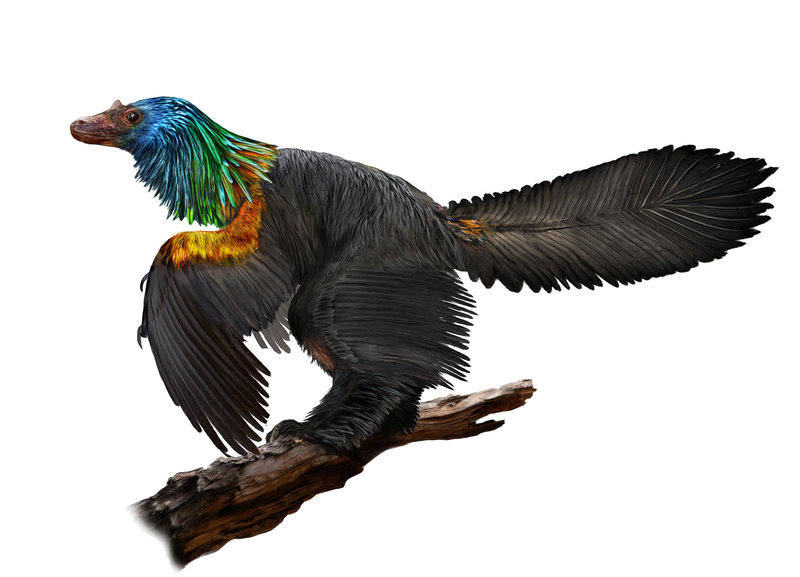
Newly discovered Caihong juji, a winged dinosaur that roamed what is now China around 161 million years ago, was likely bursting with color—a shock of blue and green around its face, and streaks of orange highlighting its wings and tail. The duck-sized theropod has already been christened with the Mandarin word for “rainbow.”

Microscopic structures in the exquisitely preserved, nearly complete fossil unearthed in Hebei Province indicated that it boasted iridescent feathers, particularly on its head, neck and chest, with colors that shimmered and shifted in the light, like those of hummingbirds.

The discovery “suggests a more colorful Jurassic World than we previously imagined,” said evolutionary biologist Chad Eliason of the Field Museum in Chicago, one of the researchers in the study published in the journal Nature Communications.

Photos and drawings of the incredibly detailed C. juji fossil. Credit: Yu et al., 2018

Using powerful microscopes, the scientists detected within the feathers the remnants of organelles called melanosomes responsible for pigmentation. Their shape determines the color. Caihong’s feathers had pancake-shaped melanosomes similar to those of hummingbirds with iridescent feathers.

Much of its body had dark feathers, but ribbon-like iridescent feathers covered its head and neck. While it possessed many bird-like characteristics, the researchers doubted it could actually get airborne. Its plumage could have attracted mates while also providing insulation.

By examining the fossilized feathers under a microscope, researchers detected structures that hint at possible colors. COURTESY YU ET AL., 2018

Caihong was a two-legged predator with a Velociraptor-like skull and sharp teeth, probably hunting small mammals and lizards. It had crests above its eyes that looked like bony eyebrows. 

Many dinosaurs possessed feathers. Birds evolved from small feathered dinosaurs near the end of the Jurassic Period. Caihong had fuzzy feathers and pennaceous ones, those that look like writing quills. It is the earliest-known creature with asymmetrical feathers, a trait used by birds to steer when flying. Caihong’s were on its tail, suggesting tail feathers, not arm feathers, were first utilized for aerodynamic locomotion.

“It is extremely similar to some early birds such as Archaeopteryx,” said paleontologist Xing Xu of the Chinese Academy of Sciences, referring to the earliest-known bird, which lived 150 million years ago. “Its forelimbs were configured like wings. To be honest, I am not sure what function the feathers have, and I don’t think that you can completely exclude the possibility that the feathers helped the animal to get in the air.”

The shapes of melanosomes can help researchers infer coloration. COURTESY YU ET AL. 2018

Asked what someone might say upon seeing Caihong, University of Texas paleontologist Julia Clarke said, “‘Wow!’ And if they are anything like me, they might want one as a pet. Not suitable for children.”

The dinosaur’s full scientific name, Caihong juji, means “rainbow with a big crest.”

Source: www.reuters.com

‘SIBERIAN TITAN’: Russian Scientists Discover New Dinosaur Species (PHOTOS)

Monday, January 15, 2018

© tsu.ru

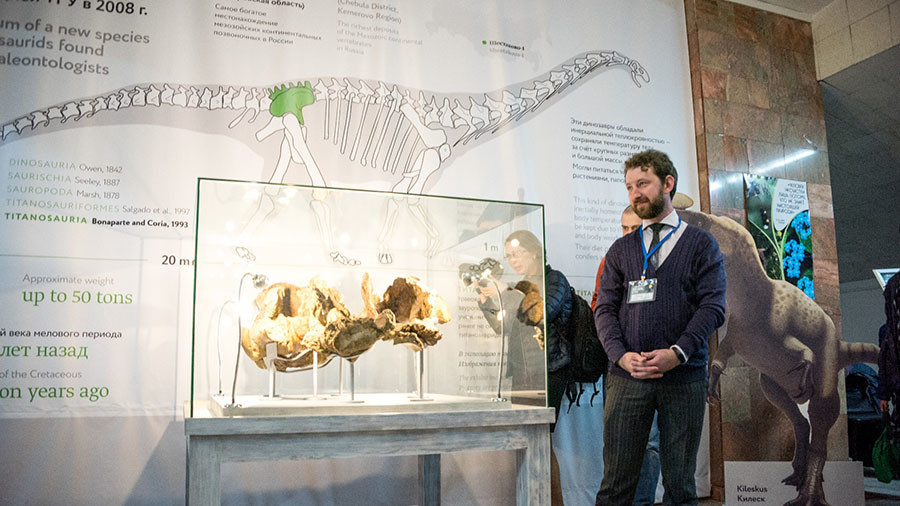
Russian scientists have described a new dinosaur species that roamed Siberia 120 million years ago, naming it the Siberian Titan. The giant with its long neck & tail is only the second of its type discovered on Russia’s territory.

Paleontologists from the Tomsk State University together with their counterparts from the University of St. Petersburg have identified a previously unknown type of giant dinosaur after uncovering its fossils in a cliff in the Kemerovo region. Fragments of teeth, vertebra and sacrum helped researchers towards realizing that their findings belonged to a new dinosaur species.

© tsu.ru

The creature had a long neck and a powerful tail, could reach up to 12 meters in length and weigh nearly ten tons. Despite its remarkable size, the scientists noted the beast wasn’t the largest in the group of giant plant-eating sauropods. Yet the creature was formally named as “Sibirotitan astrosacralis” due to the area it inhabited and ribs arranged in a ‘star’ shape, according to press releases by the two universities. 

© tsu.ru

First recovered in 2008, the remains required some effort to be extracted from sandstone in a cliff near the village of Shestakovo. Equipped with climbing gear, the researchers had to carefully dig out the bones from the rock at a height of four meters.

The Siberian Titan is the second sauropod unearthed and described in Russia after the discovery of Tengrisaurus in 2017.

© tsu.ru

Source: www.rt.com

It's Time to Print a 200-mln-year-old Dinosaur Skull at Home!

Tuesday, January 16, 2018

 Researchers used CT scans to peer inside the skull of the dinosaur Massospondylus. (Photo: Pixabay)

The bones of the skull are not fully fused, which means that this particular fossil is that of an individual that is not fully grown yet.

Scientists have created a digital reconstruction of the skull of a 200-million-year-old South African dinosaur, which will allow enthusiasts all over the world to make 3D prints of the fossil at home.

The researchers from University of the Witwatersrand in South Africa hope that this will facilitate research on the dinosaur called Massospondylus, as well as others.

Researchers used CT scans to peer inside the skull of the dinosaur Massospondylus.

They were able to rebuild every bone of Massospondylus's cranium, and to even look at tiny features like nerves exiting the brain and the balance organs of the inner ear.

Along with the study published in the journal PeerJ, a 3D surface file of the skull can be downloaded.

"This means any researcher or member of the public can print their own Massospondylus skull at home," said Kimi Chapelle, a PhD student at University of the Witwatersrand.

Massospondylus is one of the most famous dinosaurs from South Africa and was named in 1854 by the celebrated anatomist Sir Richard Owen.

Fossils of Massospondylus have been found in many places in South Africa, including Golden Gate National Park, where James Kitching discovered fossil eggs and embryos in 1976.

However, the skull of Massospondylus has never been the focus of an in-depth anatomical investigation.

"I was amazed when I started digitally reconstructing Massospondylus' skull, and found all these features that had never been described," said Chapelle.

"It just goes to show that researchers still have a lot to learn about South Africa's dinosaurs," she said.

"By comparing the inner ear to that of other dinosaurs, we can try and interpret things like how they held their heads and how they moved," said Chapelle.

"You can actually see tiny replacement teeth in the bones of the jaws, showing us that Massospondylus continuously replaced its teeth, like crocodiles do, but unlike humans that can only do it once," she added.

The bones of the braincase are not fully fused, which means that this particular fossil is that of an individual that is not fully grown yet.

"This allows us to understand how Massospondylus grew, how fast it grew and how big it could grow," Chapelle added.

Hundreds of Massospondylus fossils have been found in South Africa, ranging in size from hatchlings to adult.

Chapelle is using CT technology to study these additional fossils.

Source: www.asianage.com

First Look at Jurassic Park FUNKO POP Concept Art Revealed

Sunday, January 14, 2018

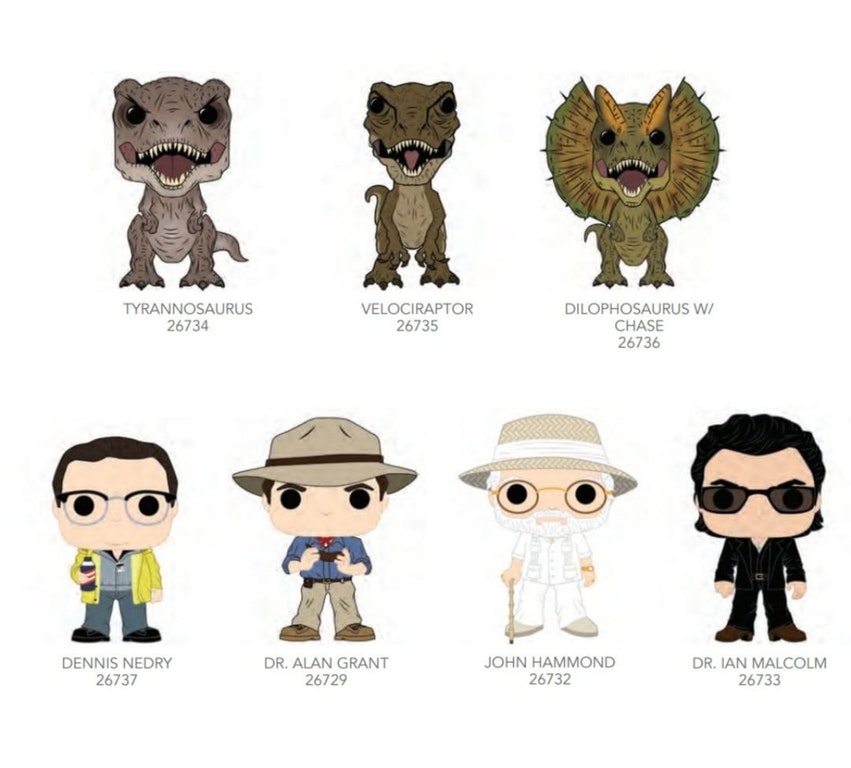
Jurassic Park FUNKO POP Concept Art

The Jurassic Park series is joining the likes of countless other comic book and pop culture franchises to become forever commemorated in plastic as a Funko Pop! vinyl figures. A slew of new concept art was revealed showcasing some of the main characters and dinosaurs from the first film of the series that will be getting the Funko Pop! treatment.

As seen in the concept art below courtesy of New Toy News, the first wave of Jurassic Park vinyl figures from Funko Pop! will feature the mainstays of the franchise such as Dr. Alan Grant (Sam Neil), Dr. Ian Malcolm (Jeff Goldblum) along with park founder John Hammond (Richard Attenborough) and Dennis Nedry (Wayne Knight).

The line also includes the main dinosaurs featured prominently in the film including the Tyrannosaurus, Velociraptor and the Dilophosarus which includes a special Chase variant. Lastly, the first wave will also include a special Dr. Ellie Sattler (Laura Dern) figure who comes with the Jurassic Park jeep.

Although this line of Funko Pop! vinyl figures is based around the first Jurassic Park film, it is a safe bet that future lines in the series will include the characters and dinosaurs seen in the sequels as well as the upcoming Jurassic World: Fallen Kingdom.

Source: heroichollywood.com

The Fossil Record of Evolution - Descent with Modification - Lists of Transitional Fossils & Transitional Forms

Tuesday, January 23, 2018

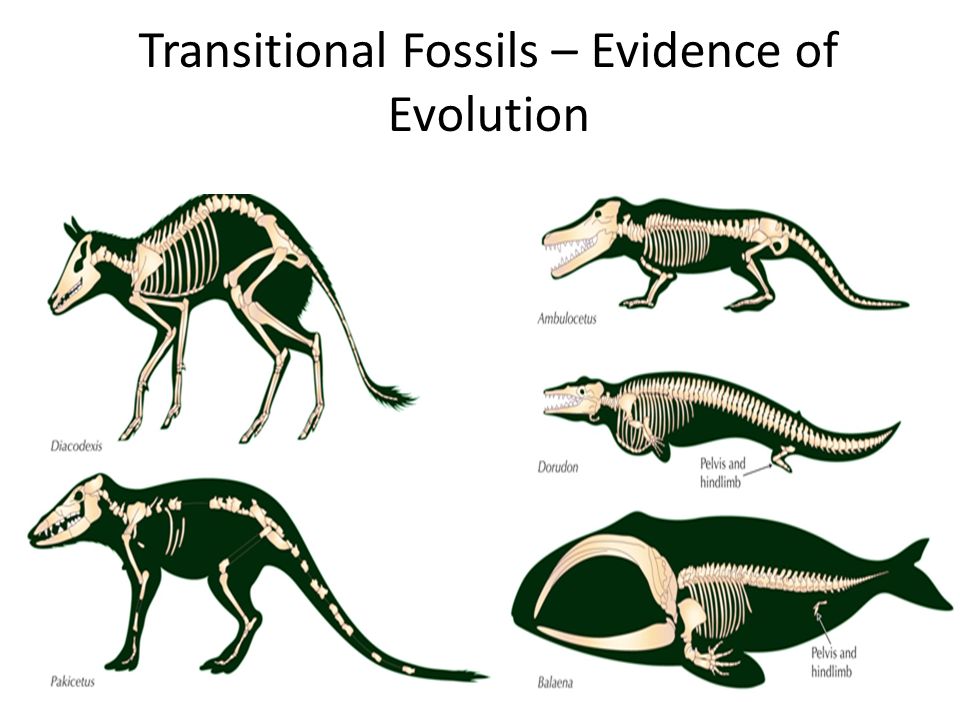
Transitional Fossils – Evidence of Evolution

What is a Transitional Fossil?

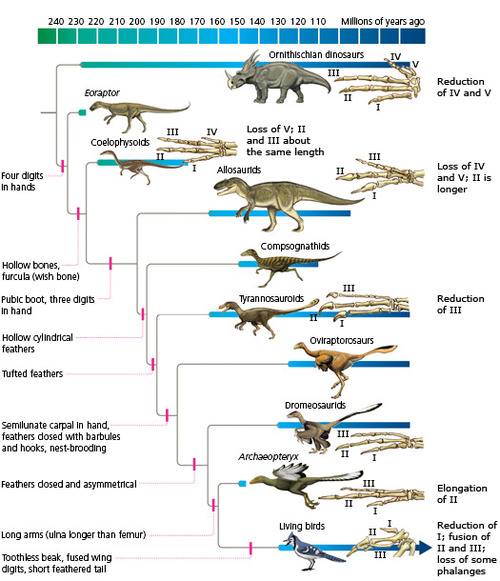
A transitional fossil is a fossil of an organism that has traits from multiple evolutionary stages. Proponents of creationism claim that “evolutionists have had over 140 years to find a transitional fossil and nothing approaching a conclusive transitionalform has ever been found”, despite the discovery of Archaeopteryx (a transitional form between maniraptoran dinosaurs and basal (primitive) birds, and among the best examples of evolution) only two years after Darwin published The Origin of Species. Creationists say that we never saw evolution happen, but transitional fossils are the next best thing.

What are Transitional Forms?

“A transitional form is an organism that has features intermediate of its ancestors and progeny. The term is most common in evolution to refer to organisms that show certain features (wings, feathers, gills and so on) partly in development. In theory, every fossil is a transitional form if it has descendants and each living creature is a transition between its parent and its offspring. However, evolution is about the features of populations rather than individuals; the transition at the species level can be too small in fossils; so the list below concentrates on broad transitional features and the genus or larger group.”


READ ALSO: 10 Common Myths About Evolution


Transitions in vertebrates before the Cenozoic

Invertebrate to Vertebrate

  • Unnamed Upper (U.) Pre-Cambrian chordate — First to bear a primitive notochord; archaetypical chordate.

  • Pikaia gracilens — Middle (M.) Cambrian chordate with lancelet-like morphology.

  • Haikouella — Lower (L.) Cambrian chordate, first to bear a skull; archaetypical craniate.

  • Haikouichthys — L. Cambrian quasi-vertebrate, intermediate in developing a vertebral column; archaetypical vertebrate.

  • Conodonts — U. Cambrian to Triassic quasi-vertebrates with spinal cord; "bug-eyed lampreys".

  • Myllokunmingia — L. Cambrian vertebrate with primitive spinal column; oldest true crown-group vertebrate.

  • Arandaspis — L. Ordovician vertebrate, armoured jawless fish (ostracoderm), oldest known vertebrate with hard parts known from (mostly) complete fossils.

Jawless Fish to Jawed Vertebrate

  • Birkenia — Silurian primitive, jawless fish, a typical member of the Anaspida

  • Cephalaspis — Silurian armoured jawless fish, archaetypical member of the "Osteostraca," sister group to all jawed vertebrates.

  • ShuyuSilurian to Devonian, armoured jawless fish belonging to Galeaspida, related to Osteostraca. Internal cranial anatomy very similar to the anatomy seen in basal jawed vertebrates. This similarity is directly implied with the translation of its name, "Dawn Fish," with the implication that it represents the "dawn of jawed vertebrates."

Acanthodian to shark

  • Ptomacanthus — sharklike fish, originally described as an acanthodian fish: brain anatomy demonstrates that it is an intermediate between acanthodians and sharks.

  • Cladoselache — primitive/basal shark.

  • Tristychius — another sharklike fish.

  • Ctenacanthus — primitive/basal shark.

  • Paleospinax — sharklike jaw, primitive teeth.

  • Spathobatis — Ray-like fish.

  • Protospinax — Ancestral to both sharks and skates.

Primitive jawed fish to bony fish

  • Acanthodians — superficially similar to early bony fishes, and some have been identified as being the ancestors of sharks.

  • Palaeoniscoids — primitive bony fishes.

  • Canobius, Aeduella — palaeoniscoids with more advanced jaws.

  • Parasemionotus — combination of modern cheeks with more primitive features, like lungs

  • Oreochima — first teleost fish

  • Leptolepids — vaguely herring-like ancestors of modern teleost fish. Lung modified into swim bladder.

  • Amphistium and Heteronectes — percomorphs that demonstrate the transition of the eye location of flatfishes.

Fish to amphibian

  • Paleoniscoids — both ancestral to modern fish and land vertebrates

  • Osteolepis — modified limb bones, amphibian like skull and teeth

  • Kenichthys — shows the position of exhaling nostrils moving from front to fish to throat in tetrapods in its halfway point, in the teeth

  • Eusthenopteron, Sterropterygion — fin bones similarly structured to amphibian feet, but no toes yet, and still fishlike bodily proportions

  • Panderichthys, Elpistostege — tetrapod-like bodily proportions.

  • Obruchevichthys — fragmented skeleton with intermediate characteristics, possible first tetrapod.

  • Tiktaalik — a fish with developing legs. Also appearance of ribs and neck.

  • Acanthostega gunnari—famous intermediate fossil. most primitive fossil that is known to be a tetrapod or four legged animal from the Upper Devonian of Greenland, which has shed significant light on the derivation and early evolution of tetrapods. It had legs and feet but was aquatic, not an amphibian.

  • Ichthyostega — like Acanthostega, another fishlike amphibian

  • Hynerpeton — A little more advanced then Acanthostega and Ichtyostega

  • Labyrinthodonts — still many fishlike features, but tailfins have disappeared

  • Gars — Fish with vascularized swim bladders that can function as lungs

  • Lungfish and Birchirs — fish that have lungs

Primitive to modern amphibians

  • Temnospondyls

  • Dendrerpeton acadianum

  • Archegosaurus decheni

  • Eryops megacephalus

  • Trematops

  • Amphibamus lyelli

  • Doleserpeton annectens

  • Triadobatrachus — a primitive frog.

  • Vieraella — an early modern frog

  • Karaurus — a primitive salamander

Amphibian to reptile

  • Proterogyrinus

  • Limnoscelis

  • Tseajaia

  • Solenodonsaurus

  • Hylonomus

  • Paleothyris

Early reptile to diapsid

  • Hylonomus

  • Paleothyris

  • Petrolacosaurus

  • Araeoscelis

  • Apsisaurus

  • Claudiosaurus

  • Planocephalosaurus

  • Protorosaurus

  • Prolacerta

  • Proterosuchus

  • Hyperodapedon

  • Trilophosaurus

Early diapsid to turtle

  • Pappochelys rosinae — diapsid skull with expanded ribs and fused gastralia

  • Odontochelys semitestacea — secondary loss of temporal fenestrae, partial formation of a turtle shell, showing how the hard underbelly, or plastron, formed first.

  • Deltavjatia vjatkensis

  • Proganochelys

Early synapsid to mammal

  • Paleothyris

  • Protoclepsydrops haplous

  • Clepsydrops

  • Archaeothyris

  • Varanops

  • Haptodus

  • Dimetrodon

  • Sphenacodon

  • Biarmosuchia

  • Procynosuchus

  • Dvinia

  • Thrinaxodon

  • Cynognathus

  • Diademodon

  • Probelesodon

  • Probainognathus

  • Exaeretodon

  • Oligokyphus

  • Kayentatherium

  • Pachygenelus

  • Diarthrognathus

  • Adelobasileus cromptoni

  • Sinoconodon

  • Kuehneotherium

  • Eozostrodon

  • Morganucodon -- a transition between "proto mammals" and "true mammals".

  • Haldanodon

  • Peramus

  • Endotherium

  • Kielantherium

  • Aegialodon

  • Steropodon galmani

  • Vincelestes neuquenianus

  • Pariadens kirklandi

  • Kennalestes

  • Asioryctes

  • Procerberus

  • Gypsonictops

  • Juramaia

  • Eomaia

  • Sinodelphys

Dinosaur to bird

  • Kulindadromeus — A basal neornithischian (Ya know, Triceratops, Iguanodon, Hypsilophodon, and such) with feathers.

  • Allosaurus — A large theropod with a wishbone.

  • Aerosteon — A large theropod of the same lineage as the aforementioned Allosaurus that was discovered to have air sacs supplementing lungs, like modern birds.

  • Compsognathus — A small coeleurosaur with a wishbone.

  • Epidendrosaurus

  • Epidexipteryx

  • Scandoriopteryx

  • Gigantoraptor — A large oviraptorosaur discovered brooding its nests in order to protect and incubate eggs.

  • Gobivenator

  • Mei — A troodont discovered sleeping with its head underneath its wing/

  • Saurornithoides

  • Sinovenator

  • Buitreraptor

  • Pyroraptor

  • Unenlagia

  • Graciliraptor

  • Bambiraptor

  • Balaur — A large flightless bird.

  • Tsaagan

  • Dromaeosaurus

  • Sinosauropteryx — a basal coelurosaur discovered to be covered in feathers. It is also the first dinosaur to have its colour determined, thanks to preserved pigment structures in the feathers.

  • Protarchaeopteryx

  • Caudipteryx

  • Velociraptor — a very famous dromaeosaur discovered to have quill knobs on it's wrists. For SOME odd reason, sadly. everyone sees these things as mutant allosaur-looking... uh... things.

  • Deinonychus

  • Utahraptor

  • Achillobator

  • Oviraptor — the first dinosaur discovered to steal brood nests.

  • Sinovenator

  • Beipiaosaurus

  • Lisboasaurus

  • Sinornithosaurus

  • Microraptor — a feathered bird with distinctly dinosaurian characteristics, such as its tail.

  • Xiaotingia — slightly earlier than Archaeopteryx, slightly more like a dinosaur and less like a bird

  • Archaeopteryx — the famous bird-with-teeth.

  • Anchiornis

  • Baptornis

  • Rahonavis

  • Confuciusornis

  • Sinornis

  • Iberomesornis

  • Therizinosaurus

  • Nothronychus

  • Citipati

  • Falcarius

  • Alxasaurus

  • Chirostenotes

  • Avimimus

  • Khaan

  • Incisivosaurus

  • Caenagnathus

  • Troodon

  • Byronosaurus

  • Ingenia

  • Hesperonychus

  • Conchoraptor

  • Patagopteryx

  • Ambiortus

  • Hesperornis — A diving seabird with prominent teeth. It's also completely flightless.

  • Apsaravis

  • Ichthyornis — A flying seabird with prominent teeth.

  • Columba — One of many typical modern birds.

Transitional mammalian fossils

Primates

  • Purgatorius — the earliest primate-like organism

  • Plesiadapis — Mammal closely related to primates.

  • Carpolestes — Mammal closely related to primates

  • Archicebus — First euprimate, or something very similar to it.

  • Omomys — Tarsier-like primate

  • Eosimias — Basal anthropoid

  • Amphipithecus — Another basal anthropoid

  • Apidium — The first, primitive monkey.

  • Propliopithecus — Primitive New World Monkey

  • Darwinius masillae — a link between earlier primates and later ones.

  • Dryopithecus Primitive ape.

  • Proconsul Primate that is closely related to apes.

  • Sivapithecus Primate closely related to the ancestors of Orangutans

  • Djebelemur First lemuriform primate.

  • Cantius Extremely primitive prosimian from the Early Eocene of North America.

  • Teilhardina First North American primate.

Non-human primate to human

  • Sahelanthropus — possible candidate for last human-chimpanzee common ancestor; from placement of skull possibly walked upright.

  • Orrorin — possible human ancestor, may have walked upright as shown by shape of femur.

  • Ardipithecus

  • Australopithecus — a genus of bipedal apes

    • Australopithecus sediba — advanced Australopithecus showing more human features

  • Homo habilis — a transitional form from Australopithecus to later Homo

  • Homo rudolfensis — a type of Homo habilis or a different species

  • Homo ergaster — a form of Homo erectus or a distinct species

  • Homo erectus — a transitional form from Australopithecus to later Homo (Latin for "human") species

  • Homo heidelbergensis — a possible common ancestor of modern man and Homo neanderthalensis

  • Homo neanderthalensis — Neanderthals likely interbred with modern humans.

  • Homo sapiens idaltu archaic subspecies of modern human, possibly ancestral to Homo sapiens sapiens (modern humans).

Cetaceans

  • Indohyus — a vaguely chevrotain-like or raccoon-like aquatic artiodactyl ungulate with an inner ear identical to that of whales.

  • Ambulocetus— an early whale that looks like a mammalian version of a crocodile

  • Pakicetus — an early, semi-aquatic whale, a superficially wolf-like animal believed to be a direct ancestor of modern whales.

  • Rhodocetus — An early whale with comparatively large hindlegs: not only represents a transition between semi-aquatic whales, like Ambulocetus, and obligately aquatic whales, like Basilosaurus.

  • Basilosaurus — A large, elongated whale with vestigial hind flippers: transition from early marine whales (like Rhodocetus) to modern whales

  • Dorudon — A small whale with vestigial hind flippers, close relative of Basilosaurus.

    READ MORE: Whale Evolution

Proboscideans

  • Eritherium

  • Phosphatherium

  • Numidotherium

  • Barytherium

  • Phiomia

  • Prodeinotherium

  • Stegodon

Transitional plant fossils

  • Cooksonia — early vascular plant

  • Archaeopteris — early tree

  • Williamsonia — an early flowering plant ("stem angiosperm")

Transitional Fossils & Transitional Forms

Misconception: “Gaps in the fossil record disprove evolution.”

Response: The fact that some transitional fossils are not preserved does not disprove evolution. Evolutionary biologists do not expect that all transitional forms will be found and realize that many species leave no fossils at all. Lots of organisms don’t fossilize well and the environmental conditions for forming good fossils are not that common. So, science actually predicts that for many evolutionary changes there will be gaps in the record.

Also, scientists have found many transitional fossils. For example, there are fossils of transitional organisms between modern birds and their theropod dinosaur ancestors, and between whales and their terrestrial mammal ancestors.

Source: Wikipedia.com, NatGeo.com

No, this “Mystery Creature” is NOT a Dinosaur

Thursday, January 11, 2018

Dinosaur-like corpse found in India. Hindustan Times/GETTY

“Is it a dinosaur?” read a recent headline above the image of a “strange” carcass found in India. The sight of this half-decayed corpse caused quite a stir, and images of the creature have since been popping up on news sites and social media with various sources claiming that the identity of this “dinosaur-like creature” has scientists “baffled”.

Discovered in a substation in Jaspur, Uttarakhand that has been abandoned for over three decades, the body is reportedly just under 30cm (one foot) long. Stand-out suggestions for the identity of the creature have ranged from a dinosaur to a “genetically distorted goat fetus,” and some excitable reports simply state that “it could be anything.”

Intriguing-looking carcasses typically grab lots of attention, and inspire catchy headlines and speculations. While it’s certainly exciting to wonder about never-before-seen monsters and relict creatures of the ancient past, are they really all that mysterious or hard to identify?

I asked a couple of paleontologists – people who identify dead things (including dinosaurs) for a living – what they thought about this latest finding.

“Seriously, no scientist is baffled,” said dinosaur paleontologist Thomas Holtz Jr. of the University of Maryland in an email. “Or if they are, they better get their money back for any zoology courses they took!”

In those zoology courses, paleontologists and other life scientists study, in great detail, what features distinguish different types of animals, living and extinct, from the cranium to the coccyx. Paleontologists regularly use this knowledge to identify long-gone species from sparse fragments of bone. A case like this Indian “mystery” – a nearly-complete skeleton of a modern-day animal – is far less challenging.

“It is very clearly a carnivoran mammal, and almost certainly some variety of mustelid (weasel family),” said Holtz.

Ask an expert to identify a skeleton, and you’ll be treated to a list of anatomical insights. Holtz keyed in on the characteristically mammalian teeth of this Indian animal, as well as the distinctive heel bones in its foot – features common to mammals, but that you definitely won’t find in dinosaurs.

“In fact, it only “looks like a dinosaur" if you don't know what dinosaurs look like,” Holtz remarked, “or for that matter what mammal skeletons look like.”

“You can also look at the limb bones,” said Leigha Lynch of Oklahoma State University. Mammal limb bones grow and assemble differently than other animals, so they – like this Indian carcass – have “a very mammal-like limb bone shape.” The hip bones, she pointed out, are also very distinctly mammalian, quite unlike those of reptiles, birds, and other animals.

Lynch’s research revolves around modern and extinct species of mustelids – the group that includes weasels, martens, and ermines (all of which live in India today), among others. Compared to other mammals, she explained, these small carnivores have a “very unique, elongated body plan,” as well as “elongate and very flat skulls.” These animals’ long bodies, long heads, and short snouts are among the features that allow them to live, move, and hunt in their own particular ways.

“My first thought was that it could be a mustelid,” she said, but added that its features are also a good match for a civet or mongoose, which are also found in India, and are about the right size and shape, too. 

You might be surprised at how much identification info is held within an animal’s skeleton – or how closely scientists have to look to find it. By the end of my conversation with Lynch, she was trying to estimate the position of the carcass’ eye socket relative to its molars, because even that, believe it or not, might help narrow down what type of animal it is! (Of course, those details can be hard to see from a picture online).

It’s not a surprise that creature carcasses stir up so much awe and confusion – skeletons don’t always look like the fully-fleshed animals we’re used to seeing, and a body half-way through decaying can look very strange indeed, giving rise to all sorts of claims of sea monsters and beasts of folklore. But every skeleton has features that make it identifiable, as long as you know where to look.

Source: www.earthtouchnews.com

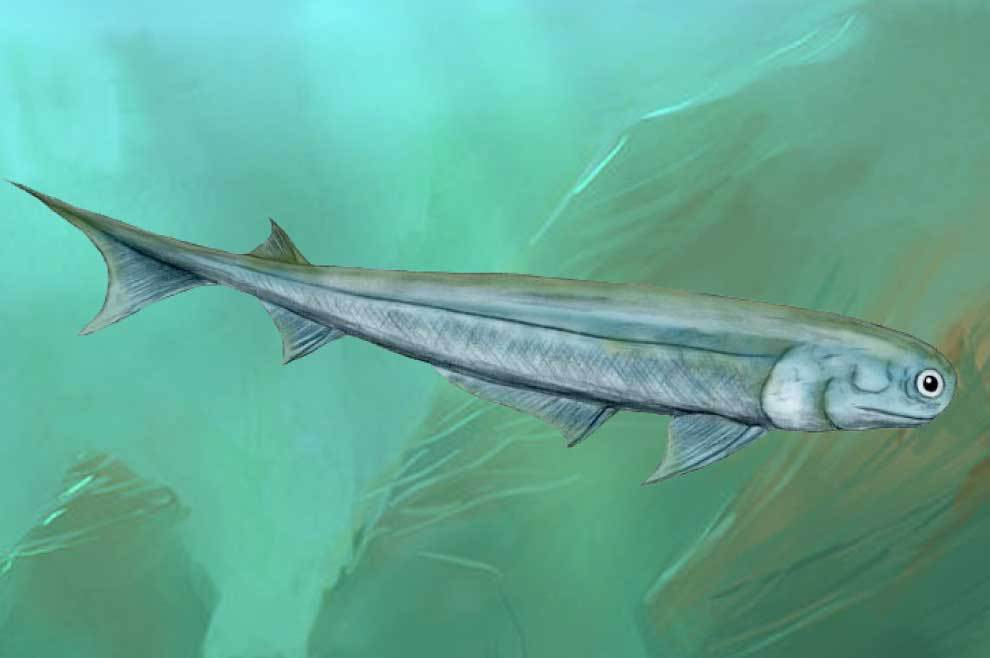
STUDY: Sharks, humans shared common ancestor 440 million years ago

Sunday, January 14, 2018

Acanthodes bronni

"These different experiments in shark-like conditions give a picture of inevitability of the evolution of modern sharks," researcher Michael Coates said.

A basking shark-like fish -- only the size of a sardine -- is helping paleontologists better understand the earliest branches of the vertebrate family tree. The fish's 385 million-year-old remains suggest sharks and humans shared a common ancestor 440 million years ago.

The shark, named Gladbachus adentatus, was first discovered in Germany in 2001. But it wasn't until recently that, with the help of modern technology, scientists began to understand what they were looking at.

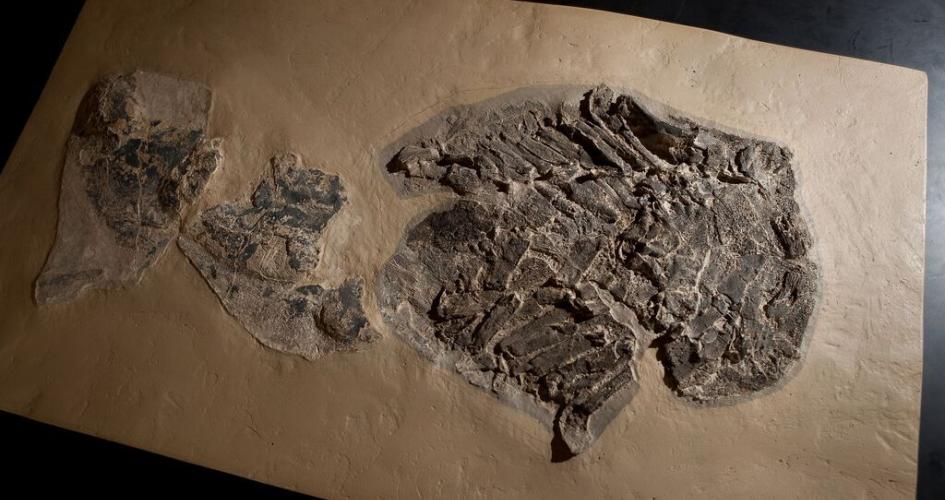
The specimen was found flattened and preserved in resin. The shark's exoskeleton, including its cranium, cartilage and gill details, were all neatly preserved, but its compressed state made it difficult to decipher what exactly the shark looked like.

Improved CT scanning technologies helped researchers recreate the shark in 3D.

3-D reconstruction of the jaws, gill arches and braincase of Gladbachus adentatus.  Credit: Michael Coates and Kristen Tietjen, University of Chicago.

"Gladbachus was not your typical shark," Katharine Criswell, a zoologist and research fellow at the University of Cambridge, told UPI. "It was almost a meter long and had a large and broad head with very tiny teeth, suggesting it was a suspension feeder similar to modern basking sharks."

Criswell and her colleagues were drawn to Gladbachus because of the potential insights it offered -- insights into a period of shark evolution of which little is understood.

Gladbachus lived during the Devonian period, between 416 million to 358 million years ago.

"We know of only a handful of completely preserved early shark fossils from this time period, and Gladbachus is one of the oldest," Criswell said.

The lack of shark remains from the period has long puzzled scientists.

"Sharks are thought of as a very conservative, primitive group and one of the best available early primitive models for vertebrates as a whole," said Michael Coates, an evolutionary biologist at the University of Chicago. "But they also present a paradox."

The fossil evidence -- or lack there of -- doesn't support the conception of sharks as a slowly evolving, primitive group.

"Bony fishes goes back deep into the fossil record, as far back 420 million years," Coates said. "There is a better record of bony fishes than there is of anything shark-like."

The vertebrate lineage that began with bony fishes eventually spawned mammals, including humans. Sharks, which utilize more cartilage than bone, split off and formed a separate branch. But with few fossils of early sharks or shark-like fish, scientists have struggled to pinpoint the split.

 New analysis of the Gladbachus adentatus fossil both widens and complicates the shark family tree. Photo byJason Smith

Thanks to Gladbachus, scientists are starting to nail down the timing of early vertebrate evolution.

Even if the shark offers some clarity, evolution is never straightforward. The transition from primitive shark-like fish to advanced or specialized shark species wasn't smooth.

Coates likens early species like Gladbachus to an evolutionary experiment. Other shark-like species represent separate but similar experiments, each trying out a variety of evolutionary adaptations.

"These different experiments in shark-like conditions give a picture of inevitability of the evolution of modern sharks," Coates said.

But a species isn't just a single experiment. Each species -- each specimen, even -- is a thousand different anatomical experiments at once. Some of those experiments prove successful enough that they become standard.

By better understanding the relationship between early sharks and bony fish, scientists can trace the origins of anatomical structures shared by all vertebrates.

"The body plan of jawed vertebrates, the group that includes humans, fish with bony skeletons, and sharks, is distinguished by features like jaws, teeth, and two sets of paired fins," Criswell said. "This body plan can be traced back to the evolutionary origin of sharks and bony fishes."

By comparing the anatomical makeup of Gladbachus with data from other early shark and fish fossils, researchers showed the first jawed vertebrates emerged nearly 10 million years earlier than was previously thought. They detailed the revelation in the Proceedings of the Royal Society B: Biological Sciences.

Researchers believe remains of more shark-like and bony fish experiments are out there waiting to be discovered.

"Each one will help us calibrate the timescale of our shared evolutionary traits," Coates said.

Source: www.upi.com

Vulcanops jennyworthyae: Giant New Species of Burrowing Bat

Saturday, January 13, 2018

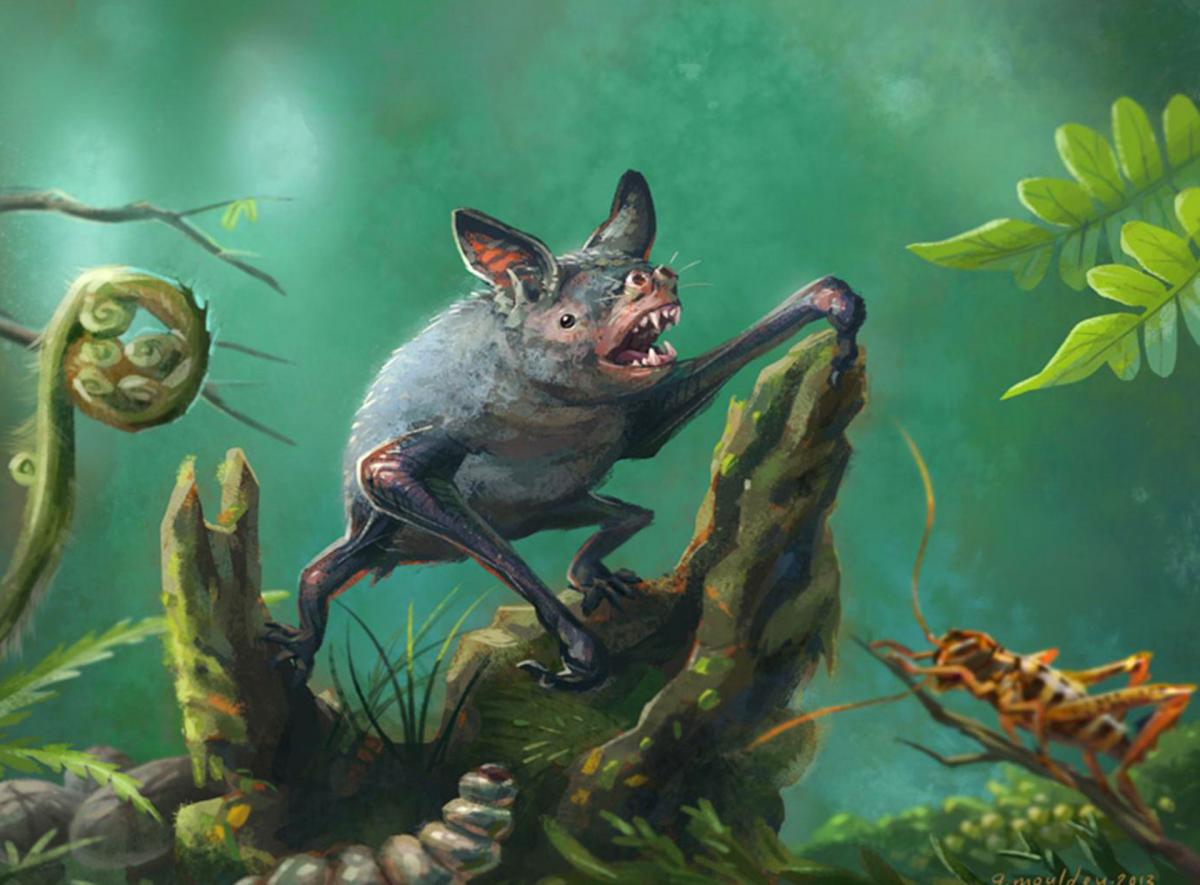
An artist’s impression of the New Zealand greater short-tailed, or burrowing, bat (Mystacina robusta) that went extinct last century. Vulcanops jennyworthyae is the biggest burrowing bat yet known. It also represents the first new bat genus to be added to New Zealand’s fauna in more than 150 years. Image credit: Gavin Mouldey.

Burrowing bats (family Mystacinidae) are only found now in New Zealand, but they once also lived in Australia.

They are peculiar because they not only fly; they also scurry about on all fours, over the forest floor, under leaf litter and along tree branches, while foraging for both animal and plant food.

“Burrowing bats are more closely related to bats living in South America than to others in the southwest Pacific,” said Professor Sue Hand, from the University of New South Wales in Australia.

“They are related to vampire bats, ghost-faced bats, fishing and frog-eating bats, and nectar-feeding bats, and belong to a bat superfamily that once spanned the southern landmasses of Australia, New Zealand, South America and possibly Antarctica.”

The newly found fossil bat, named Vulcanops jennyworthyae, was relatively large, with an estimated body mass of 40 g.

It fossilized remains (teeth and bones) were recovered from freshwater lake sediments (16-19 million years old) near St Bathans, Central Otago, South Island.

“New Zealand’s burrowing bats are renowned for their extremely broad diet. They eat insects and other invertebrates such as weta and spiders, which they catch on the wing or chase by foot. And they also regularly consume fruit, flowers and nectar,” Professor Hand said.

“However, Vulcanops jennyworthyae’s specialized teeth and large size suggest it had a different diet, capable of eating even more plant food as well as small vertebrates — a diet more like some of its South American cousins. We don’t see this in Australasian bats today.”

“The fossils of this spectacular bat and several others in the St Bathans Fauna show that the prehistoric aviary that was New Zealand also included a surprising diversity of furry critters alongside the birds,” said Dr. Trevor Worthy of Flinders University.

“These bats, along with land turtles and crocodiles, show that major groups of animals have been lost from New Zealand,” added Professor Paul Scofield of Canterbury Museum.

“They show that the iconic survivors of this lost fauna — the tuataras, moas, kiwi, acanthisittid wrens, and leiopelmatid frogs — evolved in a far more complex community that hitherto thought.”

This diverse fauna lived in or around a 5,600-km2 prehistoric Lake Manuherikia that once covered much of the Maniototo region of the South Island. When they lived, temperatures in New Zealand were warmer than today and semitropical to warm temperate forests and ferns edged the vast paleolake.

Vulcanops jennyworthyae provides new insight into the original diversity of bats in Australasia,” the paleontologists said.

“Its lineage became extinct sometime after the Early Miocene, as did a number of other lineages present in the St Bathans assemblage.”

“These include crocodiles, terrestrial turtles, flamingo-like palaelodids, swiftlets, several pigeon, parrot and shorebird lineages and non-flying mammals. Most of these were probably warm-adapted species.”

“After the middle Miocene, global climate change brought colder and drier conditions to New Zealand, with significant changes to vegetation and environments.”

“It is likely that this general cooling and drying trend drove overall loss in bat diversity in New Zealand, where just two bat species today comprise the entire native land mammal fauna.”

The team’s findings are published in the journal Scientific Reports.

_____

Suzanne J. Hand et al. 2018. A new, large-bodied omnivorous bat (Noctilionoidea: Mystacinidae) reveals lost morphological and ecological diversity since the Miocene in New Zealand. Scientific Reports 8, article number: 235; doi: 10.1038/s41598-017-18403-w

Source: www.sci-news.com

Pages