Blogs

Universal Launches Plans for Third 'Jurassic World' Film

Friday, February 23, 2018

Four months before "Jurassic World: Fallen Kingdom" hits theaters, Universal Pictures has announced plans Wednesday for a third installment in the rebooted dinosaur franchise.

Universal says "Jurassic World 3" will land in June 2021. The film is to be written by Emily Carmichael and Colin Trevorrow, the director of 2015's "Jurassic World." Carmichael co-wrote the upcoming sci-fi adventure "Pacific Rim Uprising."

"Jurassic World" ranks among the biggest box-office hits. It launched with a $208.8 million opening weekend and finished with $1.7 billion worldwide in ticket sales.

Trevorrow and Steven Spielberg are executive producing each new "Jurassic World" film.

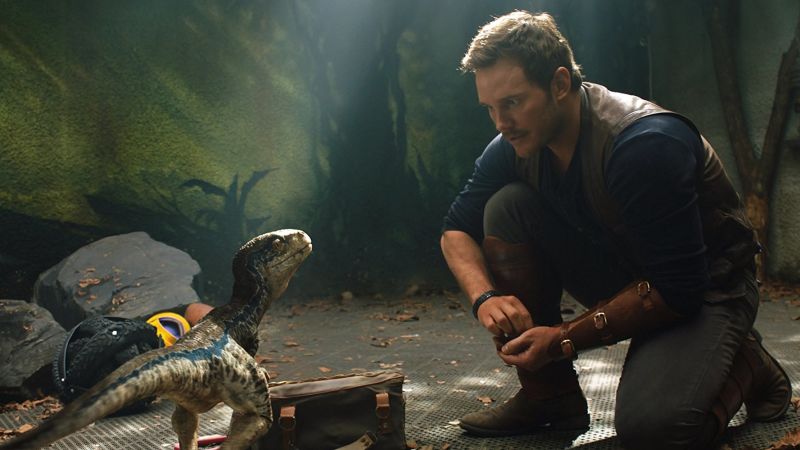
Directed by J.A. Bayona, "Jurassic World: Fallen Kingdom," starring Chris Pratt and Bryce Dallas Howard, opens June 22.

Jurassic World 3 hits Theaters in 2021

Friday, February 23, 2018

Image: Universal

The Jurassic World trilogy will end three years from now.

With the second film, Jurassic World: Fallen Kingdom, still four months away, Universal just set a June 11, 2021 release date for the third film in the franchise. Emily Carmichael, writer of the upcoming Pacific Rim: Uprising, will pen the screenplay along with Colin Trevorrow, the director of the first film and co-writer of the sequel.

Trevorrow has been saying the Jurassic World story was envisioned as a trilogy for a while, so the fact this third movie is coming out isn’t a surprise. What is a surprise, though, is the announcement coming before audiences have even seen the second film directed by J.A. Bayona. It feels like a supremely confident move.

The news also feels like a good thing for Pacific Rim: Uprising. If Universal, which is releasing both films, is excited enough by Carmichael’s work to bump her up to one of its largest franchises, odds are Pac Rim is solid. Either way, it’ll be nice to have another woman writing a Jurassic Park film. (There may have been one or two issues in the past.)

“It’s important to this franchise that we welcome new creative voices to keep our storytelling fresh and alive,” Trevorrow said to Variety. “I’m thrilled with the tension and beauty J.A. has brought to Fallen Kingdom, and I know Emily will add another layer of emotion to the concluding chapter of our trilogy.”

Jurassic World: Fallen Kingdom will be released June 22 of this year.

[Variety]

Source: io9.gizmodo.com

Scientists Predict How Dinosaurs Like Tyrannosaurus Rex Pursued Their Prey

Friday, February 23, 2018

Tyrannosaurus rex as an example of dinosaur anatomy and locomotion.a, The basic skeletal components and joints of the hindlimb. Only the third toe is shown for clarity. b, Redundancy allows the limb to assume a range of potential hip heights. c, For each position of the hip with respect to the foot, a spectrum of internal configurations is possible.

The mechanics of a dinosaur’s massive body can be hard to understand because scientists cannot watch them in motion, but birds are helping to solve the mystery that cannot be unraveled with fossils alone.

Although the dinosaur era ended with a devastating asteroid impact about 66 million years ago, birds are descendants of the prehistoric beasts. A team of researchers studied 12 species of birds of varying sizes that live on the ground and run, including the birds’ motions and how much force their feet exert upon the ground when they move.

Birds show “a highly continuous locomotor repertoire compared to humans, where discrete ‘walking’ and ‘running’ gaits are not easily distinguished,” according to the study, published in the journal PLOS One.

In other words, their change from walking to running is more of a flow, while in humans a change between the two modes is more stark.

Researchers had previously documented that flow from walking to running before, and the new study backs up that model.

The scientists say their observations are a window into how bipedal dinosaurs — the ones that stood on their hind legs — may have walked and run.

The famous Tyrannosaurus rex is one example of a bipedal dinosaur, as is the Velociraptor. The quadrupedals, or the dinosaurs that walked on four legs, included popular ones like the Triceratops and the Stegosaurus.

“A perennial question of interest for paleontologists is how extinct animals appeared and behaved when they were alive,” the authors wrote in their paper. “One way of better understanding how extinct theropods moved is to examine locomotion in extant theropods, birds, because birds retain many (homologous) anatomical similarities to their ancestors.”

The scientists collected information by video recording the birds as they ran along racetracks, according to journal publisher Public Library of Science. Plates in the ground measured the force the birds exerted with their feet.

The team crunched its data on running birds and how their locomotion changed with their speed and size to create models that might predict how the dinosaurs moved.

Those models have the potential to change how scientists interpret dinosaur footprints.

“At equivalent relative speeds, a small theropod will be moving in a decidedly different fashion to a large theropod,” according to the study. “This in turn raises concerns about the accuracy with which palaeontologists can reliably interpret fossil theropod footprints, in terms of inferring the posture and ‘gait’ of the trackmaker.”

Source: www.ibtimes.com

Now, Scientists Think They Know Why Most Ankylosaurs Were Fossilized Belly Up.

Friday, February 23, 2018

Researchers have worked out why ankylosaur fossils are usually discovered upside-down. DEAN MOUHTAROPOULOS/GETTY IMAGES

Ankylosaurs are odd-looking, even by dinosaur standards: They’re squat and fat, with armored backs and, usually, tail clubs. But for many scientists, there’s another reason these creatures stand out—most are fossilized upside-down. The reason for this strange orientation was a mystery for decades, but thanks to an unusual collaboration between paleontologists and armadillo experts, we may finally have an answer—and it all comes down to bloated, floating dinosaur carcasses.

Since the 1930s, paleontologists have suspected something funny about ankylosaurs’ physiology or behavior led to their belly-up preservation. But although several theories have been put forward, none has been proved. So Jordan Mallon, a dinosaur paleontologist at the Canadian Museum of Nature in Ottawa, decided to test each of these theories and try to solve the mystery.

First, Mallon’s team wanted to make sure that the common wisdom on ankylosaur orientation wasn’t just an old wives’ tale. After examining 36 ankylosaurs from the province of Alberta in Canada, along with photos and field notes of the excavations, they found that 26 were discovered upside-down—more than would be expected by chance.
The team then turned its attention to the four theories. One, that ankylosaurs simply fell down hills and ended up on their backs, was easy to discount: “If ankylosaurs were universally clumsy, then you wouldn’t expect them to stick around for 100 million years,” Mallon says. Likewise, the researchers found no support for the theory that predators flipped ankylosaurs over to access their delicious underbellies. Teeth marks were only present on one of the specimens they examined.

The “armadillo roadkill model” proved trickier. Because armadillos found on the side of the road supposedly swell up with gases as they decompose, tipping them onto their backs, the same could be true of ankylosaurs. Mallon enlisted the help of armadillo experts Colleen McDonough and Jim Loughry at Valdosta State University in Georgia who spent 3 months surveying armadillo carcasses by the side of the road. The husband-and-wife team would set off at sunrise, McDonough says, before roadkill had become “pancaked” or had been pecked to pieces by vultures. With help from family and friends who sent tip-offs about the location of fresh carcasses (“we call them our network,” McDonough says), the duo recorded the orientation of 174 armadillos—and found no indication that they regularly ended up on their backs.

On the roads, dead armadillos could be moved into their final resting places by scavengers or vehicles, so the scientists also decided to bring some fresh carcasses home, leaving them in their garden to see what would happen as they decomposed. In the paper, the pair thanks their understanding neighbors. “There was a prevalent stench coming from the corner of our yard where we meet three other yards—and no one said a word,” McDonough says. But none of the armadillos placed on their stomachs rolled over, again suggesting that this model didn’t hold up to scrutiny.

Finally, the researchers examined the “bloat-and-float” model, which proposes that the bodies of ankylosaurs got washed into rivers or the sea, where they bloated and became unstable, flipping upside-down and eventually sinking or being deposited in the river bank. Mallon’s co-author Donald Henderson at the Royal Tyrrell Museum in Drumheller, Canada, created 3D digital models representing the two families of ankylosaur, the ankylosaurids and the nodosaurids. The team fleshed these out with estimations of the dinosaurs’ physical characteristics like lung capacity and bone density. They also created bloated versions of the same dinosaurs, inflating the animals’ stomachs like balloons. They then placed the models in virtual water, and looked at how easily they tipped over.

The nodosaurid model was very unstable: Tipping it merely 1° caused it to turn upside-down, whether it was bloated or not. The ankylosaurid was more resistant, requiring a much larger tilt before it would flip over. Still, says Mallon, a big wave or a predator could easily be enough to force the dinosaur onto its back, especially after bloating. That meant the bloat-and-float model was the only theory that held any water, the team reports this month in the journal Palaeogeography, Palaeoclimatology, Palaeoecology.

Victoria Arbour, a vertebrate paleontologist at the Royal Ontario Museum and the University of Toronto in Canada who was not involved in the research, says that the study “reasonably seals the deal” on the long-standing mystery. She adds that she admires the scientists’ approach to the research. “I always really like it in paleontology when we can use totally independent lines of evidence like that to tell a bigger story,” she says. Mallon agrees: “It’s pretty rare that the scientific method plays out so cleanly in practice, but I think this is a nice case where it does.”

Source: www.sciencemag.org

Trachemys haugrudi: New Fossil Turtle Species Discovered in Tennessee

Wednesday, February 28, 2018

Trachemys haugrudi represents a new species of fossil turtle that lived in what is now eastern Tennessee more than 5.5 million years ago. Image credit: Mary P. Williams.

University of Pennsylvania paleontologist Steven Jasinski has announced the discovery of a previously unknown species of fossil turtle in the Gray Fossil Site, an area rich with fossils in eastern Tennessee, the United States.

Named Trachemys haugrudi, the ancient reptile was a fairly small turtle, not more than 10 inches (25 cm) in total shell length, smaller than the extant red-eared slider turtle (Trachemys scripta elegans).

It lived in what is now eastern Tennessee around the Miocene-Pliocene boundary, about 5.5 million years ago.

The Gray Fossil Site represents an ancient sinkhole surrounded by a forest from which dozens of fossil animal species have been characterized, including new species of red panda, Eurasian badger, kinosternid turtle, and colubrid snake.

Thorough examination of the dozens of turtle fossils from the site revealed important differences between Trachemys haugrudi and other known fossil and living species.

“Turtles are best known for their shells, and indeed it is this feature of their anatomy that is commonly found as fossils. Yet the fossil shells are typically found in broken pieces,” Jasinski explained.

“Often gaps or holes remain, or only single small pieces are found, and the whole must be inferred from other information, including other fossil and living creatures.”

“It is extremely rare to get more complete fossils, but Trachemys haugrudi, commonly called Haugrud’s slider turtle, provides me with dozens of shells, and several are nearly complete.”

As part of the study, Jasinski sought to determine where Trachemys haugrudiwas positioned in the evolution of similar turtles both within the genus and in related genera.

The scientist found Trachemys haugrudi to be most closely related to a group of fossil Trachemys turtles from Florida and next most closely related to a distinct group of fossil Trachemys from the Midwestern United States.

Together, these fossil Trachemys form a closely related group situated within other still-living species of Trachemys.

Today, distinct, closely-related groups of Trachemys species dwell in Mexico, Central and South America, and the Caribbean. Jasinski’s investigation, along with other information from previous studies, indicates that one group evolved in Mexico and Central and South America and evolved into different species within this geographic area, and another group evolved separately in the Caribbean.

Species from the United States, including the red-eared slider turtle, are found near the base of their ‘branch’ of the Trachemys family tree; their fossil ancestors are still waiting to be discovered.

The fossil Trachemys species in this study are on a distinct part of the Trachemys tree, and current understanding suggests that they did not give rise to the modern species living today.

The findings imply that there was once much greater diversity in Trachemysturtles than exists today.

It seems that many of the ancient slider species died out without leaving any direct descendents, perhaps because they lacked the ability to adapt to different environments.

“While Trachemys turtle species are considered plastic, implying they can adapt to and live in many environments, this adaptive lifestyle may be a relatively newer characteristic of these turtles,” Jasinski explained.

“More fossils are needed to better understand if this aspect of their evolution is a recent addition.”

“To get a handle on invasive turtles, understanding more about their ancient relatives could only be helpful.”

paper reporting this discovery is published in the journal PeerJ.

_____

S.E. Jasinski. 2018. A new slider turtle (Testudines: Emydidae: Deirochelyinae: Trachemys) from the late Hemphillian (late Miocene/early Pliocene) of eastern Tennessee and the evolution of the deirochelyines. PeerJ 6: e4338; doi: 10.7717/peerj.4338

Source: www.sci-news.com

Megalodon: The Terror of The Deep

Friday, March 9, 2018

Megalodon Was Three Times As Long As The Largest Great White

Megalodon (Carcharocles megalodon), meaning "big tooth," is an extinct species of shark that lived approximately 23 to 2.6 million years ago (mya), during the Early Miocene to the end of the Pliocene. There had been some debate regarding the taxonomy of megalodon: some researchers argued that it was of the family Lamnidae and closely related to the great white shark (Carcharodon carcharias), while others argued that it belonged to the extinct family Otodontidae; presently, there is near unanimous consensus that the latter view is correct. Its genus placement is still debated, authors placing it in either CarcharoclesMegaselachusOtodus, or Procarcharodon. The shark has made appearances in several media, such as the Discovery Channel's docufiction Megalodon: The Monster Shark Lives.

Megalodon size

Megalodon is regarded as one of the largest and most powerful predators in vertebrate history, and likely had a profound impact on the structure of marine communities.

Fossil remains suggest that this giant shark reached a maximum length of 50–70 feet, and also affirm that it had a cosmopolitan distribution. Scientists suggest that Megalodon looked like a stockier version of the great white shark. 

When it was alive, Megalodons were the largest sharks to have ever lived and had a fearsome appetite, according to the Florida Museum of Natural History. By some estimates, Megalodons ate about 2,500 pounds of food every day, including fish and whales.

Fossils show that the sharks could have ingested several humans at the same time.

The sharks had 46 front row teeth, 24 in the upper jaw and 22 in the lower jaw. Most sharks have at least six rows of teeth, and a Megalodon had about 276 teeth at any given time.

Scientists suggest that megalodon looked like a stockier version of the great white shark, though it may have looked similar to the basking shark (Cetorhinus maximus) or the sand tiger shark (Carcharias taurus). Regarded as one of the largest and most powerful fish to have ever lived, fossil remains of megalodon suggest that this giant shark reached a length of 18 meters (59 ft). Their large jaws could exert a bite force of up to 108,500 to 182,200 newtons (24,390 to 40,960 lbf). Their teeth were thick and robust, built for grabbing prey and breaking bone.

Locations of megalodon fossil discoveries, yellow from the Pliocene and blue from the Miocene

Megalodon probably had a profound impact on the structure of marine communities. The fossil record indicates that it had a cosmopolitan distribution. It probably targeted large prey, such as whales, seals, and giant turtles. Juveniles inhabited warm coastal waters where they would feed on fish and small whales. Unlike the great white, which attacks prey from the soft underside, megalodon probably used its strong jaws to break through the chest cavity and puncture the heart and lungs of its prey.

The animal faced competition from whale-eating cetaceans, such as Livyatan and ancient killer whales (Orcinus citoniensis), which likely contributed to its extinction. As it preferred warmer waters, it is thought that oceanic cooling associated with the onset of the ice ages, coupled with the lowering of sea levels and resulting loss of suitable nursery areas, may have also contributed to its decline. A reduction in the diversity of baleen whales and a shift in their distribution toward polar regions may have reduced megalodon's primary food source. The extinction of the shark appeared to affect other animals; for example, the size of baleen whales increased significantly after the shark had disappeared.

Megalodon tooth with two great white shark teeth

The question for researchers is, are they still out there in the ocean depths?

Interestingly enough, there are many who refuse to believe that the megalodon shark is indeed extinct. Skeptics feel as if the megalodon shark may possibly be in existence deep down in the ocean. While it is true that we have not explored every inch of the world’s oceans, and it is likely that there are undiscovered species living in the depths of the waters, the belief that the megalodon shark may still be alive today has yet to be proven. Sharks are known for shedding hundreds of teeth on a regular basis; if the megalodon shark was still alive, they would be expected to shed the most teeth out of all of these sharks. Every megalodon tooth that has been found is ancient. Until a fresh megalodon tooth, a “megatooth” shark sighting, or some other form of proof has been presented, it is determined that this ancient shark is most definitely extinct.

This shark species has become increasingly popular because the Discovery Channel airs programs that claim it could still exist.

Many scientists say that the shark species definitely exist, while many deride Discovery for airing such programs.

Source: www.wikipedia.org

Early Cretaceous Bird Fossil Sheds New Light on Avian Evolution

Wednesday, March 7, 2018

Artist impression of a juvenile enantiornithe bird. Image credit: Raúl Martín.

The tiny fossil of a juvenile enantiornithe bird from the Early Cretaceous La Huérguina Formation of Spain is helping paleontologists understand how early birds came into the world in the age of dinosaurs.

The 127-million-year-old fossil is a chick from a group of prehistoric birds called Enantiornithes.

The specimen consists of a nearly complete skeleton; the feet, most of its hands, and the tip of the tail are the only missing parts.

It measures less than 2 inches (5 cm) and would have weighed just 10 g when it was alive. It is amongst the smallest known Mesozoic avian fossils ever discovered.

What makes this fossil so important and unique is the fact it died not long after its birth. This is a critical stage in a bird’s skeletal formation. That means this bird’s extremely short life has given paleontologists a rare chance to analyze the species’ bone structure and development.

“Studying and analyzing ossification — the process of bone development — can explain a lot about a young bird’s life,” said University of Manchester researcher Dr. Fabien Knoll and colleagues.

“It can help us understand everything from whether it could fly or if it needed to stay with its parents after hatching or could survive on its own.”

“The evolutionary diversification of birds has resulted in a wide range of hatchling developmental strategies and important differences in their growth rates. By analyzing bone development we can look at a whole host of evolutionary traits,” Dr. Knoll said.

“With the fossil being so small we used synchrotron radiation to picture the tiny specimen at a ‘submicron’ level, observing the bones’ microstructures in extreme detail.”

Phosphorous mapping image and photo of the specimen. Image credit: Fabien Knoll.

The scientists found the baby bird’s sternum (breastplate bone) was still largely made of cartilage and had not yet developed into hard, solid bone when it died, meaning it wouldn’t have been able to fly.

The patterns of ossification observed in this and the other few very young enantiornithine birds known to date also suggest that the developmental strategies of this particular group of ancient avians may have been more diverse than previously thought.

“However, its lack of bone development doesn’t necessarily mean the hatchling was over reliant on its parents for care and feeding, a trait known as being ‘altricial’,” the study authors said.

“Modern day species like love birds are highly dependent on their parents when born. Others, like chickens, are highly independent, which is known as ‘precocial.’ Although, this is not a black-and-white issue, but rather a spectrum, hence the difficulty in clarifying the developmental strategies of long gone bird species.”

“This new discovery, together with others from around the world, allows us to peek into the world of ancient birds that lived during the age of dinosaurs. It is amazing to realize how many of the features we see among living birds had already been developed more than 100 million years ago,” said Dr. Luis Chiappe, from the LA Museum of Natural History.

The research is published in the journal Nature Communications.

_____

Fabien Knoll et al. 2018. A diminutive perinate European Enantiornithes reveals an asynchronous ossification pattern in early birds. Nature Communications 9, article number: 937; doi: 10.1038/s41467-018-03295-9

Source: www.sci-news.com

Animatronic Dinosaurs Come to Life at Naples Botanical Garden

Sunday, February 18, 2018

Animatronic dinosaurs come to life at Naples Botanical Garden

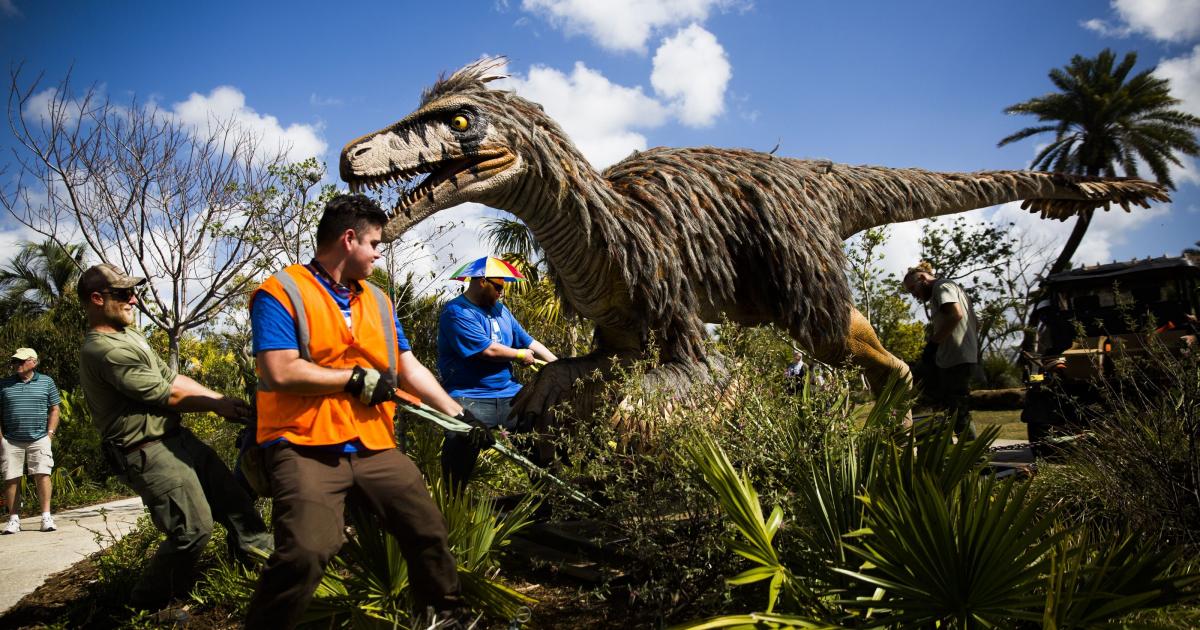
Lurking in the ancient tropical ferns and shrubs of the Naples Botanical Garden, a nearly 8-foot-tall Utahraptor growled and hissed, with its menacing, curved talons and a coat of feathers made of synthetic hair.

It was the alpha predator approximately 124 million years ago, and now a life-size, animatronic version of the Utahraptor and nine other dinosaurs will be on display at the the Naples Botanical Garden starting Saturday.

The exhibit, "Dinosaurs: Back with a Roar!", will run until June 3, and is included in regular garden admission.

There's a 15-foot-tall, winged Quetzalcoatlus and her nest at the front of the Kapnick Brazilian Garden, and in the Scott Florida Garden, a 6-foot-tall Citipati that has a blue-colored, spiky tongue and looks sort of like funky emu.

The dinosaurs are part of a traveling exhibit by Texas-based The Dinosaur Co., which brings its menagerie of prehistoric creatures to zoos, museums and gardens across the country.

Each dino is fitted with an electronic brain to activate sounds and realistic-looking movements in the eyes, mouth, neck and limbs. The Tyrannosaurus Rex, for example, stands on its hind legs to reach 40 feet, and the Dilophosaurus squirts water out of its mouth.

The animatronic dinosaurs follow key details from paleontological findings and research from around the world. The colors and patterns, meanwhile, are left to the imagination.

Still, the team from The Dinosaur Co. has modeled the dinos after modern-day birds and reptiles, the closest living relatives.

"Those colorations and those patterns are based off of native animals, so they can tell a story," said Robby Gilbert, the company's director of exhibits.

The Amargasaurus and her baby have the same green skin and yellow spots as the Cuban knight anole, an invasive lizard species in South Florida, and the Florida snail kite, an endangered bird of prey, inspired the grayish colors of the T-Rex.

The Dilophosaurus, though, is painted red, orange and purple with bright yellow teeth — the winning entry in a children's coloring contest.

Garden staff and volunteers spent the days leading up to the opening planting ancient shrubs and ferns around the dinosaurs, including cyads, podocarpus and a Norfolk Island Pine lookalike.

"You’ll see all these cyads and these ferns, very primitive, very early plants that would have been around as long as dinosaurs or longer," Gilbert said. "Here, the dinosaurs are almost secondary to the plants. Kids are here to see the dinosaurs, but garden members are here to learn about the plants."

The garden's youngest visitors can climb atop the lounging Pachyrhinosaurus for a photo, or dig in a sand pit for fossils of a Hadrosaurid.

But the garden-lover will be able to explore the relationship between the ancient creatures and the ancient plants that cohabited all those years ago.

"In Florida you’ve got the palms, everything’s very tropical," Gilbert said. "It looks very similar to what would have been alive during the dinosaurs, just smaller."

Dinosaurs: Back with Roar!
at Naples Botanical Garden

When: 9 a.m. to 5 p.m. daily; early admission at 8 a.m. Tuesdays

Where: Naples Botanical Garden, 4820 Bayshore Drive, East Naples

Cost: Included in regular garden admission; $14.95 for adults; $9.95 for children ages 4 to 14; free for children younger than 3

Source: www.naplesnews.com

Fossil Footprints May Put Lizards on Two Feet 110 Million Years Ago

Saturday, February 17, 2018

CHASE SCENE Lizards may have run from the jaws of predatory pterosaurs in the swamp and lake environment where Sauripes hadongensis tracks were found, as in this illustration.

But the prints aren’t clear-cut, others say.

Fossilized footprints from an iguana-like reptile provide what could be the earliest evidence of a lizard running on two legs.

The 29 exceptionally well-preserved lizard tracks, found in a slab of rock from an abandoned quarry in Hadong County, South Korea, include back feet with curved digits and front feet with a slightly longer third digit. The back footprints outnumber the front ones, and digit impressions are more pronounced than those of the balls of the feet. The lizard’s stride length also increases across the slab.

That’s what you’d expect to see in a transition from moseying along on four legs to scampering on two, says Yuong-Nam Lee, a paleontologist at Seoul National University who first came across the slab back in 2004. A closer examination two years ago revealed the telltale tracks.

IMPRINTS  Scientists think that these fossilized footprints may represent the earliest evidence of a lizard running on two legs. Here, a front print (left) and a back print (right) are shown.

Lee and his colleagues attribute the tracks to a previously unknown lizard ichnospecies, that is a species defined solely by trace evidence of its existence, rather than bones or tissue. Lee and his colleagues have dubbed the possible perpetrator Sauripes hadongensis and linked it to an order that includes today’s iguanas and chameleons in the Feb. 15 Scientific Reports.

Bipedal running certainly would have come in handy when escaping predatory pterosaurs some 110 million to 128 million years ago, the age of the rock slab. Lizard tracks are pretty rare in the fossil record, due to the reptiles’ lightweight bodies and penchant for habitats that don’t make great fossils. Though tracks appear in older fossils from the Triassic Epoch, 200 million to 250 million years ago, those prints belong to more primitive lizardlike reptiles. The new find edges out another set from the same region as the oldest true lizard tracks in the world by a few million years, the researchers say.

Plenty of modern lizards use two legs to scurry around. Some studies have linked similarities in ancient lizard bone structure to bipedal locomotion, but it is unclear exactly when lizards developed bipedalism. Lee’s team argues that these tracks represent the earliest and only direct evidence of bipedal running in an ancient lizard.

Martin Lockley, a paleontologist at the University of Colorado Denver who studies ancient animal tracks, points to alternative explanations. S. hadongensis might have trampled over front prints with its back feet, obscuring them and giving the appearance of two-legged running. Preservation can vary between back and front footprints. And the stride lengths aren’t quite as long as what Lockley says he’d expect to see in running. “Running or ‘leaping’ lizards make for a good story, but I am skeptical based on the evidence,” he adds.

So it may take the discovery of more fossilized lizard prints to determine whether S. hadongensis’ tracks truly represent running on two legs rather than simply scurrying on four.

Citations

H. Lee et alLizards ran bipedally 110 million years agoScientific Reports. Published online February 15, 2018. doi:10.1038/s41598-018-20809-z.

Further Reading

S. Milius. Built for speedScience News. Vol. 174, August 16, 2008.

S. Perkins. Early biped fossil pops up in EuropeScience News. Vol. 158, November 4, 2000, p. 292.

Source: www.sciencenews.org

How Birds Followed the Way of the Dinosaurs

Saturday, February 17, 2018

Artist’s depiciton of a Sinosauropteryx Caudipteryx

The science is settled. Birds evolved from dinosaurs, according to Dr Mike Lee, who is the South Australian Museum’s Palaeontology Senior Research Scientist and is a Fellow at Flinders University.

“For about 150 years after Charles Darwin came up with the idea of evolution, the idea that dinosaurs evolved into birds didn’t have a huge amount of support either from the fossils or the scientists,” Lee says. “There was only one fossil that seemed to suggest a link between birds and dinosaurs. That was Archaeopteryx but one bird doesn’t necessarily sway scientific opinion or prove overwhelmingly any particular radical theory.

“It was only in about 1998 that the first dinosaurs with feathers, apart from Archaeopteryx, were discovered in China. Since then we’ve had about 20 different dinosaurs with feathers, which almost show a perfect gradation from dinosaurs, which are only just a little bit bird-like all the way up to dinosaurs that for all intents and purposes you can’t really separate from primitive birds.”

The problem now: where to draw the line between bird and dinosaur.

“At what point does something change from a bird-like dinosaur into a primitive dinosaur-like bird? That’s tremendously exciting and this exhibition really emphasises all the new discoveries, which conclusively proves that birds are nothing more than miniature-flighted feathered dinosaurs.”

Anyone who has seen Steven Spielberg’s 1993 movie Jurassic Park will know that the question of birds evolving from dinosaurs was debated before the 1998 discovery. Lee says that up until 20 years ago it was a vigorous debate because the evidence for the evolutionary change wasn’t overwhelming.

“We didn’t have too many intermediate fossils. Now, we’ve not only got a whole, almost like a perfect line of intermediates stretching from birds to dinosaurs and all of them have feathers. There is really no debate now because, almost like watching a time-lapse movie in the fossil record, you can see the changes happening as you go from fossil-to-fossil.”

This change from bird-like dinosaur to dinosaur-like bird occured over a period of 50 million years.

“As dinosaurs got smaller the feathers got more and more elaborate,” Lee says. “The most primitive bird, at the beginning, when dinosaurs first evolved feathers, they weren’t the feathers you see in birds today, they were just little tuffs of fuzz, which really didn’t provide any sort of flight function, they were probably more for insulation, and maybe for display. As you progress towards more bird-like dinosaurs you can see the feathers becoming more elaborate and more bird-like. Then you start getting the flight feathers on the wings. You can actually see how a radical change in body-plan can happen step by step with very small changes; it was incremental, a bit like compound interest, actually. Evolution is basically nature’s version of compound interest where you can, given time, have a massive change.”

According to Lee, this change from dinosaurs to birds epitomises evolutionary change.

“Within the space of a decade it changed from that debate [of whether dinosaurs evolved into birds] into one of the best examples of major evolutionary change. Every time somebody wants to demonstrate the realities of evolution, dinosaurs and birds are pretty much the poster child.”

Children are fascinated by dinosaurs. Why does Lee think these creatures from hundreds of millions of years ago continue to capture children’s imagination?

“I think that children are always fascinated by big, fierce scary animals. Dinosaurs tick all those boxes but what makes them much more exciting than a dragon or an orc or something like that is we know they were real. We know that they did inhabit the world and they walked the world and they dominated the world for 150 million years. So the combination of being big and scary and real living creatures really attracts the imagination and attention of children.”

And dinosaurs are a pathway for children to discover science.

“All the major concepts in biology you can teach using dinosaurs as examples: evolution, physiology and taxonomy. You can teach them using other creatures as well, bugs and birds, but if you want a particular group of creatures to teach these concepts, dinosaurs, I think, have one of the broadest appeals. For instance, taxonomy is quite a dry area of science. It’s just basically scientists as librarians naming things, when you attach it to something like a brontosaurus and attach these fairly dry, boring names to these extinct charismatic creatures, even taxonomy can appeal to kids.”

Dinosaur rEvolution
South Australian Museum
Friday, February 23 to Sunday, May 6

Source: www.adelaidereview.com.au

Pages