Blogs

Flightless Bird Extinct for More Than 700 Years Can be Brought Back to Life, Say Scientists

Wednesday, February 28, 2018

Museum host shows Singapore's Prime Minister Lee Hsien Loong a giant Moa bird during a visit to Te Papa Museum in Wellington. [Representational Image]

The little bush moa inhabited parts of New Zealand and went extinct in the late 13th century as a result of overhunting.

Scientists are a step closer to bringing back a species of flightless bird that has been extinct for almost 700 years. The little bush moa that inhabited parts of New Zealand went abruptly extinct as a result of overhunting in the late 13th century.

A team of researchers from Harvard University has assembled a nearly-complete genome of the extinct moa by extracting ancient DNA from the toe bone of a moa specimen held at the Royal Ontario Museum in Toronto, Canada.

The scientists now believe that they are closer to the goal of "de-extinction" — the vanished species can be brought back to life by slipping the genome into the egg of a living species, Statnews reported.

"High throughput sequencing has revolutionized the field of ancient DNA (aDNA) by facilitating recovery of nuclear DNA for greater inference of evolutionary processes of extinct species than is possible from mitochondrial DNA alone," according to the study.

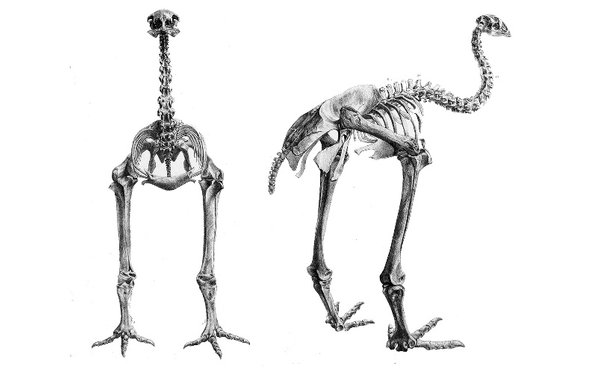
Credit: J. Erxleben, Transactions of the Zoological Society of London v. 11, Wikimedia

The little bush moa was a part of the palaeognathae clade of birds and birds, and those like the kiwi, ostrich, and emu were considered its cousins. There were nine species of the moa but all of them are extinct now.

They roamed in the forests of the North and South Islands of New Zealand before they became extinct, the NZ Herald said. They were on an average four feet tall and weighed about 66 pounds.

Experts believe that the Harvard researchers' work could make it easier to bring back the long-lost species from extinction.

"The fact that they could get a genome from a little bush moa toe is a big deal since now we might be able to use their data to do other extinct bird species," Ben Novak, lead scientist at non-profit conservation group Revive and Restore, told Statnews.

"De-extinction could be useful for inspiring new science and could be beneficial for conservation if we ensure it doesn't reduce existing conservation resources," University of Queensland scientist Hugh Possingham said in a statement.

"However, in general, it is best if we focus on the many species that need our help now," he added.

Source: www.ibtimes.co.in

Dinosaurs at the N.C. Aquarium at Fort Fisher

Monday, February 26, 2018

Crews installed a new 19-foot Tyrannosaurus rex and 20-foot Brachiosaurus for a new exhibit on Monday that's opening on March 19.

While the wildly popular beach attraction is best known for its aquatic wildlife–including alligators, sharks and sea turtles–guests can soon step back millions of years and experience “DINOSAURS!” Massive animatronic beasts will roar, spit and wow visitors young and old beginning Saturday, March 19, 2016. A stroll through the Aquarium’s outdoor garden will reveal a fearsome T. rex, a 23-foot-long brachiosaurus and four other life-sized, prehistoric creatures.

NC Aquarium Fort Fisher

NC Aquarium Fort Fisher

“Dinosaurs are fun and fascinating,” said Aquarium Director Peggy Sloan. “They also offer us an opportunity to help guests better understand extinction and how we can all work together to save animals in crisis now.”

In addition to “DINOSAURS!”, the Aquarium welcomes the return of the “Butterfly Bungalow” Saturday, April 23, 2016. Hundreds of free-flying, exotic butterflies create an immersive experience, landing on shoulders, hands and heads. Through the encounter with these colorful beauties, guests learn about the importance of butterflies and other insect pollinators.

“Where else can you experience our beautiful beach location, hear the roar of a T-rex, enjoy butterflies landing on your arm and get eye-to-eye with a sea turtle?” said Sloan.

Both the dinosaur and butterfly experiences are temporary, seasonal exhibits only open until September 2016. “DINOSAURS!” is free with general Aquarium admission. Tickets to visit the 1,800-square-foot “Butterfly Bungalow” are $3. Aquarium admission is additional.  

About the Aquarium

The N.C. Aquarium at Fort Fisher is located south of Kure Beach, a short drive south from Wilmington, on U.S. 421. The site is less than a mile from the Fort Fisher ferry terminal. Hours: 9 a.m. to 5 p.m. daily. The Aquarium is one of three state aquariums in North Carolina administered by the N.C. Department of Natural and Cultural Resources (NCDNCR).

Source: www.wilmingtonparent.com

Fossil Turtle Species, 5.5 Million Years Old, Sheds Light on Invasive Modern Relatives

Wednesday, February 28, 2018

Though initially found in pieces, Gray Fossil Site preparator Shawn Haugrud was able to glue the shell of this species back together, enabling Penn's Steven Jasinski to complete an analysis of the turle. Jasinski named the species in Haugrud's honor. Credit: Image courtesy of University of Pennsylvania

A University of Pennsylvania paleontologist has described a 5.5 million-year-old fossil species of turtle from eastern Tennessee. It represents a new species of the genus Trachemys, commonly known as sliders, which are frequently kept as pets today.

Steven Jasinski, author of the new study, is a doctoral student at the University of Pennsylvania and acting curator of paleontology and geology at the State Museum of Pennsylvania. He is completing his Ph.D. at Penn under Peter Dodson, a professor of paleontology in the Department of Earth and Environmental Science in the School of Arts and Sciences and a professor of anatomy in the School of Veterinary Medicine.

The study investigated a fossil turtle found around the Miocene - Pliocene boundary in the Gray Fossil Site, an area rich with fossils in eastern Tennessee near East Tennessee State University, where Jasinski completed his master's degree. The site represents an ancient sinkhole surrounded by a forest from which dozens of fossil animal species have been characterized, including new species of red panda, Eurasian badger, kinosternid turtle, and colubrid snake.

Thorough examination of the dozens of turtle fossils from the site revealed important differences between this turtle and other known fossil and living species. Jasinski named the fossil turtle Trachemys haugrudi, after Shawn Haugrud, the lab and field manager and lead preparer at the Gray Fossil Site.

"Shawn has spent an incredible number of hours working on these specimens," Jasinski said. "He cleaned and prepared the fossils and was able to essentially glue this turtle back to life, giving me numerous nearly complete turtle shells to use in this research. Without all that time and effort, I wouldn't have been able to determine nearly as much about this turtle as I did.

"Shawn also didn't do this work alone, as numerous other people including volunteers worked on these fossils and got them prepared so that I could complete my research. They really did all the hard work, and I was then able to determine why it was new and what its implications are" he said.

Turtles are best known for their shells, and indeed it is this feature of their anatomy that is commonly found as fossils. Yet the fossil shells are typically found in broken pieces. Often gaps or holes remain, or only single small pieces are found, and the whole must be inferred from other information, including other fossil and living creatures.

"It is extremely rare to get more complete fossils," Jasinski said, "but Trachemys haugrudi, commonly called Haugrud's slider turtle, provides me with dozens of shells, and several are nearly complete."

Haugrud's slider turtle was a fairly small turtle, not more than approximately 10 inches (25 cm) in total shell length, smaller than the modern-day red-eared slider turtle, Trachemys scripta elegans. Red-eared slider turtles are commonly purchased as pets, though they can grow large, and some owners release them into the wild. As a result, though native to the southeastern United States, red-eared sliders have become one of the most invasive animal species in the world today, found on every continent except Antarctica.

"People tend to see all turtles as similar and release them into whatever pond or river is close by when they no longer want to care for them," Jasinski said. "Once released, however, they often outcompete native species. It is a problem that scientists are still dealing with."

As part of the study, Jasinski sought to determine where Trachemys haugrudi was positioned in the evolution of similar turtles both within the genus and in related genera. He performed a phylogenetic analysis, a method that compares shapes and features of different species to determine how similar or dissimilar and therefore how closely related they may be. He found Haugrud's to be most closely related to a group of fossil Trachemys turtles from Florida and next most closely related to a distinct group of fossil Trachemys from the midwestern U.S. Together, these fossil Trachemys form a closely related group situated within other still-living species of Trachemys.

Today, distinct, closely-related groups of Trachemys species dwell in Mexico, Central and South America, and the Caribbean. Jasinski's investigation, along with other information from previous studies, indicates that one group evolved in Mexico and Central and South America and evolved into different species within this geographic area, and another group evolved separately in the Caribbean.

Species from the U.S., including the red-eared slider turtle, are found near the base of their "branch" of the Trachemys family tree; their fossil ancestors are still waiting to be discovered. The fossil Trachemys species in Jasinski's analysis are on a distinct part of the Trachemys tree, and current understanding suggests that they did not give rise to the modern species living today.

The findings imply that there was once much greater diversity in Trachemys turtles than exists today. It seems that many of the ancient slider species died out without leaving any direct descendents, perhaps because they lacked the ability to adapt to different environments.

"While Trachemys turtle species are considered plastic, implying they can adapt to and live in many environments, this adaptive lifestyle may be a relatively newer characteristic of these turtles," Jasinski said. "More fossils are needed to better understand if this aspect of their evolution is a recent addition."

To get a handle on invasive turtles, understanding more about their ancient relatives could only be helpful, Jasinski said.

"Trachemys haugrudi helps provide more information on Trachemys and begins to offer us insights into the evolution of an animal that has become a problematic invader in many areas of the world," he said. "Understanding how something evolved into its present form may help us understand why an animal is so adaptive and good at invading new areas and outcompeting native species. If we can see that Trachemys today are especially adaptive because evolution has allowed them to become more generalized through time, we can use that information to determine where they may invade, what species they may outcompete and what we can do to counteract those invasions or help native species compete against them."

Jasinski is undertaking further study into the fossil species of not only Trachemys but other turtles within the family Emydidae, which includes Trachemys. He hopes that further data and fossils will help shed light on other turtle species and provide a clearer understanding of the evolution of this group of mainly New World turtles.

The study was supported by the National Science Foundation (Grant 0958985 to Steven Wallace and the Gray Fossil Site), Office of Research and Sponsored Programs at East Tennessee State University, Don Sundquist Center of Excellence in Paleontology, State Museum of Pennsylvania, and Department of Earth and Environmental Science at the University of Pennsylvania.


Story Source:

Materials provided by University of PennsylvaniaNote: Content may be edited for style and length.


Journal Reference:

  1. Steven E. Jasinski. A new slider turtle (Testudines: Emydidae: Deirochelyinae: Trachemys) from the late Hemphillian (late Miocene/early Pliocene) of eastern Tennessee and the evolution of the deirochelyinesPeerJ, 2018; 6: e4338 DOI: 10.7717/peerj.4338

Source: www.sciencedaily.com

'Jurassic World: Fallen Kingdom': Mt. Sibo Volcano Details and More

Tuesday, February 27, 2018

Mt. Sibo is a geographic feature of Isla Nublar, located in the North of the Island.

Promos for  “Jurassic World: The Fallen Kingdom” have begun. Just like last time, the viral website created specifically to promote the film has started to tease certain details, which involve the active volcano, Mount Sibo, and the danger it poses to the island and its inhabitants.

The plot of the upcoming movie focuses on saving the dinosaurs from an active volcano threatening to destroy the whole island. Claire (Bryce Dallas Howard) is leading the effort to educate people about their responsibility towards the animals that were created by mankind.

A fictitious activist initiative called Dinosaur Protection Group is spearheading the campaign to raise awareness of the plight of the dinosaurs. The producers of the film have also created an official website of this group.

The latest content on the website shares details about the status of Mount Sibo on Isla Nublar. Just as there were “live” cameras from the dinosaur theme park on the website for the 2015 film, the recent one gives “live” feed of the tremor readings from the fictitious island.

A name that fans may get to hear in the film is Costa Rican Institute of Volcanology (CRIV), the institute that first reported on the reactivation of the dormant volcano. The viral website shares details from a report created by this fictitious institute.

The volcanic mountain is situated on the north-west edge of Isla Nublar. The viral website also has a simulation of the effect of an eruption. The trailers of the film already show the eruption happening. The only question is: will Owen (Chris Pratt) save the dinosaurs?

Source: www.ibtimes.com.au

Mongolia Struggles to Combat Dinosaur Fossil Smugglers

Monday, February 26, 2018

Visitors to a "ger" (tent) camp walk past large dinosaur sculptures used as a gimmick to promote the camp at the Terelj National Park near Ulan Bator, Mongolia. May 27, 2005. (File Photo /AP Archive)

Mongolia's Gobi desert is the world's biggest fossil reservoir. Many of the bones excavated have been lost to smugglers. The country now is campaigning to return the remains to their rightful home.

Mongolian laws have been strengthened to protect dinosaur fossils from being smuggled after the country lost some of the finest examples.

International co-operation to bring fossils back to Mongolia has been growing and has resulted in 22 returns in 2013 alone.

A Rich Collection of Triassic Fossils Found at Bears Ears

Monday, February 26, 2018

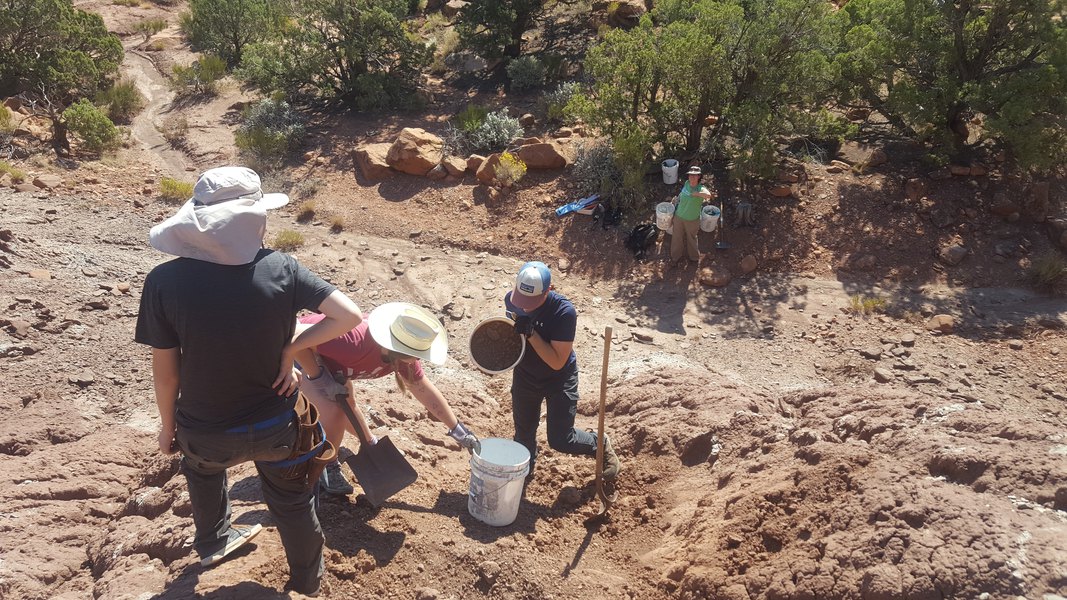
Paleontologists excavate a phytosaur fossil in what was Bears Ears National Monument in September 2017. The site turns out to harbor a rich deposit of Late Triassic fossils in the Chinle Formation.  (Photo courtesy of Robert Gay)

Paleontologist Robert Gay’s quest to find the fossilized remains of an ancient phytosaur, a primitive ancestor to crocodiles, turned into something much larger last summer when he came upon a major trove of Triassic fossils on public lands recently stripped from Utah’s Bears Ears National Monument.

But Gay’s find also is significant for other reasons that speak to the vulnerability of fossil deposits in Utah and elsewhere to looting and vandalism, especially those near roads like the site he dug with permission and funding from the Bureau of Land Management.

“This site [on the western side of the former monument] is pretty spectacular,” the scholar told The Salt Lake Tribune on Friday.

“It’s an entire bone bed, it is the largest and densest Triassic bone bed in the state of Utah. It is higher density than some of the more famous Jurassic sites,” said Gay, who presented his findings Feb. 16 at the annual meeting of the Western Association of Vertebrate Paleontologists in St. George.

“There are decades of work at this site,” said Gay, who called the deposits “the Triassic equivalent of Dinosaur National Monument,” famed for later Jurassic fossils.

Gay discovered articulated phytosaur remains, with fossilized bones found together, during survey work in 2016 in Chinle Formation, which dates back 217 to 223 million years. He returned the following September to recover the bones in a project conducted in conjunction with the Museums of Western Colorado.

But as Gay’s work progressed, he said, his team uncovered the front end of a ancient crocodile’s snout, but the cranium and neck were missing. Plaster residue clung to the sandstone, a tell-tale sign that someone had looted the site, said Gay, who serves as education director for the Colorado Canyons Association in Grand Junction.

He reported the theft to the BLM, which had some good news for him.

Nearly a decade earlier, the culprit had turned in the purloined skull, missing a snout, to Arizona’s Petrified Forest National Monument, according to Bill Parker, the monument paleontologist who received the skull. Parker had only recently transported the skull to BLM paleontologists in Moab, who in turn delivered it to the Natural History Museum of Utah for curation.

“It was complete serendipity that three weeks after I dropped it off, I got a call from the BLM saying they thought someone found the rest of it,” Parker said.

“It’s a good story because that doesn’t always happen,” he said.

In September 2008, the person who looted the fossil brought it to Parker after finding it in his garage. He admitted he excavated if from a particular canyon in San Juan County — without proper permits.

“I made a decision, because it was supposedly from BLM land, to accept it,” Parker said. “So he signed it over to us. I contacted Utah state geologist. At the time there was no proof of where it came from, the person wasn’t held. He has since moved on and who knows where they are.”

Information submitted by a BLM paleontologist to the St. George conference indicates the illegal excavator was a “volunteer at a major regional museum,” who turned in the specimen after partial preparation.

“This situation shows the need for increased education, monitoring, and protection around paleontological resources and highlights the vulnerability of fossil resources that remain un-excavated across the Bears Ears region,” the BLM report said.

It was only through a “rare combination of circumstances,” the BLM said, that the fossil’s origins were rediscovered. That, the report said, “is not the usual situation for looted fossils, which are often never recovered or recovered without their context, making this case a poignant reminder of what can be lost during looting.”

Parker and his colleague Larkin McCormack are preparing a paper on the stolen half of the specimen — believed to be from the ancient species Pravusuchus hortus — for scientific publication. In the meantime, he hopes the two specimens can be reunited, but that, it turns out, is easier said than done.

Gay’s specimen is currently undergoing preparation at St. George’s Dinosaur Discovery Site at Johnson Farm, which is helping manage the excavation. The bones will eventually be curated at the Museums of Western Colorado, which hopes to put them on display.

That organization, which has a paleontology museum in Fruita, wants to obtain the stolen half of the skeleton so the whole thing can be studied as a single unit.

“We are trying to figure out a way to keep the site and specimens together between our two museums,” said paleontology curator Julia McHugh. “There’s a lot of logistics and paperwork involved, so we haven’t quite nailed down how we are going to do that.”

“From the perspective of someone doing research,” McHugh said, “it’s not in their best interests to have the site divvied up between two museums.

She said she agrees the new Bears Ears fossil site is special and could shed new light on the Late Triassic, a period when some big reptiles went extinct and dinosaurs rose to rule the world during the Jurassic.

“It’s a really good site, has some good bone in it. It has some good diversity in it,” said McHugh, whose museum is also exploring Triassic sites in New Mexico. The Bears Ears locale appears to also harbor remains of an armored plant-eating crocodilian, known as aetosaur.

“One of the great things about the Late Triassic is you have a big turn over in ecosystems. You go from a world dominated by large amphibians, large crocodilian predators, herbivore, and you have the rise of dinosaurs coinciding with this,” McHugh said.

“As these lineages change over for who’s in charge of the ecosystem, you get a window into how evolution is working and how changes in climate are driving evolution,” she said. “Because we have a sporadic fossil record, any time we get a new site with a lot of good material, it’s really exciting because it is going to tell us things we don’t know yet.”

Conservationists have heavily promoted Gay’s discovery because it highlights what they say was the shortsightedness of President Donald Trump’s decision to shrink the Bears Ears monument, a move that is being challenged in court.

“While a discovery of this magnitude certainly is a welcome surprise, protecting such resources was the very purpose of Bears Ears National Monument,” said Scott Miller of the Wilderness Society, an environmental group.

“That President Trump acted to revoke protections for these lands is outrageous, and that he did so despite the Department of the Interior knowing of this amazing discovery is even more shocking,” Miller said. “I hope the courts will act quickly to restore protections for Bears Ears National Monument before any more fossils are looted from the area and lost to science.”

Whatever the outcome of the court case, however, the fossils will remain under the jurisdiction of the Paleontological Resources Protection Act, a 2009 law that carries criminal penalties for those who loot fossils from public lands.

Source: www.sltrib.com

Fossil Moth Scales Can Uncover Prehistoric Secrets, Scientists Say

Monday, February 26, 2018

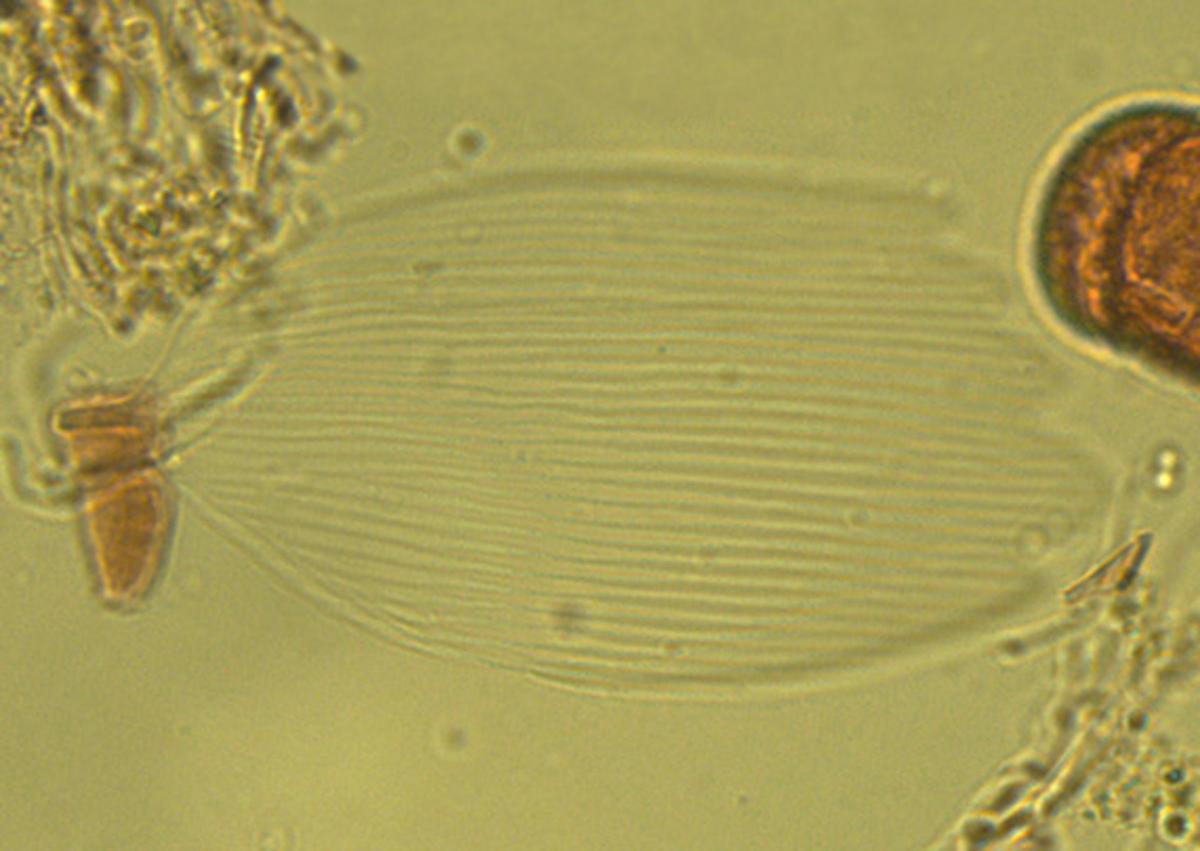
A well-preserved scale extracted from a lake sediment core. Image credit: Montoro Girona et al, doi: 10.3389/fevo.2018.00002.

A groundbreaking new technique for studying lake sediments can tell scientists more about the frequency and intensity of past and future insect epidemics, their impact on the forest environment and how they are linked to climate change.

“This is an exciting discovery, which will greatly increase our knowledge of prehistoric forest ecosystems,” said Dr. Miguel Montoro Girona, a researcher at the Swedish University of Agricultural Sciences in Umeå, Sweden.

“It is comparable to the fossil pollen and charcoal markers in sediments, which revolutionized prehistoric research to provide information on plants, climate and forest fires going back thousands of years. Our new method can be applied to many ecosystems where moths and butterflies have a marked influence on the landscape.”

Moths are one of the most widespread and recognizable insects in the world.

In the boreal forests of North America, which are mainly comprised of coniferous, evergreen trees, the larva of one moth species — the spruce budworm (Choristoneura fumiferana) — can periodically cause severe and widespread damage. This leads to millions of dollars of lost revenue to the forest-based economy.

It was during a routine observation of one of these outbreaks that Dr. Montoro Girona and co-authors had a Eureka! moment.

“Together with an insect specialist, we recently identified a ‘strange’ structure in a colleague’s lake-water sample, which turned out to be a scale from a moth wing,” said Dr. Hubert Morin, a researcher at the Québec University, Canada.

“Afterwards, during a spruce budworm outbreak, I noticed the lakes were covered in dead moths. Knowing they are made from a material that is likely to be well-preserved in the sediments of lakes, I realized they had the potential to provide information about these swarms going back thousands of years.”

This hunch turned out to be true. Taking a 5-m-long core of sediment from a forest lake near Québec, which represented 10,000 years’ worth of sediment deposit, the team spent five years perfecting their method of extracting, examining and counting moth scales under the microscope from each sediment layer.

“Our analysis revealed peaks of moth scales that corresponded to known periods of insect outbreak,” said Dr. Lionel Navarro, also from the Québec University.

“This means we can work out when these epidemics occurred before records began.”

“This new method will be of enormous help to future research in areas as wide as ecology and evolution, biodiversity conservation, climate change and forestry.”

The findings were published in the journal Frontiers in Ecology and Evolution.

_____

Miguel Montoro Girona et al. A Secret Hidden in the Sediments: Lepidoptera Scales. Front. Ecol. Evol, published online January 26, 2018; doi: 10.3389/fevo.2018.00002

Source: www.sci-news.com

Cleveland Museum of Natural History

Sunday, February 25, 2018

Cast of Tyrannosaurus rex skeleton (the specimen MOR 555, or "Wankel rex") at Cleveland Museum of Natural History 30 September 2011.

For almost 100 years the Cleveland Museum of Natural History has been educating and entertaining Clevelanders with its exhibits and programming in the many areas of science.  From its humble beginnings at “The Ark”  due to the animal specimens stored in a 2-room iron structure at Public Square in the 1830’s to the new facility recently opened at University Circle, the Cleveland Museum of Natural History has remained one of America’s oldest and most respected institutions which was officially founded in 1920.

Clubs and Societies

The Museum has a plethora or clubs and societies that help enrich the Museum through their fiscal and research contributions over the years.  At this time there are 7 clubs and societies affiliated with the Museum.  The Cleveland Archaeological Society has been holding lectures and increasing awareness of archaeology for many years in the Greater Cleveland area.

The Women’s Committee has been raising money and promotion of the Museum since 1940.  The Kirtlandia Society has been a key supporter of the research goals of the Museum since 1976 and is named after Jared P. Kirtland who founded the Cleveland Academy of Natural Sciences. The Trout Club has been at the forefront of educating people on ecology and awareness of cold water fisheries and habitats.

They have programming for residents who seek to learn more about fly fishing, angling and have many outings.  Some other clubs include The Guild of Nature Artists, the Cleveland Geological Society and the Micromineral Society.

Collections and Research

The Cleveland Museum of Natural Science has been recognized as a  worldwide leader and is the largest museum of its kind in the State of Ohio.  With over five million specimens and artifacts it is a top 10 facility.  The Museum has 12 areas of focus which are Vertebrae Zoology, Vertebrae Paleontology, Physical Anthropology, Paleobotany and Paleoecology, Ornithology; which is the study of bird biology, Natural Areas, Mineralogy, Invertebrae Zoology, Invertebrae Paleontology, Human Health and Evolutionary Medicine, Botany and Archaeology.

The GreenCityBlueLake Institute is the Museum’s Center of Sustainability.  They are spearheading the Museum’s efforts to find solutions for increased development of ecological efficient cities.   The curators museum-wide have and continue to embark on high level research that is highly regarded by their scholastic peers.

Centennial Campaign

The Cleveland Museum of Natural History is approaching its 100th anniversary.  This is a landmark achievement and the Museum is sparing no expense.  The Museum is in the midst of a $150M transformation and expansion.  As of Summer 2016 three projects have been finished, the Perkins Wildlife Center and Woods Garden, a 3 story attached parking garage and the Sears Garden.

In addition to adding over 70,000 square to the existing space, the Museum is making the facility more green with environmentally sound upgrades throughout the building and surrounding areas. The Museum will remain open to the public for the duration of the campaign.

Summary

The Cleveland Museum of Natural History is going through some exciting times right now and if worth the trip for the entire family.

Source: www.clevelandleader.com

Giants Roam Fukui at Prefectural Dinosaur Museum

Sunday, February 25, 2018

An animatronic T. rex welcomes visitors to the museum

Fukui Prefecture, on the Japan Sea coast, is home to Japan’s leading museum focused on dinosaurs. Some 80% of the dinosaur fossils discovered in Japan come from Fukui, and this prefectural facility has attracted national—and even global—attention since opening in 2000. With millions of satisfied visitors to date, the museum offers a full day’s worth of fun to dino-loving kids and adults alike.

At least three unique species of dinosaur have been discovered in Fukui Prefecture, on the northern coast of central Japan, making this the ideal place for the nation’s biggest museum dedicated to the massive creatures that once roamed the planet.

The museum is housed in a huge silver sphere, making it an unmissable landmark amid the paddy fields and hills of the prefecture. The interior exhibits are no less impressive.

Arranged over four floors, the museum cleverly uses animatronic dinosaurs—including a tyrannosaurus (T-rex) that is sufficiently realistic to make small children cling tightly to their parents—alongside static displays that show the skeletal remains of all the most famous dinosaurs. These are showcased in surroundings that re-create the environment in which they existed millions of years ago.

The T-rex is an obvious draw to visitors, with new arrivals greeted by a fearsome looking specimen that moves in a remarkably lifelike way. Other eye-catching discoveries in the Dinosaur World section include the horned head of a triceratops, the long-necked brachiosaurus, and the heavily armored ankylosaurus.

The museum’s Dinosaur World section features 44 complete skeletons, placed among the Dino Theater’s 200-inch screen, a diorama introducing Chinese dinosaur finds, and exhibits on the creatures of Japan and the rest of Asia.

And while the skeletons are kept out of reach, visitors are encouraged to run their hands over scale replicas cast in metal to get a better sense of these majestic beasts.

The dinosaur hall has 44 skeletons on display in all, including numerous examples of less well-known, but equally fascinating animals. The displays and their accompanying explanations provide insight into the biology and evolution of the “terrible lizards” from Earth’s past.


Fukui: Japan’s Land of Dinosaurs

Of particular interest are the species that have been found within a short distance of the museum. Those discoveries include prehistoric crocodiles, turtles and plants—but it is the dinosaurs that are unique to Fukui that catch the imagination. The Fukuiraptor kitadaniensiswas a carnivore that grew to more than 4 meters long and was apparently related to the more famous allosaurus.

The Fukuisaurus tetoriensis was a slightly larger herbivore. Meanwhile, the Fukuititan nipponensis, another herbivore that grew as large as 10 meters from snout to the tip of its tail, is the latest local addition to dinosaur knowledge, having only been discovered in 1989.

Experts are also working on identifying yet another dinosaur that may turn out to be a world-first discovery, a small, feathered theropod.

The Dinosaurs in Fukui area showcases fossils, reconstructed skeletons, and models of fukuisaurus and other locally discovered species.

Billions of Years of Natural History

Moving on from Dinosaur World, visitors are given an explanation of the history of the planet and how that relates to life. The Earth Sciences section examines rocks and the fossils that they sometimes contain, as well as the geological phenomena beneath our feet.

The next level of the museum focuses on the history of life and how the inhabitants of the planet evolved from microscopic life forms through simple seaborne organisms that became fish, followed by reptiles and land-dwelling mammals. Over eons of time, some branches of life became birds, while others gradually became human.

This area of the museum uses diorama displays to show the different life forms that were present during different historic periods, while the skeletons morph from dinosaurs to the far more recognizable fish and birds of the present age. Saber-tooth tigers become the big cats of today; woolly mammoths change into elephants.

Outside the museum, Dr. Dinosaur sits waiting for visitors to take commemorative photos with him.

The evolution of humans is equally astonishing, from small bipedal versions of mankind with limited mental capacity and a gait that was more reminiscent of apes to the tall, upright creature that populates the planet today.

The museum is extremely child-friendly, including a section where youngsters can get hands-on with specimens in order to learn more about them. Visitors can also watch technicians carefully extracting dinosaur specimens from blocks of stone that have been excavated from the nearby dig sites.

Visitors are also able to tour the field station, where new samples are being found on a regular basis. At the Dinosaur Quarry, anyone with an interest in becoming a dinosaur hunter in the future is able to grab a chisel and mallet and, under supervision, excavate replica fossils.

Fukui Prefectural Dinosaur Museum

  • Address: Terao 51-11, Muroko, Katsuyama, Fukui Prefecture, 911-8601
  • Tel.: 0779-88-0001
  • Web:https://www.dinosaur.pref.fukui.jp/en/
  • Open: 9:00 am to 5:00 pm, every day of the week except the second and fourth Wednesday of every month; closed December 29 to January 2 for New Year holidays
  • Admission: ¥260 for primary and secondary school students, ¥410 for high school and college students, and ¥720 for adults; group rates and annual passes also available

Source: www.nippon.com

Steven Spielberg's Frustrations With Making Jurassic Park

Saturday, February 24, 2018

Jurassic Park: T. rex chasing jeep

Steven Spielberg looks back on why he was "furious" when he was in the latter stages of making Jurassic Park.

1993 was a significant year in the career of Steven Spielberg, as two huge films in his directorial back catalogue arrived. In the summer came Jurassic Park, the biggest blockbuster of the year. And at the end of 1993 Schindler’s List debuted in cinemas, the film that months later would result in Spielberg winning his first Oscar.

Production on the two films inevitably overlapped, with Spielberg notably entrusting George Lucas to help with the post-production work on Jurassic Park while he was in Krakow filming Schindler’s List. And in a new interview with Empire, Spielberg has admitted to the frustrations he felt as the two films overlapped.

“I didn’t anticipate what it would feel like after I returned from the [Schindler’s List] set to spend three hours over going over ILM effects shots on Jurassic Park and how angry I was and how I resented having to do that," he said, referring to the period where the post-production of the one film crossed with the physical production of the other. “I would sit there angry and bitter and giving notes on how a Tyrannosaurus rex should run chasing a jeep, when all I could think of was what I had shot that day in Krakow."

“I just got mad at Jurassic Park every day I had to go back and do any work on it," he said, describing himself as “furious” at it while he was in the latter stages of making it.

In the case of both films, though, you'd have to say that all turned out really rather well.

Source: www.denofgeek.com

Pages