Blogs

Scientists have traced what dinosaur DNA could have looked Like

Saturday, May 26, 2018

An illustration showing scene in the Lower Jurassic Period (about 175 - 200 million years ago), featuring a Megalosaurus.

Researchers have figured out how the genome of a dinosaur might have looked by studying turtles and birds.

A team based at Kent University's School of Biosciences analysed the genomes of modern-day species, including a chicken, a zebra finch and a budgerigar.

A genome is full the set of genetic material inside a cell, and it contains all the information needed to build and maintain an organism, whether it is a fish, plant, human or dinosaur.

By comparing the chromosomes of turtles and birds (the living descendants of dinosaurs), the team worked out the likely genome of a common ancestor of those animals. It lived 260 million years ago (about 20 million years before dinosaurs first emerged).

They then traced how chromosomes changed over evolutionary time from the common ancestor of turtles and birds to the present day.

The results suggest that, had scientists had the opportunity to make a chromosome preparation from a theropod dinosaur like a T. rex, it might have looked very similar to that of a modern-day ostrich, duck or chicken.

Prof Paul Barrett, a Museum dinosaur expert, contributed to the study.

He says, 'Using these advanced genomic techniques we can reconstruct a plan for how the dinosaur genome was organised, shedding further, more detailed light on the biology of these amazing animals.

'Although this won’t allow us to resurrect a Diplodocus, or any other extinct dinosaur, it does show how many features that used to be considered unique to birds appeared much earlier in time, in their theropod ancestors, including at the genome level.'

Dino DNA?

Scientists don't have access to DNA from any extinct dinosaurs, but they can study that of living dinosaurs (birds) and their other more distant living relatives.

Prof Darren Griffin, an expert on chromosomes at Kent's School of Biosciences, says, 'DNA is pretty stable but the longest you would expect it to last, even in the best of conditions, would be about a million years.  T. rex hasn’t been seen wandering the earth for at least 66 million years. 

'Even if you could get intact dino DNA then to recreate the precise conditions both in the cell, and in the egg, to generate an embryo of an animal that became extinct tens of million years ago would be next to impossible.

'In Kent and at the Royal Veterinary College, we used a combination of lab-based techniques and computer wizardry. We selected the genomes of certain birds, turtles and lizards and essentially did a triangulation exercise to infer the structure of long dead species.'

How is a turtle like a dinosaur?

Scientists now agree that birds alive today are living dinosaurs, directly descended from theropods (carnivorous dinosaurs that walked on two legs).

Birds have a lot of chromosomes compared to most other species and this is possibly one of the reasons why they are so diverse. This research suggests that the pattern of chromosomes seen in early dinosaurs, and the later theropods, is similar to that of most birds.

We also know that turtles, crocodiles and birds also share a common reptile ancestor. Turtles diverged from archosaurs (birds and crocodiles) about 255 million years ago.

Prof Barrett explains, 'Turtles aren’t closely related to dinosaurs, but they are one of the living groups of reptiles that can be used to study the relationships of dinosaurs and some of the features that they would have possessed.

'Birds are living dinosaurs, and crocodiles are their next nearest relatives, followed by turtles, lizards and snakes.'

Dr Becky O'Connor, senior postdoctoral researcher and co-author of the paper, says, 'The technique used in this study allowed us to determine the genome structure of the turtle-bird ancestor.

'Turtles are one of the very few species that have similar looking chromosomes to birds. Until now, the tools required to compare their chromosomes were not available. In our study, we added fluorescent labels, called "DNA probes", to the chromosomes of birds and turtles so that we could locate the stretches of DNA that match in the two species.

'The process then involved tracing the changes that occurred from the bird-turtle ancestor. The evolutionary path examined the point when dinosaurs first emerged, through the theropod dinosaur line, and beyond several mass extinction events, including the most recent one 66 million years ago.'

Source: www.nhm.ac.uk

Oldest Known Case of Dandruff Found in 125m-Year-Old Dinosaur

Saturday, May 26, 2018

A fossil of a microraptor found in Liaoning province, China. The crow-sized dinosaur lived about 125m years ago. Photograph: Spencer Platt/Getty Images

Scientists have discovered fossilised dandruff on the skin of a feathered Microraptor.

The oldest known case of dandruff has been identified in a small feathered dinosaur that roamed the Earth about 125m years ago.

Paleontologists found tiny flakes of fossilised skin on a crow-sized microraptor, a meat-eating dinosaur that had wings on all four of its limbs.

Tests on two other feathered dinosaurs, namely Beipiaosaurus and Sinornithosaurus, and a primitive bird known as confuciusornis, also revealed pieces of fossilised dandruff on the animals’ bodies.

The prehistoric skin flakes are the only evidence scientists have of how dinosaurs shed their skin. The material shows that rather than losing their outer layer in one piece, or in large sheets, as is common with modern reptiles, the feathered dinosaurs adapted to shed their skin in tiny flakes.

Prehistoric dandruff found on the skin of a microraptor dinosaur. Photograph: Maria McNamara at University College Cork

“This is the only fossil dandruff known,” said Maria McNamara, who worked on the dinosaur fossils at University College Cork. “Until now we’ve had no evidence for how dinosaurs shed their skin.”

Images of the dandruff taken with a powerful electron microscope show that the material is extremely well-preserved and is almost identical to that found on modern birds. Like human dandruff, the skin flakes are made of tough cells called corneocytes that are full of the protein keratin.

The work, published in Nature Communications, suggests that dinosaurs who sported feathers evolved skin to cope with their plumage as far back as the middle Jurassic. “Even though they are in the early stages of feather evolution, they have already adapted their skin to this more modern structure,” McNamara said.

The fossilised remains of all of the animals studied were recovered from rock formations in north-eastern China. At 2m long, Beipiaosaurus and Sinornithosaurus grew to more than twice the size of Microraptor.

Modern birds have very fatty corneocytes that are loosely packed with keratin, a feature which helps the birds lose heat from the exertion of flying. McNamara found that the dinosaur dandruff cells lacked such fat, suggesting that the animals did not get as warm as modern birds, perhaps because they could not fly far, or failed to get airborne at all.

Many dinosaurs that sported feathers were not competent fliers. Instead, their plumage served other purposes: to keep them warm, provide camouflage, and perhaps attract members of the opposite sex with multicoloured displays.

Source: www.theguardian.com

Meet Mary Anning, a Fossil Hunter who Changed the Way we Think About the History of Life on Earth

Friday, May 25, 2018

Posthumous painting of Anning by B. J. Donne from 1847, based on the 1842 portrait at the head of this article

Whenever we think about the origins of evolutionary biology, paleontology, and geology, we’re inevitably drawn to 19th century figures like Charles Darwin, Georges Cuvier – the founder of vertebrate paleontology – and Charles Lyell, who changed our understanding of Earth’s history. Unsurprisingly for the time, all these giants of science were men. Any woman who wanted to participate in the scientific world had to do so behind the scenes, which often meant they didn’t get the credit they deserved for major breakthroughs and discoveries.

Such was the case of Mary Anning, who discovered dinosaur fossils near her home in England at a time before anyone knew what dinosaurs were. Her discoveries sparked decades of debate on how old life on our planet really was, how fossil organisms originated and eventually disappeared, and ultimately how humans fit into this menagerie of life. Anning, whose 219th birthday passed on May 21, never achieved much recognition or compensation for her work during her own lifetime. But she’s come to be regarded by her many admirers as ‘the greatest fossilist the world ever knew.’

A family business

Anning’s story began with a tragedy and a stroke of luck. Before her birth, her father, Richard Anning, relocated to the town of Lyme Regis, England, where he started a part-time career selling fossils. Lyme Regis is situated along a series of steep cliffs made up of stratified clay and limestone deposits, called blue lias for its blue-gray hue. The clay is highly unstable, especially when wet, and is actively being eroded by ocean waves and coastal storms. Between 150 and 200 million years ago, when Pangaea was just beginning to split apart, the region was a shallow shelf beneath an ever-widening sea, the sea floor serving as a burial ground for the bones and shells of creatures that eventually found their way there. By combing the beach with a chisel and hammer, Richard Anning could easily unearth mollusks and crustaceans that had been entombed in shale since the time of the dinosaurs.

When the Anning children – Mary and her brother, Joseph – were older, their father took them out fossil hunting with him, much to their mother’s chagrin. The cliff sides were a dangerous place, prone to rockslides due to the unstable layers of clay within. The apprehension was not misplaced: while traveling to a nearby town to sell his fossils, Richard Anning lost his footing and tumbled down a cliff side. While the fall wasn’t initially fatal, his health waned over the next two years, culminating in his death in the autumn of 1810, leaving his daughter bereft of the principle guiding force that had shaped her childhood. But the love of natural history that had been instilled would remain with her for the rest of her life.

A girl and her fantastic beast

The years directly after Richard Anning’s death were bleak; he’d left the family of three with £120 of debt, a staggering sum at the time. With no reliable source of income, the family had to rely on parish support, a type of welfare at the time, just to avoid starvation. At age 15, Joseph Anning was apprenticed to an upholsterer in town, which meant his time as an avid fossil hunter was coming to an end. But before he completely turned all his energy toward his apprenticeship, he made the discovery of a lifetime. While looking through exposed rock along the shore, he came across what appeared to be the massive skull of an alligator. But without time to invest in looking for the rest of the fossilized remains, he asked his sister to undertake the search instead.

She searched the nearby cliffs for a year without any luck, a dogged pursuit that underscores her tenacity, even as a young girl. It wasn’t until a fierce storm wore down the exposed clay and limestone that part of the creature’s body was revealed. After months of ensuing excavation, and with the help of a few locals she’d managed to enlist, Anning unearthed a 17-foot-long fossil with an elongated neck, flippers, and a vertebra that had more in common with modern lizards than it did with fish. The specimen was sold to the owner of the land where it had been found. While this was only the third such fossil to be discovered, it was the landowner’s decision to then sell it to the London Museum that made it the most important.

Most scientists, and almost all laymen, at the time believed the Earth was created by a benevolent God less than 6,000 years ago, one that would never have allowed for extinction. In fact, one of the underlying reasons Thomas Jefferson ordered the Louis and Clark expedition was so they could bring back evidence of living mammoths, whose fossils he had adorned the White House with during his tenure as president. Anning’s ichthyosaur, Greek for ‘fish’ and ‘lizard,’ was another bit of a growing body of evidence that would prove conventional knowledge wrong.

The greatest fossil hunter the world ever knew

For the next two decades, Anning excavated several extinct organisms from the blue lias, including a new species of pterosaur (the only other fossil had been discovered a few years prior in Germany), a never-before-discovered species of aquatic reptile called a plesiosaur, which had an extremely long neck capped by a minuscule skull, as well as different specimens of extinct fish and several invertebrate fossils.

Despite her immense contribution to science, as a woman in 19th-century England, Anning was never allowed to publish on her own. The scientists who did publish on her discoveries, most of whom she was had personal friendships with, almost never acknowledged Mary in either their papers or speeches.

Still, Mary Anning became well-known during her lifetime, even if – as Charles Dickens would later note – some in her hometown valued her only as bait for tourists and distinguished guests. The researchers who knew her best, even if they gave her short shrift when it came to recognition, always made sure she was never left wanting and could pursue her digs without the fear of financial ruin. 

But in her mid-40s, when she should have been at the height of her powers, she developed breast cancer, which she lived with for two years before it ultimately claimed her life at age 47. Now, with the benefit of hindsight, Anning is receiving the recognition she deserves in scientific circles as someone who helped change the way we think about life on Earth.

Source: https://massivesci.com

These Are the Creatures that Survived the Dinosaur-Killing Asteroid

Saturday, May 26, 2018

An illustration shows a hypothetical surviving bird lineage—small-bodied and ground-dwelling—fleeing a burning forest after the asteroid strike that eliminated nonavian dinosaurs.  ILLUSTRATION BY PHILLIP M. KRZEMINSKI

After the most fatal asteroid struck Chicxulub in Mexico near about sixty-six million years ago ending the dinosaur age, the scientists have been scratching their heads detecting the birds that had overcome the event. A recent study has provided these scientists clues for their unsolved questions. According to the study, very few of the avian creatures survived the event. As the asteroid clash caused forest fires, the tree dependent birds did not survive. The ground-dwelling birds basically got over and the rest of the birds of today evolved from them.

The leader of the research team, Daniel Field of the University of Bath, said in a statement, “The ancestors of modern tree-dwelling birds did not move into the trees until the forests had recovered from the extinction-causing asteroid.”

The forest fire caused by the asteroid event released a lot of soot and ash into the atmosphere thereby clogging it. This did not allow photosynthesis activity of the plants to help them survive or bloom back again. As a result, many trees got extinct and the tree-dwelling birds lost their habitat. The habitat loss is also responsible for the non-survival of the tree-dwelling bird species.

As a part of the study, the scientists analyzed the fossilized remains received after the asteroid event. Researcher Regan Dunn, a paleontologist at the Field Museum in Chicago, said in a statement, “After a disaster like a forest fire or a volcanic eruption, the first plants to come back are the fastest colonizers – especially ferns.”

When the fossilized avian remains from prior to and post of the asteroid event was compared, it was discovered by the researchers that the creatures that survived the event were all ground-dwellers. This was identified by seeing the sturdier and longer legs of the ground-dwelling birds. Field said that all the birds that are found on Earth today have a common ancestor who “was almost certainly a ground-dwelling bird.”

However, the researchers yet feel that this evidence are not enough to draw any conclusion due to the narrow scope of this research. Alan Cooper, a molecular evolutionist, said in a statement, “It’s difficult to conclude all forests disappeared globally based on [just] evidence from northern areas.”

The researchers have also said that the survival of some of the bird species may also involve other factors and the death of forests would be just one among them.  Jingmai O’Connor, a paleontologist at the Institute of Vertebrate Paleontology and Paleoanthropology in China said, “Forest loss was only one of several factors working in combination that determined which bird lineages survived.”

The observations of this research were published in the journal Current Biology.

Source: https://tecake.in

New $6.5 Million Dinosaur-Themed Park Opens in Derby

Sunday, May 27, 2018

Field Station: Dinosaurs, the new animatronic dinosaur park in Derby, opens Saturday. Photo by Jaime Green

Dinosaur fans now have a new place to indulge their interest.

The new Field Station: Dinosaurs park has opened in Derby. The 14-acre dinosaur theme park features 44 life-size animatronic dinosaurs spread among three distinct areas of the park.

Park executive director Guy Gsell says the exhibits roar, breathe and blink. The park also features a lake and quarry and employees providing live shows.

The Wichita Eagle reports the park is the first major attraction to open in the Wichita area in the past few years.

The $6.5 million cost was funded with private financing and sales tax revenue bonds from the city of Derby.

The dinosaurs featured in the park were once found in Kansas, Oklahoma, Texas, Arkansas, New Mexico and Missouri.

Source: www.seattletimes.com

Dinosaur-Killing Impact + Volcanoes Kept the Earth Hot for 100,000 Years

Sunday, May 27, 2018

Enlarge / "Wait, this global warming thing is gonna last how long?!?!"

Crushed up fish fossils provide the answers.

Mass extinctions aren’t fun times. There’s a reason (usually more than one, actually) species disappear in droves. Untangling these reasons is a challenge. The geological crime scene investigation is tough given that clues can be elusive after millions of years, and the events are complex.

The extinction that wiped out (most of) the dinosaurs, for example, saw both a massive asteroid impact and long-lived volcanic eruptions that covered most of what is now India in lava flows. While the impact would have darkened the sky, bringing permanent winter for a number of years, the volcanoes' injection of greenhouse gases into the atmosphere would have produced a rapid swing in the warming direction when the sky cleared.

The record of that warming in the geologic record isn’t very good, though. The problem has been to find a suitable climate record in rocks that were deposited fast enough to show relatively short time periods in detail. To obtain that sort of record, a team led by the University of Missouri’s Kenneth MacLeod scratched through rocks in Tunisia for crushed up pieces of fossil fish bits.

The researchers tick both boxes—good climate record and lots of detail—by turning to Tunisian rocks with fish bones. The rocks there that date to the time of the end-Cretaceous mass extinction have been well studied, with the ages and characteristics of various layers nailed down pretty precisely. At the time of the extinction event 66 million years ago, the sediments in these rocks were being deposited in a shallow ocean in the tropics. Many fossils of critters made of calcium carbonate were altered over time, making them unreliable sources of information. But these fish bits are made of more resilient calcium phosphate.

It’s the oxygen atom in that calcium phosphate that holds the secrets—just as it does in the H2O of glacial ice or the calcium carbonate of other critters. The ratio of heavier oxygen-18 to lighter oxygen-16 isotopes changes with temperature. So as you go down an ice core, or down through a layer of rock, shifts in this isotope ratio mark warming or cooling.

In this case, the researchers made measurements across 9 meters of rock, spanning about 350,000 years of Earth history. At 40 points in time, they collected dozens of tiny fish fossil pieces to analyze for oxygen isotopes. The results show a change at the time of the Chicxulub asteroid impact that lasted 100,000 years.

The oxygen isotope ratio shifted by an amount that represents water that was about 5°C warmer than it had been. After about 100,000 years of that, temperatures return to roughly where they were before the impact—although the samples are a little too sparse here to say more than that.

The oxygen isotope ratio records the change in temperature after the impact, which is marked by a clay layer. MacLeod et al/Science

You would expect the tropical ocean to warm less than the global average, so this represents more than 5°C global warming. (For comparison, unconstrained greenhouse gas emissions could bring human-caused global warming to about 5°C by the year 2100.) This lines up with some estimates of the expected warming. A 2002 study that estimated the change in CO2 from plant fossils, for example, put the average global warming in the ballpark of 7.5°C. The most interesting bit here is seeing evidence of how long that warmer climate lasted—100,000 years also fits in with climate model simulations of this time. So while the world changed in the blink of an eye, the misery took its time in leaving.

All of the estimates of the drivers of short-term cooling and long-term warming have pretty large error bars still. It’s data like this that helps reduce some of that uncertainty—one tiny little piece of crushed fish fossil at a time.

Science, 2018. DOI: 10.1126/science.aap8525

Source: https://arstechnica.com

BREAKING NEWS: Tyrannosaurus Rex Breaks Out of Shipping Crate on the River Thames

Thursday, May 24, 2018

Breaking News: Tyrannosaurus Rex breaks out of shipping crate on the River Thames

Don’t you hate it when a package gets lost in the mail? Well, as much as that may be a pain, this is definitely worse than any shipping disaster you’ve likely experienced, unless of course you’ve misplaced a man-eating dinosaur before. 

In what appears to be a promotional stunt for Jurassic World: Fallen Kingdom, a giant Tyrannosaurus Rex has seemingly escaped from a shipping crate, and is floating dangerously down the River Thames in old London town. If only this could have happened during the royal wedding, we would have tuned in.

While there’s no official word from Universal that this is a marketing stunt for their upcoming Jurassic World sequel, what else could it really be? The crate from which the t-rex is escaping takes us right back to the final trailer, where Owen (Chris Pratt) and Claire (Bryce Dallas Howard) somehow find themselves in similarly tight quarters with a similarly toothy beast.

Furthermore, the video of the “Breaking News” includes a scroll that asks “Is this a dinosaur from Isla Nublar?” That’s of course the island that three years prior saw abundant dino destruction (again), only this time, a volcano is threatening the dinos, instead of the dinos threatening the park-going humans, and Owen and Claire returning to try and save them. Good luck with that!

And if this video wasn’t produced by some viral marketers, then don’t you think we’d hear about such an alarming event on some of the other news stations? After all, news finds a way. 

Jurassic World: Fallen Kingdom opens wide June 22, unless of course this isn’t fake news, and the dinos eat all the cineplexes.

(via Bloody Disgusting)

Walk Amongst the Fossils in Dinosaur Valley State Park

Thursday, May 24, 2018

Dinosaur Valley State Park

Getting the family together during the school year can be difficult when navigating busy schedules, but as summer approaches, more time can be found to spend together exploring the natural beauty of Texas.

Located just west of Fort Worth and a two-hour drive from Fort Hood, Dinosaur Valley State Park in Glen Rose allows guests to discover and view natural fossils left behind by dinosaurs living in the area more than 113 million years ago, when the park was on the edge of an ancient sea.

The Paluxy River that runs through the park is host to a number of theropod and sauropod tracks unlike any in the area, due to the fossil-friendly composition of the mud millions of years ago that preserved the footprints of these carnivorous and herbivorous reptiles. Visitors can follow a map of the park area to help locate the known fossils.

Aside from the unique peek into prehistory, the park offers picnic sites, camping, guided tours, horseback riding trails, swimming, fishing, wildlife watching, and trails for hiking and mountain biking.

“We have a pretty extensive trail system,” for mountain biking that is used for special event races throughout the year, or for anyone looking for a different experience from hiking, said Molly Hickey, park office manager.

Camping sites for Memorial Day weekend are already full, as they have been booked for months.

“You have to start anywhere from three to 10 months out to get a reservation for the weekend,” said Hickey. “It’s the norm in the state parks now” to fill up so quickly.

A number of weekend events occur on a rotating basis, with anything from night hikes led by park volunteers, fossil hunts, to tours of an old moonshine distillery site on park grounds to educate visitors on the history of the county, said Hickey.

The park is open from 7 a.m. to 10 p.m. unless camping overnight. Daily entrance fee is $7 for adults, and children 12 years and under are free.

To check campsite availability, call 512-389-8900. For more general information on the park and events, call 254-897-4588.

If staying closer to home this weekend, use this listing of events and other options for family fun:

Aquatic Fun

Summer Fun Water Park, 1410 Waco Road in Belton, is now open for the season. Summer Fun features multiple water slides, a lazy river, large swimming pool, and pavilions for parties. The park is open from 11 a.m. to 6 p.m. Monday through Saturday, and from 1 to 6 p.m. on Sundays. Admission prices: adults, $16; children three to 12 years old, $13; non-swimmers, $7; and seniors, free. The park offers discounted rates for admission after 3 p.m., and Sunday admission is $13 for all ages. Summer Fun also features teen and adult nights throughout the summer. Go to summerfunwaterpark.com for more information.

The Killeen Family Aquatics Center, 1800 E. Stan Schlueter Loop, will open again for the season on Memorial Day weekend. The center includes a 10,360 square foot multi-use pool, a lap pool, bathhouse, three water slides, kid’s play area, shaded rest areas and more. Day passes range from $5 to $8 based upon age, with kids 3 years and under always free. The center will be open Monday-Friday from 11 a.m. to 6:30 p.m., Saturday from 10 a.m. to 6:30 p.m., and Sunday from 1 to 6:30 p.m.

Hancock Springs Free Flow Pool is one of the last free-flowing spring-fed pools in Texas with water staying at a cool 72 degrees no matter how hot it gets outside. The spring will reopen May 26 and is at Hancock Park, Highway 281 South in Lampasas. Adult admission fee is $3.50 per day and seniors and children are $2.50. The pool will be open Thursday-Saturday from noon to 7 p.m. and Sunday from 1 to 6 p.m.

Belton Lake Outdoor and Recreation Center, at the intersection of North Nolan Road and Cottage Road, has a number of activities for families to enjoy. Camping sites, picnic pavilions, horseback riding trails, hiking, mountain biking, as well as a man-made beach complete with a downhill water slide and more are available. Military patrons pay $3 per car; all others are $10 per vehicle. Visit hood.armymwr.com for more information.

Copperas Cove has two swimming pools at South Park, 2602 Dennis Drive, and the City Park Complex, 1206 W. Avenue B. Both pools will open for the season on Memorial Day weekend.

Upcoming Events

Children and teenagers can register now through June 1 at their local Killeen Public Library branch to be a part of the Summer Reading Club, which will start June 4 and end July 28. The libraries will host free special events and entertainment throughout the summer, while encouraging readers to complete their summer reading log. Pick up a packet during registration for more information.

The annual Fort Hood Chapter Memorial Walk will take place this Sunday from 8 a.m. to 1 p.m. at the Central Texas State Veterans Cemetery in Killeen. Visitors will walk a half-mile loop on the cemetery grounds 21 times to signify the 21-gun salute in honor of the veterans laid to rest there, along with a moment of silence. Appropriate athletic attire and water are recommended.

A Memorial Day observance event will be at 10 a.m. Monday at the Central Texas State Veterans Cemetery in Killeen to honor fallen soldiers. Large crowds are expected; arrive early to find parking.

Source: http://kdhnews.com

Welcome Home, Dixie the Dinosaur! Dixon Votes to Spend $25K for Famous Statue

Friday, May 25, 2018

Dixie the Dinosaur!

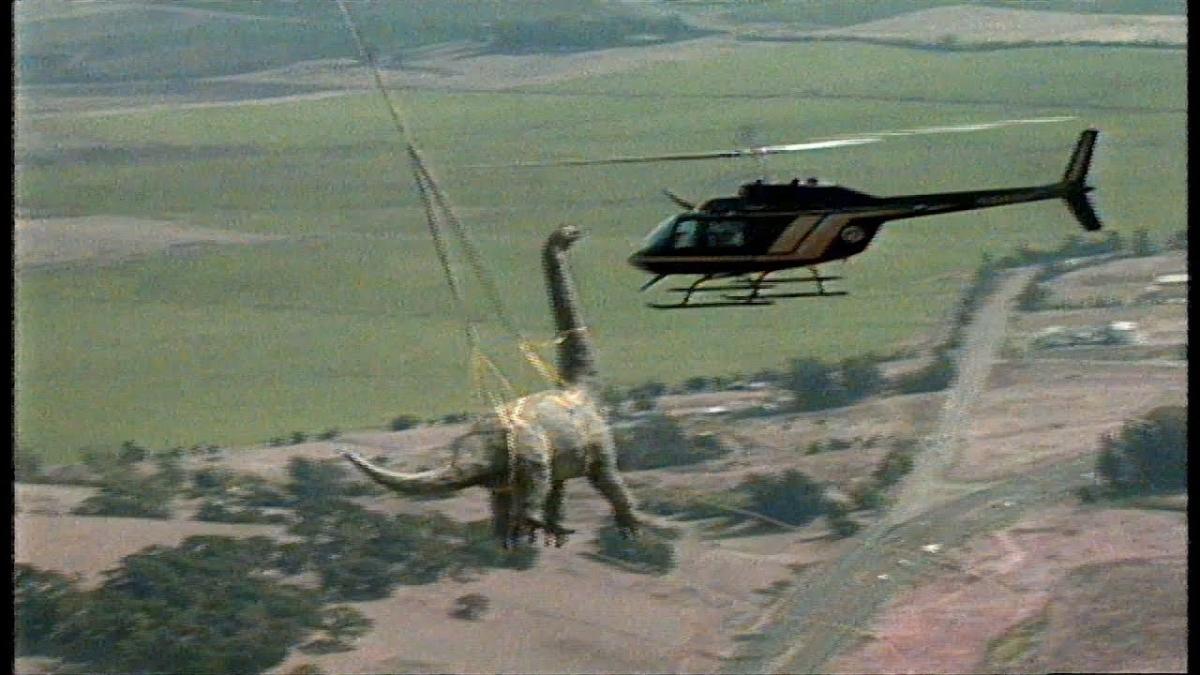
You may remember Dixie the Dinosaur. It was a 50-foot-tall fiberglass statue built along I-80 in Dixon. A helicopter mysteriously removed the 15 thousand pound landmark back in 1998.

What once was lost, is now found. A popular roadside attraction could be coming back to Dixon.

You may remember Dixie the Dinosaur. It was a 50-foot-tall fiberglass statue built along I-80 in Dixon. A helicopter mysteriously removed the 15,000 pound landmark back in 1998.

ABC10’s John Bartell reported on the missing dinosaur last week, and that report caught the attention of Dixon Mayor Thom Bogue.

“It went viral on Facebook," Bogue said. "Hundreds of postings bring Dixie home."

Bogue proposed that the city purchase Dixie and resurrect her in vacant lot across from the Post Office. The request was put to a vote and passed 3 to 2 in favor of spending $25,000 to buy the fiberglass dinosaur.

“Dixie attracted lots of people.” Bogue explained. “Lets face it, this makes for a long term investment in advertisement for our city.” It’s an expensive investment. The $25,000 does not include installation of the Dinosaur.

Dixie is currently in five pieces. The dino is at owner John Roscoe’s house in Fairfield. He offered up Dixie to anyone who wanted to rebuild her. Roscoe received a number of offers after ABC10’s report.

“I gave the city of Dixon the first right of refusal," said Roscoe. “I wanted to give Dixon the first option to bring Dixie home.”

The city inquired about the dinosaur last week and it went up for a vote the following Tuesday. Bogue says decision making was quick.

“I never seen something move so fast as this," said Bogue. "Especially in government.”

It will take a few truck loads and a crane to move Dixie back to Dixon. There is no timeline right now, but Bogue says many community members and business owners have volunteered their services.

“We have been getting overwhelming support.” explained Bogue. “These businesses and community members will be taking on a lot of the cost involved to get Dixie home.”

Source: © 2018 KXTV


Field Station: Dinosaurs Debuts New Attraction

Friday, May 25, 2018

Field Station Dinosaurs Set to Open at Overpeck Park in Leonia, NJ

Field Station: Dinosaurs in Overpeck Park in Leonia has reopened for the season with the debut of a new attraction.

The new spinosaurus dinosaur replaces one of the other dinosaurs that caught fire in 2016. Park officials say that the spinosaurus is more than 50 feet long and more than 20 feet high. It is the largest dinosaur exhibit at the park.

Children voted to have the spinosaurus replace the argentinosaurus that caught fire. Officials say that the spinosaurus has been popular after it was featured in one of the “Jurassic Park” movies.

"He was one of the biggest carnivores to ever live.  Some estimates put him around the size of T-Rex,” says lead puppeteer Chris Palmieri. “Others put him at least 20 feet bigger than the T-Rex, so he was definitely a formidable apex predator of his time and place."

Field Station: Dinosaurs officially opens for the season this weekend.

Source: http://newjersey.news12.com

Pages