Blogs

Life Rebounded Just Years After the Dinosaur-Killing Asteroid Struck

Friday, June 1, 2018

Artist’s depiction of a large asteroid impact. JOE TUCCIARONE/SCIENCE SOURCE

When a 10-kilometer-wide asteroid hit the Gulf of Mexico 66 million years ago, it drove over 75% of Earth’s species to extinction, including the dinosaurs. But within just a few years, life returned to the submerged impact crater, according to a new analysis of sediments in the crater. Tiny marine creatures flourished thanks to the circulation of nutrient-rich water. That return of life could offer lessons in how marine ecosystems might recover after the dramatic shifts caused by climate change, the researchers suggest.

The new findings reveal “how resilient life can be,” says Gareth Collins, a planetary scientist at Imperial College London who was not involved in the research. “Such a rapid recovery … is remarkable.”

Some scientists hypothesize that life might slowly creep back into impact craters, perhaps because of toxic metals such as mercury and lead scattered by the impact. Other impact craters tell a tale similar to that idea: The 85-kilometer Chesapeake Bay crater, for instance, was devoid of life for thousands of years after a comet or asteroid hit modern-day Virginia some 35 million years ago.

As part of an effort to understand how planets respond to large impacts, a team of scientists in 2016 drilled into the 180-kilometer Chicxulub crater, the only impact structure linked to a global extinction event. The team brought up hundreds of roughly arm-length sediment cores. Some bore the scars of the extreme temperatures and pressures of the event, which drove rocks to behave like a fluid: Mountains the height of the Himalayas rose and fell within the span of minutes. One core, taken from roughly 600 meters below the modern sea floor, contained 76 centimeters of dull brown limestone—not much to look at, but perhaps the most treasured swath of sediment from the entire drilling project, at least to Chris Lowery.

Lowery, a paleoceanographer at the University of Texas Institute for Geophysics in Austin, and his colleagues began to analyze the fine grains of sediment that made up the limestone. Relying on equations that describe how long it takes tiny particles to settle through a liquid, they calculated that the grains were deposited on the sea floor rapidly after the impact, in just a few years. When Lowery and his colleagues peered into the layers of limestone, they found numerous fossils and burrows, evidence of small worms, shelled creatures known as foraminifera, and plankton. Life was back.

But how did life colonize Chicxulub’s ground zero so quickly? It had nothing to do with the magnitude of the impact or the crater’s size, Lowery says. Instead, the deciding factor may have been the crater’s shape. Chicxulub’s northeastern flank was open to the Gulf of Mexico, which allowed deep, nutrient-carrying water to circulate throughout the crater, the team reports today in Nature. In contrast, the Chesapeake Bay crater was closed, which meant oxygen consumed by decomposing organic matter was not replenished, and aerobic life would have quickly died. “You basically had a dead zone,” Lowery says.

Lowery and his colleagues suggest the Chicxulub impact holds lessons for ocean life today, which is threatened by oxygen depletion, ocean acidification, and rising temperatures. “It’s probably the only event that happened faster than modern climate change and pollution,” Lowery says. “It might be an important analog for the recovery of biodiversity after we finally curtail carbon dioxide emissions and pollution.”

Source: www.sciencemag.org
Paleontologists Find Fossil of Smallest Spinosaurus

Friday, June 1, 2018

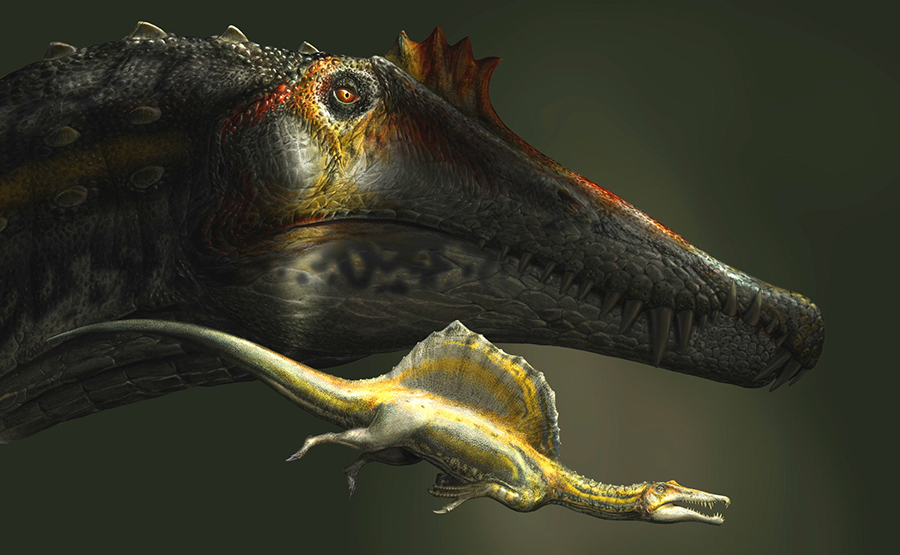
The largest and the smallest specimens of Spinosaurus known to date. Image credit: D. Bonadonna.

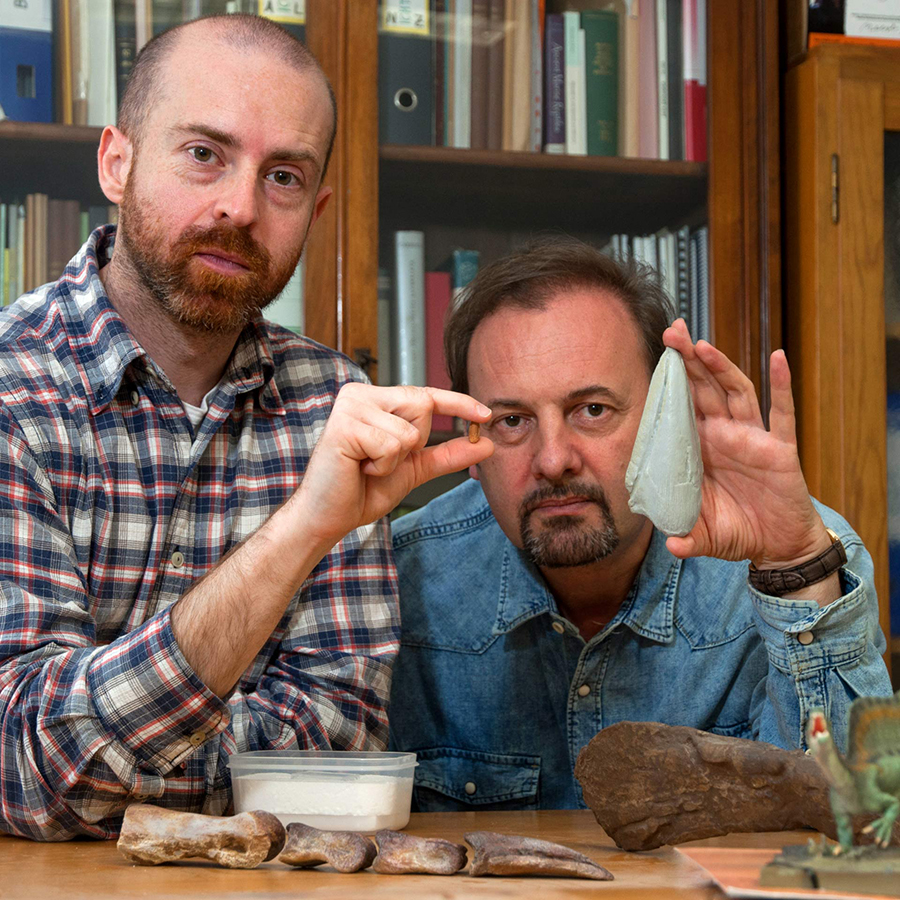
A tiny fossil of an early juvenile Spinosaurus has been discovered by a duo of Italian paleontologists.

Spinosaurus (meaning ‘spine lizard’) was the longest, and among the largest of all known predatory dinosaurs, and possessed many adaptations for a semiaquatic lifestyle.

It lived in what is now North Africa during the Cretaceous period, between 112 and 93.5 million years ago.

The new specimen — the 21 mm-long pedal ungual phalanx (a phalanx supporting a claw of the foot) — is from the smallest known individual of this giant, sail-backed dinosaur.

It was discovered in 1999 in the Kem Kem Beds of Tafilalt region, south-eastern Morocco.

This is a size-comparison of relevant Spinosaurus specimens from Morocco: the baby MSNM V6894 (documented by the new fossil), the neotype FSAC-KK18888 (published in 2014), and the largest known individual MSNM V4047 (snout, published in 2005), compared with Homo (1.75 m tall). Spinosaurus was a semiaquatic, mainly piscivorous dinosaur with crocodile-like jaws. Credit: Marco Auditore and Prehistoric Minds

“This specimen remained unnoticed until the recent discovery of a partial skeleton of Spinosaurus aegyptiacus that preserves an almost complete right foot with peculiar morphology in the phalanges,” said Milan Natural History Museum paleontologists Simone Maganuco and Cristiano Dal Sasso.

“The striking similarities with the claw phalanges of the Spinosaurus foot allowed us to identify the tiny bone to a very small and young specimen of this dinosaur, the smallest individual reported up to today.”

“The small specimen retains the same locomotor adaptations as the large version — such as traversing soft substrates or paddling — during the entire lifespan,” they added.

Paleontologists Simone Maganuco (left) and Cristiano Dal Sasso (right) compare the new fossil to the cast of the same bone from a subadult Spinosaurus studied in 2014; the baby Spinosaurus nail is identical, just a much smaller version of it. Image credit: G. Bindellini.

“This find indicates that in Spinosaurus, the foot of early juveniles had the same locomotor adaptations observed in large individuals, that were probably achieved early in ontogeny and retained for the entire lifespan,” Dr. Dal Sasso said.

“Besides the rarity of the fossils belonging to juvenile theropod dinosaurs, and the rarity of Spinosaurus bones, this finding is even more remarkable if we consider the dramatic size attained by some large specimens of Spinosaurus,” Dr. Maganuco added.

“Assuming the juveniles looked like smaller versions of the adults, the 21 mm-long claw phalanx from this small specimen would pertain to an early juvenile individual, 1.78 m-long, only just a little bit longer than the estimated length of the sole head of the largest adult Spinosaurus known to date,” the plaeontologists said.

The study was published online this week in the journal PeerJ.

_____

S. Maganuco & C. Dal Sasso. 2018. The smallest biggest theropod dinosaur: a tiny pedal ungual of a juvenile Spinosaurus from the Cretaceous of Morocco. PeerJ 6: e4785; doi: 10.7717/peerj.4785

Source: www.sci-news.com

Jurassic Park In Real Life: 7 Places That Were Used In The Movies

Thursday, May 31, 2018

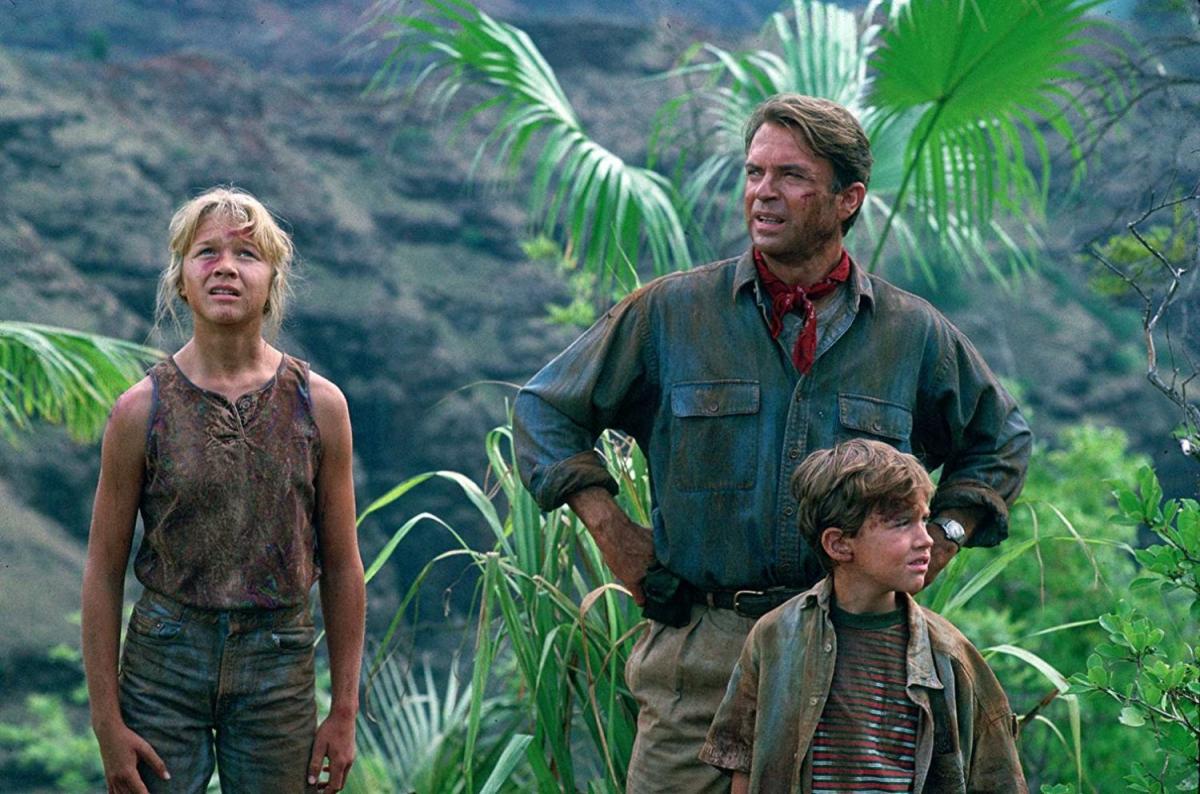
IMDB/Universal Pictures

If you’re a fan of the Jurassic Park movies, it’s probably safe to say that, despite the obvious danger, you’ve likely wished you could visit the park. I mean, real life dinosaurs — it doesn’t get any cooler than that!

Unfortunately (or perhaps fortunately where safety is concerned) the closest you can come to experiencing the dino-filled island is through either the new “Jurassic World” ride at Universal Studios or the “Jurassic World” exhibit in Philadelphia.

The good news is, however, that while the park and dinosaurs might not be real, many of the filming locations are.

While the islands in the films are supposed to be located off the Pacific side of Costa Rica, filming actually took place on the Hawaiian islands of Kauai and Oahu. Yup, that means you can totally visit the islands with no actual threat of being eaten by dinosaurs!

Sadly, this does also mean none of the islands include Chris Pratt. Sorry, guys.

Take a look at this list of seven filming locations you can visit, courtesy of Alanna Smith, from the travel website TravelPirates.

1. Allerton Garden, Kauai

Part of the National Tropical Botanical Garden, Allerton Garden is home to large fig trees, which were featured in 1993’s “Jurassic Park,” when Dr. Alan Grant and his companions find a dinosaur nest. The garden is open for guided tours.

Flickr | tdlucas5000

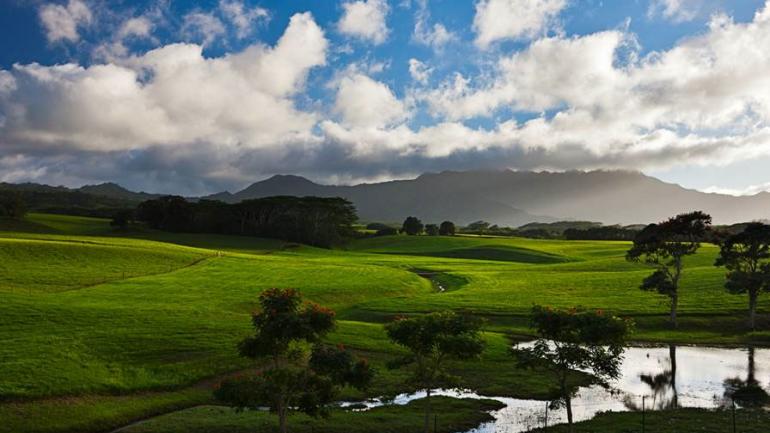
2. Jurassic Kahili Ranch, Kauai

This 2,800-acre working cattle ranch has appeared in three of the Jurassic Park films, including 2015’s “Jurassic World.” The ranch’s most famous scene is when Grant — and the audience — sees living dinosaurs for the first time in “Jurassic Park.”

Jurassic Kahili Ranch - Kauai, Hawaii by Shuteru Photography

3. Kualoa Ranch, Oahu

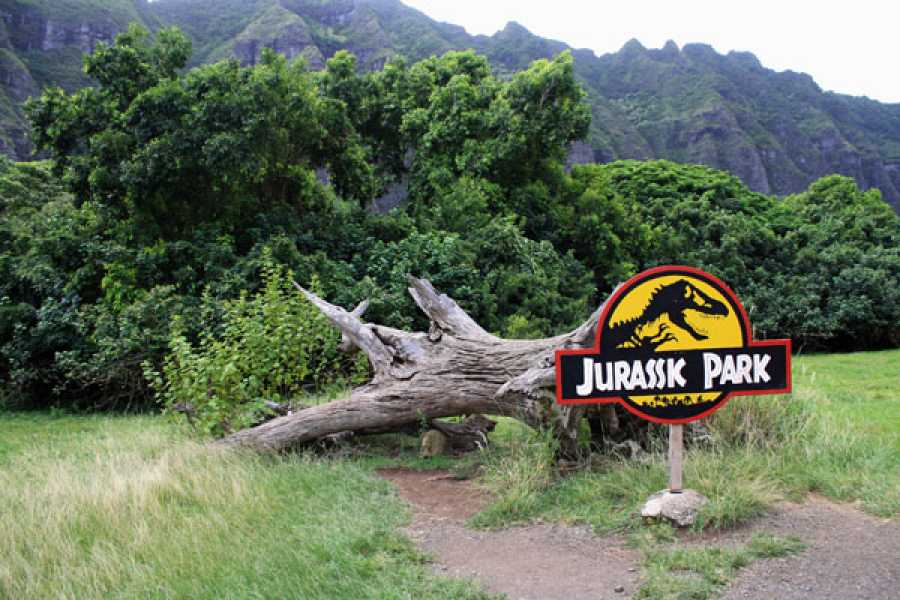
The emerald cliffs of Kualoa Ranch have not only appeared in the Jurassic Park series but also other movies and shows like “Lost,” “Kong: Skull Island” and “Jumanji: Welcome to the Jungle“. You can even sign up for a tour of the ranch’s filming locations, including the log where Grant and the kids hide from a dinosaur stampede in “Jurassic Park.”

4. Limahuli Garden, Kauai

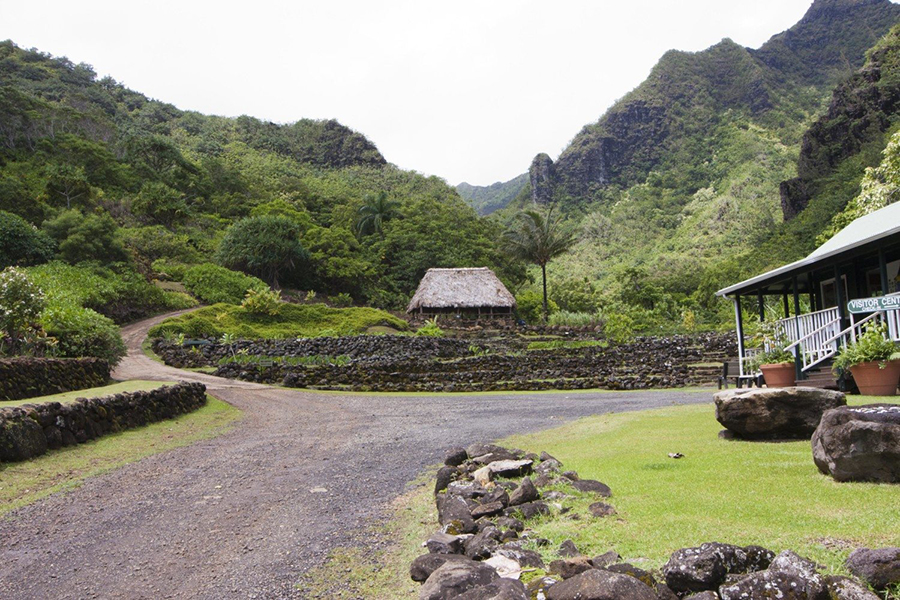
Also part of the National Tropical Botanical Garden, the Limahuli Garden was the background for the imposing raptor paddock in the original film. You won’t be seeing any raptors if you visit, but you can expect to see some of Hawaii’s endangered flora and fauna.

Flickr | lfarhadi

5. Manawaiopuna Waterfall, Kauai

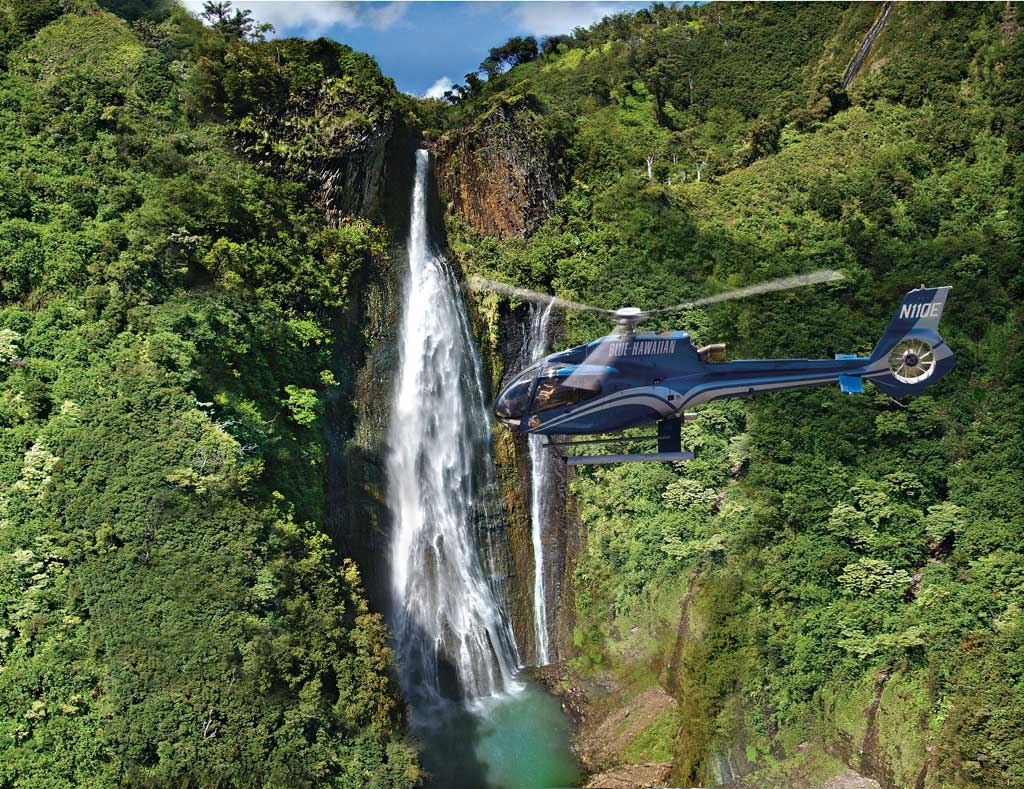
Thanks to the movies series, the Manawaiopuna Waterfall is so recognizable that it has earned the nickname Jurassic Falls. It was used as the location of the helipad set from “Jurassic Park,” and if you visit, you’ll also want to take a helicopter tour.

Manawaiopuna Falls (Jurassic Falls)

6. Mount Wai’ale’ale, Kauai

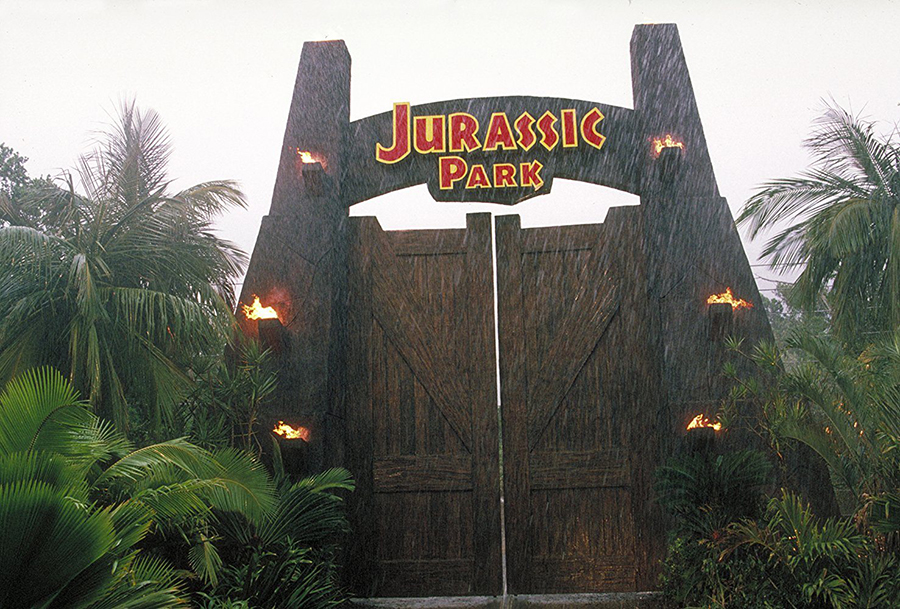
The iconic Jurassic Park gates were constructed at the base of Mount Wai’ale’ale, and while the gates themselves are gone, the poles they were built around are still there. The area is also home to a few other filming locations from the movies, but they are only accessible if you’re a very brave hiker.

IMDB/Universal Pictures

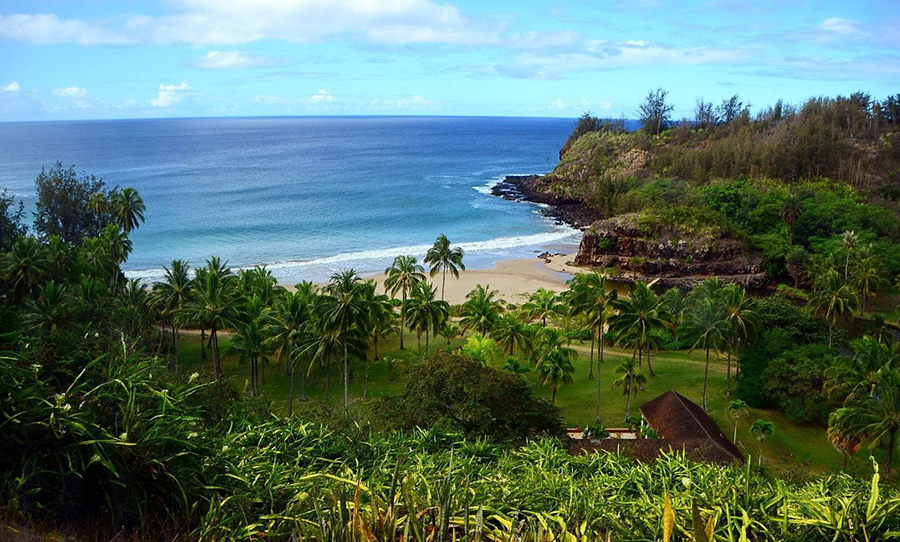
7. Na Pali Coast, Kauai

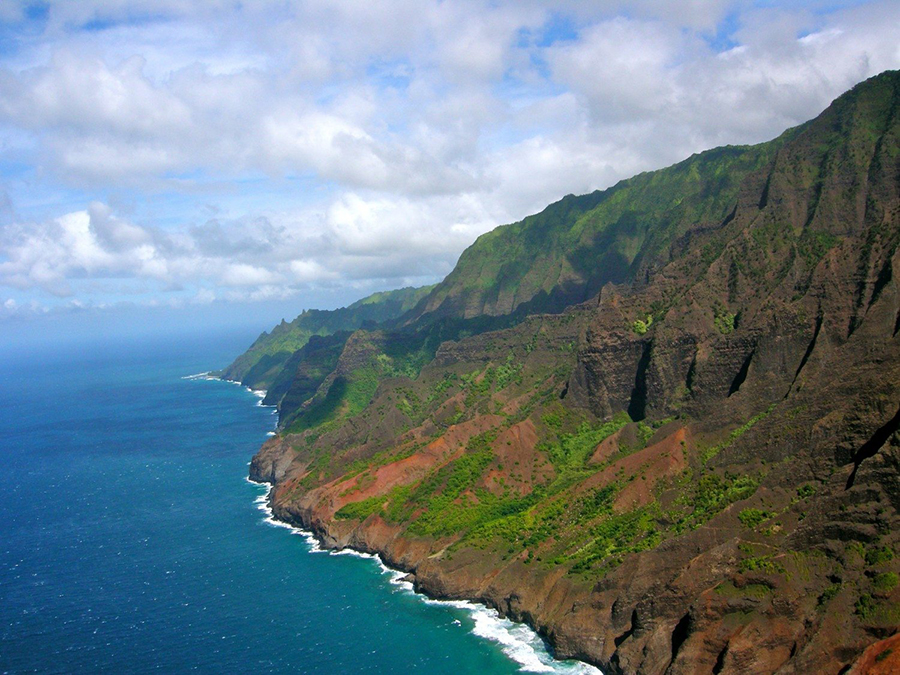
The cliffs of the Na Pali Coast are also the coastline of Isla Nublar, which is the fictional island where Jurassic Park was built. To preserve the integrity of the area, visitors and boats are not allowed on the shore. You can, however, see the cliffs on a helicopter or boat tour.

Flickr | Garden State Hiker

If you plan on spending any time in Hawaii, it might be great to stop by these spots and put your Jurassic Park geekdom on full display!

Source: www.simplemost.com

The Lost World: Jurassic Park is a Rare Instance of the Movie Being far Better than the Book

Wednesday, May 30, 2018

The original Jurassic Park (1993) is an all-time classic work of art, and Jurassic Park III (2001) is… not my favorite film. What about the oddly titled The Lost World: Jurassic Park (1997)?

While this sequel to the '93 classic is not at the same level of genius, it's still a fun movie with a lot of greatness. All of the disparate parts don't always add up, but for me, one thing is certain — it is leaps and bounds better than the original book the film is based on.

When does that happen? Very rarely. When it comes to movies adapted from books, the familiar refrain can almost be played by memory: "The book was better." The second Jurassic film and its corresponding novel are an instance in which the opposite is true, and some of that might be because of how weird and meandering the original Michael Crichton sequel is.

The original Crichton novel Jurassic Park (1990), the book that started all of this, is a book so hot with ideas and action it'll burn your hands. Many characters have different fates than they do in the film — Grant, Ellie, and the kids still survive, but Ian Malcolm and John Hammond don't live through it. Instead, Muldoon and the lawyer Gennaro share that helicopter ride to safety at the end of the story.

This is why it's particularly odd that Crichton's Jurassic Park sequel, The Lost World (1995), features Ian Malcolm as a main character. It begins with a paragraph that amounts to Crichton saying, "psych! He's not really dead, here he is, he's fine," and then having Ian go on his adventure to Isla Sorna, aka Site B.

Dennis Nedry's benefactor Dodgson (nice hat) is the book's main antagonist, and the aimless read ends with an extended chase on the island that features one of the book's two (new) children rolling around in a metal cage-ball for what seems like a million pages.

Steven Spielberg and writer David Koepp kept very little of the book's meager plot. Ian Malcolm (thankfully) survived in the movie world, so his return isn't an issue. Visiting Site B is still the focus, and the book's character of Sarah Harding is utilized and played wonderfully by Julianne Moore. Instead of two tech guys like in the book, they use just one, in the form of a pre-West WingRichard Schiff. Vince Vaughn's Nick Van Owen is a total cinematic invention, as is everything having to do with the (not dead in the movies) John Hammond, played again by the great Richard Attenborough. The film also kept the sequence where two chained together trailers slowly get pushed off a cliff... and that's about it.

A great many of the sequel's scenes are taken from moments in Crichton's first book that didn't end up in the first film — the two biggest examples being the opening on the beach featuring the little girl and the Compsognathus (Compys), as well as the Compy-swarm death of Peter Stormare's jerk of a character. The latter scene is a riff on how Hammond dies in the first novel.

The rest? Pure invention, with more than a little bit of King Kong thrown in the mix. While Ian Malcolm's daughter doing a gymnastics act to defeat a raptor is very low on my list of classic moments in cinema, there's still a lot of great stuff here.

The storyline of Ingen (now under newer, sillier management) trying to capture the island's dinosaurs leads to some great set pieces. The corporation's first landing on the island and their little dino-parade of capture and swarm is majestically shot, and bringing these creatures to a large city on the mainland is just another bad idea "in the long history of bad ideas," as Ian Malcolm would say. The aforementioned truck-trailer scene is wonderful, as is the velociraptor scene (DON'T GO INTO THE LONG GRASS!) in the infamous tall grass. John Williams gives us another fantastic score, which features an iconic jungle-trek theme. The entire third act with a T-Rex set loose on the mainland is nuts, but it's a weirdly logical place for this series to go. The book has no climax at all, let alone one this bonkers. Surely these Ingen suits will get the message now! They didn't.

The thing that really puts this movie over the top for me, though, and makes it something worth revisiting time and again, is Pete Postlethwaite's Roland Tembo.

Wholly new to the series in The Lost World, Tembo is the diamond of the film. This professional game hunter means business, and he makes that clear in his pitch-perfect introduction; he doesn't care about cloning or profit, he just wants to hunt a T-Rex. He's not all bad, as he helps Malcolm, Sarah, and the rest after the truck-trailer attack. He's got some warped morals, but they get put right by the time this fantastic character leaves the film (way too early), telling corporate stooge Ludlow (Arliss Howard) that he's spent "enough time in the company of death." His deleted opening scene is also a thing of beauty.

The aforementioned gymnastics moment may be the silliest moment here, but, truth be told, it's not the only one. There's a lot of silliness, and though the movie doesn't end by packing 13 dinosaurs into a clown car, it skirts that line. The magnificent performance by the greatly missed (and dearly departed) Pete Postlethwaite gives the movie a grounding that it would not have otherwise. The book really could have used him.

Though Jurassic World: Fallen Kingdom can't possibly use the character, it will use Ian Malcolm. And thank Ingen for that. He's wonderful in The Lost World, from the poster-match jump cut onward. Dinosaur movies with Jeff Goldblum are just so much better than dinosaur movies without him, so here's hoping that the good chaotician has more than just a little scene in the new film.

The Lost World: Jurassic Park (seriously, what is with that title) is, for my money, the second-best in the cinematic canon Jurassic. If the movie had stayed true to the book, it would be the worst by a mile. Again I ask, when is that ever the case?

Here's to adventures with real dinosaurs, before they started making up new ones in both labs and in scripts. As the great Roland Tembo would say, "Oh you're breaking our hearts. SADDLE UP, let's get this movable feast underway."

Source: www.syfy.com

Jurassic World Fallen Kingdom: Release Date, Cast, Plot, Rumors

Wednesday, May 30, 2018

Who you calling extinct? The fifth film in the classic dinosaur series should produce another dino-mite blockbuster. Here's what we know about it.

Open the door, get on the floor, everybody walk the dinosaur. Again. 

The series of dinosaur movies that began with the 1993 hit movie Jurassic Park is still stomping around, re-energized by 2015's Jurassic World. Jurassic World: Fallen Kingdom is the fifth film in the series. It picks up three years after the new dinosaur theme park ended in tourist-chomping disaster on Isla Nublar, the island that was also home to the original park.

A sequel was a natural after Jurassic World became the first movie ever to gross over $500 million worldwide. The film eventually became the fifth-highest-grossing film of all time, and the biggest earner in the Jurassic franchise. These dinos are far from extinct.

The first Jurassic World film asked viewers to suspend their disbelief in many ways. 

Viewers have to accept that a new theme park could be allowed to operate even after the original park concept ended in the dinosaurs eating the staff. That Chris Pratt's Owen Grady could have established a fatherly link with Blue, one of the raptors he helped raise, as if he were training a German Shepherd. That Bryce Dallas Howard's character, park operations manager Claire Dearing, would run for her life from dinosaurs yet never take off her painfully high heels. And that because there were two smart-for-their-age kids related to a park staffer in the first film, there should be two new ones in this movie. 

Or viewers could just ignore all that and wait for the excellent realistic dinosaurs to a) fight each other again, or b) snack on some more humans. Really, the plot doesn't matter in the Jurassic movies as much as the stomping and the teeth-gnashing. Bring on more prehistoric predators!

Release date, production info

Jurassic World: Fallen Kingdom will open on June 6 in the UK, June 21 in Australia and June 22 in the US. It reportedly runs 2 hours, 10 minutes.

Much of the sequel was filmed on soundstages in England, with Hawaii standing in for the supposed Central American Isla Nublar. Some filming was reportedly done in Wales, specifically in the Brecon Beacons National Park. 

Like the original Jurassic Park films, there are three films planned in the Jurassic World series, with No. 3, untitled at press time, scheduled to open June 11, 2021.

Cast: Who's who?

Returning characters

  • Chris Pratt as Owen Grady, dinosaur whisperer -- er, trainer

  • Bryce Dallas Howard as Claire Dearing, former operations manager at Jurassic World, now a dinosaur rights activist

  • B. D. Wong as Dr. Henry Wu, former head geneticist at Jurassic World and the original Jurassic Park

  • Jeff Goldblum in a cameo as Dr. Ian Malcolm, chaos-theory expert who consulted for the original Jurassic Park

New faces

  • Ted Levine as Ken Wheatley, a dinosaur hunter

  • Rafe Spall as El Mills

  • Toby Jones as Gunnar Eversol, an auctioneer

  • Justice Smith as Franklin Webb, former IT technician for Jurassic World, now the Dinosaur Protection Group's systems analyst

  • James Cromwell as Benjamin Lockwood, partner of original park owner John Hammond

  • Isabella Sermon as Maisie Lockwood, Benjamin's granddaughter

  • Geraldine Chaplin

  • Daniella Pineda as Zia Rodriguez, a veterinarian in the Dinosaur Protection Group

  • Peter Jason as Congressman Sherwood

  • Robert Emms as Jack

Plot news, rumors and theories

Rescuing the dinosaurs: The trailers make the basic plot outline pretty clear. It's three years after Jurassic World ended in disaster, and the surviving dinosaurs have been left to freely roam Isla Nublar. 

Bryce Dallas Howard's Claire is now a dinosaur rights activist, and she and Chris Pratt's Owen are heading back to the island to save the dinosaurs from a volcanic eruption. (Her Dinosaur Protection Group even has a website.) Claire has teamed up with Benjamin Lockwood (James Cromwell), the partner of original park founder John Hammond (Richard Attenborough, RIP) and plans to take the rescued dinosaurs to a sanctuary. Owen doesn't want to go, but Claire convinces him it's worth it to save Blue, the raptor he raised and trained. But it turns out others want to get their hands on the dinosaurs for nefarious reasons.

Bluer than Blue: Owen's pet raptor Blue is the only surviving raptor, and there are hints she'll play a major part in the plot. "Blue's DNA will form the architecture of a completely new creature," a voice says in one of the trailers. It seems as if the secret recipe for creating dinosaurs is no longer a secret, with some characters intending to make and use them as weapons. A source told the Daily Mail that Blue's DNA will be combined with the fearsome Indominus Rex, the hybrid dino that died in the last film.

Character building: There'll be a third Jurassic World film in 2021, and Colin Trevorrow, who directed the first of the trilogy and co-wrote and produced this second one, will direct. He told Entertainment Weekly that Claire and Owen will be back for No. 3. (it's not like we really expected either of the stars to die in this film.) And some of the characters introduced in Fallen Kingdom will play big roles in the final film.

Watch in horror: Get ready to be scared. Trevorrow also told EW that "if I could contextualize each film, I would say Jurassic World was an action adventure, Fallen Kingdom is kind of a horror suspense film, and Jurassic World 3 will be a science thriller in the same way that Jurassic Park was."

Splish-splash: There's reportedly an underwater scene where Owen has to rescue Claire and IT technician Franklin Webb (Justice Smith) from a sinking gyrosphere. It sounds like a lot of bodily fluids were, uh, released in the pool where that scene was filmed.

Welcome back: As fans already know, Jeff Goldblum is reprising his role as Dr. Ian Malcolm. Malcolm is the chaos-theory specialist who warned John Hammond about the consequences of trying to control nature in the original Jurassic Park and its sequel The Lost World. Malcolm seems to be called to testify at some sort of hearing involving the dinosaurs' fates. "These creatures were here before us," Malcolm says in a trailer. "If we're not careful, they're going to be here after."

Source: www.cnet.com

Máximo: Biggest Dinosaur Ever Discovered Arrives at the Field Museum

Thursday, May 31, 2018

The Field Museum in Chicago received the largest dinosaur ever discovered and debuting him on June 1st.

This week, the Field Museum in Chicago unveiled a cast of the largest dinosaur ever discovered, and his name's Máximo. The 122-foot-long touchable cast takes up a third of the Museum's main Stanley Field Hall, with its head peeking over the 28-foot balcony to the second floor. The titanosaur, a recently discovered dino from Argentina, is nicknamed Máximo—Spanish for "maximum" or "most" and a nod to the dinosaur's enormous size and Argentinian homeland.  And Máximo won't be alone—as part of the museum's massive renovation to its iconic Stanley Field Hall, he'll be joined this week by a flock of life-size replicas of giant flying reptiles, as well as state-of-the-art hanging gardens. These additions will transform the hall in celebration of the museum's 125th anniversary this year.

"Our goal as an institution is to offer visitors the best possible dinosaur experiences, and we want that to start right when visitors first enter Stanley Field Hall," says Field Museum president Richard Lariviere. "The new titanosaur is huge and it looks amazing in Stanley Field Hall. It is the perfect home to display the world's largest dinosaur."

The new dinosaur is a cast made from the fossil bones of Patagotitan mayorum (pat-uh-go-tie-tan my-or-um), a giant, long-necked herbivore from Argentina that's part of a group of dinosaurs called titanosaurs. The cast is the only Patagotitan in the world that visitors are able to touch and walk under, and only the second to ever be on display. Along with the cast of the titanosaur skeleton, there are some of its real bones on display, including an 8-foot-long thighbone. Máximo's pink hue matches the color of the real fossils, turned reddish by the red clay soil where they were found.

The flock of pterosaurs (which are flying reptiles, not dinosaurs) joining Máximo will give visitors a lifelike look at the animals that shared the planet with the dinosaurs. The pterosaurs will also serve as a wayfinding tool from Stanley Field Hall up to the rest of the dinos and SUE's new home in the permanent exhibition The Griffin Halls of Evolving Planet. The largest pterosaur will have a 32-foot wingspan, the length of a school bus.

Máximo, the flying reptiles, gardens, and renovations to SUE the T. rex (who is undergoing scientific updates before their reveal in their new gallery by the museum's other dinos in early 2019) are all made possible by Citadel CEO Kenneth C. Griffin's generous gift of $16.5 million, and are just the beginning of groundbreaking changes at the museum this year. "Visiting the Field Museum has brought tremendous joy and wonder to my children and me over the years," says Griffin. "I am proud to support such an outstanding institution so that children and families can better understand and appreciate dinosaurs and their history."

Source: www.prnewswire.com

Science and Art a 'Marriage Made in Heaven' for Renowned Palaeontologist

Thursday, May 31, 2018

PHOTO: Honours student Patrick Tavasci, centre, is using art to help present his scientific research. (ABC South East SA: Lucy Robinson)

Art and science can seem like they are worlds apart, but in the work of palaeontologist Julian Hume, they are constantly colliding.

The researcher from London's Natural History Museum has spent a lifetime studying extinct species like the dodo, piecing together pictures of animals no living human has ever seen.

"If you're lucky and you have an animal that has a close relation living today, it gives you a good idea of how that animal may have been in the past," Mr Hume said.

"It's when you get animals where there's no living relative that the real fun begins."

Mr Hume, also a UK Channel 4 presenter who has worked with David Attenborough, is teaching South Australian artists and science students to reconstruct and paint animals that once lived in their region.

His first workshop, at the Naracoorte Caves in SA's south east, focused on the thylacoleo — Australia's 'marsupial lion' — and short-nosed kangaroo, which roamed the area about 60,000 years ago.

"We're looking at how they looked, how they lived, how they interacted with the environment," Mr Hume said.

"If you were standing here 60,000 years ago, it wouldn't have been all that different from today.

"The plants would have been the same and there may have been little subtle changes, but actually what you're looking at here is the same as what it was in the past."

Mr Hume said science and a little bit of artistic licence both played a role in deducing what the animals looked like.

"It's one big circle because the science starts the process and then the art comes in and you get another twist," Mr Hume said.

"First off you look at the fossil records … you do measurements and get your ratios right.

"Then once you've got those proportions you need to understand the background — is the environment the same now as it was in the past or has it changed?

"Once you've got everything in place, you can then start putting paint on canvas. That's the real fun.""

"It's quite a hard job but hopefully at the end you end up with something that's artistic but also scientifically accurate — that's the key thing."

A different way to present research

For Honours student Patrick Tavasci, the genre of 'paleoart' represented a new way to convey research findings.

The University of Adelaide palaeontology student wants to be able to draw his own reconstructions of the environment around the Naracoorte Caves for his honours project.

"It's really good to be able to represent it other than just using raw data, because the data is very helpful scientifically but it's also very bland and dry," he said.

"Putting it in the art is still a valid way of communicating it and it makes it so much more appealing."

He said it was often hard to focus on the big picture of the environments he studies in the lab.

"In my case, I'm focusing just on the mammals so I don't get a good idea of how the flora and fauna inter-relate across the landscape," he said.

"Looking at the ecology is really good background information for thinking about how these systems work."

PHOTO: "It's one big circle." Julian Hume says science and art both feed the end result of his paintings. (ABC South East SA: Rhett Burnie)

Dr Liz Reed, who is a vertebrate palaeontologist from the University of Adelaide and Mr Tavasci's project supervisor, said she believed all her students could benefit from picking up a paintbrush.

"What we're about as scientists and artists is telling stories," she said.

"And it seems like a really great thing to combine the two and tell the amazing science stories of Naracoorte Caves using art.

"I think it's really a marriage made in heaven."

Global direction for caves

Dr Reed said the workshop, organised as a collaboration between her university, Country Arts SA and the Australian Landscape Trust, had come at an exciting time for the Naracoorte Caves.

"There has been an injection of enthusiasm into scientific research here in recent years," she said.

Funding granted by the Australian Research Council last year has given the university at least four more years to continue research at the site.

"The aim is to lift the scientific profile of the site which will in turn encourage more scientists — and I'm sure internationals — to work here," Dr Reed said.

"The really wonderful thing about the deposits from Naracoorte is it's a mixture of animals that we know and still have in Australia today and those that became extinct.

"I honestly do think it's one of those Rolls Royce fossil sites — this place really does have it all."

Mr Hume may have spent most of his life looking into the past, but he also has an important message to spread about the future.

"This here was a once-dynamic environment that's now gone forever," he said.

"Let's not repeat what's happened in the past. Let's save what we have because it's precious.

"And what we know now is that once it's gone, it never comes back."

Source: www.abc.net.au

Megachirella wachtleri: World’s Oldest Squamate Fossil Found

Friday, June 1, 2018

Megachirella wachtleri. Image credit: Davide Bonadonna.

Paleontologists have unearthed the world’s oldest squamate fossil — 240-million-year-old specimen of a species called Megachirella wachtleri — from a site in the Dolomite Mountains, Italy.

Megachirella wachtleri is the most ancient ancestor of all modern squamates (lizards, snakes and amphisbaenians).

The specimen — a well-preserved partial skeleton — is at least 75 million years older than the previously known oldest squamate fossils, partially filling the fossil gap in the origin of lizards.

The fossil was originally found in the early 2000s in the Dolomites.

Paleontologists thought it was linked to — but not an ancestor of — modern lizards and snakes.

Further analysis by University of Alberta researcher Tiago Simões and his colleagues determined the specimen was actually the oldest relative ever found of all living lizards and snakes.

“This discovery provides valuable information for understanding the evolution of both living and extinct squamates,” Simões said.

To better understand both the anatomy of Megachirella wachtleri and the earliest evolution of squamates, the team assembled the largest reptile dataset ever created, using fossils and living specimens from more than 130 lizards and snakes from around the world.

The data included CT scans, photographs and molecular analysis collected by the study authors, rather than relying on existing literature.

They combined the new data with CT scans, revealing that Megachirella wachtleri was actually the oldest known squamate.

“Fossils are our only accurate window into the ancient past,” said co-author Professor Michael Caldwell, also from the University of Alberta.

“Our new understanding of Megachirella wachtleri is one point in ancient time, but it tells us things about the evolution of lizards that we simply cannot learn from any of the species of lizards and snakes alive today.”

The research appears in the journal Nature.

_____

Tiago R. Simões et al. 2018. The origin of squamates revealed by a Middle Triassic lizard from the Italian Alps. Nature 557: 706-709; doi: 10.1038/s41586-018-0093-3

Source: www.sci-news.com

Paleontologists Find Fossilized Dandruff of Feathered Dinosaurs

Wednesday, May 30, 2018

A pair of Beipiaosaurus dinosaurs. Image credit: Pavel Riha / CC BY-SA 3.0.

An international research team led by scientists at University College Cork, Linyi University, and China’s Institute of Vertebrate Paleontology and Paleoanthropology has found and analyzed dandruff fragments preserved amongst the plumage of Cretaceous feathered non-avian dinosaurs, revealing the first evidence of how dinosaurs shed their skin.

The team discovered the fossilized skin of three feathered non-avian dinosaurs (BeipiaosaurusSinornithosaurus and Microraptor) and an early bird called Confuciusornis.

These creatures lived approximately 125 million years ago (Early Cretaceous period) and were important members of the famous Jehol Biota, a rich ecosystem preserved in a rock formation cropping out in several Chinese provinces.

The paleontologists studied the fossilized dandruff, and dandruff from modern birds, with powerful electron microscopes.

“What’s remarkable is that the fossil dandruff is almost identical to that in modern birds — even the spiral twisting of individual fibers is still visible,” said co-lead author Dr. Maria McNamara, from the School of Biological, Earth and Environmental Sciences at University College Cork, Ireland.

“The fossil cells are preserved with incredible detail — right down to the level of nanoscale keratin fibrils.”

Colorized electron images of fossil soft tissue in Confuciusornis (a, e, f), Beipiaosaurus (b, g), Sinornithosaurus (c, h) and Microraptor (d). Image credit: McNamara et al, doi: 10.1038/s41467-018-04443-x.

The 125-million-year-old dandruff is the first evidence of how dinosaurs shed their skin.

BeipiaosaurusSinornithosaurus and Microraptor clearly shed their skin in flakes, like Confuciusornis and also modern birds and mammals, and not as a single piece or several large pieces, as in many modern reptiles,” the researchers said.

“It’s unusual to be able to study the skin of a dinosaur, and the fact this is dandruff proves the dinosaur was not shedding its whole skin like a modern lizard or snake but losing skin fragments from between its feathers,” added co-author Professor Mike Benton, from the School of Earth Sciences at the University of Bristol, UK.

Just like human dandruff, the fossil dandruff is made of tough cells called corneocytes, which in life are dry and full of the protein keratin.

“This modern skin feature evolved sometime in the late Middle Jurassic, around the same time as a host of other skin features evolved,” the study authors said.

“There was a burst of evolution of feathered dinosaurs and birds at this time, and it’s exciting to see evidence that the skin of early birds and dinosaurs was evolving rapidly in response to bearing feathers,” Dr. McNamara said.

“Modern birds have very fatty corneocytes with loosely packed keratin, which allows them to cool down quickly when they are flying for extended periods.”

“The corneocytes in the fossil dinosaurs and birds, however, were packed with keratin, suggesting that the fossils didn’t get as warm as modern birds, presumably because they couldn’t fly at all or for as long periods.”

The findings were published in the May 25, 2018 issue of the journal Nature Communications.

_____

Maria E. McNamara et al. 2018. Fossilized skin reveals coevolution with feathers and metabolism in feathered dinosaurs and early birds. Nature Communications 9, article number: 2072; doi: 10.1038/s41467-018-04443-x

Source: www.sci-news.com

The Really Wild Show: “Dinosaurs in the Wild” Examined

Wednesday, May 30, 2018

Dinosaurs in the Wild | Their Time. Their World.

Dinosaurs in the Wild educates and entertains using life performances and 4d atmospherics, all under a Neptunus structure…

The Jurassic Park series taught us – five times and counting – that resurrecting the prehistoric master species is somewhat ill-advised.

Dinosaurs in the Wild caters for the same inate fascination, this time away from the comfort of your living room.

Billed as ‘the greatest safari ever’, the multi sensory experience from the team behind the BBC’s award-winning Walking with Dinosaurs and ITV drama Primeval, is also designed to be scientifically accurate, and informative.

Visitors are transported back 67 million years with the help of dramatic storytelling, high-tech animation and 3D audio-visual effects.

Producer Bob Deere told Access: “We set out to build a unique event where you could truly experience that time seeing it with your own eyes. So we created an exciting story where time travel has been invented, and a TimeBase dinosaur research station has been built on the Cretaceous plains 67 million years ago.

“When people come to the show they step into this wonderful science fiction story. But everything to do with the dinosaurs they see is based

on the latest science. Our scientific consultant, leading palaeontologist Dr. Darren Naish, has guided the science at every step of the way.”

More than 100 artists and technicians created the experience, which features eight prehistoric giants, including the iconic Tyrannosaurus rex, the three-horned Triceratops, the towering Alamosaurus and the amazing Quetzalcoatlus – the largest creature ever to fly.    

“The show is what we call ‘mixed reality’ – the TimeBase research station is a real, physical building where you walk around in the laboratories and the animal labs. You see an autopsy in progress on a dinosaur which died outside near the TimeBase, baby dinosaurs in cages, and others hatching from eggs,” says Deere.

“And that real building is surrounded by an equally real digital world of dinosaurs which you see, hear and sometimes even feel threatened by as you look out of the research station windows.”

Designers Freeman Ryan Design created a realistic ‘research station’.

“Creating the surrounding digital world in stereoscopic 3D, was a huge challenge. The dinosaurs had to look completely believable. For that we enlisted Milk, the London visual effects house. They’ve worked on many top-end projects and have won an Oscar, but said Dinosaurs in the Wild was one of their most complex pieces of work ever.”

The project took more than a thousand hours of animation and more than 77 million frames were rendered in Ultra 4K.

Knitting the whole show together into an event ready for the public was the next big challenge for Deere, who ensured that the team could move it efficiently and quickly between venues.

‘It’s a 2,500sqm event, so this is no small undertaking. We spent quite a lot of time at the start of the project just getting a first class team of industry professionals together and that has paid off at every stage. From technical management, sound, lighting, set construction, screens and servers, theatrical direction, event and stage management – we honestly could not have asked for a better and more expert group of people. Everything has come together to make this into an event with high production values that the team are proud of.

“The show reflects the level of investment, around £12m, and many visitors have said it’s the kind of quality experience they associate with Universal Studios or Disneyland.”

After successful seasons in Birmingham and Manchester at existing event centres, Dinosaurs in the Wild came to London. But, with no permanent building available to accommodate such a large show for a long period of time, organisers turned to temporary structure specialists Neptunus to create a bespoke venue.

Structured approach

Neptunus constructed a temporary building with reinforced flooring and load-bearing roofs which took an eight-strong team just three weeks to build on the Greenwich Peninsula, close to London’s O2 Arena, utilising the company’s Evolution technology. 

The eight-metre-tall Evolution Structure covered 3,400sqm and incorporated black-out skins to provide a dark interior.

1,600sqm of Alu Hall structures were constructed behind the temporary building to accommodate the requirements of the back-of-house support team, while a 600sqm Alure Globe structure links to the Evolution to form a foyer and reception area for visitors.

The venue houses two ‘time machines’ and a dinosaur research station, TimeBase 67. Visitors and their guides tour a range of laboratories and witness wonders like dinosaurs hatching, an autopsy on a giant Pachycephalosaurus, and an observation lookout where dinosaurs roam in the wild all around them.   

Trish McClenaghan, event manager for Dinosaurs in the Wild, says the temporary structure was a big success story.

“From the visitor’s point of view there is no difference in the experience in this temporary building than for the events we staged at the NEC in Birmingham and EventCity in Manchester, it is just the same.

“The Dinosaurs in the Wild experience has been designed to be staged in different places and as the temporary structures are so good, it means that we have the ability to take the show anywhere.”

Deere adds: “There were no regular venues available for the event in London for the length of time we needed. We worked with our colleagues at Kilimanjaro Live to scour London for potential locations for a temporary venue. The Greenwich Peninsula seemed ideal and Knight Dragon the landlords were keen to work with us – there’s a big local catchment of course, but the peninsula is also already established as an entertainment destination with the O2 sitting there and great public transport links.

“We’re just a ten minute walk from the North Greenwich tube, and buses run from the station past the venue all the time.

“There were challenges in getting the piece of land ready for the event but again we had a good team in place who worked through that and we opened on time.”

In Birmingham and Manchester the show took place at the NEC and EventCity respectively. But the London leg proved the event can sit in the sort of temporary venue that Neptunus built in North Greenwich.

“It’s liberating to know that you can pick this show up and put it in a temporary structure pretty much anywhere. That could be an important factor in the planning we’re doing now to take Dinosaurs in the Wild to many other parts of the world,” Deere concludes.

Source: http://accessaa.co.uk

Pages