Blogs

Marking 40 Years Since Tiny Bones Changed the World's Understanding of Dinosaurs

Tuesday, July 3, 2018

The skull of an adult Maiasaura, on display at the Museum of the Rockies. A large, spoon-shaped snout superficially resembles that of a duck.

 It hardly seemed fair that so many important dinosaur finds came from Montana but ended up on display in the major museums of the East Coast.

Some ranchers mounted fossils in the county museum in the basement of the high school in Ekalaka, but that was all Montanans could see without a long trip or a fortuitous find of their own.

"That made us kind of upset. We decided we would build our own display," said paleontologist David Trexler.

His mother, Marion Brandvold, wife, Laurie, and he found their first significant dinosaur fossils in 1971. You can see those at the Old Trail Museum in Choteau. 

And if ranchers in Elakaka could make a fossil display in their town, the trio decided they could, too. Brandvold had a rock shop, Trex Agate Shop, along U.S. Highway 89 and the dinosaurs would go in the back.

They thought they had their big find: a Maiasaura skull.

But one night as the Trexlers were cleaning up at their fossil dig along the Rocky Mountain Front, Brandvold wandered. Digging didn't have the same allure as discovery, and she had a knack for finding fossils.

"She liked to look. She liked to find. She was very good at identifications but as for digging a hole I think she'd done enough fence posts that just wasn't her thing," Trexler said. 

Trexler recalled the smile on Brandvold's face as she waited for him to catch up.

"Within 10 minutes we knew we had baby duckbill dinosaurs," he said.

What they didn't know is that the small bones Brandvold found would upend the world's understanding of dinosaurs.

Trexler said they thought major museums didn't show baby dinosaur fossils because, well, how can little bones measure up to the thrill of a full-sized Tyrannosaurus rex?

No, it's just that no one had ever found baby dinosaur bones in North America.


RELATED: Montana's Best Dinosaurs: Five Finds That Have Shaped Science


And these were in a nest, something no one anywhere in the world had ever seen before.

"Before this was discovered everyone just knew dinosaurs were nothing but overgrown lizards, cold-blooded creatures that ate, slept, laid their eggs and that was the end of the story," Trexler said. "This discovery showed that at least one dinosaur species took care of its young, and it changed how the world perceived dinosaurs and modern reptiles."

Paleontologist Jack Horner saw the bones at the rock shop. He'd been to the East Coast institutions. He knew no one else had fossils like this.

It's taken 40 years, but now those baby dinosaur bones have a place of honor in a new exhibit at the Two Medicine Dinosaur Center next to the family's rock shop.

The exhibit debuted Saturday with a dinosaur-shaped cupcake display, an open house and decorating of the center's 4th of July parade float.  Choteau's parade theme is “Diggin’ It,” in honor of the 40th anniversary of the baby dino discovery.

The new display also gives the bones dimension, showing how they fit together into a skeleton.

"Bob the Blob" is a mass of intertwined dinosaurs on display at the Two Medicine Dinosaur Center in Bynum. (Photo: TRIBUNE PHOTO/KRISTEN INBODY)

The dinosaur find is "the most important exhibit in our entire building," but the big dinosaurs have been stealing the show, Trexler said. 

The exhibit also shares the story of Brandvold's life. The daughter of Bynum homesteaders, she found her first fossil at age five and a hired man explained what dinosaurs were. Brandvold worked in her rock shop, still in the family, to age 97 and died in 2014.

As for Montana, the state has an entire dinosaur trail now, connecting museums around the state that showcase important dinosaur exhibitions.

Source: www.greatfallstribune.com

15 Questions For Ross Geller About His Alleged Career In Paleontology

Thursday, April 30, 2015

Dr. Ross Geller, an affable goof from the hit TV show Friends, is a moderately successful paleontologist. At least that is what we are led to believe...

However, unless Ross has a really good answer to these 15 questions, he probably isn’t a real paleontologist.

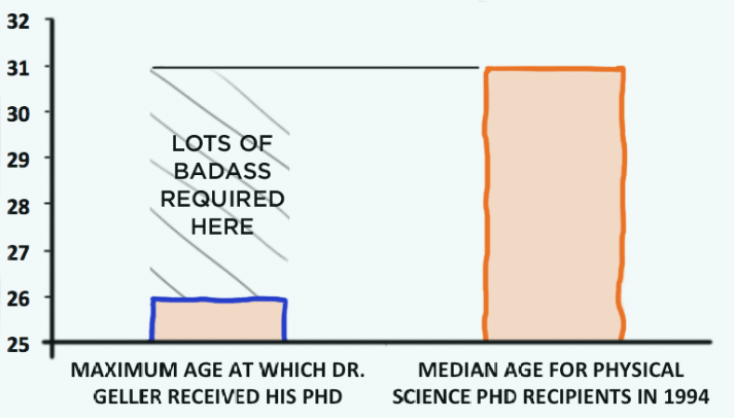
1. How did you get a Ph.D. and a museum job before you were 26?

Alex Kasprak for BuzzFeed

Dr. Geller is 26 in the first season of Friends and already has a Ph.D. from Columbia University, one of the best departments for paleontology in the world. According to the National Science Foundation, the median age of a physical science Ph.D. recipient in 1994 was 31.

Sure, it's possible, but he should probably at least be reading some scientific papers in Central Perk if this is going to be at all credible.

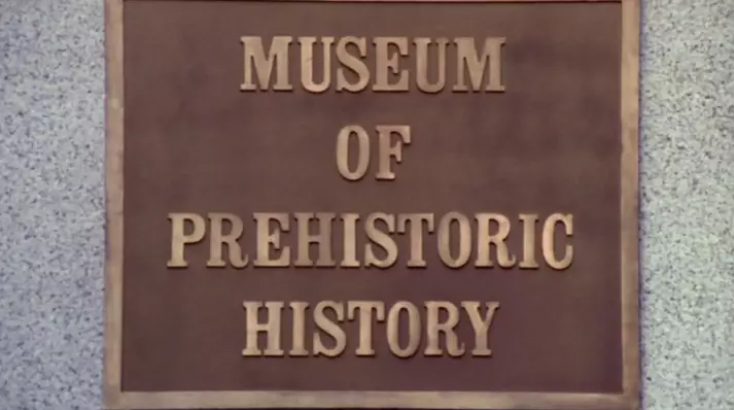
2. Why would you work at a museum with a laughably redundant and unscientific name?

NBC

3. Are you sure you are actually a paleontologist, and not an archaeologist or anthropologist?

NBC / Friends Season 1, Episode 2

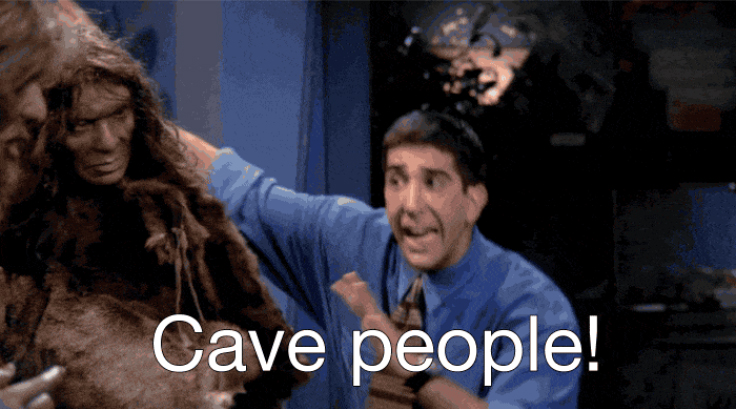
Despite his professed love for dinosaurs (paleontology), Dr. Geller seems to be concerned primarily with the “cave people” display (anthropology) at his museum in the early Friends episodes.

He also frequently discusses human evolution (anthropology) as if it were interchangeable with the already broad field of vertebrate paleontology.

NBC / Friends Season 9, Episode 22

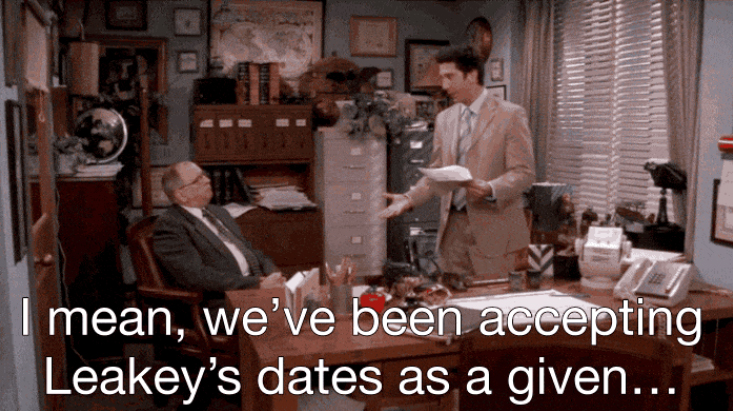
Here, Dr. Geller might be referring either to Louis Leakey, Louise Leakey, or Richard Leakey. All three are famous paleoanthropologists (diferent than paleontologists) who study or have studied ancient hominids.

4. What IS your area of expertise, anyway?

NBC / Friends Season 6, Episode 4

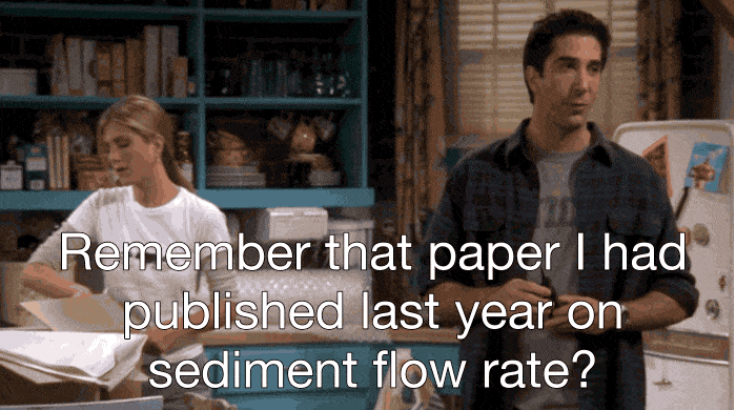
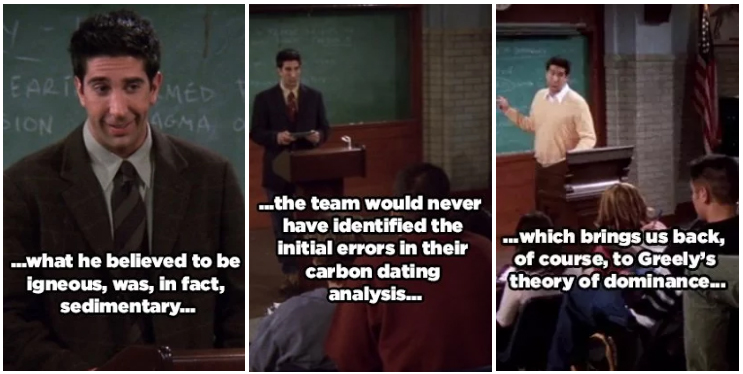
Ross Geller’s big break as a paleontologist was actually a sedimentology study — without question, a useful discipline for paleontology. It is, however, remarkable that someone so early in his career could pull off institution-impressing papers on classic geologic subjects while also being an expert in both paleoanthropology and vertebrate paleontology — things that could take years of hard work.

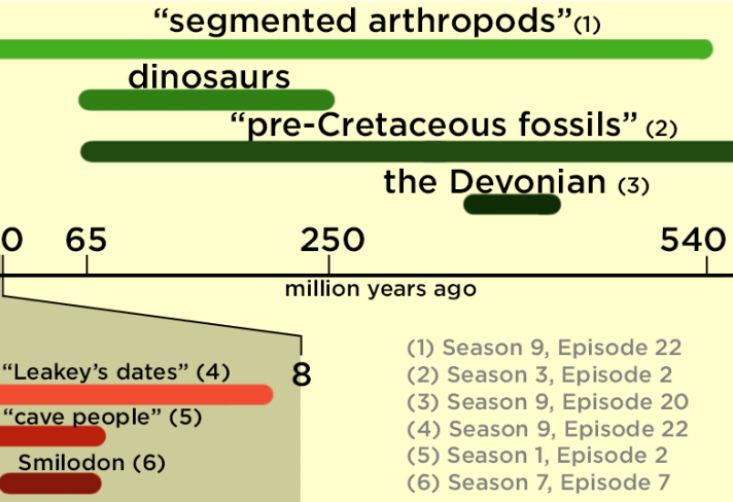
5. How are you somehow an expert in all of geologic time?

Alex Kasprak for BuzzFeed

Dr. Geller's expertise appears to span multiple disciplines while covering the entirety of the last 540 million years of evolution.

6. What self-respecting scientist would keep a pet monkey in a small New York apartment?

7. Did you find some source of dinosaur DNA that modern science is unaware of?

NBC / Friends, Season 9, Episode 24

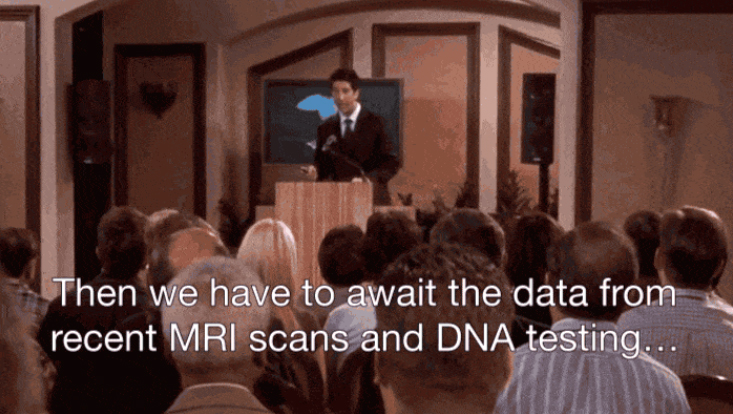
DNA, in any appreciable amount, will not last anywhere near 65 million years — not even in amber. Though it's hard to surmise from the brief bits we get to see on the show, Dr. Geller's big keynote speech seems to suggest that DNA data will be instrumental in "bringing the Mesozoic [65–250 million years ago] into the 21st century" — whatever that means.

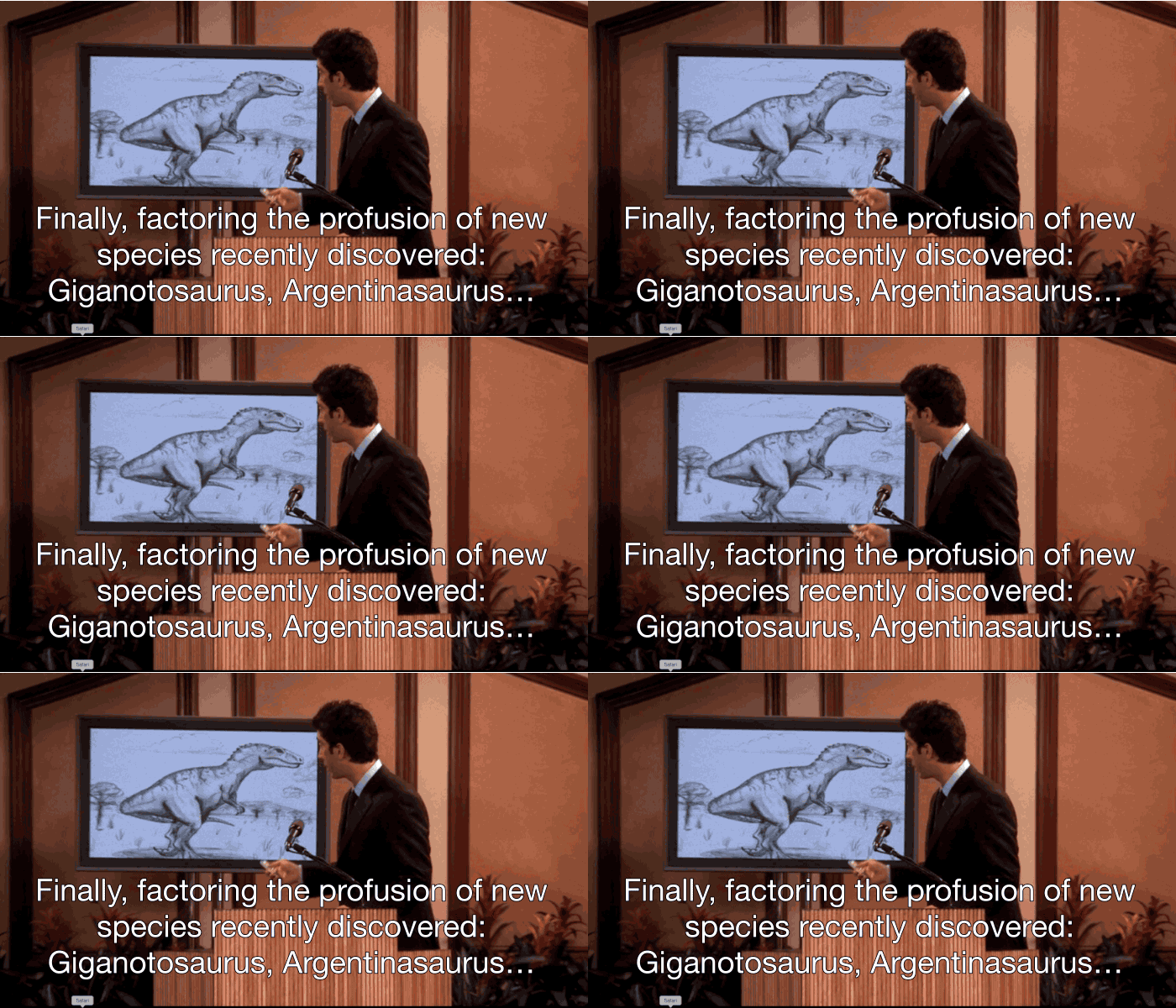
8. How can such a decorated paleontologist not know the difference between a species and a genus?

Giganotosaurus and Argentinosaurus are both examples of a genus, not a species.

9. Has anyone looked into the fact that there is no "Department of Paleontology" at New York University?

Alex Kasprak for BuzzFeed / Via as.nyu.edu

There are indeed some very esteemed paleontologists at NYU, but they are housed in the biology department.

10. What the shit do you actually teach at NYU?

Season 6, Episode 4 - Season 6, Episode 4 - Season 8, Episode 12 NBC

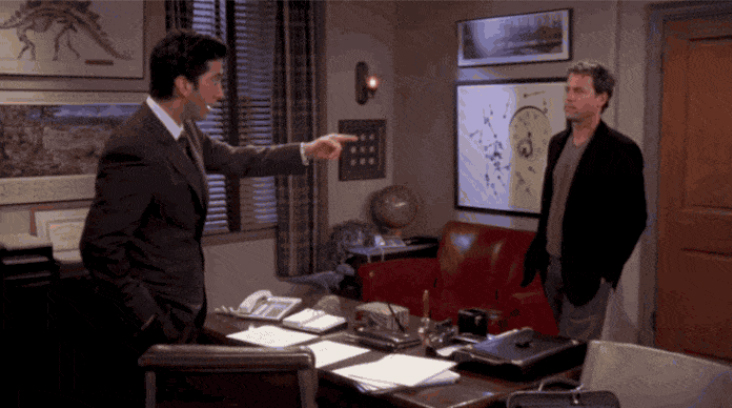
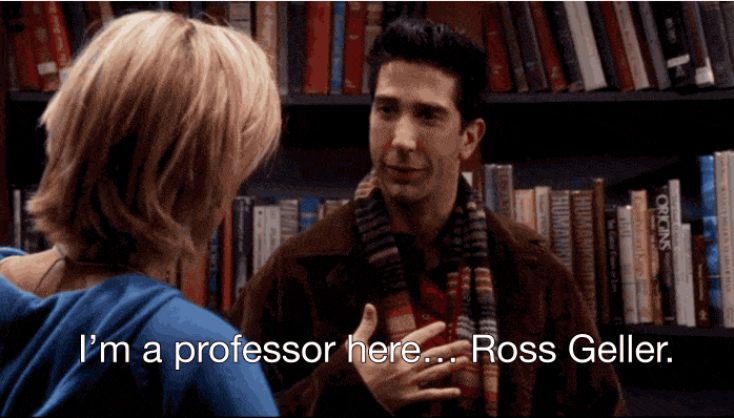
11. How does a visiting instructor get such a rad office?

NBC / Via s10e6

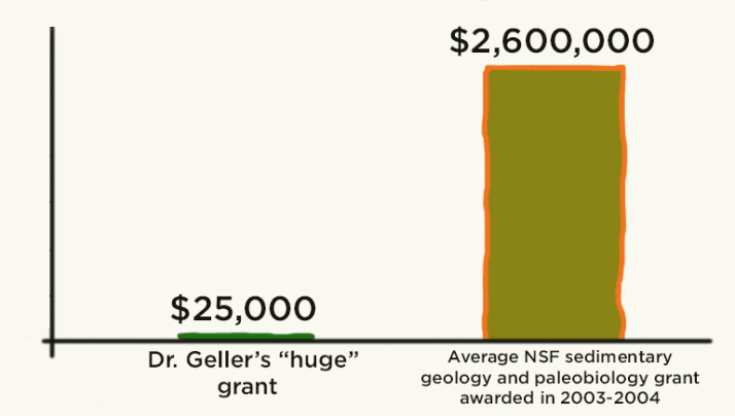
12. Why are you excited by a $25,000 grant?

Alex Kasprak for BuzzFeed

"Guess who's a finalist for a huge research grant! I'll give you a hint, he's looking right at you." —Dr. Geller

"It's for $25,000." —also Dr. Geller

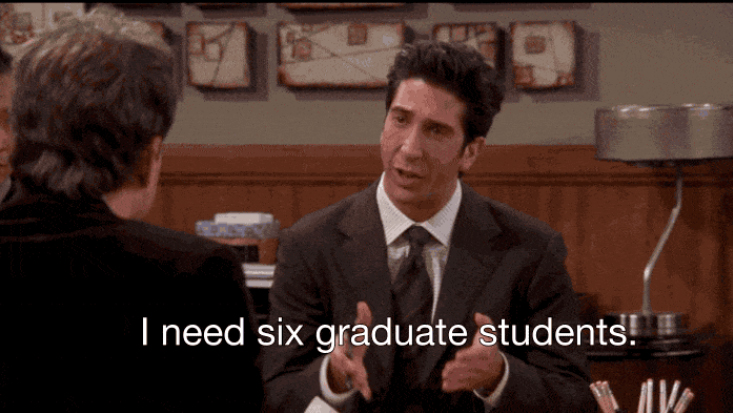
13. How the hell do you expect a $25,000 grant to cover six graduate students and field work?

NBC / Friends, Season 10, Episode 6

That's tuition, living expenses, and travel costs for six students!

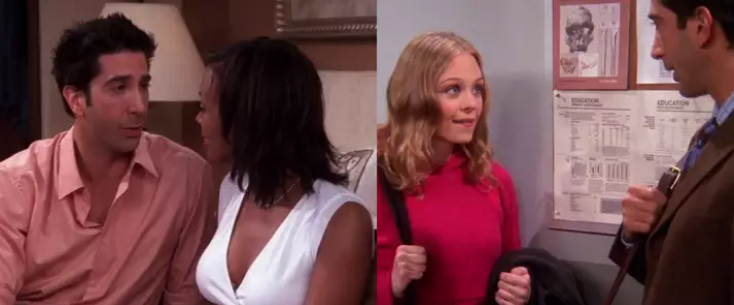
14. Was your tenure committee in any way concerned about your history of sexual relations with both colleagues and students?

NBC

15. How did you go from visiting instructor to tenured professor so quickly?

NBC / Friends, Season 10, Episode 14

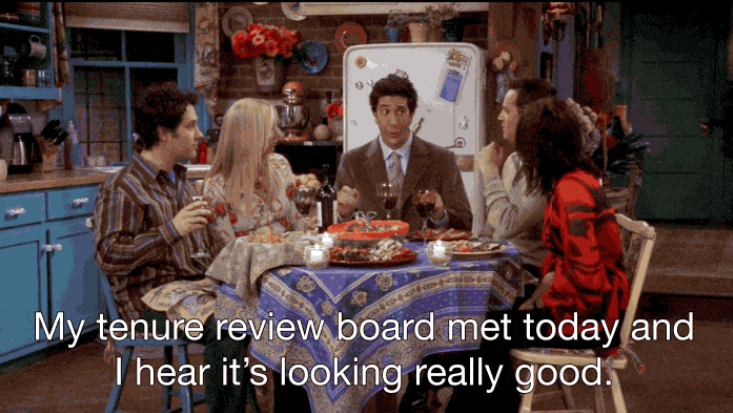
Typically one has to be hired as a tenure-track professor first, and then serve around five years before being considered for tenure. If each season of Friends is one year, then Dr. Geller completed this process in four years. He was also hired as an instructor, not a tenure-track professor.

In conclusion...

NBC / Friends, Season 7, Episode 7

But are you? Are you really?

Source: www.buzzfeed.com

Sam Neill and Laura Dern to Return in Jurassic World 3?

Monday, July 2, 2018

Sam Neill and Laura Dern to Return in Jurassic World 3?

Two of the original Jurassic Park stars Sam Neill and Laura Dern may return to the franchise for Jurassic World 3, according to director Colin Trevorrow. Jeff Goldblum returned to the series this year in Jurassic World: Fallen Kingdom, and Trevorrow thinks it is now time for Neill and Dern to step back into the Jurassic franchise.


In the original Jurassic Park, Sam Neill and Laura Dern starred as Dr. Alan Grant and Dr. Ellie Sattler, respectively. Neill and Dern both returned in Jurassic Park III, with Neill returning to star and Dern only making a cameo. Perhaps it is time for the stars who started this franchise to return to the spotlight in the third installment of the Jurassic World movies.

Despite telling its own new stories, the Jurassic World movies have done a great job at acknowledging the original Jurassic Park franchise. Not only did the movies take place on the same island as the original Jurassic Park, with a number of the same dinosaurs, but a number of the original characters even returned for the series. BD Wong's Dr. Wu appeared in both Jurassic World and Jurassic World: Fallen Kingdom, and, as already mentioned, Jeff Goldblum returned as Dr. Ian Malcolm in Jurassic World: Fallen Kingdom.

In an interview with MTV, director Colin Trevorrow, who directed the first Jurassic World and is returning to direct Jurassic World 3, revealed that he would love to see Sam Neill and Laura Dern return to the franchise in the next installment. Here is what he had to say.


"We felt like [Jurassic World: Fallen Kingdom] was Malcolm's return. This was his... let him have his moment. I feel that way about everyone, especially Laura [Dern], in that she never got to have her own movie. That identified as being something that's important. I feel like this moment with Goldblum, because he had this very clear set of ethical questions that he was able to pose for everyone, we just wanted to put the spotlight on him."

While this is absolutely not a definitive confirmation that either Neill or Dern will return to the franchise, it does keep us hopeful that we will see Alan Grant and Ellie Sattler return to the series once again. Based on the ending of Jurassic World: Fallen Kingdom, it wouldn't be too hard to explain their involvement in the next story. As opposed to the previous movies, this time the Jurassic dinosaurs will be coming to the heroes, rather than the heroes going to the dinosaurs.

Though this news from MTV should clearly be taken with a grain of salt, considering that Jurassic World 3 is still in its early stages of development, we should expect to see a least a couple original characters return to the Jurassic franchise. Even seeing more of Jeff Goldblum's Dr. Ian Malcolm would be a real treat for Jurassic Park fans. We will see how many original characters do return for ourselves when Jurassic World 3 hits theaters in June 2021.

Source: https://movieweb.com

Chasing Dinosaurs in Myanmar’s Conflict-Ridden North

Tuesday, July 3, 2018

Akbar Khan, a 52-year-old self-described 'extreme fossil in amber hunter,' inspects a piece of honey-colored fossilized tree sap from Kachin state in Myanmar at his street stall in Bangkok on May 31. | AFP-JIJI

MYITKYINA, MYANMAR – “Amber hunters” on a quest for a “Jurassic Park”-style discovery of dinosaur remains sift through mounds of the precious resin in Myanmar — a lucrative trade that captivates paleontologists but also fuels a decades-long conflict in the nation’s far north.

The morning amber market on the outskirts of Myitkyina, the capital of Kachin state, throngs with traders using torches and magnifying glasses to scrutinize pieces of the honey-colored fossilized tree sap.

Some sell rough-edged uncut chunks. Others tout finished products: pendants, necklaces and bracelets made from carefully polished pieces.

The trading takes place just a few dozen kilometers from the fighting between Myanmar’s army and ethnic Kachin rebels battling for autonomy, land, identity — and natural resources — that help finance both sides.

The jade and ruby industries dwarf the largely artisanal amber trade, but the resin can still fetch big sums for whoever controls the mines.

In Myitkyina’s market there is money to be made, says trader Myo Swe.

His speciality is “inclusions,” sap that has trapped parts of plants, animals and even dinosaurs before hardening into amber — history suspended inside the resin.

Find the right buyer and he could pocket up to $100,000 a piece in a shady industry that sees most amber smuggled across the border to China.

“Even if it just contains an ant or a mosquito — every piece is interesting,” the 40-year-old said. “I value every one of them.”

Dinosaur tales

Amber, historically coveted as jewelry by nobility from China to ancient Greece, enjoyed a revival in popular culture thanks to the 1990s hit movie “Jurassic Park,” set in a theme park where dinosaurs have been cloned by extracting DNA from mosquitoes preserved in the resin.

However, most amber heralds not from the Jurassic Period but from the later Cretaceous Period — up to 100 million years ago.

The best preserved “inclusions” offer today’s scientists and collectors a three-dimensional fossil, with some creatures even frozen mid-movement.

There are amber deposits found all over the world but, for paleontology, the mines of Kachin are “irreplaceable,” explains 36-year-old Lida Xing from the China University of Geosciences in Beijing.

“The amber mining area in Kachin is the only Cretaceous Period amber mining site in the world that is still engaged in commercial mining,” he says. “There’s no better place than Myanmar.”

Lida Xing shot to fame among fellow paleontologists in 2015 when he brought back part of a feathered dinosaur tail to China from Myanmar that dated back some 99 million years.

The excitement of his discovery, though, was tinged with disappointment when he returned to try to find the source.

“They said they did not know. They had probably already sold or smashed it. This dinosaur might have even been a complete one with a head,” he said in Beijing.

‘Conflict amber’

Amateur amber hunters aside, the main challenge for traders and collectors is working in a conflict zone.

An upsurge in fighting between the army and the Kachin Independence Army (KIA) over recent years has left more than 100,000 people displaced in the region.

Leaflets dropped by army helicopters in June last year even warned people living around the mines to leave the area or be considered to be cooperating with the rebels, according to Human Rights Watch.

Now only the hardiest of amber hunters attempt to go there.

“We almost could not reach the mining area because it was very dangerous,” Lida Xing says regarding his 2015 trip. “We sneaked in when the situation eased quite a lot, but no scientist was able to go inside after that.

“This is a severe problem because, for paleontology, you obtain a lot of useful information from the geological conditions and strata — but we were not able to do this.”

Amber, jade, timber and gold are also “major drivers” of the conflict in northern Myanmar, says Hanna Hindstrom from human rights monitoring group Global Witness.

Without sourcing responsibly, any company trading Myanmar amber “could be causing or contributing to a range of harms including conflict and human rights abuses,” she adds.

Akbar Khan, a 52-year-old self-described “extreme fossil in amber hunter” who runs a street-side stall in downtown Bangkok, shrugs off the risks as well as the ethical questions.

Khan makes frequent visits to Kachin and says that the adrenaline rush he gets from finding dinosaur parts is like nothing else.

“You feel like you’re walking in clouds, in heaven,” he says.

“If people have a big diamond, so what? The world is full of big diamonds … but the world is not full of dinosaurs in amber.”

Source: www.japantimes.co.jp

Dinosaurs Invade The Children’s Museum

Saturday, July 4, 2015

Tyrannosaurus Rex and Triceratops. Alberto Font/The Tico Times

If you ever want to make your kids frantically excited, just tell them this: The Children’s Museum in San José now has an enormous Tyrannosaurus rex that blinks, bares its teeth, and roars.

“Mundosaurio” is the latest exhibit to debut at the converted penitentiary, and after the arrival of the animatronic thunder lizards, the Children’s Museum is assured a steady flow of giddy youngsters for years to come. Costing ¢80 million ($150,000), the new dinosaur hall boasts one T. rex, one Stegosaurus, and one Triceratops, and because of their robotic skeletons, they actually seem to come to life.

“Thanks to scientific advances, children and the general public can access electronics and applications that allow them to explore the world,” said Cristina Briceño, head of the Department of Museology, in a printed statement. “In the museum we are using these resources in an entertaining and educational manner, to have an impact on our exhibits’ visitors in a positive way.”

The dinosaurs are full-sized facsimiles of their Jurassic ancestors, and their pebbled skins are painted in the colors that paleontologists guess real dinosaurs displayed. While guests are not allowed to touch the dinosaurs – a ring of picket fence surrounds each one – children can ogle the giant creatures as they swivel their heads and flex their reptilian tails. In the middle of the room, the T. rex and Triceratops look like they’re sizing each other up and preparing for combat.

The exhibit is also extremely hands-on: There are 15 interactive devices, plus a number of skeletal replicas, spread out among 333 square meters. The exhibit takes its name from the Spanish words for dinosaur (“dinosaurio”) and “world” (“mundo”).

Ever since its opening in 1994, the Costa Rican Center of Science and Culture has transformed the former prison into a mecca for school field trips. The compound houses the Children’s Museum, the National Gallery, and the National Auditorium. “Mundosaurio” embellishes the Children’s Museum’s many scientific exhibits, including displays on geology, astronomy, and human biology. Smaller dinosaurs are also scattered throughout the museum’s other rooms, including several specimens in the food court and a pterodactyl in a corridor.

If the kids aren’t already begging you to take them, there’s also this: The “Jurassic Route” is a labyrinth and obstacle course that snakes through the museum. The route includes a “Tarzan swing,” suspension bridge, and a pendulum. With any luck, the offspring will sleep the entire drive home.

“Mundosaurio” takes place at the Children’s Museum, downtown San José. Tue.-Fri., 8 a.m. – 4:30 p.m.; Sat. & Sun., 9 a.m. – 5 p.m. Children 1,300 ($2.80), general 1,500 ($3). Info: Museum website.

Source: www.ticotimes.net

A New Transitional Bird Fossil Has Been Found

Saturday, June 30, 2018

This bird skull Ichthyornis adds new dates for when key features of modern birds appeared.

In 1870, parts of a fossilized bird were found in Kansas and then described by the American paleontologist Othniel Marsh. This new bird, dubbed Ichthyornis dispar, was one of the first fossil birds found in North America, and there was something special about it. It was recognized as a scientifically important specimen due to the teeth found along its bottom jaw – something modern birds lack but were present in their dinosaur ancestors. However, the parts of the skull found in the 1870 specimen were extremely fragmented and not much could be reconstructed from the early specimens. The true significance of Ichthyornis’ skull would not become apparent until the discovery of a more complete skull – something that would not happen for over another 130 years. Recently, a student in Kansas discovered one of the most complete skull of Ichthyornis ever found. This finding would help scientists more clearly understand bird evolution.

Recently a group of scientists performed CT scans (yes, like the ones you get in the hospital) of five Ichthyornis skulls and used these scans to make a single, complete 3D skull. New evidence from a well-preserved Kansas specimen allowed unprecedented views of the jaws and braincase of Ichthyornis. Bird skulls from the Late Cretaceous (~86 million years ago) are typically incomplete, crushed, or altogether missing thus making reconstruction difficult if not impossible. The composite skull created in this study showed that the bones that make the jaws of Ichthyornis had things in common with both older extinct birds as well as modern birds.

In Ichthyornis, the tip of the upper jaw (called the premaxilla) was small and was the only part that did not have teeth. In modern birds, this part is much larger, and still does not have teeth. It is also much larger in Archaeopteryx, another famous fossil bird that lived 150 million years ago in what is now Germany. However, the premaxilla of Archaeopteryx still had teeth!

Another feature was missing from Archaeopteryx and in Ichthyornis. Modern birds have their beaks covered in keratin, which the same material of human fingernails and hair. However, until the recent discovery of a well-preserved Ichthyornis skull, scientists were not sure of when the keratin beak of birds began. The presence of the small beak with no keratin in Ichthyornis shows that the beak was developed during the time of the dinosaurs and that it developed alongside the teeth that were already present in the mouth of early birds.

Another important aspect of the composite skull discussed in the paper is that the bones surrounding the brain showed the general shape of the brain. According to the paper, the brain was nearly identical to the general shape found in modern birds with a glaring exception found along the braincase – the attachment points for the jaw muscles were larger than expected. This means that the mouth muscles for Ichthyornis would have been stronger than those in modern birds. This means that the muscles in Ichthyornis were more like that in dinosaurs than those in modern birds.

This fossil demonstrates two important points in bird evolution. First of all, the jaws and teeth of Ichthyornis are transitional between earlier birds/predatory dinosaurs and modern birds. Since modern birds do not have teeth and have a keratin covered beak and many ancient birds have been found with numerous teeth and no beak, a transitional form of bird had to exist somewhere in the fossil record. Ichthyornis had a full row of teeth along its jaw and had a small toothless beak at the tip of its jaws. Secondly, the brain proportions of Ichthyornis closely resembles that of modern birds but the jaw muscles were still more dinosaurian than birdlike. This combination of modern and prehistoric makes Ichthyornis a great example of a transitional form and highlights where some of the key points of bird anatomy got their start.

Overall, Ichthyornis represents an immensely interesting point in bird evolution where the iconic bird beak was first starting to appear, the remnants of dinosaur muscle attachment were still present, and a bird-like brain suggesting ability to fly. It can be said that all fossils are intermediate forms of later organisms but transitional fossils of birds are incredibly rare. Ichthyornis is an incredible point of reference for bird evolution and will continue to reveal new evolutionary concepts as more of the bird is analyzed.

Source: https://sciworthy.com

‘Spying on Whales’ Dives Into the Story of True Leviathans

Saturday, June 30, 2018

SEA GIANTS  Some species of baleen whales, a group that includes southern right whales, are among the largest creatures that ever lived. Spying on Whales explores how the animals got so big and other aspects of cetacean evolution.  WILDESTANIMAL/SHUTTERSTOCK

A new book journeys through cetaceans’ past, present and future.

Just before humans evolved, whales and dolphins were, pound for pound, the brainiest creatures on Earth. Another cetacean superlative: Today’s biggest whales are heftier than the largest dinosaurs that ever lived. The evolutionary trends that produced big, brainy marine animals are just a few of the fascinating tales told in Spying on Whales.

Paleontologist Nick Pyenson studies whale fossils, but he’s also been known to cut up a few modern-day carcasses. As laid out in his new science-book-cum-midcareer-memoir, the anatomical info gained from both endeavors provides strong evidence for evolution in action. That process has transformed cetaceans’ dog-sized, four-legged ancestors, which returned to the water around 50 million years ago, into today’s seafaring behemoths. Pyenson’s research hasn’t been all lab work, though: His field studies have taken him from whaling stations in Iceland to a site in South America’s Atacama Desert where ancient whales repeatedly washed ashore.

Blue whales are about 10,000 times as massive as their landlubber ancestors, Pyenson notes. One evolutionary innovation that enabled the immensity of blue whales and some of their close kin is baleen, the flexible sheets of fingernail-like keratin that hang by the hundreds from the roofs of these creatures’ toothless mouths. Using these frayed and overlapping sheets, baleen whales filter immeasurable numbers of tiny prey from mouthfuls of water the volume of a large living room.

For some baleen whale species, another undoubted asset is the sensory organ that Pyenson and colleagues discovered in the “chins” of fin whales, among others. That nerve-rich glob of goo helps the whales sense dense clouds of prey and better recognize the position of their own jaws as they open and close their mouths.

When Pyenson looks to whales’ future, there’s mixed news. Most countries have phased out commercial whaling, but collisions with ships still threaten cetaceans’ long-term survival. On the other hand, Pyenson notes, a decline in summer sea ice in the Arctic may be allowing gray whales to stray over the pole from the North Pacific to the North Atlantic and beyond, possibly setting up new populations.

All in all, Spying on Whales is a delight to read, from the author’s descriptions of the sights, sounds and smells of the lab and field to the joys of hunting fossils, whether with his colleagues or his young son.

Buy Spying on Whales from Amazon.com here.

Source: www.sciencenews.org

Origin Mystery of Ancient Rhino-Like Mammal Solved By 55-Million-Year-Old Fossil

Friday, June 29, 2018

A view of the phosphate quarries in the Ouled Abdoun Basin, Morocco, where the embrithopod fossil was discovered. Photo: Emmanuel Gheerbrant

Tens of millions of years ago, after most land-roaming dinosaurs died out in the Cretaceous Period, a hodgepodge of ancient animals started to fill the landscapes the dinos left behind. One such group was the embrithopods: hoofed mammals, now extinct, whose name means “heavy-footed.”

But because of a patchy fossil record, scientists haven’t been sure whether Embrithopoda originated in Africa or Eurasia. Now, the oldest-ever embrithopod fossil has been discovered in Morocco, rooting the animal’s origins in Africa. The new research was published today in Current Biology.

Image: Philippe Loubry and Charlène Letenneur

“It’s very exciting to see fossils so old,” said William Sanders, a paleontologist at the University of Michigan who wasn’t involved with the new work. “This maintains the integrity of the group as a true African phenomenon.”

The newly discovered fossil, which consists of a jaw and a collection of teeth found in a Moroccan quarry, indicates the presence of two embrithopod species dating back to 55 million years ago. The researchers classified these species into a genus called Stylolophus.

Other embrithopods have been uncovered in the past, the most famous one being the arsinoithere, a plant-eating mammal that would have been larger than a rhinoceros and boasted two large horns on its snout.

“They were big, giant things,” Sanders said. “Horned beasts. They could get up to 9,000 pounds.”

A complete arsinoithere skeleton cast is on display at the Natural History Museum in London. Photo: Aram Dulyan (Wikimedia Commons)

Fossils show the arsinoithere lived between 35 million and 24 million years ago in Africa and Arabia. But before then, fossils from 48 million years ago revealed that smaller embrithopods lived in both Africa and what is now Turkey, making their origins pretty hazy. Stylolophus changes that.

“The discovery of Stylolophus shows that the ancestry of all embrithopods was probably an African event,” Sanders told Gizmodo.

Embrithopods were pretty thick and sturdy, according to their fossil record. The smaller Stylolophus species was probably about the size of a sheep, but much denser and heavier, Sanders said. He speculated it may have even looked like a miniature arsinoithere.

Though many embrithopods probably looked a bit like rhinoceroses, they were most closely related to the animals that evolved into elephants and sea cows. Hyraxes, foot-long, stout, thickly furred mammals, are also at home in this family tree, and genetics show they are more related to elephants, sea cows, and embrithopods than they are to rodents.

All of these mammal groups—in addition to animals like aardvarks, tenrecs, and elephant shrews—are members of a large group called afrotheria, meaning they all originated from a common ancestor in Africa. It makes sense to classify embrithopods as afrotheres, too, with their proposed close relation to elephants and sea cows and newly solidified African birthplace.

“This evidence brings all of these groups way back in time into Africa,” Erik Seiffert, a paleontologist at the University of Southern California who wasn’t involved in the new study, told Gizmodo. “It strongly supports that there actually is an ancient African group that had a common origin.”

[Current Biology]

Source: https://gizmodo.com

Top 10 Favourite Scenes in the Jurassic Park Franchise

Wednesday, June 27, 2018

With the release of Jurassic World: Fallen Kingdom, we now have more fine additions to the collection of awesome scenes in this franchise. But which are the ten best, the ones that stand head and shoulders above the rest? That's what I'm going to decide as I count down the top ten best scenes in the JP series (in my own opinion, of course).
 

10. Spinosaurus Boat Attack (JPIII)

This is where the Spinosaurus truly shines: in a water sequence. It attacks a boat full of our main characters, who panick and hide in a cage, which the Spino pushes into the water. They nearly drown, and Amanda Kirby almost dies, but she doesn't, which is why this scene isn't higher. Alan Grant defeats the dinosaur by driving it off with a flare gun.

9. Bird Cage (JPIII)

Say what you want about JPIII, but you can't deny that this scene is scary, suspenseful, and intense. It's one of the better CG scenes in the film, with the Pteranodon's blank stare being terrifying. It's also the first time the Pterosaurs do something cool, and it's better than the Main Street scene from JW.

8. Life Will Find a Way (TLW:JP)

After the Buck was returned to Isla Sorna, John Hammond spoke about the future of Site B's dinosaurs. He said that the dinosaurs need the humans' absence to survive. His speech, along with the site of the Rex family and Stego herd make this one of TLW's more light-hearted and wonderous scenes.

7. The Park is Closed (JW)

After a chaotic incident, nature finally reclaims Isla Nublar, with Rexy at the throne. The old Rex asserts her dominance not by t-posing, but by letting out a mighty roar over the ruined park. The only problem is the lack of Rexy's classic roar.

6. Rexy vs Toast (JW:FK)

Sadly, this amazing scene was spoiled in FK's marketing. This might be a bit biased since Carnotaurus is one of my favourite dinosaurs, but this scene is still awesome. The special effects are phenomenal and Rexy's classic roar is back.

5. Rexy and Blue vs Indominus rex (JW)

This is one of the best and most brutal fight scenes in the series. When all seems lost, Claire lures Rexy out of her enclosure with a flare, bringing her to the Indominus rex. Rexy smashes through the Spinosaurus skeleton (a middle-finger to JPIII) as she roars at her challenger. Not only is the fight well-done with Blue saving Roberta, but the score is incredible and it's symbolic. Nature's creation, the Tyrannosaurus rex, fights the Indominus rex, man's creation. So what hinders its placement on this list? The CGI isn't that good and Rexy lacks her iconic roar, instead using the sounds of the male Rex.

4. San Diego Rampage (TLW:JP)

Before Fallen Kingdom, this was the only time we saw a dinosaur set loose upon the mainland, and oh boi did it deliver. The Buck rampages through San Diego, killing a dog while frantically looking for his infant in an environment that is strange and new to him. He only has a few casualties, but purely because a dinosaur is on the mainland, this scene made my list.

3. Welcome to Jurassic World (JW:FK)

As I said in my JP ranking, Jurassic World: Fallen Kingdom is a game-changer that takes the series in a new direction. This can be traced back to its incredible ending. Maisie releases the dinosaurs to save them, and they are unleashed upon the American supercontinent. Rexy and Toast tear Mills in half, a call-back to TLW:JP, and the former also replicates her iconic roar from the original. Ian Malcolm warns the public about the consequences, stating that humans and dinosaurs will have to coexist, as it shows the Mosasaurus attacking some surfers, Rexy roaring at a lion, and Blue calling into the sunset while standing on the high ground. Dr. Malcolm's speech ends with a call-back to John Hammond's iconic line, saying, "Welcome...to Jurassic World."

2. Welcome to Jurassic Park (JP)

This moment alone changed the public's perception of dinosaurs. It showed that these extinct creatures were more so much more than just lumbering brutes. They were living, breathing, thinking, feeling, animals. This was exhibited by the Brachiosaurus' first appearance. Everything about this scene is perfect, from the CGI to John Williams' iconic score, to the character's empathetic reactions.

1. When Dinosaurs Ruled the Earth (JP)

This scene is my favourite movie scene ever. Not only is it Jurassic Park's most iconic scene, but it's also the epic ending this movie deserves. It was the first dinosaur-v-dinosaur fight, between Rexy and the Big One. It was truly legendary and an awesome sight. If the fight wasn't enough, Rexy roaring as the banner falls was enough to cement this movie as a legend.

"Hahahrawrrahaha" - Dr. Ian Malcolm

Source: http://www.scified.com

Why The ‘Jurassic Park’ Sequels Are All So Forgettable

Thursday, June 28, 2018

There’s a scene midway through the original “Jurassic Park,” in which no dinosaurs appear, but it’s easily the best in the movie. John Hammond (Richard Attenborough) sits in the park’s eerily silent cafeteria with Ellie Sattler (Laura Dern) drowning their sorrows in melting ice cream under backup lighting. Sattler’s beau and Hammond’s grandchildren are lost in the park where dinosaurs roam free.

To break the tension, a shaken Hammond describes the first attraction he ever built: a flea circus called “Petticoat Lane.” John Williams’ eerie glockenspiel score plays, as Hammond recalls the “wee trapeze” seesaw, and carousel that moved on their own, and how children would swear they could see the fleas. But with Jurassic Park, he wanted to show them “something that wasn’t an illusion — something that was real — something that they could see and touch.”

Of course, there is lots of “seeing and touching,” both before and after this exchange, and most of it is fatal. What’s so powerful about this scene is the way we empathize with Hammond. We too are caught up in his madness, despite the prescient jeremiads of chaotician Ian Malcolm (Jeff Goldblum) against his theme park full of cloned dinosaurs.

It’s precisely because of this dynamic that Spielberg’s lesson about scientific hubris — a favorite theme of Jurassic Park’s real creator, author Michael Crichton — hits us with such force. It is our hubris being rebuked. We cheered inwardly at the thought of bringing dinosaurs back with science. We got goosebumps at the sight of a resurrected Brachiosaurus. Despite knowing how the movie must end, we thought if only for a moment, “Wouldn’t it be amazing if …” After all, every kid (and kid-at-heart) would love to see a living dinosaur.

The way Hammond’s vision of reversing extinction resonates with us is what makes “Jurassic Park” one of the best science fiction films of all time. Of course, the groundbreaking effects, snappy and hilarious dialogue, great acting, rich plot, and legendary score don’t hurt. But ultimately it’s the not-so-far-fetched premise about the power of science and how head-over-heels we fall for it (especially the dinosaur nuts among us) that make this movie immortal and thought-provoking.

“Jurassic Park” has spun off a succession of sequels, and by most lights, none of them are very good. At 50 percent on the Tomatometer, 2018’s “Jurassic World: Fallen Kingdom” doesn’t seem likely to break that trend.

Set shortly after the events of 2015’s “Jurassic World,” “Fallen Kingdom” begins with a very familiar cast of players: the animal rights activists hoping to save the cloned dinosaurs, the international political turmoil about the fate of the moldering park, the reluctant hero who’s done with this whole dinosaur thing, and the commando group bristling with tranquilizer darts and cages, looking to relocate the surviving animals (as it turns out, not surprisingly, for profit).

Its similarities to 1997’s “The Lost World: Jurassic Park” don’t stop there. The capture effort is backed by a corporate hotshot Eli Mills (Rafe Spall) who doesn’t care two figs for the dinosaurs’ wellbeing, wants to recover his investors’ losses after a public disaster, and is willing to exploit “Jurassic Park” for all it’s worth (you know, like the people who keep making these movies). He does so behind the back of Benjamin Lockwood (James Cromwell), Hammond’s convalescent former business partner, who thinks he is bankrolling an effort to relocate the endangered dinosaurs to an offshore sanctuary.

In reality, the terrible lizards are going to auction, where the highest bidder will cart each de-extincted beast off for its military applications (what could go wrong?).

Unbeknownst to Lockwood or world governments, Mill and Dr. Henry Wu (B. D. Wong), the lead engineer from the original park), have salvaged DNA from the dead “Indominus rex” mutant and created a new genetic aberration called “Badassicus maximus.” Just kidding. It’s called the “Indoraptor,” and it’s smaller, nastier, more raptor-y and designed specifically for combat. It (obviously) escapes, and Pandemonium (obviously) ensues. Claire (Bryce Dallas Howard) and Owen (Chris Pratt) seem to be in the movie mostly to run from things. I can’t recall a compelling line from either of them, and as in the last entry in the franchise, the intended chemistry just isn’t there.

One of the most frustrating things about “Fallen Kingdom” might be the plot holes. For example, the story is premised on a volcanic eruption that threatens to wipe out the surviving dinosaurs on Isla Nublar (a callback to Crichton’s novel, in which the military firebombs the park after it is evacuated). But if you happen to have watched the second and third “Jurassic Park” sequels, it’s no secret that another island (Isla Sorna) is packed with dinosaurs, many of which (such as the Velociraptors) are declared “nearly extinct” in this movie. What happened to that island? Was “Jurassic Park 3” so terrible that all future movies set on Isla Sorna were preemptively banned from canon? We may never know.

Speaking of “Jurassic Park 3,” perhaps the only well-written line in its script summarizes why the original “Jurassic Park” was such a compelling film, and why most of its sequels, including “Jurassic World: Fallen Kingdom” are so forgettable. Sam Neill’s character growls at another character who has just stolen a velociraptor egg that, “Some of the worst things imaginable have been done with the best of intentions.”

He’s right. If anything, good intentions make an act of evil or hubris all the more horrifying. A person who knows he is doing something shady (Like Wayne Knight’s character stealing dinosaur embryos in the original, or like the villains in “Fallen Kingdom” genetically engineering dinosaurs as military weapons) will usually persevere only as long as he stands to make a quick buck. The mercenary motive will only take you so far. Good intentions are different. A man armed with good intentions “crashes through barriers, painfully, maybe even dangerously.” Like life itself, he finds a way to accomplish his goal, spared no expense.

Armed with modern science, which now falls scarcely short of what “Jurassic Park” portrays, we can clone people, create “designer babies,” and even bring to life animal-human hybrids. It’s the stuff of science-fiction classics like “Gattaca,” and “The Island of Dr. Moreau.” And scientists with the best of intentions are already making it reality. We have the power to do more than thrill the public with cloned dinosaurs. We are on the cusp of eliminating genetic defects, producing perfect offspring, and curing some of our worst diseases. And no price will be too high to pay for those who, in the words of Ian Malcolm, are so preoccupied with whether they can, that they don’t stop to think whether they should.

“Jurassic Park,” with its grandfatherly creator whose dream of giving children something real to see and touch was so appealing, portrays the peril of good intentions well. And that’s why we will remember it long after we forget its many blockbuster sequels, including “Jurassic World: Fallen Kingdom.” Because bad guys who want to genetically engineer hybrid velociraptors for the military? They’re a dime a dozen. A jolly grandpa willing to cross any bioethical boundary to entertain kids? Now that’s scary.

Source: https://thefederalist.com

Pages