Blogs

Dinosaurs dominate South African Mint’s 2018 Natura Palaeontology Collection

Tuesday, September 4, 2018

The five coins share same design on the obverse, which depicts the fossilised skull, neck and shoulder of an Erythrosuchus africanus. The words ‘Rise of the dinosaurs’, ‘Archosauria’ and the year 2018 as roman numerals ‘MMXVIII’ complete the obverse design.

The South African Mint unveiled the five-coin Palaeontology Collection in 24 ct gold.

The collection brings to life the ‘archosauria’, which comprise crocodiles, pterosaurs, dinosaurs and birds or the ruling reptiles that roamed and soared freely in Southern Africa about 200-million years ago.

Archosaurs are regarded as the direct ancestors of the dinosaurs and the fossil records from the Karoo Supergroup’s rocks hold the key to understanding their early evolutionary history.

The rise of the archosaurs and their evolution is a significant event in the history of life on land, since they not only led to the evolution of dinosaurs and birds, but also to the pterosaurs, commonly known as flying reptiles, and crocodiles.

Besides the Karoo, many discoveries have been made on the continent and in the country along the borders of KwaZulu-Natal, Free State, Eastern Cape, Western Cape and the Northern Cape. These finds have helped fill in critical gaps in the evolution of dinosaurs and provide fresh information on how the southern continents of Africa, South America and India separated, the South African Mint said in a statement.

The Mint further explained that the presence of these fossil records endorses the theory that the South African portion of what was the prehistoric supercontinent Gondwana, was an evolutionary hotspot 260-million years ago.

It also reinforces the idea that the distant ancestors of mammals actually came from South Africa, according to the statement.

“South Africa’s rich fossil heritage has been pivotal to unravelling the history of life on the planet. The fossil finds have turned out to hold a treasure trove of information on life some 200-million years ago. It is a privilege to bring this information to ardent fans of palaeontology on coins that will outlast life on earth,” South African Mint MD Tumi Tsehlo said.

The 1oz R100 coin features the Coelophysidae which were highly successful primitive theropod dinosaurs that lived worldwide from the late Triassic to early Jurassic. Coelophysis rhodesiensis, a small, agile dinosaur which preyed on small animals, inhabited South Africa and Zimbabwe during the early part of the Jurassic period. This slenderly built, bipedal dinosaur grew up to 3 m long and weighed about 32 kg.

Euparkerids are Archosauriforms from the Middle Triassic of South Africa, Namibia, Poland and China, and is pictured on the R5, introduced to the range in 2018. Euparkeria capensis, a small active predator, which could at speed run bipedally, had a protective double row of osteoderms along the length of its body like many other Archosauriforms. The size, agility, speed and small sharp teeth of Euparkeria would have made it ideally suited to be an insectivore. Euparkeria was one of the first bipedal vertebrates with their legs longer than their arms, which suggest that they could move around quadropedally, but at times, such as when they were running, they could become facultative bipeds and run on their hind legs. Bipedalism became a very important evolutionary adaptation inherited by the archosaurs, including dinosaurs and birds.

Depicted on the R50 is the Massospondylus carinatus, one of the best known dinosaurs in the world and also the most common dinosaur species in Southern Africa. Massospondylus is a prosauropod dinosaur and lived in the early Jurassic period, which makes it one of the oldest dinosaurs on earth. It had a typical saurischian type pelvis with a forward-jutting pubis. Its length was 4 m to 6 m and it had a small head, narrow body and long neck and tail. Its hind limbs were much longer and stronger than its front limbs which, together with the morphology of the hips, indicate that it was a bipedal. The small serrated leaf-shaped teeth suggest it was probably an omnivore.

The Proterosuchidae, similar in form to the crocodile, is depicted on the R20 ¼ oz gold coin.Proterosuchus ranged between 1.5 m to 2.2 m in length, and resembled the crocodile with their long jaw, short legs, thick neck and a long flattened tail. The elongated snout of this creature resembles that of a modern gharial, more than that of a crocodile or alligator which would suggest that it was a specialised fish-eater. Its nostrils are on the side of the snout, supporting the hypothesis that they were terrestrial predators hunting in water.

Erythrosuchidae were Archosauriforms from the late Triassic of South Africa and Namibia. The Erythrosuchus africanus was approximately 5 m long and stood over 2 m tall, making it the largest predator of the time. The Erythrosuchidae would have been at the top of the food pyramid, preying on all other terrestrial vertebrates.  The Erythrosuchus had an exceptionally large skull for its size, occupying approximately a fifth of its total body length. Its teeth were as large as that of any large carnosaur, but curved like those of other Archosaurimorphs, suggesting that they preyed upon large prey animals which were difficult to subdue. This creature walked on all fours with a semi-erect gait which would have enabled it to move more swiftly than other more primitive reptiles of the same size. It would still have been a cumbersome animal given its size and for that reason it is speculated that it was an ambush predator.

NATURA PALAEONTOLOGY COLLECTION

The five coins in the 2018 Natura series, named “Rise of the Dinosaurs”, will be available in 1 oz, with a face value of R100, as well as in fractionals; 12 oz with a face value of R50; 14 oz with a face value of R20; 1/10 oz with a face value of R10 and 1/20 oz with a face value of R5, with each depicting a different archosaur, all in limited mintages.

The 1 oz R100 coin, with a limited mintage of 1 000, features the Coelophysids, which were highly successful primitive theropod dinosaurs that lived on numerous continents from the late Triassic to early Jurassic periods. The small, agile bipedal dinosaur preyed on small animals and inhabited South Africa and Zimbabwe during the early part of the Jurassic period.

About 165-million years ago, the group of small, feathered dinosaurs that we call birds today evolved from within the theropod radiation.

Depicted on the 12 oz R50 coin is South Africa’s most famous find, the Massospondylus carinatus, one of the most recognised dinosaurs in the world. Massospondylus is a prosauropod dinosaur that lived in the early Jurassic period, which makes it one of the oldest dinosaurs on earth. Only 1 000 of these coins will be minted.

The Proterosuchidae – similar in form to the crocodile – features on the 14 oz R20 coin. The elongated snout of this creature resembles that of a crocodile or alligator which would suggest that it was a specialised fish-eater. Only 1 500 of these coins will be minted.

Erythrosuchidae, which will feature on the 1/20 oz R10 coin, were Archosauriforms from the late Triassic of South Africa and Namibia.

The Erythrosuchus africanus was about 5 m long and stood over 2 m tall, making it the largest predator of the time. The Erythrosuchus had an exceptionally large skull for its size, occupying about a fifth of its total body length. This creature walked on all fours with a semi-erect gait which would have enabled it to move more swiftly than other more primitive reptiles of the same size. Only 1 500 of these coins will be minted.

Depicted on the 1/20 oz R5 coin is the Euparkeria capensis, a reptile which lived about 235-million years ago during the Middle Triassic period. It was first discovered at the beginning of the twentieth century in South Africa.

Euparkeria was one of the first bipedal vertebrates with their legs longer than their arms, which suggests that they could move around quadropedally. Only 1 500 coins will be made available.

All the coins share a common obverse which depicts the fossilised skull, neck and shoulder of an Erythrosuchus africanus. The words ‘Rise of the dinosaurs’, ‘Archosauria’ and the year 2018 as roman numerals ‘MMXVIII’ complete the design.

Noted palaeontologist and zoologist Dr Francois Durand, from the University of Johannesburg, contributed to the design of the coins and it is his dinosaur renderings that appear on all the coins in the series.

“Given the limited mintage, the Rise of the Dinosaurs is an exceptional, once-in-a-lifetime acquisition for Afrophiles and those who wish to travel some 200-million years back in time. The coins’ chronological timeline from the early Jurassic period to late Triassic periods gives the collection continuity and should pique the interest of avid collectors,” Tsehlo averred.

“It is crucial to give this unique heritage the attention it deserves and what can be better than coins to preserve the history for posterity. Next year’s Palaeontology Collection will take this evolutionary process further.”

Collectors can also acquire the rare Prestige Set, which contains all five coins. Only 100 sets are being made available.

Source: www.engineeringnews.co.za

How Marine Reptiles Reacted to Changing Conditions During Age of Dinosaurs

Tuesday, September 4, 2018

An artistic reconstruction of the Oxford Clay Formation, depicting a Middle Jurassic ecosystem with a plesiosaur (upper left), a large predatory pliosaurid (center), a metriorhynchid crocodyliform (bottom left) and the giant fish Leedsichthys (upper right). Image credits: Nikolay Zverkov

Deep water reptiles diversified as Mesozoic sea levels rose. Their shallow water counterparts declined.

The seas once teemed with marine reptiles such as long-necked plesiosauroids resembling the Loch Ness Monster and dolphin-shaped ichthyosaurs. Now fossil teeth are revealing insights on how these reptiles adapted to changing waters, yielding clues on how sea life might respond today.

While dinosaurs ruled the land for nearly 200 million years during the Mesozoic Era, a diversity of marine reptiles dominated the oceans. However, the patchy nature of the fossil record left much unknown regarding how these reptiles interacted with each other and other sea life, or how these relationships changed over time.

"Marine reptiles are a notoriously understudied group -- working out their relationships with each other has been difficult," said Mark Norell, chair of paleontology at the American Museum of Natural History in New York.

To shed light on these mysteries, scientists examined the most common marine reptile fossils: teeth, which are often preserved in the absence of more complete skeletal remains. They analyzed thousands of teeth kept in a dozen museums, focusing on 122 teeth from roughly 50 species excavated from sites across England.

These fossils came from an 18-million-year span between 148 million to 166 million years ago. Back then, most of England was covered by the so-called Jurassic Sub-Boreal Seaway, "a tropical, warm and shallow but deepening sea," said study lead author Davide Foffa, a vertebrate paleontologist at the University of Edinburgh in Scotland. Other denizens of the seaway would have included what may be the largest fish to ever live, the 16.5-meter Leedsichthys; extinct relatives of the modern nautilus known as ammonites; and extinct relatives of squids known as belemnites, he said.

Previous work unearthed marine reptile fossils from the beginning and the end of this 18-million-year period. For this new study, the researchers discovered many teeth from the middle of this span, helping fill in the gaps regarding marine reptile ecology and evolution at this site.

The size and shape of the teeth offered clues about what the marine reptiles they belonged to once ate, and the paleontologists found they could divide these reptiles into five groups based on their diet. For instance, plesiosauroids had thin pointed teeth good for eating fish and squid, while ichthyosaurs had conical teeth good for smashing soft prey.

These marine reptile groups likely stayed confined to their specialized niches, enabling many species to live together without competition. This pattern resembles the food chains of modern oceans, where many different species can coexist in the same area because they do not fight over the same resources.

The researchers also found that during this period, as global sea levels rose, there was a dramatic decline in marine reptiles that lived in shallower waters and caught fish and squid. At the same time, marine reptiles that lived in deeper waters thrived and diversified, including predators that specialized on hard targets such as turtles or on large prey.

Modern oceans follow a similar pattern -- smaller marine mammals that eat fish and squid, such as bottlenose dolphins, favor shallower waters, whereas larger species that can target bigger prey, such as orcas, prefer deeper waters, Foffa said. This may simply be because deeper waters can support larger animals, he said.

These findings imply that ecological rules dictate how marine creatures "interact with each other and with other groups of animals in their ecosystems, regardless of whether they are mammals or reptiles," said vertebrate paleontologist Kenneth Angielczyk at the Field Museum in Chicago, who did not take part in this research. Future research can study whether marine animals that lived in other time periods also followed these rules, said Norell, who also did not participate in this study.

All in all, this research reveals how fossils can help explain the consequences of changing habitat conditions, Foffa said. "If our results are accurate, the evolution of marine reptiles and their ecosystems was deeply impacted by changing environments. As our planet is going through severe environmental changes, this sort of study may help us better understand how our world may be changing with climatic changes, habitat loss, and so on."

The scientists detailed their findings online September 3 in the journal Nature Ecology & Evolution.

Source: www.insidescience.org

Museum Acquires Original Skeleton of Giant Dinosaur

Tuesday, September 4, 2018

A diplodocus replica in Brussels' Museum voor Natuurwetenschappen. Photo: Paul Hermans via Wikipedia

A museum in Brabant is to be the first in the Netherlands and only the third in Europe to display the skeleton of a Diplodocus. The 20 metre-long, 150 million year old skeleton was unearthed 25 years ago in Wyoming, but has never been exhibited. The Oertijdmuseum, or Museum of Prehistory, in Boxtel acquired it from a sister museum in Switzerland, Omroep Brabant reported. Around 70% of the skeleton has been preserved. The 300 bones will have to be cleaned and assembled, a task which can take up to 10,000 man hours. Visitors will be able to watch the process over the next three years. As well as restoring the bones, experts will study them to learn about how the creature grew and lived and look for signs of possible disease. Until now the museum has only had a replica of a diplodocus skeleton on display. The only other original examples of the giant herbivore in Europe are in museums in Denmark and Switzerland. The skeleton will be officially presented to the museum on October 10, after which it will go on display to the public.

Source: www.dutchnews.nl

Gompotheres: A Portrait of Ancient Elephant-Like Mammals Drawn From Multiproxy Analysis

Tuesday, September 4, 2018

A warm and dry environment from the Tagua Tagua site (North Central Chile, Pleistocene / Holocene) Credit: Martín Chávez (artist).

Although world-famous consulting detective Sherlock Holmes prided himself on his deductive prowess, in truth, a great many of his astounding observations resulted from inductive reasoning, by which he arrived at conclusions about events that he did not observe based on the evidence at hand. Similarly, biologists, ecologists and paleontologists strive to describe the world that existed before humans could observe or record it, based only on fossil information. Via induction, they attempt to reconstruct the prevailing climate during biological epochs, the dietary habits and behaviors of extinct animals, and the lineages of creatures for which sparse fossil evidence is available.

When Holmes examines the scene of a crime, he observes everything around him to collect multiple data points from which to draw conclusions. Modern paleontology might describe this as a multiproxy methodology, in which the analysis is complemented by multiple sources of information. A recent multiproxy analysis by an international collaborative of researchers has produced a vivid picture of the dietary habits of extinct proboscideans in Central Chile, thereby also informing a picture of South American microclimates that Holmes might approve of.

Gompotheres were elephant-like mammals that lived 12 to 1.6 million years ago during the Miocene and Pliocene epochs. Chilean gompotheres were the only group of proboscideans to reach South America, and survived to the end of the Pleistocene. Biologists refer to gompotheres as "ecosystem engineers," animals that significantly modify their habitats. They strongly affect species richness and geographic heterogeneity within their domains.

Paleontologists have recognized an array of dietary categories based on the dental morphology evidenced in fossils, including browsing, grazing and mixed feeding. However, because dietary patterns are strongly influenced by the environment, dental morphology alone may not provide enough evidence to draw conclusions about dietary habits. For the current study, the researchers analyzed multiple points of evidence to determine the diets of Chilean gompotheres, including stable isotopes, dental microwear, and dental calculus microfossils derived from molar fossils found at 30 Late Pleistocene sites.

A warm and dry environment from the Tagua Tagua site (North Central Chile, Pleistocene / Holocene) Credit: Martín Chávez (artist).

"The advantage of this multiproxy approach over others lies in that it allows the interpretation of dietary patterns at different times in the individual's life history," the authors write. "Moreover, the fact that the studied gompotheres have been found at different time periods enables us to evaluate environmental and climatic shifts that may have happened in Chile between ~30,000 and 12,000 cal y. B.P."

Gompotheres have previously been classified as browsers based on their dental morphology. Browsers favor soft shoots, fruit and leaves, by contrast with grazers, which eat grass and ground vegetation. But consider modern elephants, which have grazing dental morphology. The authors observe that elephants are mixed-feeders, with a tendency toward browsing.

The multiple sources of evidence, with heavy weight on the decay of the isotopes present in the samples, led the researchers to the conclusion that most of the feeding took place in closed environments. They also conclude that the diet of gompotheres was more influenced by resource availability than by potential dietary range. However, samples from North Central Chile had evidence of an exclusive leaf-browsing environment. This reflects the environmental variability of the transition from the Pleistocene to the Early Holocene.

One Querero specimen had evidence of an open, dry environment, and was particularly valuable to the multiproxy analysis—although dental microwear and dental calculus microfossil analysis suggested it was a leaf browser, the bulk of the evidence favored the conclusion that it lived in a more arid environment in which woodland and shrub striatum were predominant.

The researchers believe that their approach prevents misleading conclusions that can be drawn from single sources, and that it is highly applicable to the study of such biologically rich regions as South America. The study, titled "Multiproxy evidence for leaf-browsing and closed habitats in extinct proboscideans (Mammalia, Proboscidea) from Central Chile," is published in the Proceedings of the National Academy of Sciences.

More information: Multiproxy evidence for leaf-browsing and closed habitats in extinct proboscideans (Mammalia, Proboscidea) from Central Chile. PNASdoi.org/10.1073/pnas.1804642115

Abstract 
Proboscideans are so-called ecosystem engineers and are considered key players in hypotheses about Late Pleistocene megafaunal extinctions. However, knowledge about the autoecology and chronology of the proboscideans in South America is still open to debate and raises controversial views. Here, we used a range of multiproxy approaches and new radiocarbon datings to study the autoecology of Chilean gomphotheres, the only group of proboscideans to reach South America during the Great American Biotic Interchange (∼3.1 to 2.7 million years before present). As part of this study, we analyzed stable isotopes, dental microwear, and dental calculus microfossils on gomphothere molars from 30 Late Pleistocene sites (31° to 42°S). These proxies provided different scales of temporal resolution, which were then combined to assess the dietary and habitat patterns of these proboscideans. The multiproxy study suggests that most foraging took place in relatively closed environments. In Central Chile, there is a positive correlation between lower δ13C values and an increasing consumption of arboreal/scrub elements. Analyses of dental microwear and calculus microfossils have verified these leaf-browsing feeding habits. From a comparative perspective, the dietary pattern of South American gomphotheres appears to be constrained more by resource availability than by the potential dietary range of the individual taxa. This multiproxy study is aimed at increasing knowledge of the life history of gomphotheres and thus follows an issue considered one of the greatest challenges for paleontology in South America, recently pointed out by the need to thoroughly understand the role of ecological engineers before making predictions about the consequences of ecosystem defaunation.

Source: https://phys.org

In the Caves of Uzbekistan, Scientists Stumbled Upon Dinosaur Footprints

Monday, September 3, 2018

In the caves of Uzbekistan, scientists stumbled upon dinosaur footprints. The discovery was made in the framework of the international expedition, which was attended by cavers from Russia, France and Switzerland. The study took place on the square mountain range coolibar adjacent to the cave Battle-Rolls.

The main purpose of the expedition was to join the Fight caves-Loaves and Alexander Vishnevsky in one large-scale karst system. However, during these works specialists stumbled upon a chain of dinosaur footprints. Previously, they tried to detect their presence in the cave, but all attempts proved futile, so the recent opening has become a valuable “side effect” of the expedition.

In addition, the cavers found new moves in excess of two kilometers in length, and identified three major areas suitable for further work of connecting the caves. One of the areas is a spacious gallery that connects the upper and lower floors of the two caves.

Ultimate Jurassic World Toy Revealed: Blue Remote Control Raptor

Monday, September 3, 2018

Mattel's interactive Alpha Training Blue velociraptor is a dream come true for fans of Jurassic World who have always wanted to train their own robotic dinosaur. The new toy is a about 12" tall and 24" long and ready to learn and earn snacks for doing tricks. Owners use a remote control and utilize different button combinations to properly train the raptor. While it looks pretty cool, it's also on wheels, giving it the appearance of being on rollerblades, which could be a turn off for some Jurassic World fans.

The Alpha Training Blue has a mood selector, so you can set Blue at either friendly, hostile, or neutral. There are also different modes to choose from, such as guard, training, total control, and prowl. The more you use the remote control dinosaur, the more that it learns, just like in Fallen Kingdom. The beginning of training is pretty difficult because you have to earn the trust of your new Alpha Training Blue, who will openly be very hostile to you at first.

After the difficulty of the first few training experiences, the toy raptor begins to calm down, which then allows you to pet it and give it pats on the back for reinforcement. The Alpha Training Blue has been compared to a video game because of the different combinations of buttons that you have to press and the amount of time that it takes to train Blue. She does not like to be neglected, so you'll have to take her for walks or to the local skating rink so that she can rollerblade to some tunes with some new friends.

There are a lot of detailed instructions for this highly collectible Alpha Training Blue, which need to be gone through to fully get the hang of your new robotic friend. Chris Pratt's Owen from Jurassic World gives out some helpful hints throughout the instruction manual. After Blue has been trained for a while, she will be able to detect motion, used as a way to protect your room from a younger sibling or a massive fan of the Jurassic World franchise who may want to bring the robotic raptor to his/her own collection.


As for pricing, this Alpha Training Blue isn't going to come cheap. Mattel is selling the robotic raptor for $249.99. While that may seem a bit high for a rollerblading dinosaur, early reviews state that Blue is one of the best remote control products at its price point, in terms of looks, and the way that it has to be mastered. The Alpha Training Blue is currently up for pre-order and will be out in time for this holiday season on October 1st, so if you know any hardcore Jurassic World fans or fans of dinosaurs in general, this could be the gift that gets their fists pumping. You can check out the Alpha Training Blue below, provided by the Mattel Twitter account.

Source: https://movieweb.com

Cincinnati Museum Unveils Unique Dinosaur Fossil Found Nowhere Else In The World

Sunday, September 2, 2018

★KUMIKO★ / WIKIMEDIA COMMONS/CROPPED AND RESIZED (CC BY-SA 2.0)

This fall, the Cincinnati Museum Center is the place to be for dinosaur enthusiasts.

After a 2.5-year-long renovation of the historic Union Terminal, the entire Cincinnati Museum Center in Ohio reopens this November with a mighty roar.

The museum is cooking up something special for dinosaur enthusiasts and plans to wow visitors with an amazing dino exhibit featuring a one-of-a-kind specimen “you can’t see anywhere else in the world.”

‘Dinosaur Hall’

Dubbed “Dinosaur Hall,” the new exhibit opens its gates the Museum of Natural History & Science on November 17, as part of the first phase of a series of permanent exhibits, the Cincinnati Museum Center announced on Twitter.

This permanent gallery draws together “incredible, awe-inspiring specimens you won’t find anywhere else,” bringing you face to face with the giants of the Late Jurassic.

“Six prehistoric beasts, many at the center of ongoing scientific research, will tower overhead and state-of-the-art interactive elements will help you experience the Late Jurassic like never before,” touts the museum’s website, and for good reason.

According to the Cincinnati Business Courier, three mysterious dino fossils will be making their first-ever public appearance at “Dinosaur Hall.”

Joining them is the rare Galeamopus skeleton that the museum unveiled in May — a 50-foot-long sauropod fossil which made its glorious debut during the “Jurassic Geist” event hosted at the Rhinegeist Brewery, the Inquisitr reported at the time.

The stellar troupe of the “Dinosaur Hall” also includes a 25-foot Allosaurus specimen — a familiar sight for the museum’s visitors, since this particular dinosaur has already been on display.

As the Inquisitr previously reported, the Allosaurus was a large carnivorous dinosaur that roamed the planet some 150 million years ago and belonged to the theropod group — a dinosaur family that also includes the Tyrannosaurus.

Meet The Torvosaurus

But the pièce de résistance adorning the “Dinosaur Hall” this November is a unique Torvosaurus fossil found only in Cincinnati, notes WVXU.

A Torvosaurus skeletal cast put on display at the BYU Museum of Paleontology in Utah. Etemenanki3 / Wikimedia Commons/Resized (CC BY-SA 4.0)

Discovered in 2013 by fossil hunter and native Cincinnatian Jason Cooper, this “is the only associated skeleton of its kind in the world,” says Glenn Storrs, curator of vertebrate paleontology at the museum.

Until now, this particular theropod dinosaur — which lived around 150 million years ago in what is now Colorado and Portugal — was only known through isolated bones found at separate dig sites, explains Storrs.

Unearthed in Colorado, the Torvosaurus in Cincinnati is the first largely intact skeleton ever uncovered and is more than 55 percent complete, showcasing Torvosaurus bones that have never been discovered before.

“It’s the only original Torvosaurus skeleton exhibited anywhere, and if people want to see Torvosaurus they’ll have to come to Cincinnati,” said Storrs, referring not only to dinosaur buffs, but also to paleontologists around the world.

This extremely rare specimen was identified as Torvosaurus tanneri, a bipedal dinosaur related to the Megalosaurus family and the apex predator of the Late Jurassic.

Similar to the Tyrannosaurus rex, the Torvosaurus was a massive theropod dinosaur, although slightly smaller and much older — T. rex lived during the Cretaceous Period, well after the Jurassic was over.

This fierce beast had bigger arms than the T. rex and large, three-fingered hands adorned with massive claws. The skull of the Torvosaurus had a long, narrow snout, with giant teeth measuring up to 10 inches (25 centimeters) in length.

Source: www.inquisitr.com

Fire at Brazil’s National Museum Destroys Thousands of Years of History

Tuesday, September 4, 2018

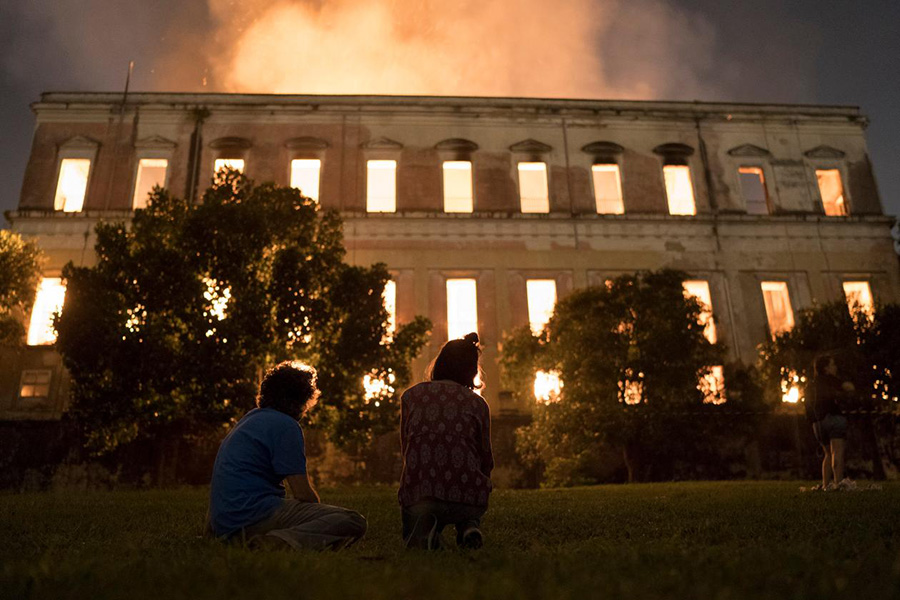
Flames engulf the National Museum of Brazil, in Rio de Janeiro. AP PHOTO/LEO CORREA

The Museu Nacional houses artefacts from Egypt, Greco-Roman art and some of the first fossils found in Brazil.

Brazilian President Michel Temer has called the loss incalculable.

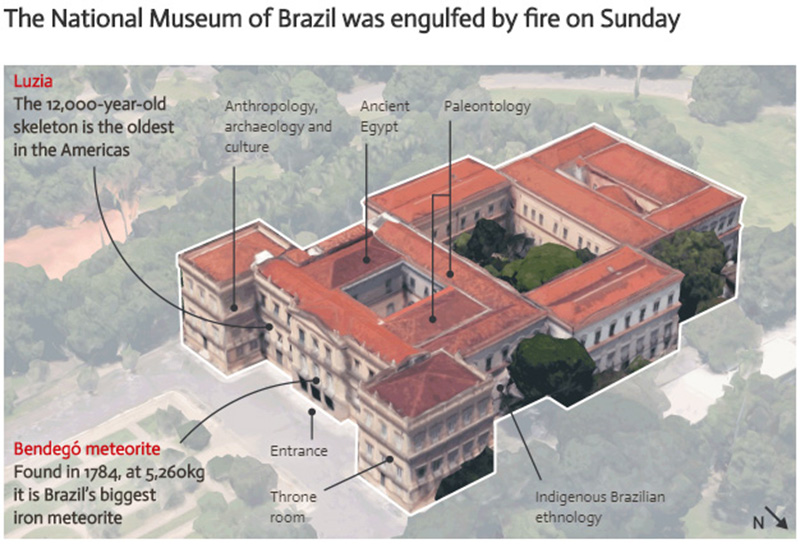
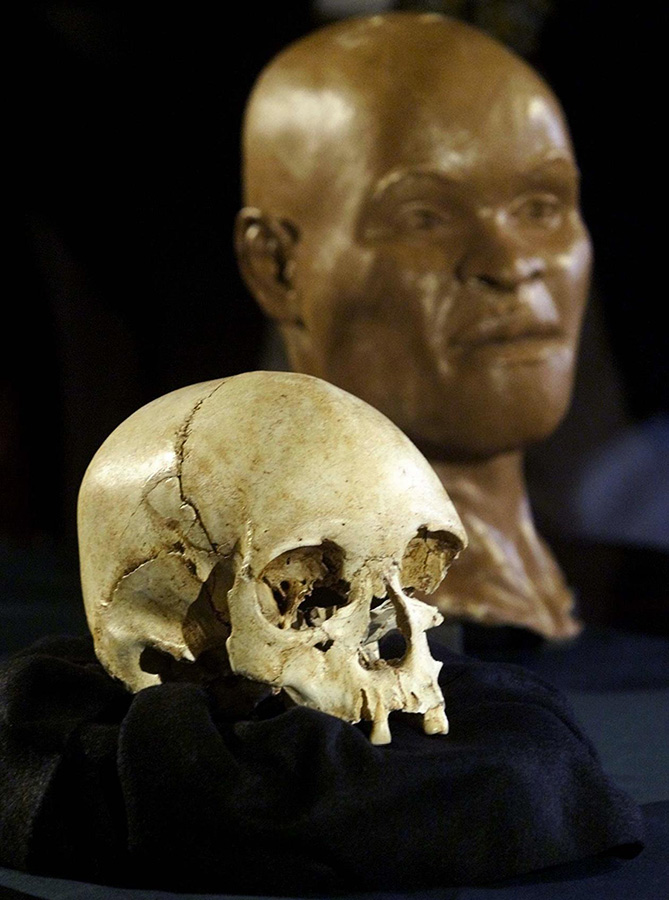
On Sunday, the country’s 200-year-old National Museum was gutted by a fire that began Saturday night. More than 20 million priceless artifacts were housed in the building, in Rio de Janeiro, including “Luzia,” a 12,000-year-old skeleton, the oldest human remains in the Americas.

 The fire began after the museum closed. Photograph: Ricardo Moraes/Reuters

“It is an unbearable catastrophe. It is 200 years of this country’s heritage,” Luiz Fernando Dias Duarte, a vice director at the museum, told Brazilian media. “It is 200 years of memory. It is 200 years of science. It is 200 years of culture, of education.”


How the fire began remains unknown, but employees had reportedly been warning of the potential for such a catastrophe because of the building’s disrepair. Local media are calling the fire a tragédia anunciada,or foretold tragedy. Luzia’s “dad,” the anthropologist who discovered the remains, had also raised concerns about the lack of maintenance.

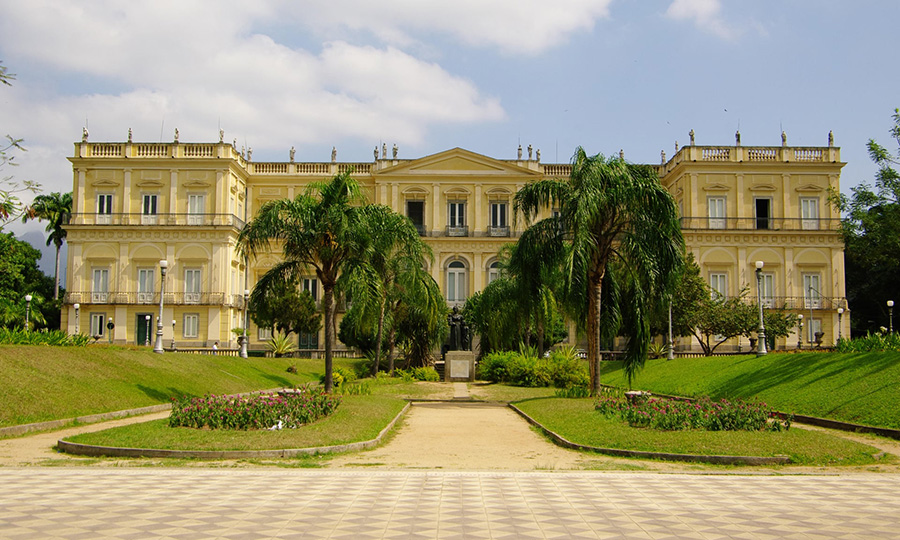
 The National Museum facade, in the middle of the park Quinta da Boa Vista, Rio de Janeiro. Photograph: Alamy

Firefighters reportedly did not have enough water in nearby fire hydrants to battle the flames, and instead had to source it from a nearby lake. Horrified onlookers, including museum staff, also joined the rescue efforts, carrying what they could away from the burning building.

Guardian graphic. Image: Google Earth. Source: Museu Nacional

The building was once a royal palace, but was converted into a museum in 1892, and is now a part of the Federal University of Rio de Janeiro.

Among its collection were Egyptian and Greco-Roman artifacts, dinosaurs and other fossils, and invaluable historical objects, including artwork, tools, weapons, and musical instruments from Brazil’s indigenous people. It was also home to the mummified bodies of a woman and two children thought to have lived 600 years before Europeans arrived to the country. It was a collection considered “fundamental to world history,” said the museum’s director, Paulo Knauss, who called the inferno “a pitiful tragedy.”

Most of the exhibits are thought to have been destroyed; one of the few items likely to survive is a meteorite found in 1784.

At the scene, several indigenous people gathered and criticised the fact that the museum containing their most precious artefacts has burned down seemingly because there was no money for maintenance of hydrants, yet the city had recently managed to find a huge budget to build a brand new museum of tomorrow. A crowd of several dozen people outside the gates, several of whom were clearly distraught. Others blamed the government’s austerity policies and corruption.

Rio’s fire chief Colonel Roberto Robaday said the firefighters did not have enough water at first because two hydrants were dry. “The two nearest hydrants had no supplies,” he said. Water trucks were brought in and water used from a nearby lake. “This is an old building,” he said, “with a lot of flammable material, lots of wood and the documents and the archive itself.”

Some Brazilians saw the fire as a metaphor for their country’s traumas as it battles terrifying levels of violent crime and the effects of a recession that has left more than 12 million people unemployed.

“The tragedy this Sunday is a sort of national suicide. A crime against our past and future generations,” Bernard Mello Franco, one of Brazil’s best-known columnists, wrote on the O Globo newspaper site.

It is not yet known how the fire began. The loss is “incalculable,” said Brazil’s president in a tweet. AP PHOTO/LEO CORREA

A desperate worker rescues items. REUTERS/RICARDO MORAES

Firefighters from seven companies worked through the night. REUTERS/RICARDO MORAES

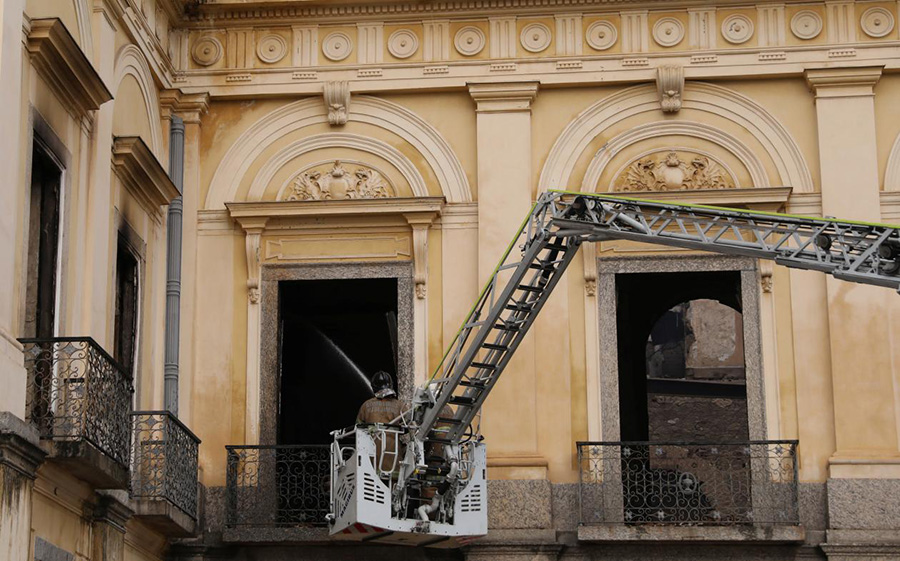
As daylight arrived, firefighters continued to spray water inside the museum. Museum directors say they fear almost everything was lost in the inferno. REUTERS/PILAR OLIVARES

National Museum employees cry as they look at the burned building on Monday (September 3.) AP PHOTO/SILVIA IZQUIERDO

A woman works on a replica of the Angaturama Limai’s skeleton, the largest carnivorous dinosaur found in Brazil, in 2009. AP PHOTO/ RICARDO MORAES

“Luzia” is thought to be nearly 12,000 years old. She was unearthed in 1975. REUTERS

Source: https://qz.com

Jurassic Mark: This Japan Hotel is Manned by Robot Dinosaurs

Saturday, September 1, 2018

These robot dinosaurs, seen at the front desk at the Henn na Hotel in Urayasuon on Friday, can also 'speak' four languages: Japanese, English, Chinese and Korean.

With labour becoming difficult to secure, this chain turned to machines.

The reception at the Henn na Hotel east of Tokyo is eerily quiet until customers approach the robot dinosaurs manning the front desk. Their sensors detect the motion and they bellow "welcome".

It might be about the weirdest check-in experience possible, but that's exactly the point at the Henn na (whose name means 'weird') chain, which bills itself as offering the world's first hotels staffed by robots.

The front desk staff are a pair of giant dinosaurs that look like cast members of the Jurassic Park movies, except for the tiny bellboy hats perched on their heads.

The robo-dinos process check-ins through a tablet system that also allows customers to choose which language - Japanese, English, Chinese or Korean - they want to use to communicate with the multilingual robots.

The effect is bizarre, with the large dinosaurs gesticulating with their long arms and issuing tinny set phrases. Yukio Nagai, manager at the Henn na Hotel Maihama Tokyo Bay, admits some customers find it slightly unnerving.

"We haven't quite figured out when exactly the guests want to be served by people, and when it's okay to be served by robots," he told AFP.

But for other guests the novelty is the charm: each room is staffed with mini-robots that look a bit like spherical Star Wars droid BB-8, and help guests with everything from changing channels to playing music.

Even the fish swimming in the lobby run on batteries, with electric lights in their articulated bodies flickering on and off as they work their way around giant tanks.

"The dinosaurs looked intriguing, and I thought my son would love it," said Chigusa Hosoi, who was at the hotel with her three-year-old. "My son is really happy. There's an egg-shaped robot inside the room. He was playing with it a lot."

The first Henn na Hotel opened in Nagasaki in 2015, and was certified the following year by Guinness World Records as the world's first hotel with robots on its staff.

The travel agency group that operates the chain now runs eight hotels across the country, all with robots on the staff, some of them dinosaurs, but others taking a more humanoid shape.

Some humans are also on-call to intervene in case of glitches, which customer reviews online suggest are a not infrequent problem at check-in.

But Nagai said relying on robots for everything from front desk duty to cleaning had proved an efficient choice in a country with a shrinking labour market.

"It's becoming difficult to secure enough labour at hotels. To solve that problem, we have robots serving guests."

Source: www.khaleejtimes.com

Russia To BRING BACK Extinct Woolly Mammoth With Jurassic Park-Style CLONING Facility

Friday, August 31, 2018

A new £4.5 million cloning facility is aiming to bring back to life the extinct woolly mammoth (Image: GETTY)

RUSSIA is planning a major new £4.5 million cloning facility aiming to bring back to life the extinct woolly mammoth and rhinoceros as well as other long-gone species. Plans for the new Jurassic Park-style “world class paleo-genetic scientific centre” in the world’s coldest city Yakutsk will be unveiled next month when Vladimir Putin hosts a major investment forum.

The cloning laboratories – some sunk deep in the permafrost soil – aim to extend research by Russian scientists who are already working closely with South Korean specialists hoping to restore extinct species.

Yakutsk is capital of diamond-rich Sakha Republic, also known as Yakutia, where 80 percent of finds of samples of Pleistocene and Holocene animals with preserved soft tissues have been made.

The scheme of the new centre will be unveiled at the 4th Eastern Economic Forum hosted by President Putin opening on September 11 in Vladivostok.

It will “aim to study extinct animals from living cells - and to restore such creatures as the woolly mammoth, woolly rhinoceros, cave lion and breeds of long-gone horses”, reported The Siberian Times.

DNA from the ancient animals has been preserved in remains encased in frozen soil – or permafrost – for tens of thousands of years.

The centre will be based at Russia’s Northern-Eastern Federal University (NEFU) which is seeking investment for the project.

Expert Dr Lena Grigorieva – who drafted plans for the centre – said: “There is no such unique material anywhere else in the world.”

But scientists would also explore ways of helping fight human diseases, she said.

“We study not only Pleistocene animals - another line is the study of the history of settlement of the North-East of Russia,” she said.

"Northern ethnic groups have a unique ancient genetic structure.

“Such studies will help in the study of rare genetic diseases, their diagnosis, prevention.”

The university has existing close cooperation with South Korean SOOAM Biotech Research Foundation, led by cloning expert Professor Hwang Woo-Suk.

There are also links between Russian scientists and Harvard University geneticist Professor George Church who plans to inset woolly mammoth genes into an Asian elephant embryo by 2020.

If successful it will create a mammoth-elephant hybrid and there are plans for the species to roam free in Siberia’s Pleistocene Park, which is seeking to recreate the habitat of the far north of Yakutia when the hairy giants lived.

Source: www.express.co.uk

Pages