Blogs

Top Dinosaur Myths, Debunked

Wednesday, September 26, 2018

No, they weren't all gargantuan, green creatures that couldn't evolve.

Long-held beliefs about dinosaurs are often revised in light of new findings, from just-discovered fossils to the DNA analysis of old ones. But dislodging old ideas isn’t always easy — especially when they’re popular.

There are plenty of myths about modern animals that are amazingly persistent, despite being regularly debunked. Myths like “camels store water in their humps” (the humps are actually packed full of fat, which is handy fuel for long plods through the desert). Or “bats are blind” (in fact, bats use their vision in tandem with echolocation to catch insects in low light).

But dinosaur myths are even more persistent, and perhaps that’s because no human has ever seen an actual dinosaur. The last one disappeared nearly 66 million years ago, a period of time that’s 825,000 times as long as the average human lifetime. In addition, dinosaurs — especially the giants of the bunch — have a kind of mythic status all their own; they fit seamlessly with human legends and fables featuring dragons, gargoyles, griffins, and other fantastic creatures. And that may be no accident. Both folklorists and scientists have suggested that the fossils of dinosaurs like Protoceratops and Stegosaurus, perhaps stumbled upon by ancient peoples for thousands of years, may have inspired some of these stories. When a thigh bone the size of a human being or an enormous beaked skull turns up along the path ahead, its finders can only imagine the animal it must have belonged to — a terrifying giant of a creature, with whom one’s ancestors might even have done battle. Here be dragons, indeed.

Despite the legends of the ancient world, we now know that human beings and actual dinosaurs never met in person. The great apes, or hominids, evolved some 6 million years ago, nearly 60 million years after the dinosaurs vanished. And our own hominid group, modern Homo sapiens, was a latecomer, arriving on the scene a mere 200,000 years ago. So all of what we know of these real-life fantastic creatures has come from their fossilized remains — and modern science.

Very large fossils stand out from the crowd, so it’s not surprising that perhaps the longest-standing popular myth about dinosaurs is that they were all gargantuan, the length of a city bus and the height of a construction crane. And some really were, such as the giant Sauroposeidon, or the largest dinosaur discovered (so far), the colossal Argentinosaurus, who may have weighed more than 106 tons (96.2 metric tons), and whose body, including its tail, measured up to 130 feet (39.6 m) long. The famously ferocious T. rex, by contrast, came in at a mere 9 tons (8.2 metric tons) and 40 feet (12.2 m). Dinosaurs were a diverse, ever-changing group of reptiles in which some iconic species achieved staggering sizes never before — and never since — seen in land animals.

But the fossil record, while incomplete, shows that dinosaurs came in a vast range of sizes, from rabbit- to rhino-sized and up. One of the smallest was Microraptor, a birdlike dinosaur with four wings, one on each of its feathered arms and legs. Microraptor weighed just 2 pounds (0.9 kg) and was a bit bigger than a crow. Studies show that it was covered in a mix of glossy black and iridescent feathers. This tiny dinosaur was a carnivore, catching and eating small mammals and birds. It was also a fan of fish.

Microraptor’s coloring might at first seem surprisingly un-dinosaur-like. In the twentieth century, it was widely assumed that dinosaurs wore camouflage colors of gray and brown (like today’s large mammals, such as elephants and rhinos) or muted green. Dinosaurs, however, were reptiles. And modern reptiles come in an astonishing array of colors and patterns. Lizards can be especially gaudy, wearing scaly skin in rainbow hues from neon green to orange, turquoise, pink, and purple, in splotches, zigzags, and intricate, nearly paisley-like patterns. Paleontologists now say that there’s no reason to think that all dinosaurs wore olive drab, but it’s difficult to know what they wore instead, when bones are often the only evidence left behind.

But studies are discovering that some dinosaurs, especially those in the birdlike crowd, may have been more colorful than we ever imagined. In 2010, paleontologists announced that they had examined the fossilized feathers of a dinosaur called Sinosauropteryx, a meat-eating theropod like Velociraptor and T. rex. There, they found melanosomes (pigment-producing factories) and a surprise: The birdlike Sinosauropteryx was likely covered in bristly orange feathers and may even have brandished an orange-and-white striped tail.

While today’s reptiles all have scales, it’s been a subject of debate in paleontology as to whether some familiar dinosaurs long thought to be scaly, such as T. rex, were in fact feathered, like Sinosauropteryx. But a 2017 study found evidence that the adult T. rex was likely covered in scales, although a small patch of feathers wouldn’t have been impossible.

Paleontologists think that unlike modern reptiles, dinosaurs weren’t cold-blooded, with their body temperature varying wildly with the temperature of the surrounding air. Dinosaurs grew very quickly, burning energy at a higher rate than the typical modern reptile. This suggests that they may have been warm-blooded, like birds and mammals. Some paleontologists think that dinosaurs may have been mesotherms, without a warm-blooded animal’s set thermostat, but with some degree of temperature control. (Modern mesotherms include, among other species, great white sharks and leatherback turtles.) Average body temperature may have varied by size, with smaller dinosaurs running at a relatively low temperature of, say, around 77°F (25°C). The heavier the dinosaur, the hotter: The enormous Sauroposeidon, some think, may have been a toasty-warm 118°F (48°C).

Some dinosaurs may also have been surprisingly attentive parents. While most modern reptiles are famous for abandoning their just-laid eggs, dinosaurs’ closest living relatives, birds, tend their eggs until they hatch and then ferry back food for the hatchlings. Dinosaurs probably got their “bad parent” rap from the misnamed oviraptor (“egg thief”), whose fossil was discovered in a nest full of eggs. Similar fossil finds have proved that the dinosaur was actually in her own nest, perched on her own eggs to keep them warm. Likewise, triceratops seems to have traveled in cozy family groups of adults and juveniles.

And then there’s the idea that dinosaurs were already marked for doom before their relatively rapid extinction — that they were a group of not-very-successful animals that would have disappeared no matter what. Most paleontologists say that dinosaurs were actually extraordinarily successful at adapting to and evolving on an ever-changing Earth. They thrived on this planet for some 180 million years. The familiar dinosaurs we know today from movies, TV, and museum exhibits were finally bested by an intruder from outer space. It’s a scenario that sounds more like the premise of a science fiction movie than what it is: the real story of the end of an epic reign on planet Earth.

Excerpted from Dinosaur: A Photicular Book by Dan Kainen and Kathy Wollard (Workman).

Source: www.inverse.com

Jinguofortis perplexus: Chinese Scientists Identify Bird Species Extincted 127 Million Years Ago

Wednesday, September 26, 2018

An artist’s impression of the prehistoric bird from the early Cretaceous period that retained some pretty dino-like features. (Illustration: Chung-Tat Cheung/PNAS)  Read more: https://www.smithsonianmag.com/smithsonianmag/127-million-year-old-fossil-links-dinosaur-and-bird-evolution-180970405/#qhmEL4mj54vei3pK.99 Give the gift of Smithsonian magazine for only $12! http://bit.ly/1cGUiGv Follow us: @SmithsonianMag on Twitter

Chinese paleontologists reported a newly identified, extincted bird species from a 127 million-year-old fossil deposit in northeastern China.

The study published on Monday in the Proceedings of the National Academy of Sciences provided new information about avian development during the early evolution of flight.

Zhou Zhonghe, Wang Min and Thomas Stidham from the Institute of Vertebrate Paleontology and Paleoanthropology of the Chinese Academy of Sciences (CAS) described the well-preserved complete skeleton and feathers of this early bird in the study.

The analysis of this early Cretaceous fossil revealed that it was from a pivotal point in the evolution of flight: after birds lost their long bony tail, but before they evolved a fan of flight feathers on their shortened tail.

The fossil of Jinguofortis perplexus /CAS Photo

They named this extinct species Jinguofortis perplexus. The genus name "Jinguofortis" honors women scientists around the world, deriving from the Chinese word "jinguo," meaning female warrior, and the Latin word "fortis" meaning brave.

The bird has a unique combination of traits, including a jaw with small teeth like its theropod dinosaur relatives; a short bony tail ending in a compound bone called a pygostyle; gizzard stones showing that it mostly ate plants; and a third finger with only two bones, unlike other early birds, according to the study.

The fossil's shoulder joint also lent clues to its flight capacity. In flying birds, the shoulder, which experiences high stress during flight, is a tight joint between unfused bones. By contrast, Jinguofortis perplexus preserves a shoulder girdle where the major bones of the shoulder, the shoulder blade and the coracoid are fused to one another.

Major changes of the coracoid and scapula of the major vertebrate groups /CAS Photo

The existence of a fused shoulder girdle in this short-tailed fossil suggested evolutionary variety during this stage of evolution, which probably resulted in different styles of flight, according to the researchers.

Therefore, Jinguofortis perplexus probably flew a bit differently than birds do today, according to them. 

Source: https://news.cgtn.com

What Can Fossil Shellfish Tell Us About Our Environmental Future? Plenty.

Tuesday, September 25, 2018

Peering into the past:  Paleontologist Rowan Lockwood examines the fossilized remains of shellfish to understand present and future environmental implications. She has used fossil oysters to make recommendations on policy for the Chesapeake Bay and is a co-author on a paper that examines the fate of shellfish during a long-past episode of global warming known as the PETM.  Photo by Stephen Salpukas

The Earth’s climate is changing, and it’s changed before. The world’s oceans are warming, and they’ve warmed before.

Past episodes of oceanic warming — and their effects — are recorded in the fossil record and scientists can unlock the predictive power frozen in geologic time to get insight into our own environmental future.

William & Mary paleontologist Rowan Lockwood is a member of a team of scientists that examined fossil record of shellfish that lived during a global warming event that occurred more than 50 million years ago. Their report, “Little lasting impact of the Paleocene-Eocene Thermal Maximum on shallow marine molluscan faunas,” was published in the journal Science Advances.

The Paleocene-Eocene Thermal Maximum, or PETM, occurred about 56 million years ago. Lockwood explained that the PETM was triggered by the release of 10,000 gigatons of carbon into the atmosphere from the seafloor or volcanic eruptions.

The result of all that carbon, she said, was a massive rise in global sea temperatures and increased ocean acidification. The natural global warming of the PETM makes it the best-available comparison to our anthropogenic-heated environment, but the paper states, dolefully, “The PETM likely underestimates the expected impact of ongoing combustion of fossil fuels.”

Lockwood explained that there are natural contributors of carbon-laden greenhouse gases at work today — volcanism is one. And the carbon extractors such as the ocean and trees are still at work.

“Trees and plant material have been absorbing greenhouse gases for millions of years,” she said. “When plants and other living organisms die and are buried into the ground for millions of years, they become coal and oil—natural carbon sinks.”

Lockwood, a professor in the university’s Department of Geology, explained that the greenhouse-gas carbon stays locked away underground until released into the atmosphere. There are natural releases such as volcanic events or weathering — but human extraction and combustion of coal and oil short-circuit the process, taking only a few years to unlock millions of years of sequestered carbon.

 “Today’s rates of global warming are significantly faster than anything we’ve seen in Earth’s history,” Lockwood said. It’s the same for ocean acidification and related carbon-driven changes to the environment. “The PETM is the closest that we have in the past, but modern warming is still far outstripping those rates.”

Lockwood’s co-authors on the Science Advances paper are Linda C. Ivany of Syracuse University, Carlie Pietsch of San Jose State University, John C. Handley of the University of Rochester, Warren D. Allmon of Cornell University and Jocelyn A. Sessa of Drexel University. The work was funded by grants from the National Science Foundation.

The collaborators chose to focus on well-known fossil outcrops on the coastal plain of Alabama and Mississippi, covered by a shallow ocean during the PETM. Other studies have looked at the effects of the PETM in deep-sea and terrestrial environments, but there has been little examination of how shallow-sea life weathered the warming, acidification and oxygen stress that were the facts of life during the PETM interval.

“These are some of the best-preserved shallow marine localities in the world,” Lockwood said. “I focused on the largest and best-preserved species in the fossil record.”

The scientists looked at a number of factors in fossils from before and after the PETM: diversity, body size, abundance, persistence. And they found that the shellfish weathered the thousands of years of environmental stress pretty well. Lockwood said she and her collaborators were surprised.

“The PETM is interesting because we know that it’s associated with the mass extinction of microscopic organisms living in the ocean,” she said. “Since these microscopic organisms are the base of the marine food chain, we hypothesized we would see extinction in the mollusks as well.”

Lockwood cautioned that the story is incomplete. Even the rich fossil beds of the Gulf coastal plain have some blank spots in their fossil record, she said, and therefore the collaborators can’t explain why or how the shellfish were so successful.

“So, it’s possible that the mollusks have responded, but we don’t have a finely tuned enough record to observe that,” she explained. “But if they did respond, they bounced back surprisingly quickly on a geologic time scale.”

Source: www.wm.edu

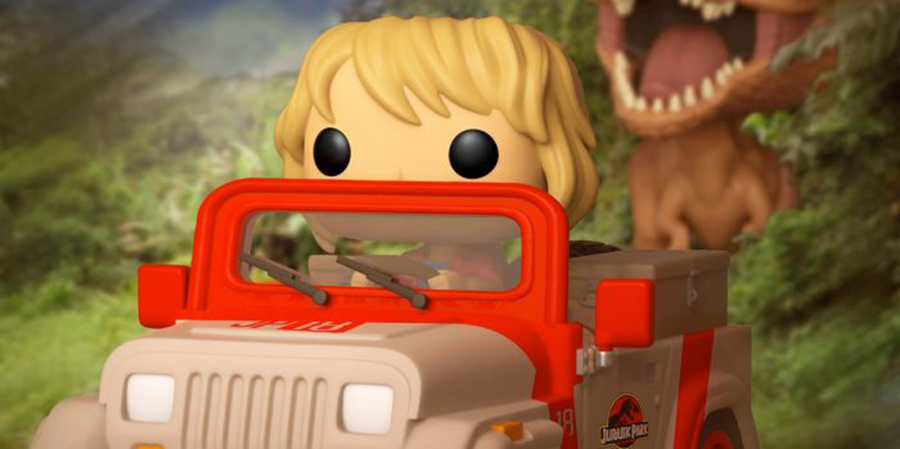
The Funko 'Jurassic Park' Ellie Sattler in Jeep Pop Figure It's Here

Tuesday, September 25, 2018

The Jurassic Park line of Funko POP figures hit shelves earlier this year, including an extremely popular and hard to find sexy version of Jeff Goldblum as an injured Ian Malcolm. But one of the characters missing from the line-up, much to the chagrin of Laura Dern fans, was paleobotanist Dr. Ellie Sattler. Thankfully, she has joined the rest of the big-headed Jurassic Park collectible figures, and she comes with the best accessory of them all: a Jurassic Park Funko POP Jeep

Jurassic Park Funko POP Jeep

The Jurassic Park Funko POP Jeep is a new addition to the POP Rides line of collectibles from Funko, and right now it’s the only way to get your hands on an Ellie Sattler Funko POP figure.

Of course, one can’t help but point out that Dr. Ellie Sattler is wearing a yellow raincoat when she’s in the Jeep in Jurassic Park when the tyrannosaurus rex decides to pursue the park vehicle. But if they’re not giving Ellie Sattler a different, individual Funko POP sometime down the line (preferably one with Mr. Arnold’s bloody arm), it’s probably better that they left that detail out.

The good news is that it looks like there’s enough space in the back of the Jeep to put that sexy, injured Ian Malcolm figure. It’s just a shame there’s no room for Robert Muldoon to be in the Jeep as well. Now if we could just get a Funko POP Ride of the Ford Explorer with Lex and Tim, then Jurassic Park fans would be very happy.

You can get the Jurassic Park Funko POP Jeep sometime in November.

Source: www.slashfilm.com

Pacific Museum of the Earth: Dinosaurs, Sea Monsters, and Ancient Insects

Saturday, September 22, 2018

The rare Elasmosaurus with its incredibly long neck now on display at the University of British Columbia (UBC Public Affairs)

The University of British Columbia now has a rare ancient sea monster to amaze visitors to its Pacific Museum of the Earth.

The 13 metre long creature lived in what was known as the Western Interior Seaway, a giant sea which covered most of central North America.

The 13-metre Elasmosaur seen from above. It inhabited a giant sea which covered most of the central area of continental North America. Although it lived among dinosaurs millions of years ago, it was a marine reptile (UBC Public Affairs)

This rare example of an Elasmosaur lived about 80 million years ago with dinosaurs in the late Cretaceous period, but it is in fact a plesiosaur, a marine reptile, not a dinosaur.

The skeleton was found in shale in 1988 near present day Courtney British Columbia. More than half the beast’s length is just it’s neck (about 7 metres) meaning it likely could barely raise it’s head out of water.

Meanwhile in Toronto, the Royal Ontario Museum (ROM) will soon unveil it’s latest exhibit, an exceptionally preservered anklyosaur, which also happens to be from the late Cretaceous. The particular specimen is crurivastator, means ‘destroyer of shins’ for its menacing, weapon-like tail club and curators realised it was a new species.

How the ankylosaur, Zuul crurivastator would have looked some 76 million years ago. It gets part of its name from the club at the end of its tail used as a defensive weapon. (ROM)

The dinosaur is one of the most complete and well preserved specimens of its kind in the world. The ROM staff have named it Zuul after the horned creature in the 1984 film Ghostbusters. The exhibit “Zuul: Life of an Armoured Dinosaur” will open on December 15.

The ancient skull of “Zuul”. The ROM”s ankylosaur when revealed in December, will be one of the world’s best preserved examples of anklyosaur. (Brian Boyle-ROM)

Of course summer in Canada is the most prolific time for paleontologists and university scientists and students to go looking for fossils. Although the badlands of Alberta are world renowned for fossil finds,, neighbouring Saskatchewan also has extensive fossil beds.

Portions of the skull of a duckbill dinosaur- Edmontosaurus – found this year in Saskatchewan. Ryan McKenna- Canadian Press)

This summer they turned up a rare duckbill dinosaur skull. Perhaps even more exciting was the find of a ancient wasp perfectly preserved in amber. The find will add to knowledge about how insects evolved over millions of years.

A 65 million year old wasp also found this year in Saskatchewan, Looking very closely you can even see the delicate wings. (Gov. Saskatchewan)

It is expected more interesting discoveries will come to light as paleontologists now begin the work of studying all the many finds recovered in various locations this summer

Source: www.rcinet.ca

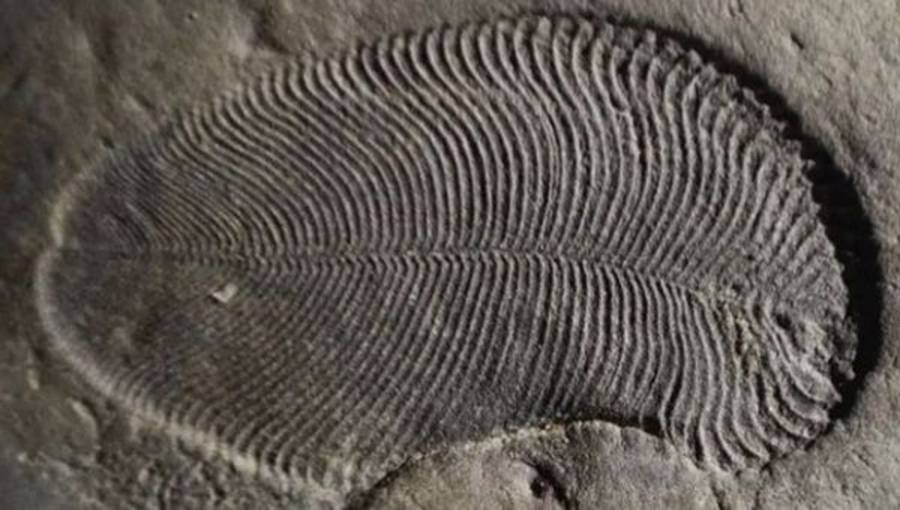
560 Million Year Fossil is the World's Earliest Animal Species

Friday, September 21, 2018

Scientists described the Dickinsonia as “soft and flexible;” “Maybe like a slug, but less watery than a jellyfish. | Photo: Australian National University

Found on the cliffs of Russia’s northwest coast along the White Sea, the fossils predate snails, bivalves, and arthropods.

Found on the cliffs of Russia’s northwest coast along the White Sea, three 558-million-year-old fossils are the oldest known living species, a new study shows.

"The fossil fat molecules that we've found prove that animals were large and abundant 558 million years ago; millions of years earlier than previously thought," said Jochen Brocks, co-author of the study and an associate professor at the Australian National University (ANU).

Found on the cliffs of Russia’s northwest coast along the White Sea, the fossils predate snails, bivalves, and arthropods as the world’s earliest complex organisms.

Due to lack of biological evidence, the species boggled scientists for decades and was classified as fungi, lichen, and as a protozoan. It was considered the  “holy grail of paleontology,” said Brocks.

The paleontological conundrum was resolved after Ph.D. student Ilya Bobrovskiy led an expedition to the Russian wilderness in search of fossils with organic matter still intact.

"Most rocks containing these fossils, such as those from the Ediacara Hills in Australia, have endured a lot of heat, a lot of pressure, and then they were weathered after that — these are the rocks that paleontologists studied for many decades, which explained why they were stuck on the question of Dickinsonia's true identity," Bobrovskiy said.

“These fossils were located in the middle of cliffs of the White Sea that are 60-100m high. I had to hang over the edge of a cliff on ropes and dig out huge blocks of sandstone, throw them down, wash the sandstone and repeat this process until I found the fossils I was after,” said Bobrovskiy.

Brocks described the Dickinsonia as “soft and flexible;" “Maybe like a slug, but less watery than a jellyfish.

“What these strange-looking Ediacaran creatures really were ... is essential if we want to understand the emergence and evolution of our own earliest ancestors,” Brocks concluded.

Source: www.telesurtv.net

Mesosaurs: ‘Oldest-Known Aquatic Reptiles’ Were Semi-Aquatic, Paleontologists Say

Friday, September 21, 2018

Mesosaurus. Image credit: Roman Yevseyev / Graciela Piñeiro.

According to new research published in the journal Frontiers in Ecology and Evolution, mesosaurs — the oldest known reptiles that developed aquatic adaptations — spent part of their life on land.

“Despite being considered the oldest-known fully aquatic reptile, mesosaurs share several anatomical features with terrestrial species,” said Professor Graciela Piñeiro, from the Universidad de la República in Uruguay.

“Our comprehensive analysis of the vertebrae and limbs of these ancient reptiles suggests they lived in the water during the earliest stages of their development, whereas mature adults spent more time on land.”

Since the discovery of Mesosaurus bones in the Mangrullo Formation of Uruguay, Professor Piñeiro and co-authors wondered why the larger, presumably adult specimens (around 6.5 feet, or 2 m, in length) were not as abundant as smaller mesosaur skeletons (around 3 feet, or 0.9 m, in length).

“The larger specimens, at least twice the length of the more commonly reported Mesosaurus fossils, could just be exceptionally big individuals,” Professor Piñeiro said.

“However, the environmental conditions of the Mangrullo lagoon of where they lived were harsh, making it difficult for the occasional mesosaur to reach such a relatively large size and age.”

“We then realized that in comparison to the smaller, better-preserved specimens, larger Mesosaurus fossils were almost always disarticulated, very weathered and badly preserved. This suggested these larger specimens had extended exposure to the air when they died.”

Terrestrial, semi-aquatic and aquatic animals show a clear difference in bone profiles, so Professor Piñeiro and colleagues used morphometrics to analyze the shape of the fossilized mesosaur bones.

They examined 40 juveniles and adult specimens of Mesosaurus tenuidens and compared their bone profiles to those of similar reptiles known to be aquatic or semi-aquatic, such as crocodiles and marine iguanas.

“The adult mesosaur tarsus — a cluster of bones in the ankle region — suggests a more terrestrial or amphibious locomotion rather than a fully aquatic behavior as widely suggested before,” said Dr. Pablo Núñez, also from the Universidad de la República.

“Their caudal vertebrae, the tail bones, also showed similarities to semi-aquatic and terrestrial animals.”

“This supports the hypothesis that the oldest and largest mesosaurs spent more time on land, where fossil preservation is not as good as in the subaquatic domain.”

_____

Pablo Nuñez Demarco et al. Was Mesosaurus a Fully Aquatic Reptile? Front. Ecol. Evol, published online July 27, 2018; doi: 10.3389/fevo.2018.00109

Source: www.sci-news.com

Shrinking the Grand Staircase-Escalante National Monument is a Disaster for Paleontology

Saturday, September 22, 2018

A man and a woman stand on cliff looking out over the Grand Staircase- Escalante

In the early 1980s, paleontologists Jeff Eaton and Rich Cifelli started digging for fossils in one of the most inaccessible regions of the United States: the Kaiparowits Plateau of southern Utah. They were looking not for dinosaurs, but for ancestral mammals. Mammals almost litter the fossil record after dinosaurs became extinct 65 million years ago, but they were rare before then. Eaton and Cifelli ventured onto the Kaiparowits to comb its rocks for mammals’ tiny teeth and bones.

Not only did these two scientists find fossil mammals, they uncovered one of the most complete sequences of vertebrate fossils anywhere in the world from the time when dinosaurs still ruled. What Eaton and Cifelli discovered in Utah showed that life on land was unexpectedly becoming more diverse at a time when life in the oceans was being decimated by chemical changes.

Their work demonstrated the tremendous paleontological potential of the Kaiparowits Plateau and the nearby Circle Cliffs and Grand Staircase regions. Rocks in this remote region span the entire Mesozoic Era – the so-called Age of Reptiles – and by the early 1990s were producing scientifically important fossils from all three of its periods, the Triassic, Jurassic and Cretaceous.

On Sept. 18, 1996, President Bill Clinton set aside these federal lands as Grand Staircase-Escalante National Monument. The goal was to protect their paleontological treasures, preserve their hundreds of archaeological sites and keep one of America’s last wildernesses intact.

A sign marks the monument’s northern boundary along Scenic Byway 12. Photo by Phil Taylor.

Decades of ongoing research in this region have literally rewritten what scientists know about Mesozoic life, especially about the ecosystems that immediately preceded the final extinction of the dinosaurs. Paleontologists like me know that the still-pristine Grand Staircase-Escalante region has divulged only a fragment of its paleontological story.

But the Trump administration has systematically cut entire chapters of that narrative out of the national monument, including key segments of what Clinton’s original proclamation called “one of the best and most continuous records of Late Cretaceous terrestrial life in the world.” The changes not only are at odds with scientific goals for which the monument was created, but researchers contend they endanger the unique natural heritage that belongs to us all.

What national monument designation means

National monuments are not memorials to famous Americans. They’re a special category of federal land, used to conserve special historical, archaeological and scientific resources.

In the 1906 Antiquities Act, Congress granted the president power to establish national monuments on government land to protect these types of resources. In total, 640 million acres are held in trust for the American people. The majority of this land is available for mixed uses, including wildlife conservation, livestock grazing, mining and petroleum extraction, scientific study and recreation, as mandated by Congress in the Federal Land Policy and Management Act of 1976.

National monuments come into play when historical or scientific resources on those lands are endangered by one or more of those uses or when special attention would enhance them. It was the value of the paleontological resources and the pristine condition of the wilderness around the Kaiparowits Plateau that triggered Bill Clinton’s Grand Staircase-Escalante proclamation in 1996.

Skeleton of the carnivorous dinosaur Teratophoneus being airlifted out of its excavation site on the Kaiparowits Plateau. P. David Polly, CC BY-ND

Monument status confers funding through the National Conservation Lands System to restore, maintain and develop designated national heritage resources on federal land. At Grand Staircase, these funds help pay for paleontological field crews, for helicopter lifts of excavated specimens from inaccessible areas and for conservation of those specimens back in the lab. Just as Fort McHenry National Monument in Maryland would not realize its value as a historic site if its buildings were not maintained, so too would Grand Staircase fail to live up to its potential if its fossils were not studied.

The management plan for the original Grand Staircase placed priority on paleontological research. It established the position of monument paleontologist to coordinate field researchers from around the world, to survey and document paleontological sites, and to ensure that fossils collected from the monument are placed in museums and universities where they remain the property of the federal government and are accessible to those who wish to study them.

Shrinking the site

But now Eaton and Cifelli’s original dig sites are no longer part of the monument. President Donald Trump cut them last December, along with more than 700 other documented paleontological sites.

Map of Trump’s cut from Grand Staircase-Escalante National Monument (bolded areas) with number of known excluded paleontological sites in each. P. David Polly, 2018, CC BY-ND

Based on a recommendation by Interior Secretary Ryan Zinke, Trump issued a proclamation that reduced Grand Staircase to almost half its original size. His text asserts that the cuts “take into account” the findings of two decades of paleontological research in order to determine “the smallest area compatible with the proper care and management of the objects of … scientific interest.”

Roughly 1 in 3 of the thousands of sites discovered at the monument have now been excluded. And many more sites remain to be found because large areas have not been fully surveyed. The change in status means that new research in the excluded areas will have lower priority and less support.

In August, the Department of Interior issued a draft management plan for the areas that have been removed from monument, now available for public comment. It offers options that range from protecting paleontological resources with the same rules as before, to actively prioritizing mineral and gas extraction in the excluded areas. The former would be great for science; the latter could be devastating. Some fossil-rich areas of the excluded parts of the monument could be targets for shale gas extraction, others could be singled out for coal or uranium mining.

Depending on the outcome of the current management plan consultation, areas now excluded from the monument may not receive the same priority for conservation and research.

The skull of the new ceratopsian dinosaur Machairoceratops, whose discovery site at Grand Staircase has been excluded from the monument. Lund et al., 2016, CC BY

Why ongoing protection is needed

Paleontology, like any science, rests on the principle of verifiability. Science is a process in which scientists revisit old data time and time again to verify earlier findings, to ask new questions and to apply new technology.

The scientific process means that paleontologists routinely return to sites where major discoveries were made in the past. For example, when Tyrannosaurus rex was discovered in 1902, scientists had no way of precisely dating the rocks in which it was found nor did they have any inkling that it was one of the last dinosaurs standing before a massive asteroid crashed into the Earth. Only by applying radiometric dating and rare earth element analysis at those classic sites more than 100 years later have we come to understand the demise of dinosaurs.

Paleontologists work at Grand Staircase because of its unique fossil record, of course, but also because they know the sites will remain intact. Verifiability has become increasingly important; every paleontologist has faced a situation where they cannot answer a pressing question because a key fossil has been misplaced or a critical site has been destroyed.

Scientific ethics dictate that we curate scientifically important specimens in accessible public repositories like museums and do our best to preserve the sites they come from. Places like national monuments and national parks that prioritize protection of fossil sites are therefore prime research areas. That permanent protection has been rescinded from more than 700 sites in active research areas is almost inconceivable to paleontologists.

Because of the potential impact the cuts are likely to have on science, the Society of Vertebrate Paleontology – of which I am the current president – joined with Grand Staircase Partners and Conservation Lands Foundation in a lawsuit to reverse them. The case’s argument is that presidents do not have the authority to unprotect resources at national monuments and that scientifically important paleontological resources have indeed been excised. The case is currently pending in U.S. District Court.

This ‘duck-billed’ dinosaur’s Latin name is Grypsosaurus monumentensis, in honor of its discovery at the Grand Staircase-Escalante National Monument.  Charles R. Peterson, CC BY-NC-ND

Vertebrate fossils are rare, so much so that each one usually tells a unique part of the story of life. Mammal species like the ones that Eaton and Cifelli discovered in the 1980s were probably spread over much of the continent in the Cretaceous, but precious few of them have ended up in the fossil record and only a few of those have been discovered. Grand Staircase is an extraordinary place with an unusual density of these rare fragments of life’s past, one where their geological context is still intact. That’s why paleontologists are concerned about its future.

Source: https://theconversation.com

Massive dinosaur ‘bone bed’ found in E. Cape, South Africa

Thursday, September 20, 2018

Shepherd Dumangwe Tyhobela (center) of Sterkspruit is being credited with the exciting discovery of a massive dinosaur graveyard in the Eastern Cape.

The discovery has attracted both international and national media as they believe this is the most historic Dinosaur Fossils discovery ever seen in the world.

Geologists and Palaeontologists from Witwatersrand, Birmingham and Oxford universities have confirmed a massive discovery of different species of dinosaur fossils in Qhemerha village outside the small town of Sterkspruit, in the Eastern Cape.

This has attracted international scholars and researchers who want to experience what they termed the dinosaur bone bed. A team of experts has spent more than a week tracing dinosaur fossils.

Many villagers and academics believe this discovery will put the Eastern Cape and South Africa on the world map.

Oxford University Professor, Roger Benson, detailing the discovery of extinct dinosaurs in Qhemerha village in Sterkspruit, says, “200 million years when these animals lived, this rock was mud and the animal, lay down in the mud and then it was buried by more mud. But it did not lay out for very long which is why most of the bones are articulated together. And then later on, more mud would come and the dinosaur was buried deeper in the ground, and that is when the bones and the mud started to turn into rock and the result of that … we have a fossil dinosaur skeleton and turned into hard rock.”

Meanwhile, Jonah Choiniere, a palaeontologist from Wits University says the discovery of dinosaur fossils in one place is the first of its kind in the world.

“In a bone bed, we mean, essentially, a dinosaur graveyard – a place where lots of animals died together and were preserved and this is very uncommon in South Africa. So, that is what I will call a dinosaur graveyard, and I think as years go by, we will find more in South Africans a hub of perinatology across the world, a place where people know there is great dinosaur discovery there. There is great extinct forms of life that have been discovered. So, it’s something we need to be proud of as South Africans.”

Palaeontology Master’s student from Wits University, Cebisa Mdekeza says the discovery of dinosaur fossils in this part of the world is interesting for scholars and geologists.

“This discovery means a lot to anyone who is interested in dinosaurs because it is very rare. In fact, for most of us, it’s our first time to find a specimen this articulated. So, usually, you will find one piece of leg, a bone or a hand bone but here, you have most of the skeleton. So, it is very important.”

Emma Dunne, a PhD student from the University of Birmingham in England, has described the discovery of the dinosaur bone bed as a miracle of nature.

“It was our first great experience. It’s an amazing site. You do not get it anywhere like this all over the world. So, this is a wonderful place to be for me, personally, but also to get to work with such an amazing team – the Jonas team is wonderful; it’s international. We get such a great experience from them.”

Wits University post graduate Doctor in Evolutionary studies, Pia Viglietti, believes this will produce quality research on the extinction of dinosaurs.

Siginyane Rhalane, a villager that who been leading the geologists and scientists around the stretch of dinosaur bone bed in the area, believes that the South African government and UNESCO should consider declaring the Dino Fossil bed a heritage site.

“Our intention is to ask UNESCO to declare this place a heritage site where we have a park, and we also have a miniature dinosaur museum so that it can attract school children around here perhaps nationally. Like here now, we have got two universities, from London Birmingham and Oxford, that shows people from abroad are interested in this like tourists are interested in coming here.”

Themba Jikajika from Qhemerha village says this is conformation that Africa formed part of the world. Before there was a continental drift.

“As one of the evidences on continental drifts, the fossils that are found on the western coast of Africa are almost similar to those fossils that are found in the eastern coast of South America. So, that shows that these animals, during that period, were roaming all over the Pangea. They could be in Australia; they could be in South America or in Africa, even the vegetation is almost similar.”

The discovery has attracted both international and national media as they believe this is the most historic Dinosaur Fossils discovery ever seen in the world.

Source: www.sabcnews.com

Dinosaur Fossils Discovered in Saskatchewan

Thursday, September 20, 2018

Government of Saskatchewan / saskatchewan.ca

New fossil discoveries have been made in Saskatchewan this summer, by scientists at the Royal Saskatchewan Museum.

“Saskatchewan is becoming better known as having one of the great fossil resources in Canada and indeed the world,” Parks Culture and Sport Minister Gene Makowsky said.

“Each summer brings another opportunity to realize new, untouched fossil sites and the potential for scientific discoveries of international importance.”

The discoveries from this summer include:

  • the skull of a baby Elasmosaur (long-necked plesiosaur) from Lake Diefenbaker

  • an Edmontosaurus skull (duck-billed dinosaur) found near Shaunavon

  • a partial skeleton of a juvenile Bronotothere (38 million year-old rhino-like mammal) discovered near Eastend

  • Triceratops bones near Grasslands National Park, teeth from a Gorgosaurus (a big carnivore that looks like Albertosaurus)

  • Ankylosaurs (armoured dinosaurs with clubbed tails) from near Consul.

Sometimes the significance of these summer discoveries is not fully realized until the fossils are analyzed back at the lab.

Pieces of amber collected near Bengough were found to contain insect inclusions from the Cretaceous period, including a newly discovered species of wasp.

Two years ago, a little turtle fossil was collected. Nicknamed “Squrtle,” now RSM scientists have confirmed it is a very important find because it is so complete and likely from a rare group of turtles.

Already loved and appreciated by the more than 150,000 annual visitors at its facilities in Regina and Eastend, the Royal Saskatchewan Museum’s status as an internationally recognized centre for research and teaching continues to rise as does the world’s appreciation of Saskatchewan’s fossil resources.

The fossil ‘hits of summer 2018’ will join past discoveries to add to the provincial collection and be the subject of study and research until next summer, when the season of fieldwork and discovery begins anew.

Source: https://globalnews.ca

Pages