Blogs

Dinosaur Fossils: Portal to the Past
Saturday, November 24, 2018

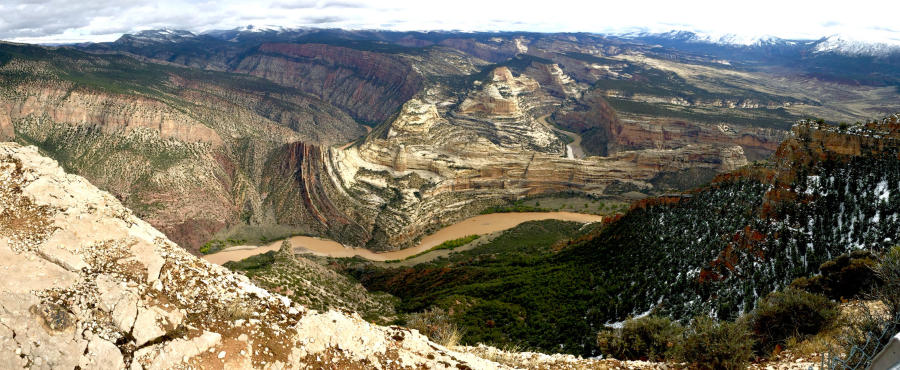
The views at Dinosaur National Monument, which straddles the Utah-Colorado border, are easily described as majestic. Here, the confluence of the Green and Yampa Rivers is hidden by Steamboat Rock. Photo courtesy of Anastasia Stepankowsky

Dinosaur fossils a portal to the past.

I ran my hand over the face of the gray cliff that rose above me. The rock was rough, with fissures and divots and an abrasive texture that tears skin.

My fingers found a smooth spot infused with stains that looked like rust. It felt like rock, and in one sense it was rock.

But for me, it was a portal to a period 150 million years ago. It was a yard-long dinosaur bone, embedded in rock, and so perfectly fossilized that the bone was easily distinguished from the finely veined marrow.

It was the femur of a sauropod, a giant, long-necked dinosaur that shook the ground as it walked through earth’s Jurassic Period.

The chance to run your hands over real dinosaur bones and connect with ancient life is just one of the treats that make Dinosaur National Monument unique, even if its remote location on the Utah-Colorado border make it among the least-visited sites in the National Park system

A three-hour drive from Salt Lake City, the monument is a hidden jewel visited by about 250,000 people annually. It harbors treasures for everyone, whether they be trained paleontologists or Barney lovers, nature photographers or philosophers struck by a landscape that is a 23-layer cake of rock formations documenting a billion years of earth’s history.

Spartan landscape

This is a colorful but spartan landscape that stimulates reflection and reminder that the world is old, and that our time here is short. Here, it’s easy to see that even rocks and rivers have a life span, as proven by an impressive peak known as Split Mountain, which got its name because the Green River cut the peak in two, leaving an imposing cliff behind that plunges straight down into the river.

The Green is one of two rivers flowing through the 211,000-acre area and cut its broad canyons, which range from 1,000 to 3,000 feet deep. The other is the Yampa, the latter the only major undammed tributary of the Colorado River.

Flowing green and brown, the two rivers converge near the center of the park at an oxbow bend called Steamboat Rock. The gorge here, as seen from the Harper’s Corner overlook, elevation 7,500 feet, features geological strata that are muted and less vibrant than those of the Grand Canyon, which is several hundred miles downstream. But the gorges that slink through the layers of rock that used to be seas and river bottoms have a majesty that has evoked superlatives for nearly 200 years.

“The scenery was on a grand scale, and never before did I live in such ecstasy for an entire month,” wrote John Welsey Powell, the famous explorer of the American Southwest, after he rafted down the Green River in 1869.

Even though it looks like a forsaken landscape, Dinosaur National Monument harbors plenty of life. Osprey soar through the canyons. Dinosaur is home to black bears, mountain lions, big horn sheep and unique species of lizards, fish and other species. The fall air has a pungent, tasteful aroma of pinyon pine and Utah juniper, which dapple the canyon walls and wedge their roots into rock fissures to survive the arid and cold climate of the a high desert.

But, the place is known best for life that thrived 150 million years ago, when the area was flat, warm and drained by an extinct river.

Paleontologist’s find

Dinosaur’s name comes from the discovery, in 1909, of eight dinosaur bones by Earl Douglas, a Carnegie Museum paleontologist. Further excavations revealed a virtual dinosaur graveyard located about 15 miles east of Vernal, Utah, at 5,000 feet above sea level.

Thousands of dinosaur fossils lay embedded in a steeply tilted layer of rock called the Morrison Formation. The find included entire skeletons, including whole skulls, both rarities.

Scientists have a straightforward explanation for the origins of this find. A drought caused a mass die-off. When the rains returned, the river washed the bones and carcasses downstream. They were deposited together and covered with silt and sand that hardened into rock over millions of years. Later, tectonic forces lifted and tilted the layer, and erosion exposed the old bones.

Douglas mined what he called “the quarry” and sent fossils to museums around the nation. But he insisted that the quarry later be preserved for the public to see and touch. The quarry, which is slightly narrower and slightly longer than a basketball court, has been protected from the elements since the 1950s by a building known as the Quarry Exhibit Hall.

The quarry wall is pitched due to the tectonic uplift that tilted it. That makes it more like viewing a giant canvas. About 1,500 bones lay on the quarry surface. One of them is a full specimen of a stegosaurus, a plant-eater with a small head, a row of bony plates down the back and a lethal cluster of spikes on its tail. Climbing up the quarry wall is prohibited, but the fossils at the top are visible from a mezzanine.

In all, the remains of 10 dinosaur species have been found in the monument. Some are on the trail outside the quarry where I found that big femur.

Dinosaur has other attractions, too. White water rafting, hiking through its canyons, examining (but not touching) petroglyphs or, if your have a suitable vehicle, visiting the old homestead of the colorful character Josie Morris. Most of the monument is designated wilderness and is a dark-sky preserve, great for skygazing.

The monument is accessed through five different paved roads, none of which connect, though rugged vehicles can get down into the Yampa River canyon, weather permitting. Most campgrounds are along the rivers, and thus accessible by raft and by foot but not by vehicle.

Cars seem out of place here, which is a place for your mind to connect to life eons ago to a time when dinosaurs, not humans, were masters of the earth.

Source: www.columbian.com

Sauriermuseum Aathal

Saturday, November 24, 2018

Dinosauromuzeo en Aathal-Seegräben

Europe's largest dinosaur museum was founded by a passionate autodidact.

Switzerland’s “Jurassic Park,” as locals use to call it, was not founded by scientists, but rather a self-educated businessman named Hans-Jakob “Kirby” Sieber. The autodidact never studied paleontology or any other related field, but his sensational findings during excavations, and his long years of painstaking study and preparation of dinosaur fossils, made him one of the most renowned dinosaur researchers in Europe.

His discoveries—such as the famous Allosaurus “Big Al Two,” the unlucky group of sauropods that died from being stuck in a swamp, or “Toni,” the incredibly well-preserved remains of a dinosaur baby—have inspired the storylines of a whole genre of documentary films and paleoart.

Sieber started his early career as a (not very successful) filmmaker, but later joined his father’s company selling minerals and fossils mostly excavated from the Swiss Alps. Since the fossils of marine species were not very sensational, Sieber traveled to the U.S. to join dinosaur excavations in Wyoming. Soon he surprised his hometown with giant bones and skeletons he brought back home to Switzerland.

In 1992, the Sauriermuseum Aathal was opened, and strongly profited from the global dinosaur mania that broke out one year later when Steven Spielberg’s Jurassic Park was released. Since then, Siber and his team spend several months on their “Howe ranch” in Wyoming every year. The fresh findings are preserved in a transparent glass-cube laboratory in the center of the spacious exhibition and visitors can watch the dinosaur researchers live at work.

One of the first exhibits at the museum was the reconstruction of the world’s largest tortoise, which is still on display and as large as a school bus. The exhibition is displayed across 5,000 square meters and hosts a vast range of objects both inside and outside. The largest ones are almost fully preserved fossilized skeletons of Allosaurus, a 17-meter diplodocus next to two other giant sauropods, the gate-sized dentation of a megalodon-shark, and everything else the curious fossil lover is looking for: fossilized eggs, footprints, bones, and even coproliths of all kinds of prehistoric reptiles. In addition to the archaeological finds, you can also see large-scale prehistoric dioramas and a dinosaur garden. 

Know Before You Go

Aathal can be easily reached by the S-Bahn (S14) from Zurich main station. From the Aathal train station, just keep left and follow the signs (and giant dinosaur figures). The museum is open Tuesday to Saturday from 10 a.m. to 5 p.m., Sunday from 10 a.m. to 6 p.m., and closed Mondays. Compared to other paleontological museums, this one has a rather familial and relaxed spirit. If you join a guided tour, it is usually carried out by one of the enthusiast excavators.

Source: www.atlasobscura.com

Giant Mammal Cousin Rivaled Early Dinosaurs

Friday, November 23, 2018

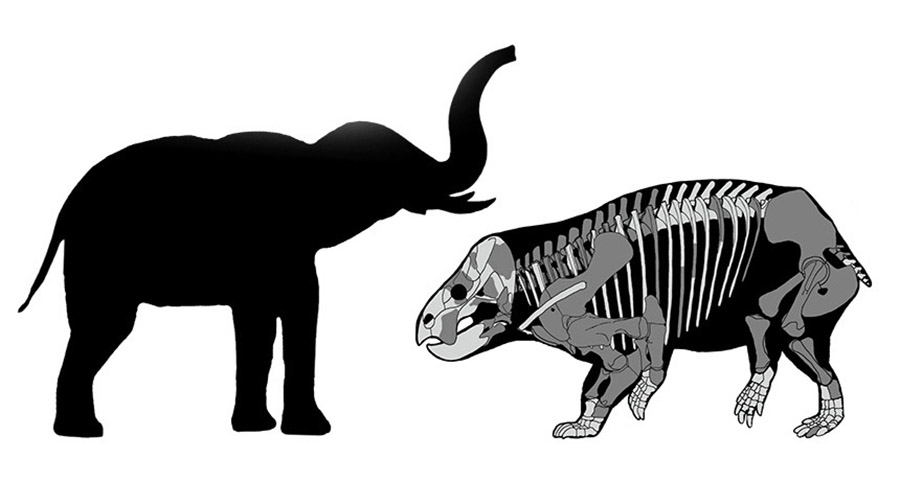
HEFTY HERBIVORE  A new plant-eating creature that lived during the Late Triassic was about the size of a modern-day elephant — far larger than its relatives at the time.  TOMASZ SULEJ AND GRZEGORZ NIEDZWIEDZKI

The dicynodont from the Late Triassic was surprisingly hefty, rivaling a modern-day elephant in size.

A new species of hulking ancient herbivore would have overshadowed its relatives.

Fossils found in Poland belong to a new species that roamed during the Late Triassic, a period some 237 million to 201 million years ago, researchers report November 22 in Science. But unlike most of the enormous animals who lived during that time period, this new creature isn’t a dinosaur — it’s a dicynodont.

Dicynodonts are a group of ancient four-legged animals that are related to mammals’ ancestors. They’re a diverse group, but the new species is far larger than any other dicynodont found to date. The elephant-sized creature was more than 4.5 meters long and probably weighed about 9 tons, the researchers estimate. Related animals didn’t become that big again until the Eocene, 150 million years later.

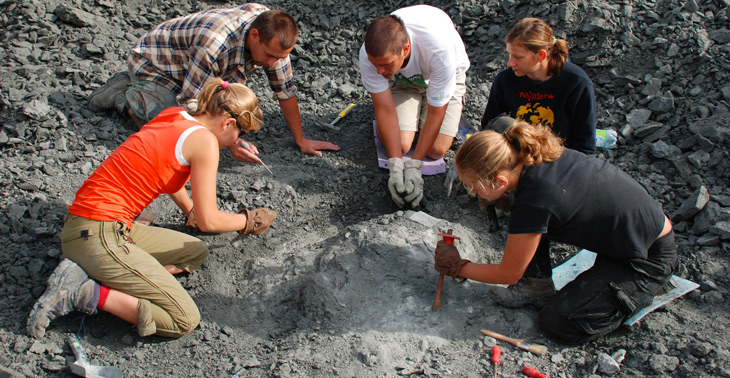
DIG IT Field researchers excavated the skeleton of the new species in Silesia, Poland.  TOMASZ SULEJ

“We think it’s one of the most unexpected fossil discoveries from the Triassic of Europe,” says study coauthor Grzegorz Niedzwiedzki, a paleontologist at Uppsala University in Sweden. “Who would have ever thought that there is a fossil record of such a giant, elephant-sized mammal cousin in this part of the world?” He and his team first described some of the bones in 2008; now they’ve made the new species — Lisowicia bojani — official.

The creature had upright forelimbs like today’s rhinoceroses and hippos, instead of the splayed front limbs seen on other Triassic dicynodonts, which were similar to the forelimbs of present-day lizards. That posture would have helped it support its massive bodyweight.

Source: www.sciencenews.org

The Secrets of Dr. Wu expands Jurassic World Evolution

Thursday, November 22, 2018

The Secrets of Dr. Wu expands Jurassic World Evolution

Frontier Developments has unleashed their Jurassic World Evolution: Secrets of Dr. Wu DLC for PC, PlayStation 4 and Xbox One.

Based on Universal Pictures and Amblin Entertainment’s blockbuster franchise, and created in collaboration with Universal, the DLC expands the Jurassic World Evolution campaign with new missions and an all-new Jurassic World story.

This expansion to the Jurassic World park-building strategy game puts players in control of two hidden research facilities on Isla Muerta and Isla Tacaño where Dr. Henry Wu, voiced by BD Wong, is developing a new generation of hybrid dinosaurs.

Players will confront an elevated level of chaos and threat caused by Wu’s machinations as they work alongside the doctor and discover new dig sites, facility upgrades and research opportunities.

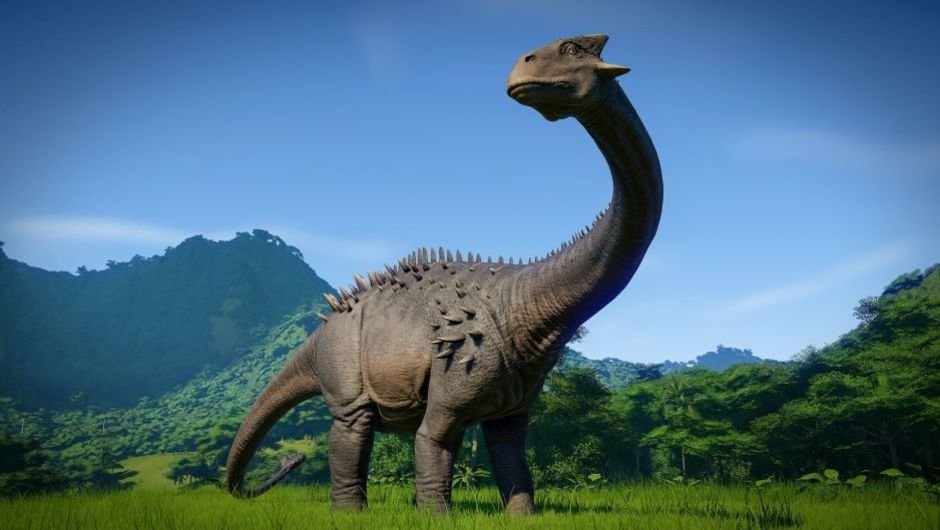
Jurassic World Evolution: Secrets of Dr. Wu also introduces the herbivore Olorotitan and the venomous Troodon to Jurassic World Evolution, alongside three new Wu-created hybrids: the Stegoceratops, Ankylodocus and Spinoraptor. Players can progress through missions to unlock new upgrades and research options that can be used throughout the Jurassic World Evolution campaign.

This includes the Indominus Rex’s unique camouflage gene as seen in 2015’s Jurassic World. New campaign missions unlock after players achieve a four-star rating on Isla Muerta. 

Also, as of today, all Jurassic World Evolution players will receive a free game update introducing an optional day/night cycle to the campaign, new dinosaur grouping and sleeping behaviours, new contracts and new large-capacity feeders.

Source: https://futurefive.co.nz

Embryological Study of the Skull Reveals Dinosaur-Bird Connection

Wednesday, November 21, 2018

Birds evolved from dinosaurs, radically transforming their skull as it became toothless and the brain grew bigger. The large dinosaur with a dark outline in the image is Erlikosaurus; below, the modern seabird Sula. During evolution, birds lost two of the skull bones once present in dinosaurs: The prefrontal, and the postorbital. However, during the embryonic development of birds, starting points for the formation of these bones are still present. The dark circles above illustrate the appearance of these embryonic bones under the microscope, as revealed by a purple stain that is bone-specific (alizarin red). The embryonic prefrontal and postorbital later fuse to other embryonic bones, becoming undetectable in the adult. Credit: Luis Pérez López [CC BY-SA 4.0 (https://creativecommons.org/licenses/by-sa/4.0)], from Wikimedia Commons

Birds are the surviving descendants of predatory dinosaurs. However, since the likes of Tyrannosaurus and Velociraptor, some parts of their anatomy have become radically transformed. The skull, for instance, is now toothless, and accommodates much larger eyes and brain. Skulls are like 3-D puzzles made of smaller bones: As the eye socket and brain case expanded along evolution, birds lost two bones of the skull that were once present in dinosaurs -the prefrontal, at the upper front corner of the eye, and the postorbital, behind the eye.

Or rather, this seemed to be the case. A new study published in Nature Ecology & Evolution has uncovered how during embryonic development of the bird skull, both of these dinosaur bones are still present as starting points of bone formation (ossification centers). Rather than becoming independent bones of the adult skull (as in ancient predatory dinosaurs), they fuse quickly to other embryonic bones, becoming undetectable in the adult bird. The study is the master's thesis of evolutionary biologist Daniel Smith.

During the evolution of toothed, dinosar-like birds in the Cretaceous period, the disappearance of the adult postorbital coincided with an increase in size of the brain, as well as the frontal bone above the brain. The new study shows how the embryonic postorbital of birds fuses to the frontal, becoming part of that bone. By adding itself to the frontal, the postorbital could have allowed it to expand and accommodate a larger brain in evolution. This discovery has also unraveled a long-standing mystery of embryology: In most animals, the frontal bone is formed from cells coming from the outer layer of the early embryo, called the ectoderm. Birds are very unusual because their frontal bone develops from two sources of embryonic cells: The front portion is formed from the ectoderm, but the back portion is formed from an inner layer of the embryo, called the mesoderm. The reason for this was enigmatic, but some scientists had suggested that the back portion of the frontal was different because it evolved from a different bone, that became assimilated into the frontal. The new study has confirmed this hypothesis, by showing that the back portion of the frontal actually starts out as a separate embryonic bone, the same that once developed into the postorbital of dinosaurs (see the image of duck embryos below).

These images of duck embryos show how the postorbital is at a first a separate embryonic bone (above), the same that in dinosaurs became a separate bone of the adult skull. At a later stage, the embryonic postorbital fuses to the frontal, becoming part of this bone (below). Credit: Daniel Nuñez León [CC BY-SA 4.0 (https://creativecommons.org/licenses/by-sa/4.0)], from Wikimedia Commons

Professor Bhart-Anjan Bhullar at Yale University (who was not part of the study) summarizes the work of his colleagues: "Smith-Paredes et al. have discovered dinosaurian vestiges hidden in the embryonic skull of birds, and in so doing have presented an elegant solution to the question of why the avian frontal bone is a composite structure: it incorporates other bones thought lost during the dinosaur-bird transition. Therefore, evolution has worked in a graceful, elegant way —by subtly removing seams and fusing existing building blocks —to build something remarkably divergent and unique."

The Vargas lab has previously studied how parts of the embryonic wrist, shank and foot also show a general dinosaur pattern, before developing an anatomy that is specific to birds. The new study provides further evidence for the "inner dinosaur" of birds, in the sense that much of their embryology is still the same as in their ancient ancestors.

More information: Daniel Smith-Paredes et al. Dinosaur ossification centres in embryonic birds uncover developmental evolution of the skull, Nature Ecology & Evolution (2018). DOI: 10.1038/s41559-018-0713-1

Provided by: Universidad de Chile

Source: https://phys.org

Macrocollum itaquii: Skeletons of New Species of Vegetarian Dinosaur Discovered in South America

Thursday, November 22, 2018

An artist's impression of the three newly discovered long-necked dinosaurs ( SWNS )

Find expected to help scientists discover how later long-necked beasts grew so big.

Bones of a newly discovered species of vegetarian dinosaur have been dug up in Brazil.

Three “astonishingly well preserved” skeletons were uncovered and shed new light on one of the earliest of the long-necked dinosaurs that lived more than 225 million years ago.

The new species, which lived before giant dinosaurs had emerged, would have weighed about 16st and grown to around 12ft long and 5ft tall.

Experts say the discovery is also remarkable because it shows the dinosaurs were social creatures at this early stage of their evolution, choosing to live in groups rather than alone.

Named Macrocollum itaquii, it is a distant cousin of the sauropods – the later long-necked beasts that walked on four legs, such as Brontosaurus, which grew into the largest terrestrial animal to walk on Earth.

It roamed South America when it was still part of one huge supercontinent called Pangaea, before the land mass broke up.

Macrocollum, Latin for long neck, may help palaeontologists finally discover how the sauropods grew so big.

Like sauropods, the new species was also a plant-eater, but unlike them it walked on two legs.

The dominant vegetation at the time was ferns and gymnosperms, flowerless plants that produce cones and seeds, and the creature would have gorged on them to nourish its substantial body.

Biologist Rodrigo Muller, of the Federal University of Santa Maria, Brazil, said: "The morphology of its teeth suggests this dinosaur was herbivorous."

Its long neck would have helped it access a lot more food, reports the Royal Society journal Biology Letters.

Mr Muller said: "Indeed, the neck elongation present in the new dinosaur may also have provided a competitive advantage for gathering food resources.

"It would have allowed members of the group to reach higher vegetation compared to other early vertebrates.

"There are three articulated skeletons in five tons of rock. This is unique. 

"It suggests these animals probably died together, as they share the same degree of disarticulation.

"So if they died together, these dinosaurs probably lived together.

"This gives us an amazing picture of how these animals lived, which has never been done before."

Source: www.independent.co.uk

Sparrow-Sized Raptors Left the Smallest Dinosaur Footprints Ever Found

Wednesday, November 21, 2018

A recreation of Dromaeosauriformipes rarus, the tiny new raptor species that's thought to be responsible for the world's smallest dinosaur footprints(Credit: Dr Anthony Romilio)

Most of the records that dinosaurs break are in the "world's largest" category – the biggest foot, the largest land animal to ever walk the Earth, that kind of thing. But now palaeontologists have discovered the smallest dinosaur tracks ever found, which were made by a previously-unknown species of raptor the size of a sparrow.

Discovered in the Jinju Formation in South Korea, each of the footprints measures about 1 cm (0.4 in) long. Although they resemble modern bird tracks, they only have two toes, indicating they were made by raptors. That's because raptors, as you might remember from Jurassic Park, hold their clawed third toe off the ground in a curved position.

The tiny new dinosaur tracks were found in the Jinju Formation in South Korea(Credit: Prof Kyung Soo Kim)

"These 110-million-year-old footprints and trackways were made by carnivorous dinosaurs commonly known as raptors," says Anthony Romilio, an author of the study. "The diminutive sizes of these new tracks are extraordinary; the tracks were made by tiny dinosaurs about the size of sparrows. They are the world's smallest dinosaur tracks."

To find the size of the animal responsible, the team estimated their hip height by multiplying the footprint length by 4.5. This sparrow-size didn't line up with any known species, so the track-maker has been given the new name Dromaeosauriformipes rarus. But there's an obvious question to ask – were these tiny adult animals or just baby dinosaurs of a larger species?

The dinosaur tracks each measure just 1 cm (0.4 in) long(Credit: Prof Kyung Soo Kim)

"Very small dinosaur species like the Chinese Microraptor were crow-sized, but these had feet too large to match the South Korean footprints," says Romilio. "If the tracks were made by dinosaur chicks, we are unclear as to the specific dinosaur that made them, since dinosaurs such as Velociraptor and Utahraptor had larger feet than the ones discovered in these new tracks."

Dinosaur footprints can provide new insights into how ancient animals lived that fossilized bodily remains simply can't. New species emerge, migration patterns come to life, we can see which species lived side-by-side, and even how dinosaurs and early mammals co-existed.

The new study was published in the journal Scientific Reports, and the team brings the new species to life in the animation below.

Source: University of Queensland

Melting Ice on Mars Could Save us From ‘Dinosaur’ Extinction, Top Physicist Warns

Wednesday, November 21, 2018

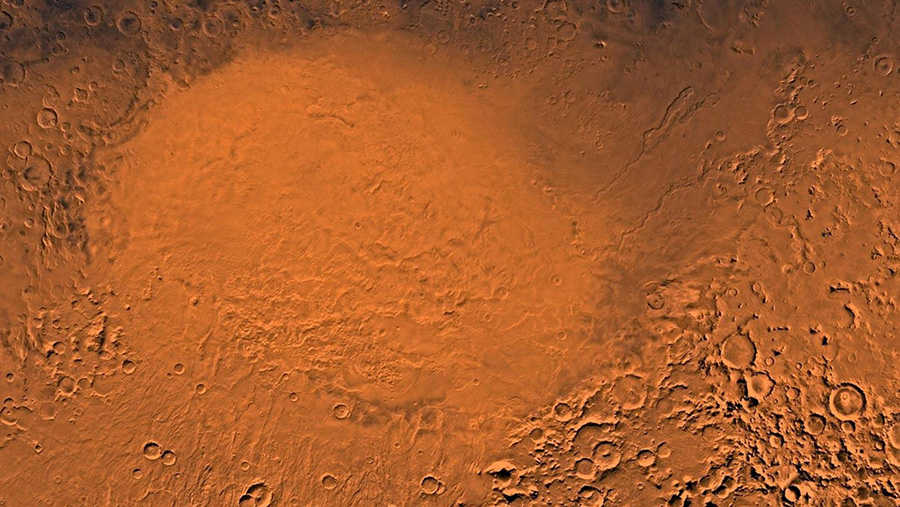
The Hellas Planitia region of Mars, where scientists believe small lakes came and went regularly. (NASA/JPL/USGS)

Humans need to settle on Mars as a "plan B" – or we risk going the way of the dinosaurs.

That's the belief of top theoretical physicist Michio Kaku, who said Mars is one of our best hopes of avoiding "extinction".

According to the American science titan, "99.9% of all life forms" become fossils – and "disappear off the face of the Earth".

Humanity risks the same fate if we don't invest in space travel, and find a way to settle on Mars.

"Look at the dinosaurs," Kaku said, speaking on ABC's Late Night Live.

"The dinosaurs did not have a space program, and that's why they are not here today to talk about it."

It's easy for humans to think we'll buck the trend and survive through any cataclysmic event.

But Kaku is concerned that the only real way to avoid the total wipe-out of humanity is to colonize Mars.

"Extinction is the norm," he explained.

"We think of Mother Nature as being warm and cuddly, which is partly true.

"But nature is merciless when it comes to wiping out inefficient life forms."

Kaku is one of many scientists who back a process called terraforming.

This hypothetical process involves changing the surface and climate of Mars, to make it hospitable for humans.

There are lots of theories about how this could work, including melting the polar ice caps to heat the planet up.

This could be done using "solar satellites" that beam sunlight onto the caps, kickstarting the process.

"Once you can raise the temperature of Mars by six degrees, it takes off all by itself," said Kaku.

"All of a sudden you get a runaway greenhouse effect, and Mars basically terraforms itself."

Professor Kaku was keen to point out that humans shouldn't abandon Earth completely.

Mars could simply be a useful alternative – if only temporary – to avoid a destructive event on our home planet.

The red planet could work like a space bunker, keeping humans safe from mega-tsunamis or disastrous climate events.

"No one is talking about leaving the Earth and going to Mars," said Kaku.

"We're talking about a settlement, a self-sustaining settlement on Mars, that's not going to drain resources of the planet Earth but will give us an insurance policy, a plan B."

Space won't simply be an evacuation point, however.

Kaku believes that out "grandkids will have the ability to honeymoon on the Moon".

He said it's "only three days away", and added that it's "an easy target."

This story originally appeared in The Sun.

Source: www.foxnews.com

These One-of-a-Kind Dinosaurs Now Have a Home in Cincinnati

Saturday, November 17, 2018

A Daspletosaurus horneri skeleton in the new Dinosaur Hall exhibit at the Cincinnati Museum Center in Cincinnati on Friday, Nov. 16, 2018. (Photo: Sam Greene/The Enquirer)

The Dinosaur Hall is not just a new feature in the restored Cincinnati Art Museum and Union Terminal. 

It has dinosaur specimens you won't find on display anywhere else. 

We got a sneak peek of the exhibit hall.

Here's what we learned:

The gallery is new. The dinosaurs specimens are really old. And rare. It features six huge displays ranging from the Jurassic Period (153 to 145 million years ago) to the Cretaceous Period (145 to 65 million years ago), including five on display to the public for the first time.

The 7,000-square-foot gallery is located in the Museum of Natural History & Science. (You'll notice a sign for the gallery in the rotunda.)

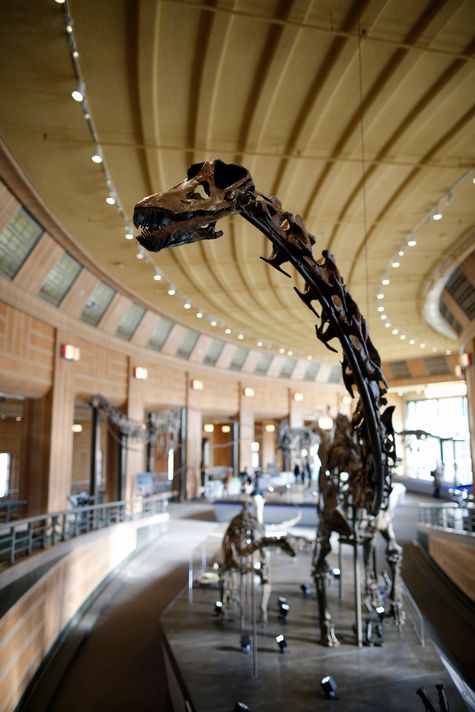
A Galeamopus skeleton in the new Dinosaur Hall exhibit at the Cincinnati Museum Center in Cincinnati on Friday, Nov. 16, 2018. (Photo: Sam Greene/The Enquirer)

A closer look at the dinosaurs. 

The museum center's 35-foot, four-ton Torvosaurus is the only one of its kind in the world. Isolated bones have been found, but this is the only specimen discovered largely intact.

Here's a fun fact: This apex predator, with nine-inch-long teeth and three claws, would have eaten herbivores like the Galeamopus and Diplodocus, both of which are also on display in the new gallery.

Speaking of the 60-foot-long Galeamopus, the museum center has the most complete specimen of this long-necked giant in the world. The museum's paleontologists unearthed it in Montana from 2000-2004.

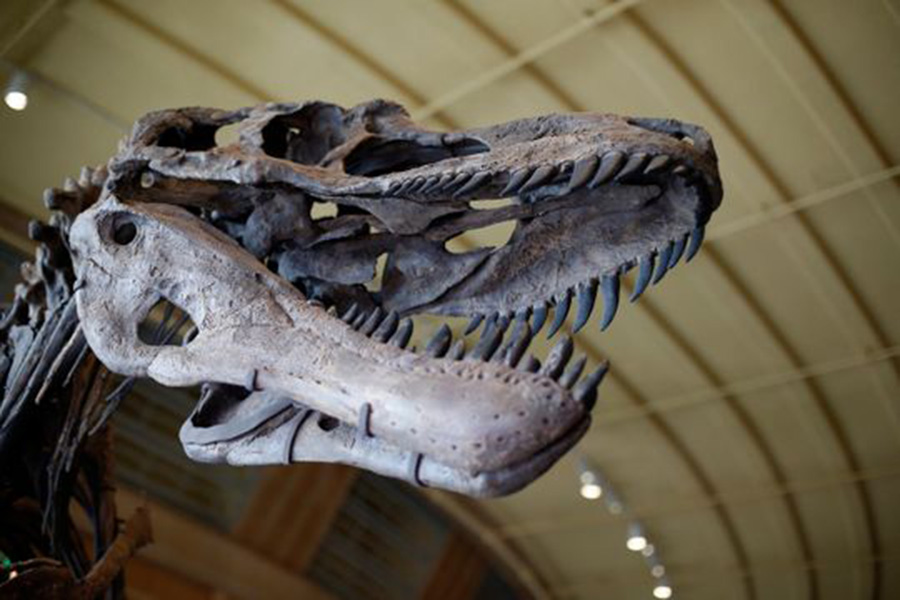
You'll also see the Tyrannosaurus rex’s much older cousin Daspletosaurus. The one in the gallery here is one of less than a dozen specimens in the world. 

What else is new? You can watch paleontologists at work in the new lab, use video microscopes and check out an interactive globe that shows the continents moving over 600 million years. 

When will it open to the public? It will open Saturday as part of the grand reopening celebration at Union Terminal.

Learn more: Visit cincymuseum.org/sciencemuseum/dinosaurs.

Source: www.cincinnati.com

Fight Over Dinosaur Fossils Comes Down to What's a Mineral

Saturday, November 17, 2018

In this Nov. 14, 2013 file photo, one of two "dueling dinosaur" fossils is displayed in New York. Ownership of two fossilized dinosaur skeletons found on a Montana ranch in 2006 are the subject of a legal battle over whether they are part of a property's surface rights or mineral rights. The 9th U.S. Circuit Court of Appeals issued a split decision saying fossils are minerals under mineral rights laws. (AP Photo/Seth Wenig, File)

About 66 million years after two dinosaurs died apparently locked in battle on the plains of modern-day Montana, an unusual fight over who owns the entangled fossils has become a multimillion-dollar issue that hinges on the legal definition of "mineral."

The 9th U.S. Circuit Court of Appeals ruled last week that the "Dueling Dinosaurs" located on private land are minerals both scientifically and under mineral rights laws. The fossils belong both to the owners of the property where they were found and two brothers who kept two-thirds of the mineral rights to the land once owned by their father, a three-judge panel said in a split decision.

Eric Edward Nord, an attorney for the property owners, said the case is complex in dealing with who owns what's on top of land vs. the minerals that make it up and addresses a unique question of mineral rights law related to dinosaur fossils that no court in the country has taken up before.

His clients own part of a ranch in the Hell Creek Formation of eastern Montana that's rich with prehistoric fossils, including the Dueling Dinosaurs whose value had been appraised at $7 million to $9 million.

Lige and Mary Ann Murray bought it from George Severson, who also transferred part of his interest in the ranch to his sons, Jerry and Robert Severson. In 2005, the brothers sold their surface rights to the Murrays, but retained the mineral rights, court documents said.

At the time, neither side suspected valuable dinosaur fossils were buried on the ranch, court records said. A few months later, amateur paleontologist Clayton Phipps discovered the carnivore and herbivore apparently locked in battle. Imprints of the dinosaurs' skin were also in the sediment.

A dispute arose in 2008 when the Seversons learned about the fossils — a 22-foot-long (7-meter-long) theropod and a 28-foot-long (9-meter-long) ceratopsian.

The Murrays sought a court order saying they owned the Dueling Dinosaurs, while the Seversons asked a judge to find that fossils are part of the property's mineral estate and that they were entitled to partial ownership.

It had wider implications because the ranch is in an area that has numerous prehistoric creatures preserved in layers of clay and sandstone. Paleontologists have unearthed thousands of specimens now housed in museums and used for research.

But fossils discovered on private land can be privately owned, frustrating paleontologists who say valuable scientific information is being lost.

During the court case, the Dueling Dinosaurs were put up for auction in New York in November 2013. Bidding topped out at $5.5 million, less than the reserve price of $6 million.

A nearly complete Tyrannosaurus rex found on the property was sold to a Dutch museum for several million dollars in 2014, with the proceeds being held in escrow pending the outcome of the court case.

Other fossils found on the ranch also have been sold, including a triceratops skull that brought in more than $200,000, court records said.

The 9th Circuit decision on Nov. 6 overturned a federal judge's 2016 opinion that fossils were not included in the ordinary definition of "mineral" because not all fossils with the same mineral composition are considered valuable.

"The composition of minerals found in the fossils does not make them valuable or worthless," U.S. District Judge Susan Watters of Billings wrote. "Instead, the value turns on characteristics other than mineral composition, such as the completeness of the specimen, the species of dinosaur and how well it is preserved."

The Seversons had appealed, arguing previous court cases determined that naturally occurring materials that have some special value meet the definition of minerals.

Attorneys for the Murrays asked the 9th Circuit this week for an extension of a Nov. 21 deadline to petition the judges to reconsider or for a hearing before an 11-judge panel.

Source: https://abcnews.go.com

Pages