Blogs

Crittendenceratops krzyzanowskii: New Horned Dinosaur Discovered in Arizona

Tuesday, December 18, 2018

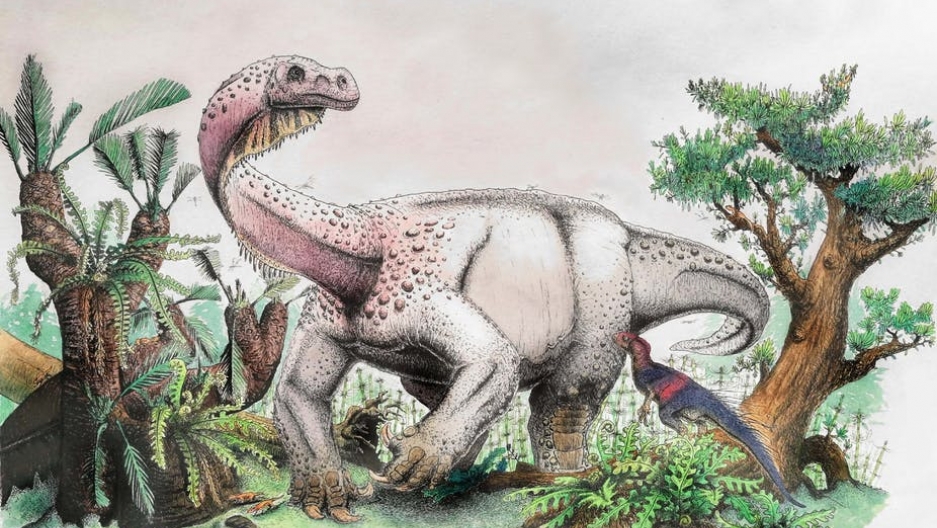
Life reconstruction of Crittendenceratops krzyzanowskii. Image credit: Sergey Krasovskiy.

A new genus and species of herbivorous ceratopsid (horned) dinosaur being named Crittendenceratops krzyzanowskii has been discovered by paleontologists from the New Mexico Museum of Natural History & Science (NMMNHS).

Crittendenceratops krzyzanowskii roamed what is now Arizona about 73 million years ago (Late Cretaceous period).

The new dinosaur belongs to a group of horned dinosaurs called the centrosaurs.

Crittendenceratops frill. Credit: New Mexico Museum of Natural History & Science

The ancient creature was about 11 feet (3.5 m) long, weighed an estimated 750 kg, and can be distinguished from other centrosaurs by the unique shape of the bones in its frill (head shield).

Like other horned dinosaurs, Crittendenceratops krzyzanowskii was a plant eater.

The fossilized skull fragments from two individuals of the species were collected from the Fort Crittenden Formation of southeastern Arizona.

The specimens were described and named by NMMNHS paleontologists Dr. Sebastian Dalman and co-authors.

Crittendenceratops squamosal bone. Credit: New Mexico Museum of Natural History & Science

“The name Crittendenceratops is for the Fort Crittenden Formation and Greek ceratops, which means horned face,” they explained.

“The species name krzyzanowskii is for the late Stan Krzyzanowski, a NMMNHS research associate who discovered the bones of the new dinosaur.”

paper describing Crittendenceratops krzyzanowskii is published in the New Mexico Museum of Natural History & Science Bulletin.

_____

Sebastian G. Dalman et al. 2018. A new ceratopsid dinosaur (Centrosaurinae: Nasutoceratopsini) from the Fort Crittenden Formation, Upper Cretaceous (Campanian) of Arizona. New Mexico Museum of Natural History and Science Bulletin79

Source: www.sci-news.com

Meeting Earth’s First Animals at the Burgess Shale

Saturday, December 15, 2018

Restoration of Burgess Shale fossil arthropod Waptia fieldensis, via Wikimedia Commons

The Burgess Shale is a huge deposit of unique fossils that reveals records of the middle Cambrian, a vital period in evolutionary history.

During renewed expeditions of the Burgess Shale, a giant fossil-bearing rock deposit in the Canadian Rocky Mountains, scientists are unearthing new and mysterious fossils. Expedition leader Jean-Bernard Caron and his team of scientists have found, among other odd creatures, a mysterious flying saucer-shaped organism they’re calling “the mothership.” The Burgess Shale contains over 60,000 unique fossils, providing the best records of the middle Cambrian, a vital period in evolutionary history at the dawn of animal diversification about 500 million years ago. In other words, these are some of Earth’s first animals.

The first exploration of the area was conducted in 1909 by paleontologist Charles Doolittle Walcott, who decided to smash a rock that was blocking his way during some fieldwork. Finding fossils inside the quarry, Walcott returned for numerous expeditions, as have other scientists up through the present.

The area was once a deep reef, and what makes it so incredible is the high number of soft-bodied fossils found there. Generally only bones or hard exoskeletons readily fossilize; soft body parts degrade too quickly. The exceptional state of preservation indicates that whatever buried the organisms did so quickly and completely before decomposition or mechanical forces had a chance to damage them. Here, soft body parts are preserved as thin, reflective film. Some fossils of the same species were preserved in different positions, allowing researchers to see the same type of creature from different perspectives and understand its body shape.

The fossils themselves are so unusual that they are difficult to describe. Arthropods are the most common, many resembling variations on a shrimp. The most prevalent one is Marella, which looks sort of like a shrimp but with spikes, antennae, and other appendages sticking out every which way. Another arthropod called Leanchoilia superlata resembles a pill bug crossed with a crayfish crossed with a squid. There are sessile creatures, such as sponges, or crinoids, which look like a frayed wicker basket on a stalk. There are numerous types of bulbous worms called Priapulids, fearsome predatory segmented Polychaete worms, a primitive snail-like mollusk, algae, and many others. All told, the fossils suggest a thriving marine ecosystem.

According to S. Conway Morris in Science, the diversity and weirdness of the Burgess Shale organisms are evidence of the Cambrian radiation (or Cambrian explosion), a vast increase in the diversity of life that set the stage for almost all life on Earth. Many of the taxa survived on Earth for a very long time. Others, geologically speaking, were flashes in the pan.

Some Burgess Shale organisms are remnants from a little-understood earlier period called the Ediacaran, at the dawn of life on Earth. Most of these Ediacaran organisms went extinct. The few that didn’t diversified into many more species during the Cambrian. The Burgess Shale discoveries are not just a window into the early diversification of life, but they also help scientists understand the dynamics of mass extinctions and their aftermath. These new discoveries suggest that the Burgess Shale fossils are even weirder than anyone believed.

Source: https://daily.jstor.org

Jurassic Park T-Rex Has a Name and It's Not Rexy

Friday, December 14, 2018

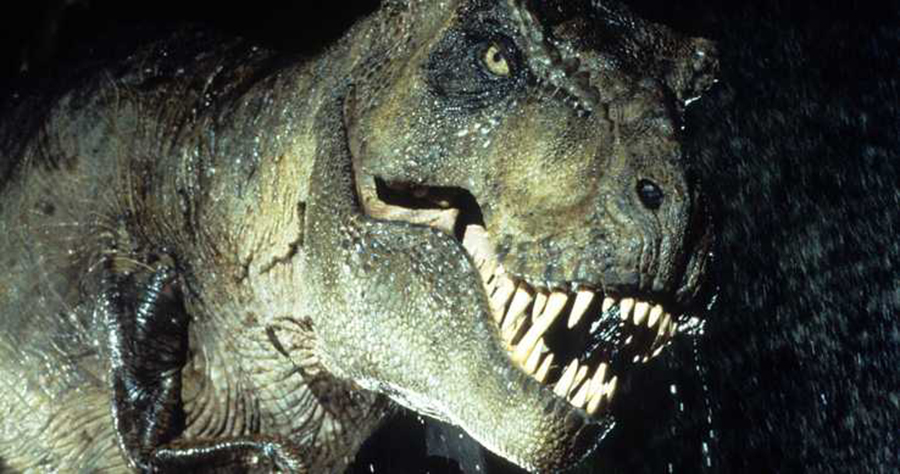
Jurassic Park T-Rex Roberta

It turns out the T. rex from Jurassic Park has a name. Over the years, many have taken to calling the original Tyrannosaurus rex by the nickname Rexy, but that was never made even remotely official by anything in the canon of the franchise. It's really just something fans cooked up that has taken off. But, as it just so happens, someone who has a lot of authority over the franchise did give the old girl a name, as revealed in some of the early storyboards for the movie.

Phil Tippett, the man famously credited as the "dinosaur supervisor" on Jurassic Park and the more recent Jurassic World movies, leading to the great "you had one job, Phil" meme, auctioned off some of his early storyboards and other items from the production back in 2016. One of the early storyboards showcasing the T-rex reveals that Tippett was calling her Roberta during development. There was no real need for this name to ever make it into the movie, but Tippett is a very important figure who helped to craft these creatures for Steven Spielberg. This is as official as it gets.

That's not to say that in the production binders or in the script notes they refer to the T-rex as Roberta. Or that the people of InGen picked a name for her, which happened to be Roberta, but this is as close to an official name for arguably the most beloved character in the franchise as we're going to get. Sure, people are always going to adore Jeff Goldblum's Ian Malcolm, but no element of the franchise is more iconic than this particular dinosaur, who we can now pretty safely refer to as Roberta from here on out.

Jurassic Park: Roberta

There isn't really much of a history at all in the franchise when it comes to giving dinosaurs names on screen. That only really started with Jurassic World when Owen (Chris Pratt) named all of the raptors he was training, with Blue being the most famous example. It's also worth mentioning that this is the name for the original T. rex. There are several different genetically engineered versions of this animal throughout the series, such as the couple we were introduced to in The Lost World on Site B, Isla Sorna. There is also the rex that died at the hands of the Spinosaurus in Jurassic Park III, which is theorized to be the baby from the second movie grown up. Though, that has never been confirmed.

But Rexy, or Roberta, is easily the most infamous of these dinosaurs and appeared once again in this summer's Fallen Kingdom. It's highly likely that we'll see her show up at least once more in Jurassic World 3, which is currently in development and is slated to hit theaters in June 2021. Colin Trevorrow is returning to the director's chair, in addition to co-writing the script alongside franchise newcomer Emily Carmichael. Be sure to check out the storyboard in question below. This originally surfaced over on Reddit

Source: https://movieweb.com

Jurassic World 3 Won't Have Dinosaurs Attacking Cities

Friday, December 14, 2018

At the end of Jurassic World: Fallen Kingdom, it looked like a large scale 'man vs dinosaur' story was on the horizon...

Jurassic World 3 may not be quite as wild as it looked like perhaps it could have been. Depending on one's personal expectations, that could be a good or bad thing. Whatever the view of the individual, director Colin Trevorrow has shot down the possibility of the sixth movie in the long-running franchise featuring dinosaurs attacking cities around the world. This, despite the fact that the ending of this summer's sequel, Fallen Kingdom, seemed to set up just such a scenario.

Spoilers for those who haven't yet seen Jurassic World: Fallen Kingdom, but the ending sees the remaining dinosaurs from the now-destroyed Isla Nublar let loose at various locations all across the globe. The post-credit scene even teased a few pterodactyls getting ready to wreak some havoc in Las Vegas. Still, in a recent interview, Colin Trevorrow says he doesn't plan to take things to the most ridiculous, and possibly most entertaining (if ridiculous) level in the next movie. Here's what he had to say about it.

"I just have no idea what would motivate dinosaurs to terrorize a city. They can't organize. Right now we've got lethal predators in wild areas surrounding cities all over the world. They don't go pack hunting for humans in urban areas. The world I get excited about is the one where it's possible that a dinosaur might run out in front of your car on a foggy backroad, or invade your campground looking for food. A world where dinosaur interaction is unlikely but possible, the same way we watch out for bears or sharks. We hunt animals, we traffic them, we herd them, we breed them, we invade their territory and pay the price, but we don't go to war with them. If that was the case, we'd have lost that war a long time ago."

In as much as the franchise possibly can be at this point, it sounds like Colin Trevorrow wants to keep things grounded. That is all very relative, given the genetically engineered hybrid dinosaurs, prehistoric creatures now running loose amongst the world of men and whatnot. But so much for Planet of the Apes with dinosaurs in it. Or, as I've called it in the past, Dawn of the Planet of the Dinosaurs.

Trevorrow is working with franchise newcomer Emily Carmichael on the screenplay. For Jurassic World 3. In the past, the filmmaker has referred to the movie as Jurassic Park 6. Trevorrow also discussed that a bit, saying that the upcoming sequel will have deep ties to the source material.

"Emily and I call it Jurassic Park 6 because it's fun, and that's what it is to us. This is the conclusion of a story that began 25 years ago, and I think fans will be fired up when they see how much we're connecting it to the source material. I know Jurassic World didn't feel like a sequel in a traditional sense, the title change probably contributed to that, but it was. And so is this."

Critics largely weren't having it with Fallen Kingdom, but the movie grossed $1.3 billion worldwide and assured that a third installment of the revamped franchise was coming. Just don't expect it to go off the rails too much. At least not in the dinosaurs destroying cities recklessly kind of way. Jurassic World 3 is set to arrive in theaters on June 11, 2021. This news was first reported by Jurassic Outpost.

Source: https://movieweb.com

'Jurassic Park' Added to National Film Registry

Thursday, December 13, 2018

JURASSIC PARK (1993)

The National Film Registry is turning 30 and will bring in a new crop of films ranging from dinosaurs' return from extinction, a cowboys-in-love drama and stories showcasing Native Americans.

The Library of Congress announced Wednesday that the films "Jurassic Park," ''Brokeback Mountain" and "My Fair Lady" are among the 25 movies tapped for preservation this year.

"These cinematic treasures must be protected because they document our history, culture, hopes and dreams," Carla Hayden, the Librarian of Congress, said in a statement.

The national library chose a few more memorable titles such as "The Shining," ''Eve's Bayou" ''Hud" and "Broadcast News." Others on the list include 1898 film "Something Good - Negro Kiss" and "Smoke Signals" from 1998, along with animated films "Hair Piece: A Film for Nappy-Headed People" (1984) and "Cinderella" (1950).

The library selected movies for preservation because of their cultural, historic and artist importance since the registry began in 1988. This year's picks bring the total number of films in the registry to 750.

"Brokeback Mountain," released in 2005, is the newest film on the registry. The Oscar-winning film delved into the tragic tale of two cowboys who fall in love and starred Jake Gyllenhaal and the late Heath Ledger.

Ang Lee, director of the film, said he never intended for "Brokeback Mountain" to make a statement, but simply wanted to tell a love story.

"To my great surprise, the film ended up striking a deep chord with audiences; the movie became a part of the culture, a reflection of the darkness and light - of violent prejudice and enduring love - in the rocky landscape of the American heart," Lee said in a statement.

Steven Spielberg's 1993 original "Jurassic Park" was a blockbuster and the top public vote-getter to make its way into the registry this year.

Several films showcased the ethnic diversity of American cinema: "Smoke Signals" (1998) and "Dixon-Wanamaker Expedition to Crow Agency" (1908) explored the culture of Native Americans.

Other additions include ""Days of Wine and Roses" (1962), "Bad Day at Black Rock" (1955), "The Girl Without a Soul" (1917), "Hearts and Minds" (1974), "The Informer" (1935), "The Lady From Shanghai" (1947), "Leave Her to Heaven" (1945), "Monterey Pop" (1968), "The Navigator" (1924), "On the Town" (1949), "One-Eyed Jacks" (1961), "Pickup on South Street" (1953) and "Rebecca" (1940).

Source: www.wsbtv.com

5 Reasons Why 2018 Was a Big Year for Paleontology

Thursday, December 13, 2018

The dinosaur Ledumahadi mafube — reconstructed in this illustration — made headlines in 2018. Credit: Courtesy of Viktor Radermacher

A lot happened in the world of paleontology in 2018. Some of the big events included some major fossil finds, a new understanding of our reptile ancestors and a major controversy whose outcome could rewrite human history. The Conversation Africa asked Julien Benoit to discuss five important moments in paleontology you may have missed during 2018, and what they mean — particularly for Africa and its place in the story of human origins.

1. A contested thigh bone

The year started with a bang. In January Roberto Macchiarelli, a professor of human paleontology, accused his colleague Michel Brunet of totally misrepresenting an important piece of evidence in the story of human evolution. The evidence in question is a femur — a thigh bone found in northern Chad in 2001. Macchiarelli believes that the femur belonged to Toumaï (Sahelanthropus tchadensis), a species which his opponent argues is the earliest known example of a human ancestor, dating back around 7 million years.

But Macchiarelli insists the femur belonged to a quadrupedal ape, not a bipedal hominin. It’s an important distinction. Before the discovery of Toumaï, it had long been believed that humankind originated in Eastern Africa. Toumaï solidly roots the human family tree on the western side of the continent. But if it turns out not to be a hominin, evolutionary history shifts once more.

2. Out of Africa

Homo sapiens originated from a single, common ancestor that lived in Africa 300,000 years ago. Then, between 100,000 and 80,000 years ago, Homo sapiens left the continent and began to spread out across the world.

Our African origins have been demonstrated countless times by genetic analyses and fossil evidence.

But what’s known as the multiregional model has persisted. Its proponents suggest that modern humans don’t have a single origin. Instead, we evolved independently of each other from different pre-human populations. Asians originated from the Asian Homo erectus, Europeans from the neanderthal man, and Africans from the African Homo heidelbergensis.

It’s a theory ripe with racist undertones and has enjoyed decreasing support in the past few decades.

Those who backed the model pointed out that modern Asian populations and Asian Homo erectus all had unique shovel-like incisors. This was considered a sign of common ancestry.

In April, the final nail was hammered into the theory’s coffin. Genetic analysis showed that this trait of the incisors was merely a side effect of adaptation to a cold environment.

The gene that controls for the shovel-like incisors also coincidentally decreases the number of sweat glands and enriches mothers’ milk with fat. These two features can be crucial for survival during an Ice Age.

Because of the genetic connection between these traits, Homo erectus and Asian modern humans would have incidentally evolved similar incisors by evolving these adaptations against cold in a parallel manner. This means the shovel-like incisors were not inherited by Asian Homo sapiens from a Homo erectus ancestor: they were acquired because of the cold environment.

It’s yet more proof that humankind’s family tree is solidly rooted in Africa.

3. A seriously big dinosaur

We’ve long known that gigantic dinosaurs roamed ancient African landscapes. The Paralititan, from Egypt, weighed around 60 tons. Brachiosaurus, from Tanzania, was among the tallest dinosaurs that ever lived; another Tanzanian specimen, Diplodocus, was among the longest.

The meat-eating Spinosaurus, found in Niger and North Africa, was even bigger than its iconic North American Tyrannosaurus rex.

But when and where did gigantism among dinosaurs first evolve? Ledumahadi mafube, from South Africa, sheds new light on this question. The 200 million-year-old dinosaur weighed around 12 tons, making it the earliest dinosaur to pass beyond the 10 ton threshold. Later, dinosaurs would become even bigger. But in its time, Ledumahadi mafube was a giant among dwarfs.

4. Reimagining reptiles

Mammals evolved from an unexpected source: reptiles, and specifically a group of “mammal-like reptiles” called the cynodonts.

One of the biggest differences between mammals and reptiles today is their reproductive biology. Most reptiles lay eggs and show little to no parental care, whereas most mammals give live birth to younglings and provide them with extensive parental care.

We haven’t known whether cynodonts were more like mammals or reptiles in this respect — until 2018. Scientists in the US studied the fossil remains of an adult cynodont dating back 190 million years, and found preserved with the skeletons of 38 babies.

That’s a huge clutch size; one that’s never encountered in mammals but is typically found among some reptiles that lay eggs. The scientists also argue that it’s unlikely that the adult mother cynodont could have produced enough milk or provided enough parental care to raise so many babies.

This suggests that cynodonts must have had a reptilian reproductive biology, and helps us to understand these important human ancestors a little better. It also means that South Africa’s extensive fossil record, which has so far been interpreted to propose that cynodonts cared for their young, might need a complete reinterpretation.

5. A four-legged find

In June, it was announced that two species of fossil amphibians new to science had been found in South Africa.

The two represent the oldest evidence of four legged land-dwelling animals, called tetrapods, on the African continent: a missing link between fish, amphibians and reptiles. Historically, the search for tetrapod ancestry overlooked Africa. This puts the continent on the map when it comes to seeking evidence for how the transition of life from sea to land occurred.The Conversation

This article is republished from The Conversation under a Creative Commons license. Read the original article.

Paralititan

Wednesday, December 19, 2018

Paralititan stromeri - giant titanosaurian from Albian-Cenomanian of Egypt

Paralititan (meaning "tidal giant") was a giant titanosaurian sauropod dinosaur genus discovered in coastal deposits in the Upper Cretaceous Bahariya Formation of Egypt. It lived between 99.6 and 93.5 million years ago.

Joshua Smith, who informally led the research team that found the dinosaur fossils, told an interviewer, "It was a truly enormous dinosaur by any reckoning."

Paralititan size by Sassani, 2012.

Little of Paralititan is known, so its exact size is difficult to estimate. However, the limited material, especially the long humeri, suggested that it is one of the most massive dinosaurs ever discovered, with an estimated weight of 59 t (65 short tons). The complete right humerus measured 1.69 meters (5.54 ft) long which at the time of discovery was the longest known in a Cretaceous sauropod; this was surpassed in 2016 with the discovery of Notocolossus which had a 1.76 m (5 ft 9 in) humerus. Using Saltasaurus as a guide, Carpenter estimated its length at around 26 m (85 ft). Scott Hartman estimates an animal that is massive, but still smaller than the biggest titanosaurs such as PuertasaurusAlamosaurus, and Argentinosaurus. In 2010, Gregory S. Paul estimated the length at twenty metres, the weight at twenty tonnes.

From the formation another sauropod had already been known, AegyptosaurusParalititan differs from Aegyptosaurus in its larger size, the latter genus weighing only fifteen tons, possibly in not having pleurocoels in its front tail vertebrae, and in possessing a relatively longer deltopectoral crest on its humerus.

Humeri at the Egyptian Geological Museum

The holotype specimen of Paralititan, CGM 81119, was found in a layer of the Bahariya Formation, dating from the Cenomanian. It consists of a partial skeleton lacking the skull. It is incomplete, apart from bone fragments containing two fused posterior sacral vertebrae, two anterior caudal vertebrae, both incomplete scapulae, two humeri and a metacarpal. The Paralititan type specimen shows evidence of having been scavenged by a carnivorous dinosaur as it was disarticulated within an oval of eight metres length with the various bones being clustered. A Carcharodontosaurus tooth was discovered in between the clusters. The holotype is part of the collection of the Cairo Geological Museum.

The large anterior dorsal vertebra 1912V11164, in 1932 by Stromer referred to an undetermined "Giant Sauropod", was in 2001 tentatively referred to Paralititan.

The autochthonous, scavenged skeleton was preserved in tidal flat deposits containing in the form of fossil leaves and root systems, a mangrove vegetation of seed ferns, Weichselia reticulata. The mangrove ecosystem it inhabited was situated along the southern shore of the Tethys Sea. Paralititan is the first dinosaur demonstrated to have inhabited a mangrove habitat. It lived at approximately the same time and place as giant predators CarcharodontosaurusSpinosaurus, and the sauropod Aegyptosaurus.

Source: https://en.wikipedia.org / www.natgeo.com

Disney Channel Acquires Animated Dinosaur Series 'Gigantosaurus'

Wednesday, December 12, 2018

Courtesy of Cyber Group Studios

The show, which premieres Jan. 18, follows four dinosaur friends on their adventures.

Dinosaurs are coming to Disney Channel.

The network has acquired a CGI animated adventure series called Gigantosaurus from Cyber Group Studios that's aimed at preschoolers. It's set to premiere at 9 a.m. Jan. 18 on Disney Channel and the DisneyNOW app.

Based on Jonny Duddle's best-selling book of the same name, the family series stars four dinosaur friends who embark on comedy-filled adventures as they dare to be themselves and explore the world beyond their nests. Their adventures find them exploring the mystery of "Gigantosaurus," the biggest, fiercest dinosaur of all, as they learn to face their individual fears and work together to solve a problem.

"We're so excited to introduce families to the incredible world of Gigantosaurus,"said Pierre Sissmann, chairman and CEO of Cyber Group Studios. "Children have always been fascinated by dinosaurs and they will immediately relate to these unique characters, who, like them, are just beginning to assert their independence and learn about the importance of being themselves and being a good friend."

Source: www.hollywoodreporter.com

700,000 LEGO Bricks: NHM's 'Jurassic World' Display

Tuesday, December 11, 2018

See Blue, and a vehicle that's been dino'd, in "life-size" form, via hundreds of thousands of LEGO bricks, at the Natural History Museum of Los Angeles.

Been humming "Blue Christmas" lately?

You may be revisiting the Kingly carol because it is a true classic, a slow-sweet song that encapsulates a holiday that's arriving with a little heartache in tow.

But, of course, you could also be referring to Blue, the rascal of a velociraptor seen in the "Jurassic World" films, a scaly superstar known for her ability to jump, run, and show her very shiny, very big teeth.

She's not currently running, nor jumping, at the Natural History Museum of Los Angeles, but the big-screen dinosaur is standing tall, atop an overturned Jeep, and looking quite proud about it, too.

However, this version of Blue, and this Jeep, and this display, which is open for a limited-time at the Exposition Park science museum, isn't comprised of real dino teeth and actual car parts: It has been deftly and imaginatively fashioned out of 700,000 LEGO bricks.

The display's height? Look up: It stands at an impressive, dino-big 12 feet.

The display's weight? It's 3,560 pounds, which is notably less than what a Tyrannosaurus rex weighed, but still square in the "whoa, that's a lot" department.

Where to find it? Stomp, stomp, stomp for the museum's Otis Booth Pavilion on Level G.

The cost to admire this LEGO-riffic, dino-dazzling wonder of a brick-filled artwork it? It's free with your paid NHMLA admission.

There are more great things to see at NHMLA this holiday season, so dash, raptor-style, to this page pronto.

Source: www.nbclosangeles.com

Human Ancestors Weren’t Fussy When Eating Plants

Wednesday, December 12, 2018

Paranthropus boisei, as modelled by the Smithsonian, helping itself to a plant.  BILL O'LEARY/THE WASHINGTON POST VIA GETTY IMAGES

Isotope analysis shows early hominins were generalist feeders.

The carbon composition of enamel in early hominin teeth, supported by soil sample evidence, suggests our ancestors were dietary generalists, able to eat a wide variety of plants that grow in both semi-arid and wooded areas.

Paranthropus boisei and Homo rudolfensisare coexisted roughly 2.4 million years ago near Lake Malawi in the East African Rift system, where they ate large amounts of C3 plants, which today include beans, rice, and potatoes. But by two million years ago, Paranthropus shifted their plant preferences as they moved to hotter, drier areas, according to a new study by a group of paleontologists, led by Tina Lüdecke of the Senckenberg Biodiversity and Climate Research Centre in Frankfurt, Germany. 

The researchers conclude that during the Early Pleistocene, hominins showed “a high versatility in the diverse habitats of the East African Rift system”.

Lüdecke and her team analyse the enamel of fossilised teeth from the region, as well as soil samples.

Plants are generally either C3 or C4 types, depending on the number of carbon atoms in the molecules created during photosynthesis. C3 plants occur in more temperate climates, are thought to have evolved earlier than C4 plants, and are woodier.

C4 plants make up only 5% of existing plant biomass. They include grasses, corn, and sugarcane, and can withstand warmer temperatures.

Since animals, including humans, use carbon from plants to form enamel, looking at carbon isotopes in it can help determine what type of plant matter an organism ate. (The isotopes can also be passed on from meat. Someone with an all-beef diet, for example, would carry isotopes from the cow’s food.)

Lüdecke’s team also looked at isotope data from soil at the fossil sites, which helped them reconstruct the temperature data for the region. This data support their findings that P. boisei and H. rudolfensis were dietary generalists.

“Collectively, the stable isotope and faunal data presented here document that early Homo and Paranthropus were dietary opportunists and able to cope with a wide range of paleohabitats, which clearly demonstrates their high behavioral flexibility in the African Early Pleistocene,” the scientists write in the journal Proceedings of the National Academy of Sciences.

Behavioural flexibility is considered a key component to survival, so these findings could help explain why humans are here today.

Source: https://cosmosmagazine.com

Pages