Blogs

Dinosaurs, Craters, Animals and a Hike: 10 Family-Friendly Activities in Utah for 2019
Wednesday, January 2, 2019

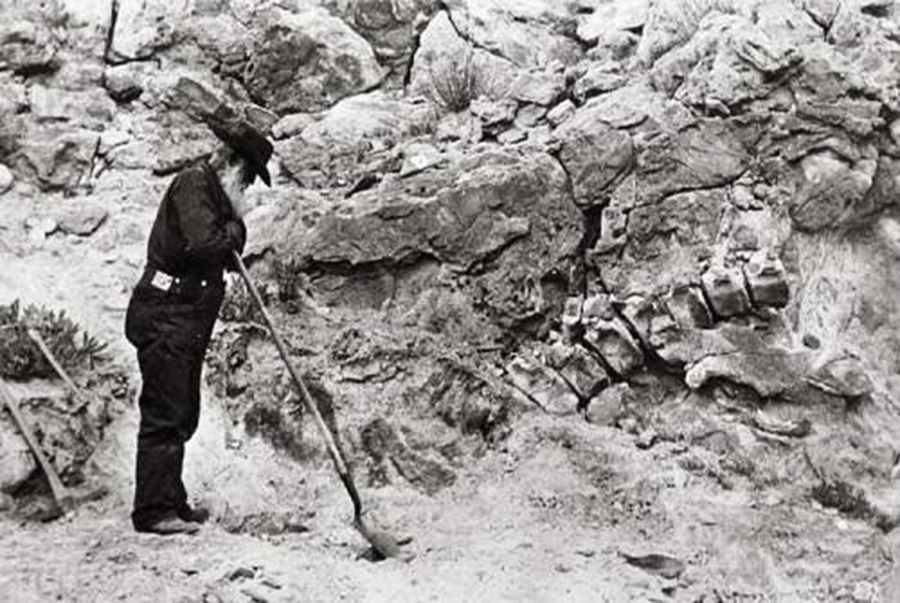
George A. Goodrich, leaning on a shovel, standing next to the original dinosaur

When traveling across the state of Utah, there are a variety of activities for families to enjoy in a variety of seasons. Whether you are looking to surround yourselves in nature, learn something new as a family in the coming year or simply bond through a rush of adrenaline, here are 10 of the many family-friendly activities in the state.

Kanarraville — Kanarraville Falls

Just a few miles south of Cedar City, you can find a great family hike. The trail to the falls leads in and out of Kanarra Creek and is a nice way to keep everyone cool in the hot desert climate. The highlight to this fun and enjoyable hike is being able to climb up a one-of-a-kind ladder next to the waterfall. Spending a little extra time at the top and enjoying a few natural waterslides is sure to be a hit.

If you go: Kanarraville is about 13 miles south of Cedar City; $9 permit per person is required for this hike; hours are 7 a.m. to 7 p.m., visit kanarrafalls.com for permits and safety information.

Draper — Loveland Living Planet Aquarium

This year-round activity offers a vast amount of animals and sea life that includes a 300,000-gallon shark exhibit and a 40-foot underwater tunnel. While the aquarium offers a broad range of activities and wildlife experiences, the most popular option is the Penguin Encounter. There is no better way for the family to gain a greater appreciation for these unique creatures than by getting a close-up view and even having the opportunity to feed them at various times throughout the day.

If you go: Loveland Living Planet Aquarium, 12033 Lone Peak Parkway, Draper; $19.95 for adults, $16.95 for students, military and seniors, $14.95 for children ages 3-12, free for children ages 2 and younger; Penguin Encounter 1 p.m. Tuesday-Thursday, $24.95 per person, $19.95 per member (801-355-3474 or thelivingplanet.com)

Lehi — Thanksgiving Point

Whether you are looking to explore a vast tulip garden, experience an interactive kid-friendly museum or simply learn about prehistoric animals — Thanksgiving Point has a variety of activities. To top it off, the complex offers great events and fun festivities year-round for every holiday and season.

If you go: Thanksgiving Point, 3003 N. Thanksgiving Way, Lehi; admissions for different venues range from $10-$20 for adults and $10-$15 for children 3-12 and seniors; see thanksgivingpoint.org or call 801-768-2300 for information.

St. George — Thunder Junction All Abilities Park

When the weather is hot and you are ready to cool off, head over to Thunder Junction for a great splashing time. Not only can you keep cool during the peak heat of summer days, you can experience a simulated erupting volcano and ride a fun steam train around the perimeter of the park. The handicapped-accessible playground is something that not only makes the park unique, but helps make this an ideal place all can enjoy.

If you go: Thunder Junction All Abilities Park, 1851 S. Dixie Drive, St George; 9 a.m.-10 p.m., seven days a week; general admission is free. The train operates Monday-Saturday, 9:30 a.m.-1 p.m. (hours are subject to change based on season, maintenance and weather); train rides are $1 per person; see sgcity.org

Park City — Mountain Village Adventure Park


For those who seek a little more thrill and rush, the Mountain Village Adventure Park in Park City offers an alpine slide, a coaster and zip line. Take a chairlift up the mountain for impressive views of the valley below and descend in the exciting way of your choice. Both the slide and coaster have levers to control your speed, making it ideal for riding with little ones and for those who feel more comfortable in slower speeds. Many of these activities open during the summer and the last ones close Sept. 30.

If you go: Mountain Village Adventure Park, 1345 Lowell Ave., Park City; prices vary by activity; see parkcitymountain.com for information.

Moab — Off-roading


While there are many family-friendly options throughout and around Moab, taking a little off-roading experience through Hells Revenge is one that is less known and oh-so-thrilling. Several companies offer guides and vehicle rentals for this and other trails. From the ascent up a thin boulder, squeezing through narrow paths and climbing up steep rocks — at times it felt more like a fun coaster than a car ride.

If you go: See "Hell's Revenge Trail" on utah.com or "Hells Revenge 4×4 Trail" grandcountyutah.net.

Vernal — Dinosaur National Monument


If you are looking to take a step back in time, head over to the Dinosaur Quarry located at Dinosaur National Monument outside of Vernal. The Exhibit Hall contains a wall with 1,500 fossil bones in addition to a hands-on experience exhibit where you can actually touch bones that are 149 million years old. Enjoy the many hikes around the area and imagine what a sight it must have been to have these incredible creatures roaming the area during the Jurassic period.

If you go: Dinosaur National Monument Quarry Visitors Center, 11625 E. 1500 South, Jensen, Uintah County; peak season/summer hours late May to mid-September, 8 a.m.-6 p.m., offseason/winter hours mid-September to late May, 9 a.m.-5 p.m., closed Thanksgiving, Christmas and New Year's Day; (435-781-7700 or nps.gov)

Midway — Homestead Crater


Another one-of-a-kind family-friendly activity in Utah is the Homestead Crater in Midway. Float away in a natural crater hot spring that can only be accessed through a tunnel. Relaxing with the whole family in this unique setting will certainly make for a memorable experience.

If you go: Homestead Resort, 700 N. Homestead Drive, Midway; open Monday through Thursday 12:30 p.m.-6:30 p.m., $13 for a 40-minute session; Friday and Saturday 10:30 a.m. to 6:30 p.m. and Sundays 10:30 a.m. to 4:30 p.m., $16 for a 40-minute session; reservations required, 435-657-3840 or see the Homestead Resort website homesteadresort.com/utah-resort-things-to-do/homestead-crater.

Salt Lake City — Utah's Hogle Zoo


Turn your outing into a great learning opportunity by visiting Hogle Zoo in Salt Lake City. With more than 800 animals, there are plenty of things to see and do. Experience what it's like to be a zookeeper by joining the Wildlife Connections program. Depending on the encounter you choose, you can feed a rhino, help train an orangutan or enjoy a giraffe VIP experience.

If you go: Utah's Hogle Zoo, 2600 Sunnyside Ave. (840 South), Salt Lake City; through Oct. 31, 9 a.m.-6 p.m., Nov. 1-Feb. 28, 10 a.m.-5 p.m.; winter season prices, through April 30, $16.95 for adults, $14.95 for seniors, $12.95 for children ages 3-12, free for children under age 3 (801-584-1700 or hoglezoo.org)

Layton — Great Salt Lake Shorelands Preserve


Take a stroll through a wooden path along preserved wetlands. Spot wildlife along the way and enjoy another one of Utah's best spots for the whole family. The beautifully crafted wooden trail leads to an impressive observatory tower and effortlessly loops back around for a perfect leisure walk. This path is also wheelchair- and stroller-friendly, making it a great place for all to enjoy and to unwind from everyday life.

If you go: Great Salt Lake Shorelands Preserve, 41 South 3200 West, Layton; free; visitors center hours April to September, 7 a.m.-8 p.m., October–March, 8 a.m.-5 p.m. (801-531-0999 and nature.org)

Source: www.deseretnews.com
The Giant Crocodile Dinosaur that Would Have Eclipsed the T. Rex

Monday, December 31, 2018

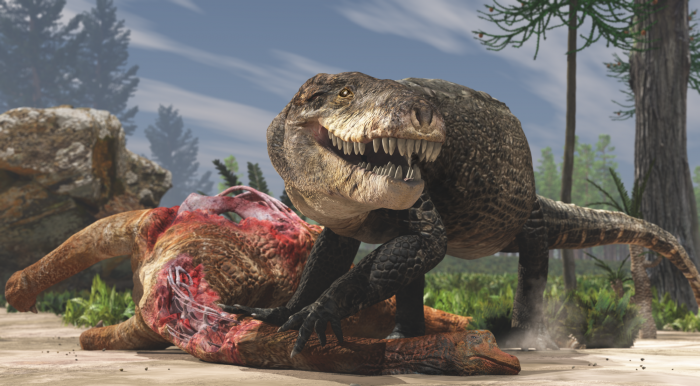
Razanandrongobe sakalavae life reconstruction by James Kuether

Sorry, T. rex fan bois, you always seem to get the rough end of the stick, don’t you?

At one point your hero was thought to be the king of the dinosaurs. A savage, gigantic ferocious hunter, then it turned out he was probably more akin to a vulture. A giant turkey scavenging its prey (that must have stung). And now this crocodile like thing comes along and might makes your boy topple even further down the cool-o-meter!

Plus you know, your favourite dinosaur can’t clap at jokes and stuff. “Take my strong hand T. rex”.

Razanandrongobe

Fresh discoveries in Madagascar

Discoveries have been made in Madagascar where they have found the remains of this crocodile-like species. It has helped scientists fill in gaps in the lineage of the modern crocodile…so it’s kind of a big deal.

I talk like this is a recent discovery but actually, researchers have had bones from this beast for some 10 years.

At first, they thought it was a hunter from the Jurassic period. It was named Razanandrongobe sakalavae, meaning “giant lizard ancestor from Sakalava region.” Catchy eh?

New species, wrong time

The scientists knew they had a new species on their hand but couldn’t figure out where it fell in terms of evolution.

It had a lot in common with two distinct groups: crocodylomorphs (which sounds like an awesome cartoon!), this is the group the modern crocodile belongs too…you got that, right? And Theropods which is the group the T. rex belongs to.

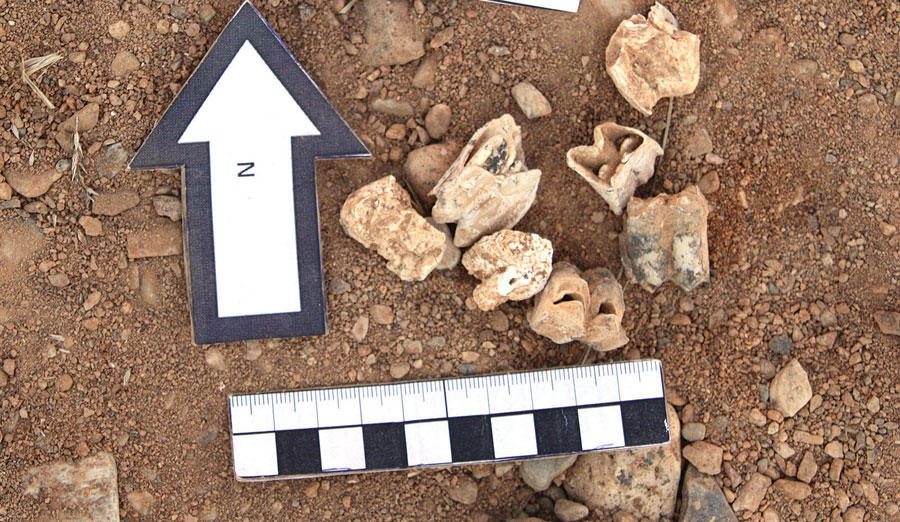
Fast forward to the current day and scientists have gone back through these old fossils and made some new discoveries. Alongside the older bones, they have several fragments believed to be from the skull of similar creatures.

Razanandrongobe sakalavae

Old crusty bones

The fossils actually date back to the Cretaceous period. (Yeah not all dinosaurs are Jurassic dinosaurs…shock horror!) And were found over several continents. However, scientists think that the lineage of this species goes back way further, ironically back to the Jurassic period.  Which was roughly 174 to 163 million years ago. The problem was until recently there was no fossil evidence to support this.

As a consequence of this Cristiano Dal Sasso, from the Natural History Museum of Milan, Italy, have now placed this creature in the Nortosuchia family tree.

Easy big fella

Although scientists aren’t quite sure of the exact size of the creature due to not having quite enough fossils to figure out they do believe that it would have been a big animal. Initial estimates have it pegged between 34 and 39 feet long!

What that basically means is that this big crocodile was massive and would have been above dinosaurs like the T. rex in the food chain. Sorry T. rex fans, it’s not easy being you!

The gigantic predatory dinosaur would have wondered the supercontinent of Gondwana including Madagascar before it separated from the mainland.

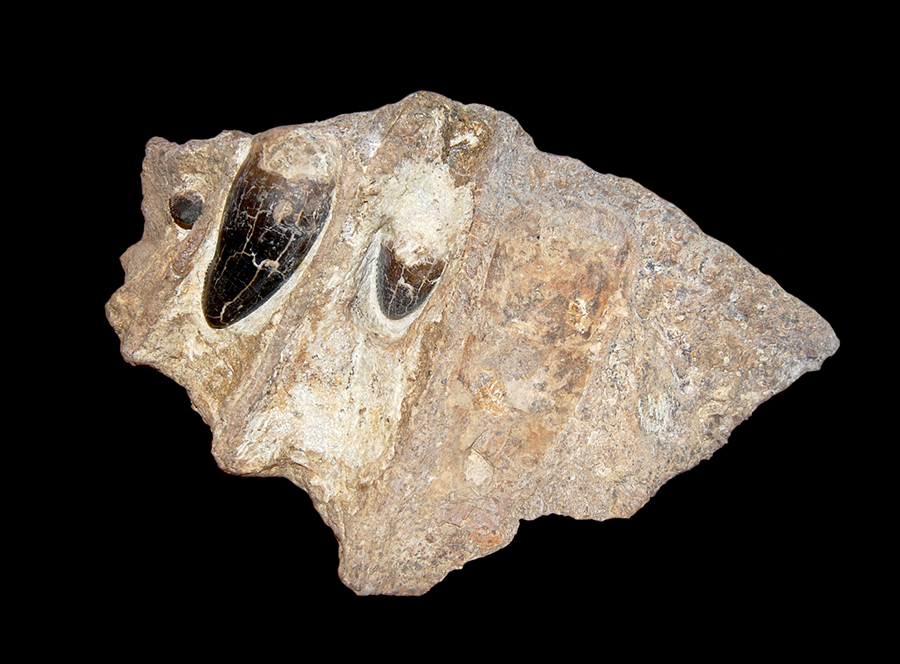
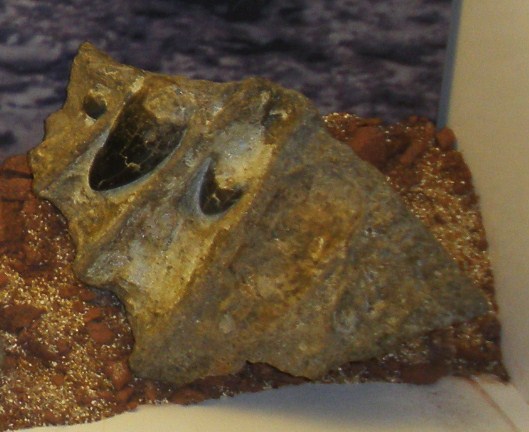
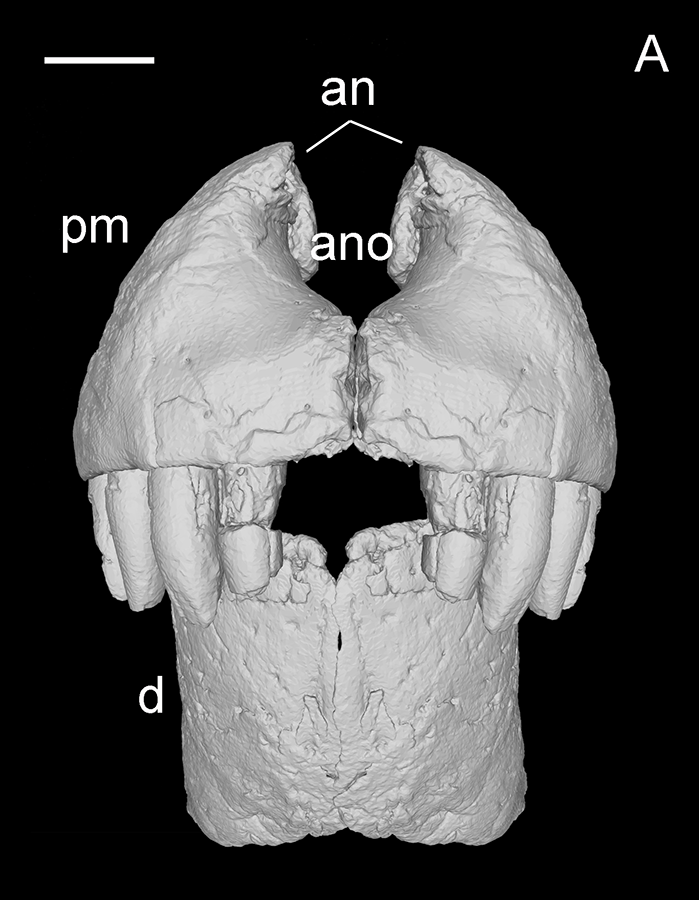
Studies have shown that its teeth were large and hard. The suggestion is that this bad boy would have been able to destroy fragments such as bone with its powerful jaws.

Razanandrongobe snout

Changing the game

Study co-author Simone Maganuco has suggested that due to the places where fossilised remains have been found that the dinosaur probably had an endemic lineage. The recent fossil discoveries also go some way to suggesting that Razanandrongobe sakalavae originated in southern Gondwana.

According to researchers, Razanandrongobe sakalavae is a species that is dissimilar from any presently known member of Notosuchia. It is important because it fills in a gap in the group’s evolution. It is also prominent because it shows that animals in this lineage were at one point far larger than initially thought.

Source: www.theversed.com

Big Dinosaur from Italy Got Burial at Sea

Monday, December 31, 2018

A simplified evolutionary tree of predatory dinosaurs showing the time period in which Saltriovenator existed.

Scientists are studying fossils of a large meat-eating dinosaur they describe as interesting, both in life and in death.

The dinosaur is said to have lived and hunted 198 million years ago in what is now northern Italy.

The fossils were discovered in 1996 close to the village of Saltrio, near Milan, in Italy’s northern Lombardy area. They were found in an area where miners cut rock to use for building. This led to a long, difficult process of removing the creature’s remains from the surrounding rock.

The scientists reported that the dinosaur, called Saltriovenator zanellai, weighed at least one ton and was 7.5 meters long. They said this means that during the period when it lived, Saltriovenator was the largest-known meat-eating dinosaur that had ever existed.

Its death also was noteworthy.

After dying, Saltriovenator somehow floated into the sea and sank to the bottom. There the remains provided meals to numerous sea creatures before fossilizing, the researchers said.

The bones show marks likely left by attacking sharks and fish. They also show signs of feeding by smaller creatures, such as sea urchins. And there are small holes in the bone apparently left by even smaller marine worms.

Paleontologist Cristiano Dal Sasso (L) and co-authors Simone Maganuco and Andrea Cau (R) examine the bones of the Jurassic dinosaur Saltriovenator, at the Natural History Museum of Milan.

“This is absolutely unique,” said Cristiano Dal Sasso of Milan’s Natural History Museum.

In scientific writings, he said, there are reports of some dinosaur bones being attacked on land by other animals and, more rarely, insects. “At least three kinds of marine animals left those traces on the bones of Saltriovenator,” he added.

Dal Sasso led the researchers. Their findings were published in the scientific journal PeerJ.

Saltriovenator is the second dinosaur of its kind ever found in Italy. It combined the qualities of early meat-eating dinosaurs with those of more developed ones.

The name Saltriovenator means “hunter from Saltrio.” The creature walked on two legs. Each hand had four fingers, three of which possessed claws. Its head was about 80 centimeters long, while its mouth had sharp teeth.

The creature was about 24 years old at the time of death, and still not fully grown. It lived in a coastal environment and likely hunted plant-eating dinosaurs and possibly smaller meat-eating dinosaurs, the researchers said.

Dinosaurs are said to have first appeared on Earth about 230 million years ago during what is known as the Triassic Period. Scientists say the earliest meat-eating dinosaurs were less noticeable than larger non-dinosaur predators that died off by the end of the period.

With the competition gone, meat-eating dinosaurs increased in size during Earth’s Jurassic Period.

Source: https://learningenglish.voanews.com

Treasure Trove of Prehistoric Fossils Unearthed

Friday, December 28, 2018

A treasure trove of over a dozen fossils of animals, which lived 2 to 9 million years ago, has been found in southwestern Turkey, according to researchers.

A treasure trove of over a dozen fossils of animals, which lived 2 to 9 million years ago, has been found in southwestern Turkey, according to researchers. 

Turkey’s Anatolia, lying at the crossroads of Europe, Asia, and the Middle East, is the final resting place of many fossils of humans and animals that lived through the millennia, Ahmet İhsan Aytek, an anthropologist at Mehmet Akif Ersoy University in the southwestern Burdur province, told the state-run Anadolu Agency. 

Aytek leads a 14-person team including paleontologists and geologists that started exploring the area in the province of Denizli last year. 

“This year we had a very productive season. We found fossil remains belonging to 14 different animals in Denizli,” Aytek said, adding that the findings are important for shedding light on the history of the region. 

He said the fossils can be broken down to two different eras, first of which is the Miocene Epoch (between 5 and 23 million years ago). 

The findings included two different giraffes, more massive than today’s but lacking the modern long neck, two different rhinos similar to today’s specimens, two different early horses, two different hyenas, one of them larger than the current species, and an elephant fossil morphologically similar to modern-day hippos. 

The three other fossils belonged to horned animals, two similar to modern antelopes, and a third as yet unclassified, Aytek said. 

“If we look at the life cycle of these fossils, we see that they lived 9 to 7 million years ago,” he added. 

In 2002, geologist and excavator Cihat Alçiçek found the first early human Homo Erectus fossil in Turkey, which dates back some 1.2 million years, paving the way for today’s findings, he noted. 

Aytek said the second era was the Pleistocene — 2.6 million years ago, when the last of the five documented ice ages occurred — and they found a horse and fox fossils dating from that time. 

“The fox fossil especially has great importance as one of the oldest found in Anatolia. When we look at the time period of these fossils, we see that they were animals living around 2 million years ago,” he said. 

“With these findings, I hope that we can get new insights into the history of human settlements in Anatolia.” 

Life traces of dinosaurs 

Aytek said the studies related to fossils were being prepared for publication under the leadership of Serdar Mayda, a paleontologist at Ege University Museum of Natural History. 

“We will continue to work in more detail in 2019. We have extended our time. We made an application to the Culture and Tourism Ministry for the period of 2019. We plan to visit all sediments in the last 65 million years. The history we call 65 million years is the time when dinosaurs were erased from history. Therefore, we will investigate the traces of dinosaurs in Denizli in surface survey in 2019. We will look for the traces of dinosaurs on a periodic basis,” he said.

Source: www.hurriyetdailynews.com

Plant Fossil from Early Jurassic Pushes Back Origin of Flowers

Wednesday, December 26, 2018

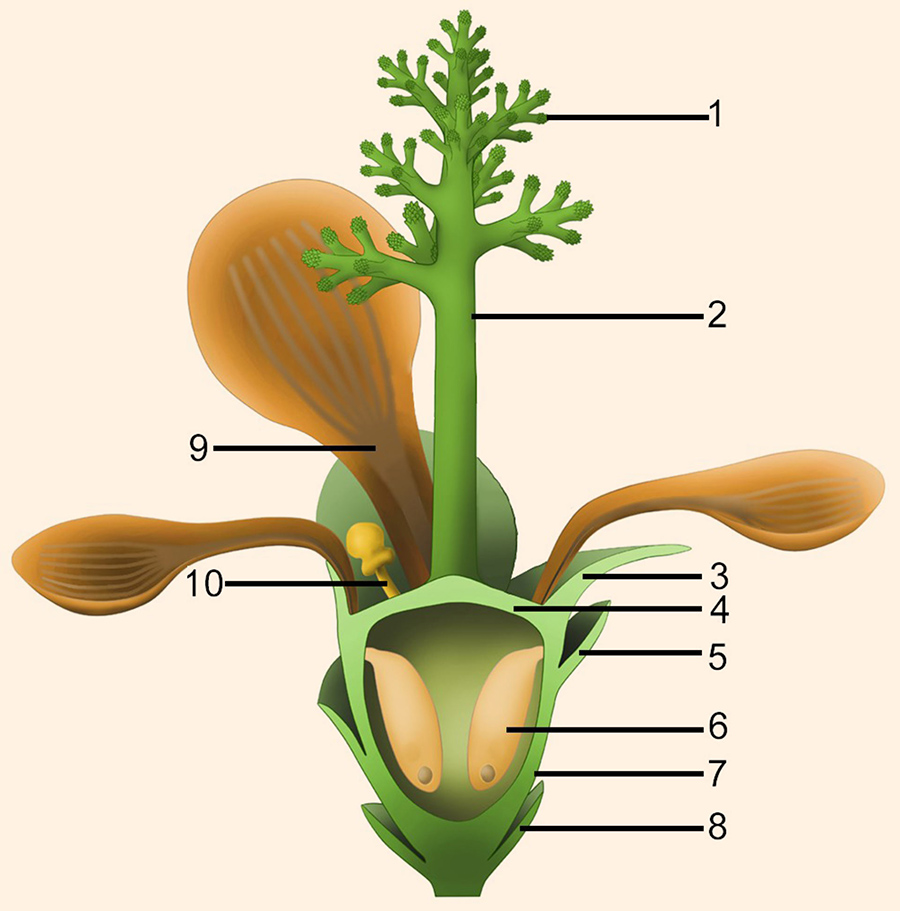
This is a Nanjinganthus dendrostyla fossil, showing its ovary (bottom center), sepals and petals (on the sides) and a tree-shaped top. Image credit: Fu et al, doi: 10.7554/eLife.38827.

An international team of paleontologists has identified and described a new genus and species of extinct flowering plant (angiosperm), based on over 200 specimens from the South Xiangshan Formation, China. Named Nanjinganthus dendrostyla, the newly-identified plant species dates back to more than 174 million years ago (Early Jurassic Period), making it the oldest known record of an angiosperm by almost 50 million years.

From oranges to apples, angiosperms produce most of the fruits and vegetables that we can see on display in a supermarket. While we may take little notice of the poppy fields and plum blossoms around us, how flowers came to be has been an intensely debated mystery.

The current understanding, which is mainly based on previously available fossils, is that flowers appeared about 125 million years ago in the Cretaceous period.

But not everybody agrees that this is the case. Genetic analyses, for example, suggest that flowering plants are much more ancient. Another intriguing element is that flowers seemed to have arisen during the Cretaceous ‘out of nowhere.’

“Researchers were not certain where and how flowers came into existence because it seems that many flowers just popped up in the Cretaceous from nowhere,” said study first author Dr. Qiang Fu, a researcher at the Nanjing Institute of Geology and Paleontology, China.

“Studying fossil flowers, especially those from earlier geologic periods, is the only reliable way to get an answer to these questions.”

Dr. Fu and co-authors studied 264 specimens of 198 individual flowers preserved on 34 rock slabs from the South Xiangshan Formation, an outcrop of rocks in the Nanjing region of China renowned for bearing fossils from the Early Jurassic Period.

Reconstruction of Nanjinganthus dendrostyla: (1) branches of dendroid style; (2) dendroid style; (3) sepal; (4) ovarian roof; (5) scale; (6) seed; (7) cup-form receptacle/ovary; (8) bract; (9) petal; (10) unknown organ (staminode?). Image credit: Fu et al, doi: 10.7554/eLife.38827.

The abundance of fossil samples used in the study allowed the team to dissect some of them and study them with sophisticated microscopy, providing high-resolution pictures of the flowers from different angles and magnifications.

The scientists then used this detailed information about the shape and structure of the different fossil flowers to reconstruct the features of Nanjinganthus dendrostyla.

The key feature of an angiosperm is ‘angio-ovuly’ — the presence of fully enclosed ovules, which are precursors of seeds before pollination.

Nanjinganthus dendrostyla was found to have a cup-form receptacle and ovarian roof that together enclose the ovules/seeds.

This was a crucial discovery, because the presence of this feature confirmed the flower’s status as an angiosperm.

“The origin of angiosperms has long been an academic ‘headache’ for many botanists,” said study senior author Professor Xin Wang, from the Nanjing Institute of Geology and Paleontology, China.

“Our discovery has moved the botany field forward and will allow a better understanding of angiosperms, which in turn will enhance our ability to efficiently use and look after our planet’s plant-based resources.”

The discovery is reported in the journal eLife.

_____

Qiang Fu et al. 2018. An unexpected noncarpellate epigynous flower from the Jurassic of China. eLife 7: e38827; doI: 10.7554/eLife.38827

Source: www.sci-news.com

How Jurassic Park Ushered in a Golden Age of Dinosaurs

Monday, December 24, 2018

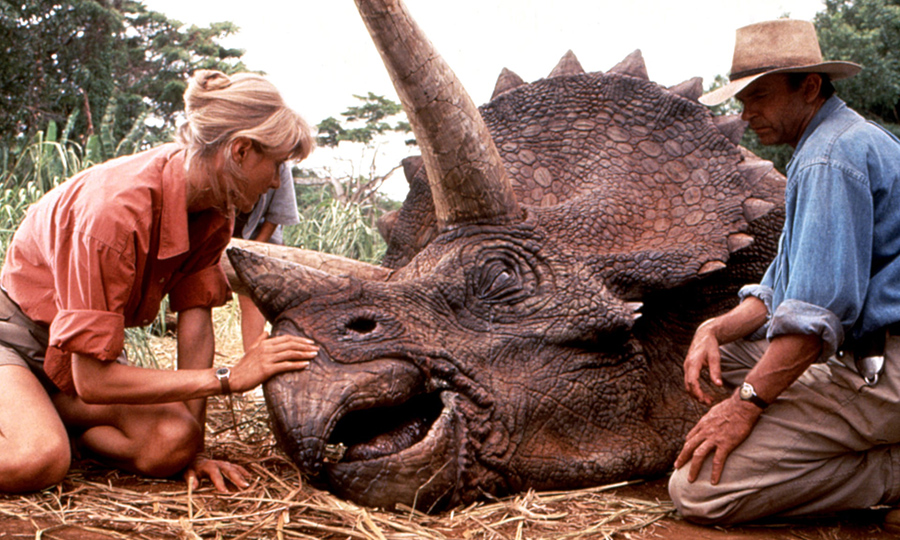
 Laura Dern and Sam Neill get tender with a Triceratops in Steven Spielberg’s 1993 blockbuster, Jurassic Park. The film has inspired a new golden age of discovery, having ‘de-nerded’ the study of dinosaurs. Photograph: MCA/Everett/Rex Features

A generation of scientists, inspired by Steven Spielberg’s 1993 blockbuster, are spearheading a revival in palaeontology.

Near crumbling cliffs outside Hastings in southern England, a herd of giant, plant-eating iguanodons gathered 130 million years ago and left their fossilised footprints embedded in the soil, Cambridge scientists revealed last week. Nearby, researchers also found the ancient tracks of a huge spike-covered dinosaur called an ankylosaurus. East Sussex was a busy place in Jurassic times, it seems.

In addition, Portsmouth University scientists last week outlined their discovery of a new species of flying reptile which once swooped above Britain. This giant raptor, Klobiodon rochei, had large fangs that would have meshed together to form a toothy cage, from which prey would have no escape once caught.

Nor have these newly discovered fossil wonders been confined to Britain. Scientists in South Africa recently announced they had found a new species of plant-eating dinosaur – Ledumahadi mafube – that was twice the size of an elephant while details of feathered dinosaurs, the predecessors of birds today, have been pouring out of China. Never has the probing of our prehistoric past been so productive.

It is a point stressed by Prof Paul Barrett of the Natural History Museum in London. “It would be wrong to say we are about to enter a new golden age of palaeontology. In fact, we have been in the middle of one for several years.”

This idea is backed by the fact there are now more palaeontologists working the field than ever before; more countries are being exploited for their dinosaur remains; more new species are being dug up and named; and more interesting work – using new technologies – is being done on fossilised bones once they have been disinterred.

In the process, scientists are learning how animals and plants responded to the very different and frequently much warmer climates that prevailed in those days. In turn, this information could have key importance in understanding how our world might respond to global heating later this century, researchers say.

Nor is there any dispute about one of the most important factors that triggered this rebirth of dinosaur studies. It was the film Jurassic Park, which was released 25 years ago. “Jurassic Park played a huge and under-appreciated role in the transformation of palaeontology that we are now witnessing,” said Dr Steve Brusatte, of Edinburgh University. “It used to be a rather dry academic topic carried out by old men at Oxbridge or Harvard. Today it is practised by a diverse group of scientists in many parts of the world, and it was Jurassic Park that provided the momentum for that change.”

Dr Susannah Maidment, a Natural History Museum palaeontologist agrees. “I was a teenager when Jurassic Park came out, and although I was already interested in dinosaurs by that time, its massive popularity meant I was no longer embarrassed about talking about such a career. I didn’t feel like a nerd.”

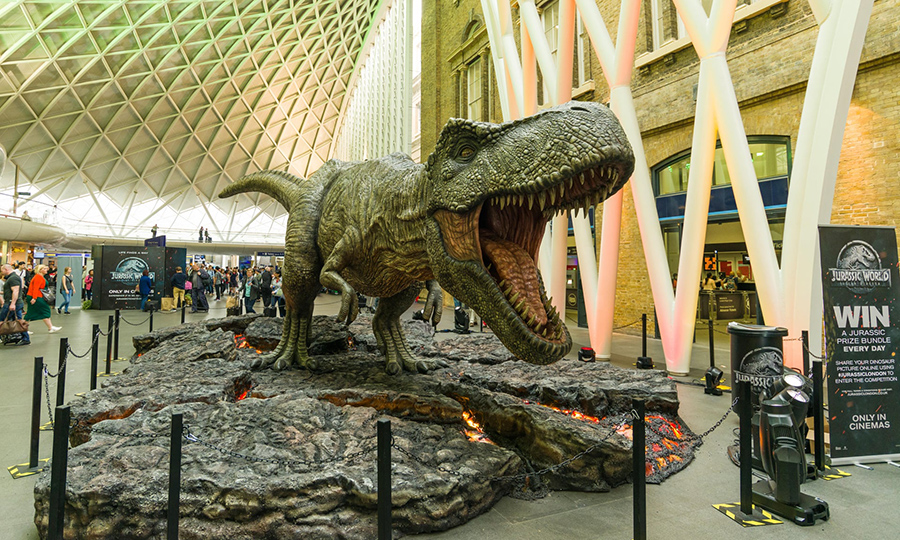
A ‘dinosaur’ promotes the 2015 film Jurassic World, at the Kings Cross station concourse, London. Fiction has fired the imagination, leading to a new wave of research.  Photograph: RZUK Images/Alamy Stock Photo

At Bristol University, Prof Mike Benton runs a masters course in palaeontology. “We have about 30 students a year, and we ask them what factor was the main influence in their decision to study dinosaurs. Jurassic Park gets the biggest show of hands.”

Other factors have played a role in the rebirth of dinosaur studies, however. “National pride is certainly involved,” said Barrett. “Dinosaur fossils are now being found all over the world. China and South Africa have provided key sites in recent years, for example, and that has had important consequences.”

Palaeontology is a cheap science that does not require huge telescopes or particle accelerators to proceed and can be used to kickstart scientific studies in a relatively poor nation. “You don’t have to put a lot of money into the subject but you can still boost national prestige and develop scientific expertise,” said Barrett.

Palaeontology has also benefited from technologies such as CAT scans, computer modelling, and high-powered microscopes which reveal tiny fragments of pigment and indicate how colourful some dinosaurs could be. Another example of this type of work was recently provided by Manchester University researchers who used computer simulations to show that the world’s most famous dinosaur, Tyrannosaurus rex, was not able to run at all and could only have lumbered towards its prey. Scavenging – not running after prey – was clearly a key part of its diet. “It is this ability to give dinosaurs colour and real lives that has also stimulated interest in them,” added Brusatte.

For good measure, there is the impact of dinosaur studies on the modern world. This has special relevance to research on the creatures and makes them important in resolving modern problems, said Maidment. One of the most important of these mysteries is known as the latitudinal biodiversity gradient.

“As you walk from the pole to the equator, you find the number of different species in a given area increases for each mile you travel towards the equator,” she said. “There are relatively few species at the poles and a lot at the equator. The trouble is that we don’t really know why species increase in that way because we have only one set of data – taken from the present day.

“If we can learn how things were in the past, when continents were in different positions or there was no ice at the poles, then we can gain an understanding of the phenomenon, and that will be crucial as global warming takes an effect on wildlife. How will diseases and their vectors behave and how will the growing of food be disrupted? Dinosaurs can teach us a lot.”

In the end, though, it is the simple sense of wonder that dinosaurs generate that has made them such a popular topic of investigation, said Benton. “Many of these creatures simply beggar belief. You have to ask: how the hell did that thing fly? How could something that vast even walk? You have to look at the physics of these creatures and realise they were doing something pretty wonderful.”

Source: www.theguardian.com

4 Cool Paleontological Discoveries In 2018

Saturday, December 22, 2018

Archaeopteryx fossils are rare and precious - GETTY

Fossils have taught us an enormous amount about the history of life on Earth, but there are always new things to find. Here is a highly subjective selection of the best discoveries of the year.

The ancestor of all life lived at least 3.9 billion years ago

All living organisms are related, which means they all descend from the Last Universal Common Ancestor: a mysterious organism that lived early in Earth's history. LUCA, as it's known, must have been a single-celled organism, somewhat like a bacterium.

A study published in August argued that LUCA lived at least 3.9 billion years ago, no more than 600 million years after the Earth formed.

Holly Betts at the University of Bristol and her colleagues compared the sequences of 29 genes across 102 species. They used that data to build a family tree, showing the order in which new groups split away from their relatives. Then they added dates from the geological record, which allowed them to estimate roughly when the various splits happened.

LUCA cannot be any younger than 3.9 billion years, the team reported. It could be considerably older, the maximum being about 4.5 billion years ago when the Earth formed and, soon after, a huge rock smacked into it and formed the Moon.

In this case, the genetics is revealing something the fossil record cannot. The oldest accepted fossils of living organisms are just 3.4 billion years old. Putative fossils from 3.7 billion years ago were reassessed this year, and it seems they were just peculiar folded rocks.

Animals with backbones emerged in shallow seas near the shore

Creatures with backbones are known as vertebrates. They include all fish, amphibians, reptiles, birds and mammals - including humans. So figuring out how and why the first vertebrates evolved is one of the biggest questions in paleontology.

In a study published in October, Lauren Sallan at the University of Pennsylvania and her colleagues compiled a database of nearly 3000 fish fossils from 480 to 360 million years ago. All the earliest vertebrate fossils were found in near-shore environments, such as tidal zones and lagoons. It was their descendants that moved out to colonise the wider, deeper ocean.

It's not clear why shallow seas acted as a cradle for the first vertebrates. It may be that the endless crashing waves near the shore acted as a selective pressure on animals to evolve tougher skeletons. A backbone stiffens an animal's entire body, which may have offered greater resilience.

The "first bird" Archaeopteryx really could fly, just not very well

Archaeopteryx is one of the most famous fossils ever discovered. The first specimens turned up just a few years after Darwin published Origin of Species, in which he set out his argument that new species evolve by natural selection. A fossilised "dino-bird" that had feathers and wings, but also had a toothed snout instead of a beak, and claws on its wings, was a perfect example of evolution in action. Later fossil discoveries, particularly from China, have revealed that Archaeopteryx was just one of a huge radiation of primitive birds, but it remains a crucial species.

Given its status as one of the first birds, it often surprises people to learn that paleontologists have long argued about whether or not it could actually fly. It had wings and feathers, but so do penguins and you don't see them taking to the skies. The question was whether it had gone far enough down the evolutionary road towards being a proper bird. Was its skeleton set up in such a way that it could flap its wings with enough force to take off?

According to a study published in March, the answer is: "kind of". Dennis Voeten of the ESRF, the European Synchrotron facility in Grenoble, France and his colleagues scanned an Archaeopteryx skeleton and found that its wing bones were set up for active flight. But it probably couldn't fly any great distance. Instead, it could take off for short bursts, perhaps to escape predators. Imagine a pheasant being flushed out by a fox, briefly hurtling up into the air to get to safety before returning to earth a short distance away, and you will have the idea.

An extinct bird from Madagascar was the largest bird ever to exist

Birds today can get pretty big. The ostrich is the heaviest living bird, regularly topping 100 kilograms, while the wandering albatross has the largest wingspan at over 3 metres.

However, in the past birds were bigger. The heaviest group seems to have been the elephant birds, which lived on Madagascar off Africa's east coast and resembled giant ostriches. They died out around 1000 years ago. It's not clear why, but humans were on Madagascar by then so we may have had something to do with it.

In a study published in September, James Hansford and Samuel Turvey of the Zoological Society of London, UK examined 346 specimens of elephant bird. As well as sorting out how the various groups were related, they identified a new species, which they dubbed Vorombe titan. Its average body mass was 650kg, far more than any ostrich and larger than any known extinct bird.

What's more, the pair examined a V. titan femur that was too incomplete to be included in their analyses. Based on its circumference, the animal it belonged to could have weighed 860kg, making it the largest individual bird ever found.

This doesn't change our understanding of the evolutionary story much; I just think giant birds are cool.

Source: www.forbes.com

Huge Global Tsunami Followed Dinosaur-Killing Asteroid Impact

Friday, December 21, 2018

Artist’s impression of an asteroid in the distance impacting shallow waters near the modern-day Yucatán Peninsula. Credit: Science Photo Library/Alamy Stock Photo

The cataclysmic Chicxulub impact roughly 66 million years ago spawned a tsunami that produced wave heights of several meters in distant waters, new simulations suggest.

The devastating tsunamis that struck the coastlines of Chile, Haiti, Indonesia, and Japan in recent decades produced waves tens of meters high, unimaginable to most people accustomed to gentle seas. But millions of years ago, a truly inconceivable set of waves—the tallest roughly 1,500 meters high—rammed through the Gulf of Mexico and spread throughout the ancient ocean, producing wave heights of several meters in distant waters, new simulations show.

The enormous waves were triggered by a large asteroid slamming into the shallow waters of the modern-day Yucatán Peninsula. That asteroid impact, which occurred about 66 million years ago and created the Chicxulub crater, contributed to the demise of the dinosaurs.

A Global Look

Molly Range, a paleoceanographer working at the University of Michigan when this research was conducted, and her colleagues have now modeled how the ensuing tsunami propagated in the Gulf of Mexico and beyond. “As far as we know, no one has done a global simulation of this impact,” said Range.

Range and her collaborators used two models: one simulating the initial impact of an asteroid 14 kilometers in diameter into shallow water and one modeling the ensuing propagation of displaced water throughout the ancient ocean. It was necessary to use the two models in tandem, explained Brian Arbic, a physical oceanographer at the University of Michigan who was involved in the study. “A typical ocean model just can’t handle an asteroid,” he noted.

The first effect of the asteroid impact, the researchers found, would have been a roughly 1,500-meter-high tsunami wave. This wave represented the “initial blast of water away from the impact,” said Range.

A simulation is shown in the video below. Crustal material is shown in brown, sediments are shown in yellow, and the ocean is shown in blue.

A few minutes later, the models show that water began refilling the gaping crater formed by the impact. “You have a steep wall of water that rushes back in,” said Arbic. This rapid inflow likely triggered yet another set of waves. Although the strongest effects from the tsunami were felt in the Gulf of Mexico, the waves would have propagated globally, Range and her team found. Thanks to the seaway that existed between North America and South America at the time of the dinosaurs, the tsunami waves would have rushed freely into the Pacific Ocean.

Range and her colleagues calculated that the tsunami wave heights in the Pacific and Atlantic basins would have been as large as 14 meters. As these waves approached land and slowed down, they would have gotten even larger. But because the researchers’ models didn’t include the topography of the continents 66 million years ago, it wasn’t possible to calculate actual wave run-up heights, Arbic said.

Displaced Sediments

The scientists also showed that the tsunami waves would have pushed water at the seafloor by more than 20 centimeters per second. Such strong water flows are sufficient to scour sediments from the bottom of the ocean, the researchers said. Scouring would have occurred in the South Pacific and the North Atlantic, the modeling revealed. Tantalizingly, in-progress research by the same team is showing that these very places are also where sediment coring experiments have found dislodged and displaced sediments.

These results were presented at AGU’s Fall Meeting 2018 in Washington, D. C.

The implications of this work are significant, said Timothy Bralower, an Earth scientist at Pennsylvania State University who was not involved in the research. “Geologists can now glean the sediments at sites far afield from the crater to detect the fingerprints of the tsunami.”

This modeling provides a glimpse into a cataclysmic part of Earth’s history that, thankfully, hasn’t been repeated. But more advanced simulations—incorporating, for example, higher spatial resolution or estimates of on-land topography so wave run-ups can be estimated—would improve our understanding of this tsunami, Arbic explained.

But one thing is very clear: The Chicxulub tsunami was clearly a force to be reckoned with. As Arbic said, “It must have been one of the biggest tsunami ever.”

Citation: Kornei, K. (2018), Huge global tsunami followed dinosaur-killing asteroid impact, Eos, 99, https://doi.org/10.1029/2018EO112419. Published on 20 December 2018.

Source: https://eos.org

Argentina Puts 65-Million-Year-Old Dinosaur Replica on Display

Friday, December 21, 2018

A reproduction of the skeleton of a 65-million-year-old plesiosaur marine reptile discovered in cretaceous rocks in Argentine Patagonia

Argentine paleontologists unveiled the replica of a 65-million-year-old skeleton of a plesiosaur marine reptile found in a Patagonian lake in 2009.

"We've been working since 2009 until now to liberate the fossil from the  surrounding it, making a reproduction and hanging it here in the museum hall," paleontologist Fernando Novas of the Bernardino Rivadavia Natural Science Museum in Buenos Aires told AFP.

The fossil is of a marine reptile found in Cretaceous period rocks close to the southern town of El Calafate, 2,800 kilometers (1,700 miles) from Buenos Aires.

The fossil was found in Cretaceous period rocks close to the southern town of El Calafate

The remains of this plesiosaur are the most complete found in Argentina and were discovered in rocks submerged in Lake Argentino at the foot of the Andes mountains.

"It was around 50 centimeters (1.64 feet) under the water and part of the lake had to be drained to take out the rocks," said scientist Marcelo Isasi.

Four tons of rocks had to be removed to unearth the fossil remains, found just 500 meters (1,640 feet) from an international airport.

Plesiosaurs were huge marine reptiles that lived in seas throughout the entire planet inhabited the entire planet, with long necks, tiny heads and sharp teeth.

Four tons of rocks had to be removed to unearth the fossil remains, found just 500 meters (1,640 feet) from an international airport

It was an era before the Andes existed and when Argentine Patagonia lay underwater.

The fossil is nine meters long with each fin measuring 1.3 meters.

Source: https://phys.org

Scientists Discover Over 450 Fossilized Millipedes in 100-Million-Year-Old Amber

Thursday, December 20, 2018

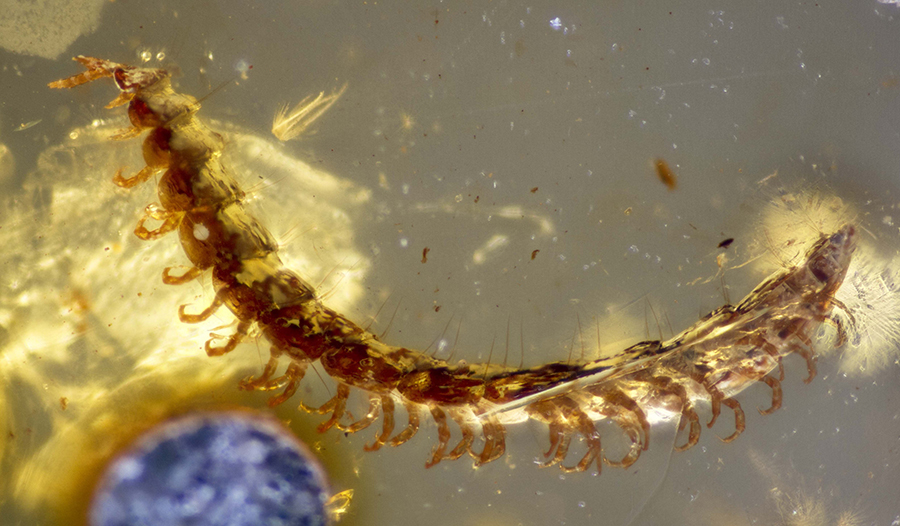
One of the newly discovered millipede fossilized in Cretaceous amber from Myanmar (Burma). Credit: Dr Thomas Wesener

Since the success of the Jurassic Park film series, it is widely known that insects from the Age of the Dinosaurs can be found exceptionally well preserved in amber, which is in fact fossilised tree resin.

Especially diverse is the animal fauna preserved in Cretaceous amber from Myanmar (Burma). Over the last few years, the almost 100-million-year-old amber has revealed some spectacular discoveries, including dinosaur feathers, a complete dinosaur tail, unknown groups of spiders and several long extinct groups of insects.

However, as few as three millipede species, preserved in Burmese amber, had been found prior to the study of Thomas Wesener and his Ph.D. student Leif Moritz at the Zoological Research Museum Alexander Koenig - Leibniz Institute for Animal Biodiversity (ZFMK). Their research was recently published in the open-access journal Check List.

Having identified over 450 millipedes preserved in the Burmese amber, the scientists confirmed species representing as many as 13 out of the 16 main orders walking the Earth today. The oldest known fossils for half of these orders were found within the studied amber.

The researchers conducted their analysis with the help of micro-computed tomography (micro-CT). This scanning technology uses omni-directional X-rays to create a 3-D image of the specimen, which can then be virtually removed from the amber and digitally examined.

One of the newly discovered fossilized millipede. Credit: Dr Thomas Wesener

The studied amber is mostly borrowed from private collections, including the largest European one, held by Patrick Müller from Käshofen. There are thought to be many additional, scientifically important specimens, perhaps even thousands of them, currently inaccessible in private collections in China.

Over the next few years, the newly discovered specimens will be carefully described and compared to extant species in order to identify what morphological changes have occurred in the last 100 million years and pinpoint the speciation events in the millipede Tree of Life. As a result, science will be finally looking at solving long-standing mysteries, such as whether the local millipede diversity in the southern Alps of Italy or on the island of Madagascar is the result of evolutionary processes which have taken place one, ten or more than 100-million years ago.

According to the scientists, most of the Cretaceous millipedes found in the amber do not differ significantly from the species found in Southeast Asia nowadays, which is an indication of the old age of the extant millipede lineages.

On the other hand, the diversity of the different orders seems to have changed drastically. For example, during the Age of the Dinosaurs, the group Colobognatha—millipedes characterised by their unusual elongated heads which have evolved to suck in liquid food—used to be very common. In contrast, with over 12,000 millipede species living today, there are only 500 colobognaths.

Another curious finding was the discovery of freshly hatched, eight-legged juveniles, which indicated that the animals lived and reproduced in the resin-producing trees.

"Even before the arachnids and insects, and far ahead of the first vertebrates, the -eating millipedes were the first animals to leave their mark on land more than 400-million-years ago," explain the scientists. "These early millipedes differed quite strongly from the ones living today—they would often be much larger and many had very large eyes."

The larger species in the genus Arthropleura, for example, would grow up to 2 m (6.5 ft) long and 50-80 cm (2-3 ft) wide—the largest arthropods to have ever crawled on Earth. Why these giants became extinct and those other orders survived remains unknown, partly because only a handful of usually badly preserved fossils from the whole Mesozoic era (252-66-million years ago) has been retrieved. Similarly, although it had long been suspected that the 16 modern millipede orders must be very old, a fossil record to support this assumption was missing.

More information: Thomas Wesener et al, Checklist of the Myriapoda in Cretaceous Burmese amber and a correction of the Myriapoda identified by Zhang (2017), Check List (2018). DOI: 10.15560/14.6.1131

Source: https://phys.org

Pages