Blogs

Natural History Museum Dinosaur Dippy Lands in Glasgow

Saturday, January 19, 2019

 A team of specialists piece Dippy back together in Glasgow. Photograph: Jeff J Mitchell/Getty Images

Specialists put 21.3-metre skeleton back together in Kelvingrove Museum.

Experts have been piecing together Dippy the dinosaur before he goes on public display on the only Scottish stop of his UK tour.

The Natural History Museum London’s 21.3-metre replica Diplodocus skeleton arrived at Kelvingrove Art Gallery and Museum in Glasgow this month after sailing across the Irish Sea.

Specialists are now unpacking the 292-bone structure and undertaking the giant jigsaw puzzle of putting the dinosaur back together.

Lorraine Cornish, the Natural History Museum’s head of conservation, said: “As Dippy on Tour approaches the halfway point, having proved a huge success at the first three destinations, it seems very fitting that the next stop is a homecoming of sorts.

“The Scottish leg of the tour, where the creation of the NHM Dippy cast was first discussed, is the perfect destination to reflect on the many people Dippy has so far inspired to explore their own natural world.

“We hope the visitors to Dippy in Glasgow will be equally enthralled by this Jurassic ambassador.”

Before arriving in Glasgow, Dippy was on display in Belfast and travelled to Scotland by ferry in 16 bespoke crates.

Dippy will be on display at the Kelvingrove from 22 January until 6 May.

Before then, visitors can watch him being put together from the balcony around the main hall.

Before the tour, the dinosaur had never been on public display outside of London.

David McDonald, chair of Glasgow Life, said: “Dippy is here. The excitement is palpable. Like thousands of other visitors I’m relishing the unique opportunity to see this impressive creature take shape before my eyes.

“It’s a pleasure to watch the skilled team from Natural History Museum bring Dippy to life in Glasgow. We look forward to welcoming his many adoring fans to Kelvingrove Museum over the coming months.”

Once he leaves Glasgow, Dippy will visit Newcastle, Cardiff, Rochdale and Norwich on the tour which finishes in October next year.

Source: www.theguardian.com

Robot Recreates the Walk of a 290-Million-Year-Old Creature

Thursday, January 17, 2019

This image from video provided by John Nyakatura in January 2019 shows computer-generated and robotic simulations of an Orobates Pabsti dinosaur's footprints while walking. Nyakatura has spent years studying the four-legged plant-eater, which lived before the dinosaurs, and fascinates scientists “because of its position on the tree of life.". Researchers believe the creature is a “stem amniote” _ a likely ancestor of several groups of land-dwelling animals that later differentiated into modern mammals, birds and reptiles. (John Nyakatura/Humboldt University via AP)

How did the earliest land animals move? Scientists have used a nearly 300-million-year old fossil skeleton and preserved ancient footprints to create a moving robot model of prehistoric life.

Evolutionary biologist John Nyakatura at Humboldt University in Berlin has spent years studying a 290-million-year-old fossil dug up in central Germany's Bromacker quarry in 2000. The four-legged plant-eater lived before the dinosaurs and fascinates scientists "because of its position on the tree of life," said Nyakatura. Researchers believe the creature is a "stem amniote" — an early land-dwelling animal that later evolved into modern mammals, birds and reptiles.

Scientists believe the first amphibious animals emerged on land 350 million years ago and the first amniotes emerged around 310 million years ago.

The fossil, called Orabates pabsti, is a "beautifully preserved and articulated skeleton," said Nyakatura. What's more, scientists have previously identified fossilized footprints left by the 3-foot-long (90 cm) creature.

Nyakatura teamed up with robotics expert Kamilo Melo at the Swiss Federal Institute of Technology in Lausanne to develop a model of how the creature moved. Their results were published in the journal Nature.

The researchers built a life-size replica of the prehistoric beast — "we carefully modeled each and every bone," said Nyakatura — and then tested the motion in various ways that would lead its gait to match the ancient tracks, ruling out combinations that were not anatomically possible.

They repeated the exercise with a slightly-scaled up robot version , which they called OroBOT. The robot is made of motors connected by 3D-printed plastic and steel parts. The model "helps us to test real-world dynamics, to account for gravity and friction," said Melo. The team also compared their models to living animals, including salamanders and iguanas.

Technology such as robotics, computer modeling and CT scans are transforming paleontology, "giving us ever more compelling reconstructions of the past," said Andrew Farke, curator at the Raymond M. Alf Museum of Paleontology in Claremont, California, who was not involved in the study.

Based on the robot model, the scientists said they think the creature had more advanced locomotion than previously thought for such an early land animal. (Think more scampering than slithering.)

"It walked with a fairly upright posture," said Melo. "It didn't drag its belly or tail."

University of Maryland paleontologist Thomas R. Holtz, who was not involved in the study, said the research suggests "an upright stance goes further back than we originally thought."

Stuart Sumida, a paleontologist at California State University in San Bernardino and part of the initial team that excavated Orobates fossils, called it "an exciting study." Sumida, who was not involved in the robot project, said the work provided "a much more confident window in to what happened long ago. It isn't a time machine, but Nyakatura and colleagues have given us a tantalizing peek."

Source: https://nbc16.com

Dinosaur Valley Offers Prehistoric Fun For All Ages

Thursday, January 17, 2019

Texas Parks & Wildlife Find dinosaur tracks, camp, picnic, hike, mountain bike, swim and fish in the river, watch for wildlife, look for a geocache, ride a horse or visit the interpretive center at the Dinosaur Valley State Park in Glen Rose, Texas.

About two hours north of Killeen-Fort Hood, outdoor enthusiasts and nature lovers can not only hike, ride mountain bikes, swim, camp, picnic, fish and mingle with various wildlife, but depending on river conditions you might also be able to set your feet inside actual preserved dinosaur tracks.

Dinosaur Valley State Park near Glen Rose, about 50 miles southwest of Fort Worth, is part of the Texas Parks and Wildlife Department system and offers the opportunity to search for ancient dinosaur footprints in the bed of the Paluxy River, a tributary of the mighty Brazos River, which originates in New Mexico and stretches 1,280 miles across Texas to the Gulf of Mexico.

The park at 1629 Park Road 59 is open from 7 a.m. to 10 p.m. and overnight camping is available. Adult day-use admission is $7, with children 12 and under admitted free. There are 20 miles of hiking trails, along with camping and fishing supplies, souvenirs and more at the park store.

Dinosaur tracks in the riverbed are not always visible, and trails may be closed due to wet conditions or bad weather, so visitors are advised to contact the park prior to arrival for current trail status and dinosaur track visibility.

A variety of equestrian services are also available, from guided horseback riding to horse-drawn wagon rides and assisted trail rides for kids 3 to 14.

Go to tpwd.texas.gov/state-parks/dinosaur-valley for more information.

Meanwhile, over at Central Texas College’s Mayborn Science Theater, a new slate of planetarium programs is underway, including two new laser light shows and a special look at the inner workings of the sun.

Throughout the month of January, the theater will feature a variety of educational science presentations, including such things as a look inside the cartoon world of atoms and molecules, an introductory rocket tour of the solar system, and an exploration outside the solar system.

Laser Friday is scheduled Jan. 25 and features another new laser light show, “Laser Genesis” highlighting some of the pop band Genesis’ greatest hits at 7 p.m., followed at 8 p.m. by the patriotic “Laser Tribute,” and “Laser Rush 2112” at 9 p.m.

Warren’s Star Tour is Saturday, Jan. 26 at 7 p.m. and pre-empts the regularly scheduled show. The tour will highlight the constellations and stars visible in the night sky over the Northern and Southern hemispheres.

Weekday matinees are scheduled each Wednesday at 3:30 p.m. There will also be a matinee doubleheader on the Dr. Martin Luther King Jr. holiday starting at 1:30 p.m., with “First and Farthest,” followed at 2:30 p.m. by the laser light show “Spirit of America.”

For information about show schedules, memberships, directions and more, visit the Mayborn Science Theater online at starsatnight.org.

On Fort Hood, the post’s MWR section is offering a Digital Photo Contest, with all comers encouraged to enter photos capturing “favorite views, moments and adventures from all across the world.” Entries are being accepted until Jan. 20, 2019. For more information, go to global.armymwr.com/promos/title-2018-digital-photo-contest.

Apache Arts and Crafts Center on Fort Hood is open Tuesday through Saturday for a variety of do-it-yourself projects, including picture frames, ceramics, and ceramics birthday parties for kids. Contact MWR for more information.

Anyone feeling the need to burn off a few holiday calories with a little more physical weekend activity could head on over to Killeen’s Urban Air Trampoline and Adventure Park, 2102 Jennifer Drive, between West Jasper Drive and Highway 190.

With almost too many activities to mention all in one place, this complex includes not only trampoline-jumping, but such things as a Sky Rider indoor coaster, ropes course, climbing walls, obstacle course, tubes playground, trapeze, dodgeball, and slam dunk zone. For more information on the park, go to www.urbanairtrampolinepark.com/locations/texas/killeen.

Source: http://kdhnews.com

India’s Invaluable Dinosaur Fossils Lie Neglected and Forgotten in this Kolkata Museum

Wednesday, January 16, 2019

The Geological Study Unit museum in Kolkata. | Subrata Ganguly

Three lakh rupees is the annual budget allocated for the maintenance of the museum.

Bara Pa, or Big Feet, was the name given to the first femur found at the excavation site. It measured over 1.7 metres, roughly the same size as the average height of an Indian man, and stirred up great excitement. More digging followed at the site, unearthing more fossil bones. The scientists were convinced that the bones belonged to at least six members of a new species of dinosaur. They decided to call it Barapasaurus tagorei, in honour of poet Rabindranath Tagore, whose birth centenary fell in 1961, the year of the grand discovery.

This graveyard of sauropod dinosaurs, unearthed by scientists from Calcutta’s Geological Study Unit in a village in what is now Telangana, was featured in the prestigious scientific journal Nature in 1962. Amid the celebration, nearly 10 tonnes of fossil bone material were excavated and brought to Calcutta to be studied for 15 years.

In 1977, the bones were mounted to recreate the animal’s skeleton in time for the fourth international Gondwana Symposium at the Geological Society of India. There was pride in the exhibit – it was the only mounted dinosaur in Asia at the time. Standing 60 feet tall, 13 feet wide and weighing about 20 tonnes, the Barapasaurus disproved earlier theories that gigantic sauropods did not exist in the early Jurassic period. A scale model of the dinosaur was exhibited as a float during the Republic Day parade in New Delhi in 1995.

But then amnesia crept in. The Barapasaurus remained locked up with other Mesozoic treasures in the Geological Study Unit museum, inside the Indian Statistical Institute on Barrackpore Trunk Road. The public stopped caring about the invaluable discovery, and its home in Calcutta.

Despite being a public museum, access is today limited – permission to enter is required from the office on the second floor, because the fossils are still the subject of ongoing research. Government funds are at a minimum – the museum cannot afford the protective coating needed to preserve the fossils and is languishing without artists and other technical staff. According to the head of the Geological Study Unit department and the museum, Dhurjati Prasad Sengupta, there was a time when each researcher was assisted by nine regular staff members, including artists and technical experts. “Today we have to hire everyone from outside,” lamented Sengupta.

The origins of the museum can be traced to a meeting between Indian statistician Prasanta Chandra Mahalanobis and Pamela Robinson, a British palaeontologist, in England in 1958. Robinson was preparing to go to China in search of fossils, but Mahalanobis invited her to India instead. He asked geologist Tapan Roy Chowdhury, mathematician TS Kutty and zoologist SL Jain to join her, and set up the Geological Study Unit in a small building within the Indian Statistical Institute campus in 1959. The team travelled far and wide, often on foot and on bullock carts, in search of fossils and geological specimens.

Initially, specimens were laid out on tables. As they piled up, they were moved to a vacant hall located under an auditorium. The hall had two-storey-high ceiling, so it was perfect to store the mounted Barapasaurus. A large laboratory and other facilities were added to the hall, and the space came to be known as the Geological Study Unit museum. The museum was shifted to its current premises, when the old building became dilapidated and damp. Apart from the display area, the new space has offices, stores and a laboratory. But some large specimens are still kept in the old building due to lack of space.

Fascinating specimens

One of the more memorable moments in the movie Jurassic Park is when the protagonists Dr Allen Grant, Dr Ian Malcolm and Dr Ellie Sattler see the giant Brachiosaurus for the first time. A similar elation and wonder filled us, when we stepped into the Geological Study Unit gallery and set our eyes on the mounted Barapasaurus.

The Barapasaurus fed on tall trees and shrubs, much like the Brachiosaurus. Its world, roughly 196 million to 183 million years ago, was a rapidly changing one. The arid landscape had transformed into one with rivers, lakes, ocean coasts, clumps of tall trees and shrubbery. It was also a world that was subject to frequent earthquakes and flooding as the Indian landmass was breaking away from the Pangaea and the Gondwana. It is believed that one such flood that swept through the valley of the Pranhita and Godavari rivers caught a group of six Barapasauruses as they grazed on gymnosperms. The huge sauropods were carried by the waters until their bodies got trapped among some uprooted trees, near what are today the villages of Sironcha and Pochampally, close to the Maharashtra-Telangana border. And there they remained until scientists unearthed the fossils.

Apart from the Barapasaurus, the Geological Study Unit is credited with the discovery of around 80 species from different Mesozoic periods, most of which were discovered in the Pranhita and Godavari valley in the Gondwana basin. These included fish with ragged teeth, dorsal fan-like projections and fins that moved like limbs, two-metre-long amphibians with 40 cm heads and sharp teeth and herbivore reptiles with powerful beaks, used to crunch roots and stems.

Close to the Barapasaurus skeleton, encased in glass, is the mounted Rhynchosaur. Though it looks like a ferocious carnivore, it is actually a Triassic herbivore. The Rhynchosaurs are a group of diapsid reptiles who lived through the Triassic period. They have stocky bodies, short legs, enormous claws and a powerful beak. The early Rhynchosaurs resembled lizards, but later ones, like the one at the museum, have broader skulls and a powerful beak.

The museum also has a nearly complete skeleton of a massive Titanosaur, but it is so fragile that no one has tried to mount it. The late Cretaceous sauropod was found between 1984 and 1986 in the Dongargaon hill of Maharashtra. The Geological Study Unit team, headed by Jain and Saswati Bandyopadhyay, initially named their find Titanosaurus Colberti, after renowned palaeontologist EH Colbert. It has recently been renamed Isisaurus Colberti, with the first three letters standing for the Indian Statistical Institute. Unable to find space for all of it, the gallery has displayed only its giant hip bone.

The museum is also home to a rare fossil skull: the Endothiodon mahalanobisi. Named after the founder of the Indian Statistical Institute, it is one of the oldest land vertebrates from the Permian Period.

In 2017, the fossil bones of a Shringasaurus were discovered in the red mudstone of the upper Denwa formation in Madhya Pradesh. The dinosaur was described as a new, horned and long-necked herbivorous stem archosaur from the middle Triassic. At present, the scientists at the Geological Study Unit are working in Damodar Valley, the Eastern Coalfields, Pachmarhi and Satpura.

The Geological Study Unit is today limited to teaching palaeontology as part of the Pass course for students of statistics and mathematics, and providing support for PhD students. Their annual budget allocation for the museum’s maintenance – Rs 2 lakh – isn’t enough to preserve the fossils or display them appropriately. “We collect cans of polyvinyl methyl acrylate over several years [till we] have enough to paint the whole fossil at one go,” said Sengupta. “The lacquer often gets hard or discoloured but it does its job of stopping the fossils from flaking.” The scientists are expected to source funds for field or laboratory research from outside.

Sengupta is worried about the future of the Geological Study Unit. “The work has been sort of handed down from teacher to student,” he said. “After Robinson, the responsibility of serious research had fallen on Roy Chowdhury, Kutty and Jain. Then came Shankar Chatterjee [now a faculty member of the Texas Tech University] and Bandopadhyay. My own retirement is not due for a few years but the next generation of experts are not ready.” This, says Sengupta, is primarily because of the lack of good students. Palaeontology is not a separate subject in India until post-graduation. Only those with an MSc in geology can study palaeontology. “Even then, there is the general assumption that the study is borderline science and of no financial value,” said Sengupta. “So even when we get good students, they are more eager to shift to jobs in the Geological Survey of India or the Oil and Natural Gas Corporation.”


Paleontological research in India has always been harmed by lack of regulations and protection to sites. “Foreign researchers often conduct excavations without proper permissions, and in places like Panchet, local residents dig up fossils and sell them piecemeal to tourists,” said Sengupta. “Lystrosaurus fossils, for example, sell for Rs 30.” Stopping before a cabinet which had a collection of eggs from the Cretaceous Period, Sengupta said: “We all know how fossils of dinosaur eggs and nests are being regularly destroyed or stolen. We hope to save enough for future researchers.”

But all is hopefully not lost for the Geological Study Unit. Saradee Sengupta’s paper on the Shringasaurus appeared in the August 2017 issue of Scientific Reports, a Nature group publication. Research student Sanjukta Chakravorti was awarded a student travel grant from the Raymounde Rivoallan fund at the annual meeting of European Association of Vertebrate Palaeontologists. And this year’s budget for the museum is Rs 3 lakh – still a trifle amount, when it comes to preserving what is an inextricable part of India’s past.

Dhurjati Prasad Sengupta.

All photos by Subrata Ganguly.

Source: https://scroll.in

Paleontologist Analyses Finds From the Dutch Town of Winterswijk

Tuesday, January 15, 2019

CHW 189 from the private collection of Herman Winkelhorst (Netherlands). The neck of the animal is excellently preserved, but the rest is not. One possible explanation may be that this is the result of uneven colonization of the carcass by microorganisms and algae, which created a protective layer especially around the neck. Credit: © Photo: Jelle Heijne/Uni Bonn

It has long been known that a quarry near the Dutch town of Winterswijk is an Eldorado for fossil lovers. But even connoisseurs will be surprised just how outstanding the site actually is. A student at the University of Bonn, himself a Dutchman and passionate fossil collector, has now analyzed pieces from museums and private collections for his master's thesis. He found an amazing amount of almost completely preserved skeletons, all between 242 and 247 million years old. The good condition is presumably due to particularly favorable development conditions. These make Winterswijk, which belongs to the so-called Germanic Basin, a cornucopia for paleontology. The study is published in the Paläontologische Zeitschrift.

Jelle Heijne examined exactly 327 remains of marine reptiles for his master's thesis -- collected partly from public museums, but primarily from about 20 private collections. He was particularly impressed by the high quality of the finds: "Among them were more than 20 contiguous skeletons," he emphasizes. "Only very few complete skeleton finds are known from the other sites of the Germanic Basin, which stretches from England to Poland."

In his study, the 25-year-old investigated the question of why the bones, which are over 240 million years old, have been preserved so well here. The reason is probably a combination of fortunate circumstances: At that time the Germanic Basin was a sea, which was extremely shallow in today's Winterswijk. This is illustrated by the fossil footprints of terrestrial animals that were found not far from the reptile bones. The region probably resembled today's Wadden Sea of the North Sea coast, but with a bottom that was not sandy but covered in lime silt.

The shallow depth ensured that cadavers quickly hit the ground, where they were then covered by sediment. If dead animals float in the water for a long time and are tossed back and forth by waves and currents, the probability increases that body parts, such as tail, limbs or head, are lost.

Another important factor was a process called "Stick'n'Peel" by paleontologists: The animal is colonized by microorganisms and algae that hold the skeleton together like a skin. "It was probably these two factors in particular that favored the occurrence of well-preserved finds," explains Heijne.

In fact, there is some evidence for the Stick'n'Peel hypothesis. For example, some skeletons lack individual larger bones, while the small bones are complete -- even though the latter are usually most likely to be carried away by the water. "Such unusual patterns typically occur when a skeleton is unevenly colonized and thus protected," Heijne explains.

It has long been known that Winterswijk stands out among the sites of the Germanic Basin. Nevertheless, the large number of high-quality finds is likely to surprise even connoisseurs, especially since most of the finds are not accessible to the public. "I have been a member of an association of private collectors in the Netherlands for years," Heijne explains. This was the ideal contact exchange for his study: "The collectors I approached were all proud to be able to contribute to the research on Winterswijk."


Story Source:

Materials provided by University of BonnNote: Content may be edited for style and length.


Journal Reference:

  1. Jelle Heijne, Nicole Klein, P. Martin Sander. The uniquely diverse taphonomy of the marine reptile skeletons (Sauropterygia) from the Lower Muschelkalk (Anisian) of Winterswijk, The NetherlandsPalZ, 2019; DOI: 10.1007/s12542-018-0438-0

Source: www.sciencedaily.com

15 Gifts For The Dino-Obsessed Kid

Sunday, January 13, 2019

Today’s tech-savvy children live in a world that would be unrecognizable to the ’80s kid. But despite having their nose in an iPad versus a book and watching Ryan’s Toy Review on continuous loop, there are still a few timeless toys and interests that 21st century kids love, just as their parents and grandparents did. And one such obsession is dinosaurs (thanks, in part, to regular Jurassic Park re-boots).

If you’ve got a dino-loving kid in your life, here are a few sure-fire hits to make happy your kids this year.

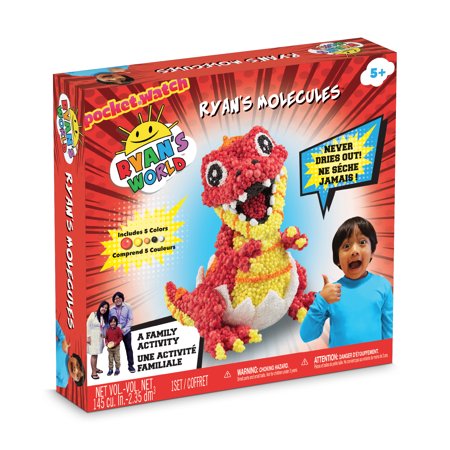
No surprise here! There’s bound to be a Ryan’s World item on pretty much any “hot toy” list, even one about dinosaurs. Your kid probably knows and loves Ryan’s Toy Review. So if they love dinosaurs too, this toy that lets them mold a dinosaur out of reusable molecule spheres is a win-win.

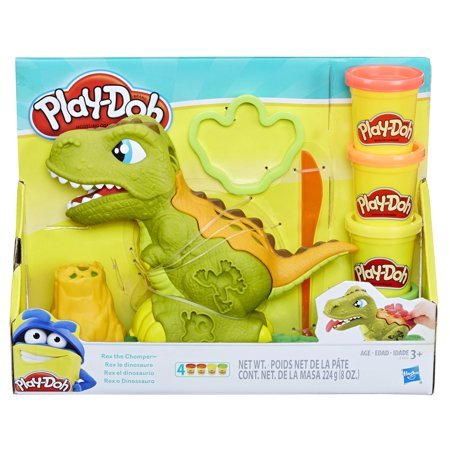
Just as timeless as dinosaurs is the old classic play-doh. So why not combine the two with this T-Rex Play-Doh kit that includes a jaw-chomping dinosaur?

You can never go wrong with LEGOs. This Mighty Dinosaur set is a 3-in-1, which means kids can make three different creatures from the pieces in one box. Any dino-lover would be thrilled to put these green guys together on Christmas morning.

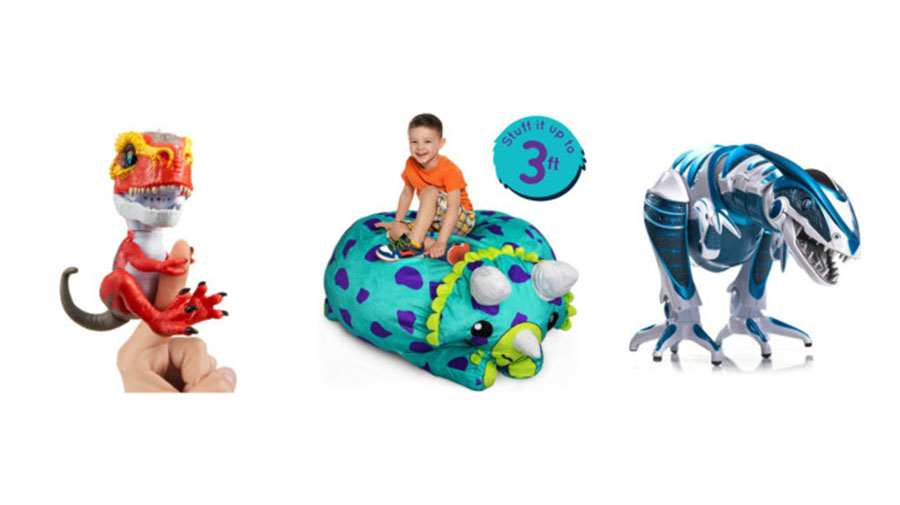
Some gifts like this Dinosaur Stuffums bean bag chair and animal storage bag are a gift for the child and parents—because they encourage kids to pick up their shit. This would be an adorable addition to any dinosaur-obsessed kid’s bedroom, and also a place to keep their 831 stuffed T-Rexes and Velociraptors. #winning.

Kids who love dinosaurs like to roar and pretend to be dinosaurs. This costume would be a hit—not just for Halloween, but any day of the year—because dressing up and pretend play is always fun.

These rubber rain boots would make splashing in puddles 100x better. And, for warming up cold feet once they come inside, how about some adorable dinosaur slippers?

Fingerlings are one of this year’s hottest toys. And kids who love dinosaurs don’t want to miss out! Well now they won’t have to, with this tiny T-Rex who can perch atop their finger all day long.

No 2018 gift list for kids is complete without at least one “unboxing” toy. Blind packs are on that trend, and this one will reveal an unknown mini-action dinosaur for your kid on Christmas morning.

Kids love new pjs, especially soft, warm fleece ones like this. So for a dinosaur-obsessed kid, you can’t go wrong with a gift like this one. Maybe they’ll even cooperate more at bedtime!

Another popular item on Santa lists this year is a FurReal friend. So how about a FurReal dinosaur like this Munchkin Rex baby that makes over 35 sounds and motions?

Books make great Christmas gifts, and this National Geographic Big Book of Dinosaurs is chock-full of fun dino facts. And, for a silly fictional choice, check out the best seller How Do Dinosaurs Count to 10?

This remote-control walking T-Rex whose head shakes and eyes light up is a must-have. It also roars and makes stomping sounds. Need we say more?

Floor puzzles make the best puzzles, and Melissa & Doug puzzles are top dog. This vibrant 24-piece dinosaur puzzle measures 2 x 3 feet and is made with solid pieces that little kids can play with over and over.

Being an archaeologist and uncovering their very own fossil finds is something most dino-loving kids dream about. So let them do just that with this awesome science kit from Wonderology.

Have a kid who loves dinosaurs AND robots? This programmable roboraptor can be controlled with a handheld controller or Android / iOS device, has infrared vision, and three distinct “moods”: hunter, cautious, and playful. This is the big one, parents! A good gift to save for the very end.

Dinosaur-loving kids are fun to shop for because you can still find T-Rexes and velociraptors everywhere—from pajamas to puzzles to LEGOs. Hopefully this list helps you choose the perfect gift for the child who may love dinosaurs more than they love you.

Source: www.scarymommy.com

T. Rex Bite is No Match for Finch Bird, Study Says

Sunday, January 13, 2019

Geospiza fortis

Research have found that the bite force of finch is about 320 times more powerful than T. rex.

Tyrannosaurus rex may have been known as a ferocious predator with extremely powerful bite but its biting ability becomes much less impressive when viewed in relation to its overall weight and size.

Researchers from University of Reading and University of Lincoln have showen that T. rex did not evolve any extraordinary bite to kill its prey. The prehistoric creature’s bite had a force of 57,000 Newtons that was completely average for its around 8-ton weight and the bone-crushing bite evolved gradually over tens of millions of years.

In fact, relative to their body size, a Galapagos ground finch outperforms T. rex. The tiny bird exerts 70N of force, despite weighing just 33 grams. It is about 320 times more powerful than the bite force of the T. rex.

Researchers say that Galapagos ground finch had, pound-for-pound, the most powerful bite force of of all the animals in the study and it evolved relatively quickly, in less than one million years.

"The image of T. rex with its fierce jaws has helped it become the most iconic of dinosaurs, but our research shows its bite was relatively unremarkable. Bite force was not what gave T. rex its evolutionary advantage, as was previously presumed,” said lead author Dr. Manabu Sakamoto, a biological scientist at the University of Reading.

"Large predators like T. rex could generate enough bite force to kill its prey and crush bone just by being large, not because they had a disproportionately powerful bite. This counters the idea that an exceptionally strong need for a powerful bite drove these ancient beasts to evolve bone-crushing bite forces."

Using their supercomputers, researchers analyzed the largest ever collection of bite force data from 434 species both extinct and surviving, including reptiles, birds and mammals. They have long suspected that animals with more powerful bites were forced to evolve rapidly. But analysis revealed that most of these animals developed proportionally to evolutionary changes to their body size over time. Accelerated evolution of bite force was observed in some animals, especially finches. In some cases, researchers even saw dramatic reductions in bite forces during evolution. For instance, the bite force of early humans decreased rapidly despite their body size increased over time.

“Our research provides new insight into the latest theories about the speed and drivers of evolution. It also allows us to create some fascinating hypothetical match-ups,” said co-author of the study Dr. Chris Venditti. “The proclaimed ‘King of the Dinosaurs’ would be no match for a finch in a fight, if they were the same size.”

Source: www.i4u.com

Huge Archaic Whale Was Top Predator in Eocene Oceans

Friday, January 11, 2019

An artist’s impression of Basilosaurus isis. Image credit: Pavel Riha / CC BY-SA 3.0.

The stomach contents preserved in an adult specimen of the archaic whaleBasilosaurus isis from the site of the Wadi Al Hitan in Egypt suggest it was an apex (top) predator that fed on smaller whales (juvenile Dorudon atrox) and large fishes (Pycnodus mokattamensis), according to new research, published in the journal PLoS ONE.

Apex predators live at the top of an ecological pyramid, preying on animals in the pyramid below and normally immune from predation themselves.

They are often, but not always, the largest animals of their kind.

The living killer whale (Orcinus orca), about 20 to 26 feet (6-8 m) in length, is an apex predator in modern world oceans.

They feed on a variety of invertebrate and vertebrate animals including squids, sharks, bony fishes, turtles, seabirds, and other marine mammals.

Basilosaurus isis, an archaic whale that lived about 38-34 million years ago (late Eocene Epoch), had a broad marine distribution at a time when few modern whales existed.

Skeletons of Basilosaurus isis and Dorudon atrox from Wadi Al Hitan, Egypt; both are adult, fully grown, and illustrated at the same scale. Scale bar – 1 m. Image credit: Voss et al, doi: 10.1371/journal.pone.0209021.

In a new study, Dr. Manja Voss of the Museum für Naturkunde Berlin in Germany and co-authors examined the 50-foot (15 m) long specimen of Basilosaurus isis from the Wadi Al Hitan (‘Valley of Whales’) site in Cairo, Egypt.

This site was once a shallow sea during the Eocene and is remarkable for its wealth of marine fossils.

While excavating the specimen, the paleontologists also found the remains of sharks, large bony fish, and, most numerously, bones from Dorudon atrox, a smaller species of ancient whale.

The skeleton of Basilosaurus isis was distinct from other skeletons in the cluster, containing pointed the specimen’s incisors and sharp cheek teeth as well as bones.

Most of the fish, and the remains of Dorudon atrox showed signs of breakage and bite marks, were fragmented, and tended to be clustered within the body cavity of the Basilosaurus isis specimen.

“One hypothesis to explain the clustering of these remains was that Dorudon atrox had scavenged the Basilosaurus isis carcass and fish,” the researchers said.

“However, the Dorudon atrox specimens were juveniles, capable only of drinking mother’s milk.”

Bite marks on prey skulls also indicated predation rather than scavenging, since predators commonly target the head.

Basilosaurus isis was a top predator which ate its prey live, rather than by scavenging,” they said.

“The remains of fish and juvenile Dorudon atrox in the cluster are remnants of previous Basilosaurus isis meals, while the teeth of sharks indicate postmortem scavenging.”

“The Wadi Al Hitan site was a whale calving site for prey whale Dorudon atrox, making it a hunting site for top predator Basilosaurus isis during the late Eocene.”

_____

M. Voss et al. 2019. Stomach contents of the archaeocete Basilosaurus isis: Apex predator in oceans of the late Eocene. PLoS ONE 14 (1): e0209021; doi: 10.1371/journal.pone.0209021

Source: www.sci-news.com

Indian Science Congress Speakers Say Newton Was Wrong, Ancient Demon-King Had Planes

Friday, January 11, 2019

Prime Minister Narendra Modi (center) attends the opening of the 106th Indian Science Congress at Lovely Professional University on last week in Jalandhar, India. Pardeep Pandit/Hindustan Times via Getty Images

At this year's annual meeting of the Indian Science Congress (from Jan. 3 to 7), senior research scientist Kannan Jegathala Krishnan dismissed Albert Einstein's theory of relativity as "a big blunder" and said Isaac Newton didn't really understand how gravity works.

Nageswara Rao, a vice chancellor at Andhra University in South India, said that Ravana, a demon god with 10 heads, had 24 kinds of aircraft of varying sizes and capacities — and that India was making test-tube babies thousands of years ago.

Dinosaurs were created by the Hindu god Brahma, said Ashu Khosla, a scientist with expertise in paleontology at Panjab University in the North Indian city of Chandigarh.

Not exactly the kind of remarks you would expect at an event whose mission is to advance and further the cause of science, to stimulate discussion on scientific theories and to create an awareness of science-related issues, especially among children — and that is funded by the Indian government's Ministry of Science and Technology.

Krishnan, Rao and Khosla were addressing a group of 5,000 children assembled from all over the country at the event's Children's Science Congress. Their lectures were posted on YouTube and reported widely by the press. The congress organizers were red-faced, and the scientific community in India was outraged.

The organizers of the conference were taken aback. "This is the 106th edition of the Science Congress," said the group's general secretary Premendu P. Mathur in an interview with NPR. "Since 1914, we've had so many meaningful conversations with children on science. We've hosted Nobel laureates from around the world, and yet the controversy overshadows the good when some people misuse our platform for personal and political gain."

About 15,000 scientists from India and around the world attend the conference every year, said Ashok Saxena, a zoologist and a former president of the congress, in an interview with NPR. They are a part of the 50,000-strong Indian Science Congress.

Invitations were sent to 250 scientists and researchers to speak at the various sessions of the annual event.

Among the famous attendees this year were three Nobel laureates: Hungarian-born Israeli biochemist Avram Hershko, who won the prize for chemistry in 2004; British-born physicist Duncan M. Haldane, who was awarded the Nobel Prize for Physics in 2016; and German-born American Nobel laureate for medicine in 2013, Thomas Christian Südhof,

Addressing the comments made during the children's event, Saxena said, "We never dreamed that some of them would spout such irrational ideas. They were invited to speak based on their science credentials."

But this isn't the first time the Indian Science Congress has been mired in controversy. In 2016, Nobel laureate Venkatraman Ramakrishnan famously called the event "a circus" because of the way religious ideologies held sway over science and said he wouldn't attend another session.

Many scientists believe that politics is the problem.

The rise of the Bharatiya Janata Party, Prime Minister Narendra Modi's party, in 2014 meant that the ideals of the organization that it is closely linked with — a right-wing group called the Rashtriya Swayamsevak Sangh (RSS) — are now mainstream. The RSS believes in propagating Hindutva as a nationalist movement. The term refers to the effort to establish a Hindu way of life and glorifying Hindu beliefs.

Indian scientists have expressed their displeasure over the controversial comments.

"It makes me uncomfortable when pseudoscience statements are made from a platform like the Indian Science Congress," said Kushagra Agrawal, a research scholar in the department of chemical engineering at the Indian Institute of Technology, Guwahati. The idea of such events is to show the world India's scientific prowess, he said, "but it makes me wonder what impression those Nobel laureates and other foreign scientist dignitaries will take from our country."

The principal scientific adviser to the prime minister, K. VijayRaghavan, wrote in a blog post that the "scientifically completely untenable" claims could cause harm if they were to find their way into public policy: "When lay people, including politicians, make random and untenable statements linking religion, culture, the past etc to science, the problem is to be addressed by collegial communication. When scientists make such links, they should be addressed more squarely."

He calls the pseudoscientists "gorillas" in the room and blames them for hijacking real scientific conversations.

But at this time, many scientists say, there is no evidence that this kind of pseudoscience has seeped into public policy just yet. Agrawal says he believes Indian bureaucracy has a staff of competent scientists who can advise and guide policymaking in the right direction.

And Modi's comments at the congress have been well-received by the scientific community. The prime minister, who has tweeted that 2018 was a "great year" for science in India, expanded on this theme in his speech on Jan 4. He cited Scopus, an international database of research papers, as indicating that the country was among the Top 5 in terms of publishing scientific research. He urged Indians to focus on innovations and startups, especially in finding ways to increase agriculture produce through technology.

The key achievements of Indian science this past year, he said, were expressed in such innovations as the production of aviation grade biofuel, a real-time landslide warning system that can help during flooding emergencies, a portable reading machine for the visually impaired and inexpensive devices for the quick diagnosis of cervical cancer, tuberculosis and dengue, diseases that affect millions in India.

But Modi has not addressed the growing controversy over the many comments at this year's congress linking science and religion.

For next year's event, organizers intend to vet speeches, especially those meant for children, said Mathur, the congress general secretary. "We've never censored scientists before. We expected them to motivate young minds and speak responsibly, but now, each session will have to be closely monitored. We won't allow others to use our platform for their selfish reasons anymore," he said.

Source: www.npr.org

Terrible Lizards: Dinosaur Statues of Questionable Accuracy

Thursday, January 10, 2019

Someone has painted the local dinosaur statue like Spiderman. ~2m tall.

The term dinosaur comes from the ancient Greek root words deinos, or “terrible,” and sauros, or “lizard.” As our understanding of these prehistoric creatures has become more refined over time, attempts to create life-size models of them have, more or less, increased in accuracy and lifelike quality. Of course, many of the thousands of dinosaur statues in the world have been made with an eye more toward entertainment than accuracy. For your viewing enjoyment, a collection of photographs from the past century of large-scale mock dinosaurs, constructed to varying degrees of accuracy and based on what was known at the time.

An aging version of a dinosaur at Dinosaur Land in White Post, Virginia #  Kathleen McGrath / Shutterstock


Harold's Auto Center, a Sinclair gas station on Route 19 in Spring Hill, Florida, photographed in 1979. The dinosaur species is indeterminate. #  John Margolies / Library of Congress


A large model inspired by a Tyrannosaurus rex bares its teeth at the Karpin Abentura park in the Karrantza valley, Spain, on July 26, 2014. #  Vincent West / Reuters


Original caption, March 17, 1922: "The Iguanadons which lived during the Wealden formation would, if living today, soon be extinct, for despite its dynamic size it could not hold its own against modern firearms. However its enormous size and strength would furnish ample sport for the modern huntsman." #  Bettmann / Getty


A concrete dinosaur statue stands next to a building destroyed by strong winds brought about at the height of Typhoon Bopha at a playground in New Bataan, southern Philippines, on December 9, 2012. #  Erik De Castro / Reuters


A man takes a photo of a friend beside dinosaur statues at Luneta Park in Manila on May 29, 2010. #  Noel Celis / AFP / Getty


A 60-foot-tall Tyrannosaurus appears behind a restaurant in Cabazon, California, on May 19, 2000. A. The dinosaur is one of two constructed by the late Claude K. Bell as roadside attractions west of Palm Springs. #  David McNew / Newsmakers / Getty


Britain's Queen Elizabeth II appears to be watched as she visits a dinosaur exhibition at the Yorkshire Museum in York, England, on July 27, 2000. #  John Giles / AP


Original caption, July 27, 1931: "Step right up ladies and gentlemen, and take a peak at Dolores, the monster of the prehistoric ages who seems to be making a delicious meal of Thelma Corey. This 47-foot animal is all but alive, and appears at the new stage show at the Roxy Theatre, '50 Million Years Ago.' The animal virtually lives, breathes and snorts fire and carries people on his back." #  Bettmann / Getty


Visitors enter the mouth of a dinosaur model at Evolution Park in the eastern Indian city of Calcutta on January 1, 2003. #  Reuters


A walk-in Brontosaurus at a prehistoric museum in Cabazon, California, photographed in 1978 #  John Margolies / Library of Congress


A scene at Prachinburi Dinosaur Park in Thailand, photographed on January 6, 2018 #  Sangpeht Surat / Shutterstock


Original caption, February 1927: "A model of a prehistoric Icthyosaurus is dragged from its pond in the grounds of Crystal Palace, London, for its annual clean. The 'keeper' is being helped by some of the local police force." #  Fox Photos / Getty


The Bayville dinosaur, outside of Kim Carpeting and Linoleum in Bayville, New Jersey, photographed in 1984 #  John Margolies / Library of Congress


The "world's largest dinosaur" stands in Drumheller, Alberta. #  CC BY-SA Milorad Dimić


A boy rides a mechanical dinosaur at a park during Spring Festival in Beijing on January 30, 2009. #  Christina Hu / Reuters


Concrete Sinclair Oil dinosaurs sit on a hill above Rapid City, South Dakota, in 1945. #  Hans Wild / The LIFE Picture Collection / Getty


Workmen carry parts of dinosaur models designed by Louis Paul Jonas for the New York World's Fair in 1963. #  Arthur Schatz / The LIFE Images Collection / Getty


A red-eyed dinosaur towers over the desert near the San Andreas Fault on July 1, 2006, in Cabazon, California. #  David McNew / Getty


Dinosaurs make an appearance during the closing ceremony of the Salt Lake City Winter Olympics at Rice-Eccles Stadium in Salt Lake City, Utah, on February 24, 2002. #  Brian Bahr / Getty


A dinosaur stands along Highway 40 in Utah, photographed in 1974 #  Steve Fitch / Library of Congress


An abandoned building with a dinosaur statue at an old park outside Ksar Ouled Debbab, Tunisia #  Slimstyl / Shutterstock


Original caption: "A General Electric motor and fan are installed inside a 25-foot-long model. This dinosaur is part of an exhibit for the Sinclair Refining Company at the Century of Progress Exposition in 1933." #  Schenectady Museum Association / Getty


A man takes a photograph of a fiberglass model of a dinosaur at the abandoned Plänterwald amusement park in Berlin on January 5, 2013. #  Reuters


A Brontosaurus awaits visitors at Dinosaur Park on Route 23 in Ossineke, Michigan, in 1988. #  John Margolies / Library of Congress

Source: www.theatlantic.com

Pages