Blogs

A Small Plesiosaur Lived in Spain 125 Million Years Ago

Saturday, March 2, 2019

The leptocleididae, whose remains have been found for the first time on the Iberian Peninsula, were smaller plesiosaurs with shorter necks living in shallow waters. Credit: José Antonio Peñas

Plesiosaurs, erroneously viewed as dinosaurs, inhabited all Earth's oceans between 200 million and 65 million years ago. In the Peninsula, only scarce remains of these long-necked reptiles had been found. Now, a group of palaeontologists has found the most abundant collection of fossils in Morella, Castellón. Among them, there is one vertebra that belonged to a type of plesiosaur never before discovered in the country, the leptocleidus.

During the Lower Cretaceous, some 125 million years ago, the Iberian Peninsula was very different from how we know it today. So much so that in what is now the village of Morella in Castellón, for example, a large delta had developed along the coast.

These shallow waters were home to a group of marine reptiles known as plesiosaurs, with small heads, long necks, short tails and wide, cylindrical bodies with large fins. Although they co-existed with the dinosaurs and became extinct at the same time, these reptiles, which may have exceeded 15 metres in length, were not closely related to the dinosaurs.

On the Peninsula, fossil findings of these animals have been rather scarce, limited and fragmentary. Evidence of this is a partial pelvis recently found in the town of Algora, in Guadalajara, which belonged to an elasmosaurus, a type of plesiosaur with such a long neck that a century and a half ago, when the species was discovered in the USA, it was thought to be the tail.

In a new study, published in Cretaceous Research, a group of UNED (National Distance Education University) palaeontologists has discovered an abundant and exclusive collection of remains of several plesiosaur specimens in the quarry of Mas de la Parreta, in Morella, that coexisted with the dinosaurs.

"The plesiosaur material identified in Morella is exceptional for the record of the Iberian Cretaceous," said Adán Pérez-García, a scientist in the Evolutionary Biology Group and co-author of the work.

The score of teeth and the large number of vertebrae (cervical, pectoral, dorsal and sacral) cannot be assigned to a particular group of plesiosaurs. Notably, however, an almost complete cervical vertebra can be attributed to a leptocleidus, a smaller type of plesiosaur, which until now was believed to have inhabited only England, Australia and South Africa.

The unknown leptocleidus

"It is the first reference of these animals in the Iberian Peninsula," the palaeontologist says. Leptocleidus corresponds to a group of very peculiar plesiosaurs, no more than three metres long, and which, unlike other plesiosaurs, had a relatively shorter neck.

"Their bodies were robust and their heads relatively large and triangular, and they were able to adapt from life in the open sea to that in coastal environments, such as the large delta located in Morella during that part of the Lower Cretaceous," explains Pérez-García.

Unlike other plesiosaur species, the leptocleididae lived in generally shallow waters, and it is believed that they were even able to adapt to brackish water environments, such as the mouths of large rivers very close to the coast.

Over the years, scientists have discovered a great diversity of vertebrates at the quarry site, including some that may have inhabited the Morella delta, as well as others whose corpses were washed away and accumulated in the current mining operation.

Along with the plesiosaurs, sharks have also surfaced, as have amphibians, other reptiles, including pterosaurs, land, freshwater and sea turtles, freshwater and marine crocodiles, and dinosaurs.

"The vertebrate fauna of the Lower Cretaceous of Morella is very well known. This is where some of the first dinosaur remains identified in the Spanish register in the second half of the 19th century come from," Pérez-García says, adding that paleontological activity in Morella has considerably increased in recent years.

More information: Juan M. Quesada et al. Plesiosauria remains from the Barremian of Morella (Castellón, Spain) and first identification of Leptocleididae in the Iberian record, Cretaceous Research (2018). DOI: 10.1016/j.cretres.2018.10.010

Source: https://phys.org

Ancient Tusked Sea Cow Unearthed in Panama

Saturday, March 2, 2019

The skull of Culebratherium alemani. Image credit: Aaron Wood.

The remarkably complete fossil skeleton of a sea cow with large incisor tusks that lived approximately 20 million years ago (Miocene Epoch) has been discovered in Panama.

The newly-discovered sea cow, named Culebratherium alemani, is a tusked seagrass-grazing relative of modern dugongs.

“While only one species of dugong is alive today — a second, Steller’s sea cow, was hunted to extinction within 27 years of its discovery — about 30 species have been recovered in the fossil record,” said Dr. Jorge Velez-Juarbe, a paleontologist in the Department of Mammalogy at the Natural History Museum of Los Angeles County and the Department of Paleobiology at the National Museum of Natural History, Smithsonian Institution.

“The group originated in the West Atlantic and Caribbean and dispersed westward through Panama, whose seaway did not close until a few million years ago, and south to Brazil.”

The fossil skull, vertebrae, ribs and other bones of Culebratherium alemani were recovered from marine deposits of the Culebra Cut of the Panama Canal.

“About 15 feet (4.6 m) long, this individual was not done growing,” Dr. Velez-Juarbe said.

“Its tusks had only begun to protrude and its newest molars showed little wear, indicating it was not yet an adult. But it was a powerful eater.”

Culebratherium alemani. Image credit: Jorge Velez-Juarbe & Aaron Wood.

Dr. Velez-Juarbe and his colleague, Dr. Aaron Wood from Iowa State University and the Florida Museum of Natural History, propose that Culebratherium alemani’s thick neck muscles, tusks and downward-pointing snout were adaptations for digging pits in the ocean floor to get to the underground stems of seagrass, the plants’ most nutritional parts.

“Finding Culebratherium alemani is pretty good evidence that there was seagrass in this region 20 million years ago,” Dr. Velez-Juarbe said.

“This particular group of sirenians are seagrass specialists.”

The discovery is described in a paper in the Journal of Vertebrate Paleontology.

_____

Jorge Velez-Juarbe & Aaron R. Wood. An early Miocene dugongine (Sirenia: Dugongidae) from Panama. Journal of Vertebrate Paleontology, published online February 15, 2019; doi: 10.1080/02724634.2018.1511799

Source: www.sci-news.com

Paleontology: Diversification After Mass Extinction

Saturday, March 2, 2019

Cartilaginous fishes were very diverse during the Permian period. However, after severe losses among cartilaginous fishes during the Middle Permian extinction, bony fishes experienced a massive diversification in the subsequent Trias period. Credit: UZH

A team led by Ludwig-Maximilians-Universitaet (LMU) in Munich paleontologist Adriana López-Arbarello has identified three hitherto unknown fossil fish species in the Swiss Alps, which provide new insights into the diversification of the genus Eosemionotus.

Monte San Giorgio in the Swiss canton of Ticino is one of the most important known sources of marine fossils from the Middle Triassic Period (around 240 million years ago). The new and exquisitely preserved fossil fish specimens, which Dr. Adriana López-Arbarello (a member of the Institute of Paleontology and Geobiology and of the Geobiocenter at LMU) has been studying in collaboration with colleagues based in Switzerland were also discovered in these dolomites and limestones. As the researchers now report in the online journal Palaeontologia Electronica, the specimens represent three previously unknown species of Eosemionotus, a genus of ray-finned fishes. "The largest episode of mass extinction in the history of the Earth took place about 250 million years ago," as López-Arbarello explains. "Our finds now provide further evidence that after this catastrophic event, the biosphere recovered relatively fast and went through a period of rapid diversification and the emergence of numerous new species during the Middle Triassic."

The first member of the genus Eosemionotus was discovered in the vicinity of Berlin in 1906, and was named E. vogeli. Almost a century later, in 2004, a second species was described from Monte San Giorgio as E. ceresiensis. Detailed anatomical studies of new material from this locality, carried out by López-Arbarello, have now enabled the recognition of three further species that can be assigned to same genus - E. diskosomusE. sceltrichensis and E. minutus. All five species are small in size, but they can be clearly distinguished from each other on the basis of the relative proportions of their bodies, the position of the fins, the morphology of the skull, and the disposition of teeth and scales. "These differences indicate that each species was adapted to different ecological niches," López-Arbarello concludes.

These findings provide new insights into the evolution of the genus. "Our phylogenetic analyses demonstrate that Eosemionotus is the oldest known member of an extinct family within the Order Semionotiformes. Although the Semionotiformes were a species-rich and highly diversified clade during the Mesozoic Era, the order died out in the Cretaceous. Only a few members of its sister group have survived down to the present day, and this ancient lineage is now represented by a single family, the gars," says López-Arbarello.

###

Palaeontologia Electronica 2019

Source: www.eurekalert.org

216-Million-Year-Old Microfossils Represent North America’s Earliest Frog

Friday, March 1, 2019

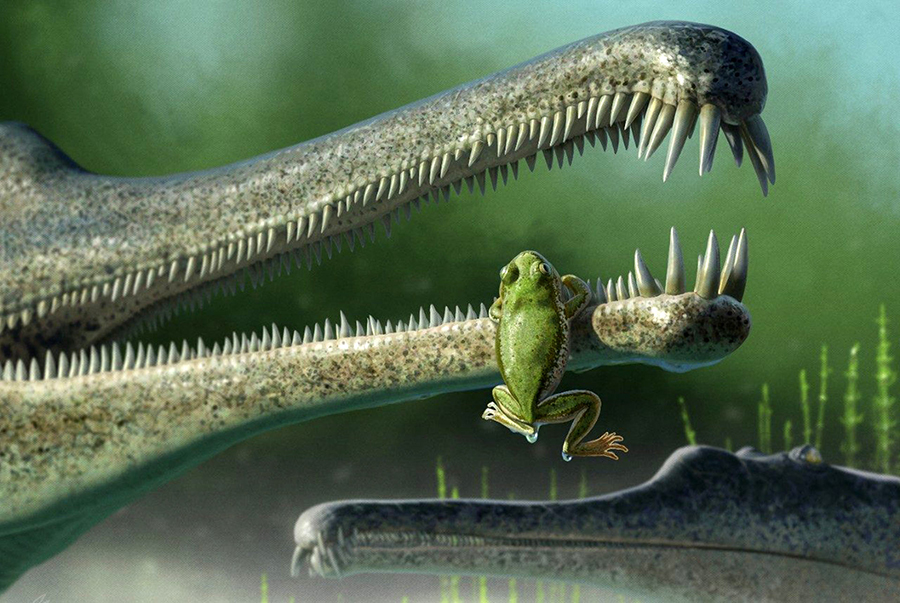
A Chinle frog, inside the jaw of a phitosaur. Image credit: Andrey Atuchin.

Paleontologists in Arizona have identified microfossils of what are thought to be the oldest known frog relative in North America.

The newly-discovered microfossils represent the first known and earliest equatorial remains of a salientian — the group containing living frogs and their most-closely related fossil relatives — from the Late Triassic, roughly 216 million years ago.

They came from the Chinle Formation of Arizona and are composed of several small pieces of hip bone, called an ilium.

“This new find highlights just how much there is still to learn about the Late Triassic ecosystem, and how much we find when we just look a little closer,” said Dr. Michelle Stocker, a researcher in the Department of Geosciences at Virginia Tech.

“We’re familiar with the charismatic archosaurs from the Chinle Formation, but we know that based on other ecosystems, they should make up a small percentage of the animals that lived together.”

“With this new focus we’re able to fill in a lot of those missing smaller components with new discoveries.”

Coming from multiple individuals, the hip bones are long and hollow, with a hip socket offset rather than centered.

“The bones of the frogs show how tiny they were: just a bit over half-an-inch long. The Chinle frog could fit on the end of your finger,” Dr. Stocker said.

Even though the fossils are part of the Chinle frog family, they are not yet naming the specific fossils.

“We refrain from naming this Chinle frog because we are continuing to process microvertebrate matrix that will likely yield additional skull and postcranial material that has the potential to be even more informative,” Dr. Stocker said.

The Chinle frog shares more features with living frogs and Prosalirus, an Early Jurassic frog found in sediments from the present-day Navajo Nation, than to Triadobatrachus, an Early Triassic frog found in modern day Madagascar in Africa.

“These are the oldest frogs from near the equator,” Dr. Stocker said.

“The oldest frogs overall are roughly 250 million years old from Madagascar and Poland, but those specimens are from higher latitudes and not equatorial.”

“Now we know that tiny frogs were present approximately 215 million years ago from North America, we may be able to find other members of the modern vertebrate communities in the Triassic period,” said team member Dr. Sterling Nesbitt, also from the Department of Geosciences at Virginia Tech.

The discovery is reported in a paper in the journal Biology Letters.

_____

Michelle R. Stocker et al. The earliest equatorial record of frogs from the Late Triassic of Arizona. Biology Letters, published online February 27, 2019; doi: 10.1098/rsbl.2018.0922

Source: www.sci-news.com

10 Birds That Look Eerily Similar To Their Dinosaur Ancestors

Thursday, February 28, 2019

Cassowaries are native to New Guinea and Australia. Shutterstock

  • All birds can be traced back to prehistoric creatures.

  • Many modern birds have retained traits of the dinosaurs they evolved from.

  • Chickens share genetic makeup with the Tyrannosaurus rex.

While what we think of as dinosaurs existed between 245 million and 66 million years ago, all you need to do to catch a glimpse of their descendants is take a look in your backyard. From lanky cranes to common chickens, all birds can be traced back to prehistoric creatures.

Some birds have retained ancient traits like extra claws and pouched beaks, while others have evolved into small, domesticated animals, but all are strong reminders that dinosaurs existed.

A fossil from 2 million to 5 million years ago has nearly the same structure as modern sandhill cranes.

Sandhill cranes feeding in Kentucky. David Stephenson/AP

The sandhill crane can be found across North America and can reach nearly 4 feet in height with a 6-foot wingspan. Between their deliberate walk, exuberant mating dance, and rattling trills, it's easy to imagine one of these birds walking among the dinosaurs.

Sandhill cranes' ancient relatives have nearly the same structure. According to the International Crane Foundation, a fossil from 2 million to 5 million years ago was discovered in Nebraska that appeared almost identical to modern sandhill cranes.

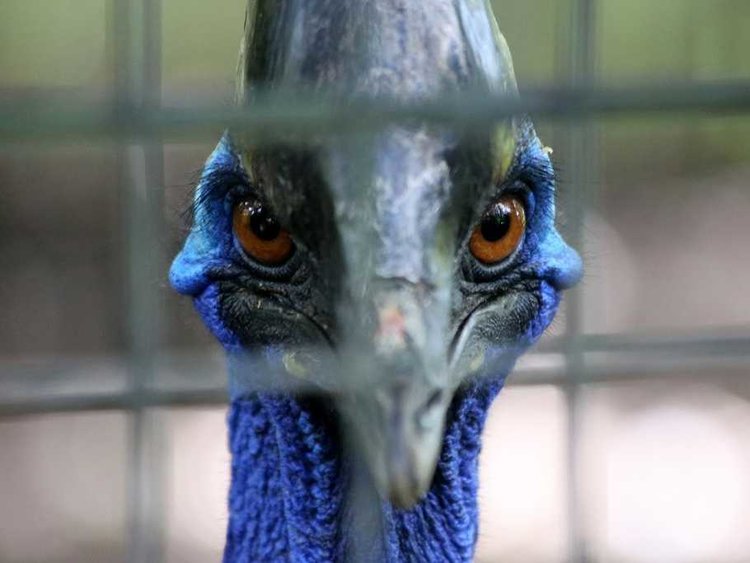
With 4-inch claws and a tall casque on its head, the cassowary shares physical traits with prehistoric creatures.

A cassowary in Australia. cuatrok77/Flickr

Cassowaries are native to New Guinea and Australia. They have 4-inch claws, a hard casque on their heads, and can jump 5 feet in the air.

National Geographic reported in July 2017 that a dinosaur called the Corythoraptor jacobsi was unearthed in China and shares many physical similarities to the cassowary, including its casque.

Chickens share genetic makeup with the Tyrannosaurus rex.

Chickens walk on a farm in Maryland. Joshua Roberts/Reuters

The domesticated chicken is one of the most common bird species on the planet. According to Statista, in 2011, there were about 20.88 billion in the world. And while they may not seem especially intimidating, they share genetic makeup with the Tyrannosaurus rex.

In a study published in 2008, researchers compared tissue found in a 68-million-year-old T. rex bone to 21 modern creatures, including alligators and chimpanzees. The study found that the T. rex's tissue was more similar to chickens and ostriches than to any other animals, including reptiles.

Shoebills are known to eat baby crocodiles.

A shoebill in the San Diego Zoo Safari Park. Lenny Ignelzi/AP

The menacing shoebill stands as tall as 5 feet and can be found in the swamps of East Africa. These huge birds gobble up smaller prey, including catfish, monitor lizards, and baby crocodiles.

Shoebills communicate by clattering their giant bill together, creating a call that has been compared to the sound of a machine gun. According to Australia's Special Broadcasting Service, the hook at the end of the shoebill's bill is similar to the bone structure of a velociraptor.

Baby hoatzins have extra claws growing from their wings for climbing.

Hoatzins at the Manu National Park in Peru. Enrique Castro-Mendivil/Reuters

The hoatzin is a common South American bird with tall plumage on its head, a bright-blue face, and piercing red eyes. Baby hoatzins grow an extra set of claws on their wings so that they can hide in water if threatened by predators and then climb back up to their nest.

According to research published in 2015 cited by the National Audubon Society, hoatzins are a unique species that separated from other birds approximately 65 million years ago, and their closest relatives are cranes and plovers.

Pelicans' pouches are reminiscent of pterosaurs that lived 120 million years ago.

Pelicans catching fish. B. Mathur/Reuters

Over six different species of pelicans live around the world. They're known for the giant pouch attached to their beaks, which they use to scoop up fish.

The Ikrandraco avatar, a pterosaur found in China and thought to have lived 120 million years ago, had a large, toothed beak with a pouch. According to researchers, the pouch indicates the creature may have scooped up its food, similar to a pelican.

The helmeted hornbill has a unique and vibrant beak.

The helmeted hornbill has a unique and vibrant beak.

The helmeted hornbill, with its striking appearance and maniacal-laughter-like call, is nothing short of a living, breathing dinosaur.

However, helmeted hornbills are critically endangered. They're found only in Borneo, Sumatra, and southern Thailand. They have a prominent red casque and are often hunted for their solid beaks and sold on the black market.

Creatures just like the modern ostrich have been found fossilized in Canada.

Ostriches crossing a road at the Nairobi National Park in Kenya. Thomas Mukoya/Reuters

The ostrich is an intimidating flightless bird that can reach 9 feet tall, 350 pounds, and run up to 43 miles an hour. Using its strong legs, an ostrich can kill a human, lion, or other threat with a couple of swift kicks.

The Ornithomimus, a Mesozoic Era dinosaur discovered fossilized in Canada, has similar traits to an ostrich. The Smithsonian, citing the journal Cretaceous Research, reported that both creatures have dense feathers covering their bodies, long necks, and bare legs, which help to regulate body heat.

The vicious red-legged seriema shakes its prey to death.

A red-legged seriema. Wagner Machado Carlos Lemes Follow/Flickr

The 1-meter-high red-legged seriema is a vicious bird commonly found in eastern regions of South America. The carnivore's diet includes venomous snakes and whole quail eggs.

When they catch their prey, red-legged seriemas shake it in their beak, beat it on the ground, and ultimately tear it to pieces. According to the Cornell Lab of Ornithology, red-legged seriemas are relatives with Phorusrhacids, which are extinct creatures known as "terror birds."

The large Canada goose makes honking noises like its prehistoric ancestors.

Two Canada geese feeding. Toby Talbot/AP

Canada geese can grow larger than 3 feet tall and can be found near bodies of water in North America. They make distinct honking noises to interact with one another.

In 2016, researchers discovered that the Vegavis iaai, which was found fossilized in the Antarctic Peninsula, likely made honking noises similar to a goose. Researchers found that the Vegavis iaai had a syrinx, which creates the squawking noises.

Source: www.thisisinsider.com

Giant Animals Lived in Amazonian Mega-Wetland

Tuesday, February 26, 2019

Lake systems existing in regions over 10 million years ago survived the Amazon River reversal due to Andean uplift . Credit: Palaeogeography, Palaeoclimatology, Palaeoecology

Lake systems existing in regions over 10 million years ago survived the Amazon River reversal due to Andean uplift

A land of giants. This is the best definition for Lake Pebas, a mega-wetland that existed in western Amazonia during the Miocene Epoch, which lasted from 23 million to 5.3 million years ago.

The Pebas Formation was the home of the largest caiman and gavialoid crocodilian ever identified, both of which were over ten meters in length, the largest turtle, whose carapace had a diameter of 3.5 meters, and rodents that were as large as present-day buffaloes.

Remains of the ancient biome are scattered over an area of more than 1 million square meters in what is now Bolivia, Acre State and western Amazonas State in Brazil, Peru, Colombia and Venezuela. The oldest datings in this biome are for fossils found in Venezuela and show that Lake Pebas existed 18 million years ago.

Until recently, scientists believed that the mega-swamp dried up more than 10 million years ago, before the Amazon River reversed course. During most of the Miocene, this river flowed from east to west, opposite to its present direction. The giant animals disappeared when the waters of Pebas receded.

While investigating sediments associated with vertebrate fossils from two paleontological sites on the Acre and Purus Rivers, Marcos César Bissaro Júnior, a biologist affiliated with the University of São Paulo's Ribeirão Preto School of Philosophy, Science and Letters (FFCLRP-USP) in Brazil, obtained datings of 8.5 million years with a margin of error of plus or minus 500,000 million years.

There is evidence that the Amazon was already running in its present direction 8.5 million years ago, draining from the Peruvian Andes into the Atlantic Ocean. By then, the Pebas system must have no longer resembled the magnificent wetlands of old. Rather, the system resembled a floodplain similar to the present-day Brazilian Pantanal. This is the view of Annie Schmaltz Hsiou, a professor in the Biology Department at FFCLRP-USP and supervisor of Bissaro Júnior's research, which is described in a recently published article in the journal Palaeogeography, Palaeoclimatology, Palaeoecology.

The study was supported by São Paulo Research Foundation -FAPESP and Brazil's National Council for Scientific and Technological Development (CNPq). The participants also included researchers from the Federal University of Santa Maria (UFSM), the Zoobotanic Foundation's Natural Science Museum in Rio Grande do Sul, São Paulo State University (UNESP), the Federal University of Acre, and Boise State University in Idaho (USA).

The Pebas system encompasses several geological formations in western Amazonia: the Pebas and Fitzcarrald Formations in Peru and Brazil, the Solimões Formation in Brazil, the Urumaco and Socorro Formations in Venezuela, the La Venta Formation in Colombia, and the Quebrada Honda Formation in Bolivia.

"While the Solimões Formation is one of the best-sampled Neogene fossil-bearing stratigraphic units of northern South America, assumptions regarding deposition age in Brazil have been based largely on indirect methods," Bissaro Júnior said.

"The absence of absolute ages hampers more refined interpretations on the paleoenvironments and paleoecology of the faunistic associations found there and does not allow us to answer some key questions, such as whether these beds were deposited after, during or before the formation of the proto-Amazon River."

To answer these and other questions, Bissaro Júnior's study presents the first geochronology of the Solimões Formation, based on mineral zircon specimens collected at two of the region's best-sampled paleontological sites: Niterói on the Acre River in the municipality of Senador Guiomar and Talismã on the Purus River in the municipality of Manuel Urbano.

Since the 1980s, many Miocene fossils have been found at the Niterói site, including crocodilians, fishes, rodents, turtles, birds, and xenarthran mammals (extinct terrestrial sloths). Miocene fossils of crocodilians, snakes, rodents, primates, sloths, and extinct South American ungulates (litopterns) have been found in the same period at the Talismã site.

As a result of the datings, Bissaro Júnior discovered that the rocks at the Niterói and Talismã sites are approximately 8.5 million and 10.9 million years old (maximum depositional age), respectively.

"Based on both faunal dissimilarities and maximum depositional age differences between the two localities, we suggest that Talismã is older than Niterói. However, we stress the need for further zircon dating to test this hypothesis, as well as datings for other localities in the Solimões Formation," he said.

Drying up of Pebas

Lake Pebas was formed when the land rose in the proto-Amazon basin as a result of the Andean uplift, which began accelerating 20 million years ago. At that time, western Amazonia was bathed by the Amazon (which then flowed toward the Caribbean) and the Magdalena in Colombia. The Andes uplift that occurred in what is now Peru and Colombia eventually interrupted the flow of water toward the Pacific, causing water to pool in western Amazonia and giving rise to the mega-wetland.

However, the Andes continued to rise. The continuous uplifting of land in Amazonia had two effects. The proto-Amazon, previously pent up in Lake Pebas, reversed course and became the majestic river we now know. During this process, water gradually drained out of the Pebas mega-swamp.

The swamp became a floodplain full of huge animals, which still existed 8.5 million years ago, according to new datings by Bissaro Júnior. Unstoppable geological forces eventually drained the remains of the temporary lagoons and lakes in western Amazonia. This was the end of Pebas and its fauna.

"The problem with dating Pebas has always been associating datings directly with the vertebrate fauna. There are countless datings of rocks in which invertebrate fossils have been found, but dating rocks with vertebrates in Brazil was one of our goals," Schmaltz Hsiou said.

The new datings, she added, suggest that the Pebas system - i.e., the vast wetland - existed between 23 million and 10 million years ago. The Pebas system gave way to the Acre system, an immense floodplain that existed between 10 million and 7 million years ago, where reptiles such as Purussaurus and Mourasuchus still lived.

"The Acre system must have been a similar biome to what was then Venezuela, consisting of lagoons surrounding the delta of a great river, the proto-Orinoco," she said.

Giant rodents

Rodents are a highly diversified group of mammals that inhabit all continents except for Antarctica. Amazonia is home to a large number of rodent species.

"In particular, a rodent group known scientifically as Caviomorpha came to our continent about 41 million years ago from Africa," said Leonardo Kerber, a researcher at UFSM's Quarta Colônia Paleontological Research Support Center (CAPPA) and a coauthor of the article published in Palaeogeography, Palaeoclimatology, Palaeoecology.

"In this period, known as the Eocene Epoch, Africa and South America were already totally separated, with at least 1,000 kilometers between the closest points of the two continents, so there couldn't have been any biogeographical connections enabling terrestrial vertebrates to migrate between the two land masses," Kerber said. "However, the ocean currents drove dispersal by means of natural rafts of tree trunks and branches blown into rivers by storms and swept out to sea. Some of these rafts would have borne away small vertebrates. An event of this kind may have enabled small mammals such as Platyrrhini monkeys, as well as small rodents, to cross the ocean, giving rise to one of the most emblematic groups of South American mammals, the caviomorph rodents."

According to Kerber, the continent's caviomorph rodents have undergone a long period of evolution since their arrival, becoming highly diversified as a result. In Brazil, the group is currently represented by the paca, agouti, guinea pig, porcupine and bristly mouse, as well as by the capybara, the world's largest rodent.

"In Amazonia, above all, we now find a great diversity of bristly mice, porcupines, agoutis and pacas. In the Miocene, however, the Amazonian fauna was very different from what we can observe now," Kerber said.

"In recent years, in addition to reporting the presence of many fossils of species already known to science, some of which had previously been recorded in the Solimões Formation and others that were known from other parts of South America but recorded in Solimões for the first time, we've described three new medium-sized rodent species (Potamarchus adamiae, Pseudopotamarchus villanuevai and Ferigolomys pacarana - Dinomyidae) that are related to the pacarana (Dinomys branickii)."

Kerber said an article to be published shortly in the Journal of Vertebrate Paleontology will recognize Neoepiblema acreensis, an endemic Brazilian Miocene neoepiblemid rodent that weighed some 120 kg as a valid species.

"The species was described in 1990 but was considered invalid at the end of the decade. These fossil records of both known and new species help us understand how life evolved in the region and how its biodiversity developed and experienced extinctions over millions of years in the past," Kerber said.

###

About São Paulo Research Foundation (FAPESP)

The São Paulo Research Foundation (FAPESP) is a public institution with the mission of supporting scientific research in all fields of knowledge by awarding scholarships, fellowships and grants to investigators linked with higher education and research institutions in the State of São Paulo, Brazil. FAPESP is aware that the very best research can only be done by working with the best researchers internationally. Therefore, it has established partnerships with funding agencies, higher education, private companies, and research organizations in other countries known for the quality of their research and has been encouraging scientists funded by its grants to further develop their international collaboration. You can learn more about FAPESP at http://www.fapesp.br/en and visit FAPESP news agency at http://www.agencia.fapesp.br/en to keep updated with the latest scientific breakthroughs FAPESP helps achieve through its many programs, awards and research centers. You may also subscribe to FAPESP news agency at http://agencia.fapesp.br/subscribe.

Follow us: @paleontologyworld on Instagram | Paleontology World on Facebook

Source: www.eurekalert.org

Private Dinosaur Collectors Price Museums Out Of The Market

Tuesday, February 26, 2019

The Tyrannosaurus Rex skeleton known as Sue stands on display at Union Station in Washington D.C. (Mark Wilson/Newsmakers)

The cost of these scientific relics are being pushed into the millions.

Wealthy private collectors, Hollywood celebrities among them, are driving the market price of dinosaur bones up so high that museums and scientific institutes are being shut out.

A private collector recently purchased a Tyrannosaurus rex skeleton for $10 million. Those looking to drop dough on a Diplodocus should be prepared to shell out up to $1.1M.

Last year, the Society of Vertebrate Paleontology (SVP) demanded that Aguttes, a French auction house, halt the sale of a unknown species of dinosaur bones. The auction listing claimed the winner could name the species which is false as the International Code of Nomenclature was in charge of that process.

“The sale of all fossils is inappropriate,” Catherine Badgley, former president of the SVP, told The Guardian. “Many, particularly vertebrate fossils, are rarely common, and it’s certainly not the case for dinosaurs. The commodification is in principle inappropriate because it motivates unscrupulous people.”

Hollywood celebs like Leonardo DiCaprio, Russell Crowe, and Nicolas Cage have all had their eye on a famous fossil or two. Cage paid $276,000 for a T. rex skull that turned out to be stolen and later returned to China.

Badgley hopes collectors will steer clear of unique or rare specimen as they’re the most valuable to the scientific community.

“There isn’t a strong link between expensive trophy specimens and an increase in the science of paleontology.” she says. “If anything, they’re seen more for their rarity and economic value than for their scientific information. It’s not necessary for people to become interested in paleontology by having a unique specimen that’s theirs and theirs alone.”

Read the full story at The Guardian

Follow us: @paleontologyworld on Instagram | Paleontology World on Facebook

Utahraptor: A State Mascot?

Monday, February 25, 2019

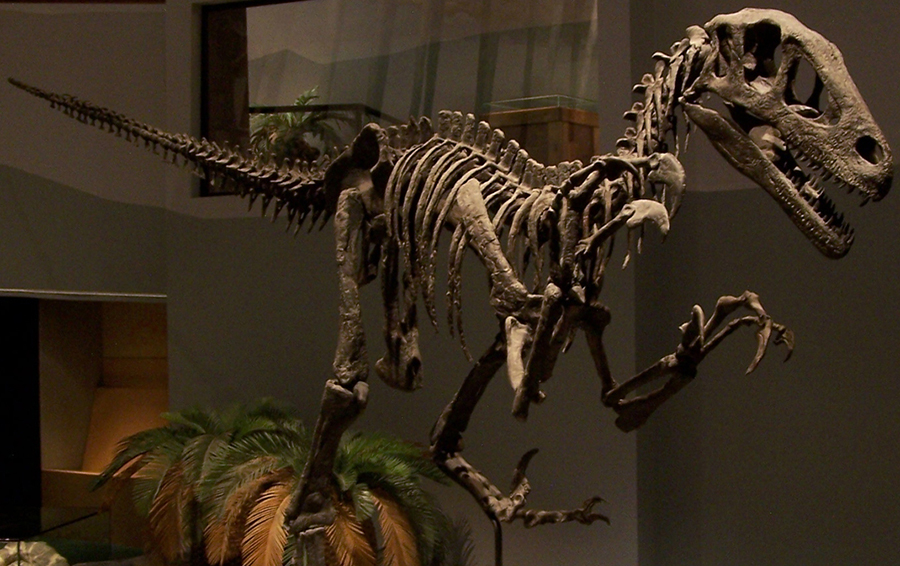
The Senate approved a proposition to christen Utahraptor as the Utah State Dinosaur. but it was decided to be a recognized insignia of the state instead. Photo: Zach Tirrell / CC BY-SA 2.0

The Senate approved a proposition to christen Utahraptor as the Utah State Dinosaur. but it was decided to be a recognized insignia of the state instead.

The marquee fossil of the state and the largest Dromaeosaur (popularly known as raptor) known to date, Utahraptor, a genus of its own, was discovered in 1975 by Jim Jensen in the Dalton Wells Quarry in east central Utah near the town of Moab. However, this discovery remained incipient and largely unattended to, and it was only following a discovery of a large foot claw in late 1991 when large-scale excavations were undertaken by the eminent paleontologist James Kirkland in the Gaston Quarry in Grand County, in the reputedly fossil-rich Cedar Mountain Formation. It’s widely speculated that, this ton-hefty behemoth — similar to its sibling and cousin species, being the predecessor of birds — had body (axillary) feathers, though any substantial proof is yet to be unearthed.

The formal type specimen, CEU 184v.86, is currently housed at the College of Eastern Utah Prehistoric Museum while Brigham Young University, the repository to Jensen’s excavations, possesses the largest collection of Utahraptor fossilised remains and finds.

Formally consecrated as Utahraptor ostrommaysorum, honoring Dr. John Ostrom of Yale University for his pioneering research linking carnivorous dinosaurs to the ancestry of birds, it was originally to be christened Utahraptor spielbergi to honor a prospective donation courted of “Jurassic Park” director Steven Spielberg, which could never come to fruition due to inconclusive negotiation.

Kirkland postulated that Utahraptors attempted to take advantage of vulnerable prey trapped in quagmires and bogs or scavenge upon the carrion thereof, themselves becoming mired in the quicksand, resulting in the fossilized carnal remains in the form of the predator traps he observed in 2001 in sandstone boulders in eastern Utah, and later in Cleveland-Lloyd Quarry and the La Brea tar pits of California. The Utahraptor’s find flung open gates to new avenues of palao-anatomic inquiry by serving to debunk the preconceived notion that sickle-clawed raptors were sleek, supple, diminutive creatures. This special specimen compelled them not only to reconsider their hypothesis but to overhaul it altogether.

Being the oldest and largest member of its family, the tantalizingly bulky yet agile beast’s large, retractable sickle claw-toe, the salient characteristic of the family, itself measured 10 inches and served to rip apart the hide and expose the innards and entrails of its prey.

In testimony to the enigmatic beast’s modern cultural significance, the Senate approved a proposition to christen Utahraptor as the Utah State Dinosaur. However, Utahraptor would have replaced another dinosaur, the Allosaurus, as the state’s official fossil, so it was decided that Utahraptor would be another recognized insignia of the state.

Fresh investigations continue to be opened every once a while and unveil novel insights into its elusive physiology. Being the forerunner of birds, the tantalizing bulk of this titan poses an elusive dilemma and inspires awe for evolutionary biologists.

Follow us: @paleontologyworld on Instagram | Paleontology World on Facebook

Source: http://suindependent.com

Were Dinosaurs Killed Off by Asteroid or Volcanoes? It's Complicated

Sunday, February 24, 2019

Dinosaur skeletons on display at Tokyo's Science Museum

Every school child knows the dinosaurs were killed off by an asteroid smashing into the Earth some 66 million years ago.

But scientists say the story may not be quite that simple, and that massive volcanic eruptions over hundreds of thousands of years may have contributed to the dinosaurs' demise at the end of the Cretaceous period.

Two studies published in the journal Science contributed to a longstanding scientific debate about what exactly finished off the mighty reptiles.

Before the 1980s, the dominant theory had been that huge and prolonged volcanic eruptions caused a rapid and deadly shift in the planet's climate by sending vast clouds of ash, gas and dust into the atmosphere.

Then scientists discovered the huge Chicxulub crater of an ancient asteroid impact off the Caribbean coast of Mexico, which they posited had sent so much debris into the atmosphere that it hampered photosynthesis in plants and killed off three-quarters of life on Earth.

Ever since, scientists have maintained a lively debate about the relative contribution of each cataclysmic event to the mass die-off.

The authors of the two reports published Thursday were able to date massive lava flows with far greater precision, whittling it down from around a million years to a period of tens of thousands of years.

"We are able to recreate with great precision the order of events at the end of the Cretaceous period," Loyc Vanderkluysen, a professor of geoscience at Drexel University in Philadelphia, told AFP.

He was part of a team that dated the vast lava flows known as the Deccan Traps in India using radiation measurements. The other team used a different dating method.

The expulsion of lava there over a million years left the Deccan flows more 1,200 meters (4,000 feet) thick in places today, a volume large enough to cover an area the size of France to a depth of several hundred meters, he said.

Graphic on the catastrophic events that wiped out large dinosaurs and many other species on the planet some 66 million years ago.

No coincidence

The new dating made by the two teams match up: one found that a "pulse" of volcanic eruptions occurred just before the mass extinction.

The other is less precise but suggests that the majority of lava flows came after the asteroid hit Earth, backing up the idea that the impact triggered an earthquake so massive it would have registered 11 on the moment magnitude scale, something never witnessed by humans.

That in turn set off a wave of volcanic eruptions that lasted some 300,000 years.

"That bolsters the theory that the impact was the main cause," said Vanderkluysen. "It's like shaking a bottle of Orangina, it can accelerate volcanic activity."

The close correlation of the two events—eruptions and extinction—is unlikely to be a coincidence, the researchers say.

Other periods of intense volcanic activity have coincided with mass extinction events said Blair Schoene, a professor of geosciences at Princeton and a co-author of the other study.

"The big question is, would the extinction have happened without the impact, given the volcanism, or conversely, would the extinction have happened without the volcanism, given the impact? I don't think we know that answer," he told AFP.

"The main take-home point is that it's not that simple. Nature is complicated," he added. "By studying both phenomenons in as much detail as possible, we can try and figure out what the whole story is."

Mapping the timeline of that long-ago mass extinction is crucial, Schoene said, to understanding the consequences of the current so-called "sixth extinction,' which humans are currently causing.


More information: C.J. Sprain el al., "The eruptive tempo of Deccan volcanism in relation to the Cretaceous-Paleogene boundary," Science (2019). science.sciencemag.org/cgi/doi … 1126/science.aav1446

B. Schoene el al., "U-Pb constraints on pulsed eruption of the Deccan Traps across the end-Cretaceous mass extinction," Science (2019). science.sciencemag.org/content/363/6429/866


Follow us: @paleontologyworld on Instagram | Paleontology World on Facebook

Source: https://phys.org

Scientists Are Still Confused About Dinosaur Extinction Causes

Sunday, February 24, 2019

New research from Berkeley research group reveals new questions about the mass-extinctions 60 million years ago.

A fresh study might change our knowledge about dinosaur extinction. A group of scientists at the University of California, Berkeley, published a paper in Science Magazine suggesting that an asteroid (or comet) impact in the Caribbean Sea 66 million years ago boosted the volcanic activity in India, the other side of the planet causing the calamity.

The scientists investigated samples from the so-called Deccan Traps lava flows, a result of million-years-long eruptions covering the surface with lava on a massive scale in India (500 kilometers across the continent, with nearly 2 kilometers thick).

It was known from prior research that the flows continued for about a million years, although, having scrutinized more samples from various locations, the new study claims that three-quarters of the lava erupted after the impact, countering the earlier claims saying that 80 percent of the lava flow occured before the impact.

Professor Paul Renne, director of the Berkeley Geochronology Center, one of the authors of the article says: "That is an important validation of the hypothesis that the impact renewed lava flows."

K-Pg boundary

Scientists found the period of worldwide mass extinctions to be at the end of the Cretaceous Period. We have long known that the simultaneous events of eruptions and the impact are responsible for killing off the dinosaurs (amongst other species). Where the new research challenges its predecessors is the effects the simultaneously happening catastrophes played on one another.

As co-author Courtney Sprain, a former Berkeley grad student summarizes the new information: "Either the Deccan eruptions did not play a role - which we think unlikely - or a lot of climate-modifying gases were erupted during the lowest volume pulse of the eruptions.”

Using three times more basalt samples, the team is confident that the eruptions happened at the same time in case of the whole continent, which proves their belief that it was triggered by the impact of the asteroid.

Volcanos vs asteroid, or volcanos and asteroid?

Volcanic activity releases a vast amount of gases into the atmosphere such as carbon dioxide, methane, sulfur, and aerosols. Although while some of them warm the planet, others cool it down. The impact of the asteroid, on the other hand, sends dust into the atmosphere which blocks the sun, thus, contributes to the cooling of the planet.

What exactly caused the extreme, eight degrees Celsius global warming in the K-Pg boundary then? Even the scientists seem a little confused, Sprain says: “Both the impact and Deccan volcanism can produce similar environmental effects, but these are occurring on vastly differing timescales, (…) Therefore, to understand how each agent contributed to the extinction event, assessing timing is key."

The fact that there is no flood basalt eruption happening makes it extremely hard to know the order of the gases emitted during this activity. Even the most recent one happened some fifteen million years ago by the Columbia River.

And here is another interesting fact just to make the whole story even more confusing. As Sprain noted, a research group from Princeton is publishing an article that aims to precisely date the Deccan Traps in the same issue of Science, however, there are major differences between the two groups’ results.

Follow us: @paleontologyworld on Instagram | Paleontology World on Facebook

Source: https://interestingengineering.com

Pages