Blogs

Meet Callichimaera perplexa, Strangest Crab that Has Ever Lived

Friday, April 26, 2019

Callichimaera perplexa. Image credit: Elissa Martin, Yale Peabody Museum of Natural History.

An international team of paleontologists has found the exceptionally preserved fossilized remains of an enigmatic new type of crab, Callichimaera perplexa, which lived approximately 95 million years ago (mid-Cretaceous Period) in what are now Colombia and the United States.

Callichimaera perplexa (means ‘perplexing beautiful chimera’) was about the size of a quarter and had large and unprotected compound eyes, bent claws, leg-like mouth parts, exposed tail, and small body.

It is the earliest example of a swimming arthropod with paddle-like legs since the extinction of sea scorpions more than 250 million years ago.

“These are features typical of crab larvae from the open sea,” said team leader Dr. Javier Luque, a paleontologist at Yale University.

“This suggests that some ancient crabs may have retained a few of their larval traits into adulthood, amplified them, and developed new body architecture.”

“This is an evolutionary process called heterochrony.”

Convergent decarcinized body forms in various families of false and true crabs and convergent appendages in swimming and/or fossorial arthropods. (A to I) decarcinized crabs: (A to C) mole crabs — (A) Hippa marmorata, Taiwan, (B) Albunea occulta, Taiwan, (C) Blepharipoda occidentalis; (D) porcelain crab Euceramus panatelus, Panama; (E and F) frog crabs — (E) Raninoides benedicti, Panamá, (F) Symethis sp., Panamá; (G and H) masked burrowing crabs — (G) Corystes cassivelaunus, Belgium, (H) Jonas distinctus, Taiwan; (I) chimera crab Callichimaera perplexa, Colombia. (J to Q) Other aquatic arthropods with modified appendages for swimming and/or digging: (J) sea scorpion Eurypterus remipes, New York; (K to M) insects — (K) Cybister fimbriolatus, (L) Hesperocorixa kennicottii, (M) Notonecta undulate, last instar nymph, Alberta, Canada; (N) Munnopsis longiremis, Baja California, Mexico; (O to Q) Brachyura — (O) Orithyia sinica, China, (P) Matuta victor; (Q) Arenaeus cribrarius. Image credit: Luque et al, doi: 10.1126/sciadv.aav3875.

The ancient creature is so unique and strange that it can be considered the ‘platypus of the crab world.’

“It hints at how novel forms evolve and become so disparate through time,” Dr. Luque said.

“Usually we think of crabs as big animals with broad carapaces, strong claws, small eyes in long eyestalks, and a small tail tucked under the body.”

“Well, Callichimaera perplexa defies all of these crabby features and forces a re-think of our definition of what makes a crab a crab.”

The discovery is reported in the journal Science Advances.

_____

J. Luque et al. 2019. Exceptional preservation of mid-Cretaceous marine arthropods and the evolution of novel forms via heterochrony. Science Advances 5 (4): eaav3875; doi: 10.1126/sciadv.aav3875

Source: www.sci-news.com

This Lisa Simpson Meme Will Ruin Jurassic Park Forever

Friday, April 26, 2019

Leave it to Lisa Simpson to ruin one of the greatest movies of all time!

Think back to the first time you saw Jurassic Park. Easily one of the scariest movies from the 90s. A film so good, it deserved a reboot in 2015. What could be worse than being trapped on a remote island when the dinosaurs decide rise up and kill everyone.

Well, thanks to Lisa Simpson, we no longer need to fear the dinosaur roar. Why? Because we don't actually know that they roar. In fact, this one sentence says it all.

That's right, NO ONE really knows what a dinosaur sounds like. What if their roars are like kitten purrs? Raaaaaaaaaaaare!

Source: https://kluv.radio.com

New Spike-Armored Dinosaur Discovered in Texas

Friday, April 26, 2019

(Credit: Andre LuJan)

Hillsboro paleontologist Andre LuJan had been digging on his company-owned property in the dusty west Texas hills for years, with little to show for it but a few small fossils.

“We were looking in this particular area because we had found evidence of significant fossils prior to this discovery, LuJan told Fox News. “So we were finding other things, but we hadn’t found a dinosaur.”

That was until October of 2017, when LuJan and his team discovered the remains of a new kind of ankylosaurus, a genus of armor-plated dinosaurs that were among the last of the dinosaurs on Earth. The dinosaur was low to the ground, measuring up to 18 feet long. Despite its fierce appearance, the new ankylosaur was a plant–eater, using its spiked armor and clubbed tail to defend itself from predators.

Asked to describe the dinosaur, LuJan said: “It would really honestly look like a cross between a horny toad and an armadillo- a low profile armored animal, with a really spiny head and spiky body armor but with a large clubbed tail that was its defensive mechanism.”

LuJan, who runs a commercial paleontology company called PaleoTex that seeks out fossils to collect and prepare and place in museums and institutions, didn’t realize he had found a new dinosaur at first. He knew a similar animal called Akainocephalus, found in southern Utah, had recently been described in a paper. A visit from Utah paleontologist Dr. James Kirkland soon shed some light on the discovery.

“[Kirkland] brought a replica skull of Akainocephalus to compare our fossils to,” LuJan said. “And that’s when we realized ‘Wow, this is a different animal!’ Because it’s very similar, but it’s a new thing– It’s like comparing a bison to a cape buffalo. They’re distinctly different.”

With the bones now collected, LuJan and his team have set about the difficult task of assembling the skeleton. It’s a complicated process, requiring an approach using multiple techniques. They know that the animal is an ankylosaur, so Lujan and his team are going to use that as the basis to help fill in any gaps.

“We will use casting and molding techniques,” LuJan explained. “We will also use 3D scanning and printing to mirror parts of the animal we don’t have– for example, if we have the left tibia but we don’t have a right tibia, we can scan our left tibia and mirror it in a 3D rendering and print the right bone that is missing, and it will be anatomically correct in size and shape for our animal, because it actually came from our animal.”

(Credit: Andre LuJan)

As for coming up with a name for the new dinosaur, that may take a bit more time. LuJan says that the academic description– analyzing and describing all of the bones and differences– of the specimen may take a few years.

“We’re looking to raise some funds to continue excavating for this dinosaur and using some of those materials I mentioned for the reconstruction,” he said. “We’d also like to fly experts in to work side by side to describe this animal and officially give it a name.”

In addition to discovering new dinosaurs and running his paleontology company, LuJan is the director museum in Hillsboro known as “Texas Through Time,” where visitors there get to see a variety of fossils collected in the region. After it’s assembled, perhaps visitors will get to view LuJan’s new ankylosaur there as well. It’s an important discovery, as his colleagues would agree.

"This discovery marks one of the most important recent dinosaur finds in Texas and underscores the region's potential for uncovering long-lost ecosystems,” Dr. Joseph Sertich, dinosaur curator at the Denver Museum of Nature and Science, told Fox News. "As the best armored dinosaur from the southern US, this discovery will help paleontologists connect ancient Texas to other big discoveries from other parts of the country, elevating it to the level of other dinosaur hotspots like Utah and Montana."

Source: www.foxnews.com

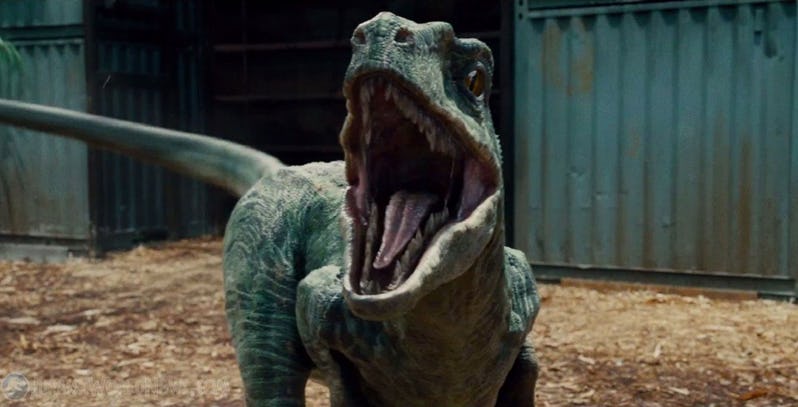
What Makes Jurassic World's Blue Different

Thursday, April 25, 2019

Blue-the-Velociraptor-in-Jurassic-World

She's become the dinosaur star of the franchise but what makes Jurassic World's Blue so unique? While 2001's Jurassic Park III was a financial success, it received underwhelming reviews from fans and critics. It was clear the franchise needed a change in direction from the basic concept of a group of characters being stranded on an island with dinosaurs, but producers struggled to think of a fresh pitch.

One famous rejected concept from screenwriter John Sayles (Alligator) involved an ex-military character being hired to train a pack of human/dinosaur hybrids to carry out rescue and assassination missions. This draft was ultimately rejected by producer Steven Spielberg (Jaws) and the sequel was trapped in limbo for over a decade. Eventually, Colin Trevorrow was hired to write and direct 2015's Jurassic World, which took place in a fully functioning dinosaur theme park. A new intelligent hybrid dinosaur breaks loose and creates havoc, forcing the survivors to hunt it down.

Jurassic World received mixed reviews but it would become a huge success, grossing over $1.6 billion worldwide. Chris Pratt (Guardians Of The Galaxy) and Bryce Dallas Howard would reunite for 2018's Jurassic World: Fallen Kingdom, which became another smash hit. Another character that returned is Blue, the intelligent female raptor from the previous adventure and the last surviving member of her pack.

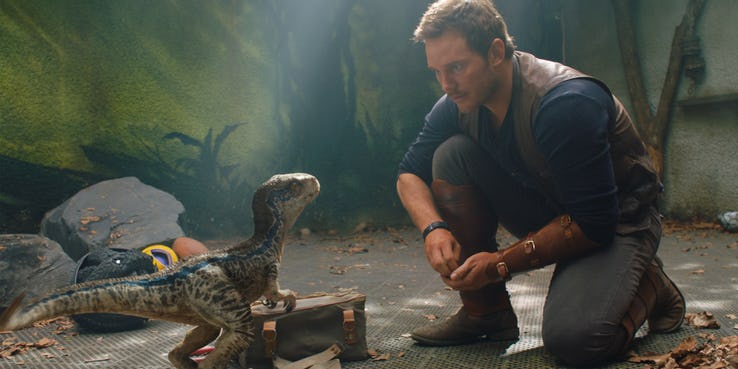
Owen-Grady-and-Blue-in-Jurassic-World-Fallen-Kingdom

Jurassic World inherited some story beats from Sayles' Jurassic Park IV draft, including the idea of a company hiring a rugged, ex-military character to train a pack of dinosaurs to carry out rescue missions. Chris Pratt's Owen Grady is the "alpha" to a pack of velociraptors that includes Blue and her sisters. Blue was the first of her kind created for the new park by InGen and earned her name for the distinctive color pattern of her scales. Even among her sisters, Blue is shown to be keenly intelligent and self-aware. Her animal instincts are intact so she will attack prey, but her relationship with Grady has shown time and again she can think for herself. Grady takes Blue and her pack out to hunt the rogue Indominus Rex, though the part-raptor hybrid is able to convince the park to turn against Owen instead. Despite this, Blue ultimately sides with her alpha again and protects him from the hybrid.

In Jurassic World: Fallen Kingdom a rescue mission is led by Claire and Owen to take dinosaurs off Isla Nublar before its destroyed by a volcanic eruption. Blue is revealed to be the last living velociraptor and despite three years having passed, she still remembers Owen. It's later revealed Dr. Wu wants to obtain Blue for her DNA, which would allow him to create a more intelligent - and controllable - Indoraptor hybrid. This doesn't work in Wu's favor, since Blue needed a blood transfusion from the T. Rex after she was shot by a mercenary, watering down her DNA.

Source: https://screenrant.com

Dinosaur Park in Romania Doubles Surface

Wednesday, April 24, 2019

Photo source: courtesy of Dino Park

Dino Parc Rasnov, the only dinosaur-themed park in Romania and the largest in Southeast Europe, doubled its surface to 3 hectares after EUR 600,000 investments, the park's representatives announced.

The park also added new dinosaurs to its collection, including a replica of one of the biggest dinosaur that ever lived on Earth – Seismosaurus, a 45-meter long giant. A new area also opened in the park, which is dedicated to dinosaurs and prehistoric mammals that lived in Romania’s Hateg region.

Dino Park Rasnov thus reached 100 exhibits, all life-size replicas of dinosaurs and prehistoric creatures. The park also opened a 360-degree cinema, a cave with dinosaur fossils, a ship with an interactive route, and a sensory room with sounds of dinosaurs and prehistoric mammals.

Dino Park is an open-air leisure area located close to the Rasnov Citadel, near Brasov.

Source: www.romania-insider.com

Who Owns The Dinosaurs? It All Depends On Where You Find Them

Wednesday, April 24, 2019

“Samson,” one of the most complete Tyrannosaurus rex skeletons ever found, was auctioned off to a private buyer who has not made the fossil available to scientists or the public.	ETHAN MILLER / GETTY IMAGES

In early April, a paleontology graduate student, Robert DePalma, published a major find in The Proceedings of the National Academy of Sciences and hyped the discovery in The New Yorker. Locked in layers of North Dakota rock, he had found an impressive collection of ancient fish, microorganisms and plants that date to the same time period as the infamous global extinction event that killed the dinosaurs. That extinction is widely believed to have been caused by an asteroid impact, and DePalma’s site seems to offer further evidence supporting that theory.

But behind the discovery lurked an uncomfortable question: Who should own a fossil? DePalma’s dig site — which he called Tanis after the real ancient Egyptian city depicted in “Indiana Jones and the Raiders of the Lost Ark” — is on privately owned ranchland. That allowed him to sidestep bureaucratic red tape and set contracts that give him perpetual control over the management of any fossils from the site — even those that end up being given or sold to museums and research institutions. Those contract clauses are an unprecedented arrangement, according to other paleontologists, and they mean that the Tanis finds bump up against some bigger debates about fossil ownership. Turns out, where you dig matters almost as much as what you find there.

The central issue is one that should be familiar to any Indiana Jones fan: Where does a specimen belong once it has been dug up? In 2009, Congress passed the Paleontological Resources Preservation Act, a law that comes down squarely on the side of “in a museum.” Under the law, most fossil digging on federal lands requires a permit, those permits can only be obtained by qualified scientists, and any specimens that are found belong to the public. Scientists at accredited museums and research centers get first dibs.

But none of that applies on private land, said Thomas Carr, senior scientific advisor at Wisconsin’s Dinosaur Discovery Museum and director of the Institute of Paleontology at Carthage College. There, both access to the land and ownership of the fossils usually go to whoever is willing to pay landowners the most, he told me. And that often means commercial fossil hunters who sell specimens to private collectors rather than museums and research institutions.

That makes a difference because, like all scientists, paleontologists are supposed to ensure that their work can be reproduced. For a fossil to be scientifically valuable, both it and its geologic context need to be carefully documented, and it has to remain accessible to future scientists who want to re-examine and reinterpret it. And that’s not always possible with fossils that come from private land.

In some cases, landowners might not have much incentive to give anyone access to fossils at all, said J.P. Cavigelli, museum collections specialist for the Tate Geological Museum at Wyoming’s Casper College. For instance, a lot of fossils in the eastern part of the United States are found in quarries. Cavigelli told me about visiting a quarry in North Carolina and seeing a beautiful exposed layer rich with fossils. But the value to the quarry owners was in the rock, not the specimens. “In the last few years, they just blew through that whole layer,” he said.

In other cases, fossil hunting on private lands means important fossils become interior decoration rather than science. Carr lamented the loss of “Samson,” one of the most complete Tyrannosaurus rex skeletons ever found. It last sold for around $5 million in 2009, to a private buyer who wanted their identity kept secret. “It’s virtually perfect, and it’s gone. The skull is in the lobby of some company somewhere,” Carr said. And while Samson has been put on public display before, Carr said that the lack of contextual information and the fact that it isn’t being kept in a museum or research facility makes it virtually useless to science. “Even if I knew where it was now, I wouldn’t make the effort to study it,” he said.

But while some scientists, like Carr, are generally opposed to doing paleontology on private land, Tanis isn’t the only professional, scientific dig happening beyond the public’s reach. Cavigelli gets most of his specimens from digs on private land, for instance. And Pat Leiggi, director of paleontology at the Museum of the Rockies in Montana, told me that about 20 percent of the digs his museum is involved in happen on privately owned land or land owned by a state, where the laws governing digs on federal lands don’t apply.

Nobody knows exactly how much paleontology is done on public lands versus private lands, partly because profiteers who dig on private land and sell what they find don’t have to tell anyone what kinds of specimens they have delivered to private collections. But Carr has done some back-of-the-envelope calculations of how paleontology on private land affects access to Tyrannosaurus rex specimens. By Carr’s estimate, there are about 34 T. rex specimens in private hands. In a recent study he did on T. rex bone growth, Carr worked with 46 specimens, ranging from a complete skeleton down to individual bones. “If all those privately owned T. rexes were available, my sample size would leap to nearly 80,” he said.

Digs on private land also raise ethical complications about whether to treat fossils as a natural resource commodity that you’d pay landowners for, or as a piece of universal scientific heritage. For example: Should scientists pay landowners? Cavigelli does — first in “trespass fees” for exploratory digging and then, if any spectacular specimens are found, he writes up a separate agreement to compensate the landowners for taking the find to a museum. In one case, a mammoth was worth a tax write-off. In another, Cavigelli paid a landowner for a T. rex find. “They would have made more from a private collector,” Cavigelli said. “But they also wanted it to stay here and be on public exhibit. There are other landowners who want too much [money], and we don’t deal with those guys.”

Leiggi, in contrast, won’t deal with anyone who wants any money. He sees that as a violation of the Society of Vertebrate Paleontology’s ethics rules, though the rules allow scientists to make payments if they bring a specimen into public trust. “I tell my staff we do not and will not ever get involved in that,” he said.

These kinds of disagreements contribute to professional skepticism of the Tanis site and the specimens found there. DePalma didn’t respond to requests for an interview, but Carr and Cavgelli both said they were troubled by the ownership stipulations in the contract described in the New Yorker article because it’s not clear how these types of ownership clauses would be used. For instance, both scientists worried about the possibility that DePalma could give or sell a fossil to a museum and, later, take it back, removing the specimen from the scientific purview. Landowners have tried to take back fossils donated to museums often enough that Cavigelli and Leiggi have to specify in writing that that isn’t possible. More broadly, the clauses add uncertainty to the already complicated world of fossil ownership. With a site that’s likely to be a big deal in science for years to come, that confusion could create a mess almost as big as an asteroid crashing to Earth.

Source: https://fivethirtyeight.com

Everything You Ever Wanted To Know About The T. Rex But Were Afraid To Ask

Tuesday, April 23, 2019

Tyrannosaurus rex feasting on Triceratops prorsus by tuomaskoivurinne

Icons come and go, especially when it comes to the star-studded pantheon of dinosaurs.

One day, the triceratops is all the rage. Those distinctive horns, that 10-ton girth and … is that a beak? But peace-loving vegetarian dinosaurs, no matter how interesting they appear, just don't have a long shelf life in the popular imagination.

Who wants to be remembered as king of the salad bar?

Then there was the upstart velociraptor! Fast. Smart. Vicious!

But much of that hype faded when paleontologists politely pointed out that velociraptors weren't quite the sprinting razor blades that terrified us in the "Jurassic Park" movies. They had feathers and probably looked more like big chickens. (Mean chickens though.)

And speaking of chicken, do you know who dined on many of these dinosaurs?

That would be the always-in-fearsome-fashion Tyrannosaurus rex.

It's been around 70 million years since the T. rex stalked the Earth, waving its twiggy arms around and treating its contemporaries like chicken.

But why is it that for humans — who only ever got to dust off their old bones — the nightmares remain so vivid?

Why doesn't the T. rex go the way of the relatively anonymous allosaurus — a creature that was, in fact, faster and meaner?

Well, maybe that's because the T. rex was so much more than the sum of its teeth. While ferociousness goes a long way towards building any animal's reputation, it doesn't make them a household name. Just ask the allosaurus.

No, the T. rex — from its parenting skills to its fascinating anatomy — has so much more to recommend itself to immortality.

But let's start with the obvious.

1. They were actually pretty ferocious.

Let's not beat around the bush here. The T. rex was one scary Cretaceous citizen. We're talking about a 40-foot long animal with 9-inch teeth — think railway spikes — that could effortlessly crunch through bone.

Its name is a mix of Latin and Greek — as if first coined by a flustered paleontologist too freaked out to get the ancient languages straight. But "Tyrant Lizard King" definitely gets the scary factor perfectly straight.

2: A T. rex could probably beat you at chess... if you were as smart as a chimp.

Well, maybe that's an exaggeration. A T. rex would be much likelier to eat the whole chess board — and you with it — than to declare "Checkmate!"

But, scientists say that brain was twice the size of most of its peers, possibly even functioning at the same level as the modern chimpanzee. That mind, as opposed to muscle, is what really gave the T. rex its evolutionary momentum. In fact, the T. rex started out as a small, though brainy, creature. Fossils found in the Uzbekistan desert indicate their early ancestors were actually pint-sized predators who relied on superior wits to chew their way up the food chain.

As apex predators, they only evolved into living tractor-trailers over the last 20 million years of the reign of dinosaurs.

"Tyrannosaurs got smart before they got big, and they got big quickly right at the end of the time of the dinosaurs," Steve Brusatte, a paleontologist at the University of Edinburgh in the U.K., told Live Science.

3. Their senses were also razor-sharp.

Those big brains had other amenities too. Like massive olfactory bulbs allowing a T. rex to catch the faintest whiff of dinner and come running. Its sense of smell was, like so many things, far superior to its contemporaries. Even worse for those lesser-endowed animals was the possibility that the T. rex enjoyed hunting them at night.

"Although the king of carnivorous dinosaurs wouldn't have passed on scavenging a free dead meal, it may have used its sense of smell to strike at night or to navigate through large territories to find its next victim," explained University of Calgary paleontologist Darla Zelenitsky in the Independent.

Oh, the good old days.

What's more, the T. rex's sense of hearing was equally sharp. Research on its inner ear, or cochlea, suggests a powerful array capable of picking up sounds from even the lowest frequencies.

And if one day you happen to visit a theme park where a T. rex that was reconstituted from ancient DNA is running amok, don't pin your survival on "Jurassic Park" tactics. A T. rex can see you see you very clearly — even if you stand stalk still. Those front-facing eyes, which probably looked like malevolent moons to quivering prey, packed pretty potent "binocular vision." Citing large regions of the brain that controlled sight, some researchers have even thrown around the term "hawk-like" vision.

4. They were more into power-walking than running.

Sprinting, on the other hand, wasn't the T. rex's strong suit. While past studies suggested this behemoth could run faster than a horse, more recent analysis indicates the animal's unique physiology actually held it back. Galloping was a major pain for a bipedal animal with a two-storey high skeleton — so much so that running might have broken its legs.

As a 2017 study notes, "True running gaits would probably lead to unacceptably high skeletal loads in T. rex."

In other words, you might have been able to run from a T. rex. But hiding? Not so much.

5. They were sensitive lovers — when they didn't eat other.

In the face of all those terrifying talents, it's easy to overlook the T. rex's surprisingly sensitive side. For example, as hard as it may be to imagine, this toothy titan was a sensuous and tender lover.

Scientists say it's all about that nose — an organ as sensitive to the touch as our own fingertips. As a result, T. rex foreplay often involved generous amounts of face-rubbing.

That conclusion came on the heels of startling T. rex discovery in 2016. The creature's nose was a rare soft point in its armored hide — perforated by nerve openings. Those nerves likely made its face exceedingly sensitive to the touch.

"In courtship, tyrannosaurids might have rubbed their sensitive faces together as a vital part of precopulatory play," researchers noted in the journal Scientific Reports.

That's a lot of face-rubbing faith to put into a mate that's also prone to eating its own kind.

The T. rex was likely a fervent cannibal.

"It's surprising how frequent it appears to have been," paleontologist Nicholas Longrich noted in 2010 press release. "We're not exactly sure what that means."

Well, for one thing it means if you're a T. rex, you really need to be sure that you've found the One.

6. Let's talk about those arms.

It's a good thing the T. rex was so "handy" with its face because those twiggy little arms don't seem like they were good for much. In fact, they may not have been long enough to even touch its face. And compared to those tree trunks it had for legs, they seem altogether inadequate.

But once again, the T. rex may surprise us. A recent study suggests a T. rex may have been able to rotate the palm of its hand inward and upward — essentially allowing its palms to face the chest. That means those arms weren't used for reaching out, but possibly hugging its prey nice and close to the chest. It's hardly conclusive, but when it comes to the T. rex, hypotheses tend to lean in the direction of how a body part helps it devour something.

7. They took their parenting responsibilities seriously — at least in the beginning.

When you're as good a lover as a T. rex, you can expect more than a few baby meat-cleaving lizard kings to start popping up around the den. And in the domestic realm, the T. rex once again showed a sensitive touch. Those keen noses sniffed out the ideal place for a nest — often in the wide open because … come on, who's going to raid a T. rex nest?

Meanwhile their super-sensitive faces ensured fragile eggs were gently moved around. Even baby dinosaur kings had to be moved around from time to time — without accidentally being popped like grapes between those tensor jaws.

In fact, as fond as tyrannosaurs were of gobbling up the eggs and freshly hatched babies of its neighbors — pity the oft-preyed upon Stegosaurus! — their own parenting habits are largely a blank.

There's a surprising dearth of T. rex juveniles in the fossil record. What happened to those babies that their parents were so careful not to break?

We know at least some of them grew up to be big and terrifying. But where did all those T. rex babies go — despite all the care their ferocious meat-eating parents may have put into hatching them?

Okay, so maybe we just answered our own question.

Source: www.mnn.com

Fossil of New Ankylosaur Discovered in Texas by Hillsboro Paleontologist

Monday, April 22, 2019

Andre Lujan loves fossils. Spend any amount of time at his museum "Texas Through Time" in Hillsboro and this paleontologist will fill your head with more dinosaur facts than you may be able to retain. And now Lujan has even more to teach museum goers as he recently uncovered the fossil of a brand new dinosaur in Texas.

“My first thought was ‘what am I going to do next?’”, said Lujan, who opened Texas through Time, nearly a year ago. “This is what I’ve always hoped and dreamed to do, and now it’s sitting in front of me on this table.”

Lujan discovered the new dinosaur on a dig in west Texas in 2017, and identified it as a type of ankylosaur.

“Its an armored dinosaur,” said Lujan. “It’s a four legged dinosaur. A tetrapod. A herbivore, so it eats plants. But imagine a cross between a horny toad, and an armadillo with a giant boney club on the end of its tail.”

It was potentially up to 18 feet long. According to Lujan, this fossil is significant, not only for it being a brand new dino, but for what paleontologists know about ankylosaur's in this region.

“Its the most complete, southernmost ankylosaur ever discovered in the United States,” said Lujan. “And also it is the most complete ankylosaur from north of the Mexican border where we discovered ours to the tip of South America.”

Now the real work begins. After having the fossil examined by Utah State Paleontologist and ankylosaur expert Dr. Jim Kirkland, who along with Lujan determined that it was different from the dinosaur they first believed it to be, Lujan will now have to go through the process of recreating a dinosaur from its remains. That process can be expensive.

“So we need funding to go out in the field to continue excavating to hopefully find more of this dinosaur,” said Lujan. “We need funding to get scientific dating of the sediment so that we can nail down the exact age of this dinosaur. And to do some quarry mapping, some 3-D imaging technology and so a professional reconstruction so we have a life size replica of what this dinosaur would look like.”

Even those processes may take a little time, Lujan is just happy to have unearthed history.

“You know discovering a new dinosaur is kind of its like (hitting) a homerun in the World Series,” said Lujan. “People always remember that.”

Source: www.kwtx.com

5 Characters We Want To See Return In Jurassic World 3 (& 5 We Don't)

Saturday, April 20, 2019

After both Jurassic World and its sequel Fallen Kingdom grossed over $1 billion at the worldwide box office, it wasn’t long before Universal was asking for a third one. Chris Pratt and Bryce Dallas Howard are set to reprise their roles, but Colin Trevorrow, the writer of all three Jurassic World movies and director of the first and third ones, has also promised that there are some characters in Fallen Kingdom who “you’ll realize are major characters” in the third movie.

But just like Jeff Goldblum returned to the role of Ian Malcolm last summer, we could also see the return of some gone-but-not-forgotten characters from the original series. So, here are 5 Characters We Want To See Return In Jurassic World 3 (And 5 We Don’t).

10 DON’T WANT TO SEE: DR. HENRY WU

BD-Wong-as-Henry-Wu-in-Jurassic-World

B.D. Wong was the only actor from the original Jurassic Park movies to appear in 2015’s Jurassic World. He was joined by Jeff Goldblum in Fallen Kingdom when he returned again. Although Dr. Wu is one of the series’ best characters, let’s face it: he’s been the villain enough times now.

There’s only so many times we can watch this scientist betray everyone. And in a world infested with dinosaurs, the plot will likely revolve around the effort to contain them, rather than make money out of them, so there won’t be room for Dr. Wu in the story anymore.

WANT TO SEE: IAN MALCOLM

Jurassic-World-2-72-Ian-Malcolm-Jeff-Goldblum

Jeff Goldblum’s Dr. Ian Malcolm made a reappearance in Fallen Kingdom that was brief, yet well-received by fans. Pretty much anything you can get Jeff Goldblum to appear in is going to get an enthusiastic response from moviegoers, because he’s staggeringly popular, especially since playing the Grandmaster to hilarious effect in Thor: Ragnarok.

If he’s back in Jurassic World 3, it would be great to see a more fleshed-out role with more memorable quips like, “When you gotta go, you gotta go.” His line, “Welcome to Jurassic World,” that closed out Fallen Kingdom was intriguing and unforgettable, particularly with Goldblum’s spot-on delivery, but we need to see Ian Malcolm being Ian Malcolm again. We need to see him face off with fellow quipper Owen Grady, too, since Chris Pratt didn’t share any scenes with Goldblum in last year’s dino sequel.

DON’T WANT TO SEE: NICK VAN OWEN

Vince-Vaughn-in-The-Lost-World-Jurassic-Park

In the years between The Lost World: Jurassic Park (the second one) and today’s Jurassic World trilogy, Vince Vaughn went from obscure dramatic actor to mega-famous comedic actor and back to obscure dramatic actor again with movies like Brawl in Cell Block 99.

However, Vaughn’s Jurassic Park character Nick Van Owen didn’t make enough of an impact in the movie in which he appeared for his return to be a monumental moment. Fans won’t gasp at the sight of him in the same way they did for Jeff Goldblum in Fallen Kingdom (well, they might, but that would be because Vince Vaughn made a surprise appearance in the movie, not because Nick Van Owen has returned to the big screen).

WANT TO SEE: ZIA RODRIGUEZ

Daniella-Pineda-in-Jurassic-World-Fallen-Kingdom

Although Fallen Kingdom was met with mixed reviews from critics (and fans weren’t too pleased either), Dr. Zia Rodriguez – played by Daniella Pineda – was an excellent addition. She was a strong and fearless former Marine who always did the right thing and got plenty of laughs along the way.

There was a scene in Fallen Kingdom that revealed Zia to be a lesbian that was cut for time. It would be interesting to explore this part of her character in the threequel instead. She showed real promise in Fallen Kingdom and has the potential to become a fan favorite with a larger role in Jurassic World 3.

DON’T WANT TO SEE: FRANKLIN WEBB

Justice-Smith-as-Franklin-Webb-in-Jurassic-World-Fallen-Kingdom

Justice Smith is a fine young actor. It looks like he’ll be the only thing grounding the new Detective Pikachu movie. But his character in Jurassic World: Fallen Kingdom was just annoying.

He was supposed to be the comic relief, but he was too whiny to be funny. Everything frightened him and he was barely competent. He didn’t like stepping out of his comfort zone and going to Isla Nublar took him out of his comfort zone. That’s about as far as this character can go with his development. He didn’t make much of a splash and if he’s not in the threequel, he won’t be missed.

WANT TO SEE: SARAH HARDING

Julianne-Moore-Sarah-Harding-The-Lost-World-Jurassic-Park

Steven Spielberg’s initial sequel to Jurassic ParkThe Lost World, was not as well-received by audiences or critics as its predecessor. Pretty much the entire original cast was replaced, the runtime dragged on a little bit, and the third act was silly.

However, the movie did have a lot of incredible action sequences, and it gave us a great new character addition: Julianne Moore’s Dr. Sarah Harding. Moore’s star has only continued to rise in the couple of decades since her Jurassic Park appearance, so if there’s any way to fit her into the new sequel, fans will be very pleased.

DON’T WANT TO SEE: MAISIE LOCKWOOD

Jurassic-World-Fallen-Kingdom-Maisie-Lockwood

The human cloning subplot in Jurassic World: Fallen Kingdom was an interesting way to expand the franchise’s fictional universe, and it explored – or rather, scratched the surface of, but still – what else could be done with the technology used to bring back the dinosaurs.

But Maisie Lockwood made a really stupid decision at the end of the movie when she pressed the big red button to unleash all the dinosaurs into the world. She felt a sort of kindred spirit with the legions of prehistoric beasties, having just found out she’s a clone and therefore feeling like they were her brethren. It was pretty lame.

WANT TO SEE: ELLIE SATTLER

Ellie-Sattler-Jurassic-Park

Laura Dern has already made an appearance in one rebooted sci-fi franchise with her role as Vice Admiral Holdo in Star Wars: The Last Jedi, but it’s high time she returned to the role of Dr. Ellie Sattler. It makes sense that she wouldn’t want to return to Isla Nublar, explaining her absence in the first Jurassic World movie and its sequel.

But now that the dinosaurs have come to mainland America, she won’t be able to avoid the action. The plot could concern every dino expert from the previous Jurassic Park movies joining together to try to contain the dinosaur invasion.

DON’T WANT TO SEE: BILLY BRENNAN

Billy-Brennan-in-Jurassic-Park-III

While no movie in the Jurassic Park franchise has been truly acclaimed by critics since the first one, it’s arguable that Jurassic Park III is the worst one of the bunch. Fans might be open to William H. Macy returning to the franchise after debuting in Jurassic Park III, since he’s a popular actor and he’s even more popular now due to his performance in Shameless, but not the Billy Brennan character.

He was the token dinosaur egg thief who supposedly redeemed himself later when he saved the missing kid’s life. He was an eager, annoying grad student and the movies are better off without him.

WANT TO SEE: ALAN GRANT

Sam-Neill-as-Alan-Grant-in-Jurassic-Park

Sam Neill is as known to a modern audience as anyone, thanks to his role in Peaky Blinders, so it’s about time we saw Dr. Alan Grant return to action in the Jurassic World trilogy. Director Colin Trevorrow hinted at the return of both Sam Neill and Laura Dern to the franchise when he was told that audiences might feel cheated if their characters didn’t show up.

He said, “I totally agree with that. I would feel robbed too, yeah.” It seems like it’s all a matter of whether or not he can work them into the story organically, but hopefully there’s room for them.

Source: https://screenrant.com

15 of the Best Dinosaur Movies for Kids

Saturday, April 20, 2019

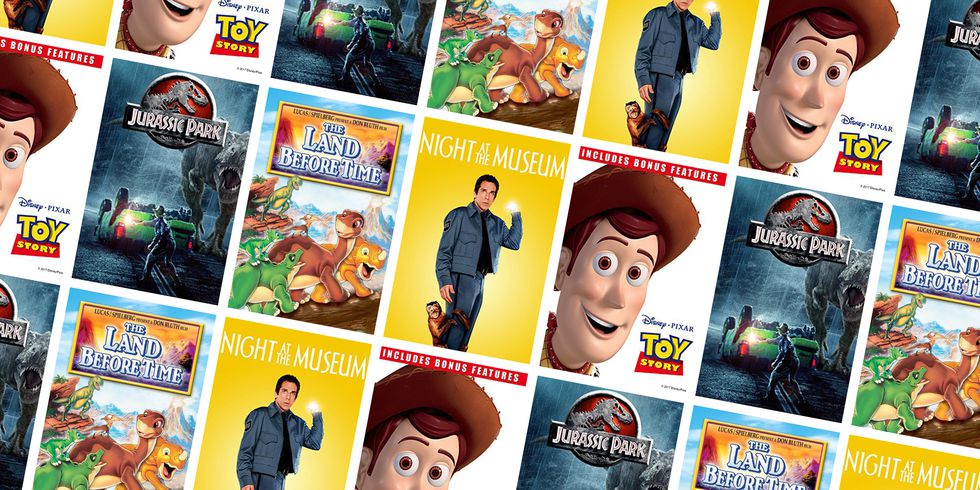
TOY STORY / NIGHT AT THE MUSEUM / LAND BEFORE TIME / JURASSIC PARK

Take a trip back in time with these fun films.

Almost all kids love dinosaurs—and for good reason. After all, these beautiful giants were in charge of our planet at one point. To help satisfy your little one's adoration of all things prehistoric and Jurassic, we've compiled a list of our favorite dinosaur movies for kids. These will entertain them for hours and hours, keep them on their toes, and have them in stitches too. They'll also help to maintain their interest in history, science, and other important subjects.

Barney's Great Adventure: The Movie

Adventure ensues when everyone’s favorite purple-and-green Tyrannosaurus rex and three of his pals find a magical egg in a barn.

Bob The Builder: Big Dino Dig Movie

Will the Can-Do Crew be able to build an entire amusement park after unearthing a bunch of prehistoric dinosaur bones? Lessons about leadership abound in this fun dinosaur movie for kids.

Dinosaur

After a meteorite shower destroys his home, an orphaned dinosaur named Aladar sets out to find a faraway, fabled land with a little help from his friends.

Fantasia

In this Mickey Mouse musical spectacular, Stravinsky sets the scene as kids learn about the Earth's formation (as well as the reign and extinction of dinosaurs).

The Flintstones

With an all-star cast—John Goodman, Rick Moranis, Elizabeth Perkins, and Rosie O'Donnell—it's no wonder the popularity of this big screen adaptation of the iconic cartoon hasn't wavered all these years.

The Good Dinosaur

In this adorable, fictional retelling of our planet's history, the asteroid that we now recognize as having made our dino friends extinct simply misses the planet. 

Ice Age: Dawn of the Dinosaurs

The third installment of the popular Ice Age franchise finds Sid the Sloth stealing eggs and causing trouble. The rest of the gang—Manny the Wooly Mammoth and Diego the Saber-Toothed Tiger included—rush to the rescue.

Journey to the Center of the Earth

A remake of the eponymous 1959 movie, this one stars Brendan Fraser and Josh Hutcherson as they try to find their brother and father, respectively, who went missing 10 years prior.

Jurassic Park

In this cult classic film, dinosaurs have been cloned from DNA found in fossils. The prehistoric action only gets better from there.

Jurassic World

A new theme park has been built on the ruins of the old Jurassic Park. Will history repeat itself? You and your kids will have to find out for yourselves.

The Land Before Time

Follow a group of young dinosaurs (Littlefoot, Cera, Ducky, Petrie, and Spike) as they try to reunite with their families. There are a total of 14 films in this unforgettable franchise, so the fun doesn't have to end when the movie does.

Land of the Lost

Loosely based on the '70s TV show of the same name, this dinosaur movie for kids follows a paleontologist lost in space and time. 

Night at the Museum

The dinosaur here might not exactly be alive—it’s a T-Rex skeleton, after all—but this is still one of our favorite dinosaur movies for kids.

Toy Story

Remember Rex, Woody's lovable (if skittish) dinosaur figurine? We think he deserves a spot on this list.

We're Back! A Dinosaur's Story

Aliens, dinosaurs, and New York City. What more could you ask for?

Source: www.countryliving.com

Pages