nandi's blog

Jurassic Park: Fallen Kingdom will have Chris Patt and team turn Saviour to Dinosaurs

Thursday, January 4, 2018

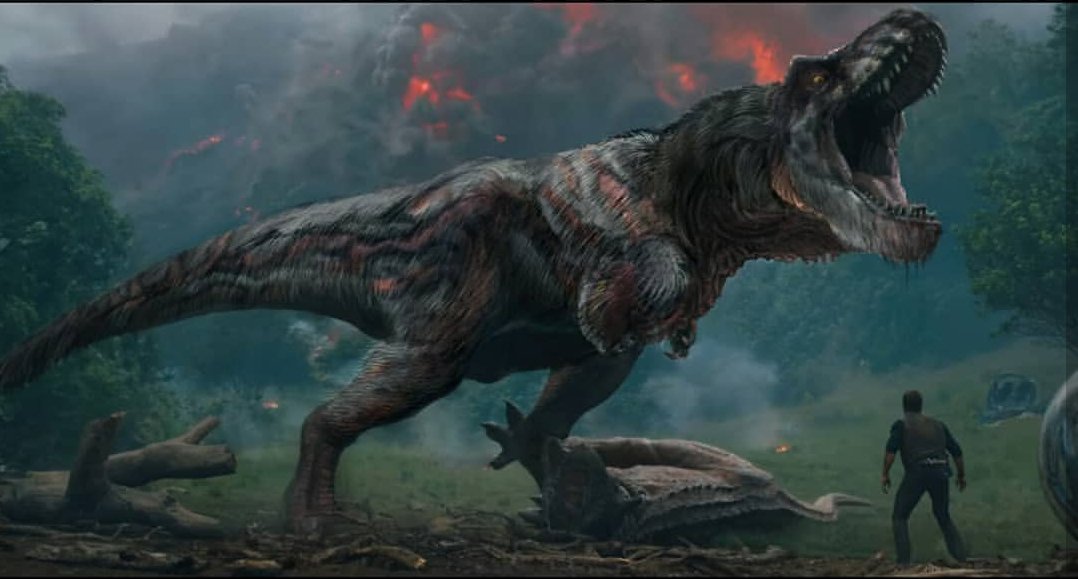
Chris Patt in a still from Jurassic Park: Fallen Kingdom.

Everybody’s favourite franchise, the Jurassic universe has upped its action game, with the director of the newest film Jurassic Park: Fallen Kingdom teasing a thrilling action sequence right in its opening.

The director of the film, JA Bayona, speaking to Empire Magazine said, “Fallen Kingdom starts with a massive action piece that feels like a James Bond prologue. And in the centre, there is the biggest set-piece ever done for a Jurassic movie."

JA Bayona, who had replaced Colin Trevorrow as director of Fallen Kingdom, is expected to give an all out, explosive action blockbuster. The teaser has already raised expectations as fans were reminded of the first Jurassic Park film, with a dinosaur stampede scene, and the characters of the film caught in a Gyrosphere while being dangerously thrown about by a ferocious dinosaur, reminiscent of the iconic jeep sequence.

The film varies in its plot too from its predecessor, as instead of being chased by killer dinosaurs, Fallen Kingdom is about saving all the dinosaurs from an erupting volcano on Isla Nublar.

Jurassic Park: Fallen Empire will see Chris Patt return to the lead role and is accompanied by franchise regular Jeff Goldblum.

The movie is slated to arrive in theaters on 22 June, 2018.

Source: firstpost.com

Is Rexy, the Original T. rex, Going to be Killed in Jurassic World 2?

Saturday, January 6, 2018

The original T. rex, aka Rexy, from Jurassic Park has been in the franchise for nearly 30 years leading many to speculate if the upcoming Jurassic World 2 will kill her off. Chris Pratt, J.A. Bayona, and Colin Trevorrow have all promised a darker movie this time around and killing off one of the franchise's most beloved characters would definitely fall into the dark category, eliciting tears from long-time fans. Jurassic World 2 hits theaters on June 22nd, 2018 and it just might see the end of the iconic Tyrannosaurus rex, leaving room for a new dinosaur to take over the reins.


According to JurassicWorld.com, Rexy was born either in late 1989 or early 1990 and she has made appearances in the original novel by Michael Crichton and was featured heavily in the first Jurassic Park movie. Rexy has also shown up in other forms of media including video games, trading cards, and clothing as well as Jurassic World and she has been confirmed to show up in Jurassic World: Fallen Kingdom, revealed in the trailer during the intense volcano explosion on Isla Nubar. It is assumed that Rexy survives the blast as she is later seen on a giant truck where Own (Chris Pratt) says, "This is gonna be awesome," and looks into Rexy's eye.

Rexy may have taken on too much damage from the volcano blast and subsequent move, but that isn't clear at this time. We do know that the trailer and TV spots for Jurassic World 2 all take place within the first 45-minutes of the movie, so it seems likely that Rexy will be in a decent portion of the movie. However, Rexy could meet her end during an intense battle with the Baryonyx, the newcomer to the big screen that has shown up in books before and other pieces of the franchise. The Baryonyx is said to have twice as many teeth as a T. rex and isn't weakened like Rexy, so this seems like the most plausible way for her to die.

Jurassic World: Fallen Kingdom is also the second installment within a trilogy, which is traditionally when darker elements come into play. Star Wars fans weren't sure if Han Solo died during the final events of The Empire Strikes Back and Rexy may see the same fate, but might not come back at all. The Dark Knight is the second in the trilogy and it's darker and grittier than its predecessor, with a few deaths. Rexy is the King (or Queen) of the Jurassic Park and it seems only fitting that the symbol of the kingdom could meet her demise in a movie called Fallen Kingdom. She will more than likely go head-to-head with the Baryonyx and die saving the humans. But remember, none of this has been confirmed in anyway and is just fan speculation at this point in time.

Though many fans don't want to see the end of Rexy, Jurassic World 2 might be the perfect place to do so. Many thought that the final scene of Jurassic World was the last time that we'd ever see her on the big screen again, but that is obviously not true. Rexy is damaged in the trailers for Jurassic World: Fallen Kingdom and it really looks like she won't make it to the final installment in the trilogy. You can check out the trailer for Jurassic World: Fallen Kingdom below, courtesy of Universal Pictures.


Source: movieweb.com

170-Million Year Old Jawbone of Dog-Sized Crocodile Found Isle of Skye

Saturday, January 6, 2018

170-million year old jawbone of dog-sized crocodile found Isle of Skye

A new discovery of fossil has been added to the paleontologists’ knowledge graph by a team from the University of Edinburgh that found a rare 170 million-year-old jawbone.

Interestingly, the tiny bone is from 30-year old dog-sized crocodile-like creature spotted at Isle of Skye, Scotland. Scientists have made some X-ray scans to examine the previously found fossil. While measuring the bone of 3.5cm length found at Duntulm Castle in the north of the island, they have solved several mysteries.

Resulting in the observations, researchers noted that the jawbone is from a crocodile relative. They also believe that neosuchians named creatures were being diverse at the time on shores.

Dialy Mail reported that Dr. Steve Brusatte from the School of GeoSciences of the University has told the website that they have earlier discovered the pieces of the crocodile on Skye, but the recent one is nicer. It is a nearly complete jawbone.

Paleontologists are assuming that this small dog-sized creature was of the time of dinosaurs living in the lagoons of ancient Skye.

Dr. Brusatte further added: “These were very ancient, very primitive relatives of today’s crocodiles. They would have looked more like scaly dogs than big scary alligators. One reason why the new fossil is so important is because it is one of the few crocodile fossils from the middle part of the Jurassic Period from anywhere in the world.”

“Skye is a unique window into the Middle Jurassic, as it is one of the few places globally that preserves fossils from this time.”

He explained: “There are some relatives in North America, Asia, and other parts of Europe, but from later in time.”

“If we had better fossils of Middle Jurassic from other parts of the world, we would probably find more of these small crocs. But Skye is one of the only games in town for Middle Jurassic fossils,” he added.

The Isle of Skye is one of the few places in the world where fossils from the Middle Jurassic Period can be found. In 2008, scientists revealed that the earliest turtles that were known to live in water had been discovered on the same island.

Fossils of the 164 million-year-old reptiles were found on a beach on the Strathaird peninsula in the south of the island. The discovery formed a missing link between ancient terrestrial turtles and their modern, aquatic descendants.

Experts say that Skye was covered in lagoons and filled with turtles, crocodiles, pterosaurs and dinosaurs during the Middle Jurassic period.

Recently, geologists got hold of an ‘alien’ mineral while exploring the volcanic rocks of the Skye. They believe that meteorite might have hit our Earth almost 60 million years ago. At first, the researchers thought that the rocks are nothing but volcanic flow deposits called ignimbrite. But when they examined the rock deeply, they found out that rare meteoritic minerals were present beneath a 60million year lava flow that had originated from an ancient volcanic eruption.

Source: www.tecake.in

Universal Celebrates Jurassic Park's 25th Anniversary with Fan Contest

Thursday, January 18, 2018

The movie-inspired, UGC contest will encourage fans to relive their favorite scenes from the classic film.

GLOBAL–Universal Brand Development and creative network Tongal have come together to launch a user-generated content contest that celebrates the 25th anniversary of Jurassic Park’s theatrical release as well as the upcoming release of Jurassic World: Fallen Kingdom.

The contest invites fans from across the globe to submit videos where they either "relive" or "recreate" their favorite moments from the Jurassic Park film. To promote the contest, a video was released that uses fan-generated content with special guests Chris Pratt and Bryce Dallas Howard.

Fans who choose to relive their favorite moments from Jurassic Park are asked to submit a video about their favorite scene from the film and the impact it had on them. Alternatively, fans who want to recreate their most memorable moments are encouraged to use their imaginations to create scenes using animation, illustration, toys, family members, costumes, pets, special effects and more.

Up to 48 winners will be awarded $250 each as well as Jurassic Park merch. In addition, their videos will be shared with fans across Jurassic World social channels. Two grand-prize winners will be selected (one for each project) to receive $1,000, plus Jurassic Park products and DVD set.

You can submit your video from today until January 22, 2018, on JurassicWorld.com/JP25.

Five Things You Didn’t Know about “Dinosaur Train”

Sunday, January 7, 2018

Dinosaur Train

Dinosaur Train is a cartoon that’s listed as American, Canadian, and Singaporean in nature and is just what it sounds like. The train passes through several different time periods as the passengers and main characters, namely Buddy the T-Rex and his adopted Pteranodon family, experience everything from meeting other dinosaurs to watching exploding volcanoes. The show is designed to be educational and engaging, and it does raise certain questions about species and heritage as well since Buddy is obviously a different kind of animal than his adopted family. This kind of theme was added no doubt to help children that come from mixed families understand a little better that the family that wants you and cares for you might not be the same as you, but that doesn’t mean they care any less.

The show takes on the current and modern issues of the era and does its best to be entertaining at the same time.

5. Buddy is technically the only main character that is really a dinosaur.

This might be debated among a lot of people since pteranodons are often lumped into the dinosaur category along with everything else. But the truth is that pteranodons are giant, prehistoric birds which makes them quite different from the other species that lived during the same time. True dinosaurs are considered to be large reptiles, which kind of rules pteranodons out.

4. The fourth season used a lower grade of CGI.

The higher the cost of the production the harder it is to keep it going for a prolonged period of time. The more high quality the CGI is the more expensive it gets since the man hours and effort put into creating a seamless show can be quite high.  The lower grade CGI helped the company to save money and was even more successful when it was used.

3. The show was developed by the Jim Henson Company.

Usually when you think about the Jim Henson Company you might think Muppets. The company has managed to expand however and branch out a little more in an effort to keep things alive and dynamic. It’s not hard to believe that the company would stick with kids’ shows since this is what helped to make them so well-known from the beginning.

2. The toys are all interactive.

The toys can actually ‘speak’ and ‘sing’ with each other using infrared sensors that allow them to detect each other. That seems like it might make a pretty cool and well-used gift for any kid since toys that can move and interact on their own or with others is something that can help a kid learn and have fun with it at the same time.

1. The sixth season has been hard for some people to find. 

A lot of people seem to be kicking themselves for missing this season but the explanation for this is just a little odd. Apparently the sixth season was placed into a bunch of standalone DVD stories that are all interactive and feature a bunch of fun games.

It looks like a well-rounded show.

Source: tvovermind.com

Serikornis Sungei Fossil Gives a Glimpse Into the Evolution of Feathers

Friday, January 5, 2018

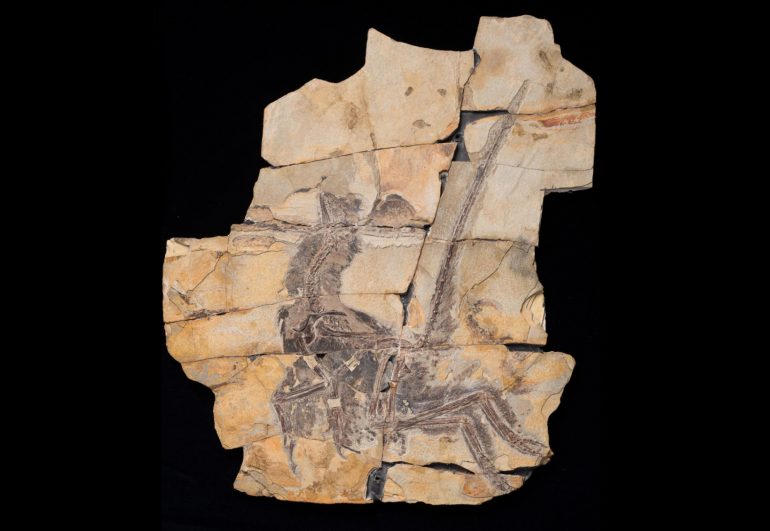
Silky Serikornis sungei (Credit: naturalsciences.be)

Exquisitely well-preserved feathered dinosaurs from the Late Jurassic and Early Cretaceous of north-eastern China have considerably helped paleontologists to better understand how birds evolved from dinosaurs. It has been previously postulated that the emergence of feathers was driven by their aerodynamic properties but a new species, named Serikornis sungei “the silk bird”, provides new clues about how dinosaurs feathers evolved.

The little pheasant-sized dinosaur, which bears four wings (that is, two forewings and two hindwings) is mainly covered with simple feathers similar to the wispy bundles found in other dinosaurs like Sinornithosaurus. The first four-winged dinosaur, as known as Microraptor, was reported from the Tiaojishan Formation in Liaoning Province in 2000.

This Middle-Late Jurassic Formation has already provided other four-winged species such as Aurornis and Anchiornis, another basal dinosaur close to the transition between dinosaurs and birds. The plumage of Serikornis is well-preserved and the limbs bear short, slender, symmetrical, and poorly differentiated feathers similar to those of Anchiornis. In other words, the limb feathers attached to the arms and the legs of Serikornis are totally different from the flight feathers of modern birds.

Details on the two major plumage traits of Serikornis attesting that it was a ground-dwelling dinosaur: (i) the plumage of the forewing is primitive and not composed of long pennaceous flight feathers covered by short coverts. (ii) Saw under electronic microscope, the macrostructure of its feathers are devoid of barbules, a trait to allow the feather to resist air pressure during the wing beat.

Serikornis wasn’t a flier and its anatomy coupled to the macrostructure of the feathers indicate a terrestrial mode of life. Although the hindlimbs bear feathers, a feature often associated with the evolution of flight, they are not suited to sustain a flight. So the presence of leg feathers on a more archaic and grounded dinosaur imply that long leg feathers evolved in a terrestrial context. The structure of the pennaceous feathers also goes in that direction because of barbules, a structure that hook barbs together and which is essential to resist air pressure during the wing beat, are absent in Serikornis. This absence is corroborated by optical and electronic microscopy.

What does the plumage of Serikornis serve? It is postulated that the feathering of this little dinosaur may have primitively been used as a thermoregulatory system or as a social display even if it could not be ruled out that Serikornis was able to scramble up tree trunks with its sharp and recurved claws and parachute to the ground, using its plumage to slow down its descent.

The next step of the research will bring new information about how the terrestrial context has driven the emergence of flight among basalmost Jurassic paravians and how this emergence has played a major role on the diversification of ecological niches necessary to develop a modern-like type of flight.

These findings are described in the article entitled A new Jurassic theropod from China documents a transitional step in the macrostructure of feathers, published in the journal The Science of Nature. This work was led by Ulysse Lefèvre at the Royal Belgian Institute of Natural Sciences.

Source: www.sciencetrends.com

Jurassic World: Fallen Kingdom Feathered T. rex!

Thursday, January 18, 2018

Dubbed Jurassic World: Feathered Kingdom this fan artwork by Michael Eppinette takes the final money shot from the Jurassic World 2 trailer, where the Tyrannosaurus rex kills the Carnotaurus and re-imagines the Tyrant Queen as a feathered Dinosaur! Check it out:

Jurassic World: Fallen Kingdom Feathered T. rex!

Back when the Jurassic World sequel was entering production there was much talk of whether or not the dinosaurs in the film would be realized with feathers. However, to keep with the Jurassic Park aesthetic, feathers were not added to any of the Dinosaur designs regardless of scientific accuracy. Although I was never personally a fan of feathered Dinosaurs in a Jurassic Park movie I must say this feathered Rex doesn't look bad at all!

Would you be okay with feathered Dinosaurs in a Jurassic World movie?

Young Dinosaur Fan Sways Utah Senator to Change State Fossil

Tuesday, December 26, 2017

Young dinosaur fan sways Utah senator to change state fossil

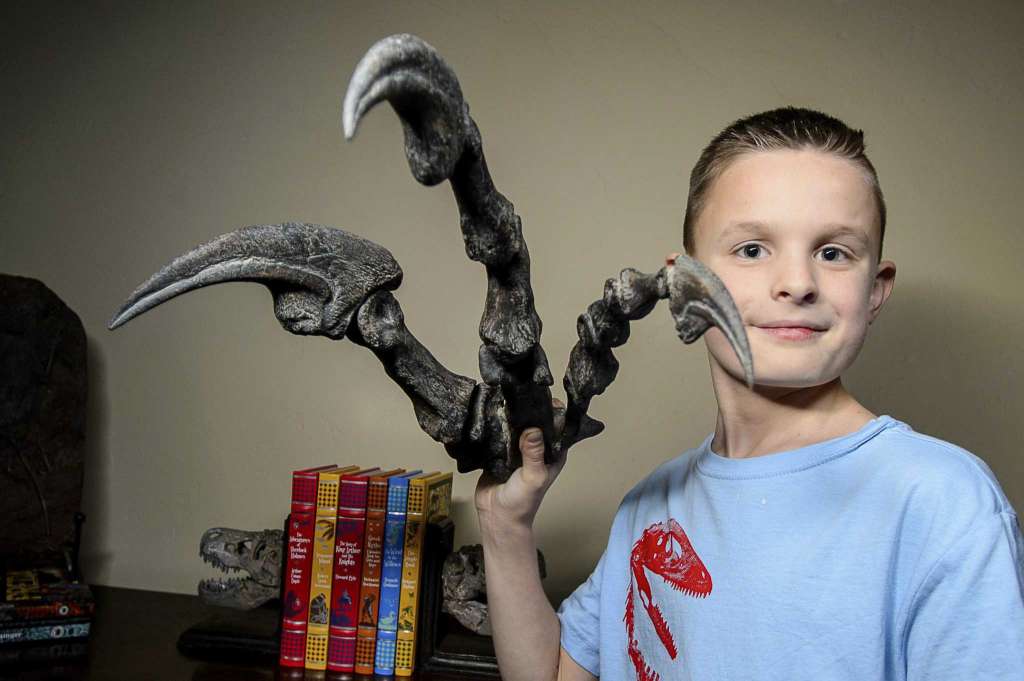
A 10-year-old dinosaur fan persuaded a Utah senator to start a legislative battle to change the state fossil to the Utahraptor instead of the Allosaurus to honor a dinosaur only found in Utah and featured in some of the "Jurassic Park" movies.

Kenyon Roberts asked a recent dinner guest, state Sen. Curt Bramble, why Utah had made the Allosaurus its official state fossil. Kenyon argued the Utahraptor should have that designation instead, The Salt Lake Tribune reported .

"I didn't know we had a state fossil," Bramble said.

"Its name has 'Utah' in it, and it's only found in Utah. The Allosaurus has been found in Europe, Africa and other states. The first Allosaurus skull was found in Colorado," said Kenyon, the son of Republican activist Jeremy Roberts.

A newly convinced Bramble is drafting legislation to make the change official.

Bramble and state drafting attorneys asked Kenyon to review an early draft of the bill to honor Utahraptor. His father notes that he told drafting attorneys, "The bill's fine, but Utahraptor needs to be one word, not two."

Bramble said he doesn't like the debates that often occur to create new state symbols, but noted Utah already has a state fossil. "And if we're going to have a state fossil, then it ought to be something unique to the state."

When asked who would win a real fight between the two dinosaurs, Kenyon said without hesitation, "Utahraptor. It might be slightly smaller than the Allosaurus, but smarter." He adds that scientists believe Utahraptors hunted in packs, so Allosaurus may have been outnumbered in any confrontation.

While 43 states have a state dinosaur or fossil, Utah is the only one to honor Allosaurus and none has selected Utahraptor.

Utah has 27 official state symbols.

___

Information from: The Salt Lake Tribune, www.sltrib.com

Colin Trevorrow Says Jurassic World: Fallen Kingdom Is Part of a Trilogy

Saturday, December 30, 2017

Colin Trevorrow Says Jurassic World: Fallen Kingdom Is Part of a Trilogy

How will Jurassic World: Fallen Kingdom set the stage for a unified, Jurassic Park trilogy?
 

In a recent Youtube interview with Sebas Tabany, Colin Trevorrow revealed the new Jurassic Park doesn’t end on a “cliffhanger,” per se, but is “designed for people to want to know what’s going to happen next.”

At the end of this movie, it’s not a cliffhanger, but it’s designed for people to want to know what’s going to happen next, whereas the earlier Jurassic Park movies had pretty clear definitive endings. They were much more episodic. In working with Derek Connolly, my co-writer, we were also thinking about where it was gonna go in the future.

Trevorrow also states the entire Jurassic World enterprise was conceived as a trilogy.

I remember telling Steven [Spielberg] even while we were making the first movie. ‘This is the beginning. Here is the middle. And here’s the end of the end.’ This is where we want to go. I feel like that kind of design is crucial to a franchise like this if you really want to bring people along with you and make sure they stay interested. It needs to be thought through on that level. It can’t be arbitrary, especially if we want to turn this into a character-based franchise with people who you lean in to follow what they’re going to do.

Via io9.gizmodo.com

Top Fossil Discoveries of 2017

Sunday, January 14, 2018

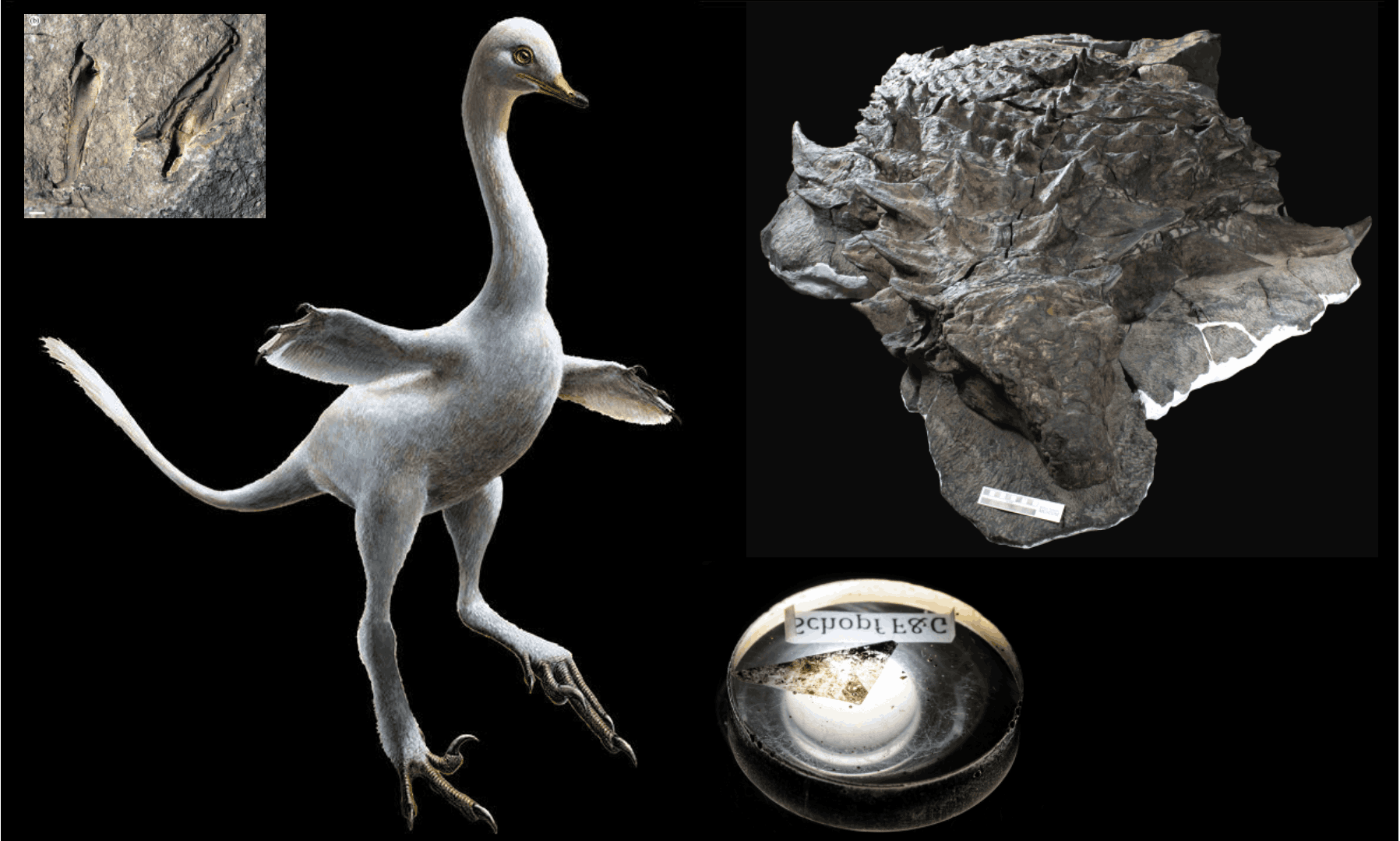
 Some of the best fossils of 2017. Composite: WILLIAM GRAF, University of Wisconsin – Madison/Erikkson et al 2017/Lukas Panzarin/Andrea Cau/Royal Tyrrell Museum of Palaeontology

The Lost Worlds Revisited team has been reflecting on a bumper twelve months of palaeontological discoveries. Overwhelmed with choice, we also asked on Twitter for other people’s favourite fossil finds of 2017. So here is a combination of those fossiliferous suggestions, alongside some of our personal favourites. Enjoy!

First life on earth

Some of the smallest fossil finds of 2017 were among the most controversial. In March, Matthew Dodd and colleagues described tiny tubes and filamentscomposed of iron oxide in rocks from Quebec, Canada dated between 3.77bn and 4.28bn years old. They interpreted them as the remains of bacteria living around hydrothermal vents, pushing the earliest evidence of biological activity to more than 3.77bn years ago, and conceivably even a staggering 500m years earlier. In September, Takayuki Tashiro and colleagues analysed graphite particles from rocks 3.95bn years old from northern Labrador, Canada. They concluded from isotope ratios that the carbon was biologically produced, although this interpretation was not shared by all researchers.

Finally, in research published mid-December, Bill Schopf and colleagues used the carbon isotope composition of microfossils in the 3.46bn year old Apex Chert, from Western Australia, to confirm their previously-disputed biological origins and even work out which groups of microbes were represented. Two species were primitive bacterial photosynthesizers, one was a methane-producing Archaean microbe, and two others were bacterial methane consumers. This impressive study shows that methane-cycling microbial communities were already established by 3.5bn years ago.

Halszkaraptorthe bird-like bombshell

2017 was a great year for paleontologists, and it was hard to keep up with all the fossil splendor coming at me from various angles. However, one that stood out is the recently described fossil of a theropod dinosaur - studied non-invasively with high-tech 3D scanning - that shows amazing bird-like features. 

The theory that birds descended from dinosaurs is now commonly accepted amongst vertebrate palaeontologist. The discovery of exquisitely well preserved fossils, such as those from Liaoning province in China, has shown us that many features we once reserved for birds, were actually widespread amongst theropod dinosaurs (the group of dinosaurs that ultimately gave rise to birds), including those that were not on the lineage towards birds.

But no one could have predicted Halszkaraptor escuillieia new species of non-avian theropod dinosaur from Mongolia (Cau et al., 2017). Its long neck, constituting 50% of the total snout-to-tail length and the longest for any Mesozoic theropod dinosaur, is reminiscent of that seen in some birds, particularly swans. Halszkaraptor forms a new group of dromaeosaurids, the Halszkaraptorinae, and its unusual morphology suggests a semi-aquatic lifestyle. Its flattened wing bones are also seen in penguins and other aquatic birds, and the large number of teeth indicate that it was a predator. Moreover, Halszkaraptor appears to be the first non-avian dinosaur who was able to move both on land and in the water. As the authors of the research state in their last paragraph, the peculiar looks of Halszkaraptor shows us how much of the diversity of dinosaurs remains to be undiscovered.

Borealopelta markmitchelli

This is a new armoured dinosaur (a relative of the famous ankylosaurus) whose discovery was first reported in these pages back in 2013 because of the exceptional circumstances around its discovery in northern Alberta. Spotted by an excavator crew as a dot on a hillside, this remarkable creature is a real rarity, a land living animal that had floated many miles out to sea before it sank, intact, was buried, and eventually recovery millions of years later. The rock in which it was entombed was exceptionally tough and the bones fragile, so it took museum preparator Mark Mitchell years to prepare. He was rewarded when the animal was finally named as a new species.

However, the fossil itself turned out to be more remarkable still than the circumstances around its death and fossilisation. Borealopelta is one of the best preserved dinosaurs ever discovered: not only is the main skeleton very nearly complete, but the huge number of bony spikes and plates that make up its armour are also preserved. Better yet, they retain their original positions, so it is possible to see how they line up and change along the body. Even better still, much of the armour retains the horny sheathes that covered it. The skin of the animal is brilliantly preserved and in such fidelity that work has already been published on the colours and patterns of Borealopelta, and the likely use of its huge shoulder spines in displays.

Shringasaurus, the ‘horned lizard of India’

Following the biggest mass extinction in Earth’s geological history, at the end of the Permian, evolution in the Triassic period was like a teenager who has just left home for the first time. Finding itself in a new world free of constraints, it became wildly experimental. Many of these wacky, chimeric combinations have never been repeated (similar to most people’s experience of the 1980s). Evolution likes to try everything at least once. 

In 2017, Shringasaurus indicus (‘horned lizard of India’) evidenced the singular nature of these Triassic lifeforms. This newly-found archosauromorph waddled on four sprawled legs across what is now India, around 240m years ago. It had two forward pointing horns on its head, at the end of a long neck and body. With a humped, powerful shoulder at the front and sinuous back-end with long tail, it was like the love-child of a rhino and a komodo dragon. At around three-and-a-half metres long, this chunky, odd-ball herbivore would have been analogous to the large bovid species of the modern world (cows). It has been suggested that the horns of Shringasaurus were used for sexual selection, as in cattle. Having found the partial remains of several Shringasaurus individuals of different ages and genders, researchers were able to say a lot about how this animal grew, and that the horns were sexually dimorphic – meaning that only male animals possessed them.

Triassic animals like Shringasaurus are vital to helping us understand the bigger evolutionary picture. They were part of the first ecosystems established after the end-Permian mass-extinction, giving us information about how life on earth recovers from disaster. They were also the predecessors of the major radiations of crocodiles, turtles, dinosaurs, and multiple now-extinct reptilian lineages that would succeed them. They were also fantastically weird; which is why at least one of them deserves to be in the top fossil discoveries of the year.

The giant fossil Bobbit worm

If you have read Frank Herbert’s science-fiction novel Dune, you are aware of sandworms: the colossal worm-like creatures that inhabit the desert planet Arrakis. Thankfully, us earthlings do not have to worry about being swallowed by giant worms, but jaw fossils found in the Devonian of Ontaria, Canada, show that giant worms did once exist on earth.

Websteroprion armstrongi (partially named after death metal bass player Alex Webster) is a new species of giant bristle worm (polychaete) described based on these partial jaw fossils. Despite being long and squishy, bristle worms have a decent fossil record. They have been present since the Paleozoic (541-251 million years ago) and extinct forms show a diversity of body plans. The specimens were collected back in 1994, by Derek K Armstrong of the Ontario Geological Survey at a remote location in Ontario, and had been stored at the Royal Ontario Museum. 

Of this new fossil bristle worm, only the jaws (the only hard part in these animals) are preserved. The fossil jaws may have measured over 1 cm in length. Granted, this does not sound particularly awe-inspiring, but in the world of worms, Websteroprion’s jaws are truly colossal, as fossil polychaete jaws generally measure 0.1-2mm. By extrapolating from the size of the jaw fossils, the authors of the study estimate that Websteroprion armstrongi could have been 1-2 meters in length, comparable to living ‘giant eunicid’ species, colloquially referred to as ‘Bobbit worms’. The jaw fragments indicate that the animal was adult, and as some polychaetes continue to grow as adults, W. armstrongi could have attained larger lengths. W. armstrongi has the largest known jaws from the worm fossil record, and demonstrates that gigantism, an ecologically important trait, was already present in worms by 400 million years ago. Furthermore, they show the importance of existing museum collections, as they may contain overlooked gems.

Antarcticeras nordenskjoeldi

2017 was a bumper year for palaeontological discoveries and I don’t think a week went by when the Lost Worlds Revisited team didn’t have plenty of options to write about. However, in addition to the glitzy and glamorous headline-making discoveries, 2017 was also a good year for the more humble additions to species lists, taxonomic clean-ups and the palaeontological quiet work that happens away from the exceptionally preserved fossils and dino discoveries. This time of year I love looking through Wikipedia’s summaries of the year in palaeontology for the discoveries big and small and I must confess that my top fossil this year one I didn’t hear about when it was published back in March this year.

My pick for this year is a new species of Eocene cephalopod (the group containing octopuses, cuttlefish, nautiloids and ammonoids) from Antarctica, Antarcticeras nordenskjoeldi. The fossils themselves aren’t especially eye-catching and there isn’t a beautiful artistic reconstruction of the species accompanying the paper, however, it’s the interpretation of the fossils by colleagues in Sweden and Argentina that is noteworthy (Doguzhaeva et al. 2017). From details of the shell structure and position of the siphuncle (the tube that exchanges gases and fluids through shell chambers), A.nordenskjoeldi has been interpreted as a new species, in a new family, in a new order and amazingly the sole known member in a new cephalopod subclass, the Paracoleoidea.

This is a potentially huge new finding, adding a major new group of cephalopods alongside the four major and stable divisions, and the authors suggest that fossils of A.nordenskjoeldi represent a third way that soft bodied cephalopods evolved an internal shell in parallel with cuttlefish and ram’s horn squid. Fortunately, the paper itself is open access so you can take a look yourself, but the implication here, to borrow Internet parlance, is HUGE if true. It’s a bold interpretation, which is sometimes needed in science and time will tell if the Paracoleoidea will be accepted or rejected. So far the findings don’t seem to have created that many ripples in cephalopod palaeontology. Were this an equivalent suggestion in mammals or dinosaurs the paper would have garnered a huge amount of attention (as we saw with the ‘lower level’ saurischian/ornithischian research this year) but as it’s a relatively obscure group in the humble cephalopods this research risks fading into obscurity rather than cause a re-evaluation of cephalopod evolution.

Advertisement


References

Brown CM, Henderson DM, Vinther J, Fletcher I, Sistiaga A, Herrera J, Summons R. 2017. An exceptionally preserved three-dimensional, armored dinosaur reveals insights into coloration and Cretaceous predator-prey dynamics. Current Biology 27(16):2514-2521.

Cau A, Beyrand V, Voeten DFAE, Fernandez V, Tafforeau P, Stein K, Barsbold R, Tsogtbaatar K, Currie PJ, Godefroit P. 2017. Synchrotron scanning reveals amphibious ecomorphology in a new clade of bird-like dinosaur. Nature 552: 395–399.

Doguzhaeva LA, Bengtson S, Reguero MA, Mörs T (2017) An Eocene orthocone from Antarctica shows convergent evolution of internally shelled cephalopods.PLoS ONE 12(3).

Eriksson, M., et al., 2017. Earth’s oldest ‘Bobbit worm’ – gigantism in a Devonian eunicidan polychaete. Scientific Reports 7:43061.

Sengupta S, Ezcurra MD, Bandyopadhyay S. 2017. A new horned and long-necked herbivorous stem-archosaur from the Middle Triassic of India. Scientific Reports. 7: 8366

Source: www.theguardian.com

Pages