nandi's blog

Dinosaurs Come to Life in France's "Jurassic World" Exhibit

Friday, April 20, 2018

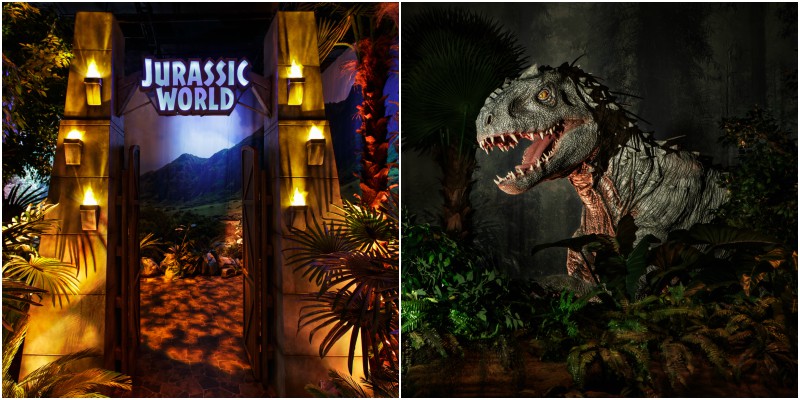
An animatronic Indominous in Jurassic World: The Exhibition.

Enthusiasts of the age of reptiles marveled on Tuesday at dinosaur displays of real-life sizes at a Paris exhibition of the blockbuster hit "Jurassic World."

Opened to the public on Saturday, the exhibition featured moving giant replicas of dinosaurs, including stegosaurus, triceratops and the ferocious T. rex.

Attendees walked around a space transformed into a dimly lit jungle as monstrous roars echoed all around. They also experienced a fake laboratory where mock baby dinosaurs dozed in incubators.

Most spectators, of all ages, were amazed by the displays, saying they look realistic and are reminiscent of the dinosaur era.

Held at the La Cite du Cinema hall near Paris, the exhibition will last until September 2nd.

Source: www.wtvy.com

Meet Maryland’s Dinosaurs

Friday, April 20, 2018

Dinosaurs near Washington, D.C. (long-necked Astrodon johnstoni) left behind a trove of fossils overseen by Matthew Carrano. (Patrick O’Brien)

Go to just about any dinosaur exhibit and you are sure to see the fossilized remains of the fierce Tyrannosaurus rex. But what if you are more interested in the lesser-known Deinonychus, Tenontosaurus or Astrodon johnstoni, the official Maryland state dinosaur? Then, you will want to visit Calvert Marine Museum in Solomons.

From now until December 31, Calvert Marine Museum invites you to imagine modern-day Maryland as a tropical swampland inhabited by prehistoric giants engaged in an epic struggle for survival. Creating the illusion are more than 150 fossilized dinosaur bones plus informative text panels and colorful murals. The fossils come courtesy of the Smithsonian Institution, Maryland-National Capital Park and Planning Commission and private collectors.

“We put this exhibit together because not too many people realize we live in an area with significant dinosaur remains,” said museum paleontologist Donald J. Morgan III. “The dinosaur deposits found in Maryland are an important scientific discovery.”

What you won’t find here are large, life-like models.

“I was kind of disappointed they didn’t have big replicas of dinosaurs,” said eight-year-old dino-enthusiast Thomas Nolan.

Too bad, but too big. Maryland’s 20-ton state dinosaur — named ­johnstoni for dentist Christopher ­Johnston, who studied its teeth and coined the term Astrodon — would have collapsed the museum’s mezzanine. These “star-toothed” plant-eaters of the Early Cretaceous Period were more than 50 feet long and 30 feet tall. Their remains have been found in Prince George’s and Baltimore counties.

“It was still interesting,” the young critic allowed.

“My favorite thing is the skull,” Nolan said, referencing the sculpted replica of an adult Giraffatitan, a close relative of the Astrodon johnstoni. Both dinosaurs were sauropods, a class of large, four-legged plant-eaters with long necks and tails.

“Some of the fossils are over 60 million years old,” he added. “That’s kind of cool when you think about it.”

Even without a giant plastic statue towering over them, visitors can get some idea as to how large these prehistoric creatures were. A touchable replica of a fossilized footprint encourages you to compare your own hands to the foot of a Nodosaurus. The footprint of that armored plant-eater from the Late Cretaceous Period was found at Goddard NASA in Greenbelt. A carpet marked with the gait of the two-legged, meat-eating Allosaurus challenges you to use a simple math equation to determine the height of the animal.

Programming and interactive features of the exhibit are a work in progress, Morgan said. He plans to add a scavenger hunt and a make-a-dinosaur activity aimed at elementary and middle school students, and a more complicated dinosaur-measuring activity for high school students and adults.

Calvert Marine Museum is a good fit for such an exhibit.

“We are known for our collection of fossils from Miocene deposits,” Morgan said. The museum’s spacious Paleontology Gallery houses its permanent collection, including a life-size replica of a ferocious-looking Megalodon, a prehistoric shark whose teeth are often found at nearby Calvert Cliffs.

In the small lab accessible from the Paleontology Gallery, knowledgeable staff and volunteers chat about dinosaurs with visitors and help them make connections between the ancient reptiles and animals living today.

Nolan, his sister Elizabeth and other young visitors were excited to hold Megalodon teeth as intern Sean Conner asked, “What’s your favorite dinosaur?”

Everyone has a different answer.

Source: www.bayweekly.com

5 Obvious Lessons Jurassic World: Fallen Kingdom Characters Still Haven't Learned

Saturday, April 21, 2018

A reaction to the sequel's final trailer.

The final trailer for Jurassic World: Fallen Kingdom is here. And the more I watch it, the more I was distracted by one simple fact: these characters are incapable of learning from the past.

They have 25 years of calamity to guide them, and yet, they keep on making the same exact mistakes. If the titular “Fallen Kingdom” is humanity itself, and THESE are our brightest minds, then let that kingdom burn, baby. We had our time. (All snarkiness aside, we are still looking forward to seeing this movie.)

Here are 5 lessons that these dumb-dumbs haven’t learned after 25 years of dino-mayhem.

Stop Going Back to the Islands

Let’s start with an easy one. Count how many times, in this franchise alone, going to a dinosaur-infested island has worked out well in the end.. Every Jurassic Park movie after the original has had us slapping our forehead saying “why would you go back there!?” Yes, Jurassic World operated for years without incident, but the second that Indominus Rex broke out of its enclosure in the previous film, that should’ve been it, right? And yet here we are again - Claire and Owen go back to save some dinosaurs. How do we think THIS return trip is gonna go?

Small Cages and Big Dinosaurs

Characters in this franchise do not respect boundaries, whether they’re moral or painted on the ground. Remember the first scene of Jurassic Park, when that guy gets obliterated because he’s too close to the cage? Well, Claire and Owen sure don’t. The trailer opens with them tip-toeing around a tranquilized dinosaur, presumably to help it. But what exactly are Owen and Claire thinking here? They have like, four feet between them and a hurricane of teeth and prehistoric rage and they think leaving the door CRACKED OPEN is good enough? Why not just open it all the way? And wait a minute, why does Claire even need to be in here in the first place? Is it to hand whatever’s on her belt to Owen? If that’s the case, guess what Claire, THERE ARE WINDOWS ON THAT CAGE BIG ENOUGH TO PASS THAT THROUGH.

Make These Girls Less Clever

We know that the plot of Jurassic World: Fallen Kingdom revolves around weaponizing dinosaurs to sell to the highest bidder. They’re being bred to maximize their destructive power... but come on, do they really need to be able to open doors? We’re at the point where we can create hybrids of dinosaurs. We’re probably like two movies away from giving them telekinesis, but we can’t breed out the door-opening skill?

Stop Trusting Rich People

There’s a constant in the Jurassic Park series: rich people can’t be trusted. We’ve seen it time and again. And again.

But no one’s told Claire that. For some reason, she trusts Mills here enough to recruit Owen for the dino-rescue operation. Now, do we think his intentions are pure… or will he sell the heck out of every one of those monsters Claire and Owen bring back? Here’s a good rule of thumb, Jurassic Park characters: if someone’s wardrobe looks like it cost more than $100, whatever they’re asking you to do is not going to go well.

LIFE FINDS A WAY!

It all boils down to this: "Life finds a way." It’s the most quotable line from Jurassic Park for a reason. It’s a concise mission statement for the entire franchise - we just cannot control nature. Ian Malcolm even does us the service of repeating it for us in the last trailer in case we forgot somehow. Life finds a way to wake up from tranquilizers at inopportune times. Life finds a way to break out of small cages. Life finds a way to open a window. Or a door.

Maybe life will find a way to let us ignore all the lessons the characters in Jurassic World: Fallen Kingdom should’ve learned by now… but I doubt it.

Source: http://in.ign.com

Colin Trevorrow Says Jurassic World: Fallen Kingdom Will be Similar to Original Movie

Friday, April 20, 2018

Director Colin Trevorrow

Colin Trevorrow says 'Jurassic World: Fallen Kingdom' will share similarities with Steven Spielberg's 1993 original.

The 41-year-old director has helped to write the latest installment in the money-spinning franchise, and he's given fans an insight into what they can expect from the upcoming movie.

He shared: "If I could contextualize each film, I would say 'Jurassic World' was an action adventure, 'Fallen Kingdom' is kind of a horror suspense film, and 'Jurassic World 3' will be a science thriller in the same way that 'Jurassic Park' was."

'Jurassic World: Fallen Kingdom' will still feature the likes of Chris Pratt and Bryce Dallas Howard.

But Colin revealed that some new, important characters are set to be introduced in the upcoming movie.

He told EW: "There's other characters who we'll meet in 'Fallen Kingdom' you'll realise are major characters."

Colin is set to helm the final installment in the trilogy, which is due out in 2021.

And he's admitted to feeling privileged at having been given the opportunity to shape the franchise.

He said: "Steven Spielberg asked me [to direct], and when he asks you, what can I tell you, man?

"In all honesty, over my past few years, I've grown to love and cherish the value of the gift that I've been given with this franchise."

Meanwhile, Colin previously hailed the decision to appoint J. A. Bayona as the director of 'Jurassic World: Fallen Kingdom', saying it's important to add fresh ideas to the films.

He said: "It's important to this franchise that we welcome new creative voices to keep our storytelling fresh and alive."

This article originally ran on www.celebretainment.com

Paleontologists Discovered Oldest Turtle Predecessor Species Dating From Cretaceous Era

Saturday, April 21, 2018

The enormous freshwater turtle, that existed around 60 million years ago, is depicted here having just snapped up a crocodylomorph from a patiently awaited lakeside ambush. The adult turtle would have been about the same size as a Smart car, and the shell could have been inverted and used as a kiddie pool. Fossil evidence suggest that the jaws were very powerful and most likely would have crushed mollusks and crocodiles with a single snap. Its large size would have made it virtually impervious to attack from the larger crocodillian species of the era. The turtle evolved in a period after the dinosaurs. This is only an artistic depiction since there is not much fossil remains at this time.

Paleontologists discovered oldest turtle predecessor species that belong to the time of Cretaceous period. Now it can be said that the today’ modern turtles are also having their ancestors from the period of dinosaurs epoch during Mesozoic times, like many reptiles as well as crocodiles.

The Peritresius ornatus was also such kind of the ancestors that had survived in North America, nearly 100 to 66 millions of years back to the date. According to the researchers, Peritresius ornatus was the exclusive species of its king, of which the sister species has been found during a thorough research published in the PLOS ONE, a scientific journal.

“This discovery not only answers several important questions about the distribution and diversity of sea turtles during this period but also provides further evidence that Alabama is one of the best places in the world to study some of the earliest ancestors of modern sea turtles, said Drew Gentry, the leading author of the study.”

New discovery is revealed by George Martin, who is now known as Peritresius martini after identifying the species by fossils obtained from marine sediments in Alabama. Peritresius ornatus has been described in the published study by Andrew Gentry from University of Alabama in Birmingham, Alabama, USA, along with the research team.

Study authors explain that, “The heavily vascularized and sculptured dermal elements characteristic of P. ornatus are interpreted here as potentially indicative of a thermoregulatory capability and may have been one of the key factors contributing to the survival of Peritresius into the Maastrichtian, a period of cooling when other lineages of Campanian marine turtles went extinct.”

Source: http://ebuzzcommunity.com

Mammoth Remains Found in Northern Wyoming

Friday, April 20, 2018

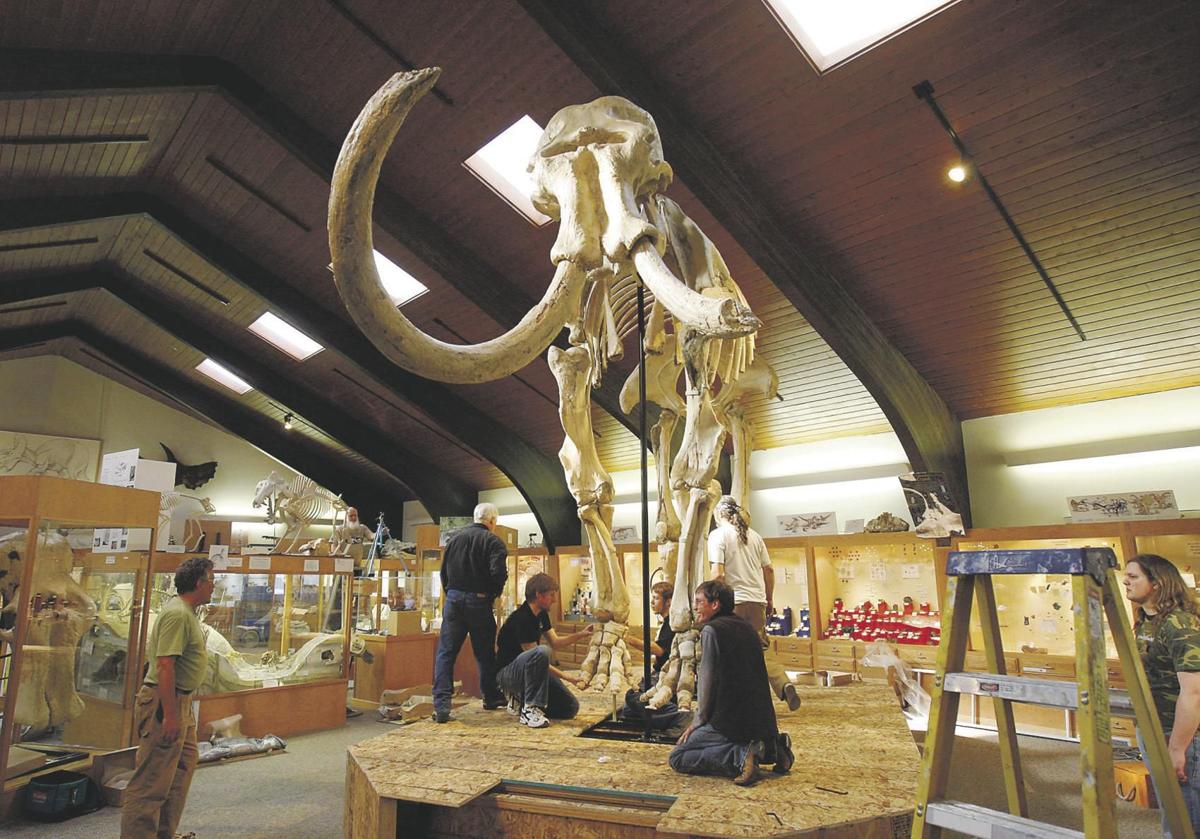
Dee the Mammoth, who was discovered near Glenrock, Wyoming, is displayed at the Tate Geological Museum at Casper College.

Skeletal remains found at the Buffalo Bill Reservoir this week appear to belong to an ancient mammoth.

Federal law enforcement agents and officials rushed to secure the site west of Cody on Tuesday afternoon as word spread quickly about the discovery. The spot is located on Bureau of Reclamation land and the Bureau of Land Management is assisting with security.

"We don't have a huge amount of mammoth finds in Wyoming; it's a very important discovery," said University of Wyoming paleobiology professor Mark Clementz, in the department of geology and geophysics.

A Cody area resident found the mammoth remains while hiking in the area, the Powell Tribune reported .

UW archaeology and anthropology professor Marcel Kornfeld said university scientists are in talks with the Bureau of Reclamation on how to save the exposed portion of the fossil.

"There is no doubt in my mind that it's a mammoth," Kornfeld said Wednesday. "It will be important to determine what is there and what is below the surface as soon as possible."

Kornfeld said photos of the discovery show the visible fossil to be in poor condition, eroding away after being exposed to the elements. Officials are attempting to figure out logistics quickly because the area will soon be submerged with snow melt.

Clementz said there are ways to speed up the process of excavating the mammoth, but it's up to the Bureau of Reclamation as to how they can proceed. Wyoming state archaeologist Greg Pierce has already been contacted by the bureau.

"It's eroding away pretty fast. A large number of volunteers and manpower could do it faster," Clementz said.

While genetic testing has yet to be performed, the exposed partially articulated vertebral column and dorsal spines as well as at least one tooth, are believed to be from a Columbian mammoth. But officials on the scene have not ruled out the possibility of more than one mammoth's remains being present at the site. The species went extinct at the end of the ice age.

Several loose fossils and shards cover a distance of at least 30 yards, but it's too early in the discovery to know the extent of the movement of the fossils or if more mammoth remains exist in the area.

The exposed portion of the vertebral column — possibly a section close to the prehistoric mammal's neck, according to Kornfeld — is only a few feet long. Detached fossils and fragments are spread across the immediate area, moved by water after being unearthed.

Law enforcement is investigating whether any remains have been taken from the site, said Mahonri Williams of the Bureau of Reclamation's Wyoming area office. Officials have been careful to control any foot traffic until all available evidence is collected or documented before the site is submerged.

Fearing the site may be disturbed by sightseers or souvenir collectors, officials asked the exact location not be disclosed.

If no tools or evidence of ancient human interaction with the mammoth are found, the remains would most likely be turned over to paleontologists for further study. If there is evidence that the mammoth was killed and butchered by humans, the importance of the find will grow: Only 15 to 16 mammoth kill sites exist in North America. But considering the location, making that determination could be difficult.

"You could dig for years before finding artifacts like stone tools," Kornfeld said.

The fossils on the surface will need to be salvaged prior to the water rising, said Todd Surovell, professor and department head of archaeology at UW. Surovell is currently excavating the La Prele mammoth site, near Douglas. Radio-carbon dating will be used to determine if the mammoth died within the timeline of early humans in North America.

"If it's older than 14,000 years, it's unlikely humans were involved in its death," Surovell said. Mammoths have been known to exist in North America for more than 1.8 million years, he said.

If there isn't a connection to human involvement, the specimen will be turned over to paleontologists. Each find is important, Surovell said. Paleontological finds give clues to diet, migration and other important info about the extinct species.

There are 10 mammoth discovery sites in Wyoming, Surovell said. While there are hundreds of mammoth discoveries in North America, only a handful of sites on the continent have been confirmed to be specimen harvested by humans.

"We have to treat it carefully," he said. "It's a rare resource."

Source: www.theeagle.com

US Airman Sacked For Taking Oath With a Dinosaur Puppet

Friday, April 20, 2018

US airman sacked for taking oath with a dinosaur puppet

Robin Brown filmed the "appalling" and "embarrassing" ceremony as a joke to show her children before the clip went viral.

A non-commissioned officer with the US National Guard has been removed from her post after reciting her enlistment oath with a dinosaur puppet. 

Master Sergeant Robin Brown, a senior NCO with the Air National Guard, is facing other action after a video of the joke surfaced online.

The unconventional ceremony was filmed for Ms Brown's children to watch later, the AirForceTimes reports.

Footage shows Ms Brown facing a colonel in front of a United States flag, with a tyrannosaurus puppet head on her raised right hand.

Her superior then reads lines from the oath for her to repeat, including: "I will obey the orders of the President of the United States and the Governor of Tennessee."

As she reads out the verses, she moves the mouth of the puppet in time with what she's saying.

The colonel, who has not been named, manages to keep a straight face throughout the ceremony, which was later accused of being disrespectful online.

He has since been forced to retire, US military newspaper Stars and Stripes reports.

Army Major General Terry Haston, the adjutant general for the Tennessee National Guard, announced on Facebook on Wednesday that a unit sergeant has also been removed from his role for filming the ceremony.

Mr Haston wrote in his Facebook post: "I am absolutely embarrassed that a senior officer and a senior NCO took such liberties with a time-honoured military tradition.

"The Tennessee National Guard holds the Oath of Enlistment in the highest esteem because that oath signifies every service member's commitment to defend our state, nation and the freedoms we all enjoy.

"Not taking this oath solemnly and with the utmost respect is firmly against the traditions and sanctity of our military family and will not be tolerated.

"The Tennessee National Guard leadership as a whole is appalled by the actions of these individuals, which do not represent our nation's service members nor the airmen and soldiers of Tennessee."

The video went viral on Saturday after it was filmed by an unnamed unit sergeant

Ms Brown, who worked in the Tennessee Joint Public Affairs Office, was identifiable because she says her name as part of the oath.

Randy Harris, the director of joint public affairs for the Tennessee Military Department, would not identify the other two airmen.

William Jones, a spokesman for the joint public affairs office, confirmed that the enlistment ceremony was official after reports suggested it might have been staged.

Ms Brown's enlistment ceremony took place on Friday, with the video going viral by Saturday.

Social media users are reported to have attacked Ms Brown for being disrespectful in the footage.

The colonel was also criticised for allowing the joke to take place, for not raising his right hand, and for not having memorised the oath.

Lieutenant General Scott Rice, director of the Air National Guard, posted a statement on Facebook blasting the video.

He wrote: "I'm equally shocked and dismayed by this event that mocks such a cherished and honorable occasion.

Source: https://news.sky.com


New Species of Ancient Whale Identified and Named by Otago Paleontologists

Thursday, April 19, 2018

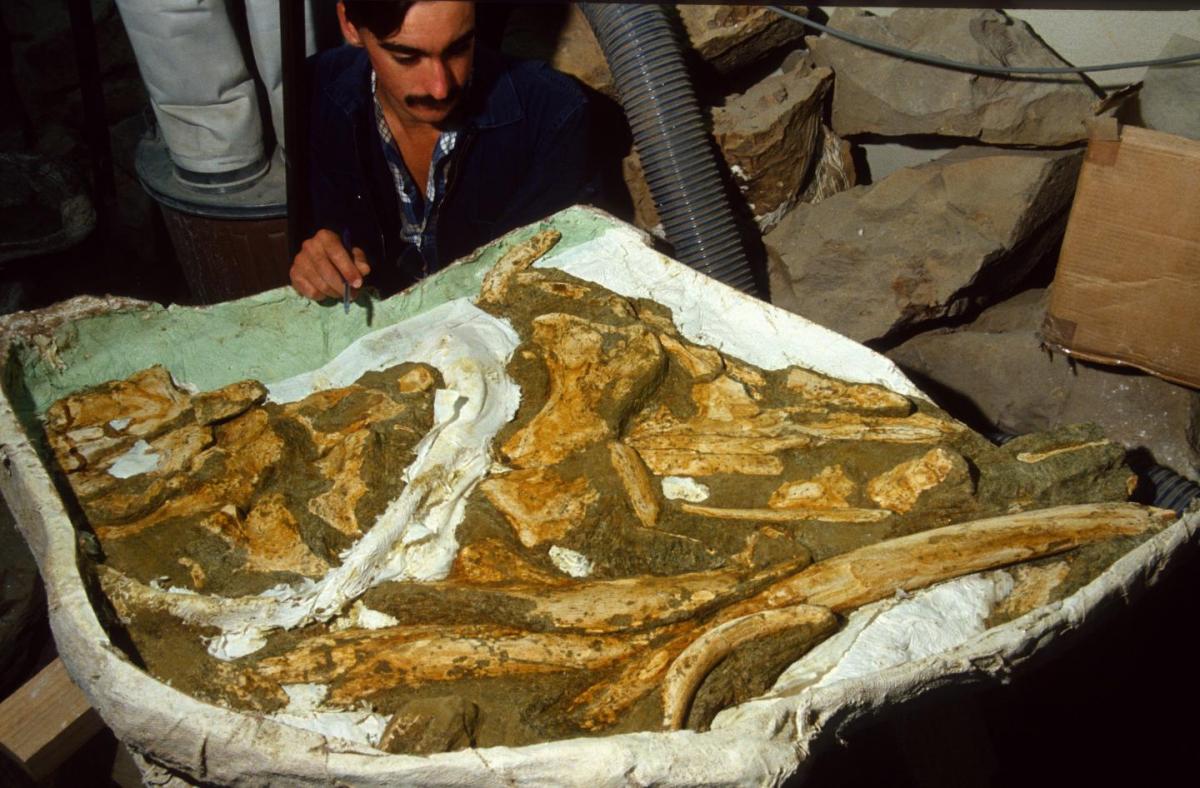
Fossil preparator Andrew Grebneff preparing the bones of the new fossil whale Toipahautea and removing them from a protective plaster jacket. Credit: R. Ewan Fordyce, University of Otago

University of Otago palaeontologists are rewriting the history of New Zealand's ancient whales by describing a previously unknown genus of baleen whale, alive more than 27.5 million years ago and found in the Hakataramea Valley.

The new genus and species of extinct baleen whale is based on a skull and associated bones unearthed from the Kokoamu Greensand, a noted fossil-bearing rock unit in the South Canterbury and Waitaki district from the Oligocene Epoch, which extends from about 33.9 million to 23 million years ago. At this time, New Zealand was an archipelago surrounded by shallow, richly productive seas.

Former PhD student in the University of Otago's Department of Geology, Cheng-Hsiu Tsai and his supervisor, Professor Ewan Fordyce, have named the new genus Toipahautea waitaki, which translates in Māori as a baleen-origin whale from the Waitaki region.

Professor Fordyce says the discovery is significant in New Zealand's fossil history.

"This is a pretty old whale that goes almost half-way back to the age of the dinosaurs. We are tracking whale history back through time," Professor Fordyce explains.

"This newly-named whale lived about 27.5 million years ago. It's about as old a common ancestor as we have for the living baleen whales like the minke whales and the right whales."

Baleen whales are a group of Mysticeti, large whales usually from colder waters that lack teeth but have baleen plates in the upper jaw which are used to filter food such as krill out of large quantities of seawater.

The fossil was actually recovered from the Hakataramea Valley in South Canterbury 30 years ago in January 1988. However, it was only worked up in recent years with Dr Tsai - who is now currently working at the National Taiwan University - beginning his thesis only a few years ago. The thesis provided the analytical framework to identify and name the new whale.

The research paper announcing the new archaic baleen whale was published today in the scientific journal, Royal Society Open Science.

While the skeleton of the whale was disarticulated when it was excavated, the bones were closely associated, which gave the palaeontologists plenty of material to work with. In particular, the highly diagnostic earbones were preserved, helping with identification.

The skull was about 1 metre long and the body about 5 metres, which means it was a reasonably small species, Professor Fordyce says. "That's about half the size of an adult minke whale."

It was previously known that the baleen whales can take on board thousands of litres of water in the lower jaws which they scoop open to get great mouthfuls of water and food. Toipahautea waitaki's jaws were toothless, long and narrow, Professor Fordyce says, suggesting that it fed in a similar way to the modern-day minke whales.

The researchers were not able to determine how this whale died. Professor Fordyce says it could have been attacked by a shark, stranded on a beach or died of disease. When it died, it sank to the bottom of the sea floor with its skeleton falling apart and becoming a hub for coral and other organisms to grow on.

Professor Fordyce expects the ancient whales' history books may keep being rewritten in years to come.

"We are pretty sure there are some species [of baleen whale] that will be older than these. But right now it anchors the modern baleen whale lineage to at least 27.5 million years."

The Toipahautea waitaki fossil was collected during fieldwork funded by a grant from the National Geographic Society with further lab work also funded by the Society.

Source: www.rdmag.com

10 Places in China Where You Can See a Dinosaur Fossil Up Close

Thursday, April 19, 2018

A Tyrannosaurus Rex head on display in Beijing. The country’s fossil boom has resulted in a bevy of options for tourists seeking pterosaurs, feathered dinosaurs and early bird specimens. (Gabbro / Alamy)

The country’s dino explosion has created a mecca for tourists intent on catching a glimpse of feathered dinos and other prehistoric wonders.

Despite a trade plagued by forgeries and amateur digs that destroy excavation sites, paleontology in China is thriving—and so are its dinosaur museums. The fossil boom began in the 1990s. Since then, countless prehistoric species have been discovered, among them groundbreaking feathered dinosaurs which continue to give new clues into the evolution of birds. At the same time, dozens of fossil museums have sprung up across the country, with more opening every year. So tourists, take heart: In China, you don’t have to be a paleontologist to get up and close to some of these fossil beauties.

1. Shandong Tianyu Nature Museum (Shandong Province, eastern China)

The Guinness Book of World Records ranked this museum as the largest dinosaur museum on the planet. Its dinosaur fossils, petrified remains, and early bird specimens number in the thousands. Its hundreds of Jurassic feathered dinosaurs collected here are the most impressive of any Chinese museum, says Zhou Zhonghe, director of the Institute of Vertebrate Paleontology and Paleoanthropology (IVPP) in Beijing. “I wonder how many stories will be disclosed out of this collection in the future,” he says.

2. Liaoning Paleontology Museum (Shenyang, Liaoning Province)

Since opening its doors in 2011, this museum has come to boast a collection of over 10,000 paleontological fossils and remains in a whopping 50,000 square feet of space. Its exhibit highlighting the “Top Ten Paleontological Biotas” of Liaoning, spans more than three billion years. The “Liaoning Giant Dinosaur Hall” features eight giant ’saurs excavated in the province, including the 50-foot long Liaoningotitan, shown here to the public for the first time. Even the architecture of the buildings is meant to evoke a prehistoric reptile, curving like a dinosaur’s spine and ribs juxtaposed against an ancient bedrock.

3. Beijing Museum of Natural History (Beijing)

The Jehol Biota—plant and animal life from roughly 130 million years ago in the early Cretaceous period—provides a crucial window into the evolution of birds. And this museum has one of the best collections of Jehol Biota fossils accessible to visitors, according to paleontologist Luis Chiappe, director of the Dinosaur Institute at the Natural History Museum of Los Angeles County. In the Liaoning Province, no fewer than 53 species of birds from this era have been discovered so far.

Chiappe admires the Beijing Museum’s potential to engage visitors with that history. “Looking at the stunningly well-preserved fossils from the Jehol Biota you get transported back in deep time to the utterly different world of the dinosaurs,” he says. Highlights include the Lufengosaurus huenei, the first dinosaur found in China, the 85-foot-long Mamenchisaurus jingyanensispterosaurs, and ichthyosaurs—aquatic reptiles that dominated the oceans.

4. Dalian Natural History Museum (Dalian, Liaoning Province)

This museum, located in the southernmost tip of Liaoning Province, boasts the first five dinosaur eggs ever discovered in China. It also holds a find many thought was lost to the ages: the specimens Endotherium niinomii and Teilhardosaurus carbonarius, preserved together on a slab of coal from a mine in Fuxin, Liaoning. The slab was initially unearthed by the Japanese during World War II. In the decades that followed, some believed it to be lost until it turned up in the collection room of the Dalian Natural History Museum. Resident paleontologist Shen Caizhi believes the most important specimen in this museum is the Psittacosaurus assemblage: 30 juvenile specimens and one larger skull preserved together. Some paleontologists believe it is the first direct evidence of parental care behavior in dinosaurs, while others contend it represents a nesting structure and post-hatching cooperation.

5. Paleozoological Museum of China (Beijing)

A particularly exciting specimen here is the holotype (the specimen used to describe a species for the first time) of Mei longMei is a small theropod dinosaur from Liaoning Province, found in a sleeping or resting posture. “It is the most completely three-dimensional preserved troodontid dinosaur specimen that I have ever seen,” says Chinese paleontologist Shen Caizhi. Other treasures at the museum include Mamenchisaurus, the world’s longest-necked and Asia’s largest dinosaur, Confuciousornis, the world’s earliest beaked bird, and the best-preserved skeleton of Stegodon.

6. Beipiao Pterosaur Museum (Beipiao, Liaoning Province)

The world’s only pterosaur museum opened in 2016 in Beipiao, a city in the fossil rich Liaoning Province. These flying reptiles—neither dinosaurs or birds—lived from about 225 to 65 million years ago and are notable for their ability for powered flight, not just leaping or gliding. Some were as large as an F-16 fighter jet, and others as small as a paper airplane, according to the American Museum of Natural History. Only about 100 species of pterosaurs have been found so far, and more than 50 of those were found in China.

7. Zigong Dinosaur Museum (Zigong, Sichuan Province)

“It’s an incredible museum—like a dinosaur national monument but more impressive,” says Jingmai O’Connor, an American paleontologist with the Institute of Vertebrate Paleontology and Paleoanthropology in Beijing. Constructed over a massive exposed site covered in dinosaur fossils, the museum has an abundance of species including fish, amphibians, reptiles and mammals. The first discovery of dinosaurs in Zigong was in 1915. In 1977, the first organized dig was conducted at the Dashanpu Dinosaur Fossil Site, but it wasn’t until a subsequent dig in 1979 that the enormity of the fossils embedded there was revealed. Since 1989, Zigong has taken its exhibits around the world, travelling to more than 23 cities across five continents.

8. Sino-German Paleontology Museum (Jinzhou City, Liaoning Province)

A farmer’s accidental discovery of a dinosaur near Jinzhou, Liaoning Province, led to the creation of this museum, which opened in 2008. A sprawling complex, it covers 10 acres and includes a fossil museum, a petrified wood forest, an underwater artificial lake, Mongolian yurts and a park. According to the museum’s website, visitors can “experience the unique charm of fossils … and feel the mysterious geological processes of the geological layers.”

9. The Geological Museum of China (Beijing)

When the world’s first feathered dinosaur, Sinosauropteryx, was discovered by a Liaoning farmer in the mid-1990s, half of the specimen found its home here. (The Sinosauropteryx was preserved within two slabs and each was sold separately.) One of the oldest natural history museums in China since its opening in 1916, the museum hosts over 200,000 geological specimens, including the Shantungosaurus giganteus, a species of giant dinosaurs measuring 48 feet long. In addition to public displays, the museum houses a research organization.

10. Henan Geological Museum (Zhengzhou, Henan Province)

Dedicated to integrating scientific research and popular science, the museum’s highlights include the world’s largest nest of dinosaur egg fossils, the world earliest ginkgo fossils, dozens of feathered dinosaurs, and the Ruyangosaurus—Asia’s largest sauropod dinosaur and one of the biggest sauropods in the world. Interactive experiences include multimedia exhibits “The World of Dinosaurs,” “Running with Dinosaurs,” “Weight-to-Dinosaurs,” and “Dinosaur Puzzle.” The collections comprise more than 50,000 geological, mineral, and paleontological specimens from inside and outside the Henan Province.

Source: www.smithsonianmag.com

23 Exceptional Prehistoric Creatures

Saturday, April 21, 2018

Jaekelopterus jay-kel-OP-ter-us (Otto Jaekel's wing) Sea scorpions and normal scorpions are two different types of animal.

Fearsome animals existed at the time of the dinosaurs that you, hardly, know about. Fortunately, they have gone extinct millions of years ago!

Below is a list of the 23 most deadliest prehistoric animals.


Dunkleosteus

Restoration of D. terreli

Dunkleosteus is a genus of arthrodire placoderm fish that existed during the Late Devonian period, about 358–382 million years ago. The name Dunkleosteus combines the Greek osteus (οστεος), meaning "bone", and Dunkle, in honor of David Dunkle of the Cleveland Museum of Natural History. It consists of ten species: D. terrelliD. belgicusD. denisoniD. marsaisiD. magnificusD. missouriensisD. newberryiD. amblyodoratus, and D. raveri; some of which are among the largest placoderms to have ever lived. The largest species, D. terrelli, grew up to 6 m (19.7 ft) long and 1 t (1.1 short tons) in weight. Few other placoderms rivaled Dunkleosteusin size. Dunkleosteus could quickly open and close its jaw, like modern day suction feeders, and had a bite force of 6,000 to 7,400 N (1,350 to 1,660 lbf).


Archaeopteryx

Artist’s restoration illustrating one interpretation of Carney’s study by Nobu Tamura

Archaeopteryx meaning "old wing", is a genus of bird-like dinosaurs that is transitional between non-avian feathered dinosaurs and modern birds. The name derives from the ancient Greek ἀρχαῖος (archaīos) meaning "ancient", and πτέρυξ (ptéryx), meaning "feather" or "wing". Between the late nineteenth century and the early twenty-first century, Archaeopteryx had been generally accepted by palaeontologists and popular reference books as the oldest known bird (member of the group Avialae). Older potential avialans have since been identified, including AnchiornisXiaotingia, and Aurornis.


Elasmosaurus

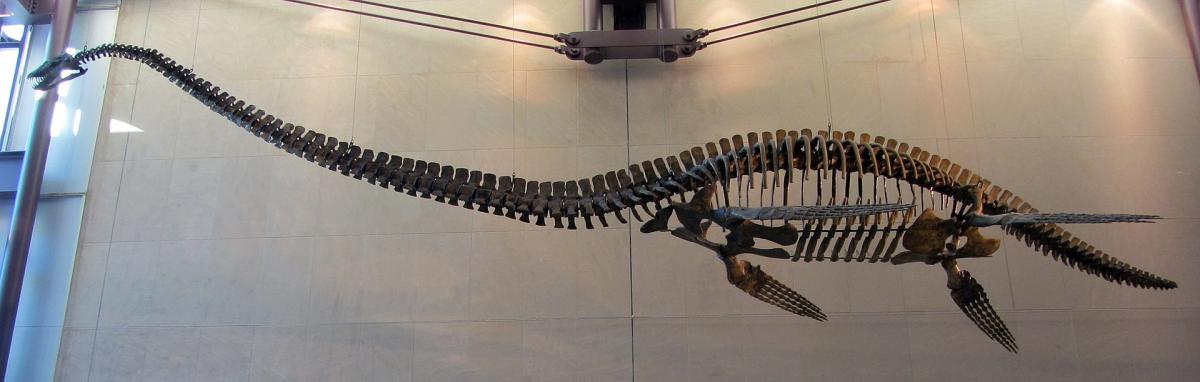
Reconstructed skeleton in side view, Milwaukee Public Museum

Elasmosaurus  is a genus of plesiosaur that lived in North America during the Campanian stage of the Late Cretaceous period, about 80.5 million years ago. The first specimen was discovered in 1867 near Fort Wallace, Kansas, and was sent to the American paleontologist Edward Drinker Cope, who named it E. platyurus in 1868. The generic name means "thin-plate reptile", and the specific name means "flat-tailed". Cope originally reconstructed the skeleton of Elasmosaurus with the skull at the end of the tail, an error which was made light of by the paleontologist Othniel Charles Marsh, and became part of their "Bone Wars" rivalry. Only one incomplete Elasmosaurus skeleton is definitely known, consisting of a fragmentary skull, the spine, and the pectoral and pelvic girdles, and a single species is recognized today; other species are now considered invalid or have been moved to other genera.


Deinotherium

Restoration of Deinotherium bozasi

Deinotherium ("terrible beast") was a large prehistoric relative of modern-day elephants that appeared in the Middle Miocene and survived until the Early Pleistocene. During that time it changed very little. In life, it probably resembled modern elephants, except it had downward curving tusks attached to the lower jaw.


Opabinia

Restoration of Opabinia regalis

Opabinia regalis is a stem group arthropod found in the Middle Cambrian Burgess Shale Lagerstätte of British Columbia, Canada. Fewer than twenty good specimens have been described; 3 specimens of Opabinia are known from the Greater Phyllopod bed, where they constitute less than 0.1% of the community. Opabinia was a soft-bodied animal, averaging about 5.7 cm in length (excluding proboscis), and its segmented body had lobes along the sides and a fan-shaped tail. The head shows unusual features: five eyes, a mouth under the head and facing backwards, and a proboscis that probably passed food to the mouth. Opabinia probably lived on the seafloor, using the proboscis to seek out small, soft food.


Helicoprion
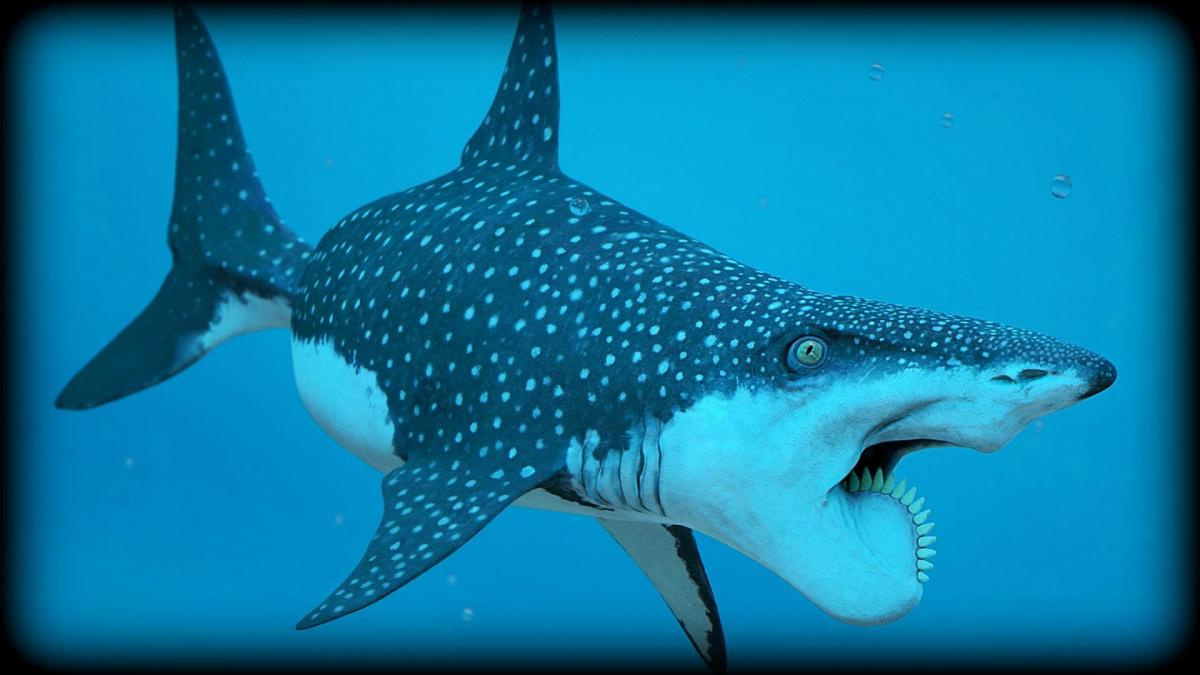
Helicoprion

Helicoprion is a long-lived genus of shark-like eugeneodontid holocephalid fish. Almost all fossil specimens are of spirally arranged clusters of the individuals' teeth, called "tooth whorls"— the cartilaginous skull, spine, and other structural elements have not been preserved in the fossil record, leaving scientists to make educated guesses as to its anatomy and behavior. Helicoprion lived in the oceans of the early Permian 290 million years ago, with species known from North AmericaEastern EuropeAsia, and Australia. The closest living relatives of Helicoprion (and other eugeneodontids) are the chimaeras.


Quetzalcoatlus
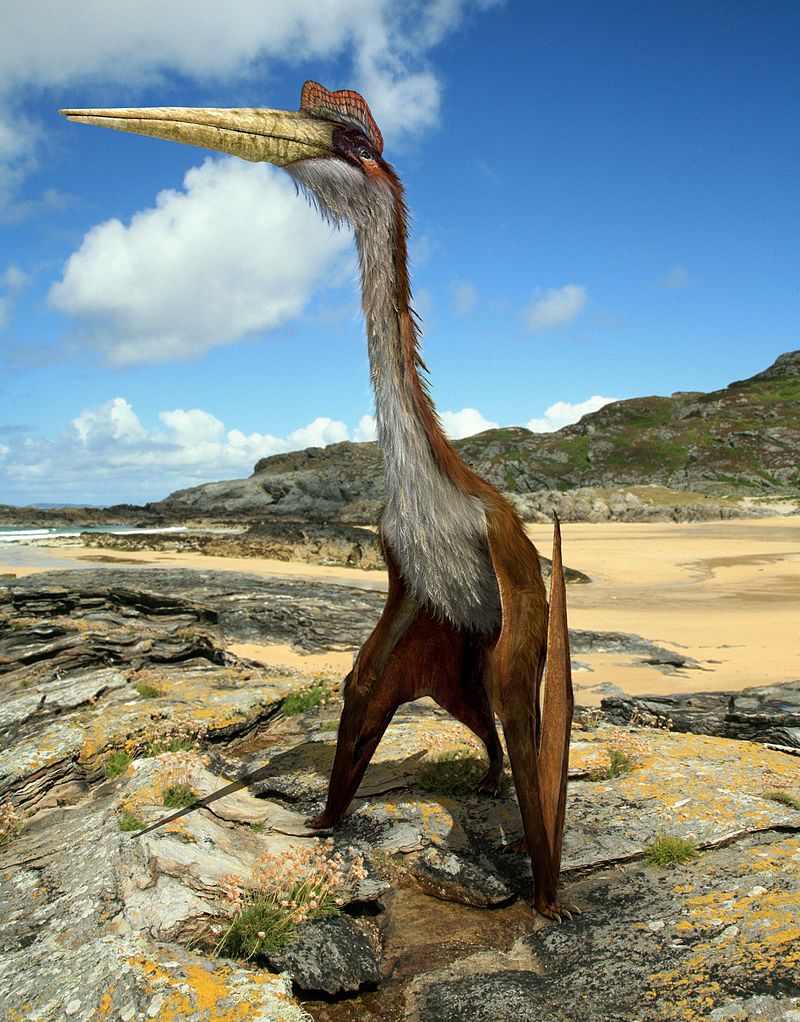
Quetzalcoatlus by Johnson Mortimer

Quetzalcoatlus northropi  is an azhdarchid pterosaur known from the Late Cretaceous of North America (Maastrichtian stage) and one of the largest known flying animals of all time. It is a member of the family Azhdarchidae, a family of advanced toothless pterosaurs with unusually long, stiffened necks. Its name comes from the Mesoamerican feathered serpent god, Quetzalcoatl.


Dimorphodon

Restoration of a pair of D. macronyx

Dimorphodon was a genus of medium-sized pterosaur from the early Jurassic Period. It was named by paleontologist Richard Owen in 1859. Dimorphodon means "two-form tooth", derived from the Greek δι (di) meaning "two", μορφη (morphe) meaning "shape" and οδων (odon) meaning "tooth", referring to the fact that it had two distinct types of teeth in its jaws – which is comparatively rare among reptiles.


Jaekelopterus
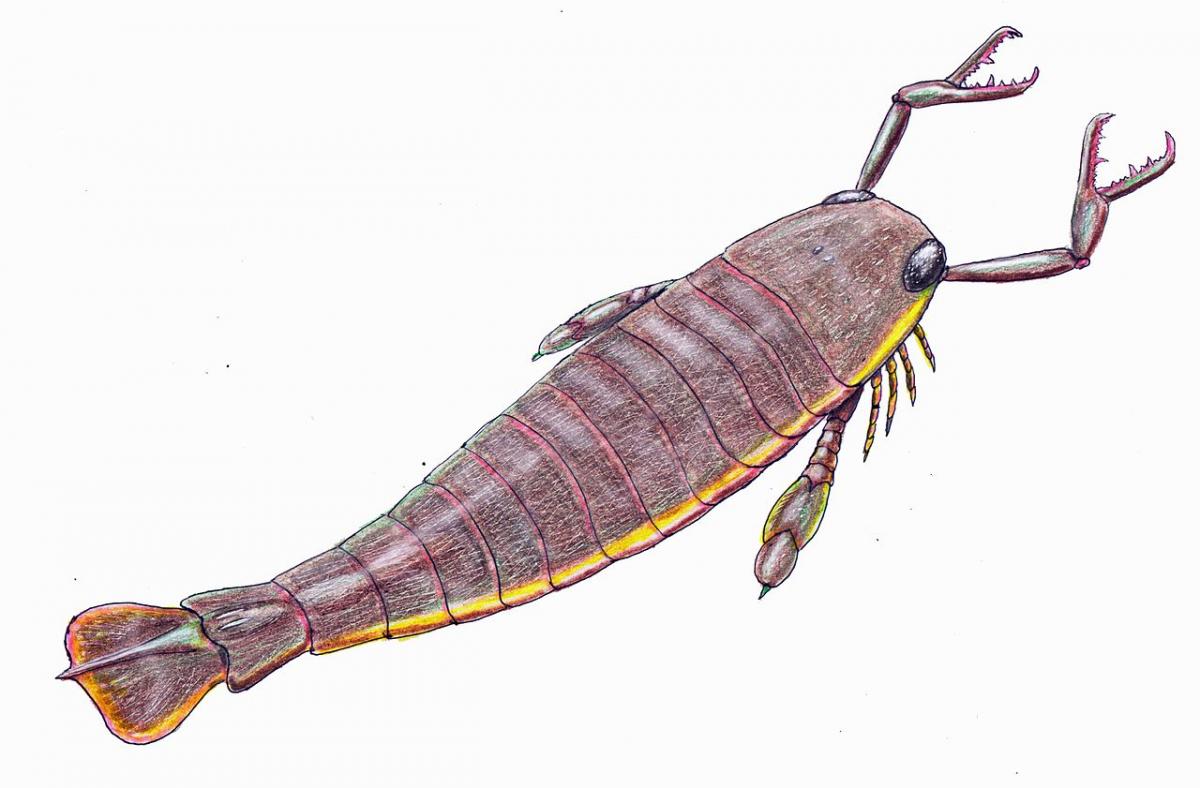
Restoration of J. rhenaniae


Jaekelopterus is a genus of giant predatory eurypterid, an extinct group of aquatic arthropods. Fossils of Jaekelopterus have been discovered in deposits of Early Devonian age, from the Pragian and Emsian stages, and have been referred to two known species, the type species J. rhenaniae from freshwater strata in the Rhineland and J. howelli from estuarine strata in Wyoming. The generic name is composed of a patronym honouring German paleontologist Otto Jaekel, who described the type species, and the Greek word πτερόν (pteron) meaning "wing".

Based on the isolated fossil remains of a large chelicera (claw) from the Klerf Formation of Germany, J. rhenaniae has been estimated to have reached a size of around 2.3–2.6 metres (7.5–8.5 ft), average 2.5 metres (8.2 ft), which would make Jaekelopterus the largest known arthropod ever discovered, surpassing other large arthropods such as fellow giant eurypterids Acutiramus and Pterygotus and the giant millipede Arthropleura.


Hallucigenia
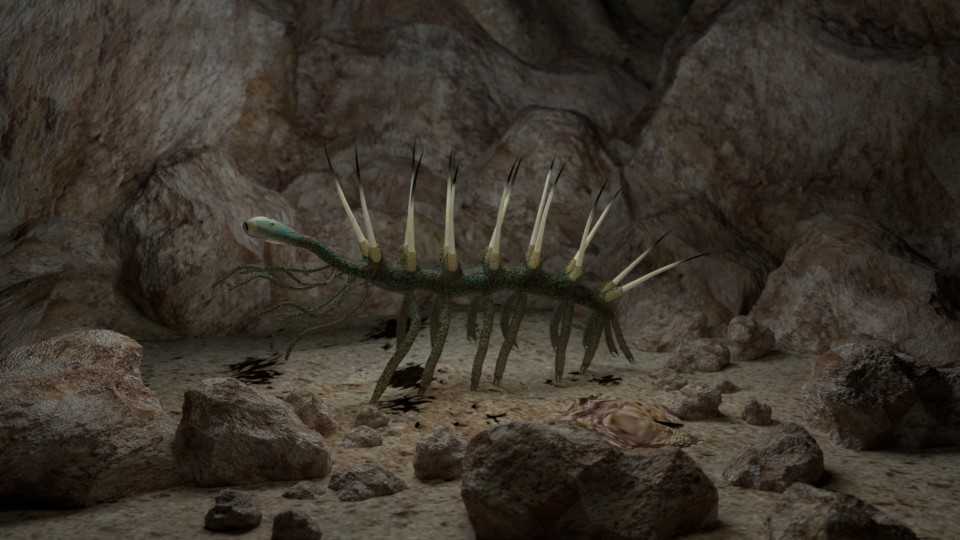
Restoration of H. sparsa

Hallucigenia is a genus of Cambrian xenusiids known from articulated fossils in Burgess Shale-type deposits in Canada and China, and from isolated spines around the world. The generic name reflects the type species' unusual appearance and eccentric history of study; when it was erected as a genus, H. sparsa was reconstructed upside down and back to front. Hallucigenia is now recognized as a "lobopodian worm". It is considered by some to represent an early ancestor of the living velvet worms, although other researchers favour a relationship closer to arthropods.

Hallucigenia had seven tipped tweezers in the tentacles on each side of his body, then three pairs of tentacles behind the first. Some of these tentacles were paired with thorns.


Liopleurodon
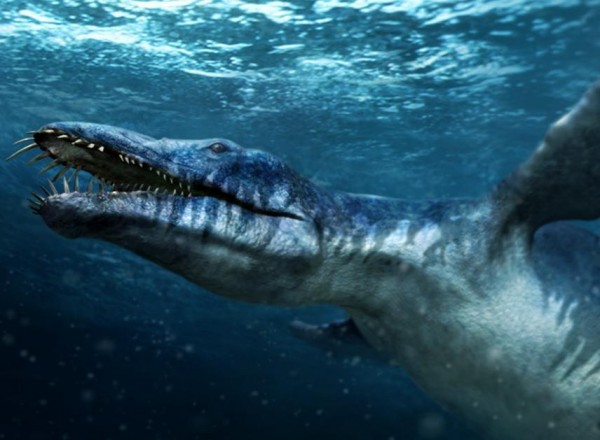
Liopleurodon


Liopleurodon is a genus of large, carnivorous marine reptile belonging to the Pliosauroidea, a clade of short-necked plesiosaurs. The two species of Liopleurodon lived during the Callovian stage of the Middle Jurassic Period (c. 160 to 155 mya). It was the apex predator of the Middle to Late Jurassic seas that covered Europe. The largest species, L. ferox, is estimated to have grown up to 7.50 metres (24.6 ft) in length.


Therizinosaurus
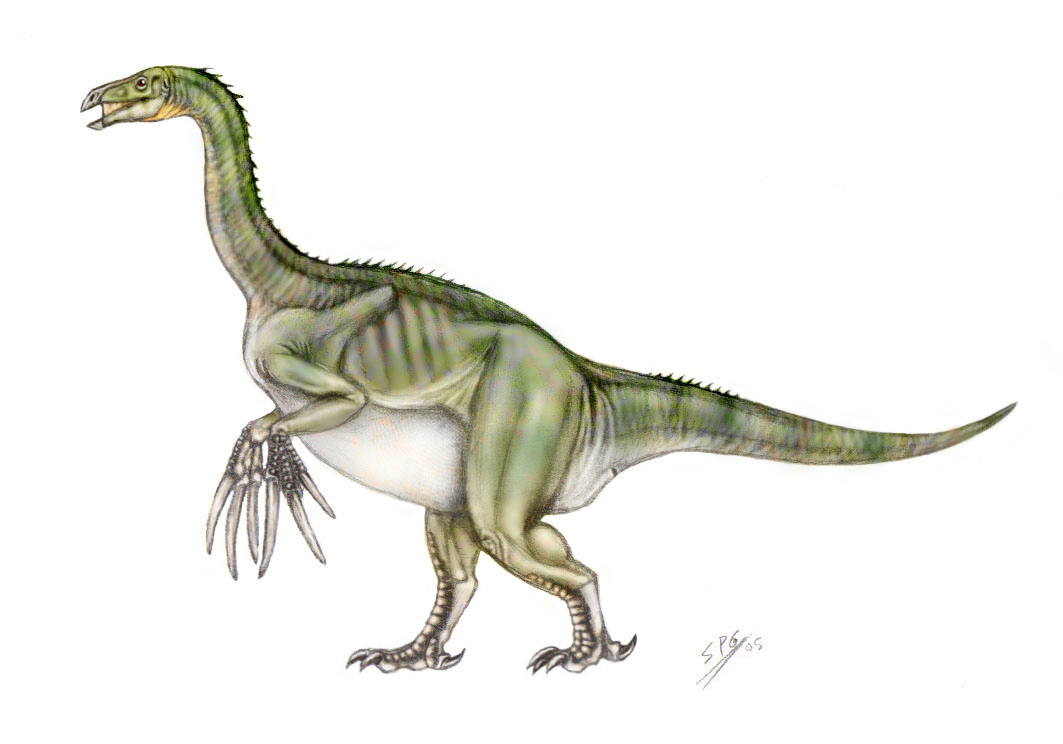
Therizinosaurus cheloniformis by unlobogris

Therizinosaurus is a genus of very large theropod dinosaursTherizinosaurus comprises the single species T. cheloniformis, which lived in the late Cretaceous Period (late Campanian-early Maastrichtian stages, around 70 million years ago), and was one of the last and largest representatives of its unique group, the TherizinosauriaFossils of this species were first discovered in Mongolia and were originally thought to belong to a turtle-like reptile (hence the species name, T. cheloniformis – "turtle-formed"). It is known only from a few bones, including gigantic hand claws, from which it gets its name.


Megalania
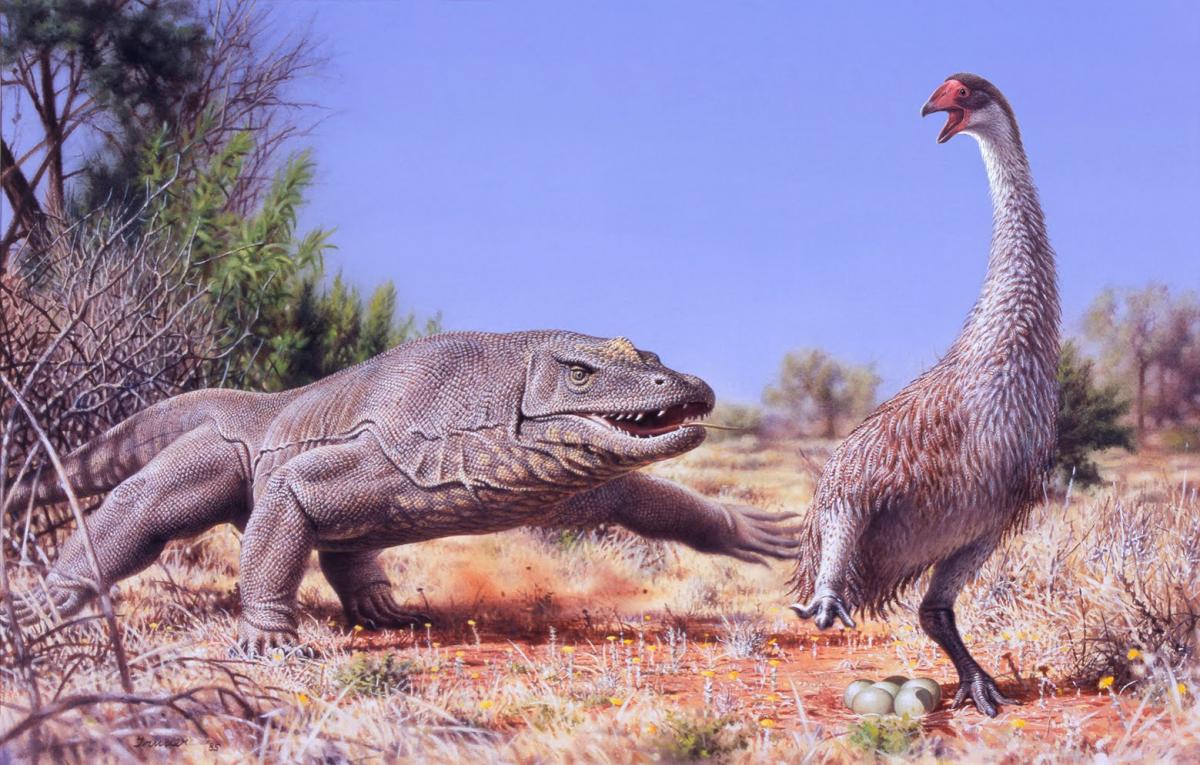
Megalania (Megalania prisca or Varanus priscus) is a giant goanna or monitor lizard. They were part of a megafaunal assemblage that inhabited southern Australia during the Pleistocene. The youngest fossil remains date to around 50,000 years ago. The first aboriginal settlers of Australia might have encountered them and been a factor in their extinction.


Argentavis

Argentavis magnificens by WillemSvdMerwe

Argentavis magnificens ("magnificent Argentine bird", or more literally "magnificent silver bird") was among the largest flying birds ever to exist, quite possibly surpassed in wingspan only by the recently discovered Pelagornis sandersiA. magnificens, sometimes called the giant teratorn, is an extinct species known from three sites in the Epecuén and Andalhuala Formations in central and northwestern Argentina dating to the Late Miocene (Huayquerian), where a good sample of fossils have been obtained.


Sea Scorpions
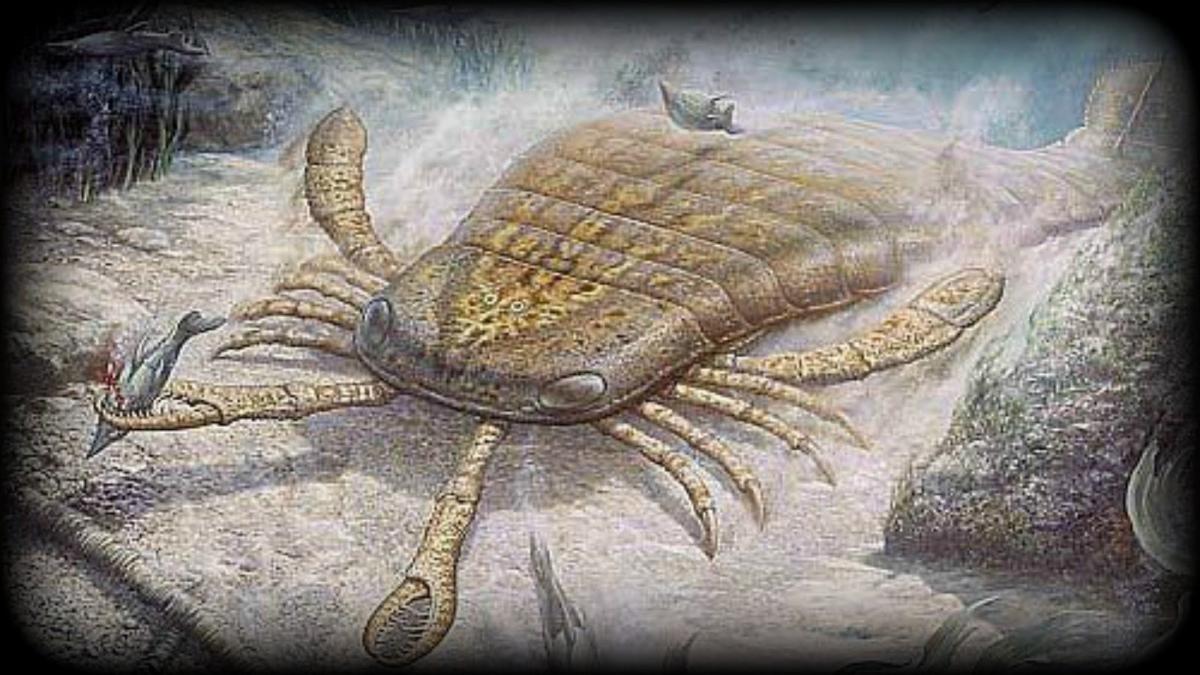
Jaekelopterus

Eurypterids, often informally called sea scorpions, are a group of arthropods related to arachnids that include the largest known arthropods to have ever lived. They are members of the extinct order Eurypterida (Chelicerata); which is the most diverse Paleozoic chelicerate order in terms of species. The name Eurypterida comes from the Greek words eury- (meaning "broad" or "wide") and pteron (meaning "wing"). This name was chosen due to the pair of wide swimming appendages, reminiscent of wings, on the first fossil eurypterids discovered. The largest, such as Jaekelopterus, reached 2.5 metres (8 ft 2 in) in length, but most species were less than 20 centimetres (8 in). They were formidable predators that thrived in warm shallow water, in both seas and lakes, from the mid Ordovician to late Permian (467.3 to 252 million years ago).


Madtsoia

Madtsoia by James Gurney

Madtsoia is a genus of madtsoiid snakes. It is known from the Eocene (Casamayoran and Itaboraian) of Argentina (M. bai), the Paleocene of Brazil (M. camposi), the Late Cretaceous (Campanian) of Spain (M. laurasiae), the Late Cretaceous of India (M. pisdurensis), and the Late Cretaceous (Maastrichtian) of Madagascar and the Coniacian of Niger (M. madagascariensis). Recovered vertebrae of M. pisdurensisare 1.83 centimetres (0.72 in) long and 4.35 centimetres (1.71 in) tall) and pertain to a snake that was approximately 5 metres (16 ft) long.


Kelenken
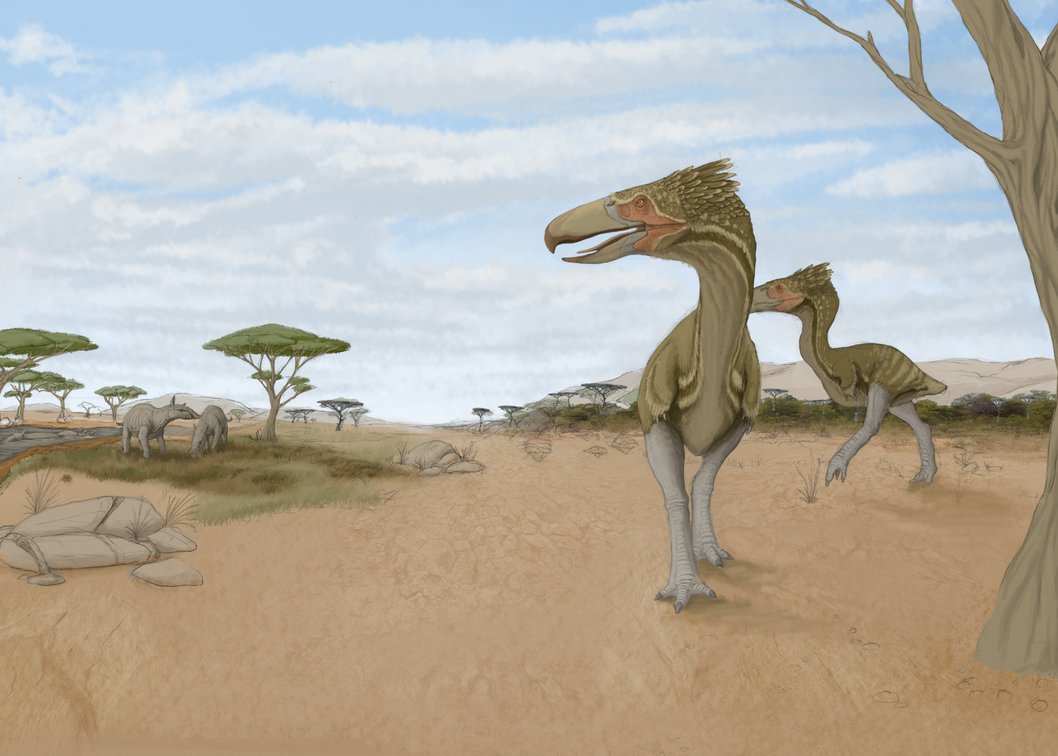
Kelenken guillermoi - WIP by FabrizioDeRossi

Kelenken guillermoi is a species of giant flightless predatory birds of the extinct family Phorusrhacidae, or "terror birds".


K. guillermoi lived in the Langhian stage of the Miocene, some 15 million years ago, in Argentina.

With a skull 71.6 cm (28.2 inches) long, it had the largest head of any known bird. It is the largest species of phorusrhacid. The tarsometatarsus is about 43.7 cm (17.2 inches) long.


Mosasaurus

 – Took the picture at Musee des Confluences, Lyon

Mosasaurus ("lizard of the Meuse River") is a genus of mosasaurs, carnivorous aquatic lizards. It existed during the Maastrichtian age of the late Cretaceous period, between about 70 and 66 million years ago, in western Europe and North America. The name means "Meuse lizard", as the first specimen was found near the Meuse River (Latin Mosa + Greek sauros lizard)..


Purussaurus
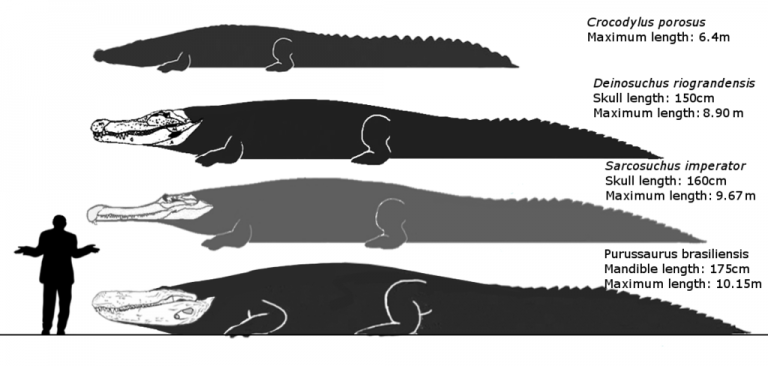
Tick Tock by randomdinos

Purussaurus is a genus of giant caiman that lived in South America during the Miocene epoch, from the Colhuehuapian to the Montehermosan in the SALMA classification. It is known from skull material found in the Brazilian and Peruvian Amazon, Colombian Villavieja Formation, Panamanian Culebra Formation and the Urumaco and Socorro Formations of northern Venezuela.


Entelodon
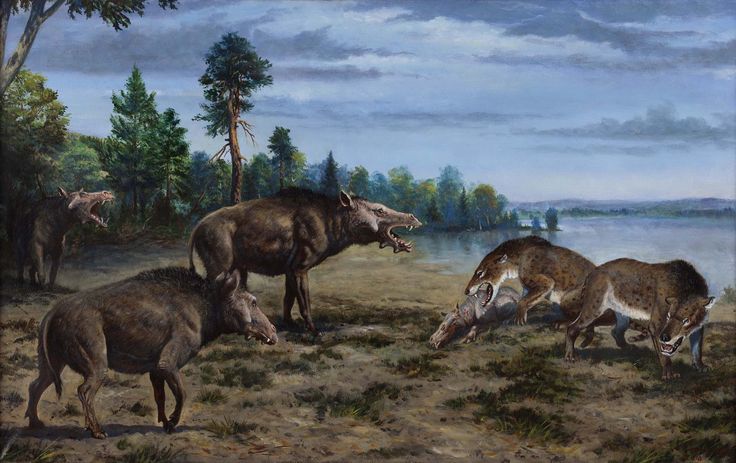
Entelodons intimidating Hyaenodon by Petr Modlitba

Entelodon is a genus of entelodont artiodactyl endemic to Eurasia. Fossils of species are found in Paleogene strata ranging in age from the Houldjinian (37.2–33.9 mya) until the Rupelian epoch of the early Oligocene (33.9–28.4 mya).


Azhdarchids

Reconstructed skeleton of Quetzalcoatlus northropi

Azhdarchidae is a family of pterosaurs known primarily from the late Cretaceous Period, though an isolated vertebra apparently from an azhdarchid is known from the early Cretaceous as well (late Berriasian age, about 140 million years ago). Azhdarchids included some of the largest known flying animals of all time, but members no larger than a cat have also been found. Originally considered a sub-family of Pteranodontidae, Nesov (1984) named the azhdarchinae to include the pterosaurs AzhdarchoQuetzalcoatlus, and "Titanopteryx" (now known as Arambourgiania). They were among the last known surviving members of the pterosaurs, and were a rather successful group with a worldwide distribution. By the time of the end-Cretaceous mass extinction, most pterosaur families except for the Azhdarchidae disappear from the fossil record, but recent studies indicate a wealth in pterosaurian faunas, including pteranodontidsnyctosauridstapejarids and several indeterminate forms. Some taxa like NavajodactylusBakonydraco and Montanazhdarcho were moved from Azhdarchidae to other clades.


Megalodon

Megalodon size

Megalodon (Carcharocles megalodon), meaning "big tooth," is an extinct species of shark that lived approximately 23 to 2.6 million years ago (mya), during the Early Miocene to the end of the Pliocene. There had been some debate regarding the taxonomy of megalodon: some researchers argued that it was of the family Lamnidae and closely related to the great white shark (Carcharodon carcharias), while others argued that it belonged to the extinct family Otodontidae; presently, there is near unanimous consensus that the latter view is correct. Its genus placement is still debated, authors placing it in either CarcharoclesMegaselachusOtodus, or Procarcharodon. The shark has made appearances in several media, such as the Discovery Channel's docufiction Megalodon: The Monster Shark Lives.


Titanoboa
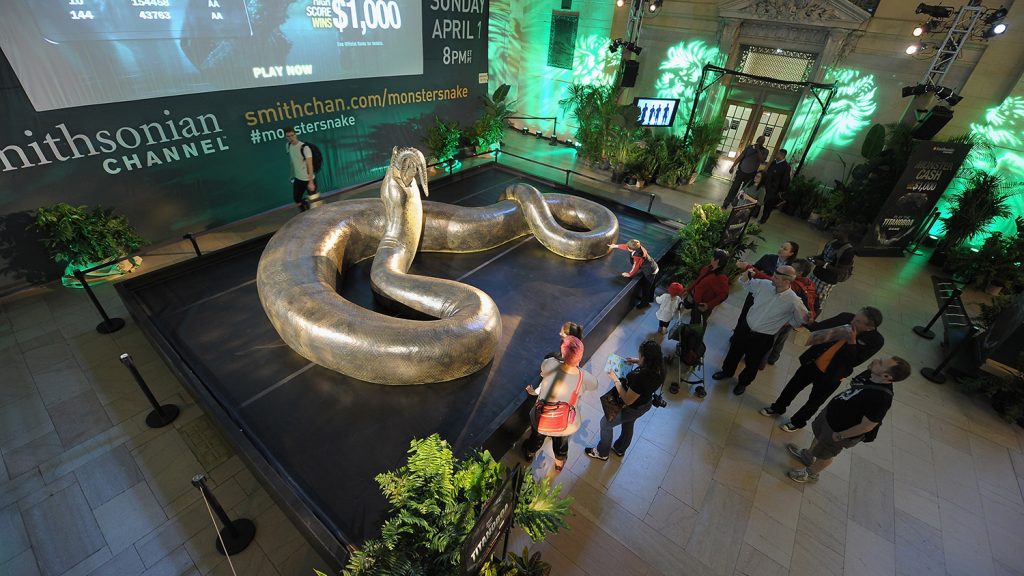
Life-sized model of Titanoboa devouring a dyrosaurid, from the Smithsonian exhibit

Titanoboa, meaning "titanic boa," is a genus of snakes that is known to have lived in present-day La Guajira in northern Colombia. Fossils of Titanoboa have been found in the Cerrejón Formation, and date to around 58 to 60 million years ago. The giant snake lived during the Middle to Late Paleocene epoch, a 10-million-year period immediately following the Cretaceous-Paleogene extinction event. The only known species is Titanoboa cerrejonensis, the largest snake ever discovered, which supplanted the previous record holder, Gigantophis.

Source: www.wikipedia.org / www.natgeo.com / www.history.com / www.smithsonian.com

Pages