
nandi's blog

Sea Life Recovered Surprisingly Rapidly at Impact Crater of Dino-Killing Asteroid

Wednesday, June 6, 2018

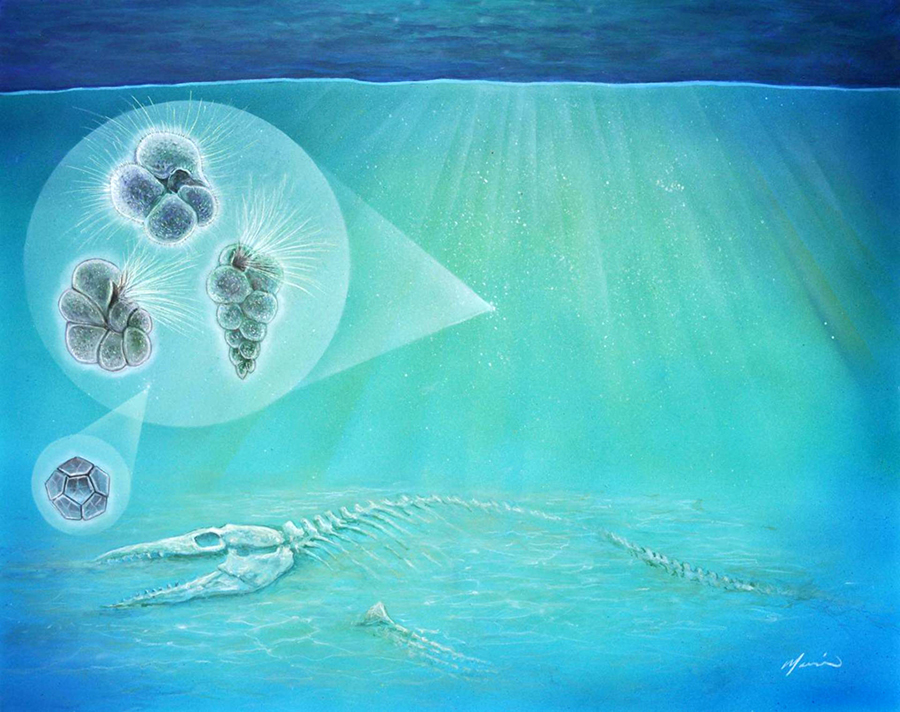
The three hair-covered forms (left) represent species of plankton found inside the crater. The geometric form (bottom left) is a species of algae. Small organisms like these moved into the crater so quickly that bones from animals that were killed by the impact, such as the mosasaur pictured here, may have still been visible. Image credit: John Maisano, University of Texas Jackson School of Geosciences.

The Cretaceous/Paleogene mass extinction ended the reign of the dinosaurs and wiped out 76% of species on Earth. It was caused by the impact of an asteroid in the southern Gulf of Mexico approximately 66 million years ago, forming the Chicxulub impact crater. Although the asteroid killed off species, new research has found that the crater it left behind was home to sea life less than a decade after impact, and it contained a thriving ecosystem within 30,000 years.

A research team led by University of Texas Institute for Geophysics scientist Chris Lowery found the first evidence for the appearance of life two to three years after impact.

By 30,000 years after impact, a thriving ecosystem was present in the Chicxulub crater, with blooming phytoplankton supporting a diverse community of organisms in the surface waters and on the seafloor.

In contrast, other areas around the world, including the North Atlantic and other areas of the Gulf of Mexico, took up to 300,000 years to recover in a similar manner.

“We found life in the crater within a few years of impact, which is really fast, surprisingly fast. It shows that there’s not a lot of predictability of recovery in general,” Dr. Lowery said.

The evidence comes primarily in the form of microfossils — the remains of unicellular organisms such as algae and plankton — as well as the burrows of larger organisms discovered in a rock extracted from the Chicxulub crater during recent scientific drilling conducted jointly by the International Ocean Discovery Program and International Continental Drilling Program.

“Microfossils let you get at this complete community picture of what’s going on,” Dr. Lowery said.

“You get a chunk of rock and there’s thousands of microfossils there, so we can look at changes in the population with a really high degree of confidence… and we can use that as kind of a proxy for the larger scale organisms.”

The core containing the fossil evidence was extracted from the Chicxulub crater during a 2016 expedition.

Whereas core samples from other parts of the ocean hold only millimeters of material deposited in the moments after impact, the section from the crater used in this study contains more than 426 feet (130 m) of such material, the upper 30 inches (76 cm) of which settled out slowly from the turbid water. This material provides a record that captures the seafloor environment days to years after the impact.

“You can see layering in this core, while in others, they’re generally mixed, meaning that the record of fossils and materials is all churned up, and you can’t resolve tiny time intervals,” said co-author Professor Timothy Bralower, of Pennsylvania State University.

“We have a fossil record here where we’re able to resolve daily, weekly, monthly, yearly changes.”

The relatively rapid rebound of life in the crater suggests that although the asteroid caused the extinction, it didn’t hamper recovery.

The researchers point to local factors, from water circulation to interactions between organisms and the availability of ecological niches, as having the most influence on a particular ecosystem’s recovery rate.

The findings, published in the journal Nature, indicate that recovery after a global catastrophe could be a local affair.

_____

Christopher M. Lowery et al. Rapid recovery of life at ground zero of the end-Cretaceous mass extinction. Nature, published online May 30, 2018; doi: 10.1038/s41586-018-0163-6

Source: www.sci-news.com

KU Paleontologists Continue Work at Juvenile Tyrannosaurus Rex Site

Wednesday, June 6, 2018

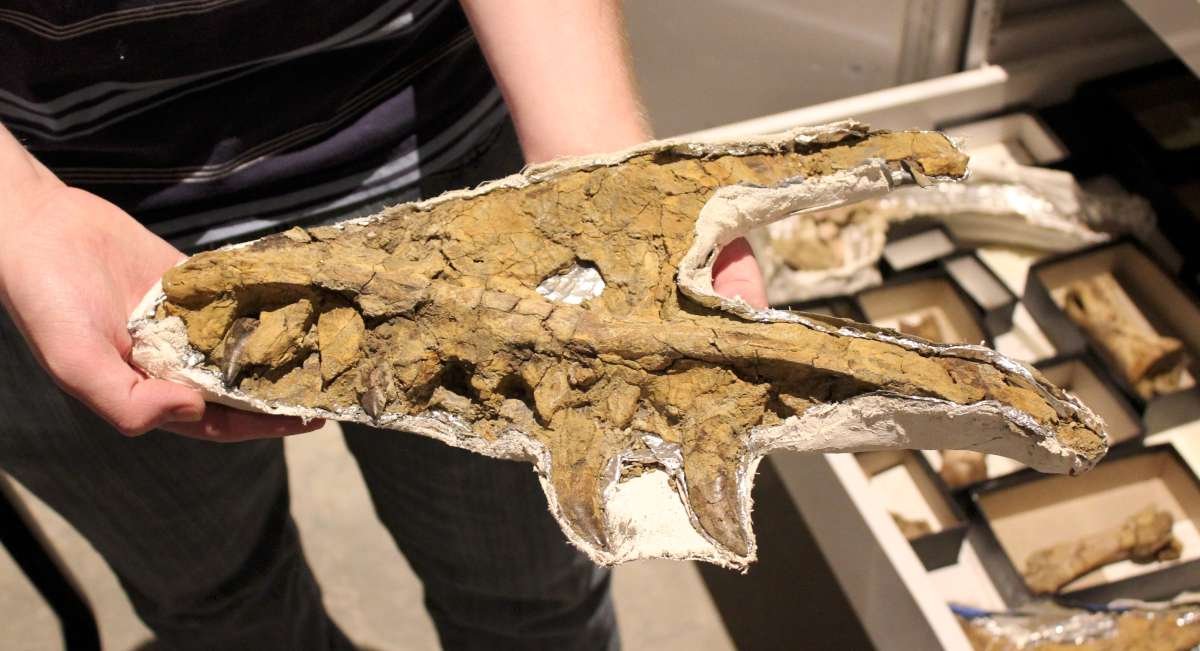
A piece of the juvenile T-rex uncovered during a previous dig. (Photo by Stephen Koranda)

A team of paleontologists from the University of Kansas is resuming its work in Montana, excavating what appears to be a very rare dinosaur fossil: a juvenile Tyrannosaurus rex

KU paleontologist David Burnham said the excavation began in 2016, but the team is returning to the site this summer hoping to find more pieces of the T. rex

Burnham said there are probably fewer than a dozen juvenile T. rex examples, and even fewer well preserved fossils that can provide good information.

“Nobody knows anything about juvenile T. rex,” Burnham said. “There just haven’t been that many found.”

After discovering the initial bones, researchers at KU theorized the fossil was likely from a juvenile T. rex. They went back to the same site a second time to look for more pieces.

“We started finding teeth, bones, claws. It was so exciting,” he said. “We think there’s more there.”

The area the team is excavating also contains other fossils, making it something of a time capsule.

“We want to open this up and look at this page of natural history," Burnham said. "We know all these things got buried together, so there’s a good chance they all lived together. We’ll know more about the community and life history of juvenile T. rex.”
 
He hopes they can uncover limbs of the animal. A leg would tell them the age of this T. rex when it died.

Burnham said the discovery is important because it can help researchers learn more about how animals grow and develop as well how the T. rex lived.

“We’ll be able to fill out the evolutionary history and the life history of these really crazy animals,” Burnham said.

Source: http://kansaspublicradio.org

Huge Amount of Dinosaur Fossil is Found Than Ever Before

Wednesday, June 6, 2018

All of us has grown loving dinosaur while growing up we get to know about the various species of this creature. With time several reports are been published on the new discoveries of dinosaur fossils. Every discovery related to dinosaur excites people all around the world and this time it is way more exciting as a huge amount of dinosaur fossils is been found. Let’s see what new this discovery has come up with for you regarding the favourite creature of your childhood.

One of the stars of recent palaeontology is none other than Illinois-born Stephen Brusatte. He is a former National Geographic grantee and has found almost 10 new species of dinosaur. In addition to that, he has led groundbreaking scientific research the one which has rephrased the historical past of those splendid creatures which, because of Hollywood and numerous youngsters tales, hang-out our imaginations instantly like by no means earlier than.

His new eBook, The Rise and fall of the dinosaurs, Brusatte tells the epic story of the dinosaurs. The book takes us on an extraordinary journey of the Mesozoic Era and tells about the far-flung locations he has hunted for these fossils starting from China, Argentina to the American Southwest.

At present, he is a fellow in the University of Edinburgh, in Scotland. He defined, why China is a hotspot for fossil dinosaurs, how many paleontologists are ladies, how our understanding of Tyrannosaurus rex is revolutionizing.

Tyrannosaurus rex is probably one of the most well-known dinosaurs. There is one thing about its physique is that it has a large head, lengthy tail, tiny little arms and muscular legs; almost everyone can acknowledge it. This dinosaur is almost of a dimension of a bus having about 13 meters, or 42 toes, lengthy, weighed 7 or eight tons.

Source: http://theindustryherald.com

Tiny Babies of Prehistoric Giant Shrimp Were Ferocious Killers Too

Wednesday, June 6, 2018

Artist's impression of juvenile (foreground) and adult (background) Lyrarapax unguispinus hunting in the water. Credit: Science China Press

Not only the meter-long adults crawling around the primordial ooze had circular mouths with radiating teeth: So did the kiddies.

When and how life began on Earth is not clear, but it seems to be about 4 billion years ago. For hundreds of millions of years, early life remained microscopic and probably one-celled, as far as we know – fossils of that era are incredibly rare. Complex multicellular beings looking like fungi seem to begin about 2.4 billion years ago, but they remained primitive.

Then about 540 million years ago came the Cambrian Explosion, a riot of speciation that birthed most of the major animal groups found in the fossil record. What caused this glorious explosion of life forms during about 20 or 25 million years isn't known either, but we do know for sure that among them were spectacular specimens, monster shrimp-like beings over a meter long. Among these early arthropods were a group called the Radiodonta – and yes, that does mean radiating teeth.

The Radiodonta had round serrated mouths, spiny grasping appendages by their mouths, and were evidently the alpha predators of their time. Now a study of exquisite fossils found in China, reported in National Science Review, has shown that adult Lyrarapax unguispinus wasn't only the radiodonta prowling the prehistoric seas for prey: Their tiny babies had the predatory equipment and were likely also proficient killers, reports Jianni Liu and the team from Northwest University of Xi'an.

Frankly, one doesn't expect baby crocodiles to live on unicorn fur and flowers, or baby Radiodonta either, but it's good to have proof set in stone.

Before you bless the deity that these giant shrimp-like beings with gaping fanged mouths are extinct, consider that animals living today have pharyngeal teeth, which means teeth in their throats, chiefly some amphibia and fish. But that's now, and 540 million years ago, the apex predators included the likes of Lyrarapax, and Anomalocaris, which was well over a meter long.

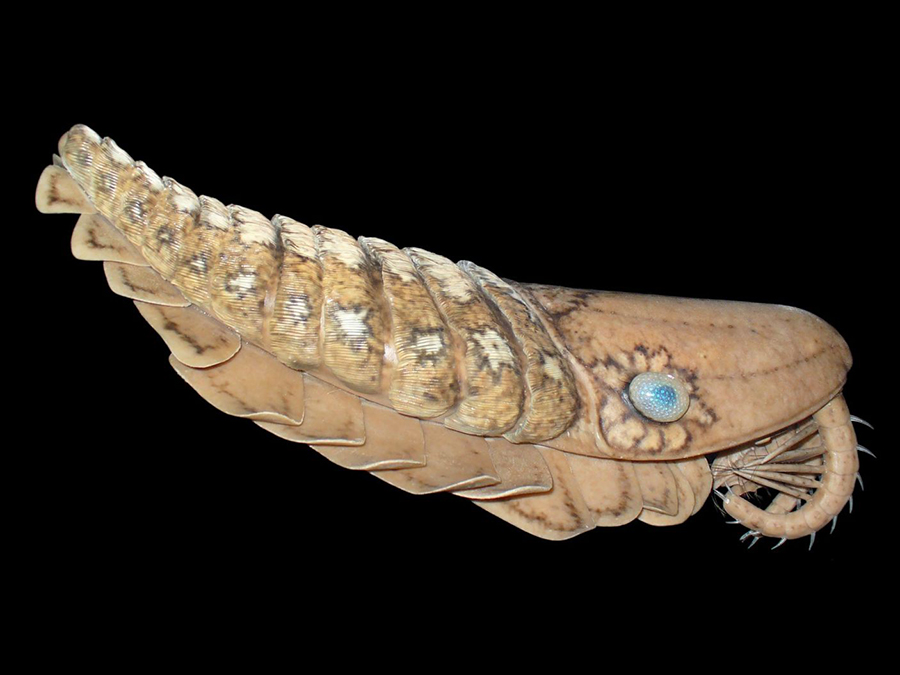
Life-size model, about 60cm, of a Laggania cambria, from the Burgess Shale fossil bed (middle Cambrian), Canada. Model by: Espen Horn

We knew about Lyrarapax, but until now we knew almost nothing about its offspring, or their feeding habits.

As said it's reasonable to assume that if mama Anomalocaris ate other arthropods, so did the kids. But now we know the dietary habits of the prehistoric arthropod set thanks to extraordinarily well-preserved fossil juvenile Lyrarapaxes paleontologists have dated to the early Cambrian, 518 million years ago, found in Chengjiang, China.

The ancient infant, a mere 1.8 centimeters long, is the smallest radiodontan ever found. The research team professes itself surprised that the little'un had "extraordinarily well developed" features like the adult, notably the spiny grasping appendages.

It was like a little toy Lyrarapax unguispinus but a complete one.

In other words, either it was a miniature cousin of the bigger one, or it was indeed the child. Whichever, it was a well-equipped hunter.

Shocked? Well, the same goes for modern descendants of those ancient marine scuttling beings, which include the likes of spiders and predatory shrimp and insects. The babies don't grow up on milk or regurgitated goodies. And the discovery of the predatory baby proves what? That predation by juveniles appeared early on in the evolutionary history of arthropods.

The discovery that the tiny baby predatory arthropods also hunted in the primordial ooze could explain a puzzle regarding the Cambrian explosion.

Mutation and speciation can be driven by stresses, otherwise known as selective pressures. If the tiny baby giant creepy-crawlies were hunting the tiny babies of other creepy-crawlies, that would have added selective pressures – to the small fry being eaten, and to the predators, which would find their vicious selves in an evolutionary 'arms race'. And thus we would likely wind up with more species of prey and more species of predator half a billion years ago. Just food for thought.

Source: www.haaretz.com

‘Jurassic Park’ At 25: 25 Facts You Never Knew

Tuesday, June 5, 2018

JURASSIC PARK AT 25: FACTS YOU NEVER KNEW

On the 16th July 1993, cinema as patrons of the Unites Kingdom knew it, was changed forever. How? With the release of a little film called Jurassic Park. Released just over a month after the US’ launch on 11th June 1993, the film was an instantly beloved masterpiece, capturing the imagination of an entire planet, and for a while, held the title of highest grossing film of all time.

Now, twenty-five years on, a fifth film in the franchise, Jurassic World: Fallen Kingdom is set to be released, proving that people still love dinosaurs. That wouldn’t have been possible though without Jurassic Park and Steven Spielberg’s mastery. The film, based on the novel by Michael Crichton, told of a new theme-park that had managed to successfully bring back-to-life creatures that hadn’t existed for 65 million years or so. It’s a film that sparked a generation’s obsession with movies (and dinosaurs), and whilst the twenty-fifth anniversary has us feeling a little on the old side, it still makes us so very happy.

To celebrate the landmark birthday, we spared no expense, and compiled a list of facts and trivia that you might not have heard before.

1. Casting a film is always tricky, here are several famous folks who were rumoured to have been considered, or were part of the audition process.

Alan Grant – Before settling on Aussie Sam Neil, the part of Alan Grant went out to some very big names including Harrison Ford, Kurt Russell, Richard Dreyfuss, Dylan McDermott, Tom Sizemore, Dennis Quaid, Kevin Costner, Robin Williams and William Hurt. Hurt would later go on to star in the TV series Westworld, which is based on one of Michael Crichton’s other works.

Ellie Sattler – Pretty much every actress in Hollywood at the time was up for this role – Sandra Bullock, Laura Linney, Juliette Binoche, Gwyneth Paltrow, Julianne Moore, Nicole Kidman, Renée Zellweger, Kim Raver, Heather Graham, Robin Wright, Helen Hunt, Teri Hatcher, Elizabeth Hurley, Jodie Foster, Sigourney Weaver, Michelle Pfeiffer, Ally Sheedy, Geena Davis, Daryl Hannah, Jennifer Grey, Kelly McGillis, Jamie Lee Curtis, Julia Roberts, Linda Hamilton, Sarah Jessica Parker, Bridget Fonda, Joan Cusack, Debra Winger and Sherilyn Fenn. Julianne Moore would later go on to play Dr. Sarah Harding in The Lost World: Jurassic Park

John Hammond – The role of eccentric billionaire and park-owner garnered interest from the likes of Sean Connery, Clint Eastwood, Jon Pertwee, and Marlon Brando.

Ian Malcom – This character could only ever have been played by the effortlessly cool Jeff Goldblum, and yet before he was confirmed, this eclectic bunch of actors were in the running: Jim Carrey, Michael Keaton, Bruce Campbell, Johnny Depp, Ted Danson, Steve Guttenberg, and Michael J. Fox.

Robert Muldoon – The part went through Brian Cox, Bob Hoskins, and Jeffery Jones before being snapped up by the late Bob Peck.

Lex Murphy – Even the children’s parts had a plethora of people vying for the roles, the most noteable for the part of Lex include both Anna Chlumsky and Christina Ricci.

2. The film generated so much interest in dinosaurs that the study of palaeontology had a record increase in students. Even the film’s stars weren’t immune. Arianna Richards (who plays Lex Murphy) got the bug and assisted Jack Horner, the palaeontologist advisor, on a dinosaur dig in Montana.

3. Director Steven Spielberg snapped up the film mere hours before fellow director James Cameron could put a bid in. Cameron has since stated that Spielberg was definitely the best fit as his vision would have been much more violet, a la Aliens, and would have cut out the family market altogether. His cast would have also included Arnold Schwarzenegger as Grant, Bill Paxton as Malcolm and Charlton Heston as Hammond.

4. Spielberg gifted his cast with a model Raptor each. Arianna Richards keeps hers in her house as a ‘guard Raptor’ to shock anyone coming in, Jeff Goldblum’s has a prime spot In his house and is a cherished item, and Laura Dern kept hers in her son’s room next to his crib when he was a baby.

5. Out of the two hour and seven minute run-time, only fifteen minutes contain dinosaurs. Six minutes are CGI, provided by ILM, and the other nine are animatronics from Stan Winston’s studio. An easy way of telling between the two is essentially any time you see a full body dinosaurs – it’s CGI; if it’s just a part of one (like the head, claw etc.), then it’s animatronic.

6. Universal scooped up the rights to Michael Crichton’s novel for 2 million dollars, before it had even been published. Not a bad investment when you consider that the franchise has grossed over 3 billion dollars, with the latest film Jurassic World: Fallen Kingdom still to be released.

7. Steven Spielberg may be one of the hardest working filmmakers out there. He managed to oversee the post-production of Jurassic Park remotely while in Poland shooting his next project, Schindler’s List.

8. That iconic moment of the water in the glass rippling was achieved by using a guitar string that was attached to the underside of the dash beneath the glass.

9. That big of shit that Ian Malcolm comments on, thankfully for the crew, didn’t smell. It was made out of clay, mud and straw. To give the appearance of being stinky, it was dressed with honey and papayas to attract flies.

10. Instantly dating the film with an ancient computer software program that looks entirely fake, the UNIX system seen in the film is actually a real 3D file management browser called Fsn (‘fusion’).

11. All the merchandise (t-shirts, stuffed dinosaurs, lunch boxes, flasks, etc.) shown in the film were, in some part, actually created to be sold with the movie. That’s some very insidious advertising from Mr Spielberg and co.

12. The character of Alan Grant was modelled after Palaeontologist Jack Horner, the dinosaur adviser for the film.

13. Given that the film was rushed into production before the book had even been published, it should come as no surprise that the film was story-boarded before it was scripted. It also explains why it’s such a visual delight to watch.

14. Steven Spielberg is a man of his word. Joseph Mazzello originally screen-tested for the role of Jack in Hook, but Spielberg thought he was too young. He promised the young actor that they would work together in the future, and he kept that promise by casting him as Tim Murphy.

15. Worried that Ariana Richards wouldn’t be perform it perfectly, during the jelly wobble scene, someone was actually jiggling her elbow to achieve the effect.

16. Jurassic Park was nominated for, and won, three Academy Awards: Best Sound, Best Sound Effects, and Best Visual Effects.

17. To create the Dilophosaurus spit, the effects team used a paintball mechanism that actually spat from the model’s mouth; the venom was made out of methacryl and KY Jelly, with some food colouring mixed in.

18. We all know that the raptors in Jurassic World are called Charlie, Delta, Echo and Blue, but the crew named the animatronic raptors for Jurassic Park Kim and Randy.

19. In order to create believable dinosaurs, Steven Spielberg wanted to ensure that they did animal type things like stopping to scratch. Given that dinosaurs allegedly evolved into birds, he also wanted to make them quite birdlike  e.g. snapping to attention like a chicken. He wanted the Raptors to turn their heads so they could look behind them to make them have a scarier appearance. He also likened the Raptor tapping its claw to Morse code to any Raptor listening.

20. Although they are arguably the most memorable of the dinosaurs, you don’t actual see the adult velociraptors on-screen until over 100 minutes into the movie.

21. Even wondered how they achieved those dinosaur sounds? Well each dinosaur is a composite of several different varieties of animals. Here’s a little breakdown for each one:

T-Rex – The roar is a combination of dog, tiger, alligator, elephant, walrus and penguin (!) sounds. The sound of its footsteps were created by cut sequoias crashing to the ground.

Velociraptors – The main cry of the Velicoraptors was a combination of the sounds of elephant seal pups, dolphins and walruses. The hissing is that of an agitated goose, and the sounds the Velociraptors make when communicating is the same sound tortoises make when having sex. Lovely.

Dilophosaurus – The sounds made by the Dilophosaurus were a combination of the sounds of howler monkeys, hawks, rattlesnakes, and swans. The neck frill rattle is that of a rattlesnake, and the cute chirps are those of a swan.

Brachiosaurs – These were a combination of whale and donkey sounds

22. Steven Spielberg wanted the velociraptors to be about ten feet tall, which was much taller than they were known to be. During filming, paleontologists uncovered ten-foot-tall specimens of raptors called Utahraptors. When the Utahraptor was discovered right before the film’s release, which had a similar height to the Raptors depicted in the film, Stan Winston joked, “We made it, then they discovered it”.

23. John Williams’ Jurassic Park score is one of the best in movie history, but did you know that it has lyrics? It seems that Jeff Goldblum has thought up his own words should you ever fancy a sing-sing when hearing that rousing music. Here they are – ‘In Jurassic Park, it’s scary in the dark, I’m so scared, that I’ll be eaten.’

24. Things got a little creepy on set as the T-Rex had the tendency to come ‘alive’ on its own. Producer Kathleen Kennedy recalls, “The T. Rex went into the heebie-jeebies sometimes. Scared the crap out of us. We’d be, like, eating lunch, and all of a sudden a T-Rex would come alive. At first we didn’t know what was happening, and then we realized it was the rain. You’d hear people start screaming.

25. Jurassic Park had a very interesting way of teaching parents to not leave their children alone. Every time that Lex and Tim are left by an adult they (almost immediately) come under attack from a dinosaur. This happens first when Gennaro leaves them alone in the car and the T. rex finds them, and then again later when Grant leaves them at the Visitors Centre and they find themselves hiding from raptors in the kitchen.

Source: www.thehollywoodnews.com

Does Jurassic Park Make Scientific Sense?

Tuesday, June 5, 2018

UNIVERSAL/TIPPETT STUDIO

In 1993, Steven Spielberg's film Jurassic Park defined dinosaurs for an entire generation.

It has been credited with inspiring a new era of palaeontology research.

But how much science was built into Jurassic Park, and do we now know more about its dinosaurs?

As its 25th anniversary approaches, visual effects specialist Phil Tippett and palaeontologist Steve Brusatte look back at the making of the film, and what we've learned since.

UNIVERSAL/TIPPETT STUDIO

So, first of all, what did Jurassic Park get wrong? It started off by inheriting some complications from Michael Crichton's novel, on which the film was based.

"I guess Cretaceous Park never had that same ring to it," laughs Brusatte.

"Most of the dinosaurs are Cretaceous in age, that's true."

The Cretaceous period, which followed on from the Jurassic, was home to many of the dinosaurs which feature heavily in the film, including Tyrannosaurus rexVelociraptor and Triceratops.

The idea of recreating dinosaurs from preserved DNA also proves problematic.

Tippett had already directed a stop motion dinosaur short called Prehistoric Beast. TIPPETT STUDIO

"In order to clone a dinosaur you would need the whole genome, and nobody's ever even found a little bit of dinosaur DNA," says Brusatte. "So we're talking about something that's pretty difficult, if not impossible."

Quibbling about such details may seem inconsequential. But for a film that proudly treats its prehistoric cast of creatures as characters rather than monsters, Jurassic Park treads a fine line between scientific accuracy and cinematic fantasy.

How to build a dinosaur

Case in point - building an animal that no human being has ever seen, and making it as realistic as possible.

At the time, Jurassic Park was groundbreaking in its use of computer animation in tandem with animatronics.

Computer animated scenes in the film were carefully choreographed. TIPPETT STUDIO

Stop motion expert Phil Tippett, who had previously worked on Star Wars, was brought in as dinosaur supervisor, a role which would later earn him fame as an internet meme.

In addition to the film's consulting palaeontologist Jack Horner, Tippett also had a great deal of dinosaur knowledge. "[I] bought every book that came out on dinosaurs. So I was pretty well in tune with what the state of the science was at that point in time," he told the BBC.

T. rex

Tippett remembers having to rein in some of the descriptions from the novel.

"Crichton would have a Tyrannosaurus pick up the jeep like Godzilla. I was like a reality check to say 'well no he wouldn't do that, because... the physics don't work.'"

"It still is a pretty good portrayal really," says Brusatte. "I think that was by far the most accurate depiction of T. rex that had ever been done up until that time."

To animate accurately, the team created a very early version of motion capture using a wire frame dinosaur. TIPPETT STUDIO

"We now know that T. rex had really good vision, so if you sit still it could see you. You wouldn't be able to hide from it. It's also got a great sense of smell and a great sense of hearing, and all that's really emerged from the CAT scans of its brain, which have all taken place after the year 2000," he explains.

Computer modelling has also shown that T. rex probably couldn't notch up a speed much above 20km per hour. That's still faster than humans, but tyrannosaurs were likely unused to chasing prey over long distances. So running away was still worth a shot...

Raptors

Translating fossilised remains into the movements of a living creature is difficult work, so Tippett's team also went out to observe animals that resembled the dinosaurs they were creating. They watched elephants to understand the gigantic, long necked brachiosaur, and ostriches for the stampeding Gallimimus.

Velociraptors, however, would have looked decidedly different to those in the film.

"The real Velociraptors from Mongolia are just about the size of a poodle. And not one of those big weird looking poodles, but a miniature poodle," explains Brusatte.

"They were kind of a generic version of a thing called Deinonychus," says Tippett, "which was much smaller than the raptors were in the movie."

We now know Deinonychus, meaning terrible claw, to be a somewhat intimidating, feathered early ancestor of modern day birds.

With the first feathered dinosaurs found in the late 1990s, and a feathered relative of T. rex uncovered in 2004, our visual understanding of dinosaurs has radically changed since 1993.

Yet in 2015, Jurassic World came under fire for sticking to the featherless designs established in Jurassic Park over two decades earlier.

It's one thing that Brusatte finds really jarring.

"We now know that dinosaurs, maybe even all dinosaurs, had some type of feather... It's a little bit weird actually for me to see dinosaurs portrayed without feathers. It just doesn't seem natural," he told the BBC.

Jurassic Park in 2018

"I have completely different ideas of what [dinosaurs] should be like now," says Tippett. "If we were making a different dinosaur movie that didn't have to be Jurassic Park, I would do things totally differently…. a lot of this stuff that they've discovered about feathers is pretty significant and there's a lot of really interesting things you could do."

Brusatte is all in favour: "A T. rex is like a bus-sized Big Bird from hell, I think that's much scarier than a scaly green T. rex."

 Artistic impression: Velociraptor is still likely to terrify, even with feathers. EMILY WILLOUGHBY

Yet looking back at Jurassic Park, Brusatte finds little to dislike.

"I think on balance Jurassic Park has been such a positive for palaeontology. Of course I could nitpick about the little inaccuracies but I think those are outweighed probably a million fold by the good that the movie has done.

"I don't know if I would have a job now if Jurassic Park didn't exist."

___________________________________________________________

Illustrations courtesy of Emily Willoughby

Jurassic Park previs sequence courtesy of Tippett Studio

Source: www.bbc.com

The Most Thrilling Dinosaur Attractions Around the World

Tuesday, June 5, 2018

Chris Leadbeater digs out the best dino destinations on the planet.

Rex the joint

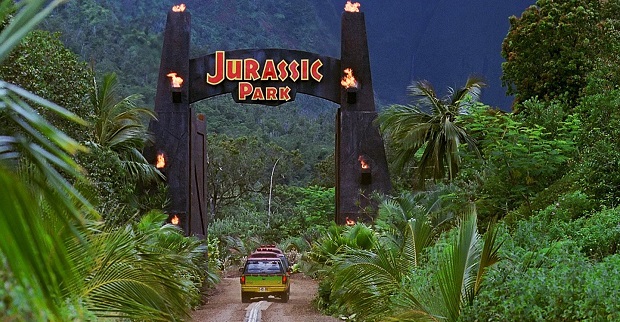
If you’re going to go to Hawaii to imagine dinosaurs running through it, you may as well flit to Kaua’i, too. Lots of “Jurassic Park” was crafted here. America As You Like It (americaasyoulikeit.com) runs a regular nine-night “Hawaiian Adventure” tour, from £3,599pp, with flights.

Universal appeal

Yes, yes, Hawaii is amazing. But what of dinosaurs? How about the Universal Studios Hollywood theme park in Los Angeles (universalstudioshollywood.com; day passes from $109)? It has an official Jurassic Park ride.

Kingdom come

It’s the release of Jurassic World: Fallen Kingdom on Wednesday. This is the 706th instalment of the rehydrated-tyrannosaurs franchise, and its arrival means that the cinematic sequence has now been going for longer than dinosaurs actually walked the earth.

OK, that isn’t true. It’s the fifth episode of a big-screen sequence which began in 1993 with Jurassic Park – and has made stars of both velociraptors and Hawaii, where much of the “action” has been filmed. Let’s look at the latter – and Kualoa Ranch (kualoa.com), a private nature reserve on O’ahu where parts of the latest film were shot. Hence its “Jurassic Jungle Expedition”, which shows off the key sights by Jeep ($46/£35).

Roar power

While tyrannosaurs are past-tense predators, the arena show Walking With Dinosaurs shows no clear sign of heading for extinction. It will be live in UK cities from July to December. Tickets from £25, (dinosaurlive.com).  

Cretaceous Croatia

Dinosaurs did not just hang out in America. They were all over Croatia’s Istria peninsula in the Cretaceous period (79-145 million years ago) too. You can see footprints on the isle of Veliki Brijun in Brijuni National Park. And you can go on dino-related rides at Dinopark Funtana (np-brijuni.hr; 140 kuna/£17), near Porec.

Big Apple-osaurus

I’m an adult. I wish to see dinosaurs in a grown-up way. Then you want the American Museum of Natural History (amnh.org; $23/£17) in New York. It has a 122ft-long cast model of what is deemed to be the biggest dinosaur species ever unearthed. Dubbed “Titanosaur”, or patagotitan mayorum. Dull.

Why oh Wyoming

Anyone with a child under five may recognise Arlo, the titular hero of “The Good Dinosaur” – the 2015 Pixar film set on a parallel Earth where sauropods live alongside humans. The animated scenery was inspired by Wyoming and Jackson Hole – a craggy option for travel that is featured in the 16-day “Rocky Mountain States” road trip offered by Bon Voyage (bon-voyage.co.uk). From £2,725pp with flights.

Snore point

I’m not going all the way to Manhattan to ogle replica reptilian ribcages. I can do that in south Kensington. True. Better still, the Natural History Museum is still running its much-loved “Dino Snores” nights, where guests sleep over at the institution – in the child-friendly form for £60pp; an adult version with dinner and drinks for £180pp (nhm.ac.uk).

Bone idols

Few places are as heavy on dino-heritage as Alberta. The “Badlands” of the Canadian province are littered with relevant sites. Take in Dinosaur Provincial Park (albertaparks.ca/dinosaur), with its fossil deposits. Gawp at 130,000 exhibits at the Royal Tyrrell Museum of Palaeontology (tyrrellmuseum.com). Canadian Sky’s 10-night “Self-Drive Family Adventure in Alberta” starts at £1,199pp – with flights (canadiansky.co.uk).

Wing tips

The new Jurassic movie wasn’t just filmed on Hawaii. It used Blackbushe Airport in Hampshire, too. Why mention this? Does it have a brontosaurus buried under the runway? Did Marc Bolan once land here (think about it…)? No. It offers flying tuition (from £120 per lesson; airfirst.co.uk). Which could be useful if dinosaurs ever do return…

Source: www.telegraph.co.uk

Too Pink! New Máximo Dinosaur is Repainted at Field on Opening Weekend to Fix Color

Saturday, June 2, 2018

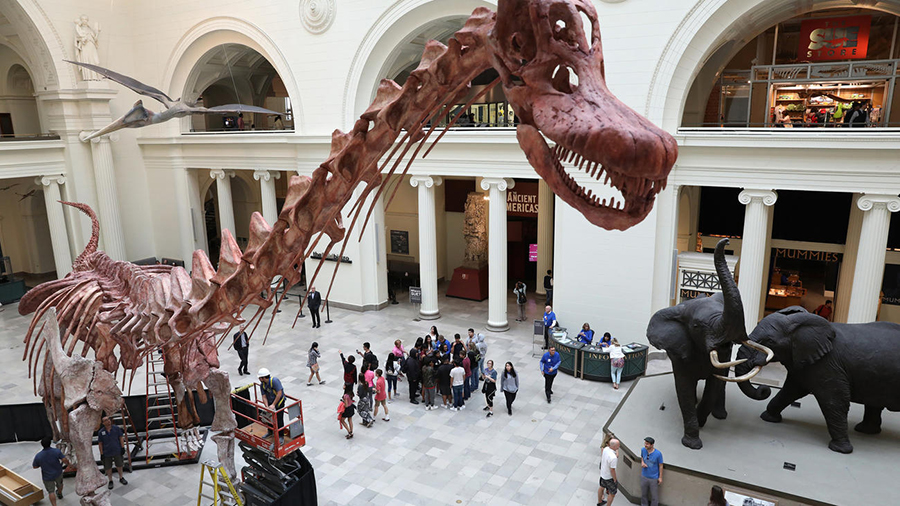
The Field Museum prepares its new 122-foot-long dinosaur skeleton named Maximo on May 23, 2018, for a June 1 official debut in Stanley Field Hall.  (Chris Walker / Chicago Tribune)

Máximo, the Field Museum's brand new prehistoric showpiece, is already getting a makeover.

The good news about the 122-foot-long titanosaur skeleton cast in Stanley Field Hall is that it is mounted and looking impressive, standing two stories high in the museum's central hall.

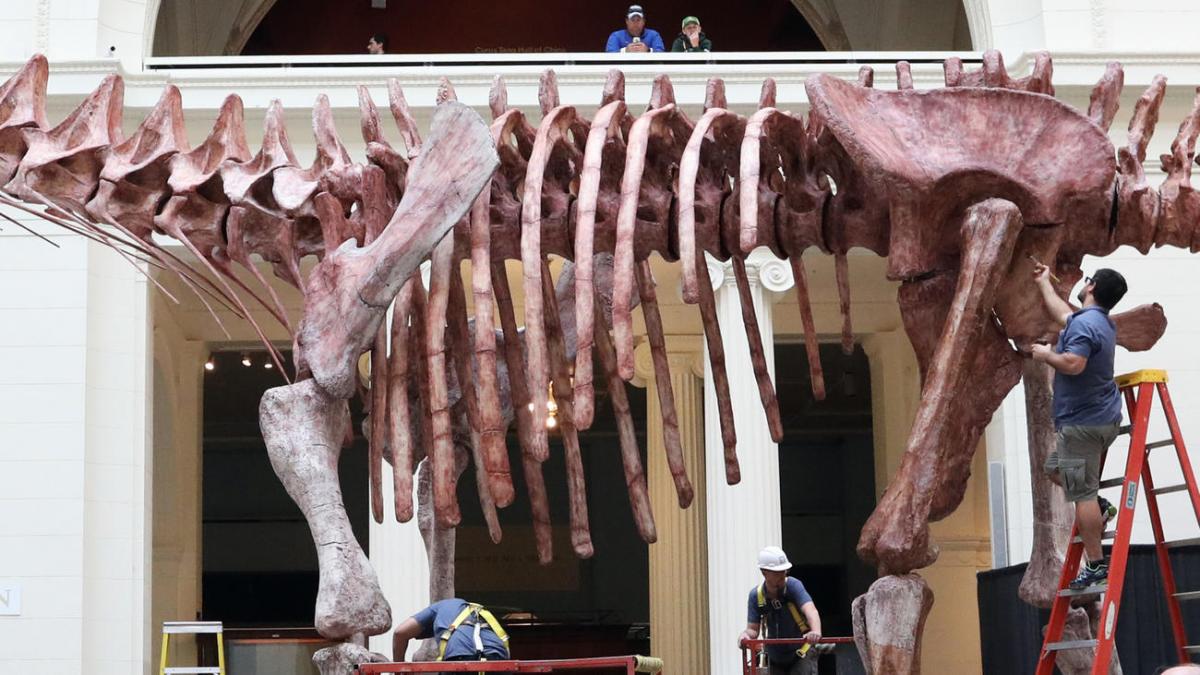
The bad news is that the color of the paint on the skeleton’s resin-and-fiberglass bone replicas wasn't quite right, meaning the creature remained surrounded by stepladders, workers and temporary fencing on Friday, the originally planned opening day.

Workers re-paint the cast skeleton of a titanosaur named Máximo, one of the new enhancements to Stanley Hall, on June 1, 2018, at the Field Museum. Chris Walker / Chicago Tribune

The difference was subtle but plain enough to anybody comparing the skeleton of the Patagotitan mayorum with the five nearby real fossil bones from the recently discovered species, the largest yet found.

The real ones, which got their coloration from a million years in what is now clay-rich Argentinian soil, have dusty tones of “red wine and chocolate,” said Alvaro Amat, the museum's design director. The ones on Máximo were originally given a reddish purple hue by the workers from the Patagonian museum that made the cast of its prized discovery.

That may have worked in a darker, smaller hall at New York’s American Museum of Natural History, where there is another Patagotitan model on display. But in the bright, airy surroundings of Stanley Field Hall, the coloration looked too “pink,” in the word of one Field exhibit executive.

Workers re-paint the cast skeleton of a titanosaur named Máximo, one of the new enhancements to Stanley Hall on view on June 1, 2018, at the Field Museum. Chris Walker / Chicago Tribune

And too fresh, as well. You could almost look at the purplish hip bones, for instance, and imagine tendons and such having recently been pulled off.

So the workers are staying on a little longer, maybe a week or so, to get the tones just right. And Máximo, although entirely visible now, remains a dinosaur-in-progress.

Source: www.orlandosentinel.com

New Dinosaur Species Keep Getting Discovered This Year — 3 Reasons Why

Sunday, June 3, 2018

Heterodontosaurus tucki cast

We're living in a new "Golden Age" for paleontology.

Paleontologists might be in a new golden age of discovery. According to scientist Stephen Brusatte, he and his colleagues in the field are finding an average of 50 new species — not just fossils or single bones, but entire species — a year, which is nearly a new dinosaur species a week. Brusatte shared some of the reasons for this sudden boom in finding dinosaurs.

Brusatte, a fellow at the University of Edinburgh, sat down for a Q&A with National Geographic to discuss his new book The Rise and Fall of the Dinosaurs: A New History of a Lost World and how it creates a new narrative surround the Tyrannosaurus rex and its demise. In addition to changing scientists’ understanding of the T. rex, Brusatte has also discovered 10 new types of dinosaur species, something that paleontologists of the past could only dream of doing in an entire lifetime. New technology, as well as multiple government policies, are just some of the latest developments that give paleontologists access to new data and dig sites, catalyzing what Brusatte calls a new “golden age” for the industry.

1. More countries are letting scientists dig

A huge win for paleontology has been the ability to dig in countries like China, Mongolia, Argentina, and other countries that had closed their borders to paleontological digs in the past. Since granting access to its mountainous regions and the Gobi desert, China has become a hotspot for discoveries. “Probably about half the new dinosaur species are coming from there,” Brusatte explained.

One such discovery was the raptor dinosaur Jianianhualong, which has led many paleontologists to argue that feathers and wings didn’t first evolve for flight. The slender, bird-like Jianianhualong suggests feathers evolved to keep dinosaurs warm before becoming an aid for flying.

2. New technology is improving data

In a paper published last month in the journal Nature, researchers were able to identify the bird that bridged the gap between bird and dinosaur through the use of CT scans. The Ichthyornis dispar lived 100 million years ago, but by piecing together CT scans of new fossils alongside several different specimens from existing museum collections, the scientists ended up with a fairly complete look at the toothed bird.

CT scanning has been in the news a lot for being the source of new paleontological discoveries. Whereas CT scans have been available in health industries since the 1970s, its growing popularity in paleontology and increased capabilities have allowed scientists to look at the brain, sense organs, sinuses, blood vessels, and nerves of a dinosaur just by scanning its skull. Brusatte used CT scanning of T. rex skulls to draw the conclusion that the size of the Tyrannosaurus brain relative to its body was comparable to the range of chimps, meaning it was probably a “much smarter animal than people give it credit for.”

3. Diversity of scientists is helping to diversify discoveries

Part of the reason why countries like China opened its borders to more scientific digs was thanks to the growing population of paleontologists from within the country. Whereas the industry was once predominantly men from Western countries, “now you have this huge group of young people in China, Argentina, and other places, studying dinosaurs,” Brusatte said. “And they’re making a lot of new discoveries.”

Not only have scientists from China and other countries been able to open the door to new digging sites and advancements, but women have increasingly contributed to this year’s most important discoveries.

“It used to be an old men’s club…” Brusatte recalled, “but over the last few decades that’s started to change. My lab here in Edinburgh, for instance, is very female dominated. Of my eight Ph.D. students, seven are female.” Women such as Beijing-based Jingmai O’Connor, Ph.D., are mentioned in his book as being at the forefront of understanding the link between birds and dinosaurs. O’Connor is considered the world’s expert on the earliest birds found in China.

Thanks to these technological advancements and the diversity of both scientists and locations for research, paleontology has become a globally growing industry, and the results for science are staggering.

Source: www.inverse.com

Carnivorous-Dinosaur Auction Reflects Rise in Private Fossil Sales

Saturday, June 2, 2018

A fossil that may represent a new species of dinosaur is being sold at auction in Paris.Credit: Aguttes

Palaeontologists fear an important specimen — expected to fetch up to €1.8 million — will be lost to science.

Update: The fossil mentioned in the story has now been sold. A private buyer purchased the specimen for US$2.36 million dollars.

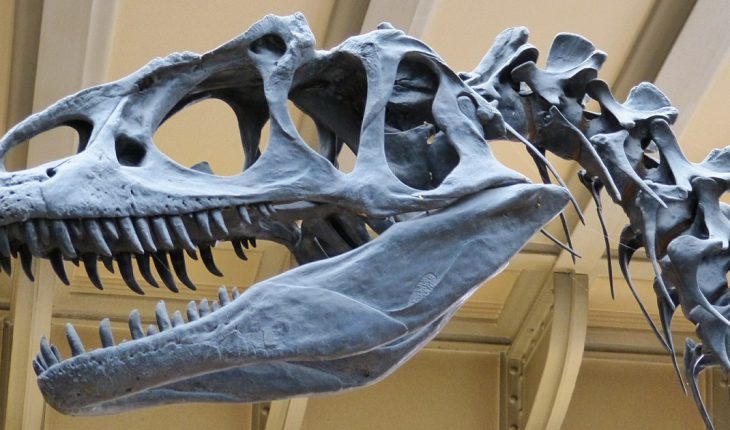
A fossil of a carnivorous dinosaur found in the United States is about to go under the hammer. The Parisian auction house managing the sale, scheduled for 4 June in the Eiffel Tower, says the nearly complete, nine-metre-long specimen is probably a new species, and hopes that it will fetch €1.2 million–1.8 million (US$1.4 million–2.1 million). But international palaeontologists warn that the specimen could be lost to science. They fear that a growing trend for the private sale of fossils is driving up prices, putting potentially valuable specimens beyond the reach of cash-strapped museums and public institutions.

Auctioneer Aguttes says the fossil bears similarities to a species of Allosaurus, but has differences in features including its teeth, skull and pelvis that are significant enough for it to be considered a new species. The creature lived about 154 million years ago, during the late Jurassic period. Although palaeontologists say that detailed studies are needed to confirm that it is a new species, they agree that the fossil, excavated on private land in Wyoming between 2013 and 2015, seems to be unusual and therefore scientifically significant.

The Society of Vertebrate Paleontology (SVP) in Bethesda, Maryland, which represents more than 2,200 international palaeontologists, has written to Aguttes, urging the auction house to cancel the sale. David Polly, the society’s president, told Nature that the society is concerned about scientifically valuable fossils going into private hands rather than a public repository where scientists can examine and interpret them. “Fossil specimens that are sold into private hands are lost to science,” the letter states.

Long-standing debate

Aguttes spokesperson Eric Mickeler says it is his hope that the fossil will end up in a museum. But in any case, “the sale is honest, public, legal and documented”, he says. The debate over who can buy and sell fossils is an old one, he adds. “Since the nineteenth century, the market of fossils was organized and animated by private companies and private buyers, not only by museums.”

But some scientists are worried that the auction reflects a wider increase in the private sale of fossils, often legally obtained, which can attract staggering sums of money.

Although the SVP doesn’t collect data on the number of dinosaur fossils sold at auction, Polly says these sales seem to be increasing in frequency. “Very-high-priced auctions are becoming much more common,” he says.

Sales boom

Paris has hosted numerous fossil auctions in the past few years. In April, auction house Binoche et Giquello fetched more than €1.4 million apiece for skeletons of an Allosaurus and a Diplodocus; it also sold a Triceratops skull in 2017. Aguttes sold an Allosaurus for more than €1.1 million in 2016, and a Siberian mammoth for €548,000 in 2017.

But most museums have limited funds for such purchases, says Polly. “Any auction likely to generate a high market value is of concern, because science generally operates on a low budget,” he says. “We don’t have money to pay people to collect fossils or to buy them on the open market, and we also view fossils as being part of natural heritage, so we are quite concerned about the creation of commercial value for them.”

Paul Barrett, a palaeontologist at the Natural History Museum in London, says that because museums are buying fewer fossils, owing to tighter budgets and the fact that many established museums already have large collections, commercial fossil collectors may now be targeting private buyers. “There seem to be a larger number of wealthy companies and individuals interested in acquiring dinosaurs,” he says.

Fossil hotspot

Dinosaur fossils sold at auctions have mostly been excavated from private land in the United States, says Barrett. “The USA is now, basically, the only place where it’s possible to obtain dinosaur skeletons to sell legally on a regular basis,” he says. “There are other places, including the UK, where it would be legal also under certain circumstances, it’s just that complete skeletons don’t appear often outside the USA.” Many other countries where complete fossils can be found, such as China, Mongolia and Argentina, have laws prohibiting the export of fossils.

Palaeontologist Phil Currie at the University of Alberta in Edmonton, Canada, says the United States needs a philanthropic fund to buy legally collected private specimens and place them in US museums. Polly wants new US regulations or legislation to ensure that scientifically important specimens from private land go into public collections.

Vincent Santucci, a palaeontologist for the US National Park Service in Washington DC, has been monitoring the trade in fossils since the 1980s. He doesn’t foresee regulations being placed on the sale and movement of fossils found on private land any time soon. “The notion of private property in the US is so entrenched,” he says.

But Santucci is worried that highly publicized auctions of fossils encourage amateur fossil hunters to collect specimens illegally from federal lands in the United States, such as national parks, from which their excavation, sale and export is prohibited.

“There are large expanses of public land in the west of the US where fossils are relatively abundant. Individuals may feel compelled to go out and collect these — not for science, and not for education, but merely so they can make a fast buck,” Santucci adds.

doi: 10.1038/d41586-018-05299-3

Source: www.nature.com

Pages