nandi's blog

Fossil Hunting Tips for Those Set to Discover Coast’s Secrets

Sunday, August 26, 2018

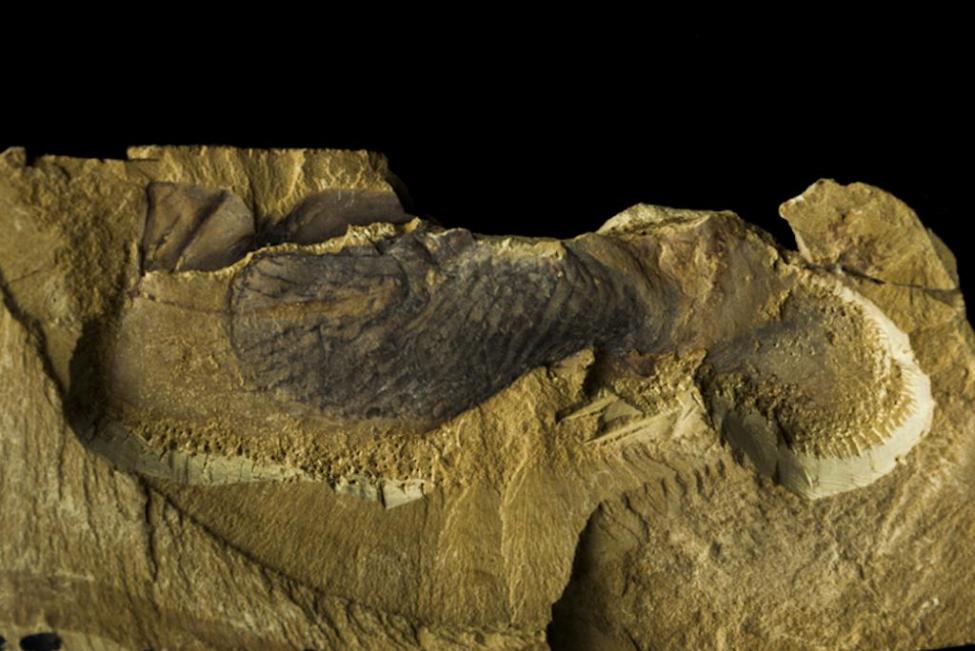
Shark teeth in bone bed

Jamie Hiscocks is a fossil hunter. More than a decade ago, he discovered a fossil on a Bexhill beach, which was confirmed as a ‘pickled’ dinosaur brain in 2016.

The unassuming brown pebble Jamie found is the first example of fossilised brain tissue from a dinosaur, that lived 133 million years ago during the Early Cretaceous period. Oxford and Cambridge university scientists believe it belongs to a species closely related to Iguanodon, a large herbivore which had a long tail for balance and hind legs that were longer than their fore limbs. It is thought that their brains displayed distinct similarities to the brains of modern-day crocodiles and birds. Now, he is encouraging family and friends to go out hunting for their own hidden treasures - and has some tips to help people explore the coastal areas around their home, and to keep everyone safe. He said: “Don’t despair, the end of the heatwave need not be bad news.

“If you are looking for a free, healthy and interesting activity for the family, then look no further than your local beach. “We often hear about the famous Jurassic Coast in Dorset, but not many people realise there are fossils to be found on your doorstep, helped along by the recent unseasonal winds.

“It’s amazing what you will find washed in on the tides. “All you need is a pair of eyes, perhaps a pair of wellies, a good sense of beach safety and a responsible attitude. “Cliff falls happen. For safety, avoid getting near the cliff face. “Wait for fossils to be washed out and away from cliffs.

“The best time to search is on the low tide but be aware of the tide turning and always check before you start hunting. “There is plenty to find in the right conditions. Strong tidal offshore currents can wash away the deep overlying sand exposing new areas to search. No digging required. “There is a variety of loose dinosaur age fossils to be found locally, including the isolated bones of dinosaurs, turtles, crocodiles, pterosaurs and even small lizards. “The remains of ancient fossilised sharks can also be found if you are fortunate. “If you look closely enough you may be able to find fossilised material known as bone bed.

“This rock contains micro-fossils. Hundreds, if not thousands of tiny fragments of bone representing an almost entire eco system of fish, bird-like dinosaurs, amphibian, lizard, crocodile, turtle and pterosaur, even mammal. “Fossilised dinosaur age plant material can also be washed up on the shores of Sussex. New discoveries have been found in this exciting fossilised material. “You could report your new finds to any museum, or expert. It’s not always the case that your local museum have experts on-site. “It may take time and perseverance to get your finds identified. “The internet is also a useful resource of information for finding the right expert. “Books and fossil forums can also be of help in reporting and identifying your finds.”

Source: www.chichester.co.uk

5 Features We Want Added to ‘Jurassic World Evolution’

Monday, August 27, 2018

Since its release in June, Jurassic World Evolution has proven to be a must-buy game for Jurassic Park fans. It allows you to incubate any of 48 species of dinosaur, build their enclosures, and create the ultimate park to go along with your prehistoric pals. Plus, you get to build your park on Las Cinco Muertes and Isla Nublar!

But, like all games, there is still room for improvement. Whether it’s the addition of new creatures, including more buildings, or little tweaks, there are changes and additions that could make the game much better. Here are five features that Frontier Developments should add in the near future.

FLYING AND AQUATIC REPTILES

Be honest now. You want a Mosasaur, don't you?

Premiering in The Lost World and Jurassic World, respectively, flying and aquatic reptiles have been staples of the Jurassic franchise as much as their land-faring counterparts. Though Frontier has been hinting at their inclusion for a while now, we’ve yet to hear exactly when either of these types of creatures will be added. But we can be sure that when they are in the game, they will instantly give it a whole new Jurassic flare.

It’s still unknown exactly how they will be showcased in the park, but it’s clear that both the aquatic and flying reptiles will require special enclosures. An aviary like the one we see in Jurassic World would work for the pterosaurs. But the marine reptiles would prove to be more of a challenge. Perhaps a special enclosure surrounding a pre-existing body of water will do the trick.

(Plus, I’m sure we all want to reenact the scene from Jurassic World when all the Pteranodons and Dimorphodons break free and wreak havoc.)

BUILDING CUSTOMIZATION AND PERSONALIZATION

Though the designs are clean and crisp, most of the buildings in the game are pretty bland.

Perhaps one of the biggest letdowns in the game is how few buildings are available to build. We have access to several buildings that are essential to park operation, like the ACU Center and the Hammond Creation Lab, but the options are slim when it comes to guest recreation. There also isn’t much diversity when it comes to the building types. There is only one type of gift shop, one type of restaurant, and so on.

Plus, the buildings that are available are pretty boring to look at. Though skins are available for a few of the vehicles, it would be great if there were a way to decorate and modify the buildings. If we could at least change the color scheme of the buildings, maybe they would feel more like our own.


MORE OUTDOOR ATTRACTIONS FOR THE GUESTS

A Cretaceous Cruise would fit into the game perfectly.

Though the dinosaurs were intended to be the focal point of both Jurassic Park and Jurassic World, the parks in the films also included other fun things to do. The park in Jurassic Worldhad safaris in Gallimimus Valley, golfing, botanical gardens, and the several other outdoor activities and venues. But Jurassic World Evolution features none of those things. The only real “fun” places that the guests can go to are the bowling alley, an arcade, and other indoor activities.

The game does allow guests to hop into the gyrospheres and zoom through the enclosures, but that’s the only activity for the guests outside. The inclusion of more outdoor attractions like golfing and the Cretaceous Cruise would tick a lot of boxes when it comes to overall game satisfaction.

VISIBLE DINO AGING

If both the outdoor activities and the dinosaur aging are added, our parks could include petting zoos!

One of the greatest parts of having animals in Frontier’s Zoo Tycoon series and its predecessors from Blue Fang was that the animals actually grew up. When you first bought them, they would be adults, but when they bred and gave birth, their offspring would actually look like they were young.

This recently-incubated edmontosaurus is the biggest it will ever get.

Unfortunately, when you incubate dinosaurs in Jurassic World Evolution, they are full-grown adults. Though they are unable to reproduce, as they’re all female, it would be nice to see young dinosaurs coming out of the Hammond Creation Lab and watch them grow in real time.

VISITING OTHER PLAYERS’ PARKS

Don't you want to show off your park's grandeur to the world?

Besides screenshots, playthroughs, and livestreams on Twitch and YouTube, there’s no real way to see other people’s parks. It’s a shame considering Hammond’s original philosophy for his park was to show it to the whole world. So, to make the game even more spectacular, it would be great if we had the ability to visit other players’ parks. Not only would it give us inspiration to make our parks even better, it would also help us know what we can expect later on in the game.

Perhaps once our islands receive a 5-star rating, our parks would be accessible to other people. Plus, Frontier could also create a way to buy and sell dinosaurs between players. This also opens the door to even more cooperative gameplay and multiplayer features that could be added in the future.

Source: http://fandom.wikia.com

The Spinosaurus Saga

Friday, August 24, 2018

A 50-foot life-size model of a Spinosaurus dinosaur at the National Geographic Society in Washington, FILE PHOTO

The giant sail-backed predatory dinosaur Spinosaurus has always been a source of confusion and mystery to scientists, something that continues to this very day.

The dinosaur was first collected from Egypt and described by the great German paleontologist Ernst Stromer in 1915. This original specimen consisted of a handful of vertebrae, plus half of a lower jaw. Stromer knew these were the remains of a big theropod dinosaur, but it was pretty different from the species known from Europe and North America at the time. The jaw bones were long and narrow, the teeth were conical instead of flat and blade-like, and the vertebrae had those towering spines growing off the top, forming a giant sail. Having relatively little to go on, Stromer reconstructed Spinosaurus as basically a typical, tyrannosaur-like theropod dinosaur- just one with a sail on its back and crocodile-like teeth.

For almost 100 years, that’s just about all we knew about Spinosaurus. As the famous story goes, during WWII Stromer’s Spinosaurus fossils were destroyed by a British bombing raid that hit the museum. The paleontology collections manager was a Nazi party supporter, and Stromer was not. For his defiance, Stromer was forbidden from moving his fossils to safety- talk about being punished for doing the right thing. And so all we’re left with is Stromer’s published descriptions and illustrations, plus one photograph of the specimen on display before it was destroyed. Spinosaurus remained a sail-backed but otherwise completely typical meat-eating dinosaur in the minds of the public. At least it got to star as the antagonist in Jurassic Park 3.

All this was upended in 2014 by a study led by Dr. Nizar Ibrahim, whose team had been on the hunt for Spinosaurus remains all over northern Africa. By combining their newer specimens with what was known of Stromer’s material, they argued that Spinosaurus was an exceptionally weird dinosaur- with short stout legs and flat webbed feet, bulky arms, an extra-long torso, and a strange M-shaped sail, their Spinosaurus looked like no other dinosaur we’d ever found. Ibrahim and his colleagues believed these features proved that Spinosaurus was poorly adapted for life on land, and had a much more crocodile-like lifestyle, swimming around and preying on giant fish in the vast swamps of Cretaceous North Africa.

This view of Spinosaurus has been polarizing ever since, and recently Dr. Donald Henderson of the Royal Tyrrell Museum has weighed in. In a new article published in PeerJ, Dr. Henderson argues that Spinosaurus was not as well adapted to an aquatic lifestyle as others have thought. Using a digital model of Spinosaurus with the right kind of proportions and density, Dr. Henderson dropped the dinosaur into a virtual pool of water to see what would happen to a real Spinosaurus in real water, and compared the results to tested models of other predatory dinosaurs, alligators, and penguins.

The results showed that Spinosaurus actually floated pretty well, with its long pointed head easily sticking out of the water. This indicated that Spinosaurus was certainly capable of swimming to some degree. However, all the other theropod dinosaurs, which included the small and slim Coelophysis, the bulky Tyrannosaurus, and close spinosaur cousin Suchomimus, also floated with ease. Dr. Henderson found Spinosaurus’ center of gravity to be pretty close to the hips like in other bipedal dinosaurs, not near the middle of the body as in most aquatic animals. This contradicts Ibrahim and colleague’s ideas, and doesn’t set Spinosaurus apart as being much more adapted to an aquatic lifestyle than any other dinosaur it was compared to. Henderson also found that alligators, which are often compared to Spinosaurus in form and lifestyle, were able to sink fairly quickly when their lungs deflated, and easily turned right-way up if they were spun in the water. Similar results were found in penguins, our modern-day aquatic predatory dinosaurs, who are able to use their powerful flippers to dive to great depths and swim effectively. Spinosaurus did not fair nearly as well in these tests- Henderson observed that it would have bobbed on the surface and was easily flipped over in the water. Not exactly good traits to have if you’re an aquatic animal.

RELATED: Royal Tyrrell Research Blows Swimming Dinosaur Theory out of the Water

So is our image of Spinosaurus as a watery river-dweller as extinct as the creature itself, with it having been bound to only dry land? Not completely. While Henderson states that the animal was more competent on land than previously thought, he also doesn’t rule out the possibility of it having lived and hunted in shallow water or along shorelines. The teeth and jaws of Spinosaurus match that of an animal adapted to eating fish, and perhaps its broad, webbed feet allowed it to punt through shallow swamps or wade along muddy tidal flats. Whatever the whole truth is, Spinosaurus continues to be a dinosaur worthy of the mystery and grandeur of ancient Egypt.

References:

Henderson (2018), A buoyancy, balance and stability challenge to the hypothesis of a semi-aquatic Spinosaurus Stromer, 1915 (Dinosauria: Theropoda). PeerJ 6:e5409; DOI 10.7717/peerj.5409
Ibrahim N, Sereno PC, Dal Sasso C, Maganuco S, Fabbri M, Martill DM, Zouhri S, Myhrvold N, Lurino DA. 2014. Semiaquatic adaptations in a giant predatory dinosaur. Science 345(6204):1613–1616
If you want to support paleontology in Alberta, consider coming out to our Night for the Museum fundraiser event on August 25th, 2018! There’s also still time to come on a tour of the Pipestone Creek bonebed while August lasts! And as a notice, the museum will be closed from September 11-12 for a changeover of gallery displays.

Source: www.dailyheraldtribune.com

Thousands Deeply Dippy About Dinosaur

Sunday, August 26, 2018

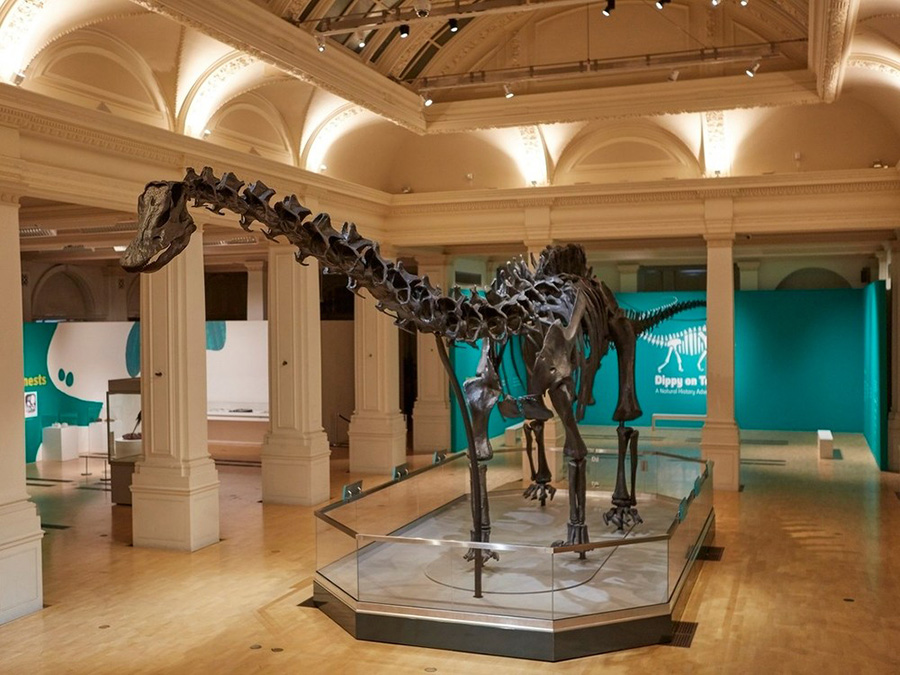
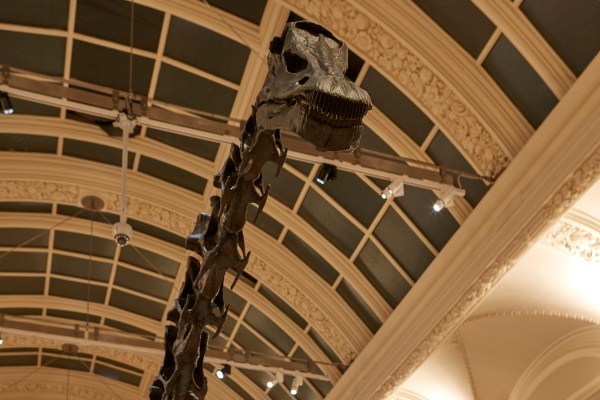
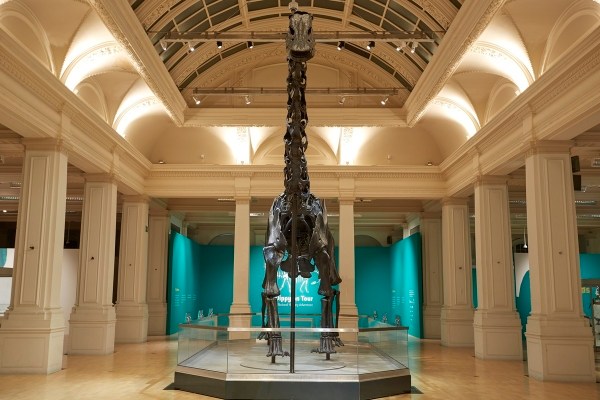
Dippy the diplodocus

Dippy the Dino has stomped into the Midlands - attracting thousands of visitors on his tour - and he's around for a few more weeks.

The Natural History Museum’s famous Diplodocus, known as Dippy, has brought in over 200,000 visitors since he arrived at Birmingham Museum and Art Gallery in May.

But there's still time to embark on a natural history adventure with the popular dino staying in the heart of Birmingham until September 9.

Dippy the diplodocus

In what is the second leg of his UK tour, Dippy arrived in the Midlands on May 26, and has since pulled in a huge number of visitors that can learn about how modern day birds evolved from dinosaurs.

The full skeleton cast in its displayed pose is a huge 21.3 metres long, 4.3 metres wide and 4.25 metres high.

Dippy the diplodocus

The exhibition explores how features characteristic of modern day birds, such as feathers and nests, first appeared in dinosaurs.

It also shows the diversity of birds and how they evolved to become one of the most successful groups of animals inhibiting the planet, from the oceans of Antarctica to tropical rainforests.

Source: www.expressandstar.com

228-Million-Year-Old Fossil Reveals Complex Early History of Turtles

Saturday, August 25, 2018

An artist’s depiction of Eorhynchochelys sinensis as it would have appeared in life 228 million years ago in China. Image credit: Institute of Vertebrate Paleontology and Paleoanthropology, Chinese Academy of Sciences.

Paleontologists in China have discovered a 228-million-year-old extinct species of turtle, known for its weird disc-like body without a shell and its toothless beak.

Named Eorhynchochelys sinensis, the newly-discovered turtle lived approximately 228 million years ago (Triassic period) in what is now southwestern China.

“This creature was over 6 feet long (1.8 m), it had a strange disc-like body and a long tail, and the anterior part of its jaws developed into this strange beak. It probably lived in shallow water and dug in the mud for food,” said Dr. Olivier Rieppel, a paleontologist at Field Museum.

Eorhynchochelys sinensis isn’t the only kind of early turtle that paleontologists have discovered — there is another early turtle with a partial shell but no beak. Until now, it’s been unclear how they all fit into the reptile family tree.”

“The origin of turtles has been an unsolved problem in paleontology for many decades. Now with Eorhynchochelys sinensis, how turtles evolved has become a lot clearer.”

The fact that Eorhynchochelys sinensis developed a beak before other early turtles but didn’t have a shell is evidence of mosaic evolution — the idea that traits can evolve independently from each other and at a different rate, and that not every ancestral species has the same combination of these traits.

Modern turtles have both shells and beaks, but the path evolution took to get there wasn’t a straight line. Instead, some turtle relatives got partial shells while others got beaks, and eventually, the genetic mutations that create these traits occurred in the same animal.

Photograph of the fossil turtle Eorhynchochelys sinensis. Image credit: Nick Fraser, National Museums Scotland.

“This impressively large fossil is a very exciting discovery giving us another piece in the puzzle of turtle evolution. It shows that early turtle evolution was not a straightforward, step-by-step accumulation of unique traits but was a much more complex series of events that we are only just beginning to unravel,” said Dr. Nick Fraser, from the National Museums Scotland.

Fine details in Eorhynchochelys sinensis’ skull solved another turtle evolution mystery.

For years, paleontologists weren’t sure if turtle ancestors were part of the same reptile group as modern lizards and snakes — diapsids, which early in their evolution had two holes on the sides of their skulls — or if they were anapsids that lack these openings.

The skull of Eorhynchochelys sinensis shows signs that the species was a diapsid.

“With Eorhynchochelys sinensis’ diapsid skull, we know that turtles are not related to the early anapsid reptiles, but are instead related to evolutionarily more advanced diapsid reptiles. This is cemented, the debate is over,” Dr. Rieppel said.

Eorhynchochelys sinensis is described in a paper published online this week in the journal Nature.

_____

Chun Li et al. 2018. A Triassic stem turtle with an edentulous beak. Nature 560 (7719): 476-479; doi: 10.1038/s41586-018-0419-1

Source: www.sci-news.com

Fossil Turtle Didn't Have a Shell Yet, But Had The First Toothless Turtle Beak

Thursday, August 23, 2018

Illustration showing what Eorhynchochelys would have looked like in life. Credit: Adrienne Stroup, Field Museum

228-million-year-old fossil sheds light on how turtles evolved.

There are a couple of key features that make a turtle a turtle: its shell, for one, but also its toothless beak. A newly-discovered fossil turtle that lived 228 million years ago is shedding light on how modern turtles developed these traits. It had a beak, but while its body was Frisbee-shaped, its wide ribs hadn't grown to form a shell like we see in turtles today.

"This creature was over six feet long, it had a strange disc-like body and a long tail, and the anterior part of its jaws developed into this strange beak," says Olivier Rieppel, a paleontologist at Chicago's Field Museum and one of the authors of a new paper in Nature. "It probably lived in shallow water and dug in the mud for food."

The new species has been christened Eorhynchochelys sinensis -- a mouthful, but with a straightforward meaning. Eorhynchochelys ("Ay-oh-rink-oh-keel-is") means "dawn beak turtle" -- essentially, first turtle with a beak -- while sinensis, meaning "from China," refers to the place where it was found by the study's lead author, Li Chun of China's Institute of Vertebrate Paleontology and Paleoanthropology.

Eorhynchochelys isn't the only kind of early turtle that scientists have discovered -- there is another early turtle with a partial shell but no beak. Until now, it's been unclear how they all fit into the reptile family tree. "The origin of turtles has been an unsolved problem in paleontology for many decades," says Rieppel. "Now with Eorhynchochelys, how turtles evolved has become a lot clearer."

The fact that Eorhynchochelys developed a beak before other early turtles but didn't have a shell is evidence of mosaic evolution -- the idea that traits can evolve independently from each other and at a different rate, and that not every ancestral species has the same combination of these traits. Modern turtles have both shells and beaks, but the path evolution took to get there wasn't a straight line. Instead, some turtle relatives got partial shells while others got beaks, and eventually, the genetic mutations that create these traits occurred in the same animal.

"This impressively large fossil is a very exciting discovery giving us another piece in the puzzle of turtle evolution," says Nick Fraser, an author of the study from National Museums Scotland. "It shows that early turtle evolution was not a straightforward, step-by-step accumulation of unique traits but was a much more complex series of events that we are only just beginning to unravel."

Fine details in the skull of Eorhynchochelys solved another turtle evolution mystery. For years, scientists weren't sure if turtle ancestors were part of the same reptile group as modern lizards and snakes -- diapsids, which early in their evolution had two holes on the sides of their skulls -- or if they were anapsids that lack these openings. Eorhynchochelys's skull shows signs that it was a diapsid. "With Eorhynchochelys's diapsid skull, we know that turtles are not related to the early anapsid reptiles, but are instead related to evolutionarily more advanced diapsid reptiles. This is cemented, the debate is over," says Rieppel.

The study's authors say that their findings, both about how and when turtles developed shells and their status as diapsids, will change how scientists think about this branch of animals. "I was surprised myself," says Rieppel. "Eorhynchochelys makes the turtle family tree make sense. Until I saw this fossil, I didn't buy some of its relatives as turtles. Now, I do."

This study was contributed to by Institute of Vertebrate Paleontology and Paleoanthropology, the CAS Center for Excellence in Life and Paleoenvironment, National Museums Scotland, the Field Museum, and the Canadian Museum of Nature.


Story Source:

Materials provided by Field MuseumNote: Content may be edited for style and length.


Journal Reference:

  1. Chun Li, Nicholas C. Fraser, Olivier Rieppel, Xiao-Chun Wu. A Triassic stem turtle with an edentulous beakNature, 2018; 560 (7719): 476 DOI: 10.1038/s41586-018-0419-1

Source: www.sciencedaily.com

Rare Intermediate Fossils Give Researchers Insight Into Evolution of Bird-Like Dinosaur

Friday, August 24, 2018

Xiyunykus bones in the lab before their removal from the rock. Credit: James Clark

An international team of researchers discovered a new species of dinosaur, Xiyunykus pengi, during an expedition to Xinjiang, China. The discovery is the latest stemming from a partnership between the George Washington University and the Chinese Academy of Sciences. The findings were published today in Current Biology along with the description of a second new intermediate species, Bannykus wulatensis.

Xiyunykus and Bannykus are both alvarezsaurs, an enigmatic group of dinosaurs that share many characteristics with birds. Their bodies are slender, with a bird-like skull and many small teeth instead of the usual large, sharp cutting teeth of their meat-eating relatives.

"When we described the first well-known alvarezsaur, Mononykus, in 1993, we were amazed at the contrast between its mole-like arms and its roadrunner-like body, but there were few fossils connecting it back to other theropod groups," James Clark, the Ronald Weintraub Professor of Biology at the GW Columbian College of Arts and Sciences, said.

Bannykus resoration. Credit: SHI Aijuan

However, alvarezsaurs did not always look this way. Early members of the group had relatively long arms with strong-clawed hands and typical meat-eating teeth. Over time, the alvarezsaurs evolved into dinosaurs with mole-like arms and a single claw. The discovery of the new specimens allowed the researchers to uncover an important shift in how the specialized features of the alvarezsaurs evolved.

"It can be hard to pin down the relationships of highly specialized animals. But fossil species with transitional features, like Xiyunykus and Bannykus, are tremendously helpful because they link bizarre anatomical features to more typical ones," Jonah Choiniere, an associate professor at Wits University and member of the research team, said.

Xiyunykus skeleton linedrawing. Credit: SHI Aijuan


The fossils were discovered during an expedition co-led by Dr. Clark and Xing Xu of the Institute of Vertebrate Paleontology and Paleoanthropology at the Chinese Academy of Sciences. Xiyunykus pengi is the ninth species of dinosaur identified by the partnership between GW and the academy.

"Our international field teams have been tremendously productive over the years," Dr. Xu said. "This research showcases just some of our incredible discoveries."

Alvarezsaurs restoration. Credit: Vikto Radermacher

Source: https://phys.org

LEGO Jurassic Park Ian Malcom Minifigure Coming in Minifigure Pack

Thursday, August 23, 2018

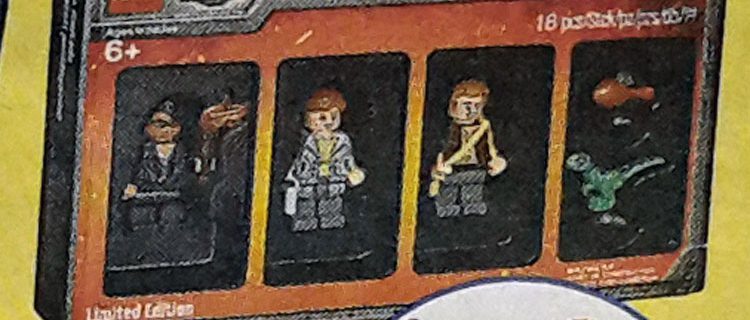
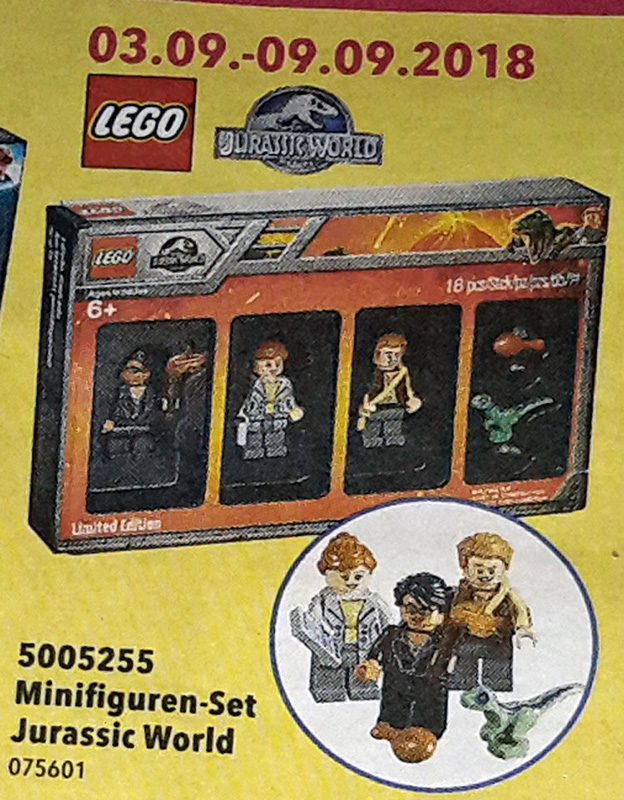
Jeff Goldblum fans can delight, as Dr Ian Malcolm will join the LEGO minifigure line-up in a LEGO Jurassic World minifigure pack.

Although Toys R Us no longer exists in most places around the world, the retailer is still operational in Germany. It is a catalogue from Germany that has unveiled this year’s Bricktober minifigure sets, shared by PromoBricks. One of the four packs, 5005255, will be part of the LEGO Jurassic World theme.

This special minifigure set will include the very desirable Dr Ian Malcolm minifigure, capturing Jeff Goldblum as a LEGO character for the second time. As if to demonstrate the personality that he oozed in Jurassic Park, the other characters included are Owen Bland and Claire Someone (Hardy and Dearing), along with a baby dinosaur.

Unfortunately, fans around the world will have to wait a while to find out how these sets will make it to market outside of Germany. In that particular territory, a Bricktober box will be free with any LEGO purchases worth €40 or more, or will be available to purchase for €14.99. The Jurassic World set will be available from September 3 until September 9.

LEGO Jurassic World sets are available now from Amazon.com.

Earth's Earliest Animals Were Strange Sea Creatures

Wednesday, August 22, 2018

The Cambrian fossil Stromatoveris proved an important link between earlier and later animal groups from the Ediacaran and Cambrian periods. Photo by Northwest University, China/J. Hoyal Cuthill

New fossil analysis suggests the planet's earliest known animals emerged at least 571 million years ago.

The new study -- published this month in the journal Paleontology -- proves members of the Ediacaran biota are indeed animals and were diversifying for several million years before the acceleration of speciation known as the Cambrian explosion.

Scientists recovered the first Stromatoveris psygmoglena fossil in the mid-20th century. The frond-like sea creature baffled paleontologists for decades.

Stromatoveris psygmoglena hails from the Cambrian period, but dozens of similar blob-like fossil imprints have been found among older strata -- rocks from the Ediacaran period, which lasted from 635 to 542 million years ago.

Until now, scientists have struggled to understand the relationship between Stromatoveris psygmoglena, Ediacaran biota and the animal forms that emerged during the Cambrian explosion.

Using a new computer analysis method, scientists were able to tease out important relations between Ediacaran biota and a range of other animal groups. The computer model helped scientists compare the anatomical characteristics of fossils from the Ediacaran and Cambrian periods.

"These methods are very frequently used in biology and palaeontology but had not previously been applied to test the wider relationships of these Ediacaran biota," Jennifer Hoyal Cuthill, visiting researcher in palaeobiology at the University of Cambridge, told UPI.

The unique frond-like forms of Ediacaran biota made it difficult for scientists to compare the ancient species to Cambrian animals.

"To help us to compare the Ediacaran biota to a wide range of other groups, from algae to complex animals, we used a popular online system called MorphoBank which allowed us to upload and compare photographs of the fossils," Cuthill said.

The computer analysis revealed previously unknown relationships between Ediacaran biota and a variety of Cambrian animal groups. According to the model, Stromatoveris psygmoglena was an important link between the early and later animal groups.

"Rather than first appearing in the Cambrian period as had once been thought, animals must have originated and begun to diversify by the Ediacaran period," Cuthill said. "Our analysis also showed that a biological group called the Petalonamae, which includes members of the Ediacaran biota and the Cambrian animal Stromatoveris, didn't go extinct at the end of the Ediacaran period as some had thought."

Scientists determined petalonamids persisted for some 53 million years, dominating the seafloor in Earth's ancient oceans. These early animals were more resilient than scientists previously thought.

This early evolutionary success, scientists determined, set the stage for more sophisticated adaptations.

"The common ancestor they shared with later animals was likely to have had a more complex, differentiated anatomy than sponges, for example, setting the stage for further evolutionary innovations among the complex animals," Cuthill said.

Because the research confirms the emergence of animals during the Ediacaran period, scientists need to reconsider the timeline of early animal evolution, said Cuthill. Evolutionary biologists and paleontologists should start looking for evidence of the first animals even earlier in the fossil record.

"Scientists from all over the world are searching for evidence of early animals," Cuthill said. "These palaeontologists are using a range of techniques, from chemical tests for the traces of life to the tried and tested method of simply looking for fossils out in the field."

Source: www.upi.com

What Really Killed the Dinosaurs? Not Asteroids, According to a Princeton Scientist

Wednesday, August 22, 2018

Researchers in the US have found more evidence for the theory that major volcanic eruption began just before the impact, possibly also playing a role in the extinction

The last of the non-avian dinosaurs disappeared from our fragile planet around 65 million years ago. And an asteroid did it, right?

Actually no – at least, not according to Professor Gerta Keller.

Far from being some crackpot with a whacky theory she read on the internet and decided to push, Professor Keller has worked as a Professor of Paleontology and Geology in the Geosciences Department of Princeton University since 1984.

And Professor Keller is adamant that it was not a massive asteroid – said in 2010 by a panel of 41 experts to have been 10 kilometres wide, which slammed into the planet with “about a billion times more energy than the atomic bombs dropped on Hiroshima” – that caused the dinosaurs to go extinct.

“It’s like a fairy tale: ‘Big rock from sky hits the dinosaurs, and boom they go.’ And it has all the aspects of a really nice story,” Professor Keller told The Atlantic.

“It’s just not true.”

So what does the professor propose really happened to the dinosaurs?

Volcanoes.

Specifically, Professor Keller is of the belief the Deccan Traps, in modern day India, were the cause of the mass extinction – which sounds kind of cute compared to an asteroid with the force of a billion atom bombs until you get into the nitty-gritty of it.

Professor Keller compared the Deccan Traps eruptions to that which occurred at Iceland’s Laki volcano in the 18th century.

Starting on June 8, 1783, and continuing until early February 1784, the Laki eruption was one of the largest in recorded history, with Benjamin Franklin noting its effects over North America.

According to Encyclopaedia Britannica, “The vast quantities of sulfurous gases stunted crops and grasses and killed most of the domestic animals in Iceland; the resulting Haze Famine eventually killed about one-fifth of Iceland’s population.”

Yet that crazy outcome is not even a blip next to Deccan.

“But that’s just a short-term event from a relatively minor eruption, compared with Deccan,” Keller said, and that Deccan was “thousands of times larger”.

“And then you repeat that over and over again. For basically 350,000 years before the massive die-off,” she said.

She added, “Shit hits the fan for the last 40,000 years. The eruptions really took off. Huge. Absolutely huge. That’s when we have the longest lava flows on Earth, into the Bay of Bengal.”

For the record, that’s a flow of almost 1000 kilometres – roughly the distance from Sydney to Brisbane.

However, it’s not the lava that led to all the death and destruction, but the huge levels of sulphur spewing into the atmosphere, causing acid rain and eventually a huge heating of the entire planet.

Sounds familiar?

“You just replace Deccan volcanism’s effect with today’s fossil-fuel burning,” Professor Keller said. “It’s exactly the same.”

Now, if you think that high school or social media are the only places where having a dissenting opinion can get you ostracised, then you’ve never been in a scrap with a scientist.

People have called Professor Keller a “bitch”, “the most dangerous woman in the world” and said she “should be stoned and burned at the stake”.

It’s led to the disagreement to be known as the ‘Dinosaur Wars’ and – almost 40 years after they began – they show no signs of abating.

Source: www.techly.com.au

Pages