nandi's blog

Giant 5-Ton Sloth Inhabited Costa Rica’s Territory 7 Million Years Ago
Tuesday, September 11, 2018

Different Fossils of Bones Were Found in Coto Brus.

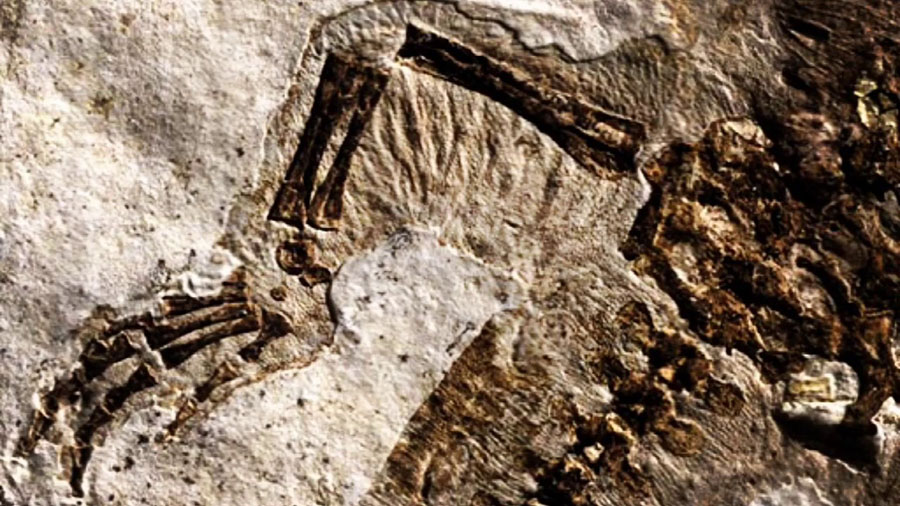
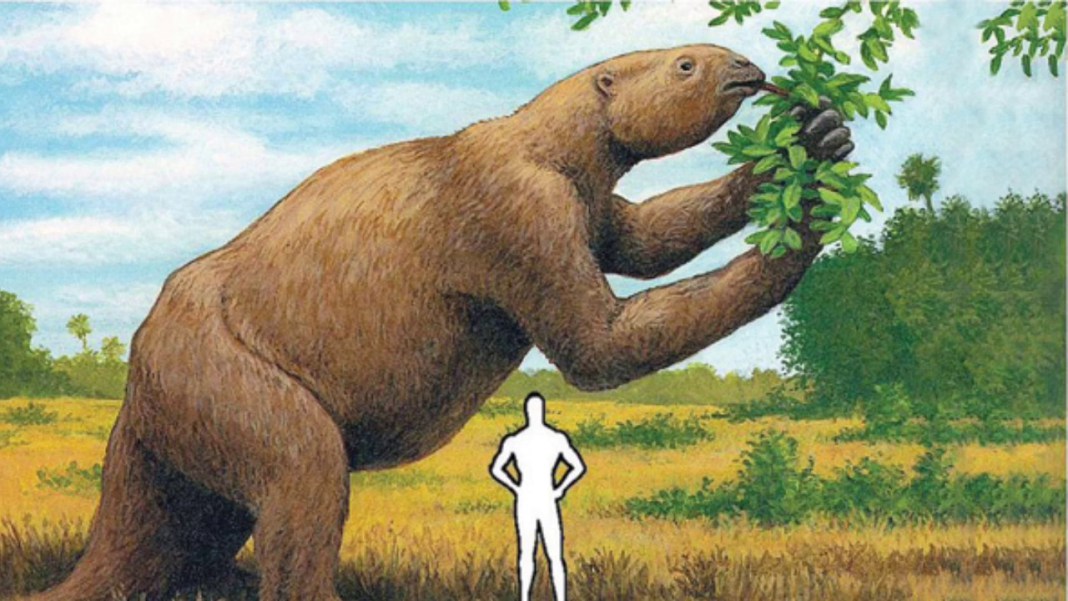
A giant sloth, weighing 5 or 6 tons, and whose stature could exceed twice that of a human being, was part of prehistoric Costa Rica and inhabited our lands about 7 million years ago.

A group of paleontologists works to determine their characteristics, describe their bones, compare them with others, and see if they correspond to previously described species or if they are completely new species or genres for science.

This is part of a work that started in 2003 with various trips to San Gerardo de Limoncito, in Coto Brus, about 11 kilometers from San Vito. In this area, the researchers explored for bones and fossils of different species.

For more than a decade, Ana Lucía Valerio, coordinator of the Geology section of the National Museum and César Laurito, trainer for the work of the National Apprenticeship Institute (INA) and associate researcher of the National Museum, searched and analyzed more 2,600 bone samples from Dozens of different species that appeared during the expeditions.

“When I decided to go for paleontology, nobody gave a penny to show something here. Venturing to find mammals was unthinkable. They told us ‘you are looking for bones, it does not matter much’, but the finding makes the world see again and say ‘something is happening here, something that we did not expect and that is changing the vision of biological exchange’ “, said Laurito.

The team of paleontologists with a sloth fossil bone

A natural bridge between the North and the South

This area would be key because it is further proof that Central America served as a communication bridge for animals to cross from South America to North America and vice versa and Central America served as a bridge and as a filter to see which species pass from one place to another and how to make.

“We are talking about something very old. The Isthmus was closed as such some 3.5 million years ago, and we are talking about how these sloths lived 7 million years ago. So, how did these giant animals of South America pass to the southern zone of Costa Rica if they did not have adaptations to dive? It is possible that for a time there was a passage, a bridge of land, for these animals to cross early. This step could have existed for a short period of time. But for paleontology a short period of time could be 1 million years”, explained Laurito.

“In other words, ‘bugs’ of South America appear much earlier than expected, about 4 million sooner than expected”, he said.

In the last years, Valerio and Laurito have described different species of prehistoric horses, camels, armadillos and other types of mammals in the Tico soil. However, they had a problem with the material of the sloths, since they had no way of comparing it. This type of research in paleontology is very new in the country. For this reason, they contacted Ascanio Rincón, head of the Laboratory of Paleontology of the Venezuelan Institute of Scientific Research of the Ministry of Science and Technology, who has been studying these lazy giants of prehistory for several years.

For a few weeks, Rincon has been collaborating with the next part of the analysis of these giant animals, that is, determining what kind of sloth they are. All the bones were found in the same site as Coto Brus, but they accumulated during the different years of searching.

“This group did not cross until much later. There is no record of these animals in North America until much later, as until about 200 thousand years ago, what prevented them from crossing, or what they found here so they would have stayed longer without moving? Food was not more to the North if not here, to the center? “, wonders Rincón.

For this new analysis, all the bones of this type of animal should be taken, photographed, measured, analyzed, described and compared with other bones of other giant sloths. Thus, important aspects of these populations can be determined. “Now it is the hard work, that is, to compare it with the rest of the 14 or 15 genres that exist and determine who is closer and who looks less, or see if it is a new species”, said Rincon.

This is not easy, because it is difficult to find complete bones or skeletons, but based on what is found, they have to draw conclusions. “This is not what you see in the movies. It’s not that he just cleaned himself a little with a brush and everything appeared there. We had to chop very hard rocks to get this out, to give a lot of strength, to look a lot, sometimes some bones of some species appeared, sometimes, other bones of other species, what we have today to assemble met for several years “, explained Laurito.

Rincon added: “That is to be able to know what is happening with only 15% of the body, how to put together that puzzle, in this case, we do have material from various types of bone that help us to better understand the panorama.

The researchers reported that there are at least three individuals within the discovered bones since three bones of the same type of different sizes (ages) were found, which could indicate that they traveled in a herd, or in a family, for example, a mother with her children or neighbors. This could give more clues, not only about who they were, but how this biological exchange was made.

Although it is still difficult to know what each of the animals that are being analyzed was like, especially because they may belong to different species and genres, the specialists do have some ideas of how these giant sloths could be.

For example, it is known that they walked on the 2 floors of their hind feet and on the knuckles of their front legs. In addition, their front claws had a very large force and were possibly used to dig. In addition, due to their weight, they did not climb trees, but rather moved on the ground walking on their hind legs and used the knuckles of their front legs as support.
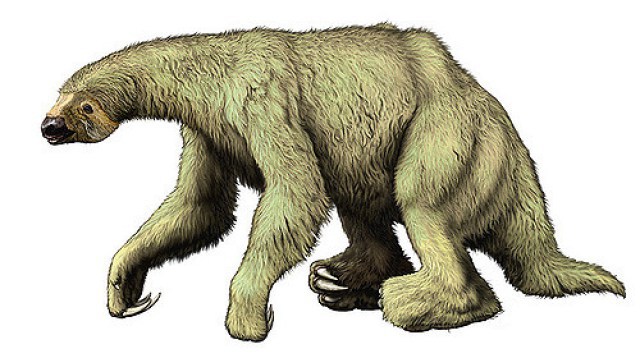
Giant Sloth

On the other hand, their teeth were so strong that they not only fed on leaves but also on wood and other hard materials. They had that ability to regenerate with every wear that was incurred at the time of chewing. It was even necessary that they ate that kind of food so that their teeth would wear out because these pieces grew as new tissue and if they did not have where they could grow more than necessary and cause problems.

It is known that the lazy giants had some kind of social life and that they were possibly in packs.

Within these discoveries, there might be new species for science, but they were extinct millions of years ago. They did not even live with hominids, but in 2018 their bones are in a state of conservation necessary to know about this portion of prehistoric megafauna.

“The fossil hunter does not kill his prey; he resurrects it. We resuscitate preys that we are looking for, to make people know them, too”, said Rincon.

Why is this important? Rincon was emphatic: “This type of knowledge helps us understand who we are, where we come from, and gives identity to the Isthmus. We cannot judge a book by its last page; we must see what there is before, and that is why it is necessary to study paleontology”.

Source: https://thecostaricanews.com

Scientists Attempt to Clone Extinct Horse From Siberian Foal Mummy

Sunday, September 9, 2018

Russia is now planning a “Paleo Park”.

When I read Michael Crichton’s famous Jurassic Park in the 1990’s, I knew enough about the approach to sense that cloning could be used to bring back extinct animals.

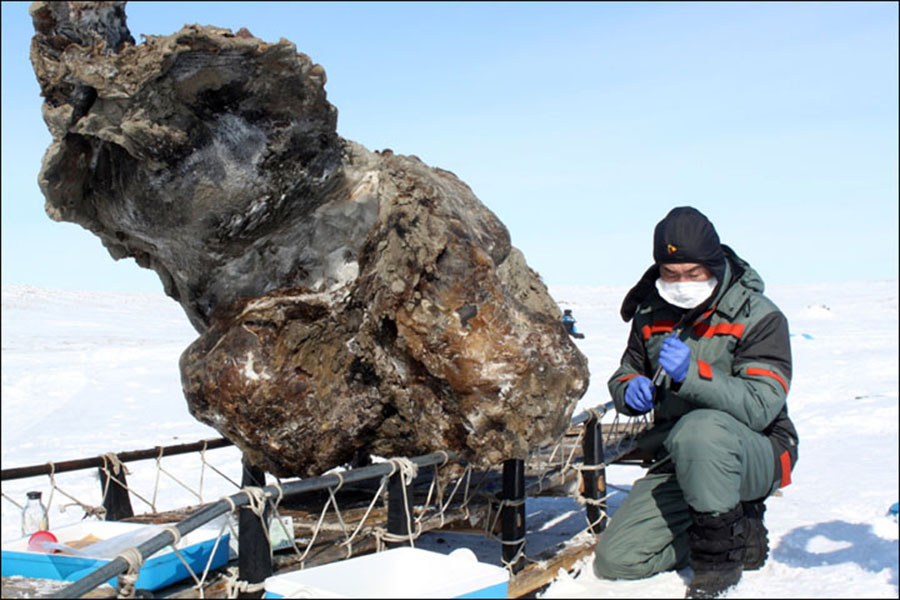
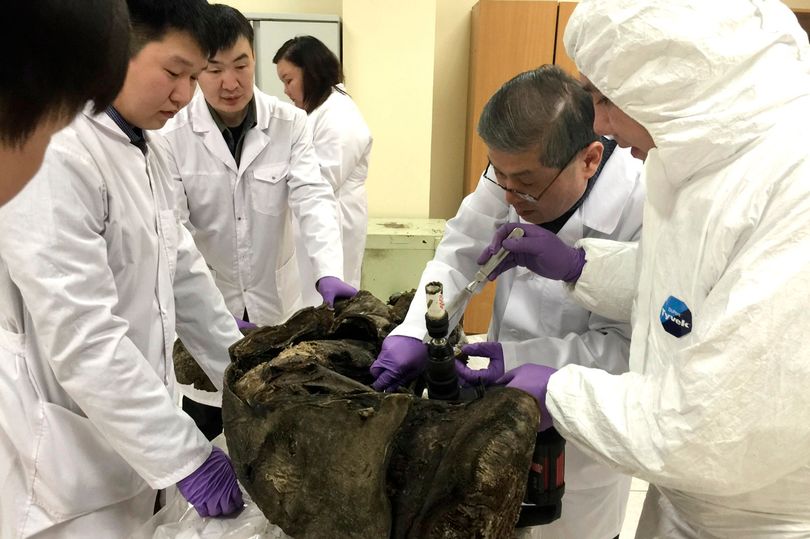
It appears that Crichton’s novel was indeed prophetic, as scientists are attempting to extract cells from the mummy of a 40,000-year-old foal from Siberia in an attempt to use the sample to clone the extinct species back into existence.

The male baby horse was discovered last month, according to The Siberian Times, in permafrost in Batagaika crater, which residents superstitiously call the “gateway to the underworld.” Nearby Yakutsk, a remote city in eastern Siberia, is often cited as being the coldest city in the world.

A team of scientists from South Korea and Russia estimates the foal, called the Lenskaya or Lena horse, was about 20 days old when it died. The species of horse, now extinct, is between 30,000 and 40,000 years old. Thanks to the extremely cold temperatures, the animal’s tissue was preserved enough for the scientists to obtain samples.

Semyon Grigoriev, head of the laboratory at the Mammoth Museum, told the Times that the horse was “well-preserved” and a “unique find.” There is no damage to the horse’s carcass and even its hair is intact – which Grigoriev said is “incredibly rare for such ancient finds.”

Interestingly, Russia is planning a major new £4.5 million cloning facility, a “Paleo Park,” that aims to bring back to life the extinct woolly mammoth and rhinoceros as well as other long-gone species.

The cloning laboratories – some sunk deep in the permafrost soil – aim to extend research by Russian scientists who are already working closely with South Korean specialists hoping to restore extinct species.

Yakutsk is capital of diamond-rich Sakha Republic, also known as Yakutia, where 80 percent of finds of samples of Pleistocene and Holocene animals with preserved soft tissues have been made.

The scheme of the new centre will be unveiled at the 4th Eastern Economic Forum hosted by President Putin opening on September 11 in Vladivostok.

It will “aim to study extinct animals from living cells – and to restore such creatures as the woolly mammoth, woolly rhinoceros, cave lion and breeds of long-gone horses”, reported The Siberian Times.

Others are directing their research interests to the most famous predator of the Paleolithic era: the sabre tooth tiger. The scientists are taking the same research approach as used in Crichton’s best-seller, as they plan to use the genetic code of a living species to bring back its extinct kin.

San Francisco interior designer Ken Fulk, known for his eclectic style, lavish parties, tech/ social media clients including Sean Parker, and writeups about his work in Vanity Fair, issued a news release today stating that his love of taxidermy has led him to donate a rare saber-tooth tiger from his collection to Stewart Brand’s Revive & Restore Foundation, for the purpose of using cells to clone a cat with the help of UC-Santa Cruz’s paleogenomics lab.

“Fulk’s 10,000-year-old specimen, which was gifted to him during his annual vacation to the Alaskan fishing village of Noatak, was discovered frozen in a glacier cave near Eschscholtz Bay,” stated the news release, accompanied by the photo shown above. “By extracting DNA from the fur and claws of this incredibly preserved saber-toothed tiger, the geneticists at University of California-Santa Cruz paleogenomics lab may be able to bring the prehistoric large cat back from extinction. Using the genome of an Asiatic lion as a model, the scientists will attempt to recode Smilodon’s genome to create a living cell that would then be used with existing cloning technology.

These developments do have some significant ethical considerations and safety concerns, as these animals’ niches no longer exist and living animals may not be immune to the pathogens they may have.

Source: https://legalinsurrection.com

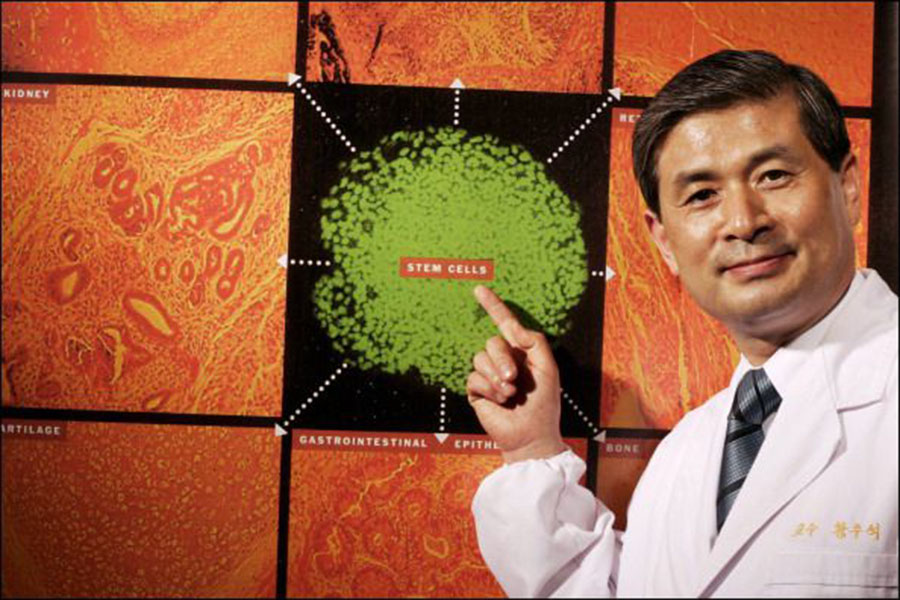
Once Implicated in Cloning Fraud, This Scientist Now Wants to Bring Back an Extinct Ice-Age Horse

Saturday, September 8, 2018

GETTY IMAGESPATRICK AVENTURIER/GAMMA-RAPHO

In 2004, Woo-suk Hwang fooled the scientific community. Now he wanted to bring a species back to life.

It's an idea with Jurassic Park-level ambitions: cloning a mummified 40,000-year-old horse to bring the extinct species back to life. Many experts are highly skeptical, to put it lightly. And at the center of the controversy is Woo-suk Hwang, a research who was part of a major scientific fraud scandal about cloning a decade ago.

The story begins back in the Ice Age, when a baby horse died at the the approximate age of two months in what scientists suspect was an accident, likely a drowning. About 40,000 years late, in August 2018, scientists at Yakutian North-Eastern Federal University studying the horse's mummified remains found that the region's permafrost had kept the foal in amazing condition. "Even its hair preserved, which is incredibly rare for such ancient finds," said Yakutia Mammoth museum curator Semyon Grigoryev, speaking to The Siberian Times.

"EVEN ITS HAIR PRESERVED, WHICH IS INCREDIBLY RARE FOR SUCH ANCIENT FINDS"

The horse belonged to a species known as Equus lenensis, or "Lena Horse." It shares more in common with the ancient wild Yukon horses of North America than it does with the current horses that occupy this bitterly cold region, which are known as Yakutian horses and have been domesticated since the 13th century.

Now things have gotten truly odd. A group of Russian and South Korean scientists think that can clone it.

“If we find only one live cell, we can clone this ancient horse,” says Woo-suk Hwang, one of the South Korean scientists involved, to The Siberian Times. “We can multiply it and get as many embryos as we need.”

If Hwang's name sounds familiar, it's because he has a curious history with cloning claims. A veterinarian by trade who first gained acclaim for cloning pets in the 90s, Hwang rose to scientific stardom in 2004 when he and his colleagues claimed to have created the world’s first cloned human embryos, and furthermore, that they had extracted stem cells from them.

Hwang continued to bombastic claims about his embryos until 2006, when his collaborators and online researchers both presented incontrovertible evidence that he committed extreme ethical lapses in obtaining the cells and had falsified data. The president of Seoul National University, where Hwang had been doing his work, called the episode “an unwashable blemish on the whole scientific community as well as our country.”

Hwang has been trying for a comeback ever since. He has never claimed responsibility for nine of 11 scientific papers related to human embryos that were shown to be fraudulent, but remains an expert on the animal cloning process. For years he has run the Sooam Biotech Research Foundation, which has successfully cloned dogs, cows, pigs and coyotes. But some experts wonder if Hwang's claims about the ancient wild horse were simply a new attention grab.

Cloning a modern day creature—say, a coyote—is possible because the coyote's DNA is fully intact. That's simply not the case with Ice Age DNA. It's typically been degraded "into tens of millions of pieces," Love Dalén, a professor of evolutionary genetics at the Swedish Museum of Natural History in Stockholm, tells LiveScience. Similar challenges would exist with trying to clone a woolly mammoth or other extinct species. Hwang says he is undeterred. Speaking to The Siberian Times, he says, "if we manage to clone the horse, it will be the first step to cloning the mammoth."

The odds are long, but not impossible. Scientists concede that if Hwang and his team were able to find enough workable DNA from the ancient foal, then cloning it stands a chance at being scientifically feasible. Considering Hwang's history with bold claims, though, they're not holding their breath.

Source: LiveScience / www.popularmechanics.com

Jurassic World: Fallen Kingdom (4k UHD Review)

Saturday, September 8, 2018

Jurassic World: Fallen Kingdom (2018) 4K UHD

DIRECTOR

J.A. Bayona

RELEASE DATE(S)

2018 (September 18, 2018)

STUDIO(S)

Amblin Entertainment/Legendary Pictures/Perfect World (Universal)

  • Film/Program Grade: C+
  • Video Grade: A-
  • Audio Grade: A
  • Extras Grade: B-

REVIEW

Right up front, the important thing to know about Jurassic World: Fallen Kingdom is that it’s ridiculous. The plot is paper thin, recycling aspects of virtually every film in the series that’s come before it. In its defense, though, it doesn’t try to be more than it is, it gets straight to the point in squeezing suspense out of its contrived situations, and it sets up the franchise to become something new and potentially more interesting.

When the abandoned Jurassic World theme part is threatened by an impending volcanic eruption, Claire (Bryce Dallas Howard) and Owen (Chris Pratt) are reunited by John Hammond’s former partner, Benjamin Lockwood (James Cromwell), who has initiated a plan to save the remaining dinosaurs there from extinction. But upon returning to the island and capturing Blue and other specimens, they’re betrayed by Lockwood’s men, who have an alternate plan to sell the dinosaurs to the highest bidder for their value in pharmaceutical research and weapons manufacturing. So Claire and Owen must find a way to stop this, with only an idealistic young scientist, a nervous computer genius, and Lockwood’s granddaughter to help them. The supporting cast includes notables Toby Jones and Ted Levine. Jeff Goldblum and B.D. Wong also reprise their roles from the original Jurassic Park for a few scenes each.

Jurassic World: Fallen Kingdom was shot digitally in the ARRIRAW codec (at 6.5 and 3.4K) using ARRI Alexa cameras and Panavision spherical lenses. It appears the film was finished as a 2K digital intermediate at the 2.39:1 theatrical aspect ratio, but the higher resolution capture does make a difference. Other than a little bit of aliasing that’s visible from time to time, overall detail is impressive in the upsampled image, with nice texturing and very subtle film granularity that’s soft and lovely without reducing clarity. The cinematography both is dramatic and atmospheric, with strong contrasts and rich natural coloring. High dynamic range is available in both Dolby Vision and HDR10, each of which deepens shadows and brights alike, though the brightest areas of the frame are never eye-reactive. The film’s color palette is rich and naturalistic, but also greatly enhanced by the wider color gamut.

Audio options begin with a lossless, object-based English DTS:X mix of near reference quality. The soundstage is huge across the front and vertically too, thanks to oft-active height channels. Chapter 8 is a particular sonic standout, as Isla Nubar’s volcano blows and a stampede of fleeing dinosaurs races past the main characters, all of them eventually plunging into the sea. Low end is firm and robust, yet clarity of dialogue is never sacrificed. The score is presented in good fidelity, and surround movement is smooth, constant, and highly immersive. Additional audio options include Spanish and French 7.1 DTS-HD Master Audio, with subtitles available in those languages as well as English SDH.

In a welcome touch, the actual 4K disc includes significant extras, among them (all in 1080p HD):

  • On Set with Chris & Bryce (3:05)
  • The Kingdom Evolves (4:33)
  • Return to Hawaii (2:41)
  • Island Action (6:01)
  • Aboard the Arcadia (5:53)
  • Birth of the Indoraptor (4:09)
  • Start the Bidding! (3:18)
  • Death by Dino (1:33)
  • Monster in a Mansion (3:06)
  • Rooftop Showdown (3:48)
  • Malcolm’s Return (3:07)
  • VFX Evolved (7:08)
  • Fallen Kingdom: The Conversation (10:16)
  • A Song for the Kingdom (1:26)
  • Chris Pratt’s Jurassic Journals (12 parts – 12:08 in all)
  • Jurassic Then and Now: Presented by Barbasol (3:06)

The material is glossy to be sure, but also mostly entertaining. The informational content isn’t especially revealing, but producers Steven Spielberg and Colin Trevorrow offer a few interesting comments, as does director Bayona. You do get a little bit of depth in the VFX Evolved and Fallen Kingdom: The Conversation pieces. On the whole, though, this material is really just a chance to see the cast and crew having fun on set, with Pratt and Howard in particular cracking jokes and being charming. A Song for the Kingdom is cute too, it should be said. Naturally, you also get a Blu-ray copy of the film in 1080p HD and the same extras, along with a Movies Anywhere Digital code. There are also paper inserts that promote the Jurassic World: Evolution video game, as well as an Interactive Baby Blueaugmented reality (AR) option for the Facebook Messenger app.

If you’re fan of this franchise, Jurassic World: Fallen Kingdom is worth adding to your video library... and 4K Ultra HD is obviously the best way to do that. The film delivers a few good Saturday afternoon dino-jump scares, is mildly amusing, and sets up a potentially interesting finale… if it is a finale, because it’s hard to imagine Universal and Amblin not revisiting these dinosaurs for years to come.

Source: www.thedigitalbits.com

Before it Burned, Brazil’s National Museum Gave Much to Science

Saturday, September 8, 2018

 A fire on September 2, 2018, raged through the main building of Brazil’s National Museum in Rio de Janeiro. MARIO LOBAO/ASSOCIATED PRESS

Museum collections provide valuable datasets, and this one is no exception.

A natural history museum isn’t just a place to take visiting relatives or for entertaining kids on the weekends. These museums’ collections also play a vital, but under-celebrated, role in scientific research.

That’s why, when Brazil's National Museum in Rio de Janeiro caught fire on September 2, more than just a catalog of natural and human history was lost. The museum was full of valued datasets that could have driven research to come, raised new scientific questions and answered old ones.

“You never know what you don’t know if you don’t have a collection,” says Kelly Zamudio, an evolutionary biologist at Cornell University.

At least once a month, Science News reports on new species discovered in museum cupboards, what an ancient animal ate and cases of mistaken fossil identity — all based on museum specimens.

Beyond undiscovered species, these collections contain a wealth of environmental and ecological information. Museum specimens have helped researchers figure out if the 1918 pandemic flu virus jumped from birds to humans (it didn’t), track the spread of West Nile virus, figure out how Argentine ants invaded the United States and reveal shifts in butterfly ranges due to climate change. In February, sprouting seeds found in the cheeks of rodents consumed by rattlesnakes from a museum collection revealed the serpents as unlikely seed dispersal agents — talk about research that’s a mouthful.

Brazil’s National Museum was no exception. It was “a powerhouse both in research and in the collections,” says Michael Heckenberger, an archaeologist at the University of Florida in Gainesville.

What the museum’s treasures have taught us

Back in the late 1990s, paleontologist Alexander Kellner, who now leads the museum, discovered a carnivorous dinosaur (Santanaraptor placidus) that jaunted around on two legs 110 million years ago. “It’s unique because it has beautifully preserved soft tissue,” says Taissa Rodrigues, a paleontologist at the Universidade Federal do Espírito Santo in Vitoria, Brazil. And in the anthropology department, an 11,000-year-old human skull dubbed Luzia raised questions about the peopling of the Americas.

FEATURED FOSSILS A reconstructed Santanaraptor skeleton once stood in the galleries of the National Museum. The fossils it was based on may or may not have survived the recent fire.

The museum’s paleontology collection gathered a catalog of the region’s biodiversity going back hundreds of millions of years — dinosaurs, flying reptiles, ancient lizards, crocodiles, mammoths, saber-toothed cats and more. It’s introduced a bevy of ancient species over the years. More recently, in 2014, Tiago Simões of the University of Alberta in Edmonton, Canada, and colleagues found a previously unknown ancient lizard(Calanguban alamoi) from the early Cretaceous Period.

Researchers have also used the museum’s samples to put modern plants and animals in context. In 2016, museum specimens helped to confirm that two types of longhorn beetles discovered in a national park represented new species. Last year, ant specimens collected in the 1800s helped researchers come up with new standards for telling two easily confused tropical species apart.

Fresh eyes have also picked out new species in the museum’s collections.

In 2014, Juliana Alvim, who studies mollusks in the invertebrate department at the museum, and her colleagues discovered a new species of sea slug (Pleurobranchaea spiroporphyra) based on a specimen originally collected on the Brazilian coast in 1955. The slug hasn’t been seen recently in Guanabara Bay, where it was found, raising the possibility that it may have disappeared due to pollution. If the slug hadn’t been in the collection, “it probably would not have been described,” Alvim says.

Often scientists revisit museum specimens collected decades or even centuries ago to pose new scientific questions.

Kelly Zamudio recently used the National Museum’s frog collection as part of a genetic study on Brazilian lineages of the chytrid fungus that’s ravaging amphibians around the world. Bertha and Adolfo Lutz started the collection at the turn of the 20th century to document the biodiversity of the region. As Zamudio swabbed fungal spores from the specimens, she realized that the duo “never would have predicted that their frogs would be used to track the evolution of a deadly fungus across time.”

Lost & found

Curators at the museum in Rio are still taking stock of what specimens made it through the fire. Almost all of the entomology and arachnid collections may have been lost. During the fire, staff rescued parts of the mollusk collection, though Alvim doesn’t know if her sea slug is among them. Some paleontological collections may have been protected by metal cabinets, though the objects could have suffered temperature damage.

Luckily, the vertebrate collections, including Bertha and Adolfo’s frogs, were stored in another building and survived.

Future research is where the museum’s losses will hit hardest. Across the sciences, DNA techniques, for example, continue to expand the realm of information that scientists can get from plants, animals and fossils preserved in museums.

BURNED An estimated 95 percent of the National Museum’s mounted entomology specimens, like these butterflies photographed earlier in 2018, were lost in the fire.

Another major blow will be the loss of holotypes, or specimens used to define a genus or a species. Some, like that of S. placidus, are — or were — one of a kind. Sometimes researchers designate new holotypes or neotypes when the originals are lost. But when other samples don’t exist, it’s hard to compare the old species with new finds to determine whether you’ve got a new species or not. “This is going to cause some taxonomic chaos,” says Luiz Rocha, an ichthyology curator at the California Academy of Sciences who’s worked with the Brazil museum.

One the bright side, in response to the fire, the International Commission on Zoological Nomenclature plans to address the question of replacement holotypes in a forthcoming publication. “If there’s good documented evidence — photos, DNA, papers describing the species — then researchers may not have to find a neotype,” or new holotype, says Neal Evenhuis, an entomologist at the Bishop Museum in Honolulu and a member of the commission. 

Going digital

Digital records, such as images and 3-D models, are one way museums can salvage collection data from fires and other destructive events. “If we have at least digitized records or imagery, then we know exactly what is lost,” says Diane Zorich, head of the Smithsonian Institution’s digitization office. Online platforms like the Paleobiology Database also provide easy access to digital records of specimens.

But digitization costs money, and it’s unclear how much of the Brazilian museum’s 20 million or so items had been digitized before the fire. Still, nothing can really replace the real thing. “You’ll never be able to do DNA studies with a 3-D model,” Zorich says. Digital records also don’t often include things like field notes and measurements. They can be as skimpy as a location, a date and a number of specimen collected.

NOW IN 3-D By one estimate 300 specimens from the National Museum, including this ancient crocodile skull, had been previously scanned in 3-D. These digital records could help rebuild the museum’s collections.

Nevertheless, the internet is already trying to help. Wikipedia has put out a call for images of the museum’s specimens. Museum studies students at the Federal University of Rio de Janeiro are crowdsourcing digital records of the destroyed exhibits, and scientists sending whatever specimen images they have. The 3-D modeling platform Sketch Fab is compiling records from the National Museum.

Research isn’t stopping. Rocha’s lab in California will continue to exchange fish specimens with the Brazilian museum’s researchers, as they’ve done for years. He’s hopeful the tragedy will spark conversation about how museums are neglected and underfunded. “When we lose a biological collection, we’re not only losing uniqueness, we’re losing potential.”

Source: www.sciencenews.org

Fossil Teeth Study Sheds Light on How Jurassic Marine Reptiles Adapted to Environmental Changes

Thursday, September 6, 2018

An artist’s impression of Jurassic marine reptiles. Image credit: Nikolay Zverkov.

Jurassic deep-water reptiles thrived as sea levels rose, while species that dwelled in the shallows waters disappeared, according to new research from the University of Edinburgh.

For more than 18 million years, diverse reptile species lived together in a single seaway called the Jurassic Sub-Boreal Seaway of the United Kingdom.

Until now, however, little was known about the structure of the food chain in this region or how it changed as sea levels rose.

By analyzing the shape and size of teeth spanning this period when water levels fluctuated, University of Edinburgh paleontologist Davide Foffa and colleagues found that species belonged to one of five groups based on their teeth, diet and which part of the ocean they inhabited.

The pattern is very similar to the food chain structure of modern oceans, where many different species are able to co-exist in the same area because they do not compete for the same resources.

“Studying the evolution of these animals was a real — and rare — treat, and has offered a simple yet powerful explanation for why some species declined as others prospered,” Foffa said.

“Teeth are humble fossils, but they reveal a grand story of how sea reptiles evolved over millions of years as their environments changed,” added co-author Dr. Steve Brusatte, also from the University of Edinburgh.

“Changes in these Jurassic reptiles parallel changes in dolphins and other marine species that are occurring today as sea-levels rise, which speaks to how important fossils are for understanding our modern world.”

Partial disparity of Jurassic Sub-Boreal Seaway marine reptiles, mapped against global sea level: (a) partial disparity of taxonomic groups; (b) partial disparity of dietary guilds; (c) sea level curve, with fossil-rich intervals from the Sub-Boreal Seaway noted. Fm – Formation. Image credit: Foffa et al, doi: 10.1038/s41559-018-0656-6.

As global sea levels rose, Jurassic reptiles that lived in shallow waters and caught fish using thin, piercing teeth declined drastically, the team found.

At the same time, larger species that inhabited deeper, open waters began to thrive. These reptiles had broader teeth for crunching and cutting prey.

“Deep-water species may have flourished as a result of major changes in ocean temperature and chemical make-up that also took place during the period,” the researchers said.

“This could have increased levels of nutrients and prey in deep waters, benefiting species that lived there.”

The findings were published online in the journal Nature Ecology & Evolution.

_____

Davide Foffa et al. The long-term ecology and evolution of marine reptiles in a Jurassic seaway. Nature Ecology & Evolution, published online September 3, 2018; doi: 10.1038/s41559-018-0656-6

Source: www.sci-news.com

Secret Uncovered: Gujarat Houses One of the World's Largest Dinosaur Fossil Sites

Thursday, September 6, 2018

Largest Dinosaur Fossil Park Gujarat, INDIA

It is time to move over the regular charms of Gujarat, such as the Rann of Kutch and Ahmedabad, for the state houses a huge secret for travellers. For the uninitiated, Gujarat is home to Balasinor, the largest dinosaur fossil site in the world. Surprisingly, this startling fact has managed to evade the attention of travellers to Gujarat, for not many people know about it. 

Paleontologists have found more than thousands dinosaur eggs in a village called Raiyoli in Balasinor, which also makes it the third largest hatchery to have been found till date. These eggs are believed to be at least 65 million year old, and year 2003 also saw the discovery of a new species at the site. This species was named Rajasaurus narmadensis, and can now be seen in Kolkata’s Indian Museum.

While the remains are considered a huge breakthrough in the world of science, you would be surprised to know that the site was discovered accidentally. Yes, you read that right; it was in the 1980s when the Geological Survey of India (GSI) was surveying the area for its mineral deposits that researchers stumbled upon the fossil site. Other than the eggs, the GSI team also found bones and other dinosaur remains. 

Needless to say, the locals as well as the team, were thrilled to discover about the 30 ft animals that once roamed their neighbourhood. 

The site has been converted into a dinosaur fossil park and is spread over 70 ac. Once in, you can even touch some of the fossil remains and even hold an egg that has been kept at the site for the visitors. 

How to reach Balasinor and where to stay? 

Balasinor is just a drive of 1.5 hours from Ahmedabad, and you can easily reach it via a car in around an hour. Once there, you can have a great stay at the Garden Palace Heritage Hotel, which is run by the royal family of Balasinor. 

In fact, it is a great option as Aaliya Sultana Babi, Princess of this erstwhile state, organises tour of the fossil site and is a keen protector of the site as well. An expert, Princess Babi will also help you identify body parts, eggs and other identification spots on the fossils. She is also referred to as the Dinosaur Princess by the locals for her outstanding prowess in the field.

Source: https://timesofindia.indiatimes.com

Russia Is Planning To Open A Real Life 'Jurassic Park' Really, Really Soon

Thursday, September 6, 2018

Just need your blood.

Woolly mammoths included.

Have they not seen any of the movies?

If you grew up watching 'Jurassic Park' like this writer did, then there's no doubt that one of your dreams is to visit a theme park where dinosaurs roam free.

Guess what, you nerds? That dream you had since you were 12 might come true in the very near future.

That's because Russian scientists are reportedly planning to set up a real life 'Jurassic Park' in the Siberian city of Yakutsk.

Their main goal? To bring extinct prehistoric animals back to life!

According to a news report by The Siberian Times, the center, which will cost up to USD5.9mil (RM24.5mil), will be a "world class paleo-genetic scientific hub".

Working together with the South Korean SOOAM Biotech Research Foundation, Russian scientists from the Northern-Eastern Federal University will reportedly study the DNA and genetics of several extinct species once native to the area.

If everything goes well, the scientists are confident that they would be able to un-extinct some of the animals that went extinct thousands of years ago.

What that means is, we could soon see woolly mammothswoolly rhinoceroscave lions, and breeds of extinct horses roam the planet once again. 

(Sorry, no T-Rexes for now)

Going deep.

So far, the scientists have discovered the DNA of several ancient animals, perfectly preserved in frozen soil for tens of thousands of years.

Last year, the scientists discovered two perfectly preserved cave lion cubs from over 12,000 years ago. Just recently, a 40,000-year-old foal, also perfectly preserved, was unearthed in the Yakutia region of northern Siberia.

In fact, the website reported that around 80 per cent of soft tissue samples of extinct animals from the Pleistocene and Holocene period have been unearthed around the city of Yakutsk, which, by the way, in case you didn't know, is the coldest city in the world.

Setting up a cloning center and breeding mammoths and cave lions at a cold, dark place where no one can hear you scream?

Help!

Hang in there, buddy.

At the moment, there's no official date on when this research lab will open, but according to the same news report, Russian president Vladimir Putin is expected to officially unveil his plans for the center at an investment forum next week.

If there's one man who could bring prehistoric animals back to life, it's Vladimir Putin.

Somebody please get Dr Ian Malcolm on speed dial.

Source: www.rojakdaily.com

When a Teenager Helped Unearth a Dinosaur Nest in Alberta

Wednesday, September 5, 2018

Wendy Sloboda is seen discussing the find with CBC in September of 1987. (The National/CBC Archives)

Wendy Sloboda's keen eye spurred a major find near Lethbridge, Alta., in 1987.

An amateur fossil-hunter's discerning eye and knowledge of dinosaurs helped paleontologists unearth a major fossil find near Lethbridge, Alta., more than three decades ago.

In May of 1987, Wendy Sloboda found what she believed to be the fossilized remains of a dinosaur eggshell.

"I was looking on the ground and I found eggshell — what I thought was eggshell," Sloboda told CBC News in September of that year, when the location of the site was publicly revealed a few months after she first made her find.

After scientists saw samples of what she found, they came to check out the same site themselves.

Kevin Aulenback, a research technician with the Royal Tyrell Museum of Paleontology in Drumheller, Alta., made an additional finding that further confirmed the importance of the site.

"Lo and behold, I looked to my side, there was a tibia ... from a baby hadrosaur, as well as a chunk of eggshell," said Aulenback.

When The National covered the nest story in September 1987, reporter Whit Fraser pointed out that the bones of either unhatched dinosaurs or newborn dinosaurs were visible at the site.

"The remains of dinosaurs have been found before in Alberta, but the scientists say this one is more significant because it allows the paleontologists to study the young animals," Fraser told viewers.

The Alberta government purchased the land where the finding was made — a site now known as the Devil's Coulee Dinosaur Egg Site. It remains a research site and a place the public can visit on guided tours, at selected times between May and Labour Day.

Sloboda has since had a legendary career as a fossil hunter and has even had a species of dinosaur named after her.

Source: www.cbc.ca

Paleontologists Discover Fossil Of Shell-Free Turtle In China

Sunday, September 2, 2018

When the word ‘turtle’ comes to mind, the first thing we imagine is a slow creature with a hard shell on its back. However, paleontologists in China have discovered something unique, that is, the fossil of a shell-free turtle. The fossilized turtle is 228 million years old and also has the distinct toothless beak of a turtle, which is the earliest instance to appear in the species. In addition to this, the renderings of a quite bizarre but happy-looking proto-turtle may bring forth new explanations regarding their evolution.

Chun Li, a researcher at the China Institute of Vertebrate Paleontology and Paleoanthropology discovered the Eorhynchochelys sinensis, which basically means “the first turtle with a beak from China”. Earlier, there had been another discovery of a turtle having partial shell and no beak, and this discovery now helps in providing a clearer history of the turtle’s evolution. The shell free turtle also helps to settle the debate of whether it belongs to diapsids, such as snakes and lizards, or the anapsids, which is a reptile family with the absence of two holes on the side of the skulls. Paleontologist Olivier Rieppel concluded that Eorhynchochelys belongs to the evolutionarily more advanced diapsids. The authors also state that they will continue studying the fossil further in order to search for some additional answers, by gathering deeper insights.

Meanwhile, the Spanish island of Majorca, which was home to the biggest illegal tortoise and turtle farm in Europe, has been shut down by the Civil Guard. The officers said that they were able to rescue 1100 animals from the location, with many of them belonging to endangered species. The protected species were kept in pitiable conditions. Two German men, as well as a pet shop owner from Barcelona, were arrested on suspicions of operating the farm, and face charges of trafficking an endangered species, as well as money laundering. Three other people, two Germans and one Spaniard, are also under investigation. Tortoise and turtle are killed primarily for their shell, skin and meat, while people regard their eggs as a delicacy.

Source: http://healthcarenews24.com

Pages