nandi's blog

Ancient Whale Named for UW Paleontologist Elizabeth Nesbitt

Tuesday, December 11, 2018

Elizabeth Nesbitt with some of the whale fossils in the Burke Museum’s collection.University of Washington

A newly discovered species of whale — found preserved in ancient rock on the Oregon coast — has been named for a University of Washington paleontologist.

“It’s a tremendous honor,” said Elizabeth Nesbitt, who is curator of invertebrate paleontology and micropaleontology at the Burke Museum and an associate professor in the UW’s Department of Earth and Space Sciences.

Maiabalaena nesbittae lived about 33 million years ago and was described in a study published in Current Biology by researchers at the Smithsonian’s National Museum of Natural History in Washington, D.C.

The genus portion of the name combines “balaena,” the Latin word for whale, and “maia” meaning mother, because this species, that had neither teeth nor baleen, is the intermediate stage between modern, filter-feeding baleen whales and their toothed whale ancestors. The Smithsonian paleontologists concluded that this whale used suction to pull fish or squid into its mouth.

While Nesbitt’s research is mostly on smaller fossils of marine animals without backbones, she was instrumental in figuring out the age of Washington and Oregon rocks that the marine mammal fossils are found in. In January 2018, Nesbitt published a paper about the ages of the geologic units in Washington and Oregon that are younger than 50 million years old.

“I use the fossils, mostly different types of clams and snails, to tell geologic time,” Nesbitt said. “Any one species, or any group of species of fossil, lives for a certain period of time. Then when they die, they’re gone. You’re never going to see those guys again, thus each group characterizes a geologic time span,” Nesbitt said.

She compares the fossil assemblages from the Pacific Northwest with those in other parts of the world to pin down dates. Dating rocks is especially tricky in the Pacific Northwest, she said, which is isolated from other land masses and geologically complex.

An artistic reconstruction of a mother and calf of Maiabalaena nesbittae nursing offshore of Oregon during the Oligocene, about 33 million years ago.Alex Boersma

“If you go to the Gulf Coast, everything’s in nice layers. Here, because of plate tectonics, because of the Olympics and the Cascades, everything is tilted, folded and out of sequence. And the other problem in the western Pacific Northwest is dense vegetation covering the rock outcrops. So the dating is much more complicated here than other places in the world,” Nesbitt said.

Another challenge in the dating for the new species, she added, was the rock samples attached to the fossil were just small slivers.

The fossil of the M. nesbittae had been collected in Oregon in the 1970s and sent to the Smithsonian. It wasn’t until lead author Carlos Mauricio Peredo, a doctoral student at George Mason University and predoctoral fellow at the Smithsonian, was investigating very early marine mammals that he realized this specimen’s potential evolutionary importance, Nesbitt said.

The M. nesbittae was likely the size of a dolphin. Researchers do not know how widely it roamed. It just happens that the Pacific Northwest is one of the best places in the world — along with Japan and New Zealand — to find fossils of whales.

“First of all, we have the rocks of the right age, from around the 30-million-year-old time period in which there was an absolute explosion of whales of different types,” Nesbitt said.

“Secondly, when these sediments were deposited the water was deep. So the deeper the water the better chance you have of preserving the fossils — when these rocks were collected they’re essentially sitting in concrete. It takes an incredible amount of time to prepare them.”

Over the course of her career, Nesbitt has explored almost every part of the coast in Washington and Oregon. At this point in her career, she does less fieldwork, since many of the fossils are found on steep cliff faces. But she recently collected whale fossils on Vancouver Island with Nicholas Pyenson, an affiliate curator at the Burke Museum and a co-author on the Current Biology paper.

Nesbitt is also involved in an ongoing project with the Washington Department of Ecology studying modern-day marine microorganisms, from the mid-1990s to today, to learn about changes in Puget Sound ecology.

Nesbitt encourages people in the Seattle area to explore the fossil whales on display at the Burke Museum, many of which were collected by Burke research associate James Goedert and prepared by staff member Bruce Crowley.

As for the new whale, the authors write that “the specific epithet nesbittae honors Dr. Elizabeth Nesbitt, for her lifetime of contribution to the paleontology of the Pacific Northwest and her mentorship and collegiality at the Burke Museum of Natural History and Culture.”

Source: www.washington.edu

Scientists Discover How Birds and Dinosaurs Evolved to Dazzle with Colourful Displays

Tuesday, December 11, 2018

Primotrogon fossil (above) compared with its modern day equivalent, the Narina Trogon. Credit: Fossil: Jakob Vinther and Fiann Smithwick. Photograph: Daniel Field

Iridescence is responsible for some of the most striking visual displays in the animal kingdom. Now, thanks to a new study of feathers from almost 100 modern bird species, scientists have gained new insights into how this colour diversity evolved.

Iridescence refers to the phenomena where colour changes when an object is viewed from different angles. Birds produce this varying coloration in their feathers by using nanoscale arrays of melanin-filled organelles (melanosomes) layered with keratin. In this form of structural colouration, the shapes of melanosomes together with the thickness of keratin layers determine what colour is produced.

While melanosome morphology has previously been used to predict colour in fossil animals, melanosome variation in iridescent feathers has not been analysed on as large a scale until this study.

As reported in the journal Evolution, a team of University of Bristol researchers used scanning electron microscopy to quantify melanosome extracts from the feathers of 97 species of modern birds with iridescent plumage, taken from the collections of the Zoological Museum of Copenhagen.

The study showed that iridescent feathers contain the most varied melanosome morphologies of all types of bird coloration sampled to date. Unlike black, grey and brown feathers that always contain solid melanosomes, iridescent feathers can contain melanosomes that are hollow and/or flattened.

Scaniacypselus fossil (above) compared with its modern day equivalent, the Plume-toed Swiftlet. Credit: Fossil: Jakob Vinther and Fiann Smithwick. Photograph: Daniel Field

"We found that melanosomes in modern iridescent feathers are more diverse in shape than those found in grey, black or brown feathers combined (that also contain melanosomes)," said lead author Klara Nordén, who conducted the study during her undergraduate years at Bristol's School of Earth Sciences. "It is already known that structural coloration is responsible for 70 per cent of the colour variability in birds. These two facts might be coupled – birds evolved varied forms of melanosomes to achieve ever greater diversity in colour.

"I wanted to find out if we could improve current predictive models for fossil colour based on melanosome morphology by including all types of melanosomes found in iridescent feathers."

Dr. Jakob Vinther, co-author of the study and a leading researcher in the field of paleocolour at Bristol's School of Biological Sciences, had already collected the perfect fossil samples to test the new model on. "We had sampled Scaniacypselus, related to modern tree swifts, and Primotrogon, ancestor to modern trogons. These groups are iridescent today and have flat and hollow melanosomes. Did their 48-million-year-old ancestors from Germany also have iridescent plumage?"

Interestingly, the model predicted that Primotrogon probably was iridescent, but it used solid rather than hollow melanosomes, unlike its modern descendants.

"This demonstrates how we now have the tools to map out the evolution of iridescence in fossil lineages," said Klara, who is now a Ph.D. student at Princeton University. "It opens the door to many new discoveries of dazzling displays in fossil birds and other dinosaurs."

The current study focused on mapping out how melanosomes vary in iridescent feathers. Further avenues of research might examine why birds utilise such diversity of melanosome types in iridescent feathers. These insights could ultimately enhance our understanding of why fossil birds or dinosaurs might have used such morphologies, revealing something about their behaviour.

More information: Klara K. Nordén et al. Melanosome diversity and convergence in the evolution of iridescent avian feathers-Implications for paleocolor reconstruction, Evolution (2018). DOI: 10.1111/evo.13641

Source: https://phys.org

6 NEW Books for Kids About Dinosaurs

Tuesday, December 11, 2018

6 Books for Kids About Dinosaurs

I’ve got dinosaurs on my mind lately—not only because of the books I’m about to share in today’s column, but also because I recently got Duelosaur Island, a two-player spin-off board game of Dinosaur Island, and I’m eager to play that some more. Today’s books are mostly picture books, along with one longer book that’s sort of a graphic novel and sort of a picture book. Let’s dig in!


The Dinosaur Expert 

by Margaret McNamara and G. Brian Karas

Kimmy loves fossils and dinosaurs, so she’s really excited to visit the natural history museum with her class. But Jake keeps telling her that girls can’t be scientists, which discourages her. (Grrrr, Jake!) Fortunately, her teacher Mr. Tiffin recognizes both her expertise and her uncomfortable silence, and introduces her to Gasparinisaura Cincosaltensis: a dinosaur discovered by Zulma Brandoni de Gasparini, a Latina woman. Kimmy finds her groove again, and adds Dr. Brandoni de Gasparini to her list of heroes. The back of the book includes a section of Kimmy’s favorite paleontologists, women who are all (except one) still alive and working now. I liked this book not only because it does teach some actual dinosaur facts, but also because of the way that it promotes the idea that girls can be scientists (and that boys—including Jake—can learn to accept that, too).

How to Be a T. Rex

written by Ryan North, illustrated by Mike Lowery

Sal is a little girl, but what she really wants to be is a T. Rex. After all, it’s so much cooler when you can roar, ignore all the rules, and eat everything. Of course, as she discovers, sometimes when you ignore all the rules, you still get sent to your room, even if you are a dinosaur. So she works on some compromises, calling upon her inner dinosaur when the time is right, but also being able to wear her snazzy sneakers. Okay, so this one isn’t really a non-fiction book like many of the others in the list, but it’s cute and amusing, and does include some valuable life lessons (even if it doesn’t teach you literally how to be an actual T. Rex).

Titanosaur: Discovering the World’s Largest Dinosaur

written by Dr. José Luis Carballido & Dr. Diego Pol, illustrated by Florencia Gigena

(Note that Titanosaur won’t be released until February 2019, but it is available for pre-order now.)

The titanosaur shows up briefly in The Dinosaur Expert (above), but gets to take center stage in this picture book, which is a non-fictional account of the discovery of Patagotitan mayorum, written by the two paleontologists who led the dig. It’s told in simple language that kids can understand, with some sidebars that explain specific terms or show photographs of the process, and it’s an exciting story: a gaucho and his dog stumbled upon a bone, which eventually led to the excavation of several titanosaur skeletons.

One thing the book doesn’t really get into is that the titanosaur is a group of dinosaurs, not one specific one, and (as far as I can tell) the Patagotitanisn’t actually the largest of the bunch—so it’s not entirely clear to me what the “world’s largest dinosaur” claim is based on. Either way, it’s a massive dinosaur, with a femur longer than the paleontologists who dug it up, and the book is a great way to learn more about it.

Dinosaur: A Photicular Book 

written by Kathy Wollard, created by Dan Kainen

Photicular books are like an analog version of animated GIFs: as you open and close the book, the image (seen through a lenticular display) is animated in a short loop. This one features eight scenes (including the T. Rex on the cover), each accompanied by one-page introduction and some quick facts like size, diet, and threats. At the beginning of the book is a longer introduction by Wollard about dinosaurs, extinction events, and paleontology.

The Colorful World of Dinosaurs

by Matt Sewell

Dinosaur science is always evolving: we thought dinosaurs were cold-blooded, scaly reptiles, but it turns out they may have been mesothermic and feathered. After a brief (but more densely worded) introduction to dinosaurs (as well as pterosaurs and icthyosaurs, which aren’t technically dinosaurs but are also included here), Sewell fills nearly 100 pages with colorful watercolor illustrations of dinosaurs, accompanied by short descriptions that often include a bit of humor. These illustrations aren’t meant to be photorealistic and are a bit cartoony, but they play with the idea that dinosaurs may have been more brightly colored than we’ve thought in the past.

Bolivar

by Sean Rubin

Bolivar is a dinosaur who lives in New York City, but nobody notices him because everybody’s too busy with their own things. That works for Bolivar, who just wants to live quietly in his apartment and stay out of trouble. But Sybil, the little girl who lives next door, notices him, and is on a mission to get photographic proof (because her mother, as with all the other people in the book, just thinks Sybil is being silly).

This book is a hybrid between a graphic novel and a picture book: there are speech bubbles and panels on some pages, but a lot of the pages are also full-page illustrations accompanied by some narrated text. It’s also much longer than your average picture book, at over 200 pages, and it’s gorgeous. Although the people (and Bolivar himself) are somewhat cartoony, their surroundings are incredibly detailed, from the mosaic mural in the subway station to the various exhibits in the natural history museum.

The story is very funny, and progresses from the predictable—Sybil’s mom manages to interrupt every time she’s about to snap a photo—to a zany, madcap adventure involving the mayor and a case of mistaken identity. It’s kid-friendly, but also may serve as a helpful reminder to adults to pay a little more attention to the world around them.

Source: https://geekdad.com

In China at a Copper Mine Discovered Dinosaur Footprints

Saturday, December 8, 2018

Large areas of rocks with dinosaur footprints discovered in open cut mining of copper ore in China, the newspaper “Zhongguo QINGNIAN Bao”.

The traces were found during blasting in the mine “of Canbelego” in Sichuan province. The company’s administration reported the discovery to local authorities. When inspection of the site revealed three sites of the breed, showing many traces of one, two, three and four fingers.

Work on the site, it was decided to stop. The experts found that the traces belong to carnivorous dinosaurs. According to the discoverer of the footprints of the former head of the local branch of the Fund of cultural heritage EBI Stefano, it is assumed that carnivorous dinosaurs could swim. According to paleontologists, on the territory of the County, Jossue about 100 million years ago was a large lake on which coast and walking reptiles. The prints of their feet were filled with lake sediments, which later hardened. This allowed the trail to be well preserved.

It is noted that the previously seen dinosaur footprints in the mine, but they were destroyed when mining.

Source: https://chtelegram.com

Russian Paleontologists Discover New Giant Herbivorous Sauropod: Volgatitan simbirskiensis

Saturday, December 8, 2018

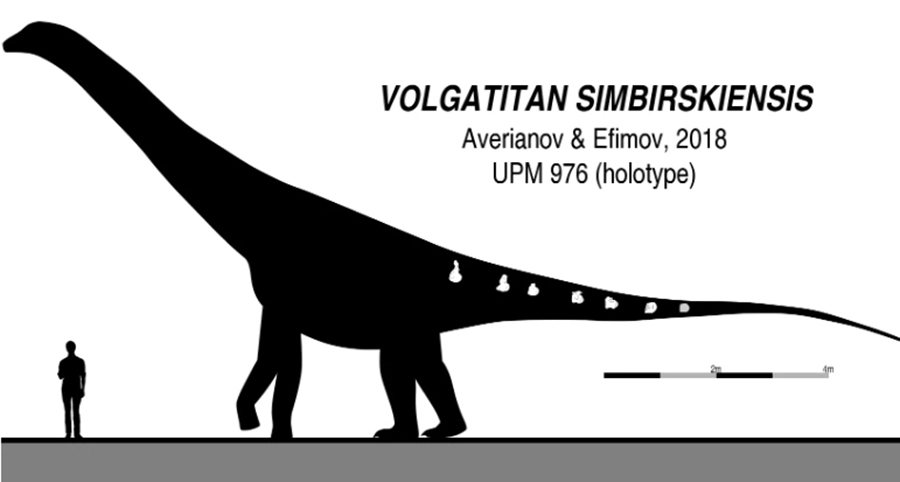
Skeletal restoration of the titanosaurian sauropod Volgatitan.

Paleontologists from Russia have described a new dinosaur, the Volgatitan. Seven of its fossilized vertebrae, buried in the ground for about 130 million years, were found on the banks of the Volga, not far from the village of Slantsevy Rudnik, five kilometers from Ulyanovsk. The study has been published in the latest issue of Biological Communications.

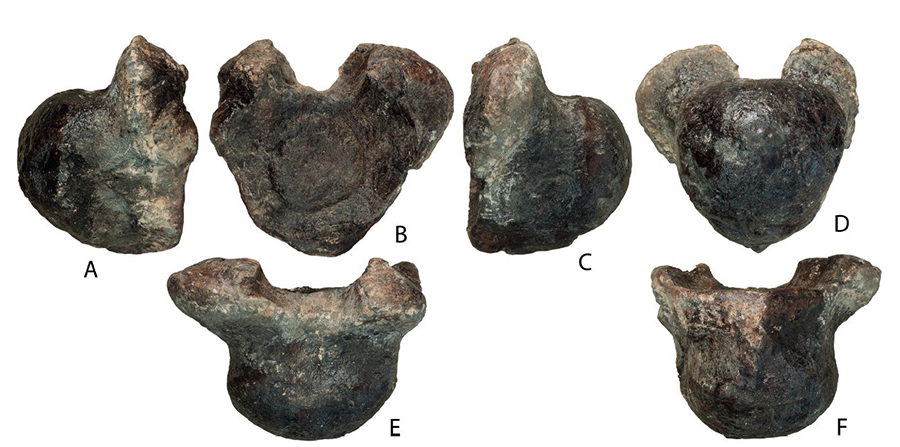
The Volgatitan belongs to the group of sauropods—giant herbivorous dinosaurs with a long necks and tails, which lived about 200 to 65 million years ago. Weighing around 17 tons, the ancient reptile from the banks of the Volga was not the largest among its relatives. The scientists described it from seven caudal vertebrae. The bones belonged to an adult dinosaur characterized by neural arches (parts of the vertebrae protecting the nerves and blood vessels), which completely merged with the bodies of the vertebrae.

The remains of the dinosaur were discovered near the village of Slantsevy Rudnik. This is where, in 1982, Vladimir Efimov discovered three large vertebrae that had fallen out of a high cliff. Later, in 1984-1987, three nodules of limestone fell off, which contained the remaining vertebrae. In his works, the head of the Undorovsky Paleontology Museum called the unusual finds "giant vertebrae of unknown taxonomic affiliation."

Alexander Averianov said, "In the early 1990s, Vladimir Efimov showed photographs of the bones to Lev Nesov, a well-known Leningrad paleontologist. Lev Nesov thought that the vertebrae belonged to sauropods, giant herbivorous dinosaurs. In 1997, Vladimir Efimov published a preliminary note about this find in the Paleontological Journal. He referred to the vertebrae as a sauropod of the Brachiosauridae family. Last July, I finally managed to visit him in Undory and study the bones, and also managed to determine that they belonged to the new taxon of titanosaurs."

Volgatitan simbirskiensis anterior caudal vertebra (holotype), in right lateral (A), anterior (B), left lateral (C), posterior (D), dorsal (E), and ventral (F) views; photographs. Credit: Alexander Averianov and Vladimir Efimov

The dinosaur received a scientific name—Volgatitan simbirskiensis. It comes from the Volga River and the city of Simbirsk (currently, Ulyanovsk). Titans are ancient Greek gods known for their large size. Therefore, according to a paleontological tradition, this word is used in many scientific names of sauropods from the group of titanosaurs. It is also part of the name of the group.

Today, along with the Volgatitan from Russia, 12 valid dinosaur taxa have been described. There are only three sauropods among them: Tengrisaurus starkovi, Sibirotitan astrosacralis and Volgatitan simbirskiensis. The first two are the first sauropods in Russia, which were also studied by St. Petersburg University scientists in 2017. According to Aleksandr Averianov, the description of dinosaur taxa in recent years has become possible due to progress in understanding the anatomy and phylogeny of dinosaurs. In addition, the Russian sauropod allowed scientists to learn more about how these species of ancient reptiles had lived and developed.

"Previously, it was believed that the evolution of titanosaurs took place mainly in South America, with some taxa moving into North America, Europe and Asia only in the Late Cretaceous," explained the St. Petersburg University professor. In Asia, representatives of a broader group of titanosauriform, such as the recently described Siberian titanium, dominated in the early Cretaceous. However, the recent description of the Tengrisaurus from the Early Cretaceous of Transbaikal Region and the finding of the Volgatitan indicate that titanosaurs in the Early Cretaceous were distributed much more widely; and, perhaps, important stages of their evolution took place in Eastern Europe and Asia."

More information: et al, The oldest titanosaurian sauropod of the Northern Hemisphere, Biological Communications (2018). DOI: 10.21638/spbu03.2018.301 

Provided by: AKSON Russian Science Communication Association

Source: https://phys.org

This 3D T-Rex Light Is the Perfect Gift for the Dinosaur Lover on Your List

Saturday, December 8, 2018

Source: Interesting Engineering Shop

Finding the perfect holiday gifts for friends and family is no easy task. With so many people on your shopping list, you can find yourself quickly running out of ideas.

But if anyone on your holiday list this season is a fan of dinosaurs, look no further than this incredibly cool 3D Dinosaur Light, which adds the perfect amount of Jurassic and Triassic ambiance to any room in the house.

Right now this ideal Dino-gift is available for 50% off its usual price at just $14.69 for a limited time.

T-Rex dinosaurs don’t generally enjoy a reputation as being terribly friendly, but this illuminated T-Rex is thankfully a bit different. It’s here to party, not kill. Fixated on a dark base with a plexiglass design, this 3D light appears as though it’s perfectly floating in mid-air, and can shift seamlessly between seven interchangeable colors at your choosing.

Whether you’re a bit scared of the dark and want a light-up companion to keep you company through the night, or you’re simply an avid dinosaur enthusiast who wants to decorate your home with a modern-day version of the past’s most notorious and mysterious animals, this 3D light is here to help.

You’ll be able to keep the light running throughout the night without even needing to change bulbs for up to 10,000 hours of use. The lower voltage rating means that you won’t have to worry about draining your bank account while you take in this light’s subtle and colorful glows.

The entire design is also crafted from powerful ABS and acrylic materials—so you won’t be scrambling to find a replacement any time soon, even if you live with young kids who may take the aggressive nature of the intimidating T-Rex a little too seriously.

Don’t waste time and money trying to track down and buy those elusive gifts this holiday season. If you know someone who has an unstoppable and insatiable thirst for all things dinosaur, this 3D Dinosaur Light will be their favorite gift. And again,  it’s available for just $14.69—50% off its usual price for a limited time only.

Source: https://interestingengineering.com

Leonardo DiCaprio Is Apparently Obsessed With Buying Dinosaur Skulls

Saturday, December 8, 2018

This 95%-complete Triceratops skull was discovered by Jason Phipps, Clayton's brother. These guys have a knack for fossil finding.

The only thing that Leonardo DiCaprio might love more than having a girlfriend half his age and beach volleyball is dinosaurs, as evidenced by his existing collection of their skeletons, which may soon grow … by a lot.

According to the Page Six “art spies” on the scene at Art Miami, the founding father of the Pussy Posse was apparently interested in dinosaur bones at the exhibition “DeXtinction,” where one $2.5 million set caught his little eye: the 150-million-year-old skeletons of an Allosaurus mother and her offspring.

(A rep for DiCaprio, however, told the Cut that “Leo never went to see the fossils while in Miami.”)

Is dinosaur-bone collecting a bizarre, little-known obsession of male Hollywood stars? In 2007, Nicolas Cage brutally outbid DiCaprio on a 67-million-year-old skull of a Tarbosaurus bataar that, turns out, was probably stolen. Just this past year, Russell Crowe decided to hold a major auction following the dissolution of his marriage, in which he sold a Mosasaur skull he had gotten from none other than DiCaprio.

To this day, it’s unclear exactly how many of these reptilian bones DiCaprio has in his possession. In the the article “How Many Dinosaur Skulls Does Leonardo DiCaprio Own,” Uproxx estimates that he either has many or just one, but honestly, who knows. The masculine desire to possess the skeletons of extinct creatures seems to be pretty limitless.

But hey, I guess if anyone has enough room in one of their house(s) for a 28-foot-long Allosaur skeleton — and another baby one! — well, it’s DiCaprio.

Source: www.thecut.com

We Just Got Evidence of a Mysterious New Species of Early Human Hiding in Plain Sight

Sunday, December 9, 2018

(Science and more/YouTube)

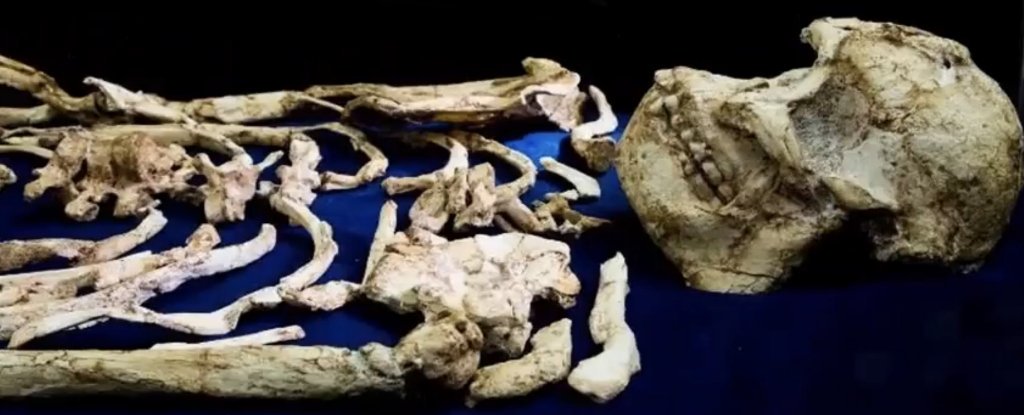
One of the best-known fossils in paleontology, a virtually complete skeleton nicknamed "Little Foot", could actually represent an entirely new species of early human, scientists have announced.

The fossil was first discovered more than 20 years ago, and after decades of careful extraction and research, an analysis of the age, skull and limbs has finally been published.

While the results have yet to be peer reviewed, a series of four pre-printed papers suggests that Little Foot could be a species of Australopithecus we have never seen before.

In fact, the authors think this fossil may be one of the earliest signs of human-like walking ever found, an important stepping stone in our journey from the trees to the ground.

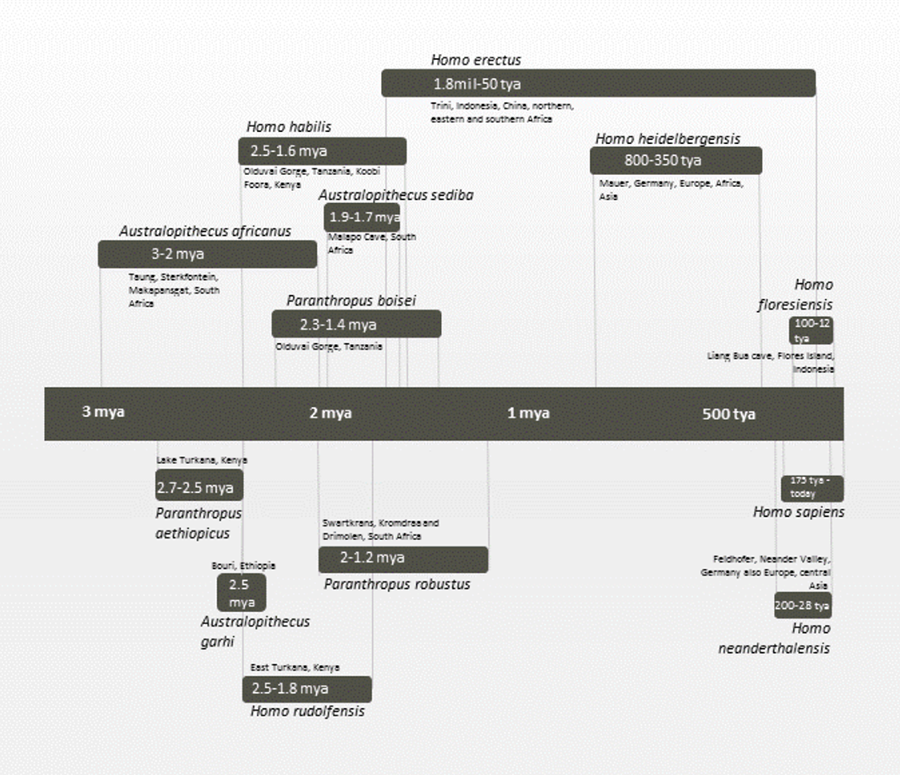
Australopithecines are an extinct group of early humans that existed about two to four million years ago, including the famous fossil "Lucy", which belongs to the species Australopithecus afarensis.

Discovered in the Cradle of Humankind in South Africa, Little Foot is the most complete Australopithecus fossil ever found, with an incredible 90 percent of the skeleton surviving.

But that's not the only thing that makes Little Foot unique.

Ronald Clarke, the paleoanthropologist who first discovered this fossil, has been convinced for over a decade that Little Foot is its own distinct species and not a part of A. africanus after all, as was first proposed.

Now, he's put his hunch to the test. The new analysis reveals that Little Foot is the oldest Australopithecus fossil ever found, a million years older than previously thought, clocking in at 3.76 million years of age.

This early human was found to be surprisingly large, an elderly female standing at about 130 centimetres in height, just centimetres short of modern day humans.

And unlike A. africanus, her face appears to be flatter with larger teeth and a big gap between her upper canines and incisors. This suggests Little Foot was primarily vegetarian, whereas A. africanus was thought to be more omnivorous.

Her limbs offer a few more intriguing clues. For instance, the hip joint on Little Foot was found to be quite different to A. africanus.

In the end, all four papers have convinced Clarke and his team that Little Foot does not belong to A. africanus, or any other species of Australopithecus for that matter.

On the contrary, they argue it is an interim species, squeezed somewhere between early Australopithecines, like A. afarensis, and the first Paranthropus - a hominin descended from the Australopithecines that co-existed with early Homospecies for about a million years.

(Clarke et al, bioRxiv)

Placed at this particular spot in the human lineage, Little Foot is an important bridge between tree climbing and bipedal walking.

In the study, Little Foot's legs were found to be longer than her arms, and this implies she could walk on two feet for medium-to-long distances.

Together with her age, this suggests that Little Foot may have been one of the first Australopithecines to start walking like modern humans.

As one of the first, however, she would have still had quite a few chimpanzee traits.

Her anatomy suggests, for instance, that she would have struggled to carry objects while she walked on two feet - something that chimpanzees also have problems with.

And, as well as walking, she was also quite suited to climbing in the trees. This suggests that as Little Foot roamed through a mix of terrain, including tropical rainforest, broken woodland and grassland, she would have been comfortable either walking or climbing.

Instead of coming up with a brand new name for this distinct species, Clarke is in favour of labelling Little Foot as Australopithecus prometheus - a name that was put forward in 1948 but which has fallen out of use since.

Of course, we need to remind you once again that none of this has been published in a peer-reviewed journal as yet, and so until it has been scrutinised by other experts in the field, we need to take the findings with a big pinch of salt.

Already, not everyone agrees. A team of scientists at the University of Wisconsin-Madison also researching Little Foot isn't convinced by the papers.

John Hawks, a paleoanthropologist on this team, personally thinks that Clarke is jumping the gun. He says that while Little Foot may very well belong to a new species, at the moment, we just don't have enough information to make that conclusion.

"What I am not seeing in these papers is the data," he told New Scientist.

Luckily, more research is on its way. Hawks and his team will be publishing further results early next week.

And Clarke and his team are not through, either. They are still working on studies of Little Foot's hands, her teeth and her inner ear, and these are expected to be published in the near future.

Maybe, by then, the results will be clear.

For now:

‾\_(ツ)_/‾

The firstsecondthird and fourth papers have all been published in bioRxiv.

Source: www.sciencealert.com

Utahraptor

Monday, December 10, 2018

Life restoration by Emily Willoughby, 2014

Utahraptor (meaning "Utah's predator" or "Utah's thief") is a genus of theropod dinosaurs. It contains a single species, Utahraptor ostrommaysorum, which is the largest-known member of the family Dromaeosauridae. Fossil specimens date to the upper Barremian stage of the early Cretaceous period (in rock strata dated to 126 ± 2.5 million years ago).

In 2018, it was proposed that Utahraptor be the Utah state dinosaur, an act that was approved by the Senate. Initially Utahraptor would have replaced another dinosaur, the Allosaurus, as the state's official fossil, but it was decided that Utahraptor would be another symbol of the state.

The holotype specimen of Utahraptor is fragmentary, consisting of skull fragments, a tibia, claws and some caudal (tail) vertebrae. These few elements suggest an animal about twice the length of Deinonychus. Like other dromaeosaurids, Utahraptor had large curved claws on their second toes. One claw specimen is preserved at 22 centimeters (8.7 in) in length and is thought to reach 24 cm (9.4 in) restored.

Size of the largest-known individual of Utahraptor, compared with a human

The largest described U. ostrommaysorum specimens are estimated to have reached up to 5.7 meters (19 ft) long and somewhat less than 500 kilograms (1,100 lb) in weight, comparable to a grizzly bear or polar bear in size. However, the 2001 Kirkland discovery indicates the species may be far heavier than previously estimated.

It is thought that Utahraptor is closely related to the smaller Dromaeosaurus and the giant Mongolian and North American dromaeosaurid genera Achillobator and Dakotaraptor, based on cladistic analysis.

Although feathers have never been found in association with Utahraptor specimens, there is strong phylogenetic evidence suggesting that all dromaeosaurids possessed them. This evidence comes from phylogenetic bracketing, which allows paleontologists to infer traits that exist in a clade based on the existence of that trait in a more basal form. The genus Microraptor is one of the oldest-known dromaeosaurids, and is phylo­genetically more primitive than Utahraptor. Since Microraptor and other dromaeosaurids possessed feathers, it is reasonable to assume that this trait was present in all of Dromaeosauridae. Feathers were very unlikely to have evolved more than once, so assuming that any given dromaeosaurid, such as Utahraptor, lacked feathers would require positive evidence that they did not have them. So far, there is nothing to suggest that feathers were lost in larger, more derived species of dromaeosaurs.

Size of Utahraptor (5) compared with other dromaeosaurs

In a 2001 study conducted by Bruce Rothschild and other paleontologists, two foot bones referred to Utahraptor were examined for signs of stress fracture, but none were found.

The first specimens of Utahraptor were found in 1975 by Jim Jensen in the Dalton Wells Quarry in east-central Utah, near the town of Moab, but did not receive much attention. After a find of a large foot-claw by Carl Limoni in October 1991, James Kirkland, Robert Gaston, and Donald Burge uncovered further remains of Utahraptor in 1991 in the Gaston Quarry in Grand County, Utah, within the Yellow Cat and Poison Strip members of the Cedar Mountain Formation. Radiometric dating has shown that these parts of the Cedar Mountain Formation were deposited about 124 million years ago. The type specimen, CEU 184v.86, is currently housed at the College of Eastern Utah Prehistoric Museum, although Brigham Young University, the depository of Jensen's finds, currently houses the largest collection of Utahraptor fossils.

The type species (and only known species of Utahraptor), Utahraptor ostrommaysorum, was named by Kirkland, Gaston, and Burge in June 1993 for the American paleontologist John Ostrom from Yale University's Peabody Museum of Natural History, and Chris Mays of Dinamation International. Originally, in the specific name, the singular genitive ostrommaysi was used but, in 2000, this was emended by George Olshevsky to the plural. Earlier, it had been intended to name the species "Utahraptor spielbergi" after film director Steven Spielberg, in exchange for funding paleontological research, but no agreement could be reached on the amount of financial assistance.

Utahraptor is a member of the family Dromaeosauridae, a clade of theropod dinosaurs commonly known as "raptors". Utahraptor is the largest genus in the family, and belongs to the same clade as some famous dinosaurs such as VelociraptorDeinonychus or DromaeosaurusUtahraptor is classified in the subfamily Dromaeosaurinae, which is found in the clade Eudromaeosauria.

Cast of the foot bones, Dinosaur Museum Aathal

According to the authors of its description, Utahraptor had an "important [ecological] role as a major carnivore of the fauna of the present-day Arks region in the early Cretaceous", and could probably attack prey larger than itself. Group hunting of individuals of at least 3.5 m and 70 kg, if proven, could have killed 8 m prey of a weight of one to two tonnes. According to paleontologist Gregory S. Paul, Utahraptor was not particularly fast and would have been an ambush hunter that preyed on large dinosaurs such as the contemporary iguanodontians and therizinosauroids it shared its environment with. Its robust build and large sickle claw indicates it was well suited to hunting such prey. Like other dromaeosaurine dromaeosaurids, it may have also relied heavily on its jaws to dispatch prey more than other types of dromaeosaurids such as those in the velociraptorinae.

Utahraptor lived in the lower part of the Cedar Mountain Formation, which during the Barremian was a semiarid area with floodplain prairies, riverine forests, and open woodlands. There is believed to have been a short wet season. Other fauna that were contemporaneous with the dromaeosaurid in the Yellow Cat and Poison Strip Members included the therizinosauroids Falcarius and Martharaptor, the sauropods CedarosaurusMierasaurusVenenosaurus and Moabosaurus, the iguanodonts IguanocolossusPlanicoxaCedrorestes and Hippodraco, the hadrosauroid Eolambia, and the ankylosaur Gastonia. Fellow dromaeosaurid Yurgovuchia, the troodontid Geminiraptor and the ornithomimosaur Nedcolbertia also dwelled here. Birds, fish, mammals, turtles, crocodiles, and pterosaurs are also known from the formation, creating a diverse fauna.

Source: https://en.wikipedia.org / www.natgeo.com

Neovenator

Monday, December 10, 2018

Artistic reconstruction of Neovenator salerii. Author: Fred Wierum

Neovenator (nee-o-ven-a-tor) which means "new hunter" is a genus of allosauroid dinosaur. At the time of its discovery on the Isle of WightUnited Kingdom, it was the best-known large carnivorous dinosaur from the Early Cretaceous (Hauterivian-Barremian) of Europe.

Neovenator measured approximately 7.6 metres (25 ft) in length, and was of a gracile build, weighing 1,000 to 2,000 kilograms (2,200 to 4,400 lb). Specimen MIWG 4199 indicates an individual with a possible length of about 10 metres (33 ft), but it only consists of a toe phalanx and its position in Neovenator is dubious.

Estimated size based on the holotype.

The various scientific descriptions of Neovenator have indicated some distinguishing traits. The nostril is twice as long as it is high. The praemaxilla in the snout bears five teeth. The maxilla is pierced by a large maxillary fenestra, the diameter of which equals a sixth of the length of the tooth row. The tooth crown equals a quarter of the tooth length, thus including the root. The toe claws have a groove on top. Both praemaxillae are connected by an extra pen-in-socket connection. The front joint surface of the intercentrum of the axis, the second neck vertebra, is transversely widened. The odontoid process of the axis has small openings along the side edge of the front facet. The neural process of the axis has a single small opening in the side. The rear neck vertebrae are fused with their neck ribs. On the eighth and ninth neck vertebrae, at the parapophysis, the lower rib joint facet, the internal camellate structure of the bone is visible. At the front neck vertebrae the undersides are formed as sharp keels which are not inset from the lateral sides. At the front back vertebrae, the hypapophyses, the lower swellings of the front facet edges, are formed like low mounds. On the rear back vertebrae the facets of the joint processes are continued sideways as curved flanges. The shoulder joint is wider transversely than long, measured from the front to the rear. The notch on the underside of the front blade of the ilium has a shelf at the inner side. The "feet" of the ischia are connected at their fronts but diverge at their rears. The head of the thighbone is obliquely directed to the front, to above and to the inside. On the thighbone the lesser trochanter has a robust ridge on its outer side. On the thighbone the fourth trochanter has a depression in the form of a thumbprint located to the outside of its upper limit. The front underside of the thighbone is nearly flat, only showing a short vertical groove between the lower condyles. The lower shinbone shows an oval rough area at the inner side. The top of the outer malleolus of the shinbone is pinched from the front to the rear. The outer front bulge of the top surface of the shinbone has a spur pointing to below. In the foot, the outer side of the second metatarsal has a hollow surface to contact the third metatarsal.

In 2015, it was reported that the front of the snout of Neovenator contains a complex system of neurovascular canals, functioning as sensory organs. This trait is also known from Spinosauridae and was there explained as an adaptation for searching prey in water. It was doubted however, whether Neovenator used its system for the same purpose.

The first bones of Neovenator were discovered in the summer of 1978, when a storm made part of the Grange Chine collapse. Rocks containing fossils fell to the beach of Brighstone Bay on the southwestern coast of the Isle of Wight. The rocks consisted of a plant debris bed within the variegated clays and marls of the Wessex Formation dating from the Barremian stage of the Early Cretaceous, about 125 million years ago. They were first collected by the Henwood family and shortly afterwards by geology student David Richards. Richards sent the remains to the Museum of Isle of Wight Geology and the British Museum of Natural History. In the latter institution paleontologist Alan Jack Charig determined that the bones belonged to two kinds of animal: Iguanodon and some theropod. The "Iguanodon", later referred to Mantellisaurus, generated the most interest and in the early 1980s a team was sent by the BMNH to secure more of its bones. On that occasion an additional theropod tail vertebra was discovered.

Reconstructed skeleton, World Museum Liverpool

In 1996, Steve Hutt, David Martill and Michael Barker named and described the type species Neovenator salerii. The generic name Neovenator means "new hunter" from the Greek neo~, "new" and Latin venator, "hunter". The specific name salerii honours the land owners of the site, the Salero family. In view of the large number of individuals involved in the discovery process, it was considered improper to single out one of them as discoverer. The holotype is the skeleton accessioned as BMNH R10001 and MIWG 6348.

In 1999, Hutt dedicated his (unpublished) master thesis to Neovenator.

In 2008, Stephen Louis Brusatte, Roger Benson and Hutt redescribed the species in great detail.

In 2014, teeth indistinguishable from those of the holotype of Neovenator were found in the Angeac lignitic bone bed, France, dating to the Barremian.


At the time that it was described, by Steve Hutt, Martill and Barker in 1996, it was considered the only known allosaurid in Europe. However, further studies suggested it had more in common with the advanced carcharodontosaurid group of allosaurs, and several studies including a detailed examination of the species by Benson, Carrano and Brusatte in 2010 suggest that it is closely related to the Carcharodontosauridae (in a group called Carcharodontosauria), but is actually closer to the megaraptorans, together with them forming the family Neovenatoridae. Other studies have supported Neovenator being a carcharodontosaurid, and megaraptorans being tyrannosauroids.


The holotype of Neovenator salerii had many pathologies. The authors of the genus list them as "midcaudal vertebrae fusions, healed fractures of mid-caudal vertebra transverse processes; osteophytes affecting pedal phalanges, healed gastralia rib fractures, some forming false joints... [and] scapula fracture."

Fossil remains of Neovenator have been found on the Isle of Wight off southern England, and were first discovered in the 20th century. Neovenator perhaps existed alongside other dinosaurs found in the Wessex Formation of the early Cretaceous period, such as BaryonyxPolacanthus and Iguanodon. The holotype bones were mixed with those of the plant-eater Mantellisaurus and in the dig site also remains of fishes, amphibians, lizards, pterosaurs and Goniopholididae were present. Neovenator was one of the apex predators of its day.

Source: https://en.wikipedia.org / www.natgeo.com

Pages